When Ibrahim Saeed breathed his last in the quiet hours between May 26 and 27, 2007, it was not merely the passing of a leader – it was the end of an era. For the people of Karnataka, particularly those in the fold of Jamaat-e-Islami Hind (JIH), his death marked the departure of a towering moral force, a bridge-builder, and a man whose words carried the weight of wisdom and the warmth of sincerity.
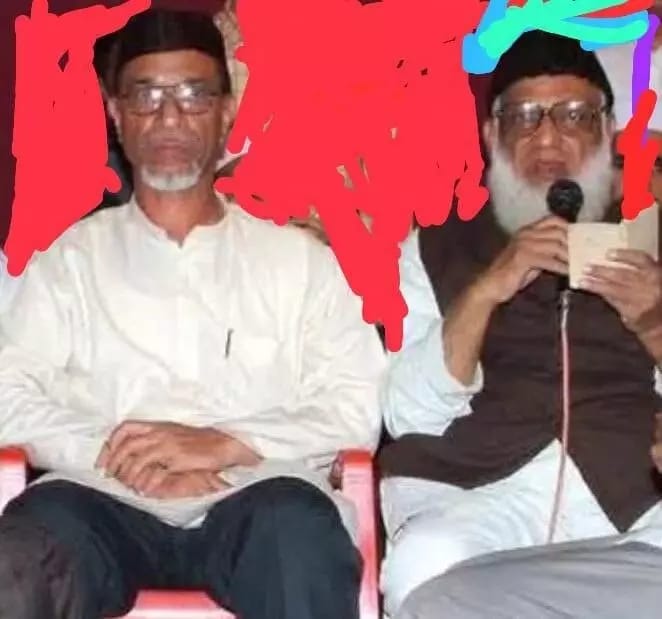
Ibrahim Saeed(L) with Maulana Sirajul Hasan, then Ameer Jamaat-e-Islami Hind
As a former President of JIH Karnataka, Ibrahim Saeed was not just a man of designation – he was a man of deep dedication. He led with humility, served with sincerity, and above all, connected with people at the human level. His leadership was rooted not in authority, but in affection.
A Childhood of Values, A Youth of Vision Born in coastal Karnataka, Ibrahim Saeed grew up in an environment where religious grounding and intellectual openness walked hand in hand. From an early age, he was drawn to the Qur’an, not merely as scripture to be recited, but as a message to be understood and shared. This foundational attitude remained the hallmark of his life-long da’wah journey.
His eloquence in Kannada and Urdu, coupled with a rare sensitivity to social realities, made him a powerful communicator. He spoke not to impress, but to illuminate. For young Muslims and for non-Muslim listeners alike, he offered Islam not as an ideology to be defended, but as a path of truth, mercy, and justice.
A Da’ee Who Belonged to All Perhaps the most defining feature of Ibrahim Saeed’s personality was his deep affection for all people, regardless of faith or background. His relationship with non-Muslim brothers and sisters was truly extraordinary. Whether it was participating in interfaith programmes, comforting victims of injustice, or simply walking the narrow streets of Mangalore or Udupi, greeting people with a smile – he was universally loved and respected.
He was never one to see da’wah as monologue. To him, it was dialogue – rooted in respect, empathy, and sincerity. His tone was always soft, yet his message never diluted. Non-Muslim intellectuals and activists often remarked on how deeply they admired his character, and how Islam seemed more beautiful when explained by Ibrahim Saeed.
His inclusive vision of Islam was most evident in the way he reached out to Dalit communities across Karnataka. He would often visit Dalit colonies, organising interactions with men and women in their own neighbourhoods. On one such occasion, a woman asked him plainly, “You are a Muslim. Why do you come to our colony and conduct programmes?” He replied with characteristic humility, “Dalits are the most marginalised communities in India, and Islam teaches that every human being is equal. I want to convey that you and I are the same – no discrimination, no untouchability.”
This brief yet profound exchange summed up the essence of his mission: to live and preach the Qur’anic message of human dignity, social justice, and equality.
Leading Without Holding On During his tenure as President of JIH Karnataka, Ibrahim Saeed steered the organisation with clarity of purpose and a focus on grassroots empowerment. He built bridges across regions, across communities, and across hearts. His vision was long-term: develop not only structures but people – individuals with integrity, faith, and commitment to social transformation.
What set him apart was his ability to let go. Even as his health declined due to terminal cancer, he made it a point to travel to Bangalore to formally hand over his responsibilities to his successor. It was a gesture that reflected his humility and organisational discipline. He believed in nazam or system, not in personality cults.
Courage in the Shadow of Death When the diagnosis of Stage IV lung cancer came, he did not flinch. His calm reply – “Alhamdulillah” – shocked even the doctors. He rejected aggressive treatments, choosing instead to accept Allah’s decree and live his remaining days with dignity and devotion.
Despite his declining health, he continued to write, meet people, and offer guidance. He even addressed national-level meetings, delivered Qur’anic lectures in towns like Uppinangady, and met with activists who sought his counsel. His final I’tikaf – spent in the Kutchi Memon Masjid – fulfilled a long-held yearning and marked a full spiritual circle.
His close friends recall that even in moments of physical weakness, his humour remained intact. His conversations were never heavy with sorrow. They were light with grace.
A Funeral Like No Other When the end came, the grief was personal and collective. People poured in from every district of Karnataka. The Janazah at Central Juma Masjid in Mangalore drew an unprecedented crowd – cutting across class, creed, and political affiliations. Senior leaders like H.D. Kumaraswamy, Mallikarjun Kharge, Jaffer Sharif, and Roshan Baig came to pay their respects. Rahman Khan embraced his son and said what many felt in their hearts: “We’ve lost a rare gem.”
A Legacy of Light Today, Ibrahim Saeed lives on – not only through his family and writings, but through the countless people he inspired. He lives in the students who remember his compassionate words. He lives in the non-Muslim neighbours who saw Islam’s beauty through his actions. He lives in the members of JIH Karnataka who still consider him a moral guide and fatherly mentor.
In a time when voices grow louder but less sincere, when leadership is often reduced to branding and bravado, the life of Ibrahim Saeed stands as a timeless example of principled activism, prophetic wisdom, and universal compassion.
His passing left a void that perhaps no one can fill – but his legacy lights the path for those who dare to walk it.
[With input from Mohammed Markada and Ameen Hassan]
source: http://www.radiancenews.com / Radiance News / Home> Focus> Pride of the Nation> Personality / by Mohammed Talha Siddi Bapa / May 30th, 2025
Amna Asim receiving the best paper award at Jesus and Mary College, DU
Aligarh:
Amna Asim, a first-year MA History student at the Centre of Advanced Study, Department of History, Aligarh Muslim University, won the Best Paper Prize at the release event of Maazinama Volume IV, held at Jesus and Mary College, University of Delhi.
Her research paper, titled “Memory and Resistance: Tracing India’s Counter-Monumental Legacy through Jallianwala Bagh,” was also published in Maazinama Volume IV, the annual academic journal of the Department of History, Jesus and Mary College. The paper explores the concept of counter-monuments as powerful symbols of collective memory and resistance, with a focused analysis of Jallianwala Bagh’s historical and cultural legacy.
Judges Dr. Devika Mittal and Dr. Bipasha Rosy Lakra appreciated her research and the methodology employed.
Prof. Hassan Imam, Chairperson and Coordinator of the Centre of Advanced Study, Department of History, AMU, congratulated Amna Asim on her achievement and praised her for earning this scholarly recognition.
source: http://www.radiancenews.com / Radiance News / Home> Pride of the Nation> Awards / by Radiance News Bureau / May 16th, 2025
The discovery of 1,700 Mysore rockets belonging to the 18th century gives a fillip to the argument that Tipu Sultan was a progressive king who made great advances in arms technology and was a formidable bulwark against the British East India Company in south India.
Rudrappa Shejeshwara, the curator of the Government Museum (Shivappa Nayaka Palace), Shivamogga, showing the rockets.
THE Congress-Janata Dal (Secular) coalition government in Karnataka has decided to continue the commemoration of the 18th century Mysore ruler Tipu Sultan’s birthday on November 10 as Tipu Jayanti. Ever since the Tipu Jayanti celebrations began in 2015 when the Congress, headed by Siddaramaiah, was in power in the State, the Bharatiya Janata Party (BJP) and right-wing Hindutva groups that accuse Tipu Sultan of being a religious bigot have opposed them vehemently.
As preparations for this year’s event began, Pratap Simha, the BJP Member of Parliament from Mysuru, asked Chief Minister H.D. Kumaraswamy not to go ahead with Tipu Jayanti as it hurt Hindu religious sentiments.
The allegations that Tipu Sultan was a religious bigot were examined in detail in the previous issues of Frontline . The article titled “Contested legacy” (December 11, 2015) provided an overview of Tipu Sultan’s reign and his role in fighting the British East India Company. The article “Tipu–Fact & Fiction” (January 6, 2017) discussed the accusation that Tipu Sultan had forcibly converted Kodavas of Kodagu, and “Tipu in Malabar” (January 5, 2018) examined the charge that the Mysore ruler had committed religious excesses in what is today north Kerala.
Tipu Sultan and, before him, his father, Hyder Ali, ruled Mysore for a brief period, between 1761 and 1799, but left a lasting impression on society and polity in the region. Both of them consistently opposed the British and fought four wars (known as the Anglo-Mysore Wars) against the East India Company. Hyder Ali was a perceptive and ambitious leader, but Tipu Sultan’s fame transcended that of his father. Tipu Sultan died on May 4, 1799, battling British soldiers, thus establishing his legacy as one of India’s earliest fighters against colonialism. It is for this reason that he is still feted.
Ever since Tipu Jayanti began to be marked, there has been an overwhelming focus on Tipu Sultan’s religious policies, with scores of articles written on the theme, but what has not been examined substantially is another important aspect of his reign. During his brief rule, he attempted to bring about significant modernisation in a number of areas through the establishment of an industrial state. This includes advances in arms technology, a continuation from Hyder Ali’s time that would eventually have a global impact.
Of all the advances that Tipu Sultan and Hyder Ali made in creating a modern army with lethal weapons, the rockets that were used against the British during the Anglo-Mysore Wars have left an indelible impression for two reasons. First, the rockets caused tumult and bedlam in enemy ranks. English soldiers have chronicled this aspect of Tipu Sultan’s warfare. For instance, the use of these rockets was the chief reason for the victory of the Mysore Army in the Battle of Pollilur (1780) in the Second Anglo-Mysore War. Rockets were also used subsequently, as documents show. Tipu Sultan’s army even had dedicated companies of rocket men. Colonel Bayly, a British officer, writes vividly about the havoc these Mysorean rockets caused as his regiment faced off Tipu Sultan’s army on April 5, 1799.
He wrote: “The ground of encampment was on the upper part of an inclined plane, at the foot of which, on the opposite bank of the River Cauvery, stood the proud fortress of Seringapatam, at three miles’ distance, from whence they already began to throw shot from guns of a huge calibre, and so pestered were we with the rocket boys that there was no moving without danger from these rocket missiles…. The rockets and musketry from upwards of 20,000 of the enemy were incessant. No hail could be thicker. Every illumination of blue lights was accompanied by a shower of rockets, some of which entered the head of the column, passing through to its rear causing deaths, wounds and dreadful lacerations from the long bamboos of twenty or thirty feet, which are invariably attached to them. The instant a rocket passes through a man’s body it resumes its initial impetus of force, and will thus destroy ten or twenty until the combustible matter with which it is charged becomes expended. The shrieks of our men from these unusual weapons was terrific; thighs, legs, and arms left fleshless with bones protruding in a shattered state from every part of the body, were the sad effects of these diabolical engines of destruction” (“Diary of Colonel Bayly: 12th Regiment” by Colonel Bayly, 1896).
The second reason is that Tipu Sultan’s rocket was the progenitor of the superior “Congreve” rocket, which was subsequently used by the British in the 19th century. The Mysorean rockets were found after the fall of Srirangapatnam and were transported to England, where they were studied closely.
About this, Roddam Narasimha, an aerospace scientist, writes that the Mysore “…rockets made an extraordinary impression on the British, and led, from 1801, to what would now be called a vigorous research and development programme (at the Royal Woolwich Arsenal). Sir William Congreve made systematic studies of propellants, analysed performance applying Newton’s laws, developed a series of rockets of different sizes and characteristics, made a comparative cost analysis and published three books on the subject. Rockets were soon systematically used by the British during the Napoleonic Wars and their confrontation with the U.S. during 1812-14.” ( Rockets in Mysore and Britain, 1750-1850 A.D. by Roddam Narasimha, 1985.)
Monumental find
Considering that these rockets marked a profound moment in the history of armaments, there were surprisingly few extant samples available. Only five iron-case Mysore rockets were known to be available for more than two centuries. Of these, three were housed at the Government Museum, Bengaluru, while two were at the Royal Artillery Museum, Woolwich Arsenal, in England. The three kept in Bengaluru were incomplete as they were mere shells. So, when in July this year a cache of 1,700 iron-case Mysore rockets from Hyder Ali’s or Tipu Sultan’s era was found, it was nothing short of a monumental discovery.
“The rockets were found in and around a large well owned by a farmer named Nagaraja Rao in Nagara village,” said Rudrappa Shejeshwara, the curator of the Government Museum (Shivappa Nayaka Palace) in Shivamogga. Nagara is around 80 kilometres from Shivamogga town in western Karnataka and was an important town in the 18th century. The site was chosen for excavation as a chance discovery at the same location a few years ago had revealed 160 rockets. They were not identified immediately, but were recognised subsequently as the famed Mysore rockets of Hyder Ali and Tipu Sultan. The State’s Department of Archaeology, Museums and Heritage, sanctioned an expedition and this led to the discovery of a larger cache of rockets.
The rockets are housed at the Government Museum in Shivamogga. They are not uniform and vary in length, measuring between half a foot and one foot. The small ones weigh about half a kilogram while the larger ones can almost weigh up to 2 kg. While some can be grasped easily, there are a few that are so thick that it is not possible to grasp them. It is remarkable that the farmer did not sell the rockets, which look like unusual pestles, as scrap. Nagaraja Rao actually had the foresight to communicate the information to the Archaeological Department.
While the fact that the Mysore rockets were a pioneer in arms technology is known, detailed tests on the rockets had not been conducted before simply because there were not enough samples to conduct tests. With the Shivamogga find, it became possible for the first time to conduct a thorough examination to find out what made these projectiles provide a fillip to the strength of the Mysore Army. Nidhin G. Olikara, an independent researcher based in Shivamogga, and Shejeshwara have sought to study just this aspect. They have co-authored a paper on their recent findings (“Rockets from Mysore under Haidar Ali and Tipu Sultan: Preliminary Studies of ‘Tipu Rockets’ from the Nagara Find” by Rudrappa Shejeshwara and Nidhin G. Olikara published in Journal of the Arms and Armour Society , Vol. XXII, No.6, September 2018).
Olikara explained how the rockets worked. He picked up a piece of paper and made a cylinder out of it. “Steel plates were folded into cylindrical tubes like this. Then, they were coated with clay, as this would act as a thermal insulator, and then stuffed with saltpetre and sealed at both ends with metal discs,” he said, as he cut two circular strips of paper and wedged them on the ends of his paper tube.
Pointing to the rockets, in which a tiny hole that has been sealed can be discerned, he said: “A fuse, most probably made of silk as these rockets were used even during the rainy season, was then tightly inserted perhaps by using a tool, which we found at the site. The rocket would then be tied to a bamboo staff with leather strips,” Olikara said. He pointed to a painting by Robert Home, called “Mysore rocket man”, which is currently in the collection of the Victoria and Albert Museum in London. “Once the fuse was lit, the rocket would travel for two to three miles,” he said.
The Mysore rulers, he said, used different kinds of rockets. While some would fly through the air before landing on enemy ranks, others would whoosh through the enemy lines at knee level. There were also swords attached to some of these bamboo poles, thus making them deadlier as they scythed through the disciplined lines of East India Company soldiers.
What is more interesting about these rockets is that they were not cast from a mould but forged from steel sheets that contained a very low level of carbon, which in itself was a grand technological advancement for the time.
Olikara and Shejeshwara write: “There can be no doubt that the Mysorean Rocket with its ferrous metal case and deployment in large numbers was unparalleled anywhere else in the world. It represented the pinnacle of Mysore’s technological prowess and its capability to experiment and innovate. It also showed that Mysore possessed the prerequisites to manufacture iron-cased rockets on an industrial scale. As a consequence of such qualities, Mysore was able to stem the colonial tide for twenty years whilst internecine strife was sweeping most other Indian states into the subjection of Britain.”
Why were so many rockets found in Nagara? Nagara was an important town of the Keladi empire. Hyder Ali conquered it in 1759, expanding the power and wealth of the Mysore kingdom substantially. Thus, it is not surprising that Hyder Ali and, subsequently,Tipu Sultan set up a manufacturing unit in the region.
T. Venkatesh, Commissioner, Karnataka’s Department of Archaeology, Museums and Heritage, who oversaw the discovery in July, concurred with this. He said: “While we are not yet certain about why the rockets were found at this location, we strongly suspect that a manufacturing unit must have been located in the vicinity.”
Ajay Kumar, an independent researcher based in Shivamogga, painstakingly began to work with the knowledge that a manufacturing unit had to be present in the region. Using Google satellite imagery, he identified spaces close by that had large quantities of iron slag. Going back and forth from contemporary chronicles of the 18th century to travelling around in the region, Ajay Kumar took six months to piece together his findings.
“To manufacture these rockets, you needed iron ore, saltpetre, bamboo, silk wicks, strips of leather, limestone, charcoal and clay. Based on my research, I have identified five sites in the villages of Tammadihalli and Chittihalu [pronounced as Chattanhalli by locals], which are 60-65 km from Nagara, as possible manufacturing units. We can also see pieces of iron in these iron slags that must have been part of the tuyere required for iron smelting,” he said.
It is unclear why these rockets were discarded in a well, but the serendipitous finding tangibly reinforces the idea of Tipu Sultan as a progressive king who used modern weapons. He was the last bulwark against the East India Company’s push to rule India directly.
At an event held in Bengaluru on October 30, the BJP’s national spokesperson, Sudhanshu Trivedi, said Tipu Sultan was a killer of Hindus. He said he would urge the Union Railways Minister to rename Tipu Express, which runs between Bengaluru and Mysuru.
The BJP’s opposition to the celebration of Tipu Sultan’s legacy stems from his Muslim identity. But it is not possible to disregard the various contributions he made to the region and to rocket technology. Hyder Ali and Tipu Sultan made a deep impact in the area of southern Karnataka, which formed the nucleus of their kingdom.
source: http://www.frontline.thehindu.com / The Hindu / Home> India> Discovery of Mysore Rockets / by Vikhar Ahmed Sayeed recently in Shivamogga / November 08th, 2018
In Tamil Nadu, opposing illegal mining can be fatal. Most murders are buried as accidents, while the mafia thrives on political backing.
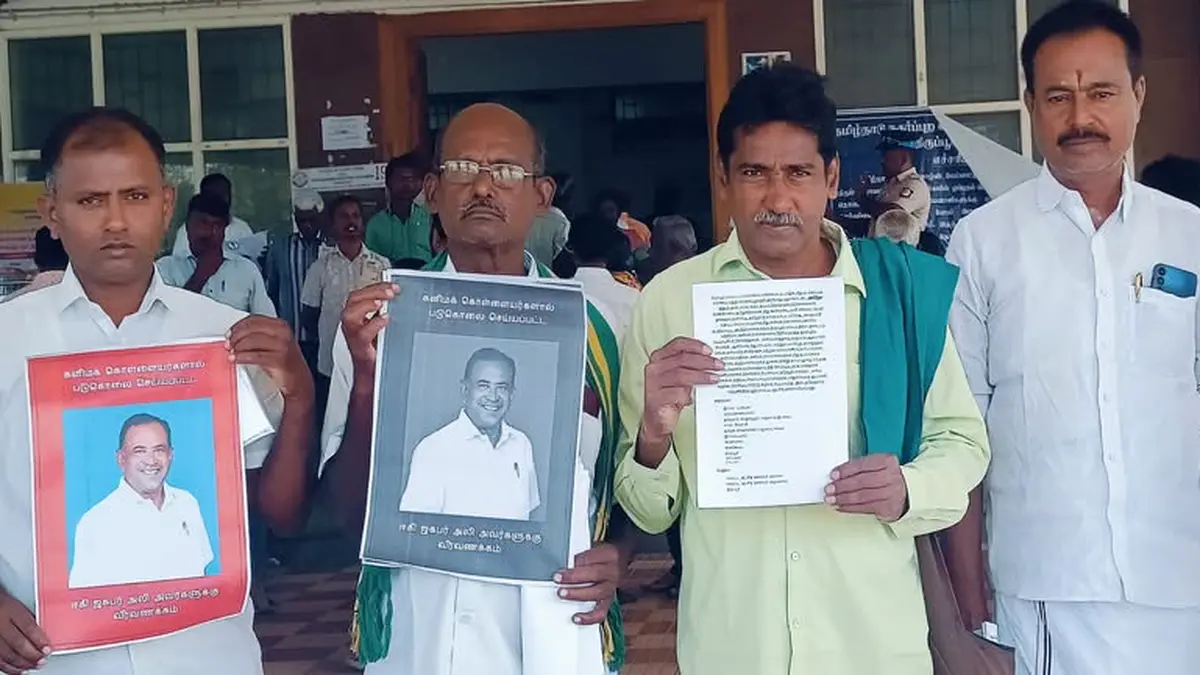
Anti-quarry activists carrying portraits of Jagabar Ali, who was killed by the mining mafia, at Tiruppur Collectorate. | Photo Credit: By Special Arrangement
Tamil Nadu has seen a spate of cold-blooded murders of activists who oppose mining across categories—whether the mining of stone, granite, river sand, or beach sand. Powerful gangs operate these businesses, concentrated in Madurai, Pudukottai, Tirunelveli, Erode, and Krishnagiri districts, and they deal with all opponents ruthlessly, whether they are residents, activists, whistle-blowers, or officials. There is an enormous amount of money at stake, which ensures that concerns about ecological damage, biosphere disruption, or the loss of livelihoods and habitats barely register.
Frontline studied a list of deaths and found an ominous pattern of targeted violence, official apathy, and impunity for the mining mafia. The first sinister pattern is that monstrous 40 tonne or 60 tonne dumper and tipper trucks are the most common dispensers of death. Paid killers are used sometimes, but most of these mafia-orchestrated murders are staged to look like hit-and-run accidents. In many cases, they are quietly recorded as such, leading to widespread allegations of collusion between the Tamil Nadu Police and the gangs.
The killing of 58-year-old Jagabar Ali, whose story our lead piece records, followed the same script: he was run over by a tipper lorry on January 17, 2025. After offering namaz at a mosque, Ali was returning home on his motorcycle when a truck rammed into him head-on on an otherwise deserted street. He was killed instantaneously.
Ali is the latest in a growing list of deaths of those who fight the mining mafias. R. Jeganathan, a farmer from Kuppam in Karur district, who had demanded the closure of illegal stone quarries in his neighbourhood, was run over by a quarry truck near K. Paramathi in September 2022.
The incident took place one day after the quarry, located at Kalipalayam village near Kuppam, was shut down. The truck that rammed into his scooter and killed him on the spot belonged to the same quarry.
R. Jeganathan, a farmer from Karur, who had demanded the closure of illegal stone quarries in his neighbourhood, was run over by a truck in 2022. | Photo Credit: By Special Arrangement
Activists such as R.S.A Mughilan, convenor of the Tamil Nadu Environment Protection Movement, as well as Jeganathan’s family and friends staged a series of protests in Karur demanding a probe. The police finally arrested three people, including the quarry owner, detaining them under the Goondas Act.
In 2022, an activist named Mani was run over by a lorry at Kavalkinaru in Tirunelveli district. The case was closed after being labelled an accident. On May 12, 2024, Natarajan, a farmer from Sarkar Kathankanni village near Uthukuli in Tiruppur district, narrowly escaped a similar attempt on his life.
The Uthukuli Police initially refused to even register a complaint. After five hours of persistence, the police gave Natarajan a CSR (Community Service Register) copy. When there were further protests, the police reluctantly registered an FIR on August 26, 2024, 100 days after the attempt on his life. “The police are now pressing me to sign a document claiming that the culprits are ‘untraceable’. I have refused. They are very much here, loitering in the neighbourhood. I live in fear,” he told Frontline.
B. Tamilselvan, an environmental activist from Erode district, escaped death when thugs hired by illegal quarry miners assaulted him in 2022. | Photo Credit: By Special Arrangement
On May 4, 2022, B. Tamilselvan, an environmental activist from Ekkadampalayam in Chennimalai in Erode district, escaped death when thugs, hired by illegal quarry miners, assaulted him with iron rods at an Internet centre. Tamilselvan had raised the issue of illegal quarrying at a village gram sabha meeting, which led to the closure of a quarry. Police filed a case against some unidentified people the next day. Nothing happened thereafter, and illegal quarrying continued.
Tamilselvan claimed that a local All India Anna Dravida Munnetra Kazhagam (AIADMK) functionary who owned the quarry was behind the attack. He told Frontline: “We knew the assailants. But the police did not take it seriously. We had to fight to get the FIR registered. I am still suffering from the injuries I sustained on my shoulders and head.” The Tamil Nadu Police have closed many such cases as “accidents”. “We have to fight to even get them registered as ‘suspicious deaths’,” said Venkalapalayam Natarajan, an anti-quarry activist.
It is not just stone quarry operators—illegal river sand smugglers also adopt the hit-and-run method to eliminate those who challenge their operations, with their victims even including high-ranking government officials and police personnel. For instance, in April 2003, Revenue Inspector R. Shanmugasundaram was run over and killed by a lorry transporting sand illicitly mined from the Palar riverbed near Palayaseevaram in Kancheepuram district.
In September the same year, Tahsildar G. Punniyakodi lost his life when he tried to stop a lorry illegally transporting blue metal from Erumaiyur, also in Kancheepuram. He too was run over.
On December 11, 2004, R. Venkatesan, Deputy Tahsildar of Tirukazhukundram, was killed when a sand-laden lorry ran him over at Manapakkam village.
On July 20, 2014, G. Kanakaraj, 43, a head constable attached to Thakkolam Police Station near Arakkonam in Vellore district, was run over by a lorry when he attempted to stop a tractor that was transporting sand illicitly mined from the Kosasthalaiyar river. Five officials, including the Tahsildar of Aavudaiyarkoil, Ravichandran, and four of his assistants, had a miraculous escape when a lorry rammed into their car near Pudukottai in September 2014.
Similarly, the killing of Srivaikundam’s Village Administrative Officer, Y. Lourdu Francis, on April 25, 2023, by a river sand mafia sent shock waves across the State and led to widespread protests by revenue officials. Francis, an upright officer, was opposing illegal quarrying in the Thamirabarani river and had registered a case against illicit sand miners in the village.
In the case of Francis, the police completed the investigation quickly and filed a charge sheet, with legal proceedings also moving quickly, and the Principal District Judge of Thoothukudi awarding life imprisonment to two miners on September 15, 2023. But this was one of the rare cases where the police, revenue, and mining departments worked in tandem to bring the culprits to justice.
Most of the time, the killers get away scot-free. Not surprising, given that a background check on those behind most of the attacks and murders often reveals the surreptitious involvement of individuals with political affiliations or links to their cronies.
If Jagabar Ali was a member of the AIADMK, the farmer Jeganathan was a Dravida Munnetra Kazhagam (DMK) supporter who served as the party’s branch secretary and was also a close associate of senior party functionaries. But, as in Ali’s case, the DMK maintained a stony silence over Jegannathan’s murder.
The truth is that the lucrative business of mining stone, granite, and beach and river sand is in the hands of individuals who have strong connections to politicians of all hues.
source: http://www.frontline.thehindu.com / The Hindu / Home> Environment> Illegal Mining / by Ilangovan Rajasekharan / April 23rd, 2025
Chhotu Chaiwalla was in Nahur when burglars broke into his Wadala house.
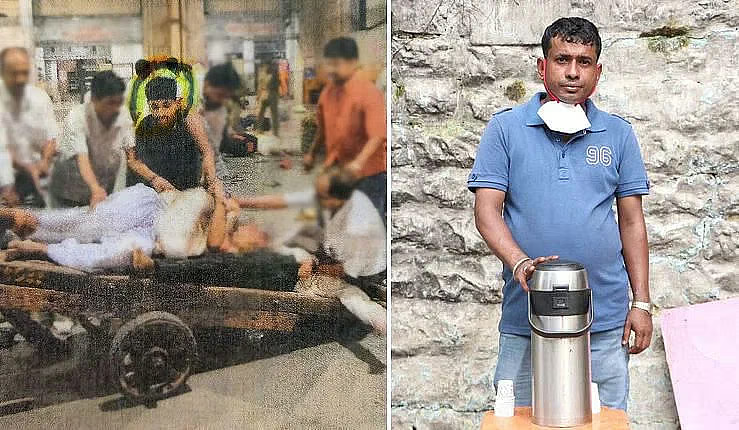
Burglars broke into the house of 26/11 hero Mohamed Taufiq Sheikh, popularly known as Chhotu Chaiwalla, and stole the tthe trophies he had received for his bravery during the 2008 Mumbai terror attack. They also took away a TV, jewellery, cash and documents from Sheikh’s house in Wadala.
According to the FIR registered by Sheikh, he has two houses – one in Wadala and the other in Nahur. On October 31, Sheikh had left his Wadala house to live in Nahur as he was scheduled to attend a wedding in Kalyan on November 2.
At 11 am on Monday, Sheikh received a call from his neighbour in Wadala about the suspected theft in his house. The neighbour told him that the door of his house appeared to be dented
“I was about to leave for Kalyan when I received the call. I immediately cancelled the plan, and headed to Wadala. On reaching Wadala, I found that the latch of the door was broken and the door was dented. I then opened the lock and entered the house only to find it ransacked. The iron cupboard had been broken. A lot of items were missing from the house, , including two trophies that I had received after 26/11 terror attack. Other items that the burglars took away included a TV, gold earrings, some cash, brass utensils, clothes that I had bought recently and documents of my children”, Sheikh said.
Sheikh told Mirror that there could be other items, too, missing from the house as he has not able to assess the damage since his wife and children are away.
Shaikh approached the police which registered an FIR under relevant sections of Indian Penal Code for housebreaking and theft.
Sheikh said that he was already in financial stress due to the lockdown, and the burglary has added to his problems. “I am most hurt by the loss of the trophies which were so dear to me.”
Mirror had earlier reported how after being driven to frustration by lack of business and mounting debt, Sheikh was all set to wind up his life in Mumbai and return to Bihar.
Sheikh, who took the injured from CSMT’s long-distance section on a hand-cart to St George’s Hospital while Ajmal Kasab and Ismail Khan were still targeting people in the suburban section of the station, had not only seen his life’s savings disappear during the lockdown, but also a debt of over Rs 3 lakh accumulate.
Sheikh had a narrow escape in the 26/11attack. He was standing outside the station master’s cabin when Kasab and Khan began firing. He hid in the cabin and played dead when Kasab came in spraying bullets.
source: http://www.mumbaimirror.indiatimes.com / Mumbai Mirror / Home> Mumbai> Crime> 26/11 Hero / by Sachin Haralkar and Vallabh Ozarkar / November 03rd, 2020
The famous chai wala is now grappling with a significant setback in his tea business, burdened by loans amounting to approximately ₹20 lakh.
Mohammad Taufik Shaikh | File pic
Mumbai:
Mohammad Taufik Shaikh, also known as Chhotu Chai Wala (38), gained recognition for his heroic actions during the 26/11 attacks when he saved around 10 individuals. Unfortunately, he is now grappling with a significant setback in his tea business, burdened by loans amounting to approximately ₹20 lakh.
Chottu chai wala’s heroic tale
Operating a tea stall near Saint George Hospital outside Chhatrapati Shivaji Maharaj Terminus, Shaikh was aged 25 during the Mumbai terrorist attack. Initially thinking the loud sounds were firecrackers due to an India vs South Africa cricket match, he soon realised the severity of the situation. Taking swift action, he closed the ticket counter gate, warned others, and evacuated the area, claiming he faced three bullets fired by Kasab.
Recalling the incident, he mentioned, “The first bullet broke the office window, the second hit the table, and then I had to lie down on the floor. Later, I called my wife, telling her I was in danger and might not survive. I contacted the Railway police on the phone.”
He continued, “After some time I came out of the station and saw people lying on the floor, bullets had hit them. I carried those who were alive.” He also assisted an injured officer and admitted him to the Railway Hospital in Byculla.
The subsequent pandemic dealt a severe blow to his business, almost shutting it down. To survive, he borrowed money, accumulating a debt of around ₹20 lakh. Despite attempting to mortgage his MHADA home, banks refused to provide loans. Struggling, he shared, “Currently, I am doing my business on credit.”
Financial support promised post 26/11
Post the 26/11 incident, promises of financial support poured in, with many railway officers assuring him of a job. Despite being felicitated by the Railway in Delhi, he realized later that the job offer never materialized.
Reflecting on the experience, Shaikh emphasized the need for individual alertness, stating, “Terrorists do not have any religion, they have the mentality to die or to kill people. I pray that an attack like this never occurs again.”
Residing in Nahur with his family, Shaikh came to Mumbai at an early age from Mujhaffarpur, Bihar, due to financial difficulties after losing his mother.
source: http://www.freepressjournal.in / The Free Press Journal / Home> Mumbai / by Megha Kuchik / November 23rd, 2023
University Women’s Polytechnic Students Shine at National Project Competition, Win First Prize at MITAOE, Pune
Aligarh:
Students from the University Women’s Polytechnic, Aligarh Muslim University (AMU), made a mark at the 8th National Level Poster Presentation and Project Competition, TechnoPHILIA’25, held recently at MIT Academy of Engineering, Pune.
Competing against participants from over 25 institutions across India, the AMU team, “LISA VocalTech,” clinched the first prize in the Diploma Category, along with a cash award for their innovative project titled “LISA: A Voice-Controlled Lift.”
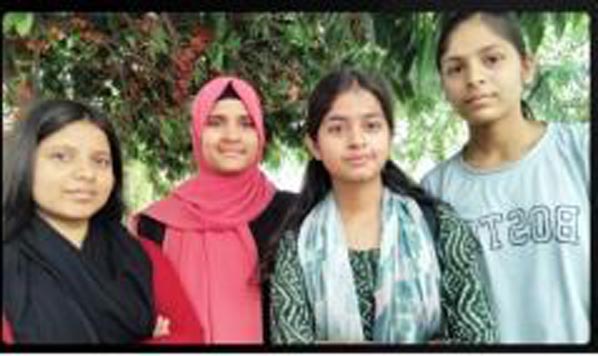
The team comprised final-year Diploma in Electronics and Communication Engineering students – Shalini Kumari, Kashish Khushi, Nargis Khatoon, and Shailly Bhardwaj – who developed the project under the mentorship of Mr. Mohd Kashif. Their creation, a voice-activated lift system, is designed to improve accessibility for the elderly, visually impaired, and physically disabled, earning praise from judges for its practical utility and inventive design.
This achievement highlights AMU’s commitment to academic excellence and its encouragement of student participation in national-level technical events.
source: http://www.radiancenews.com / Radiance News / Home> Education> Focus / by Radiance News Bureau / April 09th, 2025
Thanks to social media, former car driver Rasool Kareem has discovered a completely new calling in Qatar
Rasool Kareem (left) with Qatari cast members of Kareem Time channel. | Photo Credit: SPECIAL ARRANGEMENT
When 35-year-old Rasool Kareem set out to support his family by taking up a driver’s job in Doha, Qatar in 2007, little did he realise that his career as a social media star in the Gulf country would literally turn his life around in the most unexpected way.
With a YouTube channel called ‘Kareem Time Official’ that has 1.9 million subscribers and 537,894 followers on Facebook, besides 70,6000 more on his Instagram account, the native of Woraiyur, Tiruchi is a recognised public figure in the Arabian Gulf’s social media space.
Kareem’s work stands out because he makes videos on the life of South Asian (majorly Tamil) expatriate workers in the Gulf, with a cast that is made up of both Qatari and Indian amateur actors.
His content is available in Arabic and Tamil, and uses observational comedy to lampoon people’s foibles, while conveying an underlying serious message.
“It is not right to vilify people or countries blindly. There are good and bad persons in every community, and sometimes comedy becomes the best vehicle to spread tolerance, especially in places that rely on expatriate workers,” says Kareem over a WhatsApp interview call. “Most of my Arabic videos are uploaded on YouTube and Instagram, while the Tamil ones, which I produce with the help of a creative team in Tiruchi, are on Facebook. The comedy skits have slapstick and physical humour to appeal also to viewers who may not know either language,” says Kareem.
A star is born
Like the millions of blue-collar workers who head out to the Arabian Gulf countries in search of work every year, Kareem had a family to support back in Tiruchi. “I haven’t studied much, and spent much of my youth working at odd jobs. Since I was the eldest in my family and needed to support my parents and siblings, my father made me learn driving and got me a visa to work as a chauffeur for a Qatari family. When I had enough in my kitty, I decided to return to Tiruchi for good in 2010,” he recalls.
Kareem’s interest in acting led him to spending a year in Chennai, struggling to get roles in Tamil cinema. “By the end of 2011, I realised that my acting career was a non-starter, so I decided to return to Qatar and become a driver again,” he says.
Migrant workers in Qatar function under the ‘kafala’ (sponsorship) system, where a resident Qatari national is made in charge of the foreign worker’s visa and legal status.
Kareem’s Qatari sponsor (and employer) Naif al-Malki got interested in the driver’s Kollywood audition clips and asked him create something for him. “I sang an Arabic song in my Tamil style, which he uploaded on his Instagram page. We did not expect it to become a viral hit all over the Gulf countries. My first real fans were Arab children, who loved my stuff,” says Kareem.
The song started off his career as a social media star in 2013, as he began to upload videos that were largely mono-acts filmed on his mobile phone, with the active encouragement of al-Malki, who is now his business manager.
Content is king
“I realised that to be taken seriously, one had to pay attention to the content, so I started looking for actors who could join me in my videos,” he says. He found them in Qatar’s amateur theatre circuit and assembled a typical Gulf ‘family’ with his actors. “Today, Khaled al-Rubya, Huda al-Malki, Zahara al- Ansari, Tamim al-Malki and Abu Vinish are all part of Kareem Time videos, along with me. Sometimes we get mistaken for a real family,” he laughs.
Kareem tends to play the driver in most of the skits, but in real life has stopped working as a chauffeur after his social media career took off. “During one vacation, I actually wanted to quit my driver’s job and stay on in India because it was getting difficult to manage content creation with my regular work. But Mr. Naif persuaded me to return to Qatar and develop my social media work, because he felt it had great potential,” says Kareem.
The team shoots three videos per week, and uploads them periodically. “None of us gets paid for the in-house productions. But we allow the actors to state their preferred salary for commercial promotions, which we have started getting from local companies. I use my savings to fund the video production costs,” says Kareem.
For the more sober Tamil content, Kareem tends to highlight the socio-economic dynamics of migrant labourers within their families and society.
The father of two has learned to take the brickbats in his stride. “Thanks to social media, strangers walk up to me and request me for a selfie with their children because they have seen my work online. It’s the best endorsement one could get,” he says.
Kareem and co-star in a scene from his YouTube channel’s skits. | Photo Credit: SPECIAL ARRANGEMENT
source: http://www.thehindu.com / The Hindu / Home> Features> Metro Plus / by Nahla Nainar / September 22nd, 2022
Syed Adnan Mian, a third-year undergraduate student from Jamia Millia Islamia’s (JMI) Department of Biotechnology, has made the university proud by securing a place in the esteemed Khorana Program for Scholars 2025.
This highly competitive scholarship is jointly supported by the Department of Biotechnology (DBT) – Government of India, the Indo-U.S. Science & Technology Forum (IUSSTF), and WINStep Forward, offering exceptional Indian students the opportunity to engage in advanced research at leading U.S. institutions, reported the Okhla Times.
As part of the program, Adnan has been placed at Brigham and Women’s Hospital, affiliated with Harvard Medical School in Boston, Massachusetts, where he will contribute to cutting-edge biomedical research. The scholarship covers round-trip airfare, a stipend, and health insurance, providing an invaluable academic and professional experience.
This achievement highlights JMI’s commitment to excellence in scientific research and global academic collaboration. Adnan’s selection for this prestigious program serves as an inspiration for aspiring researchers at the university.
source: http://www.radiancenews.com / Radiance News / Home> Focus> Markers of Excellence / by Radiance News Bureau / March 12th, 2025
S.M. Munawwar Nainar learnt the language at Cairo University (1955-59) and did his M.A. and Ph.D at Delhi University and JNU respectively. His command of the language led him to serve as the Indian government’s official interpreter in the 1970s. He recalls the most memorable meetings of Indian and Arab leaders at which he was the interpreter.
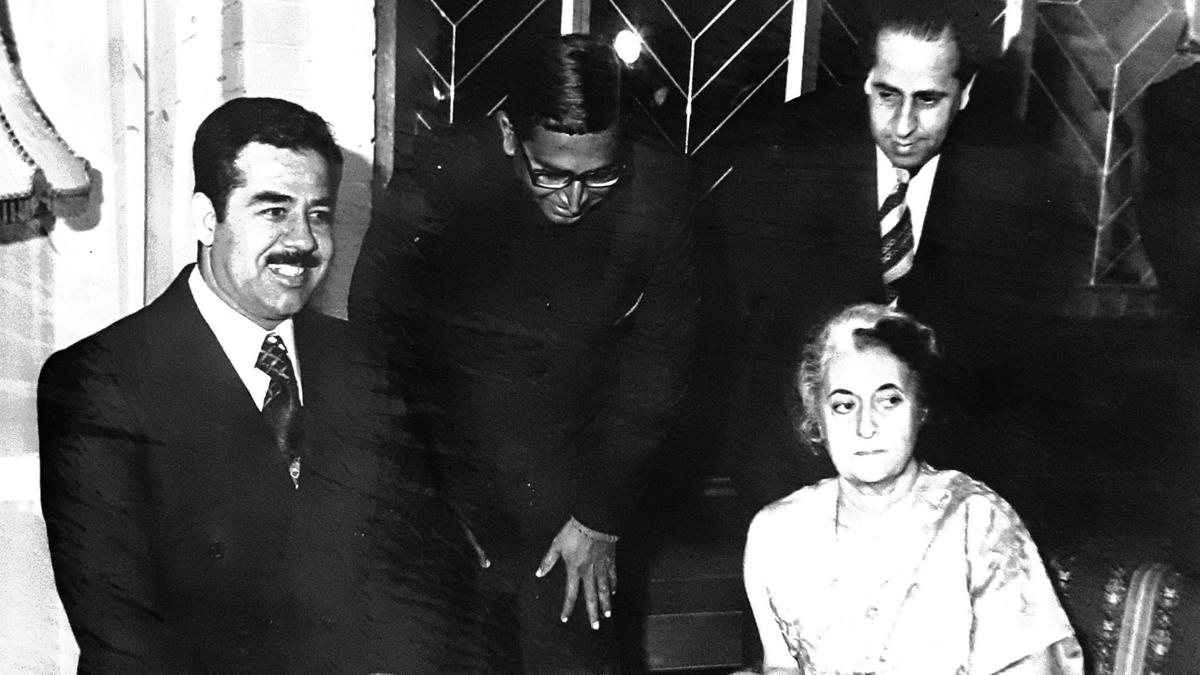
S. M. Munawwar Nainar (second left, standing) with Prime Minister Indira Gandhi and Iraqi leader Saddam Hussein in Baghdad in 1975. The meeting helped to cement the bilateral ties. | Photo Credit: Special Arrangement
My journey with Arabic began in the 1950s, when my father, Syed Mohamed Husain Nainar, professor and head of the Arabic, Urdu and Persian Department at the University of Madras (1927-1954), wished at least one of his sons to study Arabic in depth. I was drafted to the cause, though my general academic performance was middling. Eventually, I did four years of immersive language training in Arabic at Cairo University (1955-59), where I got my B.A. ‘Licence’ (degree) with a ‘Jayyid’ (good) grade. I followed it up with M.A. Arabic at Delhi University, and a Ph.D (on Arabic loan words in Hindi, Urdu, and Tamil) at Jawaharlal Nehru University, Delhi.
Arabic has led me to many interesting destinations, from diplomatic service and teaching to radio broadcasting and literary translation. But, to me, the most memorable of these are the occasions when I served as the Indian government’s official interpreter in the 1970s. I had been appointed as one of the Arabic teachers at JNU’s School of Languages at the time. The interpreter’s assignment was an honorary posting, and I was recommended for the job by our Vice-Chancellor G. Parthasarathy, based on my previous experience as the press secretary at the Indian Embassy in Jeddah, Saudi Arabia (1969-72).
A visit to remember
Prime Minister Indira Gandhi’s state visit to Iraq from January 18 to 21, 1975, was a much-covered event, because of the charisma that the Indian and Iraqi leaders projected in public. It is also considered a visit that cemented friendly ties between the two countries.
Saddam Hussein was at the Baghdad airport to receive her and the Indian delegation. He invited Mrs. Gandhi to the waiting limousine and boarded it after her. I was seated behind them. As we were proceeding, he asked the driver to slow down near a mosque and said, “This is where we had a crucial meeting of our Ba’ath Party after which I took over the reins of power.”
Official parleys were held the next day, after which Mrs. Gandhi wanted to have a private discussion with the Iraqi leader. When she asked him whether he wanted his interpreter to be present too, he declined. Pointing to me, he said, “Your translator is enough”.
We were received by Saddam seated on a chair with a hard wooden backrest (to deal with a spinal problem, he explained). As the two leaders spoke for about an hour, the Iraqi strongman’s trademark stern demeanour relaxed. (Earlier, on March 25, 1974, Hussein was on an official visit to India, where he was received by the then Prime Minister, Indira Gandhi.)
Rousing reception at Baghdad University
The Indian Prime Minister received a rousing reception at Baghdad University on January 20, where around 5,000 students had assembled in the large auditorium. The programme began with a welcome address in Arabic by the Vice-Chancellor, which I translated simultaneously to the Prime Minister in a low voice as I was seated behind her.
Mrs. Gandhi spoke extempore for about 15 minutes, during which there was pin-drop silence. I scribbled down notes. My translated version drew a big cheer from the audience that lasted for five minutes, a testimony to her popularity. The function also included the conferring of an honorary law degree on Mrs. Gandhi. However, as the students swarmed around the leaders after the event, I got lost in the melee. The security officers quickly conducted Mrs. Gandhi to the official motorcade; but when she noticed I was missing, she sent them back to find me. “Kahaan reh gaye aap? [Where were you?],” she asked me as I joined her in her car. To me, Mrs. Gandhi’s concern for her team members, irrespective of their rank, was one of her most admirable traits.
The 1970s were an important period for West Asia, where countries of the Persian/Arabian Gulf were declaring their independence from British rule. In 1971, the former ‘Trucial States’ — Abu Dhabi, Ajman, Dubai, Fujairah, Ras Al Khaimah, Sharjah, and Umm Al Quwain — decided to form the United Arab Emirates (UAE). Their neighbours — Qatar, Kuwait, Bahrain, and Oman — also became independent that year. As India was keen on evolving a rapport with these oil-rich countries, many official visits were made to and from the Gulf countries.
A dragging flight
I was part of the delegation accompanying former Minister for External Affairs Sardar Swaran Singh on a tour of Oman, Abu Dhabi, Dubai, and Qatar in the mid 1972. We boarded a Fokker Friendship plane in Delhi and, after about four hours, landed at the Jamnagar Air Force Station for re-fuelling. Then we resumed our journey towards Muscat, our first port of call, which we reached after seven hours of flying. “It was like walking from Jamnagar to Muscat,” Sardar Sahib said jokingly.
In Oman, Sultan Qaboos bin Said had recently deposed his father Sultan Said bin Taimur. The luncheon banquet was sumptuous: stuffed lambs and rice, followed by Omani halwa, carried on large platters by six persons (three on each side).
In the Qatari capital Doha, Emir Sheikh Khalifa bin Hamad al-Thani spread out a huge blueprint and explained his nation’s development plans. Years later, when I worked in Qatar’s Education Ministry from 1983 until the 2000s, I saw that most of them had been implemented. Early Gulf leaders, in keeping with their nomadic Bedouin culture, would avoid venturing into the harsh sunlight. Thus, it happened that we had to meet Sheikh Zayed bin Sultan al-Nahyan, the first President of the UAE and the ruler of Abu Dhabi, at midnight. Dubai already had started its course towards developing the tourism and hospitality sectors. I was in my thirties during these official engagements; today I am 87.
In 1975, when I was part of President Fakhruddin Ali Ahmed’s visit to Egypt and Sudan, I had an opportunity to mention to Egyptian President Anwar el-Sadat that I had graduated from Cairo University. He was pleasantly surprised and wished me well. Arabic brought a boy from Palani to the corridors of power for a while and left behind a cornucopia of memories.
(The author had also served as the official interpreter for the Indian government during other high-level meetings with leaders from Middle East and North Africa countries. He is based in Tiruchi.)
source: http://www.frontline.thehindu.com / Frontline / Home> News> India> Tamil Nadu / by S M Munawwar Nainar / December 08th, 2023