Tag Archives: Jahanara Begum – ‘Malika-e-Hindustan Padshah Begum’

Mughal Memoirs Offer Window into Court Politics, Society and Cultural Change, Says Romila Thapar

NEW DELHI :

New Delhi :

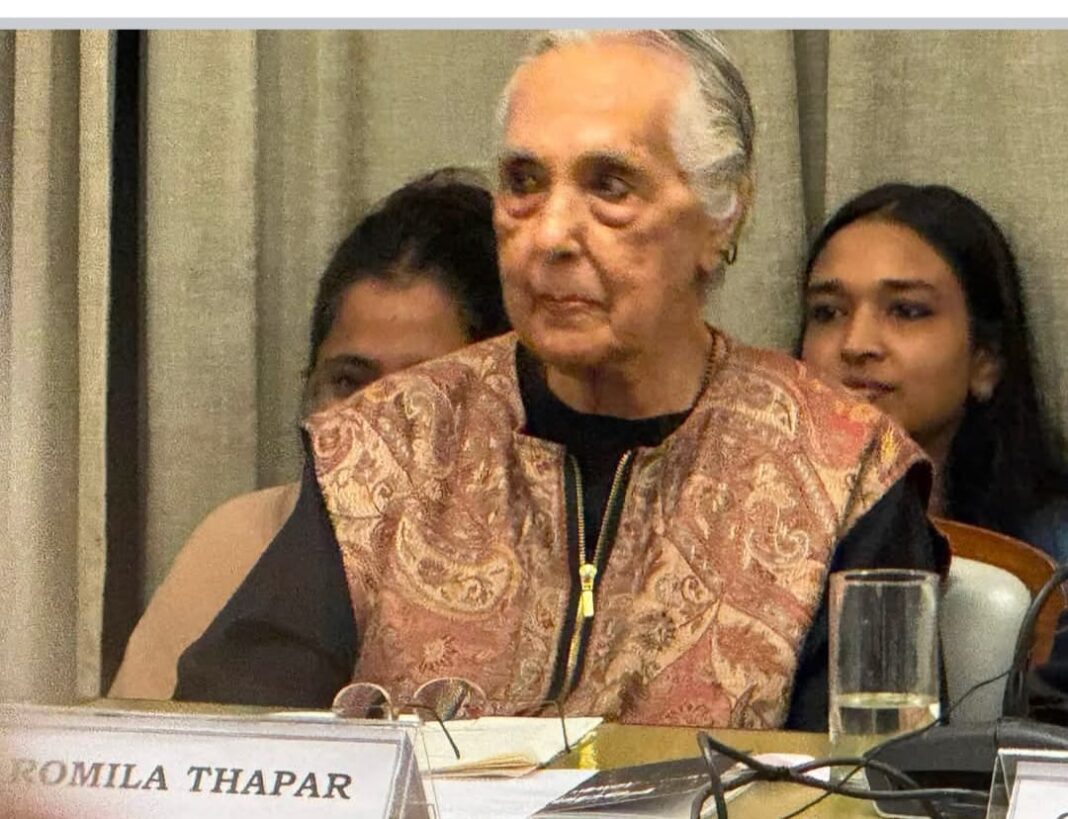
Renowned historian Romila Thapar, speaking at the launch of her memoir “Just Being: A Memoir” at the India International Centre on Sunday evening, drew attention to the rich tradition of memoirs and biographies associated with the Mughal period, describing them as important sources for understanding not only rulers but also the political, social and cultural environment in which they lived.

Rather than speaking extensively about her own memoir, Thapar used the occasion to discuss memoir as a genre of writing and its value to historians. She explained that memoirs and biographies provide more than accounts of individual lives. They also reveal how authors viewed their societies, political surroundings and the people with whom they interacted.

In this context, Thapar highlighted the writings produced during the Mughal period, particularly those associated with Mughal rulers and members of the imperial court. She said these writings were a lively form of historical and literary expression and offered insights into both the public and private worlds of the Mughal elite.

Thapar pointed to the memoir of Babur as one of the most notable examples. Babur recorded his experiences in Ferghana and Kabul, as well as his battles and efforts to establish a kingdom in the frontier region between north-western India and Afghanistan. According to Thapar, Babur’s writing style was remarkably comfortable and informal, with descriptions of major political and military events interspersed with observations about everyday life.

One of the characteristics that makes Babur’s memoir particularly engaging, she noted, is the way serious accounts of warfare and state-building are accompanied by apparently ordinary personal observations. She referred to Babur’s well-known comment that melons in India were not as sweet as those in Ferghana. Such details, Thapar suggested, make the memoir more than a record of battles and political achievements. They provide glimpses into the personality and preferences of the ruler himself.

Thapar also discussed the memoir associated with Humayun, which differs from Babur’s account because it was compiled by his sister, Gulbadan Begum. She described the work as having a stronger biographical character while still containing valuable observations about Mughal court life.

The memoir, according to Thapar, provides glimpses into both the public and private dimensions of the court. It records aspects of the relatively hidden or “surreptitious” life of the court alongside its more visible political activities. This makes such writings particularly valuable to historians attempting to understand how the Mughal court functioned beyond formal descriptions of imperial power.

Thapar also referred to Abul Fazl’s Akbar Nama, describing it as almost a combination of biography and history. The work chronicles the activities of Emperor Akbar while simultaneously providing an account of the wider historical circumstances of his reign. She noted that subsequent Mughal rulers either wrote memoirs themselves or had their lives recorded, producing accounts associated with Jahangir and Shah Jahan.

One of the most striking features of these writings, Thapar said, was the cultural change visible between the period before Akbar and the writing produced during and after his reign. The writings reflected considerable interaction between the author and the surrounding cultural environment, as well as a growing sense of inquiry into the world around them.

Thapar stressed that this cultural interaction is significant because historians need to understand the world as it was perceived by individuals living in a particular period. Mughal writings, she argued, provide evidence not only of how rulers viewed themselves but also of their relationships with the people over whom they ruled and the communities with whom they lived in close proximity.

Such interactions, she suggested, could alter aspects of the lives and cultural patterns on both sides. The memoirs and biographies, therefore, should not simply be read as official records of imperial achievements. They can also be examined as accounts of encounters between different groups and cultures.

Thapar gave particular importance to the writings of Mughal women, observing that some women’s memoirs were highly political. She referred to Jahanara Begum, the daughter of Shah Jahan and sister of Aurangzeb, who wrote about life and politics within the Mughal court.

The importance of such writings, she suggested, lies in the way they bring together ordinary concerns and political observations. Everyday experiences could appear alongside reflections on society, court personalities and political developments. The narration of political activities gave these memoirs a distinct political edge, allowing them to capture the historical moment from perspectives that might otherwise remain underrepresented.

Thapar said these writings also reflected the “mixed identity” of the Mughal elite. The court was not an isolated political institution; it was a space where different cultural influences, social relationships and political interests came together. Memoirs and biographies provide evidence of these interactions and help historians understand how individuals negotiated their identities within that environment.

Her discussion also drew attention to what is missing from historical sources. Thapar expressed disappointment at the absence of comparable reflections on the emerging elite in Sanskrit sources, particularly because some high-caste officials had written about court politics. The contrast demonstrates how the survival and nature of historical sources can influence modern understanding of a particular period.

Thapar’s larger argument was that memoirs should be read critically rather than treated as straightforward factual records. The value of a memoir lies not only in whether every event has been recorded accurately but also in what the author chose to observe, emphasise or ignore.

This approach is particularly relevant when reading Mughal memoirs. A ruler writing about his own battles, a court historian describing an emperor, or a woman writing about life within the imperial household each presents a different perspective. Their accounts reveal their individual experiences and assumptions as much as they reveal the historical events themselves.

She emphasised that biographies and memoirs are therefore commentaries on both the individuals being described and the contexts in which they lived. The author, even when writing about another person, inevitably reveals something about himself or herself through the selection of events and the interpretation of personalities.

Thapar’s discussion placed Mughal memoirs within a much longer tradition of biographical writing in India. She noted that biographies existed well before the Mughal period, citing works such as Banabhatta’s seventh-century biography of King Harshavardhana and the Ramacharitam of Sandhyakar Nandi. However, Mughal-era writings developed within a distinctive cultural and political environment and offer particularly valuable evidence of interactions between rulers, court elites and wider society.

Her comments ultimately suggested that Mughal memoirs should be viewed as more than chronicles of emperors and their achievements. They are records of personalities, political relationships, cultural encounters and changing perceptions. Babur’s observations of his homeland and India, Gulbadan Begum’s account of Humayun and the Mughal household, Abul Fazl’s expansive portrayal of Akbar, and the political observations of women such as Jahanara Begum collectively demonstrate the diversity of voices connected to the Mughal court.

For historians, Thapar argued, these texts are significant precisely because they allow the past to be viewed through the eyes of people who experienced it. Their subjective nature does not diminish their historical value; instead, it provides another layer of evidence about how individuals understood their world.

In her remarks, Thapar ultimately presented Mughal memoirs as a bridge between personal experience and history. By reading them alongside other historical evidence, historians can move beyond the conventional story of kings and battles and gain a deeper understanding of the society, politics and cultural interactions that shaped the Mughal era.

Professor Kumkum Roy, professor of History, formerly of JNU; Professor Neeladri Bhattacharya, professor of History, formerly of JNU; and Ambassador TCA Raghavan, former High Commissioner to Pakistan, also shared their views. At the same time, Professor Kunal Chakravarti moderated the event.

source: http://www.indiatomorrow.net / India Tomorrow / Home> Education> In Depth> Society / by Mohd Naushad Khan / September 08th, 2026
Jahanara Begum: The Forgotten Mughal Princess Who Designed Chandni Chowk

DELHI :

She was one of the most powerful women of medieval India, a Mughal princess like no other. And yet, her extraordinary story remains lost in the pages of history.

In an unassuming part of India’s capital city, amidst winding alleys lined with attar and chadar sellers, lies the 800-year-old dargah of Hazrat Nizamuddin Auliya—one of the most revered saints in Sufism. From dusk to dawn, thousands of devotees throng this bustling complex to pay their respects.

Yet, few know that Delhi’s most famous Sufi shrine is also home to the tomb of one of the most powerful women of medieval India, Jahanara Begum.

A writer, poet, painter and the architect of Delhi’s famous Chandni Chowk, Jahanara was a Mughal princess like no other.

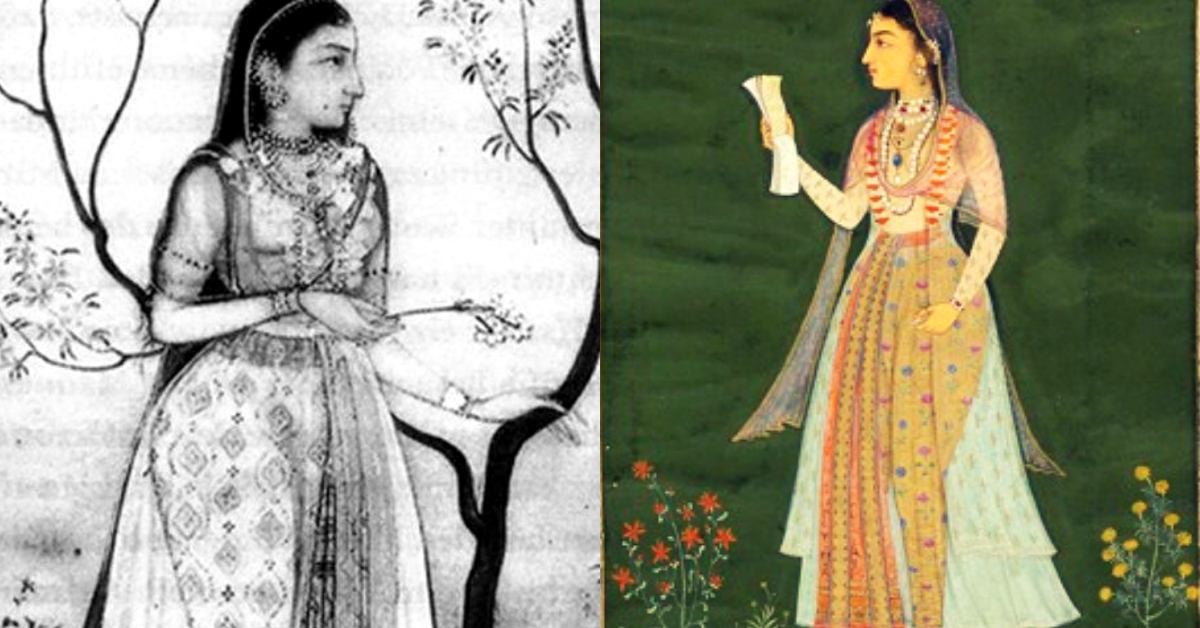
Portraits of Jahanara Begum. Source: Wikimedia Commons

This is her story.

The eldest child of Emperor Shah Jahan and his favourite wife, Mumtaz Mahal, Jahanara was born in Ajmer in 1614. Growing up in one of the richest and most splendid empires in the world, the young princess spent her childhood in opulent palaces, humming with family feuds, battle intrigues, royal bequests and harem politics.

As such, she was well-versed in statecraft by the time she was a teenager.

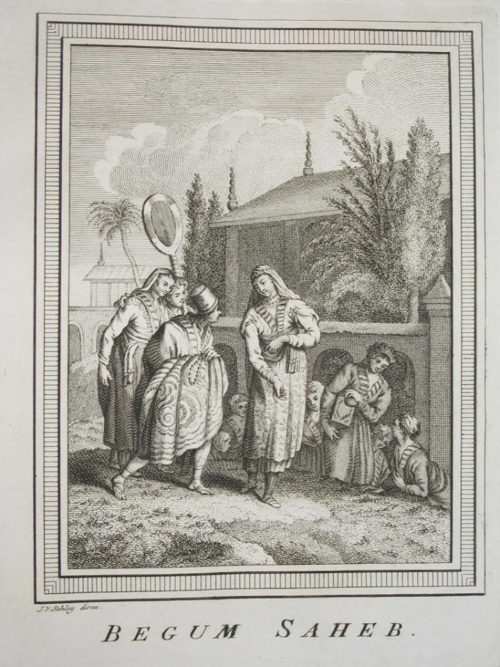
Soon after, Jahanara was appointed Begum Sahib (Princess of Princesses) by her doting parents. She would often spend her evenings playing chess with Shah Jahan, understanding the workings of the royal household, and helping her father plan the reconstruction of other palaces.

As French traveller and physician François Bernier writes in his memoirs, Travels in the Mogul Empire  ,

“Shah Jahan reposed unbounded confidence in his favourite child; she watched over his safety, and so cautiously observant, that no dish was permitted to appear upon the royal table which had not been prepared under her superintendence.”

Jahanara was also especially close to Dara Shikoh, Shah Jahan’s eldest son and her favourite brother. The two shared a love of poetry, painting, classic literature and Sufism.

In fact, she also wrote many books, including a biography of Ajmer’s Sufi saint Khwaja Moinuddin Chishti, displaying her flair for prose.

The Begum Sahib. Source: Royal India Families/Facebook

But tragedy struck the young princess’s life with the untimely demise of her beloved mother, Mumtaz, in 1631. At the tender age of 17, she was entrusted with the charge of the Imperial Seal and made Malika-e-Hindustan Padshah Begum—the First Lady of the Indian Empire—by the shattered Emperor, whose grief kept him away from his royal duties.

It was only on Jahanara’s behest that the inconsolable Shah Jahan came out of mourning.

In the years to follow, she became her father’s closest confidante and advisor. Highly educated and skilled in diplomatic dealings, her word became so powerful that it could change the fortunes of people. Her favour was much sought-after by foreign emissaries.

In 1654, Shah Jahan attacked Raja Prithvichand of Srinagar. Despairing of success in the battle, the Raja sent a plea for mercy to Jahanara. The Princess asked him to send his son, Medini Singh, as a sign of his loyalty to the Mughal Empire, thereby getting him a pardon from the Emperor.

The following year, when Aurangzeb was the viceroy of the Deccan, he was bent on annexing Golconda, ruled by Abdul Qutb Shah. The Golconda ruler wrote an arzdast(royal request) to the Princess, who intervened on his behalf. Qutb Shah was pardoned by Shah Jahan (against Aurangzeb’s wishes) and secured his safety on payment of tax.

Interestingly, Jahanara was also one of the few Mughal women who owned a ship and traded as an independent entity.

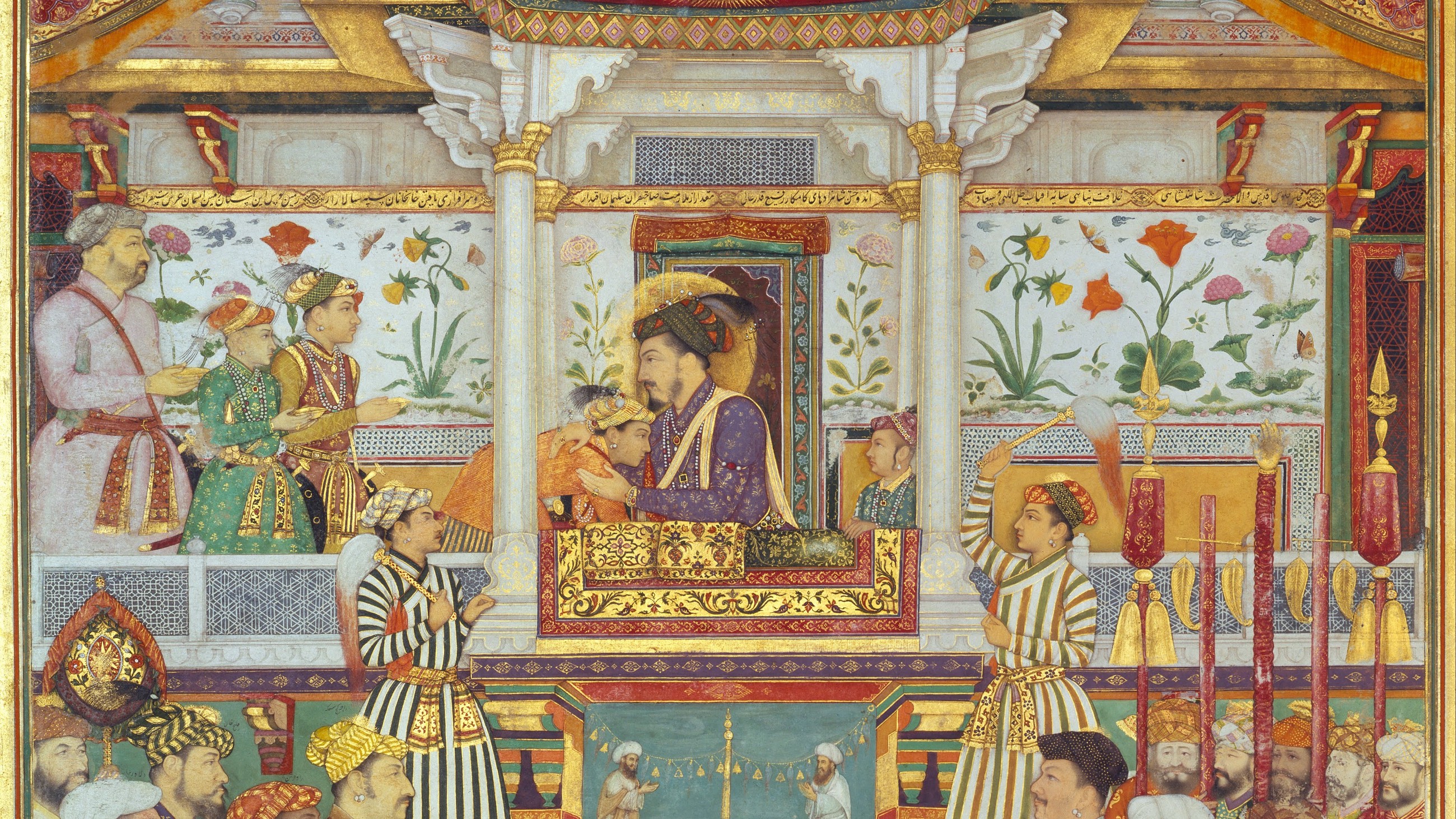
Padshahnama plate 10 : Shah Jahan receives his three eldest sons and Asaf Khan during his accession ceremonies (8 March 1628). Source: Wikimedia Commons

Named ‘Sahibi’ after its owner, Jahanara’s ship would carry the goods made at herkarkhanas (factories) and dock at her very own port in Surat; its revenue and the colossal profits she made via trade significantly boosted her annual income of three million rupees!

In his book Storia Do Mogor, Italian traveller Niccolao Manucci writes, “Jahanara was loved by all, and lived in a state of magnificence.” The book is considered to be one of the most detailed accounts of Shah Jahan’s court.

But Jahanara’s political and economic clout failed to have an impact on the bitter war of succession between her brothers, Dara Shikoh and Aurangzeb. She made several attempts to mediate between them, but as Ira Mukhoty writes in her book Daughters of The Sun , she had “underestimated the corrosive loathing that Aurangzeb has for Dara, whom he blames for his father’s cold criticism throughout his career”.

Aurangzeb ultimately killed Dara Shikoh and placed an ill Shah Jahan under house arrest in Agra Fort’s Muthamman Burj (Jasmine Tower). Faithful to her father, Jahanara set aside her lucrative trade and luxurious lifestyle to accompany him into imprisonment.

A constant presence beside Shah Jahan in his exile, she took care of him for eight years, till he breathed his last in 1666.

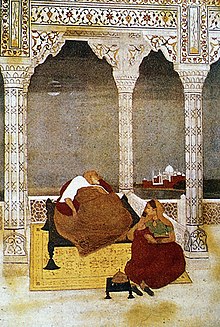
“The Passing of Shah Jahan” (1902), a painting by Abanindranath Tagore. At the foot of the bed is Jahanara Begum, the daughter of Shah Jahan; the Taj Mahal is in the background. Source: Wikimedia Commons

It says much for her stature in the Mughal court that after Shah Jahan’s death, Aurangzeb restored her title of Padshah Begum and gave her a pension along with the new title of Sahibat al-Zamani (Lady of the Age)—befitting for a woman who was ahead of her time.

Unlike other royal Mughal princesses, she was also allowed to live in her own mansion outside the confines of the Agra Fort.

“Jahanara establishes herself in the city as the most influential woman patron[s] of literature and poetry. She collects rare and beautiful book[s], and her library is peerless. She donates money to charity, especially Sufi dargahs, and carries on a genteel diplomacy with minor rajas who come to her with grievances and gifts,” writes Ira Mukhoty in her book.

Spending her last years in the pursuit of her artistic and humanitarian passions, Jahanara passed away in 1681 at the age of 67 but not before she etched her mark in the annals of history in a manner that would have made her father proud.

She commissioned several architectural spectacles, mosques, inns and public gardens across the Mughal empire.

But she is best remembered as the architect of Old Delhi’s legendary bazaar, Chandni Chowk—which translates to ‘Moonlit Intersection’.

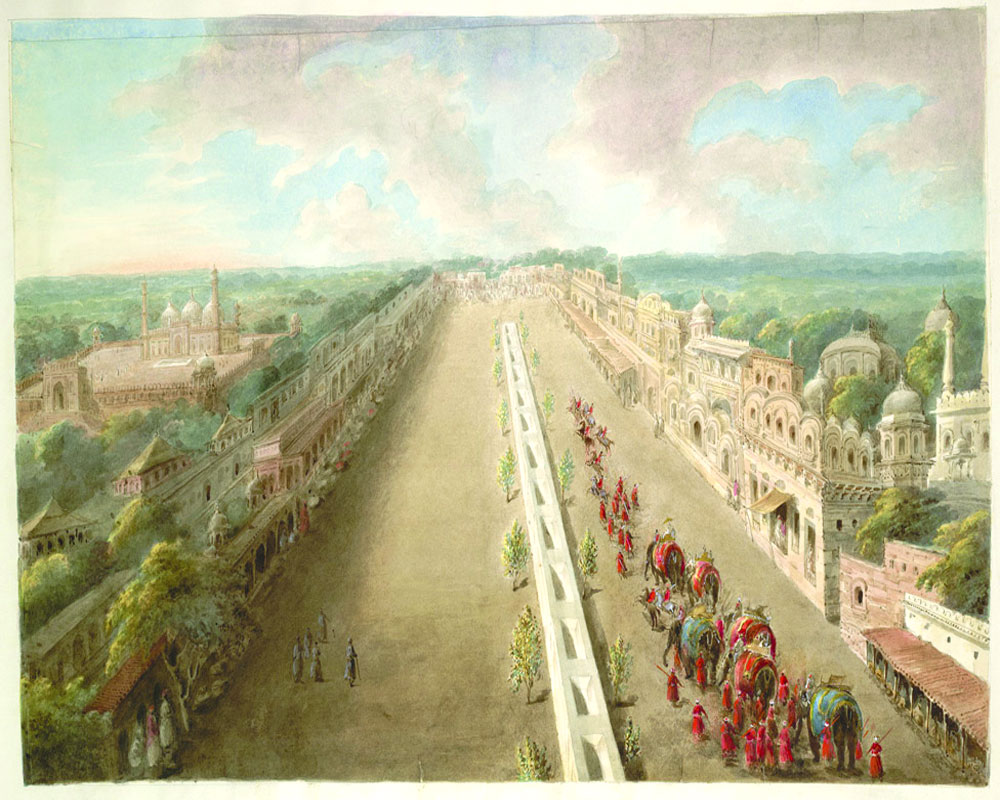
Water colour of Chandni Chowk in Delhi from ‘Views by Seeta Ram from Delhi to Tughlikabad Vol. VII’. Source: British Library

In his book  Shahjahanabad : The Soverign City in Mughal India , Stephen Blake writes,

“The chowk was an octagon with sides of one hundred yards and a large pool in its center. To the north, Jahanara built a caravansarai (roadside inn) and a garden and, to the south, a bath. On certain nights, the moonlight reflected pale and silvery from the central pool and gave to the area the name Chandni Chawk (Silver or Moonlight Square). This name slowly displaced all others until the entire bazaar, from the Lahori Gate to the Fatehpuri Masjid, became known as Chandni Chawk.”

Today, many of Chandni Chowk’s ancient buildings have been torn down, as its lanes brim with new shops and colliding crowds. And yet, somehow it manages to invoke the spirit with which Jahanara lived—the same spirit that helped her survive and thrive amidst betrayals and tragedies.

Interestingly, Jahanara’s resting place in the Nizamuddin Dargah is of her own choosing, just like her character.

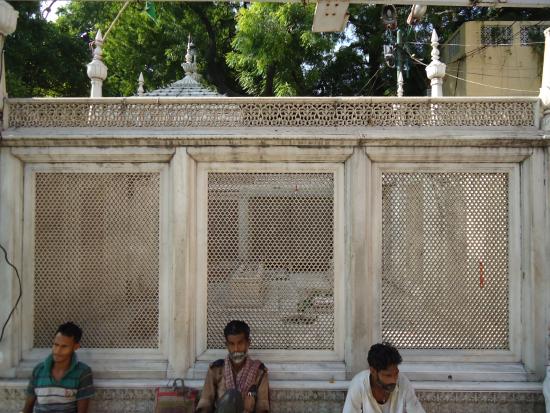
Jahanara’s tomb at the Nizamuddin Dargah. Source

Unlike the giant mausoleums built for her parents, she rests in a simple marble tomb open to the sky, inscribed with her own couplet in Persian:

Baghair subza na poshad kase mazar mara, (Let no one cover my grave except with green grass,)
Ki qabr posh ghariban hamin gayah bas-ast. (For this very grass suffices as a tomb cover for the poor.

Perhaps it is poetic justice that green vines grow on the grave of this extraordinary princess of India.

(Edited by Shruti Singhal)

source: http://www.thebetterindia.com / The Better India / Home> History> Women / by Sanchari Pal / May 24th, 2019