Tag Archives: Muslims of Rajasthan

Punjab mosque to honour Muslims who died while distributing flood relief

Raizada Village (Ajnala Tehsil, Amritsar District), PUNJAB :
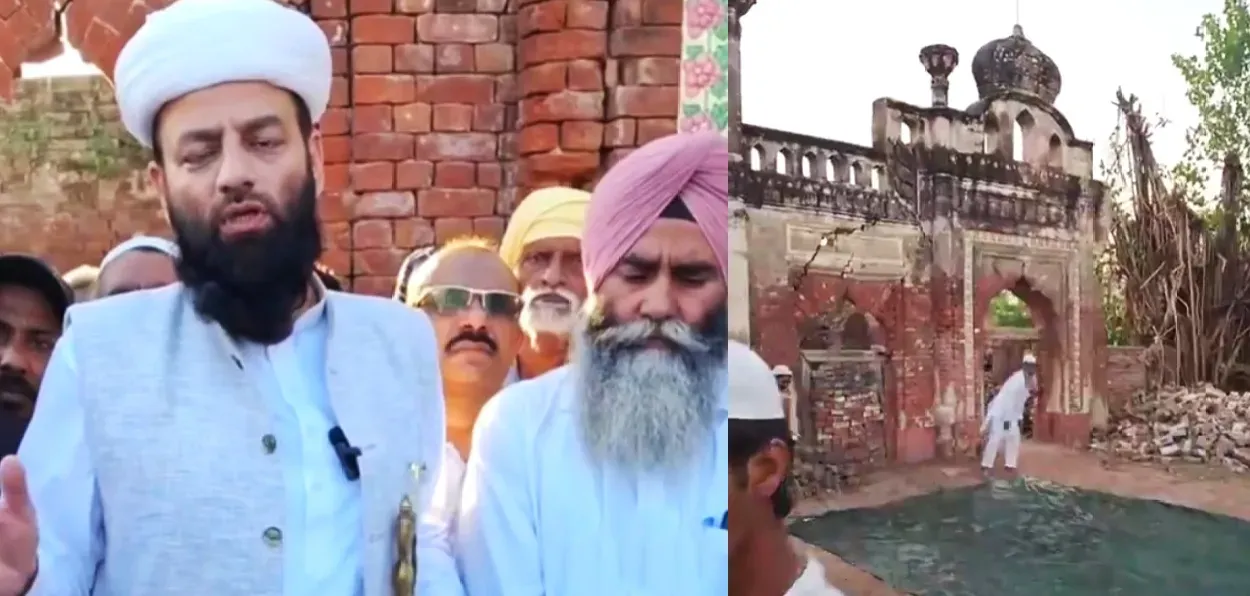
Shahi Imam of Punjab Maulana Usman Rehmani Ludhianvi taking charge of the mosque in village Raizada of Amritsar, Punjab

The Sikhs and Hindus of a village in the Amritsar district of Punjab have handed over a mosque which lay in a run-down state since no Muslims lived there after the partition of India in 1947, to the Muslims for restoration.

In a ceremony attended by Shahi Imam of Punjab, Maulana Muhammad Usman Ludhianvi, in the small village of Raizada in Ajnala tehsil of Amritsar, locals formally handed over the mosque to the Muslim community.

The initiative was led by the village sarpanch, Sardar Omkar Singh. Closed since the partition of 1947, the mosque, for the first time on Friday, echoed with the sounds of the Azaan, the call for prayers.

Sikhs, Hindus, Muslims, Christians and Dalits all stood together inside the mosque located on the banks of the River Ravi.

The mosque is in a dilapidated condition, wild grass and vegetation covered it; its walls collapsed. A school running inside it was closed 11 years ago.

Yet the non-Muslims of the village believed the mosque was not just a Muslim heritage, but that of the village. One of them remarked, “In Punjab, we are connected not by religion, but by heart.”
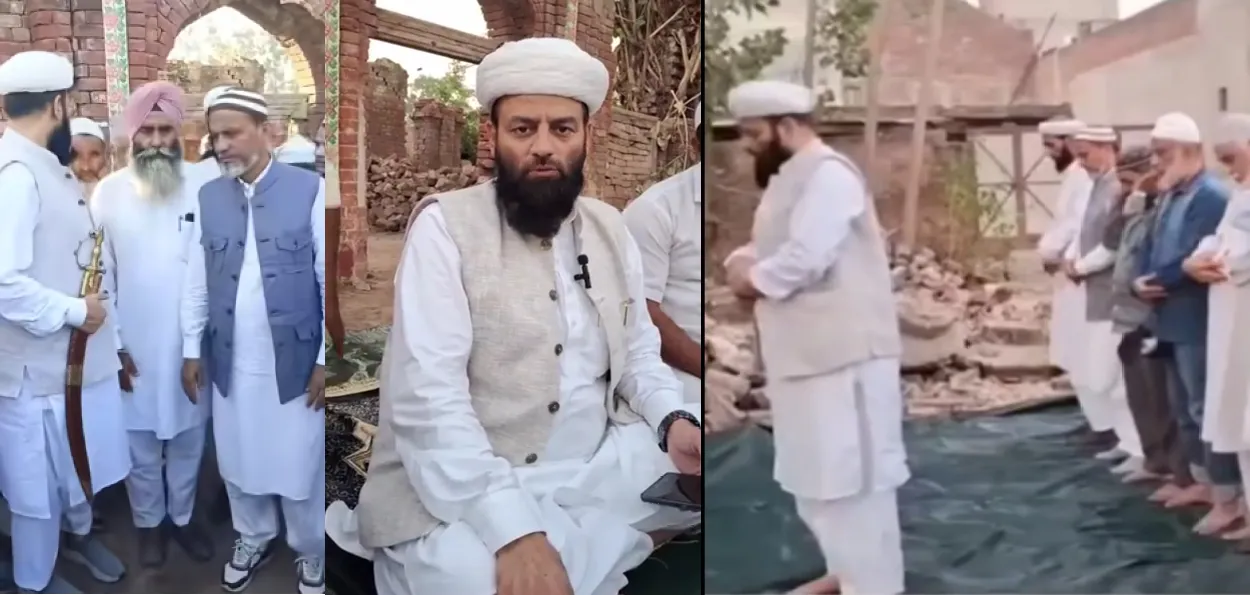
Shahi Imam of Punjab Maulana Muhammad Usman Rahmani Ludhianvi with villagers of Raizada

In his address, Maulana Muhammad Usman Rahmani Ludhianvi narrated the history of harmony in Punjab. He said Guru Nanak Dev, whom Muslims remember as “Baba Nanak”, was carried to a safe place by Muslim brothers Nabi Khan and Ghani Khan in his palanquin during the war.

He also mentioned Diwan Todarmal, a minister in Akbar’s Court, who dedicated his land for the burial of the Guru’s sons.

The Shahi Imam said that this is the real strength of Punjab, Sikhs, Hindus and Muslims have stood together for centuries. The greatest beauty of India is its “unity in individuation”.

He announced that the restoration of the village mosque was being done as a tribute to two Muslim volunteers who sacrificed their lives during relief work in the recent floods.

These youths were Shamshad Bhagwanpuri (Uttarakhand) and Zakaria Mewati (Rajasthan). Both of them distributed ration and medicines in the affected areas for a week, but met with an accident on their return journey. Shahi Imam said that they did not just deliver goods, but also conveyed a message of love and brotherhood. Punjab will never forget their sacrifice.

The mosque will be named ‘Masjid-e-Shamshad Bhagwan Puri’ to honour the sacrifice of the flood relief volunteers in the name of humanity.

He said while the foundation of the mosque will be laid this month, the story of Shamshad’s life and service will be engraved on the wall of the mosque.

The second mosque, “Masjid-e-Zakaria” will be built in Fagan Majra village of Mewati-Patiala district, the land for which was acquired this week. The parents of these two martyrs have been invited to lay the foundation. The Shahi Imam prayed that for love to spread throughout the country.

The incident comes amid a wider humanitarian effort that has been seen during the recent floods. Volunteers from Mewat in Haryana, traditionally allies of Punjab farmers, sent more than 300 truckloads of relief supplies to the states of Punjab, Himachal Pradesh and Jammu and Kashmir. It reflects agricultural ties that predate the separation of Haryana and Punjab in 1966. Organisations like Khalsa Aid have been on the ground since August, rescuing families and providing water and medical aid in affected areas like Gurdaspur and Ferozepur. 

The event took place in a backdrop of peaceful harmony. As the sounds of Gurbani recitation echoed from the gurdwara during evening prayers, the call to prayer for Maghrib was soon heard from the mosque, symbolizing the harmonious heartbeat of Punjab. The villagers distributed sweets to celebrate. As the sun was setting over the Ravi River, the Shahi Imam concluded the ceremony with a prayer. He said, “May this love spread throughout the country and every corner be illuminated like a lamp of brotherhood.”

According to media reports, more than 30 such mosques have been restored so far through interfaith cooperation, with most of them led by Sikhs in providing financial support, labour, and land.

According to Shahbaz Ahmed Zahoor, leader of the Idara Mosques, there have been about 200 such incidents across the state in which Sikh families have donated land for mosques and graveyards.

In 2018, in village Moom, Baranala district, while Hindus provided the land, the Sikhs raised funds for the construction of a mosque that shares a wall with their gurdwara.

This created a rare combination of Hindu, Muslim and Sikh places of worship in one place. In 2022, in the Bakhatgarh district, Barnala, farmer Amandeep Singh donated 250 square yards of land for the Noorani Masjid. Other Sikhs and Hindus shouldered a major part of the construction cost of Rs 12 lakh so that 15 Muslim families would not have to travel 5 km to offer prayers.

In January of the same year, former Sarpanch Sukhjinder Singh Noni and his brother Avininder Singh donated 5.5 biswas (worth Rs 7-8 lakh) of valuable roadside land for a new mosque in Umarpura village of Malirkotla district. They were joined by donors like Tejwant Singh (Rs 2 lakh) and Ravinder Singh Grewal (Rs 1 lakh).

In Malla village of Ludhiana district, in 2016, Sikhs and Hindus renovated the old mosque for the only Muslim family in the village and provided financial assistance while locals worked as labour for its construction.

In Nathuwal village of Sangrur district, in 2015, non-Muslims bore more than 65% of the Rs 25 lakh cost for the renovation of the Jama Masjid and the addition of a second floor.

source: http://www.awazthevoice.in / Awaz, The Voice / Home> Story / by Mansooruddin Faridi, New Delhi / October 27th, 2025
Burned but brave: Conductor Rafiq Khan’s heroic act saves lives in Rajasthan bus tragedy

Thaiyat Village, RAJASTHAN :

Twenty passengers burnt alive, 16 critically injured in Jaisalmer-Jodhpur bus fire Tuesday.

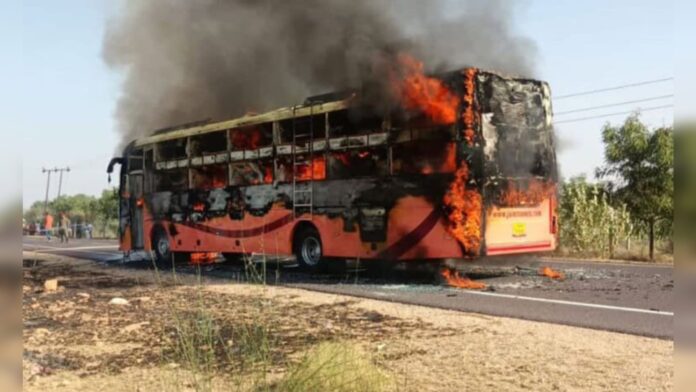
A devastating tragedy unfolded on the Jaisalmer–Jodhpur highway on Tuesday evening when a private air-conditioned sleeper bus carrying nearly 50 passengers went up in flames near Thaiyat village in Rajasthan.

Amid the panic, bus conductor Rafiq Khan displayed extraordinary bravery. Positioned near the back when the smoke appeared, he rushed forward to open the main gate and allow passengers to flee. As he moved toward the front, the ceiling burst into flames and an explosion knocked him down.

Despite sustaining severe burns, Khan crawled through the aisle, managed to unlatch the door, and helped several passengers escape before collapsing. He is now battling for his life at Dr. S. N. Medical College in Jodhpur, where doctors say he has suffered extensive burn injuries.

The fire, which is believed to have started from the rear of the vehicle, spread rapidly, trapping dozens inside. At least 21 people have been confirmed dead, while several others sustained critical burns and remain hospitalized.

According to preliminary reports, the incident occurred shortly after the bus left Jaisalmer for Jodhpur. Passengers noticed smoke rising from the back, prompting the driver to stop on the roadside. However, before most could react, a sudden blast shook the bus and flames engulfed the upper berths. Survivors described chaotic scenes as people screamed for help, some breaking windows in a desperate attempt to escape. The situation was worsened by the fact that the bus had only one functional exit door, which became jammed as the fire spread, leaving passengers trapped inside.

Medical officials confirmed that fifteen injured passengers were brought from Jaisalmer late Tuesday night. Five of them, including Khan, are on ventilator support with burns exceeding 70 percent of their bodies. The remaining have burns between 40 and 50 percent. Identification of the deceased has been difficult due to the extent of the burns, and DNA testing is being carried out to help families claim the bodies. Ten bodies have been kept at the S. N. Medical College mortuary, while others are at AIIMS Jodhpur.

Eyewitnesses and local residents who rushed to the scene recalled horrific visuals of the burning bus and passengers trapped inside. One survivor, Peer Mohammad, managed to smash a window to rescue his wife, sister-in-law, and a child but lost two of his young children who were asleep on the upper berth. “I could see them burning, but the flames were too strong. I tried to go back, but I couldn’t,” he said, breaking down.

Officials suspect that an electrical short-circuit in the air-conditioning system may have triggered the fire, though a detailed forensic and mechanical investigation is underway. The bus owner, driver, and the vehicle body-builder have been detained for questioning, while a technical team from the Central Institute of Road Transport (Pune) has been called to examine possible safety lapses. Authorities are also probing whether the bus had been illegally modified and if its emergency exits met regulatory standards.

The Rajasthan government has announced financial compensation for the victims’ families and injured passengers, but the relief policy has already drawn criticism over the cap imposed on payments to households that lost multiple members. District Collector Pratap Singh stated that a helpline has been set up for the families and that DNA matching and identification will be expedited.

As the state mourns one of its worst transport tragedies in recent years, questions are being raised about the enforcement of passenger safety rules, particularly in private buses converted into AC sleepers. Critics say the incident highlights the urgent need for mandatory fire-safety mechanisms, functional emergency exits, and stricter monitoring of vehicle modifications.

In the midst of this overwhelming loss, the courage of conductor Rafiq Khan stands out.  A man who risked his own life so others could live. His selfless act amid the chaos has earned him praise across the state and beyond, a rare moment of humanity in an otherwise grim tragedy that exposed fatal gaps in India’s passenger transport safety system.

source: http://www.muslimmirror.com / Muslim Mirror / Home> Indian Muslim> Positive Story / by Muslim Mirror Network / October 18th, 2025

AIITA Mangrol Celebrates Excellence in Education at Ideal Teacher Award 2025

Mangrol (Baran District), RAJASTHAN :

Mangrol: 

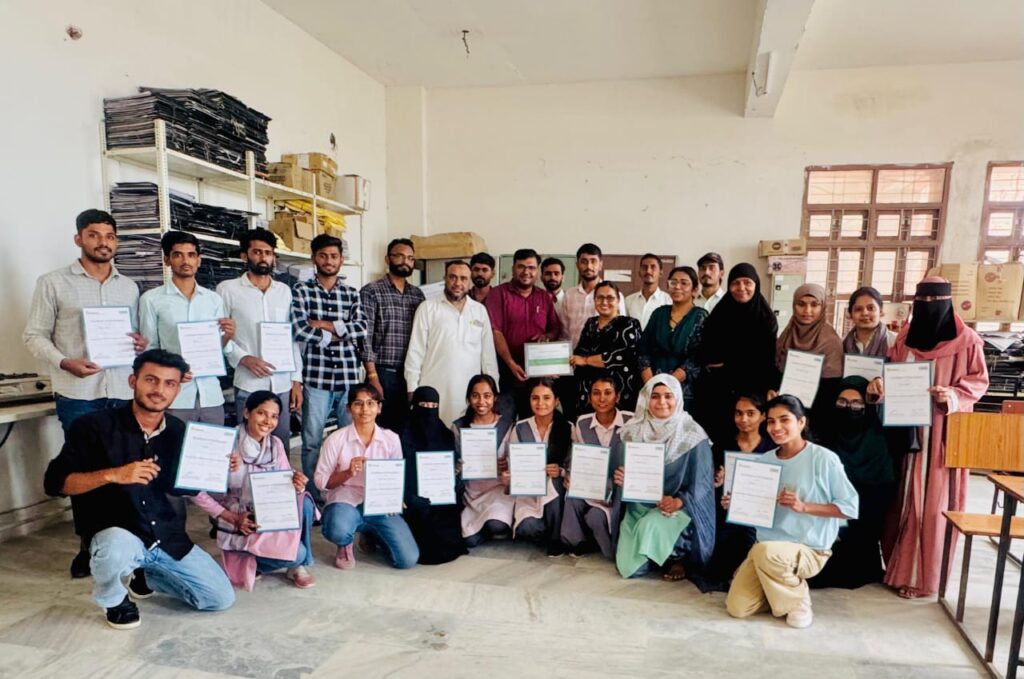
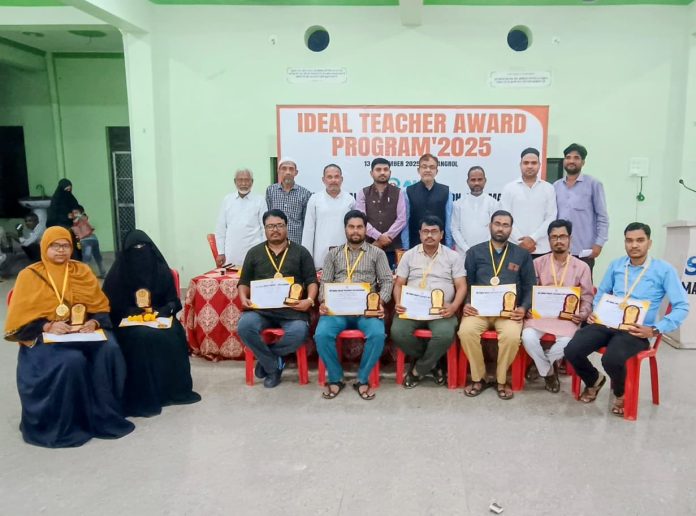
The All India Ideal Teachers Association (AIITA) Unit Mangrol, district Baran, Rajasthan, organized the Ideal Teacher Award 2025 to honor the contributions of educators in the community. The event brought together teachers, dignitaries, and residents to recognize the vital role of teachers in shaping students and society.

Applications were invited from educators across schools and madrasas. A seven-member committee evaluated candidates based on moral character, punctuality, religious integrity, contribution to student development, social engagement, and community impact. After a rigorous selection process, ten educators were chosen for recognition. They were awarded certificates, shields, and medals. The awardees included Rafiq Ahmad, Ejaz Hussain, Mohammad Iqbal, Fakhruddin (Siswali), Tarannum Parveen, Mohammad Saleem (Principal, Madrasa Suiwalan), Mohammad Irfan (Anjuman Madrasa), Meraj Ahmad, Wahid Anwar, and Rizwana Kausar.

A highlight of the ceremony was the Lifetime Achievement Award presented to Tahir Hussain for his decades of service to education. His work was described as leaving a lasting impact on the community and inspiring both teachers and students.

The event was attended by prominent figures including AIITA State President Khalid Akhtar, who spoke on the moral and social responsibilities of teachers, and Media Secretary Dr. Raheem Khan, who encouraged the use of technology in classrooms. State Secretary Yunus Ansari and other guests also expressed appreciation for the teaching community.

The program concluded with words of thanks from Unit Secretary Haider Ali Ansari and Unit President Mohammad Irfan. The ceremony reinforced the value of education and highlighted the role of teachers as community leaders.

source: http://www.radiancenews.com / Radiance News / Home> Latest News> Report / by Radiance News Bureau / September 17th, 2025

The Changemakers: 10 stars of Rajasthan who have made society proud

RAJASTHAN :

Changemakers of Rajasthan

Jaipur :

Rajasthan is known for its sandy deserts, historical monuments, especially forts, vibrant culture, and above all, its brave people, some of whom are inspiring others and changing society for the better. Under our series ‘The Changemakers’, Awaz-The Voice, brings you ten such personalities of Rajasthan, who have done extraordinary and pioneering work. Batool Begum: A living legacy of musical heritage.

Batool Begum: Woman who took traditional music to the world

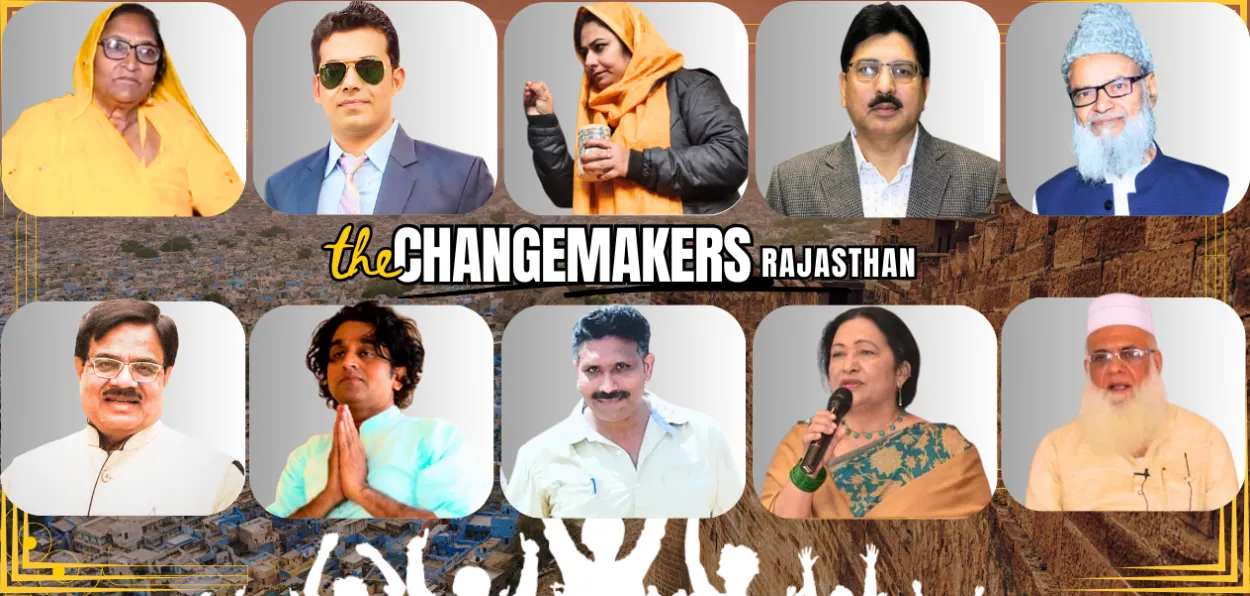
One name that resonates in the streets of Jaipur is that of Batool Begum. Born in Kerap village of Nagaur district, Rajasthan, this extraordinary singer is a living legacy of Indian classical music. Batool developed a deep passion for music in her childhood. Despite facing social and economic challenges, she continued her singing.

Her melodious voice and her passion for music not only earned her recognition as an artist but also proved that talent can break all barriers. Her art is a source of inspiration for her community and the entire Rajasthan.

Abdul Salam Johar: A lac bangle maker who received global recognition

The vibrant spirit of India’s Pink City, Jaipur, doesn’t only emanate from its colours and people but also from the traditional handicrafts that are made and sold here. Bangles worth lakhs are made in these streets, which are a symbol of the traditional beauty and hard work of thousands of its people.

Abdul Salam Johar is one such artist who not only preserved the traditional art of the State but also brought about a social change in a major way. Coming from the Manihar community, Johar was born in a family with little means, but his dreams were extraordinary. Seeing the struggles of his grandfather Hafiz Mohammad Ismail and parents Haji Abdul Aziz and Hajjan Qamar Jahan, he made hard work, dedication, and social service the main mantra of his life.

He began his journey from his ancestral shop ‘Indian Kangan and Colour Store’ located in Tripolia Bazaar of Jaipur, and today his wares are being sold under brands ‘Johar Design’, ‘Johar King’ and ‘Indian Crafts’ in the global markets. He is not only a successful entrepreneur, but also a social reformer who took his community and traditional art to new heights.

Abdul Latif ‘Arco’: A confluence of business and social service

Abdul Latif, who lives in Chini ki Burj in the capital Jaipur, and is known as ‘Arko’ in Rajasthan, is one such special personality. Born in a small village of Chomu in 1946, Abdul Latif’s father, Rahmatullah, and mother, Hafijan, taught him hard work, honesty, and the passion to help people, which became the basis of his life.

His company, Abdul Razzaq & Company (ARCO), is today a big name for social service along with electric motors, fans, and coolers. Apart from this, his hotel, ARCO Palace, is a symbol of his hard work and foresight. Abdul Latif’s story is not just of a businessman, but of a person who chose to work as a changemaker by combining his business and social responsibilities.

Qazi Nishat Hussain: A new voice breaking stereotypes

The voice rising from a small office located in the narrow streets of Johri Bazaar in Jaipur, the capital of Rajasthan, is today inspiring society to change. This voice is of Nishat Hussain, Rajasthan’s first Muslim female Qazi, social worker, and a strong advocate of the rights of Muslim women.

Her life journey is an example of courage, struggle, and change, which not only made thousands of women aware but also gave them a new direction to live.

Born in Sitabari Mohalla of Karauli district, Nishat’s childhood was spent in an environment of communal harmony. His family was the only Muslim family in the neighbourhood. There were three temples in front of her house. She says, “We did not know who was a Hindu and who was a Muslim.” In a backward area like Karauli, where girls’ education was not given importance, Nishat created history. She became the first Muslim girl in the district to pass the tenth standard, that too as the only Muslim student among 1200 girls. Today, she has become a torchbearer of the rights of Muslim women.

Captain Mirza Mohtasim Baig and Ruby Khan: An Inspiring couple in social service

An inspirational couple, Captain Mirza Mohtasim Baig and his wife Ruby Khan, hail from Jaipur. Captain Mirza is the first Muslim pilot of Rajasthan and has been operating national and international flights for the last 25 years. At the same time, his wife Ruby is an active social worker and politician.

Both believe that if one wants to bring change in society, then he has to take the initiative. Together, they had organised medical camps, documentation camps, free ration distribution, and offered financial help to families in the marriage of their daughters. The couple is an epitome of change brought about by spirited people.

Dr. Arif Khan: The village scientist who created history

Thirty-four years ago, a child was born in the small village of Masani in the Hanumangarh district of Rajasthan. Today, he is Dr. Arif Khan, a scientist who has brought laurels to India. In his village, most of the people toiled in the fields. His father, Advocate Farid Khan, wanted his son to become a doctor. His mother and grandfather also had the same dream. But there were few schools in Masani, and the path to making dreams come true was difficult. Still, Arif had a passion to do something extraordinary in his life.

With his hard work and dedication, he became a bio-scientist and brought glory to his family and village. His research on milk and food products brought a wave of change. His story proves that if the intentions are strong, then even a boy from a small village can become a scientist and make the country feel proud.

Mainuna Nargis: First Shia Muslim woman in art conservation

In a vast country like India, art conservation is important since it not only preserves history but also connects future generations to our heritage.  Mainuna Nargis, the country’s first and so far the only Shia Muslim woman art conservator, does the same work. Born in Bahjoi, a small town in Moradabad district of Uttar Pradesh, Maimuna’s childhood was ordinary, but her dreams were extraordinary. Rajasthan has now become Mainuna’s second home.

Her father, a Policeman in UP, always encouraged her. After studying Fine Arts from Aligarh Muslim University (AMU), she did a diploma in Museology, which became the most decisive turning point in her life. Maimuna’s story is not just of professional success, but a story of passion, struggle, and self-confidence, which revived the broken pieces of history.

Yoga Guru Naeem Khan: Global journey from music to yoga

The life journey of Yoga Guru Naeem Khan, who rose from the streets of Jodhpur, the cultural capital of Rajasthan, to spread his spiritual aura on international platforms, is a unique example. He rose from a common man to a global yoga guru and presented yoga as a universal energy beyond religion, culture, and boundaries.

Naeem Khan was born in a family where music was in every breath. His grandfather, Ustad Umardin Khan, was the court musician of the Jodhpur royal family, while his maternal uncle was Padma Bhushan-awarded Sarod player Ustad Sultan Khan. However, with changing times, that traditional flame of music started to fade. Naeem and his brother got involved in business, but yoga gave Naeem a new direction, and he took it to a global platform.

Syed Anwar Shah: A man who introduced girls to education

Thirty years ago, a dream was born in a small room in Jaipur, which has today become the light of education for thousands of girls. This is the story of Syed Anwar Shah, whom people fondly call Master Anwar Shah. He not only dreamt of his daughter’s education, but also made it a means of progress for the daughters of society.

Today his educational institution, Al-Jamia-tul Alia, is spreading the message of knowledge and Islamic ethics not only in Jaipur, but also in the whole of India and abroad. After completing his M.A. in Public Administration from Rajasthan University in 1980, he dedicated his entire life to the welfare of society and the service of education. In 1995, when his daughter Alia was born, he decided to set up an institution for the education of girls, which would impart both worldly and divine teachings.

Today, his effort has become a boon for thousands of families.

Padma Shri Shakir Ali: Patron of Miniature Painting

It’s no exaggeration to say that Jaipur is the art capital of Rajasthan. And in the field of miniature painting, the name of Syed Shakir Ali comes to the fore spontaneously. This genre of painting is an identity of the state of Rajasthan. 

Padma Shri awardee Syed Shakir Ali is not only a great practitioner of this art, but he is also the guardian of that heritage, which is an integral part of the cultural identity of Rajasthan. Born in 1956 in Jalesar village of Uttar Pradesh, Shakir Ali’s family soon settled in Jaipur, where his art got a new direction. 

Today, he has given recognition to this traditional art of Rajasthan not only in India but also on international platforms.

source: http://www.awazthevoice.in / Awaz, The Voice / Home> The Changemakers / by Aasha Khosa, ATV / September 14th, 2025

Dungarpur’s Noor Mohammad Makrani: True Symbol of Humanity, Brotherhood

Dungarpur, RAJASTHAN :

At 59, a motor mechanic in Rajasthan dedicates his life to helping 19,000 poor families, distributing free ration kits and gifts to Hindus and Muslims alike, proving that service knows no religion.

New Delhi / Dungarpur :

In the heart of Dungarpur city in Rajasthan, a remarkable story of selfless service and unity is quietly unfolding. Haji Noor Mohammad Makrani, a car mechanic by trade, has become an inspiring figure of humanity and brotherhood, breaking barriers of religion and caste with his unwavering dedication to the poor and needy.

For many years, Noor Mohammad has devoted himself to social service through the public welfare group “MMB Group,” inspired by the spirit of the Mastan Shah Baba Dargah, where he is actively involved. His mission has touched the lives of over 19,000 families, distributing free ration kits and providing essential support during every festival, including Holi, Diwali, Eid, Bakrid, and Ramadan.

“Service is the biggest religion,” says Noor Mohammad, whose commitment has not waned even at the age of 59. His efforts go beyond just ration distribution; he has donated blood 40 times and regularly distributes clothes, food, and daily necessities to the destitute across Dungarpur. He also cares for animals and birds, ensuring they have food and water.

“Noor Mohammad does not see anyone’s caste or religion. His heart is open to all,” shares Asrar Ahmed, former minister of state, praising the man whose actions unite communities. Non-Muslim residents of Dungarpur also express deep respect and support for him, showing that goodwill crosses all divides.

“As long as I live, I will continue this service,” Noor Mohammad states firmly, embodying the true spirit of brotherhood in a time when such examples are rare.

At the Mastan Shah Baba Dargah, Noor Mohammad regularly collaborates with government officials, social workers, and local leaders to organise public welfare programmes. His work stands as a shining example in an age where division often dominates headlines.

This story of Noor Mohammad Makrani is a reminder that humanity and kindness can prevail over differences. His life’s work inspires many to see beyond religion and caste and to embrace the shared responsibility to care for the less fortunate.

“Noor Mohammad’s service has helped our family during hard times. His help is given without any conditions,” says Rahim Khan, a beneficiary.

“In these times, it’s rare to find someone who works for all communities alike. He truly represents brotherhood,” remarks Suman Patel, a local Hindu resident.

Noor Mohammad’s journey shows that compassion and dedication can build bridges where others see only walls.

source: http://www.clarionindia.net / Clarion India / Home> India> Indian Muslims / by Mohammad Bin Ismail / July 15th, 2025

Mohammad Raza Khan to Represent India in Youth Basketball Championship in Maldives

Shahpura (Jaipur District) , RAJASTHAN :

A Muslim youth from Shahpura, Rajasthan, earns place in Indian youth basketball squad for South Asian Championship, inspiring local community and proving that dedication overcomes all challenges

New Delhi :

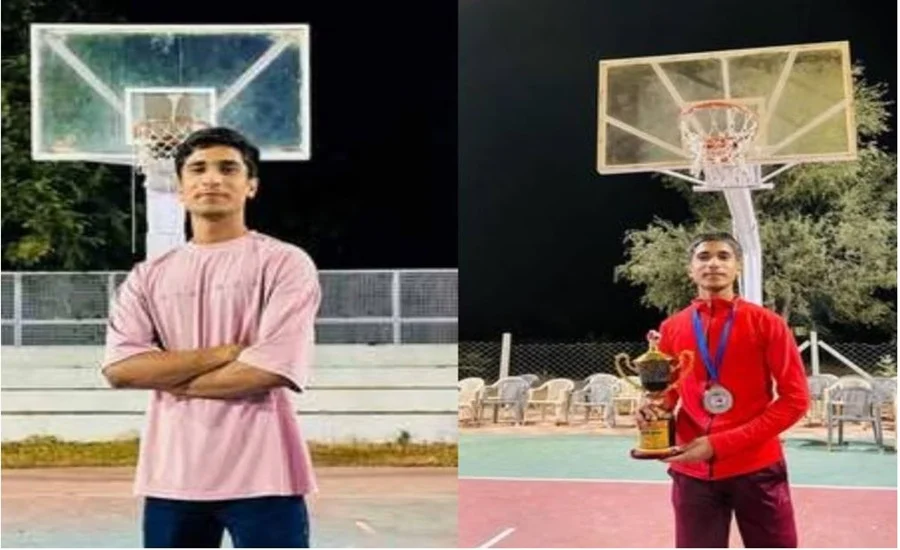
In a proud moment for both Rajasthan and the Muslim community, Mohammad Raza Khan, a young basketball player from Shahpura town, has been selected to represent India in the Youth Basketball Championship. His achievement has filled his family and local community with joy and hope.

Mohammad Raza Khan will participate in the South Asian Basketball Championship scheduled to take place in the Maldives on une 11. His selection to the Indian youth basketball team highlights not only his talent but also the determination and hard work that have brought him this far.

Raza Khan has been training hard at the Indian team’s camp in Indore, where he impressed coaches and selectors with his skills and discipline. “Raza showed remarkable focus and commitment during the training sessions,” said one of the coaches at the camp. “His talent is clear, and he deserves this opportunity to shine for India.”

News of Raza Khan’s selection was met with great happiness in Shahpura. Local residents, relatives, and sports fans gathered at his home to congratulate his father, Shabbir Hussain Khan. “We are very proud of Raza. His success is a shining example for all young people in our community,” said a neighbour. The atmosphere in Shahpura has been full of celebration and encouragement.

Mohammad Raza Khan comes from a humble middle-class family. Despite limited resources, his dedication, discipline, and passion for basketball have been unwavering. His journey serves as a strong reminder that with hard work and determination, barriers can be overcome.

Raza Khan’s achievement is also a proud moment for the Jaisalmer Academy, from where he hails. He is the ninth player from this academy to earn a place on the Indian basketball team, which speaks volumes about the academy’s contribution to nurturing young talent.

“The selection of Mohammad Raza Khan is a moment of great pride for Rajasthan and especially for the Muslim community,” said a local sports official. “His success shows that talent and commitment are found everywhere, regardless of background or economic condition.”

Residents of Shahpura are confident that Raza will not only represent India with distinction but also bring home a gold medal from the championship. “We all believe that Raza will make the country proud,” said a sports enthusiast in the town. “He is determined and ready to give his best on the international stage.”

Mohammad Raza Khan’s rise to the national team sends a strong message about the potential of young Indian Muslims in sports and other fields. It challenges negative stereotypes and shines a light on the hard work and talents often overlooked in smaller towns and communities.

This young athlete’s story encourages many others to follow their dreams, showing that with persistence, even those from modest beginnings can reach national and international levels of success.

Mohammad Raza Khan prepares to take part in the South Asian Basketball Championship, the hopes and prayers of Shahpura and Rajasthan go with him. His journey is a symbol of courage, dedication, and the bright future that awaits India’s youth when given equal opportunity.

source: http://www.clarionindia.net / Clarion India / Home> Editor’s Pick> India> Indian Muslims / by Mohammed Bin Ismail / June 05th, 2025

Sahabzada Shaukat Ali Khan is Now No More

Tonk, RAJASHTAN :

Tonk, Rajasthan :

Shaukat Ali Khan, who received the “International Hero in Literature Award” from Cambridge University and was awarded the President’s Award, is now no more. He breathed his last on Saturday night during treatment in Jaipur. He was 87.

Born on 11 July 1936 in the family of Sahabzada Idris Ali Khan of Tonk, Shaukat Ali Khan is a distinguished personality of the Amiriya family. He was the first Director of Maulana Abul Kalam Azad Arabic-Persian Research Institute (APRI).

Sahabzada Shaukat Ali Khan participated in the International Sufism Seminar organized by India in Afghanistan.

In view of this, the then President Giani Zail Singh himself considered him worthy of being honored with the National Award.

Shaukat Ali Khan also received an award in a seminar organized by UNESCO.

Apart from being a writer, historian, translator, and poet, he possessed many salient features rarely found in the world of literature.

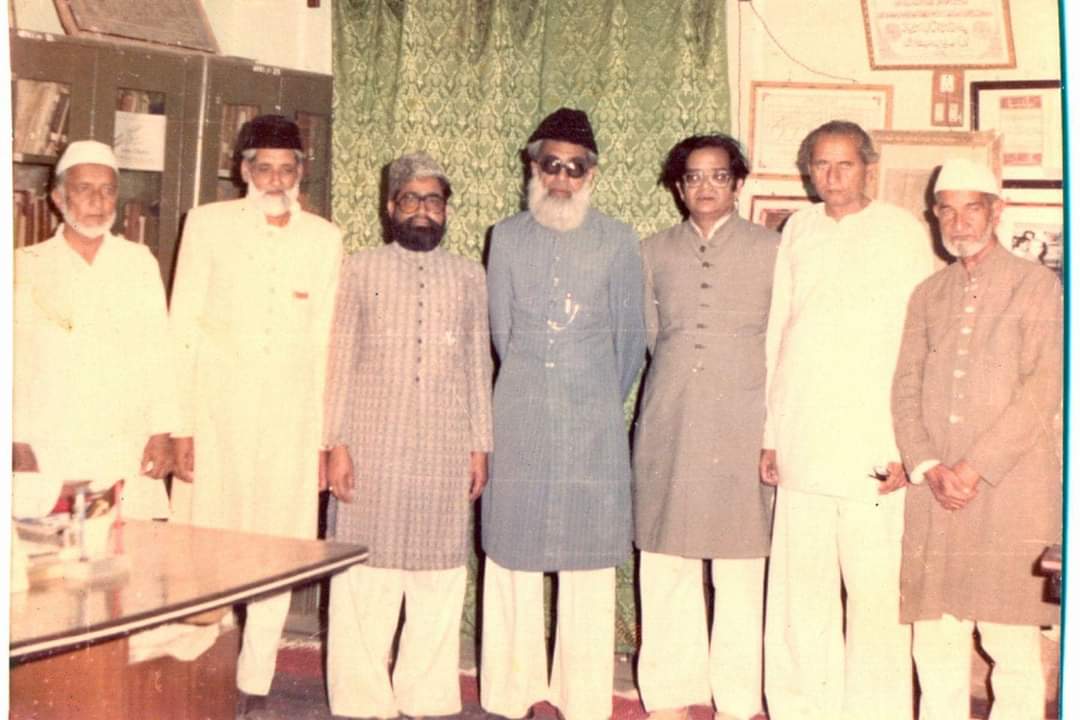
Shaukat Ali Khan with APRI team

The APRI, which has its own identity in the country and the world, is also the result of the hard work and dedication of Shaukat Ali Khan.

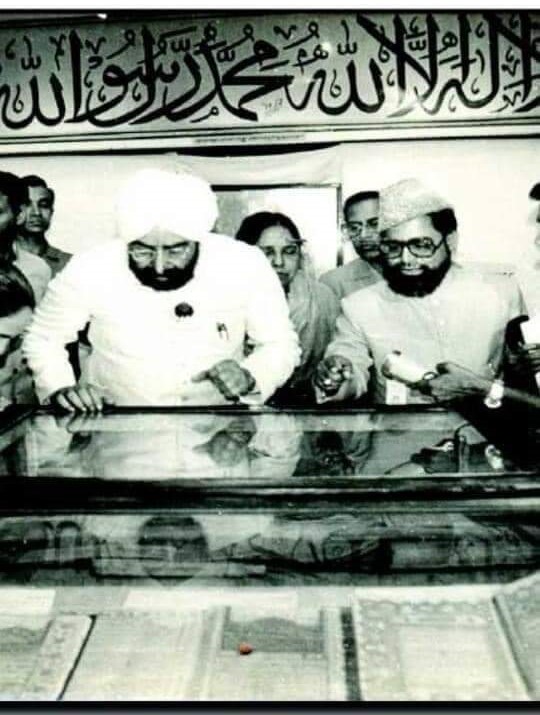
Shaukat Ali Khan with President of India Giani Zail Singh at APRI, Tonk

In 1986, then President Giani Zail Singh visited the APRI. At that time, he wrote, “I am happy that such a director and such an organization exists in Rajasthan, due to which Rajasthan is known in the Arabic-Persian world. This happens very rarely. The idea is that someone should establish a path for the simultaneous progress and development of both the languages. I am extremely proud that a single person has created a platform for the progress of the Arabic and Persian languages and made it popular in the world. For this, its director Shaukat Saheb should definitely get the National Award, which he deserves.”

The life of Shaukat Ali had many forms and colors. With his efforts, he not only converted a nursery into an institute but also brought glory to Tonk. The APRI is proof of his pioneering efforts and wisdom. As long as the APRI continues to exist, the name of Shaukat Ali Khan will be there.

Shaukat Ali Khan was initially appointed Nigran of Nawab Mohammad Ali Khan’s library. He collected about 50,000 Makhtutats and wrote about 60 books in different languages – two books in Arabic, 10 in Persian and about 45 in English.

He had been carrying out research and writing work for about 40 years. He was a scholar of Arabic, Persian, English, Hindi and Urdu languages. He has also served as a member of many national and international government organizations.

Shaukat Saheb, who presented papers at national and international conferences and seminars, also edited and translated 6000 manuscripts, and published about 300 articles in more than 100 journals in English and Urdu. There is a long list of honors received by him at the national and international levels as well as at the state level. After retirement, he was living his life as a Sufi saint.

People across the country, including Mujeeb Azad, Director of Tonk Arabic Persian Research Institute; Sahibzada Mohammad Ahmed Bhayyu Bhai, Chairman of Royal Family Tonk; Retired Research Officer Anwarunnisa Nadira, State General Secretary of Human Relief Society, Tehreek-e-Urdu Rajasthan Advocate Akhtar Khan Akela, Cricket Coach Imtiaz Ali Neelu, have expressed grief over his demise, calling it an irreparable loss for the Arabic-Persian Research Institute, Tonk residents, and the Tonk Royal Family.

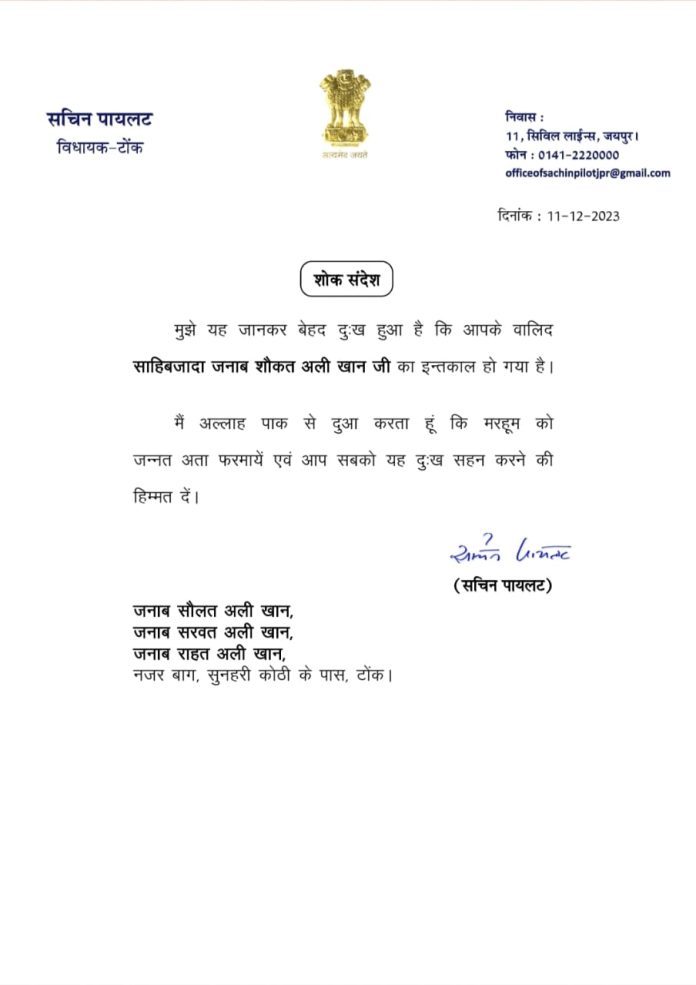
Condolence Letter by Sachin Pilot, MLA of Tonk

Sachin Pilot, MLA of Tonk has also sent a condolence message.

Chaudhary Akbar Qasmi, national convenor of Sanjhi Virasat Manch, has written that Sahabzada Shaukat Ali Khan was a descendant of Tonk Nawab and was one of the great intellectuals of Rajasthan. No one can deny his important role in establishing a big library (Arabic Persian Research Institute) in Tonk City and in raising it from the ground to great heights. As long as he was able to walk, he stood before writers and research scholars as a bright lamp of hope.

He was indeed a man of knowledge and grace.

source: http://www.radiancenews.com / Radiance News / Home> Focus> Markers of Excellence> Obituary / by Raheem Khan / December 12th, 2023

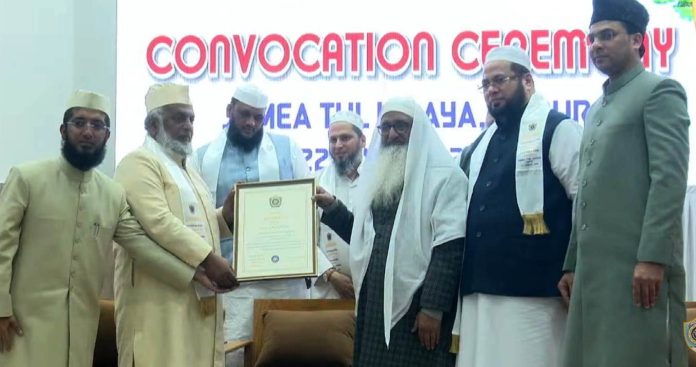
Prof. M Saud Alam Qasmi Conferred Lifetime Achievement Award by Jamitul Hidayah, Jaipur

Aligarh, UTTAR PRADESH / Jaipur, RAJASTHAN :

Aligarh:

The Islamic scholar and former Dean, Faculty of Theology, Aligarh Muslim University (AMU), Professor M Saud Alam Qasmi, has been conferred with the Lifetime Achievement Award by Jamitul Hidayah, Jaipur.

While conferring the award, the Rector of Jamia, Maulana Fazlur Raheem Mujaddidi, praised Professor Qasmi as a distinguished scholar and lauded his books as a “treasury of India.” He urged young scholars to draw inspiration from Professor Qasmi’s academic legacy.

Editor of Tahzeebul Akhlaq, Professor Qasmi has authored 40 books and 400 articles in English, Urdu, and Arabic.

A celebrated orator, he has held several prestigious roles at AMU and is associated with numerous academic institutions and editorial boards.

source: http://www.radiancenews.com / Radiance News / Home> Pride of the Nation> Awards>Latest News / by Radiance News Bureau / January 28th, 2025

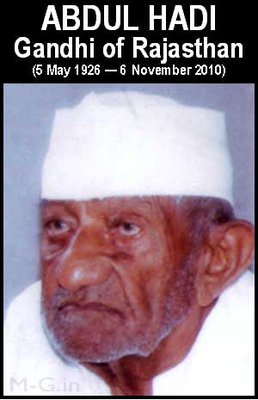
Abdul Hadi — Gandhi of Rajasthan

Burahan Ka Tala Village (Barmer District), RAJASTHAN :

Alhaj Abdul Hadi, a prominent public representative of western Rajasthan passed away in the government hospital, Barmer, on 6 November 2010. He was born on 5 May, 1926.

He led a life full of struggle and was elected an MLA seven times. He belonged to a famous martial race samma (Sindhi) family. His ancestors were religious and learned people. His father Alhaj Mohammed Hasan was a great Moulvi of his time. He was a poet of Sindhi language. He was a scholar of Sindhi, Urdu, Persian and Arabic languages.

Abdul Hadi published his father’s poetry in Sindhi language as ‘Bayaaz-e-kosri’ in 1999. Before partition, Sindh and Rajasthan were very close. Sindh was a prosperous region. Those interested in education would visit Sindh which was a great seat of knowledge in those days. Moulvi Mohammed Hasan Hadi’s father received his education in Sindh. Abdul Hadi respected his father too much and served him well till his end.

Abdul Hadi was a man of letters and had a good knowledge of Sindhi, Hindi, English and Urdu languages. He was fond of Sindhi sufi saint poet Shah Abdul Latif Bhitai and used to study Shah Abdul Latif’s ‘Risala’ regularly along with the recitation of the Holy Qur’an. Abdul Hadi joined politics in his teens for the service of the people. He was a great freedom fighter and active associate and follower of Jai Narayan Vyas who himself was a great freedom fighter and architect of modern Rajasthan. He was the Chief Minister of Rajasthan in the formative years of the state. In those days zamindari system was abolished which made feudals very angry. They used to harass and persecute poor farmers for taxes on land – a system abolished after the freedom of India. Abdul Hadi had been Sarpanch of Burhan-ka-tala tehsil of Chohtan in Barmer in the beginning of the Panchayati Raj. He rose from grass roots to the level of representative of state and further national level.

He was the pradhan of panchayat samiti of Chohtan 1959. He had been the president (Adhyaksh) of Central-Co-operative Bank from 1972 to 1980, i. e. for almost a decade. He had been the District President of Congress (Adhyaksh) twice for the district of Barmer. For 11 years, during 1995-2006 he had been a member of the All India Congress Committee and was a member of the State Congress Committee for many years. He was elected member of the legislative assembly for the first time in 1953 from Sanchore when Chohatan and Sanchore formed one assembly segment. His periods of assembly membership are as follows:

______________________________________

Election year   / Constituency

1953 Sanchore, Dist. Jalore & Barmer

1967 Chohatan, District Barmer

1971 Chohatan

1975 Chohatan

1985 Chohatan

1990 Chohatan

1999 up to 2004 Chohatan

__________________

Chart :

Abdul Hadi was a man of character and full of virtues. He was a disciplined politician, selfless, large-hearted, most secular and most obedient servant of the people of border area. He was closely associated with the first generation of Indian political leaders after independence like Nehru, Maulana Azad and Rafi Ahmad Qidwai. He was very close to Indira Gandhi who had great respect for him and had a special liking for Barmer and Jaisalmer and always remembered Abdul Hadi whenever she visited the area. Abdul Hadi had great personal qualities like piety, honesty, hospitality and patience and led a frugal life style. He was very kind to farmers, down trodden and poor people irrespective of caste, creed and religion. He would never surrender before an oppressor.

In 1956, his relative Mohammed Hayat Khan was killed by the notorious dacoit Balwant Singh of village Bakhasar district Barmer. Balwant Singh was an unkind, cruel and ferocious oppressor in the border area of Barmer dist. In those formative years of the Rajasthan state, there was a great menace of dacoits and cattle-lifters. They used to commit robberies and murders and then often absconded to Pakistan.

Abdul Hadi opposed dacoits and led a farmers agitation. Balwant Singh was against Abdul Hadi as he opposed him. Due to Abdul Hadi’s Congress links, Balwant killed his real brother Mohammed Hussain in his village Burhan-ka-tala. He came to kill Abdul Hadi but he was not at his house at the time, so his brother was killed instead. Abdul Hadi fought with legal methods and with the support of the Congress and men like Nathu Ram Mirdha, a kisan leader. Balwant Singh was arrested, tried and jailed. Feudalists and the old system of rulers were finished gradually.

Abdul Hadi was an honest public representative and man of action. In late fifties, there was a dishonest sub-divisional-magistrate posted in Barmer district headquarters. In spite of repeated warnings, he did not improve. He used to take bribes from farmers. Hadi warned him again and again but to no avail. The magistrate used to boast that he was very close to higher ups. Having no other course, Abdul Hadi approached the then Anti Corruption Dy. S. P. Nand Singh Chudawat who was an honest officer. In those days scientific aids of investigation were not of high standards. Dy. S. P. told Hadi that he wanted to see with his own eyes the magistrate accepting bribes. So he changed his dress to look like a farmer of the area. The SDM demanded and received bribe. Caught red-handed, the SDM was promptly arrested for receiving bribe. He was tried and punished by the Supreme Court of India. Abdul Hadi was instrumental in laying this trap.

Abdul Hadi was a real frontier leader not only of minorities but of all western Rajasthan. He was the beacon of Rajasthan from Punjab to Gujarat, i.e. for people living near 1000 kms of international borders Ganganagar, Bikaner, Jaisalmer, Barmer to Jalore, Jodhpur, Sirohi and Pali on the western side of Rajasthan. He was the most trusted sentinel of Indian borders. Abdul Hadi was a man of development. He caused development not only in Barmer district but also in the whole western Rajasthan. He made his efforts for public utility services like roads, water supplies, electricity, hospitals, schools, hostels, community house and other public amenities. For the uplift of society, education is very important. He did all his best efforts to promote education. He helped in the construction of a hostel in Barmer for the students of the area. He emphasized the importance of education. He would say: without education we cannot make any progress in modern world. He used to help poor students financially and morally.

Abdul Hadi lived for the service of people. Whenever there would be some natural disaster, he would extend all his resources for the help of the people. In western Rajasthan, due to erratic and uncertain rains, chronic famines were common. He would always stand up to extend all possible help and would ask the government to start daily wages scheme for the victims. If there were matrimonial disputes or other social issues, he would try to get them solved. If there were agrarian disputes between the farmers, he would always be there to get them solved with the help of the police and revenue officers. If someone was sick, he would be helpful to him by getting him medical and administrative help. He was against use of drugs like opium etc. He also opposed unequal marriages. He was against social evils like “osar mosar” when somebody died. He was against hypocrisy in all forms.

Abdul Hadi was a large-hearted and magnanimous man. He had great rapport with the administration of the district and the state. He was very popular in Congress party circles due to his honesty and candidness. He was clear in his thoughts and would always be helpful for both the administration and public in their hour of need. He would work as a bridge between people and administration. Sonia Gandhi used to call him “Adhyakshji” and would meet him whenever he visited Delhi or she visited western Rajasthan.

While an MLA living in Jaipur’s Vidhaykpuri and MLA quarters, he would help the poor who came from the Barmer district. His house was always occupied by people of his area. He would get up early in the morning and take the needy to the concerned minister and get their problems solved. He was a man of wisdom and action. His approach to ministers and officers was very persuasive and humble. He was loved by the people of his area, his friends, colleagues and administrative officers.

On his death, thousands of people came to pay their last respects to him including all MLAs from Barmer and Jaisalmer districts and western Rajasthan.

A few days before his death, the Chief Minister of Rajasthan Ashok Gehlot came to see him in his village of Burahan-ka-tala. Ashok Gehlot respected him very much. All the administrative officers including the collector were present during his burial in his ancestral graveyard in his native village Burahan-ka-tala.

The author, a retired Inspector General of Police (IGP), had been close to Abdul Hadi since his student days. He had lived with Abdul Hadi in his MLA house for almost three years in the early seventies after completing his education from AMU. He had been his admirer and an ardent follower and was with him on his last day.

source: http://www.milligazette.com / The Milli Gazette / Home> News> National / by The Milli Gazette / March 17th, 2011