Tag Archives: Uttar Pradesh Muslims

The story of Shahid Ahmed becoming IPS from IRS

Kanpur, UTTAR PRADESH :
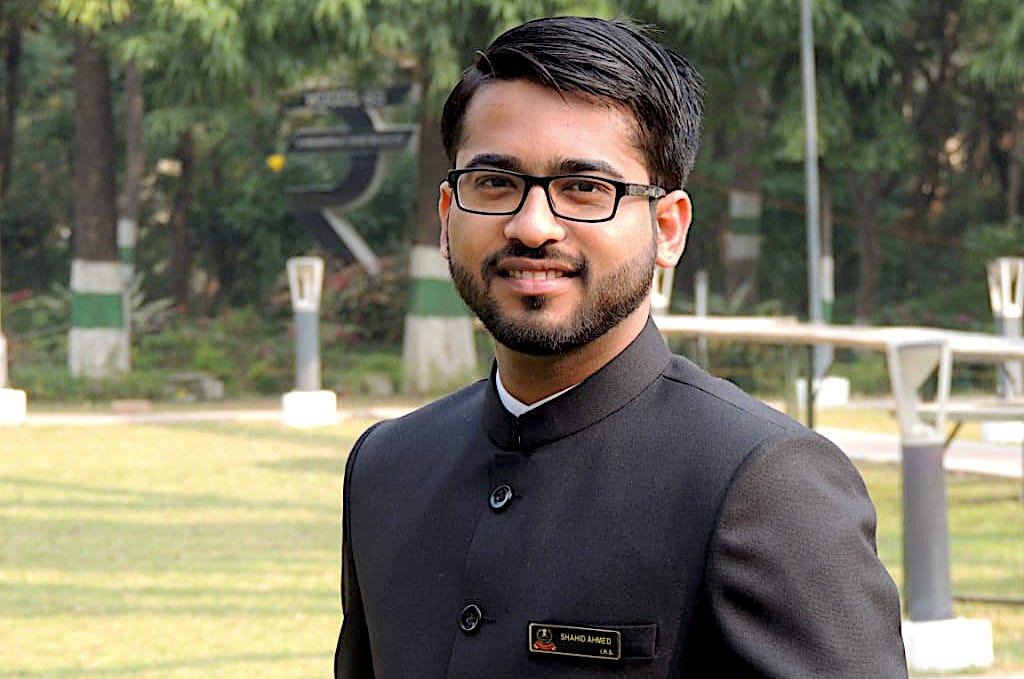
If we have faith in ourselves, we can do anything. Shahid also believed that if everyone can do it, then I can also do it. And today Shahid is successful. This time he has got 475 rank in UPSC Civil Service Examination. Whereas in the previous examination he had secured 695 rank. 

Talking to BeyondHeadlines, Shahid says that last time I got IRS. But I want to become an IAS, so I continued my preparation. However, it is not so easy to prepare along with training, so this time I could only get 475 rank. On this rank you will get IPS. 

But you have to become an IAS? 

On this Shahid says, ‘Absolutely! I have to become an IAS. Insha Allah, I will continue my efforts next time as well. However, he also says that it may be difficult to appear in the exam next time because my training is going on in Nagpur right now. And it is almost impossible to appear in the exam during this time.’ But Shahid’s spirits are definitely high. 

It was not so easy for Shahid Ahmed of Kanpur city of Uttar Pradesh to do this. In 2016, his father suddenly passed away. The burden of responsibilities fell on him, despite this Shahid kept on preparing and succeeded in his second attempt last year. And now in the third attempt, he has also improved his rank. He is hopeful that in the future he will definitely become an IAS along with getting a good rank.

Shahid’s family earlier lived in Kidwai Nagar in Kanpur, but now they have shifted to Jajnu area. His father Haji Jameel Ahmed was a businessman. His mother Bano Ahmed takes care of the household chores. He is the fifth child in a family of six members. He has four elder sisters and a younger brother.

Shahid completed his 10th and 12th from Virendra Swaroop School in Kanpur. Then he came to Delhi for further studies. In 2015, he completed his BSc degree in Chemistry Honours from St. Stephen’s College, Delhi University. And now he is studying law from Delhi University. He is currently in the final year of BA LLB.

Shahid says that when I was in school, I had decided that I wanted to join the civil service because I always liked administrative things. I was a captain in the school. I used to manage many things in the school. That’s when my teachers told me that I should join the civil service. From there, I tried to learn about it. I read about it on the internet, then I decided that this is what I want to do.

Shahid had taken law as his subject. He says, because I am also studying law. This helps me a bit in other papers as well. That is why I thought it was better to take this.
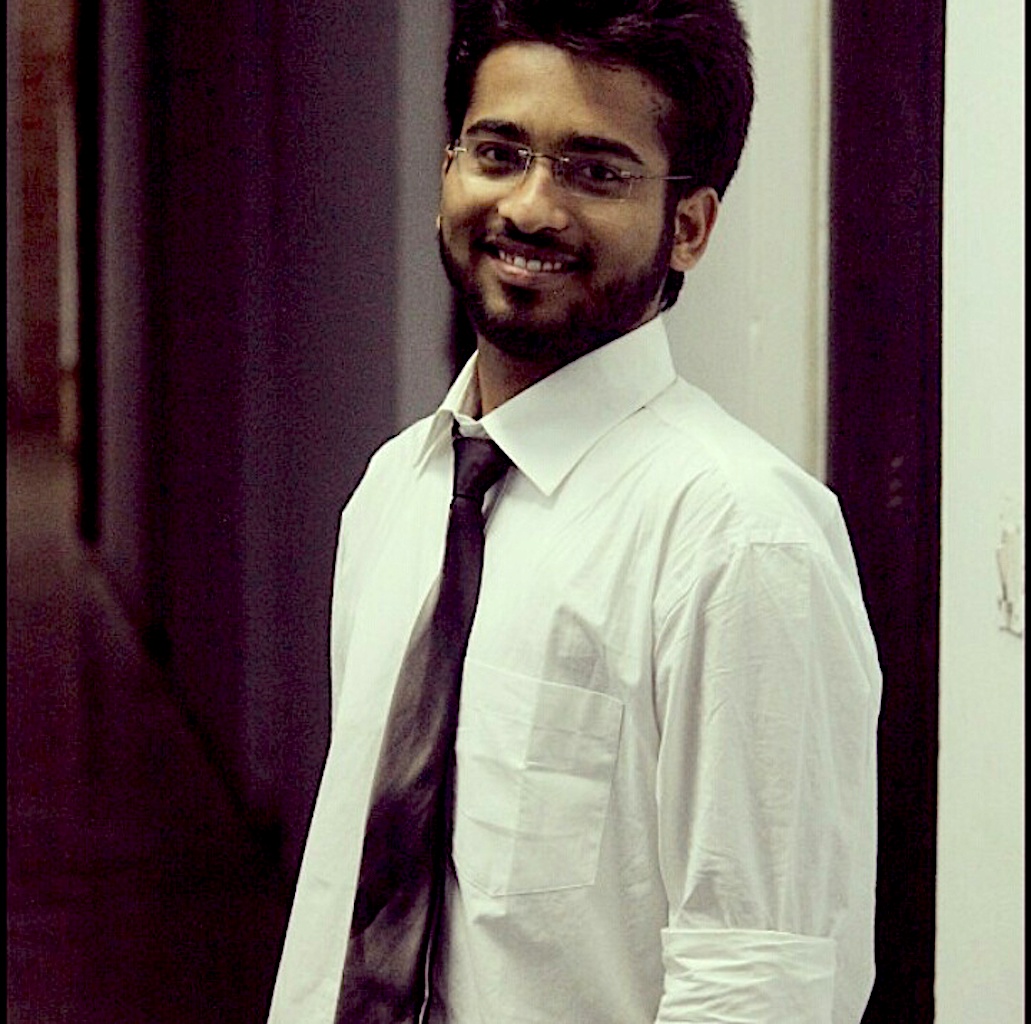
Talking about his preparation, Shahid says, “I joined a coaching institute in 2016, but left it within a month. I did not think coaching was going to be of any use. I gave the test of Hamdard Study Circle and got selected. Then I stayed here and studied on my own. Here I got a chance to meet good people. I made friends with good people. The atmosphere here is very good. In 2017, I came to Jamia Millia Islamia. Here too I got a lot of guidance and help.

Shahid tells those who want to join civil service that before starting preparation, it is most important to research the syllabus and previous year question papers and understand them. Because there is a lot of material to study. But we have to study according to the syllabus very thoughtfully and with planning. It is also important to understand the demand of the exam.

He further says that, along with studying, it is also important that you know how to write. Whatever you have studied, if you are not able to write it in the mains paper, then there is no use. Nothing is going to happen to you.

Shahid is very interested in cricket. He also reads a lot of non-fiction books. Shahid says that this will not directly help you in the exam, but it definitely makes a difference to your personality. In such a situation, it can be beneficial for the interview. However, it is not necessary that it is beneficial for everyone. But it is certain that it creates a perspective to look at things.

Shahid says to the youth of his community, have you ever thought why we are less in government jobs. Ask yourself what is our percentage in civil service. Have you ever thought that there are not as many people here as there should be. What is the reason for this? Actually, lack of education is the real reason for this. The religion in which the importance of education has been emphasized the most, today the people of the same community are giving the least importance to education.

He further says that, my parents were also not educated, but they understood the importance of education and got all the brothers and sisters educated. In such a situation, it is important that all parents pay special attention to the education of their children. There is a need to pay special attention to the education of girls. They have a lot of potential. They just need to be allowed to move forward. If you support them a little and promote them to study, then in the future they will do the best. 

He further tells the youth that, first of all, you should believe in yourself that if everyone can do it, then we can also do it. Do not think that this is a very difficult exam. We will not be able to study. This thing should be removed from the heart and mind.

Finally Shahid says that, I always regret that if my father was here, he would have been happy with this success. He has educated me after a lot of struggle. I will have this regret in my heart throughout my life that I wish I could have seen my son doing this work or I could have achieved this success during his lifetime.

source: http://www.beyondheadlines.in / Beyond Headlines / Home> India> Real Heroes / by Afroz Alam Sahil, Beyond Headlines / April 20th, 2019
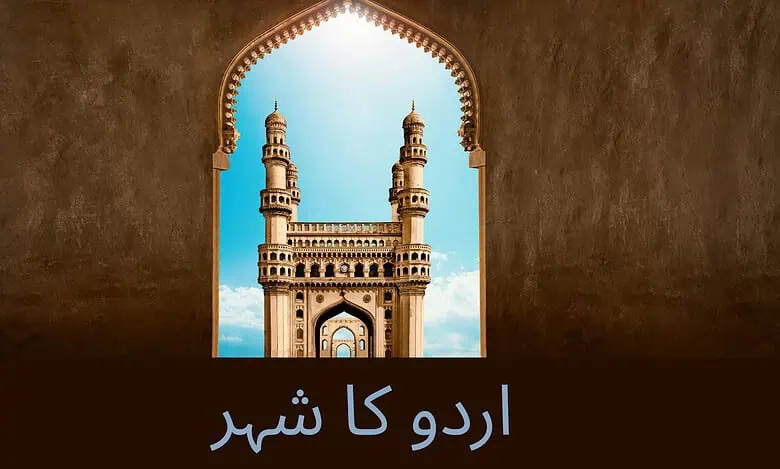
Hyderabad Urdu Ka Shahar: A cultural chronicle by Farooq Argali

Fatehpur, UTTAR PRADESH :

Hyderabad: 

Hyderabad is not merely a dot on the map; it is a vibrant symbol of elegance, culture, and an enduring legacy. Often hailed as the city of domes and minarets, Hyderabad is where history echoes through its majestic palaces, bustling bazaars, and the unmistakable aroma of biryani that fills the air. But beyond its architectural grandeur and culinary delights, the city is known for its Nawabi grace — a heritage shaped by the Nawabs and Nizams, whose generosity and cultural patronage continue to define its identity.

Capturing this soul of Hyderabad is the mission of noted journalist and author Farooq Argali. His upcoming documentary titled ‘Hyderabad: Urdu Ka Shahar’ offers a compelling journey through the city’s layered history — from the Qutb Shahi dynasty to the modern era. In this hour-long film, viewers are treated to glimpses of Hyderabad’s monuments, traditions, cuisine, and the famed tehzeeb — a word that transcends simple etiquette to embody respect, warmth, hospitality, and grace in everyday life.

Over the past three days, Argali has been crisscrossing the city, engaging with its people, documenting their stories, and capturing the sights, sounds, and scents that define Hyderabad. His previous acclaimed documentaries — Delhi: Rangon Ka Shahar and Lucknow: Tamaddun Ka Shahar — stand as testaments to his commitment to preserving cultural heritage through storytelling. His next project is set to focus on Azeembad, the ancient name of Patna.

At 86, Farooq Argali remains remarkably energetic and mentally sharp. Alongside the documentary, he plans to author a book titled Hyderabad Nama, envisioned as an archival treasure for researchers and culture enthusiasts alike. What strikes Argali most about Hyderabad is the thriving presence of Urdu — still seen on shop signs and nameplates, a sight now rare in Delhi and Lucknow.

A man of many talents, Argali is a journalist, playwright, historian, novelist, and poet. Over the last six decades, he has authored more than 500 books, ranging from romantic and detective fiction to literary criticism. In the 1960s, his pulp fiction, written at a breathtaking pace — sometimes a novel in just five days — was immensely popular. Titles like Haye Main Haar Gayee marked the beginning of a prolific writing career. Surprisingly, Argali never studied beyond the third grade in Urdu. When asked about his academic qualifications, he modestly replies, “Fourth failed.”

What, then, is the secret behind such a towering literary output? “Read more than you write,” he says simply. He credits his success to continuous reading and the vibrant literary circles he was part of in Delhi.

Born in Fatehpur, Uttar Pradesh, Argali held various odd jobs before turning to writing full-time. Despite his limited formal education, he calls his gift of writing a divine blessing. Writing under pseudonyms like Hasina Kanpuri in Urdu and Rati Mohan in Hindi, he penned bestsellers such as Ek Toofan Jawani Ka and Chahne Wale, which enjoyed huge success.

However, Argali now views his pulp fiction era as his personal ‘Ayyam al-Jāhiliyya’ — a period of creative indulgence. Over time, he shifted focus to enriching Urdu literature through research, biographies, and literary criticism. His two-volume work Urdu Hai Jis Ka Naam explores the contributions of as many as 400 renowned Urdu writers like Lala Sriram Dehlvi, Firaq Gorakhpuri, Saadat Hasan Manto, Nisar Ahmad Farooqi, and Rahi Masoom Raza to name a few.

Farooq Argali, who also served as the founding editor of the film magazine Rubi, has written extensively on Indian cinema. His historical writings include Bahadur Shah Zafar Ke Dardnaak Halaat, chronicling the last Mughal emperor’s tragic life, the partition story, Dastaan 1947, and Jahan-e-Khusro, a detailed account of the Sufi poet Amir Khusrau.

At a recent felicitation event hosted by Fazil Husain Parvez, Editor of Gawah and Mediaplus Foundation, Argali humbly dismissed the accolades, calling himself a “mazdoor qalam ka” — a laborer of the pen. “I write something broken and incomplete, yet it gets published,” he said with characteristic modesty.

As he continues his journey of literary and cultural documentation, Farooq Argali shares a heartfelt couplet expressing his deepest wish:

Aakhri waqt jab aaye to qalam haath mein ho,
Lafz ‘Allah’ likhoon aur dum nikal jaaye


(When my final moment comes, may the pen be in my hand,
May I write the word ‘Allah’ as I breathe my last)

source: http://www.siasat.com / The Siasat Daily / Home> Featured News / by J S Ifthekhar / May 10th, 2025

Reflections on a Mission: A Visit to Vision International Academy, Phulat

Kodangallur, KERALA / Fulat(Phulat)Village (Muzaffarnagar District), UTTAR PRADESH :

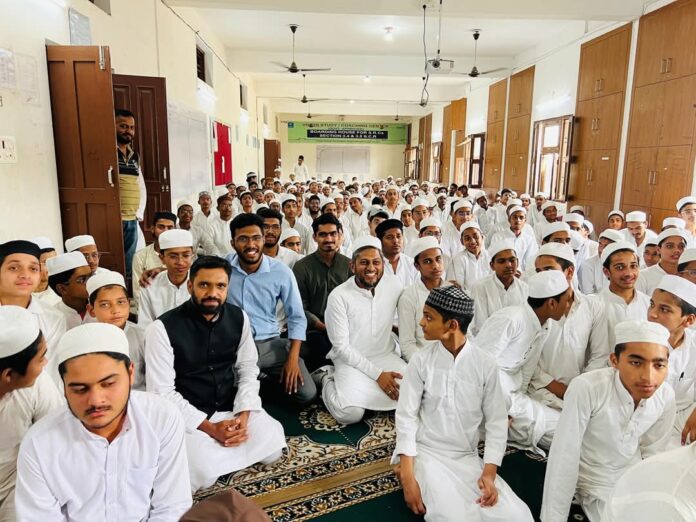
Recently, I had the opportunity to visit Vision International Academy (VIA), situated in the village of Fullat in Muzaffarnagar district, Uttar Pradesh. It was a journey I had long awaited. Spending time with the children there—even briefly—was a moving experience. Before me sat over 300 Huffaz—young children who had committed the Qur’an to memory. But the academy is not merely a Hifz institution. As the name “Vision” suggests, it embodies a deeper insight into human potential, blending spiritual excellence with academic brilliance.

Mammooty Anjukunnu

That evening, while returning to Darul Uloom Deoband, I received a call from Babukka. He sounded emotional. He had called to express his joy—not just about my visit to Vision or meeting the students—but about something much greater. Because what I had visited was not just another educational center. It was a mission. A dream. And behind it stood the journey of a visionary man.

Let me tell you that story.

A man from Kodungallur, Kerala—Ameer Ahmad Babu Manappat—never imagined that his life would take a turn into the field of Islamic education. A former student of Aligarh Muslim University, he was first struck by the concept of Hifz during a visit to Delhi. Intrigued, he began exploring madrasas in Saharanpur, Deoband, and surrounding areas of North India. He wanted to understand the intellectual capacity of Huffaz. People had told him these children possessed extraordinary memory and brilliance.

However, while interacting with them, he found something amiss. These bright children, despite having memorized the entire Qur’an, were often unaware of the world outside. And he, in turn, was a stranger to theirs. This encounter exposed a painful reality: two different worlds existed—and there was a vast, unbridged distance between them.

In North India, the term “madrasa” is broad and includes Hifz centers, Arabic colleges, and basic religious schools. Many children are enrolled in such madrasas without access to formal education. They might learn basic arithmetic or science, but there’s little focus on academic rigor or integration. Most teachers remain confined to their own disciplines. The idea of combining Qur’anic and modern education barely exists.

Ameer Babu, grandson of Kerala’s renowned Muslim reformer Manappat Kunhahammad Haji, felt a growing sense of responsibility. He believed that Huffaz—gifted with sharpened intellect and memory—deserved access to high-quality general education. Their potential, he thought, could be channeled for the upliftment of society and the community.

He spent months researching and, with experts, developed an innovative bridge course—an academic fast-track that compresses eight years of schooling into one. After two more years, students would be ready for the 10th-grade public examination.

Many doubted his vision. He met numerous religious scholars and explained the idea, but most dismissed it. “We already teach school subjects,” they would say. “What more do you want?”

In reality, over 35,000 Huffaz graduate annually from madrasas in Uttar Pradesh alone. Yet less than 10% of them appear for the 10th-grade board exams. Most do not pursue further education. Many end up in manual labor, small trades, or low-income jobs.

Still, Ameer Babu did not abandon his mission.

His journey brought him to Fullat, near the UP-Delhi border, home to a vast madrasa campus named Jamia Shah Waliullah, founded by Maulana Kaleem Siddiqui, a renowned scholar and spiritual leader. The madrasa is located in the birthplace of Imam Shah Waliullah Dehlawi, one of the greatest Islamic scholars in Indian history.

When Ameer Babu shared his vision with the people there, he was told, “Let Hazrat come, he will help you.” Soon, Hazrat arrived—dressed in white, with a radiant smile and graceful demeanor. It was Maulana Kaleem Siddiqui himself.

After listening carefully, Maulana asked Ameer Babu:

“Ameer Saab, what do you want?

Land?
Buildings?
Some support?”

Then he stood up, led him to a nearby three-acre plot of land adjacent to the madrasa, and asked: “Is this enough?”

That was the beginning.

In August 2017, Ameer Babu admitted 76 Huffaz in the first batch. The results were astounding. These students, with their incredible memory skills, were able to learn up to 1,500 words a week. They completed an entire year’s academic syllabus in just 13 to 18 days, using innovative learning techniques. Simultaneously, their Qur’anic memorization was maintained through a dedicated revision system (daura).

Under the Open School system, the first batch achieved a 92% pass rate in the 10th-grade board exams. Encouraged, they transitioned to the more rigorous UP State Board—and the pass rate rose to 96%. Then, Vision shifted to the CBSE curriculum, and the first batch passed with a 100% success rate.

Classes were expanded to include Plus One and Plus Two, with both Science and Humanities streams. Today, more than 300 Huffaz are enrolled at VIA.

Among its graduates:

  • 2 are now in medical colleges
  • 7 in engineering colleges
  • 8 in law schools
  • Over 50 in various Arts & Science colleges

Vision’s students now come from across seven Indian states. They are fluent in English, academically competitive, and grounded in Qur’anic values.

Last year, during Ramadan, 235 VIA students led Taraweeh prayers as Imams in 17 Indian states, including Kerala—showcasing both their spiritual and intellectual discipline.

Some of these students have now joined the SAFI Institute in Kerala, where Ameer Babu serves as Vice Chairman—an ongoing experiment in integrated education. His goal is to nurture a generation of confident, competent Muslim youth who carry the Qur’an in their hearts and knowledge in their minds.

During my visit, Babukka shared with me his dream—to build 100 such institutions across India for Huffaz. I responded with a story.

In 1992, Balbir Singh, a leader in the mob that demolished the Babri Masjid, returned to his village a hero. But his father rejected him. His wife left. Disgraced and broken, he eventually arrived at Maulana Kaleem Siddiqui’s khanqah in Fullat. There, he broke down and wept. He embraced Islam and became known as Mohammad Aamir.

Following Maulana’s advice, Aamir joined Tablighi Jamaat for four months. Later, he told Maulana:

“Hazrat, I was one of those who demolished Babri Masjid. I must build 100 mosques to atone.”

Before his death in 2021, Mohammad Aamir fulfilled that dream.

Now, from the same khanqah, Ameer Babu has set out on his own mission—to build 100 schools for Huffaz.

When Maulana Kaleem Siddiqui’s dawah efforts began shaking the status quo, the authorities arrested him under fabricated charges. That is a different story altogether.

But Ameer Babu carries on, undeterred.

He serves— the Qur’an, and those who carry it within.

source: http://www.muslimmirror.com / Muslim Mirror / Home> Education> Positive Story / by Mammooty Anjukunnu / June 07th, 2025

Dr Irfan Ali of AMU’s Department of Statistics Ranked Among World’s Top 0.5% Scholars by ScholarGPS

Aligarh, UTTAR PRADESH :

Aligarh :

Dr Irfan Ali, a faculty member in the Department of Statistics and Operations Research at Aligarh Muslim University (AMU), has been ranked among the world’s top 0.5% of scholars in the fields of Mathematical Optimization and Environmental Statistics by ScholarGPS, a globally recognized academic analytics platform.

A distinguished researcher in applied statistics, mathematical optimization, estimation theory, and artificial intelligence, Dr Ali has made significant contributions to his field. He has authored over 105 research papers indexed in the Scopus database and 71 in the Web of Science, and edited eight books published by renowned publishers such as Taylor & Francis and Springer Nature, all indexed in Elsevier’s Scopus database.

He has also His textbook, Optimization with LINGO 18: Problems and Applications, is widely regarded as a valuable resource for academicians, researchers, and students in the field of Operations Research.

His work has garnered more than 2,250 citations on Google Scholar, where he holds an h-index of 26 and an i10-index of 63.

In addition to his prolific research output, Dr Ali is a Lifetime Member of several prestigious professional societies including the Operational Research Society of India, Indian Society for Probability and Statistics, Indian Mathematical Society, and The Indian Science Congress Association. He is currently serving as an Associate Executive Council Member of the Indian Society for Probability and Statistics (ISPS) since 2021.

He is actively involved with over ten international journals in editorial capacities, including roles as associate editor and editorial board member.

source: http://www.indiaeducationdiary.com / IndiaEducationDiary.com / Home> Academics> University News / June 02nd, 2025

AMU Alumnus Yusuf Farooqi Joins Ontario Geological Survey, Canada

Aligarh, UTTAR PRADESH / Ontario, CANADA :

AMU Alumnus Yusuf Farooqi Joins Ontario Geological Survey, Canada

Aligarh:

Mr. Yusuf Farooqi, an alumnus of the Department of Geology, Aligarh Muslim University (AMU), has been selected to join the prestigious Ontario Geological Survey, Canada, as a Geological Assistant.

In his new role, Mr. Farooqi will contribute to geological research, conduct fieldwork, collect and analyse geological data, and support technical and administrative aspects of mapping and exploration projects. He completed his B.Sc. and M.Sc. in Geology from AMU in 2019 and 2021, respectively.

Prof. Rashid Umar, Chairperson, Department of Geology, congratulated Mr. Farooqi and expressed pride in his achievement, noting that it reflects AMU’s global impact and the academic rigour of its Earth Sciences programme.

source: http://www.radiancenews.com / Radiance News / Home> Latest News> Markers of Excellence / by Radiance News Bureau / May 15th, 2025

Darul Musannefin – Azamgarh’s Pride

Azamgarh, UTTAR PRADESH :

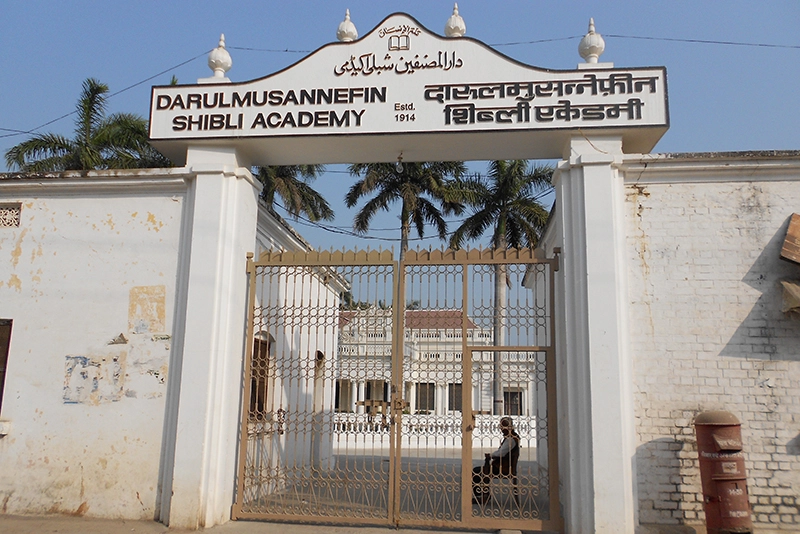
Darul Musannefin, an institute established to propagate the rich cultural heritage of Urdu, Arabic and Persian texts through the institute’s publications and magazine, was established in 1914 by Maulana Shibli Nomani

Darul Musannefin, an institute established to propagate the rich cultural heritage of Urdu, Arabic and Persian texts through the institute’s publications and magazine, was established in 1914 by Maulana Shibli Nomani.

However, over the years like many other institutes associated with the Muslim community in India, this institute has fallen on bad days courtesy the apathy of the governments and the community’s disinterest with anything associated with its cultural and academic heritage.

When we talk about the rich heritage of Urdu books, then every Urdu lover bemoans that the government is not doing enough for saving and promoting the Urdu language – a language which binds at least 70% of Indians, socially and literally.

Yet, few of us ponders that what the Urdu lovers themselves are doing for saving and promoting the language. Their concern becomes abundantly clear by the everyday decreasing sales of Urdu books and newspapers. Further, what they are doing to save institutions which have been the flagbearers in propagating and saving the language by publishing books on different topics in Urdu. The answer is pretty obvious: nothing concrete except bemoaning and using hollow words.

One such institution is Darul Musannefin or Shibli Academy, just like the Rampur raza library of Rampur or the Khuda Baksh Library of Patna, in addition to a vast repertoire of books in private collections of individuals and organisations throughout India.

Darul Musannefin or Shibli Academy is a research academy based in Azamgarh, Uttar Pradesh. Its aim was to add authentic historical literature in Urdu so that people could have easy access to history. It was started as Darul Musannefin but later it was named after its founder Shibli Nomani.

Maulana Shibli Nomani, a Sunni Muslim scholar established it in Azamgarh in February 1914; after failing to establish the Academy in Lucknow, it was established in Azamgarh at Nomani’s mango orchard. It started working on 21 November 1914, 3 days after Maulana Nomani’s death under the guidance of Maulana Hamiduddin Farahi. Other founders included Maulana Syed Sulaiman Nadvi, Maulana Abdus Salam Nadvi and Maulana Masood Ali Nadvi.

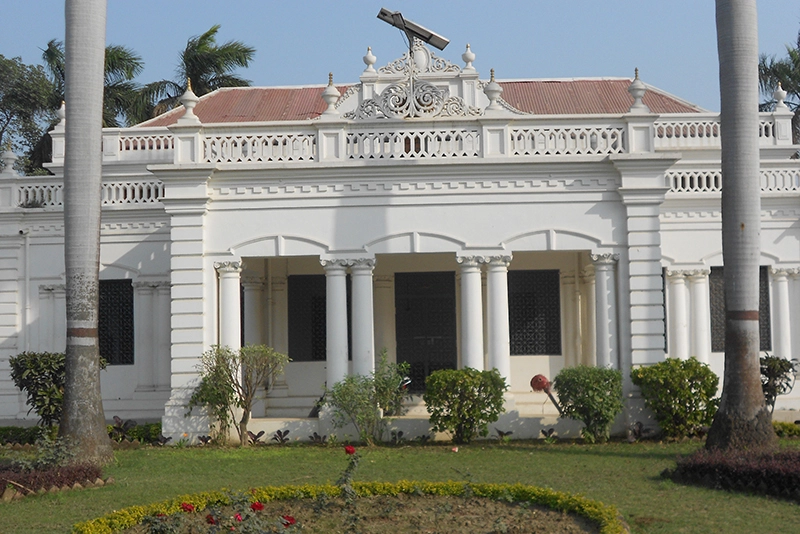
Established just three days after Shibli’s death in 1914, the Academy is a leading institution of Oriental, Islamic and Mediaeval Indian Studies, and Azamgarh’s pride. It occupies nine acres donated by Shibli and his relatives. The centrepiece is a beautiful whitewashed building housing a massive library of over 1.5 lakh books and around 700 manuscripts, some of them rare, and an office.

Staff residences, the mosque and a conference hall stand apart.

Shibli Academy: A Treasure Trove

The Academy’s library is a treasure trove. Its spacious central hall is furnished with sofas and chairs, which have been graced by personalities ranging from Mahatma Gandhi, to Jawahar Lal Nehru, Indira Gandi or in other words virtually every Indian Prime Minister and President, except the present dispensation, and scores of other Indian and foreign dignitaries. “Here have sat dozens of famous dignitaries,” Academy’s senior fellow Mohammed Umair Siddique Nadvi, told me on my recent visit to the acclaimed institute.

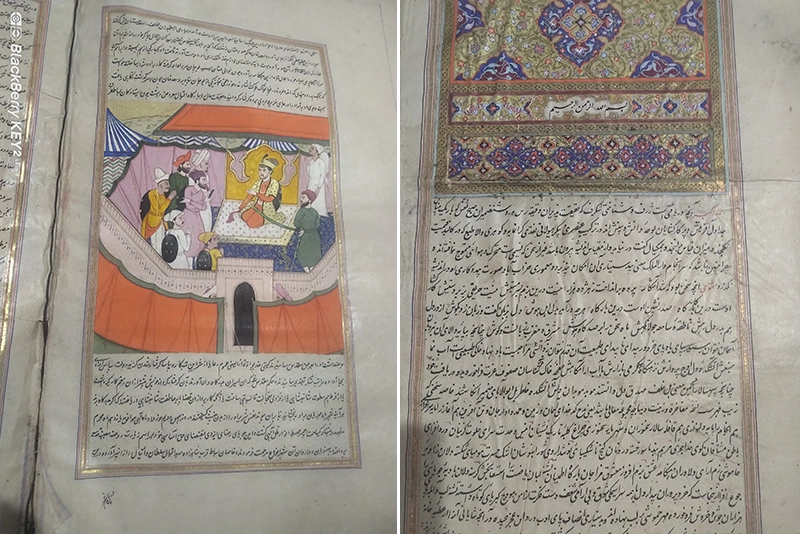
Mohammed Umair showed me rare books and manuscripts, including Persian translations of Ramayan and Mahabharata, and Sirr-e-Akbar, Persian translation of the Upanishads by Mughal prince Dara Shikoh, a great scholar. The excellent condition in which most of these rare books have been preserved over the years shows the dedication of the institution’s staff despite meagre resources. The gold embossed titles and pages decorated with gold border still retain their sheen.

[Akbar Nama (L) and Monsiual Arwah]

Another gem is Monisul Arwah, a book on Sufi saint Khwaja Moinuddin Chishti by Dara’s sister Jahanara. “This is our most prized possession which Maulana Shibli found at an old bookshop in Lucknow and bought for Rs 100 in 1906. It was very dear to him and travelled to an international exhibition of rare manuscripts in Paris,” says Nadvi.

There’s a section where testimonies of some famous visitors, including Mahatma Gandhi, Madan Mohan Malaviya and Maulana Azad, are kept. Motilal Nehru and Jawaharlal Nehru, stayed at the Academy several times during their visits to Azamgarh. When Gandhi first visited it in the 1920s, the Academy’s founding secretary, Maulana Syed Sulaiman Nadvi, showed him the library by lantern light since electricity supply was erratic.

Another famous visitor was Bi Amma, mother of Muhammad Ali Jauhar and Shaukat Ali, freedom fighters and Khilafat Movement leaders better known as the Ali brothers. But while the Academy is Azamgarh’s pride, it faces a severe financial crunch. It has only one librarian, 48-year-old Saleem Javed, son of the Academy’s former director Maulana Ziauddin Islahi, to look after the vast collection.

“I do whatever I can, but it is not possible for one person to look after so many books. I opened my eyes on this campus and have been working here for around 25 years, and will continue to do so.” says Javed, apparently resigned to his and the institute’s fate.

The funding crunch prevents the management from hiring more staff and expediting translation and digitisation of titles from Arabic, Persian and Urdu into other Indian languages and English.

Future of Darul Musannefin

The Academy’s primary purpose is to protect and propagate the scientific, authentic history and rational interpretations of Islam. It also upholds Hindu-Muslim harmony, or the much talked about Ganga-Jamuni Tehzeeb, and sheds light on the life and times of Maulana Shibli, yet so far no one has come forward to help the institute and its committed staff to restore the institute to its former glory. Before Independence, it received grants from Nizam of Hyderabad, Nawab of Bhopal, and others. But now that those streams have dried up, many say the cash-starved institution should look beyond its four walls.

Maulana Shibli had donated his own land with a mango orchard and persuaded close relatives to donate parcels of their land for Darul Musannefin, the library, printing press and publication of Maarif, the monthly journal founded in July 1916.

Since Urdu is shrinking, the library’s patrons have dwindled over the years.Today, it would help if more people started subscribing to Maarif for Rs 10,000 as a life member or even if subscribing to the same for Rs 400 or Rs 1800 towards annual or five years subscription, as a corpus of Rs 10 crore can bail out the institution and help implement its future development plans. In this regard any of the big business houses can also help, as part of their CSR responsibility.

(The writer, Asad Mirza, is a New Delhi-based senior commentator on national, international, defence and strategic affairs, environmental issues, an interfaith practitioner, and a media consultant.)

source: http://www.ummid.com / Ummid.com / Home> Special Report / by Asad Mirza / February 25th, 2025

Nawab Shaffan Khan, heir of Nawab Khan Bahadur Khan, passes away – Urdu News Bareilly

Bareilly, UTTAR PRADESH :

Nawab Shafan Khan, the heir of Nawab Khan Bahadur Khan, who kept the Rohilkhand region free from British rule for eleven months during the 1857 freedom movement, has passed away.

Nawab Shafan Khan breathed his last at the age of 80. The sacrifices of his ancestors are recorded in golden words in the pages of history.

Death of Nawab Shaffan Khan, heir of Nawab Khan Bahadur Khan

Nawab Shafan Khan, a resident of Shahabad area of ​​Bareilly city, has passed away. He was laid to rest in Bhor graveyard near his home after Zuhr prayers. He was the heir to a great family whose ancestors ruled not only Bareilly but also in about 9 surrounding districts. His great-grandfather Nawab Khan Bahadur Khan had set a great example of bravery and sacrifice in the style of his namesake.

He was a hero of the 1857 revolution. He was born in 1791 into a Nawab family. He was the grandson of Rohilla Sardar Hafiz Rehmat Khan.

The slogan of revolution was raised in Meerut on 10 May 1857 and when the news of it reached Bareilly on 14 May, preparations were intensified here too. On 31 May, Khan Bahadur Khan and his generals and soldiers, led by Subedar Bakht Khan, declared a rebellion against the British government.

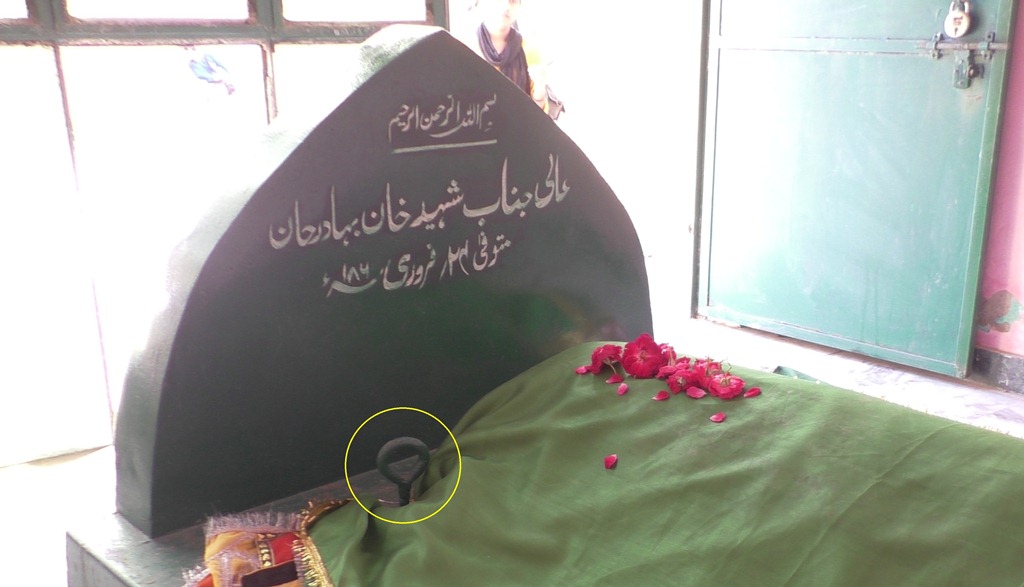
Tomb of Nawab Khan Bahadur Khan

The then magistrate, civil sergeant, jail superintendent and principal of Bareilly College, “C.Buk”, were killed by the revolutionaries. By five in the evening, the revolutionaries had taken control of the Bareilly division.

On June 1, these revolutionaries took out a triumphant procession. When the procession reached Kotwali, a large number of Bareilly citizens crowned Nawab Khan Bahadur Khan and elected him the Nawab of the Bareilly division.

Heir of Nawab Khan Bahadur Khan

An example of the bravery of Nawab Khan Bahadur Khan is that despite the numerous atrocities and abuses of the British government and being a powerful ruler, he kept the Bareilly division free from the rule of the British government for eleven months.

However, later, the British government arrested Nawab Khan Bahadur Khan while fighting a war at one place. He was brought to the same Kotwali where he was awarded the title of Nawab. He was imprisoned and kept in an unknown place.

Then on February 24, 1860, the hero of the urban people was brought on foot to the Kotwali and hanged on the same day at 7:10 am. A strange silence fell in the city and darkness prevailed.

Heir of Nawab Khan Bahadur Khan

To prevent any unrest in the city after the hanging of Nawab Khan Bahadur Khan, his body was taken to the district jail in an armored police vehicle and buried in the premises of the district jail.

Heir of Nawab Khan Bahadur Khan

The special thing is that he was buried with irons. Even today, the irons are clearly visible on the head of his grave. The British government had also buried Khan Bahadur Khan in the prison premises so that people could not gather at his grave and there would be no further excitement in the revolution.

Now let us mention Nawab Shafan Khan, the heir of Khan Bahadur Khan. He struggled for life and livelihood till his last breath. Despite belonging to the Nawab family, his family had to face difficulties for years or even their entire lives. Despite this, the struggle did not end in his life till his last breath.

According to his younger brother Nawab Liaquat Khan, Nawab Shaffan Khan’s health had deteriorated for the past five days. He was unable to go to the mosque to offer prayers during those days. Due to the weak financial condition of the family, he was undergoing treatment at home. But in the morning, his health deteriorated further and he died after a few moments.

source: http://www.etvbharat.com / ETV Bharat – Urdu / Home> Urdu> State / by Urdu translation into English / July 02nd, 2021

Aamir Qutub Wins 2024 IABCA Young Professional of the Year Award

INDIA / AUSTRALIA :

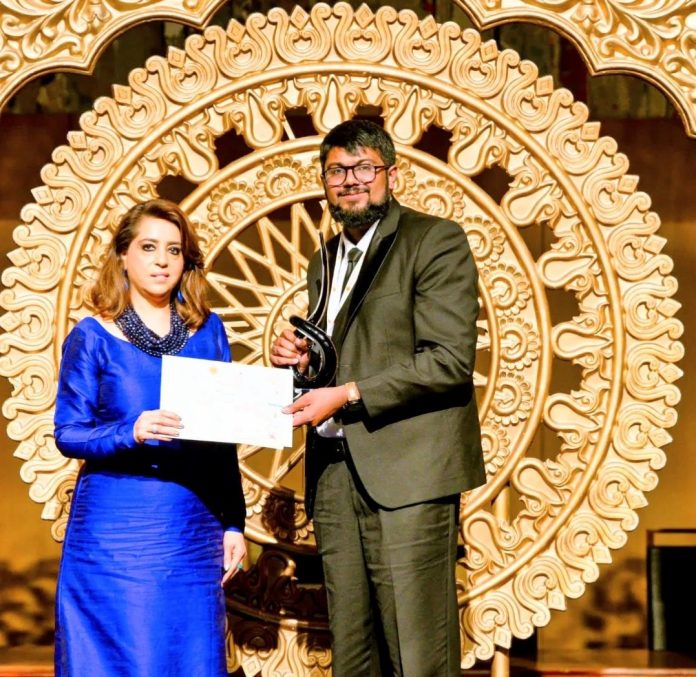
Aamir Qutub, an India-born entrepreneur and CEO of Australian IT multinational Enterprise Monkey, has been awarded the 2024 India Australia Business and Community Alliance (IABCA) Young Professional of the Year Award. The accolade recognizes his exceptional contributions to entrepreneurship and social service in Australia.

Upon receiving the award, Qutub expressed his gratitude in a conversation with Radiance from Australia. “More than a decade ago, when I left my hometown for Australia, I never imagined standing in the grand Parliament Hall, receiving an international award in the presence of the Prime Minister. I am deeply humbled and honored to have received the 2024 IABCA Young Professional of the Year Award.”

Reflecting on his journey, Aamir shared, “This recognition is not just about my individual efforts but highlights the power of community support. From my early days in India to establishing myself in Australia, the backing of people around me has been crucial. This award is for my work as a founder and CEO, where we have created jobs and contributed to the local economy. Our initiative, Angel Next Door, played a key role in helping over 100,000 Australians during the COVID-19 crisis.”

Aamir also offered advice to emerging entrepreneurs in India, encouraging them to pursue their dreams, regardless of their background.

“I come from a middle-class family in a small Tier 3 city, but I dared to dream big. The journey was not easy, but persistence, adaptability, and continuous learning made it possible. Your background does not define your future – your determination does. Every small step you take today contributes to tomorrow’s success,” he said.

Reflecting on his journey, Aamir acknowledged the many people and institutions that played a role in his success.

“From the regional city of Aligarh and the nurturing environment at AMU, where I laid my foundation, to the vibrant city of Geelong, where Deakin University provided me with a platform to grow – this journey has been shaped by countless hands and hearts,” he added.

A proud alumnus of AMU, Aamir has received numerous accolades, including being a finalist for the Australian Young Business Leader Award. He was the youngest General Manager of ICT Geelong and also served as Digital Manager for Australian Sports Tech Network. In the early stages of his career, Aamir worked as a cleaner during the day and a newspaper delivery boy at night to fund his startup. He has also demonstrated his commitment to social causes by spending a night on the streets with other CEOs to experience the life of homelessness, raising awareness for Australians without shelter.

Aamir’s professional journey began with Honda Cars India as a Production Manager before he co-founded the Stand India Foundation, a not-for-profit social venture. He holds an MBA in Information Management from Deakin University and a Bachelor’s in Mechanical Engineering from AMU, where he served as General Secretary of the AMU Students’ Union.

source: http://www.radiancenews.com / Radiance News / Home> Pride of the Nation> Award> Markers of Excellence> Latest News / by Radiance News Bureau / October 07th, 2024

LS Polls 2024: Six Muslims Secure Victory in Uttar Pradesh

UTTAR PRADESH :

New Delhi :

All six Muslim Lok Sabha candidates fielded by mainstream parties in Uttar Pradesh have emerged victorious.

Among the winners is Imran Masood, who contested from Saharanpur on a Congress ticket. “This victory is not just mine, but of every individual who believes in secularism and democracy,” Masood stated emphatically after his win.

Similarly, Maulana Muhibullah Nadvi, representing the Samajwadi Party, also secured a win in Rampur. “The people’s faith in us has been reaffirmed, and we will work tirelessly to honour their trust,” Nadvi said after trouncing Ghanshyam Singh Lodhi of the BJP with a total of 4.81 lakh votes, a margin of 89,370 votes.

Ziaur Rehman Barq, who contested from the Sambhal Lok Sabha seat, is on the path to victory as well. The Congress party’s candidate from Amroha, Kanwar Danish Ali, also achieved victory.

Reflecting on his triumphant journey, Ali said his suspension from the Bahujan Samaj Party was a turning point. “The support from the Congress party and the voters of Amroha has been overwhelming,” he said.

Afzal Ansari, a Samajwadi Party candidate, is leading in Ghazipur. Iqra Hasan, another Samajwadi Party candidate from the Kairana parliamentary seat, has also registered victory.

Before the elections, Imran Masood was affiliated with the Samajwadi Party, and Afzal Ansari was a Bahujan Samaj Party Member of Parliament. Danish Ali, formerly with the Bahujan Samaj Party, was suspended and later nominated by the Congress party, which led to his victory in Amroha.

Despite this success, the Bahujan Samaj Party, which fielded around 22 Muslim candidates, did not secure any seat. This outcome highlights a broader issue of representation, as only 78 Muslim candidates contested across the country under the Congress and other parties’ tickets. The Congress party itself offered tickets to just 19 Muslim candidates nationwide in this election.

With vote counting continuing, early trends indicate that the ruling NDA would form the next government. Nonetheless, the victory of these six candidates marks a noteworthy moment in this Lok Sabha election.

source: http://www.clarionindia.net / Clarion India / Home> India Votes> Indian Muslims> Politics / by Mohammad Alamullah, Clarion India / June 04th, 2024

Muslim Scientists Play Vital Roles in Chandrayaan 3 Mission’s Success

UTTAR PRADESH / TELANGANA:

Muzaffarnagar and Adilabad, two districts in India, are celebrating the remarkable achievement of their Muslim scientists who contributed significantly to the success of the Chandrayaan 3 mission. The successful landing of Chandrayaan 3 on the Moon’s south pole has ignited a sense of festivity and pride in both regions.

Areeb Ahmed, an ISRO scientist hailing from Khatoli, Muzaffarnagar, emerged as a central figure in this achievement. As a key member of the Chandrayaan-3 team, Areeb Ahmad played an instrumental role from the mission’s launch to its successful landing. The celebrations in Muzaffarnagar included fireworks and heartfelt congratulations to the Areeb family.

The success story extends to Adilabad, where scientist Sheikh Muzammil Ali, originally from Kaghaz Nagar, shone as a valuable contributor to the Chandrayaan 3 mission. His involvement in the ISRO team that achieved the lunar landing brought immense pride to the Muslims of Telangana. Sheikh Makhdoom Ali, Sheikh Muzammil Ali’s father, expressed his joy and gratitude for his son’s accomplishment, viewing it as a divine blessing and a moment of national pride.

Sheikh Muzammil Ali’s educational journey showcased dedication and determination. After completing his education from various esteemed institutions, he cleared the ISRO exam in 2016, leading to his appointment as a “Scientist Group Gazetted Officer” in 2017. His father’s unwavering support, despite a modest salary, served as an example of the importance of higher education for Muslim parents aspiring to empower their children.

The accomplishments of Areeb Ahmed and Sheikh Muzammil Ali underscore the significance of providing quality education to young Muslims and encouraging them to pursue careers in cutting-edge fields. Their contributions not only contribute to India’s scientific progress but also inspire others to strive for excellence irrespective of adversity.

source: http://www.munsifdaily.com / The Munsif Daily / Home> News> Regional> Telangana / posted by Rasia Hashmi / August 24th, 2023