The 234th Urs-e-Sharieff of Hazarath Tipu Sultan Shaheed, organised by Hazrath Tipu Sultan Shaheed Wakf Estate, Ganjam in Srirangapatna, will be held on May 16 and 17 at Gumbad-e-Shahi at Ganjam in Srirangapatna.
The Sandal procession will commence from Masjid-e-Ala in Srirangapatna at 3 pm on May 16 and will reach Gumbad-e-Shahi at 5 pm.
Special programmes will be held from 7 pm at Gumbad and will continue the whole night till next morning.
For details, contact Hazarath Tipu Sultan Shaheed Wakf Estate on Ph: 08236-252786 or Mob: 97390-58786, according to a press release.
source: http://www.starofmysore.com / Star of Mysore / Home>In Briefs / May 05th, 2026
The newly elected 126-member Assam Assembly will have a total of 22 Muslim MLAs, according to the Election Commission data released after counting of votes Monday May 04, 2026.
Assam Assembly Election Results 2026:
The newly elected 126-member Assam Assembly will have a total of 22 Muslim MLAs, according to the Election Commission data released after counting of votes Monday May 04, 2026.
The number of Muslim MLAs in the Assam assembly formed after the 2026 state polls is 09 less than the last time when 31 Muslims had won.
As many as 18 Muslim MLAs elected to the Assam assembly are from the Indian National Congress (INC). Interestingly, the Congress has won only 19 seats, and 18 of them are Muslims. The Congress had 30 MLAs in the last assembly.
Other Muslim MLAs elected to the Assam assembly in the 2026 polls are 02 from AIUDF (13 less than 2021), and 01 each from Raijar Dal (RJRD) and Trinamool Congresss.
List of Muslim MLAs in Assam
Following is the complete list of Muslims MLAs in Assam along with the constituencies they represent.
Congress
MD ASHRAFUL ISLAM SHEIKH (PARBATJHORA)
ABDUS SOBAHAN ALI SARKAR (GAURIPUR)
BABY BEGUM (DHUBRI)
WAZED ALI CHOUDHURY (BIRSING JARUA)
Mohibur Rohman Bappy (MANKACHAR)
AFTAB UDDIN MOLLAH (JALESHWAR)
ABUL KALAM RASHEED ALAM (GOALPARA EAST)
MD. NURUL ISLAM (SRIJANGRAM)
ABDUR RAHIM AHMED (CHENGA)
JAKIR HUSSAIN SIKDAR (PAKABETBARI)
REKIBUDDIN AHMED (CHAMARIA)
DR ASIF MOHAMMAD NAZAR (LAHARIGHAT)
NURUL HUDA (RUPAHIHAT)
TANZIL HUSSAIN (SAMAGURI)
AMINUL HAQUE LASKAR (SONAI)
ZUBAIR ANAM MAZUMDE (ALGAPUR-KATLICHERRA)
JAKARIA AHMED (KARIMGANJ NORTH)
AMINUR RASHID CHOUDHURY (KARIMGANJ SOUTH)
All India United Democratic Front (AIUDF)
MAZIBUR RAHMAN (DALGAON)
MOHAMMED BADRUDDIN AJMAL (BINNAKANDI)
Raijar Dal (RJRD)
MEHBOOB MUKTAR (DHING)
All India Trinamool Congress (TMC)
SHERMAN ALI AHMED (MANDIA)
Assam Assembly Elections 2026: Final Result
In Assam, the ruling BJP has retained power winning 82 of the total 126 seats in the Assam Assembly – 23 seats more than the party’s tally 59 in the 2021 Assam State Polls, as per the final result of the 2026 Assam Assembly Polls.
The Congress has won a total of 19 seats – 11 less than its tally in 2021. On the other hand, the AIUDF, which has won 16 seats in the 2021, has won just 02 seats in the 2026 state elections.
The Congress and AIUDF had contested the 2021 Assam Elections forming an alliance, which had together won a total of 49 seats. The two parties fought the 2026 election separately, and could together won just 21 seats.
Interestingly, most of the assembly constituencies the Congress party has won in 2026 were earlier represented by the AIUDF, indicating that the Muslim voters preferred Congress over Badruddin Ajmal Qasmi’s AIUDF.
In 2021, the BJP had 01 Muslim MLA. However, the party had not fielded any Muslim candidate in the 2026 Assam Polls.
source: http://www.ummid.com / Ummid.com / Home / by Ummid.com news network / May 05th, 2026
Muslim students, especially girls, delivered an impressive performance in the Jharkhand Academic Council Intermediate examinations, earning praise from teachers, parents and educationists across the state.
The Class 12 results, declared on Wednesday, saw minority students secure top positions in the science stream. Many observers described the achievement as an encouraging sign for educational progress within the community.
Rashida Naz from Dhanbad emerged as the topper in the science stream with 489 marks. A student of Plus Two DAV High School, Rashida brought recognition to her school and district through her performance. Teachers described her as disciplined and focused, crediting her success to dedication and strong family support.
Faizan Alam from Patan secured the second position with 483 marks. Sana Afrin from Satbarwa and Akanksha Kumari from Simaria jointly secured third place with 481 marks each.
Educationists noted that girls once again outperformed boys in several categories, continuing a trend seen in recent years. Many teachers and parents said the results reflected growing awareness about the importance of education, especially among Muslim families and girls from smaller towns.
The achievements in Jharkhand followed similar success by Muslim students in the Bihar Board examinations earlier this year. In Bihar, Shabrin Parveen from Vaishali district scored 492 out of 500 marks and became a joint state topper in the matriculation examination. Several other Muslim students also secured places in the merit list with marks above 97 percent.
Parents and community leaders welcomed the latest results and said such achievements inspire students from modest backgrounds to pursue higher education and competitive careers. Teachers stressed the need for scholarships, career guidance and better educational opportunities to support talented students further.
source: http://www.radiancenews.com / Radiance News / Home> Latest News / by Radiance News Bureau / May 08th, 2026
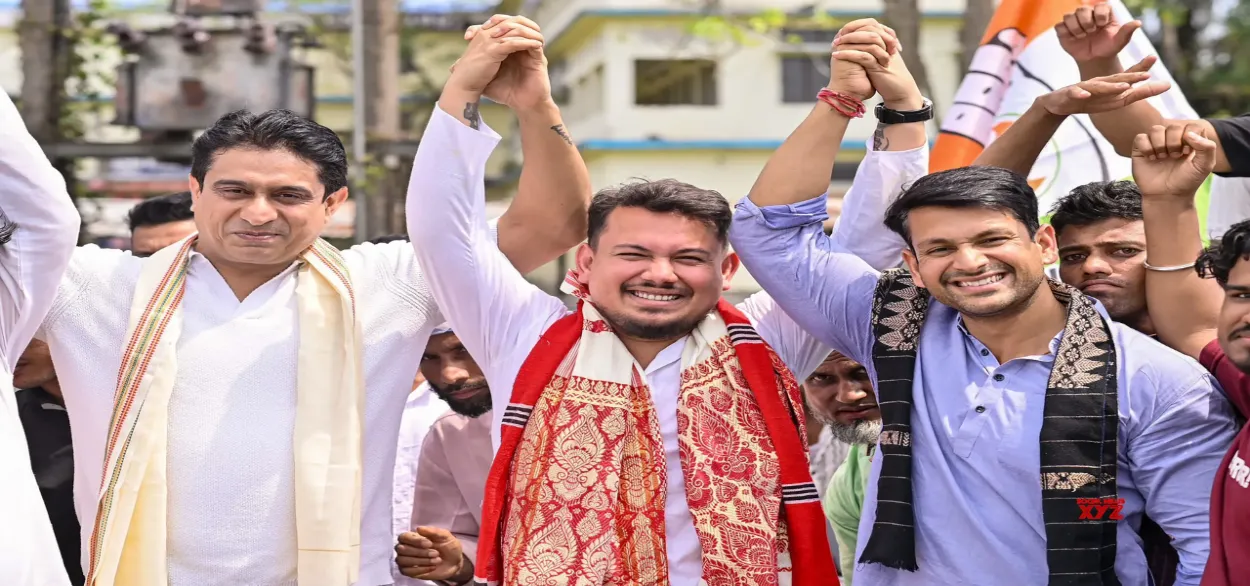
Zubair Anam Majumder in the centre with his supporters
Zubair Anam Majumder, Assam Youth Congress president and newly elected MLA from the Algapur-Katlichara constituency, is being celebrated as one of the youngest leaders to enter the Assam Assembly without the backing of an established political dynasty.
An architect by profession, Zubair chose a path rooted in public service, embracing the responsibilities and expectations that come with political life. His journey began with the National Students’ Union of India (NSUI), the student wing of the Congress, where he steadily rose through the ranks before becoming the state Youth Congress president. Yet, even a few months ago, becoming one of the youngest MLAs in Assam may not have seemed within reach.
The results of the Assam Assembly elections, announced on Monday, marked a historic moment. Contesting from the Algapur-Katlichara Assembly constituency in Hailakandi district, Zubair secured a resounding victory in a highly competitive contest.
As many as 15 candidates, including two sitting MLAs — Nizam Uddin Chowdhury and Sujam Uddin Laskar — were in the fray. However, Zubair altered the political equations dramatically by defeating BJP ally Assam Gana Parishad candidate and sitting Hailakandi MLA Zakir Hussain Laskar by a margin of more than one lakh votes.
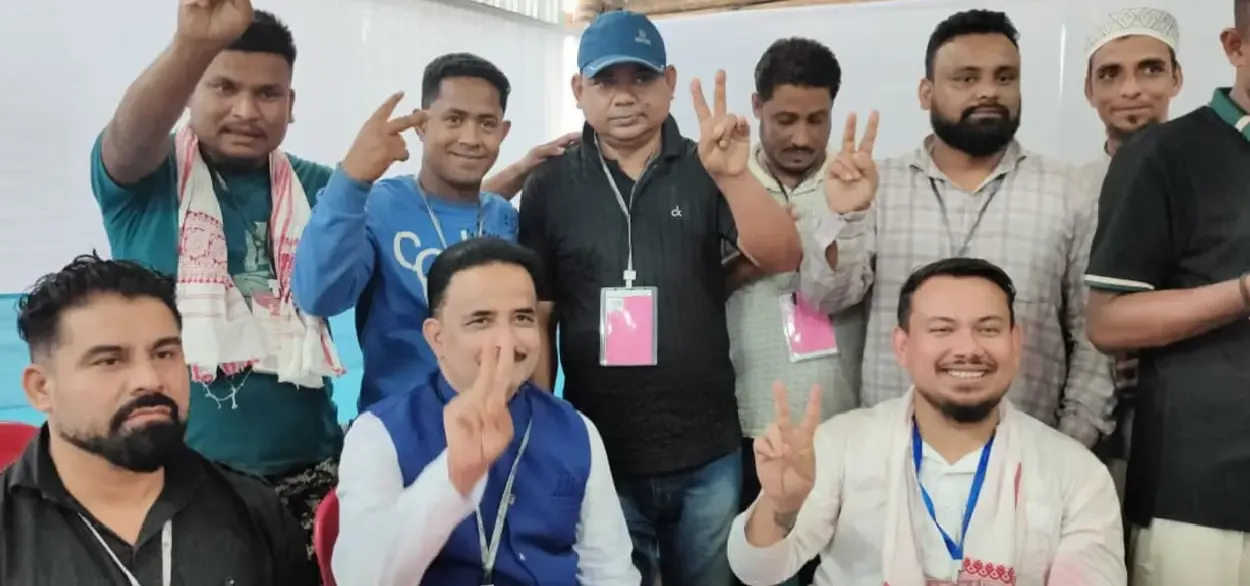
Zubair Anam Majumder with his team after his victory
Thirty-five-year-old Zubair comes from a well-educated family. His father, Khairuzzaman Majumder, served as Chief Engineer in the Public Health Engineering Department, while his mother, Lovely Begum Majumder, is also known for her academic background.
A brilliant student from an early age, Zubair grew up in an accomplished family. One of his uncles is an ophthalmologist at Shillong Medical College, his sister is a scientist, and his brother runs a business in Dubai.
Speaking to the media on Monday while holding his victory certificate, Zubair said the mandate was not a personal triumph but a reflection of the people’s aspirations and desire for change.
He described the trust reposed in him by the electorate as a moral responsibility and said his foremost duty would be to uphold the dignity of that trust. His emphasis on connecting with people rather than indulging in power politics and prioritising public service over political posturing has set his approach apart from many of his contemporaries.
Zubair also outlined a clear vision for the development. His immediate priorities include rebuilding dilapidated infrastructure, improving transport and communication systems, and bringing modern facilities to the region. Strengthening the education system, generating employment opportunities for the youth, and expanding social security measures also feature prominently in his agenda.
However, his message goes beyond development alone. In his speeches, Zubair has repeatedly stressed the importance of unity and social harmony. He urged people to move beyond electoral divisions and work together for progress.
He made it clear that he no longer sees himself merely as the representative of a single political party, but as the collective voice of the people of the entire constituency.
With a blend of youthful leadership, commitment, and development-oriented politics, Zubair Anam Majumder hopes to usher in a new political chapter — one in which the trust of the people is reflected not merely in promises, but in meaningful action.
source: http://www.awazthevoice.in / Awaz, The Voice / Home> Stories / by Satananda Bhattacharya, Hailakandi / May 07th, 2026
Motab Shaikh, one of the two Congress legislators elected in the recent Assembly elections in West Bengal, says he is “the luckiest man on earth” — and he has good reason to believe so.
In the 2026 West Bengal Assembly elections, Shaikh won from the Farakka Assembly constituency by defeating his nearest rival, Sudhir Chowdhury of the BJP, by nearly 8,000 votes.
The victory was remarkable because the 57-year-old businessman had almost lost his own right to vote before the election. His name had been deleted from the electoral rolls during the Summary Intensive Revision (SIR) process due to a discrepancy in the spelling of his name in earlier voter records.
A former Gram Pradhan, Shaikh had been nominated as the Congress candidate from Farakka, but the Election Commission of India disqualified him as a voter after identifying inconsistencies in his documents.
Shaikh challenged the decision in court. The matter was eventually referred to the Special Appellate Tribunal headed by retired Justice T. S. Sivagnanam. The tribunal accepted his passport and other supporting documents as valid proof of identity and directed the Election Commission to restore his name to the voters’ list.
The order came on April 5, just hours before April 6 — the final date for filing nominations. With little time left, Shaikh entered the fray with only 14 days to campaign.
His victory has acquired larger political significance in the backdrop of the SIR exercise in West Bengal, during which nearly 9.1 million voters — around 11.9 per cent of the electorate — were reportedly removed from the rolls. Opposition parties sharply criticised the process, describing it as “undemocratic,” “non-transparent,” and a case of “mass disenfranchisement.” Several legal challenges related to the exercise are still pending.
Against this backdrop, Shaikh’s win is being seen not merely as a personal triumph but also as a symbolic assertion of voting rights. The tribunal’s observation that a citizen cannot be excluded from the electoral rolls because of a technical discrepancy may influence similar cases in the future.
Despite the political controversy surrounding his election, Shaikh says his priority is governance rather than confrontation.
“I am not interested in quarrelling with the BJP,” he said. “My constituency faces severe water scarcity, and I want to focus on solving that problem.”
source: http://www.awazthevoice.in / Awaz, The Voice / Home> Stories / by Shampi Chakraborty / May 08th, 2026
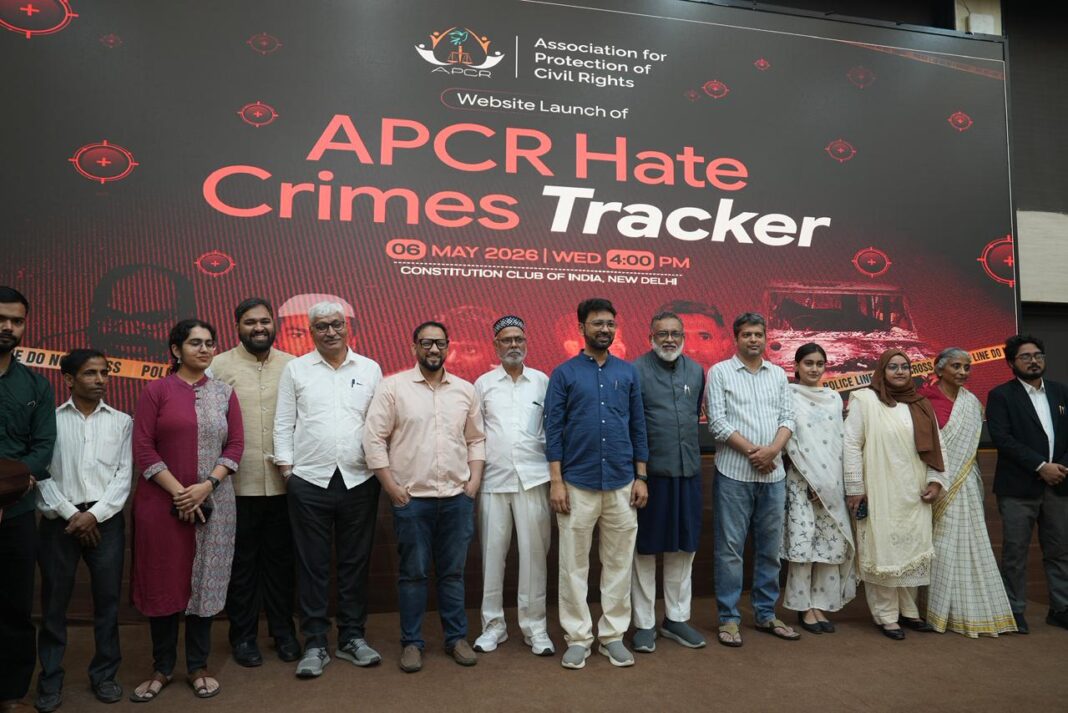
The Association for Protection of Civil Rights (APCR) on Tuesday launched the APCR Hate Crimes Tracker at the Constitution Club of India, unveiling an interactive website — [apcrhct.org](https://apcrhct.org?utm_source=chatgpt.com) — aimed at documenting hate crimes against religious minorities across India from 2014 onwards.
The Hate Crimes Tracker consolidates verified incidents of hate-motivated violence and threats, offering researchers, journalists, civil society organisations and the public a centralized and searchable database. The initiative comes amid growing concern over increasing violence against religious minorities, particularly Muslims and Christians, in recent years.
According to APCR, the absence of systematic recording of hate crimes by official agencies such as the National Crime Records Bureau has made it difficult to assess the scale, patterns and changing forms of such incidents. To address this gap, APCR has been publishing quarterly and annual reports over the last two years, and the newly launched tracker expands upon that work.
The organisation stated that the tracker currently contains detailed records from 2024 to 2026, documenting 1,153 hate crime incidents and 761 hate speech incidents. Additional data from previous years will be uploaded in phases. APCR further noted that, based on long-term tracking of reported incidents since 2014, it has compiled a total of 3,576 religion-based hate incidents across India.
Preliminary analysis of the data indicates that physical assault, with 747 incidents, and attacks on property, with 376 incidents, are among the most frequently reported forms of violence. APCR also identified visible religious identity, cited in 908 incidents, the sale or consumption of non-vegetarian food, linked to 547 incidents, and the celebration of festivals, associated with 166 incidents, as some of the most common triggers.
Advocate Fawaz Shaheen said APCR had been releasing periodic reports that build on work done collectively by various organisations and media groups engaged in documentation efforts. “We have taken our regularly published data and tried to make a repository of the hate crimes data from 2014 onwards,” he said, adding that the tracker has limitations because it relies solely on publicly available information. He described the database as “only a fair representation of reported incidents” due to what he termed “massive underreporting”.
The methodology used in compiling the database was also explained during the event. Organisers said the process involved Google Forms, separate categorisation for hate crime and hate speech, and rigorous cross-verification of social media sources before inclusion. The tracker also captures contextual information such as the nature of incidents, the presence of mobs, stereotypes invoked during attacks, and the alignment of hate speeches with the UN Rabat Plan of Action.
Shazin Siddiqui, the developer of the tracker, demonstrated the platform’s interface and said users can filter incidents by year, state, victims’ religion and type of crime. He added that the database would be updated regularly as new cases are verified.
Several speakers at the launch highlighted the broader implications of allowing hate crimes to remain unrecorded and unpunished. Harsh Mander stressed that independent documentation is essential because state mechanisms cannot be relied upon. He welcomed the initiative and encouraged more civil society groups to undertake similar efforts.
Prashant Bhushan observed that only a fraction of hate crime cases result in FIRs and suggested documenting failed attempts to file complaints. He called for coordinated legal action by civil society groups to hold perpetrators accountable.
Qurban Ali said administrative directives aimed at addressing hate crimes are often not implemented, leaving minorities feeling vulnerable. He reiterated that official data significantly underrepresents the scale of the problem.
Manoj Jha raised concerns about institutional complicity, including within the judiciary, and proposed expanding documentation to include such dimensions. He remarked that hatred has become deeply embedded in society.
Speaking at the event, Sanjay Singh criticised the role of media and digital platforms in amplifying hate. He said misinformation and propaganda had become widespread and called for collective efforts to counter what he described as the “market of hatred”.
Shiju Thomas highlighted the impact of anti-conversion laws on Christian communities, stating that thousands, including women and children, have been booked under such provisions. He also pointed to the targeting of institutions through regulatory mechanisms.
Lara Jesani emphasised the direct link between hate speech and subsequent violence, citing examples from Maharashtra. She highlighted the absence of a comprehensive anti-discrimination law and the challenges lawyers face in pursuing hate speech cases.
Pamela Philipose drew attention to the gendered dimensions of hate crimes, noting that women’s bodies are often used as sites of communal violence. She also highlighted the role of political rhetoric in normalising hate and called for stronger civil society responses.
Apoorvanand spoke about the difficulty courts face in acknowledging the connection between hate speech and violence. He said hate speech is often not recognised as such until it can be directly linked to a hate crime and warned that its normalisation is pushing minority communities into invisibility, thereby undermining democratic values.
Malik Motasim Khan urged collective resistance to hatred and stressed the need to reject divisive narratives while working towards coexistence.
The moderator of the event welcomed family members of hate crime victims and expressed solidarity with them.
APCR stated that the database has been compiled using publicly available information that was independently verified through cross-referencing multiple sources and inputs from grassroots activists. While anecdotal evidence suggests the actual number of hate crimes may be much higher, the organisation said the tracker offers a credible and evidence-based representation of reported incidents.
The organisation described the launch of the Hate Crimes Tracker as a significant step toward making such data publicly accessible and strengthening research, advocacy and legal interventions on behalf of affected communities.
source: http://www.indiatomorrow.net / India Tomorrow / Home> Crime / by India Tomorrow /May 08th, 2026
The newly elected 140-member Kerala Assembly will have a total of 35 Muslim MLAs, according to the Election Commission data released after counting of votes Monday May 04, 2026.
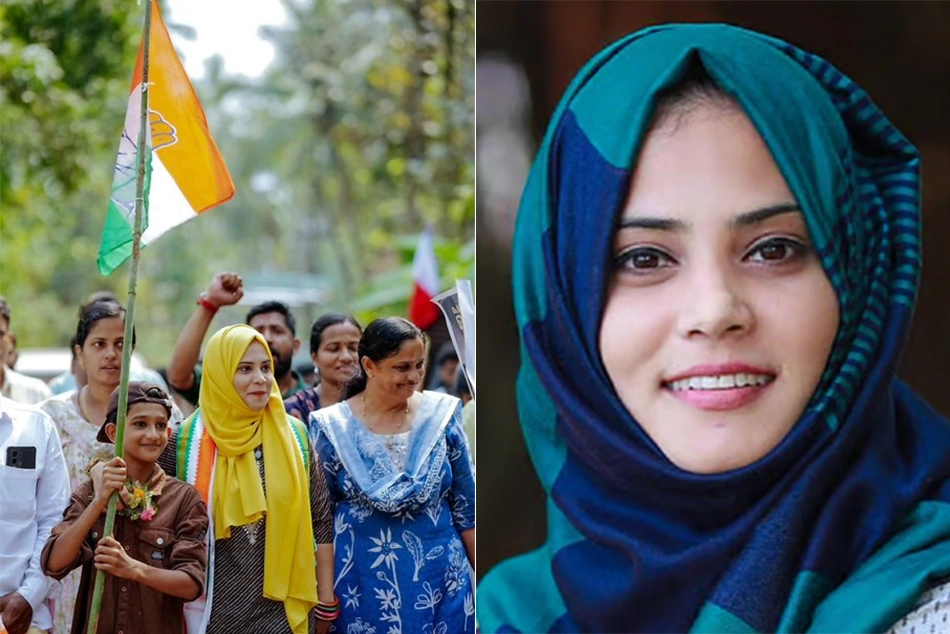
Among the IUML MLAs, who have won the 2026 Keralam state elections, is also Fathima Thahiliya. Fathima is IUML’s first woman MLA.
Kerala Assembly Election Results 2026:
The newly elected 140-member Kerala Assembly will have a total of 35 Muslim MLAs, according to the Election Commission data released after counting of votes Monday May 04, 2026.
The number of Muslim MLAs in the Kerala assembly formed after the 2026 state polls is 03 more than the last time when 32 Muslims had won.
As many as 22 Muslim MLAs elected to the Kerala assembly are from the Indian Union Muslim League (IUML). The IUML had fielded 27 candidates in the 2026 elections – 22 of them have got elected. Among the IUML MLAs, who have won the 2026 Keralam state elections, is also Fathima Thahiliya. Fathima is IUML’s first woman MLA.
The IUML had won 15 seats in the 2021 Kerala Elections . The IUML had in 2016 elections won 18 seats, and the assembly had a total of 29 Muslim MLAs.
Other Muslim MLAs elected to the Kerala assembly are 08 from Congress (5 more than 2021), 04 from the CPI-M (05 less than 2021), and 01 from CPI (Kerala).
List of Muslim MLAs in Kerala
Following is the complete list of Muslims MLAs in Kerala along with the constituencies they represent.
Congress
ADV. T SIDDIQUE (KALPETTA)
ARYADAN SHOUKATH (NILAMBUR)
K.P NOUSHAD ALI (PONNANI)
ANWAR SADATH (ALUVA)
MOHAMMED SHIYAS (KOCHI)
ADV. SHANIMOL OSMAN (AROOR)
M. M. NASEER (CHADAYAMANGALAM)
MUHAMMED SUDHEERSHA S (VAMANAPURAM)
CPI (M)
P.A MOHAMED RIYAS (BEYPORE)
P.MAMMIKUTTY Muhammed (SHORNUR)
A C MOIDEEN (KUNNAMKULAM)
N. K. AKBAR (GURUVAYOOR)
Indian Union Muslim League (IUML)
A K M ASHRAF (MANJESHWAR)
KALLATRA MAHIN Abdul Khader Haji (KASARAGOD)
PARAKKAL ABDULLA (KUTTIADI)
ADV. FATHIMA THAHILIYA (PERAMBRA)
ADV. FYZAL BABU (KOZHIKODE SOUTH)
M.A. RAZAK MASTER (KUNNAMANGALAM)
P K FIROS (KODUVALLY)
C K KASIM (THIRUVAMBADI)
T.P. ASHRAFALI (KONDOTTY)
P.K.BASHEER (ERNAD)
ADV. M. RAHMATHULLA (MANJERI)
NAJEEB KANTHAPURAM (PERINTHALMANNA)
MANJALAMKUZHI ALI (MANKADA)
P.K. KUNHALIKUTTY MUHAMMAED HAJI (MALAPPURAM)
K.M. SHAJI (VENGARA)
T V IBRAHIM (VALLIKUNNU)
P M A SAMEER (TIRURANGADI)
P K NAVAS (TANUR)
KURUKKOLI MOIDEEN (TIRUR)
PROF. ABID HUSSAIN THANGAL (KOTTAKKAL)
ADV. N. SAMSUDHEEN (MANNARKKAD)
ADV. V E ABDUL GAFOOR (KALAMASSERY)
CPI (Kerala)
MUHAMMED MUHASSIN (PATTAMBI)
Kerala Assembly Elections 2026: Final Result
In Kerala, the opposition UDF led by the Indian National Congress has removed from the power the Left-led LDF. The LDF was in power in Kerala since 2016.
As per the final result of the 2026 Kerala Assembly Polls announced by the Election Commission of India (ECI) the UDF has won 89 of the total 140 seats.
The LDF won a total of 35 seats – 57 less than its tally in 2021. On the other hand, the BJP has won just 03 seats – all for the first time.
source: http://www.ummid.com / Ummid.com / Home> 2026 Kerala Assembly Election Result / by ummid.com news network / May 04th, 2026
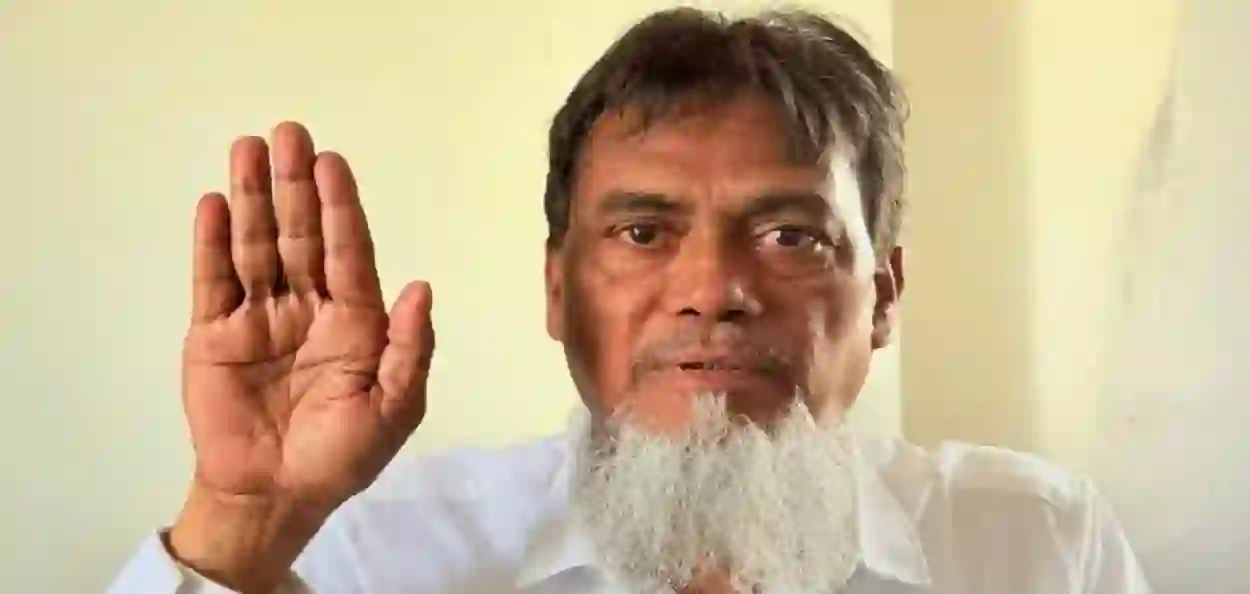
Meet Dr Munkir Hossain, a scholar on a mission to empower the girl child and create religious harmony, hopes that one day India will be led by scholars. A Sufi, who fasts almost throughout the year.
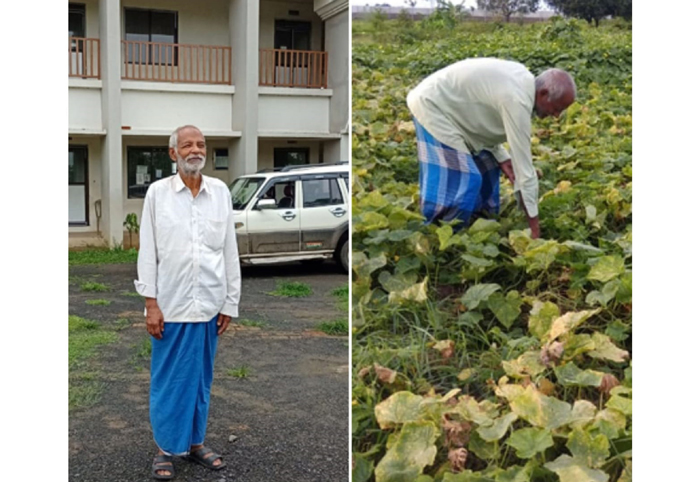
Dr Munkir Hussain in front of the institute cum hostel at a farm in Birbhum District
Kolkata:
If you were to cross him on your way to Birbhum, famous for its terracotta work, you probably wouldn’t give him a second glance. If you saw him tilling the farm land you’ll only see a regular farmer busy at his work. A frail figure in a checked lungi (waist cloth) is a common sight in our country. What is not common though are the achievements of our students from rural India and that too as scientists of international repute.
Yes, of course we have our much admired A.P.J. Abdul Kalam, who made his way from a village to achieve great heights as a scientist and went on to become one of India’s most loved and respected Presidents.
Dr Munkir Hossain, the person described above, has been a post doctorate research scholar at various national and international institutes. After schooling from his maternal village at Bhimpur he went to Burdwan University where he did his master’s in Chemistry and followed it up with a PhD and later did post doctorate studies from the prestigious IIT (Indian Institute of Technology) Bombay.
Who is Dr Munkir?
“I was born in Khutkail village but there was no school there. Luckily my brother was born soon after my birth so my parents left me at my maternal grandparents’ house in Bhimpur which is just across the Pagla river. There was a primary school too. If that had not happened I would have remained illiterate,” chuckles the scientist as he recalls the fond memories of childhood days.
He credits his teachers at the village school for instilling in him the values he has and the thirst for knowledge that took him to far flung places and universities such as Taiwan and Japan.
Dr Munkir has over 55 research articles published in national as well as international science journals of great repute.
He is revered by all those who know him or have heard of him. The Vice Chancellor of Aliah University and former Professor, Department of Chemistry at Jadavpur University in Kolkata, Md Ali recalls the days at Burdwan University when he had enrolled for his MSc while Dr Munkir was doing his PhD there, “As an academician from such modest background Dr Munkir has definitely been an inspiration for others. I come from a village myself and seeing Dr Munkir do his PhD at that time seemed like a huge achievement in itself. I used to admire his sincerity and his simplicity. He led a simple life and used to be dressed in very simple attire, wearing the modest chappal (bathroom slippers) to class. He had no political leaning nor do I think he discussed religion. Though my interactions with him were very limited.”
After retirement in 2016 as a senior research scholar Dr Munkir opted to come back to his village.
Dr Munkir Hossain with BSM’s Samirul Islam
After retirement, bought lands and providing free education for girls
At 67, he has given away all his earnings for the education of poor children on a 60 bighas (acres) plot of land that he bought in Bhimpur.
Dr Munkir had started his venture with the aim to empower the girl child. But he ran short of money. His objective is to spread secular knowledge and create scholars who will provide honest leadership.
“Out of the 26 students from our first batch which appeared for the WB Board’s Madhyamik examination this year, 25 secured first division. Five of them scored between 90 to 100 percent and six students scored between 80 to 90 percent,” shares the scientist like a father proud of his children’s achievements.
“His achievements as a scholar are unparalleled yet he lives in oblivion. He does not even own a mobile phone. He spent his money getting his brother’s daughters married and with the rest he bought a plot of land to promote education. He is a Sufi scholar, a Saadhak,” says Samirul Islam, Assistant Professor at Shyampur Siddheswari Mahavidyalaya and President of Bangla Sanskriti Mancha.
Future plan: A maternity hospital
That’s not all. Dr. Munkir also wants to set up a Maatri Sadan (Mother and Child care) hospital that will have women administrators and hopefully women doctors as well. The institute at present provides free education from school till the post graduate level besides free hostel facilities. It occupies 37 bighas. The remaining 23 bighas of the plot will be used for the Maatri Sadan.
“Let’s not forget that our mother is our first teacher. It is on her lap that we get to hear stories and tales of good and bad, right and wrong. Habits formed during childhood last long. It lays the foundation for a healthy outlook and consequently a healthy society. As of now only girls from the local village are getting education here because we don’t have hostel facility for them. I’m hopeful that soon, like the boys who come from far off places, they too will be able to get quality education and hostel facility with wholesome food free of cost,” he shares with conviction.
The scholar reminds us that society is an extension of our family. “We need to improve social values. We are losing our heritage and culture. Even the villages are not free from such degradation. My intention is not just to give my country educated individuals but youth who can rise above vices like corruption and greed for money or power,” says the man who chose to remain unmarried so that he would be free to serve society.
Epitome of simple living and high thinking
For his own sustenance he takes farmland on lease from the villagers and cultivates onion and vegetables and also grows mangoes. “I was born in a very poor family. We barely could manage one meal a day. So I’m a light eater and hunger does not bother me. But I don’t want other children to be deprived. The only way to get out of poverty is through education,” says the scientist in answer to how he manages to lead such a frugal life.
All his life he owned only two sets of pants and shirts and has toured across the globe in them.
The man himself fasts for 360 days a year, hasn’t skipped his prayers since the time his primary school teachers taught him how to pray and sleeps at the mosque. He is critical of such religious preachers who spread hate and create rift between communities. He stresses on the importance of secular knowledge combined with spiritual knowledge to tide over all the ills plaguing our society today.
“What we see around us today is a result of ignorance. I hope more people come forward and join hands with others to create a society that is not just secular but one that thrives on peace and prosperity,” says the scientist turned social activist with a conviction that’s difficult to ignore.
Taking a cue from Tagore’s Ekla Chalo Re, which Dr Munkir quoted, the indomitable spirit of the scientist is persistent in its resolve to serve the society. He has joined hands with Bangla Sanskriti Mancha that works for the welfare of downtrodden and has been closely associated with the relief work during the lockdown and cyclone Amphan, to provide the relief works to the affected people.
source: http://www.enewsroom.in / eNews Room India / Home> Bengal> Let There Be Light / by Nasreen Khan / July 22nd, 2020
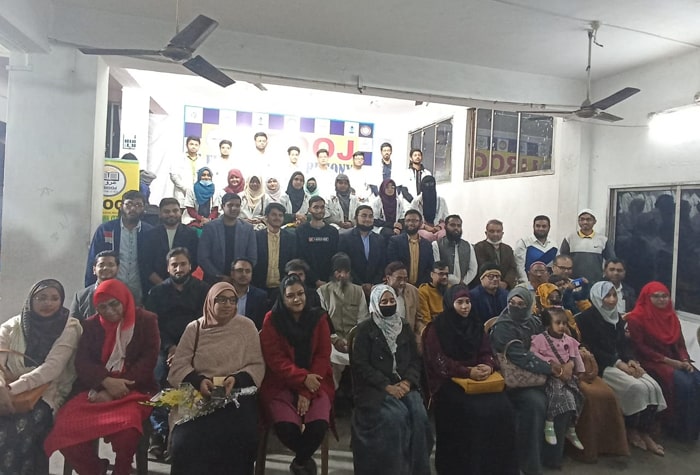
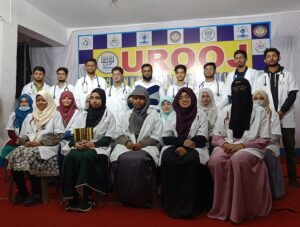
Urooj, a Kolkata-based NGO has taken up the task of coaching underprivileged and average students to excel in NEET exam.
Kolkata’s renowned doctors with Urooj students who secured a seat through NEET
Kolkata:
Gosiya Azad stays in a small house on College Street. During the lockdowns, she found it difficult to study at her home, so she used to walk almost two kilometres to study in a library. Azad, daughter of a bus driver, has managed to secure a medical seat (BDS) at the Dr. R Ahmed Dental College.
Gosiya missed MBBS by one mark. If she would have OBC certificate then she would have got MBBS seat. She is an OBC candidate, but couldn’t get all the documentation done because her family is not literate.
“I had secured 62 per cent in senior secondary. And I was not very good at studies,” she recalls.
Like Gosiya, Shayaan Fahim, also says that he was an average student. And once believed he will never be able to crack the national level exam — National Eligibility cum Entrance Test (NEET). But, he too secured an MBBS seat at the Barasat Medical College.
Danyal Rizwan Ansari passed his secondary from a government school in Bihar. He is all set to become the first doctor from his village. Danyal has also secured an MBBS seat in Barasat Medical College.
Along with them, there are other students whose father runs a pan stall or whose mother is a teacher in a trust school earning a meagre salary and have beaten all odds to crack the NEET and secure a medical seat.
The Urooj students who secured a medical seat
These students have one thing in common, Urooj, a Kolkata-based Non-Government Organization (NGO) which helps underprivileged and average students to crack NEET at a nominal or almost no fees.
Some 151 students (classroom+test) enrolled last year but due to open enrollment system only 79 gave tests, out of which 22 got seats in different government medical colleges and hospitals through NEET 2022. Among them, 14 are girls who realized their dreams of becoming doctors.
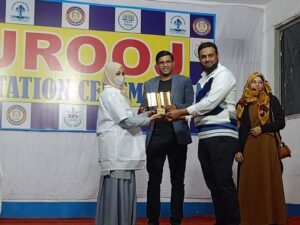
On Sunday evening, all of them, along with 15 more students of Urooj’s 2021 batch were felicitated in Topsia.
And to felicitate them, 30 doctors, from renowned medical colleges and hospitals attended the event.
Aulad Hussain High School, center of Urooj’s classroom coaching had a jam-packed session, despite the unexpected delay caused by a phenomenal turnout of guests to attend the event.
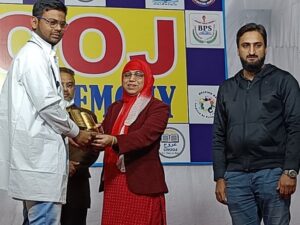
Dr Salim Parvez, Dr Nahid Parvez and Dr Aadil Bashir felicitate an Urooj student Md. Shoaib Akhtar
It was an emotional moment not only for the students who realized their dreams but also for the parents who wanted to see their sons and daughters don the ‘white coat’.
Anwar Hussain, who secured an MBBS seat in Deben Mahata Medical College, when get felicitated, later called upon his father Md Mobarak Hussain and the son donned the father with white coat.
“We do not do the felicitations for donations or publicity. But by such functions, we want to encourage the students for higher studies. We believe that MBBS is just a beginning and they have to do MD and MS or other higher studies in future,” informed Umar Daraz Danish, a teacher, by profession and the center-in-charge of Urooj.
Urooj is the brainchild of Dr. Minhajuddin Khurram, Cardio-Thoracic and vascular Surgeon at NRS Medical College and his cousin Dr. Jaweria Mehreen (MBBS intern). Urooj also gets support from Helping Hand Trust.
Dr. Ahsan Kamal, Dr. Minhajuddin Khurram and Dr. Jaweria Mehreen felicitating another student of Urooj Sumaiya AK Sayeed
Umar added, “Last year, a student whose grandfather was a gatekeeper in Aulad Hussain School cleared NEET and secured a seat in a government college. But we did not publicize it. Urooj also has students who are from economically well-off backgrounds, like a parent who is a teacher in Pratt Memorial.”
Urooj conducts a one-year course for students who are in plus two or have passed senior secondary. Unlike other medical coaching centers, Urooj does not teach or guide 11th-standard students in order to prepare for NEET. It charges only Rs 20000 for a year, that too in installments. If some parents can’t afford that also then they can pay as little as Rs 8000. The Urooj students, who crack NEET, next year help guide ongoing aspirants.
“We do not compromise on the quality of teachers. All are paid as per industry-standard. But we also ensure that students do not start considering teachers as cult figures and rather believe in Urooj and the idea behind it,” said Dr. Khurram, the Academic Supervisor of Urooj.
All the budding doctors praise Dr. Khurram for his selfless mentoring and guidance, which helped them crack NEET.
Some of the doctors also addressed future doctors like gynaecologist Nahid Parvez and Plastic Surgeon Faria Shahab.
“The students should believe that they are not in the profession to earn money but to serve humanity. I also request support from those who are unable to clear this year,” said Dr. Nahid.
While Dr. Faria highlighted, “There is a need for female doctors in every area of specialization and there is nothing like male specialist area, so girls can opt for any specialization they want.”
The list of thirty doctors with their specializations and where they are practicing.
1- Dr. Sayeed Uddin(MBBS, Veteran General Practitioner)
2- Dr. Marya Tazeen (BDS, Dentist, Central Kolkata)
3– Dr. Arshad Ahmed (MS, Orthopedics, Asst. Prof CNMC)
4- Dr. Sufiyan Ahmed (MD, Anesthesia and intensive care specialist, in-charge of GDDI ICU)
5– Dr. Ayesha Farheen (BHMS, Homeopathic Practitioner)
6– Dr. Arsalan Raza (MBBS, DCH, Pediatrician)
7– Dr. Salim Parvez (MD, Radiologist, Director of Radiology, Fortis)
8– Dr. Nahid Parvez (MS, Renowned Gynaecologist)
9– Dr. Aadil Bashir (DM, Cardiologist, NRS MCH)
10– Dr. Asif Ansari (MD, Internal Medicine, Asst. Prof CNMC)
11– Dr. Fatima Zinna (MD, Dermatologist)
12– Dr. Wasif Akhtar (Homeopathy practitioner)
13– Dr. Md. Sarim Ashfaque. (MS, Orthopaedics, Apollo)
14– Dr. Ishrat Parveen (BHMS, Homeopathic Practitioner)
15– Dr. Zoya Ayesha (MBBS, Social Activist)
16– Dr. Ismail Shahidullah (DNB, Neuro Anesthesia- INK)
17– Dr. Jaweria Mehreen (MBBS intern- founder member of Urooj)
18– Dr. Mubashshir Shamim (MRCP, Pediatrician)
19– Dr. Arif Faizan (MD, Senior Interventional Radiologist, NH, Medica and Kothari)
20- Dr. Haseeb Hassan (DM- Neurologist, Amri, Kolkata)
21– Dr. Abdul Majid (DMS, Veteran Homeopathic Practitioner)
22– Dr. Amber Obaid (MD, Senior Radiologist, Medica)
23– Dr. Ahsan Kamal (MS, General Surgery)
24– Dr. Talha Shahid (BDS, Dentist)
25– Dr. Subhan Reyaz (DNB Radiation Oncology, Chitranjan Cancer Hospital)
26– Dr. Saima Shahid (BHMS, Homeopathic Practitioner)
27– Dr. Minhajuddin Khurram (MCh, CTVS, resident at NRS)
The marble throne of Bahadur Shah Zafar, the last Mughal emperor, symbolizes a collapsed dynasty, now housed in a museum near Humayun’s Tomb in Delhi.
Delhiwale: The ultimate Mughal souvenir
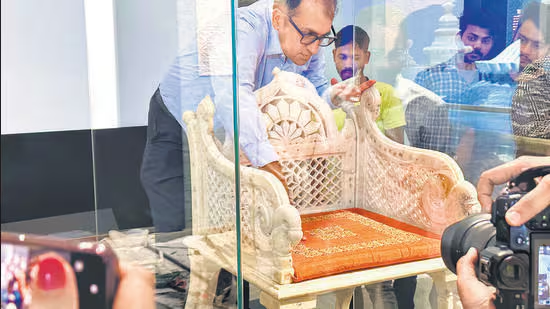
Behold this marble throne. Preserved inside a glass case at the Humayun World Heritage Site Museum in Delhi, it was once the stately seat of Bahadur Shah Zafar. As the last Mughal sovereign, the poet-king is likely to have sat on this throne while reflecting on the dissolution of his 300-year-old dynasty. The throne is, in fact, less ostentatious than the throne-like sofas found in the drawing rooms of Delhi’s wealthy today. Yet it is far more elegant. The armrests are supported on latticework, and faint flecks of colour cling to the marble like the last glimmers of extinguished stars. The fragile-seeming relic assumes truly epic proportions as the viewer connects it to the legend of a collapsed empire whose layered legacy continues to resonate in our republic (vividly chronicled in this newspaper yesterday).
The Mughals spanned over 18 rulers. Their kissa-kahani began 500 years ago in 1526, when Babur defeated Delhi Sultan Ibrahim Lodi in a field 80 kilometres from Delhi. Soon after, Babur entered the city and visited the shrine of the mystic Hazrat Nizamuddin Auliya. At that time, nobody would have guessed that this pilgrimage would recur across generations of Mughals, binding them to the city’s sacred, grave-dotted topography.
Truth be told, Delhi surpasses the dynasty’s other great centres, Agra and Lahore. Shahjahan may have built the immortal Taj in Agra, but his creation of Old Delhi throbs more with real life. For Delhi’s pre-eminence in Mughal India, we must first credit Babur’s son, Humayun, who established his capital, Dinpanah—today’s Purana Qila—near the shrine of Hazrat Nizamuddin. His son Akbar later built Humayun’s mausoleum close to the same shrine.
Over time, Humayun’s Tomb came to be known as the “dormitory of the Mughals.” This 16th-century complex contains 160 graves of kings, princes, and princesses, representing a broad cross-section of the dynasty. Seven Mughal emperors are buried here: Humayun, Azam Shah, Jahandar Shah, Farrukhsiyar, Rafi ud-Darajat, Rafi ud-Daulah, and Alamgir II. It was here, at Humayun’s Tomb, that Bahadur Shah Zafar took refuge after the collapse of the 1857 uprising against the British. He was captured at this very site, marking the end of the Mughal Empire.
The aforementioned museum, which houses Zafar’s throne, is across the road from Humayun’s Tomb. In the lead-up to its inauguration two years ago, a significant moment was the installation of the throne, personally overseen by museum curator Ratish Nanda—see photo. A conservation architect, Nanda had earlier helped restore the garden around the first Mughal emperor’s tomb in Kabul.
As for the last Mughal, the unfortunate Zafar had intended to be buried in Delhi, but the British exiled him to Rangoon, where he was finally laid to rest. As a consolation, his ill-fated throne may be seen as a symbolic substitute for his Delhi tomb. Indeed, as the tomb of his dynasty itself.
source: http://www.hindustantimes.com / Hindustan Times / Home / by HT Correspondent / May 04th, 2026