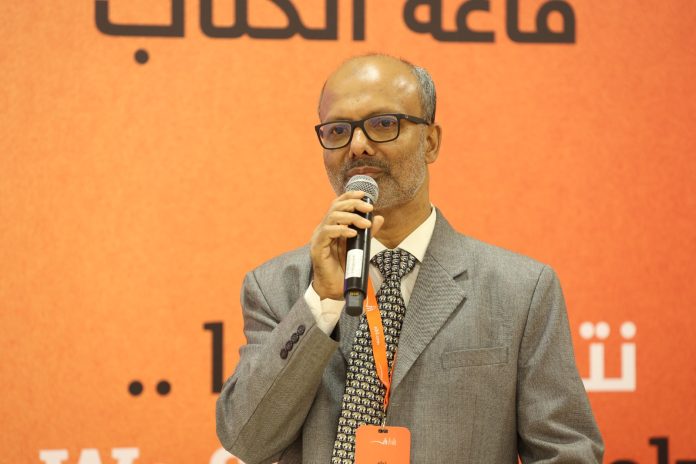
Madhyamam’s editor, V.M. Ibrahim, has been honored with the 2023 Theruvath Raman Award for the best editorial by the Calicut Press Club. The award recognizes his editorial titled “Malayali Engane Nivarnunilkanam” (How Malayalis Should Stand Upright), published in Madhyamam on February 14, 2023.
The editorial discusses the tragic case of Vishwanathan, a tribal youth from Wayanad, who visited the Institute of Maternal and Child Health at Calicut Medical College to see his wife, who was in labor. Accused of theft, he was assaulted by security personnel and a mob. The next day, he was discovered dead, hanging in an empty field near the medical college. The editorial condemns the mob’s unlawful actions and the seeming apathy of the police and legal authorities.
A postgraduate in Urdu literature, V.M. Ibrahim began his career as an assistant executive editor at Madhyamam in June 2001 and later served as Executive Editor of both Madhyamam and Gulf Madhyamam. He was appointed editor in 2021. Ibrahim has also authored “Chekuthanum Choonduviralum” and translated “Theerthadakante Kanavukal.” This is Ibrahim’s second Theruvath Raman Award, following his win in 2021 for his editorial “Manushyatvam Kurisherumbol” (When Humanity is Crucified).
Speaking to Radiance, V.M. Ibrahim said, “At Madhyamam, we are dedicated to giving a voice to the voiceless, particularly Dalits and Adivasis, and championing social justice, equality, and human rights. Our newspaper has earned respect for its impartial reporting and strong stance on issues impacting marginalized communities. This editorial sheds light on the struggles of the tribal people in Wayanad, who suffer under the oppressive attitudes of so-called civilized urban society. Through these stories, we advocate for the protection of indigenous rights and the preservation of their unique identity.”
He added, “I am honored and delighted that my humble efforts to walk alongside Madhyamam in its mission to uplift the downtrodden have been recognized with this esteemed award.”
The award, which includes a cash prize of Rs 15,000 and a certificate, was established by the family of Theruvath Raman, the esteemed editor of the popular newspaper Pradeepam. The selection was made by a jury comprising prominent media observer Dr. Sebastian Paul, senior journalist K. Balakrishnan, and Press Club Journalism Institute Director V.E. Balakrishnan, as announced by Press Club President Firoskhan M and Secretary Rakesh P.S.
source: http://www.radiancenews.com / Radiance News / Home> Pride of the Nation> Awards / by Radiance News Bureau / August 26th, 2024
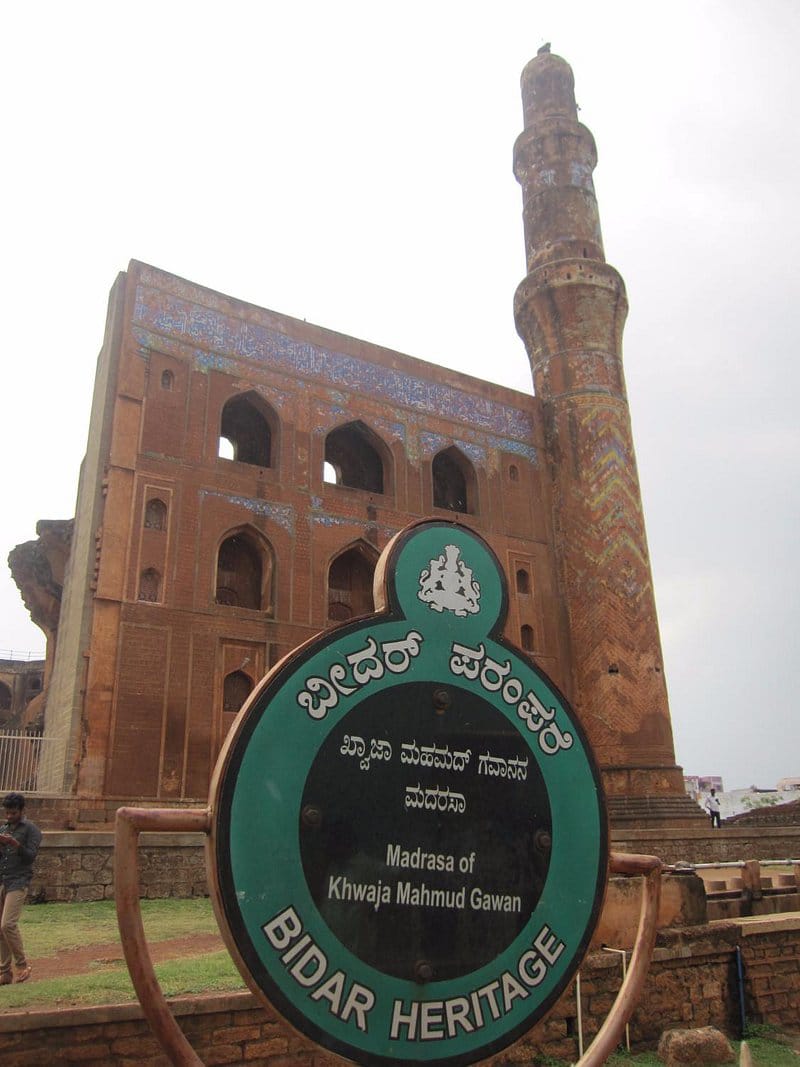
Dr. Abdul Qadeer, Chairman and Founder of the Shaheen Group of Institutions, has officially signed an MoU with the Archaeological Survey of India to adopt the Mahmud Gawan Madrasa.
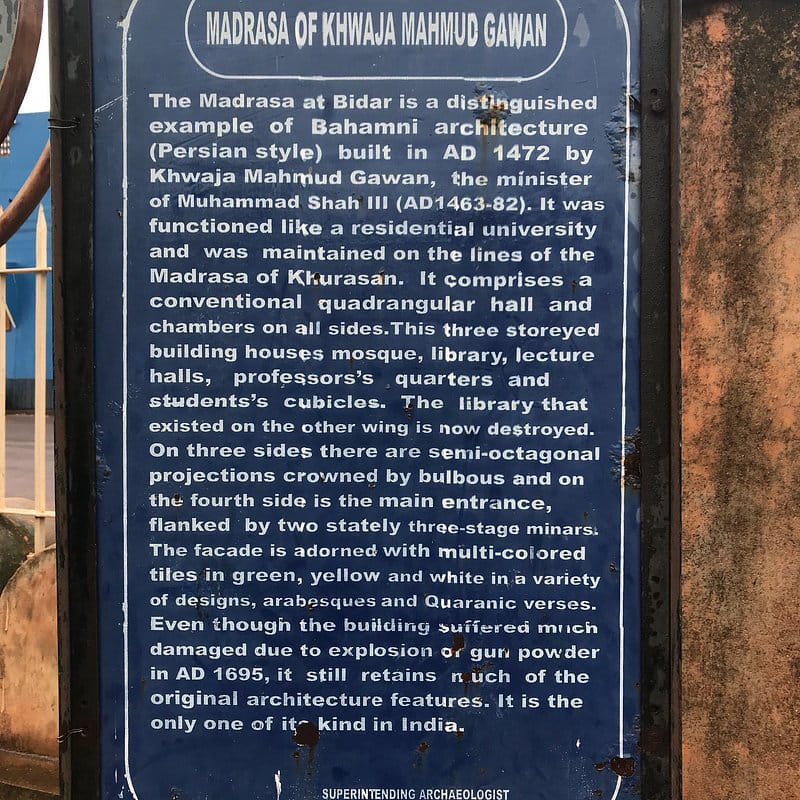
According to the history display board by the Superintending Archaeologist, The Mahmud Gawan Madrasa, located in Bidar, Karnataka, is a distinguished example of Bahamani architecture with Persian influences. Constructed in 1472CE by Khwaja Mahmud Gawan, Persian prime minister of the Bahamani Sultanate during the reign of Muhammad Shah III (1463-1482), the madrasa was a prominent educational institution of its time. It functioned as a residential university, modeled on the Madrasa of Khurasan, and accommodated around 1,000 students. The institution offered education in various subjects, including theology, philosophy, astronomy, mathematics, Arabic, and Persian. It also boasted a library with over 3,000 manuscripts, alongside a mosque, lecture halls, and living quarters for both professors and students, attracting scholars from across the world.
Architecturally, the madrasa is a three-storied building with a conventional quadrangular layout and semi-octagonal projections crowned by bulbous domes. The main entrance is flanked by two imposing three-stage minarets. The facade is adorned with multi-colored tiles in green, yellow, and white, featuring intricate designs, arabesques, and Quranic verses.
Despite suffering damage from an explosion of gunpowder in 1695, the madrasa retains much of its original architectural grandeur. Although the library was destroyed, the building remains a unique cultural and architectural landmark in India.
Since 1914, the madrasa has been managed by the Archaeological Survey of India (ASI). It stands as a testament to Mahmud Gawan’s scholarly cultural contributions, with its architecture reflecting the influences of Persian madrasas and showcasing Gawan’s enduring legacy.
source: http://www.radiancenews.com / Radiance News / Home> Focus>Report / by Radiance News Bureau / August 28th, 2024
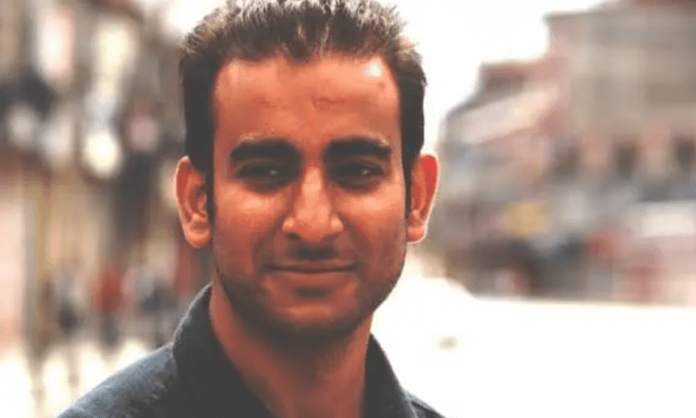
Jailed Kashmiri journalist Irfan Mehraj, who is currently incarcerated under draconian charges, has been honored with the Human Rights and Religious Freedom Journalism Award for 2024.
Mehraj, who won in the Best Video Story category for his impactful work on the heroin epidemic in Kashmir, shared the award with Akanksha Saxena and Khalid Khan of Deutsche Welle, reported Freepress Kashmir.
The awards, organised by the Indian American Muslim Council, a Washington, D.C.-based advocacy group, were presented at a ceremony in Chicago, Illinois. This year, the competition received over 210 entries across four categories.
The prestigious award for ‘Best Video Story on Human Rights and Religious Freedom’ was jointly won, with the top honour going to the three journalists from Deutsche Welle for their impactful documentary, “On Drugs – Kashmir’s Heroin Epidemic.”
The piece stresses upon the growing heroin crisis in Kashmir and lives of people ravaged by addiction in the region.
According to a Human Rights Watch statement issued earlier, said, “While on a professional assignment on 20 March 2023, Mehraj was summoned for questioning and detained by the National Investigation Agency (NIA) of India in Srinagar under provisions of the Indian Penal Code and the Unlawful Activities (Prevention) Act.”
Irfan has been booked under the draconian UAPA. According to the NIA, Irfan was previously summoned to Delhi in a case related to “NGO terror funding”. The NIA in its press note claimed he was a “close associate” of the Kashmiri human rights defender Khurram Parvez.
In June 2023, United Nations experts expressed serious concerns regarding the charges against and arrest of Mehraj and Parvez, stating that their continued detention is ‘designed to delegitimize their human rights work and obstruct monitoring of the human rights situation in Indian-administered Jammu and Kashmir.’
On 7 March 2024, UN experts sounded the alarm on the “harassment and prolonged detention of human rights defenders and journalists” in the country. ( With Agencies Inputs )
source: http://www.muslimmirror.com / Muslim Mirror / Home> Indian Muslim>Media / August 28th, 2024
The twin sisters – Ramsina Rasheed and Rissana Rasheed – hailing from the small town of Trikarupur of Kasargode district in Kerala have brought laurels to their auto-rickshaw-driving father.
One of them graduated in engineering from the Indian Institute of Technology at Roorki, the other from Kharagpur. Both are on the job and working in Bengaluru.
The educational journey of the twin sisters is a source of inspiration for the girls of the country and abroad.
At a time when a particular section is targeting the Hijab and Hijab-wearing girls are not allowed entry into schools and colleges, Ramsina Rasheed and Rissana Rasheed have set a record by graduating from IIT while attending classes in Hijab.
Ramsina and Rissana completed their JEE Advanced examination in 2017. While Ramsina did an M.Tech from IIT Kharagpur in Aerospace Technology, Rissana did a B.Tech. from IIT Roorkee in electrical engineering. Both the sisters are in jobs now.
Ramsina and Rissana’s father is not an ordinary auto-rickshaw driver. Despite his modest income, he made sure his daughters received higher education despite taunts by the people in his group.
The twin sisters come from an area of Kerala where girls are married off at a tender age.
Interestingly, the father of the twin sisters was also suggested by people in his circle to save money, like other parents do in the area to buy gold for the daughter’s marriage. But Rasheed ignored them and gave priority to the education of his daughters.
The mother of the twin sisters also helped them in their studies. Their mother did not budge against the taunts of people about her daughters. Rather, she ensured that her daughters were not burdened by the household work as they required more time to study.
Ramsina and Rissana are the first IIT pass out from their village. Both are working in a top firm in Bengaluru. They have become ideal for their area.
In a country where girl children face discrimination on economic, social, religious, and gender bases, Ramsina and Rissana overcame difficulties with grit and set a record by graduating from the top IITs.
As their father is an auto-rickshaw driver, they had to face economic challenges in addition to the social barriers of Indian society.
It can be easily understood that for a father of limited income, it is beyond the reach to get an education for talented children according to their strengths.
One can understand the role of a father through the success of Ramsina and Rissana. Their father dared to get his daughters educated while driving an auto-rickshaw. He dedicated his life to the education of his daughters.
Ramsina and Risssana faced religious discrimination which Ramsina has discussed in her Instagram post.
It will be appropriate to discuss that.
Ramsina discusses discrimination because of wearing a Hijab while replying to a comment of a user to her post.
Ramsina writes, “I was treated differently in the lab while doing practicals due to my Hijab.” She says, “However, my colleagues at Airbus do not judge me on my clothes, instead they see me through my abilities.”
On the other hand, Rissana says that one professor had asked her to remove her Hija in the electrical machine lab.
It is clear from their accounts that talented girls like Ramsina and Rissaana face administrative hurdles due to the Hijab in India.
If there is no discrimination against Muslim girls due to their Hijab, there would be many girls like Ramsina and Rissana progressing in different fields and making the country proud.
source: http://www.indiatomorrow.net / India Tomorrow / Home> Education / by Huma Masih / August 19th, 2024
Rashida Parveen (on the right) and Saiyyada Parveen (on the left) at their home.
New Delhi:
“This work not only supports our family but also sustains the entire Uttar Pradesh,” claimed 52-year-old Rashida Parveen, who has been working in Moradabad’s brass industry since her early teens.
Popularly known as “Pital Nagri” (Brass City), the western Uttar Pradesh district is famous for its brass handicrafts industry. It is home to thousands of workers who keep the industry 9alive and thriving.
However, over the years, the market has experienced several changes that have impacted the industry. Despite challenges, two women are striving to sustain and revive the artform, aiming to bring better days not only for themselves but also for other women co-workers.
Having completed her bachelor’s in education and a training diploma in Natakashi (brass work), Rashida began learning the art of carving and sketching in her childhood. “Brass handicrafts have been practiced in my family for generations. Over the years, I realized that the work does neither make your hands nor your clothes dirty. What is required to become a good artisan is dedication and hard work,” she said.
Her sister, Saiyyada Parveen, started working at the age of 10 and has been doing so for the last 44 years. For both sisters, it was their father who sparked their interest in this field. “My father, Abdul Hamim, encouraged me to take up this work. When he went to offer namaz (prayer), I would carve wood, hammer metals and learn the craft of carving in his absence. I once carved a peacock out of wood, which made him very happy. I began with sparing little time for it, but later, with dedication, I became skilled enough to receive a state award,” says Saiyyada.
“When I came home from school, I would observe my father carefully. He used to draw with his pen, and I would use a pencil. My brother, who has received a national award twice, also encouraged me. He helped me with drawing and scaling, which further improved my skills,” she stated.
In addition to working at home, the two sisters also empower young girls and women. “We travel 16 kilometers every day to impart training to 250 children. After returning home in the evening, we give training to another batch of children and women here, especially those who work as domestic help. Many of them are now skilled artisans, who are earning a dignified living,” she claimed.
They train women without any distinction of religion or castes. “We impart training to girls belonging to different religions and castes,” said Saiyyada, emphasizing that this routine continues from morning to evening.
Rashida and Saiyyada have been helping women learn the art since 2002. “It was started after the Central as well as the state government sponsored him under the Training and Extension Scheme. While he began training men, we (the two sisters) worked with women,” explained Rashida.
However, as the number of artisans decreased, the training programme faced setbacks. “There are many mistakes in the artisans’ cards, which are issued by the department of handicrafts through its local offices in Kanpur and Bareilly. Only those with artisan cards could participate in the training. Since 2012, I have been going to the offices concerned to get the issue resolved,” said Saiyyada.
However, change in policies adversely impacted the quality of training. As a result, with the basic training and little support, it is impossible for women artisans to sustain in this industry for a long time.
“It is very similar to how a child progresses from nursery to higher education. Similarly, the women have learned only the basics of the artform, they have not been able to master it yet,” said Rashida, noting the lack of growth opportunities.
She further added that the government-sponsored training has now come to a halt due to the suspension of the scheme. “As a result, the artform is facing the threat of gradual extinction,” she said.
Azam Ansari, a member of Moradabad’s Brass Manufacturers Association, explained the National Handicrafts Development Programme (NHDP), which aims to support handicrafts clusters and artisans by providing essential resources and infrastructure to cater to the target market. “In 2012, the NHDP budget stood at Rs 1,500 crore, but it has now been reduced to Rs 500 crore. This budget cut has affected the training programme,” stated Ansari.
To address these problems, Rashida and Saiyyada established an NGO in 2018 to help women become skilled artisans. Gradually, women of all ages and from various walks of life got associated with it.
“We surveyed the women around us, understood their situations and made efforts to introduce them to the art form. They include widows who lost their husbands to COVID-19. We picked up their young children and the women who work as domestic help and began training them so that they become self-reliant,” said Saiyyada.
This initiative not only helped them become financially independent but also enabled them to receive a stipend of Rs 5,000 every month from the government. “We guided them to make good use of the financial assistance,” she said.
These efforts earned Rashida an honour from the state government. In 2022, she received a trophy and a prize of Rs 25,000. “In the first attempt, when I applied for the award, my application form was rejected. My family encouraged me to try again, and in 2022, I was finally shortlisted,” said Rashida, enthusiastically adding that “to achieve something big in life, you have to compete with others”.
“I received the award from Chief Minister Yogi Adityanath. He draped a shawl over me. I am happy that my art is reaching people,” Saiyyada said with a big smile on her face.
“We have mastered the craft, and we want more women to learn it and become skilled and advanced. When this happens, it will inspire and motivate others as well,” she added.
Rashida urged the government to formulate more schemes to help young children and women become self-reliant and empowered. “A college is proposed to be established here to make youngsters certified artisans, and I am glad to share with you that I have been selected as a teacher there. We faced difficulties but it only made us committed to pursue a career in this field,” said Rashida.
“What started as a small initiative has transformed the once hopeless lives of hundreds of women into a promising future,” she remarked and added, “We find joy in supporting and teaching others. Helping others brings blessings”.
source: http://www.twocircles.net / TwoCircles.net / Home> India News> Lead Story / by Anushka Kogta and Namya Jain, TwoCircles.net / May 23rd, 2024
Jamaat-e-Islami Hind Hyderabad organized an online workshop on “AI: Your Creative Companion” here recently. More than 500 people from across Hyderabad actively participated in the workshop, highlighting the growing curiosity and interest in the role of artificial intelligence in creative fields.
The workshop was addressed by JIH leaders, including Ghousuddin, Secretary Bahadurpura, and Shariff Tajuddin, Secretary JIH Hyderabad. The key speaker was Hamzah Muazam Ali, CEO of Standard Touch, who provided in-depth insights on the topic.
Shariff Tajuddin told Radiance: “As netizens, it is essential for us to understand the emerging trends that are shaping our digital world. This workshop was organized to introduce participants to the enormous potential of artificial intelligence (AI) as a support tool in creative processes. Our goal is to enable individuals to use the capabilities of artificial intelligence to enhance their creative performance.”
The workshop began on a spiritual note with recitation of the Quran by Hameeduddin Quadri, setting a reflective and contemplative atmosphere for the day’s discussions.
Program Convener Ghousuddin welcomed the participants and outlined the goals of the workshop, emphasizing the critical role of understanding the impact of artificial intelligence on the modern creative environment. “AI is not just a technological advance; it is a tool that, when used wisely, can revolutionize how we approach creativity,” Ghousuddin noted.
Hamzah Muazam Ali gave a comprehensive presentation, covering key topics:
– Understanding artificial intelligence and its applications in creativity,
– AI tools and platforms for creative processes, and
– Real-world examples of AI-driven creativity.
These sessions introduced participants to a range of AI-powered tools and technologies designed to enhance creativity in various fields, including art, design, writing, and media. Hands-on demonstrations provided attendees with practical insights into how to effectively integrate artificial intelligence into their creative workflows.
The workshop concluded with closing remarks by Shariff Tajuddin. He expressed his gratitude to the participants for their enthusiastic engagement and emphasized the importance of integrating artificial intelligence into creative endeavors while maintaining ethical and responsible use. “Our commitment is not only to educate but also to inspire the thoughtful and innovative application of AI in our everyday creative tasks,” he added.
The interactive sessions fostered meaningful dialogue that allowed for a rich exchange of views between the speaker and the audience.
source: http://www.radiancenews.com / Radiance News / Home> Focus / by Radiance News Bureau / August 26th, 2024
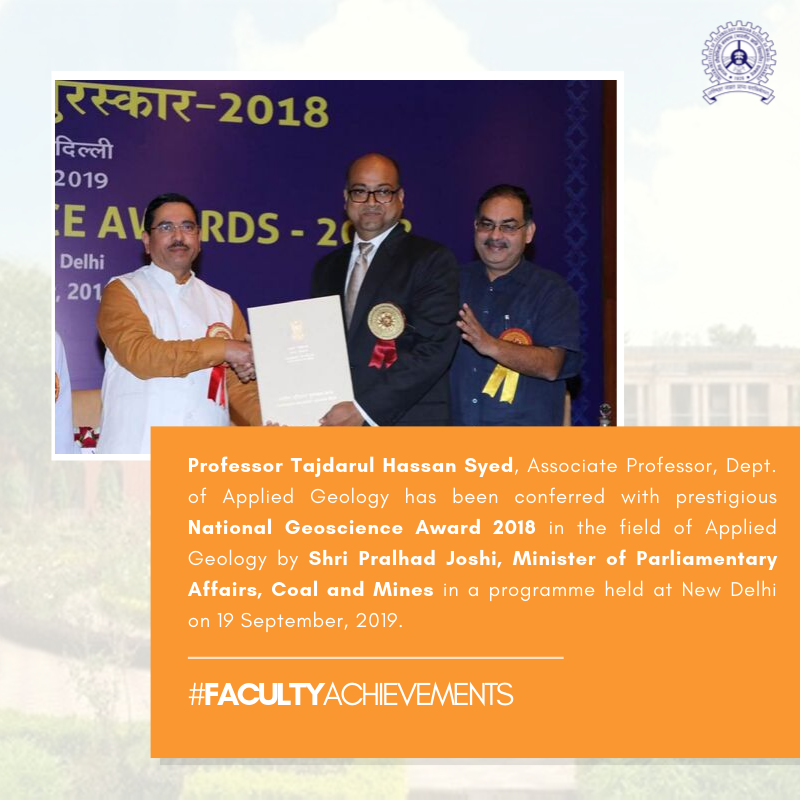
Professor Tajdarul Hassan Syed, Associate Professor, Dept. of Applied Geology has been conferred with prestigious National Geoscience Award 2018 in the field of Applied Geology by Shri Pralhad Joshi, Minister of Parliamentary Affairs, Coal and Mines in a programme held at New Delhi on 19 September, 2019.
Prof. Syed was honoured with this award for his contributions in the area of Remote Sensing within Applied Geosciences.
source: http://www.facebook.com / Indian Institute of Technology Dhanbad, Jharkhand / September 26t, 2019
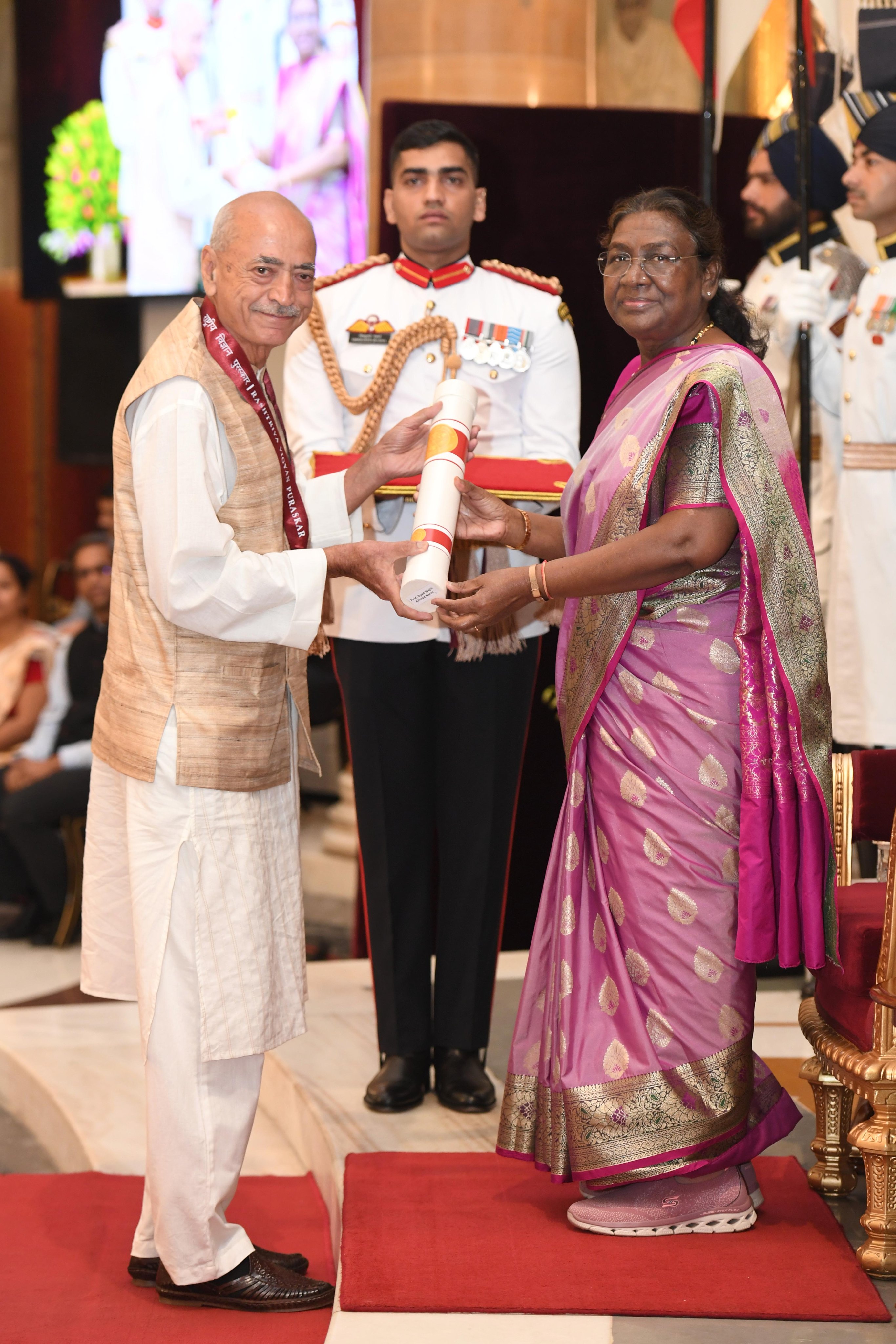
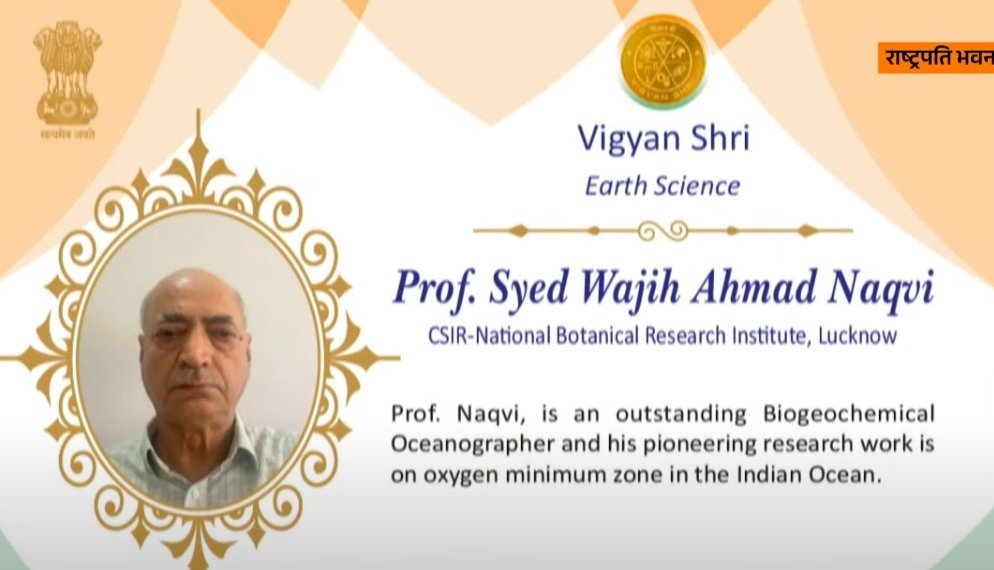
President Droupadi Murmu confers the Vigyan Shri Award on Professor Syed Wajih Ahmad Naqvi in Earth Sciences during the Rashtriya Vigyan Puraskar-2024, at Rashtrapati Bhavan, in New Delhi on Thursday August 22nd, 2024 .
Prof. Syed Wajih Ahmad Naqv from CSIR-National Botanical Research Institute (NBRI), Lucknow receives Vigyan Shri award in Earth Science from President Droupadi Murmu / pix: x.com/DDNewslive
New Delhi :
President Droupadi Murmu confers the Vigyan Shri Award on Professor Syed Wajih Ahmad Naqvi in Earth Sciences during the Rashtriya Vigyan Puraskar-2024, at Rashtrapati Bhavan, in New Delhi on Thursday August 22nd, 2024 .
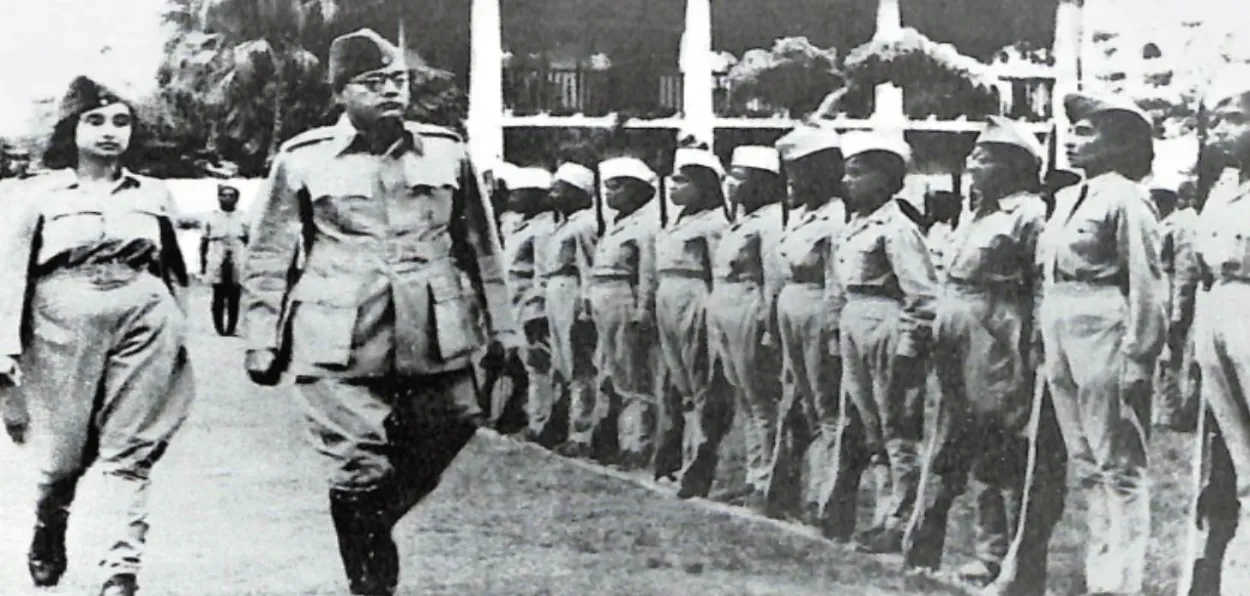
Subhas Chandra Bose, with Captain (Dr) Lakshmi Sahgal, inspecting the guard of honour presented by the Rani of Jhansi Regiment
If one has to point out one thing that hurt the British Empire most in India, it has to be the Hindu, Muslim and Sikh unity with women fighting against the imperial crown a close second. The fear was not unfounded. In 1857, this was a united effort of Hindus and Muslims, where women like Rani of Jhansi and Begum Hazrat Mahal played important roles, which shook up the foundation of the empire in India.
A Slice Of History
The Second World War came to a close in late 1945. The soldiers of the Indian National Army (INA), originally called Azad Hind Fauj, were captured and brought in front of military tribunals as the Prisoners of War (PoW). The media coverage of the trials gave Indians the real picture of Subhas Chandra Bose-led INA. The force was painted as agents of the Japanese and fascists who wanted to capture India.
Indians came to know that INA was an independent Indian armed force and it was funded by the Indian diaspora. While in India, Congress and the Muslim League could not settle upon the question of religious communalism, in the INA Hindus, Muslims, and Sikhs dined together. It must be noted that in the Indian Army of the British Imperial Government, food for each religious group was cooked separately.
Moreover, the INA had an all-women combat force – Rani of Jhansi Regiment. It was led by Captain Laxmi Sahgal.
These narratives were a blow to the divisive politics of the Muslim League led by Mohammad Ali Jinnah. Though they could not argue that Muslims were not part of the INA as many of its top Generals were Muslims they tried to convince people that Muslim women were not a part of the INA.
Admission of women fighting the war along with Hindu women as well as men was a big blow for Muslim Pakistan. How could they admit that Muslim women could interact with Hindu men as equal soldiers on the battlefield?
On 22 December 1945, the Dawn, a Muslim League mouthpiece, carried a report that no Muslim woman ever joined the INA. The same day the INA Defence Committee countered this claim and news was carried in the National dailies, where it was reported, “Prominent among the Muslim women in the I.N.A. were Mrs. Saleem, wife of Capt. Saleem, now in the Red Fort, and two daughters of Major Wahab Khan who is still in Thailand working for the Indians there.”
Sultana Saleem whose husband Colonel Saleem was also serving the INA, was one of the prominent officers of Rani of the Jhansi Regiment. She had never been to India before the War broke out and was a resident of Burma. Like a majority of the soldiers of the regiment she responded to a call of Subhas Chandra Bose without any prior military training.
It was during the War that Sultana met another young INA officer Saleem, who crossed over to the Nationalist Army after serving in the Indian Army of the British Imperial Government. Both the INA officers got married with the blessings of Bose.
When the War was over, Saleem was imprisoned as a PoW. Sultana reached India as part of the first contingent of captured soldiers of Rani of Jhansi Regiment in February 1946. She interacted with the press and told people about the INA and the movement led by Bose.
Sultana Saleem advocated military training for the women of India and said that women must pay an equal part to men and have the same facilities for military training. Such training had helped them to be strong and had made them better able to face the difficulties of life. It inculcated a sense of discipline and fearlessness. If women came forward. It would instill courage in men to make greater sacrifices.
The Indian Express reported on 22 February 1946, “Mrs Sleem felt that there was only one country for her- Hindusthan – and only one nation – Hindustani. She did not believe in either communalism or provincialism. It was the oneness of India that appealed to her most. In East Asia, she said there was no consciousness at all of religious or provincial differences and no untouchability problem. She believed that if India had freedom her many problems could be solved without much difficulty.”
The INA had a good percentage of Muslim women soldiers as well who were fighting for the freedom of India along with their Hindu and Sikh sisters of Rani of the Jhansi Regiment.
source: http://www.awazthevoice.in / Awaz, The Voice / Home> Story / by Saquib Salim / August 18th, 2024
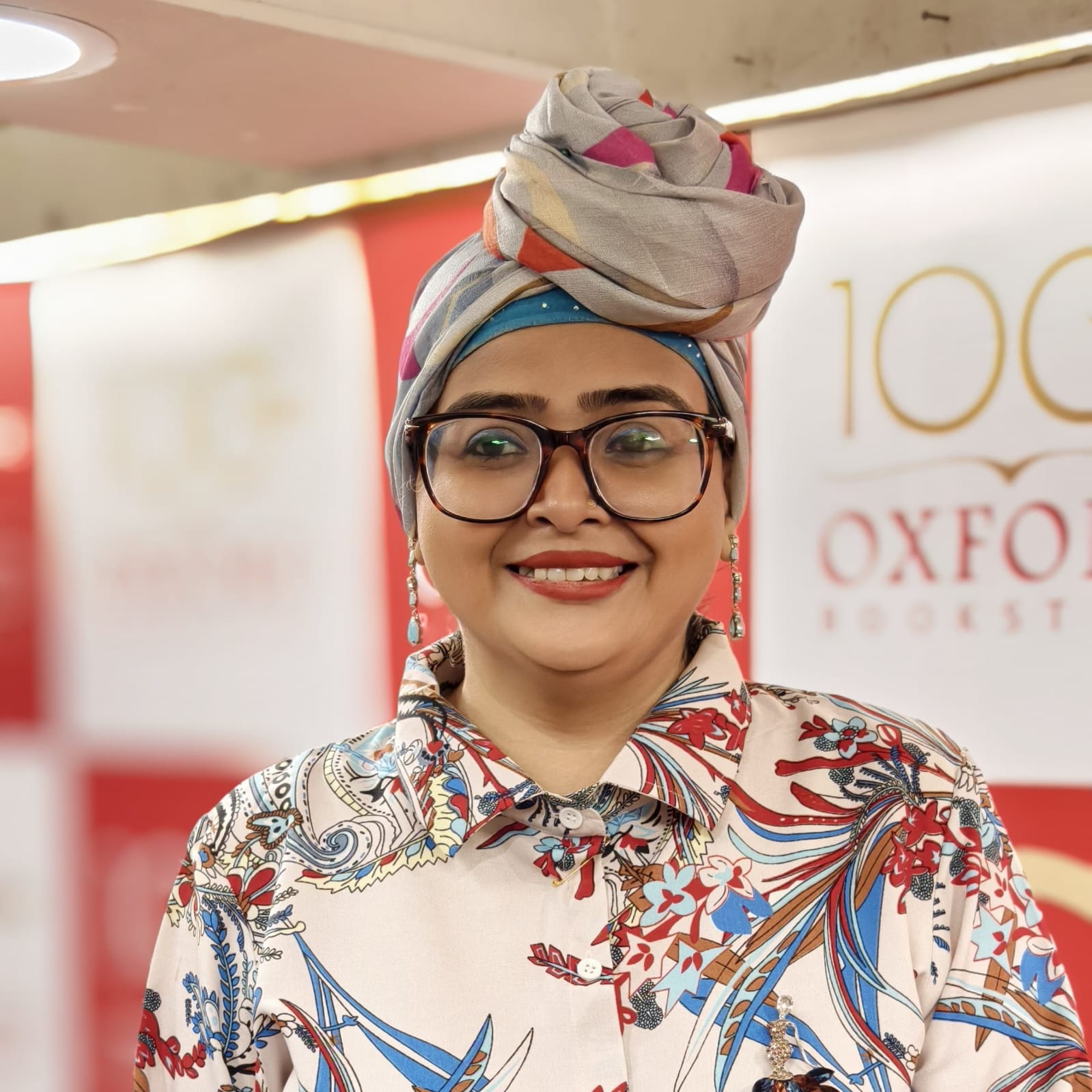
Shagufta Hanaphie’s story is incredible, starting from a child as a shy girl who could barely speak, chronically ill with many complications to the point she would fall unconscious. Yet, at one point in her life, a “magic wand” touched and transformed her. She rose to become an Event Curator, Storyteller, Digital Creator, Author, Womenprenuer, Award Curator, and Philantropist.
She is also the co-founder of Best Friendz Society along with her friend Rajiv, and founder of SHE – Shagufta Hanaphie Events – which is a PR and event boutique, and many other organizations.
A turnaround came during COVID 19 – pandemic when Shagufta along with a team provided food for a village of 400 people in Ernakulam, Kerala.
Post Cyclone Amphan that hit Bengal, she and her team also traveled to places in Sundarbans where they provided food, dry rations, and clothes to the needey persons.
Again, during the Covid-19 pandemic, Best Friendz Society reached Sundarbans.
She started a campaign with her team called Hunger Free Bengal. She coaches people who are emerging with startups and does personal counseling for the lonely, and divorcees, and on occasions, has even match-fixed singles. She works with suicidal people and conducts counseling sessions with young girls and boys.
Titled with many monikers such as Event Organizer, Author, founder and Director, CEO at Teacher’s Excellence Award, Founder Director, Owner of SHE Founder, Director, CEO at Inspiring Women Achievers Awards – IWAA, she tells Awaz-the Voice, “I am not a brand but I want to honour, felicitate people for their outstanding work. While I may not be able to give a formal award, I want to prize people for the recognition for their incredible work and dedication which otherwise gets overshadowed by other giants.”
Shagufta Hanaphie
Shagufta lived with her parents and three sisters in a joint family of 17 members in the 100-year-old bungalow-style British-styled house in Kidderpore, South Kolkata.
Her uncle and aunt adopted her. As a little girl, Shagufta was emotional and shy, she hid behind her mother; and never spoke to people outside the family circle. She struggled with illnesses, and due to this could not study well.
“We say bhagwan ka ishara alag hota hain, maybe if a person does not do well in early life, perhaps later in life he will do something different or great.I was a very sick child right from the beginning making me heavily pampered and if I didn’t want to study, they would say don’t put pressure on her. My mom was very strict but others were soft on me. We lived in an extended family, Baarey Papa, Baari Ma used to lavish love on me, to the point that I became lethargic. I had a ligament injury in class 6 which affected the left side of my body. I sometimes even became unconscious.
“When I was 9, I underwent surgical removal of gall bladder; it had 72 stones.This story was reported by newspapers. When I was in class 8, I did not take my exams so I lagged one year. At that time, an angel in the form of my Dad’s friend, Uncle Junaid took the imitative to help me to study saying, “Let us bring back her motivation to study and let me teach her.
“Bedridden, with traction around my neck, my body aching, lying down, he taught me Maths and I started to like the subject. After being bedridden for three months, I returned to school in a robotic dress. My principal called my father and asked him to take me home saying, “You don’t understand, she is going through a mental trauma right now.
Glimpses of events organised by Shagufta’s NGOs
“I repeated classes, and with mocking classmates around, I changed the school and got an A. I could not believe it and thought the mark sheet got mixed with someone else!
“The talk of marriage exasperated me and decided to go to Ranchi and stay at my Aunt’s home to do college.
“After Baari Ma had a fall, I returned in 2002 and refused to go back to Ranchi. Dropping out of college, one day I attended a workshop where Ruby Bhatia and Michele Pinto came to Kolkata. That was a defining moment in my life because I never knew what the other world was.
“This workshop was a beautiful learning experience where I met these amazing people who told me, “Since you don’t want to study higher, help us, since your English is good.” With them, I learned oratory skills. Earlier, I never spoke to anyone outside, but presently, not only am I doing public speaking but now everyone meets me and I am well known.
“My first salary was Rs. 3200 and I spent more money going by taxi to reach my workplace. My Baari Papa used to say, “Let her travel so at least she will learn to talk and mix with people.” All these were life-learning lessons. It falls into place later on in life.
“After this, Rajiv, a good friend and I launched a new brand called Launchers. I have worked with Rajiv for 17 years as a PR Director in a partnership firm.
“My parents got hold of a very handsome boy, who is my husband now. My husband works the whole day; he is very supportive, most of my photographs are clicked by him, travels with me to all the places, and my parents stand right behind me.
“My life changed in October 2018 when my Baarey Papa was diagnosed with cancer. We spent long hours talking till he passed away in 2019. I was shattered.I felt uprooted and disconnected and took a break from work. It was a break tha my Baari Papa used to encourage me to take.
“In 2020 I did my first event and soon went on to do 5 events. On March 22, 2020, lockdown closed everything. People say lockdown was bad, for me lockdown was a boon. Our NGO called Best Friendz Society was helping people.
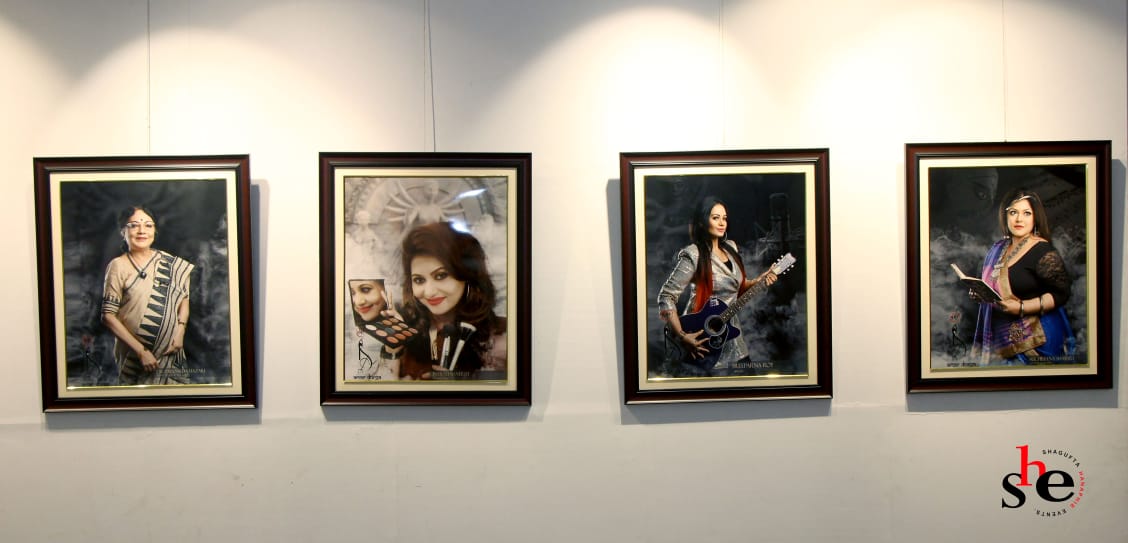
A wall celebrating women from dfference backgrounds in Shagufta’s office
“One day, one of my friends Nisha, a fashion designer, asked me to help people in an area in Kerala during the COVID 19 Pandemic. I was into PR and media. First I wondered how could I reach out to people in Kerala. I told myself: Okay, we will find a way to them even though we are not into this.
“At first, we heard there were four people, turned out to be 40, and finally they turned out to be 400 people stuck in Bengali Para in Ernakulam. While the BSF was providing food in the general area they were not reaching out to the red done. We had to locate the exact place and then Nisha and I arranged for food for 400 people for a month. I felt new energy and joy rising in me. I started gathering people, and communicating with them.
“While people speak up for daily wagers, I started to have a burden for a class of people that are largely ignored such as models who barely get Rs. 2,000 for an assignment which may be all they have for that month, photographers, and even school teachers. I started to post about and for them and personally WhatsApp them telling them if they need help, let me know. I assured them help will reach theirplace, they don’t have to let anyone know about it.
“I got a huge response from many photographers and models.I learned that many people were on the verge of suicide, and sitting at home. I started helping them and listening to their woes. Under the umbrella of Best Friendz Society, we started a campaign called Phone a Friend.
“I am blessed to have amazing clients. I would message PR clients who were on Facebook and tell them, “Sir, I am going to this area to help so-and-so, if you can help me out, it will be a big support to this person. They were responsive and kind, some sent sacs of rice, dal, and many other goods. They told me that they wanted to help but had no idea what to do. Here, many NGOs are misusing funds and are running corruption rings. They told me that they knew could trust me and that I would use their money honestly. They stood behind me while I ran around with their help. This is how our connection happened.
“I organize a philanthropic club, which is a virtual club and I tell our helpers that they don’t have to go around; just help us with money or goods. Those days, I used to get out of the house at 4 a.m. and visit Sundarbans, and other areas during COVID-19 almost 18 times in 2020, and attend to everyone. Sanjay Mondal, a photographer and boat owner told me point blank that he doesn’t want money, only cash for the diesel tu run his boat. He travelled with us. He had three boats. We went to the village where we found their homes submerged under water. We helped the boat owner families.
“We returned from Sundarbans at 11:30 night, reached home by 12:30 night and my mother woke me up at 3:30 a.m. to tell me to catch the vehicle going for another trip for the COVID team. She said, “They are waiting for you. Since you promised, you have to go, whether it is raining or whatever it is, even if you are sick, you have to go.”
“You need parents like that. While we went out so much during COVID, by the blessings of Allah we never got COVID, but people in 5-Star Hotels got COVID. Believe in yourself, believe in your God who has that specific blessing on you, keep doing good to others, and good will return to you and you don’t have to look back, all blessings are there, and people’s prayers are on your life. Just keep doing your work. When the government is doing 98 percent, I am doing my 2 percent.”
On the difficulties they face, she said, “Bengal is a politically disturbed area so to meet the right person is very difficult. In the last five years since 2020, I have opened small centers in every place I have worked with around 20 people or more in each center. We have adopted 23 orphans, senior citizens, teachers, and daily wagers who sum up to over 70 people and every month we send them food and other goods to help them run their daily lives. Nothing is fixed on what we send, but it is enough to ensure them good nourishing food and other commodities so that they can sleep peacefully without going to bed hungry.
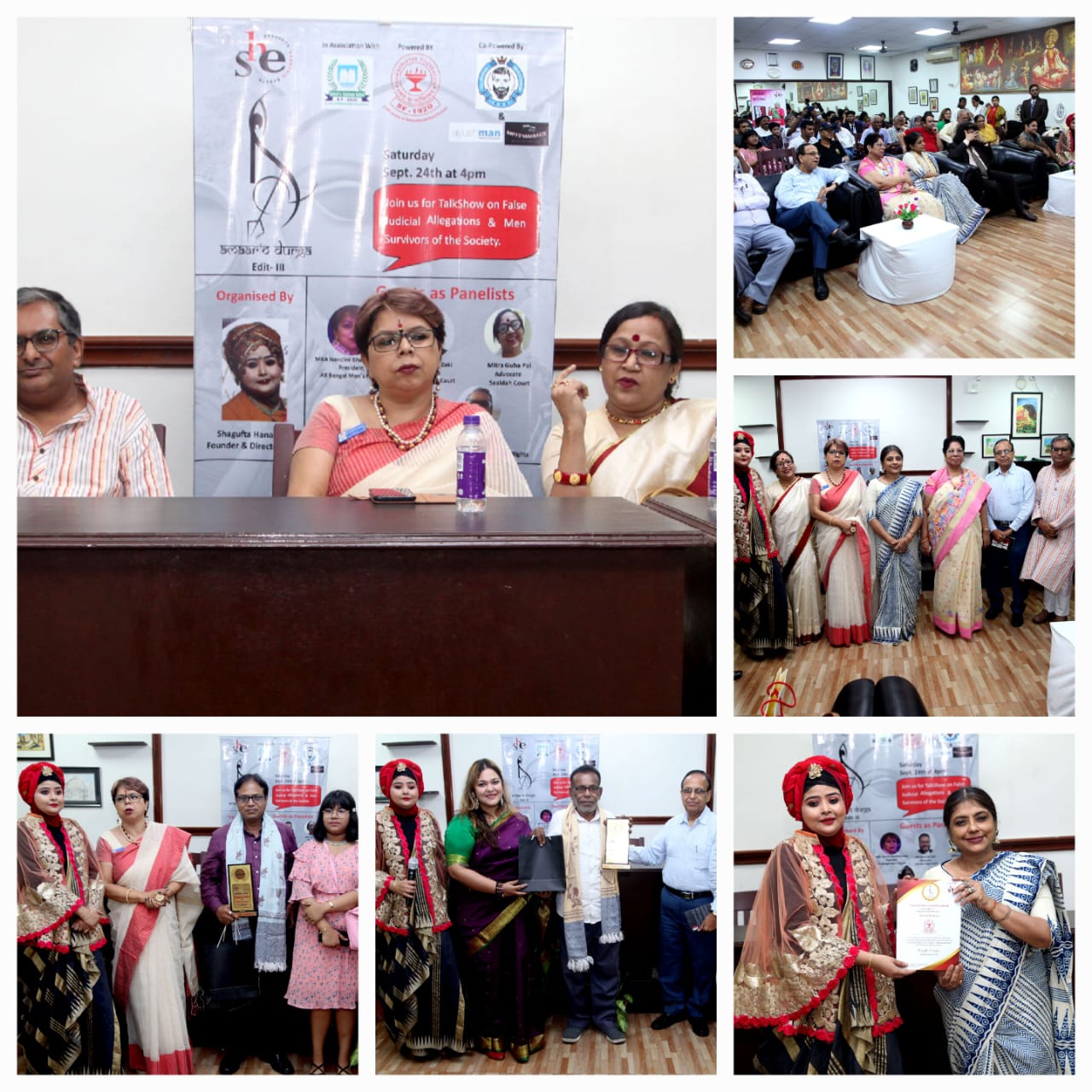
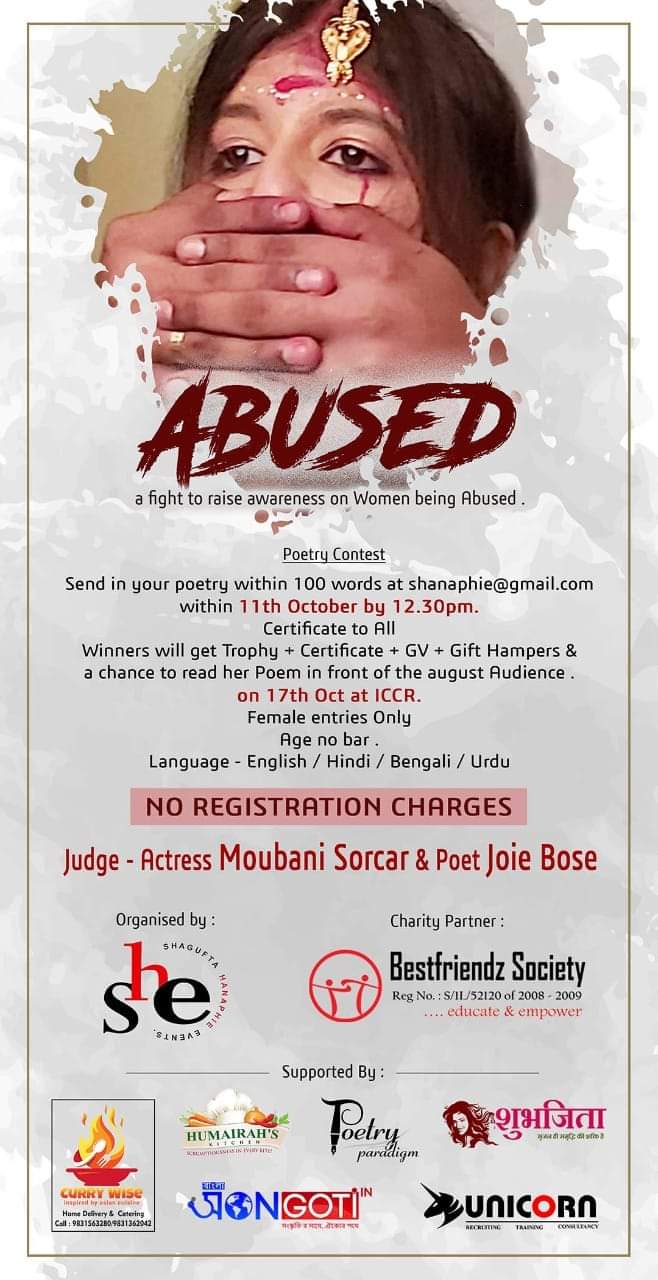
A Poster of the event of Shagufta’s NGO
“In October 2020, the Phone a Friend campaign opened our lives to many people. Each night, we got calls from senior citizens- 65 or 70 years old – or young girls or men, and I listened to and counselled them over the phone. One woman did not even have time to have a cup of coffee and was always serving others suffering mental and physical abuse. Due to this, I launched my new campaign called Abuse Durga, which became Amar Durga, Amar O Durga, with a question mark. I asked the public a lot of questions, such as, “If this is my Durga, who are you to ask me a question whether I should celebrate or not?” Being a Muslim, people found it unusual.
“I felicitated people who had running cases against them for 15-20 years who were not guilty and celebrated 11 people. Last year, we held an exhibition to give table space to NGOs which cannot invest; awarded the LGBT community and single mothers. We will be holding another event for the LGBT community soon.
“My NGO is my charity partner. I did this because I was feeling bad to keep asking people to fund my NGO, so I decided to promote my events, and whatever money I got would go to my NGO so I could help the maximum people with the blessings of the Almighty. I do not want to work to mint money, want to work to make my stand.
“My breakthrough came when an old client called and invited me to his office. He is Rajendra Khandelwal, MD, Dhanwantary. During my meeting, he kept saying, “Very nice, very nice,” I asked him, “Who are you speaking about and he answered, “The event you held, the Teachers Excellence Award, I am going to support you,” and to my amazement, he handed over a cheque. At that moment, I knew I was doing the right thing. He asked me, “Why did you choose this topic, I replied, I am alive because of my teachers. Uncle Junaid who taught me how to hold a pencil and I want to do something in his memory. Without teachers’ investment, I would not be where I am today.”
“I do not work with an experienced group of people because there are a lot of young people looking for work, always take new people and give them scope, If they say, we cannot speak, I tell them you will learn to speak, If they are graphic designers, content writers, etc, I take them on board.
‘While we are a modern family, where I used to wear sleeveless and backless clothes, and my father even took us to Trincas to get us on the dance floor, I got to wearing hijab permanently unexpectedly. On my birthday in 2013 or 2014, my Baari Maa gifted me a hijab. I wore it to my office that day and since then, I have been wearing it. I changed as a person totally after that. While earlier, I was highly strung and emotional, I started to calm down after wearing the hijab believing it was my symbol of strength. My family was cool about my hijab.
“My dream is to meet 10,000 people with their inspiring stories and lift them on all my platforms. I highlight lives through events or writing about them. During the lockdown, I started to write in 2020. While my target is global, I also want to cover the map of West Bengal. I believe everyone can do anything but they just need a spark inside with a belief they can conquer the world, and they end up doing great things. Sometimes, to create that spark, that road is blocked so I just need to push these people and bring that change within them.”
Rita Farhat Mukand is an independent writer and author
source: http://www.awazthevoice.in / Awaz, The Voice / Home> Story / by Rita Farhat Mukund / August 24th, 2024