All posts by mpositiveone@gmail.com

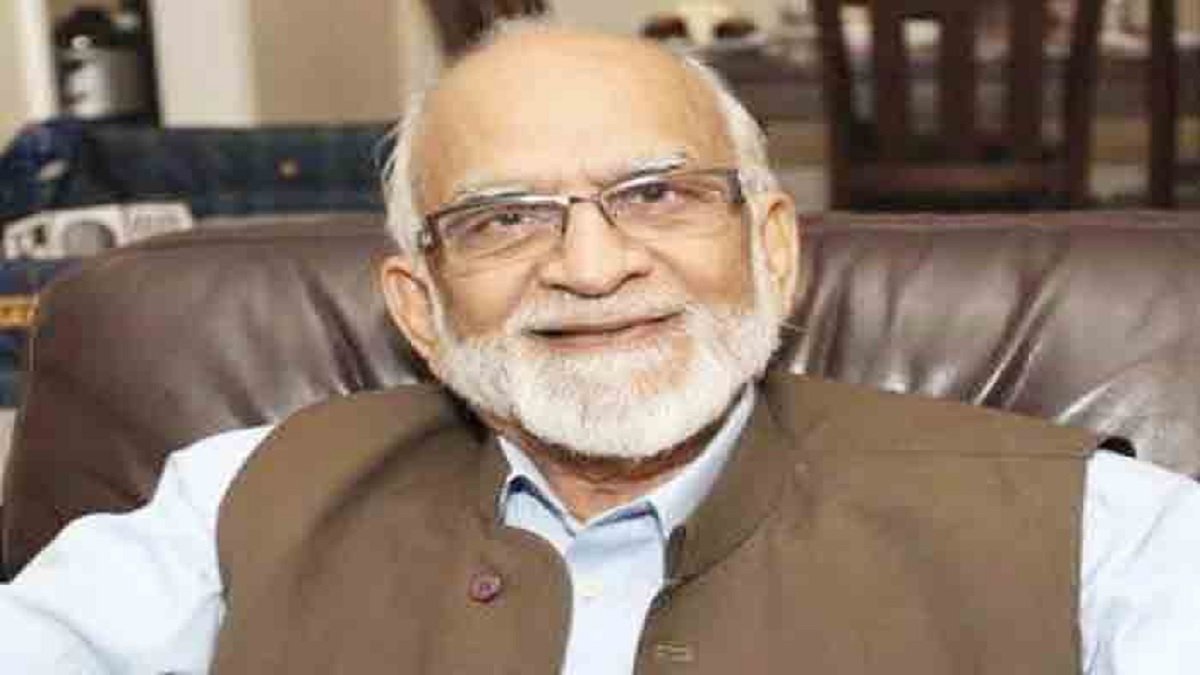
Dr Muhammad Nejatullah Siddiqui: The Father of Modern Islamic Banking

Gorakhpur, UTTAR PRADESH / California, U.S.A :
Dr Muhammad Nejatullah Siddiqui: The Father of Modern Islamic Banking

MILLIONS of people around the world benefit from interest-free baking. But, not many know that the scholar who made it possible within the context of the modern economic system left for his final abode on November 11 in San Jose, some 8,000 miles away from a small village in Northern India where he was born in Gorakhpur in 1931.

Dr. Muhammad Nejatullah Siddiqi left a legacy that will continue to help countless access interest-free loans to achieve their dreams. Nejat means salvation. Dr. Nejatullah’s work proved salvation to people who could not advance their financial growth in the highly competitive world due to a lack of capital. Who would have thought that growing up in colonial India, Dr. Nejat would surpass the peak of academic excellence and achieve professorship in two of the world’s most prestigious universities, the Muslim University of Aligarh and Kind Abdul Aziz University, Saudi Arabia. Indeed, education in British India was reluctant to open the door for an aspiring Muslim student to help develop the Islamic Development Bank, which has financed thousands of development projects worldwide.

But he did it with dedication, commitment, and desire to translate concepts into concrete programs to benefit people. He labored hard to author 63 significant books, hundreds of articles, and thousands of lectures worldwide while pioneering economics based on divine principles of justice and equity.

His most widely read book is “Banking without interest,” published in more than 30 editions between 1973 and 2022. His other works in English include Recent Theories of Profit: A Critical Examination (1971); Economic Enterprise in Islam (1972); Muslim Economic Thinking (1981); Banking Without Interest (1983); Issues in Islamic banking: selected papers (1983); Partnership and profit-sharing in Islamic law (1985); Insurance in an Islamic Economy (1985); Teaching Economics in Islamic Perspective (1996); Role of State in Islamic Economy (1996); Dialogue in Islamic Economics (2002) and Islam’s View on Property (1969). He received two major awards for his work: King Faisal International Prize for service to Islamic Studies and Shah Waliullah Award for his contribution to Islamic Economics.

Describing the future of Islamic Economics, he wrote in 2013 that the changing world would call for five strategic changes in approach: Family rather than the market as the starting point in economic analysis; Cooperation playing a more significant role in the economy, complementing competition; Debts playing a subsidiary rather than the dominant role in financial markets; Interest and interest-bearing instruments playing no part in money creation and monetary management; and, lastly, Maqasid based thinking supplanting analogical reasoning in Islamic economic jurisprudence. In what follows, I’d like to discuss these points to help you get in touch with these challenging propositions.

He wrote about his involvement in Islamic economics.

“I have been involved in Islamic economics most of my life. At school, however, I studied science subjects but switched to economics, Arabic, and English literature for my BA degree at Aligarh Muslim University (AMU), which I joined in 1949. My reading habit influenced my decision. I was devoted to al-Hilal and al-Balagh magazines, published under Maulana Abul Kalam Azad (1888–1958), poet, critic, thinker, and one of the great leaders of the Independence Movement. I also read al-Tableegh and was influenced by the Deobandi scholar Maulana Ashraf Ali Thanawi (1863–1943), the author of the famous book on belief and correct conduct (for women), Heavenly Ornaments. And as most young people of my age and time, I studied the works of Maulana Abul Ala Maududi (1903–1979). Two of Maududi’s pieces deeply impacted me: lectures at Nadwatul Ulama, Lucknow, and a scheme he proposed to Aligarh Muslim University, both in the mid-1940s, later published in a collection titled Taleemat. Under the influence of these ulama – religious scholars – I abandoned science and the engineering career I had planned. Instead, I wanted to learn Arabic, gain direct access to Islamic sources, and discover how modern life and Islamic teachings interacted. I stuck to this mission, even though I had to take several detours stretching over six years – to Sanwi Darsgah e Jamaat e Islami, Rampur, and Madrasatul Islah in Saraimir before I arrived eventually at Aligarh to earn a Ph.D. in economics.

The years spent in Rampur and Saraimir were full of lively interaction with Ulama. We spent most of our time discussing the Qur’an, the traditions of the Prophet, commentaries on the Qur’an, fiqh (jurisprudence), and usul-e-fiqh, or principles of jurisprudence. That this happened in the company of young men my age, fired by the same zeal, was an added advantage. We had each chosen a subject – political science, philosophy, economics – that we thought would enhance our understanding of modern life. We combined modern secular and old-religious learning to produce something that would right what was wrong with the world. We received a warm welcome from Zakir Hussain (1897–1969), the former President of India, then Vice-Chancellor of Aligarh Muslim University; Mohammad Aaqil Saheb, Professor of Economics at Jamia Milliyah Islamia, Delhi; and by eminent teachers at Osmania University in Hyderabad.

Our mission was to introduce Islamic ideas to economics. These were at three levels:

  • A background provided by Islam’s worldview places economic matters in a holistic framework.
  • A set of goals for individual behavior and monetary policy,
  • Norms and values, resulting in appropriate institutions.
  • Maududi argued that this exercise performed in critical social sciences would pave the way for progress toward an ‘Islamic society. I was fully sold on the idea. We were also influenced by the extraordinary times through which Islam and Muslims were passing worldwide. Islam was ‘re-emerging’ after three centuries of colonization which was preceded by another three centuries of stagnation and intellectual atrophy. The great depression had just exposed capitalism’s darker side, and Russian-sponsored socialism was enlisting sympathizers. We thought Islam had a chance if only a convincing case could be made.

Dr. Nejatullah Siddiqi devoted an entire book to the Objectives of Shariah (Maqasid Shariah). He did not agree with those writers who insisted on the five categories of objectives mentioned by al-Ghazali, claiming that many other purposes come under them in one way or another. He suggested more goals to be added beside and beyond the five mentioned above, such as honor and dignity of humankind, fundamental freedom, justice and equity, poverty alleviation, sustenance for all, social equality, bridging the gap between the rich and the poor, peace and security, preservation of system, and cooperation at the world level. He supports his stand by various verses of the Qur’an and the sayings of the Prophet, especially in dealing with the non-Muslims.”

Dr. Siddiqi surveyed the history of the idea of Shariah objectives. To him, the concept of Shariah objectives has existed from the very beginning of Islamic history. But it was al-Juwayni (d. 478/1085) who first used the term, from whom his disciple al-Ghazali (d. 505/1111) took it and divided it into five categories: Protection of religion, life, reason, progeny, and property. Ibn Taymiyah (d. 728H/1328) introduced the protection of dignity in place of progeny. He also argued that objectives should not be limited to the protection from haram (forbidden) but should include securing benefits. Thus, the number would be unrestricted to five objectives. Ibn al-Qayyim followed the suit of his teacher, Ibn Taymiyah, and included justice among the objectives. He examined the opinions of al-Shatibi (d. 790/1389), Shah Wali Allah al- Dihlawi (d. 1172/1763), and a quick survey of the contemporary literature.

At 91, when he breathed his last in this mortal world surrounded by his life-long partner, three sons, and two daughters, Dr. Nejat had already achieved what only a few chosen ones achieved. He ensured perpetual reward from his creator for his contributions to bringing millions into the fold of economic growth. As a result, marginalized people who lagged because of the lack of capital are in the process of building a stable financial life. Dr. Nejatullah turned concepts of divine justice and equity into practical reality. When he started his work on Islamic banking, there was hardly an institution applying religious principles; now, there are over 500 Islamic banks and thousands of other non-interest-bearing financial institutions. His legacy is there to stay and benefit people worldwide. His work has turned him into a legend, and the future generation would rightly call him the father of modern Islamic banking. His nephew, Dr. Ahmadullah Siddiq, Professor of Media Studies in Illinois, said, “It is not a loss of a family, but a loss of a generation that always looked at uncle Nejatullah as a shining source of inspiration.”

Academic honours

Awarded King Faisal International Prize for Islamic Studies, 1982.

American Finance House Award, 1993

Ph.D. in Economics from Aligarh Muslim University, India, 1966.

Arabic and Islamic learning from Rampur, India, 1954.

Work experience

Professor of Economics, King Abdulaziz University, Jeddah, Saudi Arabia, from October 1978 to the present.

Professor of Islamic Studies, Aligarh Muslim University, India, from 1977 to 1978. (On leave from AMU from 1978 to 1983)

Reader (Associate Professor) in Economics, Aligarh Muslim University, India, from 1975 to 1976.

Lecturer (Assistant Professor) in Economics, Aligarh Muslim University, India, from 1961 to 1974.

Supervised several Ph.D. dissertations at Aligarh University, Ummul Qura University, Makkah, Imam Saud University, Riyadh, and Sokoto University, Nigeria.

Editorial and Advisory positions

Member, Editorial Board, Journal of King Abdulaziz University: Islamic Economics, Jeddah from 1983 to present.

Member International Board, Review of Islamic Economics, International Association of Islamic Economics, Leicester, U.K. from 1991 to present.

Member, Advisory Board, Islamic Economic Studies, Islamic Research, and Training Institute, Islamic Development Bank, Jeddah.

Member, Board of Trustees, AAOIFI (Accounting and Auditing Organization for Islamic Financial Institutions, Bahrain) 1999 –

Member, Editorial Board, IQTISAD Journal of Islamic Economics, Yogyakarta, Indonesia, 1999

Member, Advisory Editorial Board, The American Journal of Islamic Social Sciences, AMSS & IIIT, U.S.A. from 1985 to 1991.

Member, Advisory Board of the Journal, Humonomics, Toronto, Canada from 1985 to Present.

Member, Advisory Board, MASS, Journal of Islamic Sciences, Aligarh, India, from 1985 to 1997.

Editor, Islamic Thought, Aligarh, 1954-1959.

List of published books
English

1. Economics, an Islamic Approach, The Islamic Foundation, Leicester, U.K. 1999

2. Teaching Economics in Islamic Perspective, Centre for Research in Islamic Economics, KAAU, Jeddah, 1996

3. Role of the State in the Economy, The Islamic Foundation, Leicester, U.K, 1996

4. Insurance in an Islamic Economy, The Islamic Foundation, Leicester, U.K. 1985

5. Partnership and Profit-Sharing in Islamic Law. The Islamic Foundation, Leicester, U.K. 1985

6. Banking Without Interest, The Islamic Foundation, Leicester, U.K. 1983

7. Issues in Islamic Banking. The Islamic Foundation, Leicester, U.K. 1983

8. Muslim Economic Thinking. The Islamic Foundation, Leicester, U.K. 1981

9. Contemporary Literature on Islamic Economics, The Islamic Foundation, Leicester, U.K. 1978

10. Economic Enterprise in Islam, Markazi Maktaba Islami, Delhi, India. 1972

11. Some Aspects of the Islamic Economy, Markazi Maktaba Islami, Delhi, India. 1972

12. Muslim Personal Law (Edited), Markazi Maktaba Islami, Delhi, India. 1972

13. Recent Theories of Profit: A Critical Examination. Asia Publishing House, Bombay, India. 1971

N.B: Some of these books have also been published in Arabic, Persian, Turkish, Indonesian, Malay, Hindi, and Bengali languages.

Urdu

1. Tahreek Islami Asr Hazir Men (Contemporary Islamic Movement). 1995 Markazi Maktaba Islami, Delhi, India.

2. Quran awr Science (Excerpts from Syed Qutb’s Tafsir with a detailed Introduction). 1978 Markazi Maktaba Islami, Delhi, India.

3. Nash’at Saniyah Ki Rah (Towards Islamic Renaissance) 1974 Markazi Maktaba Islami, Delhi, India.

4. Insurance Islami Ma’ishat Men (Insurance in Islamic Economy). 1974 Markazi Maktaba Islami, Delhi, India.

5. Ghair Sudi Bank Kari (Interest Free Banking) 1969 Markazi Maktaba Islami, Delhi, India.

6. Shirkat awr Mudarabat Ke Shar’i Usul (Sharia Principles of Partnership and Profit-Sharing). 1969 Markazi Maktaba Islami, Delhi, India.

7. Islam Ka Nazarriyah Milkiyat (2 Vols.) (Islam’s Theory of Property). 1969 Islamic Publications, Lahore, Pakistan.

8. Islam Ka Nizam-e-Mahasil (Translation of Abu Yusuf’s Kitab al Kharaj).1966 Islamic Publications, Lahore, Pakistan.

9. Islam Men `Adl-e-Ijtimat’i (Translation of Syed Qutb’s al `Adalah al Ijtimaiyah fi’l Islam). 1963 Islamic Publications, Lahore, Pakistan.

10. Islami Adab (edited) (Islami Literature) 1960 Markazi Maktaba Islami, Delhi, India.

_______

Dr Aslam Abdullah is an Indian American writer and activist.

source: http://www.clarionindia.net / Clarion India / Home> Features> Indian Muslim / by Dr. Aslam Abdullah / November 14th, 2022
Mentor and Guide to Many Stage Actors, Creator of Epic Plays, Aamir Raza Husain Departs at 66

NEW DELHI:

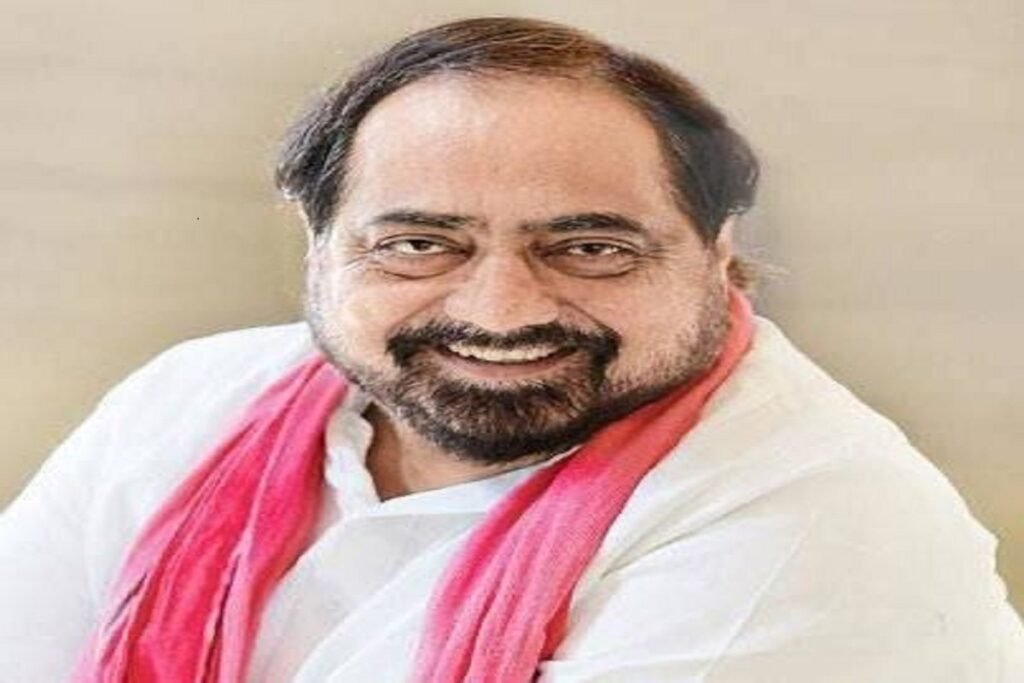
Mentor and Guide to Many Stage Actors, Creator of Epic Plays, Aamir Raza  Husain Departs at 66

New Delhi:

Much before India was swept off its feet by big-screen spectacles such as ‘Baahubali’, ‘RRR’ and now the upcoming ‘Aadipurush’, Aamir Raza Husain was the creative powerhouse who gave us our earliest experience of a mega theatrical production in ‘The Fifty Day War’, which till the year 2000 had not been replicated on any stage in either scale or vision.

On Saturday, June 3, Husain, 66, passed on, leaving behind a legacy of memorable stage productions.

He is survived by his wife and creative partner, Viraat Talwar, whom he met when she was a student of Lady Shri Ram College and had come to audition for a play (‘Dangerous Liaison’), and their two sons.

If ‘The Fifty Day War’ narrated the Kargil story on a scale that had not been attempted by anyone with an original Indian script on an Indian stage (Alyque Padamsee did something similar with Andrew Lloyd Weber’s ‘Jesus Christ Superstar’, but then, it was not an original production), ‘The Legend of Ram’, which was staged on a smaller scale in 1994, became the gold standard for theatrical spectacles when it was relaunched in 2004.

The production of ‘The Legend of Ram’ involved 19 outdoor sets spread over three acres and a cast of 35 actors playing different characters drawn from the epic, and a 100-member technical crew. The last show was staged in front of the then President, A.P.J. Abdul Kalam, on May 1, 2004.

Husain was born into an aristocratic Awadhi family on January 6, 1957. His parents were divorced — his father, whom be barely saw was an engineer with Bechtel and set up the water works of Mecca-Medina — so he was brought up by his mother and her family — in the days of the British Raj they presided over a little principality named Pirpur.

He went to Mayo College, Ajmer, and after he completed his schooling, he read History at St Stephen’s College, where he acted in several college plays under the direction of such legends as Joy Michael, Barry John and Marcus Murch. It was an early start to a career devoted to English theatre and his company, Stagedoor Productions, which became known to lift ordinary theatre to the realm of the spectacular since 1974.

Husain did appear in two films — in ‘Kim’ (1984), based on Rudyard Kipling’s novel, with Peter O’Toole playing the lead, and Shashanka Ghosh’s romantic comedy drama, ‘Khubsoorat’ (2014), starring Sonam Kapoor and Fawad Khan — but he was wedded to theatre.

Over the years he produced several plays staged at outdoor locations — ‘Sare Jahan Se Achcha’, ‘1947 Live’ and ‘Satyamev Jayate’, which was staged along the backdrop of the 14th-century Hauz Khas monument, in Delhi in 1999.

Previously in 1998, Husain and his troupe, in collaboration with Delhi Tourism, organised the Chaudvin ka Chand festival on a 2-km stretch between the Red Fort and Fatehpuri Mosque in Chandni Chowk in the neighbourhood now celebrated as Dilli-6.

With 91 productions and more than 1,100 performances behind him, and a Padma Shri awarded to him in 2001, Hussain spent his last years developing the Qila next to the Select CityWalk mall in South Delhi’s historic Saket neighbourhood.

Like all things bearing the Husain stamp, the Qila has emerged as a co-working space where corporates and creative souls work under one roof to incubate business ideas or the next big theatre production.

Unfortunately for Husain, as he lamented in a recent interview, theatre remains a hobby, or at best a second profession in India, but fortunately, thanks to the efforts of pioneers like him, it is by no means wallowing in poverty. Far from that being the case, it has become the nursery of the best and brightest in cinema. — IANS

source: http://www.clarionindia.net / Clarion India / Home / by Clarion India / June 03rd, 2023

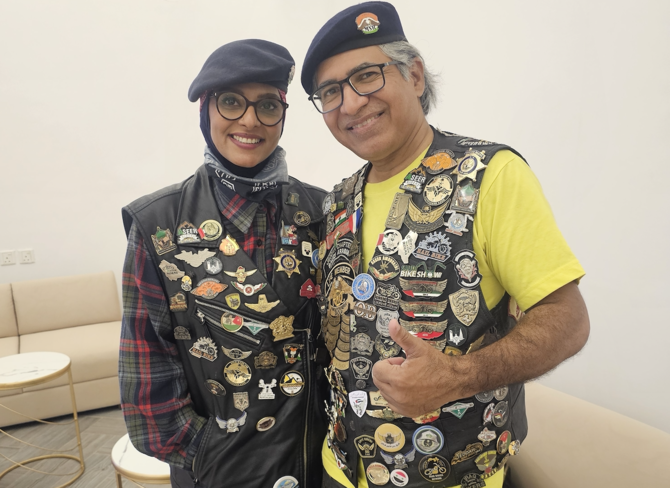
Saudi-Indian biker couple clocking up miles in global odyssey

Hyderabad, TELANGANA / SAUDI ARABIA:

Mir Shakeel Ur Rahman and Amal Ahmed have broken records and achieved several personal ambitions during their adventures. (Supplied)
  • The couple set out on their first discovery ride after the coronavirus pandemic, traveling around Saudi Arabia
  • Later, Ahmed became the first Saudi woman to ride across the Himalayas, the world’s highest mountain range

A Saudi-Indian husband and wife team have been clocking up the miles in a round-the-world odyssey — on motorbikes.

And during their road trips, adventurers Mir Shakeel Ur Rahman and Amal Ahmed have broken records and achieved several personal ambitions.

The couple set out on their first discovery ride after the coronavirus pandemic, traveling around Saudi Arabia to areas including Makkah, Jazan, Abha, Hail, Riyadh, Dammam, and Al-Ahsa, before exploring other countries.

Later, Ahmed became the first Saudi woman to ride across the Himalayas, the world’s highest mountain range. “It was an unbelievable moment, and I will not forget it,” she said.

Her husband said: “This was a great achievement for a Saudi woman during the 92nd national day for Saudi Arabia and I was happy to see her flying the Saudi flag on the top.”

The pair’s shared passion for biking has transformed their lives.

Rahman, originally from the south Indian city of Hyderabad, has been working in the Kingdom for 30 years in the field of navigation air services.

He said: “In India, the first thing you learn is how to ride a motorcycle. Me and my sister used to steal our father’s bike while he was sleeping. So, that was the time when I became obsessed with motorcycling.

“It has been a passion since I was young, and I have been all over the world.”

Soon after moving to Makkah in 1993, he bought his first motorcycle — a Honda 70. “I was happy with my first bike and very pleased to continue my passion here in Saudi Arabia,” he added.

Until meeting Rahman, Ahmed had never considered riding a motorbike.

“As a Saudi woman, I used to travel by plane, car, or train, and never thought I would travel on a motorcycle until I met my husband in Jeddah. He convinced me, despite my fear, that riding was something anyone could enjoy,” she added.

For her birthday last year, Rahman surprised his wife with a new Honda Gold Wing touring bike. The couple — who married five years ago — now have three motorcycles, including a classic Harley-Davidson, and a Kawasaki.

Ahmed said: “We started riding on a two-seater bike around Jeddah with other groups and then took off to several places in the Kingdom. Our first regional trip was to Ras Al-Khaimah in the UAE. It was a great experience.”

The couple regularly post videos online which have gathered quite a following.

“As a long-time rider, I have been everywhere in the world but didn’t document my adventures until my wife created our accounts on various platforms,” Rahman said.

Ahmed added: “I wanted to make it a very important part of our life and we really received positive reactions from our followers. Our goal is to spread happiness and smiles to our followers.”

The biking duo next plan to journey to Kashmir.

source: http://www.arabnews.com / Arab News / Home> Saudi Arabia> Lifestyle / by Saleh Fareed / January 09th, 2024

Prestige International School’s Safin Mustafa enters Noble Book of World Records

Mangaluru, KARNATAKA:

Mangaluru :

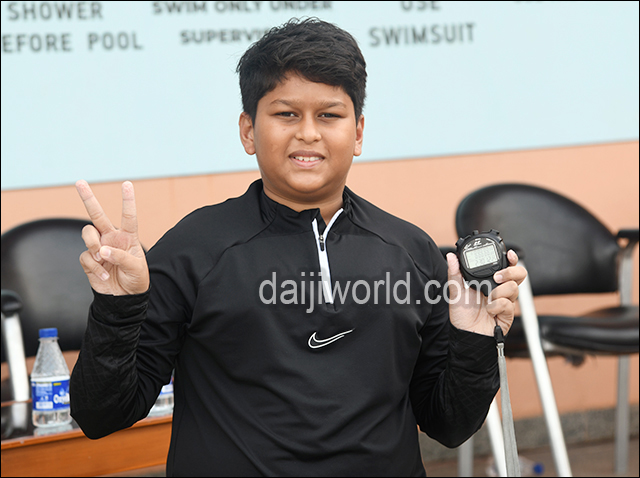
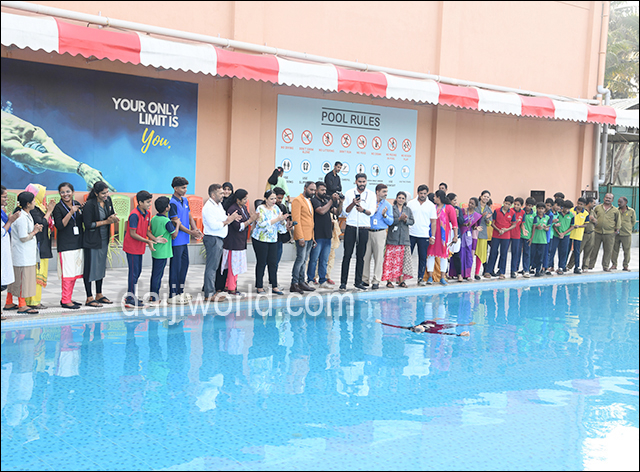
Safin Mustafa from Mangaluru made an entry into the Noble Book of World Records for floating on water for 2 hours 30 minutes and 13 seconds, on Saturday January 13.

The previous best was by Karanam Snehit Simha of Andhra Pradesh in 2023, who clocked 2 hours 21 minutes 53 seconds.

The record breaking event was held at the swimming pool of Prestige International School, Jeppinamogaru here in the wee hours of Saturday. The 14 year old Safin is class 8 student of Prestige International School, one of the reputed educational institutions in the city.

Displaying the clock to the reporters, Safin said that he was coached by Aromal A S. He also thanked the teachers and the management of Prestige International School for their support and guidance in making the achievement.

Speaking to media, coach Aromal said, “Unexpectedly, I discovered swimming talent in Safin. During the learning phase, he demonstrated remarkable proficiency, comfortably swimming for 15-30 minutes. Inspired, I extended his training hours, and today he has set a world record. I am thrilled by his performance and incredibly proud of him.”

Expressing his joy over Safin’s world record, Haider Ali, chairman, Prestige International School said, “The management, staff and students of our school are proud of Safin Mustafa. He is the icon for us all. Our institution always supports and encourages the students to exhibit and to be experts in their talents. Along with academics, the generation should enjoy their age and climb heights in their fields of interest.”

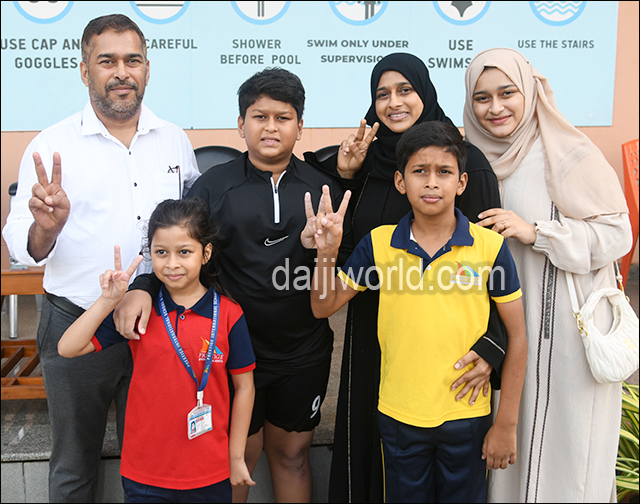
Safin’s parents Abdul Lathif and Safiya Banu, officials of Noble Book of World Records, witnessed the record breaking moment.

source: http://www.daijiworld.com / DaijiWorld.com / Home> Top Stories / by DaijiWorld Media Network -Mangaluru (SB) / pix by Dayanand Kukkaje / January 13th, 2024

Former minister and senior Congress leader T H Mustafa passes away

Ernakulam (Kochi), KERALA:

Kochi: 

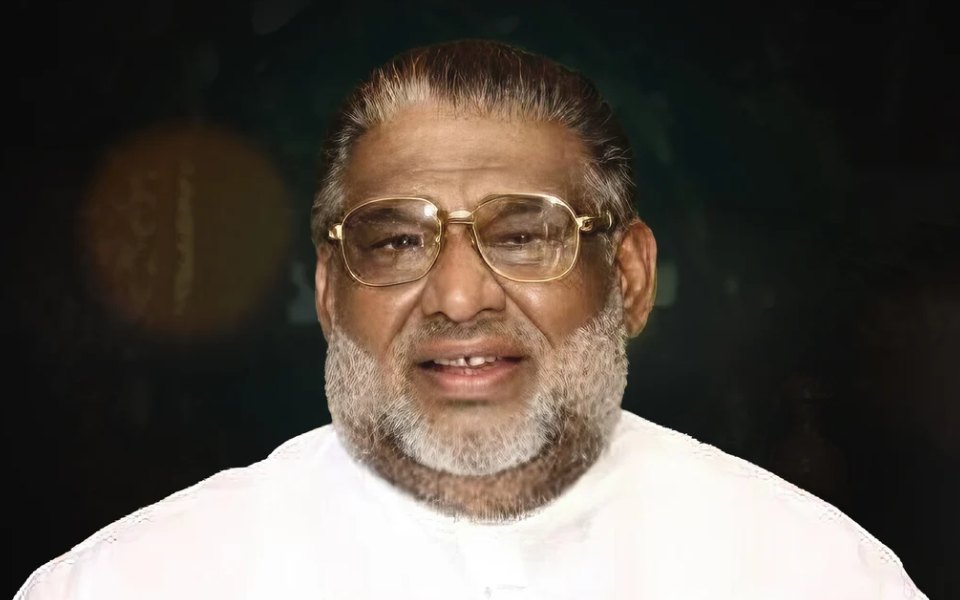
Senior Congress leader and former state minister T H Mustafa died on Sunday at a private hospital here due to multiple age-related ailments.

He was 82 and is survived by wife and eight children, family sources said.

Mustafa was a former Food Minister in the K Karunakaran cabinet and a five-time legislator. He was undergoing treatment for various ailments at the private hospital where he breathed his last at 5.43 AM, hospital sources told PTI.

Leaders cutting across party lines condoled Mustafa’s demise.

Kerala Chief minister Pinarayi Vijayan said Mustafa had left his mark on the public life of Kerala as a minister, a legislator and a Congress leader.

Leader of Opposition in the state assembly, V D Satheesan, said Mustafa strengthened the Congress and led it well in Ernakulam district.

KPCC chief K Sudhakaran termed Mustafa’s demise as a ‘great loss’ to the party.

”He has played a major role in strengthening the Congress party in Ernakulam District. He was a great orator and an organiser. He used to help anyone who approached him, without considering their politics or religion,” Sudhakaran said.

With the demise of T H Mustafa, Congress lost a strong leader, AICC General Secretary in charge of Organisation, K C Venugopal, said in a statement. Venugopal noted that Mustafa rose to prominence in the Congress party through the Youth Congress.

”His immense contribution helped in the growth of Congress in the district. He supported the party by even selling his own property,” Venugopal said.

Mustafa was the Ernakulam District Congress Committee President for 14 years and functioned as KPCC General Secretary and KPCC Vice President.

source: http://www.english.varthabharati.in / Vartha Bharati / Home> India / by Vartha Bharati / January 14th, 2024

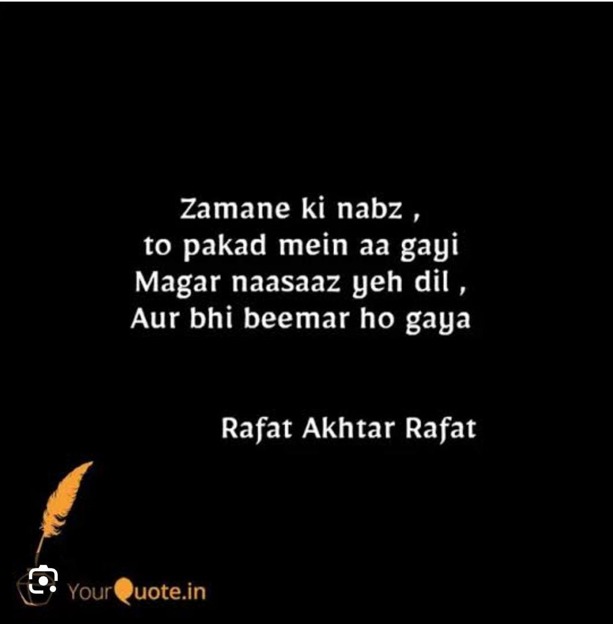
Kolkata’s Rafat Akhtar’s wings of an eagle on her shayari flight

Kolkata, WEST BENGAL:

Rafat Akhtar ‘Rafat’

In the intricate maze of poets, meeting a ‘lady Shayari’ is unique, for while there are many, most of them hide behind scenic curtains; they are brimming with talent but too shy to step out. Meeting Rafat Akhtar ‘Rafat’ was, therefore, an enchanting experience.

Born and raised in Kolkata, the City of Joy, as Rafat calls it, she says that even as a child she was quite sensitive. She captured philosophical moments in life and drew in the rich vibes of nature to weave out her Shayaris in a time to come, much later.

She told Awaz-the Voice, “At a young age, I loved reading Urdu story books and words formed rich suggestions for me. Many vivid powerful words flew through my head during the day, but I never sat down to put them on paper until much later, and then I started to capture my thoughts in a cherished diary. My pen is my best friend; I share my feelings and observations with my pen and whenever I write, I feel relaxed.”

After her marriage and the birth of her daughters, life was busy with the swirl of housework and tending to her children. Time was precious and she had no moments of her own to spare for her writing. As the years rolled by and her daughters grew up, one working and the other in school, Rafat started to feel a deep void in her life. 

This time, she knew she needed to do something to fill that emptiness and came to a realization that she was neglecting writing her Shayari which was her inborn gift. At that defining moment, she decided to start writing again. 

With a few trembling steps, not very confident about how it would go, she penned down her first Poem Shayari Alfaaz rooh hoti hai Jismo me chupi har jazbo’n ki rooh, har aawaz ki rooh shared it with her family. All those who received it were delighted. In that magnificent moment, her husband loved it; her mother was ecstatic and her two daughters cheered her. Her extended family also was enraptured by her first Shayari

A poem by Riafar Akhtar Rafat

From then on, Rafat weaved her pathway higher on poetry. Her first published poem was in a Writing App in 2018. 

One big event in her literary life was when the admin of the famous Taajira – The Businesswoman Group Rukshi Kadiri Elias allowed her to conduct the whole Mushaira (justuju e sukhan) in 2022. Rafat was particularly rejuvenated with this event after the long depressive draining aftermaths of COVID-19 which had the world shuttered in behind locked doors. That sense of purpose and joy was coming back to her life with a sparkle in her eyes and a spring in her steps.

With her heart stirred and supportive people clapping her on, it made the way easier before her, she was drawn deeper into the world of Shayari.

Here are a few snapshots of her most brilliant poems:

Her most famous Poem is Ae nabz e wujood, tujhe shikwa na jaane magar kis baat ka hai.

She says that a poet’s soul is so sensitive that they will see every side of a situation and they also react more strongly to injustice. She wrote a soul-stirring Shayari,

Aurat Hona Bhi Kamal Hai” after reading about an atrocity inflicted on a woman:

Lagta hai ek laq daq sa sahra hai

Aur mein nange paao’n chal rahi hoon

Har taraf tapish hai

Pyaas ki shiddat hai

Na koi jazbaat sunne wala

Na koi lahje ki narmi hai

Magar phir bhi mujhe chalte jaana hai...

Rafat Akhtar Rafat

She names some of her favourite poets. Mirza Ghalib famed for his sublime Shayari nd one line from the greatest poet, in particular, stands out, “You will reach your destination even by roaming around but the lost are those who are not getting out of home”. Her other favourites are Allama Iqbal whose Urdu poetry is considered to be among the greatest of the 20th century, Faiz Ahmad Faiz – considered the iconic voice of an era, with his revolutionary zeal tugging hearts – Bollywood’s famed Urdu poet and screenwriter Gulzar with his stunning imaginative and emotional appeal that dynamically hits the crowds, and Ahmad Faraz’s rich poetry. She also is inspired by Urdu writers such as Umaira Ahmad, Nimra Ahmad, and Khaled Hosseini to name just a few.

With warm emotion ringing in her voice, Rafat tells me that her late father was an angel and it was because of him that she was able to complete her graduation and shares how blessed she is to have a very nurturing family from all sides. 

Rafat does bring up the point that it was initially a struggle to bring out her Shayari publically because these are viewed negatively by some people in the Islamic community. However, society is slowly evolving and understanding it is not evil nor is it against Islam. It was a bright moment for her when on December 17, 2023; she attended a huge Shayari event in Kolkata of over 500 people half of whom were women. She has also attended massive international Shayari programs with participants from Egypt, London, Mumbai, and other parts of the world and India. These mega-events charged with the electric power of poetry give glimpses of a new rising renaissance.

Rafat is now excited about her new upcoming book, Hurf e Yaqeen. All her Shayaris are inspired by the school of life and nature, graced with a strong imagination to guide readers to the road of reality which makes her poetry more comprehensible and relational to her audience.

She believes in a purpose-driven life and as she tells me, “I still have very far to go; I still have to achieve greater heights.” Rafat will certainly go far in her poetry flight to motivate a new generation as she says, “My vision is to encourage and inspire my readers.” Rafat is still a busy mother and she says, “Taking care of my family and my kids are my priority” and amid her heavy schedules and responsibilities, she keeps on writing.

Rita Farhat Mukand is a Siliguri-based independent writer.

source: http://www.awazthevoice.in / Awaz, The Voice / Home> Story / by Rita Farhat Mukund / December 20th, 2023

16 fractures, 8 surgeries, Poverty couldn’t stop Ummul Kher from cracking UPSC. Now She is a DC in IRS

Marwar, RAJASTHAN / NEW DELHI:

Delhi:

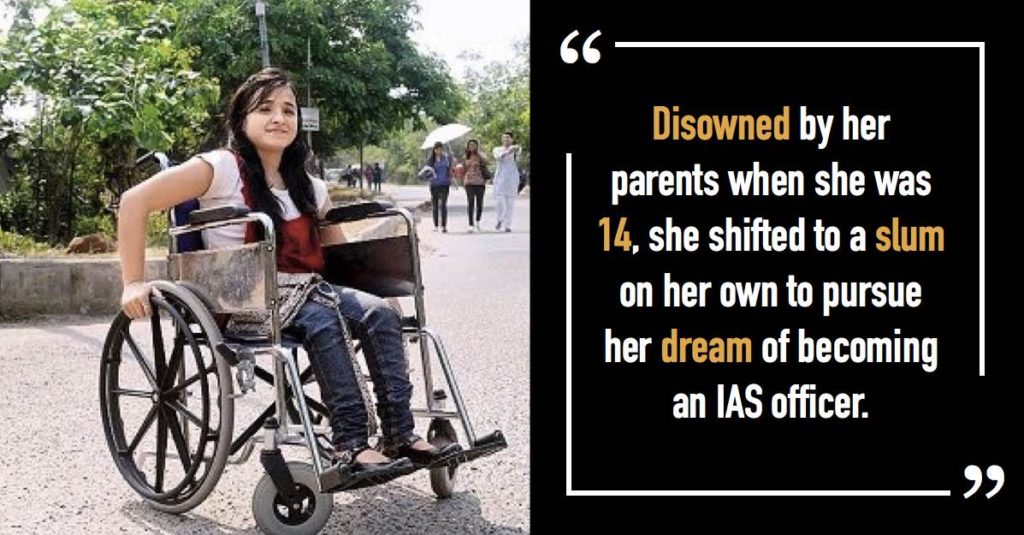
The inspiring story of Ummul Kher, a 28-year-old fragile girl who defeated all odds to achieve her dream. Ummul Kher was born in a Muslim conservative family that belonged to Marwar, Rajasthan. She faced several hardships to reach her goal. She fought a disease called Fragile Bone Disorder from childhood which caused her 16 fractures and underwent 8 surgeries. But that couldn’t break her determination of becoming an IAS officer.

Ummul was five when she migrated to Delhi with her parents and lived in the slums of Nizamuddin, Delhi. Her father was a street vendor. Their family was displaced when the slums of Nizamuddin were demolished and moved to the slums of Trilokpuri.

Ummul Kher went to Pt. Deendayal Upadhyay Institute for the Physically Handicapped for schooling till 5th Class and continued her education till 8th in a Government-run Charitable Organisation Trust, Amar Jyoti. Much to her dismay, her family forced her to discontinue her studies after 8th but Ummul decided to move out of her parent’s home and continue her education and started living alone in Jhuggi Jhopri(JJ) cluster, Trilokpuri. She started giving tuitions to slum children to support her living who paid her not much than rs 50-100.

Unfazed, She completed her graduation from Gargi College, Delhi, and got admission to JNU for Masters in International studies. She secured Junior Research Fellowship at JNU which helped her in getting a stipend of Rs 25,000 per month. To serve as an IAS was a dream of Ummul Kher that’s why despite pursuing a Ph.D. she appeared in the UPSC exam and cracked it in her first attempt and bagged All India rank 420.

She Got the posting in IRS Indian Revenue services, where she was posted as the DC, i.e Deputy Commissioner in Indian Revenue Service.

Highlights:

  1. UmmulKher lived alone after 8th std due to her family disowning her for education. During this time, it was Amar Jyoti Charitable Trust that financed her education and also funded her tuition for classes IX and X.
  2. In class XII, Kher achieved 91% and secured admission into a prestigious Delhi University college, Gargi College.
  3. She continued to take tuitions to fund her college education. She also got much-needed money by winning debate competitions in college. She graduated in Psychology (Hons).
  4. Tragedy struck in 2012 when a small accident confined her to a wheelchair for one year.
  5. After completing graduation, Ummul Kher cleared an entrance exam for a master’s in International Studies at JNU. This gave her sufficient money which meant that she no longer had to give tuition.
  6. In 2013, she secured a Junior Research Fellowship at JNU under which she started getting a stipend of Rs.25, 000 per month.
  7. Since September 2014, Ummul was working as a trainee at Duskin Leadership Training in Shunjuku, Japan.
  8. In 2016, She appeared for UPSC exam first time and cracked it with 420 AIR rank.
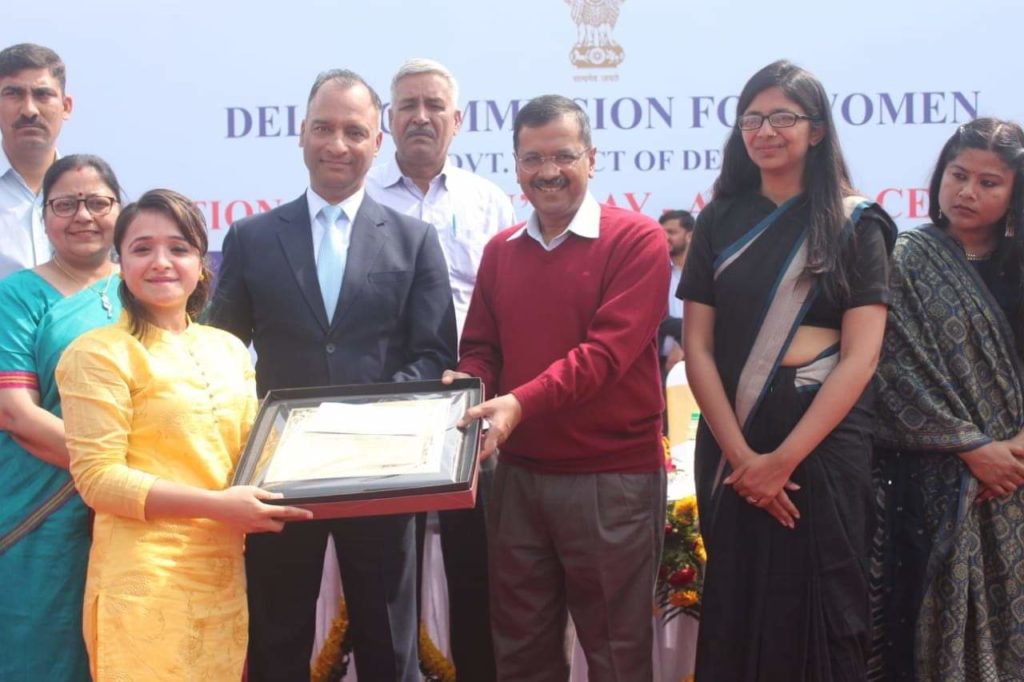
  9. In 2019 She was conferred with Delhi Women Commission’s DCWAward. The Award was handed over by Delhi CM Arvind Kejriwal.

source: http://www.deccandigest.com / Deccan Digest / Home> Featured Sliver, National / by Saba Khan / January 26th, 2022

IAS Success Sory: The Inspiring Story Of India’s Youngest IAS Officer Ansar Ahmed Sheikh

Jalna Village (Marathwada District), MAHARASHTRA:

Ansar Ahmed Sheikh, the son of an autorickshaw driver, became India’s youngest IAS officer at the age of 21 in 2016, inspiring millions with his journey from humble beginnings to the pinnacle of civil service.

IAS Success Sory: The Inspiring Story Of India’s Youngest IAS Officer Ansar Ahmed Sheikh
IAS Ansar Ahmed Sheikh

New Delhi:

Ansar Ahmed Sheikh has achieved the distinction of becoming India’s youngest IAS officer after successfully clearing the UPSC examination on his first attempt. His accomplishment underscores the power of perseverance and dedication in overcoming challenging circumstances.

Facing financial hardships due to unfavorable conditions, Ansar’s family struggled to make ends meet. However, undeterred by the obstacles, he pursued his dreams relentlessly. In 2016, Ansar made history by excelling in one of the most challenging exams, surpassing all previous records.

Hailing from a modest background, Ansar is the son of Yonus Sheikh Ahmad, an auto-rickshaw driver, and his mother, who works in the fields. The family resides in a rented home in Shelgaon village, situated in the Jalna district of Maharashtra’s Marathwada region.

Growing up in extreme poverty, Ansar worked diligently from a young age to provide for his family’s basic needs. Despite the lack of emphasis on education within his family, they faced pressure to discontinue his studies due to difficult circumstances. However, Ansar, always a standout student, persisted in his pursuit of knowledge.

Against all odds, Ansar achieved an impressive All India Rank of 361 in the UPSC examination at the age of 21. Before setting the record as India’s youngest IAS officer, he had previously scored 91% in his X board examinations and attained a 73% in his graduation, where he pursued a Political Science degree at Fergusson College, Pune.

While preparing for the UPSC examinations, Ansar’s financially strapped family supported him, demonstrating their commitment to his education. His remarkable results serve as a testament to how his unwavering dedication and hard work distinguished him from the crowd.

source: http://www.zeenews.india.com / ZEE News / Home> News / by Zee Media Bureau / edited by Mahi Mishra / January 12th, 2024

The life of Mohammad Ali Jauhar reminds Muslims of the importance of Palestine

INDIA / PALESTINE:

Indian freedom fighter Mohammad Ali Jauhar was buried in the compound of Al-Aqsa Mosque after his death on 4 January 1931

On 4 January 1931, the legendary freedom fighter, journalist, educationist and Islamic philosopher Mohammad Ali Jauhar (born 10 December 1878) passed away. He is known as one of the most dynamic and versatile leaders of the subcontinent and, indeed, the Muslim world. The story of his passing and burial in Palestine is as captivating as his role in India’s freedom struggle from British rule.

In November 1928, during his European tour, information was received in Al-Quds (Jerusalem) that Jauhar would visit Palestine on his way back to India. This news brought immense joy to the Palestinian Muslims, particularly those deeply devoted to him, and they awaited his arrival eagerly.

One Palestinian observer, Nazir Hassan Al-Ansari, wrote a detailed report on this impending visit in the Delhi-based Urdu newspaper Hamdard. In the 3 December, 1928, issue, he said that Jauhar’s telegram from Damascus was received by Syed Amin Al-Husseini, the Grand Mufti of Jerusalem, and the Head of the Muslim Supreme Council in British Mandate Palestine. He was due to arrive in Al-Quds from Damascus on 15 November, and the spacious rooms above the Sharia Department in Al-Quds were prepared for him.

According to the same report, this news spread rapidly throughout Palestine, and preparations for his reception started on the border, from the ancient crossing over of the River Jordan, Banat Yaqoob, all the way to Al-Quds. Thousands gathered along the roads, observing customary Arab traditions with horse riders and women singing Arabic songs of welcome. Although anticipated to arrive around noon, Jauhar was delayed until 10pm, leading to disappointed crowds heading homeward.

His entry into Palestine was initially declined by the British Mandate High Commissioner of Palestine, Sir (later Lord) Herbert Plumer on 16 November, despite the fervent anticipation of the Palestinians. He was finally permitted to enter Palestine on 20 November, arriving in Tiberias late in the evening in the chilling cold. Despite the adverse weather conditions, his arrival in Al-Quds the following day was met with wholehearted warmth, sincerity and enthusiasm from the people of Palestine.

Comrade and Hamdard were both newspapers published in India by Mohammad Ali Jauhar, in which he gave plenty of column inches to Palestine. He was always concerned about Palestine, and wrote about it from the beginning of his career in journalism. He was particularly vocal after the 1917 Balfour Declaration. The British government closely monitored him and others who expressed their apprehension about the fate of Jerusalem, and opposition to the Zionist movement.

This monitoring is evident in a letter from the office of the Lieutenant Governor’s Camp of the United Province, dated 1 December, 1917, to Sir James DuBoulay. The letter discussed concerns regarding the growing Muslim interest in Jerusalem and the need to monitor the New Era newspaper. “[We] are watching this particular newspaper, which is sailing as near the wind as the Comrade and Hamdard used to do; and it may be at any moment necessary to impose pre-censorship upon it or in some other way to draw its teeth.” This letter is available in the national archives of India.

Jauhar was always raising awareness about Palestine through his writing and speeches, along with his brother Shaukat Ali. A delegation from Palestine came to India in 1923–24. On 29 January 1924, the Khilafat Committee organised a public meeting in Chhota Kabrastan, Grant Road, Bombay (now Mumbai), where members of the Palestine Deputation were also present.

A report in the Times of India on 31 January 1924, headed “Palestine Deputation: An Appeal for Funds”, detailed the arrival of Muhammed Ali, Shaukat Ali and their mother, Bi Amma, who were greeted with cries of Allahu Akbar (God is Great).

The report said that after meeting the members of the Palestine Deputation, Mohammad Ali moved the following resolution: “This meeting of the Musalmans [Muslims] of Bombay offers its hearty welcome to the Palestine Deputation that has come to India to ask for financial support for the necessary repairs of Masjid-i-Aqsa and Masjid-i-Sakhra [Dome of the Rock] and is of the opinion that it is the duty of every Muslim man, woman and child to take part in this work and thus achieve prosperity and salvation in this world and the world to come.” He also appealed for donations from the Muslims, successfully mobilising the Indian Muslims for the cause of Palestine.

Mohammad Ali Jauhar arrived in London in 1930 to participate in the Round Table Conference for the Independence of India, despite his ailing health. His speech there was historic. He breathed his last at London’s Hyde Park Hotel on 4 January 1931. The funeral prayer was scheduled for the following day at 6pm in Paddington Town Hall. The then Afghan Ambassador, Egyptian Ambassador, Iranian Ambassador and all the members of the Round Table offered their shoulders to carry the bier on which lay Jauhar’s body. There was a huge crowd of British people outside the hall, and British representatives of all parties were also present inside the hall.

Everyone wanted Jauhar to be buried in their city. The people of London believed that he should be buried there, but his family was against it. His widow, Amjadi Bano Begum, wanted to take him to India, and hundreds of telegrams came from India calling for him to be taken home.

The Grand Mufti of Palestine, Amin Al-Husseini, requested that Mohammad Ali Jauhar be buried in Baitul Muqaddas, Jerusalem. It is said that his motive was to associate the Muslims of India with Palestine on religious grounds. Just as the Muslims of India love Makkah and Madinah, so too should they love Baitul Muqaddas.

Shaukat Ali agreed to the Grand Mufti’s request. The body was kept in London for five days, then it was sent by ship to Egypt, arriving in Port Said on 21 January 1931, where it was placed under the supervision of representatives of the Egyptian government and conveyed to the Abbas Mosque, accompanied by a police bodyguard. Egypt presented a piece of the Kiswa (the cloth that covers the Ka’bah in Makkah) to be placed on the coffin. The funeral prayer was performed again in the mosque, after which Jauhar’s remains were carried through the streets lined by respectful crowds.

According to Reuters, special prayers were held in mosques across Palestine after the midday prayer. The news that the body was being taken for interment in the Noble Sanctuary of Al-Aqsa (Haram Al-Sharif) was welcomed widely as evidence of the strengthening of the friendship between the Muslims of India and Palestine.

When Mohammad Ali Jauhar’s remains arrived in Jerusalem on 23 January, all shops closed out of respect.

Shaukat Ali and Mufti Amin Al-Husseini led the funeral procession; navigating through a massive crowd, it took them three hours to reach Masjid Al-Aqsa. Following the Friday prayer, the funeral prayer was offered for the third time, with an estimated congregation of around two hundred thousand people. Mohammad Ali Jauhar was finally laid to rest amidst speeches by numerous prominent Muslim leaders.

According to a report by the Times of India on 14 September 1929, Jauhar presided over a public meeting of Muslims in Bombay the day before. The meeting deliberated on the appropriate next steps considering the responses of British ministers and the Government of India to the unified demands of Muslims regarding the ongoing events in Palestine. He was reported to have said that the Muslims alone were the owners of Jerusalem, which was the land of their first Qibla (direction of prayer) and thus held in great reverence.

“The British wanted to give the Jews full rights over the Wailing Wall,” said Jauhar. “The divide-and-rule policy of the Europeans had proved useful. Instead of withdrawing the Balfour Declaration, the government wanted to enforce it on the Arabs, and the only reply they could give to it was that the Mussalmans [sic] should ask for the independence of India and free it from the shackles of India.” The meeting and other such events were utilised by him to garner support for India’s freedom and educate Muslims about Palestine.

He was also reported to have said that he would sacrifice his life and see that no stone was left unturned to liberate Palestine from British control. He urged Indian Muslims to intensify their efforts to secure India’s freedom, stating that the freedom of Palestine and other Islamic countries from foreign domination hinged on India’s independence.

An article in the Palestine Bulletin on 5 January 1931 following his demise mentioned Jamaal Husseini’s visit to the esteemed leader just before leaving London. During their meeting, Mohammad Ali Jauhar assured Husseini: “Do not think that I have forgotten Palestine. The memory of Palestine will be in my mind as long as I live.” He then asked him to give his greetings to all of the Muslims of Palestine.

The life of Mohammad Ali Jauhar was an exemplary bridge between the Muslims of India and Palestine. After his death, his brother Shaukat Ali took over the task of further strengthening the cause of Palestine in India. As ongoing events in Israeli-occupied Palestine demonstrate, that need is as great today, if not more so, than it was a century ago.

Afroz Alam Sahil is an Indian journalist and author. Afshan Khan is a PhD candidate in Political Science and International Relations at Istanbul Sabahattin Zaim University. She can be contacted at @AfshanKhanSahil on X.

source: http://www.middleeastmonitor.com / Middle East Monitor (MEMO) / Home> Opinion / by Afzoz Alam Sahil and Afshan Khan / January 04th, 2024

President Murmu honours LPU student Nasreen Shaikh with Arjuna Award

Araria, BIHAR / Shakarpur, NEW DELHI:

Jalandhar :

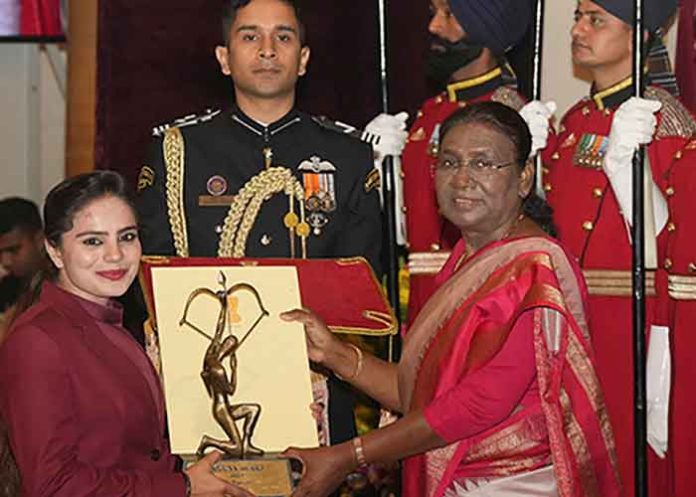
Lovely Professional University (LPU) takes immense pride as Nasreen Shaikh, a first-year MPEd student and the Captain of the Kho Kho Game at LPU and the nation, has been conferred with the prestigious Arjuna Award by Hon’ble President Droupadi Murmu at Rashtrapati Bhawan.

This recognition by the Ministry of Sports & Youth Affairs is a testament to Nasreen’s exemplary leadership, sportsmanship, discipline, and outstanding performance over the past four years.

The Arjuna Award is the second-highest athletic honour in India and is bestowed upon exceptional athletes who have consistently excelled in their respective sports. Among the recipients of the National Sports and Adventure Awards 2023, Nasreen stands out alongside other renowned athletes such as World Cup star cricketer Mohammed Shami.

Nasreen’s remarkable achievements in Kho Kho have earned her numerous national and international medals, highlighting her exceptional talent and dedication to the sport.

Her impeccable skills and unwavering determination have been evident in countless competitions she has participated in thus far. Nasreen is set to lead her team in the upcoming world games, showcasing her exceptional leadership abilities.

Nasreen’s journey to success has not been without challenges. Initially, she faced societal pressure and family objections, hindering her pursuit of her passion for Kho Kho.

However, she defied all odds and emerged as a source of immense pride for LPU and India by winning several top medals. Nasreen vividly recalls the overwhelming joy she experienced when she won her first gold medal for India, with the Indian national anthem resonating through the stadium.

Dr. Ashok Kumar Mittal, Founder ChanUcellor of LPU and Rajya Sabha Member, commended Nasreen on her national honour and expressed his pride in being associated with esteemed sports personalities like her.

He conveyed his heartfelt congratulations and expressed his belief in Nasreen’s ability to continue bringing honour and glory to the nation through her future endeavours. Dr. Mittal also expressed his delight at the Ministry of Sports’ announcement of the MAKA Sports 1st Runner-Up Trophy in the name of LPU.

Nasreen’s accomplishments serve as a testament to the significance of providing support and infrastructure for aspiring athletes. LPU’s unwavering commitment to nurturing sports talents is evident through its world-class sports infrastructure and support systems, including scholarships with 100% fee waivers.

The university boasts a roster of illustrious sports personalities, including ace javelin thrower Neeraj Chopra, accomplished wrestler Bajrang Punia, skilled boxer Jaismine, Indian Hockey Team Members, and many more.

source: http://www.yespunjab.com / Yes Punjab.com / Home> Yes Punjab Nwes / January 09th, 2024