All posts by mpositiveone@gmail.com

Tomb of Prophet’s “descendant” discovered

Samana, PUNJAB:

Samana (Patiala):

This sleepy north Indian town is all set to become a major pilgrimage centre for Shia Muslims following the chance discovery of a tomb said to belong to Imam Sayyid Mash-had Ali, a son of Imam Ali Raza, the eighth descendant of Prophet Muhammad. Samana is located 28 kilometers from Patiala in the Indian state of Punjab.
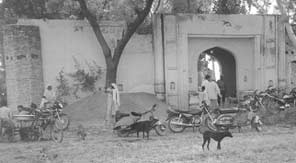
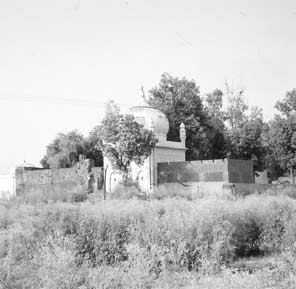
Front gate to the graveyard,
Rear side of the graveyard,
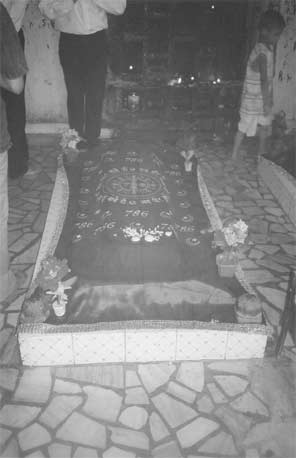
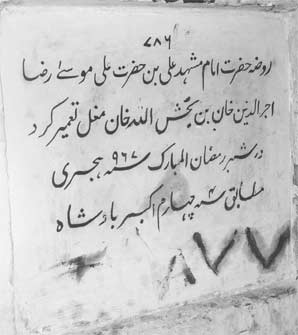
The grave and the epitaph planted in the wall facing the grave.
a. (http://www.imamjawad.net/htm/ara/ library/mosoa_imam_jawad/m2_ 3.htm#m4).

According to scholars of Muslim history, the discovery of the mazar is significant in that there is no mazar of any Imam in South Asia.

Scholars are of the view that Imam Sayyid Mash-had Ali was buried here about 1200 years ago and the town of Samana also takes its name from his mother. Facts related to this have been confirmed with old religious books, sources claimed. But we do not find “Mash-had” as one of the sons of Imam Ali Raza who, according to historical sources, had only two sons: Ali (the ninth Imam) and Moosa. According to some sources, he also had a third son called Yahya. (http://www.imamjawad.net/h

The Samana tomb was discovered by chance during the visit of Lahore High Court Judge, Shabbar Rizvi, about three months ago, when the stone at the shrine was cleared. Judge Rizvi, whose family emigrated from Samana at the time of Partition, told the local administration that a great saint lies buried at the place and he asked them to clear the place. Upon clearing it the inscription emerged.

Since its discovery, the mazar has been thronged by a host of important Shia dignitaries, including clerics from Lucknow and diplomats from the Iranian embassy in Delhi. They are now working on plans for its restoration and renovation.

A team comprising of Lucknow’s Maulana Kalbe Jawwad and two functionaries of the Iranian Embassy in Delhi accompanied by Dr Nasir Naqvi, a teacher of Punjabi University, visited the tomb. The Iran Cultural House in Delhi is planning to hold a seminar on this discovery in Chandigarh.

Maulana Kalbe Jawwad informed MG that while visiting Delhi recently he was told that there existed a tomb of a “saint” who is said to be a pedigree of the Eight or the Ninth Imam of the Shiites. During his visit to the place, he was told that Sayyids were living at the place but after Partition it was ruined as the Muslim inhabitants emigrated to Pakistan. Sikh Nihangs told him that they tried to build a Gurudwara on the spot but whenever they erected any structure it crumbled. Owing to superstition, they left the place untouched and asked the Punjab Waqf Board to grant them some other land and the same was granted to them at a distance of 200 meters from the site of the grave. Maulana Jawwad added that the tomb exists from the time of Emperor Akbar. He said that he would be leaving for Iran on 11 July to track the history of the tomb and if proved it would be the greatest religious site of Muslims in the Subcontinent as there is no proof that any descendant of the Prophet is buried in South Asia.

Maulana Jawwad also said that he is thinking of facilitating the transfer of about 5000 Shiite families to Samana in order to inhabit the place and take care of the tomb.

In Samana, Sant Kirpalji of Gurudwara Thada Saheb (situated at a distance of a kilometer from the tomb) told MG that the Sikh order called “Buddha Dal” took care of the tomb after Partition. Earlier the place was served by Thambi Baba who disappeared one day. Now a Brahmin called Mangat Ram takes care of the place and keeps it clean out of love. Sant Kirpalji also said that he has seen a book in Urdu about the history of Samana. According to him Persians of “Samanat” caste came here and inhabited the place centuries ago. They were cloth merchants.

According to Sant Kirpalji and others in the area, the important tomb belongs to “Chauda Peer” (Wide Saint) who is considered the most important saint in the area. The adjacent tomb, according to them, belongs to his brother or wife. A third tomb to the right belongs to his maternal uncle who is addressed by the villagers as “Imam Saheb” or “Bada Peer” (Big Saint). Around 80 kela land (about 320 bighas) is attached to the tomb but most of it has been usurped by the villagers. Only five kelas is left for the tomb which is used for agriculture and the income is utilised for the upkeep and repair of the tomb. Sant Kirpalji keeps a separate register for this purpose.

The tomb is located in a large compound which is about four kilometers outside Samana town. It has an impressive Mughal style gate but the structures inside are in need of urgent repair. A number of graves are found all over the place (see sketch where G denotes graves; 1 is for Chauda Peer’s grave, 2 for his brother or wife’s grave, and 3 for the grave of his maternal uncle). The Persian epitaph planted in the wall facing the grave seems to be recent and made by a novice (see above). It reads: “Tomb of Hazrat Imam Mash-had Ali son of Hazrat Ali Moosa Raza. Built by Ajruddin Khan Mughal son of Bakhsh Allah Khan in the month of Blessed Ramadan 967 Hijri corresponding to Year 4 of Emperor Akbar.”

The Chief Minister of Punjab, Captain Amrinder Singh, has ordered the concerned authorities to start working on the site immediately so that it could be declared a sacred place. 

Additional reporting and 
photographs by Nadim Ahmad, Samana 
and Rizvi Syed Haider Abbas, Lucknow

source: http://www.milligazette.com / The Milli Gazette Online / Home / by Zafarul Islam Khan / June 16-30, 2005
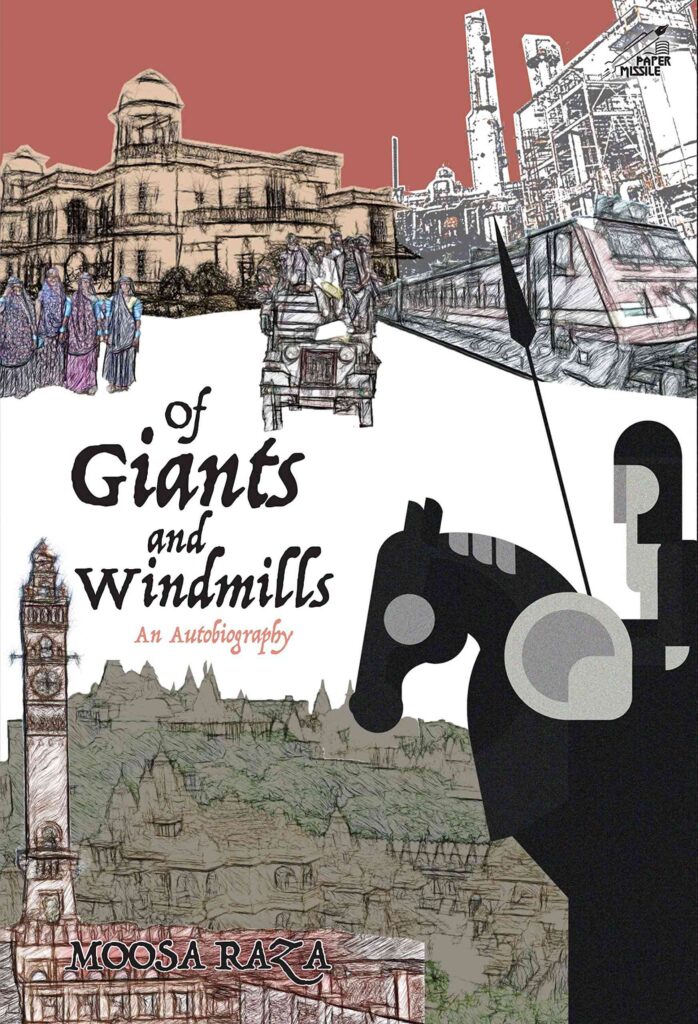
From the memoir: A retired IAS officer’s first-hand account of handling the dire 1972 Gujarat famine

TAMIL NADU / INDIA :

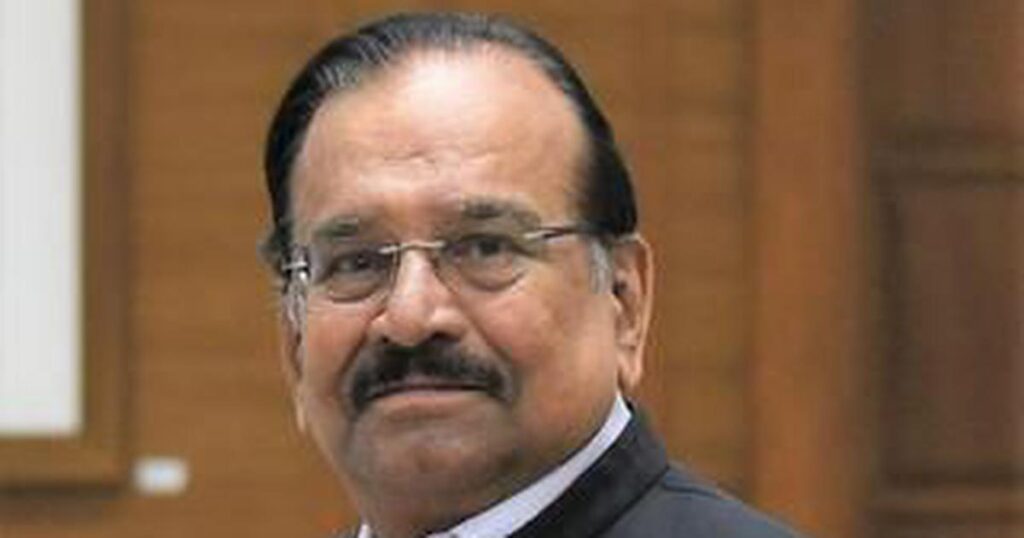
Moosa Raza.

Even though there were pockets of tribal-populated areas in Bulsar district, such as Dharampur and Bansda, the district was, by and large, known to be fertile and well served by the monsoon. The southern part of the district contained large tracts of grasslands, mostly owned by the Desais and Parsis. Most of the districts of peninsular Saurashtra, however, had no irrigation facilities. This was before the Narmada Canal took the river water there and solved the problem of both irrigation and drinking, with the rare exception of Junagadh.

I had served in one of the most arid regions of Saurashtra, Surendranagar – rich in history and political leaders and poor in soil fertility and irrigation facilities. Saurashtra was also poorly fed by the monsoons, and since no perennial rivers pass through the region, no large reservoirs, too, could be built to retain substantial quantities of water.

The year 1972 proved a very difficult year for both Saurashtra and North Gujarat. That year the assessment revealed that almost 12,000 out of the 18,000 villages of Gujarat had a harvest of less than 25 per cent. The government, therefore, declared famine conditions in those 12,000 villages, that is two-thirds of the state, and applied the Bombay Famine Relief Code to provide regulated relief.

Since the state faced a major calamity with two-thirds of its population of humans and cattle facing the threat of death by hunger and thirst, the Cabinet met almost every day since the moment the assessment figures came to be known. They had known what had happened in the tragic historical famines in Bengal, Kashmir and Madras, where thousands had perished – parents sold their children, sons abandoned their parents and there were rumours of cannibalism in some pockets. A major famine in Gujarat was quite a scary prospect for the government.

One fine morning, in September of 1972, I was basking in the cool breeze of the sea blowing from the Indian Ocean in the west. After a great deal of persuasion and bribery, my daughter, Gazala, who was all of four years, had agreed to go to school. Then the telephone rang. It was KN Zutshi, the revenue secretary, on the line.

“There was a Cabinet meeting this morning to review the scarcity situation. It was decided to post you as director of famine relief to take charge of the relief operations. You better pack up and move over to Gandhinagar. The chief minister wants you here yesterday. You have 48 hours to reach here. Handover charge to your resident deputy collector,” he ordered me.

Though I had been in Bulsar for more than three years, the normal tenure of a collector, still the sudden transfer came as a surprise. Bulsar was such a pleasant district to govern – open-minded and reasonable people, able and committed staff, and a flourishing club that I had established. When I announced my transfer to my officers as soon as I reached the collectorate, there was all-round consternation. By noon, the whole district had come to know of the transfer. As I was having lunch in my chamber, the peon announced that a delegation of MLAs from the district wanted to meet me.

“Sir, there are so many development works going on. All surplus land has not yet been taken over from the Desais. You cannot leave the task half-completed. You should not move,” they said.

“I have completed my tenure here. If the government wants me at Gandhinagar, I have to move,” I said. Left to myself, I would have liked to serve another four or five years in Bulsar. I learnt later that all the MLAs of the district, including those from the opposition, had driven to Surat. They had persuaded Zinabhai Darji, the president of the state Congress, to accompany them to Gandhinagar to persuade the CM, Ghanshyambhai Oza, to cancel the transfer. One of the MLAs later told me that the CM had asked them only one question.

“Is Mr Moosa Raza unhappy with this transfer? Does he want to stay back in Bulsar?”

“No, sir, but we want him there in the interest of the district.”

“Don’t you think that the larger interest of the state should override the interests of a single district?” the CM had asked reasonably.

They had no answer. The next day, after handing over charge to the resident deputy collector (RDC), I drove down to Gandhinagar to call on the CM. I had known him during my tenure in Surendranagar, his hometown. Having been a member of the Parliament for two terms, Mr Oza was a suave and polished politician, exuding politeness and bonhomie at every movement. He received me graciously, and as I was taking my seat, he pointed to a large pile of telegrams on his table.

“Do you know what they are?” he asked me with a smile. “No, sir,” I replied truthfully.

“Over 500 telegrams from Bulsar district requesting me to cancel your transfer.”

“I had nothing to do with them, sir,” I said. But I would have been less than human not to feel pleased at this show of appreciation from the people I had served.

“But I had to disappoint your fans in Bulsar. The state is facing a severe challenge, and your work in Surendranagar, Surat, Bulsar, and Dangs has convinced the Cabinet that you are the best officer to shoulder the task.”

“We have done a preliminary survey and made an initial assessment of the various requirements. A budget of Rs 120 crore has been sanctioned. Your mandate is to ensure that not a single human life is lost for want of food and water, all cattle are provided fodder, and all villages supplied with water. The Land Revenue Code mandates that the able-bodied villagers are not given doles. That encourages a dependent mindset. You have to organise relief works through which all those who can work are provided employment. The wages should be paid every week. The revenue department will brief you on the organisational arrangements. So, get cracking.”

The next port of call was Mr Zutshi, the revenue secretary. Mr Zutshi, as his name indicated, hailed from a family of Kashmiri Pandits. An old-style civilian, with impeccable credentials, he believed in management by the book. He would not deviate an iota from the rules, and everything had to be put down in black and white before he would commit himself to a course of action. Though he used the telephone as a necessary evil, he would not trust any conversation carried out on that unreliable machine.

One had to go over to his room to discuss even petty issues.

“Bhai, Deolekar has prepared an organisational chart for you. We think you will need around ninety staff to manage this huge operation. I think you should speak with him, and he will help you to get the necessary staff in place. We will ask the various departments to depute the needed staff. The PWD will provide the furniture and other necessary equipment,” he said.

The PWD would naturally dispose of its rejected furniture – broken, roughly repaired and not required by others. Also, the staff would be from those divisions where they had proved their dispensability. I would, therefore, start with a severe handicap, which would never be overcome during my entire tenure as a director of famine relief. Nor would I be able to successfully meet the challenge of the worst famine Gujarat had seen in its decades-old history with rejected equipment and discarded staff.

Excerpted with permission from Of Giants and Windmills, Moosa Raza, Niyogi Books.

source: http://www.scroll.in / Scroll.in / Home> Book Excerpt / by Moosa Rooza / December 05th, 2022

Arvind Kejriwal does not play Muslim card: Aaley Mohd Iqbal, AAP’s pick for Delhi Deputy Mayor post

NEW DELHI :

Attributing his victory to the trust of the people in his ward, he said: “I am a workaholic and I’m always available to lend ears to people’s grievances in the walled city.”

A seasoned politician, Aaley has had a long career, vacillating between different parties – he contested as an independent in 2012, aged 22; in 2017, on a Congress ticket, and in 2022, after he was fielded by AAP. (Twitter/Aaley Muhammad Iqbal)

A day after he was selected by the AAP as its deputy mayor candidate in the MCD, three-time councillor Aaley Mohammad Iqbal told The Indian Express he might become the first Muslim to be nominated to the post in many years.

“The last person for the post from our community was in 1977. This sends out a message that AAP is a party Muslims can trust, and their rights will be protected. (CM) Arvind Kejriwal ji chose me because I am a senior councillor; this is my hat trick (election win), and that is not a mean feat. I won with the highest margin (in the MCD polls).

Calling this appeasement or tokenism is not right, it forgoes my achievement, and Kejriwal ji does not play ‘Muslim card,’” he told The Indian Express.

Aaley won from the Chandani Mahal ward with a margin of 17,134 votes, the highest in the MCD polls.

Attributing his victory to the trust of the people in his ward, he said: “I am a workaholic and I’m always available to lend ears to people’s grievances in the walled city. The population is mostly lower and middle class… Like my father, I have always been there for them.” His father is AAP MLA Shoaib Iqbal, a six-time MLA from Matia Mahal who joined the party in 2020, along with his son.

A seasoned politician, Aaley has had a long career, vacillating between different parties – he contested as an independent in 2012, aged 22; in 2017, on a Congress ticket, and in 2022, after he was fielded by AAP.

Aaley said his brief stint with Congress made him realise how powerless they were. “I knew if I had to do something, I would have to join those in power.”

On the AAP’s poor show in Northeast Delhi in the MCD polls – the first election after the 2020 riots – he said there was so much to be done in those wards where the party put up a sub-par performance. “We have to go to the ground, talk to people and analyse what went wrong. Especially in Northeast Delhi. However, AAP managed to pull wards in Chandni Chowk constituency under its sway.”

Of the 19 MCD seats in Northeast Delhi areas hit by the violence, the BJP bagged 12, the Congress two and the AAP four.

Aaley also addressed the complaints surrounding Kejriwal’s absence when other leaders were visiting riot-hit areas. “He was in the Vidhan Sabha speaking about the issue… and constantly talking to the L-G and the Delhi Police commissioner. Since the Delhi government does not have law and order under its jurisdiction, he appealed to the Ministry of Home Affairs to deploy forces,” he said.

source: http://www.indianexpress.com / The Indian Express / Home> Cities> Delhi / by Aiswarya Raj / New Delhi – December 26th, 2022

Shelly Oberoi set to be Delhi MCD Mayor, Aaley Muhammad Iqbal her Deputy

NEW DELHI :

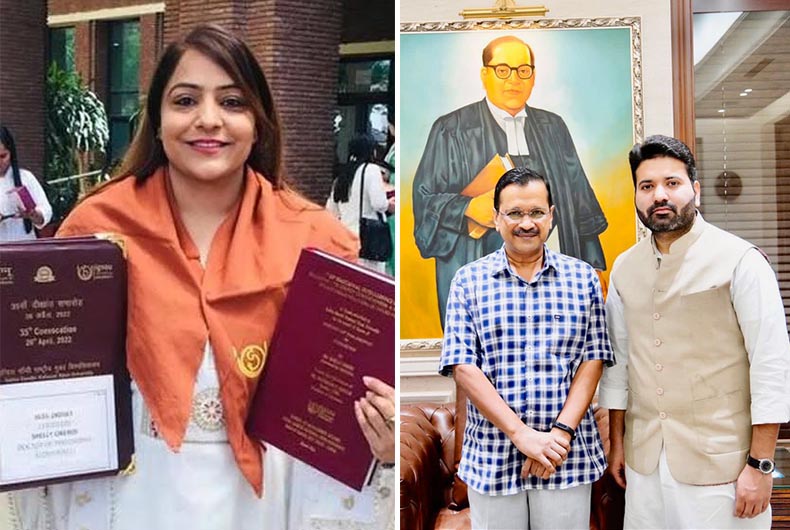
Shelly Oberoi, the councillor from Ward No. 86 in Patel Nagar, is AAP’s Mayoral candidate, while the name of Aaley Muhammad Iqbal has been proposed for the post of Deputy Mayor.

New Delhi: 

Weeks after the Aam Aadmi Party (AAP) wrested control of the Municipal Corporation of Delhi (MCD) from the BJP, which was at the helm for three consecutive terms, AAP on Friday announced its candidates for the posts of Mayor and Deputy Mayor.

Shelly Oberoi

Shelly Oberoi, the councillor from Ward No. 86 in Patel Nagar, is AAP’s Mayoral candidate, while the name of Aaley Muhammad Iqbal has been proposed for the post of Deputy Mayor.

Oberoi (39) joined AAP as an activist in 2013 and was the party’s Mahila Morcha vice-president till 2020. As a first time councillor, she registered victory on a BJP stronghold in West Delhi. A former visiting assistant professor at Delhi University and a first-time councillor, Oberoi contested the elections from former Delhi BJP chief Adesh Gupta’s home turf of East Patel Nagar, and defeated her rival Deepali Kumari by 269 votes.

Oberoi holds a PhD in management studies from IGNOU’s School of Management Studies. Along with Delhi University, She also taught at several other universities such as NMIMS, IP and IGNOU.

The first-time councillor, who is a lifetime member of the Indian Commerce Association (ICA), has several awards and accolades to her credit that she received in different conferences.

“I am feeling honoured as it will be a big responsibility. I shall give my best to fulfil the expectations of people and my respected party members”, Oberoi had said after she was named AAP’s Mayoral candidate.

From an ordinary AAP worker to being nominated for the Mayor’s post, her journey has truly been overwhelming, she said in a tweet.

Her main focus, Oberoi said, will be fulfilling the 10 guarantees promised by Chief Minister Arvind Kejriwal by working together with all the councillors to knock off the city’s ‘garbage capital’ tag.

“My eyes are full of dreams to fulfil the committments of Arvind Kejriwal and his 10 guarantees,” she said.

However, it should be mentioned that AAP has named her candidature for only three months.

At the first MCD meeting to be held on January 6, the 250 municipal councillors will take oath and elect the Mayor and Deputy Mayor besides six members of the standing committee. The post of the Mayor is reserved for a female councillor in the first of the MCD’s five-year tenure.

After the Mayor is be elected on January 6, she will remain in office till April. Election for Mayor’s post will be held again in April.

Aaley Muhammad Iqbal
Aaley Muhammad Iqbal is 3rd Time Muncipal Councillor of MCD ward Chandni Mahal and former Chairman City Zone MCD.

He is a businessman.

source: http://www.ummid.com / Ummid.com / Home> India / by Ummid.com with inputs from IANS / December 25th, 2022

In a first, 18-year-old Guntur boy makes it to CSK squad

Guntur, ANDHRA PRADESH:

Despite the financial difficulties, Rasheed’s father, Shaik Balisha Vali, also a cricket-lover, left no stone unturned for Rasheed’s coaching.

Guntur :

For the first time, a cricketer from Guntur has been chosen to be a part of the Indian Premier League (IPL). As soon as the mini-auction of 405 players concluded in Kerala’s Kochi, the citizens rejoiced and basked in the glory of Shaik Rasheed, who made it to the player pool of Chennai Super Kings (CSK).

Born in Guntur on September 24, 2004, Rasheed’s claim to fame was his impressive performance in the Andhra Premiere League 2022. Perhaps, his crucial role in India winning the Under-19 World Cup and as vice-captain of the team caught attention of the CSK franchise.

Currently playing the Ranji Trophy in Tamil Nadu, the 18-year-old has been signed for a base price of Rs 20 lakh.The all-rounder also happens to be an ardent fan of MS Dhoni. Only after the team of 15 cricketers is finalised, will we know whether or not Rasheed will get to play alongside his role model.

Despite the financial difficulties, Rasheed’s father, Shaik Balisha Vali, also a cricket-lover, left no stone unturned for Rasheed’s coaching.“We are so elated that he is living his dream. When I watched him play with such zeal, I decided to support him and send him for professional training. We had no second thoughts. He also worked very hard to reach the position he is at now,” an elated Balisha expressed.    

When he accompanied Rasheed for training in Hyderabad, he had to pick up odd jobs to support the family. “My son has admired Dhoni since the time he started playing gully cricket when he was just six years old. Now, getting an opportunity to play alongside him will be his dream come true,” Balisha said.

Dad picks cue, extends support
Balisha Vali, was the first to identify his son’s passion. His first cue was when neighbours’ complaints against the young cricketer for shattering their windows with his ‘sixes’ had become the order of the day

Guntur celebrates
As soon as news spread, Guntur lit up with joy as friends and relatives burst firecrackers and distributed sweets. Several people, following Rasheed since his nascent stage, expressed happiness and  wished him luck.

source:http://www.newindianexpress.com / The New Indian Express / Home> States> Andhra Pradesh / by Bandhavi Annam / Express News Service / December 26th, 2022

In 1962 Mohammed Rafi cheered troops on China border

Mumbai, MAHARASHTRA /ALL INDIA :

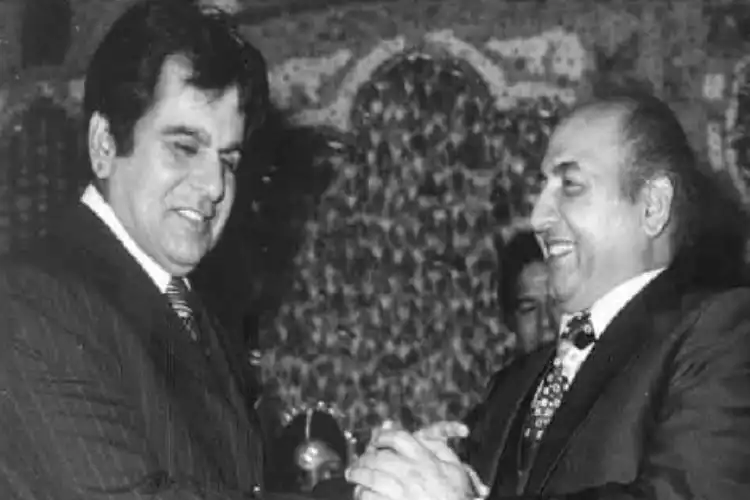
Mohammad Rafi and Dilip Kumar

Contrary to the popular notion that wars are fought by the armies alone, the whole nation including Bollywood personalities and leading artists get involved in the national efforts to fight the enemy.

The Chinese invasion in October 1962 was a shocking moment for India. Traditionally, India had supported China at every international forum for at least half a century. The invasion was the least expected from China and India was not at all prepared for it. Prime Minister Jawaharlal Nehru urged the nation to stand united in that hour of emergency and in response Indians donated generously to the National Defence Fund.

The film industry did not lag. Film Industry’s war efforts were led by legendary filmmaker Mehboob, singer Mohammed Rafi and music composer Mohammed Zahur Khayyam Hashmi (Khayyam).

In less than a week they collaborated to produce two music videos, which were to be played in film theaters, on the radio, and on the roadsides to raise funds for the war.

One of those two songs, “Awaz do hum ek hain…”, by Jaan Nisar Akhtar is now a popular political slogan in India. On Nehru’s call to the nation, Jaan Nissar Akhtar wrote the song to which music was given by Khayyam and the voice by Mohammad Rafi. The song is an invocation to Indians to unite in the face of an invader became a national passion and remains so till today.

The song starts with:

ek hai apni zameen, ek hai apna gagan

ek hai apna jahaan, ek hai apna watan

apne sabhi sukh ek hai, apne sabhi gham ek hai

Aawaz do ham ek hai

(We have a common earth, we have a common sky

We have a common world, we have a common motherland

All our joys are common, all our sorrows are common

Say it aloud that we are one!)

The powerful lyrics were turned into a national rage by the soulful singing of Rafi. Jago watan khatre me hai, sara chaman khatre me hai (wake up our motherland is under threat, whole garden is under siege) and dushman se nafrat farz hau, ghar ki hifazat farz hai (hating your enemy is a duty, to guard your home is a duty), aroused patriotic emotions among millions of Indians. The song asks the youth to join the army and fight the aggressor.

The song was picturized on Rajendra Kumar, Sunil Dutt, Raj Kumar, and Kamal Jeet.

Another song produced along with this was written by Sahir Ludhianvi, “watan ki abroo khatre main hai…” (dignity of the nation is under threat). It was also produced by Mehboob and sung by Mohammed Rafi. The song specifically points to the Panchsheel pact and other friendly gestures made by India towards China. It says,

Wo jinko saadgi mein hamne

Aankhon par bithhaaya thha

Wo jinko bhai kehkar

Hamne seene se lagaaya thha

Wo jinki gardanon mein haar

Baahon ka pehnaaya thha

Ab unki gardanon ke waaste

Talwaar ho jaao

(The people we honoured because of our innocence

The people we embraced and called brothers

The people we received with love

Now, do become swords for their throats)

The song also points toward the internal threats at the time of war.

Khabar rakhna koi gaddaar

Saazish kar nahin paaye ae

Nazar rakhna koi zaalim

Tijori bhar nahin paaye ae

(Be vigilant that no traitor conspires against the nation

Be vigilant that nobody makes money out of our war efforts)

The song was picturized on Dilip Kumar, Rajendra Kumar, Raj Kumar, and Kamal Jeet in a video produced by Mehboob.

Lorries with speakers would roam around playing these songs and prompting people to donate generously. It is said that when one such procession reached the house of Shammi Kapoor his wife actor Geeta Bali started crying. She rushed inside her house and told Shammi that she needed to do something for the nation. Geeta took all her jewelry, even the pieces she wore, and gave it away for war.

Rafi felt that singing in the safety of Mumbai was a disgrace in the line of his national duty. He discussed with Dilip Kumar and urged PM Nehru to send them to the border. What would they do there? Rafi felt that his songs could boost the morale of Indian soldiers and the presence of Dilip Kumar would assure the troops that the whole nation is standing behind them.

It was a dangerous mission. It was unprecedented for the artists to perform at the war front. In the cold, Rafi and Dilip reached the war frontier. He sang songs, interacted with soldiers, and boosted their morale. Dilip Kumar later recalled, “needless to say he was the star attraction with the jawans and the young newly commissioned officers”.

After the war ended with a ceasefire the collected funds were used to recover the economy and modernizing the Army.

On 27 January 1963, Mehboob organized an event in Delhi where he invited.all the prominent film stars to perform in the presence of President S Radhakrishnan and PM Jawaharlal Nehru. The event is often remembered for the rendition of “Aey mere watan ke logo…” by Lata Mangeshkar and Mohammad Rafi sang two songs. One was written by Shakeel Badayuni and its music was composed by Naushad, “Apni azadi ko hum hargiz mita sakte nahi.” The song was later adapted into the film Leader and the other was “Kar chale hum fida….” written by Kaifi Azmi and composed by Madan Mohan, which was later adopted in Haqeeqat, a movie based on the India-China war.

The fact that Rafi went to the war frontier and stayed there for a few days to play what turned out to be a big morale booster for the troops remains an unprecedented manifestation of one’s sense of responsibility towards his country.

source: http://www.awazthevoice.in / Awaz, The Voice / Home> Culture / by Saquib Salim / December 24th, 2022

Jamia Millia Islamia: 12 Research Scholars Selected For Prime Minister Research Fellowship

NEW DELHI :

Jamia Millia Islamia(JMI) expressed its pride in being awarded the Prime Minister Research Fellowship (PMRF) of 12 research scholars of the university under the Lateral Entry Scheme of the May 2022 drive.

New Delhi:

Jamia Millia Islamia(JMI) expressed its pride in being awarded the Prime Minister Research Fellowship (PMRF) of 12 research scholars of the university under the Lateral Entry Scheme of the May 2022 drive.

According to the PMRF Coordinator, JMI Professor Abdul Quaiyum Ansari, the researchers will individually get a fellowship of Rs 70,000 for the first two years, Rs 75,000 for third year, Rs.80,000 for the fourth and fifth year respectively. Apart from this, each fellow will get a research grant of Rs. 2 Lakhs per year (a total of Rs 10 Lakhs for five years) under the PMRF.

The JMI has improved its performance significantly as in 2021 six research scholars were selected for the PMRF under the Lateral Entry Scheme of the December 2020 drive. The university has also shared the name of students, their recommender and the Department/Centres selected for Lateral Entry Scheme of the May 2022 drive

1.Nadeem Ahmad recommended by Professor Quamrul Hasan – Civil Engineering

2. Mohammad Ariz recommended by Professor Tarikul Islam – Electrical Engineering

3. Mohammad Masood recommended by Professor Mohammad Mahfuzul Haque – Biotechnology

4. Gulnaz Tabassum recommended by Dr Kapil Dev – Biotechnology

5. Ayesha Aiman recommended by Professor Seemi Farhat Basir – Biosciences

6. Sakeena Masrat recommended by Dr Rafiq Ahmad – CNN

7. Mudasir Younis Sofi recommended by Dr Mohd. Ajmal Khan – Physics

8. Shah Masheerul Alam recommended by Dr Javed Ali – Physics

9. Shelly Bhardwaj recommended by Dr Amit Kumar – Chemistry

10. Sneha Shukla recommended by Professor Saif A. Chaudhry – Chemistry

11. Abdus Samad recommended by Dr Shama Parveen – CIRBSc

12. Nuha Abeer Khan recommended by Dr Mohan C. Joshi – MCARS

While conveying best wishes to the successful candidates of the university, JMI Vice-Chancellor Professor Najma Akhtar said: “JMI stands for excellence and strives hard to provide its students every possible support to achieve great heights. This performance reflects university’s focus on high quality research and I am particularly happy that six out of the twelve students are girls. I hope that it would inspire other students particularly girl students of the university to do well in science and engineering research.”

source: http://www.ndtv.com / NDTV / Home> Education / by Adarsh Srivastava / October 26th, 2022

Karnataka has highest number of top scorers in CLAT-2023 UG and PG

KARNATAKA :

Two candidates, one each from Maharashtra and Uttar Pradesh, secured 100 percentile and emerged as all India toppers.

Eight students from Karnataka, the highest for any State, have emerged as top scorers in Common Law Admission Test (CLAT-2023) results for undergraduate and postgraduate streams declared by the Consortium of National Law Universities on December 23, Friday.

Two candidates, one each from Maharashtra and Uttar Pradesh, secured 100 percentile and emerged as all India toppers. One candidate from Karnataka secured a percentile of 99.97, two secured 99.96 and one each secured a percentile of 99.95, 99.94, 99.93 and 99.92 in CLAT UG from Karnataka.

Kshitika Tyagi

Kshitika Tyagi of Bengaluru got an All India Rank (AIR) of 12 with 106.75 score and a percentile of 99.97 in CLAT-2023 UG. Speaking to The Hindu, she said she started preparing for the exam and found the subject very interesting. “I want to join the National Law School of India University, Bengaluru,” she said. 

Ayesha Khan

Another topper from Karnataka, Ayesha Khan, AIR 17 with 105.75 score and 99.96 percentile, said her dream had come true. “From a very young age, I always wanted to be a lawyer, and I will be one now,” she said. 

The CLAT-2023 was conducted at 127 centres in 23 States and two Union Territories. A total of 94.87% of the candidates who enrolled appeared for the examination, of which 56% are females 44% are males and 2 are transgenders.

The duration of the CLAT 2023 UG test was 120 minutes. The test had five sections, with a total of 150 questions. One question was withdrawn in the final answer key. The highest mark secured in CLAT 2023 UG is 116.75. CLAT 2023 PG had one section comprising 120 questions and the highest mark secured is 95.25.

source: http://www.thehindu.com / The Hindu / Home> News> India> Karnataka / by The Hindu Bureau / December 23rd, 2022

Ahmedabad: AC mechanic’s son gets 99.78 percentile in CAT this year

Juhapura, Ahmedabad, GUJARAT:

Ahmedabad: AC mechanic's son gets 99.78 percentile in CAT this year |  Ahmedabad News - Times of India

Ahmedabad:

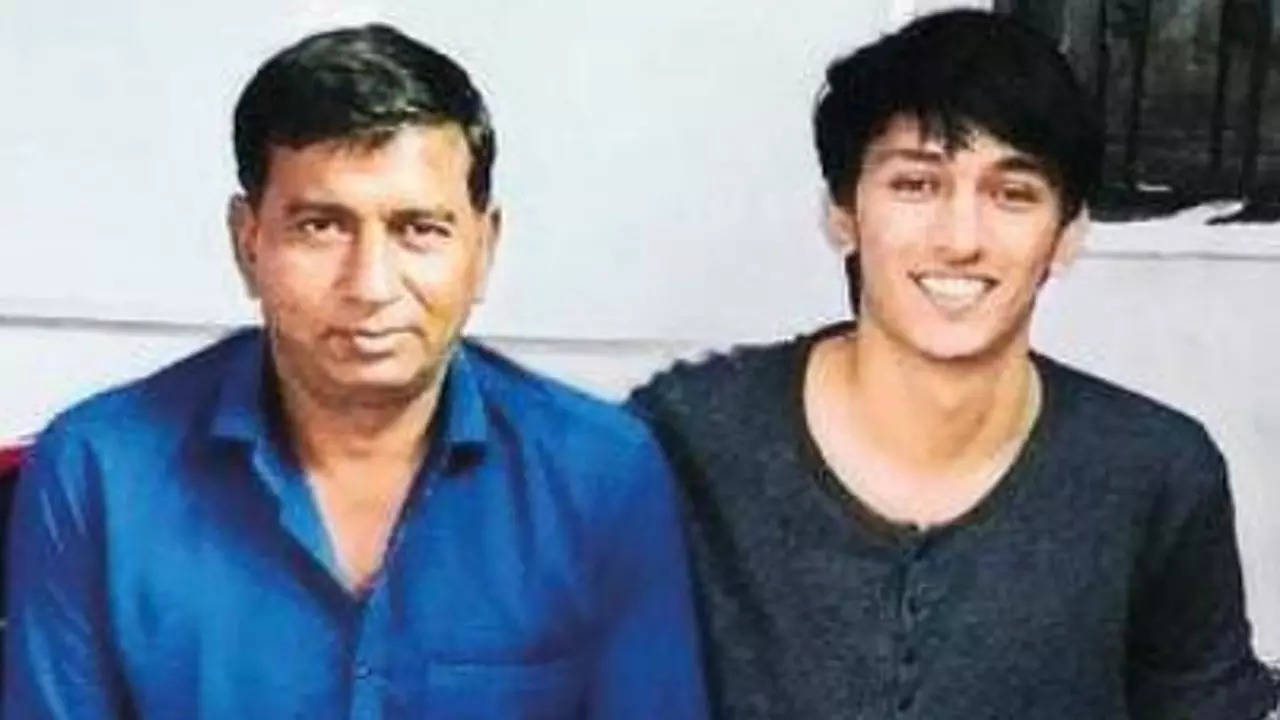
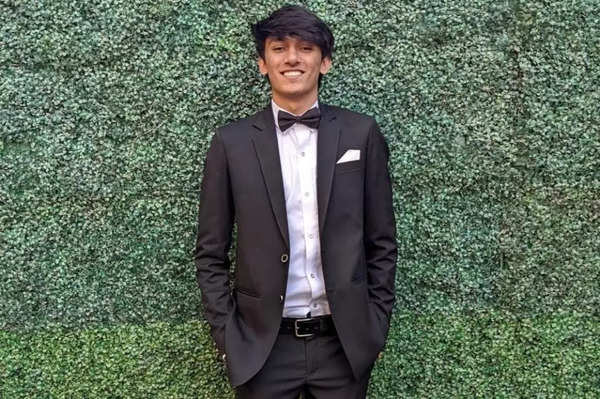
Razin Mansuri, 22, son of an air conditioner repairman and a resident of Ahmedabad, had scored 96.2 percentile in the Common Admission Test ((CAT) 2021 and was eligible for admission in IIM-Udaipur.

But Mansuri was not satisfied with his results so he decided to give it another shot and his efforts paid off as Mansuri scored 99.78 percentile making his chances for an admission in IIM-Ahmedabad or IIM-Bangalore quite high.

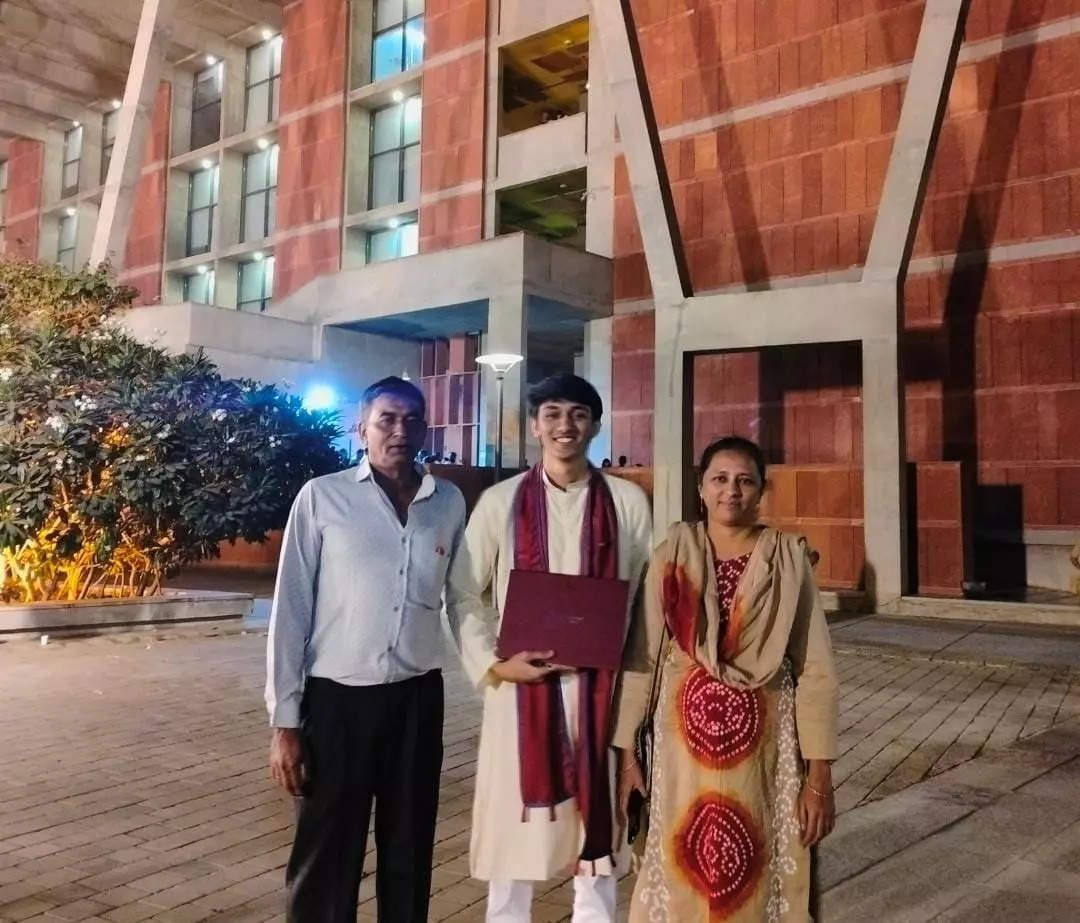
Mansuri completed his engineering in IT from Ahmedabad University in May this year. His father earns about 25,000 per month. Razin, his father Irfan Mansuri, mother Sabiha, and his younger brother Rehan live in a one-bedroom house in Juhapura.

Ahmedabad: AC mechanic's son gets 99.78 percentile in CAT this year |  Ahmedabad News - Times of India
Razin Mansuri

As my family’s economic condition is weak, right from high school I have mostly studied on scholarships. After completing high school from CN Vidyalaya, I took admission in Ahmedabad University and completed engineering in IT. I again got a scholarship in AU as my performance was good,” Mansuri told TOI. He said that after he completed engineering he was offered jobs with a Rs 6 lakh annual salary. “I did not take the offer as my dream was to get admission in IIM, preferably in IIM-A or IIM-B.

I started preparing for CAT and took the test in 2021. However, as I did not take any coaching I got 96.20 percentile. I was not satisfied with the result and decided to take the exam again in 2022,” Mansuri said.

Ahmedabad: AC mechanic's son gets 99.78 percentile in CAT this year |  Ahmedabad News - Times of India

He added that he enrolled for a coaching class for CAT 2022  as it charged him only half the fees. “It is an exceptional achievement given his family background and financial struggles. I am sure he will be a great student for any top IIM,” said Satish Kumar, head of the coaching class where Mansuri trained.

Once I pass out from IIM, I want to give back to society what I received from it. I want to help as many students as I can in their education,” Mansuri said.

source: http://www.timesofindia.indiatimes.com / The Times of India / Home> News> City News> Ahmedabad News / by Bharat Yagnik / TNN / December 22nd, 2022

Karnataka State shines in ’60th National Roller Skating Championships 2022 ′ -Winning 11 Medals – 6 Gold, 2 Silver and 3 Bronze.

KARNATAKA :

The 60th National Roller Skating Championships 2022-23 was held at Bengaluru from December 11 to 22.

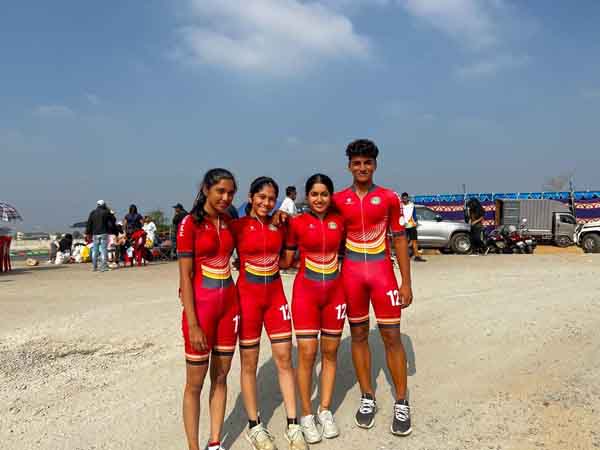
10 skaters from Hi-Flyers Skating Club had qualified for the Nationals. 4 skaters won 6 Golds, 2 silvers and 3 bronze.

In Individual Events :

Arpita Nishanth Shet gets 1 Gold and 1 Silver in Rink 500+D and Road 1 lap.


Muhammad Shamil Arshad gets 1 Gold and 1 Silver in Rink 500+D and Road 1 lap.


Dashiel Amanda Concessao gets 2 Bronzes in Dual TT and 500+D.


Moksha A Suvarna gets a Bronze in Road 1 lap..

In group events :

Shamil and Arpita grab the Gold in junior Mixed Relay.

Arpita and Dashiel also grab the Gold in the junior Girls Relay

These skaters were trained by coaches Mohandas K, Jayaraj and Ramanand of Hi-Flyers Skating Club.

source: http://www.daijiworld.com / Daijiworld.com / Home> Karnataka / by Media Release / December 20th, 2022