This year again, the number of parliamentarians elected from the Muslim community are 27 as compared to previous Lok Sabha elections when there were only 23 MPS out of the 542 constituencies.
The MPs are from only 11 states across India even though there are more than 40 constituencies that have a sizeable Muslim population estimated to be at least 30%.
The MPs who won this election are:
SN
Name
State
Party
1
BADAHRUDDIN AJMAL
ASSAM
AIUDF
2
ABDUL KHALEQUE
INC
3
CHOWDHIRY MAHBOOB ALI
BIHAR
LJP
4
DR. MOHAMMED JAVED
INC
5
HUSSAIN MASOODI
JAMMU &KASHMIR
JKNC
6
MOHAMMED AKBER LONE
JKNC
7
FAROOQ ABDULLAH
JKNC
8
A M ARIF
KERALA
CPI-M
9
ET MOHAMMAD BASHIR
IUML
1-
P.K. KUNHALIKUTTY
IUML
11
MOHAMMED FAZAL
LAKSHADWEEP
NCP
12
IMTIYAZ JALEEL
MAHARASHTRA
AIMIM
13
K. NAVAZ KANI
TAMIL NADU
IUML
14
MOHAMMED SADIQ
PUNJAB
INC
15
ASADUDDIN OWAISI
TELANGANA
AIMIM
16
DANISH ALI
UTTAR PARDESH
BSP
17
AFZAL ANSARI
BSP
18
ST HASSAN
SP
19
MOHAMMED AZAM KHAN
SP
20
HAJI FAZRUL RAHMAN
BSP
21
DR SHAFFEQ UR RAHMAN
SP
22
NUSRATH JAHAN ROOHI
WEST BENGAL
AITC
23
KHALEEL UR RAHMAN
AITC
24
ABU TAHIR KHAN
AITC
25
SAJJAD AHMED
AITC
26
ABU HASEM KHAN CHOWDHURY
INC
27
AFRIN ALI
AITC
Muslim population in India is 14.2% as per the census of 2011 and can be approximated to be at 15.5% as on December 2018 . And as per the population of Muslims the number or parliamentarians to represent them should be at least 65.
But looking at the Muslim MPs from Uttar Pradesh, it is a leap forward as compared to previous LS elections of 2014 when there was not even a single Muslim representative. This time we have 6 of them – 3 from Samajwadi party SP) and 3 from Bahujan Samajwadi party (BSP).
Another area where Muslims are in large numbers from and where Trinamool Congress Party gives tickets to a good number of Muslims is West Bengal. There have been 6 winners as compared to 8 Muslim MPs last time.
Bhartiya Janta Party that has secured majority in Lok Sabha had fielded 6 Muslim candidates – 3 from Kashmir, 1 from Lakshadweep and 2 from West Bengal. But none of them won.
From the Congress Party there are 4 Muslim MPs who made it to the parliament from Assam, Bihar, Punjab and West Bengal.
Bihar that had 4 Muslim MPs last time has only 2 this term.
AIMIM has 2 MPs this time with Asaduddin Owaisi winning once again for the 4th time while Jaleel from Aurangabad won against all odd as his constituency is not Muslim dominated one. But the alliance with Vanchit Bahujan Aghadi helped him get Dalit votes. This is the first time since the inception of the party that there will be two representatives in the parliament from AIMIM which is historic in itself.
Indian Union Muslim League won in three places – 2 in Kerala and 1 in Tamil Nadu. The one in Tamil Nadu – Rramanthapuram is in alliance with DMK.
JK National conference has won in the same three constituencies which were won by PDP in 2014 i.e., Anantnag, Srinagar and Baramulla.
There are no Muslim MPs from either Gujarat, Madhya Pradesh, Rajasthan, Karnataka, Andhra Pradesh, Delhi where there are a good number of Muslims residing.
The highest number of Muslim parliamentarians elected were 34 in 2004 when the Congress led UPA had formed the government.
source: http://www.twocircles.net / TwoCircles.net / Home> Elections Update> Indian Muslim > Lead Story / TCN News / May 24th, 2019
Khushboo Firdous of Brilliant Academy in Darrang district of Assam secured the first position in the arts stream in the HS 2019 examination. The results were declared on May 25.
Firdous secured 478 marks and letter marks in five subjects.
A total of 13,44,96 students appeared for the HS examination in the arts stream. Out of 13,44,96 students, 44,377 were males and 57,696 were females. The pass percentage among the male candidates stands at 76.29 and female at 82.09.
source: http://www.guwahatiplus.com / G Plus / Home> Daily News / May 25th, 2019
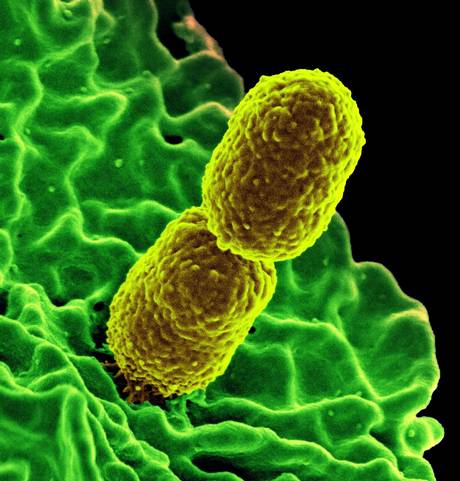
Very low concentration of the compound was able to kill all the bacteria in four to eight hours; there was no regrowth of bacteria even after a day.
A novel compound isolated from a soil bacterium shows promise in killing Gram-negative bacteria (Klebsiella pneumoniae and E. coli) that are resistant to colistin, a powerful, last-line antibiotic. The compound was effective in killing colistin-resistant bacteria in studies done in vitro and on mice models. Unlike colistin, the compound was found to be safe and did not damage the kidney of mice, a team led by Dr. Hemraj Nandanwar from the Institute of Microbial Technology (CSIR-IMTECH) found.
The bacterium (Paenibacillus sp) was found in the soil at Malvi village in Jind district, Haryana in January 2016.
“Colistin-resistant bacteria are increasing at an alarming rate in India and outside. It is a serious medical issue. The extent of resistance varies from one bacterial species to another and from one hospital to another. If colistin-resistant bacteria are found in the blood there is 80% chance of death,” says Dr. Abdul Ghafur from Apollo Speciality Hospitals, Chennai and co-author of a paper published in the journal Antimicrobial Agents and Chemotherapy.
The colistin-resistant bacteria were provided by Dr. Ghafur. Nineteen K. pneumoniae samples were from humans and three E. coli were from food samples.
Based on the amino acid composition and other studies, the team found the compound to be a new variant of the tridecaptin family; the variant was named tridecaptin M (the letter M standing for Malvi). Colisitin belongs to a different class of antibiotics, and so there is no cross resistance with the tridecaptin family of compounds.
The compound is novel and this is also the first time that antibacterial effects of tridecaptin family of compounds on colistin-resistant bacteria have been studied.
Interestingly, the new compound was more effective on K.pneumoniae bacteria that were colistin-resistant and less effective on colistin-sensitive bacteria, the team found. When the purified compound was tested on colistin-resistant bacteria, 16 times less amount of the compound was enough to kill the bacteria, compared with colistin.
Studies on resistance
More importantly, studies found that there is less likelihood of bacteria developing resistance against the compound. Very low concentration of the compound was able to kill all the bacteria in four to eight hours; there was no regrowth of bacteria even after a day. So this suggests that the compound resists spontaneous mutation. To further study the evolution of acquired resistance, they exposed the bacteria to very low concentration of the compound for 20 days. Even after 20 days the bacteria showed very low acquired resistance.
Mechanism of action
The mechanism by which the compound kills the bacteria is very different from most of the other drugs, especially colistin. The compound affects the ATP synthesis by the bacteria. With less fuel being produced, the bacteria are unable to multiply and thus killed.
Compared with colistin, the compound shows less ability to get into the bacteria (membrane permeability). So it forms specific pores in the membrane which disturbs the movement of ions leading to a reduction in ATP production. If the compound is used along with low concentration of colistin, the amount of compound required to kill colistin-resistant bacteria is 16-fold less. Thus colistin and the compound act synergistically.
Animal studies
The effectiveness of the compound was tested on mice by infecting the thigh muscle with colistin-resistant bacteria. Whereas colistin failed to kill the bacteria, about 90% of bacteria were killed by the compound.
Acute toxicity was tested by injecting 12 mg per kg every two hours till the accumulated dose became 72 mg per kg. All mice injected with colistin died within a day but no mice injected with the compound died. The kidney of the sacrificed mice did not show any damage.
source: http://www.thehindu.com / The Hindu / Home> Sci-Tech / by K. Prasad / Chennai – May 24th, 2019
She was one of the most powerful women of medieval India, a Mughal princess like no other. And yet, her extraordinary story remains lost in the pages of history.
In an unassuming part of India’s capital city, amidst winding alleys lined with attar and chadar sellers, lies the 800-year-old dargah of Hazrat Nizamuddin Auliya—one of the most revered saints in Sufism. From dusk to dawn, thousands of devotees throng this bustling complex to pay their respects.
Yet, few know that Delhi’s most famous Sufi shrine is also home to the tomb of one of the most powerful women of medieval India, Jahanara Begum.
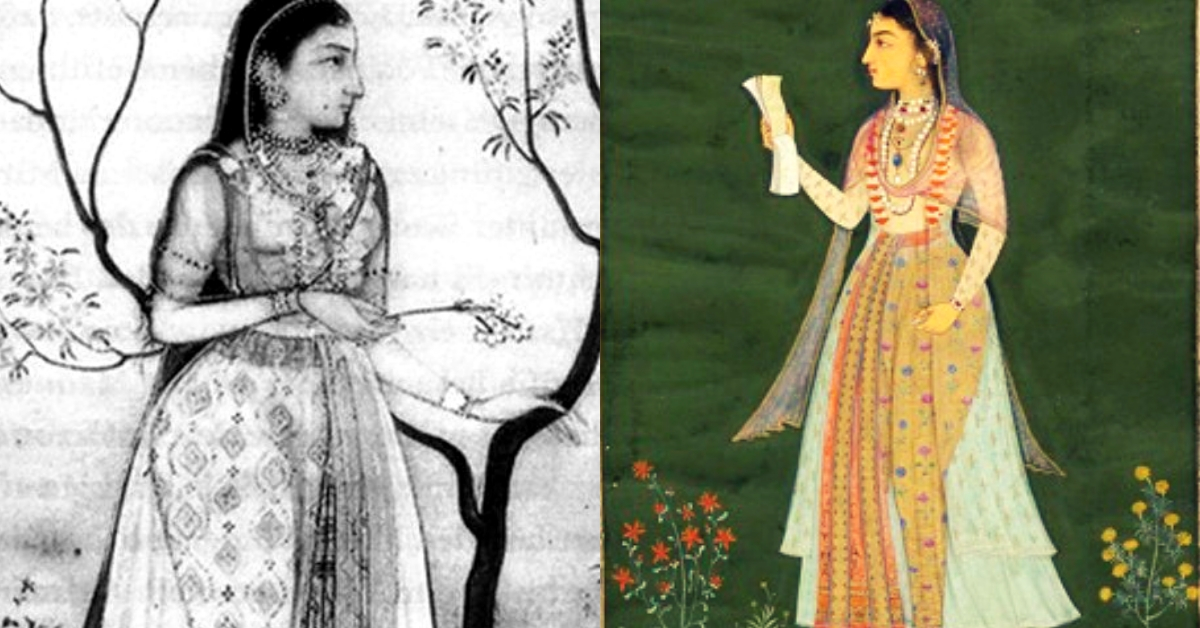
A writer, poet, painter and the architect of Delhi’s famous Chandni Chowk, Jahanara was a Mughal princess like no other.
Portraits of Jahanara Begum. Source: Wikimedia Commons
This is her story.
The eldest child of Emperor Shah Jahan and his favourite wife, Mumtaz Mahal, Jahanara was born in Ajmer in 1614. Growing up in one of the richest and most splendid empires in the world, the young princess spent her childhood in opulent palaces, humming with family feuds, battle intrigues, royal bequests and harem politics.
As such, she was well-versed in statecraft by the time she was a teenager.
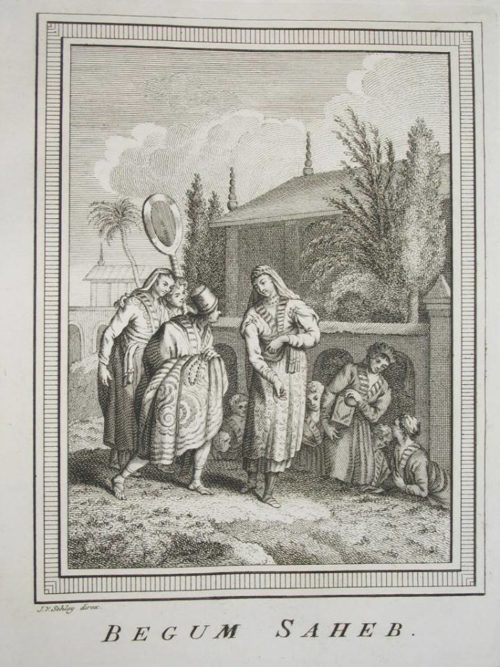
Soon after, Jahanara was appointed Begum Sahib (Princess of Princesses) by her doting parents. She would often spend her evenings playing chess with Shah Jahan, understanding the workings of the royal household, and helping her father plan the reconstruction of other palaces.
As French traveller and physician François Bernier writes in his memoirs, Travels in theMogul Empire ,
“Shah Jahan reposed unbounded confidence in his favourite child; she watched over his safety, and so cautiously observant, that no dish was permitted to appear upon the royal table which had not been prepared under her superintendence.”
Jahanara was also especially close to Dara Shikoh, Shah Jahan’s eldest son and her favourite brother. The two shared a love of poetry, painting, classic literature and Sufism.
In fact, she also wrote many books, including a biography of Ajmer’s Sufi saint Khwaja Moinuddin Chishti, displaying her flair for prose.
The Begum Sahib. Source: Royal India Families/Facebook
But tragedy struck the young princess’s life with the untimely demise of her beloved mother, Mumtaz, in 1631. At the tender age of 17, she was entrusted with the charge of the Imperial Seal and made Malika-e-Hindustan Padshah Begum—the First Lady of the Indian Empire—by the shattered Emperor, whose grief kept him away from his royal duties.
It was only on Jahanara’s behest that the inconsolable Shah Jahan came out of mourning.
In the years to follow, she became her father’s closest confidante and advisor. Highly educated and skilled in diplomatic dealings, her word became so powerful that it could change the fortunes of people. Her favour was much sought-after by foreign emissaries.
In 1654, Shah Jahan attacked Raja Prithvichand of Srinagar. Despairing of success in the battle, the Raja sent a plea for mercy to Jahanara. The Princess asked him to send his son, Medini Singh, as a sign of his loyalty to the Mughal Empire, thereby getting him a pardon from the Emperor.
The following year, when Aurangzeb was the viceroy of the Deccan, he was bent on annexing Golconda, ruled by Abdul Qutb Shah. The Golconda ruler wrote an arzdast(royal request) to the Princess, who intervened on his behalf. Qutb Shah was pardoned by Shah Jahan (against Aurangzeb’s wishes) and secured his safety on payment of tax.
Interestingly, Jahanara was also one of the few Mughal women who owned a ship and traded as an independent entity.
Padshahnama plate 10 : Shah Jahan receives his three eldest sons and Asaf Khan during his accession ceremonies (8 March 1628). Source: Wikimedia Commons
Named ‘Sahibi’ after its owner, Jahanara’s ship would carry the goods made at herkarkhanas (factories) and dock at her very own port in Surat; its revenue and the colossal profits she made via trade significantly boosted her annual income of three million rupees!
In his book Storia Do Mogor, Italian traveller Niccolao Manucci writes, “Jahanara was loved by all, and lived in a state of magnificence.” The book is considered to be one of the most detailed accounts of Shah Jahan’s court.
But Jahanara’s political and economic clout failed to have an impact on the bitter war of succession between her brothers, Dara Shikoh and Aurangzeb. She made several attempts to mediate between them, but as Ira Mukhoty writes in her book Daughters of The Sun , she had “underestimated the corrosive loathing that Aurangzeb has for Dara, whom he blames for his father’s cold criticism throughout his career”.
Aurangzeb ultimately killed Dara Shikoh and placed an ill Shah Jahan under house arrest in Agra Fort’s Muthamman Burj (Jasmine Tower). Faithful to her father, Jahanara set aside her lucrative trade and luxurious lifestyle to accompany him into imprisonment.
A constant presence beside Shah Jahan in his exile, she took care of him for eight years, till he breathed his last in 1666.
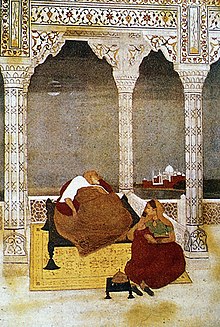
“The Passing of Shah Jahan” (1902), a painting by Abanindranath Tagore. At the foot of the bed is Jahanara Begum, the daughter of Shah Jahan; the Taj Mahal is in the background. Source: Wikimedia Commons
It says much for her stature in the Mughal court that after Shah Jahan’s death, Aurangzeb restored her title of Padshah Begum and gave her a pension along with the new title of Sahibat al-Zamani (Lady of the Age)—befitting for a woman who was ahead of her time.
Unlike other royal Mughal princesses, she was also allowed to live in her own mansion outside the confines of the Agra Fort.
“Jahanara establishes herself in the city as the most influential woman patron[s] of literature and poetry. She collects rare and beautiful book[s], and her library is peerless. She donates money to charity, especially Sufi dargahs, and carries on a genteel diplomacy with minor rajas who come to her with grievances and gifts,” writes Ira Mukhoty in her book.
Spending her last years in the pursuit of her artistic and humanitarian passions, Jahanara passed away in 1681 at the age of 67 but not before she etched her mark in the annals of history in a manner that would have made her father proud.
She commissioned several architectural spectacles, mosques, inns and public gardens across the Mughal empire.
But she is best remembered as the architect of Old Delhi’s legendary bazaar, Chandni Chowk—which translates to ‘Moonlit Intersection’.
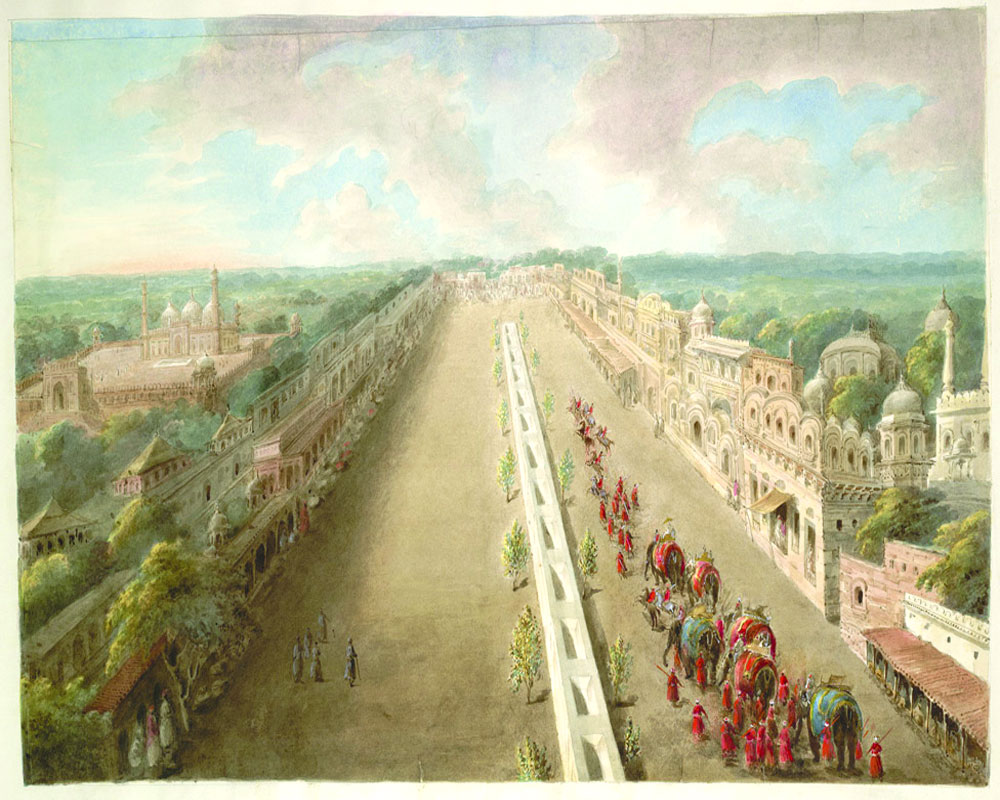
Water colour of Chandni Chowk in Delhi from ‘Views by Seeta Ram from Delhi to Tughlikabad Vol. VII’. Source: British Library
In his book Shahjahanabad : The Soverign City in Mughal India , Stephen Blake writes,
“The chowk was an octagon with sides of one hundred yards and a large pool in its center. To the north, Jahanara built a caravansarai (roadside inn) and a garden and, to the south, a bath. On certain nights, the moonlight reflected pale and silvery from the central pool and gave to the area the name Chandni Chawk (Silver or Moonlight Square). This name slowly displaced all others until the entire bazaar, from the Lahori Gate to the Fatehpuri Masjid, became known as Chandni Chawk.”
Today, many of Chandni Chowk’s ancient buildings have been torn down, as its lanes brim with new shops and colliding crowds. And yet, somehow it manages to invoke the spirit with which Jahanara lived—the same spirit that helped her survive and thrive amidst betrayals and tragedies.
Interestingly, Jahanara’s resting place in the Nizamuddin Dargah is of her own choosing, just like her character.
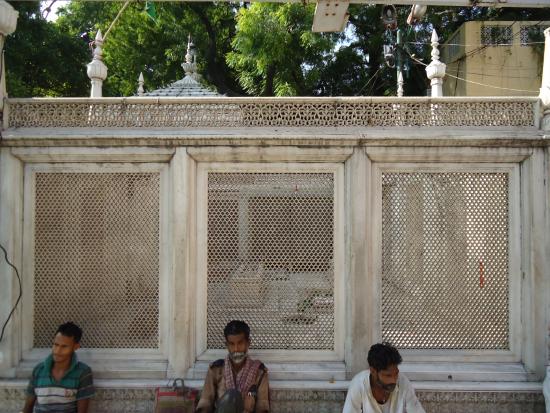
Jahanara’s tomb at the Nizamuddin Dargah. Source
Unlike the giant mausoleums built for her parents, she rests in a simple marble tomb open to the sky, inscribed with her own couplet in Persian:
Baghair subza na poshad kase mazar mara, (Let no one cover my grave except with green grass,) Ki qabr posh ghariban hamin gayah bas-ast. (For this very grass suffices as a tomb cover for the poor.
Perhaps it is poetic justice that green vines grow on the grave of this extraordinary princess of India.
(Edited by Shruti Singhal)
source: http://www.thebetterindia.com / The Better India / Home> History> Women / by Sanchari Pal / May 24th, 2019
When Syed Ahmed noticed the bag, he waited at the same spot thinking the passenger would return to collect the bag.
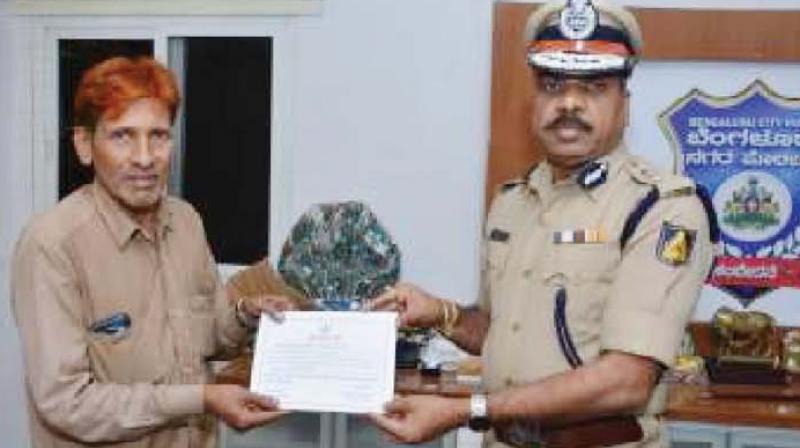
Syed Ahmed receives his award from Police Commissioner T. Suneel Kumar.
Bengaluru:
The city Police Commissioner T. Suneel Kumar rewarded a 45-year-old autorickshaw driver for his honesty, when he returned a bag containing cash, ATM cards and an expensive mobile phone which was left behind by a passenger on Wednesday.
The passenger, identified as Pramod Kumar Jain, took the autorickshaw from Majestic driven by Syed Ahmed. When Jain got off at the City Railway Station, he left behind a bag containing cash and other valuables.
When Syed Ahmed noticed the bag, he waited at the same spot thinking the passenger would return to collect the bag.
When the passenger did not return even after hours, Ahmed took the bag to the city Police Commissioner’s office seeking help in returning the bag to its owner. The police checked the bag and found a visitng card of Jain.
The police him to collect the bag, which contained Rs 45,000 in cash, two ATM cards and an i-Phone.
The bag was handed over to Jain in the presence of the Commissioner.
Kumar gave Ahmed a certificate of appreciation and a cash reward.
source: http://www.deccanchronicle.com / Deccan Chronicle / Home> Nation> Current Affairs / May 23rd, 2019
Nahida Manzoor has become first Kashmiri woman to successfully summit the World’s highest peak, Mount Everest.
The news about Nahida’s successful summit was made public by Transcend Adventures, the company with which she had gone for her maiden attempt to scale the Everest.
“The Fourth summit of the day is Nahida Manzoor along with her Sherpa Guide Nima Kancha. Nahida hails from the state of Jammu & Kashmir. The 26-year old lady has been passionate about the snow peaks and took to the mountains at a very young age,” Transcend Adventures posted on their official Facebook page.
Nahida along with her group had left from Everest Base camp for the summit on Saturday and on Tuesday she made successful summit of the peak.
The experienced trained mountaineer had on March 4 started crowd funding to support her dream journey.
source: http://www.thedespatch.in / The Despatch / Home> Chai Khana / by The Despatch Staff / May 22nd, 2019
Activist Touseef Raina has been elected as delegate for UN Conference. Touseef Raina, hailing from Baramulla was selected among thousands of applications from across the world.
Arab Youth International Model United Nations (AYIMUN) is an annual conference where young leaders from all over the world sir together in an assembly called a Meeting session and each of them play the role as a diplomat representing the country they are assigned to.
A conference where hundreds of youth will gather, Touseef Raina was selected from Kashmir, to discuss the global issues and represent their countries as diplomats on a global level.
It will be held in Dubai United Arab Emirates Le Méridien Dubai Hotel, UAE.
Raina said, “It is a great opportunity and he is overwhelmed. He is looking forward to learn new things and share his idea and discuss Kashmir.”
Raina is currently working as the Advisor to Municipal President, Sopore. He had recently contested ULB polls.
Mangalore bike racer Adnaan Ahamed proved to be the consummate racer in the opening round of the FMSCI Indian National Rally Sprint Championship here on Sunday, winning two categories in style on an action packed day.
Adnaan, winner of various national and regional championships, clocked the fastest time of 06:34.00 mins in the Group B 131cc-165cc category to win this title; he was equally invincible in the Group B 166cc to 260cc class, posting a time of 06:33.00 mins to reign supreme.
Bengaluru’s star rider Yuva Kumar trailed him in both the categories, clocking 06:36.00 mins in the Group B 131cc-165cc and 06:41.00 mins in Group B 166cc to 260cc to finish second on the podium.
Samuel Jacob with a time of 06:52.00 mins finished third in the Group B 131cc-165cc category while Vinay Prasad (07:00.00 mins) grabbed the third spot in the Group B 166cc to 260cc competition.
In the Group A up to 800cc category, it was Jeevan Gowthalli who reigned supreme after completing the 6. 2 km run with a timing of 06:49.00 mins. He was followed by Badal S. Doshi (06:50.00 mins) and Vishwas SD (06:55.00 mins) on the podium.
In the Group B 261cc to 400cc classification, Sudeep Kottary outran his competitors and clocked 07:38.00 mins to come out on top followed by Samarth (07:51.00 mins) and Hitesh Subhash Ghad (07:54.00 mins).
source: http://www.daijiworld.com / DaijiWorld.com / Home> Sports / by IANS / May 19th, 2019
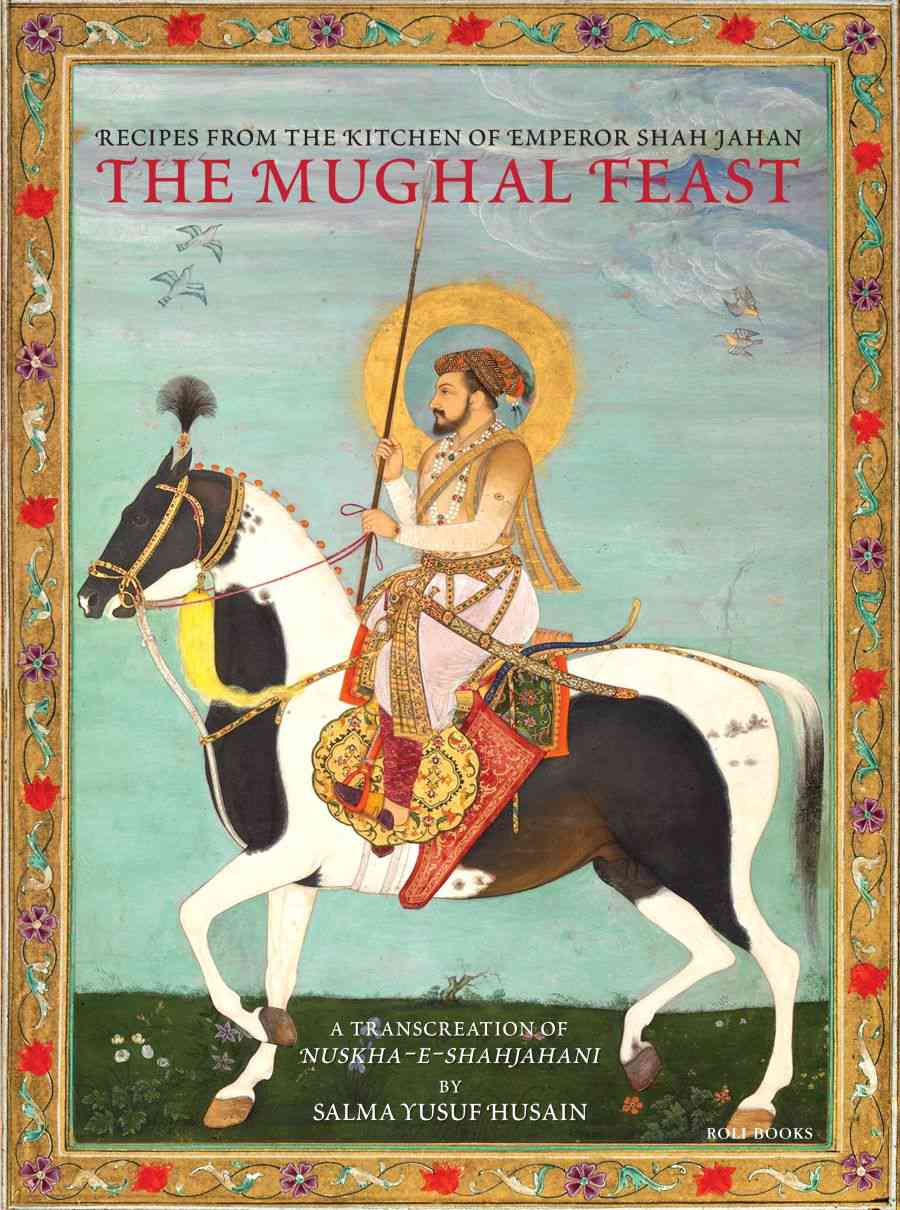
‘The Mughal Feast’ by Salma Yusuf Husain recreates the Persian recipe book ‘Nuskha-e-Shahjahani’, providing a glimpse into a bygone era of pomp and show.
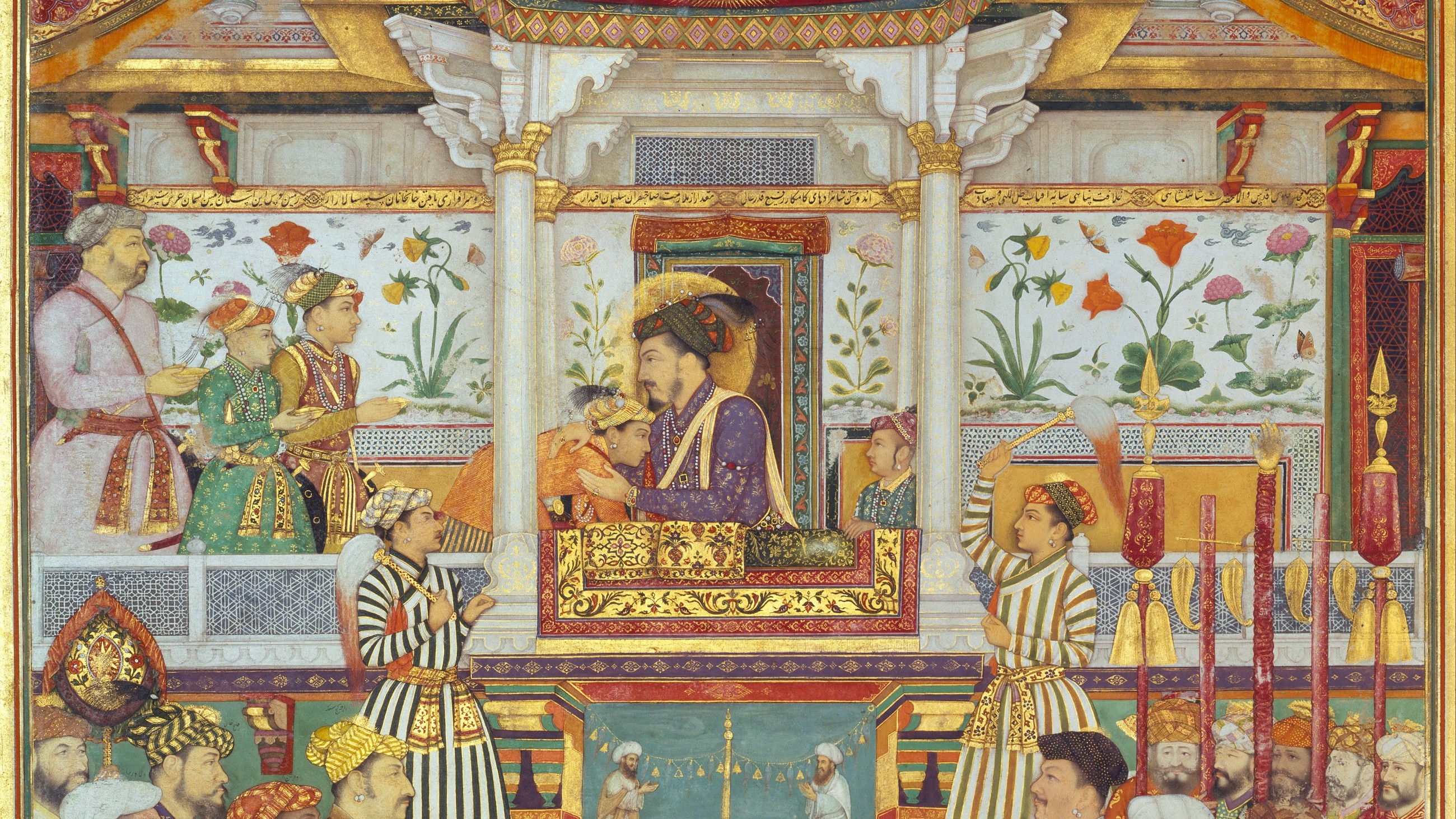
Mughal Emperor Shah Jahan in his court | Google Cultural Institute/Wikimedia Commos Licensed under CC BY Public Domain Mark 1.0].
The silver twilight of Mughal civilization began with Shah Jahan. Delhi was now a sanctuary of an urbane, sophisticated court which had taste, even elegance. By early 1730 the city had absorbed various elements from neighbouring regions and witnessed a mingling of international as well as national strains and an interchange of ideas, customs and food.
The Portuguese relationship with the Mughals had already been established a long time back, along the trade routes. Hence the imperial kitchens, besides Indian ingredients, saw an additional ingredient brought by the Portuguese – the chilli. The chilli was very similar to the long pepper, already in use, and therefore did not look too unfamiliar to royal chefs, but had the hot taste. Other vegetables like potatoes and tomatoes also appeared on the scene and the food of the Red Fort became rich in colour, hot in taste, and varied as compared to the bland food of its ancestors. Qormas and qaliyas, pulaos and kababs, and vegetables in different garb, besides European cakes and puddings, adorned the table.
Cooking and serving food in the royal kitchens was a riot of colours, fragrances, experiments, table manners and protocols. The emperors usually ate with their queens and concubines, except on festive occasions, when they dined with nobles and courtiers. Daily meals were usually served by eunuchs, but an elaborate chain of command accompanied the food to the table. The hakim (royal physician) planned the menu, making sure to include medicinally beneficial ingredients. For instance, each grain of rice for the pulao was coated with silver warq, which aided digestion and acted as an aphrodisiac. One account records a Mughal banquet given by Asaf Khan, the emperor’s wazir, during Jahangir’s time to Shah Jahan – though no outsider had ever seen any emperor while dining except once when Friar Sebastian Manriquea, a Portuguese priest, was smuggled by an eunuch inside the harem to watch Shah Jahan eat his food with Asaf Khan.
Once the menu was decided, an elaborate kitchen staff – numbering at least a few hundred – swung into action. Since a large number of dishes were served at each meal, an assembly line of staff undertook the chopping and cleaning, the washing and grinding. Food was cooked in rainwater mixed with water brought in from the Ganges for the best possible taste. Not only the cooking but the way the food was served is interesting to note – food was served in dishes made of gold and silver studded with precious stones, and of jade, as it detected poison. The food was eaten on the floor; sheets of leather covered with white calico protected the expensive carpets. This was called dastarkhwan. It was customary for the emperor to set aside a portion of food for the poor before eating. The emperor began and ended his meal with prayers; the banquet ran for hours as Shah Jahan liked to enjoy his food, spending long hours at dastarkhwan.
With the passage of time, indigenization in the cooking style became obvious and certain Indian ingredients, like Kashmiri vadi, sandalwood powder, suhaga, betel leaves, white gourd, and batasha, and fruits like mango, phalsa, banana, etc., were used to give different flavours to dishes.
The arrival of every dish was a ceremony and history will never forget the pomp of those times, along with the flavours which remain only in the pages of handwritten manuscripts of those days, such as Nuskha-e-Shahjahani. Not only the imperial kitchens of the emperor, but also the bazaars of the city were charged with the smoke of different kababs, and the environment was filled with the fragrance of nahari, haleem, qormas and qaliyas. The array of breads was dazzling. Festive occasions were never complete without baqarkhani, kulchas and sheermals. Sharbat ke katore and kulfi ke matke added colour to the scenario. The city of Shah Jahan was a paradise of food with the creations of local and foreign chefs.
This luxurious way of serving and preparing food continued only till the time Shah Jahan ruled, as his son Aurangzeb did not believe in luxury, pomp and show. Unfortunately, the last years of this great emperor were unhappy. Deposed by his son Aurangzeb, Shah Jahan was imprisoned in Agra Fort and remained there for eight years until his death in 1666. Legend has it that Aurangzeb ordered that his father be allowed only one ingredient of his choice, and Shah Jahan chose chickpeas. He chose them because they can be cooked in many different ways. Even today, one of the signature dishes of North Indian cuisine is Shahjahani dal, chickpeas cooked in a rich gravy of cream.
QALIYA KHASA DO-PIYAZAH
LAMB COOKED WITH ONIONS, GREEN GRAM AND VEGETABLE | Serves: 4-6
INGREDIENTS
Lamb, cut into medium-sized pieces 1 kg
Green gram (moong dal), washed, soaked for ½ hour ¼ cup / 60 gm
Ghee 1 cup / 250 gm
Onions, sliced 1 cup / 250 gm
Salt to taste
Coriander (dhaniya) seeds, pounded 4 tsp / 20 gm
Ginger (adrak), grated 4 tsp / 20 gm
Beetroots (chuqander), peeled, cut into medium-sized pieces 3 cups / 750 gm
Turnips (shalgam), peeled, cut into medium-sized pieces 3 cups / 750 gm
Carrots (gajar), scraped, cut into cubes 3 cups / 750 gm
Rice paste 4 tsp / 20 gm
Saffron (kesar) 2 gm Freshly ground to a fine powder: Cinnamon (dalchini) ½ tsp / 3 gm
Cloves (laung) ½ tsp / 3 gm
Green cardamoms (choti elaichi) ½ tsp / 3 gm
Black peppercorns (kali mirch), ground 1 tsp / 5 gm
METHOD
1. Heat 100 gm ghee in a pan; sauté the onions and lamb with 2 tbsp water. Add the salt, pounded coriander seeds and grated ginger; cook, on medium heat, until the lamb is tender.
2. Add the beetroots, turnips, carrots and green gram with enough water to cover; cook the vegetables on low heat.
3. When the vegetables and lamb are fully cooked and at least 1 cup water remains in the pan, remove the pan from the heat and separate the lamb pieces and vegetables from the stock.
4. Temper the stock with the remaining ghee. Return the vegetables and lamb to the stock and bring to a boil. Add the rice paste and mix well.
5. Add the freshly ground spices and mix.
6. Transfer into a serving dish and serve garnished with saffron.
NARANJ PULAO
ORANGE-FLAVOURED LAMB CURRY COOKED WITH RICE | Serves: 6-8
INGREDIENTS
Oranges 4 big / 6 small
Rice 4 cups / 1 kg
Yoghurt (dahi), whisked 1 cup / 250 gm
Lemons (nimbu) 2
Sugar 2 cups / 500 gm
Saffron (kesar) ¼ tsp
Ghee 1 cup / 250 gm
Salt to taste
Dry fruits as needed
Green coriander (hara dhaniya), chopped as needed For the yakhni: Lamb, cut into pieces 1 kg
Ghee 1 cup / 1250 gm
Onions, sliced 1 cup / 250 gm
Ginger (adrak) 4 tsp / 20 gm
Salt to taste
Cinnamon (dalchini), 2 sticks 1˝
Green cardamoms (choti elaichi) ½ tsp / 3 gm
Coriander (dhaniya) seeds, crushed 4 tsp / 20 gm
Cloves (laung) ½ tsp / 3 gm
METHOD
1. Peel the oranges carefully so that the case remains intact. Remove the segments and keep aside. Sprinkle salt inside the case and float them in whisked yoghurt for an hour. Remove the cases from the yoghurt and wash with cold water. Boil the orange cases for a minute. Remove and keep aside.
2. In another pan filled with water, squeeze the juice of one lemon and boil the orange cases again. In case lemon is not available, boil in thin yoghurt liquid, simmer to make them tender.
3. Make yakhni with the lamb pieces and all the ingredients mentioned. Temper the stock with cloves.
4. Parboil the rice and keep aside.
5. Prepare a sugar syrup of one-string consistency; keep aside.
6. Remove the seeds and the skin of each segment and coarsely chop and mix with the yakhni. Take 1 tbsp cooked rice and mix it with saffron. Cook on low heat and simmer for 5 minutes. Remove and keep aside.
7. In a separate pan, spread the yakhni, evenly pour 3 tbsp syrup and simmer, when the syrup is absorbed, spread the rice and pour some ghee. Cover the pan and put on dum. While serving, transfer the pulao into a serving dish and place the orange cases over it. Fill one case with almond halwa, another with pistachio halwa, another with saffron and orange rice and another with salted minced lamb*. Garnish all with dry fruits and chopped coriander.
*You can buy almond halwa, pistachio halwa and salted minced lamb at a grocery store, or make them separately. You can also choose your fillings as per your liking.
GURAK KABAB
CHICKEN STUFFED WITH MEAT AND SLOW-COOKED ON CINNAMON BED | Serves: 4
INGREDIENTS
Chicken, cleaned, washed, skinned 2 (700-800 gm each)
Onion juice ½ cup / 125 ml
Ginger (adrak) juice ¼ cup / 60 ml
Salt to taste
Vegetable oil 3 tbsp / 45 ml
Lamb, minced 400 gm
Onion, medium-sized, sliced 1
Coriander (dhaniya) seeds, crushed 1 tbsp / 15 gm
Ginger (adrak), chopped 1 tbsp / 15 gm
Saffron (kesar), dissolved in milk 1.5 gm
Yoghurt (dahi), whisked ¼ cup / 60 gm
Cinnamon (dalchini) sticks to cover the bottom of the pan 8-10
Ghee ½ cup / 125 gm
Black gram (urad dal) flour ½ cup / 125 gm Freshly ground to a fine powder: Cloves (laung) 1 tsp / 5 gm
Cardamom (elaichi) 1 tsp / 5 gm
Black peppercorns (sabut kali mirch) 1 tsp / 5 gm
METHOD
1. Prick the chicken all over with a fork.
2. Marinate the chicken with onion juice, ginger juice and salt; rub well inside and outside the chicken and keep aside for 30 minutes.
3. Heat the oil in a pan; add the minced meat, onion, crushed coriander seeds, chopped ginger and salt. Stir and cook until the meat is tender.
4. Smoke the cooked mixture.
5. Fill the chicken with the minced lamb and tie both legs with twine to keep the shape of the chicken intact.
6. Mix the saffron and ground spices with the yoghurt.
7. Apply the yoghurt and saffron mixture all over the chickens evenly.
8. Spread the cinnamon sticks on the bottom of the pan. Place the chicken on the cinnamon bed and pour the ghee around.
9. Make a semi-hard dough of black gram flour. Cover the pan and seal with this dough.
10. Place the pan on low charcoal heat and cook on dum for 4 hours.
11. Remove the cover, take the chicken out, cut into four pieces and serve over the mince.
BAQLAWA
LAYERED SQUARES GARNISHED WITH PISTACHIOS | Yield: 10
INGREDIENTS
Egyptian lentil 1 cup / 250 gm
Ghee 1 cup / 250 gm
Ginger (adrak) 4 tsp / 20 gm
Salt 8 tsp / 40 gm
Wholewheat flour (atta) 4 cups / 1 kg
Kid fat 4 tsp / 20 gm
Sugar 2 cups / 500 gm
Pistachios (pista), pounded 8 tsp / 40 gm Freshly ground to a fine powder:
Cinnamon (dalchini) ½ tsp / 3 gm
Cloves (laung) ½ tsp / 3 gm
Green cardamoms (choti elaichi) ½ tsp / 3 gm
METHOD
1. Boil the lentil until soft. Remove from heat and drain. Fry the lentil in little ghee with ginger and salt. Then add enough water to cook the lentil, ensuring that it is not mashed and each grain looks separate. Sprinkle the ground spices and smoke the mixture.
2. Knead the flour into a hard dough (in summer one part ghee and two parts kid fat is used while in winter the proportions should be equal).
3. Divide the dough equally into small portions. Roll each portion out into a thin poori, apply ghee and dust with dry flour, sprinkle the lentil mixture lightly and cover with another poori. Repeat the process with 5-7 pooris.
4. Shape them into squares and secure the edges with water.
5. Heat the ghee in a pan; deep-fry the squares. Remove and keep aside to cool.
6. Make a sugar syrup and soak the fried squares in it. When the syrup is absorbed, sprinkle pounded pistachios.
Excerpted with permission from The Mughal Feast: Recipes from the Kitchen of Emperor Shah Jahan, a transcreation of Nuskha-e-Shahjahani by Salma Yusuf Husain, Roli Books.
source: http://www.scroll.in / Scroll.in / Home> Magazine> Book Excerpt / by Salma Yusuf Husain / May 18th, 2019
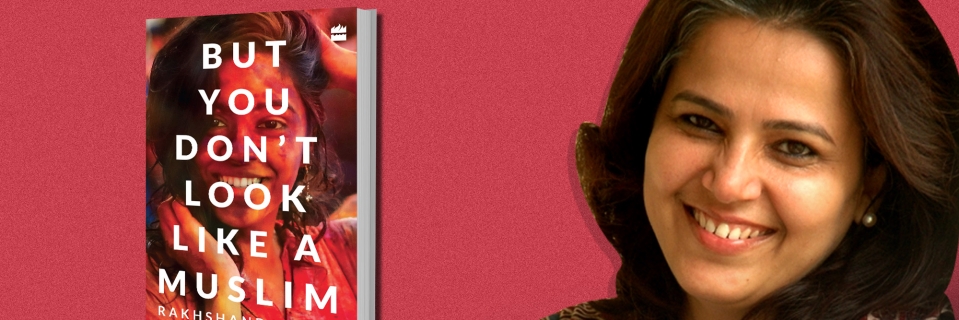
Image of the book cover and the author.(Photo: Altered by Kamran Akhter / The Quint)
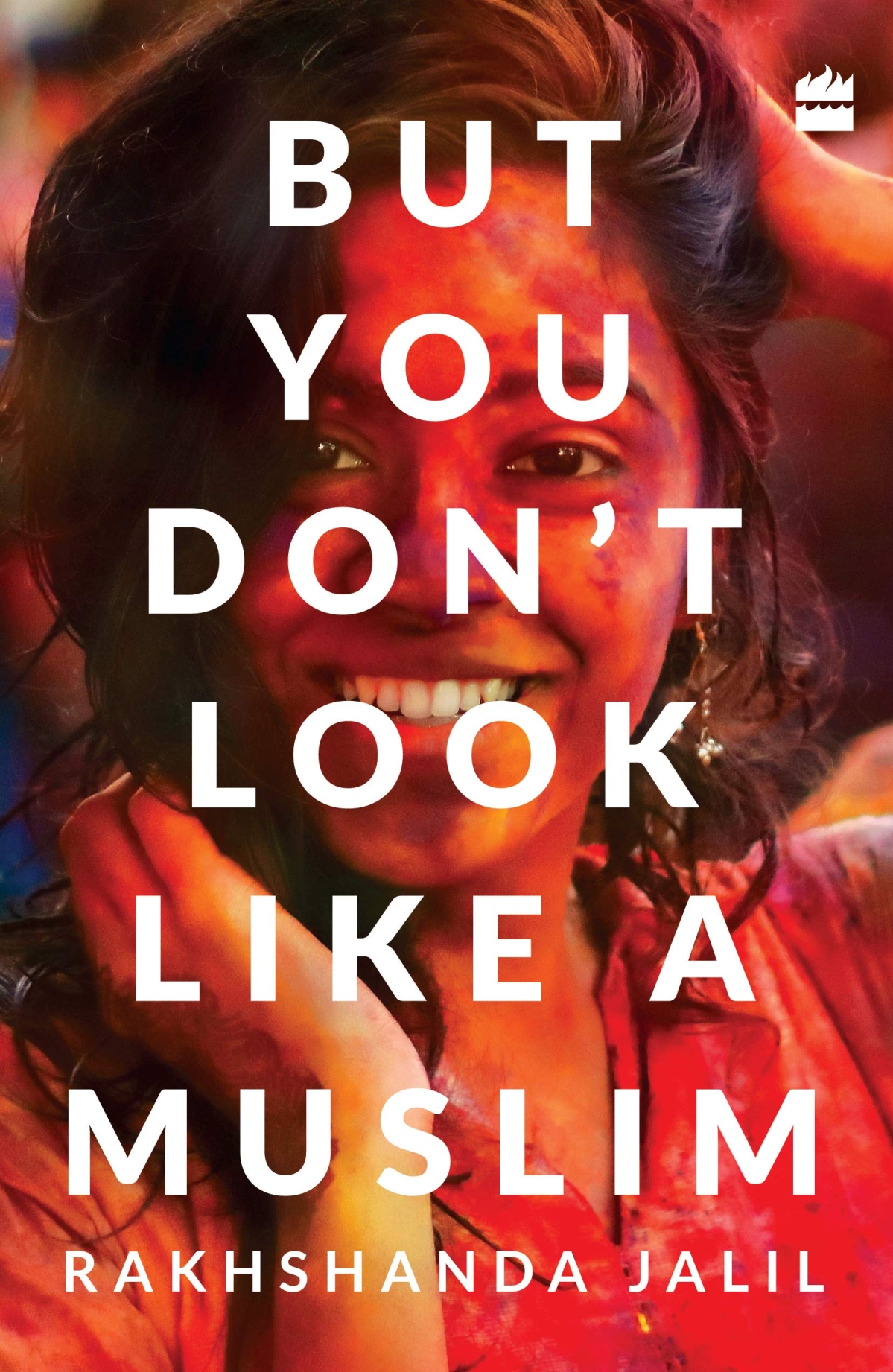
(The following has been excerpted with permission, from author Rakhshanda Jalil’s latest book ‘But You Don’t Look Like a Muslim’, published by Harper Collins India. Sub-headers are NOT part of the book, and have been added by The Quint.)
I was eight years old in 1971. I remember the brown paper pasted on our windowpanes, the trenches dug in the park facing our house in a South Delhi neighborhood, and the near-palpable fear of air strikes that held us in thrall.
I also remember being called a ‘Paki’ by other kids in school, as India and Pakistan prepared to go to war against each other yet again, or at least the only time in living memory for my generation.
Being the only Muslim child in class, many of my peers, a Kashmiri Pandit boy in particular, took great delight in grilling me on my Pak connections. I tried, in vain, to explain that I had none. But no one would believe my stoic denials; I was a Muslim after all, I must have relatives in Pakistan. My sympathies must necessarily lie with ‘them’. And this tacit sympathy – taken for granted by my young tormentors – made me as much an enemy as ‘them’.
The Option of Going to Pakistan – And the Choice to Stay Back in ‘Hindustan’
I remember coming home in tears one afternoon. I remember my father, a man of great good sense, sitting down with me and giving me a little spiel. That afternoon chat was to give form and shape to my sense of nationhood in more ways than I could then fathom. It was also to place me squarely on a trajectory that has allowed me to chart my destiny in 21st century India precisely as I wish – not out of defiance or head-on collision, but with self-assurance and poise.
My father started by telling me how he had to leave his home in Pilibhit, a small town in the Terai region bordering the foothills of the Himalayas, and find shelter in a mosque, how many homes in his neighbourhood were gutted, others were vacated almost overnight by families leaving for Pakistan, and his goggle-eyed surprise at the first sight of the Sikh refugees who moved into the houses abandoned by fleeing Muslims.
Image of the book cover. (Photo: Harper Collins India)
While the option of going to Pakistan was there for him too – a newly-qualified doctor from a prestigious colonial-era medical college in Lucknow – he chose not go. In choosing to stay back and raise a family here in this land where his forefathers had lived and died, he was putting down more roots – stronger and deeper into the soil that had sustained generations before him. ‘Wear your identity, if you must, as a badge of courage not shame’, he said.
Why Muslims Like My Family Chose Nehru Over Jinnah
He also gave the example of my mother’s father, Ale Ahmad Suroor, a well-known name in the world of Urdu letters, and his decision too, to stay put, despite the many inducements that were offered to qualified Muslim men from sharif families. The ‘Land of the Pure’ held out many promises: a lecturer could become a professor, a professor a Vice-Chancellor, sons would get good jobs, daughters find better grooms and there would be peace and prosperity among one’s own sort.
And yet, my mother’s family like my father’s, chose not to go. To be honest, I was later told, my grandmother – a formidably headstrong lady – wanted to go, especially since many in her family had moved to Karachi.
But my grandfather, then a Lecturer at Lucknow University, was adamant: his future and his children’s lay here in ‘Hindustan’. And so they stayed. In the face of plain good sense, some might say. Why? What made them stay when so many were going?
Over the years, I have had many occasions to dwell upon this – both on the possible reasons, and the implications of their decision. I have grappled with my twin identities (am I an Indian Muslim or a Muslim Indian?), or tried not to sound defensive about my so-called liberalism, or struggled to accept the patronising compliment of being a ‘secular Muslim’ without cringing. And I have wondered, why families like mine, in the end, chose Jawaharlal Nehru over Mohammad Ali Jinnah.
How Did Muslims Become the ‘Other’?
Like many Muslims in India, I have often wondered if the cleavage of hearts and land was truly inevitable, or could it have been averted? What would have been the state of the Indian sub-continent today had a pact been reached between the Muslim League and the Congress? What happened to the heady days of 1919, when Hindus and Muslims had come together to fight the common enemy, the British? What went so wrong between the two major communities of the subcontinent? What caused the disenchantment with the Congress? What made some staunch Congressmen rally around the once-derided Muslim League? What cooled the Muslim’s ardour to join nationalistic mainstream politics?
For that matter, why was the Muslim suddenly regarded as a toady and a coward, content to let the Hindus fight for freedom from the imperial yoke? Why was he suddenly beyond the pale? How did he become the ‘other’?
And what of the dream of the ‘Muslim Renaissance’, spelt out in such soul-stirring verse by the visionary poet Iqbal? In turn, why did the Congress balk at the issue of separate electorates, calling it absurd and retrograde? Why did it do nothing to allay the Muslim fear that the freedom promised by the Congress meant freedom for Hindus alone, not freedom for all?
Seen from the Muslim point of view, the Congress appeared guilty of many sins of omission and some of commission. ‘Nationalism’ increasingly began to mean thinking and living in the ‘Congress way’ and none other. Those who lived or thought another way, came to be regarded as ‘anti-national’, especially in the years after Independence.
How the Muslim League ‘Divided’ Muslims
However, to come back to the Muslim League and the extreme reactions it has always evoked among Indian Muslims, it is interesting to explore why the ‘League logic’ enamoured some so completely, and left others cold. When the Leaguers (or ‘Leaguii’ as they were referred to among Urdu speakers) first spoke of protecting the rights of the Muslims by securing fair representation in the legislature, they were giving voice to a long-felt need to recognize the Muslims as a distinct religious and political unit.
On the face of it, these seemed perfectly legitimate aspirations; the problem, I suspect, lay in the manner in which the Muslim League went about its business. It employed a combination of rhetoric and religion to bludgeon its way.
It used fear as a campaign tool, making Muslims view all Hindus as a ‘threat’ to their survival, once Independence was achieved and the ‘protective’ presence of the British removed.
The sentiment behind Choudhry Rahmat Ali’s pamphlet Now or Never: Are We to Live or Perish Forever? was echoed by countless volunteers – clad in the by-now trademark black shervani-white ‘Aligarh-cut’ pajama – who saw themselves as soldiers in the “grim and fateful struggle against political crucifixion and complete annihilation”. They descended in droves on towns and hamlets all across Uttar Pradesh and Bihar, where their speeches – delivered in chaste Urdu and peppered with suitably rousing verses penned by Iqbal and Mohamed Ali and Hafiz Jallundari – found rapt audiences and deep pockets. While a great many began to share their enthusiasm for the Muslim League, and simple country women began to stitch League flags out of every available bit of green fabric, an equal number still held out.
The Pain of Partition
Quite a few were frankly unconvinced by the very notion of Muslims being a homogenised monolithic community that could be brought under the green banner unfurled by that most unlikely of all Muslim leaders – the Karachi-born, English-speaking, ultra-anglicised Jinnah.
Many Muslims began to see the bogey of Hindu domination as exaggerated, others were uneasy with the theocratic underpinnings of the proposed new homeland.
The Muslim League’s final unequivocal demand – a separate homeland – did not appeal to some Muslims for the same reasons of faulty logic. Jinnah’s assurance of providing constitutional safeguards to minorities, appeared humbug in the face of his proclamation of a Pakistan that would be a hundred percent Muslim. As Partition drew near, scores of Muslims who had hitched their star to the wagon of the Muslim League, began to leave for the new homeland. Families began to be divided, often with one sibling opting for Pakistan and – as it were – choosing Jinnah over Nehru – and the other digging their heels in and putting their faith in a new secular nation.
In the end, while it is clear why those who went did so, it is not always entirely evident why those who didn’t go chose to stay back. Was it gross sentiment or astute foresight that kept them back? Was the choice between Nehru over Jinnah made from the head or the heart?
My Grandfather’s Wise Words in ‘Khwaab Baqui Hain’
The generation that could have fully and satisfactorily answered these questions is either dead and gone or too frail to be disturbed by ghosts from a troubled past. Hoping to find some clues, I find myself turning the pages of my grandfather’s autobiography, Khwaab Baqui Hain (‘Dreams Still Remain’). His words bring me solace and hold out hope for my own future and that of my children:
I am a Musalman and, in the words of Maulana Azad, a “caretaker of the thirteen hundred years of the wealth that is Islam”. My deciphering of Islam is the key to the interpretation of my spirit. I am also an Indian and this Indianness is as much a part of my being. Islam does not deter me from believing in my Indian identity. Again, to quote Maulana Azad, if anything “it shows the way”.
While it is true that I imbibed religion from my family and the environment in which I grew up, my own experiences and understanding made its foundations stronger. In Badayun, religion was the name for blind faith in traditionalism and age-old orthodoxies, miracles and marvels, faith healing by pirs and fakirs. I believe Belief in One God leads the way to equality among all mankind. Allah is not simply Rabbu’l-Muslimeen [‘the Lord of Muslims’]; He is also Rabbu’l Aalameen [‘the Lord of the World’]. The all-encompassing compactness of the personality of the Prophet of Islam has always drawn me.
Islam doesn’t teach renunciation from the affairs of the world; it teaches us how to fulfill our duties in this world while at the same time instructing us to regard this mortal world as the field in which we sow the seeds for the Other World. There is no obduracy in Islam. I have seldom found obdurate people to be good human beings. The Islam that I know gives more importance to Huqooq-ul ibad [‘rights of the people’] rather than Huqooq-ul Lah [‘rights of God’].
Despite Ayodhya & Gujarat, I’m Glad Families Like Mine Didn’t Choose Pakistan Over India
I am hopeful that Islam will ‘show the way’ as, indeed it did for my grandfather – a much-feted Urdu writer, critic, poet and teacher – and will in no way deter me from believing in my Indian identity as much as in my religious one.
As I clock in a half century and more, I find I have done my share of soul-searching and raking over the ashes. I am done, too, with defensive or aggressive posturing, or the equally ridiculous sitting-on-the-fence. Life has come full circle.
My daughters went to the same school and university as I did. The clamorous unruly Jana Sangh of my childhood has been replaced by the Bharatiya Janta Party, a stronger, more vociferous – yet no less militant – face of the Hindu right-wing. My daughters meet their share of Muslim-baiters. I have told them what my father said to me. As I watch them grow into confident young people, I know that they shall cope, as I did. That they shall enjoy the dual yet in no way conflicting identities – of being Muslim and being Indian in no particular order.
Despite Ayodhya and Gujarat, despite the politicians who come and go spouting venom and spreading biases, despite the many bad jokes about katuas, despite the discrimination that is sometimes overt and often covert, I do feel, it is a good thing that families like mine chose not to hitch their star to the wagon of the Muslim League.
(Rakhshanda Jalil is a writer, translator and literary historian. She runs Hindustani Awaaz, an organisation devoted to the popularisation of Urdu literature. She tweets at@RakhshandaJalil. This is an opinion piece and the views expressed above are the author’s own.The Quintneither endorses nor is responsible for the same.)
source: http://www.thequint.com / The Quint / Home> Books / by Rakshanda Jalil / May 15th, 2019


![Mughal Emperor Shah Jahan in his court | Google Cultural Institute/Wikimedia Commos Licensed under CC BY Public Domain Mark 1.0].](http://www.mpositive.in/wp-content/uploads/2019/05/MughalCookBook01MPOs18may2019.jpg)