All posts by mpositiveone@gmail.com

Role of North Indian Muslims in Partition; Ather Farouqui picks holes in that largely held belief

INDIA :

Urdu periodicals, with their dwindling readership, often showcase uninspiring articles, predictable poetry, and pedestrian fiction.

Amidst mediocrity all around, there exists a pressing need for thoroughly researched and academically rigorous articles that challenge erroneous, yet widely accepted notions about the world around us.

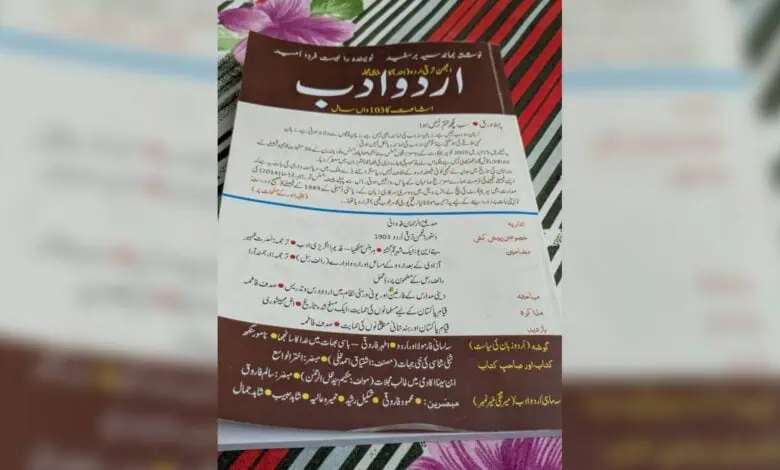
Some literary journals, including Bunyad (Lahore), Urdu Adab (Delhi), Isbaat (Mumbai), and Istefsaar (Jaipur), go beyond what common sense dictates. The latest issue of Urdu Adab, a quarterly publication of Anjuman Tarraqi Hind, bears testimony to this, as its content stimulates the intellect of its readers with a sense of exuberance.

The astutely edited journal by Ather Farooqui features three equally incisive and thoroughly researched articles on the much-maligned role of North Indian Muslims during the Partition, Madrassa students and understanding literature, and Namwar Singh’s tirade against Urdu. Unlike other run-of-the-mill literary journals in Urdu, the journal focuses on the dynamics and politics of language, which refers to the social and political implications of language use and the power dynamics inherent in cultural discourse. Also, it explores consequential questions related to culture and social consciousness. The influence of language on identity and the power dynamics inherent in cultural discourse also come under scrutiny in enriching academic discourse.

The overwhelming support of Muslims in the United Province for the Muslim League in the 1946 assembly elections, which was a sort of referendum on the partition issue, is often regarded as a truism; however, it does not sit well with veteran journalist and author Anil Maheshwari. Urdu Adab presents an article by him, “Support of Muslims for the Formation of Pakistan: A Distorted History: in light of the results of the decisive assembly elections in UP in 1946. Anil’s article, based on archival research, challenges the commonly held belief that the 1946 elections were a clear mandate for the Muslim League. He marshals many pieces of credible evidence that deflates the myth and suggests a more valid interpretation of the results.

Joining Ayesha Jallal (1994) and Christopher Jafferlot (2015), as well as a plethora of celebrated historians, Anil points out that Muslims in the United Province Assembly elections of 1946 did not vote overwhelmingly for the Muslim League. Voters comprising only 5% of the Muslim population cast their votes for the Muslim League, according to the official report of the 1946 elections. Placing the 1946 elections in the context of the universal adult franchise, he points out that only 3% of Indians could vote for the central assembly, while in the provincial assemblies, only 13% were allowed to vote. The article appeared in a reputed periodical, Economic and Political Weekly, laced with incisive interpretation, cogently concludes, “Had the partition of 1947 not occurred, Muslims would have constituted approximately one third of the population of an undivided Indian subcontinent. This demographic would have secured a majority in three to four states, providing them with a substantial and equitable stake in the political framework.”

A promising historian, Muhammad Sajjad, in his perceptive book on Muslim politics in Bihar, also connotes the same conclusion.

With an occasional rhetorical flourish, Anil inveighs against left historians for perpetuating this sort of falsehood.

Irfan Habib, Mazharul Hasan, and Bipan Chandra, too, did not place the onus entirely on Muslims, and HM Serwai’s book, Partition of India: Legend and Reality, provides an alternative understanding.

The article is supplemented with a stimulating critique by Sadaf Fatima, who holds the view that our reputed historians have glossed over the facts, thereby fostering anti-Muslim discourse. One tends to agree with the opinion that Indian Muslims got closely associated with Pakistan. The author seems too harsh when she accuses left historians of holding Jinnah mainly responsible for the partition, as they took Nehru’s side for personal interests.

It is a rare occurrence in Urdu periodicals for an article to spark such a polemical debate as Sadaf Fatima’s piece on madrassa graduates and the teaching of Urdu at universities. There is no denying the fact that most of the Urdu faculty at various universities are the product of oriental syllabi, who lack even rudimentary literary and aesthetic indoctrination. Curiously, the Madrassa’s students get admitted to a postgraduate course in Urdu literature. Sadaf Fatima makes this point pertinently and asserts, “It is incontestable that students are well short of foundational awareness about literature who join university as a postgraduate student of Urdu or opt for Urdu as an optional subject at the graduate level after graduating from a madrasa. Urdu literature does not appear in the syllabi of the madrassas. Urdu literature draws its sustenance from a literary culture that is composed of several local cultures and linguistic practices, reflecting centuries of shared heritage.

A student joining a madrassa at the age of 7 or so has no inkling of the cultural ethos of Urdu, which exists in his milieu.” Her cognate observation sparked controversy, and a smear campaign was launched against her and the editor, Ather Farooqui. Some well-meaning authors and journalists, including Ashar Najmi, Shakeel Rasheed, and Masoom Moradabadi, saw reason in her arguments. It is perplexing to see many vituperative postings on social media.

The author, while expressing deep concern for madrassa-educated students occupying positions in Urdu departments, made it clear that the solution does not lie in prohibiting their direct admission to courses in Urdu literature. There is an urgent need to equip students with literary and aesthetic sensibilities when they join the courses.

An exclusive section is devoted to the politics of the Urdu language, featuring two articles: “Three Language Formula” by Ahter Farooqui and a translation of “Basi Bhaat mein Kuda ka Sanjaha” by the prominent Hindi critic Namwar Singh. An avant-garde Hindi journal, Hans, published Namwar’s highly unreasoned and zealous article in 1987, and Athar Farooqui produced its Hindi text with the translation. In the introductory note, the editor points out that it unfailingly lays bare deep-seated venom against Urdu. Despite being committed to a shared linguistic and cultural legacy, Namwar Singh was bent upon declaring modern Hindi a separate language and restricting Urdu to Muslims only. It is the first instance when a cardholder Marxist critic launched a tirade against Urdu. The editor picked up many holes in the article; this aside, it has the traces of Namwar Singh’s speculative intelligence.

Ather Farooqui spelt out the contours of the three-language formula without taking recourse to official jargon and statutory regulations. An accomplished translator, Arjumand Ara produced an excellent translation of Ralph Russel’s insightful and detailed article on the Problems of Urdu and Urdu Organisations after the partition. Feedback on Russell’s article is also included.

Ather Farroqui deserves accolades for bringing out such an intellectually stimulating function.

source: http://www.siasat.com / The Siasat Daily / Home> Opinion / by Shafey Kidwai / June 21st, 2025
Poland university honours Thumbay founder

Mangalore, KARNATAKA / Ajman, Dubai, U.A.E :

Dr Thumbay Moideen was honoured for transforming the Thumbay Group into a global model of purpose-driven entrepreneurship in healthcare, education & Research.

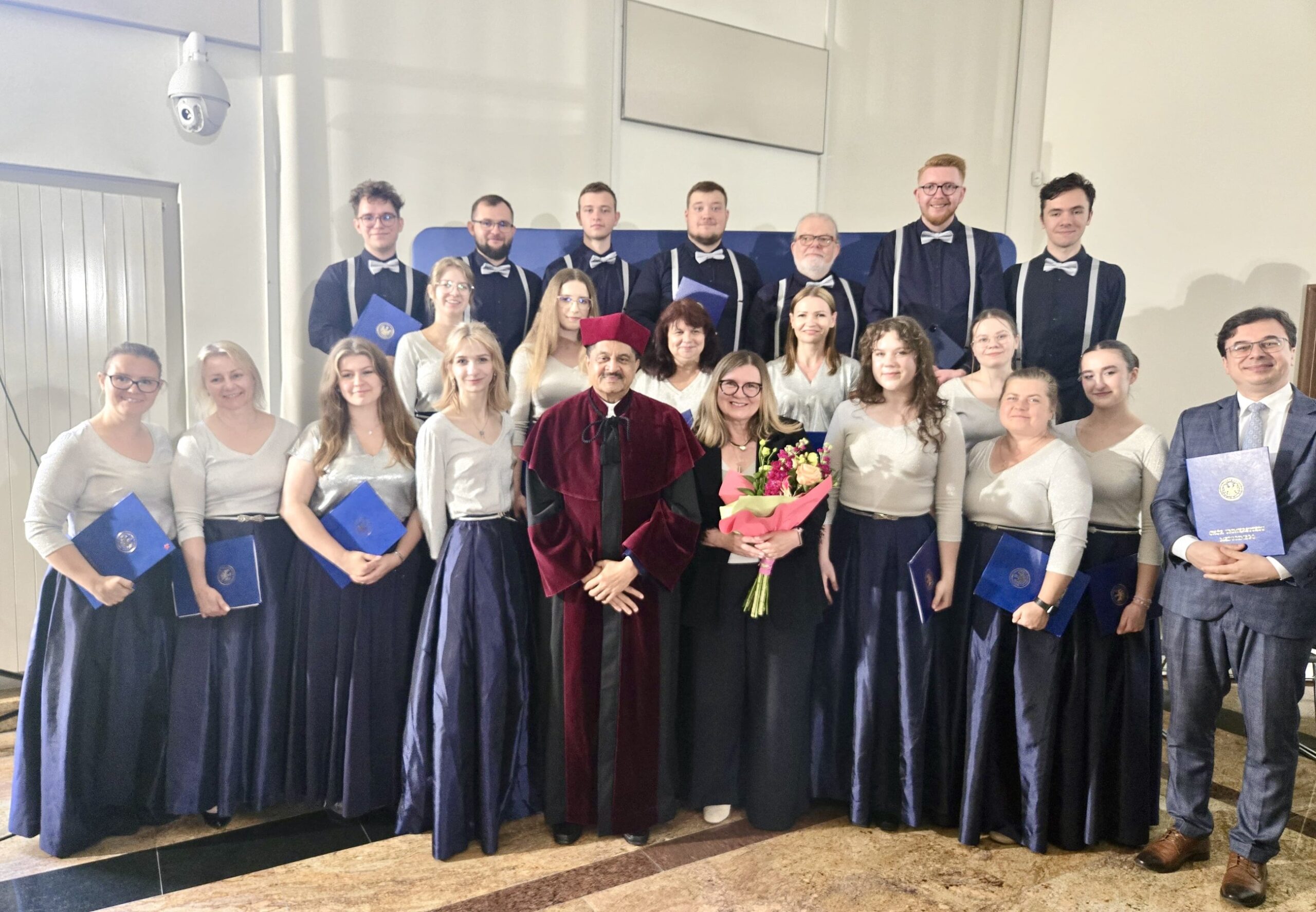
In a moment of immense pride and global recognition, Dr. Thumbay Moideen, Founder and President of Thumbay Group, has been conferred his Fifth Honorary Doctorate, this time by the prestigious University of Lublin, Poland.

This accolade reaffirms his unmatched contributions to global healthcare, medical education, and Research for the community development.

The honorary doctorate was awarded in recognition of Dr. Moideen’s extraordinary leadership in establishing the First Private Academic Health Sytem and the region’s largest private medical university — and for transforming Thumbay Group into a global model of purpose-driven entrepreneurship in healthcare, education & Research.

Under his visionary leadership, Thumbay Group has impacted millions across more than 175 nationalities, offering compassionate care, research excellence, and world-class medical training.

The University of Lublin acknowledged Dr. Moideen’s pioneering efforts in integrating innovation with empathy, notably through the Thumbay International Research Grant (TIRG) — an initiative investing AED 3 million annually in areas like cancer immunology, AI in healthcare,precision medicine and many more Area’s of Research.

From a young entrepreneur in Karnataka to being celebrated as the most respected Indian Muslim and leading Beary in the world, Dr. Thumbay Moideen’s journey is a testament to what’s possible when faith meets action. Recognized as the leading NRI from Karnataka in the Gulf region, he is admired not just for his accomplishments, but for the values that drive them.

Once someone who measured success through projects and milestones, he has evolved into a changemaker who defines impact by how many lives his work touches.

With this latest recognition, Dr. Moideen joins an elite group of globally honoured visionaries who have reshaped industries while staying rooted in service, humility, and impact.

This doctorate reflects not only his entrepreneurial brilliance but also his enduring belief that health and education are fundamental rights, not privileges.

Speaking at the ceremony, Dr. Moideen said: “If our work has empowered others to dream, to heal, to grow, then I consider it a success. It’s no longer about how far I’ve gone, but how many I’ve taken along. I want Thumbay Group to be remembered as a force that empowered the underprivileged, raised the standards of education, healthcare & Research.”

The vision of Thumbay Group is to deliver excellence by building a seamless ecosystem of education, healthcare, and innovation. From its flagship Gulf Medical University to hospitals, labs, rehabilitation centers, and AI-driven research programs, the Group continues its mission of shaping the future of healthcare —the Group plans to Double its Healthcare capacity and expand its all business to grow 5 fold and have a global presence.

source: http://www.gulftoday.ae / Gulf Today / Home> News / by Gulf Today, Staff Reporter / June 18th, 2025

Sustainability is a way of life, says Dr Samiullah Khan

Chennai, TAMIL NADU / Dubai, U.A.E :

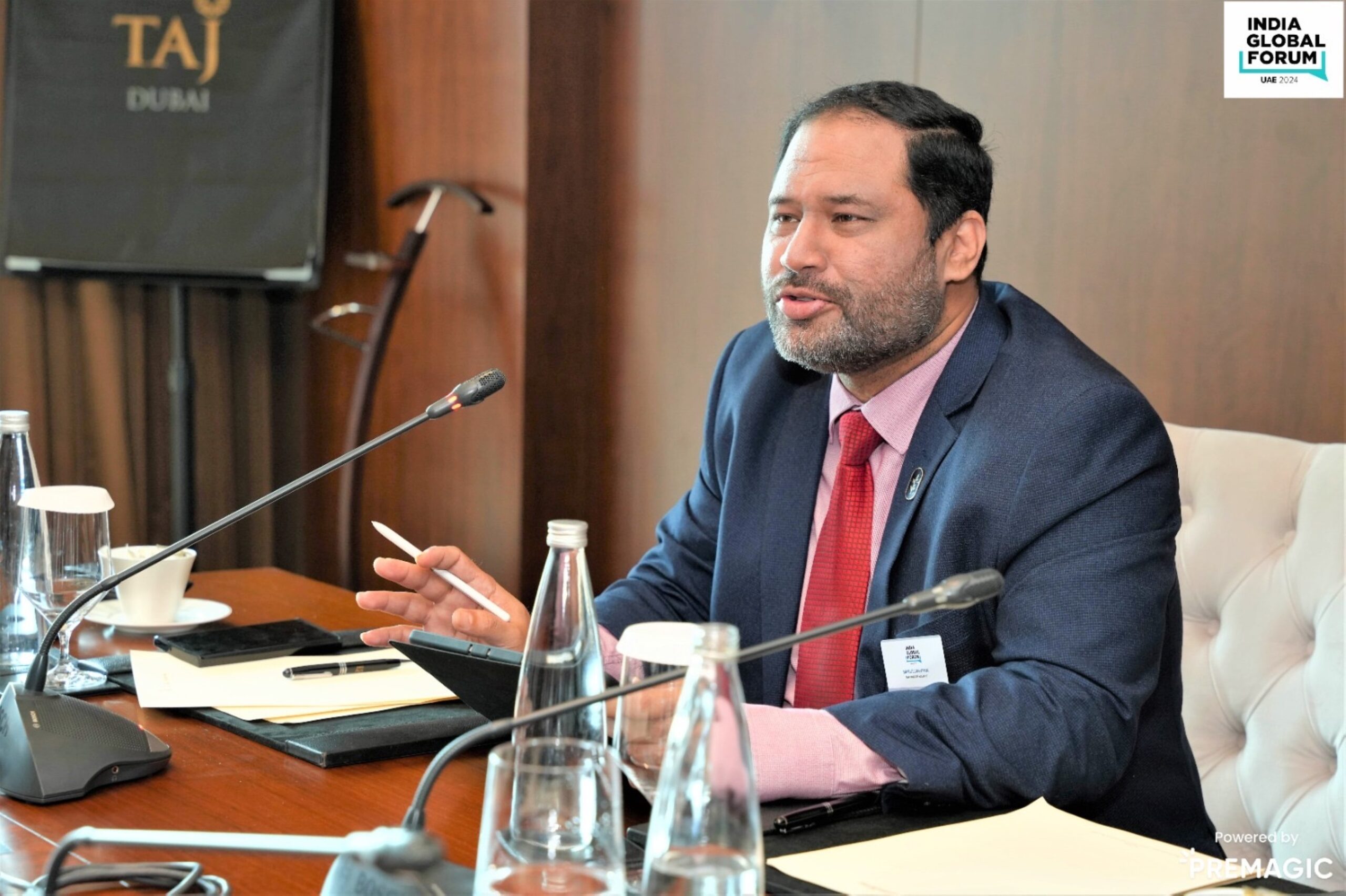
Dr. Samiullah Khan

Sustainability is no longer a choice—it’s a way of life. This is an exciting field to explore. With AI, blockchain, IOT and other advanced technologies, we have the tools to build a truly sustainable future, stated by Dr. Samiullah Khan, one of the most influential voices in the UAE’s sustainability movement and Chief Sustainability Officer at Fakhruddin Holdings Dubai. Talking to Gulf Today, he said, “As the world intensifies efforts to combat climate change, sustainability has become more than just a buzzword – it’s a global imperative.”

Dr Khan also known as Dr Sam is a key figure in sustainability summits and discussions, often the first to evaluate innovative sustainability solutions that promise a greener future. For many, sustainability is a practice. For him, it’s second nature – ingrained since childhood in Chennai, India. “Wasting even a grain of rice was unacceptable in our home. Extra food was either shared with those in need or fed to cows, whose dung was used as manure in our garden,” he recalled.

These early lessons shaped his understanding of sustainability and the circular economy. His passion for technology and the environment led him to prestigious institutions such as Anna University, Cambridge University, MIT, Delft and Harvard.

His career began with Tata Motors, where he became among the youngest engineer to lead international operations into Bangladesh and Saudi Arabia and growing Tata’s market share to an impressive 96 per cent in the school bus sector.

After an illustrious 17 years with Tata and five years at SRM University, Sam found his true calling in 2015 as CEO of World Islands, He introduced air-to-water technology, harnessing humidity in the deserts of Dubai to generate clean drinking water, using Solar power – an innovation that gained significant traction in the desert landscape.

Recognised among the 100 Iconic Indians by the Indian Embassy in the UAE, Dr Sam soon became a leading advocate for sustainability, collaborating with individuals, private sector and government, notably with Marwan Bin Jassim Al Sarkal and playing a pivotal role in the “Dubai Can” initiative under the vision of Crown Prince of Dubai Sheikh Hamdan Bin Mohammed Bin Rashid Al Maktoum in initiatives to eliminate plastic bottles in Dubai.

As a Championing Green Innovation post COVID, Dr Khan focused on air quality, energy conservation, water purity, food security, waste management and circular economy.

Under his leadership, Smart Air Handling Units (S.A.H.U.) are being introduced to improve indoor air quality and reduce energy consumption by up to 40% compared to traditional HVAC systems.

The other initiatives included a centralised, organic mineral-enriched hydrogenated, Ionised, Alkaline drinking water system is being developed for healthier hydration as well as a radiant-cooled greenhouse café with hydroponics is being explored to boost UAE’s food security and comprehensive waste management and recycling systems, including composting, are being implemented.

source: http://www.gulftoday.ae / Gulf Today / Home> News / by Jamil Khan, Senior Reporter / June 17th, 2025

Adiba Anam becomes Maharashtra’s first Muslim woman IAS officer, daughter of an auto-rickshaw driver

Yavatmal Town, MAHARASHTRA :

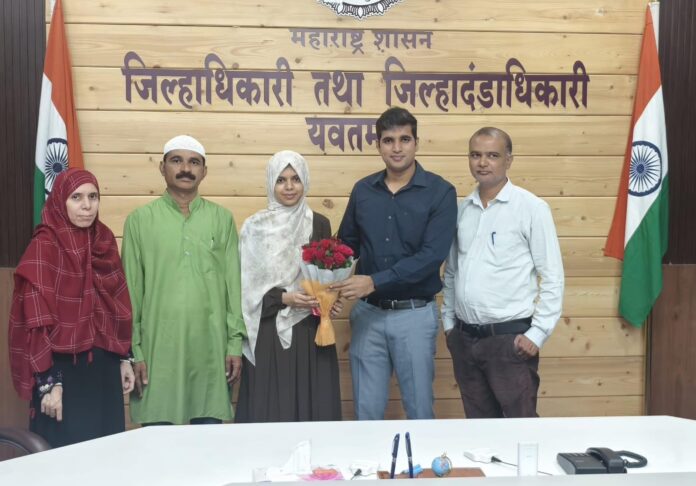
Adiba Aman in the centre.

New Delhi :

 The Union Public Service Commission (UPSC) declared the results of the 2024 Civil Services Examination on April 22, with 1009 candidates clearing one of India’s most competitive exams. Among them, Adiba Anam has made history by becoming the first Muslim woman from Maharashtra to be selected for the Indian Administrative Service (IAS).

Hailing from Kalam Chowk in Yavatmal, a small town in eastern Maharashtra, Anam secured an all-India rank of 142. Her achievement has been widely hailed as a breakthrough for both women and minorities in the state. Her father, Ashfaq Ahmed, earns a living by driving an auto-rickshaw.

Raised in modest circumstances, Anam completed her schooling in Urdu medium from a local Zilla Parishad school. Despite limited resources, she consistently excelled academically—scoring 94% in her Urdu board exams and 92% in 12th grade with a science stream.

Speaking to India Tomorrow, Anam recounted her journey through UPSC. Her first attempt in 2021 ended at the preliminary stage. Undeterred, she progressed to the mains in her second attempt, and finally, in her fourth attempt, clinched success with a rank likely to earn her an IAS cadre.

“My parents never asked me to give up on my education. There were people who suggested I take up a small job to ease our financial burden, but my parents never let those voices affect me,” she said.

Anam noted the social barriers women often face in her community. “Yes, girls do face restrictions. But these challenges only overpower us if we allow ourselves to feel weak. Once we build our mental strength, those obstacles lose their power,” she said. Her message to young women: “Stay mentally strong. Chase your dreams with courage and determination.”

Initially aspiring to become a doctor, Anam couldn’t clear the NEET exam. It was then that her uncle, Nizamuddin Sheikh—a local NGO secretary in Yavatmal—encouraged her to consider civil services as a way to serve the public.

Adiba Anam draws inspiration from the poetry of Allama Iqbal. Two couplets, in particular, fuel her determination:

“Khudi ko kar buland itna ke har taqdeer se pehle, Khuda bande se khud pooche, bata teri raza kya hai, ” meaning, “Elevate your selfhood to such heights that even destiny, before shaping your fate, is compelled to ask you: ‘Tell me, what is it that you desire?’”

This powerful verse emphasizes self-empowerment, urging individuals to strengthen their character and willpower to such an extent that even fate bows before their determination.

“Amal se zindagi banti hai jannat bhi jahannam bhi, Yeh khaaki apni fitrat mein na noori hai na naari hai.” This translates in English as “Through actions, life can become either a paradise or a hell. This being (the human) made of dust is by nature neither angelic nor demonic.”

The couplet underscores the idea that our actions determine the quality and direction of our lives. Human beings are not inherently good (like angels) or evil (like demons); it is their actions (amal) that shape their destiny and define their identity.

Explaining the two couplets, she said, “These lines remind me of the power of action. If you just sit still, nothing will change. But if you act, if you try to change your situation, something will definitely happen,” she said.

Anam’s journey—from a small-town Urdu-medium student to a future IAS officer—stands as a powerful story of resilience, ambition, and the transformative potential of education.

Here is the list of 26 Muslim candidates who cleared the UPSC Civil Services Examination this year, with their ranks written in front of their names.

•             Iram Chaudhary – Rank 40

•             Farkhanda Quraishi – Rank 67

•             Mohammad Muneeb Bhatt – Rank 131

•             Adiba Anam Ashfaq Ahmed – Rank 142

•             Wasim ur Rehman – Rank 281

•             Md. Nayab Anjum – Rank 292

•             Mohammad Haris Mir – Rank 314

•             Mohammad Shaukat Azeem – Rank 345

•             Alifa Khan – Rank 417

•             Nadia Abdul Rashid – Rank 429

•             Najma Salam – Rank 442

•             Shakeel Ahmed – Rank 506

•             Shah Mohammad Imran Mohammad Irfan – Rank 553

•             Mohammad Aftab Alam – Rank 560

•             Mohsina Bano – Rank 585

•             Syed Mohammad Arif Moin – Rank 594

•             Ghulam Haider – Rank 633

•             Hasan Khan – Rank 643

•             Ghanchi Gajala Mohammad Hanif – Rank 660

•             Mohammad Salah T.A. – Rank 711

•             Sadaf Malik – Rank 742

•             Yasir Ahmed Bhatti – Rank 768

•             Javed Mev – Rank 815

•             Nazeer Ahmed Bijran – Rank 847

•             Arshad Aziz Quresh – Rank 993

•             Iqbal Ahmed – Rank 998

source: http://www.indiatomorrow.net / India Tomorrow / Home> Education / by Mohammad Akram / April 2025

Kashmir’s Saffron queen Noushaba Jeelani evived business by involving women

Pampore, JAMMU & KASHMIR :

Noushaba Jeelani

Pampore (Jammu and Kashmir) :

Noushaba Jeelani, popularly known as the ‘Saffron Queen of Kashmir’, has turned a traditional crop into a global sensation, with an aim of women’s empowerment. Her saffron brand ‘Noush’ exports saffron in Europe and the Middle East.

Jeelani involved hundreds of local women in saffron harvesting, packaging, and quality control, turning saffron cultivation into a sustainable livelihood. Her startup has collaborated with global e-commerce platforms and luxury wellness brands, putting Kashmir’s saffron back on the worldwide map.

Speaking to ANI, Noushaba Jeelani said, “We shifted to Saudi Arabia for five years. Seeing a decline in the saffron business, we thought to come back and give a new identity to an already running business. We did a survey and found that people did not know about adulteration.”

She said that the firm has a network of 600 farmers, and growing and sowing are done by women, as the initiative aimed at empowering them.

Discussing the challenges they faced initially, she said the lack of education among people, as they could not differentiate between Kashmiri and foreign saffron.

“We have our in-house production and processing, so quality control is in our hands, so we make sure we give unadulterated saffron. In the survey, the farmers said their monetary return isn’t included in the business. We wanted to show the process to the farmers so they get a return on their money,” she said.

She said, “We want the women who grow and process saffron to feel empowered and build a community. Basic vision is to grow more saffron, we want to take it forward and want more women to join.”

Giving a message to young girls, Jeelani said, “Today, girls are brave and focused. I would say, do what you want and take the first step. You will evolve as you enter the process… Be fearless.”

Her husband, Afan Basu, told ANI, “We took the initiative to support my wife. In families, women control the work of saffron. In parallel to our B2B business, we wanted to have a women-led, women-empowered business. In Kashmir’s culture, women don’t open up to men, so we wanted to build a society of empowered women and transparency from top to bottom.”

Basu is an alumni of the BITS Pilani and he identifies himself as “chief farmer with an experience of six decades.”

On building a Kashmir brand, Basu said, “In India, there are a lot of brands which sell foreign saffron. Here we have the GI tag also, but if you go out of Kashmir and ask for saffron, they will name brands which do not belong to Kashmir… This is our identity, like apples and walnuts.”

source: http://www.awazthevoice.in / Awaz, The Voice / Home> Stories / by ANI / June 14th, 2025

A worthy example of communal harmony

Rasipuram Town (Namakkal District) , TAMIL NADU :

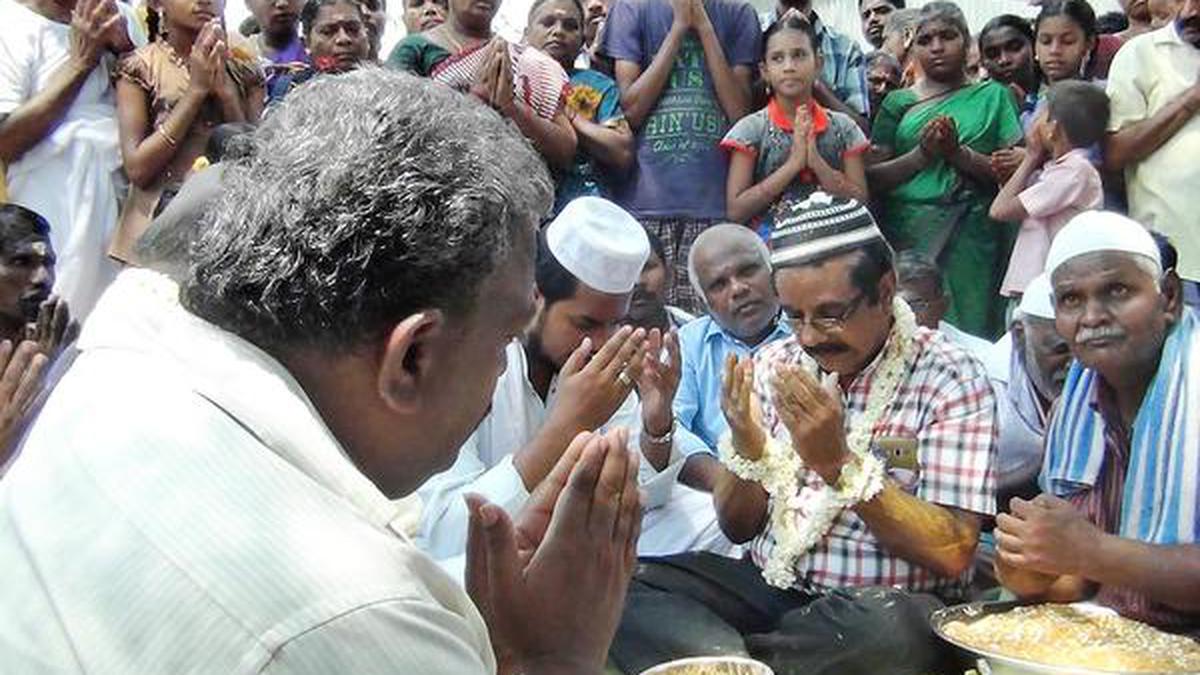
Joint celebration: Hindus and Muslims at the valediction of the Panguni Uthiram festival in Namakkal.

By honouring members of the Muslim community at the annual Panguni Uthiram festival on Wednesday, the Hindus in Gurusamipuram, a small village near Rasipuram, have set a worthy example of communal harmony.

It is a thanksgiving gesture to the Muslims of Rasipuram town, whose forefathers were believed to have cured through prayers many children of the Hindu community of cholera.

This practice has been in vogue for over a century now, the village elders say.

The Panguni Uthiram is a major festival of Arulmigu Sivasubramaniar Temple and is celebrated with usual gaiety every year. It is at the valediction of this festival the Hindus honour the Muslims.

According to K. Thalamuthu, a former school headmaster and president of the Sengunthar Nala Kalvi Arakkattalai, and Devarajan, its treasurer, many children of the weaver community in Gurusamipuram were affected during a cholera outbreak in the village.

On learning about this, the Muslims of Raispuram who used to visit the village for business transactions, offered special prayers by tying a white holy flag to a tree. They smeared sandalwood paste on the doors and walls of each and every house in the village. Following this, all the children were believed to have recovered.

Since then, the residents of the village make it a point to honour the Muslims of Rasipuram at the annual Panguni Uthiram festival.

The organising committee of the festival visited Rasipuram and extended invitation to members of the Muslim community belonging to Achukatti Street Mosque Jamath.

The Jamath members, accepting the invitation, visited the village on Wednesday with fruits and sweets . The Hindus and Muslims holding the holy white flag went through all the streets in the village, when the Muslims smeared sandalwood paste on the doors of all the houses. After tying the flag to the tree, which is popularly known as ‘jhanda’ (flag) tree, they assembled at the Paavadi ground.

The Hindus honoured the visiting Muslims with garlands and vice-versa. Special ‘fathiha’ was recited by the Muslim religious scholar for communal harmony , followed by the distribution of a mixture of jaggery and roasted gram by the visitors.

Later the Muslims took leave.

“This is a worthy gesture practised by our forefathers and we are continuing this tradition in the interest of strengthening the bond between both the communities for decades together,” says Mr. Thalamuthu.

source: http://www.thehindu.com / The Hindu / Home> Today’s Paper> National> Tamil Nadu / by Syed Muthahar Saqaf / April 15th, 2017

Focus on communal harmony

Salem, TAMIL NADU :

The Margazhi Peruvizha Committee functioning in the city has set a worthy example for communal harmony for other associations to emulate by inviting scholars of other faiths to address the Margazhi and Navarathri festival programmes.

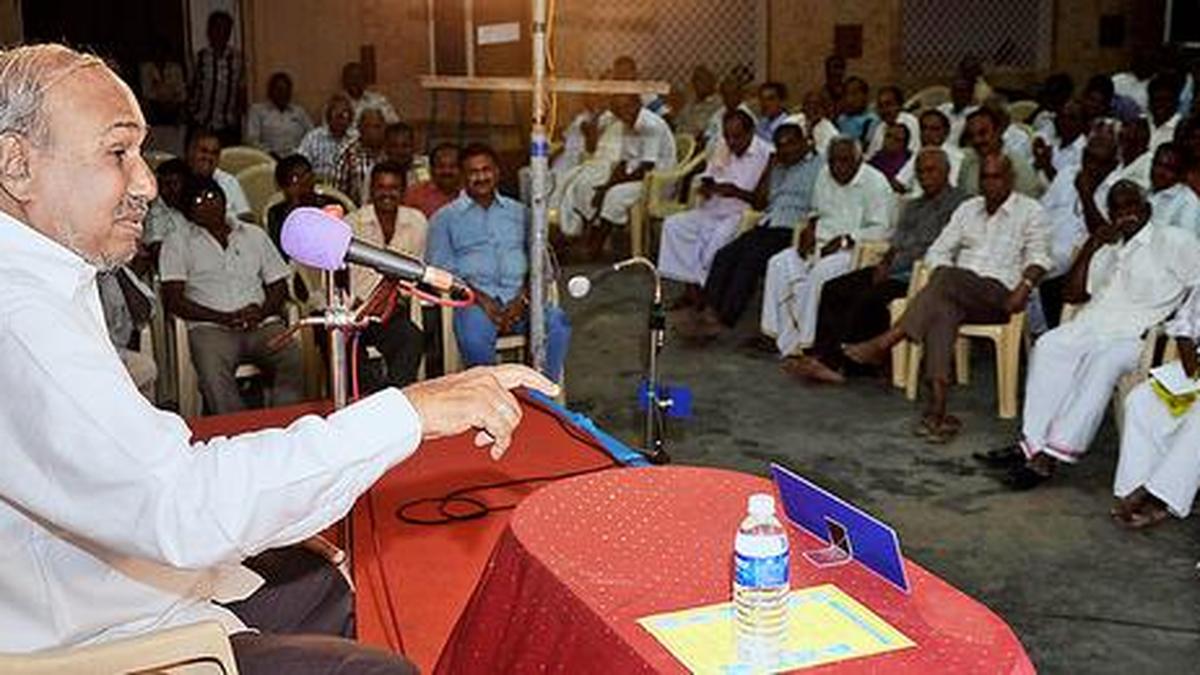
T.M. Abdul Khader, an eminent Tamil scholar and former Head of the Department of Tamil, Islamia College, Vaniyambadi, is a regular at the Margazhi and Navarathri festival programmes here for the past 15 years at a stretch, along with the scholars of other faiths.

The Margazhi Peruvizha Committee has been organising special discourses, lecture programmes and poets’ symposium etc for the past 33 years without any break during the Margazhi and Navarathri festivals.

The committee members have been ardent followers of Vallalar, a famous Tamil saint and one of the greatest poets, who endeavoured to eliminate caste and promote a society sans religious and caste considerations.

The committee has been organising programmes to create awareness on the religious practices which had negative impact on the entire society. It invited scholars of all religious faiths from across the country and also from Sri Lanka to address its members.

According to A.K. Palaniappan, president of the Margazhi Peruvizha Committee, the Navarathri festival is celebrated for 10 days and the Margazhi festival for about a month every year.

The committee has made it a point to invite like-minded scholars from all faiths to participate in their programmes. “Kavikko” Abdul Rahman and Periyar Dasan, who later converted to Islam, have addressed the Margazhi gatherings in the past.

Mr. Palaniappan said that Prof. Khader has been attending the Margazhi and Naravathri programmes for the past 15 years. His lectures always evoked good response and the jam-packed hall on Saturday when he spoke on the topic ‘Bothimarathu Kilaiyil Poonthamizh’ (Tamil on the branch of Bothi tree) was an ample proof of his popularity with the local audience, he said.

Prof. Khader also presided over the poets’ symposium on the topic ‘Kodugalal or Kolam’ on Sunday evening.

Mr. Palaniappan said Jegath Gaspar Raj, a Chennai-based Catholic priest and founder of the “Tamil Maiyam”, will be addressing the gathering on January 5.

Politicians including Vaiko and Nanjil Sampath have also addressed these festivals.

Another highlight of both the festivals organised by the committee is the equal importance given to women. Many women scholars are regular in delivering special addresses at these meetings.

Uma Devarajan of Salem, N. Vijayasundari of Tiruchi, Devi Gunasekaran of Salem, Desa Mangaiyarkarasi of Chennai, and M. Uma Maheswari of Coimbatore are among the list of speakers for this year’s meetings.

source: http://www.thehindu.com / The Hindu / Home> Today’s Paper / by Syed Muthahar Saqaf / January 02nd, 2017

Standing tall with the new minaret

Salem, TAMIL NADU :

The latest addition at the historic Jamia Masjid, Salem, is the nine-tier tower

The historic Jamia Masjid on the southern banks of River Tirumanithar in the heart of Salem city has got a 135 ft. tall ‘minaret.’ This is said to be one of the tallest minarets to be constructed in a mosque in South India in the recent past.

The minaret is a significant feature of mosques across the world, and is one of the earliest characteristics of Islamic architecture. The ‘muezzin,’ a person who announces the call of prayer, usually delivers the ‘azaan’ from the minarets.

Jamia Masjid in any town or city is considered as the chief mosque. They are known as congregational mosques, as Muslims gather in large numbers to offer prayers on Fridays and during Ramzan, Bakrid and other festivals.

Rich past

Jamia Masjid in Salem city, standing on about 1.5 acres of land, has a rich past. It is one of the oldest mosques in the state and was said to have been built by the Mysore ruler Tipu Sultan (1750 – 1799), popularly known as the Tiger of Mysore, more than two centuries ago. Tipu Sultan, who had visited the Salem region on various occasions, is said to have offered prayers in this mosque. He has also donated inams (properties) for this mosque. The British regime, which understood the importance of this Jamia Masjid, also extended assistance to this mosque and gave ‘inams’.

This Jamia Masjid is built on the lines of the North Indian mosques. The prayer hall of this grand mosque stands on an elevated ground and is decorated with tall, elaborate granite pillars. On Fridays, this masjid gets more worshippers from the town and neighbouring areas of Salem.

According to S.R. Anwar, the Muthawalli of the Jamia Masjid, the minaret has nine small tiers ranging between 10 ft. and 20 ft. The cornice (metal kalasam), atop the minaret was made in Kumbakonam. A silver cone and crescent decorate this metal structure.

Anwar says that this Jamia Masjid plays a stellar role in promoting communal harmony in the entire western belt and has been held in high esteem by everyone.

S. Veerappan, an expert architect from Kamanayakkanpatti, led a team which was in-charge for the construction of this minaret. His name is engraved on the inaugural stone. “It is a great honour that my name is on the tablet stone of the mosque,” says Veerappan. “This highlights the mutual respect and goodwill that the people from different communities have for each other,” he adds.

The new minaret was inaugurated recently by A. Anwar Raajha, MP and Chairman of Tamil Nadu Wakf Board, in the presence of MPs V. Panneer Selvam, P.R. Sundaram and K. Kamaraj.

source: http://www.thehindu.com / The Hindu / Home> Today’s Paper> Features> Friday Review / by Syed Muthahar Saqaf / July 06th, 2018

Tamil scholar Nainar Mohamed passes away

Tiruchirapalli, TAMIL NADU / Texas, U.S.A :

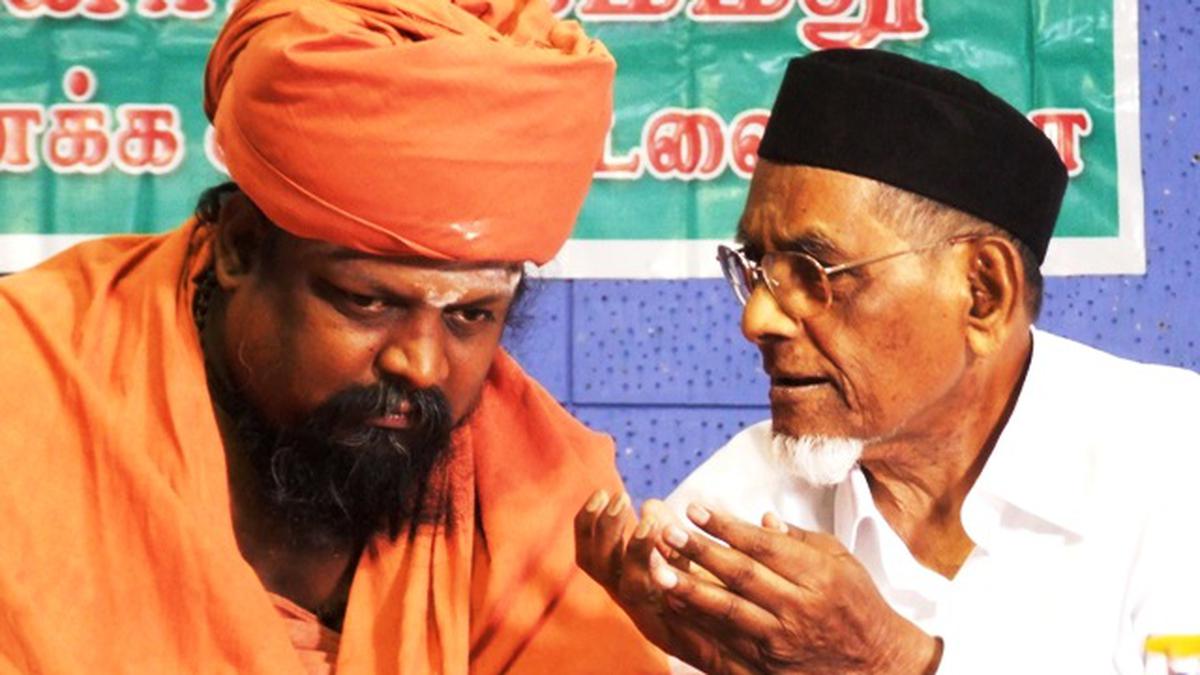
Thavathiru Kundrakudi Ponnambala Adigalar having a word with C. Nainar Mohamed (right). File Photo: R.M. Rajarathinam

Renowned Tamil scholar, writer and former Principal of Jamal Mohamed College, Tiruchi, C. Nainar Mohamed passed away at his daughter’s residence at Texas in USA on Wednesday night. He was 85.

Popularly known as ‘Perum Pulavar’, a title conferred on him by late Kundrakudi Adigalar, Nainar Mohamed served as the Head of the Department of Tamil of Jamal Mohamed College for a record 32 years, and its Principal for four years in the 1980s. After retiring from the college service, he served as professor at Tamil University, Thanjavur for five years.

 He launched the Tamizhaga Pulavar Kuzhu along with late K.A.P. Viswanatham and served as its secretary for 28 years. He also set up the Islamia Ilakkiya Kazhagam. A leading figure in Tiruchi Tamil Sangam, he continued to remain as its deputy Minister till now.

The Madurai Kamaraj University honoured him with ‘Tamil Chemmal’ award and the Ulaga Tirukkural Peravai with ‘Tirukkural Neri Thondral’ and ‘Kural Gnayiru’ awards. Through the Islamia Ilakkiya Kazhagam, he organized five International Tamil Literary conferences, which brought to light the richness of the Islamic Tamil literary works to the world. 

A regular in world Tamil conferences, he has authored many books.

He is survived by wife Hasina Nainar, four sons and a daughter.

source: http://www.thehindu.com / The Hindu / Home> News> Cities> Tiruchirapalli / by Syed Muthahar Saqaf / July 24th, 2025

Nabila Cracks TNPSC Group I Services Exam, Turns Cumbum’s Pride

Cumbum (Theni District), TAMIL NADU :

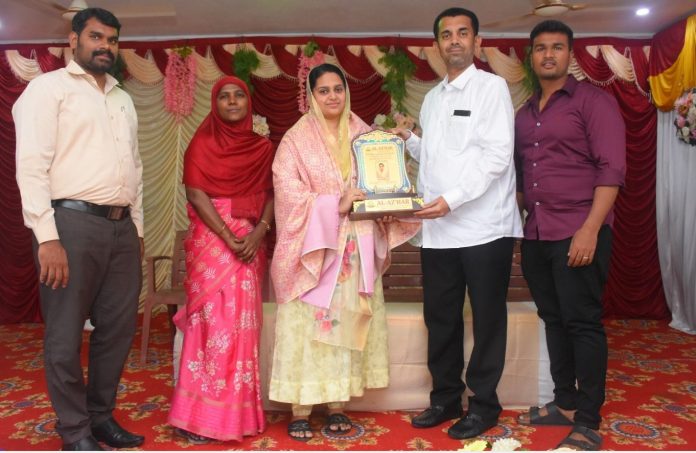
A Nabila, native of Cumbum in Theni district made the town proud in cracking the TNPSC Group I services exam in getting a posting as Assistant Commissioner (Commercial Taxes). Her alma mater Al Azhar Matriculation Higher Secondary School correspondent Nainar Mohamed and principal Ahamed Meeran felicitated for her achievement and presented a memento. Also present is her mom and husband Mohamed Afzal.

“Consistent effort and simple strategy is the mantra for success,” said 28-year-old A. Nabila, who cracked the TNPSC Group I services exam with 27th rank for the position as Assistant Commissioner (Commercial Taxes).

Hailing from Cumbum, a picturesque town nestled in the backdrops of Western Ghats known for its serene atmosphere, vibrant culture and rich history in Theni district, the enterprising young woman is on cloud nine thereby bringing laurels to her hometown.

To be precise, she brought to the fore that there is no shortcut for victory, be it course or career. In fact, she has proved that more than hard work, smart work will definitely fetch fruitful results. Giving useful tips in a lucid style to government job aspirants through a YouTube channel (Geethasamy Publishers), she made it clear that candidates must make it a point to complete question papers within the timeframe more importantly legibly while ensuring neat presentation.

Great to infer that the promising young woman had earlier cleared Group II services to become the State topper to join the subordinate services in the Tamil Nadu Agri and Farmers Welfare department at the Secretariat. Even while serving, she had a vision to scale new heights as to the inspiring words of American General and Diplomat Colin Powell – There are no secrets to success. It is the result of preparation, hard work and learning from failure. Undoubtedly, she romped home to victory through dedication and determination.

Armed with her BSc (2014-2018 batch) from Madurai Agriculture College and Research Institute (a constituent college under Tamil Nadu Agricultural University), she prepared for the competitive exams soon after her graduation without any second thought with a firm belief to excel in her vision.

Lady luck failed to smile at her in her first attempt in 2019.After getting into wedlock, she took a break only to continue her TNPSC Group II exam in 2022 and emerged successful. She dedicated her success to her parents, in-laws, brother Faizal and more particularly her hubby Mohammed Afzal while not to speak of her director and the faculty at the coaching institute. Her dad, A Ahamed Kabeer, is serving as Sanitary Inspector at Bodinayakanur Municipality.

At an event held yesterday, Cumbum Al Azhar Matriculation Higher Secondary School correspondent Nainar Mohamed and principal Ahamed Meeran felicitated Nabila for her achievement and presented a memento. Later, she addressed the students narrating the road she had travelled to be what she is now and urged them to have an ambition in life to reach dizzy heights in their chosen line of interest.

It is learnt that Nabila had her schooling from LKG to 8th at Cumbum Al Azhar Matriculation Higher Secondary School and continued her 9th and 10th at Theni MelaPettai Hindu Nadar Uravinmurai Saraswathy school and completed her Plus One and Plus Two at Tiruchengode Vidyaa Vikas school.

Quite encouraging to witness many female candidates from the rural background cracking UPSC civil services and TNPSC exams.

[The author is former Indian Express and Deccan Chronicle chief]

source: http://www.radiancenews.com / Radiance News / Home> Muslims World> Asia / by M Rafi Ahmed / June 20th, 2025