Category Archives: Amazing Feats

Remembered in files, erased in life: Jharkhand’s forgotten martyrs of 1857

JHARKHAND :

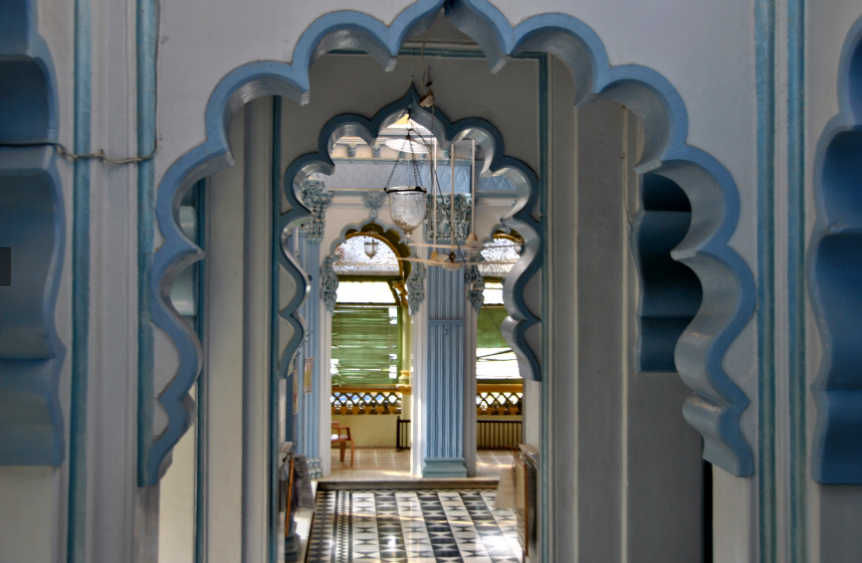
The Banyan tree on which the execution took place. Photo: Ghulam Ahmad Raza

During the 1857 revolt against British rule, Jharkhand too witnessed armed resistance. The rebellion had spread across regions including Ranchi, Hazaribagh, Ramgarh, Palamu and Singhbhum. In the dense forested border areas of Ranchi and Hazaribagh, the rebel forces were led by Shaheed Sheikh Bhikhari Ansari and Tikait Umrao Singh. From the dense jungles of the Chuttu Palu valley, their army fought British troops and prevented Ranchi from falling under colonial control. Both leaders were captured by the British forces on January 6, 1858 and were publicly executed by hanging on January 8, 1858, in the same Chuttu Palu valley.

The banyan tree on which they were hanged still stands today. The Jharkhand government has developed the surrounding area as a martyr memorial with the stated aim of preserving history and keeping alive the legacy of the region’s sites of resistance. Yet even today, many residents of the Chuttu Palu village where the memorial stands remain unaware of who these martyrs were.

Fifty-eight-year-old Nirmal Kumar, who works as a stone breaker near the memorial, often rests inside the premises during breaks. He says he has been coming here since childhood. Despite this, he is unaware of the historical significance of the site and does not recognise the names of Sheikh Bhikhari Ansari or Tikait Umrao Singh.

“I only know that blankets are distributed here every year on January 8,” he said. On the martyrdom anniversary, social workers and officials visit the site to pay tribute and distribute essentials among the poor.

Sanjay Munda, a resident of Chuttu Palu village, said that even today, most villagers do not know about the martyrs or the memorial’s history. “Members of the surrounding Scheduled Tribe (ST)  and Scheduled Caste (SC) communities refer to the site in the local language as Fasiyahi Bar (tree where the hanging took place). Most people do not know about the 1857 revolt or the sacrifice of Sheikh Bhikhari and Tikait Umrao Singh,” he told Maktoob.

Despite the lack of awareness, locals often bow their heads in respect when passing the site.

The memory of these two revolutionaries who laid down their lives fighting British rule is slowly fading. Their history has largely been reduced to government files and digital web pages. On martyrdom days, ministers, officials and locals pay tributes, but beyond symbolic gestures, little is done. While the Jharkhand government has taken some steps to acknowledge them, no substantial initiative has been taken by the central government to formally recognise or honour their contributions.

Dr Muzaffar Hussain, researcher and author of Jharkhand ki Muslim Vibhutiyaan, says Muslim, SC and Adivasi martyrs have not received the recognition they deserve. “Jharkhand has produced many revolutionaries who sacrificed their lives for India’s freedom, but recognition has been limited largely to Birsa Munda only,” he said.

He points out that the 1857 revolt took place nearly 40 years before Birsa Munda’s Ulgulan (revolt). “Names like Nadir Ali, Imam Ali, Jatra Tana Bhagat, Sidhu–Kanhu, Phulo–Jhano, Nilambar–Pitambar, Sohbat Miyan, Chandan Miyan, Jaggu Miyan and Najahat Hussain are a part of Jharkhand’s resistance history during the 1857 revolt, yet they remain largely forgotten.”

Hussain argues that the Jharkhand government must project its revolutionaries on a larger scale for the central government to take meaningful steps. “Even platforms like Google and Wikipedia carry very limited information about them,” he said.

He suggests state-funded research, naming welfare schemes and government buildings after revolutionaries and honouring their descendants are ways to restore their place in public memory.

Ruchi Kujur, an activist working on SC and ST rights and a member of the Jharkhand State Commission for Protection of Child Rights, said every state has its own history, and Jharkhand is rich with stories of courage and resistance. “The list of Adivasi and SC heroes is long,” she said.

“People need to be made aware of their ancestors’ sacrifices. When these revolutionaries are honoured, it inspires the younger generation to work for society and the nation.”

Situated amid a valley rich in natural beauty, the martyr memorial complex (Shaheed Sthal) has been developed with basic amenities. Yet, several factors discourage people from visiting the site, further deepening the lack of public awareness about the martyrs. Surrounded by dense forests and hills, the memorial lies in an isolated location, with no human habitation within a radius of nearly five kilometres. This isolation is a major reason why people hesitate to visit the site, either alone or with their families.

The premise includes resting sheds, benches and toilet facilities. However, due to poor maintenance, thick shrubs have grown across the complex. Lights installed in the area and doors of the toilets have reportedly been stolen. Although the police conduct patrols from time to time, the absence of adequate security continues to deter visitors.

Ghulam Ahmad Raza is a Jharkhand-based freelance journalist with over four years of experienceHe has worked as a City Reporter with Pratah Awaz and as a Sub Editor with Prabhat MantraHis reporting focuses on marginalised communities, forgotten histories and grassroots political narratives.

source: http://www.maktoobmedia.com / Maktoob Media / Home> East India / by Ghulam Ahmad Raza / January 29th, 2026

Mohammed Haris’ journey to Indian skies began from a ticketing office in Kerala

Kozhikode (formerly Calicut) KERALA :

Mohammed Haris T,. Chairman and Owner of alHind Air

New Delhi :

From a small ticketing office in Calicut, Kerala to entering India’s aviation space, T. Mohammed Haris is taking on one of the most competitive markets as his Al Hind Air is all set to enter the Indian aviation sector, building a full-scale airline empire.

AlHindAir and FlyExpress are set to take to the skies, after receiving their No Objection Certificates from the Civil Aviation Ministry.

Al Hind Air is being promoted by Kerala-based Alhind Group, which was established three decades ago in Calicut. The promoter of Al Hind Air is Mohammed Haris T. 

Mohammed Haris is the promoter of Alhind Group of Companies. His experience in the travel and tourism industry is extensive. Haris also holds the position of founder General Secretary of the Indian Hajj Umrah Association. Born in Calicut, he completed his education with a Bachelor’s degree in Arts (BA History and Economics) and a degree in Pharmacology.

AlHind Air

Alhind Group offers a wide array of travel-related services, making it a one-stop shop for all travel needs. Its global footprint has expanded significantly over the years. With offices and partners in several countries, including the UAE, Saudi Arabia, Qatar, Oman, Bangladesh and Kuwait, the company has managed to serve a diverse clientele from different parts of the world.

Part of the Alhind Group of Companies, Alhindair is preparing to make its debut in the aviation industry as a regional commuter airline, with operations scheduled to commence later this year. “The airline will begin its journey with a fleet of ATR 72- 600 model aircraft, initially focusing on providing efficient and reliable domestic air travel,” it said.

Alhind Group was established in 1990 and has emerged as a prominent leader in the travel and tour management industry in Asia.

Over the years, the group has built a strong reputation and has a presence in diverse fields such as transportation, software, Umrah travel, mobile application development, education, etc.

T.Mohammad Haris (Left) and others at an public function

Alhind’s global footprint has expanded significantly over the years. With offices and partners in several countries, including the United Arab Emirates, Saudi Arabia, Qatar, Oman, Bangladesh and Kuwait, the company has managed to serve a diverse clientele from different parts of the world.

This global presence ensures that Alhind is well-equipped to cater to the needs of international travellers, whether for leisure or business purposes. In a rapidly evolving industry, Alhind has shown its adaptability by embracing technology and innovation. 

Its website claims that “In a rapidly evolving industry, Alhind has shown its adaptability by embracing technology and innovation. Alhind has invested in user-friendly websites and mobile apps, allowing customers to book their travel services conveniently. Additionally, they have integrated various online booking tools and platforms to ensure a seamless booking process. This forward-thinking approach has enabled Alhind to stay competitive and relevant in the digital age.”

source: http://www.awazthevoice.in / Awaz, The Voice / Home> Stories / by Aasha Khosa / December 28th, 2025

Meet Lubna Qazi Who Takes Oath as Administrative Law Judge in New Jersey

KUWAIT / Raigarh District (MAHARASHTRA) / New Jersey (U.S.A) :

Kokan’s daughter Lubna Qazi Chaudhry took the oath as Administrative Law Judge in New Jersey with her hand placed on The Holy Quran, pledging to uphold constitutional responsibilities.

Mumbai: 

Lubna Qazi, a lawyer originally from Maharashtra’s Raigad district, has created history by taking oath as an Administrative Law Judge (ALJ) in the US state of New Jersey, becoming the first Muslim woman to be appointed to this position in the state. The appointment is being widely regarded as a significant milestone for minority representation in the American judiciary.

The oath-taking ceremony was held recently, where Associate Justice Rachel Wainer Apter of the New Jersey Supreme Court administered the oath. On the occasion, Lubna Qazi placed her hand on the Holy Quran and pledged to faithfully discharge her constitutional duties.

The position of Administrative Law Judge holds considerable importance within the American judicial system. ALJs preside over cases involving decisions of government agencies, administrative disputes and public grievances, delivering rulings based on established legal principles.

Lubna Qazi’s Life Journey

Lubna Qazi’s life journey spans multiple countries and cultures. She was born in Kuwait, where she spent her early childhood with her parents. In 1990, during a school vacation, she travelled to the United States. However, following the outbreak of the Gulf War, the family decided to settle there permanently.

Lubna later pursued her education in California, completed her graduation from the University of California, and earned her law degree from Western State University College of Law.

After marrying Ahsan Chaudhry in 2005, Lubna moved to New Jersey, where she served in various government legal positions for nearly two decades. Recognising her extensive legal experience and professional competence, the Governor of New Jersey nominated her for the post of Administrative Law Judge in 2025.

Lubna Qazi is also distinguished for her linguistic abilities. In addition to English, she is fluent in Urdu, Hindi and Konkani, and has working knowledge of Arabic. Committed to preserving cultural and linguistic heritage, she is personally teaching Urdu and Arabic to her two children at home.

Family Feels Honoured

Expressing his pride, Lubna’s father Inayatullah Qazi said that the entire family feels honoured by her achievement. He described the appointment not merely as a position, but the result of years of hard work, sacrifice and prayers.

Speaking to the correspondent, Inayatullah Qazi said that his family hails from Tala taluka of Raigad district in the Konkan region. He completed his education up to Class VI at Jamia Millia Islamia School, Delhi, and his high school education at Anjuman Islam, Mumbai.

After obtaining a degree in Mechanical Engineering from Government College of Engineering, Aurangabad, in 1975, he moved to Kuwait for employment, beginning his career with an air-conditioning company. After working there for fifteen years, he migrated to the United States with a single suitcase following Iraq’s invasion of Kuwait after the Gulf War, as his children were already in the US at the time. He later ensured higher education for all four of his children.

Inayatullah Qazi said that the family’s roots are deeply embedded in Islamic tradition and that Urdu is spoken with pride at home. He added that Lubna completed recitation of the Holy Quran at the age of seven.

He further shared that around five to six generations ago, their ancestors were sent to the Konkan region as Qazis (judicial authorities) to administer justice without discrimination based on religion, caste or race. Although the profession discontinued a few generations ago, he expressed happiness that his daughter has now proudly revived the family’s judicial legacy.

Lubna Qazi is also the granddaughter of Dr Rehana Ahmed, a noted educationist and Executive Chairperson of the Girls’ Board of Anjuman Islam, Mumbai. Dr Ahmed expressed joy over Lubna’s achievement, stating that it serves as a shining example for young women across the community and will inspire girls to pursue higher education and professional careers. She is widely recognised for her dedicated efforts toward the promotion of girls’ education, particularly within the Muslim community.

Meanwhile, several social and legal organisations, including the Asian Pacific American Lawyers Association of New Jersey, have congratulated Lubna Qazi on her appointment. Observers believe that this development marks a significant step forward in strengthening Muslim and minority representation within the American judicial system.

source: http://www.ummid.com / Ummid.com / Home> United States / by Mohiyuddin Altamash / January 30th, 2026

IIT Bombay’s Prof Juzer Vasi Receives Padma Shri for Lifetime Work in Engineering

Mumbai, MAHARASHTRA :

Mumbai:

IIT Bombay has marked a proud moment with the conferment of the Padma Shri on Prof Juzer M. Vasi, former Deputy Director and senior academic of the institute. The national honour recognises his lifelong contribution to science and engineering, with a strong focus on semiconductors, microelectronics, and solar energy research.

Prof Vasi has served Indian academia for over four decades. He remains associated with IIT Bombay as Professor Emeritus in the Department of Electrical Engineering. His work spans nanoelectronics, solar photovoltaic deployment in India, global solar PV systems, nanocrystal-based solar cells, and the reliability of solar modules. These areas hold strong relevance for sustainable development and energy access.

An alumnus of IIT Bombay, Prof Vasi completed his B.Tech in 1969. He earned his Ph.D. in Electrical Engineering from The Johns Hopkins University in 1973. His academic journey reflects deep commitment to knowledge and public service, values strongly rooted in the Islamic tradition of ilm and community benefit.

Prof Vasi joined IIT Bombay as an Assistant Professor in 1981. He rose through the ranks to serve as Professor, Head of the Electrical Engineering Department, and later as Deputy Director from 2006 to 2009. He also taught at IIT Delhi and served as Visiting Assistant Professor at Johns Hopkins University.

Students and colleagues regard him as a dedicated teacher and institution builder. His leadership strengthened academic standards and research culture at IIT Bombay.

The Padma Shri recognises sustained excellence and service to the nation. For the Muslim community, Prof Vasi’s achievement stands as a reminder of the impact of scholarship, discipline, and ethical pursuit of knowledge in public life.

source: http://www.radiancenews.com / Radiance News / Home> Latest News > Report / by Radiance News Bureau / January 27th, 2026

Havaldar Jhantu Ali Shaikh Honoured With Sena Medal for Supreme Sacrific

WEST BENGAL :

New Delhi:

The Indian Army has posthumously awarded the Sena Medal to Havaldar Jhantu Ali Shaikh of the elite 6 Para Special Forces, recognising his exceptional courage and sacrifice during a counter terrorism operation in Jammu and Kashmir. The gallantry award was announced on the occasion of Republic Day 2026.

Havaldar Shaikh, a resident of West Bengal, laid down his life during a fierce encounter with terrorists in the Udhampur district on April 24, 2025. He served with the 6 Para Special Forces, one of the Army’s most demanding combat units. During the operation, he faced heavy fire and suffered grave injuries. He continued the mission despite his condition and ensured pressure on the terrorists until his final moments.

Army officials said his conduct reflected discipline, courage, and devotion to duty. His actions helped protect fellow soldiers and upheld the operational objective. The Sena Medal recognises acts of bravery and exceptional service. His name features among 70 gallantry award recipients announced this year, highlighting the continued sacrifices of armed forces personnel.

The White Knight Corps paid tribute to Havaldar Shaikh and acknowledged his role in counter insurgency efforts in the region. Fellow soldiers described him as committed and fearless, with a strong sense of responsibility toward his unit and the nation.

Havaldar Jhantu Ali Shaikh’s sacrifice holds deep meaning for the country. His story reflects service guided by faith, duty, and courage. His legacy stands as a reminder of the price paid by soldiers who protect national security and civilian lives, even at the cost of their own.

source: http://www.radiancenews.com / Radiance News / Home> Latest News> Report / by Radiance News Bureau / January 27th, 2026

Beyond Faith and Flames: The Nampally Heroes Who Defined Humanity

Hyderabad, TELANGANA :

​Hyderabad:

In a world increasingly fragmented by invisible walls and bitter divides, two young men from Nampally recently proved that the pulse of humanity beats stronger than the fear of death. Mohammad Imtiaz and Habib didn’t just save lives; they offered the world a profound lesson written in soot and sacrifice: “Humanity is the greatest religion of all.”

The Dance of Death

​The day began like any other, but it quickly turned into a nightmare as a ferocious fire broke out in the narrow lanes of Nampally. As the sky turned black with smoke and the screams of trapped children pierced the air, a crowd gathered. Many watched in horror, paralysed by the spectacle of the “dance of death.”

​But Imtiaz and Habib did not hesitate. They didn’t stop to ask the names of the children or the faith of their parents. To them, they weren’t “someone else’s children”; they were simply young lives on the verge of being extinguished.

​A Sacrifice for the “Tender Buds”

​Driven by a singular, frantic urge to protect the innocent, the duo plunged into the inferno. Witnesses describe a scene of pure heroism: two shadows moving through the orange glow, determined to pluck “tender buds” from the jaws of a fiery end.

​They succeeded in their mission – the children were brought to safety. But in a cruel twist of fate, the fire that failed to claim the little ones took the lives of their saviours. Imtiaz and Habib breathed their last, leaving behind grieving families and a city in mourning.

The Message in the Blood

These were young men with dreams, parents waiting at home, and a future ahead of them. Yet, in that defining moment, they chose “the other” over themselves. Their sacrifice sends a stinging rebuke to a society often blinded by communal friction. Through their actions, they declared that their faith was one that gives life, not one that takes it.

​As the saying goes, “It is better to light a candle than to curse the darkness.” Imtiaz and Habib became those candles. They burned out, but in doing so, they ignited a flame of empathy in thousands of hearts.

​Our Debt to the Martyrs

​The question now remains: How do we honour such a colossal sacrifice?

​State Recognition: It is imperative that the government supports their families and recognises their bravery with posthumous gallantry awards.

​A Living Tribute: The truest monument we can build for them is not made of marble, but of mindsets. To truly salute Imtiaz and Habib, we must purge the religious prejudice from our hearts and learn to see the human before the creed.

​In the ashes of Nampally, a grim tragedy occurred. But from those same ashes, a story of immortal love has risen – one that Hyderabad, and the nation, must never forget.

source: http://www.radiancenews.com / Radiance News / Home> Features > Focus / by Radiance News Bureau / January 29th, 2026

Padma Shri for Shafi Shauq: National Honour for a Lifetime Devoted to Kashmiri Literature

Kaprin Village (Shopian District), JAMMU & KASHMIR :

Shafi Shauq (Kashmiri poet and academic)

Srinagar :

Eminent Kashmiri scholar, poet, linguist and translator Prof Shafi Shauq has been named among the recipients of the Padma Shri Award 2026, India’s fourth-highest civilian honour, in recognition of his outstanding contribution to education and literature. The award places Shauq at the forefront of this year’s honourees from Jammu and Kashmir and Ladakh, marking a major national acknowledgement of his lifelong work in preserving and enriching the Kashmiri language and its literary heritage.

Born in 1950 in Kaprin village of Shopian district, Shafi Shauq is widely regarded as one of the most authoritative voices in Kashmiri studies. Over a distinguished academic career spanning more than three decades at the University of Kashmir, he authored, edited and translated over 100 books across Kashmiri, Urdu, Hindi and English. His seminal works—including Keeshur Lugaat (Kashmiri Dictionary), Keeshryuk Grammar, and Kaeshir Zaban ti Adibuk Tawaariekh (History of the Kashmiri Language and Literature), are considered foundational texts and remain indispensable to scholars, students and researchers.

The Padma Shri citation recognises not only Shauq’s scholarly output but also his role as a cultural custodian who ensured that Kashmir’s rich Sufi, poetic and intellectual traditions reached both national and international audiences. His celebrated series The Best of Kashmiri Literature, featuring iconic mystic-poets such as Lal Ded and Nund Reshi, played a crucial role in preserving and popularising Kashmir’s spiritual and literary canon beyond linguistic boundaries.

Alongside Prof Shafi Shauq, the Government of India has also announced Brij Lal Bhat (Social Work, Jammu and Kashmir) and Dr Padma Gurmeet (Medicine, Ladakh) as Padma Shri awardees for 2026, recognising exemplary service in their respective fields. However, Shauq’s inclusion has drawn particular attention in literary and academic circles, being seen as a long-overdue national honour for a scholar who devoted his life to safeguarding the linguistic soul of Kashmir.

Social worker Brij Lal Bhat has been conferred the Padma Shri 2026 for his sustained and wide-ranging contributions to social service. Known for his grassroots engagement, Bhat has worked extensively to strengthen spiritual and community institutions through yoga shiksha shivirs, spiritual retreats and Bhandara Seva. He has actively promoted social cohesion and communal harmony by organising inclusive festivals and community programmes, while also contributing to rural development by reclaiming barren land for apple and walnut orchards. His work is widely recognised for combining social service with spiritual outreach and environmental stewardship.

In addition to Shauq and Bhat, Dr Padma Gurmeet of Ladakh has been named a Padma Shri awardee in the field of medicine, underscoring the diverse range of contributions from the region honoured in 2026.

source: http://www.kashmirlife.net / Kashmir Life / Home> Kashmir Latest News / by KL News Network / January 25th, 2026

Assam’s Nuruddin Ahmed Honored with Padma Shri for Artistic Excellence

ASSAM :

Nuruddin Ahmed, Assam’s sculptor and art director (Photo/ANI). Image Credit: ANI

Assamese sculptor Nuruddin Ahmed has been awarded the Padma Shri 2026, recognizing his outstanding contributions to art. Expressing gratitude towards the people of Assam, Ahmed hails the award as a life-changing moment. The Padma awards honor distinguished service in various fields, with 131 recipients, including posthumous recognitions, announced this year.

In a remarkable acknowledgment of his artistic contributions, Assamese sculptor and art director, Nuruddin Ahmed, has been awarded the prestigious Padma Shri for the year 2026 in the field of art. On receiving the honor, Ahmed expressed heartfelt gratitude to the people of Assam, considering the award a defining moment in his career.

Speaking with ANI, Ahmed extended his thanks, attributing his success to the unwavering support from Assam’s residents. ‘This recognition serves as a milestone, propelling me towards greater aspirations in life,’ he remarked.

The esteemed Padma Awards, announced annually on Republic Day, highlight exemplary service in diverse domains. This year, the President of India approved 131 honors, spanning categories like art, public affairs, medicine, and more. The revered Padma Vibhushan, Padma Bhushan, and Padma Shri awards were conferred on both national and posthumous figures, recognizing their invaluable contributions.

(With inputs from agencies.)

source: http://www.devidiscourse.com / Devi Discourse / Home> News> Law & Governance / by Devi Discourse News Network / January 27th, 2026

BJP Leader Objects To Padma Shri Awardee’s Name In Voter List, Then Clarifies. Padma Shri to Dholak Player Mir Hajibhai Kasambhai (aka) ‘Haji Ramakdu’

GUJARAT :

In a move that has sparked widespread outrage across Gujarat, a local BJP corporator has filed an objection to the voter registration of legendary folk artist and Padma Shri awardee, Mir Hajibhai Kasambhai, popularly known as “Haji Ramkadu.”

The controversy erupted just 48 hours after the Central Government announced the prestigious Padma Shri for the artist’s lifelong contribution to the arts. During the ongoing Voter Revision Program (SIR), BJP Corporator Sanjay Jamnadas Manvar submitted a Form 7 application, seeking the removal of the name “Hajibhai Rathod” from the electoral roll in Ward No. 8.

A Question of Identity or “Incorrect Motives”?

The artist, who has played dholak in over 3,000 charity programs for cattle welfare and 1,000 stage shows, expressed deep hurt over the move.

“They tried to remove my name from voter list, I have received award. I am very upset with this. I have lived in Ward No. 8 for over 60 years. Both the State and Central governments have honoured my work. What is lacking in my identity that an objection has been raised against my name?” Haji Ramkadu asked, calling for the government to ensure such incidents do not recur.

Defending his actions, Corporator Sanjay Manvar clarified that his objection was not a personal attack on the legend. “Hajibhai is the pride of the nation. My objection was regarding the surname ‘Rathod’ listed in the rolls, whereas his official name is Mir Hajibhai Kasambhai. To avoid confusion and potential misuse of dual identity cards, I requested a correction,” Manvar stated, adding that the artist is “like family.”

Political Firestorm

The opposition has been quick to seize the moment. A Congress spokesperson slammed the BJP-led administration and the Election Commission, labelling the incident “the height of malpractice.”

“On one hand, the government honours a man with the Padma Shri, and on the other, their own corporator tries to strike his name from the voter list,” the spokesperson said. “If a national icon like Haji Ramkadu is being played with, what must be the plight of the common citizen?”

The Legacy of Haji Ramkadu

Mir Hajibhai Kasambhai is a household name in the world of Bhajan, Santvani, Ghazal, and Qawwali. Known for his unique style of playing the Dholak, he has dedicated his life to spiritual and social causes. The announcement of his Padma Shri on the eve of Republic Day was celebrated as a victory for traditional Gujarati folk art-a celebration now clouded by this local electoral dispute.

As the Election Commission reviews the application, the citizens of Junagadh wait to see if this “clerical correction” will be settled amicably or continue to fuel political tensions.

source: http://www.ndtv.com / NDTV / Home> News> India News / by Saurabh Vaktania (headline edited) / January 28th, 2025

I received my wages for hard work of decades: Ghafruddin on Padma Shri

Alwar, RAJASTHAN :

Gafaruddin Jogi Mewati

My joy is like that of a labourer who goes to work in the morning and receives his wages the same evening,” said Ghafruddin Jogi Mewati, a traditional singer, who has been selected for this year’s Padam Shri award by the government of India.  

Ghaffaruddin, 68, has showcased his art for more than half a century, from the rugged lanes of Mewat to the seven seas. As soon as the announcement of the coveted award poured in, Ghafruddin, a resident of Alwar, was overwhelmed with emotion.

Memories of him wandering barefoot through the villages of Mewat, playing the bhapang (A traditional string instrument) and begging for flour, flashed in his mind. Today, he feels that he has received the wages for all that hard work he did to keep a traditional art form alive.

He feels the Padam Shri is not just an honour for an individual, but for the centuries-old Mewati culture, the legacy of the Jogi community, and the rhythm of the bhapang, which is on the verge of extinction.

The Mewat region, which straddles the borders of Haryana and Rajasthan, possesses a unique identity as a syncretic culture.

Here, the Jogi community, who are Muslims, has, for generations, sung episodes from the Mahabharata and other folk tales.

#WATCH | Folk artist Gafruddin Mewati Jogi, awarded the Padma Shri in the field of art, said the honour marks the culmination of a lifelong struggle.


He recalled learning and preserving the art by travelling with his father, passing it on to others, and continuing the… pic.twitter.com/xiYDWTOqSQ— DD News (@DDNewslive) January 26, 2026

Ghafruddin is one of the strongest exponents of this tradition. He says, “Stay connected to your language, culture, and folk art; that is our true identity.” For him, this honour is a debt he owes to the soil of Mewat, which nurtured him during his days of struggle.

Born in Kaithwara village in the Deeg district of Rajasthan, Ghafruddin’s childhood was no less dramatic than a film script. His father, the late Budh Singh Jogi, was an accomplished artist. At the tender age of four, when children usually play with toys, his father placed a ‘bhapang’ in Ghaffaruddin’s hands.

The Bhapang, which resembles a small drum but has a single string, is considered an evolved form of Lord Shiva’s damru (a small hourglass-shaped drum). Playing it requires an extraordinary coordination of abdominal muscles, fingers, and vocal rhythm.

As a child, he learned by travelling from village to village with his father, sitting in village squares, and listening to folk tales.

They had to beg for grain and flour in villages to support the family. Those were difficult days, but the rhythm of the Bhapang never let him lose hope.

The most significant aspect of Gafruddin Jogi’s art is his rendition of the Mahabharata. Remarkably, a Muslim artist sings the epic of Lord Krishna and the Pandavas with such devotion and purity that the listener is completely captivated. Alwar and the surrounding areas are historically linked to ‘Viratnagar,’ where the Pandavas spent their period of exile.

When Gaffaruddin narrates these folk tales in the Mewati dialect, history comes alive. His art has proven that music and culture know no religious boundaries.

The year1992 marked a major turning point in his life. He travelled abroad and performed for the first time. There has been no looking back since then.

He carried the sound of Bhapang to over 60 countries, including England, Australia, Canada, France, and Dubai. When he played Mewati folk tunes at an event celebrating Queen Elizabeth’s birthday in London, even the foreign audience was captivated by the magical rhythm.

When the call on his mobile came, he initially thought someone was playing a prank on him, but when the news was confirmed, he was emotional. He dedicated the award to the Mewat region and the Jogi community.

#WATCH | Alwar, Rajasthan: On being conferred with the Padma Shri 2026 in the field of art, folk artist Gafruddin Mewati Jogi says, “I am very happy that the struggle of my life has finally yielded results, and I have received this recognition… For seven years, I went from… pic.twitter.com/66UQBRb4W5

— ANI (@ANI) January 25, 2026

Today, the eighth generation of his family is carrying on this art form. His son, Dr Shahrukh Khan Mewati Jogi, has not only learned music but also earned a PhD on the culture of Mewat. While many traditional art forms are fading away, Ghaffaruddin’s family is keeping this flame alive.

Ghafruddin Jogi Mewati wants to open a school for folk arts. He wants the government to provide him with land where he can teach the new generation the art of playing the Bhapang, Mewati folk singing, and their traditional stories.

He says that if the younger generation does not stay connected to its roots, we will lose our identity. He says receiving the Padma Shri is not the destination for him, but the beginning of a journey that he wants to continue until his last breath.

source: http://www.awazthevoice.in / Awaz, The Voice / Home> Stories / by Younus Ali, Alwar / January 28th, 2026