The 23-year-old Ramandeep clocked 3:00.04s and clipped more than 13 minutes from Priyanka Goswami’s earlier national record of 3:13.19s.
Juned Khan of Haryana and Ramandeep Kaur of Punjab. (Photo | Twitter/ ians india)
The 23-year-old Ramandeep clocked 3:00.04s and clipped more than 13 minutes from Priyanka Goswami’s earlier national record of 3:13.19s, set in the World Athletics Race Walking Championships in Muscat last month. Goswami did not take part in the 35km event on Sunday. She had taken part in the 20km event on Saturday but could not finish the race.
Ramdeep’s Punjab team-mate Manju also came inside Goswami’s earlier national mark to take the silver in 3:07.49s.
In the men’s 35km event, 22-year-old Juned pulled away from Ram Baboo and Chandan Singh after the 20km mark to lower the national record by five minutes, clocking 2:40.16s. Eknath Sambhaji Turambekar, who held the earlier national record of 2:45.17s, was among the four who were bunched in the lead till the 20km mark but dropped out after being second with 10km to go.
The 35km race walk event was introduced in India only last year in the wake of World Athletics’ decision to do away with the 50km event after the Tokyo Olympics.
Uttarakhand’s Sachin Bohra edged out Gujarat’s Rohit Kumar Yadav by a mere second to win the men’s U-20 10km crown with a time of 43:12s. Deepika Sharma of Rajasthan won the women’s U-20 10km race with a time of 51:32s
The Results:
Men’s 35km:
1. Juned Khan (Haryana) 2:40.16;
2.Ram Baboo (Uttar Pradesh) 2:41.30;
3. Chandan Singh (Uttarakhand) 2:42.02.
Women’s 35km:
1. Ramandeep Kaur (Punjab) 3:00.04;
2. Manju (Punjab) 3:07.49;
3. Payal (Uttarakhand) 3:15.47.
Men U-20 10km:
1.Sachin Bohra (Uttarakhand) 43:12;
2. Rohit Kumar Yadav (Gujarat) 43:13;
3. Aditya Negi (Uttarakhand) 44:27.
Women’s U-20 10km:
1. Deepika Sharma (Rajasthan) 51:32;
2. Bharti Bhadana (Haryana) 52:23;
3. Indu (Haryana) 52:40.
source: http://www.newindianexpress.com / The New Indian Express / Home> Sports> Others / by PTI / April 18th, 2022
The unit is being run under medical supervision of Dr Shoeb Ali Khan, leading consultant nephrologist and a kidney transplant surgeon.
A patient undergoes dialysis at the unit
Hyderabad :
Probably for the first time in the world, a mosque in Hyderabad has allotted space on its premises for establishing a full-fledged haemodialysis unit. Masjid-e-Mohammadia, located in Langar Houz area now houses a state-of-the-art free dialysis centre that mainly caters to the weaker sections of the society, regardless of caste and creed.
The centre, set up by two NGOs – Helping Hand Foundation and SEED US, has five latest Fresenius brand machines and will acquire five more machines in the next three months. The swanky centre, designed like a corporate hospital, has a separate access for dialysis patients and it is equipped with high quality equipment, clinical care as well as facility to manage onsite emergencies.
The unit is being run under medical supervision of Dr Shoeb Ali Khan, leading consultant nephrologist and a kidney transplant surgeon.A medical doctor, ANMs, dialysis technicians and an ambulance will be available at the centre from 8 am to 8 pm on any given day. “We have invested about Rs 45 lakh for the initial setup of this unit. About Rs 2 lakh per month will be managed by Helping Hand Foundation,” said Mazhar Hussaini of SEED.
To register for free dialysis, one can call Ph: 9603540864.
source: http://www.newindianexpress.com / The New Indian Express / Home> Good News / by Express News Service / July 22nd, 2022
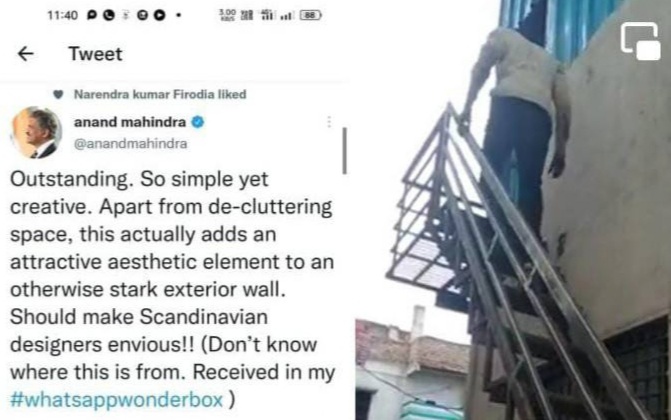
As soon as the construction work began at site, people started complaining about the ladder which was an obstacle for padestrians and
Considering the site conditions sameer decided to make a 14 x 12 size foldable ladder and he within ten days at the cost of only 25 thousand rupees he made the staircase.
Sameer Ishaque Bagban a 31 year old fabricator is originally from Ahmed Nagar city. Interestingly this skilled young man has no relevant qualification, diploma or certification in the field of fabrication, however he managed to complete education till 10 th std.
Sameer is running his firm “Darbar Fabrication” since 5 years.
During conversation with Muslim Mirror Sameer said that our fixed stair case was obstructing padestrians, owner of the firm requested us resolve the issue by doing some Jugad, I took it as a challenge, after four days work and discussion with my partners Eijaz Khan and Asif Pathan we decided to make this staircase foldable.
As we make and design foldable tables and other items, we thought we should try foldable staircase too, and Alhamdulillah we did it. Now it is functioning normally, Sameer added.
Sameer thanked Industrialist Anand Mahindra for his tweet and expressed happiness, he says, I am feeling myself fortune that such high profile person of the country and renowned industrialist has taken note of my work and praised the idea.
He further said after Mahindra sir’s tweet I started receiving calls continuously from friends, relatives and media persons.
source: http://www.muslimmirror.com /Muslim Mirror / Home> Indian Muslim> Positive Story / by Imran Inamdar / July 17th, 2022
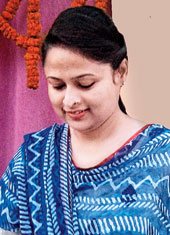
This IAS officer held a career counselling camp at the recent Islampur Book Fair.
This IAS officer held a career counselling camp at the recent Islampur Book Fair.
In the few months following her first posting at Goalpokhar-I in November 2014, Shama Parveen, “BDO Mam” as she is addressed by many, has become a source of inspiration to several, especially young women belonging to the minority community.
She is the first woman IAS officer in North Dinajpur district from the minority community.
Shama, a 2013 batch officer from Kanpur, had wanted to do something for the underprivileged. At Goalpokhar-I, one of the most impoverished areas of North Dinajpur, she began to act on her dreams.
Goalpokhar is largely agriculture-based. There are no industries here and not a single college in the block. People from the minority community comprise roughly 80 per cent of the block’s population.
During her short stint — she is waiting for a transfer order — Shama has, on her own, held career counselling sessions by visiting schools in her area. She told the young girls as well as their parents that if she could make it, these girls could too.
“The main impediment for the girls from my community are members from their own families. It is a popular belief that we cannot do well in higher studies. Whenever I meet the guardians, I tell them their daughters have the capacity to do well in higher studies. Please stand beside them. I tell them, let them shine. I am a woman from a humble background and if I can achieve what I have, so can these girls,” said Shama, who hails from a middle-class family. Her father is a businessman and her mother a homemaker.
Shama said her younger sister is studying civil engineering and her brother is a schoolteacher. She said her father is proud of both his daughters.
“When I started preparing for the civil service exams, I went to a tutorial in Delhi. But I realised that it was not the proper way, it was a kind of cheating. I left the tutorial and began preparing at home. I concentrated on reading media reports and hunting up events and data on the Internet. I had done my masters in history and that remains my favourite subject. I tell young people to read books as they are the cornerstone of success,” Shama added.
Choudhury Abdul Karim, minister for library services and mass education and Islampur MLA, could not praise the young bureaucrat enough. “She is an inspiration for the women of our community,” Karim said.
Rashid Alam, resident of Lodhan in Goalpokhar, said that this year’s Madhyamik exams were being conducted smoothly mainly because of the efforts of the BDO. Examinations have often been conducted here among allegations of cheating and violent reactions.
Shama’s interactions with school students have prepared the way for peaceful examinations. “She has been keeping a watch. My daughter is sitting for her Madhyamik and all arrangements are being overseen by the BDO. We know that she will be promoted and leave the block. But she will remain an inspiration for all of us,” he said. The students of the schools that Shama has visited fondly recall her quiet manners and gentle way of persuading them to carry on their studies.
“Once she came to our school. The manner in which she spoke to us was very impressive. I do not know about the others but I am determined to pursue higher studies. I used to be convinced that higher secondary would be as far as I would be able to study. Almost all girls here do not go to college as the two colleges are far away in Islampur or Dalkhola. But BDO Mam has kindled a tremendous urge in me to study,” said Arjuna Khatun, a resident of Goagaon, a village in the block.
Shama’s formula of success is simple. “If you have nek irada (honest resolve), it can help you achieve anything,” she said.
source: http://www.telegraphindia.com / The Telegraph Online / Home> West Bengal / by Mehdi Hedaytullah / March 09th, 2015
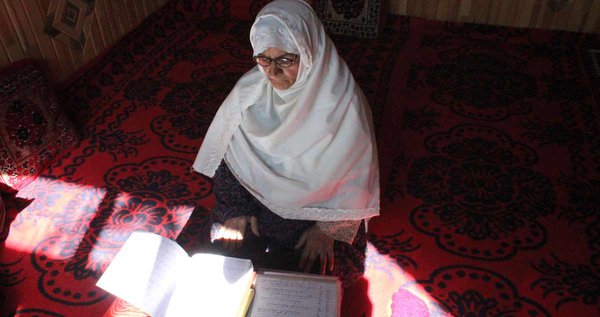
Khatija Begum (75) over the past 40 years has written thousands of poems and has compiled hundreds of books. It was not an easy job for her to do so, being illiterate she could not pen it down by herself. Whenever some verse come to her mind she would call somebody to write it. It was through her dedication to poetry that she was able to compile her couplets into books successfully.
The narrow allies of Zaina Kadal area of Srinagar lead to her house. Every day she looks at the pile of her poetry collection placed on a desk in her room with a deep sigh hoping that her books will be published someday.
“While I was into the journey of my poetic life, It was not easy for me to memorize each verse of my poetry so I asked my son to bring a tape recorder for me”. Heemal (pen name) recalls how she used to wake up at night to offer prayers and on the same prayer mat record the verses that would come up to her mind.
When Khatija took bundles of those recorded cassettes to a writer for transcription he asked for 70 ₹ per page which was a huge amount at that time so she start doing hand embroidery to earn some money. And spend all that money to preserve her poetry.
It took her 7 years to get her first book published through J&K State Cultural Academy by the title “Ser e-Asraar” which means “The secret of Mysticism”.
Khatija says that the journey of her poetic life started when she was 35 years old. At that time she was busy with her ill mother spending all her time with her, praying for her recovery. One day when she brought her mother to visit a doctor she encountered something unusual, some verses came up to her mind but she was not able to apprehend what was happening to her. After returning home she told her niece about it who wrote those verses for her.
She believes that poetry came into her life because of the prayers she got from her ill mother during her ailment. She dedicates her poetry to a Sufi saint whom she was very close to and consider like her father.
“When I took my books to show him, he was overwhelmed and he told me to endure a lot of patience so that I can bear all the hurdles that will come to my path in this journey. Moreover, he told me that what I have achieved is priceless” with teary eyes she said.
When she recites her poetry, everything around gets blurred and one gets lost in those mystic verses. She is a poetess who needs love and support so that she will be always remembered among the great poets of Kashmir.
source: http://www.milligazette.com / The Milli Gazette / Home> Community News / by Urvat Il Wuska / The Milli Gazette Online / April 10th, 2022
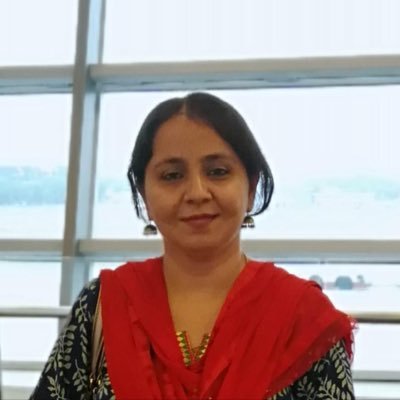
Jamia Millia Islam faculty member, Dr. Shama Parveen, to receive prestigious Sayeeda Begum Women Scientist Prize 2018 to be presented by Hon’ble Vice President of India.
Dr. Shama Parveen, Assistant Professor at the Centre for Interdisciplinary Research in Basic Sciences, Jamia Millia Islamia (JMI) has been selected for the prestigious “Sayeeda Begum Women Scientist Prize 2018”, instituted by Jamia Hamdard (University).
pix: @ Twitter
Dr. Parveen is actively involved in research in the area of Molecular Biology of human viruses and focuses on Dengue, Chikungunya, Zika and respiratory viruses (human metapneumovirus, influenza and respiratory syncytial virus). Her research articles published in journals of international repute are being well cited.
The award is given annually in the memory of Late Mrs. Sayeeda Begum, wife of Late Hakeem Abdul Hameed, founder of Jamia Hamdard. The award aims at recognizing the academic excellence of women scientists working at any minority institution of the country in basic and applied research in the areas of biosciences, biotechnology, biomedical, pharmaceutical and environmental sciences. Scientific contributions of the candidate during last 5 years are evaluated for the award. The award carries a citation and prize money.
The award was announced on 14th September 2018 at the Founder’s Day of the Jamia Hamdard University and it will be presented to Dr. Shama Parveen during the forthcoming Convocation of the University on 23rd October 2018 by the Chief Guest, Hon’ble Vice President of India. (PRO, JMI)
source: http://www.milligazette.com / The Milli Gazette / Home> News> Community News / The Milli Gazette Online (headline edited)/ by PRO, JMI / September 21st, 2018
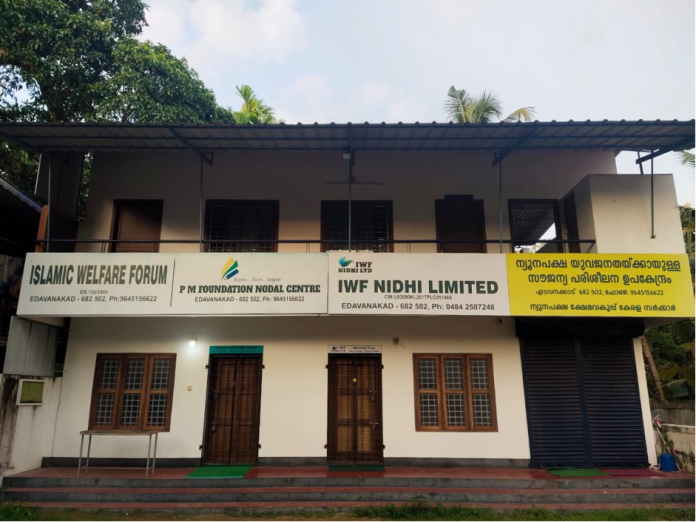
Edavarakad Village (Vypin Island) Ernakulam District, KERALA :
Photo Courtesy: Muhammed Shahabas
Muslims of Edavanakad in Vypin island of Kerala have set a vibrant example of empowerment by building community institutions that provide education, and interest-free loans to local farmers.
Kerala :
Edavanakad is a village in Vypin Island of Ernakulam district in Kerala. Surrounded by the Arabian sea and Vembanadu lake, the main livelihoods of the people here is fishing and agriculture. Muslims, Ezhavas, Arayas, and Latin Christians constitute the major communities of the place. Traditionally engaged in fish trade and agriculture, Muslims have set examples of community empowerment through various institutions.
Empowerment through education Hidayathul Islam primary school was run by one Vadakkeveettil Muhammed Haji, where children are taught modern education and Islamic principles.
Currently, a school and a madrasa are being run from the village. “After their primary education, teenagers had to go to the outskirts of the town to obtain higher education. It was far for them. This became a big concern for the elders in the town, and they decided to do something about it,” said Mahin PM, a local activist.
Irshadul Muslimeen Sabha [IMS] was established in 1850 to administer the madrasa. Later in 1922, Hidayathul Islam Primary School also came under IMS. Thus, the school and madrasa system came under one body and devised a comprehensive syllabus to provide religious and secular education. In 1979 the school got the status of a high school, and by 2000, it became Hidayathul Islam Higher Secondary School [HIHSS].
Mahin, the editor of the school’s jubilee souvenir, believes HIHSS sets the best example in the state for an effective model of success in public education. “Students from different backward communities study here. The school has continuously maintained a 100% success rate in the examinations.” Mahin said.
He said that IMS was active during relief activities after the 2004 tsunami that hit the coastal community. “Muslim traders came forward to open the gates of institutions and competed to help the affected as much as possible. Those were days that reflected the place’s fraternity,” he recalled.
Effective redistribution of wealth Zakat, a form of almsgiving in Islam, is considered obligatory for Muslims. Muslims in Edavanakad used to give the zakat in a dispersed manner. Many didn’t participate in it because of a lack of awareness of its importance. “It was Ali Kunju Mash who changed this situation by establishing an institution to distribute the zakat,” said Mahin.
Kunju, who came to Hidayathul Islam school as its headmaster, wanted to structurize the zakat distribution system. With the help of two other people KM Abdulla and PA Muhammed, he founded Al-lajnathul Islamiyathu Li-baithulmaal [AIL] in 1983.
AIL is the state’s first centralized community wealth redistribution system. “After Ramadan, we open applications to provide support for self-employment using the remaining zakat share. We also offer monthly scholarships to students and a weekly ration for widows,” said a committee member.
Towards a moral economy The people of Edavakannad, primarily farmers and fishers, depended on loans with heavy interest rates from moneylenders. The fluctuations in produce resulted in them falling into a debt trap. Understanding the pressing need to provide an alternative, five youths Abdussamad MK, Mahin PM, Aboobacker, Illyas, Rasheed, and Umar Khayyoom decided to form an interest-free credit society. In 1999, they invited people from the community to a general body meeting and presented their Islamic microfinance scheme.
Abdussamad, one of the founders, narrated how they convinced people to pool one rupee daily. “In this way, Islamic Welfare Fund got formed, and we approved its first loan of 3000 rupees to buy a boat and fishing net,” he said.
“We don’t work like ordinary credit societies. We form our working capital by pooling small amounts from every member. There will be a collective responsibility, and it becomes everyone’s duty to ensure the repayment of loans,” Abdussamad said.
The financing schemes provided by IWF do not promote consumerism in any way. They approve loans to the needy only after conducting a detailed investigation into the case, and one of the members will have to stand as a guarantee.
IWF’s activities have grown into many areas now. “Our headquarters facilitates an entrance coaching centre for applicants from minority communities to public services (PSC), and the nodal centre of the PM Foundation provides necessary information regarding educational scholarships,” one of the board members said.
Basil Islam is an independent journalist and researcher based in South India. He tweets at @baasiie
source: http://www.twocircles.net / TwoCircles.net / Home> Lead Story / by Basil Islam, TwoCircles.net / July 14th, 2022
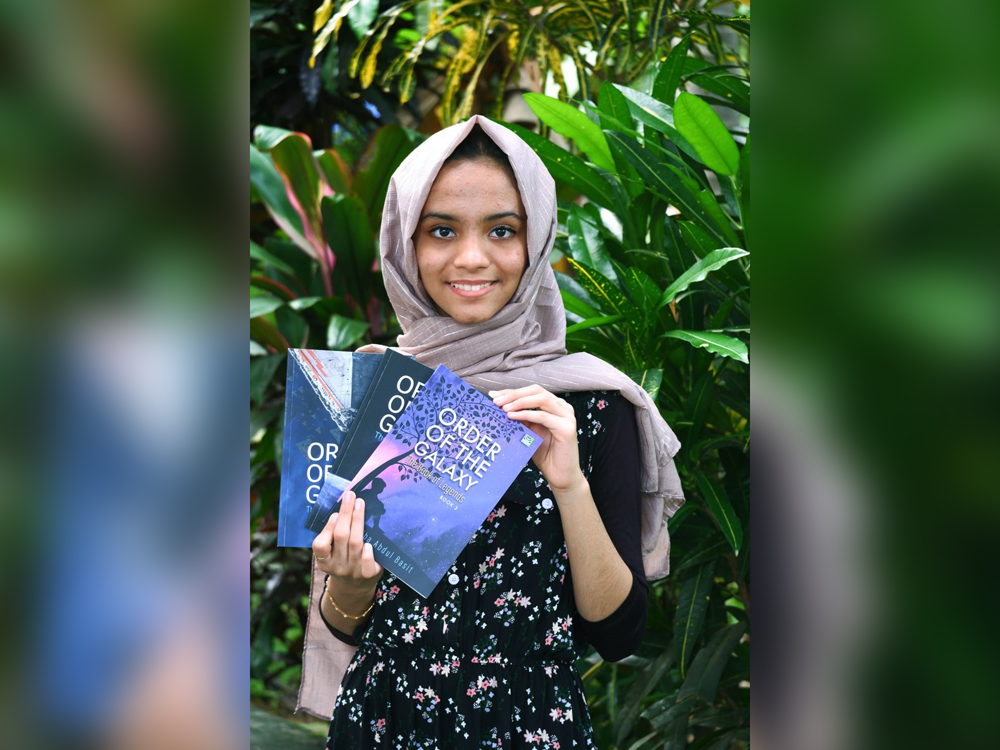
A Qatar-based 11-year-old student Laiba Abdul Basit has won the Guinness World Records as the youngest female person to publish a book series.
Laiba, hailing from the southern Indian state of Kerala, has accomplished this feat after her second book was published on August 29, 2021, while she was 10 years and 164 days old.
Laiba Abdul Basit surpassed the record of Ritaj Hussain Alhazmi of Saudi Arabia, who penned three novels before the age of 12 years 295 days.
Laiba published a three-book series called “Order of the Galaxy”, a fantasy story related to children’s fiction. The first book in this series titled “The War for The Stolen Boy” was published by Amazon and later by Lulu Online. The second book “The Snowflake of Life” was published by the Rome-based Tawasul International, while India-based Lipi Publications brought out the last book in the series, “The Book of Legends”. The second edition of her first and second books was also published by Lipi Publications.
A sixth grade student at the Olive International School, Doha, Laiba has been showing interest in reading and writing since the very young age. She started to write small stories and phrases on pieces of papers and used glue on walls of her house.
An ardent reader of fiction, science, religion, and biographies of prominent personalities, Laiba’s favourite authors include Enid Blyton, J K Rowling, Ann Frank, and Roald Dahl. Laiba inherited her passion for reading from her grandfathers, KM Abdur Raheem and Mohammed Parakkadavu, who were cultural and social activists in GCC. Support from her father Abdul Basit and mother Thasneem Mohammed has encouraged Laiba’s literary skills.
source: http://www.thepeninsulaqatar.com / The Peninsula Qatar /Home> General / July16th, 2022
Yasir Khan, a farmer’s son, is now a personal fitness trainer, transformation expert, and fitness model in Dubai. Since childhood, he struggled with financial constraints and used to sell milk on the streets to make ends meet.
Picture Credit: Yasir Khan
I was born in a family of a farmer and a librarian in Bhopal, Madhya Pradesh. In the first 13 years of my life, I lived in a Madrasas over my father’s instruction because he didn’t have enough money working as a working farmer to give me a quality life at home. When I turned 14, I returned to my home in Bhopal, where the economic conditions were still bad. To make ends meet, I started selling milk on the streets through which I used to earn Rs 40 per day and worked at a bookstall.
My English was not good, and because of this reason, I would take out dictionary books from the bookstall to read and learn. It was the same place I first saw the Men’s Health magazine, which attracted me way too much. Since then, I have always had a dream to feature on the cover of this book because seeing a dream won’t cost a penny. Desperately, I wanted to check my potential, and then I shifted to Mumbai, where I sold tea to manage survival.
‘My Time Came’
A time came when I started working at a gym as a helper. Almost for four years, I worked as a helper and trained myself in my free time. Then I was promoted to the junior trainer post, which eventually motivated me to do much more. A year later, I was promoted to the head trainer post and trained myself enough to participate in any modelling shoot or competition. Around that time, I learned that Men’s Health magazine was looking for gym trainers to feature on its cover. I went to Delhi and auditioned for the cover page. It was a massive success as I was featured in the magazine. I kickstarted my career in fitness and modelling since then with consistent dedication and effort.
After a five-year continued effort, I earned a handsome amount of money and decided to shift to Dubai, UAE. It was a new place with new people around me. I opened a gym and struggled to get people on board. For the same, I used to distribute pamphlets and advertising bills on the corner of roads. After four months, I got my first client, and since then, my business has been unstoppable. I repaid all my parents’ debt and even gifted them a car, bringing immense happiness to their faces. It was a long journey but worth it.
source: http://www.thelogicalindian.com / The Logical Indian / Home / by Writer Ronit Kumar Singh, Madhya Pradesh / July 13th, 2022
Islam came to Tamil Nadu in its earliest days when the Arabs became Muslims. The Keelakarai Jumma Masjid, built in the 7th century, with prominent Tamil architectural characteristics, is one of the oldest mosques in Tamil Nadu. So is the mosque near the Kottai (Fort) Railway station in Tiruchi which is dated 743 AD.
The Arabic inscription of A.H. 116/134 AD at Tiruchirappalli and the inscriptions of the ninth century at Kayalpattanam about endowments given to the mosques by Pandya rulers are conclusive pieces of evidence about the presence of Muslims in Tamil Nadu right from the eighth century.
The early Muslims settled in the coastal towns of Tamil Nadu and functioned as a guild for themselves. They were called ‘Anjuvannam’ meaning assembly or congregation. The name ‘Anjuvannam’ is found in some copper plates and inscriptions of the 12-13th centuries AD that is considered to be the merchant guild of the Muslims. An old mosque in Thenkasi, Thirunelveli District is called ‘Anjuvannam Pallivasal’ that exists even today testify that the name ‘Anjuvannam’ is attributed to the Muslims.
Categories of Muslims in Tamil Nadu
If one has to randomly bracket the Muslims of Tamil Nadu, there can be broadly three categories. First, the Muslims of Arab-Tamil ancestry, second local converts to the Islamic faith, and the third Dakani Muslims who migrated from other parts of India to Tamil Nadu.
Muslims of Arab Ancestry
The Muslims of Arab-Tamil ancestries are the Tamil-speaking people who form a distinct category among the Muslims in Tamil Nadu. The prominent groups among them are the Marakkayars, Labbais, Rowthers, Sonaka Mapillas, Kayalars, and Thulukkar.
Marakkayars- Marakkayars are boat people of Arab descent. They are a maritime trading community since the 7th century. They traded in pearls, rubies, and other precious stones. The majority of the Marakayars currently live in coastal areas like Keelakarai, Kayalpatnam, and Nagore. They claim a higher social and economic status than other Muslim communities. They marry within their community from Keala, Sri Lanka, or their folks in Southeast Asian countries. The 11th president of India A. P. J. Abdul Kalam was born in a Marakkayar family. Educationist B. S. Abdur Rahman, the founder of Crescent College which is now B. S. Abdur Rahman University also belonged to the Marakkayar community.
Labbais – Labbais are also descendent of Arab merchants. They brought with them some Arabs as helpers who used to respond to the calls of their masters with the word ‘Labbaik’ which means “Here I Am”. Hence these Muslims and their offspring came to be known as ‘Labbais’. Their children of Arabs through their Indian wives are also known as ‘Labbais’. The word Labbai is also applicable to the Hindu converts to Islam. The Census Report of 1881 says that “the Labbais are distinct from Marakkayars. They are known as Coromandel Moplas, with a slight admixture of Arab blood and native converts. They are thrifty, industrious and enterprising, plucky mariners and expert traders.” Currently, ‘Labbais’ is considered to be a class name of the Muslims for the purpose of educational and job concessions in Tamil Nadu.
Mapillas-The Malayalam-speaking people of Malabar were known as Sonaka Mapillas in Tamil Nadu.The word Sonaka was also the early name of the Tamil Muslims. The word was used to identify Muslims of Indo-Arab descent and the Arab part of their ancestry was Yemen. The word Sonaka got corrupted as “Yavana” that finds mentioned in the ‘Sangam’ literature of the 2nd century AD.
Rowthers- Rowthers is another group of Tamil – Arab descent whose mother tongue is Tamil. They were mainly connected with the horse trade or were horse trainers or cavalrymen in yore. They were also known as “Guthirai Chettigal” meaning horse traders. Rowthers are a prominent and prosperous Muslim community in Tamil Nadu. They are settled in the Thanjavur, Tiruvarur, and Nagapattinam districts.
Kayalars- Kayalars are another major group of Tamil Muslims of Arab descent. They make up the four major sub-groups of the Tamil Muslim community’s Arab ancestry.
Thulukkar – There is a Muslim group referred to as Thulukkar which means people of Turkish origin. Several works of Tamil literature refer to the Muslims as Thulukkar. This term is commonly used by non-Muslims to address all the Muslims in Tamil Nadu.
All these Muslim groups have linked up with Tamil culture and society through marriage alliances with the locals and most of these groups have their occupations as merchants and traders and are currently business people.
Pasmanda Muslims of Tamil Nadu
The second categories of Muslims are converts from Hindu OBC and Dalit communities. These conversions happened over centuries through peaceful preaching by the Sufi saints who came from the Arab lands. The Islamic preachers went to the underprivileged sections of the caste-ridden Hindu society and converted them to Islam to free them from the bondage of caste slavery. The local converts are at the bottom of the social structure. Though their social status may have improved after the conversion to Islam they remain economically deprived and come under the Pasmanda Muslim community in Tamil Nadu. They are a distinct group in the Tamil Muslim society and are in need of social intervention to climb the economic ladder. These converted Muslims face the problem of reservation in government jobs. While converts to Christianity are considered as ‘Backward Classes’, there are no such provisions for Muslims.
Dakini Muslims of Tamil Nadu
The third category of Muslims in Tamil Nadu is the Dakini Muslim community. Dakini Muslims are a distinct community even though this group is only a small minority in the Muslim society. Their importance derives from the fact that they form the political elite among the Muslim community of Tamil Nadu. Dakini Muslims can speak Tamil/Hindi/Urdu and other regional languages. These categories have numerous groups among them namely, the Syeds, Shaikhs, Pathans, Mughals, or Navayats (a subgroup of Konkani Muslims). Among Dakani Muslims one of the notable groups is the ‘Pathans’ the Muslims of Pashtun ancestry. The term “Pathan” sometimes extends to all Urdu-speaking Muslim migrants from North India. They are settled in fortress centers such as Arni, Chanji, and Jinji and in Arcot. The lesser fort-mart towns like Trichy and Madurai also have Pathan settlements. It is also the catchment area for Tamil Muslims in the Indian Armed forces.
Muslim Weavers of Tamil Nadu
The earliest epigraphic evidence of Muslim weavers of Tamil Nadu is from the 16th century which suggests the active role of Muslims in the weaving industry of this Southern State. ‘Pañchu Kotti’ and ‘Achchu Katti’ are the most important Muslim weaver communities of Tamil Nadu. The Pañchu Kottis are densely populated in the modern Trichirappalli and Thanjavur districts. The Achhcu Katti is densely populated in the areas around Salem, Namakkal, Trichy, and Thanjavur districts. These areas are textile centers of Tamil Nadu and Tamil Muslims have a sizable hold over the textile business.
Tamil Muslims are not a homogeneous community
Tamil Muslims are not a homogeneous community. These three broad categories of Muslims are riddled with a maze of groups and subgroups. During British rule, certain Tamil Muslim groups began to be listed as social classes in the official gazettes. Tamil Muslims are divided into various divisions and their class hierarchy exists that has become a caste-based hierarchical division over a period of time. Even though each group has a professional identity the fact is these professional groups have fossilized into caste-like formation, and crossing over from one to another is ruled out.
Rise of Tamil Muslims of Arab Ancestry
The Tamil-speaking Muslims of Arab-Tamil ancestry are mentioned in the Tamil Sangam literature of the 2nd Century AD. The word “Yavana” in the Sangam literature is not used for Greeks but is for Muslims who have come from Yemen.
The Muslims of Arab ancestry were traders and merchants who inherited their dominant position in South and Southeast Asian trade from the Arabs, who had acquired a virtual monopoly of Indian maritime trade and commerce from the third century. The Tamil-speaking Muslims of Arab-Tamil ancestry dominated maritime trade on the Coromandel coastline till the 15th Century. They were the lord and masters of the Indian Ocean region for close to 15 hundred years.
The Chera, Chola, and Pandya rulers patronized them and donated lands for their places of worship. The native Hindu rulers of Tamil Nadu and Kerala encouraged Arab-Muslim traders to settle down in their lands. The Zamorin or the hereditary monarch of the Kingdom of Kozhikode (Calicut) in Kerala issued an edict to get a sufficient number of Arab Muslims to maintain their ships. He issued a decree that the Arab traders can marry a local woman and bring up one or more male children as a Muslim.
The Arab-Tamil-speaking Muslim traders brought much prosperity to India. A 14th-century Arab writer, Ibn Fadbullah ul-Omari, had written that in India, seas were pearls and trees were perfumes! English records describe the ports on the Tamil Nadu coast as “Moor ports,” Cuddalore is mentioned as ‘Islamabad” and Porto Novo or Parangipettai, as “Mohammad Bandar.”
Thousands of records abroad speak about the maritime activities of the Arab-Tamil Muslims, where they are portrayed as shipbuilders, mariners, sailors, traders, pearl divers, pearl merchants, and salt manufacturers. The whole economy of the eastern coast of Tamil Nadu was in the hands of Arab Tamil Muslims, and it was these people who took Islam and Tamil language from Tamil Nadu to Southeast Asian countries.
Tamil – Arabic link language- Lisan Al-Arwi
Arabs had a problem interacting with Tamil, a Dravidian language as their language Arabic was a Semitic language that had no connection with Tamil. So a link language called ‘Arabu Tamil’ (or Lisan al-Arwi ) was developed in Tamil Nadu. It synthesized the two languages where Tamil was written in an adapted Arabic script. This helped Arabic settlers in Tamil Nadu to learn Tamil through Arabic script. This language helped in writing accounts of their business activities. Arab Muslim traders and the native Tamil converts to Islam came into closer contact as a result of this link language. The Arwi language and literature provided a kind of platform for Islamic teachings and learning. In the words of Edgard Thurston, Arabu-Tamil is a language developed for the benefit of the Tamil Muslims of Arab ancestry. Even today, many religious schools (madrassas) teach Arwi language as part of their curricula. Textbooks like ‘Simtus Sibyan’ (a guide for youngsters) are still available in bookstores in Tamil Nadu. The coming of the modern printing press put an end to the spread of the Arwi language.
Fall of Tamil Muslims of Arab Ancestry
The Arab Muslim monopoly over mercantile trade declined around the 15th century, after the arrival of European traders like the Portuguese, the Dutch, the French, and the British into the Indian Ocean region. The power of the Arab Muslim mercantile community declined due to stiff competition from the European seafarers and their reluctance of them to adopt new shipping technology and modern trade practices.
It was the Portuguese who came first, followed by the Dutch the French, and the English. The European merchants introduced the system of monopolies and unfair trade practices based on their military might and political clout. The local rulers, both Hindu and Muslim, were indifferent to the maritime trade. They had no time or interest in maritime trading activities. They did not make any effort to explore trading avenues or make maritime trade grow along healthy lines.
The Indian rulers instead of protecting the interests of the local Muslim traders extended all facilities to the Portuguese and invited them to their ports. The Indian rulers gave the Portuguese the monopoly to trade in spices, gold, and silver. The Portuguese converted Paravas, an oppressed Hindu fishing community to Christianity by 1537. They assisted them to supplant the Muslims from the pearl fishing trade. In this way, the Pearl trade was entirely in the hands of the Muslims and passed into the hands of the Paravas. The Tamil Muslims also lost their monopoly over the horse trade to the Portuguese by 1530.
When the British arrived, they supported the Chettiars, a community of Hindu traders from Karaikudi in Tamil Nadu. This was done systematically to further weaken the Muslim traders of Tamil Nadu. The Chettiars supported the British with their money for their Indian conquest. As a result, the presence of the Chettiars in the economic scene on the Coromandel Coast and South East Asia, increased, while that of the Tamil Muslims declined.
Current Status of Muslims in Tamil Nadu
The Muslim population in Tamil Nadu is 6 percent. Most of the Urdu Muslims are concentrated in Vellore districts like Ambur and Vaniyambadi. In the North Arcot district and present Vellore District, they own the tanneries and are engaged in the leather trade. There is a clear-cut divide between Muslims of north Tamil Nadu and those from the South of the state. In the southern districts, Muslims are concentrated in districts and places like Ramanathapuram, Pudukkottai, Tirunelveli, Nagapattinam Pulicat, Kilakkarai, Kayalpattanam, etc.
The Tamil Muslims in Southern Tamil Nadu are engaged in cotton manufacturing activity and in these districts spinning and weaving cotton is the mainstay of their trade practices. Towns such as Nagore, Kayalpatanam, Kilakkarai, and Adirampatanam in South Tamil Nadu have become centers of wealth generation among the Muslim community. Some of these places have also emerged as centers of Islamic teaching and learning.
Tamil Muslims have contributed their best to the Tamil culture and society. Their manners, customs, dress, food, and festivities have been influenced by Islam and the Tamil language and culture. A true synthesis of Tamil and Islam can be seen in Tamil Nadu.
Tamil Nadu is a very good example of an inclusive society where people of different races and religions and languages are equally respected. In terms of communal harmony, Tamil Nadu is an oasis in India where religious toleration between communities is preached and practiced in the true sense of the word. Here Tamil nationalism and pride in the Tamil language and culture is the rallying point for peaceful coexistence.
——–
Syed Ali Mujtaba is a journalist based in Chennai. He can be contacted at syedalimujtaba2007@gmail.com . This write-up is prepared after reading Dr. J Raja Mohamad,’s book: Maritime History of the Coromandel Muslims, (A Socio-Historical Study on the Tamil Muslims 1750-1900), published by the Government Museum, Chennai, India, in 2004.
source: http://www.muslimmirror.com / Muslim Mirror / Home> Culture> Indian Muslims / by Syed Ali Mujtaba / July 13th, 2022