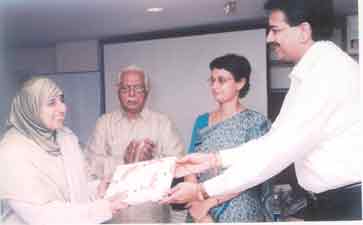
The Association of Muslim Professionals (AMP) hosted its 5th National Awards for Social Excellence (NASE) 2025 at Anwar-ul-Uloom College, Hyderabad, celebrating changemakers and institutions shaping social progress across India. The event, attended by more than 300 participants, honoured outstanding contributions in education, social welfare, and humanitarian service.
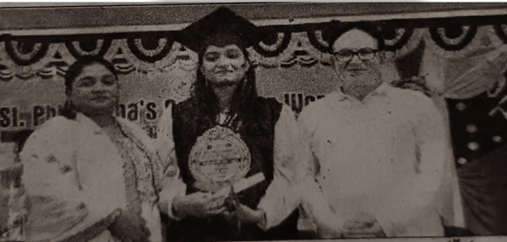
Ayat Education and Welfare Foundation from Kothagudem, Telangana, led by Dr Ayesha Sultana, won the Best NGO Award of the Year (State). In a short span, the foundation has impacted over 7,500 lives through education, women empowerment, and welfare programs. It offers academic and Qur’anic education, youth training in soft skills, and guidance for careers and personal growth. The foundation also provides medical aid, food relief, and disaster assistance. Its women’s online education program, which reached 1,500 learners in one year, was highlighted as a model of empowerment.
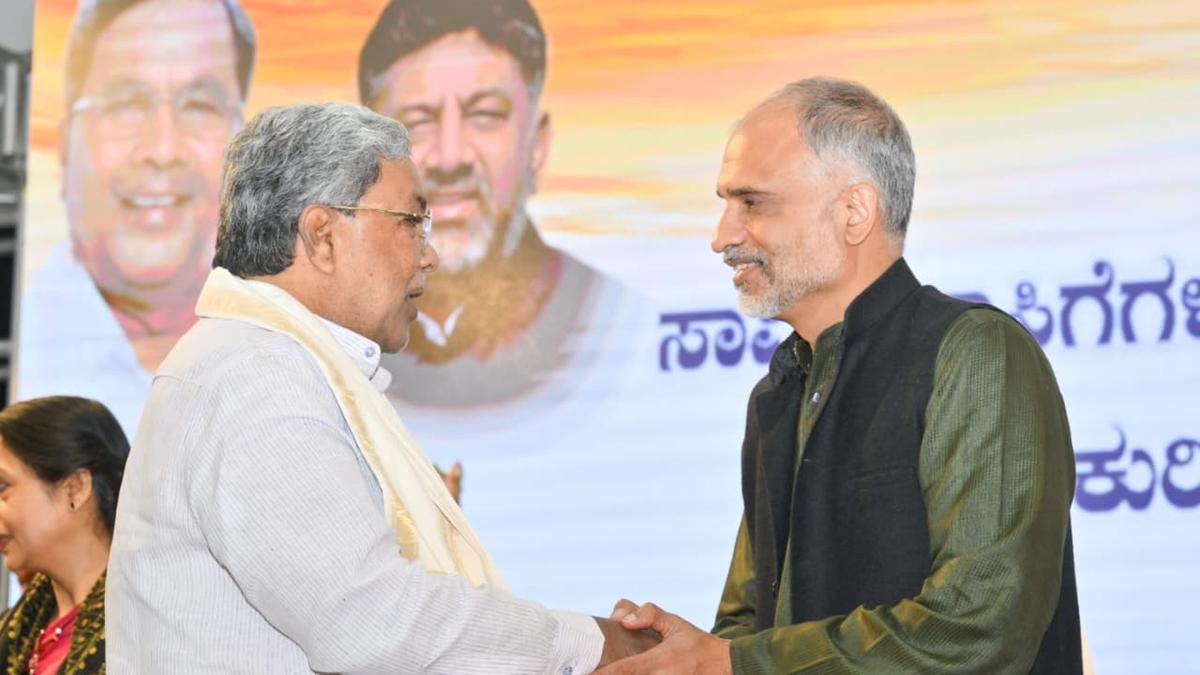
Maulana Khalid Saifullah Rahmani, Chairman of the All India Muslim Personal Law Board (AIMPLB), graced the ceremony as Chief Guest and felicitated awardees for their service to society. Prominent figures from academia, government, and civil society, including officials from the Telangana Waqf Board and retired IPS officers, attended the event.
AMP also recognized 10 national awardees such as Human Welfare Foundation, Jamiat Ulama-i-Hind Public Trust, and Sahayata Trust.
Lifetime Achievement Awards were presented to philanthropist Ghiasuddin Babukhan, educationist Dr P. A. Inamdar, and retired IPS officer Mohammad Wazir Ansari.
The event also marked the launch of AMP’s National Talent Search (NTS) 2025, expected to engage over two lakh students nationwide.
Ayesha Sultana is a regular contributor to radiancenews.com and former editor of AURA emagazine.
source: http://www.radiancenews.com / Radiance News / Home> Latest News> Markers of Excellence> Report / by Radiance News Bureau / October 04th, 2025
Alam died after a cardiac arrest at a private hospital in Mohali; last rites at Sirhind on Wednesday.
Mohd Izhar Alam, a former DGP, prisons, of Punjab Police, was inducted into the Shiromani Akali Dal after his retirement. His wife, Farzana Nissara Khatoon, is a former SAD MLA from Malerkotla. (HT file photo)
Mohammad Izhar Alam, 73, a former director general of police, prisons, died after a cardiac arrest at a private hospital in Mohali on Tuesday.
He is survived by wife Farzana Nissara Khatoon, a former Shiromani Akali Dal MLA from Malerkotla, three sons and two daughters.
The 1972-batch Indian Police Service officer was a Padma Shri awardee.
He had a controversial stint during the decade of militancy in Punjab.
Despite opposition, former chief minister Parkash Singh Badal inducted Alam into the SAD on November 18, 2009, and appointed him chairman of the Punjab Wakf Board.
In the 2012 assembly elections, Farzana won the Malerkotla seat on the SAD ticket, defeating Razia Sultana of the Congress.
Chief minister Captain Amarinder Singh also mourned the former DGP’s death.
The last rites will be performed in Sirhind on Wednesday.
source: http://www.hindustantimes.com / Hindustan Times / Home / by HT Correspondent / July 06th, 2021
This unusual sight is the heart of Slums to Oxford, a movement built on the belief that learning has no age or boundary.
For 15 years — 5,748 days without a break — Mohammed Asif Hussain Sohail’s team has served free lunch in low-income neighbourhoods across Hyderabad.Photo | special arrangement
Hyderabad :
Every evening, in the narrow lanes of the city’s slums, classrooms stir to life. But these are not filled with children alone. A 78-year-old grandmother grips a pencil for the first time, vegetable vendors practise alphabets after long hours at the market and daily wage workers sit shoulder to shoulder, determined to read, write and count.
This unusual sight is the heart of Slums to Oxford, a movement built on the belief that learning has no age or boundary. Its founder, Mohammed Asif Hussain Sohail, tells TNIE that when elderly people take up education, they inspire children and grandchildren to follow.
Across three evening schools, more than 1,000 learners aged between eight and 80 are rewriting their destinies. Lessons go beyond alphabets and numbers to address social realities — domestic violence, human trafficking and drug abuse, among others — while also offering vocational training, particularly for women.
But education is only one part of Sohail’s mission. For 15 years — 5,748 days without a break — his team has served free lunch in low-income neighbourhoods across Hyderabad. What began with 50 plates has grown into thousands each day, cooked in community kitchens. For abandoned elders, the homeless or those battling addiction, these meals provide not just sustenance but also a path into rehabilitation and work opportunities. “Food is beyond caste or religion,” Sohail says. “It is humanity’s need.”
Healthcare, too, is central to his vision of community care. Monthly blood donation drives collect 300-400 units for hospitals. Families struggling with groceries, children needing surgeries and individuals seeking rehabilitation often find support at his centres. For many, these classrooms and kitchens have become places of dignity and trust.
This journey began not as an organisation but in personal grief. Fifteen years ago, Sohail lost his young daughter, Sakina, to pneumonia and organ failure. At the time, he was pursuing a political career. But tragedy changed everything. He left politics to build a living legacy in her memory. “God took one daughter from me, but he gave me thousands more,” he says softly. “Till my last breath, I will serve the needy and be the voice of the voiceless. This is what I learned from my parents.”
In her name, he founded the Sakina Foundation, which has since become a lifeline for many. Over the years, it has served free meals to more than 40 lakh underprivileged people, contributed over 15,000 units of blood, supported lakhs with rations, medical treatment and school fees, and organised over 111 medical and blood donation camps. Through Slums to Oxford learning and skill centres, thousands of children and adults have gained education and vocational training.
Beyond the recognition
Though honoured with state, national and international awards, Sohail remains unaffected. “I am not working for awards,” he says. “My reward comes from the Creator.”
He does not accept donations either, believing his responsibility is to spend from what he earns. “Whatever I have is given by the Almighty. I am not going to take anything back.”
From abandoned elders finally learning to write their names, to children enrolling in schools, to families depending on a daily meal, Sohail’s initiatives weave threads of hope into Hyderabad’s urban fabric. His vision remains simple but profound: “The person who stays in a slum should have the chance to reach Oxford.”
source: http://www.newindianexpress.com / The New Indian Express / Home> Good News / by Khyati Shah / September 28th, 2025
Tilak Varma from Dubai stadium and a Young Tilak with his coach Mohammad Salam Bayash (Right)
New Delhi :
Indian cricket’s latest hero, Tilak Varma, whose unbeaten 69 against Pakistan clinched the Asia Cup for India in Dubai, owes his career to his coach and mentor Mohammad Salam Bayash, who spotted and supported him all through his training to his rise as a star.
The 14-year relationship began when Tilak joined a summer camp of Salam Bayash in Hyderabad. He played on a dusty ground with a tennis ball when Salam spotted him. He told his father, Namboori Nagaraju, an electrician by profession, that his son was immensely talented and that he must join a cricket academy.
Nagaraju told him that he realizes his son is extraordinary, but given his financial condition, he can’t even afford to buy him a proper kit, let alone join a cricket coaching academy.
Tilak Varma and Mohammad Salam Bayash in different years of their association
Bayash took a young Tilak under his wings. Not only did he waive all his coaching fees, but he also took responsibility for the transport. Bayash would ride his bike 40 kilometers every day to pick up Tilak at 5 am to travel to the academy in Lingampalli.
Within a year, and with Bayash’s guidance, his family shifted closer to Lingampalli. A hard taskmaster, Bayash told Tilak that he would reward him with a cricket kit only after he performed. Tilak did not disappoint him and won his first cricket kit.
Bayash told the media in an earlier interview, “Tilak Verma came to me in 2011 when he joined a summer camp. He is very hard working; has a lot of patience, follows instructions meticulously, and has a good mind,” Bayash told the media in an older interview.
When Tilak arrived from Dubai to a rousing reception in Hyderabad, he was always seen with his coach and mentor, ‘Salam sahib’.
Tilak played the Ranji trophy at the age of 16 when he was in the Hyderabad team.
Recalling Tilak Verma’s early days, Bayash says, “I first gave him basic training, and after the third month, he entered a local match. He immediately stood out with his temperament and technique. He would practice for hours and happily skip family functions to come to net sessions. His discipline was amazing. He never missed a net session. We, the guru and the disciple, would travel around the city on motorcycles for matches. Even today, he meets all the boys and the staff with great love and gentleness. Success did not make him complacent.
“Tilak called me before the match. I only told him to stay at the crease till the end. I am happy that he did that, and today he has emerged as a hero. I am not surprised at his temperament because even at a young age, he used to bat for hours during net practice.”
He says that after the victory against Pakistan, he made a video call from Dubai International Stadium, the venue of the Asia Cup. He spoke to everyone in my family. His father, Nagaraju, and mother, Gayatri, are on a religious journey to Nepal. Earlier, people used to call him ‘Baish ka bolaga’, today I am happy that people know me as ‘Tilak ka coach’.
A major fillip to his career came in 2022 IPL auction when the Mumbai Indians bought him for a whopping 1.7 crore.
Born as Namboori Thakur Tilak Varma on November 8, 2002, in Hyderabad, Telangana, Tilak grew up in a modest Telugu household.
Despite financial struggles, the family rallied behind Tilak’s passion for cricket. His parents often went out of their way to support his budding career, even when resources were scarce. Tilak never forgets to credit his coach and parents for his success.
Tilak’s international debut came in 2023 against New Zealand when he top-scored for India on debut and later registered his half-century, becoming the second Indian to reach the milestone in T20Is. By the end of the series, he was India’s top scorer.
However, his most memorable innings came at Dubai, where he turned around the finals of the Asia Cup for India by scoring an unbeaten 69 amid a crisis situation for India.
source: http://www.awazthevoice.in / Awaz, The Voice / Home> Stories / by ATV / October 01st, 2025
Lover of wildlife, celebrated hunter, sharp-shooter, tranquillising expert and more…
Dwindling forest covers, rampaging rogue elephants, man-eating tigers and man-animal conflict are all very frightening realities in today’s world, especially in our country. The Forest Departments across the country are faced with these huge challenges. In spite of their best efforts, the problems persist.
However, the solutions by a few who have grown up understanding wildlife like the back of their hand are hardly taken.
One such Wildlife Conservationist is Nawab Shafath Ali Khan from Hyderabad, who had been invited by the Jharkhand government last month to put down a rogue elephant that had killed 15 people. He is the most celebrated hunter and the only tranquillising and culling expert in the country.
He also runs a chain of resorts in Masinagudi, Tamil Nadu.
Star of Mysore Features Editor N. Niranjan Nikam travelled all the way to meet the Sharp-Shooter at his den in the midst of the jungle at the Safari Land Resorts in Masinagudi.
The Nawab opened his heart out for nearly two hours in this exclusive interview and spoke about royalty, how to manage forests, man-animal conflict, radio-collaring, culling, animal right activists and his anguish about the villagers and forest-dwellers. Excerpts…
Star of Mysore (SOM): You are not only a Nawab at heart but also a real Nawab from Hyderabad. How much of ‘Nawabipan’ is still there in you?
Nawab Shafath Ali Khan: Well, in well-bred horses the genes carry on in the blood. So I am a Nawab. But I devoted my life to the cause of poor Indians who suffer silently, like forest-dwellers, tribals, aborigines, having lost their lives and property to wild animals.
SOM: You are the most celebrated hunter in the country. Where did it all begin?
Shafath Ali Khan: Hunting was a family ritual. And my grandfather Nawab Sultan Ali Khan Bahadur was Advisor to the British Government on man-animal conflict. I grew up at a time when the Wildlife Protection Act came into being and from controlled hunting the transition to a total ban on hunting was introduced in the country. With the royalty and nobility hanging up their hunting rifles there was a vacuum of traditional knowledge of tracking animals that had generated over generations. I tried to fill this vacuum and worked for saving India’s wildlife as a Conservationist. Hunting is a tool of conservation and all advanced countries across the world are practicing and encouraging controlled hunting and their wildlife is growing.
SOM: You are the only authorised tranquillising expert and culling officer in the country. When there is a Forest Department, which has a rich history, what are the Officers doing?
Shafath Ali Khan: As I said, traditional knowledge acquired over generations cannot be found in textbooks. The art of reading pug marks, identifying it as a tiger or tigress just by seeing it or coming to conclusions about the height of an elephant by measuring the circumference of pad mark of the forefoot is traditional knowledge. Rulers had Shikaris who managed their forests with a vested interest of hunting. The rulers’ passion for hunting not only saved trees and grasslands but also kept a check on excess animal population. Unfortunately, after Independence forest management came into the hands of Officers who were bereft of ground realities. Large scale deforestation started and wildlife mismanagement reached its apex. Certain species grew in numbers beyond controllable figures like wild boar and blue bull. Across the country, tiger population reduced due to habitat destruction and revenge killings.
Large scale destruction is caused by elephant herds that have strayed considerable distances away from protected areas into agriculture fields. Neglected National Parks are overridden with noxious weeds like lantana and parthenium forcing our precious wildlife outside protected areas.
This is the crux of man-animal conflict that has frustrated farmers and forest-dwellers; giving them no option but to poison or electrocute elephants. According to project elephant figures, there were 15,700 elephants in the country in 1980 and today we have over 32,000. The forest cover on the other hand has reduced. The think-tanks who manage wildlife in the country did not plan this explosion in elephant population resulting in excessive man-animal conflict that we face today.
SOM: As a boy of 19 years you were in Mysore Race Club (MRC) as Assistant Secretary. How did this happen?
Shafath Ali Khan: My grandfather was India’s senior-most Handicapper (a person appointed to fix or assess a competitor’s handicap, especially in golf or horse-racing) and my father was Senior Stipendiary Steward and Secretary of Bangalore Turf Club (BTC).
High taxation on horse-racing was killing the industry and both BTC and MRC were finding it difficult to even pay salaries to their staff. My father Nawab Arshad Ali Khan started off-course betting between BTC and RWITC (Royal Western India Turf Club) in 1977 and this gave a new lease of life to the racing industry across the country.
Jawa motorcycle factory Founder Farookh Irani whom I always called Uncle Irani, Chairman of MRC, in consultation with my dad, started off-course betting between BTC and MRC and soon the fortunes of MRC blossomed. MRC was setting up photo-petrol cameras to record the races and I was sent, raw out of school, to Mysore to identify where the twin towers of the cameras had to be installed. I was already a National Champion in Equestrian sports and a top rider in the country. When I finished identifying the setting up of photo-petrol camera towers, having worked under Uncle Irani for a week, he decided to absorb me under MRC and I had the good fortune of learning from him. I was there for three years.
The crux of the man-animal conflict today is that old, weak and handicapped species are pushed out of the forest by the younger and stronger animals. These animals before they could create havoc were eliminated. The village folks were happy, revenge killing was never heard of and we didn’t have elephants straying into private lands like Hassan and Coorg like we are facing today.
Star of Mysore (SOM): The fight between humans and elephants, in other words man-animal conflict is resulting in shocking number of deaths. Planters in Kodagu are facing the heat with their crops being destroyed because of huge elephant menace there. What do you think can be done about this?
Nawab Shafath Ali Khan: The problem is not only in pockets of Karnataka but across the country. Any wild animal requires space. We cannot comprehend compressing them into smaller forest areas. With the number of elephants increasing in the country, the land to animal ratio has gone haywire. National Parks are not being de-weeded and cleared of noxious weeds; to provide enough fodder to the elephants and to restrain them within the parks. Hungry elephants are forced to stray out into agricultural lands for their survival.
Elephant is wise to the fact that nutritional value is found more in sugarcane, bananas, paddy and jackfruit compared to what it gets in barren government-controlled forests. So the Department is putting animals under tremendous pressure. This pressure is changing the metabolism of elephants making them aggressive, attacking people and raiding crops with impunity.
This man-made pressure on elephants and tigers have changed their psychological persona and they are also attacking humans. We have left the problems drift so much that it’s hard to find a win-win situation at this point of time. Anyway my thinking after spending 40 years in the field is that 70 per cent of our wild elephants are outside the forests. This is a very alarming figure. There is no shortage of fund as far as Forest Department is concerned. We are sitting on Rs. 35,000 crore of CAMPA (Compensation Afforestation Fund Management and Planning Authority) Funds. The States can utilise this money and have an elephant-proof trench all around government protected forests. All stray elephants outside this trench will be herded in or translocated.
The carcass of the man-eating leopard stretched out on the lawns of Thunag Rest House in Himachal Pradesh.
Wildlife management and human habitations have to be compartmentalised. Solar powered borewells have to be erected every 5-km radius within the National Parks. Clean and sufficient drinking water should be provided to the animals. However, the hard decision that we need to take but from which we have drifted for decades is, how many animals can survive in the relatively small National Parks and buffer areas.
Excess animals sadly will have to be culled not only for their own survival but also to maintain a healthy forest. Overgrazing and over-browsing is casting tremendous pressure on our precious forests.
SOM: There is a story that late Srikantadatta Narasimharaja Wadiyar fell in love with the Land Rover you were driving and bought it. Is this true?
Shafath Ali Khan: Yes, it is true. We were all fond of cars and I had a Land Rover that I had maintained in immaculate condition. The Prince (as Srikantadatta Narasimharaja Wadiyar was called by many who were close to him) fell in love with it and wanted to buy it. But, I was reluctant to sell it. Soon, the Prince and the Princess (Pramoda Devi Wadiyar) came to attend my wedding and the Prince brought a Convertible Red Triumph Sports Car which he gifted to me at the wedding. Now, I had no option but give my Land Rover to him. He enjoyed the Land Rover and I and my wife, newly-married, thoroughly enjoyed the Convertible Sports Car. Prince was very close to me and I was one of the few who had access to the gun rack that was just beside his bedroom. I had the pleasure and honour of cleaning and repairing those beautiful rifles which belonged to the late Highness Jayachamaraja Wadiyar.
The young bridegroom Nawab Shafath Ali Khan (third from left) seen with (from left) late Sirdar K.B. Ramachandra Raj Urs, late Srikantadatta Narasimharaja Wadiyar, bride Begum Shaheen Khan, Pramoda Devi Wadiyar and the Nawab’s mother Begum Arshad Ali Khan at his wedding reception in Bangalore Turf Club (BTC) in 1976. Picture right shows Jawa Factory Founder F.K. Irani greeting Nawab Shafath Ali Khan at the wedding.
SOM: Isn’t there a contradiction when you say nobility indulged in hunting but they also protected forests?
Shafath Ali Khan: It was a paradox that controlled hunting that had a code and a strict set of rules where only males of deer were shot subsequent to the breeding season. Old rogue elephants and dying tigers beyond breeding age were painlessly shot using high-powered rifles in the hands of our expert shooters. Survival of the fittest is the law in the jungle.
The crux of the man-animal conflict today is that old, weak and handicapped species are pushed out of the forest by the younger and stronger animals. These animals before they could create havoc were eliminated. The village folks were happy, revenge killing was never heard of and we didn’t have elephants straying into private lands like Hassan and Coorg like we are facing today.
Wildlife management was much better balanced compared to what it is today. Across the world animal population have reduced or gone haywire wherever government imposed total ban on hunting.
Meet Nawab Shafath Ali Khan- 3 (September 08th, 2017)
When Star of Mysore Features Editor N. Niranjan Nikam travelled all the way to meet the Sharp-Shooter at his den in the midst of the jungle at the Safari Land Resorts in Masinagudi, Tamil Nadu, Nawab Shafath Ali Khan and his son Asghar Ali Khan, drove this writer in the jungle in their American Jeep M-38 A1, a 1952 model four-wheeler late in the evening and it was a hair-raising experience as the young driver at the wheel negotiated the tough, lovely, Blue Nilgiri Hills range.
Both of them are attuned to every sight and sound in the forest even as the Nawab spotted two elephants and a calf at quite a distance instinctively. Later, the Nawab sat in his unique restaurant and for nearly two hours spoke freely in this exclusive interview about royalty, how to manage forests, the officials in the department, man-animal conflict, his views on radio collaring, culling, animal right activists and his anguish about the forest-dwellers and the villagers living in the fringes of the forest.
Star of Mysore (SOM): How much of preparation goes when you shoot man-eating tigers and rogue elephants?
Nawab Shafath Ali Khan: Bascially physical fitness and mental alertness are the major factors. A hunter is a complete man. He knows how to repair his vehicle, stitch his shoes in the forest, carry out minor repair to his weapons and who could read the forest, pick up the slightest sound and check the direction of the wind. Patience has to be in abundance. I don’t remember how many nights I have spent on a tiny machan on a tree in freezing cold and rainy night.
Tracking rogue elephants one has to walk 10-20 kms a day and this can be quite taxing. Preparing for these operations has become a way of life for me. I live on the most wildlife rich area of the sub-continent where I see wild elephants, tiger, leopard and sloth bear in my morning and evening walk. This keeps my mind alert and greatly helps in dangerous and close encounters with dangerous beasts that I have to tranquillise or eliminate as per government orders.
When Star of Mysore Features Editor N. Niranjan Nikam travelled all the way to meet the Sharp-Shooter at his den in the midst of the jungle at the Safari Land Resorts in Masinagudi, Tamil Nadu, Nawab Shafath Ali Khan and his son Asghar Ali Khan, drove this writer in the jungle in their American Jeep M-38 A1, a 1952 model four-wheeler late in the evening and it was a hair-raising experience as the young driver at the wheel negotiated the tough, lovely, Blue Nilgiri Hills range. Both of them are attuned to every sight and sound in the forest even as the Nawab spotted two elephants and a calf at quite a distance instinctively. Later, the Nawab sat in his unique restaurant and for nearly two hours spoke freely in this exclusive interview about royalty, how to manage forests, the officials in the department, man-animal conflict, his views on radio collaring, culling, animal right activists and his anguish about the forest-dwellers and the villagers living in the fringes of the forest.
SOM: There is no scientific basis in culling and it is not very successful in Africa as you claim, criticise a few. How do you react to this?
Shafath Ali Khan: There is no place for sentiment and religious connotation in wildlife management. I have been asked this question in several national workshops that I have attended. But when I ask them for an alternate solution no doable common sense approach has come forth.
I basically don’t like culling or shooting. I am now an authorised tranquilliser and resource person for six States and run an NGO ‘Wild Life Tranquil Force.’
SOM: What do you do here in the NGO?
Shafath Ali Khan: We are training front-line forest staff and veterinarians of six States in the country. I don’t see any alternative to scientific culling as far as our country is concerned. As an advisor and culling officer to Forest Department of Bihar, I have conducted several experiments to arrest the exploding population of blue bulls. Bihar is a fertile State with Ganges and several rivers flowing. The Gangetic plains are rich in crops. Overpopulation of the blue bulls from the forest, which consist of only 5 percent has found its way into agricultural fields causing as much as 35 percent damage to the farmers.
If at all there is a substitute to culling, it would have been adopted long ago and population controlled. Today UP, Jharkhand, Haryana, Rajasthan, Gujarat, Maharashtra, and Uttarakhand are reeling under the problem of overpopulation of wild boar and blue bulls and no solution is in sight.
Animal right activists might have a vested interest. These organisations get funds from abroad and with politicians and muscle power they arm-twist the senior forest officers to do what they want them to do rather than what is in the interest of the country. They are often bulldozed to falling in line and let matters drift.
Don’t be surprised if the price of Dal becomes Rs. 600 a kg as blue bulls, antelopes deliver two calves annually and wild boar sow delivers anywhere up to 19 piglets in a span of three months. There are virtually no carnivores to control this population explosion outside the forest. So, what are we heading for is anyone’s guess.
Shafath Ali Khan with his son Asghar Ali Khan.
SOM: As a wildlife conservationist, what is your view on radio collaring of tigers and other animals?
Shafath Ali Khan: In my opinion it is an utter failure. The reason why I say this is, it affects the breeding of tigers. Because when the tiger mounts a tigress, he starts biting on the top of her neck and it is a natural instinct. When the radio collar is there, the tiger bites into the radio collar and finds something hard and abnormal and it withdraws. I have seen this phenomenon physically.
In Siriska Tiger Reserve, when they introduced tigers with radio collar there was no breeding at all and I had predicted this 30 years ago.
Each radio collar weighs almost 1.5 Kgs and when a wild tiger is all of a sudden burdened with it then his entire movement and body language changes. This famous tiger Jay, which was tranquillised and radio collared, his home range, which was 38 sq. metres before the radio collaring, increased to 58 sq.mtrs.
SOM: Why is that?
Shafath Ali Khan: When you have something implanted in an animal, then its entire movement changes and it may come closer to human habitation also.
Also, the battery life which is supposed to last one year, never lasts that long. For instance, in this tiger Jay in Umed Sanctuary in Maharashtra, the battery ran out in two months and it disappeared. It was a pretty tiger and later it even died.
Then each radio collar costs about Rs. 3.5 lakh to Rs. 5 lakh and the cost involved in catching a wild tiger is another Rs. 5 lakh. With all this operation, it does not come cheap.
There is my own experience of a leopard that I tranquillised in Gundlupet in Muntipara village. This leopard had a radio collar, which had gone dead long time back. This animal entered a house and but for my early intervention, the girl living in that house would have been dead. It was a problematic leopard which was caught, radio collared and released and it again entered human habitation. The biggest problem of radio collaring is it gives the Forest Department a false sense of temerity to release the animal that should not be released. As a result the lives of villagers and poor forest dwellers are shackled.
SOM: Have you had any near-death-like experiences as a sharp-shooter in all these years?
Shafath Ali Khan: The most memorable day in my life was on Dec.17, 1976, when I was called by Van Ingen and Van Ingen (the famous taxidermists in the country) to shoot a rogue elephant that had killed 12 people. Since, late Uncle Joubert Van Ingen (who, at the age of 100, had written a foreword to the book ‘Man-Eaters And Wildlife Challenges’ by the Nawab. He dictated the foreword at one breath without a single mistake!) thought he was too old to trace the rogue elephant, he requested the Forest Department to invite me to shoot it at H.D. Kote. I traced the elephant and shot it and this incidence is rich in my memory.
The other near-death-like experience I can recall was just last month, on Aug. 11, 2017, when I was invited by the Jharkand Government to put down a rogue elephant that had killed 15 people and we tracked it for three days in most difficult terrain and thick impenetrable jungle, the rogue tusker turned around and came for us.
My two trackers fled leaving the Veterinarian Dr. Ajay Kumar and me. I saw the 10-foot tall tusker from hardly 10 metres coming for us like a railway engine with a loud trumpet. He raised his head to grab me with his trunk covering the forehead which is the only vital spot to shoot at that close range. A wrongly placed shot would have ended me in a fraction of a second. I took him at 9 metres and shot him in the mouth. The heavy bullet from .458 Magnum brought him to his knees. But he tried to get up in a fraction of a second. Working the bolt fast I fired the second shot in between the eyes and brought him down painlessly and death was instantaneous.
I often strive hard to see that the animal is put out with least pain and agony. Shooting, for me is the last option, when all other remedies have exhausted.
SOM: What about the experience of shooting a man-eating tiger?
Shafath Ali Khan: In July 2017, I was invited by the Maharashtra Government to tranquillise a man-eating tigress that had claimed four human lives. I darted from a distance of 15 metres when she was galloping away. But the most hair-raising incidence was shooting a man-eating tigress in 2009 in UP, where I tracked her for 35 days and nights and shot her when she charged from a distance of six metres.
SOM: Asghar Ali Khan, your son is also an authorised shooter. So, the family tradition continues?
Shafath Ali Khan: Asghar, is an authorised shooter and a crack shot. He has a .470 double rifle on his licence and helps me in dangerous tranquillising operation. But he along with my wife Shaheen keep the fire burning and looks after our chain of resorts in the Nilgiris. Often when a long drawn operation is coming to a conclusion, I summon him to join me as a backup.
SOM: Running Safari Land Resort must be a great experience for you and your family?
Shafath Ali Khan: Definitely yes. The very thought of living in a deep jungle arouses a sense of bliss within me. Forests and wildlife are very close to my heart. Riding in the jungle every morning is a thrill that I have no words to explain. Safari Land has given what no other luxurious Palace in the world can give us.
SOM: But are you related to the Nizam family of Hyderabad?
Shafath Ali Khan: Yes, yes. We are from the royal family of Hyderabad. We were equal to the Nizams, like you had the Maharajas and Ursus in Mysuru. The Nizam married into our family, our daughters were given in the Nizams family. So we were equals.
SOM: How long do you think you can carry this crusade of yours as a hunter and sharp- shooter?
Shafath Ali Khan: My priorities are no longer shooting. Having worked for several assignments for the past four decades, I have been involved in 24 dangerous operations and have culled thousands of animals. No one in the country has shot as many animals as I have done. My priority is not shooting or culling any more. My focus is to help those five crore people who are living in 1,87,000 villages and the forests across the country in most adverse conditions. Since I have worked, stayed and eaten with them, I know what it means by hunger.
Several interior villagers are living in a state of anarchy, in constant fear of wild elephants that raid the villages, break their huts, and eat away their rations. Women with infants in their arms run in the middle of the night to the next village 3 kms away. There is no one to wipe their tears. This is fresh in my mind from Jharkhand. I sometimes wonder whether the Constitutional rights, the right to life and liberty is guaranteed only for the elite and not my brothers and sisters who suffer in silence.
My passion now is to work for them, get them the due compensation, get the government to erect solar fencing to protect them. I don’t charge the government for service and time that I give. Tears of gratitude from underprivileged forest-dwellers when I shoot down a rogue elephant or a man-eating tiger, give me energy to work for them for another 100 years.
[Concluded]
source: http://www.starofmysore.com / Star of Mysore / Home> Feature Articles / by N Niranjan Nikam (3 part feature articles) / September 18th, 2017
‘Ironman of India’ Sabir Ali, who won the decathlon gold at the 1981 Asian Athletics Championships in Tokyo, passed away.
Ali won eight consecutive Open National titles in the gruelling event between 1979 and 1985. The Railways star was unbeatable at the Inter-State meets too – he represented Haryana — which he won twice in 1979 and 1981. His pet event was the javelin throw. Ali won a bronze and silver at the World Railway meets in 1981 and ’85 and was honoured with the Arjuna Award in 1981. Ali, who grew up in Delhi, is survived by his wife, son and daughter.
‘Ironman of India’ Sabir Ali, who won the decathlon gold at the 1981 Asian Athletics Championships in Tokyo, passed away. He was 67. Ali, who retired from Railways, won the title in the Japanese capital with a tally of 7,253 points beating Japan’s Nobuya Saito (7,078) and China’s Zu Qilin (7,074). He also won two silver medals at the South Asian Federation Games held in Kathmandu and Dhaka.
What is Decathlon :
Decathlon is a combined athletic event consisting of 10 track and field disciplines. Under this, various competitions are held over two days, including the 100-meter race, long jump, shot put, high jump, and 400 meters on the first day, while the 110-meter hurdle race, discus throw, pole vault, javelin throw, and 1,500 meters on the second day
source: http://www.currentaffairs.adda247.com / Adda 247 Current Affairs / by Sumit Arora (and edited – What is Decathalon) / January 27th, 2023
During the First World War, Maulana Mahmood Hasan, and other Islamic scholars planned an armed attack on British India from the Afghanistan frontier. The ambitious plan did not succeed because of the changed geo-political scenario (defeat of Turkey and Germany) and the British getting hold of three silk letters, which gave away the whole planning. After this, 59 people were charged for waging the war against the crown. I am sharing the names of these 59 forgotten heroes of the Indian freedom struggle.
During the First World War, Maulana Mahmood Hasan, and other Islamic scholars planned an armed attack on British India from the Afghanistan frontier. The ambitious plan did not succeed because of the changed geo-political scenario (defeat of Turkey and Germany) and the British getting hold of three silk letters, which gave away the whole planning.
After this, 59 people were charged for waging the war against the crown. I am sharing the names of these 59 forgotten heroes of the Indian freedom struggle.
Silk Letter Movement : A freedom struggle woven in silk
Abdul Aziz Molvi, son of Haya Gul from Itman Zai, Peshawar
Abdul Bari B.A., son of Ghulam Jilani from Lyallpur
Abdul Hai Khwaja, son of Khwaja Abdur Rahman from Gurdaspur
Abdul Haq Shaikh alias Jeewan Das from Shahpur district. He was an official witness.
Abdul Haq Molvi from Rifah-e-Aam Press Lahore.
Abdul Majeed Khan, son of a Risaldar Manager from the 15th Cavalry Battalion of the army.
Abdullah Molvi, son of Nihal Khan from Sukkur district. He was an official witness.
Abdul Qadir B.A., son of Ahmad Deen from Lyallpur.
Abdur Rahim Sindhi Shaikh, son of Lala Bhagwan Das from Hyderabad, Sindh
Abdur Rahim Molvi, son of Rahim Bakhsh, Masjid Cheenian Wali, Lahore.
Abdur Rashid, a migrant student of Mardan and Lahore.
Abdur Razzaq Ansari Hakim, son of Abdur Rahman of Delhi.
Abdul Waahid, son of Siddiq Ahmad from Tanda, United Provinces.
Abul Kalam Azad Molvi, nickname Mohiuddin, son of Maulana Khairuddin from Calcutta
Abu Muhammad Ahmad Molvi alias Molvi Ahmad, son of Ghulam Hussain from Lahore and Chakwal
Ahmad Ali Molvi, son of Habibullah, from Gujranwala district. He was an official witness.
Ahmad Miyan Molvi, son of Abdullah Ansari from Ambetha, district Saharanpur (United Provinces). He was an official witness.
Allah Nawaz Khan, son of Khan Bahadur Rab Nawaz Khan honorary magistrate of Multan, Punjab
Anees Ahmad, B.A. Molvi, son of Idrees Ahmad, assistant secretary at Anglo-Oriental College Aligarh , United Provinces.
Ozair Gul Molvi, son of Shaheed Gul of Durgayee, Northwest Frontier.
Barkatullah Molvi Muhammad of Bhopal and Japan
Fatah Muhammad Sindhi from Rok, Sindh
Fazlul Hasan Molvi alias Hasrat Mohani from Aligarh .
Fazl Elahi Molvi, son of Meeran Bakhsh from Haripur, thana Wazirabad, district Gujranwala, Punjab.
Fazl Mahmood Molvi, son of Molvi Noor Muhammad from Charsadda, Northwest Frontier.
Fazl Rabbi Molvi from Peshawar.
Fazl Wahid Molvi, son of Faiz Ahmad, alias Haji Turangzai, from Northwest Frontier.
Habibullah Ghazi, the son of Ruhullah from Kakori, district Lucknow, United Province.
Hadi Hasan Syed, from Khan Jahanpur, district Muzaffar Nagar, United Province.
Hamdullah Molvi, son of Haji Sirajuddin from Panipat.
Hussain Ahmad Madani Molvi, son of Molvi Habibullah from Faizabad and Medina .
Ibrahim Sindhi, M.A. Shaikh, son of Abdullah from Karachi.
Kala Singh, a migrant from Ludhiana (Punjab)
Khan Muhammad Khan Haji from Peshawar. (died)
Khushi Muhammad, son of Jan Muhammad from Talauli, district Jalandhar, Punjab.
Mahendra Pratap Kunwar, son of late Raja Ghanshiam Singh from Mursan, United Province.
Mahmood Hasan Maulana, former head-teacher at Deoband Madrasa, United Province.
Matloobur Rahman Molvi of Deoband, an employee of the Agricultural Department, UP Govt.
Mohiuddin alias Barkat Ali Molvi from Kasur.
Mohiuddin Khan Molvi from Moradabad. (Qazi of Bhopal)
Muhammad Abdullah B.A., son of Shaikh Abdul Qadir, Secretary Mianwali District Board.
Muhammad Ali B.A. son of Abdul Qadir from Kasur.
Muhammad Ali Sindhi, the son of Habibullah from Gujranwala.
Muhammad Aslam Attar from Peshawar.
Muhammad Hasan B.A. from Lahore whose father was an employee in the Paisa newspaper.
Muhammad Hashim Molvi Syed from Kora, Jahanabad, Fatahpur.
Muhammad Masood Molvi, son of Mazhar Hussain from Deoband, United Province. (Official witness)
Muhammad Miyan Molvi, son of Molvi Abdullah Ansari from Ambetha, district Saharanpur, United Province.
Muhammad Mubeen Molvi, son of Muhammad Momin from Deoband. (Official witness)
Muhammad Murtuza Molvi Syed, son of Bunyad Ali from Bijnor, United Province. (Official witness)
Noorul Hasan Syed from Ratheri, district Muzaffar Nagar U.P.
Obaidullah Molvi alias Buta Singh from Sialkot, Punjab.
Sadruddin alias Dr. Abdul Karim Barlasi, son of Amir Ali of Banaras.
Saifur Rahman Molvi, son of Ghulam Khan from Peshawar district, Northwest Frontier.
Shah Bakhsh Haji, son of Imam Bakhsh Ansari from Hyderabad, Sindh.
Shah Nawaz Khan, son of Khan Bahadur Rab Nawaz Khan, honorary magistrate, Multan, Punjab.
Shujaullah, son of Habibullah from Lahore.
Wali Muhammad Molvi from Futuheewala, district Lahore.
Zahoor Muhammad Molvi from Roorkee, son of Inayatullah of Saharanpur.
source: http://www.heritagetimes.in / Heritage Times / Home / by Mahino Fatima / August 04th, 2024
Bomb Blast Acquit Turned Advocate Abdul Wahid Shaikh Awarded PhD at MGM University, Aurangabad
Advocate Abdul Wahid Shaikh, noted lawyer, prison rights activist, and the first person person acquitted in the 2006 Mumbai train blast case, was conferred with a Doctor of Philosophy (PhD) degree at MGM University, Aurangabad. The degree was presented by Vice Chancellor Prof. Dr. Vilas Sakpal during a formal convocation ceremony.
Dr. Shaikh’s doctoral research, titled “Prison Literature: Post-Independence”, brings focus to the writings emerging from Indian prisons, highlighting voices of resistance, resilience, and injustice. His work underscores how incarcerated individuals have shaped Urdu literature and contributed to broader narratives of social justice in post-independence India.
Speaking on the occasion, Dr. Shaikh said:“This PhD is not just an academic milestone, but a continuation of my struggle for prison justice. Prison literature is the voice of the silenced, the testimony of those behind bars, and a mirror to our society’s conscience.”
As General Secretary of the Innocence Network, Dr. Shaikh has long campaigned for the release of wrongfully imprisoned individuals and advocated for humane prison reforms. His latest academic achievement strengthens his commitment to legal activism and adds a scholarly dimension to his work.
Faculty members, scholars, students, and well-wishers attended the convocation, applauding Dr. Shaikh’s perseverance and his contribution at the crossroads of academia, activism, and law.
His achievement is a landmark—demonstrating how an exoneree can turn personal suffering into intellectual strength and contribute meaningfully to the pursuit of justice and the rights of the incarcerated.
source: http://www.muslimmirror.com / Muslim Mirror / Home> Positive Story / by Muslim Mirror Special Correspondent / September 29th, 2025
Indian Muslims as a community, due to various social and political influences, have remained educationally backward. The Sachar Committee Report in 2006 revealed the dismal state of education among Muslims. The report was an eye-opener for the community and led to the efforts to spread education among Muslims. Muslims introspected and asked how come a community that believes in “Read with the name of your Lord who created (everything)” – the first Quranic revelation – lagged in education. Not only did the community urge the country’s political leadership to address it but also made efforts to improve the state of affairs.
The efforts have not gone in vain. The data compiled in the Unified District Information System for Education (UDISE) by the Union Ministry of Education, points towards a remarkable increase in school-going Muslims in Uttar Pradesh, the most populous state in India.
Changing trends among Muslims
The UDISE survey reveals that in U.P, 4,53,62,059 students were studying in schools, from pre-nursery to class XII, during the 2019-20 session. Out of these, 70,18,201, or 15.47%, were Muslims. Because the Muslims are 19.26% of the population in the state, this number seems insufficient, which it is. But, if we consider the fact that seven years ago, in the 2012-13 session, out of 4,69,61,179 school-going children only 52,49,664, or 11.18%, were Muslims, the significance of the present numbers becomes evident.
The numbers show that the proportion of Muslims is steadily increasing and moving towards their proportion in the population, i.e. 19.26%. From the 2015-16 session till 2019-20, the percentage of Muslims among school-going children has been registered to be 11.08%, 12.40%, 12.32%, 13.88%, and 15.47% in successive years. If we talk in pure numbers, in 2015-16, there were 53,63,670 Muslim kids out of 4,84,06,853 students. In 2019-20, this figure has increased by more than 16 lakh to reach 70,18,201 as the total school enrolment in the state dropped by more than 30 lakhs.
Graphic explanation of the changing trend in Muslim education-1
In order to understand the recent awakening in the community, one needs to look at the new enrollments. At the entry-level, Muslim students have reached very near to their proportion in the population. In the 2019-20 session, out of 51,48,352 students enrolled in class I, 9,71,229 were Muslims. This translates into 18.86% of the total class I students. It is a significant increase from 2018-19 when 16.92% of class I students were found to be Muslims, and in the year before the ratio was at 16.23%.
The people working in the education sector among the Muslims of U.P often complain about the high dropout rates. As we go up the education levels, the proportion of Muslims tends to decrease. The apprehension is true, but the recent trends show an improvement in Muslim representation in higher classes. The survey found 3,73,304 Muslim students out of a total of 30,73,228 studying in class X, during the 2019-20 session. This makes 12.15% of the total class X students in the state, a significant rise from 2016-17 when only 7.65% of the total class X students were from the community. In the last four academic sessions, the proportion of Muslims in class X is, 7.65%, 8.38%, 10.90%, and 12.15%, successively.
At Higher Secondary (+2), XI & XII, the proportion of Muslims enrolled has increased from 7.24% in the 2016-17 to 10.48% in the 2019-20 session. In successive sessions this proportion has been registered as 7.24% in 2016-17, 7.81% in 2017-18, 10.08% in 2018-19 and 10.48% in 2019-20.
These numbers are no yardstick of the quality of education Muslims are availing. To get an idea we need to look at the type of schools at which these students are enrolled. As a matter of fact, in U.P, it is commonly believed that private schools are in a better condition than schools owned by the Department of Education. Out of the total 2,20,69,303 students enrolled in private schools, 25,95,073, or 11.76%, were found to be Muslims in 2019-20. This was a considerable increase from 2016-17 when 8.07% of the private school students were Muslims. In the last four academic sessions since 2016-17, the Muslim proportion in private schools was found to be 8.07%, 8.48%, 10.38%, and 11.76% respectively.
Changing trends in Muslims’ education Graph-II
On the other hand, in the schools of the Department of Education, Muslim proportion remained more or less constant. In 2016-17, 12.34% of the students at the Department’s schools were Muslims which has shown a marginal increase at 12.50% in 2019-20. Another very important aspect of education among Muslims is that almost one out of every five school-going Muslims attends a Wakf/ Madrasa Board recognized Madrasa/ Maktab. In the 2019-20 session, 19.76% of the Muslim children were enrolled in these Madrasas. It is an increase from 2016-17 when 16.49% of Muslims were attending these institutions. But this shift can be attributed to a positive shift. In 2016-17, 5.31% of Muslim kids were attending unrecognized Madrasas which came down to 3.10% in 2019-20. It is a welcome change that Madrasa-going children are attending recognized Madrasa of Madrasa / Wakf Board instead of unrecognized Madrasas.
Prof. Aquil Ahmed (Statistics & OR), AMU, believes that an increase in enrolments in private schools and status quo in Department of Education’s schools is a pointer that this increase in education among Muslims owes itself to the efforts from within. In recent years, he says that the community has started understanding the importance of education and hence without much help from the government people have started spending on education more and sending their children to schools.
Bhim Rao Ambedkar said that women’s education and empowerment were the yardstick to measure the development of a society. The survey gives us immense hope as we analyze the data on girl students among Muslims. It is an open secret that ours is a patriarchal society. Irrespective of religion or caste, people discriminate against girls. It was not a surprise to see that, in 2019-20, out of 45,39,933 students enrolled in Higher Secondary (+2) in the state, 54.30% were boys and 45.70% were girls. Similarly, in class X, 54.46% of the total students were boys. On a similar pattern, for the same session, 55.17% of students enrolled in private schools were boys during the same session. But, the sweet surprise was the ratio of girls among Muslim students of U.P. In Higher Secondary,
Changing trends in Muslims’ education Graph-III
In 2019-20, 50.31% of the total Muslim students were girls while their proportion was 48.31% in class X. In private schools also enrolment of boys among Muslims was 53.96%. This means, among Muslims, proportionally more girls are being admitted in private schools than the average of the state. This positive approach towards women’s education is a welcome trend.
The survey suggests that Muslims as a community are paying more attention to women’s education. As discussed above, in 2019-20, 10.48% of the total enrolments in Higher Secondary (+2) belonged to the Muslim community. If we look at gender then we find that, in 2019-20, of all the girls enrolled in +2, 12.06% were Muslims while 9.67% of the boys came from the community. This trend is a feature of all the preceding years as well. In 2019-20, in private schools out of all the girls enrolled 12.08% were Muslims while the proportion among boys was 11.50%.
Interestingly, in higher secondary education in private schools, the proportion of Muslims among girls stands at 10.22% while among boys it is 8.94%. In each session we find more Muslim girls taking admissions in higher secondary than Muslim boys. The proportion of Muslims among girls is much higher than their proportion among boys. For class X, in 2019-20, 12.88% of girls were Muslims while among boys they were 11.53%. The trend breaks the stereotype that Muslims do not send their girls to school. Moreover, it shows that Muslims are moving away from the orthodox traditions faster than the other communities.
Prof. Nazura Usmani (AMU), believes that access of younger generations to religious texts has made this women empowerment possible. Muslims, on understanding the true message of religion, are breaking the shackles of traditional orthodoxies, which kept women caged for centuries. Now, people are understanding that women’s education is part of religion and also there is growing acceptance in the community towards economically working women. She says that those people who do not identify themselves with revolutionary feminism are accepting that women should be educated and economically independent.
The UDISE survey report brings out a positive trend of increasing education among Muslims. Though the community is still lagging the developments of recent years instills hope. Moreover, the survey brings out that Muslims are showing more gender parity when it comes to education than other communities.
(Saquib Salim is a Historian and a Writer)
source: http: //www.awazthevoice.in / Awaz, The Voice / Home> Stories / by Saquib Salim / December 09th, 2021
It was a cold day in February 2016. A woman from a small town of Uttar Pradesh received her Ph.D. at the 63rd Annual Convocation of Aligarh Muslim University (AMU), Aligarh. She was the first from her clan to have taken admission to AMU in 2003. Her parents never attended college; her four brothers took up family businesses at a younger age. The woman in the discussion is me. I am Mahino Fatima, a Muslim girl from a backward caste who became a scientist against all odds.
pix: heritagetimes.in / Dr. Mahino Fatima
Friends, relatives, and peers celebrated my becoming a scientist as a consequence of my hard work and perseverance. In my heart of hearts, I knew this day has not come only because of me; I was grateful for the privilege of education that I was born with.
Most importantly, I should not forget Fatima Sheikh. If not for her, I would never have become a scientist. Lakhs of women who are successful because of education would have remained illiterate but for Fatima Sheikh’s pioneering work.
How can I, a woman, forget that my foremothers were not allowed to learn how to write? How can I, a backward caste woman, forget that my forefathers were not allowed to receive an education? Today, when we look at our curriculum, we find that women scientists, economists, philosophers, and intellectuals are negligible in comparison to men. Famous philosopher, Jaques Derrida, once remarked that no woman was a philosopher. His observation was true, but he did not delve into the reason. How can a woman become a philosopher when men for centuries controlled the development of her intellectual capacities in the name of culture?
In our society, men would not let women learn the art of writing for the fear that if literate these women would communicate to ‘lovers’ through letters. Bibi Ashraf, a late 19th-century educationist, recalled how she was not allowed to learn reading and writing like male members of her family. She secretly learned to write. The secret came out when during the revolt of 1857; she had to write a letter to her father and uncle. Instead of receiving accolades, she was abhorred by men in her family. Her uncle was furious and made her take an oath that she would never write a letter to a man. Similar was the story of Rassundari Devi, who secretly learned writing by stealing books from her son. How do we expect women scientists in such a society? Still, a large section of our society would not let women study more than what is needed in the ‘marriage market’.
In this society, Fatima Sheikh, along with Savitribai Phule, started a school for girls in 1848. Yes, 1848. 26 years before Sheikh Abdullah, who later founded a women’s college at Aligarh, and 32 years before Begum Rukaiya Sakhawat, doyen of women education, were born, Fatima had started a girls’ school and taught herself. Today, that small classroom of 9 girls has prepared lakhs of educated women.
Today women are asking for gender parity in opportunities and pay scales. Thanks to Fatima, women today are educated to understand their worth and assert their rights.
Fatima was a pioneer; she was followed by Begum Rukaiya, Begum Wahid, Muhammadi Begum. A revolution starts with an idea. Fatima’s was the idea that put women of India in general and Muslim women in particular, on the march to empowerment through education.
Today, I thank Fatima for making me a scientist. Nobody knows how many bright women before 1848 had been deprived of education and were not allowed to dream of becoming a scientist. But, we surely know that after 1848, women have slowly entered different fields through education and are today competing with men to have their rightful place in the books, laboratories, and society.
(Author is a neurobiologist with her major research on depression and Alzheimer’s)
source: http://www.awazthevoice.in / Awaz, The Voice / Home> Stories / by Mahino Fatima / Saquib Salim / January 09th, 2022