Heart Lamp is one among the 13 books chosen by the 2025 International Booker Prize judging panel, headed by Max Porter.
Banu Mushtaq. File | Photo Credit: The Hindu
“It is an honour for Kannada that a work written in our language is getting this recognition,” said Hassan-based Kannada writer, advocate and activist Banu Mushtaq, whose collection of stories Heart Lamp, translated by Deepa Bhasthi, has found a place in the long list for the International Booker Prize 2025.
Heart Lamp is one among the 13 books chosen by the 2025 judging panel, headed by Max Porter. The judges made their selection from 154 books submitted by publishers. The shortlist of books will be announced on April 8 and the winner will be announced on May 20.
Heart Lamp, is a collection of 11 short stories written by Banu Mushtaq between 1990 and 2023. “So far I have brought out six collections of short stories in Kannada. Among them, 11 were chosen for the collection Heart Lamp,” said Ms. Mushtaq.
What judges said
The judge panel, in its comment on the collection, stated, “Written in a style at once witty, vivid, colloquial, moving and excoriating, it’s in her characters – the sparky children, the audacious grandmothers, the buffoonish maulvis and thug brothers, the off-hapless husbands, and the mothers above all, surviving their feelings at great cost – that Musthaq emerges as an astonishing writer and observer of human nature, building disconcerting emotional heights out of a rich spoken style.”
Earlier, an English translation of a collection of her short stories Haseena and Other Stories won English PEN translation award for the year 2024. That was also translated by Deepa Bhasthi.
Early years
Ms. Mushtaq began writing in the progressive literary movement in Karnataka in the 1970s and 1980s, which gave voice to several people from dalit and minority communities, including strong women’s voices in Ms. Mushtaq.
Some of her early writings were published in Lankesh Patrike, for whom she also worked as a correspondent for some years. The writer remains a committed voice in the progressive circles, and remained critical of forces that divide people among lines of caste, class, gender and religion.
Among her important works are Hejje Moodida Haadi, Benki-Male, Edeya Hanate, Badavara Magalu Hennalla (short stories), Kubra (novel) Odde Kannina Baagina (poetry), Ibbaniya Kaavu (essays) and Kautumbika Daurjanya Kayide (on Domestic Violence Act). Haseena has also been made into a film, directed by Girish Kasaravalli.
The late Kannada writer and Jnanpith awardee U.R. Ananthamurthy was also nominated for Man Booker International Prize in 2013, but did not win it.
source: http://www.thehindu.com / The Hindu / Home> Books> Author / by The Hindu Bureau / February 26th, 2025
Dr Saman Zehra, a researcher at the Aligarh Muslim University (AMU), has been awarded the prestigious Young Scientist Award at ICC 2025.
Aligarh Muslim University:
Dr Saman Zehra, a researcher at the Aligarh Muslim University (AMU), has been awarded the prestigious Young Scientist Award at ICC 2025.
Dr Saman Zehra won the award at the second edition of International Conference in Chemistry 2025 held at Maulana Azad National Urdu University (MANUU) Hyderabad.
Dr Saman’s research was on “Smart Multi-Functional Coatings for Controlled Corrosion Protection,” contributing to sustainable materials.
Dr. Saman Zehra is a researcher under the Women Scientist Program (WOS-A) of the Department of Science and Technology (DST) at the Department of Applied Chemistry, Faculty of Engineering and Technology, Aligarh Muslim University (AMU).
Dr Saman, who completed her Ph.D. under Professor Mohammad Mobin at AMU, presented her research under the mentorship of Prof. Rais Ahmad.
AMU’s Department of Applied Sciences was established in 1958 in the Faculty of Engineering and Technology, which was subsequently split into 3 sections namely, Chemistry, Physics and Mathematics. In 1988, the Chemistry section was upgraded to a full-fledged Department of Applied Chemistry.
source: http://www.ummid.com / Ummid.com / Home> Science & Technology / by ummid.com, science desk / February 26th, 2025
Majid Hussain of Burhanpur tops JEE Mains with 99.99 Percentile
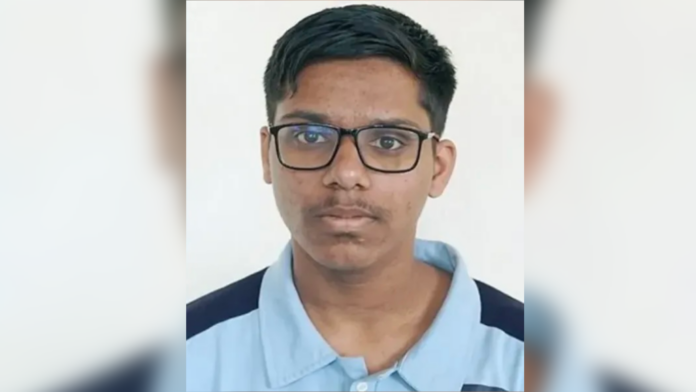
Seventeen-year-old Majid Mujahid Hussain from Burhanpur, Madhya Pradesh, has brought immense pride to his community by emerging as the state’s top scorer in the Joint Entrance Examination (JEE) Mains 2025. Securing an impressive 99.99 percentile, his remarkable achievement has sparked celebrations among his family, teachers, and well-wishers.
Majid’s journey to success began in Year 11 when he started preparing rigorously for the highly competitive exam. Enrolling in a coaching institute, he dedicated himself entirely to his studies, making significant sacrifices along the way.
Reflecting on his preparation, Majid shared, “For two years, I focused solely on my goal. I even refrained from attending weddings and festivals to make the best use of my time.” His unwavering dedication and discipline played a crucial role in his outstanding performance.
Expressing his gratitude, Majid acknowledged the support of his family, particularly his father, who provided him with invaluable guidance, and his teachers, whose unwavering encouragement helped him stay motivated. Speaking to news agency INS, he said, “My family has played a crucial role in my success.
He said, my father provided me with the best possible guidance, and my teachers offered their unwavering support. Now, my aim is to achieve a high rank in JEE Advanced and pursue engineering at a premier institute.”
Majid’s mother, Sakina Hussain, was overwhelmed with joy upon hearing about her son’s remarkable accomplishment. “I am extremely proud that my son has topped Madhya Pradesh with 99.99 percentile. His hard work has paid off, and this is just the beginning of his journey,” she said. Encouraging other students, she advised them to stay motivated and not lose hope despite challenges.
His success has been widely celebrated, not just by his family but also by his teachers and the local community. Many have lauded his commitment and perseverance, with his school principal calling him a “brilliant and dedicated student who always had his eyes set on his goals.”
The National Testing Agency (NTA) recently announced the JEE Mains 2025 results, and Majid’s achievement has set a new benchmark for students across Madhya Pradesh. His story serves as an inspiration to aspiring engineers, demonstrating that with perseverance, dedication, and a strong support system, success is within reach.
As Majid now sets his sights on JEE Advanced, his journey continues to motivate young minds striving to excel in engineering. His achievement is not just a personal triumph but a moment of collective pride for his family, teachers, and the entire Burhanpur community.
With Agencies Inputs
source: http://www.muslimmirror.com / Muslim Mirror / Home> Indian Muslim> Positive Story / by Muslim Mirror / February 14th, 2025
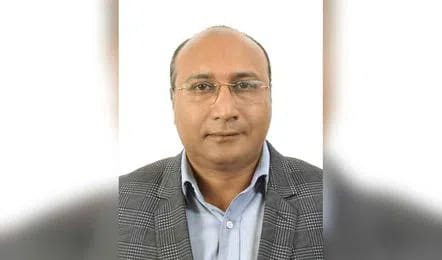
Dr Mohammed Abdul Saleem, a distinguished Hyderabadi NRI and dental surgeon, has been appointed as the chairman of the Indian International School in Jeddah (IISJ), one of the largest Indian community schools in Saudi Arabia.
Dr Saleem formally assumed charge on Monday in the presence of school officials and management committee members. He succeeds Dr Hemalatha Mahalingan, who completed her tenure and made history as the first woman to head a community-run Indian school in the Kingdom.
A prominent figure in the expatriate Indian community in Jeddah, Dr Saleem has been actively involved in the school’s management. IISJ, established in 1969, serves the academic needs of the Indian expatriate community and is affiliated with the Central Board of Secondary Education (CBSE). The school, which has over 10,000 students, is recognized for its academic excellence and was among the first to introduce Telugu as an optional language for students.
Dr Saleem’s appointment is expected to bring further advancements to the institution, strengthening its commitment to quality education and community service.
source: http://www.radiancenews.com / Radiance News / Home> Education> Latest News / by Radiance News Bureau / February 26th, 2025
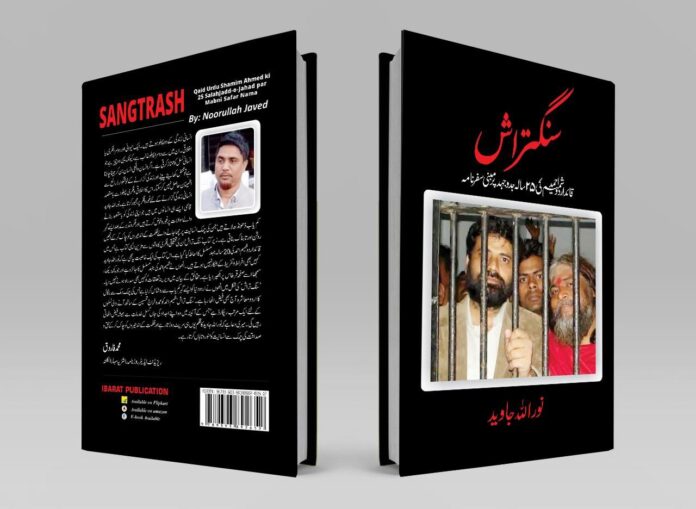
“The Book SangTrash: Shamim Ahmed’s account of the fight for human rights and Urduh” penned by Nurullah Jawaid is an immersive and powerful exploration of the life and activism of Shamim Ahmed, one of India’s most distinguished human rights advocates. As a pioneer of the Urdu movement, Shamim Ahmed’s story is one of unwavering dedication to social justice, human rights, and the preservation of cultural identity in the face of systemic injustice and political turbulence. This book, rich in historical and cultural context, offers an in-depth look at the life of a man who was not only a visionary leader but also a symbol of courage and resilience in the fight for equality and dignity.
The book delves into Shamim Ahmed’s lifelong struggle to address some of the most pressing socio-political issues of his time. Set against the backdrop of India’s dynamic and ever-evolving socio-political landscape, “SangTrash” chronicles Shamim Ahmed’s tireless efforts to combat the deeply ingrained inequalities that plagued the country, particularly the discrimination faced by marginalized communities. These efforts were not limited to his work as a human rights advocate but extended to his role as a cultural leader, educator, and innovator. Through the lens of his activism, the book paints a vivid picture of the complexities of Indian society during times of immense political and social upheaval.
Shamim Ahmed was not merely a passive observer of the struggles faced by the oppressed and underprivileged. He was a relentless force working to bring about tangible change. From his early days as a young idealist, Shamim Ahmed was deeply moved by the plight of the marginalized—those whose voices were suppressed by both society and the political elite. His passion for human rights led him to establish the Human Rights Protection Association (HRPA), an organization dedicated to addressing human rights violations across India. Through this platform, Shamim Ahmed sought to mobilize citizens to stand up for justice, regardless of their background, religion, or ethnicity.
In addition to his advocacy for human rights, Shamim Ahmed is best known for his work with the Urdu Movement. At a time when the Urdu language was facing marginalization and disintegration due to political pressures, Shamim Ahmed took it upon himself to revitalize and protect the language as an integral part of India’s cultural and literary heritage. His campaigns to promote Urdu literacy and its inclusion in educational institutions were not just about language preservation; they were about the empowerment of communities who saw Urdu as an essential part of their identity. Through this movement, Shamim Ahmed demonstrated that language is not merely a means of communication but also a symbol of cultural resistance and resilience.
As the narrative unfolds, “SangTrash” brings into focus the challenges Shamim Ahmed faced along the way. His activism was not without its detractors. Political opposition, societal resistance, and personal sacrifices were all part of the price Shamim Ahmed paid for his unwavering commitment to justice. The book sheds light on the obstacles he encountered, from the government’s attempts to suppress his initiatives to the skepticism and hostility from those who feared change. Yet, despite these challenges, Shamim Ahmed’s resolve remained unshaken. His determination to bring about social change and protect the rights of the disenfranchised never faltered, even when his own safety was threatened.
Shamim Ahmed’s legacy is further immortalized through his initiatives such as the “Food for All” campaign, which aimed to address hunger and poverty in India’s rural and urban areas. The campaign sought to ensure that food was available to every citizen, regardless of their social status, and to promote sustainable agricultural practices that would reduce reliance on outside aid. Through his leadership, the campaign brought together communities, activists, and policymakers, resulting in significant strides towards alleviating food insecurity in many regions.
Nurullah Jawaid’s writing not only brings Shamim Ahmed’s efforts to life but also contextualizes them within the broader historical and cultural milieu of India. By delving into the political, social, and economic landscape of Shamim Ahmed’s era, the book offers readers a nuanced understanding of the obstacles that activists and marginalized groups faced during this turbulent period.
“SangTrash” is a deeply informative and educational work that highlights the interconnectedness of human rights, cultural preservation, and social justice. It challenges readers to reflect on the ways in which systemic inequalities continue to shape society and the moral responsibility that each individual bears in addressing them.
The book also pays tribute to the human rights defenders who, like Shamim Ahmed, dedicate their lives to advocating for justice in an often hostile environment.
In telling Shamim Ahmed’s story, Nurullah Jawaid brings to the forefront the importance of collective action. The struggles faced by Shamim Ahmed were not his alone; they were shared by countless others who, inspired by his work, joined in the fight for a more equitable and just society. This collective action is central to the book’s message—individual activism can spark movements, but only through solidarity and collective efforts can lasting change be achieved.
“SangTrash” is not merely a biography of a prominent figure in Indian history. It is a call to action. By recounting Shamim Ahmed’s life and the impact of his work, the book challenges readers to engage with the pressing social issues of today, particularly those related to human rights, inequality, and cultural identity. The lessons of Shamim Ahmed’s life are timeless, and the values he fought for—equality, dignity, and mutual respect—remain as relevant as ever.
This book is also a reminder that activism is not always glamorous or celebrated in its time. Often, it is the courage of individuals like Shamim Ahmed, whose actions go against the grain of societal norms that change the world for the better. “SangTrash” is, therefore, more than just the story of one man; it is an inspiration for anyone who believes in the power of activism to bring about positive, meaningful change. It challenges readers to question the status quo and to take responsibility for shaping the future in a way that is more inclusive and just for all.
In conclusion, “SangTrash” is a tribute to Shamim Ahmed’s life and legacy. It is a book that encourages readers to consider the ways in which activism, grounded in human rights and social justice, can transform society. By examining the key moments in Shamim Ahmed’s life and the challenges he overcame, the book underscores the enduring importance of standing up for what is right, even in the face of adversity. Through this compelling narrative, “SangTrash” becomes not just a biography but a powerful call for activism in today’s world.
source: http://www.muslimmirror.com / Muslim Mirror / Home> Books> Positive Story / Reviewed by Kulsum Farooque / February 14th, 2025
Shaukat Ali Khan, who received the “International Hero in Literature Award” from Cambridge University and was awarded the President’s Award, is now no more. He breathed his last on Saturday night during treatment in Jaipur. He was 87.
Born on 11 July 1936 in the family of Sahabzada Idris Ali Khan of Tonk, Shaukat Ali Khan is a distinguished personality of the Amiriya family. He was the first Director of Maulana Abul Kalam Azad Arabic-Persian Research Institute (APRI).
Sahabzada Shaukat Ali Khan participated in the International Sufism Seminar organized by India in Afghanistan.
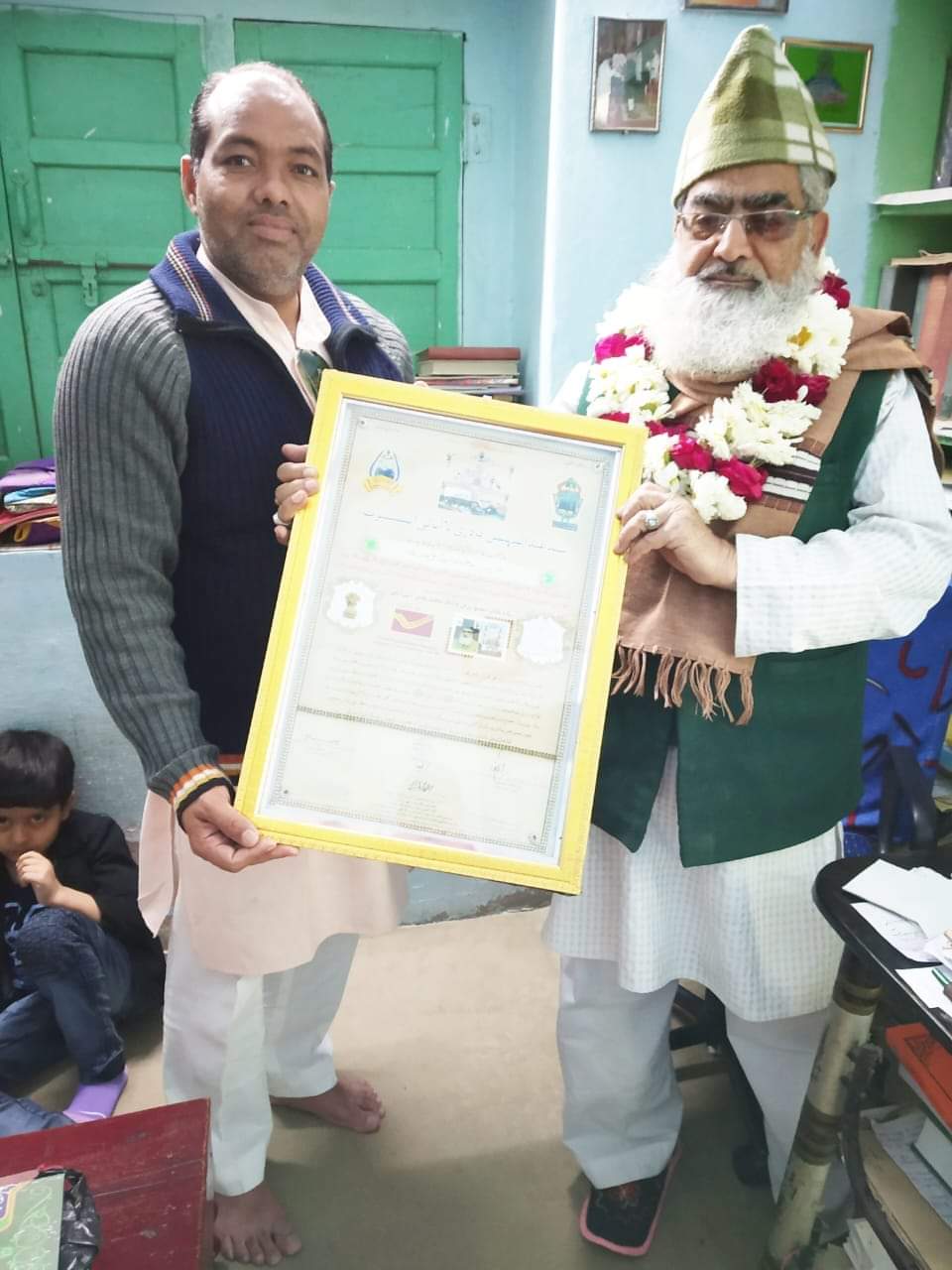
In view of this, the then President Giani Zail Singh himself considered him worthy of being honored with the National Award.
Shaukat Ali Khan also received an award in a seminar organized by UNESCO.
Apart from being a writer, historian, translator, and poet, he possessed many salient features rarely found in the world of literature.
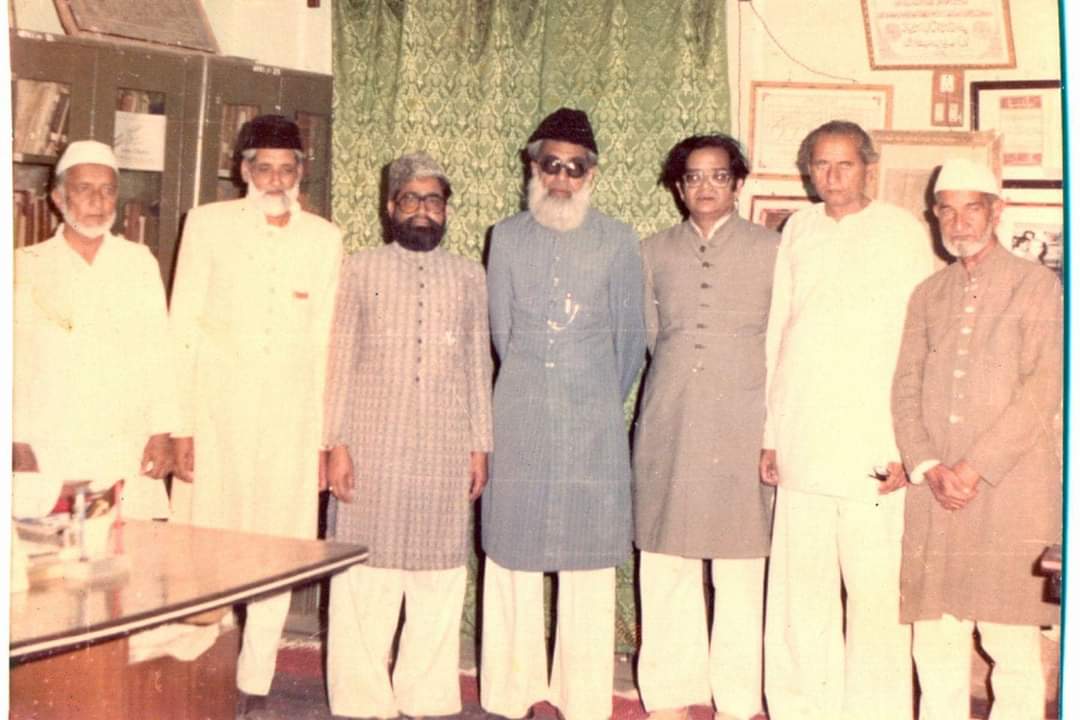
Shaukat Ali Khan with APRI team
The APRI, which has its own identity in the country and the world, is also the result of the hard work and dedication of Shaukat Ali Khan.
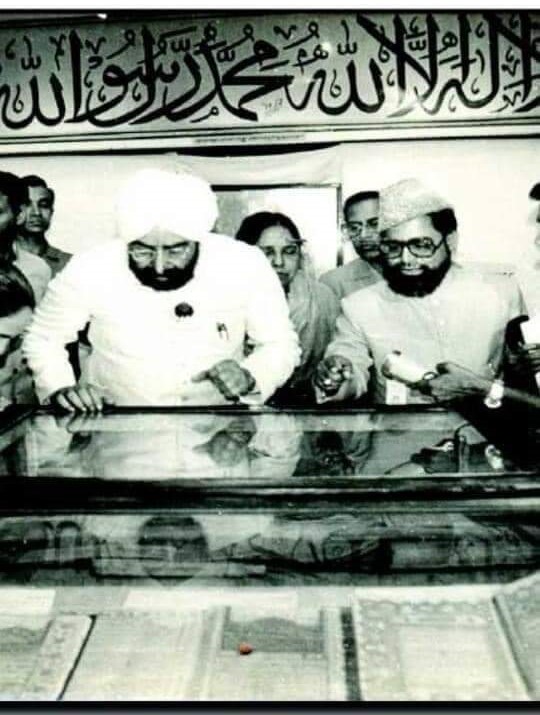
Shaukat Ali Khan with President of India Giani Zail Singh at APRI, Tonk
In 1986, then President Giani Zail Singh visited the APRI. At that time, he wrote, “I am happy that such a director and such an organization exists in Rajasthan, due to which Rajasthan is known in the Arabic-Persian world. This happens very rarely. The idea is that someone should establish a path for the simultaneous progress and development of both the languages. I am extremely proud that a single person has created a platform for the progress of the Arabic and Persian languages and made it popular in the world. For this, its director Shaukat Saheb should definitely get the National Award, which he deserves.”
The life of Shaukat Ali had many forms and colors. With his efforts, he not only converted a nursery into an institute but also brought glory to Tonk. The APRI is proof of his pioneering efforts and wisdom. As long as the APRI continues to exist, the name of Shaukat Ali Khan will be there.
Shaukat Ali Khan was initially appointed Nigran of Nawab Mohammad Ali Khan’s library. He collected about 50,000 Makhtutats and wrote about 60 books in different languages – two books in Arabic, 10 in Persian and about 45 in English.
He had been carrying out research and writing work for about 40 years. He was a scholar of Arabic, Persian, English, Hindi and Urdu languages. He has also served as a member of many national and international government organizations.
Shaukat Saheb, who presented papers at national and international conferences and seminars, also edited and translated 6000 manuscripts, and published about 300 articles in more than 100 journals in English and Urdu. There is a long list of honors received by him at the national and international levels as well as at the state level. After retirement, he was living his life as a Sufi saint.
People across the country, including Mujeeb Azad, Director of Tonk Arabic Persian Research Institute; Sahibzada Mohammad Ahmed Bhayyu Bhai, Chairman of Royal Family Tonk; Retired Research Officer Anwarunnisa Nadira, State General Secretary of Human Relief Society, Tehreek-e-Urdu Rajasthan Advocate Akhtar Khan Akela, Cricket Coach Imtiaz Ali Neelu, have expressed grief over his demise, calling it an irreparable loss for the Arabic-Persian Research Institute, Tonk residents, and the Tonk Royal Family.
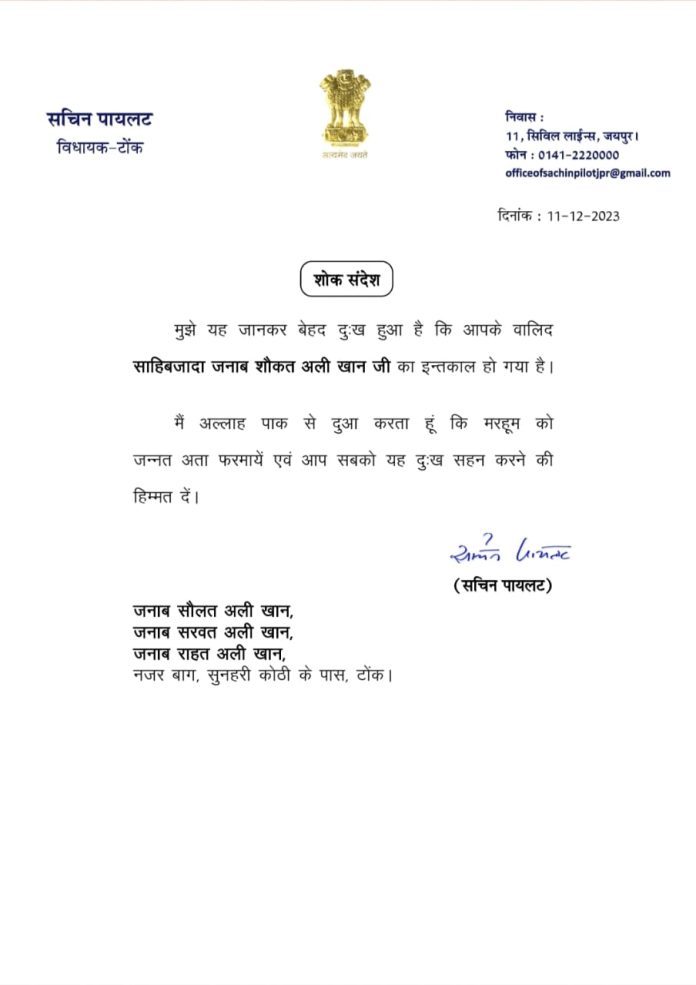
Condolence Letter by Sachin Pilot, MLA of Tonk
Sachin Pilot, MLA of Tonk has also sent a condolence message.
Chaudhary Akbar Qasmi, national convenor of Sanjhi Virasat Manch, has written that Sahabzada Shaukat Ali Khan was a descendant of Tonk Nawab and was one of the great intellectuals of Rajasthan. No one can deny his important role in establishing a big library (Arabic Persian Research Institute) in Tonk City and in raising it from the ground to great heights. As long as he was able to walk, he stood before writers and research scholars as a bright lamp of hope.
He was indeed a man of knowledge and grace.
source: http://www.radiancenews.com / Radiance News / Home> Focus> Markers of Excellence> Obituary / by Raheem Khan / December 12th, 2023
Mohammad Hashim, a porter at the New Delhi Railway Station railway station and an eyewitness to the horrific tragedy of stampede in which 18 persons died, tuned into a savior of a four-year old child.
He gets emotional as he recounts how a 4-year-old girl was resuscitated.
“…We were working like any other day when we suddenly heard screams. All of us, all porters, rushed there. We saw children on the floor, women & men running helter-skelter.
#WATCH | Stampede at New Delhi railway station | Mohammad Hashim, a porter (coolie) at the railway station and an eyewitness narrates the scenes he saw yesterday; gets emotional as he recounts how a 4-year-old girl, who he saved, was resuscitated.
“People were screaming. We pulled up a lot of children and brought them out. A few people had died and some others had fallen unconscious. We brought them to the ambulance.
“I rescued out 8-10 children…A woman was crying that her 4-year-old daughter died. I rescued the child and brought her out. Two minutes later, the child started breathing again, and she broke down.
“Her mother burst into tears of joy…We can call ourselves either brave or fools that we too jumped in, risking our lives…We saved several lives…”
He said he and other porters had never seen such scenes in their lives.
“Entire staff, GRP, RPF and porters were working on it…The crowd was for several trains. It happens every day, not just yesterday. But only God knows what happened…But porters helped a lot, there are 1478 porters here…”
source: http://www.awazthevoice.in / Awaz, The Voice / Home> Stories / posted by Aasha Khosa / February 19th, 2025
Mahmood Akram’s journey continues to inspire linguists, educators, and students worldwide, proving that dedication and passion can break barriers in education and learning.
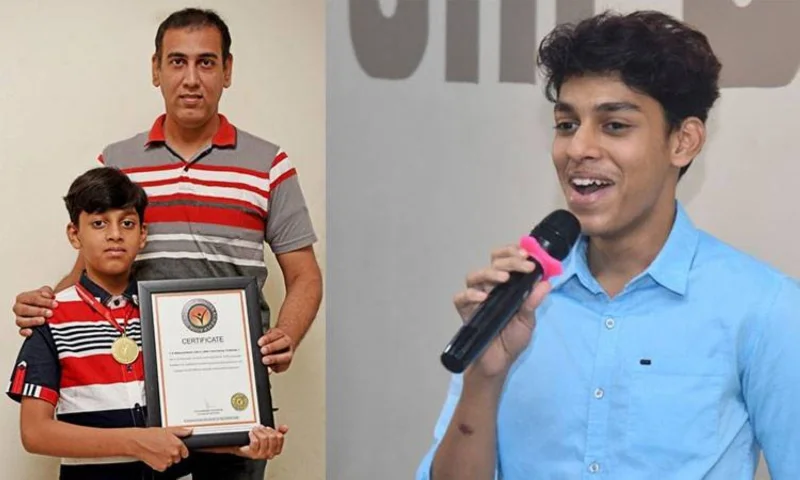
Nineteen-year-old Indian Muslim boy, Mahmood Akram, has astonished the world with his linguistic abilities and achieved what many consider impossible.
With the ability to write, read and type in 400 languages and speak 46 fluently, the Chennai-based Muslim teenager’s journey into languages began at an early age, guided by his father, Shilbee Mozhippriyan, who himself speaks 16 languages, according to media reports.
The young Indian boy believes English isn’t enough for global communication & wants to inspire people of Tamil Nadiu to learn more languages.
Akram’s extraordinary talent became evident when he learned the English alphabet in just six days and Tamil’s 299-character script in three weeks—a feat that typically takes months.
Encouraged by his father, a linguistics expert, he continued to explore languages, surpassing even his mentor’s knowledge by the age of six.
At just eight years old, Akram set a world record as the youngest multilingual typist. By 12, he had impressed German linguists by demonstrating fluency in 400 languages, securing another world record.
“I had struggled because I did not know the language of a particular state or country when I had to move to places like Israel, Spain, due to my job,” shares Shilbee, who also owns a doctorate in cognitive psychology among other degrees.
Akram’s journey continues to inspire linguists, educators, and students worldwide, proving that dedication and passion can break barriers in education and learning.
His passion for languages led him beyond conventional schooling. Unable to find suitable programmes in India, he pursued online studies through an Israeli institution, focusing on Arabic, Spanish, French, and Hebrew.
Inspired by his growing social media following, Akram began teaching languages at 14 through YouTube.
By 2024, he had conducted language workshops in Myanmar, Cambodia, Thailand, and Indonesia, sharing his expertise with students worldwide.
He is pursuing a BA in English Literature and a BSc in Animation at Chennai’s Alagappa University while also studying linguistics at the UK’s Open University.
Despite his academic commitments, he remains dedicated to refining his fluency across languages.
As Akram recalls, “My journey started at the age of four.” “My parents began teaching me Tamil and English alphabets, and I mastered the English alphabet in six days. They were astonished.” His aptitude didn’t stop there. He learnt the 299 alphabets of Tamil in just three weeks, a task that typically takes months.
source: http://www.gulftoday.ae / Gulf Today / Home> Culture / by Gulf Today Report / February 19th, 2025
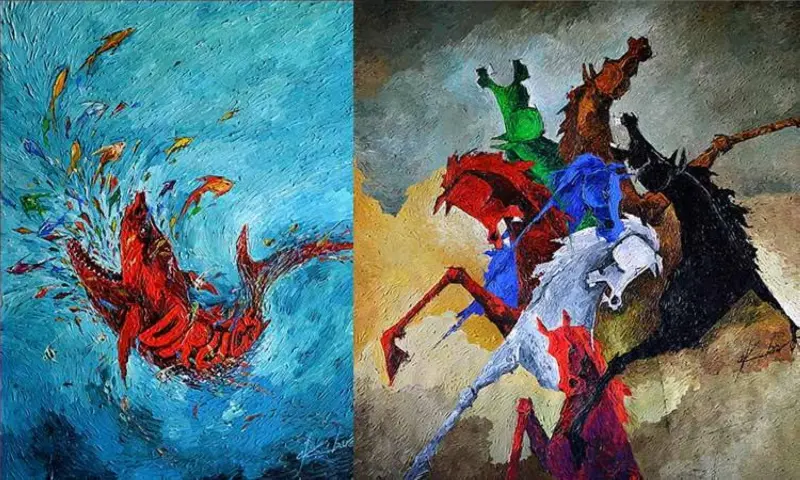
A painting combats drugs.Horses displaying power in colour.
Renowned artist Akbar Saheb has been immersed in the field of art for over 50 years. He has been living and working in Dubai since 1996, and has been honoured with the Golden Visa for his many artistic achievements and exceptional creative contributions to the UAE, his adoptive country, and India, his home country.
His vast collection of artworks, inclusive now of over hundreds of paintings, spans various mediums, including those created in oil, acrylic, watercolour, and more recently, sculptures. His exhibitions extend to both global and local audiences. Among others, he has had a notable solo exhibition done in a new style he calls “Depthism” at Jehangir Art Gallery Mumbai (2023).
Later, he hosted another art event in Delhi. The theme was tolerance and Akbar Saheb says that “many people, including foreigners, were mesmerised by the artworks and their creative ideation.”
In 2024, he had a solo exhibition at the Al Habtoor Polo Resort and Club in Dubai. “It was a huge highlight of my creative career,” says Akbar Saheb. His artistic prowess has transcended borders, earning him recognition from the Indian government also. He has been invited to participate in governmental initiatives, such as Prime Minister Narendra Modi’s Mann Ki Baat (Conversations of the Mind) book.
He was the only artist selected to illustrate the volume; it won him recognition in the Rashtrapati Bhavan (President’s House) and with the public also, during the official launch of the volume. In 2022, he showcased his artwork in 6 solo exhibitions held across India, supported by the Indian Prime Minister’s Office. The shows were held in Ahmedabad, Baroda, Surat, Rajkot, Delhi and Varanasi; they were attended by many VIPs. Akbar created a collection of 55 paintings which served as platforms that presented India’s progress and the transformative impact of Mann Ki Baat initiatives.
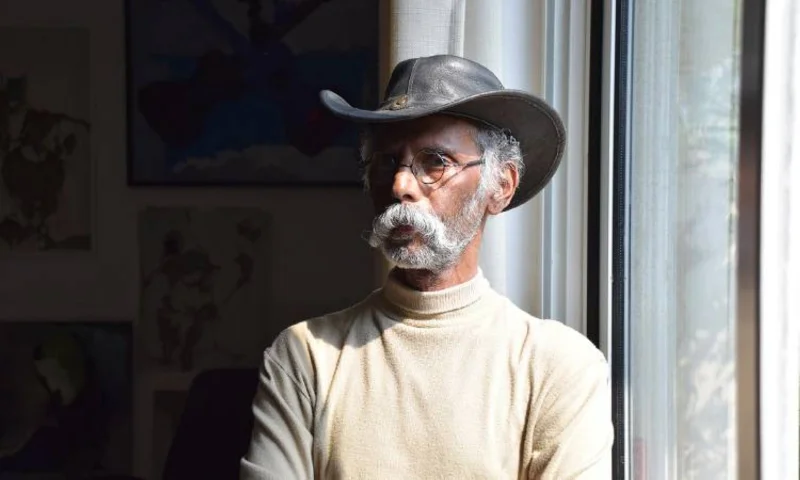
Akbar Saheb in a contemplative mood.
The seeds of Akbar’s artistic journey were sown at the tender age of seven. Despite the absence of significant family support, he diligently pursued his passion for art. He began by crafting shop signboards and assisting college students with biology drawings, to finance his sketching material. Years later, his creative flair propelled him to leading advertising agencies, where he specialised in illustration with airbrush techniques. His dedication to art ultimately took him from India’s Bangalore and Mumbai, where he worked in major companies, to Dubai.
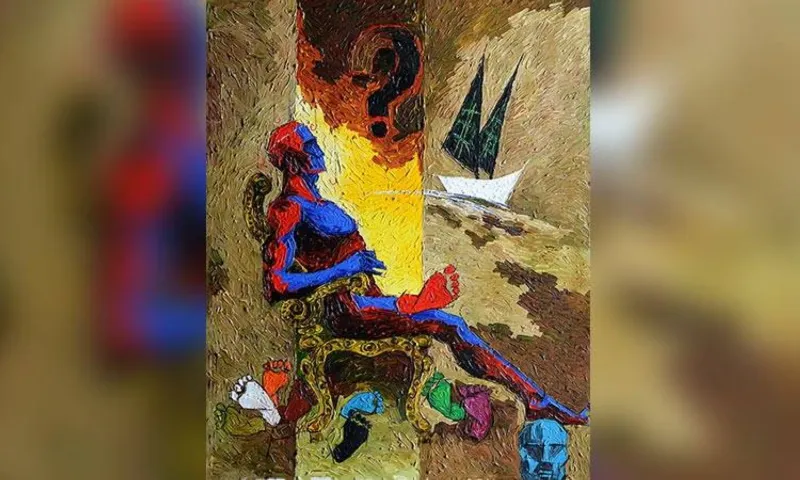
His paintings, especially those of horses, feature a bold use of colour and a fearless instinct to show movement. The firm brushstrokes are the vectors of the energy, vitality and dynamism of the animals. The pictures bring memories of the work of Indian artist M. F. Husain, whose horses too portrayed majesty and power.
Akbar Saheb is not merely an artist; he is a compassionate soul with a deep commitment to humanity, particularly towards children with disabilities. Through specialised painting classes and international collaborations, he empowers the children to express their artistry. “I strive to inspire children to embrace art, fill their minds with colours, and explore the world through creativity,” he says.
He has launched painting classes and charitable projects for disabled children, providing them a space for artistic expression and has also auctioned paintings for donations and charity. In an interview, Akbar shared his experience working with the children. “Engaging with these children and witnessing their resilience and creativity is truly humbling,” he said. “They inspire me and remind me of the beauty and strength within each person. Through such efforts, I hope to inspire others too to support and uplift special children, as they live their life and pursue art. Together, we can create a more inclusive and caring society.”
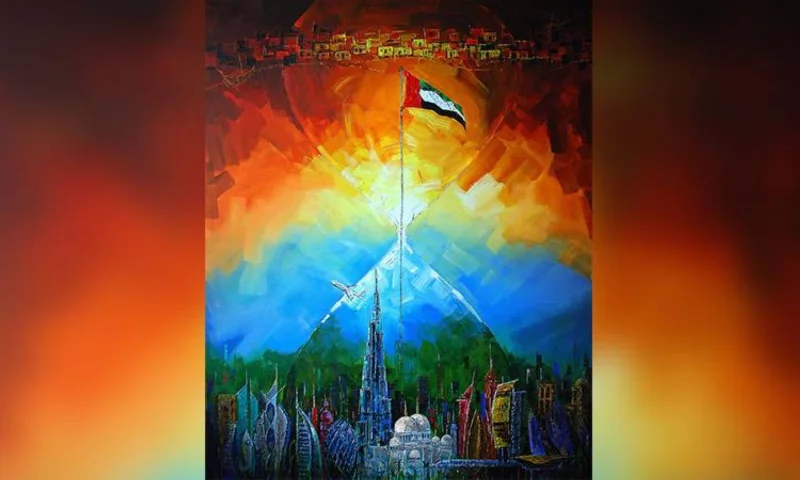
A composition by Akbar Saheb..
Alongside art sessions, the activities he initiates are aimed at raising resources for the development of children with special needs. His aim is to provide them with the necessary assets, materials and educational opportunities to nurture and develop their artistic talent. Investing in their growth, he believes, can create a future where every child, regardless of his or her ability, can thrive and contribute to the community.
Akbar’s extensive portfolio showcases an eclectic array of creative concepts, themes and styles – he has exhibited his works worldwide. “Recently,” he says, “I was invited to do live painting during the Gold Cup final at the Al Habtoor Polo Resort and Club. Both the teams involved played well; it was an intense match and ended in a tie. But finally, the UAE Polo team broke through, winning the final. My painting was gifted to the winning team for their amazing performance and playing skills!”
A painting titled Black Money.
Sheikha Maitha bint Mohammed bin Rashid Al Maktoum was the Patron of the event, for the sixth time, and also led the winning UAE team. Sheikha Maitha was the first woman from the UAE to represent the country in the Olympics, in 2008.
Akbar Saheb is known to numerous celebrities and prominent people; many of them own his paintings. He has produced multiple works depicting the UAE’s culture, and the growth of the country. The 18×7 foot, 50 year golden jubilee painting; paintings on Sheikh Zayed and Sheikh Mohammed bin Rashid Al Maktoum; plus over 50 paintings on UAE culture, are among his prized creations. His works range from commissions given by well-known individuals, to paintings done for his own satisfaction. Themes include horses, polo, history and culture and human existence, among others.
source: http://www.gulftoday.ae / Gulf Today / Home> Culture / by Muhammad Yusuf, Features Editor / February 24th, 2025
Taldi Village (South 24 Parganas District), WEST BENGAL :
Photo Credit: enewsroom
Kolkata:
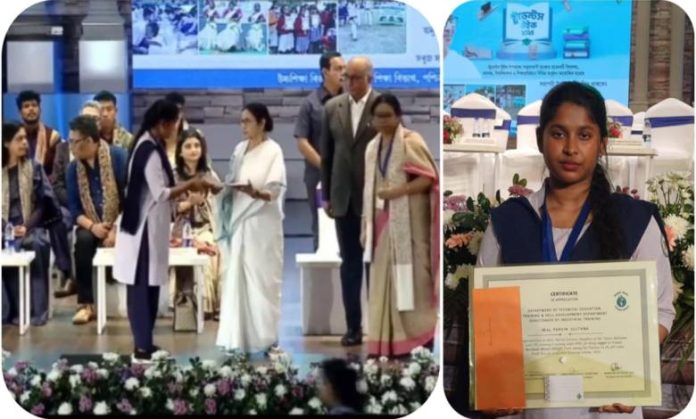
Parvin Sultana, a young woman from West Bengal, has secured the top position in the All India Industrial Training Institute (ITI) examination 2024 in the Mechanic Diesel Trade, scoring an impressive 599 out of 600 marks.
Despite financial struggles, she achieved this remarkable feat without private coaching. Recognizing her exceptional performance, Chief Minister Mamata Banerjee felicitated her, and she also received official recognition from Delhi.
Hailing from Taldi village in South 24 Parganas district, Parvin ranked first among female candidates nationwide. However, her academic success contrasts with her family’s financial difficulties. Her father, Taziur Rahman Sardar, works as a daily wage laborer in a fish market, striving to support their seven-member household.
Parvin’s educational journey has been one of determination. She completed her schooling at Taldi Surabala Sikshayatan for Girls’ School, securing 42% in her Madhyamik exams in 2017 and 76% in her Higher Secondary exams in 2019. In 2023, she earned a Political Science degree with 66% marks.
Despite financial hardships, Parvin remained focused on her studies, preparing for the ITI exam with the guidance of her college teachers instead of opting for private tutoring. “I couldn’t afford a tutor, but my teachers supported me. I want to prove that girls can excel in every field,” she said.
Lokman Mollah, a social worker in Canning, praised her perseverance, stating, “Many talented students in the Sundarbans go unnoticed due to financial constraints. Parvin’s success is proof that determination can overcome any obstacle.”
Parvin was honored at a public reception in Canning, organized by the Trinamool Congress (TMC) and led by MLA Paresh Ram Das. Canning Panchayat Samiti President Uttam Das also recognized her achievements, while her mother, Rijia Bibi, voiced concerns about financial constraints. “She wants to study further, but we lack the resources,” she said.
Assuring assistance, MLA Paresh Ram Das stated, “Just as Chief Minister Mamata Banerjee supports meritorious students, we, too, stand by them.”
While excelling in the ITI exam, Parvin’s ultimate goal is to serve society through the civil services. Inspired by her recent success, she has decided to prepare for competitive exams. “Initially, I wasn’t sure what to study for a secure job, but after my ITI results, many suggested civil services. Now, I am enrolling in a coaching center in Kolkata to prepare,” she said.
Parvin’s journey from a small village to national recognition serves as an inspiration, proving that resilience and hard work can overcome financial hardships.
source: http://www.radiancenews.com / Radiance News / Home> Pride of the Nation> Markers of Excellence / by Radiance News Bureau / February 13th, 2025