Category Archives: Amazing Feats

IIS alumna bags gold medal

Kodangallur, KERALA / Doha, QATAR :

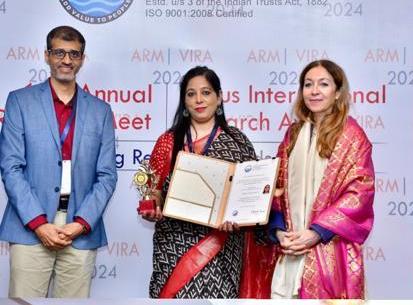
Ideal Indian School (IIS) alumna Sahar Abdul Gafoor has achieved first rank and gold medal at Lovely Professional University (LPU) in Delhi, India, by securing the highest marks ever in Clinical Psychology (96%) for her post graduation.

Daughter of Abdul Gafoor and Sunitha Hameed from Kodungallur, Kerala, Sahar topped the Gulf region and all of India with 100% marks in Psychology in the CBSE Senior Secondary Examination, and won an award from the Council of CBSE Affiliated Schools in the Gulf.

Later, she graduated with high distinction in Psychology from Maharaja’s Women’s College, Thiruvananthapuram, and also completed training at Oolampaara Government Mental Hospital, Thiruvananthapuram.

The IIS management, principal, teachers, and students have congratulated Sahar.

Her next goal is to pursue a Psy.D. Doctorate in Clinical Psychology.

source: http;//www.gulf-times.com / Gulf Times / Home> Community> Education / October 26th, 2024

Dr. Chaudhary Wali Mohammad (1886-1968): Life and Contributions

Feerozpur, PUNJAB / Aligarh, UTTAR PRADESH :

In October 1919, Chaudhary Wali Mohammad joined as the Deputy Secretary in the Educational Department, Government of India.

He was also a member of the Indian Education Service and was instrumental in drafting the Bills of Aligarh Muslim University, Lucknow University, Dacca University, and Nagpur University.

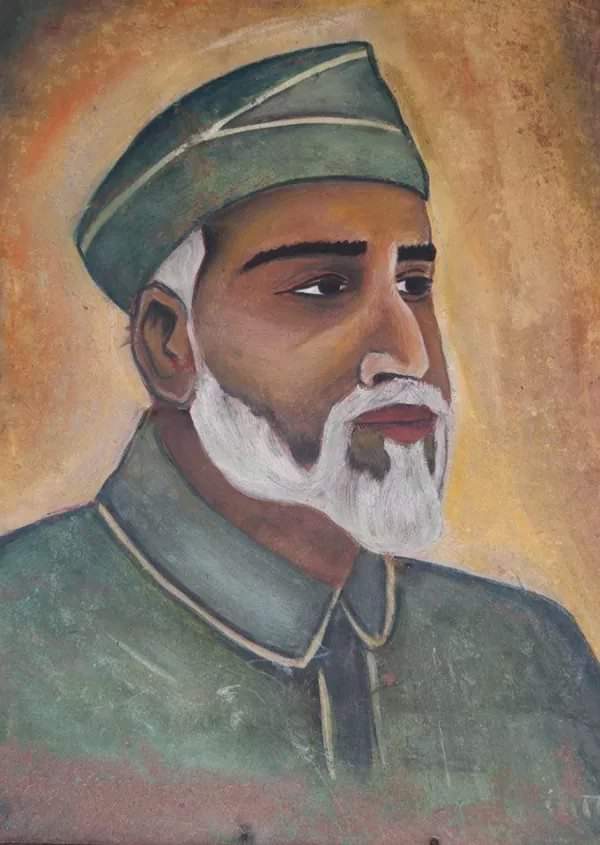
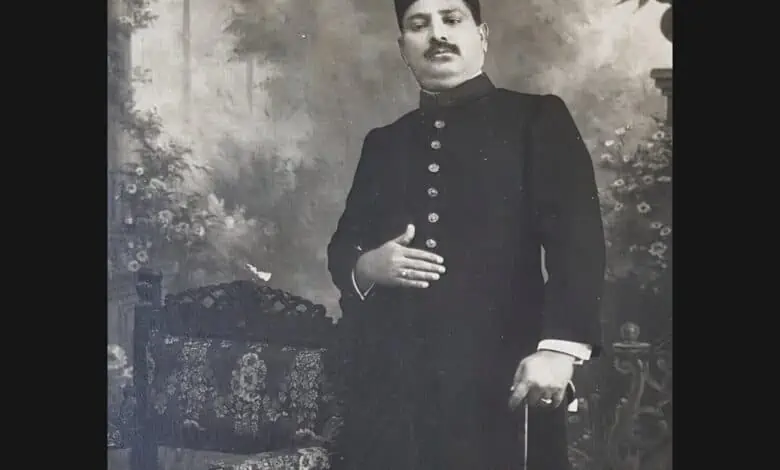
Dr. Chaudhary Wali Mohammad was born in Feerozpur Punjab, on August 18, 1886. He received his B.Sc. and M.Sc. degrees from Lahore College, Punjab. When in 1907, MAO College began science classes under the guidance of Prof. E. Harrison; he joined the College in March 1908 as one of the earliest teachers of Physics. Wali Mohammad was later sent by the MAO College Management to Cambridge England for higher studies in Physics in October 1908, for which he received the Agha Khan Scholarship. He passed Tripos in Natural Science in July 1910. He was the pupil of Noble Laureate Sir J. J. Thomson of Cambridge University. After that, he was shifted to Germany where he received his Doctorate from Gottingen University (Germany) in March 1912.

After returning back to Aligarh in 1912, he resumed his service and served as a professor and the Head of the Department of Physics from 1912-1919. He also served as the Principal of MAO College, Aligarh for a brief stint i.e. from March 1919 to May 1919.

In October 1919, he joined as the Deputy Secretary in the Educational Department, Government of India. He was also a member of the Indian Education Service and was instrumental in drafting the Bills of Aligarh Muslim University, Lucknow University, Dacca University, and Nagpur University.

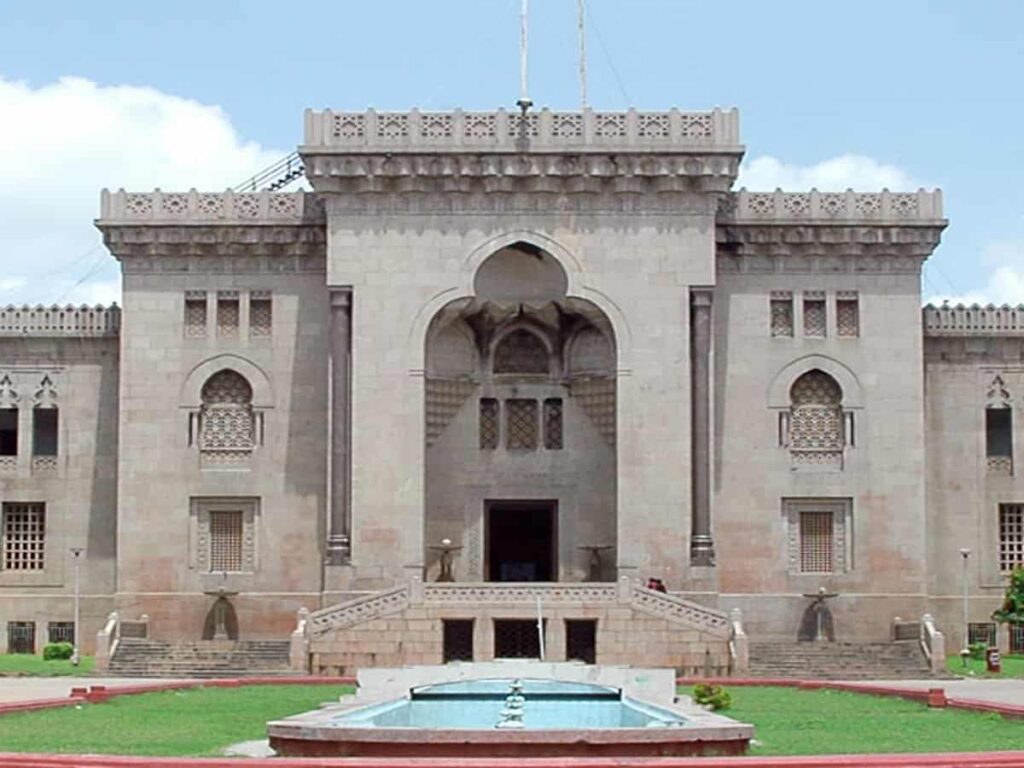
In 1921, he was appointed as the first professor and the Head of the Department of Physics at Lucknow University at which position he worked till 1945. In the tumultuous phase of 1946, he was appointed the Vice-Chancellor of Osmania University, Hyderabad but he was there only for a brief period. He was also one of the members of the planning committee for the establishment of the National Physical Laboratory approved by the CSIR Governing Council in 1943.

At Aligarh, he had left a big trust for the benefit of the students of Aligarh Muslim University. He established a corpus fund at the MAO College to scholarships to promising young students for research at the best Universities and Institutes in Europe and Elsewhere within our country. At Lucknow University he also started Evelyn Wali Mohammad Gold Medal for the student topped in M.Sc. Electronic.

After partition, he migrated to London in 1948, where he worked for the cause of science education. In 1957, he established the Edith Evelyn Wali Muhammad Trust to support students in pursuing higher research in science, technology, and medicine in various British Universities.

After coming back to India he continued to take great interest in the affairs of Aligarh Muslim University and donated to it both his property and his rare books. The property includes his house Wali Manzil and a piece of land on which Nadeem Tarin Hall is situated.

Besides being a dynamic Physics teacher and administrator, he also took a keen interest in library affairs. When he was in Aligarh, he served as the Librarian in charge at College Library known as Lytton Library. In Lucknow University, besides working on the expansion of the Department of Physics he set up a modern library now known as Tagore Library. He was the President of the All India Library Association.

Chaudhary Wali Mohammad was specialized in spectroscopy, magneto-optics and wireless operations. His research on the hyperfine structure of spectral lines with a littrow mounting spectrograph was a rare achievement for an Indian University at that time. He was one of the earliest to introduce wireless in the post-graduate course in physics in an Indian University. Set up a low-power medium-wave radio transmitter in the Department of Physics AMU for his research on ionospheric reflection.

He was a foundation fellow of the ‘National Academy of Science (INSA). He also worked for the revival of Sir Syed’s ‘Scientific Society’ at Aligarh and served as the Vice President and President of the Scientific Society, Aligarh respectively during the sessions 1907-1908 and 1914-1915. In 1914, he also introduced the ‘Photographic Society’ at MAO College.

He delivered many lectures on various aspects of physics through the platform of Scientific Society. One of his lectures on X-rays which he delivered on 24th June 1908 for the students of MAO College at Strachey Hall was well received by the audience. In 1925, as a fellow of Allahabad University, he also wrote a booklet critically evaluating the condition of Physics education at Allahabad University. The  Aligarh Institute Gazette” published a report on this book in its issue of 4 November 1915.

Chaudhary Wali Mohammad also served as the President, the Physics and Mathematics Section, the Indian Science Congress in 1917. His Presidential address at the Indian Science Congress’s Physics and Mathematics session of the year 1917 was published as Tim-ul-Mraya-wa-al Manazir’ by the Aligarh Institute Press, Aligarh in 1918. His article on physics Uqda Kainat Bazariya Ilm-e-Hayyar’ appeared in Aligarh Monthly in June 1908.

Wali Mohammad’s article on the education system of Cambridge depicting literary and educational activities of the University ‘Cambridge University ke Dilchasp Halat’ was published in the “Aligarh Institute Gazette” on 26th May 1909. His other articles that appeared in the Gazette are: ‘Wilayat ke Akhbarat Kyonkar Chaptay Hain? – London ke Matbat me Aik Din’ (15th September 1909), ‘Sikkay Kaise Mazroob hotay Hain (22nd September 1909), ‘Aik Japani Mudarris ka Dastoor-ul-Amal (22 September 1909), ‘Wilayat me Andbe Bacche kaise Parthe Hain-Andhe Bacchon ke School me Aik Din’ (29, September 1909). An article of him Aligarh College ke Maujooda Halat’ appeared in Aligarh Institute Gazette on 16th March 1919. He died at Aligarh on 24 June 1968.

Best online courses

References

1. Aligarh Institute Gazette (23 September 1908, 26 May 1909, 6 February 1918, and 4th November 1915),

2. Aligarh Monthly (June 1908)

3. Dr. Chaudhary Wali Mohammad College Ke Pehle Hindustani Principal Aur Mabir-e- Tabayyat by Dr. Asad Faisal Farooqui, Fikr-o-Nazar, Aligarh June 2021

4. Aligarh Muslim University Contributions and Achievements, Duty Society, Aligarh, 1989.

5. The Nine Faculty Gems of Lucknow University, Times of India, November 16, 2019.

6. Website of Indian National Science Academy, Insaindia.res.in Souvenir Department of Physics, Aligarh Muslim University, 2012

7. Indian Library Chronology by PSG Kumar, Allied Publishers Delhi, 2000

8. University Mourns Professor Wali Mohammad’s death, 8 September 1968 Muslim University Gazette

source: http://www.heritagetimes.in / Heritage Times / Home / by Dr Asad Faisal Farooqui / August 26th, 2024

Rashid un-Nisa: India’s First Woman Urdu Novelist and a Pioneer of Education

Patna, BIHAR :

Rashid un-Nisa’s life and work continue to inspire, reminding us of the importance of education and the courage to advocate for change in the face of resistance.

Representative image of girl students. Photo: Wikimedia Commons

Rashid un-Nisa, India’s first female Urdu novelist, wrote Islah-un-Nisa, advocating for women’s education and reform. Born in 1855 in Patna, she was also a champion of girls’ education, founding Bihar’s first girls’ school. Her novel, published in 1894, addressed social issues and encouraged women to seek education. Rashid un-Nisa’s pioneering efforts in literature and education have left a lasting legacy, inspiring generations of women and contributing significantly to India’s literary and social history.

The premise of Islah-un-Nisa is something like this: “I am aware of the fact that there are many problems in our Muslim families. I also want to remove these problems. But instead of giving any sermons for this, I have chosen an interesting way to do this work the way of writing a novel.”

Early life and family background

Rashid un-Nisa, also known as Rashidatun Nisa or Raseedan Bibi, was born in 1855 in Patna, Bihar, into a scholarly family. Her father, Shamsul Ulama Syed Waheeduddin Khan Bahadur, was a prominent Islamic scholar. Growing up in a rich intellectual environment, Rashid un-Nisa received her education at home through private tutoring. Though formal schooling for girls was rare, her intellectual curiosity was nurtured in this setting.

Her marriage to Maulvi Mohammad Yahya, a lawyer, introduced her to progressive literature, particularly Mirat-ul-Uroos by deputy Nazir Ahmad, which deeply influenced her views on women’s education and reform. 

Islah-un-Nisa: Breaking new ground

Rashid un-Nisa began writing her most famous work, Islah-un-Nisa, around 1868, though it took over a decade to publish due to challenges as a female writer in a male-dominated field. With the help of her nephew, Mohammad Suleman, the novel was finally published in 1881. Its significance as the first Urdu novel written by an Indian woman cannot be overstated.

The novel advocates for women’s self-improvement through education and moral upliftment, tackling issues such as superstitions, societal constraints, and regressive customs. It promoted the empowerment of women and their active participation in social reform, much like the themes Rashid un-Nisa had encountered in Mirat-ul-Uroos.

Jamia Millia Islamia’s research scholar, Dr. Uzma Azhar, comments on the novel, stating, “Islah un Nisa is the first novel in Urdu literature authored by a woman (1881). Rashid un Nisa came from an educated family of Azeemabad (now Patna, in Bihar) and later started a girls’ school as well.

Titled “Islah” meaning “to rectify/reform”, and “un Nisa” of women, it conveys ways through which a woman could improve herself.  She has advised women on broad mindedness, importance of education against ignorance and has also tried to talk about the lives of literate women of that era through her story. 

The main story of Bismillah is followed by further similar short stories. She has given delightfully detailed descriptions of the various traditions around marriage, pregnancy, birth of a child in simplified common language interspersed with local regional songs, making this book an interesting historical document.”

The novel’s appeal stretched beyond its time, with later editions being released in 1968, 2001, and 2006, highlighting its enduring influence in India and Pakistan.

Social reformer: Championing girls’ education in Bihar

Rashid un-Nisa didn’t limit her reformist spirit to literature; she founded the first girls’ school in Bihar, a revolutionary step at a time when educating girls was controversial. The colonial administration even recognised her efforts, with Lady Stephenson, wife of the lieutenant governor, personally praising her work during a school visit.

Her educational philosophy was grounded in the belief that women’s education could transform not only their own lives but also the wider society. By ensuring access to education, Rashid un-Nisa opened new avenues for countless women, many of whom went on to contribute significantly to education and reform.

Educational Philosophy and Social Impact

Rashid un-Nisa’s educational vision was deeply embedded in her literary work. Islah-un-Nisa reflects her belief that intellectual and moral growth were essential for women. Her protagonist, Bismillah, navigates societal challenges, embodying the values of enlightenment and self-improvement. Through conversations between her characters, Rashid un-Nisa critiques harmful customs and superstitions, urging women to rise above them.

Senior journalist and well-known historian Shams Ur Rehman Alavi notes, “Islah un Nisa, gave message to women to shun regressive cultural practices that were a burden on them, and instead, aim at achieving excellence in all fields.

Through conversation of characters, she emphasised that it’s not just about ability to read and write, but learning and expertise in all spheres, which was the need of the hour for women. It must be remembered that it was a period, when all the social reformers were not so enthusiastic about women’s rights and adequate priority was not given to women’s higher education, as some of them still felt that basic literacy was enough, so that a woman could communicate through letters with husband in case he is away or be able teach own children a bit.

Sample this from a paragraph in the novel: Mir Waaez’ wife says, ‘Beti is mein bhalaa kya buraai hai [What’s wrong with this]’ and Karim-un-Nisa replies, ‘Aap badi hain, aap ki baaton ka jawab dena be-adabi hai magar….be-adabi maauf ho….ye rasm buri hai...[You are elder and it is disrespectful for me to speak but I need to say that this custom is bad’.

The writer shows her disgust towards superstitions also that are continued in the name of ‘tradition’ and disses fake healers as well as those who are obsessed with spreading fear about apparitions and paranormal. On one hand, language and Urdu idioms heard in households of the era, keep the reader fixated, the unique description of the rituals that brought financial burden on households and forced families into debt, was clearly aimed at discouraging the practice of going to money-lenders and falling in this trap, which affected the families.“

The novel blends traditional and progressive values, challenging superstitions while depicting modern aspirations. It offers a vivid portrayal of customs like marriage and childbirth, making it not only a piece of literature but also a historical document of women’s lives at the time.

Legacy

Rashid un-Nisa passed away in 1929, but her contributions to literature and social reform endure. She is remembered not only as the first Urdu woman novelist but also as a pioneer of women’s education in India. Her novel Islah-un-Nisa remains a powerful reminder of the struggle for women’s rights and education during an era resistant to change.

Her school continues to inspire generations, and her work has been reprinted several times, testifying to her lasting influence. As Dr. Uzma Azhar reflects, “Islah-un-Nisa offers delightfully detailed descriptions of the various traditions around marriage and other social practices, making it an interesting historical document.”

Rashid un-Nisa’s life and work continue to inspire, reminding us of the importance of education and the courage to advocate for change in the face of resistance.

Sahil Razvi is an author and research scholar specialising in Sufism and history. He is an alumnus of Jamia Millia Islamia. For inquiries, you can email him at [email protected].

source: http://www/thewire.in / The Wire / Home> Culture / by Sahil Rizvi / October 13th, 2024

RIMS doctors pay tribute to COVID -19 deceased RIMS Doctor Siraj Uddin, treat 600 patients free of cost in Jharkhand

JHARKHAND :

On the day of Diwali a record was stored in files of medical service. As many as six hundred ailing patients were checked and medical treatment provided by top doctors of the Jharkhand government run hospital RIMS.

Their aim was to pay tributes to the departed soul of a RIMS doctor Dr Siraj Uddin who had died due to COVID-19 this year. All patients were provided free medical service inside Siraj Memorial Hospital in Giridih.

The medical aid was part of free medical camp held to screen people for blood Sugar, Cardiac complications.

All doctors and nurses of Siraj Memorial Hospital included  Dr M. S. Ahmad, Dr Ahmad Sharfuddin Dr Syed Azaz Hashmi, Dr Alimuddin, Dr Md Khurshid Ansari, Dr Nayeem Akhtar, Dr Shadab Hassan(MS,Surgery,RIMS) Dr Syed Md Sharique (MS,Surgery,SR,RIMS), Dr Shefa Habib, Dr Md Arif Tauheed, Dr Md Shafique Alam, Dr Md Ragheeb Tauheed, Dr Saquib jamal (MBBS,HS,RIMS), Dr Prerna Nag, Dr Binita Agarwal,Dr Abdul Zafar, Dr Hasnain, Dr Fuzail Akram, Dr Iqbal Hassan, Dr Md Athar Alam, Dr Saddam, Dr Rehan.

Dr M.S.Ahmad said, his hospital is committed to serve the public. “This was our first medical camp after the pandemic patients had complained of rise in blood sugar and BP after recovery from Covid-19. 

Through free check-ups, people knew if they needed consultation and treatment. Many were referred to RIMS HOSPITAL Ranchi , Than for further investigation and treatment,” said Sabir Warsi, and chairperson Dr M. K. Uddin.

“More such free camps for the poor are needed. Moneyed people should come forward and hold such camps across the Ghorthamba city, according to Dr M. S. Akhtar.

The spokesperson of the Siraj Memorial Hospital said, “This is was this year’s biggest medical camp which included tests for diabetes and, cardiac even cancer. There was a doctor for consultation in” EYE” and “ENT”treatment too. The purpose was to detect the after-effects of Rural Poor Patients. It was also held to remove hesitancy among some people about getting vaccinated for child .”

source: http://www.jharkhandstatenews.com / Jharkhand State News / Home> Top Stories / by admin (headline edited) / November 05th, 2021

AMU Professor Qazi Ehsan Ali Honoured by Indian Society of Anaesthesiologists (ISA)

Aligarh, UTTAR PRADESH :

Aligarh :

Prof Qazi Ehsan Ali, Department of Anaesthesiology, J.N. Medical College, and Principal, Paramedical College, Aligarh Muslim University, has been honoured with prestigious State Oration Award and Medal from the Indian Society of Anaesthesiologists (ISA), Central Zone, at the 1st International Conference on Innovation and Technology in Anaesthesiology and Critical Care and the 15th Annual Conference of the Central Zone, ISA, hosted by the Department of Anaesthesiology, MLB Medical College Jhansi, and the ISA Jhansi City Branch at Orchha Palace Hotel, Orchha, Madhya Pradesh.

The award was given to him in recognition of his academic achievements and his services in advancing anaesthesiology.

As part of the recognition, Prof Qazi was invited to deliver a 60-minute oration on “Past, Present and Future of Airway Management.” He shared insights into ancient carvings on early airway techniques and modern advancements, and highlighted the objective use of 3D technology, artificial intelligence, and robotic systems in airway management, while proposing his hypothesis for managing challenging airways using a nasal-route for laryngeal mask insertion.

He has earlier received several honours, including S. Radhakrishnan Distinguished Professor and Researcher Award by Niti Aayog and the Center for Professional Advancement in 2023 and the National Academy of Indian Scientist Award for specialized training at AIIMS, New Delhi.

source: http://www.amu.ac.in / Aligarh Muslim University – AMU / Home / by Public Relations Office (headline edited) / October 30th, 2024

Iqra Farooq, Srinagar Tailor’s Daughter, Finishes 2nd in JKAS Exams

Zakura (Srinagar), JAMMU & KASHMIR :

Iqra Farooq Bhat, from Zakura, Srinagar, has secured the highest rank in the Kashmir region and the second rank overall in Jammu and Kashmir in the Jammu and Kashmir Administrative Service examination.

Daughter of a tailor, Iqra invested three years in intensive self-study to prepare for this challenging exam. She shared her passion for making a positive impact, saying, “I have always wanted to reach a position where I can make a difference.”

Despite financial constraints, Iqra remained focused, proving that determination and self-guided learning can overcome obstacles. Unlike many who attended coaching centres, she chose to prepare independently through online resources.

“I didn’t opt for coaching and believe it’s unnecessary if you can effectively utilise the internet. It provided me with everything I needed,” she explained.

Iqra’s journey was challenging, especially due to her family’s limited finances. Her father, Farooq Ahmed, faced hardships at times, yet Iqra’s parents continually supported her.

“My mother and father never let me feel the weight of our financial struggles. Their belief in my potential kept me motivated,” she recalled.

After receiving her exam results, she expressed relief and gratitude: “I wasn’t sure I’d rank this high, but I’m thankful to Allah for this blessing.”

Ahmed said, “Every parent strives to do their best for their children. My daughter worked hard, and God has rewarded her.”

Iqra, who has been driven by a desire to help others since childhood, is committed to serving her community. “I want to support future aspirants and remind them not to lose hope. Even if they don’t qualify the first time, they can continue working hard,” she said.

She explained, “Coming from a humble background doesn’t mean you can’t dream big. You can succeed with the right resources. My family supported me financially, emotionally, and materially. Coaching can guide you, but ultimately, it’s your effort that matters.”

source: http://www.radiancenews.com / Radiance News / Home> Latest News> Markers of Excellence / by Radiance News Bureau / October 31st, 2024

MEIF Honored with Kannada Rajyotsava Award for transformative contribution in education sector

Dakshina Kannada, KARNATAKA :

Mangaluru:

The Muslim Educational Institutions Federation (MEIF), a prominent educational organisation operating in Dakshina Kannada and Udupi districts, has been honored with the prestigious Kannada Rajyotsava Award this year.

The Karnataka state government recognized MEIF’s significant role in revolutionizing education within the Muslim community across both districts. Founded by former Higher Education Minister of Karnataka, BA Mohidin, MEIF’s commendable efforts in education for the past 22 years have earned them this esteemed accolade.

In response to the educational gaps prevalent among Muslims in Dakshina Kannada and Udupi districts, Mohidin initiated free English classes within mosques’ madrasas during daytime. The positive reception from the community led to Jamaats in undivided Dakshina Kannada establishing English medium schools within Madrasa premises.

Encouraged by the overwhelming response, Mohidin conceptualized the Muslim Educational Institutions Federation (MEIF) in 2001.

Today, MEIF comprises 180 English medium schools and pre-university colleges across Udupi and Dakshina Kannada, catering to 60,000 students and employing 6,250 teachers. Notably, students of all communities and religions study in these institutions.

MEIF’s mission centers on the belief that education is pivotal for development and strives to empower Muslim community, through education.

The Federation extends guidance to member-school boards on administrative matters and conducts regular training sessions for teachers, students, and parents across its five zones.

MEIF’s concerted efforts have yielded remarkable results in annual examinations, with an impressive 83 percent of students achieving distinction and first-class grades in recent years. Furthermore, pre-university students have displayed consistent improvements in their academic performances.

Operating with government approval, MEIF’s private unaided schools, primarily located in rural areas, maintain affordable tuition fees. Financially disadvantaged students receive free education, while others are charged nominal fees.

Additionally, MEIF facilitates 174 SSLC students’ admission to prominent PU colleges in the districts, supporting over 300 eligible rural students in securing free seats in technology institutes in Mangaluru and Bengaluru.

MEIF has also been instrumental in adding interest among high school students in civil service careers, organizing training sessions to enhance their skills. Over the past three decades, MEIF has played a pivotal role in enhancing literacy rates and women’s education in Dakshina Kannada and Udupi districts.

Founder-chairman of MEIF and esteemed educationist PA Khader Kukkady significantly contributed to the Federation’s development.

Following his tenure, Mohammed Beary Yedapadavu assumed the role of chairman, steering MEIF to greater heights.

Retired officer Moosabba P Beary is currently running the Federation successfully as its President.

Umar Teekay serves as the honorary chairman of MEIF, while Syed Mohamed Beary is the chief advisor. Riyaz Ahmed Kannur is the current general secretary of the federation.

source: http://www.english.varthabharati.in / Vartha Bharati / Home> India / by Vartha Bharati / October 31st, 2023

twitter sharing button
whatsapp sharing button
linkedin sharing button
email sharing button
print sharing button

Karnataka Rajyotsava Award announced for Dr. Thumbay Moideen

Karavali, KARNATAKA / Dubai, U.A.E :

Bengaluru:

The Karnataka Government on Wednesday named Dr. Thumbay Moideen, son of prominent community leader late B. Ahmed Haji Mohiudeen, among the recipients of this year’s Karnataka State Rajyotsava Award. A prominent alumnus of St. Aloysius College, Mangaluru, Dr. Moideen has earned widespread recognition in the UAE and beyond for his contributions to higher education and healthcare.

Dr. Moideen founded the THUMBAY Group in 1997, a diversified international conglomerate that has since expanded into health education, healthcare services, and medical research. In 1998, he became the first Indian invited by the rulers of Ajman to establish a medical college in the UAE. This institution has now grown into a university with its own network of hospitals, clinics, medical centers, and pharmacies throughout the country.

Dr. Moideen has been featured in respected publications, including Forbes Middle East and Arabian Business. His achievements have also been recognized with an Honorary Fellowship from the International Medical Sciences Academy (IMSA) and an honorary doctorate from Amity University.

The Karnataka Rajyotsava Award, also known as the Rajyotsava Prashasti, is the second highest civilian honor in Karnataka, India. The award is given annually to recognize citizens of Karnataka and others who have contributed to the state in various fields: Arts, Education, Industry, Literature, Science, Sports, Medicine, Social Service, and Public Affairs.

The award is presented on November 1, the day of the state’s establishment, which is celebrated as Kannada Rajyotsava. 

source: http://www.english.varthabharati.in / Vartha Bharati / Home> Karnataka / by Vartha Bharati / October 30th, 2024

The Voice of Blood Donors® collects 56 units of blood camp held in city

Mangaluru, KARNATAKA :

Mangaluru :

The Voice of Blood Donors® organized a blood camp in collaboration with City Street Vendors Association and blood bank of Indian Red Cross Society (IRCS) at Town Hall here on Tuesday January 20.

It was held to mark Foundation Day of City Street Vendors Association.

Fifty-six units of blood was collected at the camp by IRCS.

The ration-kits were also distributed to civic workers on the same occasion.

The Voice of Blood Donors established 3 years ago had collected over 3,000 units of blood by organizing many camps in Dakshina Kannada (DK) district.

It has over 700 dedicated members who are available at short notice. The up-and-coming young entrepreneurs Abdul Rauf and NRI Farhan Sadat are the founder and co-founder respectively of The Voice of Blood Donors.

The blood banks in DK district has been facing acute scarcity of blood since many years. The accident victims and those who need frequent blood transfusion are worst affected by this life threatening issue.

Meanwhile, the founders of The Voice of Blood Donors who were determined to contribute their mite united under one platform for this noble cause. Its members from different faiths, caste and creed are involved in this humanitarian deed that has been commended by district administration, Lions Club and other social welfare organization.

City Street Vendors Association honorary president B K Imtiyaz was present on the occasion.

source: http://www.bellevision.com / Bellevision.com / Home> Mangaluru / by Robert D’Costa / Bellevision Media Network / pics : Abdul Rauf / January 22nd, 2021

Mangaluru NRI Abdulla Monu named among recipients of DK District Rajyotsava Award 2024

Karavali (Dakshina Kannada) KARNATAKA / Doha, QATAR :

Mangaluru :

Abdulla Monu Moideen, a well-known non-resident Indian (NRI) entrepreneur and dedicated social worker, has been chosen to receive the prestigious Dakshina Kannada District Rajyotsava Award this year.

Recognized for his long-standing contributions to community service, Moidin has been actively involved in various social initiatives for over 30 years.

In addition to his social work, Moidin has been in the automobile business for 23 years. He is the founding president of the South Kanara Muslim Association and currently serves as the president of the Karnataka Cultural Association in Doha, Qatar.

Additionally, he holds the position of vice president at Tulu Koota in Doha and is actively involved with numerous other social organizations.

source: http://www.english.varthabharati.in / Vartha Bharati / Home> Karavali / by Vartha Bharati / October 31st, 2024