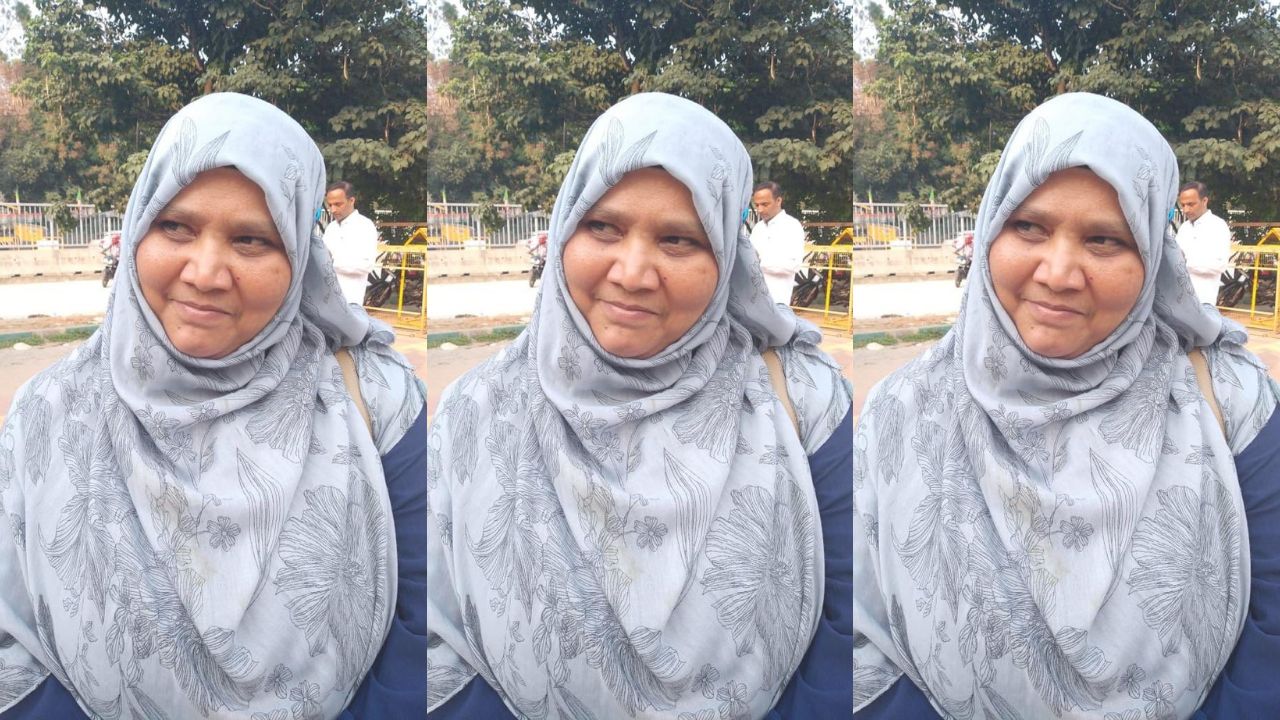
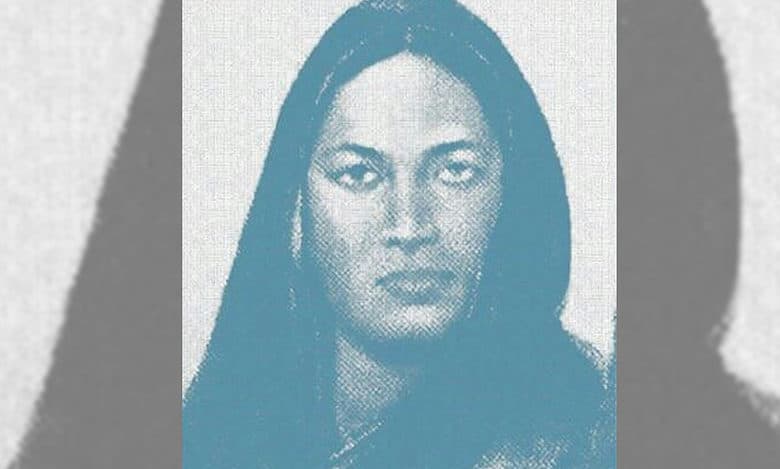
Firdouse Khan, a prominent Muslim activist passed away at her residence on Friday morning in Bengaluru.
Firdouse was the secretary and consultant at the city-based Forward Trust, a family and marital counselling organisation. She was actively involved with Bahutva Karnataka, Communal Friendship Forum, Jamaat-e-Islami Hind and other civic organisations.
Speaking of the demise of Firdous, Bahutva Karnataka activist Adv Vinay Sreenivas told The Cognate, “She cared a lot about society and was a person like who exhibited a lot of goodness. It was her dream to live in a society which is in harmony.”
The 52-year-old previously held the post of manager at HCL. She later resigned from the post and was involved in social activities. She took part in several protests, including the anti CAA/NRC protests. The activist regularly organised legal literacy workshops.
“Firdouse was interested in building bridges across people, faiths, and like, there are different communities. She stayed in touch with everybody and was like a very spirited person. Her life was committed to support others and she did what she could do to ease somebody’s pain,” Vinay said.
“A personification of the kind of values we want in a fraternity, Firdous was a believer and she had made connections with people from other faiths. It’s just it’s a very big loss for the civil society in Bangalore because we have very few people like this.”
The deceased is survived by her husband Waseem Khan, one son and a daughter.
source: http://www.thecognate.com / The Cognate / Home> News / by Rabia Shireen / November 11th, 2022
Tolanur Village (Akalkot Taluk, Solapur District) ,MAHARASHTRA :
Unfovourable conditions were my inspiration, which pumped me to achieve something and bring positive and healthy change in family’s financial status, said Ayesha.
It is an inspiring story of 24 years Old Village girl Ayesha Aziz pasha Peerzade who defeated all odds and cracked the MPSC exam on her first attempt and became judge .
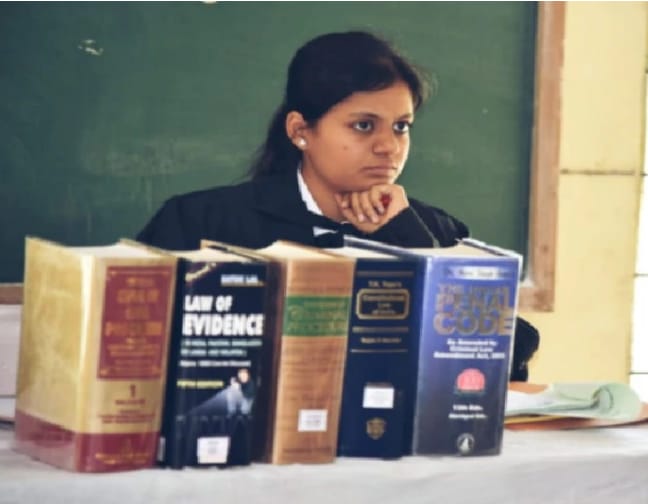
After four years of legal education, she has passed the first class examination of the Civil Judge Junior Division and the Judicial Magistrate. About 15,000 students from across the state sat for the exam. However, only 190 students have passed the exam and grab in the final list. Ayesha Rank is 99.
The girl who is eldest among five sisters from Tolanur, a small village in Akalkot taluka in Solapur district, has achieved a tremendous success which has brought smile on faces of her relatives and village people.
She is claimed to be the first girl in the district to be a judge at such a young age.
Tolanur is about 40 km from Akkalkot town and 70 km from Solapur city . Due to the difficulty of language in the village, Karnataka border is within walking distance of the village. Only up to 10 education facilities is available in the village.
Hence Ayesha along with her three sisters had to shift to Solapur city for higher education and she joined Dayanand Vidhi College.
During Conversation with Millattimes.com Ayesha shared, those days were challenging for us, we, four sisters used to live in small rented room for years. During stay we faced financial crunch several times.
Ayesha’s father, Azizpasha is a small landholding farmer. Agriculture is the only means of livelihood in the village. They have five daughters. But despite the circumstances, they did not allow their daughters to go away from education. Four out of five girls are highly educated. Their fifth daughter is also attending school.
He also taught Ayesha with the same amount of hard work. The family is happy after this success. Aisha also had tears of joy.
According to Ayesha in some Muslim families, girls are usually not motivated for education. But we are fortunate enough.
Credit of this success goes to my father and mother who always encourage us and take pains for our educational purposes , ”Aisha told Millattimes.com
Competitive exam guide Asif Yatnal commented that, Ayesha’s performances is encouraging. She has become a role model for Muslim community girls. We should try to create awareness among Muslim youngsters to join judiciary, Asif added further.
Adv. Asim Bangi lauded Ayesha’s success and congratulated her. He said that cracking such an important exam in a young age is really appreciable.Hope that more and more girls will take inspiration from this rural area girl’s remarkable success, added Adv. Asim.
source: http://www.millattimes.com / Millat Times / Home> Education> Muslim World / by Imran Inamdar / January 16th, 2020
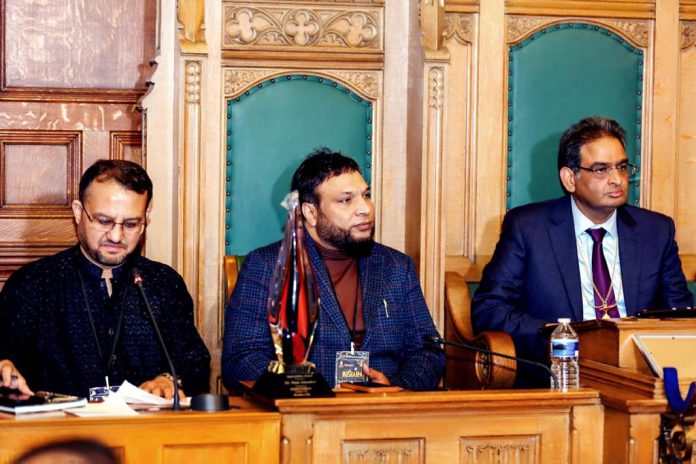
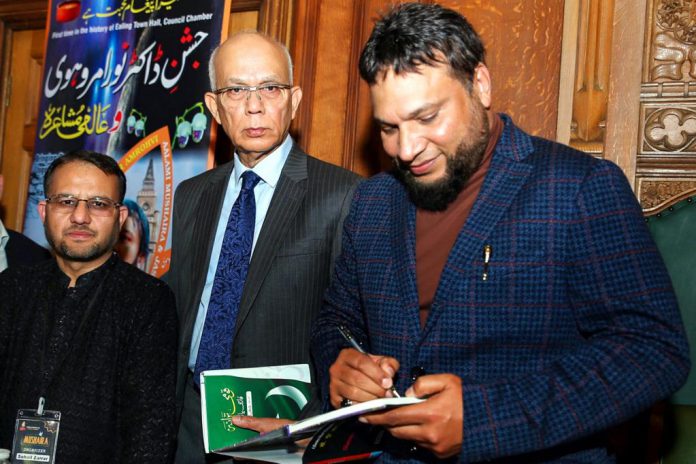
The evening of 4th November 2022 became immortal for the lovers of Urdu and Dr. Noor Amrohvi. For the first time in British history, the first ever international conference and celebration of Dr. Noor Amrohvi regarding Urdu was held at the prestigious, magnificent, and historic Ealing Town Hall in London.
Ealing Town Hall was inaugurated on 15 December 1888 by the then Prince of Wales Edward. It was Prince Edward who went on to be called King Edward VII.
For the first time in this historic town hall, hosted and chaired by the Honorable Munir Ahmed, Mayor of Ealing London, fans of Shama Urdu gathered here from all over the world
For the first time in this historic town hall, hosted and chaired by the Honorable Munir Ahmed, Mayor of Ealing London, fans of Shama Urdu gathered here from all over the world.
The mayors, councillors, literary and social journalist personalities of different boroughs of London as well as precious personalities who love Urdu participated in this celebration.
Professor Aqeel Danish, patron of Bazm-e-Sukhan Britain, thanked the guests and explained the history and achievements of Bazm-e-Sukhan, and the Mayor of Ealing London, Muneer Ahmed gave the welcome speech, while Ehsan Shahid, the leader of Bazm-e-Sukhan, recited his poems for the participants. Welcoming the guests who came to join the celebration.
Dr Noor Giving Autograph
Ms. Shazia Khan, General Secretary of Al Noor International and founder of Stardom, came specially from America, highlighted Dr. Noor Amrohvi’s services to Urdu literature and his community. Dr. Shamsa Qureshi, the managing director of Al-Noor International and a well-known poet, could not come from America, but she expressed her good wishes over the phone from there and said that this honor can only be given to Dr. Noor Amrohvi. He is the most celebrated person for whom we Americans are proud.
Dr. Gabriela, a special representative of the Romanian Embassy and a literary figure, also participated in this speech ceremony for the first time and expressed his views.
Dr. Noor Amrohvi was awarded a certificate by the Mayor of Ealing London for his social and literary services and an award from Bizm-e-Sukhan Great Britain and it was acknowledged that the name of Dr. Noor Amrohvi is also London. It will also be written in golden letters in the literary history that he became the first representative of Urdu who took Urdu and his culture to such a high position and reached the London Parliament which was unimaginable. That’s why he was welcomed not only by all the audience, but also by all the assembly workers and mayors, and a standing ovation was given to Dr. Noor Amrohvi.
Chief organizer Mr Sohail Zarrar- Dr Noor Amrohvi
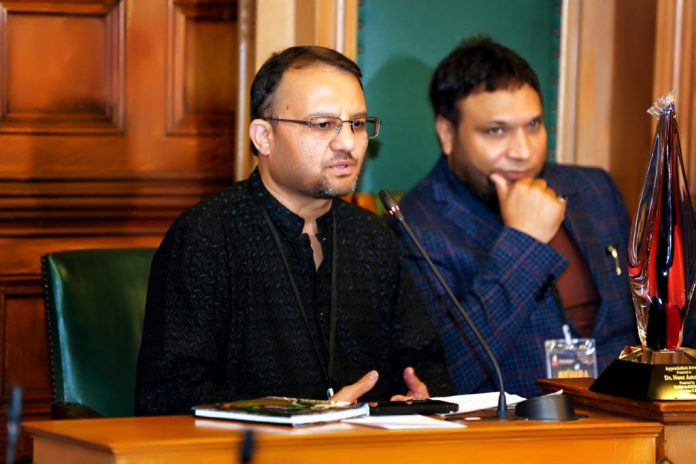
The program was moderated by Sohail Zarar Khalish, a spirited person from Great Britain. And thanked all the friends for organizing this wonderful event
The great poets of the Urdu world Syed Salman Geelani, Qaiser Wajdi, Aftab Alam Qureshi, Irfana Amar Ambrin Qureshi and Syed Shan Kanpuri captivated the hearts of the participants with their words.
In the end, the celebrant Dr. Noor Amrohvi took the seat and thanked Bazm for organizing the event. He said that Muneer Ahmed Sahib and Bazm-e-Sukhan may have made history today, after that there may be thousands of mushairas here, but whenever there is an event related to Urdu, this mushaira will always be remembered as the first mushaira. He will always be remembered.
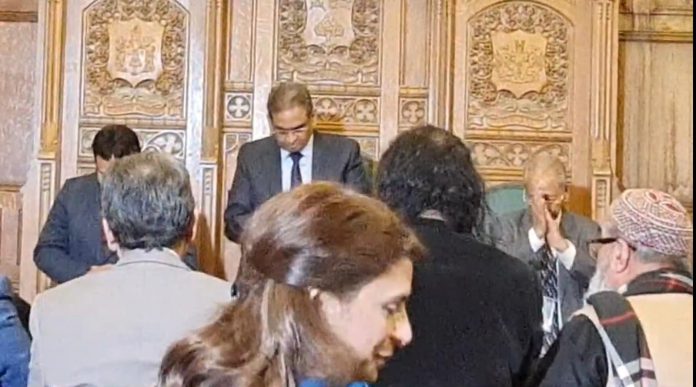
Standing ovation to Dr Noor Amrohvi
Dr. Noor Amrohvi lit up the gathering with his wonderful words and beautiful speech and won the hearts of Londoners. A sumptuous dinner was given at the end of this long-remembered event.
source: http://www.millattimes.com / Millat Times / Home> World / by Millat Times Staff / November 13th, 2022
Jamaat-e-Islami Hind (JIH) President Syed Sadatullah Husaini has mourned the passing away of renowned economist Dr. Nejatullah Siddiqui
In a media statement, the JIH President said that Dr. Nejatullah Siddiqui’s contribution to the field of Islamic economics was unparalleled and he pioneered the concept of Islamic banking and laid the foundations of what is currently a thriving multi-billion-dollar industry.
Mr.Husaini held that Dr. Nejatullah was a very versatile personality dedicated to learning and development and, despite living abroad, he contributed intellectually to many forums and institutions in India. Calling his demise, a great loss to the Muslim world and the Islamic Movement, Mr.Husaini said, “his passing away leaves a great vacuum in the field of Islamic economics and finance.”
Offering his heartfelt condolences to the bereaved family members, the JIH leader said, “May Allah forgive him, grant him the highest position in Paradise and bestow patience upon his family members.”
Dr. Mohammad Nejatullah Siddiqui, an Indian economist, was awarded the King Faisal International Prize (Saudi Arabia) for Islamic Studies in 1982. Born in India in 1931, he was educated at Aligarh Muslim University as well as Rampur and Azamgarh.
He served as Associate Professor of economics and Professor of Islamic studies at the Aligarh Muslim University and as Professor of economics at the King Abdul Aziz University, Jeddah, Saudi Arabia, in its Center for Research in Islamic Economics.
He later became a Fellow at the Center for Near Eastern Studies at the University of California, Los Angeles (USA), and after that a visiting scholar at the Islamic Research and Training Institute, Islamic Development Bank, Jeddah.
He was a prolific writer in Urdu and English with 63 works in 177 publications and 1301 library holdings to his credit. Several of his works have been translated into Arabic, Persian, Turkish, Indonesian, Malaysian, and Thai languages. He was also the recipient of the Shah Waliullah Award in New Delhi for contributions to Islamic Economics.
Some of his notable books are Recent Theories of Profit: A Critical Examination, Economic Enterprise in Islam, Muslim Economic Thinking, Banking Without Interest, Partnership and profit-sharing in Islamic law, Insurance in an Islamic Economy, Teaching Economics from in Islamic Perspective, Role of the State in Islamic Economy, Dialogue in Islamic Economics, and Islam’s View on Property.
source: http://www.indiatomorrow.net / India Tomorrow / Home> National Interest / November 12th, 2022
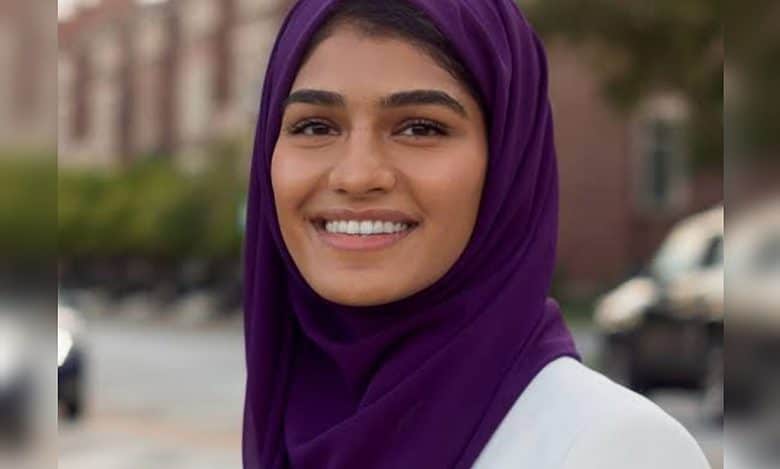
“My name is Nabeela Syed. I’m a 23-year old Muslim, Indian-American woman. We just flipped a Republican-held suburban district,” she tweeted.
Nabeela Syed (Photo: Instagram)
A 23-year-old Indian-American Muslim woman Nabeela Syed, the candidate of the Democratic Party, has won a significant victory in the United States (US) mid-term elections.
Nabeela has written history as the youngest representative to have won the election for the 51st House district of the Illinois state legislature in US.
On Wednesday, Nabeela took to Twitter and shared her happiness of being elected to the General Assembly as a representative of the Democratic party.
“My name is Nabeela Syed. I’m a 23-year old Muslim, Indian-American woman. We just flipped a Republican-held suburban district,” she tweeted.
She further wrote, I will be the youngest member of the Illinois General Assembly.
Nabeela took to Instagram and wrote, “When I announced for State Representative, I made it a mission to genuinely engage in conversation with people – to give them a reason to get involved in our democracy and hope for better leadership that represents their values. We won this race because we engaged in that conversation.”
“We talked to seniors about the rising cost of prescription drugs. We talked to working families about the growing burden of property taxes. We talked to women, pledging that I would protect their right to reproductive healthcare. We spoke with parents about their desire to strengthen commonsense gun safety laws,” she adds.
Nabeela continues, “We won this race because the people of the 51st District want a representative who is ready to fight for them and their families.”
“I knocked every door in this district. Tomorrow, I start knocking them again to thank them for placing their trust in me. I’m ready to get to work,” she added.
In June 2022, Nabeela Syed had won the Democratic primary and has now flipped a Republican district against incumbent Chris Bos.
Syed, who becomes the first South Asian in the Illinois state legislature, will also be the youngest member of the state assembly.
Born and raised in Illinois, Nabeela Syed graduated from the University of California with a degree in Political Science.
In her election manifesto, Nabeela Syed has promised to consider and address public issues such as equal rights, health care, education and taxation.
According to her website, Syed is running “to build a better Illinois for residents today and tomorrow – an Illinois with a strong economy, sustainable infrastructure, and affordable healthcare, and higher education.”
Syed currently works for a non-profit, helping them in digital strategy and supporting a myriad of civic engagement initiatives, for example, mobilising voters, curbing sexual assault on college campuses, and enhancing gender equity, according to her official website.
Having graduated from the University of California, Berkeley, with a degree in Political Science and Business, she served as the president of a pro-bono consulting organisation that helped local businesses.
Syed is active in her religious community at the Islamic Society of Northwest Suburbs and advocates interfaith dialogue and aims to empower young Muslim women to lead.
source: http://www.siasat.com / The Siasat Daily / Home> News> India / by Sakina Fatima / November 10th, 2022
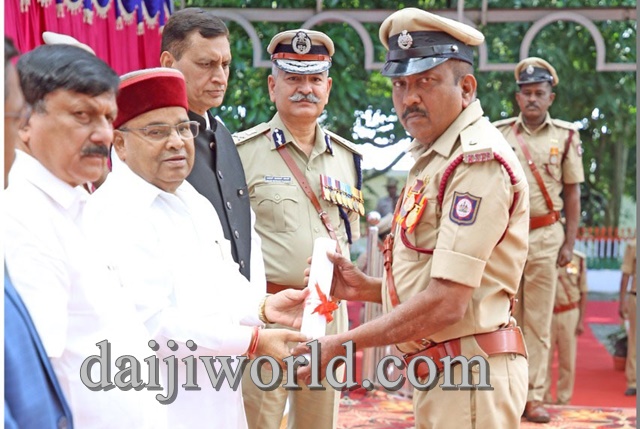
Meer Mohammed Ghouse, assistant fire station officer, Udupi received the President’s medal for his meritorious service from Karnataka state governor Thawar Chand Gehlot at the Raj Bhavan, Bengaluru on November 7.
Ghouse had joined the fire service in 1992.
He had received promotions during his service period of the last 30 years and is serving as an assistant station officer at present.
The department has presented cash prizes to him 33 times and two certificates of excellence.
He was felicitated with the chief minister’s gold medal in 2012.
source: http://www.daijiworld.com / DaijiWorld.com / Home> Top Stories / by Daijiworld Media Network – Udupi (JS/EP) (headline edited) / November 09th, 2022
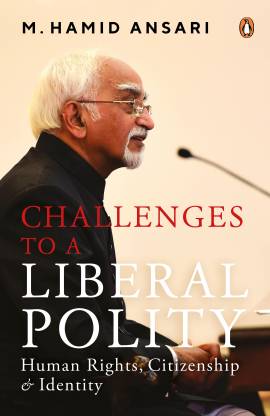
A collection of speeches and articles by former vice-president Hamid Ansari, offering engaging insights into our democracy.
Challenges to a Liberal Polity: Human Rights, Citizenship & Identity / by M Hamid Ansari / Publisher Penguin / Pages 277 /Price 799 INR
For the past decade, public discourse in India has remained sharply focused on challenges to the liberal polity and the threats that have grown to human rights. Issues of citizenship and identity are entwined inextricably in this. It is in this context that Challenges to a Liberal Polity: Human Rights, Citizenship & Identity assumes not only topicality but also a significance that can be overlooked only at the readers’ own peril.
Hamid Ansari is a distinguished diplomat, academic, statesman and also, the often misused word, a public intellectual. He has, in his long career, worn many hats. He has served as the Indian ambassador to Afghanistan, Vice-Chancellor of the Aligarh Muslim University (AMU), Chairman of the Minorities Commission and the Vice President of India. Throughout his life, Ansari has never shied away from speaking his mind—bluntly if need be.
The author has, at times, been exposed to unfair criticism and deliberately humiliated by persons in high office who should have known better. When bidding him farewell, PM Narendra Modi was unnecessarily sarcastic—some thought gracelessly—by mentioning that Ansari had spent most of his diplomatic career in Islamic countries and perhaps he would be more comfortable now that he was relieved of the burden of the constitutional position to freely voice criticism of whatever he didn’t agree with. The PM conveniently forgot that the former vice-president served with distinction as India’s permanent representative in the United Nations and as Chief of Protocol when Indira Gandhi was the prime minister in an era of dynamic Indian diplomacy. But, let us not digress.
This volume is a collection of speeches, forewords and articles contributed by the author on subjects that overlap and cover a vast time span from the turn of the century to the present day. The introduction is stimulating and thought-provoking. It presents a distilled essence of state-of-the-art research in political science and Indian society. This prepares the readers for what is to follow.
The book is divided into three sections. The first section deals with human rights and group rights. The subsections or mini-chapters can be read profitably as independent essays. Of particular interest are the ones titled––‘India and the Contemporary International Norms on Group Rights’, ‘Minorities and the Modern State’ and ‘Majorities and Minorities in Secular India: Sensitivity and Responsibility’.
The second section is titled ‘Indian Polity, Identity, Diversity and Citizenship’. This is more substantial than the preceding segment and covers a range of topics that should engage readers with different interests and ideological orientations. Examples include ‘Identity and Citizenship: An Indian Perspective’, ‘Religion, Religiosity and World Order’, ‘Two Obligatory -isms: Why Pluralism and Secularism is Essential to our Democracy’. There are shorter pieces like ‘The Ethics of Gandhi’ and ‘The Dead Weight of State Craft’, ‘India’s Plural Diversity is Under Threat: Some Thoughts on Contemporary Challenges in the Realm of Culture’. How one wishes that these themes had been explored in greater detail.
To some it may appear that this is nitpicking, but this is the hazard of compiling a collection of comments and observations made on commemorative occasions such as inaugurating or concluding a seminar, a workshop or writing a short preface. Ansari is primarily a scholar, who is deeply distraught by the happenings around him and is restless to share his constructive thoughts and not just the distress and despair. The tone is always cautiously optimistic.
The concluding section deals with ‘Indian-Muslim Perception and Indian Contribution to Culture of Islam’. The essays on ‘Militant Islam’, ‘Islam and Democratic Principle’ and ‘India and Islamic Civilisation: Contributions and Challenges’ deserve to be read by all Indians, particularly the young. One may disagree with the author, but it is impossible to imagine that any meaningful dialogue can take place between the majorities and minorities in India without an understanding of how the ‘other’ thinks and perceives the world.
His convocation addresses delivered at Jamia Millia Islamia (where he taught) and the AMU (his alma mater) have a different flavour. The tone is personal and evokes shared nostalgia. The final essay is a review of India and muslim world.
The book has substantial end-notes that provide useful bibliographical information. One can flip through these pages to pursue the themes dealt in the book according to one’s own inclination and at leisure.
This book is for all. The general reader, who has no scholarly pretensions, too can turn the pages of this book with great pleasure. Many a time, the author peppers the prose with Urdu couplets that hook the reader to his line of arguments. One such piece is his Fakhruddin Ali Ahmed Memorial lecture. Most people remember this vice-president as the supine individual who signed on the dotted line with dimmer when Indira Gandhi declared Emergency at midnight. Ansari, however, has used the book brilliantly to make some hard- hitting comments that are im- possible not to take on the chin.
The chapter begins with: Yaad-e-maazi azaab hai yaa rab/ Chheen le mujhse hafiza mera (The memory of the past is torturous, O God/Take away my memory from me), and concludes with: “Can the amnesia, the compromises and the misconceptions of recent and not-so-recent past be overcome?” Yes, only if meaningful alternative is offered. We do stand at the crossroads.
source: http://www.newindianexpress.com / The New Indian Express / Home> Lifestyle> Books / by Pushpesh Pant / Express News Service / November 06th, 2022
At a time when little is known about one of India’s greatest social reformers and educators, widely believed to be India’s first woman Muslim teacher, the Andhra Pradesh Government introduced a lesson on the contribution of Fatima Sheikh in the text-books of eighth class.
The reformer is known to have given shelter to Jyotirao Phule and Savitribai Phule, the well-known social reformer couple, when they were shunted out from their families.
It was in 1848 that Phule couple had taken initiative against caste system and male chauvinism. Fatima Sheikh is credited with allowing the Phule couple to start the first all-girls school at the former’s house in erstwhile Poona in Bombay Presidency.
Fatima Sheikh taught at all the five schools which were run by Phules.
At the same time she founded two schools on her own in 1851 in Mumbai.
Fatima Sheikh underwent teacher’s training along with Savitribai Phule at an institute run by Cynthia Farrar, an American missionary.
Born on January 9, 1831, she has not received the recognition she deserved. She remains a little known activist in various parts of the country. Prior to Andhra Pradesh, Maharashtra had introduced a brief lesson on her in school curriculum.
On the other hand, Google had honoured her with a Doodle on its homepage in connection with her 191st birth anniversary.
“We believe the children, who are the future of the country, should know about the reformers, freedom fighters and others who contributed significantly for building the nation. We are very happy that a lesson has been introduced in eighth class book. More awareness is required on the contribution of Fatima Sheikh,” Kaki Prakash Rao, State general secretary of AP Primary Teachers’ Association, told Siasat.com on Monday.
AP United Teachers’ Federation leader D. Ramu hailed the initiative of the AP Government and said that time, moving out of home by women was considered a big sin. Still, Fatima Sheikh along with Phules was instrumental in teaching Dalit and Muslim girls ignoring threats by many conservative, casteist and fanatic outfits and individuals.
source: http://www.siasat.com / The Siasat Daily / Home> News> Andhra Pradesh / by Santosh Patnaik / November 04th, 2022
When Nobles became non-entities, Princes became paupers and Begums were reduced to beggars…
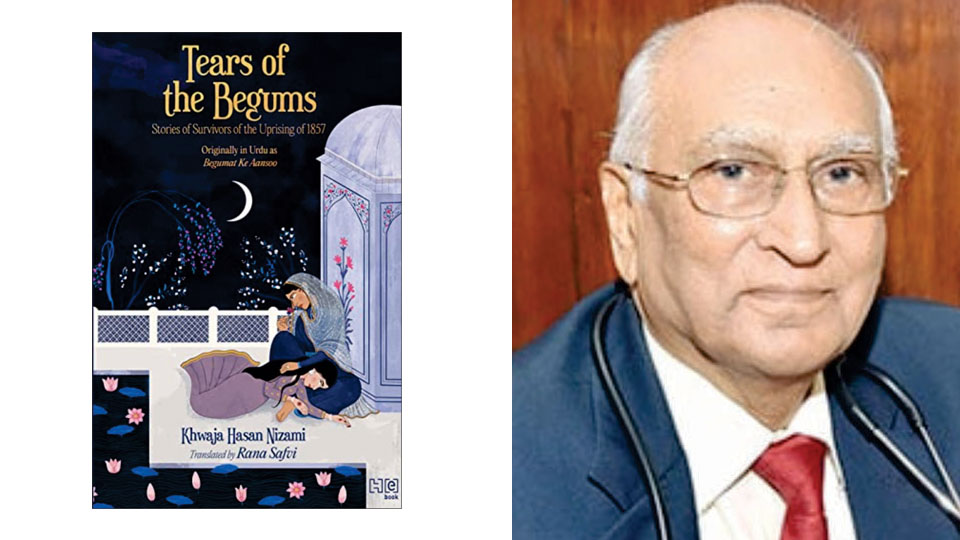
Title: Tears of the Begums: Stories of Survivors of the Uprising of 1857 (Originally in Urdu as ‘Begumat Ke Aansoo’)
Author: Khwaja Hasan Nizami
Publisher: Hachette India
Year of Publication : 1922
Translator : Ms. Rana Safvi (2022)
Pages: 212+xii
Price: Rs. 499
The Sepoy Mutiny (or the First War of Independence as we call it) started in 1857, over the issue of the greasing of the cartridges used in the guns of Indian soldiers of the East India Company army. It was known by the Urdu word “Ghadar” meaning rebellion or revolt.
The rebellion spread rapidly in North India particularly around Lucknow and Delhi. The rebellious soldiers killed a large number of British officers, women and children. They adopted as their leader the surviving Mughal emperor Bahadur Shah Zafar without his consent. He was only a namesake Emperor who was on a generous pension given by the East India Company, and did not have any power beyond the precincts of the Red Fort, nor had the money to help the soldiers. He was reluctant to take on the British army but was helpless and had to go with the demands of rebellious soldiers.
Though initially the British had a setback, they quickly regrouped and took over Delhi. The Red Fort had about 3,000 royal families all of whom were descendants of the present and past emperors. The emperor’s court life was filled with pomp and grandeur, though he had no real authority.
Bahadur Shah himself was a refined and gentle soul and a poet. Delhi was ruled by the English Resident. The lives of the royals living in the “Lal Qila” was lavish with big mansions, large number of servants and slaves. Ghadar was a watershed moment in Indian history and the grand and elegant Mughal culture ended suddenly and dramatically.
Kulsum Zamani Begum was the beloved daughter of the last emperor Bahadur Shah. On the night he left the fort, he sent her and her family away entrusting them to the care of Khuda (God). Within a few days of leaving the Red Fort they were looted of all their money, jewels and even their expensive clothes. Finally on the way some villagers give them shelter in a thatched hut. The company soldiers were looking for the emperor’s descendants to arrest and punish. They escaped to Hyderabad, where they were given shelter by Nawab Lashkar Jung, who had given shelter to many Mughal royals who had escaped from Delhi.
In a few years the British had their way and the Princess was advised to leave Hyderabad. Some of the well-wishers of the Mughals arranged for her to travel to Mecca. One of the slaves she had freed while she was the Princess in Delhi had migrated to Mecca and had become an extremely wealthy merchant there. He looked after her very well and made her family stay comfortable.
The Ambassador of Turkey learnt that the Emperor’s daughter had taken refuge in Mecca and arranged a pension for her from the Sultan of Turkey. She lived comfortably in Mecca for a number of years. Ultimately she longed to return to her beloved Delhi. When she went back to Delhi, the English Governor out of compassion, arranged a pension for her family. The British who had taken away her dad’s empire, gave her in return a grand compensation of ten rupees a month.
Sakina Khanum was the daughter-in-law of Nawab Faulad Khan. Nawab died while fighting the company soldiers during the Ghadar. When his body was brought home by the soldiers, Sakina was writhing in severe labour pains. The Nawabs’ son had died four days earlier in the war, and his wife had passed away two years ago. Sakina delivered a boy with the help of the servants, while the corpse of the Nawab was lying in the front yard, without even a shroud. She had to run away from their mansion at midnight, taking a few jewels, some cash which was in the house and her new-born baby. The four maids who were in the house went with her.
After a few days, the maids stole all the money and jewels and deserted her. They even took away the new-born son of the Princess. She tried to eke out a living by working as a maid in households. Unfortunately for her, she had no skills needed for domestic help. After all she was the daughter-in-law of a Nawab and had lived in luxury with many servants and slaves at her command. She was frequently thrown out of many homes where she worked, as she could not work hard enough.
Finally, the Princess became a beggar for her living. After a few years, one afternoon she was begging in front of a wedding house. She was exhausted due to the hot summer sun. She had not eaten for many days and was extremely hungry. As she was begging, one young handsome boy came out of the wedding hall. Hearing her wails, he sat in front of her and gave her the food he was carrying for himself. The boy spoke to the beggar and consoled her and told that his mother was a maid in the wedding house.
As he was speaking with her, his mother came out and Sakina immediately recognised her as her maid who had deserted her and realised that the boy who fed her was her own son. After many years Sakina the beggar Princess had been reunited with her long lost son.
Qismat Baig worked as a chef at the palatial Taj Mahal hotel in Bombay. He was a recluse and an irascible and difficult man. None knew his antecedents. Whenever asked about himself he would answer that he was a Badshah and walk away. The Maharaja of Bhavnagar would frequently stay at the Taj Mahal Hotel whenever he was in Bombay, and he immensely enjoyed the food cooked by Qismat Baig.
One day the Maharaja expressed his desire to meet the chef. Qismat Baig, who never liked to meet anyone, was persuaded to visit him. When the king asked Qismat Baig as to who he was, Baig gave a long philosophical discourse. Surprised at the erudition of the chef, the king persuaded him to tell his story. Baig started recounting his long sad story. He was the son of the last Mughal Emperor Bahadur Shah born to a slave girl. He was named Timur Shah after the great ancestor of the Mughals. The emperor had provided well for him and his mother and they lived comfortably in luxury with servants and maids. As a young boy he was well educated and would often visit a Dargah near his home in the evenings and had imbibed Sufi mysticism and Dervish practices.
When Ghadar started, his mother lost everything. He worked as an assistant to a cook and learnt the culinary art. Misfortune always haunted him. He lost his mother, wife and children to illnesses and became alone in the world. Living in Delhi made him very sad and migrated to Bombay where Timur Shah changed his name to Qismat Baig, a man of destiny. The son of the Mughal Emperor had become a Bawarchi (chef) in a hotel.
These are some of the poignant real-life stories in the book “Tears of the Begums”. Khwaja Hasan Nizami was a young man at the time of Mutiny. In later years he became a writer. He personally interviewed many survivors of nobility and recorded their tragic stories. It was published as a book “Begumat Ke Aansoo” in 1922. Ghadar was a cataclysmic event in the narrative of India. It ended the centuries of pomp of the Mughal Court and the wealthy refined and elegant lives of the aristocracy. Nobles became non-entities, Princes became paupers and Begums were reduced to beggars. The sad stories in the book bring “Aansoo” to the eyes of the readers.
source: http://www.starofmysore.com / Star of Mysore / Home> Feature Articles / by Dr. C.D. Sreenivasa Murthy / October 11th, 2022
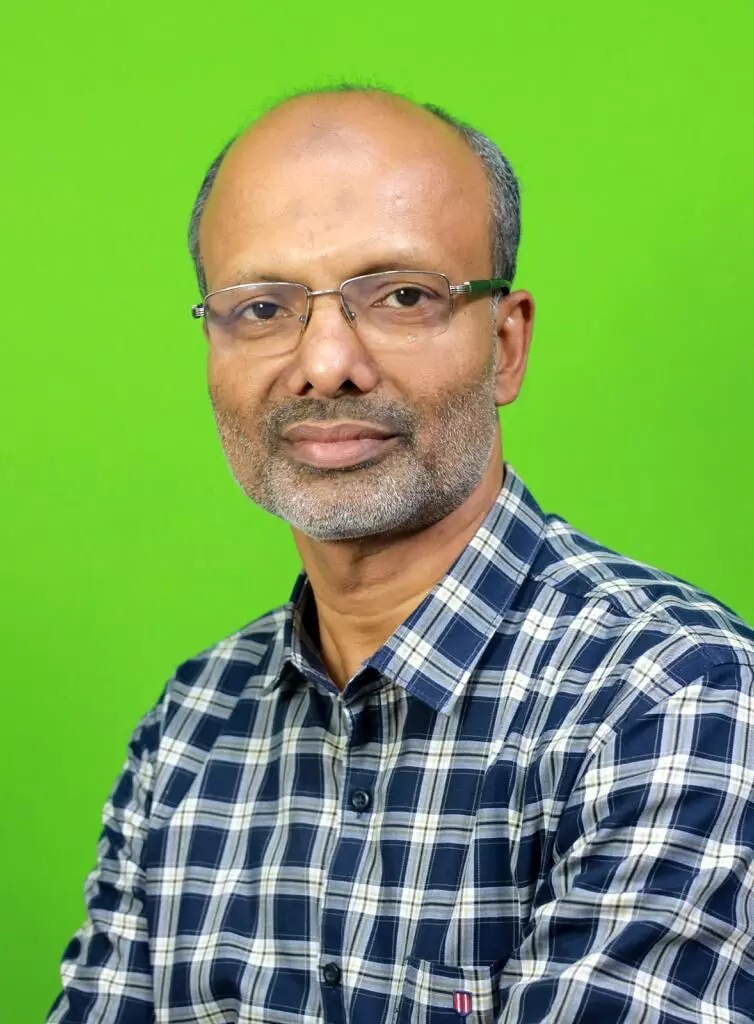
The editorial titled ‘Manushyatvam Kurisherumbol’ (when humanity is crucified), by VM Ibrahim, which has been chosen for the Theruvath Raman Award is about the custodial death of tribal and Dalit activist Stan Swamy, prompting the Award Jury to comment that the editorial stood out for the facts and analysis of the case at the same time moving hearts.
Kozhikode:
Madhyamam Editor V. M. Ibrahim has been chosen for Theruvath Raman Award 2021 for the best editorial by Calicut Press Club.
The award is for the editorial titled ‘Manushyatvam Kurisherumbol’ (when humanity is crucified) published in the Madhyamam newspaper on July 6, 2021.
The editorial dealt with the custodial death of Stan Swamy, who was hunted by the state for his work on behalf of tribal and Dalit communities in India. The jury judged that the editorial touched the hearts of readers at the same time incorporating facts and analysis of the case which made the article remarkable.
The jury of the award was composed of senior media personalities P. Sujathan and P. S. Nirmala along with prominent media observer Dr. Sebastian Paul, said press club president M. Firoz Khan and Secretary P. S. Rakesh.
The award consists of a cash prize of Rs 10,000 and a certificate and was instituted by the family of Theruvath Raman, editor of the popular newspaper Pradeepam, in his memory.
V. M. Ibrahim started working as an assistant executive editor in Madhyamam in June 2001. He was also the executive editor of Gulf Madhyamam. He was appointed editor of the paper in 2021. A masters degree holder in Urdu, Ibrahim has to his credit works, ‘Chekuthanum Choonduviralum’ and a translation work ‘Theerthadakante kanavukal’.
He is the son of the late V.M. Abdurrahman and Khadija of Abdurrahman Nagar, Malappuram. He lives at Farooq College Azad Bhawan.
Wife: Hajara A.K. Children: Raja Khatun, Raji Ismail, Naji Ishaq. Son-in-law Niaz Ahmad.
source: http://www.english.madhyamam.com / Madhyamam / Home> India / Web Desk / November 02nd, 2022