Category Archives: Community Involvement / Social Issues

Free cleft surgery camp planned in Vizianagaram

ANDHRA PRADESH :

Mission Smile and Tirumala Medicover Hospitals representatives releasing posters for the programme, in Vizianagaram on Monday.

Mission Smile, Tirumala Medicover Hospitals join hands for the cause

Charity organisation Mission Smile and Tirumala Medicover Hospitals will jointly conduct cleft palate surgeries free of cost for 80 children from September 3 to 6 in Vizianagaram, Mission Smile programme manager Rafiur Rahman and the hospital’s centre head V.N. Padma Kumar said.

Addressing a press meet, Mr. Rahman said that parents of the children with cleft problems living in North Andhra, Telangana, and Odisha have registered for the camp during which free surgeries will be performed for children with cleft palate and cleft lip deformities.

Mr. Rahman said that malnutrition among pregnant women and marriages among close relatives were identified by medical experts as the primary reason for the birth of children with cleft problems. He said that the organisation has conducted 119 medical camps across India since 2003, helping treat nearly 40,800 patients. He thanked Colgate Palmolive for extending funds for charitable programmes

ensured operations for nearly 40,800 patients across India since 2003 by conducting 119 special medical camps conducted across India. He thanked Colgate Palmolive for extending funds for charitable programmes under its CSR activities.

He said that each operation cost around ₹1.5 lakh, adding that the cost of operations had now come down significantly with many doctors performing surgeries free of cost. Medical Superintendent of the hospital Ch. Mahesh and programme coordinator of Mission Smile Sameer said that senior doctors were coming to Vizianagaram to perform the operations. They urged parents to approach hospital authorities to enrol the names of their children suffering from cleft problems.

source: http://www.thehindu.com / The Hindu / Home> News> India> Andhra Pradesh / by K Srinivasa Rao / Vizianagaram / August 30th, 2022

A Muslim freedom fighter for whom British Police brought horse to ride him to jail

Bethra Village (Sultanpur District), UTTAR PRADESH :

The Surviving kin of Jameel Ahmed Khan, Niayz Ahmed Khan, Nisar Ahmed Khan, Fayyaz Ahmed Khan, Abdul Rehman Khan, Ubaiur Rehman Khan and Wahedur Rehman Khan

British ruled over India, exploiting its people, resources, and wealth. But then there were heroes, the Indian Freedom fighters, who liberated the land through extraordinary acts of courage, valour, and a never-say-die spirit, despite having to make numerous physical, emotional, and personal sacrifices. Some get the limelight, while others remain in the shadows and contribute just as much as the others.

This is the story of one such true freedom fighter, whose tale will inspire you with courage, emotion, and patriotism.

Jameel Ahmed Khan, a resident of Bethra village in the Sultanpur district of Uttar Pradesh, was remembered for his extraordinary contribution and inordinate struggle.

Jameel Ahmed Khan was an ardent, outspoken anti-British activist who was at the forefront of many activities considered against the then British Raj.

This incident demonstrates his patriotism and altruistic behaviour, as when he was sentenced to imprisonment, he discussed the matter with his wife and divorced her so that she could marry someone else, as he was well aware of the uncertainty of his release and the sufferings his wife could face.

When the British Raj Police arrived to arrest him, Jameel Ahmed Khan refused to be handcuffed, declaring, “It is an honour to be a prisoner in the struggle to liberate my homeland, but I will not be handcuffed, and I will go to jail on horseback only because for me this is not a punishment, but a celebration and pleasure.” As a result, he had a horse brought to him and rode it to jail.

In Bethara, IAS and IPS Sultanpur District visited Jameel Ahmed Khan’s surviving kins and presented them with the Praman Patra in recognition of their ancestors’ contributions.

Shrimati Jabbarunnisa, Jameel Ahmed Khan’s only daughter, has four sons Jalal Ahmed Khan (died in Makkah, Saudi Arabia, in 1984), Niayz Ahmed Khan, Nisar Ahmed Khan, Fayyaz Ahmed Khan and two daughter Razia and Zareena.

Niyaz Ahmed Khan sons, i.e. the fourth generation of freedom fighter Jameel Ahmed Khan are Abdul Rehman Khan, the founder and Chairman of Mumbai’s Bilal School, Ubaiur Rehman Khan, the Founder and Director of Blossom Media Pvt. Ltd. and Abyaz Textile CEO Wahedur Rehman Khan.

The family is pleased that Jameel Ahmed Khan’s contribution is remembered during this historic and significant Indian festival, 75th Azaadi Ka Amrit Mahotsav.

Jail Yatra Certificate issued by Dist. Jail Authority of Sultanpur.

Tamr Patra presented to Jameel Ahmad Khan by Prime Minister Shmt. Indra Gandhi on the occasion of 25th Anniversary of Independence on August 15, 1972

Badge presented to the kin of Jameel Ahmad Khan by Motilal Vora, the Governor of Uttar Pradesh on the occasion of 50th Anniversary of Independence on August 7, 1993

Certificate presented to the kin of Jameel Ahmad Khan by Motilal Vora, the Governor of Uttar Pradesh on the occasion of 50th Anniversary of Independence on August 7, 1993

Praman Patra presented to the kin of Jameel Ahmad Khan by Sultanpur Dirtrict Authorities Ravish Gupta (IAS), DM Sultanpur and Soman Varma (IPS) the Superintendent of Police, Sultanpur on the occasion of 50th Anniversary of Independence on August 7, 1993

source: http://www.siasat.com / The Siasat Daily / Home> Opinion / by Neha Khan, Guest Contributor / August 20th, 2022

Renowned Islamic scholar Maulana Syed Jalaluddin Umri passes away in Delhi

Puttagram (North Arcot District, TAMIL NADU / NEW DELHI :

Moulana Syed Jalaluddin Umri

Renowned Islamic scholar Maulana Syed Jalaluddin Umri has passed away in Delhi at 8:30 pm Friday. He was 87.

Maulana Umri was president of Jamaat e Islami Hind for consecutive three terms( 2007-19).

Maulana Umri was born in 1935 in a village called Puttagram, District of North Arcot, Tamil Nadu, British India. He was a graduate of Jamia Darussalam, Oomerabad, Tamil Nadu. He recieved a master’s degree in Islamic Studies from Jamia Darussalam. He also received a bachelor’s degree in English literature from Aligarh Muslim University

Maulana Umri began his association with Jamaat-e-Islami Hind during his student years. After completing his studies, he dedicated himself to its research department. He officially became its member in 1956. He served as the city Ameer of Jama’at of Aligarh for a decade, and the editor of its monthly Zindagi-e-Nau for five years. Later, the Jama’at elected him to its All-India deputy Ameer, which he served for four consecutive terms (sixteen years). In 2007, the Jama’at’s Central Council of Representatives elected him its Ameer (Chief). He was again re-elected as Jama’at’s Ameer

Maulana Umri was elected as Ameer, Jamaat-e-Islami Hind for the fourth term (April 2015 – March 2019).

Jalaluddin Umri was widely-considered, among the Islamic circles of India, an authority on human rights and Muslim family system.

Jalaluddin Umri had written over two dozen books which were translated  various languages:

  • Maroof wa Munkar
  • Islam ki Dawat
  • Musalman Aurat ke Huquuq aur Un par aeterazaat ka Jaiza (Rights of Muslim Women – A Critique of the Objections)
  • SeHat-o-marz aur Islam ki Taleemat
  • Islam meN khidmat-e-khalq ka Tasawwur (Social Service in Islam)
  • Inabat Ilallah
  • Sabeele Rab
  • Islam Aur Manav Adhikkar
  • State of Our Community and Nation and Our Responsibilities.

source: http://www.muslimmirror.com / Muslim Mirrror / Home> Obituary / by Muslim Mirror Desk / August 26th, 2022

Book: The role Aligarh Muslim University played in the making of the modern Indian Muslim

Mumbai, MAHARASHTRA / Aligarh, UTTAR PRADESH :

  • The book “Aligarh Muslim University: The Making of the Modern Indian Muslim” by Mohammed Wajihuddin  sheds light on AMU and its role in determining where the Muslim community stands in modern-day India.
  • The Aligarh Muslim University (AMU) completed a hundred years in December 2020. In December 1920, the Mohammedan Anglo Oriental (MAO) College founded by Sir Syed Ahmed Khan in 1877, was transformed into AMU. Sir Syed also established the All India Mohammedan Educational Conference to infuse the subcontinent’s Muslims with a spirit of modernism. This helped prepare the community, devastated in the aftermath of the Revolt of 1857, for new challenges.
  • Zakir Hussain, AMU alumnus, its former Vice-Chancellor and a former President of India, said over fifty years ago, ‘The way Aligarh participates in various walks of national life will determine the place of Muslims in India’s national life. The way India conducts itself towards Aligarh will determine largely, the form which our national life will acquire in the future.’
  • Read an excerpt from the book below.

With AMU turning a hundred, one is beholden to the MAO College Fund Committee’s first meeting on 10 February 1873. The fund committee was formed a year earlier, in 1872. Addressing the meeting, Syed Ahmad Khan’s son Syed Mahmood (1850–1903), had said: ‘I think what we mean to found is not a College but a university, and I hope the members will consent to my proposal that instead of the word “College”, the word “University” may be substituted.’

Since the formal opening of MAO College was getting delayed, the fund committee began a school called Madrasatul Uloom Musalmanan-e-Hind on 24 May 1875 at Aligarh. The school was a precursor to MAO College, which metamorphosed into AMU in 1920, and during whose foundation-stone-laying ceremony on 8 January 1877, presided over by Viceroy of India Lord Lytton, Sir Syed had observed:

… this is the first time in the history of Muhammedans of India that a college owes its establishment not to the charity or love of learning of an individual nor to the splendid patronage of a monarch, but to the combined wishes and the united efforts of a whole community. It has its origin in causes which the history of this country has never witnessed before.

So, what were the causes Sir Syed alluded to?

The large-scale killings and destruction in the wake of the failed 1857 Mutiny had unsettled Sir Syed, a judicial official in the East India Company. Muslims, who had borne the brunt of British repression heavily because the British held them responsible for the rebellion, had become fatalists. Irrationality, an obsession with obsolete and redundant social mores, rigidity in religious practices and a refusal to adapt to the new realities made them misfits in the era that the British Raj heralded. On close scrutiny, Sir Syed found that the reasons for the Muslims’ unfathomable desolation lay mainly in their educational backwardness and resistance to modern, scientific thinking. Therefore, he saw a panacea for the community in modern, scientific learning. He began thinking about ways and means to bring his community out of the stupendous self-pity it wallowed in.

A visit to England in 1869 enabled Sir Syed to see first-hand the education system of the West, including that at Oxford and Cambridge. With the dream of an Indian college modelled on Oxbridge before his eyes, he returned to India and set out to realize that cherished dream. He quit his job in Benares and made Aligarh, then a small mofussil town 100 miles off Delhi on the Delhi–Calcutta route, his home. Since Sir Syed had saved several family members, including women and children, of some senior British officials during the 1857 Mutiny from Indian rebels and was among the defenders of British rule in India, no roadblocks in his path to founding his college remained permanent.

In Aligarh, he set up a residential college which would become the heartbeat of Muslims, as well as of a large swathe of undivided India. Alongside the college project, Sir Syed began the herculean task of social and religious reform. For this he established the Tahzibul Akhlaq or Mohammedan Social Reformer, a magazine in Urdu, which began hitting at the obscurantist, obsolete views that fettered the community. Other magazines were specially published to counter the views spread by the Tahzibul Akhlaq. Some of Sir Syed’s religious views were unpalatable to the ulema and against accepted Islamic beliefs, and earned him the wrath of the orthodox elements in the community. He had to face the fury of fatwas. A maulvi even went all the way to Mecca to fetch a fatwa of kufr, declaring him an infidel. Sir Syed only chuckled at the serious drive to declare him a heretic, kafir or infidel, as it gave some of his tormentors an opportunity to visit Islam’s holiest places. Sir Syed’s debt to India in general and Muslims in particular lies not just in the college that he established but in the overall impact he left on the lives of Indians, especially Muslims.

Over 123 years after his death, Sir Syed is not considered a heretic, a naturi (one who propagated the belief that Islam is compatible with nature), a British stooge—epithets that some of his own community members hurled at him in his lifetime. Today, the orthodox ulema publicly say that Sir Syed, like any other person, is merely accountable to God for his lapses, and that his achievements and noble works outweigh his shortcomings and will pave his way to paradise.

Tomes have been penned on Sir Syed, MAO College, AMU and the movement Sir Syed and his associates like Mohsinul Mulk, Viqarul Mulk, Maulana Shibli Nomani, Maulana Zakaullah, Altaf Hussain Hali, Nazir Ahmad, and Chiragh Ali launched. This was called the Aligarh Movement, and it can only be described as the trigger for the Muslim renaissance in the subcontinent in late nineteenth and early twentieth centuries. It is easy to do a panegyric while evaluating the 100-year-long journey of a university which was born in the tumultuous times of India’s freedom struggle of the 1920s.

The circumstances in which Jamia Millia Islamia came up deserve some detailing. In 1920, Mahatma Gandhi gave a call for the boycott of government and government-aided schools and colleges. Muhammad Ali opposed MAO College as it was pro-government, since it received government grants. Gandhi, Muhammad Ali and Shaukat Ali tried to persuade the pro-government elements at Aligarh to join the nationalist movement and turn the college into a nationalist institution. The pro-government group at Aligarh opposed the presence of Gandhiji and the Ali brothers at the campus as they were trying to persuade students to join their movement. On 12 October 1920, Mahatma Gandhi addressed the students and left. But the real drama happened on 13 October, when the Ali brothers suddenly appeared at a meeting being held at the students’ union. Since they had been witness to Gandhiji being hooted and booed the previous day, the Ali brothers didn’t speak but said they had only come only to say goodbye to the students of their alma mater. And they wept too because they had seen Gandhiji being booed. Present there was also Zakir Hussain, who had done his MA in economics from AMU and was a part-time teacher at the university. Zakir Hussain had arrived from Delhi the same day; he was running a fever and didn’t want to speak. But he couldn’t hold back his own tears when he saw the Ali brothers weeping. He stood up and declared that he had decided to resign from his teaching assignment at MAO College and forego the scholarship being given to him. This tilted the balance and changed the mood. Many students joined him in boycotting government institutions. In his biography Dr Zakir Hussain, M. Mujeeb, a colleague and friend of the professor, says that Hussain went to Delhi, where he met Dr M.A. Ansari, Hakim Ajmal Khan, Muhammad Ali and many others and ‘assured them that a large number of teachers and students would leave the MAO College to join a national institution, if one was established. The leaders could ask for nothing better. On 29 October 1920, the Jamia Millia Islamia came into existence, and Maulana Mahmudul Hasan of Deoband delivered an address indicating its aims and ideals.’

Excerpted with permission from Aligarh Muslim University: The Making of the Modern Indian Muslim, Mohammed Wajihuddin, HarperCollins India. Read more about the book here and buy it here.

source: http://www.thedispatch.in / The Dispatch / Home> Book House / by Mohammed Wajihuddin / January 25th, 2022

Professor Abdul Kareem is no more

Hubballi, KARNATAKA :

Abdul Kareem | Photo Credit: Special Arrangement

Erudite English professor and former syndicate member of Karnatak University, Abdul Kareem passed away in Hubballi on Monday night

Erudite English professor and former syndicate member of Karnatak University, Abdul Kareem passed away in Hubballi on Monday night.

Prof. Kareem, 83, had served as English lecturer at Sri Kadasiddeshwar Arts and H.S. Kotambri Science Institute in Hubballi, before becoming Principal of Anjuman-e-Islam’s Nehru College in Hubballi. He was also founder-trustee of Sana Educational Charitable Trust.

A man of great simplicity, Prof. Kareem is remembered by his students for his high grade of teaching and ethical values. He wrote extensively for various publications and newspapers. The final rites were held on Tuesday.

On Tuesday, the faculty members, students, and other staff held a condolence meeting at Sana Shaheen Independent PU College and Sana Group of Instittutions and mourned his demise.

source: http://www.thehindu.com / The Hindu / Home> News> India> Karnataka / by Special Correspondent / Hubballi – August 24th, 2022

Maharashtra: Hospital run by Muslim religious body to meet healthcare needs of poor

Solapur, MAHARASHTRA :

The day of inauguration at the Jamiat-E-Ulema Day-Care Hospital on July 29. | Picture by arrangement

The hospital built by Jamiat-e-Ulema Hind (JUH) in Solapur, Maharashtra will provide healthcare services to poor patients at minimum rates regardless of caste, religion and creed.

Solapur (MAHARASHTRA) :

To meet the healthcare needs of poor and marginalized sections of society, Jamiat-e-Ulema Hind (JUH) has built a hospital in Solapur, Maharashtra. 

Thrown open to patients in late July this year, Jamiat-E-Ulema Day-Care Hospital aims to make health facilities accessible to the poor and needy at a minimum charge. The hospital was inaugurated by Maharashtra state president of JUH Maulana Nadeem Siddique and attended by several eminent doctors and activists. 

During his address, Maulana Nadeem said that “the hospital will provide excellent services to the poor patients at a very modest rate regardless of caste, religion and creed.” 

“The OPD (outpatients department) and a medical store are functioning right now and the daycare facilities will begin soon,” the medical superintendent of the hospital Dr Farooque Mulla told TwoCircles.net. 

Dr Farooque said that besides having an OPD, the hospital also administers ESG, and all types of blood tests at 30 to 50% discounted charges. “Specialist doctors also visit us to handle major cases.” 

Talking about the need to open such a healthcare facility for the needy, JUH district president Maulana Ibrahim Qasmi told TwoCircles.net that “health and education are basic facilities which should be provided free of cost or lowest fees but unfortunately these two have become a lucrative business.” 

“Considering the need of the hour we have started this hospital on a 5000 square feet plot,” he said. 

Maulana Ibrahim said that “serving the poor is the aim of the hospital.” 

“We are concentrating on the health and education sector by using all our resources. Our new venture will be to prepare students from marginalized communities for competitive exams by holding classes,” he said. 

The infrastructure cost of the hospital was borne by collecting donations from people. 

“We are doing all this by collecting donations from people. I must say that our city-based Biradaris (sections) have donated wholeheartedly,” Hasib Nadaf, General Secretary JUH told TwoCircles.net. 

Nadaf said that during the pandemic, JUH set up a Covid Care centre at the same premises. 

“This new multi-speciality hospital is our dream project,” he said. 

Social activist Salahuddin Peerzade lauded this initiative by JUH. 

“JUH always takes the lead in all humanitarian work. Everyone must come forward and help them to achieve their targets,” he said. 

For Ashfaque Bagwan, a young political and social activist, the city of Solapur is in dire need of speciality hospitals, especially for women. “I frequently receive complaint calls from many women who face neglect at government hospitals. The fact is that poor patients always struggle to get their healthcare needs met,” he said. 

Bhagwan added that he hoped the new hospital set up by the JUH will have a well-equipped gynaecology department.  

Imran Inamdar is a Goa based journalist. He writes positive stories on education and healthcare. He tweets at @ImranIn6379033

source: http://www.twocircles.net / TwoCirlces.net / Home> Lead Story / by Imran Inamdar, TwoCircles.net / August 24th, 2022

The Unsung Heroes of Indian Freedom Struggle”

Kozhikode, KERALA :

Published by the Popular Front of India, “The Unsung Heroes of Indian Freedom Struggle” features the heroes and heroines who gave their blood and sweat for the country’s freedom, in brief but comprehensive illustrated biographies.

 The book “The Unsung Heroes of Indian Freedom Struggle”, being released at a function in Kerala.

A book on lesser-known freedom fighters was released on August 15 in Kozhikode, Kerala.

The book features 75 heroes and heroines from the history of the Indian anti-colonial struggle, who gave their blood and sweat for the country’s freedom, in brief but comprehensive illustrated biographies.

Named “The Unsung Heroes of Indian Freedom Struggle”, the book, a befitting tribute to the 75th anniversary of India’s independence, was published by the Popular Front of India national committee as part of the organisation’s celebration of the 75 years of Independence.

Releasing the book at a function at IOS Hall, Meenchantha, Kozhikode, Popular Front of India Chairman O M A Salam said that the celebration of Independence Day should be about commemorating the legendary history of our forefathers who achieved freedom with their life and blood.

“It is not just a ritual to be performed. Celebration of the Independence Day should convey a message to society,” he contended.


Pointing out the attempts being made to distort the freedom struggle are rampant, he said, “Even the freedom fighters are being deliberately forgotten and erased from history through discrimination. At this stage, people must unite to reclaim the true freedom that we have lost.”

Expressing his deep anguish at the state of the nation, he said, “Even as India is growing, there is concern about the path the country is taking. The Sangh Parivar is trying to commemorate the partition of India as the entire country is celebrating Independence. The RSS says that Gandhi was behind the partition of India, and the BJP says that Mohammad Jinnah and Jawaharlal Nehru were behind the partition.”

He called on society should be vigilant against such sinister moves that spoil the spirit of the Independence Day celebrations.


Salam concluded his speech by extending Independence Day greetings to all countrymen.

Kerala state leaders Abdul Hameed, A Abdul Sathar, S Nizar, P K Abdul Latheef and K K Kabeer also addressed the gathering.

source: http://www.clarionindia.net / Clarion India / Home> India> Spotlight / by Clarion India / August 20th, 2022

Five Muslims Get Ministerial Berths in Bihar – Operation Lotus Fails

Patna, BIHAR :

Meanwhile, BJP is deliberating upon the reasons for the failure of operation lotus in Bihar and the future course of action in the changed situation there

Bihar Chief Minister Nitish Kumar after the expansion of his cabinet has made public that there will be 5 Muslim ministers in his cabinet of 31 Ministers that took oath on August 16, 2022.

The JD-U broke away from the BJP and was successful to retain power in the newly formed government with the RJD and other allies. The JDU gave only one ministerial berth to its member from the minority community from its quota. Jama Khan was made Minister of Minority Affairs.

In Contrast, the RJD gave three Ministerial berths to the minority community from its quota. Shamim Ahmed made sugarcane minister, Shahnawaz Alam got disaster management, and Mohammad Israil Mansoori got information technology.

Congress, the alliance partner of the JDU-RJD combined government has given only one ministerial berth to a member of the minority community. Afaq Alam has become the animal husbandry and fisheries minister of Bihar.

If we compare 2022 with 2020 when the JDU aligned with the BJP to form the government in Bihar, there was not a single Muslim Minister in Nitish Kumar’s cabinet. Even the Minority Affairs Ministry was held by Ashok Chaudhary, a close confide of the Bihar CM. This was worse than in Uttar Pradesh where the lone BJP Muslim MLA was made Minister of Minority Affairs.

In the cabinet expansion, the Rashtriya Janata Dal (RJD) got 16 ministerial berths. The Janata Dal-United (JDU) got 11, the Congress got 2 ministerial berths. Jitin Ram Manjhi’s Hindustani Awam Morcha and an Independent MLA Sumit Kumar Singh also found a place in the new cabinet.

It is learned from the sources that 5 ministerial berths are kept reserved for future expansion of the Bihar cabinet that can have up to 36 ministers, including the Chief Minister.

The Grand Alliance in Bihar has a strength of 163. Now it has climbed to 164 after Sumit Kumar Singh an Independent MLA extended his support to the JDU-RJD alliance and got a ministerial berth in the new government. The RJD- JDU government in Bihar is likely to prove a majority in the Assembly on August 24.

Earlier Chief Minister Nitish Kumar pulled the rug below the BJP’s feet when the saffron party was set to launch a surgical strike code-named operation lotus. Buoyed by the success of its operation in Maharashtra last month with his man Friday Eknath Shinde the BJP propped up RCP Singh the former Union minister who was to plot a coup by taking JDU MLAs to some safe haven in the BJP-ruled state.

However, before he could make any moves, the Chanakya of Magadha got the wind of the ‘Gujarati trap.’ He first exposed RCP Singh’s ill-gotten wealth and sought his explanation. This made BJP’s ‘Mohra’ resign from the primary membership of JD(U). This happened on August 7.

Even before the BJP could launch a strike on Nitish Kumar with the help of RCP Singh, the Vikas Prush of Bihar parted his ways with the BJP. He hems a new alliance with the RJD and other political parties and took oath on August 10 with RJD’s Tejashwi Yadav as his deputy. This is how Nitish Kumar becomes the Chief Minister of Bihar for the seventh time.

The BJP got the taste of its own medicine in Bihar. Now the BJP top brass is holding meetings with the party’s leaders in Bihar. The saffron party is to deliberate upon the reasons for the failure of operation lotus in Bihar and the future course of action in the changed situation there.

[Syed Ali Mujtaba is a journalist. He can be contacted at syedalimujtaba2007@gmail.com]

source: http://www.ummid.com / Ummid.com / Home> India / by Syed Ali Mujtaba / August 18th, 2022

Nawab Mir Osman Ali Khan: The other side of his persona

HYDERABAD :

The 7 th and the last Nizam of Hyderabad Nawab Mir Osman Ali Khan (Born: 6-4-1886; Died: 24-2-1967) was said to be the richest man in the world and was known for his noble deeds and rich contributions in various fields such as education, medicine, engineering, social service, architecture, heritage, poetry, art and culture. He ascended the throne on 29 August 1911 at the age of 25 and ruled the Hyderabad State between 1911 and 1948. It is amazing that he used Jacob diamond, a 185 carat gem the size of a lime worth 50 million pounds equal to around Rs. 480.00 crores in Indian currency, as a paperweight. It is said that despite of his enormous wealth, he used to spend very little for his own self and led a simple life. He never indulged in extravaganza and denounced all kinds of luxuries. This couplet reflects the persona of Nizam, a well known poet himself:

“Tumhari umar youn hi raayegaan guzri hai ay Osman
Na tum ko dast ghaib aayaa na tum ko keemiya aayee.”

People are benefitted even today with what he left behind him. Be it Osmania University or Osmania Hospital, Charminar Nizamia Tibbi Hospital, NIMS, Assembly building premises, Jubilee Hall, Hyderabad Museum (State Museum), High Court Building, Kacheguda Railway Station, Begumpet Airport, Asafia Library (State Central Library), Moazzamjahi Market, State Bank of Hyderabad (now merged in SBI) , Osman Sagar, Himayat Sagar, Nizam Sagar, Nizam Sugar Factory, etc. He constructed Hyderabad House in Delhi now used for diplomatic meetings by Govt. of India, Rubaat in Saudi Arabia for the convenience of Haj and Umrah pilgrims from Telangana and parts of Karnataka and Maharashtra – part of erstwhile princely State of Hyderabad. He was a great visionary and is called “Architect of Modern Hyderabad.” One would wonder on coming to know that the Nizam had provided financial aid for construction / reconstruction and maintenance of the worship places of not only Muslims but also of Hindus, Sikhs, Christians and Parsees apart from extending monthly honorarium to the priests of a number of temples, churches, Imams and Moazzans of mosques within and outside the country. Notable among them is Balaji Temple in Tirupati of Andhra Pradesh now popularly known as Tirumala Tirupati Devasthanam (TTD), Sitarambagh Temple, Hyderabad, Yadagirigutta temple in Bhongir, Thousand Pillar Temple at Warangal, grand mosques at Makkah and Madinah. He had also extended monetary contribution for construction of Hindu Banaras University, Andhra University, University of London, etc. His farmaans releasing financial aid to these places of worship and Universities are still available with Archives Department in Hyderabad.

It is not known how many devotees or those who are associated with the famous TTD or other such temples today are aware of this fact or for that matter even very few Muslims knows that the Nizam shouldered the maintenance responsibility of Holy mosques of Makkah and Madinah and bore the expenses thereof. King Saud of KSA visited Hyderabad in 1954 to meet the Nizam and thanked him personally for his monetary help. Likewise, it is doubtful whether the products of Banaras Hindu University and Andhra University or those who are associated with these Universities have ever taken pains to know the important contributions of the Nizam for their establishment. He funded for compilation of Indian epic “Mahabharatha”. He sanctioned scholarships to the students pursuing their studies abroad without any discrimination. Sarojini Naidu, freedom fighter was one of the beneficiaries. He sanctioned establishment of Hyderabad Telugu Academy in 1940. People from all walks of life lived together peacefully and happily during his reign. He never discriminated anybody on the basis of religion, caste or creed. He gave equal rights and respect to one and all. The following verses of his poetry endorse this:

“Aish wa ishrath ki hai jo dhoom Dakan mein Osman

Sab ye kahte hain tere bakht ki bedari hai

Zamana kehta hai laag Osman
Har ek ko aas hai tere hi dar se.”

It is said that the Nizam was a very kind hearted king, he could not endure the hardship and sufferings of his people. One day he visited Osmania hospital to console a patient where he saw a poor man with no legs crawling over the earth. This miserable condition of the poor man pained him very much. Soon after initiating necessary consultations and discussions in this regard, he immediately purchased the land at Panjagutta and arranged for construction of orthopedic hospital with an estimated cost of Rs. 30 lakhs, now known as Nizam Institute of Medical Sciences (NIMS). Similarly the Great Musi floods of 1908 locally known as “Thugyani Sitambar” (in which about 50,000 people said to have died, the floods razedover 80,000 houses making a fourth of the population shelterless) prompted the Nizam to invite Sir M. Visvesvarayya, an Indian Civil Engineer and a Statesman to advise and assist in the reconstruction of the city and to devise measures for the prevention of the recurrence of such a terrible catastrophe. Thus, the twin lakes of Hyderabad viz. Osman Sagar and Himayat Sagar were built up.

The pity is when he negated the proposal of merging the Princely State of Hyderabad into Indian Union, Operation Polo widely known as “Police Action’ took place in 1948 during the subsistence of “Stand Still Agreement” and none came to his rescue. The Nizam said to be very close to Mahatma Gandhi, but, unfortunately the latter was already gunned down, by then. The Nizam was completely betrayed and left alone. The plight reflects in the following verses of his own poetry (Ghazal) :-

“Is se bhi bud naseeb hai Osman koi bhala
Jo shaqs haer pher mein duniya ke rahgaya
Osman hamara rang badalta kabhi nahin
Paband apni wiza ke apne chalan ke hain
Thu jaanta hai unko matlab ke hain ye Osman
Aghyaar se tho har aan hashiyaar raha karna
Osman thu kar chuka hai hazaron ka imtehaan
Besharam hoon jo ke aise bahut kam bashar mile.”

Princely State of Hyderabad amalgamated into Indian Union in September 1948. The Nizam was appointed as Raj Pramukh of Hyderabad State by the Government of India in Jan, 1950. Even after the end of his kingdom, the Nizam continued to support all the social, educational and welfare activities. He donated 5 tons of gold to the Union Government during the war with China in 1965 (Sino-Indian War). Yet, he is termed anti-national, anti-people and discriminative by fascist forces with biased mind. The above are just a few of his priceless and precious achievements and contributions narrated here out of many. Otherwise the list is very huge. Unfortunately, many of his contributions and generous deeds seems to have been suppressed selectively, of which the people obviously are unaware of and projected the Nizam otherwise with distorted facts. Here, the following verses of his poetry stand testimony to the situation:

“Naheen kuch aetebaar ohad wa paymaa
Wafa ki kya ummeed is bewafa se
Ye housla ye kaleja ye dil hamara hai
Ke baare ishq tumhara hamee uthathe hain
Andaaz ye sitam ke tujhe the kahan naseeb
Meri wafa ne tujhe jafakaar kar diya.”

A demand is made every year to declare September 17 as a ‘Liberation Day’ on the pretext that Telangana is liberated from the clutches of the private army of Razakars led by Qasim Razwi and Nizam’s army who jointly said to have committed excesses on unarmed and innocent citizens of Hyderabad State between 1946 and 1948, which is certainly condemnable. It means prior to and till 1946 ever since he accede the Kingship in September, 1911 i.e. for 35 years of his long rule, there were no complaints. And these disturbances erupted in his last period of tenure perhaps due to various circumstances and factors prevalent during that period in the country and which were beyond control. Indian independent struggle was at peak, widespread riots, rampant bribery and chaos in the Nizam Government weakened the grip of Nizam over administration, the seeds of hatred were being sown under the guise of Arya Samaj Vyayama Shalas in Hyderabad State against the Government to destabilize it which led to communal violence in the hitherto peaceful living people cutting across their religious beliefs and practices which is known for “Ganga Jamuni Tahzeeb”. Coupled with Razakars brutalities then, it has ultimately led to revolt against Nizam and his rule from within the State. However, history is evident that there was no such kingdom in India or elsewhere then, which was spotless and entirely free from such instances of hatred and bloodshed. And not to speak of the World’s largest democracy we are living in today where communal clashes, murders, rapes, large scale robberies, white collar scams and so on have become the order of the day. Gandhi is abused and Godse is praised by the so called nationalists. Nizam was not a foreigner nor had he invaded Hyderabad State. What is going on today, it seems, the Nizam sensed it during his lifetime itself and predicted thus :

Mizaaje yaar mein jaaniye kya ab samaayee hai

Ke mere roobaru meri buraayee hothi jaathi hai”

In yet another stanza he writes (at the face of the fascists) :

“Na aaya aur kuch hum ko agar aayee wafa aayee

Magar haan tujh ko ay zaalim sitam aaya jafaa aayee

Ilaahi, khair ho badle huve hain yaar ke tewar

Sitam aayaa, ghazab aaya, bala aayee, qaza aayee.”

The unparalleled services rendered by the Nizam for the cause of people, society and the nation as a whole can not be ignored under the pretext of the riots perpetrated by Razakars, which neither can be attributed to him in the light of his above multi facet and true secular characteristics with undisputed patriotism.

Narrating an event where Nizam had complied with the Order of the Independent High Court with due respect to the judiciary, which ruled in favour of his family with regard to award of enhanced compensation in some property dispute, the Chief Minister of Telangana, Mr. K. Chandraserkhar Rao, has praised the Nizam on the floor of Assembly and declared that he is proud of his King H.E.H. the Nizam VII Mir Osman Ali Khan for his splendid works done for the welfare of people. However, a real tribute to Nizam’s golden era in recognition of the yeomen services rendered by him for the cause of humanity and the society at large in all spheres of life shall be to observe his birth anniversary the 6 th April of every year at Government level officially, as a mark of respect.

Let me conclude with Jigar Muradabadi’s following couplet of poetry:

Un ka jo kaam hai’ woh ahle siasat jane: Mera paighaam mohabbat hai jahaan tak pahunche.” (What their job is, let the politicians be bothered about.My message is ‘love’, may it reach the whole world)

***

shaikismail358@gmail.com

Courtesy: Shoukath-e-Osmania, Pundit Sunderlal Committee Report and other source of information.

source: http://www.muslimmirror.com / Muslim Mirror / Home> Indian Muslim> Positive Story / by Shaik Ismail / August 19th, 2022

These 85 soldiers started the 1857 Revolt

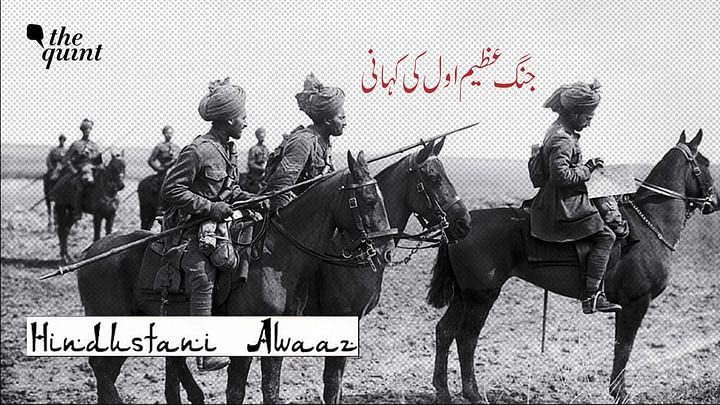
On 24 April, 1857, Colonel G.M.C Smith of 3rd Regiment, Light Cavalry, at Meerut asked his troops to load the cartridges in Enfield rifles. 85 out of the 90 Indian troops of the Regiment declined receiving the cartridges on account of usage of beef or pig fat in those. All the 85 Indians were sentenced to prison and their case was forwarded to Major General Hewit.

We are publishing the name of all these 85 Indian sepoys who defied the English command and thus triggered the first national war of Independence from Meerut.

  1. Mataa-Deen (Havildar)

Naiks:

  1. Sheikh Peer Ali
  2. Ameer Qudrat Ali
  3. Sheikh Hasan ud-Deen
  4. Sheikh Noor Muhammad 

Sepoys:

  1. Sheetal Singh
  2. Jehangir Khan 
  3. Meer Mosim Ali
  4. Ali Noor Khan
  5. Meer Husain Bakhsh
  6. Muttra Singh
  7. Narain Singh
  8. Lal Singh
  9. Sewdeen Singh
  10. Sheikh Husain Bakhsh
  11. Sahibdad Khan
  12. Bishan Singh
  13. Baldeo Singh
  14. Sheikh Nandoo
  15. Nawab Khan
  16. Sheikh Ramzan Ali
  17. Ali Mohammad Khan
  18. Makhan Singh 
  19. Durga Singh 
  20. Nasurullah Begh
  21. Meerahib Khan 
  22. Durga Singh (2nd)
  23. Nabi Bakhsh Khan
  24. Jurakhan Singh 
  25. Nadju Khan
  26. Jurakhan Singh (2nd)
  27. Abdullah Khan
  28. Ehsan Khan
  29. Zabardast Khan
  30. Murtaza Khan 
  31. Burjuar Singh
  32. Azimullah Khan 
  33. Azimullah Khan (2nd)
  34. Kalla Khan 
  35. Sheikh Sadullah
  36. Salar Bakhsh Khan
  37. Sheikh Rahat Ali
  38. Dwarka Singh 
  39. Kalka Singh 
  40. Raghubir Singh
  41. Baldeo Singh 
  42. Darshan Singh 
  43. Imdad Husain 
  44. Peer Khan 
  45. Moti Singh 
  46. Sheikh Fazal Imam
  47. Sewa Singh 
  48. Heera Singh 
  49. Murad Sher Khan
  50. Sheikh Aram Ali
  51. Kashi Singh 
  52. Ashraf Ali Khan 
  53. Qadardad Khan
  54. Sheikh Rustam
  55. Bhagwan Singh 
  56. Meer Imdad Ali
  57. Shiv Baksh Singh 
  58. Lakshman Singh
  59. Sheikh Imam Bakhsh
  60. Usman Khan 
  61. Maqsood Ali Khan
  62. Sheikh Ghazi Bakhsh
  63. Sheikh Ommaid Ali
  64. Abdul Wahab Khan
  65. Ram Sahai Singh
  66. Parna Ali Khan 
  67. Lakshman Dubey
  68. Ramswaran Singh
  69. Sheikh Azad Ali
  70. Shiv Singh
  71. Sheetal Singh
  72. Mohan Singh 
  73. Vilayat Ali Khan 
  74. Sheikh Muhammad Ewaz
  75. Indar Singh 
  76. Fateh Khan 
  77. Maiku Singh 
  78. Sheikh Qasim Ali
  79. Ramcharan Singh 
  80. Daryao Singh 
  • The list is an indication of Hindu Muslim unity during the war of Independence. 

source: http://www.heritagetimes.in /Heritage Times / Home> Featured Posts> Freedom Movement / by Mahino Fatima / July 30th, 2021