Former Jammu and Kashmir chief minister and National Conference vice president Omar Abdullah condemned the attack.
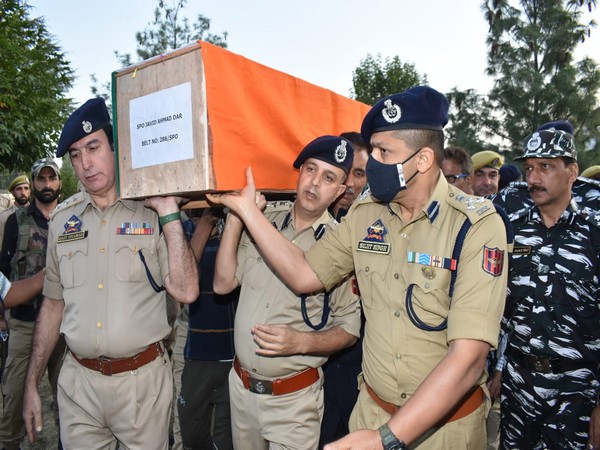
Wreath laying ceremony held for SPO Javaid Ahmad (Image/ANI)
Srinagar :
A policeman was killed and a CRPF personnel injured when militants attacked a security forces team in Pulwama district of Jammu and Kashmir on Sunday, police said.
The attack took place in Pinglana area of the south Kashmir district.
“Terrorists fired upon a joint Naka party of CRPF & Police at Pinglana, Pulwama. In this terror attack, 01 Police personnel got martyred & 01 CRPF personnel got injured,” Kashmir Zone Police said in a tweet.
The police said reinforcements were rushed to the area and a search operation was launched.
A police spokesman identified the slain policeman as Javid Ahmad Dar.
He said the injured CRPF personnel was evacuated to a hospital for treatment.
Senior police officers along with reinforcement reached the terror crime spot, the spokesman added.
“We pay our rich tributes to the martyr for his supreme sacrifices made in the line of duty. We standby the family of the martyr at this crucial juncture and pray for the speedy recovery of the injured personnel,” the spokesperson said.
Police has registered a case, the investigation is in progress and officers are working to establish the full circumstances of this terror crime, he said.
The area has been cordoned off and a search is going on there, he added.
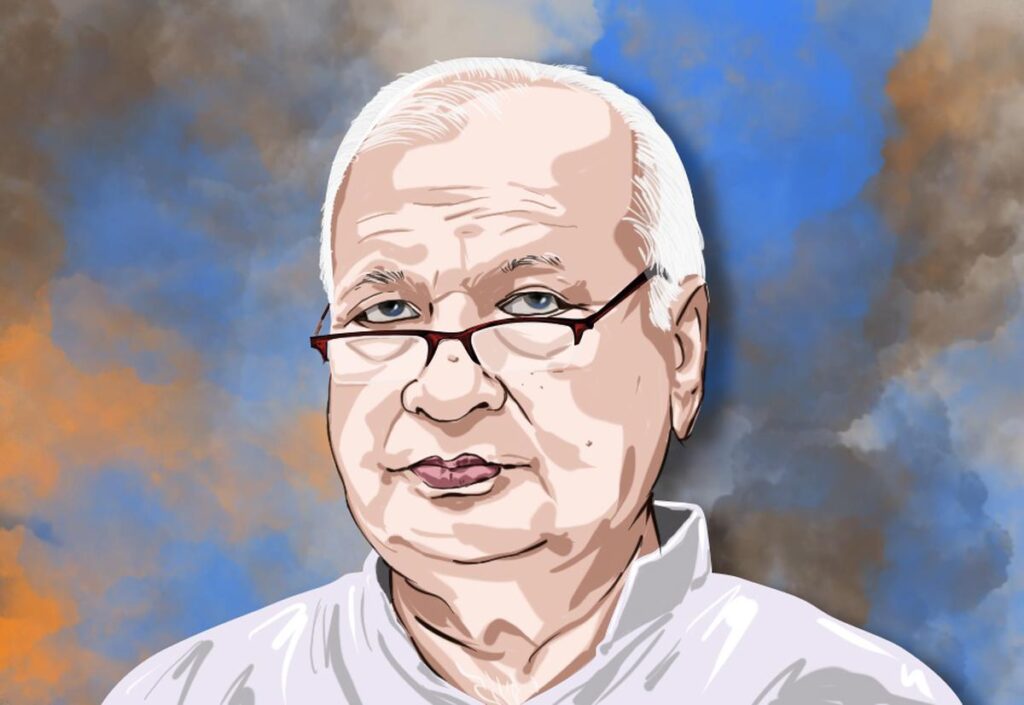
Meanwhile, former Jammu and Kashmir chief minister and National Conference (NC) vice president Omar Abdullah condemned the attack.
“While condemning this attack I send my condolences to the family of the J&K police personnel who laid down his life in the line of duty today. I also send my best wishes for the speedy recovery of the injured CRPF personnel,” Abdullah wrote on Twitter.
The Peoples Conference too condemned the attack.
“We strongly condemn the militant attack upon the joint naka party of Police & CRPF at Pinglana (Pulwama) in which 1 Police personnel lost his life & 1 CRPF personnel got injured. Heartfelt condolences & sympathies with the family of the deceased and prayers for the injured,” it said in a tweet.
source: http://www.newindianexpress.com / The New Indian Express / Home> Nation / by PTI / October 02nd, 2022 / (image edited by ANI )
Bal Sahitya Puruskar winner M Khalil | Photo Credit: SOMA BASU
Taking science in Urdu to children is a mission close to the heart of Mohammed Khalil
For years Mohammed Khalil, a veteran writer for children, has written about science and penned essays and stories around 80 scientists during his long fulfilling career. Now he takes science to Urdu-speaking children and the effort has won him the Bal Sahitya Akademi Puraskar for his work, Science ke Dilchasp Mazameen, just before the pandemic.
“Besides the award, the love and recognition of my peers is my greatest reward. I feel happy that my colleagues and friends remembered me. I recall the Urdu magazine Khilona. At one time, I used to read it and also write exclusively for them, contributing essays and stories for children. The Bal Sahitya award has re-energised me as a writer and gives me a new zest to carry on with my work. I have always desired that more children take to science and I am thrilled that my writings on science have clicked with them, “ says Delhi-based Khalil.
Khalil is a widely published author with 15 books in Urdu and a couple of books in Hindi. “It is important to interact with the young generation in the language they are comfortable in. Long ago, when I published Science ki Duniya’s special edition on Dr CV Raman, it was widely praised. Now, I want to communicate with children through short stories based on scientific facts so that their mind develops a scientific bent. The next generation should understand scientific principles and more women also should take to science, he says.”
Khalil was associated with the Council of Scientific and Industrial Research and edited their magazine Science ki Duniya . Some of his widely appreciated works include Ajeeb aur Ghareeb Janwar, Science Aur Hum, Nehru Aur Science, Dr CV Raman: Ek Azeem Sciencedaan and Chachajaan ki Scienci Kahaniyan.
A popular speaker in Urdu medium schools, he has been widely felicitated as he is among the first writers to talk of science in Urdu. Happy to dispel the false belief of Urdu being only a language of poetry and novels, Khalil has brought the language into the domain of science laboratories. The awards have come thick and steady. For instance, he won the NCERT’s national award besides numerous awards from the Delhi Urdu Akademi, West Bengal Urdu Akademi, Sir Syed and Vigyan Bharat award, etc. In fact, his mantelpiece is replete with awards of recognition and appreciation. With the Sahitya Akademi award, his cup of joy brims over. Yet he adds, “The biggest joy is to see a child taking to science in Urdu.”
source: http://www.thehindu.com / The Hindu / Home> Sci-Tech> Science / by Ziya Us Salam / August 19th, 2022
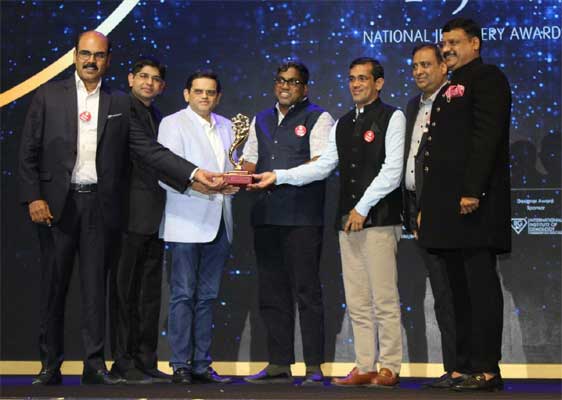
The All India Gem and Jewellery Domestic Council (GJC) felicitated Malabar Gold and Diamonds on being selected as the 6th largest jewellery group in the world, taking the Indian brand to the world stage.
M P Ahammed, chairman, Malabar Group, O Asher, managing director – India Operations, Malabar Gold & Diamonds and A K Nishad, director, B2B and Manufacturing (India), Malabar Gold & Diamonds received the award from the Ashish Pethe, chairman, GJC in presence of Saiyam Mehra, vice chairman, GJC, Nilesh Sobhawat and Sunil Podar, directors, GJC at an event held in Mumbai.
source: http://www.daijiworld.com / DaijiWorld.com / Home> Karnataka / by Media Release (headline edited) / September 27th, 2022
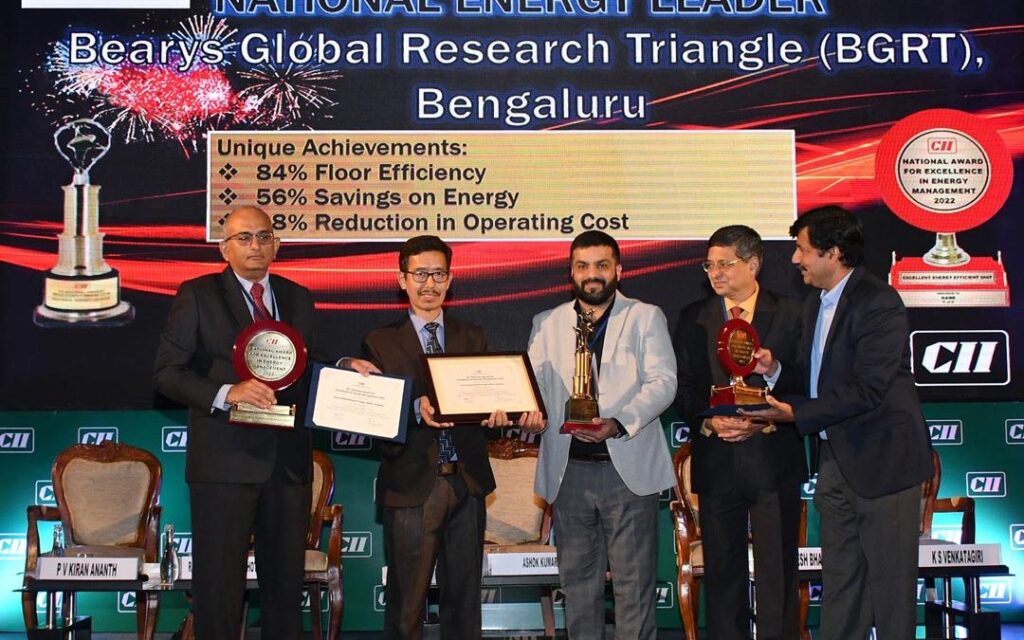
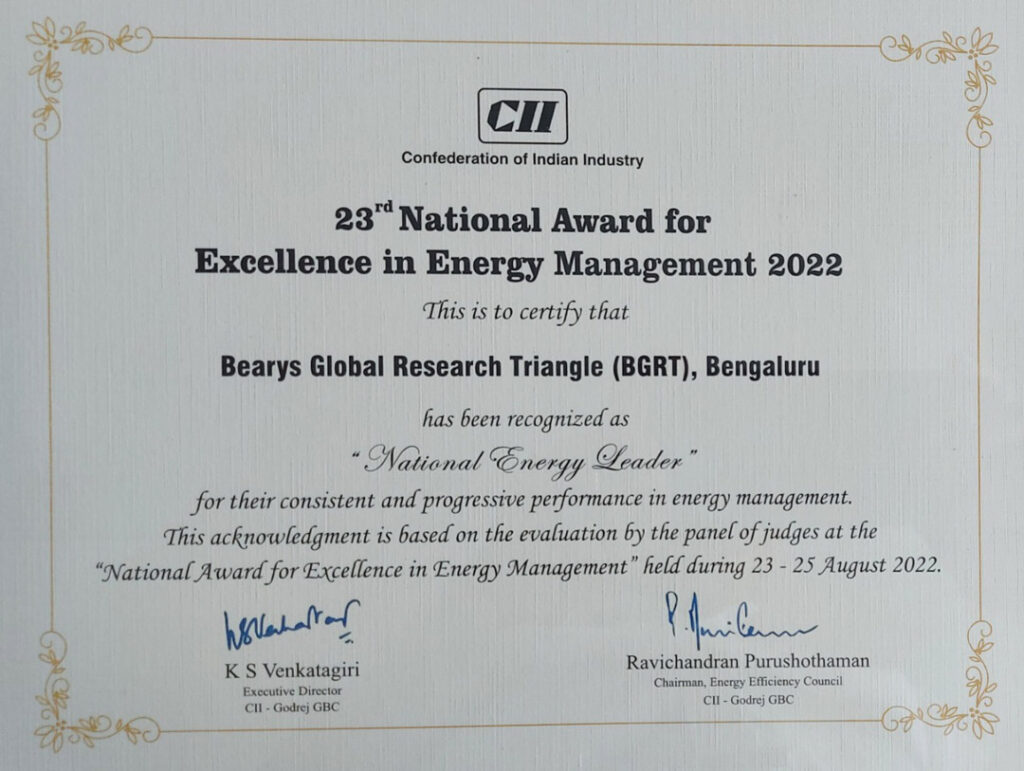
Bearys scores a hat trick by winning the prestigious ‘National Award for Excellence in Energy Management’ by CII for three consecutive years (2020, 21 & 22) for its project Bearys Global Research Triangle (BGRT), Whitefield, Bangalore and was declared the ‘National Energy Leader’.
Bearys was also commended and was awarded another accolade for the ‘Most useful Presentation’ at the award ceremony.
The awards were presented by Dr. Ashok Kumar, Director, Bureau of Energy Efficiency (BEE), Ministry of Power, Govt. of India to Mr. Mazhar Beary, Executive Director, in the presence of other eminent dignitaries at a grand award ceremony held at India Habitat Centre, New Delhi on Wednesday 21st Sept. 2022.
India’s first LEED Platinum R & D Park BGRT is globally recognized by both Industry and Academia as an epitome of sustainable development and an exemplary benchmark project and has become an arche model for sustainable development. A stream of Architects, Consultants, Developers and students from across India are visiting the project to see, learn and understand more about sustainable development and its manifold benefits.
‘We, at Bearys feel elated to receive this award and would like to dedicate this laurel to our mentors the late Dr. Prem C Jain, former Chairman, IGBC and the late Mr. Mahendrarajji, renowned structural consultant, New Delhi, who have inspired and guided us along the way. We now rededicate ourselves to our relentless pursuit to promote Sustainable Development & further the IGBC led ‘Green Building Movement’ in India” proclaims Mr. Syed Mohamed Beary, Founder & CMD.
source: http://www.beads.edu.in / BEADS / Home> News / by BEADS / September 21st, 2022
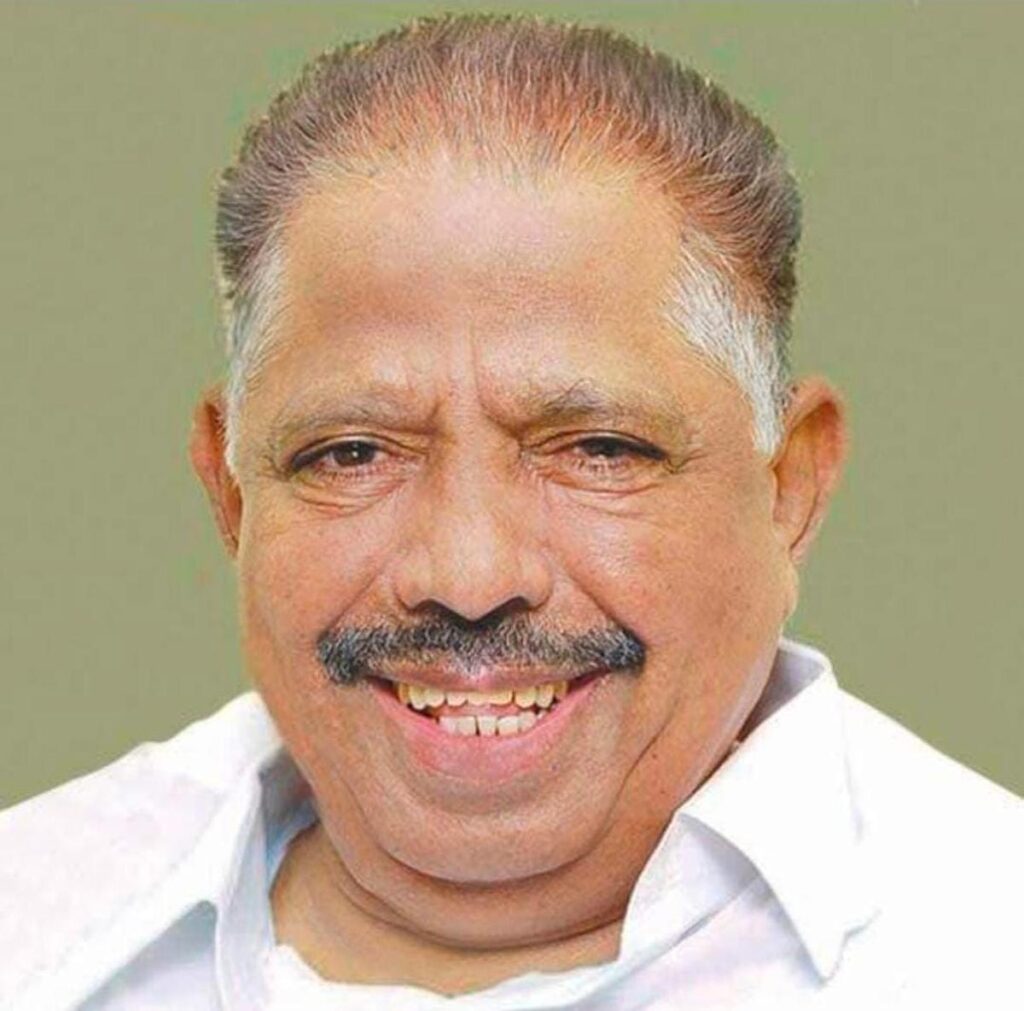
Aryadan Mohammed was under treatment at a private hospital at Kozhikode. File
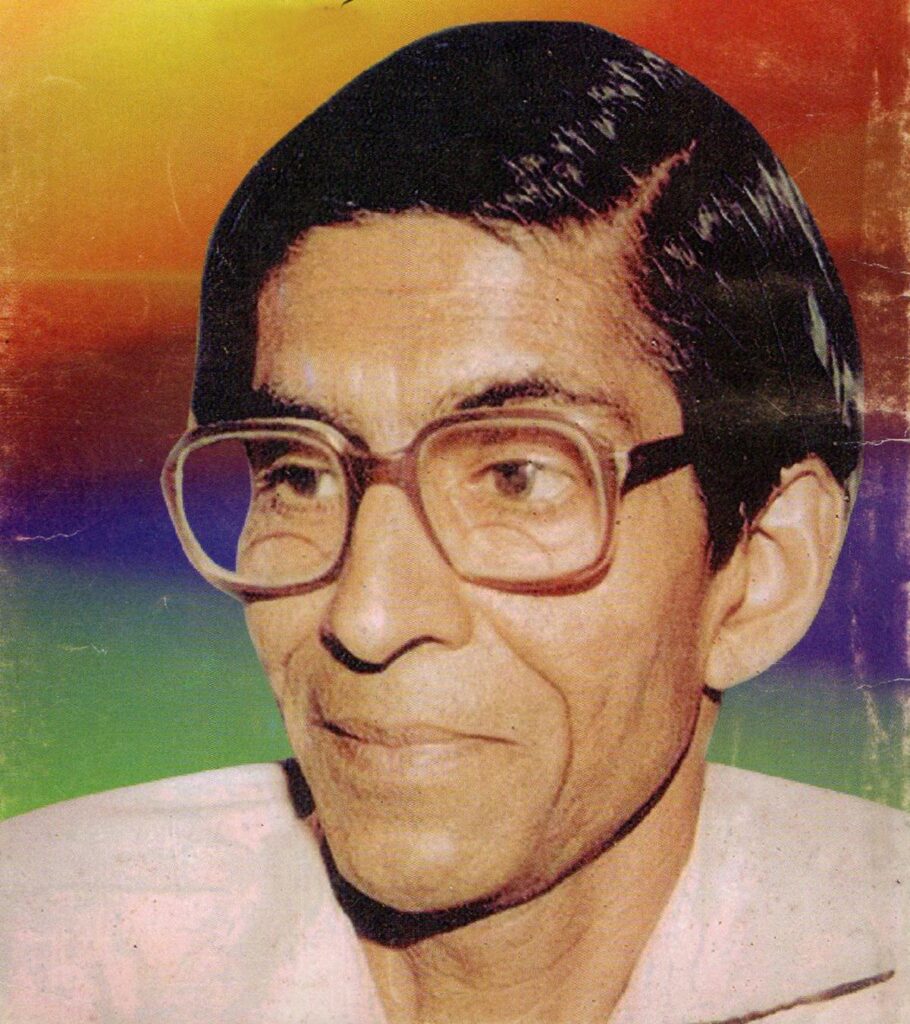
Veteran Congress leader and former Minister Aryadan Mohammed was a towering figure of the Congress in Eranad for several decades
Veteran Congress leader and former Minister Aryadan Mohammed, 87, passed away on Sunday morning. Mr. Aryadan was under treatment at a private hospital at Kozhikode.
Endearingly called Kunjakka by the people of Nilambur, Mr. Aryadan had represented Nilambur constituency in the Kerala Assembly eight times. Mr. Aryadan was a towering figure of the Congress in Eranad for several decades.
Mr. Aryadan was the Minister for Power and Transport in the United Democratic Front (UDF) cabinet headed by Oommen Chandy from 2011 to 2016.
Mr. Aryadan was the Minister for Labour and Forests in the cabinet headed by E.K. Nayanar from January 1980 to October 1981.
From April 1995 to May 1996, Mr. Aryadan was the Minister for Labour and Tourism in the Ministry headed by A.K. Antony.
In the first Oommen Chandy Ministry from 2004 to 2006, Mr. Aryadan was the Minister for Power.
Ever since his political entry in 1952, Mr. Aryadan remained an active Congress leader until he retired as an MLA in 2016. Mr. Aryadan had held several party positions, including Malappuram District Congress Committee president.
Mr. Aryadan is survived by two sons and two daughters. The funeral will take place on Monday morning. Mr. Aryadan will be buried at Mukkatta Juma Masjid graveyard.
source: http://www.thehindu.com / The Hindu / Home> News> India / by The Hindu Bureau / Malappuram – September 25th, 2022
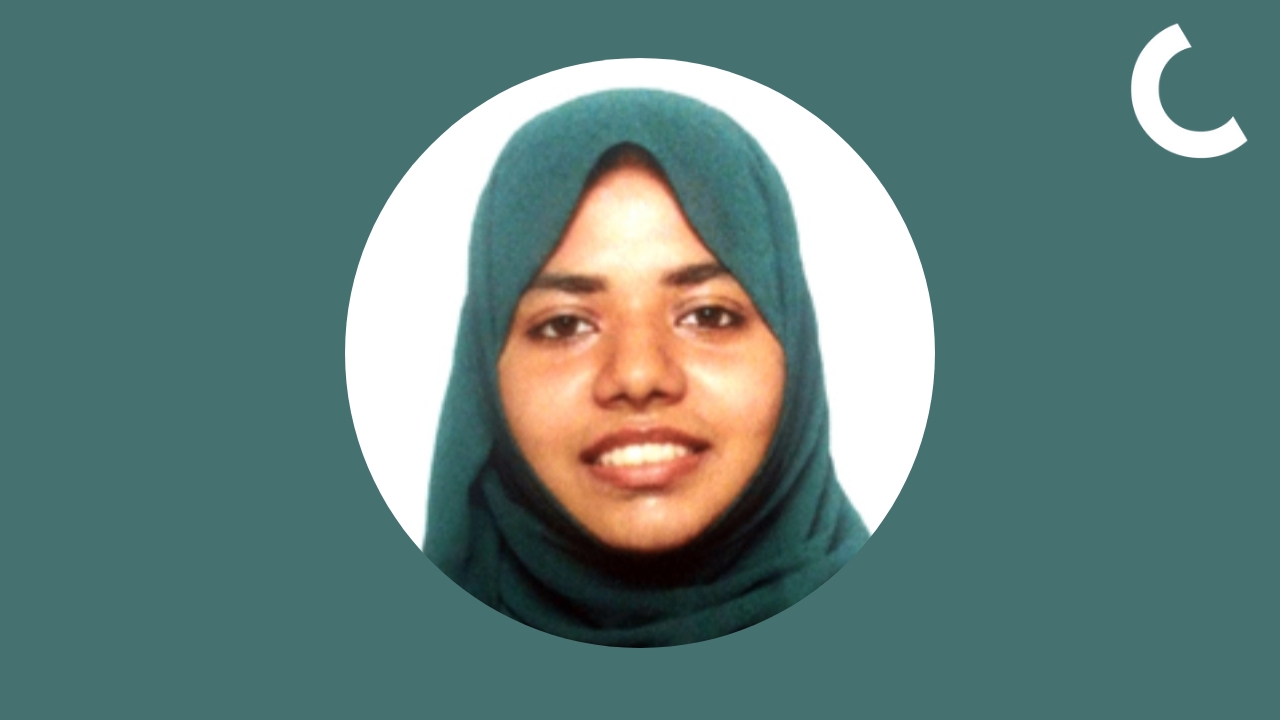
23-year-old Aamna Kausar, an MSc Medical Anatomy student at the Manipal Academy of Higher Education in Udupi has topped the university in the final year examinations.
Aamna, who is also the President of the district unit of the Girls Islamic Organization, scored 8.6 CGPA, the highest in this year’s examinations.
Daughter of Mohammad Iqbal, a businessman and Wajida Tabassum, a homemaker, the hijabi student wants to pursue a PhD in Human Anatomy.
She told The Cognate, “I am planning to do PhD next year on a topic related to human anatomy. Meanwhile, I will be working for a year.”
Aamna who has secured a job as a faculty to teach anatomy to medical students. However, she aims to get into the research field.
Notably, Aamna is a hijabi student from Udupi which was the hotbed of the hijab controversy a few months back.
“Being a hijab-wearing student in our university, I have seen difficult times during the controversy. I was actively participating in discourses surrounding the hijab row through GIO,” she said.
“The way hijabi students were treated in the district was really bad. But now, moments like these prove to them that education is the right of everyone and if students are given proper education, they will reach heights,” she added.
source: http://www.thecognate.com / The Cognate / Home> Education / by Rabia Shireen / September 26th, 2022
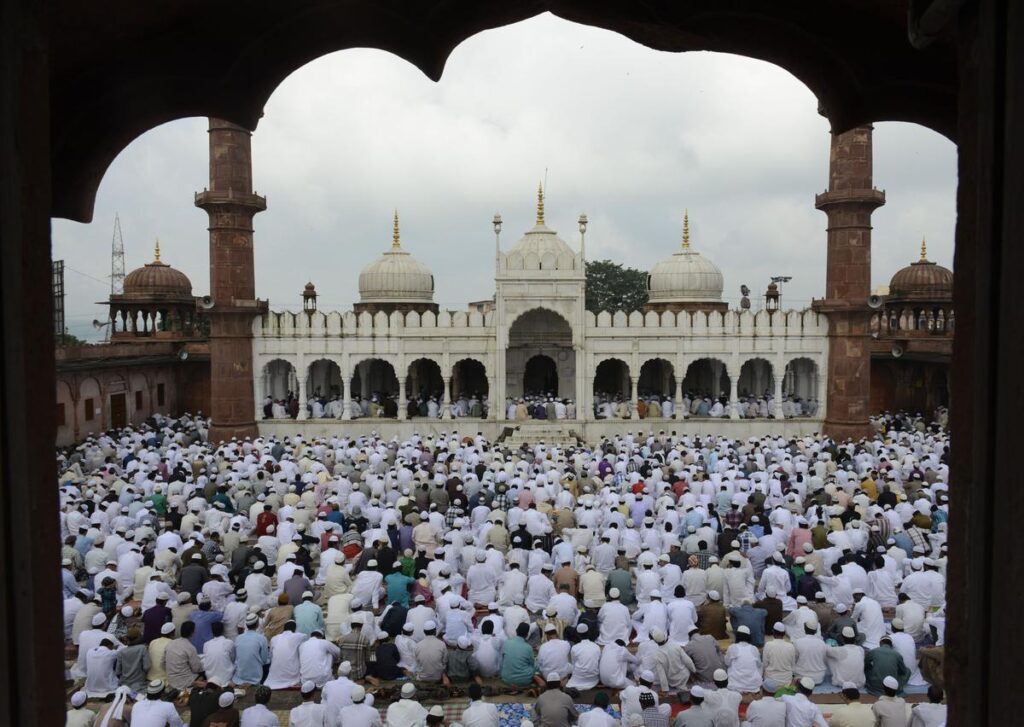
The Moti Masjid in Bhopal. | Photo Credit: FARUQUI A. M.
Tracing the history of a city where four Muslim women ruled for over 107 years
As the capital of one of the largest States, Bhopal has flown under the radar. It has little of the financial muscle associated with Mumbai, even less historicity to rival that of Kolkata. It has neither the earthiness of Patna nor the niceties of Lucknow. Yet, Bhopal in its own understated way has enough accomplishments to fill up a mantelpiece.
Among all the States, cities and towns of imperial and modern India, Bhopal has done more for women empowerment than probably all States put together. True, back in the 13th century Delhi had a woman ruler, Raziya Sultan, who ruled from 1236 to 1240, but little else.
Bhopal has been ruled by four Muslim women for 107 years. The Begums of Bhopal did not shy away from calling themselves the Nawabs of Bhopal.
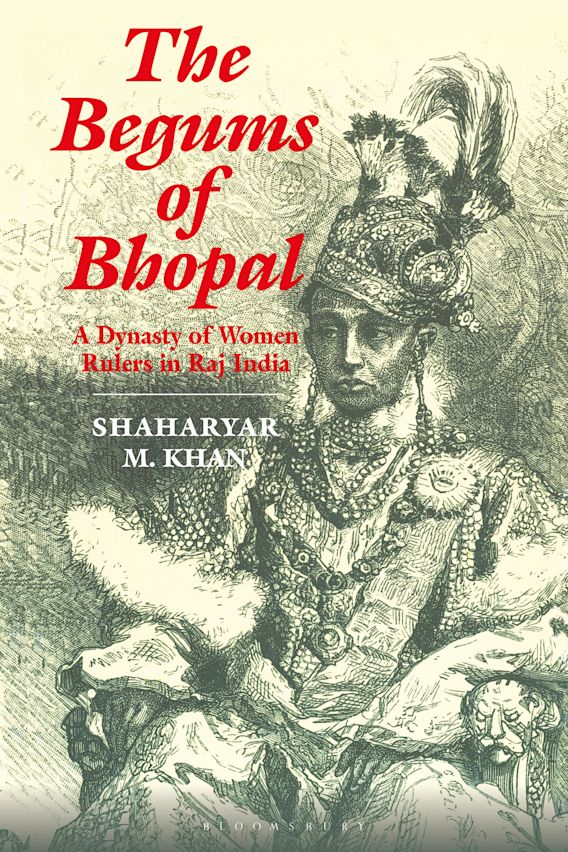
Shaharyar Khan, Shobhan Lambert-Hurley and Vertul Singh have authored or edited books on the city, which on the one hand capture its history, and on the other reveal the streak of women dominance for more than a hundred years.
pix: bloomsbury.com
Khan’s The Begums of Bhopal is the most detailed work. Like an artist fills his canvas with colour, Khan fills his pages with details of the city, its illustrious history, and its formidable Begums, now reduced to a faint memory. Khan’s Bhopal was founded by Dost Mohammed Khan. As the author reminds us, “In 1707, before Dost Mohammed Khan arrived in Malwa, central India, Bhopal was a small village on the banks of the River Banganga. An old fort, lying in ruins, was a testimony to Bhopal having known more prosperous times in the distant past.”
Tales of Bhojpal
The earliest reference to Bhopal though dates back to 640 AD when it was ruled by the Parmar dynasty. Its name is derived from that of Raja Bhoj who, as legend has it, contracted leprosy and was advised to build a lake with water from 365 rivers and bathe in it. Raja Bhoj did as advised. The lake was called Bhoj Tal (or Bhoj’s lake). Over time, it got corrupted to Bhojpal, then Bhopal.
The State was formed in 1715. It was the second largest Muslim princely state in pre-Independence India, wherein 90% of the population was Hindu. Interestingly, the Begum of Bhopal, Nawab Sikandar Begum, as Lambert-Hurley writes in the introduction to A Princess’s Pilgrimage, supported the British during the Revolt of 1857.
After the Revolt had been suppressed, this loyalty was rewarded in the Queen’s Proclamation of 1858 in which Sikandar was granted the title of Nawab to rule over Bhopal in her own right as well as given a 19-gun salute, the return of territory lost to a neighbouring prince and the Grand Cross of the Star of India. “This honour made her, at the time, the only female knight in the British Empire besides Queen Victoria, a position that underlines her unique status, as well as her close relationship with the British,” writes Lambert-Hurley.
The story of Bhopal though began not with Sikandar Begum’s rise or the reign of her mother Qudsia Begum or her own daughter Shah Jahan Begum, but with an intrepid young man called Dost Mohammed Khan. As Shaharyar Khan writes, “The story of Bhopal begins with Sardar Dost Mohammad Khan, founder of the state and of the Bhopal dynasty. Born in 1672, Dost was a strapping, handsome, brash and ambitious young man. Like all Pathan noblemen, he had been brought up in the warrior tradition of his clan…Dost’s only ambition was to enlist in Aurangzeb’s army and make his future in the service of the Mughal Empire. Around 1697, Dost was in his mid-20s and a brash, dare-devil, buccaneer of a character. He was restless and ready to seek his fortune by crossing the Khyber Pass into India.” Head to India he did, but it was far from an easy ride.
As he traversed through Jalalabad, Karnal and Delhi, on more than one occasion, he almost kissed death, but he proved a survivor, qualities which came in handy when he got to play a pivotal role in Bhopal.
Though he arrived in Bhopal practically a brigand, he worked his way up, working with a number of local kingdoms and fiefdoms — Rani Kamlapati is said to have sought his protection after the death of her husband Nizam Shah and even tied a rakhi on his hand.
He built the famous Fatehgarh Fort in 1716, including the famous Dhai Seedi ki Masjid, as Vertul Singh writes in BhopalNama: Writing a City. Incidentally, Fatehgarh was probably named after Fateh Bibi, a Rajput princess he married. Fateh was no ordinary woman; she paid ransom for her husband’s release when he was held captive by his own troops in Gujarat, Singh writes.
Khans to Begums
How did Bhopal transition from the Khans to Begums? After Khan’s death, Bhopal was attacked by many mercenaries when Mamola Bai, said by some to be the first Begum, took the help of British General Goddard to repel such forces. Then came Qudsia Begum whose perseverance and wisdom saved the “state from being gobbled up by the Scindias and the Bhonsles”, as Singh states. Her daughter Sikandar took statecraft to another level. Sikandar’s daughter Shah Jahan Begum added fine touches of poetry, art, music to turn Bhopal into a throbbing centre of the arts. Yet, the most maternal approach towards the subjects was displayed by the fourth Nawab, Sultan Jahan, known for administrative reforms, including several measures for the welfare of her subjects. So much so that she came to be addressed as Sarkar Amma.
This succession of matrilineal rulers gave Bhopal a unique identity. They did what a man could never have dreamt of.
For instance, Sultan Shah Jahan Begum initiated the building of a hospital exclusively for women, with women doctors, nurses and other staff. The facility came to be known as Sultania Zenana Hospital.
Likewise Sikandar Begum started the practice of schools for girls, inviting scholars from Yemen, Turkey and Arabia.
Incidentally, she penned her own experience of Hajj to Mecca and Medina in ‘A Pilgrimage to Mecca’ which now forms part of Lambert-Hurley’s A Princess’s Pilgrimage. Sikandar Begum’s was no ordinary trip as Hajj those days was a life-challenging exercise with possibilities of being robbed, injured or killed by marauders along the way.
After Sikandar, Sultan Jahan concentrated on girls’ education. As Singh writes, “Sultan Jahan’s contribution to women’s education is in no way lesser than that of Sir Syed Ahmed Khan.”
Incidentally, she was the only woman chancellor of Mohammedan Anglo-Oriental College which was to become the Aligarh Muslim University.
All the Begums worked well and lived long. Once, all the four queens of Bhopal were alive at the same time with Qudsia living to breathe alongside three of her successors. That’s an interesting footnote in the history of a city where male heirs have been few and far between. Their absence was seldom felt.
source: http://www.thehindu.com / Hindu / Home> Books / by Ziya Us Salam / book cover pix: by bloomsbury.com / September 12th, 2022
The Kerala Governor is in the midst of a controversy after he launched an attack on the State government in a press conference
What’s unfolding now in Kerala is merely the latest episode in Arif Mohammed Khan’s lifelong story of being his own man, whatever the stakes, whichever the stage. Often loathed, sometimes loved but hard to ignore, Mr. Khan was that way when he entered student politics in Aligarh Muslim University (AMU) in the early 1970s and rose to be the president of the students union. It wasn’t any different when he became an MLA in 1977, aged 26. Or a Minister of State during the Rajiv Gandhi Government. It is scarcely any different now when he is into his 70s and occupies the august, if increasingly controversial, office of the Governor of Kerala. He is his own man.
Another matter not everyone shares his view of what’s right. Least of all Kerala Chief Minister Pinarayi Vijayan. There is little, if any, love lost between the two. There is a reason: Mr. Khan has been publicly critical of the appointment of Mr. Vijayan’s private secretary’s wife as an Associate professor in Kannur University, where Mr. Khan is the Chancellor. So upset was Mr. Khan that casting custom aside, he called a press conference at Raj Bhawan where he fumed against the elected LDF government.
Unsurprisingly, the LDF government can barely stand him today. It is unlikely to worry Mr. Khan a bit. He is known to express himself even at the risk of social opprobrium. His old friends in AMU and Jamia Millia Islamia, where the Bulandshahr-born young man sought education, remember him as a frank and fearless person who was reasonable and open to debate. He is said to have been a good host who loved his Mughlai food and served it with relish to his guests. Today, they are both surprised and a shade speechless at the ideological and political vicissitudes in Mr. Khan’s life.
Indeed, what is happening today in Kerala is not without precedence in Mr. Khan’s multi-layered career which has seen him making pit stops over the Bharatiya Kranti Dal (the predecessor of Rashtriya Lok Dal), the Congress, the Janata Dal, the Bahujan Samaj Party before finally finding a bit of an echo to his views in the BJP. His stint in Kerala, his vehement opposition to noted Marxist historian Irfan Habib and constant run-ins with the Kerala Chief Minister are all attributed to his saffron leaning. Never mind the fact that he has won elections, notably from Kanpur and Bahraich on the tickets of non-BJP parties and has lost elections, as in Kaiserganj, on the BJP ticket in 2004.
Clash with clerics
Back in the mid-1980s, a section of Muslim clerics had no love lost for him at the height of the Shah Bano controversy when he risked it all in opposing Prime Minister Rajiv Gandhi’s move to virtually overturn the Supreme Court verdict on maintenance to divorced Muslim women.
Faced with calls for social boycott and possibility of political oblivion, Mr. Khan did not equivocate then. He is not likely do that now too.
Mr. Khan is a redoubtable scholar of Islam with a uniquely his own interpretation of religion. One could question his interpretation of scripture, not his facts. Equally, unlike many clerics, he is open to being corrected. Faizur Rehman, an independent Chennai-based Islamic scholar himself, at one time agreed with him on the Shah Bano case, but later made his disapproval known when Mr. Khan supported the criminalisation of triple talaq following the Shayara Bano verdict. “Our friendship was not affected by my criticism of his views on criminalisation of talaq,” Mr. Rehman recalls.
One may disagree with Mr. Khan but there is merit in listening to him, even if he himself could do with being a better listener. In the Shah Bano case, the Muslim clerics had agreed for the husbands to pay a substantial one time alimony to a divorced wife. They later retracted. If the maulanas had listened to him then, India’s political trajectory would have been very different.
As for Mr. Khan, he would do well to remember the letter of the rule book he quotes against the Kerala government expects a certain spirit, a certain decorum from the Governor too. It’s time to listen to Mr. Khan as much as for him to listen to voices of constitutional propriety.
source: http://www.thehindu.com / The Hindu / Home> News> India / by Ziya Us Salam / September 25th, 2022
The idea for creating the app came to Hana while watching a documentary about the importance of the parent-child relationship.
Abu Dhabi:
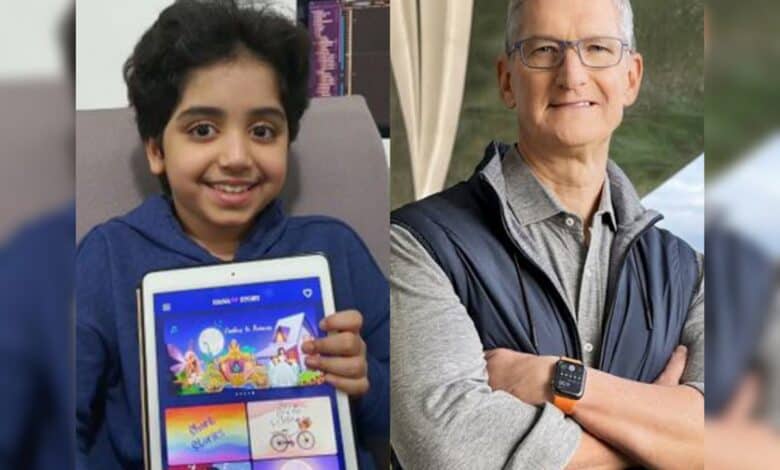
A 9-year-old Dubai-based Indian girl who developed an iOS app receives appreciation from Apple CEO Tim Cook for her achievement at such a young age.
Hana Muhammad Rafeeq had initially emailed Tim Cook claiming to be the youngest iOS developer.
In his reply, Tim Cook wrote to her “Congratulations on all of your impressive achievements at such a young age. Keep at it and you will do amazing things in the future.”
Hana Muhammad Rafeeq, when she was 8-year-old developed ‘Hanas’— storytelling app, which allows parents to record stories in their voices for their kids, Hana handwrote more than 10,000 lines of code.
The idea for creating the app came to Hana while watching a documentary about the importance of the parent-child relationship. “If the parents are busy with work, they can record the stories so that the children can listen to them before bed,” Hana told Gulf News.
source: youtube.com / Hanas iOS Mobile App preview
Hana and her 10-year-old sister Leena are both self-taught coders who got inspired by their parents.
As per reports, sisters are now experts in coding languages HTML, CSS, C, C++, Swift and the latest SwiftUI. They are also learning human languages English, Spanish German, Arabic, Hindi and Malayalam.
source: http://www.siasat.com / The Siasat Daily / Home> News> Middle East / by Sakina Fatima / September 24th, 2022
Aliah University is a state government-run autonomous university having three campuses in New Town in West Bengal. | Picture by arrangement
The inaugural batch of the nursing course in a university in West Bengal, designed especially for women, has achieved this success.
West Bengal:
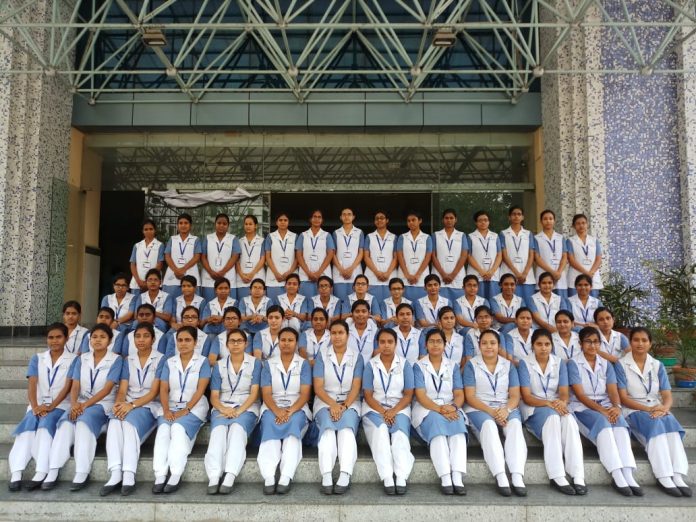
Almost the entire batch of this year’s graduates of the B.Sc Nursing course at Aliah University have got job placements. Fifty-three out of fifty-four graduating students, mostly Muslim women have been selected as nursing staff in various medical colleges and hospitals run by the government of West Bengal.
This is the inaugural batch of the nursing course designed especially for women. It is for the first time that almost an entire batch of a program in Aliah University has gotten placement.
Aliah University is a state government-run autonomous university having three campuses in New Town in West Bengal. It offers undergraduate and postgraduate programs in different Engineering, Arts, Science, Management, and Nursing subjects. Previously known as Mohammedan College of Calcutta, it was elevated as a university in 2008. It is a minority institution and hence a majority of its students come from marginalized groups and communities like Muslims and lower castes.
Usha Mallick, the head of the department of nursing told TwoCircles.net, “This is an unprecedented success for the department of nursing because these are the first batch of graduates. We at Aliah University are extremely proud of our graduates who worked hard.”
“This kind of placement will get us a great standing in the state as well as the country. This is great news also because all the girls in this department, like most students of Aliah university, come from extreme socio-economically backward families living in remote rural districts of West Bengal,” she added.
Usha Malick is head of the department of nursing at the university. | Photo by author arrangement
“We are thankful to the Mamata Banerjee government for helping the university start the course, and to the National Medical College for providing practical training for nursing students,” she said while adding that Aliah is the only state university that runs a nursing course without its medical college and hospital facilities.
Educating kids from extremely backward districts like Murshidabad The news brought cheers to several young women. Lutfa Khatoon is from Murshidabad, a densely Muslim populated area (67%) where the state of education is extremely poor. According to Census 2011, the literacy rate of the district is 66.60%, which is far below the national average of 74.04% and the state’s average of 77.08%. The district holds the bottommost position in the rank of literacy rates since the Census 1951.
“In Murshidabad education is not the priority in general, let alone education of girls. When I got admission to the course, people in my area said I am getting training to become a nursemaid. My placement has broken that impression,” Khatoon told TwoCircles.net. She is posted in Murshidabad medical college and hospital.
Firoja, Lutfa’s batchmate, told TwoCircles.net that studying was not the only thing she invested hard work in. “These four years of the course people would come to my house in Murshidabad and taunt my parents that your daughter will be ruined because they gave me the freedom to move to Calcutta to study,” said Firoja who is posted at Anup Nagar primary hospital, Murshidabad.
She mentioned that she faced financial hardships but thanked the university for providing her scholarship.
Aatika, Lutfa’s classmate told TwoCircles.net that people in the rural areas of West Bengal say that “sending girls to the city for education is like providing them with opportunities to be spoiled.” But her getting a nursing job has broken the patriarchal mindset and inspired many parents to send their daughters to study.
“In my village, most people marry off their daughters after they pass the tenth class. I am very lucky that my family supported me. It is because of them that I got a very respectful job,” she added.
Oldest modern style educational institute in Asia The university is one of the oldest educational institutes in Asia. Established by Warren Hastings, the British governor-general of East India Company in 1780. Calcutta Mohammedan College, as it was called by Hastings. Established in the form of a madrasa school, it is one of the oldest modern-style educational institutions in Asia and the first of its kind in India. It taught Natural Philosophy, Grammar, Logic, Arithmetic, Astronomy, Geometry, Arabic, Persian, Theology and Islamic Law, and Theory and Rhetoric.
Good career placement not new for Aliah University Dr Mohammad Reyaz, assistant professor of journalism at the university told TwoCircles.net that good career placements are not new to the university.
“Earlier it used to be a Madrasa. Not many people know that it has been turned into a university which offers courses in Engineering, Electronics and Communication, Business Management and nursing among other subjects. So these kinds of placements do help break the stereotype which tries to reduce the image of this premier institution as a madrasa. Not only do the students of nursing and engineering departments get good placements but students of the Arabic department also get jobs in prestigious firms like Amazon,” said Dr Reyaz.
Sufi Parween is a fellow at SEEDS-TCN Mentorship Program. Shentweets at@sufiparween84
source: http://www.twocircles.net / TwoCircles.net / Home> Lead Story / by Sufi Parween, TwoCircles.net / August 08th, 2022