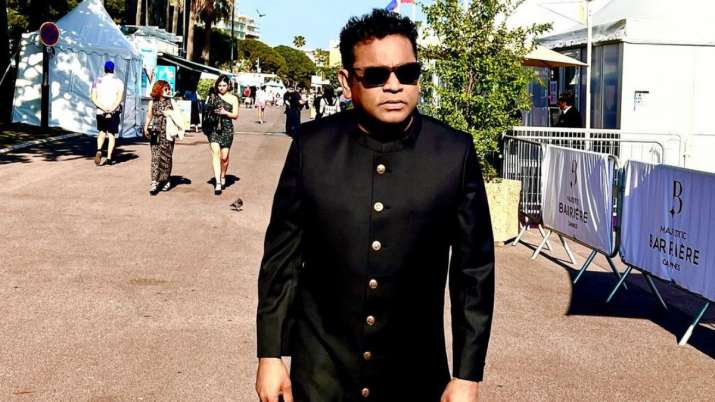
AR Rahman said as an artiste, it is a pleasure to be part of an innovative cultural program that supports creative excellence and artistic appreciation; and brings diverse audiences together.
AR Rahman named ambassador of Indo-UK culture platform / Image Source : INSTA/ARRAHMAN
Music great A R Rahman has been named the ambassador of British Council’s ‘India-UK Together Season of Culture’, which aims to boost collaboration among emerging artists. The ‘Season of Culture’ that marks the 75th anniversary of India’s independence was officially launched on Tuesday here by Britain’s Deputy High Commissioner to India Jan Thomson and Director (India) of British Council Barbara Wickham. Rahman said as an artiste, it is a pleasure to be part of an innovative cultural programme which supports creative excellence and artistic appreciation; and brings diverse audiences together.
“Today, creative expression and exchange can nurture young talent and create a global stage for fair and equitable access to arts,” he added.
Wickham said Rahman has been a significant adviser to the ‘Season of Culture’ and his work and professional journey truly embody what the ‘Season of Culture’ stands for – working together, and artistic output that captures the imagination of the world.
Over 1,400 artistes will showcase their collaborations to millions of audiences across India, Britain, Scotland, Wales and Northern Ireland, through a wide array of arts such as theatre, dance, visual arts, literature, music, architecture, design, fashion, tech-art, and new media art.
The ‘Season of Culture’ aims to build on the British Council’s work in India and strengthen India-UK collaboration in the areas of arts, English and education.
Wickham said people in both the countries will have the chance to experience innovative and exciting creative work from some of the most promising UK and Indian artists pushing the envelope of creativity and the infusion of creative tech.
source: http://www.indiatvnews.com / India TV / Home> English News> Entertainment / by PTI / New Delhi – June 08th, 2022
The awards were constituted by the Indian American Muslim Council, a Washington DC-based advocacy group, to “highlight stories and amplify voices that are often missing from the mainstream/elite media”.
New Delhi:
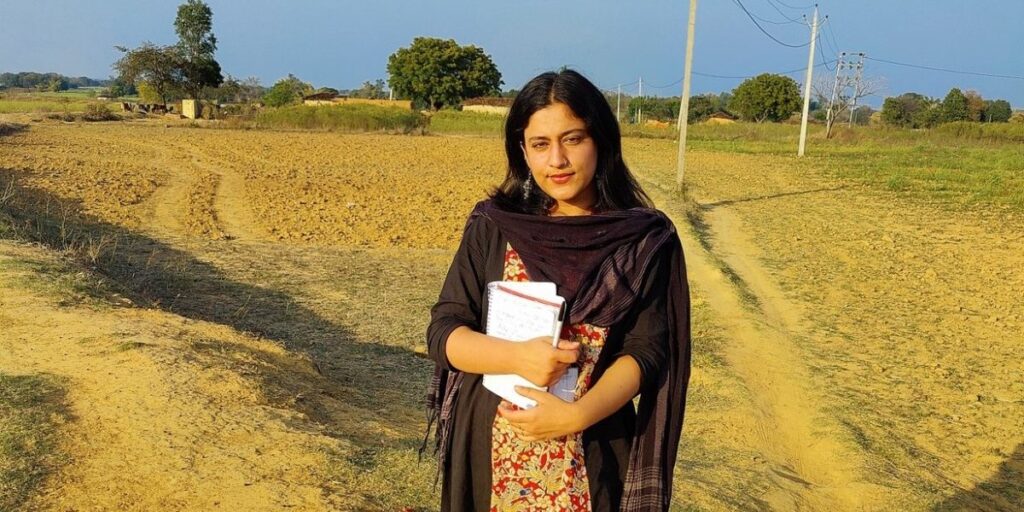
Ismat Ara was among the winners of the first edition of the Human Rights Religious Freedom (HRRF) Journalism Awards, taking home the Young Journalist of the Year Award for stories that were published in The Wire.
She was a joint winner in the category with Scroll‘s Aishwarya S. Iyer.
The awards were constituted by the Indian American Muslim Council, a Washington DC-based advocacy group. The HRRF Journalism Awards strive to “highlight stories and amplify voices that are often missing from the mainstream/elite media”.
“This year our jury chose winners in the extremely troubled times when media in India is under immense pressure from the ruling government,” said Syed Ali, president of IAMC.
Ara was chosen as a joint winner of the Young Journalist of the Year Award for stories on a temple-mosque controversy in Delhi’s Uttam Nagar, the tragic consequences of the so-called anti-love jihad law and the lynching of a Muslim youngster in Haryana. She was a staffer for The Wire when the stories were published.
Iyer’s stories covered the aftermath of the Delhi riots of 2020, shrinking space for open namaz in Haryana and the arrest of a Christian pastor in Madhya Pradesh.
Newslaundry‘s Akanksha Kumar was declared the winner of the Best Text Reporting on Human Rights & Religious Freedom category.
Priyanka Thirmurthy of The News Minute and Shahid Tantray of The Caravan won the Best Video Story on Human Rights and Religious Freedom category and Syed Shahriyar was the winner in the Best Photo Story on Human Rights and Religious Freedom category.
Article 14 and the Mooknayak were declared joint-winners of the Best Media Organisation Covering Human Rights and Religious Freedom Journalism.
According to IAMC, the awards received more than 250 entries across five categories. The winners will share a prize pool of Rs 3 lakh.
Speaking at the awards ceremony, Gypsy Guillen Kaiser, who is the advocacy and communications director at the Committee to Protect Journalists, said the watchdog’s annual prison census found that India set a country record last year for the largest number of detained journalists. “The vast majority of journalists detained in India as of December 1, 2021 are Muslims,” Kaiser said.
“The worrying trends in India make HRRF Journalism awards all the more important to uplift and celebrate the invaluable work of the Indian journalist and to remind us of the responsibility that we all share in working to keep them safe,” she added.
source: http://www.thewire.in / The Wire / Home> Media / by The Wire Staff / New Delhi – June 20th, 2022
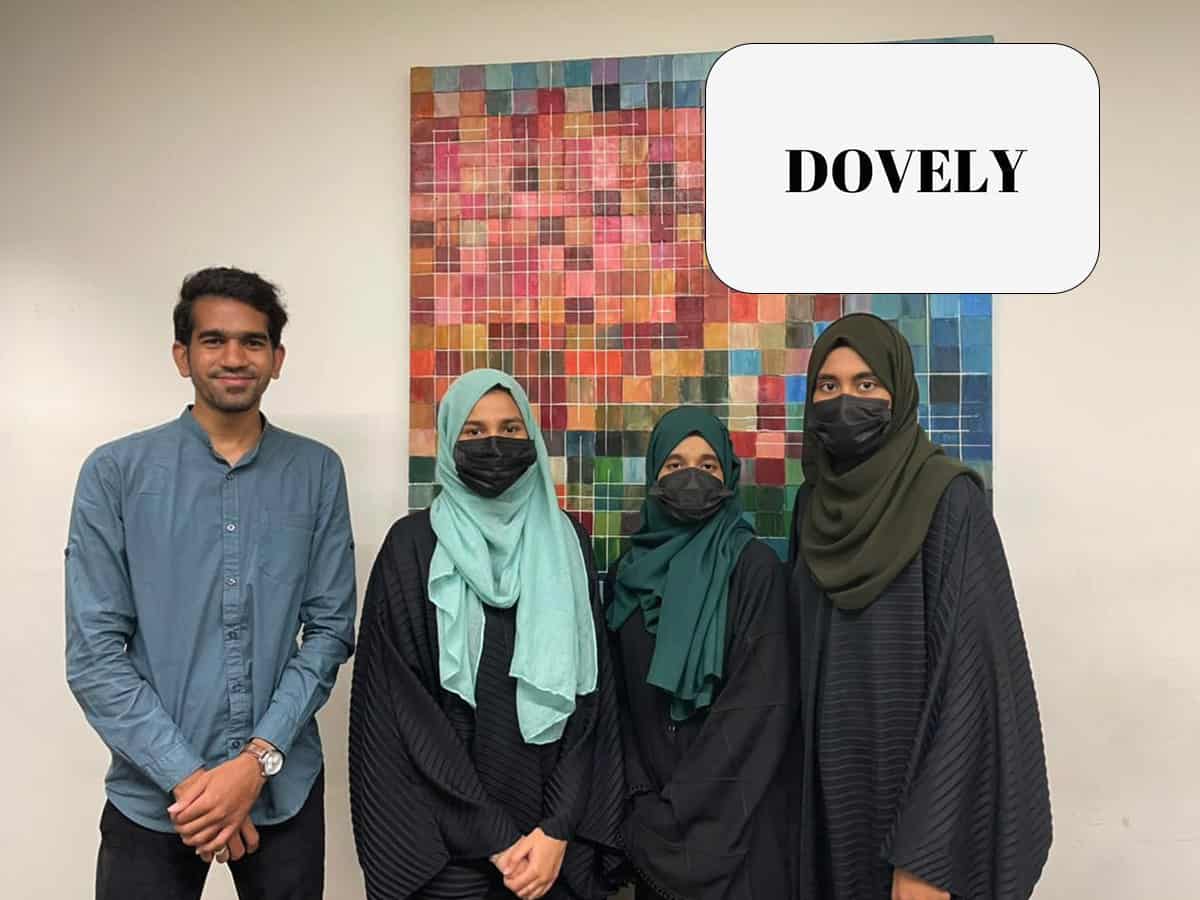
Team Dovely (from Left to Right Mohammed Obaidulla Khan, Zainab Khatoon, Uzma Khatoon and Masarrat Fatima)
Hyderabad:
How often do casual conversations on women’s safety get realised into full-fledged businesses focusing on women empowerment? One such conversation led to the creation of the ‘Dovely’ app by-city-based siblings Uzma Khatoon and Zainab Khatoon.
Concerned over women’s safety, Uzma and Zainab thought of coming up with a solution to address the issue. The Dovely app provides a bike taxi service exclusively run by and for women. Apart from ensuring women’s safety, the entrepreneurs also aim to make women financially independent.
The four-person run application comprises founder Zainab who is a final year B. Pharmacy student, Uzma, a final year B.com Computers student, and Masarrath Fatima and Obaidulla Khan who are final year B. Tech students.
As of now the platform has 20 riders and over 400 users and functions through its website and connects riders and passengers through WhatsApp.
The app is still undergoing improvements. “We will be able to develop a full-fledged app only after we reach a certain milestone like 200 rides,” said Masarrat.
She further added that the company can’t risk putting up the app on the app store or the play store since users may face challenges as it is manually operated at present.
Speaking to Siasat.com the founder and CEO of Dovely, Zainab Khatoon said, “The idea to create Dovely first struck me and originated from a conversation between me and my mom, who wanted to visit my granny and was looking for cost-effective and safe rides.”
The idea only came into existence following an unpleasant autorickshaw experience, aimed at ensuring women feel safe and secure during their journey.
“The idea struck me once again while I was travelling with my friend in an autorickshaw when the driver looked at us from the rear view mirror making me feel uncomfortable,” Zainab added.
“We sat down with our parents to discuss the name of the company. After going through about 400 names, our father came up with the name Dovely,” said Chief Operating Officer and co-founder Uzma.
“Apart from providing rides for women, the app also allows women to connect with us as Dovely partners. To access information regarding the platform one may visit the Dovely website. At the time of filing the story, Dovely successfully completed 37 rides,” Zainab said.
Addressing the query regarding profit sharing, Chief Marketing Officer (CMO) Obaid Ulla Khan said, “Currently all the money earned is being kept with the riders themselves, and we aren’t earning any commission.”
Bootstrapping for funding Dovely:
Running a startup is not an easy task and requires consistent funding. However, Obaid believes in “Bootstrapping”, where entrepreneurs fund their own ventures. “Even if we approach venture capitalists at this stage they would set milestones based on which they would provide the money, hence it is better that we set a milestone for ourselves before we reach out to investors.”
“In order to pitch the business idea, we are collecting all the information ranging from the number of riders to the number of users along with the IDs of our riders in an excel sheet, this will make it easier for us to attract investors,” he explained.
With regards to the credibility of the riders, Zainab said, “I personally handle the onboarding process for Dovely. As part of the hiring process we ourselves take long distance rides with the candidates to test their driving skills.”
On Safety
Shedding light on the steps taken to ensure the safety of the riders and passengers, Uzma said, “One of us is constantly checking on the live location from the beginning to the end of the ride, and the riders are only supposed to switch off the live location after completing the ride.”
Adding to Zainab’s response, Obaid said “More than the candidate’s driving skills, we focus on their behaviour since we want to provide the best possible service to our customers”
Addressing the query on whether riders have to be logged in for a specific period of time on a daily basis, he said, “Keeping in mind the household responsibilities of our partners, we don’t have any specific login timings for now.”
A few Dovely partners were also present during the interview and they shared their experience with Siasat.com. Nahera Lohreen, one of the partners said,” The first ride was a bit challenging since I was hesitant as to how it would go, but after a while, I felt comfortable and it has been a great experience.”
Nahera is also the first partner to be roped in by Dovely.
Zareena Begum, another partner with the firm said,” It is a great opportunity since it gives us financial independence and I was looking forward to such an opportunity”
Speaking of future plans, the company’s CEO Zainab said, “As of now we are focusing on a minimum of 10 rides per day, we will gradually expand into three and four-wheeler markets.”
She further said, “Apart from bike taxis, we are planning to deal with transport and logistics which will also be led by women. The greater vision of the company is to empower women across India and make them financially independent.”
www.dovely.org
source: http://www.siasat.com / The Siasat Daily / Home> News> Hyderabad / by Mohammed Baleegh / June 19th, 2022
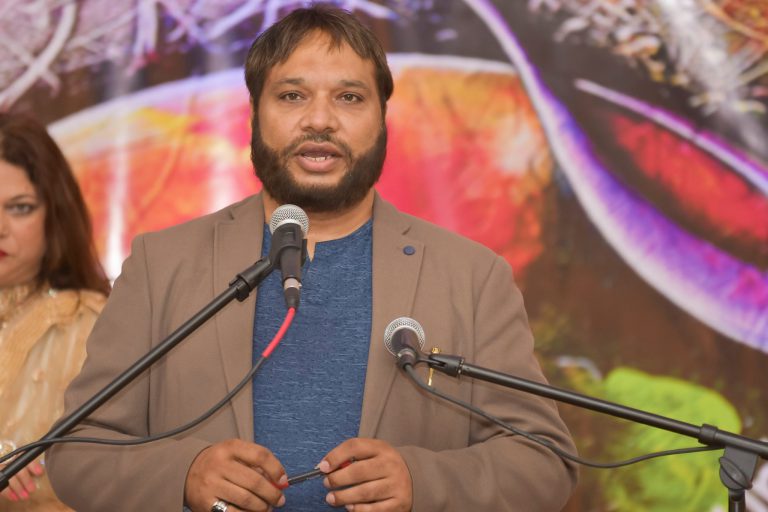
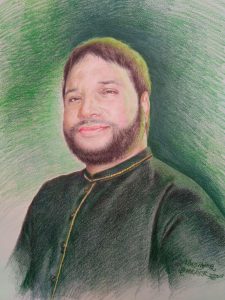
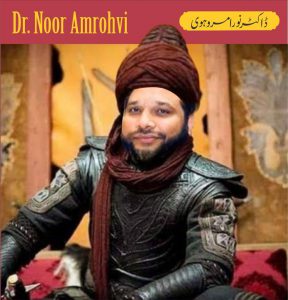
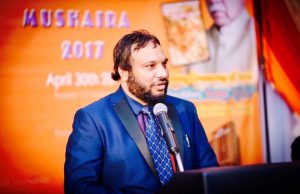
Dr. Noor Amrohvi is one of the most important people in modern times for his knowledge of literature and poetry. Dr. Noor Amrohvi is a man of courage and many qualities. Apart from his immense love for literature, poetry and Urdu language, he also has a deep sympathy for the nation. They are popular among the people. He lives in the United States but his heart lives in India. They always strive for the development of the country, the welfare of the people and the promotion of Urdu language. And these are the things that make him stand out from others.
Dr. Noor Amrohvi belongs to a business family of India. He himself is also a businessman. Simultaneously, he is a renowned and popular poet and a literary figure. Although in the Dallas Texas Area there are a large number of poets and prose writers, yet the main difference between Noor and others is the level of popularity and fame that has come to Noor Amrohvi. He is certainly a distinguished and far more popular literary figure than others poets, speakers and writers.
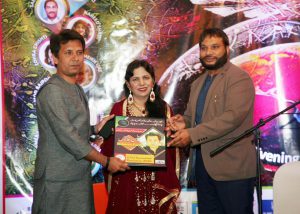
Its manifest proof is proven by the release of his first book which has been released in a unique and charming manner. Although the release of this book has been carried out in an extremely distinguished and unique manner yet the most notable and enticing manner was visible in the celebration which was hosted by his admirers and readers in 2018 AD. Its salient features were that every listener and guest was given a precious diamond. Moreover, precious pens were gifted to Dr Noor Amrohvi by adopted sister of Noor In the light of all these festivities that party became one of the most unique and expensive functions which was neither witnessed nor celebrated.
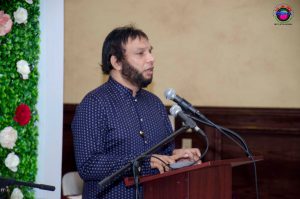
Noor Amrohvi is also the chairman of the famous literary and social organization named “ALNOOR INTERNATIONAL “. Every year Noor Amrohvi conducts an international program named,” an evening for peace and unity).
Noor Amrohvi enjoys the distinction of being the only expatriate person for holding an international Mushaira (poetry presentation). Every big and renowned poet aspires to take part in the poetry Mushairas conducted by Dr Noor Amrohvi as an honor.
One can imagine the popularity and fame of Noor Amrohvi for his services for Urdu language,Asian community and poetry. That last in a Mushaira conducted at his residence, almost all the reputed and well-known celebrities of Dallas city were present.
It may be mentioned that Dr. Noor Amrohvi has received so many and numerous awards. The expatriate residents of Dallas and Fort Worth cities have acknowledged that no one has so far received so many awards as Noor Amrohvi has been awarded.
Noor’s Ghazals have been sung by singers. The lyrics written by him have been used in the movies and also sung by renowned singers in India. The city of Dallas is very fortunate that it has a poet of eminence known asDr. Noor Amrohvi who represents Urdu language in the United States and Dallas city as well as elsewhere.
Although Dr. Shamsa Qureshi is the spoken sister of Dr. Noor Amrohvi, yet there is a great deal of understanding between them to the extent that both seem to be the real sister and brother.
Dr. Shamsa has a very soft and kind temperament and is the author of a volume of poetry. She is the custodian and patron of the Al-Noor International literary union. She is like the backbone of this literary union.
The people of Dallas have benefitted by this relationship of brother and sister that two Urdu literary and poetry sessions are held every year. These programs are held because of the support and patronage of Dr. Shamsa and Dr. Noor Amrohvi.
source: http://www.millattimes.com / Millat Times / Home> Opinion / by Saeed Qureshi, Editor – UprightOpinion.com / January 13th, 2021
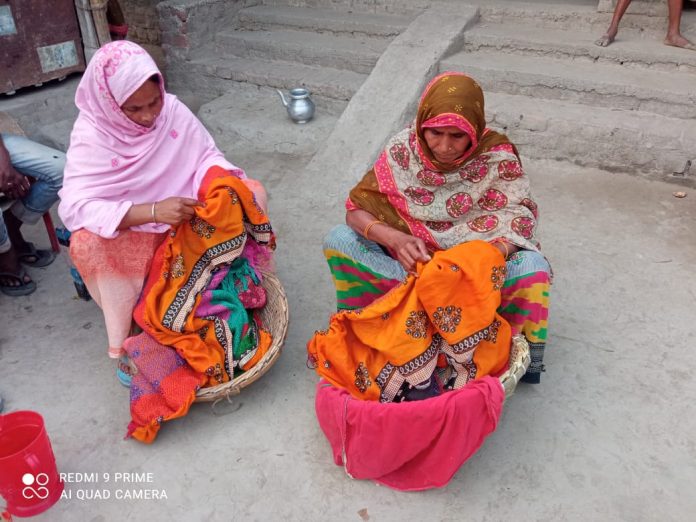
Rural women of Bihar engaged in doing Kheta embroidery work. | Picture by author arrangement
Kheta is said to be a 500-year-old quilting heirloom practised exclusively by Shershahabdi women. Today, Kheta embroidery work is getting popular among non-Shershahabdi people with many women formerly associated with making Beedis taking to Kheta work to earn a decent livelihood.
Bihar :
Razia Khatoon of Kishanganj district of Bihar is getting 45 days of training in Kheta embroidery work. The training will be completed on May 14 and is done under Project Samarth, a scheme for capacity building in the textile sector carried out by the government of India. Earlier, she would make Beedi (plant leaf cigarettes) as a livelihood. She said Kheta has given her a chance to get rid of the health hazards that making Beedi brings on.
For several workers like Razia, the Kheta embroidery work, after acquiring proper training, is expected to be an alternate livelihood instead of the hazardous Beedi rolling job.
Believed to be a 500-year-old quilting heirloom practised exclusively by Shershahabdi women, today the Kheta embroidery work is getting popular among non-Shershahabdi people. Earlier, the intricate embroidery work was done on the layers of pre-used print Sarees and chequered Lungis etc, however, today the use of new clothes for making Khetas is widely done.
“Shershahabdi is a term used for Muslims of the Seemanchal area of Bihar who were settled in the region by emperor Shershah Suri. They are said to be ethnic Pashtuns mixed with local Surjapuris,” Ashraful Haque, a Shershahabdi, who co-ordinates with the Kheta weavers, told TwoCircles.net.
“Kheta is so intricate and organised that officials from Delhi first refused to believe it as a handcraft. When a live demo was done, they were immensely impressed. After the efforts of the local member of parliament Dr Mohammad Jawed, who raised this question of Kheta in the Parliament, we have got this opportunity to train our women not only in making more vibrant Khetas but also make them aware of its marketability,” he said.
To make Kheta embroidery work as a source of income, the artwork is being introduced in new forms with the use of new clothes. This embroidery work is now done on bedsheets, notebook covers, bags, pillow covers, mufflers, table clothes and handkerchiefs etc.
As of now, seventy thousand workers are believed to be associated with this artwork.
Noticeably, unlike other embroidery works, Kheta avoids figurative depictions which are considered to be forbidden in Muslim culture. The colours used for Kheta are generally bright like red, green, yellow, blue, and purple.
Razia, 24, is a Shershabadi woman, and like every other Shershahabadi female, she knew a bit of Kheta.
She expressed her happiness in learning new designs and colour patterns of Kheta. She used to earn around 1$ per day by Beedi making. She now hopes to double her income by part-time Kheta making.
More than the money she is happy as she considers Kheta work as “Izzat wala kam (a respectful job.)”
Another trainee Rulekha Khatoon’s husband is a migrant labourer. Khatoon is 25-years-old and is doing Kheta work regularly for the last six years. She learnt the technique from her mother and grandmothers. “Earlier we used to make Kheta only for family purposes like dowry and gifts etc. This training showed us that we can sell our work too. I hope to earn Rs. 3000-4000 per month with the work of 3-4 hours,” she said.
47-year-old Tajgara Khatoon is a top trainer of Kheta. She told TwoCircles.net, “A needle and some threads are required to do wonders in Kheta embroidery but not without great painstaking concentration. Shershahabdi women learnt it naturally but this training is giving them a wider range of patterns.”
Inderjit De and Saumya Pande of Zameen Astar Foundation write in their paper on Kheta embroidery, “The term Kheta stands for straight running stitches in the local dialect and refers to both embroidery and the product. In its similarity to the word, Khet meaning farm, the term Kheta may resemble the meticulous lines of the paddy fields.”
According to the website involved in the promotion and marketing of Kheta, “the array of designs offered by Kheta resonates with ripples of water, materials used in building make-shift huts, flowers, dry fruits, leaves, among many more.”
Yuman Hussain is the executive director of Azad India Foundation which is actively involved in promoting Kheta and arranging training for workers.
Yuman told TwoCirles.net that the “training helps in benchmarking the skill level and understanding the quality control. It formalizes the knowledge transfer and helps in keeping the next generation interested in continuing the quilting practice.”
The training also provides the trainees with an artisan card with benefits like insurance and access to participate in different exhibitions.
“On average, a Kheta artisan can make 4 to 6 quilts (96″ x 60″ size) in a year. They can earn anything between Rs 10000 to Rs 30000 per year depending on how many quilts they are making, sizes of quilts, the skill level of quilting etc,” she said.
Yuman rued that even though most Shershabadi women know how to make Kheta, the supply of skilled artisans is less. “The work needs to be done on both sides to build awareness in the market and a supply chain base for these quality quilted Khetas,” she added.
Sami Ahmad is a journalist based in Patna, Bihar. He tweets at @samipkb
source: http://www.twocircles.net / TwoCircles.net / Home> Lead Story / by Sami Ahmad, TwoCircles.net / May 05th, 2022
Modelling professional, rugby player and dermatologist among role models.
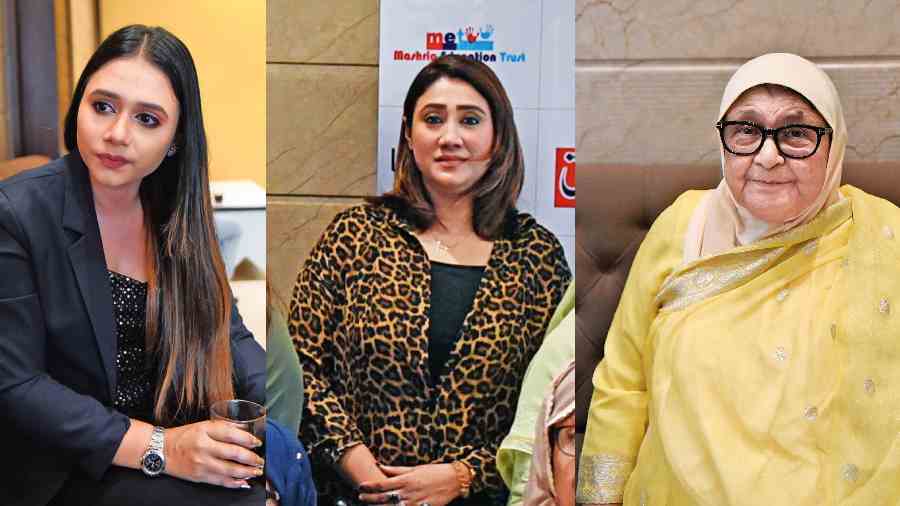
(From left) Bilkes Perveen, Saba Ali Firoz and Suraiya Rahman. Gautam Bose
A young woman set a condition to her would-be husband that she would marry only if she was allowed to pursue sports after wedding.
A girl whose neighbours once complained she wore jeans pursued her dream and became a fashion model, an entrepreneur and an anchor-presenter.
Several Muslim women who refused to tread the steps that many others wanted them to — get married, have children and live a domestic life — are now successful professionals. They came together at a gathering on Thursday afternoon.
The women will be feted by the NGO Friends of Alumni of Colleges Educational Institutes and Schools (FACES) and Mashriq Education Trust next week.
The Telegraph listened to some of their stories:
Bilkes Perveen
Anchor, model and entrepreneur
She was once frowned upon for wearing jeans. Bilkes, in her early 30s, who grew up on Convent Road in central Kolkata, said she was probably the only girl in her community in the neighbourhood who wore a pair of jeans.
“My neighbours were not happy with me wearing jeans. It was a very conservative space where I grew up,” she said. But she didn’t budge.
When she was 18, Bilkes took a night-shift job. She would go to her workplace wearing jeans or trousers. “I was 18. I wanted to be financially independent. Relatives and neighbours questioned why I took a night job. They wanted me to marry and have a kid instead of working. Fortunately, my parents stood by me,” Bilkes said on Thursday.
Life had better in store for her. At 19, she took up a job with a bank. It is while working there that she found her future husband, Tanmay Chatterjee. “Tanmay has always been very supportive. He wanted me to be a role model for others. After marriage I set up a company named Perveen and Chatterjee,” she said.
Bilkes wants to help women who have dreams but are afraid of defying the moral police. “My company trains Muslim women in personality development,” she said.
Bilkes herself hosts events as anchor and is also a model for a sari brand. “I am today happy with what I am doing,” she said.
Saba Ali Firoz
Rugby player and stylist
Saba had set a condition to her husband before marriage — she would pursue sports, her passion.
“My husband was fine with it,” said the 39-year-old mother of two.
She continues to do it despite unsolicited comments meant to fetter her. “I had to wear short skirts for playing, for which I had to hear comments like ‘you are not Sania Mirza’. Wearing a short skirt is a taboo,” she said.
Daughter of a retired police officer, Saba, a resident of Metropolitan off EM Bypass, got inducted into sports from her early teens by her father. “I did sprints and long jumps. It was my father who inspired me to take up athletics.”
Saba’s interest in sports spans disciplines. She has represented her club CCFC in rugby. She has played darts, badminton and tennis. She has also inculcated the passion for sports in her kids. Her 15-year-old son has represented the state in swimming and her 9-year-old daughter is training in swimming and basketball.
Imran Zaki, president of Faces, one of the organisers of Thursday’s get-together, said Muslim women were usually not encouraged by the society to take up sports and continue that after marriage. “It is to Saba’s credit and her will that she has managed to do what she loves. She is the one to emulate,” said Zaki.
As a professional, Saba runs her own studio at her home. She is a stylist and a make-up artist.
Suraiya Rahman
Gynaecologist and owner of a hospital
Suraiya earned her MBBS degree from Bihar in 1967. She was the only Muslim woman in her batch. She later completed her MD from Kolkata in 1975. Again she was the only Muslim woman in her batch.
“There were objections from relatives and acquaintances. They thought it was disgraceful for a woman to go to a convent school and a medical college,” she said. “But my parents never let those objections reach me. My younger sister is a gynaecologist,” she said.
If Suraiya was a rare example in her student days, she is one even now. At 76, Suraiya is running a hospital on Dilkusha Street near bridge number 4 in Park Circus. She does procedures, looks after the daily administration and advises junior doctors. “I am only 76,” she said when applauded for being so active at her age.
Farah Khan, director, Mashriq Education Trust, said: “Suraiya Rahman is a role model for the entire community. So many young doctors from our community, both women and men, look up to her.”
source: http://www.telegraphindia.com / The Telegraph, Kolkata / Home> My Kolkata / News> Women’s Empowerment / by Subhajoy Roy / June 10th, 2022
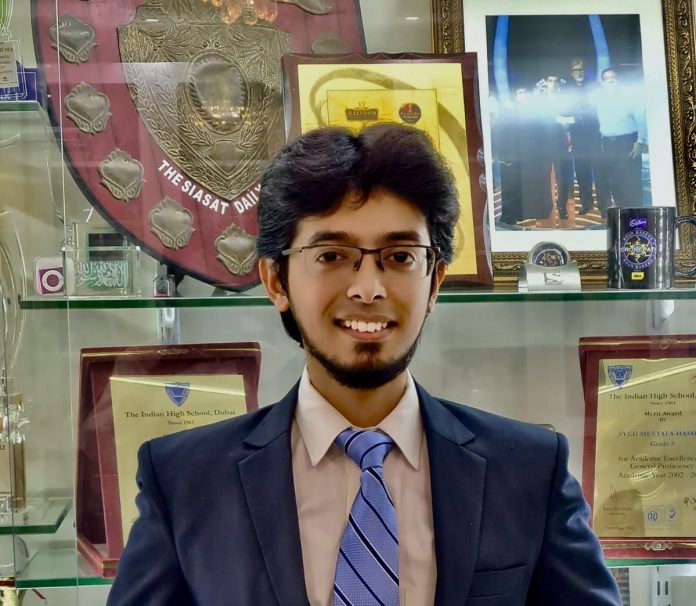
Dr Mustafa Hashmi is the only Muslim candidate from the south Indian state of Telangana making the UPSC list.
He is one among the total of 22 Muslim candidates who cracked the UPSC exams this year.
After completing his MBBS in 2016, Dr Hashmi pursued his MS degree at Osmania Medical College, Hyderabad. He graduated in 2020 and joined the district hospital, King Koti, as a surgeon. | Picture by arrangement
Hyderabad :
Of the total 685 candidates who have cracked this year’s Union Public Service Commission (UPSC) exams, only 22 are Muslim. 29-year-old Dr Mustafa Hashmi is one of them. He is the only Muslim candidate from Telangana who has cracked the prestigious UPSC, which is India’s highest civil services exam. He has bagged 162nd rank.
Talking to TwoCircles.net, Dr Hashmi, who was a practicing surgeon at Government District Hospital King Koti, Hyderabad, said that he was very happy to crack UPSC.
He said his motivation to crack UPSC came from seeing the experiences of economically backward people while accessing health care. “It dawned on me that the problems of these people are not confined to health alone and that I should do something else to ease their problems and serve the society in a much more beneficial way,” he said.
Dr Hashmi cracked UPSC exams on his fourth attempt after preparing for more than a year without attending any coaching institute.
“The first three attempts were like practice tests for me so I could get to know the pattern of the tests. I don’t have any regrets about that. It was only during my 4th attempt that I dedicated more time after my hours at the hospital,” Dr Hashmi said.
Maintaining a balance between work and studying for UPSC wasn’t easy. After an exhausting day at the hospital, where he was sometimes posted in the intensive care unit (ICU), performing surgeries and treating Covid-19 patients, he would come home and devote the remainder of his time to studies.
“I was determined and remained focused,” he said.
Dr Hashmi said that during his studies, his parents supported him by running his errands and doing his chores. “It is not just my hard work but even my parents’ put in so much to ensure that I was not disturbed while studying. They took care of every little need of mine. I owe my success to them and their upbringing,” he shared.
Born in an educated family, Dr Hashmi said that he was inclined towards science from his childhood because of his grandfather. “My grandfather was a Deputy General Manager in the Water Works Department, and used to advise me to become an administrative officer because he would say I could serve people better in that way,” he said.
After completing his MBBS in 2016, Dr Hashmi pursued his MS degree at Osmania Medical College, Hyderabad. He graduated in 2020 and joined the district hospital, King Koti, as a surgeon.
Besides excelling in academics, Dr Hashmi has memorized the entire Quran.
Eldest of the four siblings, who are also doctors, Dr Hashmi said his parents were working comfortable jobs in the Gulf before deciding to return to India. “My parents wanted me to serve the country. I am thankful to Allah for this result,” he said.
Dr Hashmi believes that after counselling, it is more likely that he will be posted in the Indian Police Service (IPS).
“Whatever is assigned to me, I will serve the people. I will be able to reach out to more people who are underprivileged and I am happy with that,” he said.
Dr Hashmi said that the youth of the country who wanted to pursue UPSC should not think of serving themselves but “serve society at large and contribute to nation-building.”
“Youth (cracking UPSC) should think about improving the lives of the less privileged in whatever way they can. Understanding the larger purpose and working hard towards that is the key to success and satisfaction,” he added.
Nikhat Fatima is a correspondent with TwoCircles.net based in Hyderabad, Telangana. She tweets at @snikhatf
source: http://www.twocircles.net / TwoCircles.net / Home> Lead Story / by Nikhat Fatima / June 02nd, 2022
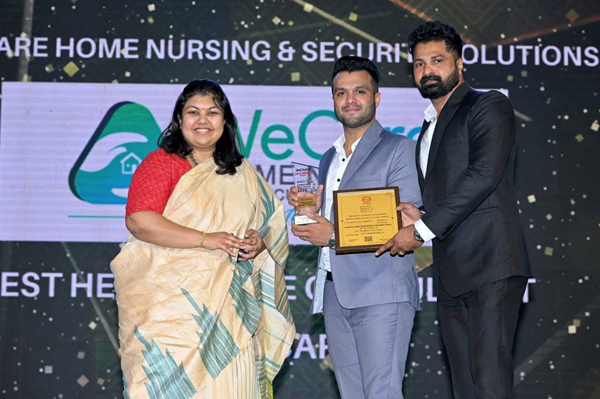
Partners Surakat Ahmed and Vijesh Kumar received the award. The award was presented by Sowmya Reddy, MLA of Karnataka and also the general secretary of All India Mahila Congress of Karnataka.
WeCare Home Nursing and Security Solutions, the face of quality Home Health Care and Security in Mangaluru and Dakshina Kannada, has been bestowed with ‘Best HealthCare Consultant’ in the healthcare sector at KTCC Karnataka Business Awards, the ceremony was held at Manpho Convention Centre in Bengaluru on May 29.
Karnataka Business Awards is the most cognized listing of Karnataka’s companies that have played a significant role in the success of the state and have unambiguously unveiled themselves as the next set of game changers in their respective categories.
The nominations were judged by a jury of independent senior professionals and experts. The winners of the award are those that have worked hard to win consumers’ trust.
Partners Surakat Ahmed and Vijesh Kumar received the award. The award was presented by Sowmya Reddy, MLA of Karnataka and also the general secretary of All India Mahila Congress of Karnataka.
Elated on receiving the award, Surakat Ahmed said, “In any service industry, customer is the king, and services and products that we provide are designed according to what the clients and patients require. We are delighted and honoured to receive such an award which recognizes the hard work we have put in to build this company in the past 3 years.
“It gives us immense pleasure to know that people of our region, Dakshina Kannada have trusted us and we have been able to fulfill their faith in us,” he said.
Vijesh Kumar said, “It is the result of dedicated service and collective hard work of the entire team over the years which enabled WeCare Home Nursing and Security Solutions to grab this award.”
WeCare Home Nursing and Security Solutions is a Mangaluru based ISO 9001:2015 certified company with over 250 employees currently under them having it’s office at Nandigudda. They have been providing exemplary service to the region in providing home nurses/ caregivers who are well experienced and have received formal training in patient home care skills and home management. They are qualified to perform duties and services that help maintain personal comfort in a clean and safe environment.
WeCare is also a highly reliable security service company providing thoroughly trained security guards to building contractors, apartments, business centres, industries, hotels, showrooms, banks and educational institutions.
www.wecare24.co
source: http://www.daijiworld.com / Daijiworld / Home> Top Stories / by Media Release / June 10th, 2022
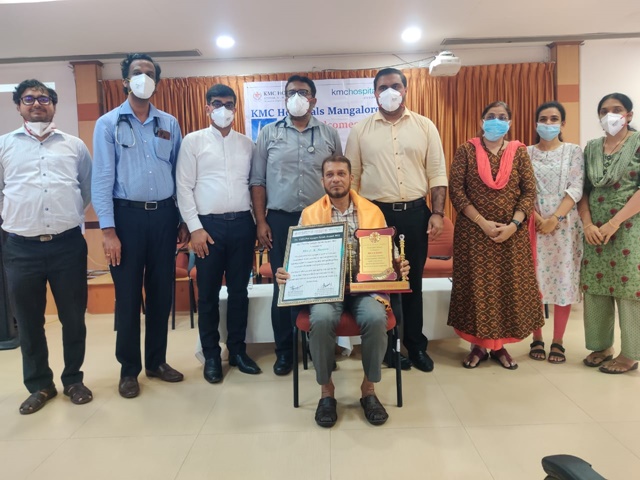
Kasturba Medical College, Attavar organized camp organizers’ meet and conferred E K Hussain with Dr TMA Pai Arogya Sevak Award 2022, at the Sanjeevini Hall, KMC Attavar here on Saturday June 11.
Marketing head of KMC Hospital Mangaluru, Rakesh Darshan welcomed the gathering. Camp co-ordinator of KMC Attavar Herbert Pereira briefed on the number of camps organized in Dakshina Kannada and said, “Due to COVID, we were not able to organize more camps in 2020 but from October 2021, we have organized 178 camps in various places where more than 27,474 patients had undergone health check-up and 1,442 patients were given further treatment at the KMC hospital. When we organized camps, we received very good support from many organizations. I would like to thank all the organizations that joined hands with us to make our mission successful.”
Addressing the gathering Dr Deepak Madi said, “Our founder Dr TMA Pai had a dream of eliminating illiteracy, poverty and ill health. He started schools to educate the poor people, banks to eliminate poverty and hospitals to provide treatment. Now, KMC Hospitals in the health sector are in second place in the country.”
Dr Deepak Madi further said, “We cannot go to every village to treat the patients, but some good-hearted people have joined hands with us to reach out to every village in providing treatment to the people. We are also providing the KMC Attavar Loyalty card and the Arogya card to the people. We normally hold camps in the hospitals but holding camps in villages is quite different. It is a godly work and I salute all those who have dedicated their time to helping the people who are deprived of medical facilities. I urge all of you to continue your good work. If you need any help we are always there at your service. This humanitarian work should continue. In the coming days, let all the people make use of the KMC Loyalty Card and Arogya cards.”
E K Hussain was felicitated by Dr Deepak Madi with a shawl, memento, and citation. Medical social worker Asha read out the citation. Prajna Counselling Centre was awarded with ‘Best Camp Organizer – 2022’ for its outstanding work in the field of rural Helth. KMC Hospital also felicitated all the camp organizers and those who had done the highest registrations of Manipal Arogya Card on the occasion.
Dr Manohar Pai, Dr Sumana Kamath, Dr Athmananda Hegde, Dr Rajendra A, Dr Shourjya Banarjee, Dr Basavaprabhu, Dr Smitha D’Sa, and Dr Deepthi D’Souza were present.
Nithesh Shetty delivered the vote of thanks.
source: http://www.daijiworld.com / Daijiworld.com / Home> Karnataka / by Media Release / June 11th, 2022
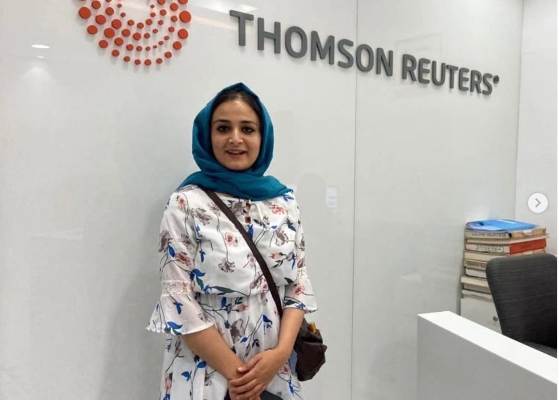
Amid the gloom, there is a whiff of fresh air. A young woman photojournalist has made Kashmir proud by winning the prestigious Pulitzer Prize this year.
Sanna Irshad Mattoo became the first Kashmiri woman photographer to win the Prize.
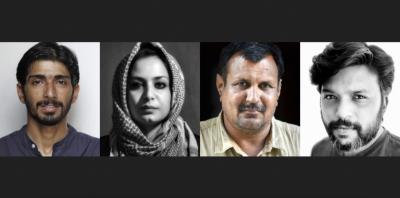
She is among the three from India to have won the award this year. Besides, Sanna, slain Reuters photographer Danish Siddiqui and Adnan Abidi have won the award for their images about Covid’s toll in India.
Siddiqui was killed last year in Afghanistan.
Sanna Irshad Mattoo has won the prestigious Pulitzer Prize award in the feature photography category for 2022.
“Congratulations to @adnanabidi, @mattoosanna, @AmitDav46549614, the family and friends of the late, @dansiddiqui, and @Reuters. #Pulitzer,” Pulitzer announced on Twitter.
Sanna, who holds a Master’s in Convergent Journalism from the Central University of Kashmir, has her work published in international media outlets, including Al Jazeera, TIME, and TRT World. She has also done a fellowship with the prestigious Magnum Foundation in 2021.
“Sanna Irshad Mattoo is a photojournalist and documentary photographer based in Kashmir. Ranging from groundbreaking news to in-depth storytelling, her work concentrates on depicting the tension between the seeming ordinariness of life and the stark symbols of a menacing militarised milieu of Kashmir. Her work has been published in newspapers and magazines around the world and has been screened and exhibited in various exhibitions and festivals. She presently contributes to Reuters as a Multimedia Journalist,” Sanna’s Pulitzer introduction said.
In 2020, three Jammu and Kashmir photojournalists Dar Yasin, Mukhtar Khan, and Channi Anand won the prestigious Pulitzer award. Established in 1917, Pulitzer Prize is an award for achievements in newspaper, magazine, online journalism, literature, and musical composition within the US.
source: http://www.indiatomorrow.net / India Tomorrow / Home> Featured> Inspiring Personality / by Ishfaq-ul-Hassan / May 10th, 2022