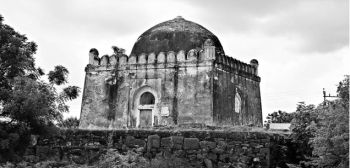
Majestic: The tomb of Allaudin Hasan Gangu Bahamani, founder of the Bahamani dynasty, in Gulbarga will be one of the monuments to get a facelift.
Gulbaraga, Karnataka :
Some of the monuments in Gulbarga, which date back to the 14th century, are all set for a facelift under the Asian Development Bank (ADB)-assisted North Karnataka Urban Sector Investment Programme (NKUSIP).
Deputy Project Director of NKUSIP, G.M. Chowdhary, told The Hindu here on Thursday that it had been proposed to give a facelift to the three tombs of the founder of the Bahamani dynasty Allaudin Hasan Gangu Bahamani; Jamia Masjid, constructed on the model of the great mosque of Cordova in Spain inside the Gulbarga Fort; another masjid Sheikh Roza Minar; and Chor Gumbuz, an imposing vacant tomb on the outskirts of Gulbarga city. Also, a heritage track from the government museum to Hafth Gumbuz covering a distance of 1.8 km has been proposed.
Mr. Chowdhary said the total cost was estimated at Rs. 2.01 crore. The work would begin in July.
Proposals
As per the proposals, the approach road to tomb no. 1 of Allaudin Hasan Gangu Bahamani would be improved at a cost of Rs. 7.15 lakh along with restoration of the entrance and walkway from the main gate to tomb at a cost of Rs. 1.91 lakh; illumination and beautification of the outside of the tomb by providing solar lamps would cost Rs. 2.88 lakh. Besides, landscaping and drinking water facilities would be provided at a cost of Rs. 2.92 lakh.
Mr. Chowdhary said that at tomb no. 2, Rs. 6.15 lakh would be spent for improving the area around the tomb and illumination and beautification of the place. At tomb no. 3, Rs. 8.42 lakh would be spent on improving the approach road, entrance to the tomb, construction of compound wall, providing flooring in the tomb and seating arrangements around the tomb for visitors and illumination of the tomb. A sum of Rs. 12.35 lakh would be spent for improving facilities at the Jamia Masjid inside the fort. This included development of landscaping with walkways and seating arrangements at a cost of Rs. 7.37 lakh; providing drinking water facility at a cost of Rs. 2.1 lakh and illumination and beautification outside the masjid at a cost of Rs. 2.88 lakh. A sum of Rs. 1.3 crore would be spent on laying a heritage track of 1.8 km.
Besides, Rs. 3.64 lakh would be spent for improving facilities at Sheikh Roza Minar and Rs. 20.43 lakh on the Chor Gumbuz, one of the important landmarks in Gulbarga city. Also, Rs. 5.38 lakh would be spent for improving facilities at the government museum.
source: http://www.thehindu.com / The Hindu / Home> Karnataka – Gulbarga / by Special Correspondent / Saturday – June 04th, 2011
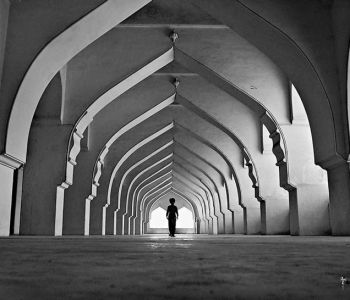
Many layers to it:The interiors of the Jama Masjid captured by photographer Mohammed Ayazuddin Patel and published in his book, ‘Monuments of Gulbarga: Treasure of Islamic Architecture’.
Gulbarga , Karnataka :
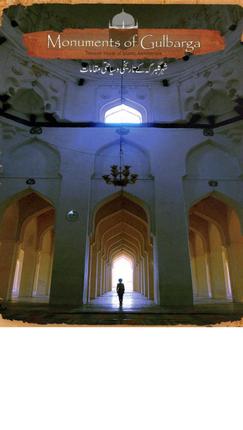
Mohammed Ayzuddin Patel, an eminent photographer, has come out with a pictorial tribute to the monuments in Gulbarga district in a book titled ‘Monuments of Gulbarga: Treasure of Islamic Architecture’.
The 96-page book has some rare photographs of the historic monuments in Gulbarga district. This is for the first time that a serious attempt had been made to bring out the breathtaking beauty of these heritage structures in the form of a book. This private initiative is supported by Qamarul Islam, Gulbarga North MLA.
The book was released by Union Minister for Tourism Subodh Kant Sahay during the Gulbarga Utsav on April 15.
One of the features of this book, printed on glossy paper, is the brief historic background of the monuments on each page. The book contains photographs of the crumbling yet imposing tomb of the founder of the Bahamani dynasty, Allauddin Hassan Gangu Bahamani, tucked away in a remote corner in Gulbarga city. This monument, under the control of the State Department of Archaeology and Museums, was a picture of neglect till Mr. Patel took it up with the authorities and the Archaeology Department started conservation work.
Another striking photograph is that of the historic Jama Masjid inside the Gulbarga Fort.
The imposing structure is shown before and after restoration. The book also contains photographs of the interiors of the masjid from different angles. The book also has photographs of the dargah of Hazrat Shaikh Sirajuddin Junaidi, who had come to Gulbarga even before the Bahamani kingdom was established.
The book contains rare photographs of the “mysterious” fort at Holkonda on the outskirts of Gulbarga city with many tombs inside it. The book has some rare photographs of the Nizams of Hyderabad and also the train used by them to visit Gulbarga in summer.
However, Mr. Patel says that only a few monuments have been printed in the book and hundreds of others hidden away from the public need to be brought to the limelight for conservation.
source: http://www.thehindu.com / The Hindu / Home> Karnataka-Gulbarga / by Special Correspondent / Sunday – May 01st, 2011
BOOK Monuments of Gulbarga is a book that captures ancient art and architecture through photographs.
Domes, tombs, minars , forts, moats and off-course masjids . Are you thinking of Delhi? Why travel thousands of kilometres to experience the reminiscences of the sultanate? Prefer going to Gulbarga, a night’s journey from Bangalore. Instead, feel every bit of Gulbarga’s history by just turning the pages of a book. “Monuments of Gulbarga, Treasure House of Islamic Architecture”, a photo-book authored by Mr. Mohammed Ayazuddin Patel gives you this experience.
Gulbarga, now a district headquarters in northern Karnataka, was the capital city of Bahamani Sultanate for two centuries. It was at its zenith in the 15{+t}{+h}century and was home to hundreds of monuments. The Sultanate was founded by Bahaman Shah or Allauddin Hasan Gangu. He shifted the capital from Daulatabad in the present-day Maharashtra to Gulbarga and laid the foundation for a magnificent city. The other great kings of the dynasty were Mohammed Shah and Mujahid Shah.
Resembles Spain`s Mezquita
The book provides a pictorial account of the history of the Bahamani kingdom. Beginning with a nostalgic photo of a tomb of Allauddin Hasan Gangu Bahamani, the founder of the dynasty, the book vividly portrays the beautiful Gulbarga fort, its ramparts, fine arches and abutments. The Jama Masjid, built within the fort, resembles the Great Mosque of Cordova (Mezquita) in Spain with grand corridors and lofty entrance. Various pictures of Shahi Jama masjid in the book unfurl a tableau in front of the onlooker. This masjid located in Shahbazaar was constructed for the members of the royal family. ‘It has a unique architectural style of Mughals and the Persian style’, the book says.
The mausoleums of Mujahid Shah, Daud Shah, Ghiyat-al-din Shah, and Shams-al-din resemble that of Hasan Gangu. Unique is the Tomb of Feroz Shah, with intricate jalis and twin domes. The pictures of 800-year-old Holkonda fort capture the Islamic culture and the simplicity of Tughlaq style aptly. This fort houses an idgah and a Dargah of Hazarath Mohamad Mashaq Sahib, a Sufi saint believed to have come to Gulbarga at the request of Bahamani Sultans.
Gulbarga is famous for the tombs of Sufi saints and Pirs . Noted among them is Dargah of Khaja Bande Nawaz Gesudaraz, built by Mohammad Shah Bahamani. It has a Bijapuri arch built by Afzal Khan, army general of the Ailshahis. Other Sufi tombs being Dargah Khabullah Hussaini with beautiful paintings and calligraphy, Dargah Hazarath Kamal-e-Mujarrad and Dargah Hazarath Shaik Sirajuddin Junaidi.
Majestic, but dilapidated is the Ferozabad fort, built by Feroze Shah Bahamani. He was known for his flair for fine-arts and architecture. This fort, on the banks of Bheema river, encompasses a huge mosque, Tosha khana , and palacial buildings. In spite of its beauty and historical significance, this fort is ill-maintained. Arrays of dung cakes adorn the walls of the sepulchral edifices. Weed-infested mahals are on the verge of collapse due to vagaries of nature. Crumbling structures like Kanchini Mahal, once magnificent and awe-inspiring narrate a story of wanton negligence.
The Chor Gumbad with floral designs, Chand Bibi Gumbad or Kali Gumbad with exquisite Chajjas andJalis , Upli Gumbad – incomplete, yet beautiful, the utterly neglected tomb of Jaccha Bibi, the Siddi Ambar Gumbad with a rectangular porch, are only a few identified among tens of such monuments wailing for attention.
Water conservation
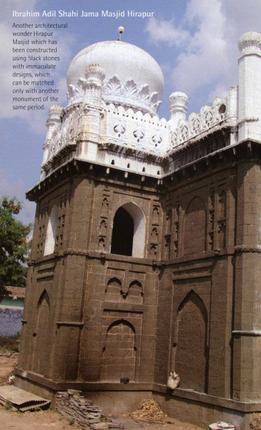
The photos of Hirapur form an interesting set. Hirapur, a suburb of Gulbarga has Ibrahim Adil Shahi Jama Masjid, built in black stone decorated with immaculate designs.
The town has wells, embedded with finely crafted staircases, jharokas and of all, ingenious technology of water conservation to avoid excessive evaporation in soaring temperatures. The wells are still seen as an evidence of splendour, but grossly uncared for.
Strewn inside the fort and atop the bastions are numerous canons, cast in brass and other alloys, weighing several tons, flaunting an intimidating appearance. Famous among these canons is Baragazi Toop atop the Burj in the fort.
Gulbarga is dotted with tombs and mausoleums lost in history, beckoning the curious eyes with their regality. This book displays a tableau of medieval Islamic culture and gives a splendid account of the forgotten monuments. The author also gives an account of Hindu and Jain monuments and pilgrim centres. Patel dedicates quite a bit to the revered Sharanabasaveshwara Temple, Sannati Chandralamba Temple, Ganagapura Dattatreya Temple, and Mallinatha Basadi at Malkhed, but, there is no reference to the nearly 700 year-old-shrine of the Madhwa saint Jayateertha on the banks of river Kagina at Malkhed, a major pilgrim centre.
Patel, a national award winner, also records Aiwan-e-shahi, Osmania Intermediate College, MSK Mills established in 1884 by the Nizams. He is President of National Graduate Art and Photographers Association.
TAMRAPARNI R. RAGHAVENDRA
source: http://www.thehindu.com / The Hindu / Home> Features> Friday Review / by Tamraparni S. Raghavendra / March 28th, 2014
Irfan Habib, Professor Emeritus at Aligarh Muslim University (AMU), is a doyen of historical research. Speaking with Eram Agha, Habib discussed challenges like religious fundamentalism facing researchers, the Wendy Doniger controversy — plus AAP and BJP in upcoming polls:
What are challenges in writing history, with fundamentalist forces ready to react?
Well, a primary challenge is the information one would like to have about the past is often missing, partly because historians of an earlier time had a different, more restricted view of history — documents regarding poor peoples’ concerns have not survived. Many matters of their interest were not recorded at all. The major problem for historians is how to fill such gaps.
On the other hand, since all kinds of influences are at work in societies, one cannot confine one’s attention to a locality or country alone — we have to relate the history of one country to others. For instance, we need to explore the relation between modern Indian history and the development of capitalism in Western Europe.
We cannot be like Subalterns who simply concentrate on local communities and forget the larger picture.
Can fundamentalist censorship be dismissed?
Well, religion has been a factor in historical change. Historians need to be careful and rational in assessing religious influences in history.
But it’s not possible to agree with Edward Said when he argues that persons outside any religion or culture cannot study that area. On the contrary, religious history should be subjected to a purely scientific approach — indeed, a refreshingly sceptical attitude towards religious texts might be more desirable than blind belief.
Wendy Doniger tried. Her book was pulped by its publishers. Your thoughts?
The publishers should not have surrendered in the manner they did. They should have waited for court orders before taking any such step.
You’re identified with AMU — what role should an identity-based university play today?
AMU is a university in a poor country, running with generous public financing — it’s important for AMU, as for any other university, to ensure that it offers modern scientific and secular teaching. All marks of identity must subordinate themselves to modern, democratic, secular values.
AMU was established to cater to Muslims but not exclusively for them, and not at the cost of proper education. In the 1950s and 60s, AMU was one of India’s advanced universities — today, partly due to the minority status campaign, it’s lost some of that repute. The religious atmosphere too has grown visibly with official support. That must put off others.
Upcoming polls are considered pivotal in India’s political history — your analysis?
Well, 10 years earlier, BJP was rejected — now, it’ll be interesting to see the reverse of the verdict of 2004. That seems to be the main thing this time.
Personally, for me, it’ll be sad if the Left does not recover.
Can AAP generate enthusiasm amongst Muslims?
The reaction of Muslims will not be different from others because AAP is appealing on an anti-corruption cause and thus securing support. Muslims are being addressed the same way as others.
But AAP will be tested on positive programmes — it has to frame an industrial and labour policy, rules on GM crops, land reforms, etc. Questions like these will arise soon.
A clean government is alright — but it should also be a good government.
source: http://www.timesofindia.indiatimes.com / The Times of India / Home> Opinion> Interview / by Eram Agha / March 31st, 2014
With little expertise, wildlife expert Saleem is trying to give them a new lease of life
The city wildlife team is facing an unusual challenge. They have to pull off what is considered a one-in-a-thousand rescue and rehabilitation of young house swifts (Apus nipalensis), which experts term is a touch-and-go situation.
Despite lack of expertise in rehabilitating the house swifts, which are very delicate, the six young ones are being cared for round the clock with great diligence by wildlife rehabilitator Saleem Hameed.
The birds were rescued from the HAL campus on Friday. At present, Saleem feeds them 24 times in 12 hours, once every half an hour.
This is what Saleem said:
“They were eight birds when they came here. They were rescued after a fall from a hangar. The good thing is, they were rescued along with the nest. Sadly, two died soon, but six are alive.
”They are very difficult birds to raise. With a high rate of metabolism, they have to be hand-fed every half an hour and they need attention round the clock at least till they fledge. The feeding starts at 7 in the morning. They are fed an insect diet, Mazuri, shipped down from the US. They are responding well. They need great care and attention, predominantly between 7 am and 7 pm.
”Unlike most birds, these are very sociable and live in huge colonies. In most birds, we find the territorial fight and new ones are not easily accepted. But here, they are accepted soon as they are sociable. As nothing much is known about swifts, we hope these birds which are roughly about 3-4 weeks-old would take a week or two to fledge. Some birds fledge within a month. Sparrows fledge within 14-15 days.
”An interesting thing is that one of them, probably the oldest of the lot, has already started jumping and is trying to fly. He jumps about 2-3 feet. As they fledge, they have to be launched into air to ensure they can join other swifts that are in a colony.”
source: http://www.bangaloremirror.com / Bangalore Mirror / Home> Bangalore> Others / by Chetan R, Bangalore Mirror Bureau / March 27th, 2014
Eminent Indian scientist Prof Seyed E Hasnain has bagged the Cross of the Order of Merit of the Republic of Germany. He served as the founder-director of Centre for DNA Fingerprinting and Diagnostics (CDFD) and vice-chancellor of University of Hyderabad.
The award has conferred on Prof Hasnain in recognition of his contribution to Indo-German relations. The Order of Merit of the Federal Republic of Germany was instituted in 1951 by Federal President Theodor Heuss. It is the only honour that is awarded in all fields of endeavour and is the highest tribute the Federal Republic of Germany can pay to individuals for services to the nation.
German Ambassador to India, H E Michael Steiner, conferred the prestigious ‘Bundesverdienstkreuz’ on Prof. Seyed Hasnain at the German Embassy in India, says a statement from the University of Hyderabad on Thursday. Prof. Hasnain is a renowned microbiologist especially acclaimed for his path-breaking research on tuberculosis. He paved the way for the office of the German Research Foundation in India, which is one of the key forums for scientific cooperation between Germany and India. During his stay at the Robert Koch-Institute in Berlin and the University of Wurzburg, he produced remarkable research results in microbiology.
Prof. Hasnain has almost all major Indian Science Awards to his credit: GD Birla Award, Shanti Swarup Bhatnagar Prize, FICCI Award, J.C. Bose National Fellow Award, Ranbaxy Research Award, Goyal Award, Bhasin Award and several others. He is the first Indian elected member of the German National Academy of Sciences Leopoldina and one of the youngest to be elected Fellow of TWAS, Trieste, Italy. Internationally, Prof. Hasnain is a recipient of the prestigious Humboldt Research Prize, awarded by the Alexander-von-Humboldt Foundation, Germany; as well as the very exclusive Robert Koch Fellowship, of the Robert Koch Institute, Berlin.
source: http://www.timesofindia.indiatimes.com / The Times of India / Home> City> Hyderabad / by Syed Akbar, TNN / March 13th, 2014
Britain’s Royal Mail Monday issued a postage stamp of Noor Inayat Khan, the World War II heroine, who was a descendant of Tipu Sultan, the remarkable 19th century ruler of Mysore kingdom.
The stamp – part of a set of 10 stamps in their ‘Remarkable Lives’ series — honours Noor on her centenary year of birth. Others honoured in the set include actor Sir Alec Guinness and the poet Dylan Thomas.
“I am delighted that Royal Mail has commemorated Noor with a stamp,” said Shrabani Basu, author of “Spy Princess, The Life of Noor Inayat Khan”, and the chair of the Noor Inayat Khan Memorial Trust. “It will ensure that her sacrifice and bravery will not be forgotten. ”
Basu campaigned for a memorial for Noor which was unveiled in November 2012 by Princess Anne.
Noor Inayat Khan was born in Moscow in January 1914 to an Indian father, Hazrat Inayat Khan, and an American mother, Ora Ray Baker. The couple had met in the Ramakrishna Mission ashram in America. Hazrat Inayat Khan was a Sufi preacher and musician and travelled the world taking Sufism to the West.
Noor was brought up in Paris and the family moved to London when the city was occupied by the Germans in 1940 during the Second World War. In London, Noor joined the Women’s Auxiliary Air Force and was later recruited for the Special Operations Executive, a secret organisation started by Prime Minister Winston Churchill.
She was the first woman radio operator to be flown undercover to Paris and worked from there for three months under the code name Madeleine. However she was betrayed, arrested and finally executed in Dachau Concentration Camp in Germany. Though she was tortured and interrogated, she revealed nothing, not even her real name. Her last word as they shot her was “Liberte”! She was only 30.
Noor was posthumously awarded the highest honour, the George Cross, by Britain. France awarded her the Croix de Guerre.
In 2006, President Pranab Mukherjee, then the defence minister of India, paid an official visit to Noor’s family house outside Paris and described her bravery and sacrifice as “inspirational”.
source: http://www.mea.gov.in / Ministry of External Affairs, Government of India / Home> Media Centre> Articles> Articles in Foreign Media / Malaysia Sun / March 25th, 2014
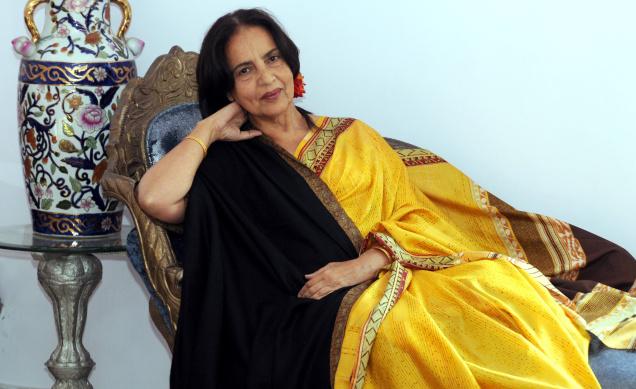
Salma Sultan at her home in New Delhi./ Photo : Rajeev Bhatt / The Hindu
What makes Salma Sultan click even at 63?
“I belong to a city where women ruled for 100 years. So much is the pride in that place that till date most women don’t attach their father or husband’s surname . Most girls still use ‘Sultan,’ just like I do.”
Personifying pride coupled with grace and humility – meet Salma Sultan, the woman who ruled the small screen as a newsreader for over two-and-a-half decades. A rose became synonymous with her and news reading — an elegant exercise.
Today Salma , over 63 years of age, hasn’t lost her charm and poise. Looking at her on television , no one would have imagined that she possessed such a tremendous sense of humour. Barely a sentence of hers is free of effortless wit and hilarity.
A Delhiite for over two decades, Salma now lives in her palatial three-storey bungalow at Jangpura and has to her credit the greenery of the area starting from Sahi Hospital to its back and beyond. An ardent nature lover, she has turned the ugly , illegal parking area to a lush meadow. “Delhi is my karmbhoomi. It has shaped my confidence and given me immense strength to fight contradictory situations.”
As one enters her drawing room through the Rajasthani fort style gate, peace greets through a painting of the Buddha and class via an original M. F Husain painting . “Husain saab gifted it to my father,” that familiar voice falls on the ears as one spots the beautiful woman with her dimpled smile and motherly warmth in her kohl-less eyes. She has “taken great pains” to get ready – a yellow and brown sari, “touch-ups with talcum powder and lipstick”, and stuck a red rose on insistence for the photo shoot. “I don’t like getting ready and ‘pose’ for pictures,” she says politely. She is shy and camera conscious despite, ironically, being in front of the camera from 1967 till the late nineties.
But Salma , quite contrary to her appearance on the small screen, had been a naughty child. “I was very assertive, irrepressible, naughty but not spoiled. Not a single day of my life would go without a prank in school.” For instance, the day “our teacher would ask us to bring the geography book, I would make it a point to give it to someone to get the ‘punishment’ of standing outside the classroom with three others equally party to this plan,” she laughs as her dimple grows deep.
Born to scholar and secretary in the Ministry of Agriculture Mohammed Asghar Ansari and a “Moghul” homemaker mother, Salma was her parents’ second child. “I was an unplanned child but a blessing to my lonely sister (Maimoona Sultan, four-time Member of Parliament) who would protect me from the wrath of my disciplined father who would make sure that I offer all my prayers (namaz) and read the Quran on time. But he has a great contribution in the making of my personality. He used to emphasise education and extra curricular activities in school. He would prepare my debate and make me rehearse in front of him,” recalls Salma about her Sultanpur school days in Bhopal. Salma did her graduation from Bhopal. “I did my post graduation in English from Indraprastha College, and simultaneously gave audition for an announcer on Doordarshan.”
On to news reading
Salma became a newsreader by fluke. “Those days”, she recalls “only Pratima and Gopal Kaul used tor read news. Kaul wanted to become a producer, so his tussle with the DD was a regular affair. Once, as a protest and to make sure not to read news anymore, he shaved his head. As he entered the studio, the producer was shocked.” In the frantic search to replace him, Salma became a casualty. “But there was a hidden desire to read news as it was a well-paid, comfortable job where the newsreader, unlike an announcer like me, had to come at 4 p.m., read the news a couple of times and go back.” A nervous Salma read the 15 minutes news in eight minutes and “paused”. “The hapless producer decided to train me and that’s how the journey began.”
She narrates the story behind the signature rose in her hair. “I once wore a pink rose to match my pink sari and read news. Telephone calls and letters of appreciation poured in. Then the day I wouldn’t tuck a rose, letters of complaints and requests would follow. So, a rose became a regular affair.” And to hunt for matching roses, Salma would either grow her own or “steal from the neighbourhood.”
After her retirement , Salma moved to direction. Her serials Panchtantra, Suno Kahani, Swar Mere Tumhare and Jalte Sawa drew attention. She recalls, “To shoot Panchtantra on minimum budget, I went to Mumbai to look for a set of rajmahal. Someone told me that B.R. Chopra’s set for Mahabharatawas being dismantled after the shooting. I met him and he was kind enough to let me use his set.Panchantra used to be telecast soon after Mahabharata and did very well. I will never forget his compliment , “Mujhe is ladki ki daad deni padegi. Mahabharat ke baad bhi log isse dekhte hain”.”
The mother of an Income Tax Commissioner Saad and a choreographer daughter Sana and two grandchildren, Salma’s quest for learning hasn’t waned. “I am learning synthesiser and , harmonium for my love of music, and computers to be tech-savy.” Salma also does interior designing. She began by doing up her 13-room bungalow in Bhopal followed by an apartment in Patparganj. Her residence is proof of her refined taste.
How does she keep fit? “I do yoga, walk and take supplements. I treat my body as a gift from God…. To purify my inner self, I offer namaz regularly,” she signs off, poise refuses to fade.
source: http://www.thehindu.com / The Hindu / Home> Features> MetroPlus / by Rana Siddique Zaman / February 22nd, 2010
Author Sadia Dehlvi on her friendship with Khushwant Singh
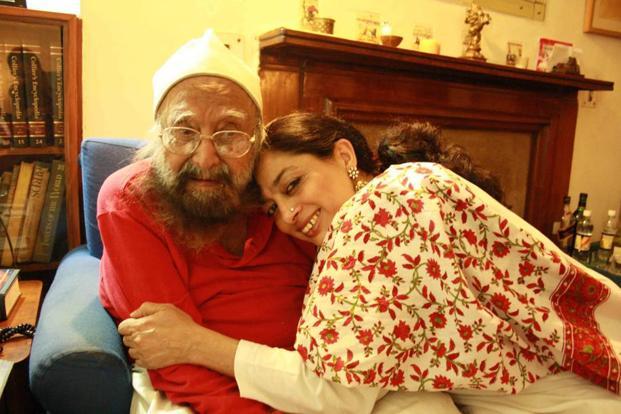
Khushwant Singh and Sadia Dehlvi
If you ask me about the women in author Khushwant Singh’s life, I would say I am the only one. That’s how special he makes all those around him feel. Women are drawn to him because he doubles up as confidante, friend, father and mentor.
For women afflicted with heartbreak, Khushwant readily provides his shoulders to dry the tears and at celebration time he shares the cheer. He has the remarkable ability to suffer all kinds of people, often getting bullied into inviting them home to his evening durbar. I know many women whom Khushwant helped get jobs, admissions, transfers, and senior government posts. Many authors including me owe their career to his mentoring.
I first met Khushwant thirty years ago at the Arab Cultural Centre where my friend Ameena Ahmed happened to be exhibiting her calligraphic paintings. He walked up to me and said “Why are you so beautiful?”. I laughed replying, “Because I am a beautiful person.” Khushwant asked me to come to his house the next evening and the visits to Sujan Singh Park have continued ever since. His flat became my window to the world of the rich, famous and the absurd. Here I met presidents, parliamentarians, religious zealots, intellectuals, artists, poets, businessmen, harassed women, ambitious men and proud transvestites.
Very soon Khushwant began to mention me repeatedly in his newspaper columns and I too openly wrote of my love for him in my columns. It furthered his notoriety and capitulated me into the public arena. Saying, “I want to show you off”, he took me along to people’s homes and to public functions. When there were special invitees for dinner, I played hostess at his home, ensuring guests were comfortable. Khushwant’s wife Kanval was fond of me so my presence in the living room was never a problem. The women Kanval disapproved had to be entertained in his study and were not welcome to stay for dinner.
In 1993, Khushwant dedicated his book Not a Nice Man to Know to me: To Sadia Dehlvi, who gave me more notoriety and affection than I deserve. Many amongst his women friends turned green with envy and to our amusement, some began to accuse him of ghost-writing my columns. We grew to share an incredible bond, a friendship that continues to nurture me intellectually and emotionally.
We share a common love for the city of Delhi and Urdu poetry. Khushwant has a soft spot for Muslims and Muslim women in particular. His house is adorned with calligraphies from the Quran and the Muslim greeting ‘Salaam Alaikum’ is printed on the curtains. One thing that he despises is dishonesty and religious prejudice. I know many well-known people harbouring communal biases who have been dropped permanently from his circle.
Despite the celebrity status, Khushwant answers the phone himself, replies to letters and till recently was accessible to all those who wished to meet him. Taking a prior appointment used to be the only criteria for visiting rights.
With age and exhaustion, the numbers of those invited to the evening Durbar e Khas has shrunk and one rarely encounters a new face. Conversations are shorter and the poetry is usually Ghalib’s. Khushwant now finds it stressful to meet new faces and I have been ordered not to bring friends any more. I try explaining my helplessness with people seeking access to him. He says, “Just tell them that I’m an irritable, senile and nasty old man.” The truth is that at ninety plus, Khushwant is maashallah just as alert, lovable and wonderful as ever.
This piece is an excerpt from thedelhiwalla.com, where it appeared in 2010
source: http://www.livemint.com / Live Mint & The Wall Street Journal / Home> Leisure / by Sadia Dehlvi / Thursday – March 20th, 2014
The ancient Calvathy mosque is steeped in history. PRIYADARSSHINI SHARMA traces its origin and antiquity as it is poised to get two more floors to accommodate believers.
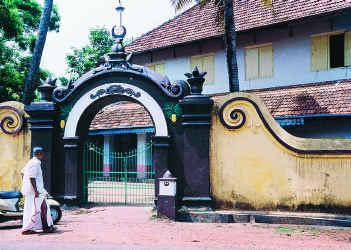
WHEN IT comes to antiquity, every nook and corner of Fort Kochi has a timeless past. While the St Francis Church and the Jewish synagogue hog the limelight as `must-see’ in a traveller’s itinerary, many are unaware of the very ancient Calvathy Jamath Mosque, which exists rather silently along the road connecting the two famous monuments.
It is a historical curiosity that so many varied communities who came to Kochi in succession, settled here to form a long lasting affair with the land and became an indelible part of it. None rampaged the land but settled down harmoniously, imparting richness to its history. The Arabs, who were the first to come for purposes of trade, established places of worship, to which the Calvathy mosque belongs.
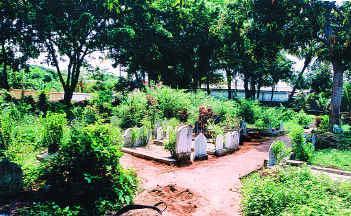
Dating back to the 14th century, it is claimed that the traders, in order to perform their religious rites, built it in the year1384, where historical evidence of records of prayers exist for the last 619 years. Records tell about a trader, Makkar, from Parapanangadi who elevated the existing structure to its present form. From then on several additions were made to it, with the passage of time. The mosque is credited with the fact that many distinguished personalities like Makki Thangal, renowned for his Quranic interpretations and literary works is buried in the adjoining cemetery, just as the mausoleum of Faridudeen Aulia, is erected on the Eastern side of the mosque. The tomb of Faridudeen Aulia, is renowned throughout the country, as he was a preacher of the Koran and was respected and loved by one and all. Thus on Thursdays and Sundays special prayers are offered to him.
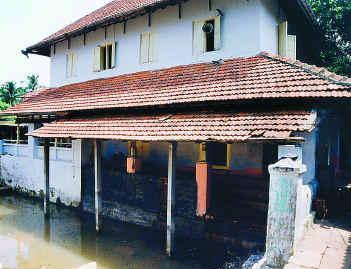
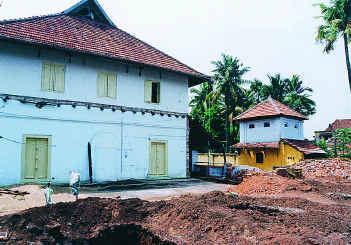
Built in a typical Kerala style the mosque has a timber ceiling and no minarets. A water tank in the centre is in keeping with the traditional architecture. The 2-acre plot which houses the mosque has a burial ground and is planted with many rare trees. Presently plans are afoot to build extensions to the mosque. Says the secretary Mr.A.K RajaAnwar, ” We propose to build two floors of 4000 sq ft to accommodate the believers. It will be in keeping with the style.” Managed till a few years ago by the well-known stevedoring Poovath family, the mosque was managed by Paree Moopan, Abdul Rahimkutty Moopan and Bava Moopan.
In the 1940’s a controversy led to the closure of the mosque, which was resolved in the hands of a popular and loved Imam Maroham Mohammed Ali Musaliar. Hailing from Aluva he was respected and followed the Shariat of Islam. He managed the premises for a good 40 years where, besides managing the day-to-day affairs, he also planted a variety of rare trees in the mosque grounds. In the late sixties, prominent persons like T.K Pareekutty, Abdul Rahim Kutty Moopan, Poovath Hassan, V.K. Hamza, Mohammed Koya, with Poovath Hassan as president formed a working committee to run the mosque.
Today, the Jamath Pally manages the mosque along with a few other mosques in the area. A laudable feature of the Calvathy mosque is that its burial grounds are open to other sects of the Muslim community too.
Calvathy, facing the Western side of the mosque, was the first wharf in Kochi and had an active maritime tradition, much before Sir Robert Bristow planned the present port at Willingdon Island. It was the ancient hub of all sea faring activities, in sharp contrast to the neglected locality it is today. An ancient structure like the Calvathy mosque remains deprived of its historical due and it is time the mosque finds a rightful place among the sites and sounds that contribute to the antiquity of Fort Kochi .
source: http://www.hindu.com / The Hindu – Online Edition / Home> Features> Magazine / by Priyadarsshini Sharma / Thursday – May 15th, 2003