Marai Village, Siphajr (Darang District) , ASSAM :
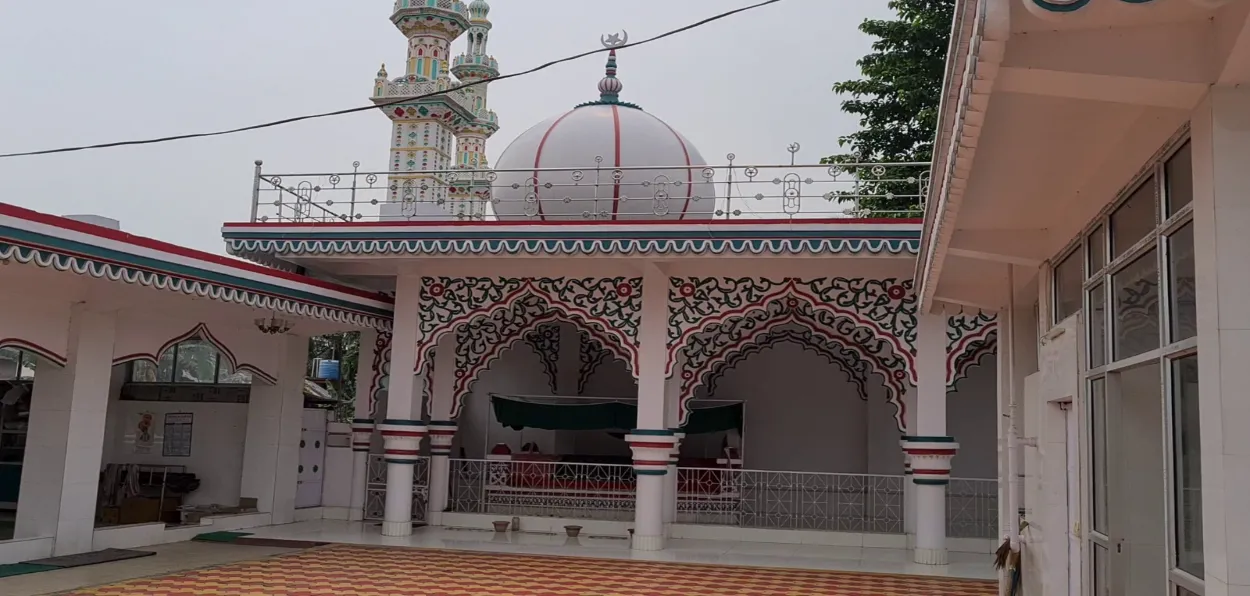
Inside the shrine of Baga Baba
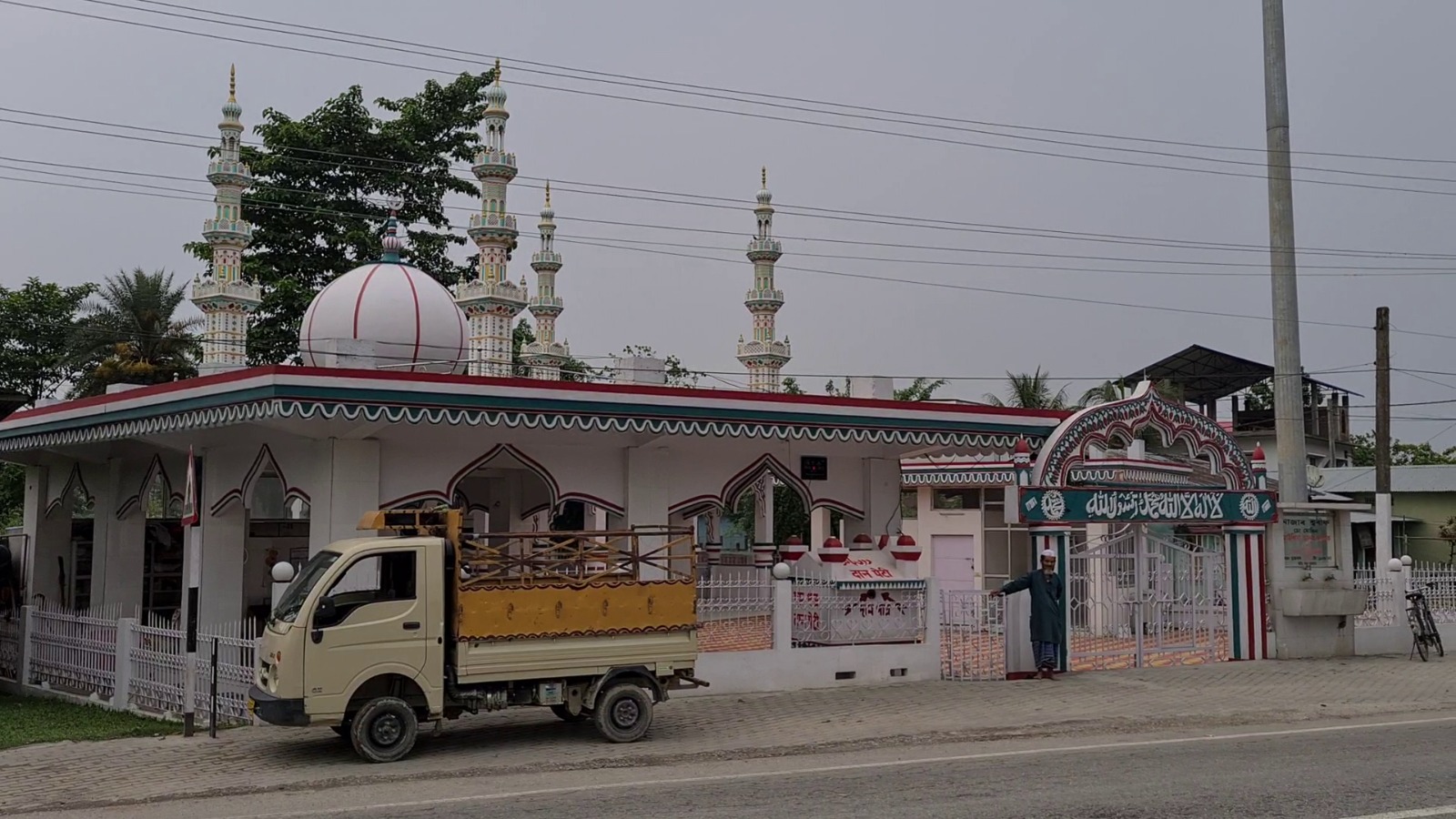
As National Highway-15 traverses through the village Marai of the Darang district in northern Assam, travellers see a shrine that commands the devotion and reverence of both Hindus and Muslims.
This is the shrine of Baba Baga which is visited by people of all faiths, and is especially popular among travelers who have taken the NH-15. Trucks and buses that come from far and wide stop here to offer prayers and make donations. All passenger buses and goods trucks stop here as the shrine management has kept drinking water available.
Baga Baba was born as Abdul Khaleque. He came to Assam in 1916 from the then Sylhet district (now in Bangladesh). Initially, he lived in Gog, Satsali, and Badalguri and finally settled down in Marai village of Sipajhar in 1919.
The shrine of Baga Baba in village Marai
From there, he launched his mission of spreading Islam in the greater Darang district. The Sufi cleric also joined the Indian freedom movement; he was also jailed.
Baga Baba died in 1933 and the locals raised a mausoleum (mazar) on his grave.
Speaking with Awaz-The Voice, Hafiz Ali, secretary of Baga Baba Mazar, said: “The cleric lit the torch of Islam here. Along with preaching the religion, he also spread the message of peace, harmony, and brotherhood. Then he sent Maulana Didaruddin Saheb to be educated as a maulana. Everybody believes Baga Baba to be an Auliya (master of some divine power) of Allah. Hindus and Muslims alike come here and pray.
“At present, people from all over Assam and India who travel through this highway donate at this mazar. Today the village has nine mosques. The inflow of people and pilgrims has increased over the years. Hindus and Muslims have equally contributed to it.
Drinking water facility at the shrine for travellers
The construction work of the mazar was initiated by former president Jiban Baruah. There are still many non-Muslims, such as Bhumidhar Saharia, Himanshu Kalita, and others, in the management committee of the Mazar,” he said.
The shrine hosts Milad sharif every Thursday of the week. In addition, a Urs is held every year on 12 of Magh (late January), the death anniversary of Baga Baba. People from different parts of India participate in the Urs. Although the Baga Baba Mazar is located on the northern side of NH 15, there is also a premises of the Mazar on the southern side of the road.
It is worth mentioning that the Baga Baba Mazar has played a significant role in maintaining Hindu-Muslim unity and harmony in the entire Darang district as well as in the greater Marai Bijulibari area.
source: http://www.awazthevoice.in / Awaz, The Voice / Home> Story / by Ariful Islam, Sipajhar / June 25th, 2024
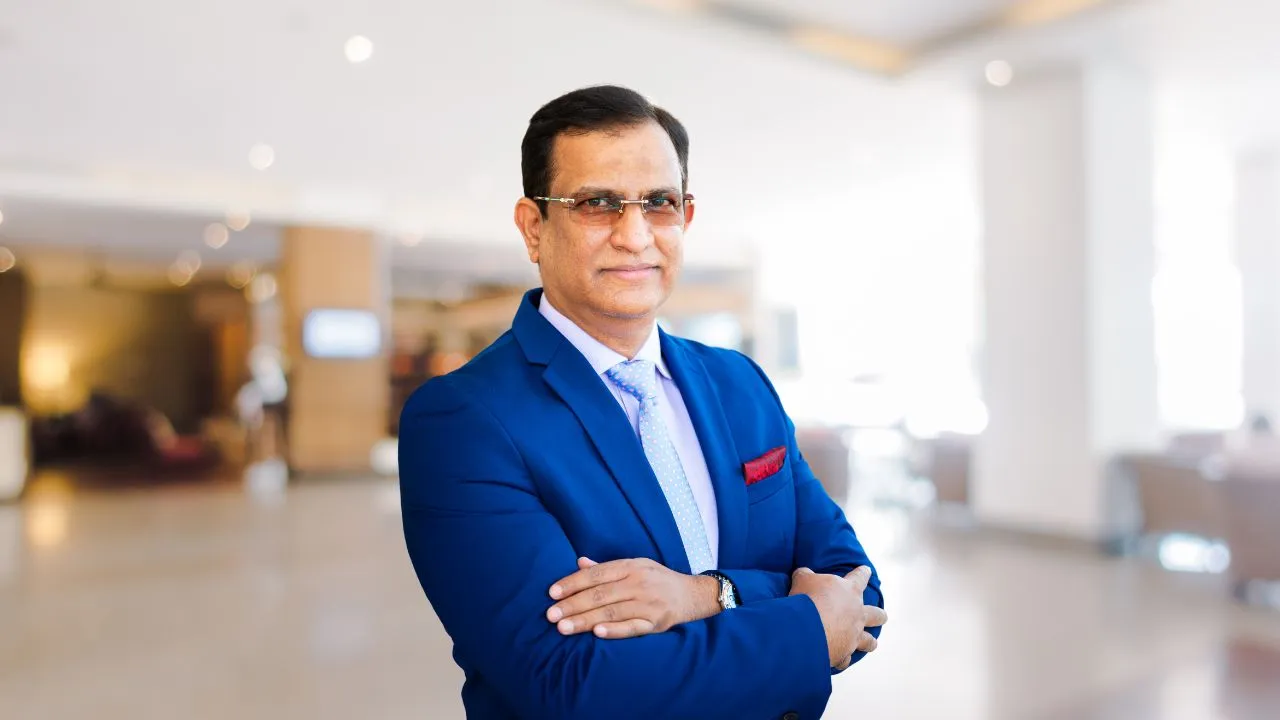
Asad Haque’s commitment to innovation, technological advancements, and dedication to philanthropic initiatives, including date farming, makes him an exemplary figure in both technology and environmental sustainability. An expatriate from Bengaluru, now thriving in Dubai, Asad’s inspiring story illustrates the incredible value of pursuing one’s passion with unwavering enthusiasm and dedication.
Asad’s journey began in Bengaluru, where he earned a Bachelor of Engineering degree in CAD/CAM with a distinction from R.V. College in 1989 and simultaneously completed a CNC, NC machines project at the National Aeronautical Lab (NAL). Asad was also passionate about sports and was awarded the Best All-Rounder award by the KSCA for state schools in 1982. Additionally, he won the Best All-Rounder award again in the Karnataka Junior Colleges Cricket tournament in 1984.
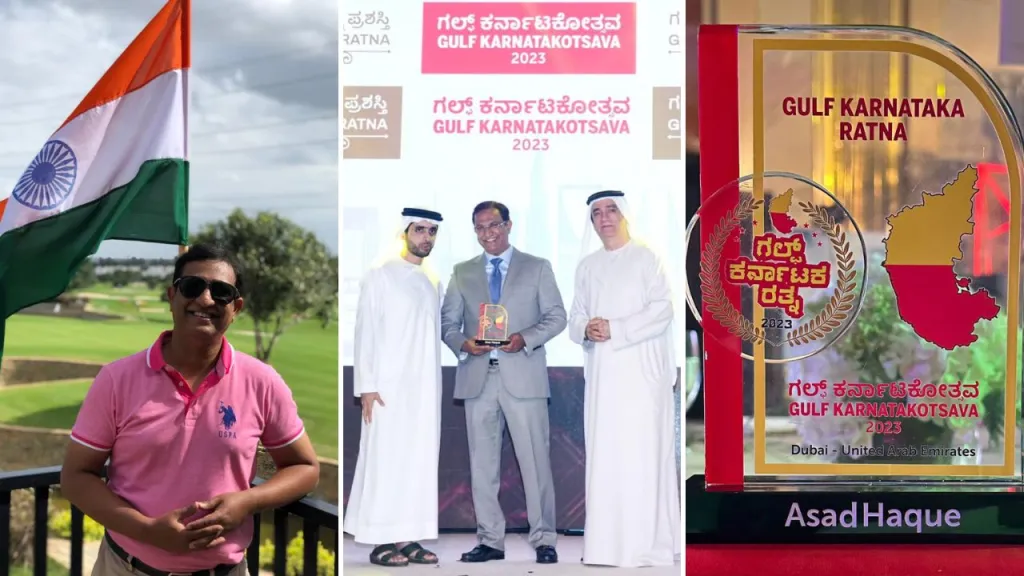
His career took flight at Infosys, leading to senior positions in renowned companies such as Hewlett Packard Distribution (Emitac Group), Samsung, Xerox, and Dubai Internet City. His significant contributions to the ICT, AI, and security industries have not gone unnoticed, earning him prestigious awards including the Award of Appreciation from Dubai Police Headquarters, Government of Dubai, and the Gulf NRI Karnataka RATNA Award by His Highness Sheikh Maktoum Juma Al Maktoum.
Asad Haque honoured with the Gulf NRI Karnataka RATNA Award in 2023 by His Highness Sheikh Maktoum Juma Al Maktoum
As a distinguished alumnus of Bangalore University and an executive founder member of The Alumni Association, Asad Haque has been recognized for his expertise in Artificial Intelligence. Over the past 30 years, he has been a key player in the UAE’s ICT landscape, instrumental in launching the first PC made in the UAE by the brand CUB PC. This success paved the way for other achievements, such as the launch of Samsung’s HDD storage and TFT Monitors, and multi-million dollar XEROX printing and copying solutions for the SME segment.
He also introduced various niche technologies across market segments, including firewalls, antivirus, unified and convergent solutions, IP networking, data and voice encryption and cryptographic solutions, enterprise servers and data-centre solutions, IPTV, and AI-based solutions to major enterprise clients. Additionally, he mentors younger professionals and aspiring university students.
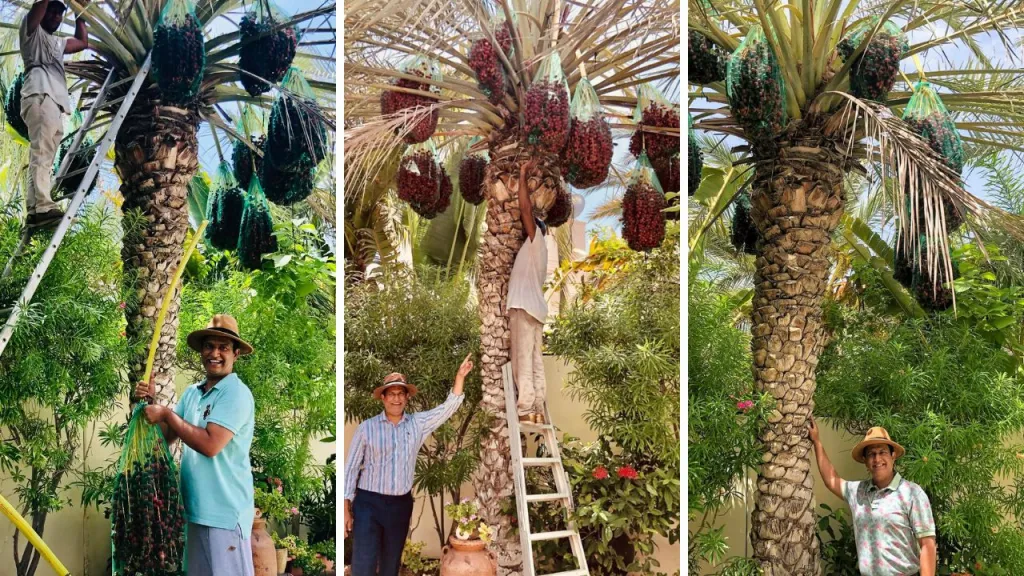
Beyond his professional accomplishments, Asad Haque’s philanthropic spirit is complemented by his passion for date farming. For the past 19 years, he has grown palm trees and generously donated the harvest to charity. Dates, a staple in the UAE, are particularly cherished during the summer months. Asad’s experience in date farming, though challenging, is a testament to his patience and hard work. His palm trees now towering at 25-30 feet, produce large quantities of dates each year, which he distributes to labour camps and other charitable organizations.
“Thanks to a bountiful harvest, Asad Haque generously donates a substantial quantity of dates to charity.”
Asad’s love for nature and gardening dates back to his childhood in Bengaluru, where he tended to plants and flowers. In Dubai, he embraced the challenge of date farming, a pursuit that requires meticulous care and patience. The process of nurturing date palms from pollination to harvest is labour-intensive, involving skilled gardeners who scale the tall trees to pollinate the flowers by hand. Despite the challenges, Asad finds great joy in the spiritual and cultural connection that date farming brings.
“I experience profound joy in the spiritual and cultural connection fostered by date farming, which allows me to forge a deep bond with the Creator and marvel at His creations. I am immensely grateful for the Creator’s magnificent ecosystem, the harmonious cycles of nature, and the intricate tapestry of life,” says Asad.
In addition to his role as CEO of ICT Consultants and his advisory roles in various other companies, Asad recently expanded his professional horizons by assuming a pivotal leadership role as the Representative for the Middle East Region on behalf of KSI Strategic Institute for Asia Pacific and its affiliated entities. He was appointed as a Consultant for the Middle East at Wahed Inc. (“Wahed Invest”), an ethical and values-driven digital investment platform.
His work involves bridging business sectors and fostering collaboration across diverse regions, with a notable emphasis on connecting the Middle East, USA, UK, and ASEAN countries.
Asad Haque’s far-reaching legacy is reflected in numerous accolades, underscoring his exceptional contributions to technological innovation, security advancements, and societal development. As a philanthropist, Asad endeavors to uplift underprivileged children with scholarships and educational support. He also provides access to clean drinking water and assists orphanages. His unwavering commitment to societal improvement cements a legacy of magnanimity, solidifying his position as an esteemed leader in technology and environmental sustainability. Emphasizing the importance of water conservation, Asad Haque states, “No Water, No Life.”
source: http://www.thecognate.com / The Cognate / Home> Business / by Shaik Zakeer Hussain / May 27th, 2024
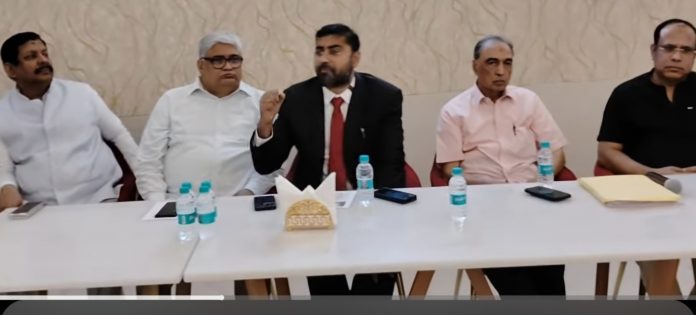
Dr. Majid Ahmed Talikoti, a renowned oncosurgeon, announced his candidacy for the presidency of the India Islamic Cultural Centre (IICC) during a press conference at Hotel Riverview in Jamia Nagar, New Delhi.
Dr. Talikoti highlighted his diverse interactions with people from various walks of life as a key factor in his decision to engage with IICC. “As a surgeon, I interacted with people from different walks of life, and I know how to deal and serve people. That’s why I decided to engage myself with IICC,” he stated.
Dr. Talikoti, who is well-regarded in the medical community, aims to showcase IICC as a beacon of Islamic heritage and culture. He emphasized the peaceful nature of Islam and the importance of promoting this message through IICC. “Given a chance, I will try to showcase IICC as a prominent center of Islamic heritage and culture. Islam is a religion of peace, and I would try my best to send the message of peace through this Centre. We are supposed to welcome our non-Muslim brothers on Eid and join them on Diwali,” Dr. Talikoti said.
Dr. Talikoti outlined his vision for IICC, focusing on maintaining a non-political, brotherly atmosphere during the election and beyond. He stressed the importance of adhering to IICC’s aims and objectives, which include fostering youth empowerment and initiating interfaith dialogues to bridge community gaps. “We will not fight this election as a political battle, but in a brotherly manner in a very congenial atmosphere and try to keep the center away from politics, following the aims and objectives of IICC. We will develop IICC as a center of empowerment for youths and start interfaith dialogues to bridge the gap between communities,” he asserted.
With the support of former IICC president Sirajuddin Quraishi, Dr. Talikoti’s campaign has garnered significant attention. He is also the convener of the Muslim Rashtriya Manch (MRM), an RSS-affiliated organization formed in 2002 to facilitate dialogue with the Muslim community.
Established in 1981, IICC is a premier institution in New Delhi dedicated to promoting and preserving Islamic culture and heritage. It aims to foster cultural exchange, interfaith dialogue, and communal harmony through various educational, social, and cultural programs.
The election campaign for the governing body of IICC has officially commenced, with candidates contesting for posts of president, vice president, and members of the Board of Trustees (BoT) and Executive Committee (EC) promising significant shifts in the center’s functioning. The election is scheduled for August 13th.
Among the other presidential candidates are ex-cabinet minister Salman Khurshid, retired IRS officer Abrar Ahmad, former bureaucrat Afzal Amanullah, businessman and philanthropist Waseem Ghazi, businessman M. Asif Habib, and BJP activist Suhail Hindustani. Each candidate brings unique perspectives and visions, making this election a pivotal moment for IICC’s future.
Interestingly, Dr. Majid Talikoti’s panel includes Kaleemul Hafeez, who is contesting for the post of vice president. Until recently Hafeez has been a sharp critic of Serajuddin Quraishi, the former IICC president, who is also running for membership on the Board of Trustees (BoT)
Md Irshad Ahmad Advocate, Supreme Court of India & Former President, AMUOBA-DELHI is also contesting for BoT from this panel.
source: http://www.muslimmirror.com / Muslim Mirror / Home> Indian Muslim / by Special Correspondent / June 25th, 2024
Khaleel ur Rehman, a noted Urdu poet and former Inspector General of Police, Karnataka breathed his last on Friday after a cardiac arrest.
Born here in 1948 and better known by his pen name Mamoon, he won the 2011 Sahitya Academi Award for his poetry collection Aafaaq ki Taraf. In 2004, Mamoon became the first Urdu writer to win the Karnataka Rajyotsava Prashasti.
After working as a staff artist for All India Radio, Delhi and later working as an Assistant editor of Daily Salar, Mamoon joined the Indian Police Service in 1977 and eventually promoted to IPS and retired as IGP in 2008.
Mamoon has published a number of works. Lissan Falsafe Ke Aine Me on the philosophy of language. Unnees Lillahi Nazmen is a translation of poems written in praise of Prophet Muhammad ﷺ by Scherzade Rikhye. Nishaat-e-Gham is a collections of Ghazals. Kannada Adab is a collection of translations of Kannada language poetry and fiction. His poems are published in ‘La Ilah’ and ‘Andherey Ujaley Mein’ – two voluminous poetry collections.
His poetry stands out for its animated use of everyday images, sometimes shocking metaphors and use of wit that lay bare everyday experiences. His poetic sensibilities are steeped into the sufi-mystical traditions of Indo-Persianate culture. He experimented in the genres of both classical ghazal and azad nazam in a collection Saanson ke paar. He was most prolific in the genre of nazm which he thought suited to articulate the changing experiences of contemporary times – Jism-o-Jaan se door, Banbas ka Jhoot, Saraswati ke Kinare.
He served as the President of Karnataka Urdu Academy during 2008-10. During his tenure, he also edited the literary organ of the Karnataka Urdu Academy Azkaar.
source: http://www.radiancenews.com / Radiance News / Home> Focus / by Mohammed Atherulla Shariff / June 22nd, 2024
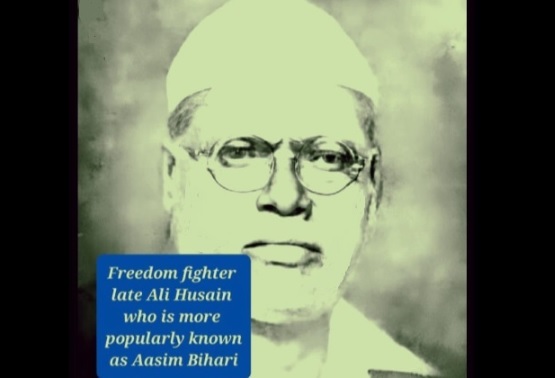
Ali Husain Aasim Bihari who was a freedom fighter, big leader, organised workers in Bihar & Bengal, brought out newspapers, formed multiple organisations.
He, led Momin Ansari community, and all his life fought for workers’ rights. Suffered a lot in process and his family also lived in challenging circumstances.
Hailing from Bihar Sharif, Nalanda, he had to shift to Kolkata to earn a living and it was here that he began involved in freedom movement and started an unprecedented political and social journey despite financial constraints.
Aasim Bihari left a huge legacy but led a tough life. His family bore consequences of his immense passion for awakening the masses, at the cost of his own health and finances. He opposed partition of India and worked for uplift of downtrodden. He passed away in independent India and was buried in Allahabad.
I don’t think it is easy to write about his missionary zeal and his sacrifices without getting tears in eyes. He faced personal tragedies, the death of his brother, the lack of money that caused hardships to his daughter, the suffering of his wife and entire family.
He was ailing and couldn’t be treated. He had declined the post of minister, also refused to take a princely sum, luring offer from a major political party, and his integrity for the cause was unquestionable.
In a life of constant struggle. Aasim Bihari formed organisations, led agitations, ran campaign to release nationalist leaders from jails after Jallianwalabagh massacre by sending letters from people of all parts of country to Queen & Viceroy. Brought out journals, weavers were organised amd turned into a political force.
Born in 1889 [1890*], he passed away in 1953. From Jamiatul Momineen, his lifelong fight for rights, awareness, awakening and education among masses, continued.
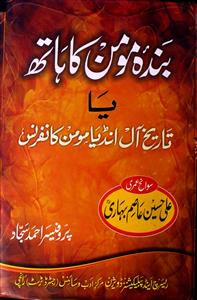
CM recently released book on him and it has been decided to add a chapter on his life in school textbook.
Book ‘Banda e Momin Ka Hath’ by Prof Ahmad Sajjad , pic: rekhta.org
[There is slight variation in references about his year of birth. However, the date of birth is April 15.]
source: http://www.anindianmuslim.com / Indscribe / Home / by Shams ur Rehman Alavi (image of book cover edited – source: rekhta.org) / June 22nd, 2023
Mohibbullah Nadvi’s nomination by the SP and his road to victory in the general elections were peppered with confusion and drama. He was not the party’s first choice candidate and filed his papers at the last hour on the final day of nomination on March 27.
Mohibbullah ‘Nadvi’. Photo: Omar Rashid
New Delhi:
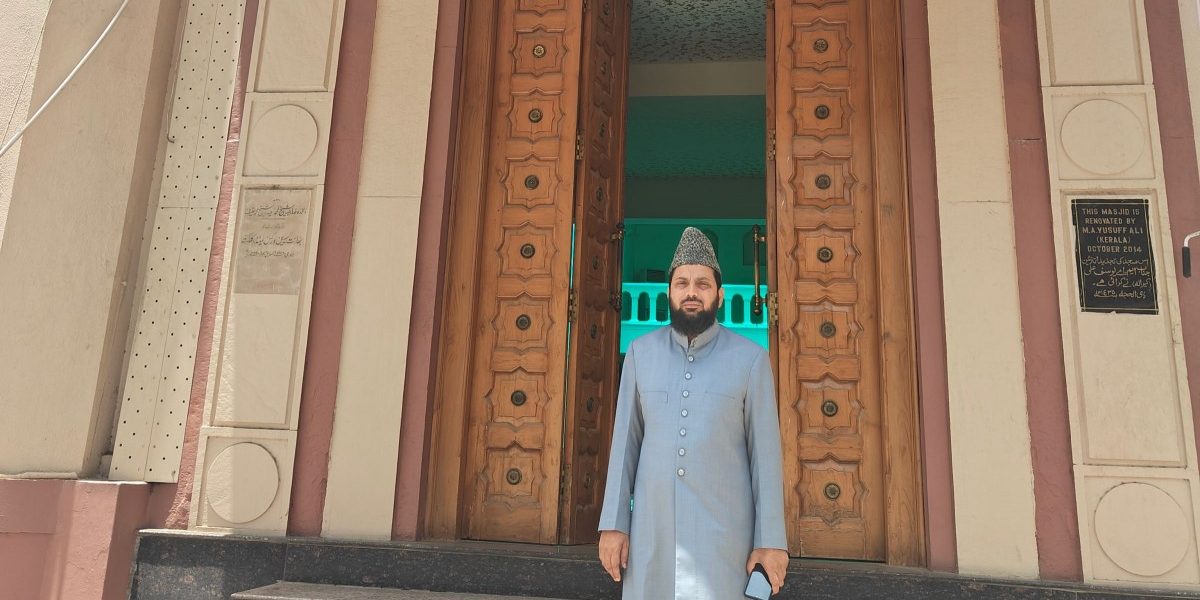
Mohibbullah ‘Nadvi’ took 19 years – and a detour through his home town, Rampur in Uttar Pradesh – to traverse the roughly 25-30-metre-wide tarmac separating Indian parliament from the mosque where he leads prayers as an imam. Surprising everyone, the Samajwadi Party nominated the 48 year old as its Lok Sabha candidate in Rampur; and, battling several odds, Nadvi came through, defeating the Bharatiya Janata Party by over 87,000 votes.
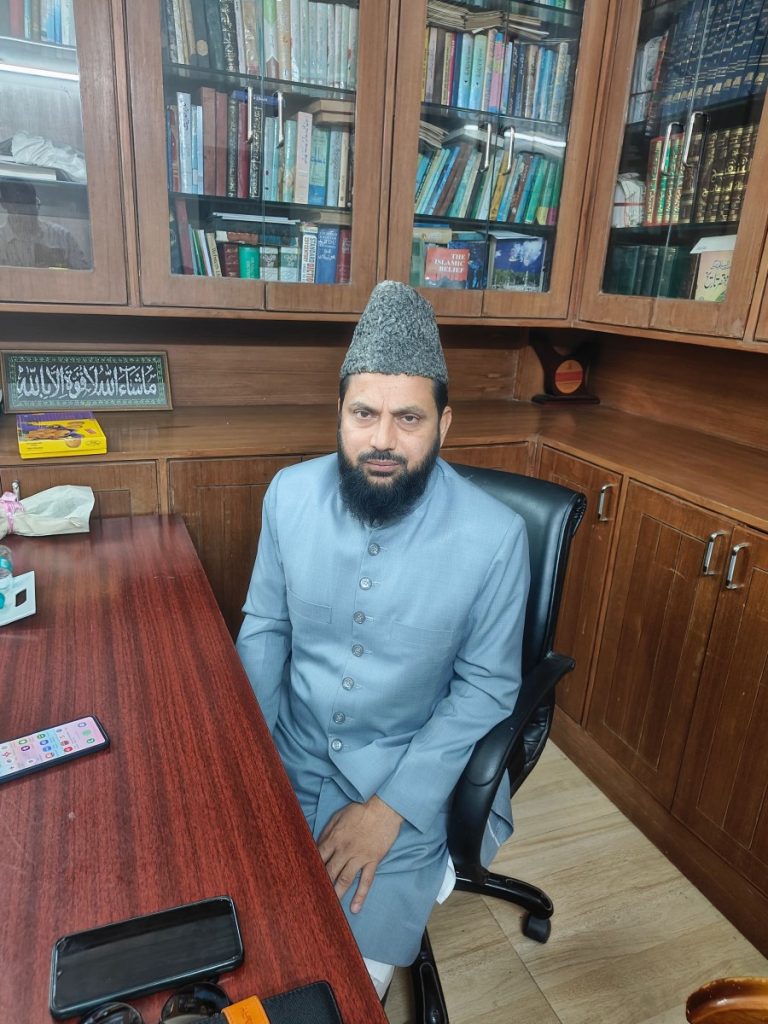
It is a little past noon and the sun is blazing down on Parliament Street, where the Jama Masjid is located in the capital. Nadvi has been its imam since 2005. With a small group of associates, he is seated in his office, still receiving congratulatory phone calls.
Nadvi was one of the five Muslims who were elected as MPs from UP this time. Six had contested. Nadvi hoped that now that the Opposition had performed better, taking the BJP head-on on issues of livelihood, the question of the worryingly low Muslim representation may be addressed better. But it should not be seen solely through the lens of numbers, he said.
“Our political representation should not be seen in terms of quantity but quality…even if there is one person, who is good, 100% faithful to the community, understands Islamic things and sentiments of Muslims, and raises their questions correctly,” Nadvi told The Wire. Muslims in India were not asking the government for anything beyond the rights the Constitution promises all citizens, he added.
Nadvi’s nomination by the SP and his road to victory in the general elections were peppered with confusion and drama. He was not the party’s first choice candidate and filed his papers at the last hour on the final day of nomination on March 27. Nadvi’s nomination also caught several party leaders by surprise as he did not have a political background. Fielding a Delhi-based maulana from a communally-sensitive constituency marred by internal divisions in the SP did not seem like a clever decision to many.
Though he had met SP president Akhilesh Yadav once when the latter was chief minister in 2012, the breakthrough came when they spoke in Lucknow in January this year. According to a source, Nadvi, who harboured electoral ambitions, had gone to Lucknow to invite Yadav to an event of Muslim leaders in Delhi. In Lucknow, Nadvi came in touch with Uday Pratap Singh, former MP and a close associate of Akhilesh’s and his late father Mulayam Singh Yadav’s, and also met Shafiqur Rehman Barq, former MP, with whom he already shared a good connection. Barq, a Turki Muslim like Nadvi, pitched for the maulana. That would be Barq’s last visit to the SP office as he died a month later, aged 93.
Mohibbullah ‘Nadvi’. Photo: Omar Rashid
Akhilesh did not promise Nadvi the ticket right away, but kept him on stand-by as an alternative, if needed. As nomination day approached, the SP was caught in a mini-crisis as it failed to zero down on candidates in two important and winnable seats, Rampur and Moradabad, both with a record of electing Muslims. Much of this had to do with the stubbornness of senior leader Azam Khan in having his say in candidate selection in his bastion.
On March 22, Akhilesh visited the Sitapur jail to meet Khan, who is incarcerated there, to discuss the candidates in Rampur and adjoining seats. Khan, who has faced the endless wrath of the Yogi Adityanath government, apparently proposed that either Akhilesh contest himself from Rampur or nominate one of his family members. This did not sound feasible to the party.
According to sources, the party asked several leaders to contest from Rampur but Saleem Shervani (ex-MP from Budaun), Kamal Akhtar (former minister) and S.T. Hasan (elected Moradabad MP in 2019) all rejected the proposal. Nobody wanted to encroach on Khan’s territory.
The SP’s top leadership wondered if it would be feasible to field Tez Pratap Singh Yadav, Akhilesh’s nephew and former MP, from Rampur but apparently the idea was turned down by Akhilesh’s uncle Ramgopal Yadav, the party’s national general secretary.
Only a day was left for the nomination and the SP was without an official candidate. A disaster was on the cards.
A similar situation prevailed in neighbouring Moradabad, where two candidates of the SP, sitting MP Hasan and former MLA Ruchi Veera, a close associate of Khan’s, both filed nominations, confusing the rank and file of the party. To Hasan’s dismay, Veera even received the party’s authorisation letter as its official candidate. He was obviously not happy.
In Rampur, too, the matter got out of hand after Asim Raja, an aide of Khan’s, filed his nomination while claiming to be the SP’s candidate. Raja, who had lost the Rampur seat in a by-poll in 2022, even led the Khan camp to declare a boycott of the 2024 election as Akhilesh had not paid heed to their request of contesting himself.
It was around 5 pm on March 26 that Nadvi received a call from the SP informing him that he would be the official candidate in Rampur. Along with his aides, he left for Rampur overnight. With the clock ticking, SP state president (and now MP) Naresh Uttam Patel along with a trusted lawyer boarded a chartered flight to deliver the Form AB to Nadvi, and in a change of tack, nominate the disgruntled Hasan as the official candidate in Moradabad by handing him the party’s authorisation letter. The flight landed on an airstrip in Mundha Pande, midway between Rampur and Moradabad, at around 11 am, sources said. Nadvi managed to file his nomination on time but Hasan could not receive the authorisation letter within the stipulated period. Their first priority was Rampur.
“It was a difficult time. We didn’t even have a back-up candidate. Time was running out,” Nadvi told The Wire, recalling the tense moments before his first-ever nomination. Later, Hasan in an interview to PTI alleged that some leaders had “conspired” to ensure that the party’s authorisation letter did not reach him on time.
After his nomination, Nadvi battled the ‘outsider’ tag, the internal opposition of the Khan camp, BJP’s communally-driven campaign and hostility from the administration. He brushed aside the outsider tag, underlining that he was born in a village, Razanagar, in Suar tehsil of Rampur. His uncle was a former pradhan. Nadvi, who owns 7.44 acres of inherited land in his village, completed his Quranic education or Hifz from Rampur city before spending time in a madrasa in Sambhal.
Following that, he went to Lucknow to pursue his higher education in Islamic studies from the renowned seminary Darul Uloom Nadwatul Ulama, from where he got his title. Nadvi then went to Aligarh for further education but as he did not appreciate the heated political climate on campus, he instead enrolled in Jamia Millia Islamia University in Delhi and graduated from there in Arabic Honours. He went on to complete his MA in Islamic Studies and got a BEd from Al-Falah University. In 2005, he was appointed as an imam at the Parliament Street Mosque after clearing an interview. “I didn’t have much inclination towards politics earlier. But I did develop some interest as the people who offered namaz behind me included some very important political people,” said Nadvi, on being asked why he suddenly jumped from the pulpit to politics.
Given the mosque’s location, top Muslim politicians and officials come there to pray. Even the likes of Liaquat Ali Khan, Maulana Azad and Zakir Hussain, former president of India, prayed at the mosque or used to visit it, said Nadvi. Jawaharlal Nehru and Indira Gandhi too have visited the mosque, whose compound houses an elegant white tomb of former president Fakhruddin Ali Ahmed. Nadvi, who took over prayers at the mosque at 29 years of age, was delighted to share that even former President A.P.J. Abdul Kalam had prayed behind him.
The maulana feels that Akhilesh took a “strong decision” by nominating him in Rampur, where he initially faced opposition from a section of party workers loyal to Khan.
“I faced some problems from our party friends who were unhappy. But I managed to tackle them beautifully. Credit to them, they also did not hype it so much, maybe due to public pressure or my acceptance in public,” said Nadvi. He feels his identity as an Islamic scholar and imam may have helped him win acceptance in his native land. “I have roots in Rampur. I want to take everyone forward and work on education and health,” he said.
While his nomination process was controversial, following his victory, too, Nadvi has garnered the headlines. He was trolled by supporters of Khan after he met the divisional commissioner of Moradabad, Aunjaneya Kumar Singh, who while serving as the district magistrate of Rampur had initiated a wave of action against Khan and his family members. Nadvi downplays the meeting. “I am a mazhabi alim. I don’t have negativity towards anyone,” he said, adding that he had met the official to discuss plans for the betterment of his constituency.
He also landed in a soup for his comments on the jailed Khan. When asked by reporters if he would visit the leader in jail, Nadvi said, “People are sent to jail for correction. Jail is a correctional facility and I can only pray for Azam Khan.”
Azam’s wife and former MP Tazeen Fatima lashed out at Nadvi for the comments. “He said that jail is a correction home. It seems like he had a deep experience of going to jail and he has been to jail,” she said.
Nadvi said his comments were misrepresented and exaggerated by the media. “I said that the jail is not heaven, that we would like to go there. We have our empathy for Azam sahab. What else can we do for him? The media gave it unnecessary hype,” said Nadvi. When I asked him if his relationship with Khan was fine, he took a long pause and before he could answer, an aide of his cried from the other end of the small room, “Abhi tak toh theek hai (So far, it’s fine)!”
Ruchi Veera, the newly elected Moradabad MP, visited Khan’s family following her win. She criticised Nadvi for his comments on Khan. “He should not forget that he won because of the party and Azam Khan sahab has made a lot of sacrifices for the party,” Veera said. She called him out for his “political immaturity”. “He’s not a political person. I don’t know how he got the ticket for the election and won.”
In Rampur, Nadvi not only saw off the challenge from the BJP but also ensured that the Muslim candidate of the Bahujan Samaj Party did not spoil his chances. The BSP candidate received 79,000-odd votes while he beat the BJP by over 87,000 votes. Had the election been conducted in a “fairer” manner, the margin would have been over one lakh to 1.5 lakh, said Nadvi, alleging that voting had been disturbed on 12 to 15 booths where the SP had a strong voter base.
Despite the BJP’s shrill anti-Muslim campaign, Nadvi says even Hindus voted for him, as he went to people with a “positive message”. “I spoke about education, health and employment. Who would the people choose? Someone who is abusing others or one who is asking them about their needs?” he asked. In an election where the BJP lost the election in the land of the Ram Mandir, a maulana scripted a successful political debut in a district bearing the name of the Hindu deity.
source: http://www.thewire.in / The Wire / Home> Reportage> Politics / by Omar Rashid / June 15th, 2024
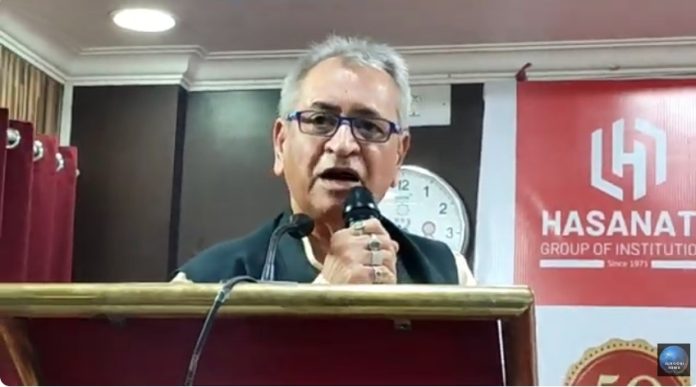
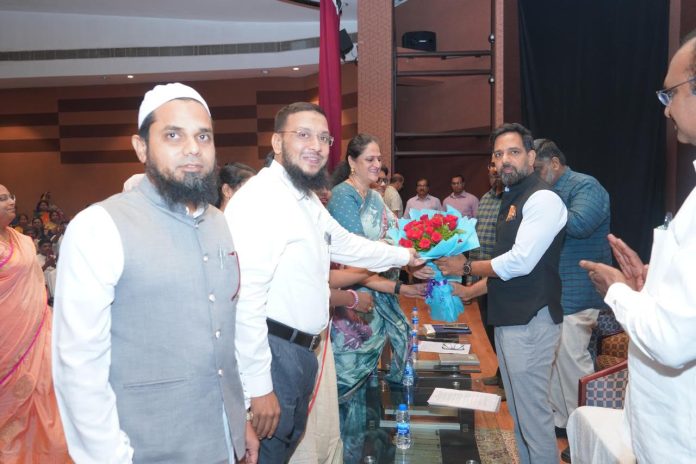
In a significant development aimed at revitalizing the activities of a prominent Muslim organization, the All India Muslim Majlis-e-Mushawarat (Registered) convened a General Body Meeting on June 9, 2024, at New Horizon School in the Hazrat Nizamuddin area. The primary agenda was to elect a new president and establish a new administrative framework.
The meeting was chaired by the former president, Dr. Zafrul Islam Khan, and attended by 33 members from across India, alongside three additional invitees. Five members participated online via Zoom. The assembly unanimously elected Dr. Zafrul Islam Khan as the president for a two-year term.
In his inaugural address, Dr. Khan underscored the organization’s goal to rejuvenate the All India Muslim Majlis-e-Mushawarat (AIMMM) and reaffirm its role as a premier forum for Muslim organizations and institutions. He addressed the challenges that arose from previous leadership under Mr. Navaid Hamid, which led to internal discord and inactivity.
Dr. Khan recalled the resignation of the late Syed Shahabuddin from the executive committee due to the organization’s adverse direction under the new leadership. He criticized the expulsion of 70 key members and unconstitutional amendments to the organization’s constitution, which marginalized significant voices within the Majlis-e-Mushawarat.
He also mentioned that efforts to merge the Majlis-e-Mushawarat (registered) with the Navaid Hamid group would continue.
Resolutions Passed
Election Satisfaction: The assembly expressed satisfaction with recent general election results, noting a majority of secular votes and urging secular parties to unite for national progress.
Condemnation of Hate Politics: The organization condemned the rise in hate politics over the past decade and advocated for unity and resilience among Muslims against divisive tactics.
Condemnation of Gaza Attacks: The Majlis-e-Mushawarat condemned the ongoing Israeli attacks on Gaza since October 7, 2023, calling for global condemnation and support for Palestinian autonomy.
Addressing Muslim Marginalization: The body highlighted increased efforts to marginalize Muslims since 2014, urging the community to focus on education, trade, and legal recourse against injustices.
Notable attendees included Ms. Uzma Naheed from Mumbai, Muhammad Wazir Ansari (Rtd. IPS), Khawaja Muhammad Shahid (Rtd. IAS), and many other distinguished members and former officials from various parts of India. Some members participated online, including Munir Ahmad Khan from Indore and Dr. Obaid Iqbal Asim.
The meeting signifies a renewed effort to strengthen the organization’s influence and address key issues affecting the Muslim community in India.
source: http://www.radiancenews.com / Radiance News / Home> Latest News / by Radiance News Bureau / June 15th, 2024
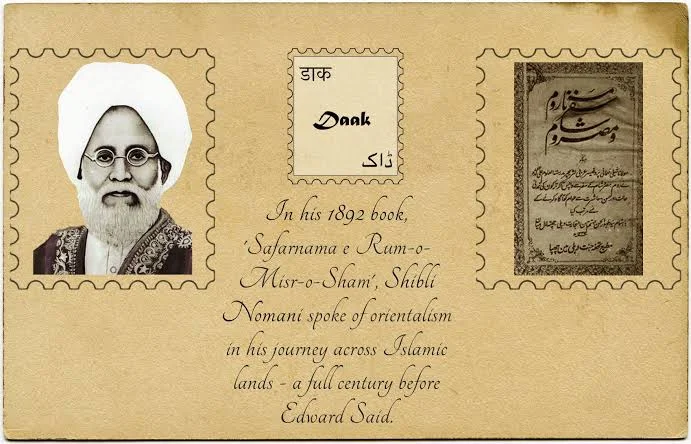
Allama Shibli Nomani was born in Bindol Azamgarh village on June 4, 1857, and passed away on November 18, 1914. He possessed a multifaceted personality and held an esteemed position in various fields. Considering his contributions to knowledge and literature from different perspectives, it is hard to believe that it was the work of a single individual. Besides his contributions to poetry and literature, Allama Shibli Nomani put his indelible mark on history and biography, research and criticism, and education and preaching.
The main focus of Shibli’s academic endeavours was education and religion showing a deep interest in education and educational philosophies. His life was dedicated to the educational activities of his time. From Aligarh Muslim University to Nadwatul Ulama, his sacrifices in the field of education were immense. His vision extended beyond India, encompassing the educational activities and needs of the Islamic world as well.
While he valued traditional education, he was also a proponent of modern sciences. At Nadwatul Ulama, when he was entrusted with educational responsibilities, he included “Al-Durus al-Awliyyah fi al-Falsafah al-Tabi’ah” in the curriculum. This book, written by Christian scholar Allen Jackson and published in Beirut in 1882, was an illustrated text on the basic sciences of its time, covering practical topics such as matter, motion, gravity, liquids, optics, heat, and electricity. Shibli appointed Allama Muhammad Hameed-ud-Deen Farahi and Mirza Muhammad Hadi Ruswa to teach it. This information is derived from Shibli’s letters.
Additionally, in 1901, Shibli hired an English teacher at Nadwatul Ulama with a monthly salary of 15 rupees. This decision led Maulana Abdul Bari Nadvi to translate several modern books on philosophy. The inclusion of English and modern philosophy in the curriculum was a revolutionary step by Shibli. However, after Shibli stepped down in 1913, these subjects were dropped from the curriculum.
Shibli spent his entire life cultivating knowledge and literature. He wrote books, encouraged others to study, and was devoted to the national spirit. Not only did he inspire the youth of the nation towards education, but also guided them in their educational pursuits. The openness of Shibli’s educational ideas is evident from his belief in higher education for women and his support for a curriculum that was equal for both boys and girls. In a letter to Atiya Faizi, he expressed his wish for her to become a speaker and lecturer like other famous women.
In a letter to Maulana Habib-ur-Rehman Khan Sharvani, he wrote about the impressive patterns of women’s education he observed in Bombay. Similarly, during his visits to Italy, Egypt, and Syria, he admired the women’s education and training system in Turkey, spontaneously writing words of praise for the Turks. Shibli tirelessly worked for the education and social awareness of Muslim women.
In 1908, when Nawab Bahawalpur’s grandmother donated 50,000 rupees for the construction of Nadwa, Allama Shibli wrote an enthusiastic article in Al-Nadwa. He referred to her as a “Living Zubaida Khatun,” comparing her generosity to that of Zubaida Khatun, Baramakka, and Taimoor. He wrote:
“The generosity of this lady has not only strengthened the foundation of Darul Uloom Nadwatul Ulama but has also paved the way for its future advancements.”
Extraordinary Passion
“O Subah Allahabad, O Oudh, you are a vast and distinguished region, but the truth is that now you must admit that it is not Punjab, but a part of it, that has earned your enduring respect through one of its revered women. You may have produced Burhan-ul-Mulk and Asif-ud-Daulah, but you cannot claim a Zubeda among your ranks.” (Maqalate Shibli, Vol. 8, p. 80)
Shibli’s travelogue “Safarnama-e-Room-o-Misr-o-Sham [Travelogue of Rome and Egypt, Syria] is essentially an educational report. Shibli’s writings reflect the deep passion he had for education and the kind of education he envisioned. His interest was not confined to India; he also kept a keen eye on the educational landscape of the Islamic world. The core of Shibli’s educational mission was the openness and spread of thought. While he respected ancient academic traditions, he was not averse to embracing new knowledge and wisdom. This excerpt from his travelogue is a significant reflection on the integration of modern and ancient educational ideas:
“Education among the Turks began with the Empire, which is what we now remember as ancient education… But the current state of education has declined so much that, in comparison, our education in India seems deteriorated. The realisation of this in the travelogue shattered all my joy and satisfaction — the fallacy of this ancient teaching… The grief and sorrow expressed by the newly educated in our country over the old education is not genuine sorrow, but rather arrogance and disdain. Although I appreciate new education, I am a strong advocate of old education. I believe that old education is necessary and very important for the survival of Muslim nationality.” (Safarnama-e-Room-o-Misr-o-Sham p. 56)
Due to his constant stress on education, Shibli concluded that it would be beneficial to reduce the gap between ancient and modern education and educational institutions, fostering a mutual exchange of benefits. Shibli believed that English education alone cannot address our current challenges, nor can the old style of education fully support us in the present era. In his opinion:
“We have said this again and again, and now we say it once more: it is not enough for us Muslims to only have English madrasas or ancient Arabic madrasas. The remedy for our pain is a combination of Eastern and Western education.” (Maqalate Shibli, Vol. III, P 57)
In his reference to Constantinople, Shibli emphasises that freedom of thought cannot thrive under government control. He also mentions educational institutes in Europe, where the people, rather than the government, play a significant role. He writes:
“What’s even more regrettable is that all the colleges and darul ulooms in Constantinople that I have mentioned are run by the government. The nation has not paid any attention to this yet. That is, there is not a single national college in such a big capital. No government, no matter how powerful and wealthy, can support the educational needs of the entire country. Even if it could, it wouldn’t be useful. The mental and spiritual powers of a nation whose needs are fulfilled by the government become dead and useless.” (P 40)
Shibli writes in his report on the School of Harbiya in Constantinople, after mentioning the happiness of the students, the ethics of the teachers, and the many branches of education:
“In fact, there is no better college in all of Constantinople in terms of building, supply of equipment, knowledge, education, and good management. However, it is regrettable that most of the people studying in its classes are Christians and the number of Muslims is very small.” (P 59)
Shibli’s analysis needs no further comment after mentioning the academic condition of Turkey, its authors, libraries, newspapers, magazines, and the writings of the masters of various arts:
“The fact is that the method of education in the Islamic world has become so degraded that people are not interested in any kind of modern information except for a few textbooks. As a result, the spirit of innovation and invention is lost to the nation, and there is no hope for it as long as this situation remains.” (P 69)
Shibli writes about the ethics of the students of Al-Azhar University:
“Throughout my journey, I was not as disheartened by the plight of Muslims as I was by the conditions at Al-Azhar University… But sadly, it has destroyed millions of Muslims instead of benefiting them… The condition of the students is such that when they buy goods in the market, they swear by ‘Bras Sayyidina al-Husayn,’ meaning they swear by the price of Imam Hussain’s head. Can such trained people be expected to enhance the glory of Islam?” (P 70)
Regarding the curriculum, Shibli writes:
“There is a continuous and basic teaching of fiqh and syntax, each for eight years. Logic, philosophy, mathematics, astronomy, and other sciences are not included in the teachings. The principles of fiqh, tafsir, hadith, literature, semantics, and narration are taught, but it is done at such a low level that such a large Darul Uloom does not hold any honour in any way.” (P 85)
About the teachers, he writes:
“Sheikh Taban has recently passed away. One of his works has been considered so significant that its annotations and commentaries are included in the curriculum. It is considered a great achievement to understand and memorize this entire series. I asked the students if Sheikh Azhar, who is regarded as a teacher, had done any original work. They proudly said yes, the annotations on Saban’s work are written by him.” (90)
Shibli was constantly active in the educational development of Muslims and did whatever was necessary to achieve this goal. The year 1913 was particularly challenging for him. After Aligarh, Nadwatul Ulama was the only centre of his aspirations, but he had to resign from there. He then dedicated himself to writing biographies. Meanwhile, in the April 15, 1913 issue of the Daily Zamindar Lahore, a proposal by Allama Shibli Nomani regarding the establishment of an Islamic university in Makkah was published. This proposal received many reactions, but Maulana Abul Kalam Azad and some other scholars supported it. Allama Shibli wrote:
“For me, the most important proposal is to establish a university of Islam in Makkah with a high level of education in all religious and worldly sciences (including modern sciences). It is obvious that today all kinds of power are based on knowledge, and in fact, knowledge is the real power. Therefore, nowadays the survival of every nation depends on being proficient in the sciences and arts.” (Ma’arif: November 2013, P 384)
Shibli provided several reasons for the establishment of a university in Makkah. The holy city is a centre of Muslims worldwide, and every Muslim could study there with enthusiasm. He also argued that no other place has as much financial resources as Makkah. If the pilgrims who visit every year were to contribute ten rupees individually to this university, the total amount could reach millions. Shibli also mentioned the presence of a very good library in Makkah. Additionally, he highlighted its pleasant weather conditions; favorable for both teachers and students. Moreover, he pointed out that all the tribes of Arabia, who have been “ignorant for thousands of years,” would benefit from education, with branches of the university being established in their major regions. They would be drawn to knowledge through consistent effort. Shibli concluded by expressing his conviction:
“All I can do is travel all over India for this and then migrate to Makkah and serve this blessed university.” (Zamindar/ April 15, 1913)
Allama Shibli holds a prominent position as a great writer and scholar, with a well-established reputation in this regard. However, less attention has been given to his educational efforts. The reality is that Shibli led a highly active life dedicated to education and educational activities. From his journey from Aligarh to Nadwa, he endured numerous challenges solely for the cause of education. He also faced adverse life circumstances in pursuit of education. If his curriculum reforms had been accepted at that time, the educational landscape today would be completely different. If Nadwatul Ulama had embraced his curriculum a hundred years ago, the madrasas in India today would have a distinct history and glory.
— Dr. Omair Manzar is an Assistant Professor in the Department of Urdu at Maulana Azad National Urdu University.
This article has been translated from Urdu to English by Mohammad Alamullah with the author’s permission.
source: http://www.clarionindia.net / Clarion India / Home> Clarion Special / by Dr Omair Manzar / translated by Mohammad Alamullah / June 05th, 2024
Students of Telangana Minorities Residential Educational Institutions Society (TGMREIS) have excelled in the TGLAWCET-2024 exam.
Telangana Law Common Entrance Test-2024 (TGLAWCET-2024) was conducted for admission into LLB course in the Colleges of Law in Telangana.
The test was conducted by Convenor, TGLAWCET/TGPGLCET-2024 Osmania University on behalf of the Telangana State Council of Higher Education.
According to TGMREIS Secretary Aisha Masarath Khanam, out of 57 TGMREIS students who appeared in the exam, 40 have qualified. They include 28 girls and 12 boys.
Amatul Waheed of Telangana Minority Residential Junior College (TGMRJC) Secunderabad Girls has secured state ninth rank. She has made TGMREIS proud, said Ayesha Khanam.
Out of 38 students from TGMRJC Secunderabad Girls, 28 have qualified. Seven students from TGMRJC Balapur Boys have qualified. A total of 13 students from this Junior College had written the exam. Out of six students of TGMRJC Barkas Boys who appeared in the exam, five have qualified.
Shahnawaz Qasim, Secretary to Chief Minister, Tafseer Iqbal, Special Secretary, Minorities Welfare Department and Aisha Khanam have congratulated students and teachers on their achievement.
Meanwhile, Mohammed Faheemuddin Qureshi, Vice-Chairman and President, TGMREIS has conducted a meeting with all the Principals of TGMR Schools and Junior Colleges and district minority welfare officers.
The meeting reviewed admission status for the academic year 2024-2025 and results of SSC and Intermediate Board Examinations, 2024. Instructions were given to the Principals to take necessary action for reopening of Schools and also emphasized the retention of newly admitted students.
Faheemuddin Qureshi congratulated the Principals for achieving good results in public examinations and felicitated 10 Principals for achievement of 100% results in SSC, IPE Board Examination results, 2024.
Faheemuddin Qureshi said that the Government of Telangana is fully committed to provide facilities to minorities specially TGMR Schools. He asked the Principals to inculcate discipline among the students and ensure that TGMR Schools should be top in all respects. He instructed the Principals to provide good hygienic food to the students. He informed the Principals that he will be visiting the schools shortly and take the feedback from the stakeholders and give the reward to the good institutions and will not tolerate any adverse remarks noticed.
Shahnawaz Qasim, Faheemuddin Qureshi, and Aisha Khanam congratulated the students, teachers and principals on their achievement.
source: http://www.radiancenews.com / Radiance News / Home> Education / by Radiance News Bureau / June 15th, 2024
The INDIA bloc’s Muslim candidates had a victory rate of 83 per cent in the Lok Sabha polls.
Afzal Ansari of the SP who won from Ghazipur (File photo| PTI)
Lucknow :
Muslim voters, who make up a considerable 19 per cent of the population in Uttar Pradesh and are a deciding factor in around a dozen Lok Sabha seats in the state, emerged as a homogenous entity consolidating in favour of the INDIA bloc in the 2024 polls.
The community stood so solidly behind the SP-Congress candidates that all the 20 Muslim candidates fielded by the Mayawati-led Bahujan Samaj Party (BSP) lost, getting only a miniscule fraction of their votes.
The INDIA bloc’s Muslim candidates had a victory rate of 83 per cent in the Lok Sabha polls. All the four Muslim candidates fielded by the Samajwadi Party won, while one of the two Congress candidates emerged victorious.
Although the BJP leadership including PM Modi exhorted the Muslim community in the recently concluded election to vote keeping in mind the future of their generations, yet the community backed the Congress and SP combo.
In the 2019 Lok Sabha polls, three of the six Muslims MPs who made it to Lok Sabha from UP — Danish Ali (Amroha), Afzal Ansari (Ghazipur) and Fazlur Rehman (Saharanpur) — were from the BSP.
Moreover, the INDIA bloc had fielded Muslim candidate strategically in constituencies with over 40 per cent Muslim electoral population except Ghazipur which has 27 per cent Muslim voters but with an added edge of being the bastion of gangster-turned-politician Mukhtar Ansari. Afzal Ansari sailed through from the constituency as SP candidate this time.
The other Muslim candidates who won in the state are Imran Masood of the Congress from Saharanpur which has approximately 42 per cent Muslim voters, Mohibullah Nadvi of the SP from Rampur which has around 51 per cent Muslim voters (the highest in UP), Iqra Hasan of the SP from Kairana, her family bastion, with 40 per cent Muslim voters and Zia-ur-Rehman of the SP from Sambhal which has around 45 per cent Muslim voters.
source: http://www.newindianexpress.com / The New Indian Express / Home> Nation / by Namita Bajpai / June 12th, 2024