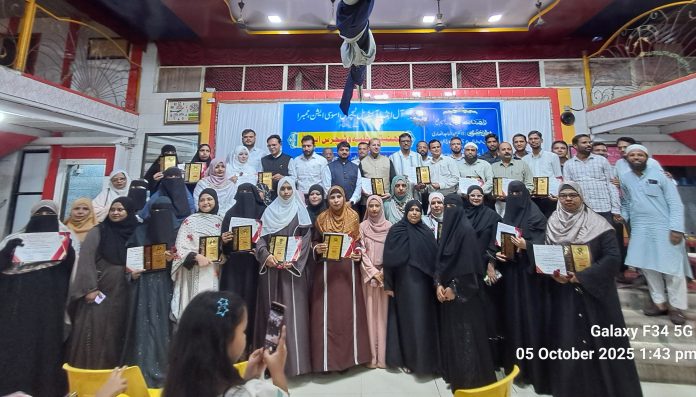
The Maulana Afzal Hussain Ideal Teachers Award 2025 and Students’ Felicitation Programme were held here Sunday to celebrate dedicated educators and outstanding students.
Teachers play a pivotal role in shaping a nation’s future, and societies that honour their teachers set a benchmark for others to follow.
Reflecting this spirit, the All India Ideal Teachers Association (AIITA), which has been active in Mumbra since 2019, organised the event to recognise exemplary teachers for their service and commitment to education.
The award is named in the memory of Maulana Afzal Hussain, a distinguished educationist and author of several books. This year, the AIITA Mumbra Award Committee selected 26 teachers from various institutions for the honour. The awards, presented annually on World Teachers’ Day, cover multiple categories including Primary, Secondary, and Headmaster levels, from schools in Mumbra, Thane, and Mumbai Municipal Corporation areas.
The Award recipients at the level of private educational institutions included Khan Safia (Al-Ehsan School), Altaf Patel (Abdullah Patel School), Lubna Khot (Central Public School), Khan Sadaf (Rafiqah School), Qazi Alia (Dr. Asadullah School), Syed Rizwana (Mumbra Public School), Syed Feroza (National School), Sheikh Zaheer (Nice School), Zahida Chotani (Patel School), Ansari Nasreen (Sameeya English School), Rukhsanda Khan (Saadia School), Shabana Azmi (Shoaib School), and Sadiqa Sheikh (Saadia Primary School).
In the Mumbai Category, the Award recipients included Arshia Shah (Vakola Municipal School), Mehboob Makandar (Vanoba Bhave School), and Ismail Bagwan (Anjuman Khair-ul-Islam School),
In the Thane Municipal Corporation Category, the Award recipients included Fatima Naz (TMC 116), Halima Qazi (TMC 117), Tabassum Khan (TMC 124), Syed Sameena (TMC 125), and Sufyan Ansari (TMC 40),
Thane Headmaster Category, the Award recipients included Mansoori Tehzeeb (Sameeya School), Ansari Tasneem (TMC 13), Syed Sana (Leader School), and Sheikh Khairul-Nisa (Abdullah Patel School).
A posthumous award was also conferred upon Late Naheed Fatima Zainuddin Jamali Sahiba of Abdullah Patel School in recognition of her lifelong contribution to education.
The event was presided over by Advocate Jasim Sheikh, with Dr. Abdul Majid Ansari serving as the Chief Guest. Distinguished guests included Professor Javed Sheikh (JIH Local Ameer of Mumbra), Khan Najma (President, GIO Mumbra), and Ansari Nasir of Khidmat Khalq Trust.
In addition to teacher awards, students from 24 schools were felicitated for their academic achievements in the 10th and 12th board examinations.
The event, held at Sania Hall, witnessed an enthusiastic turnout of teachers, students, and community members. Members of AIITA Mumbra and the Markazi Talimi Board Mumbra played a key role in organising and ensuring the success of the programme.
source: http://www.radiancenews.com / Radiance News / Home> Pride of the Nation> Awards> Latest News / by Radiance News Bureau / October 07th, 2025
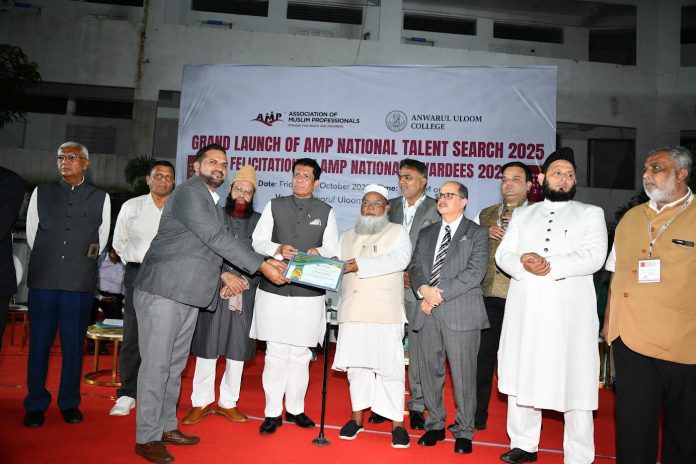
Dr Shahnawaz Ahmed Malik, Assistant Professor, Department of Law, Aligarh Muslim University Malappuram Centre, Kerala, has been conferred the AMP National Award for Educational Excellence 2025 by the Association of Muslim Professionals (AMP) in recognition of his distinguished contribution to legal education and institutional development.
The award was presented during the AMP National Awards Felicitation Ceremony 2025, held at Anwarul Uloom College, Hyderabad, in the presence of AMP President Aamir Idrisi and several eminent educationists and community leaders.
Dr. Malik, who has been associated with AMU Malappuram Centre since 2013, has played a key role in developing its Department of Law. He has established several academic and professional societies to promote advocacy skills among students and contributed to enhancing the Centre’s academic profile.
His teaching and research focus on Constitutional Law, Administrative Law, Human Rights, and Legal Theory. He has also served as a member of the AMU Court and Academic Council and currently holds the positions of Deputy Proctor and Coordinator, Department of Law, at the AMU Malappuram Centre.
source: http://www.radiancenews.com / Radiance News / Home> Pride of the Nation> Awards> Latest News / by Radiance News Bureau / October 11th, 2025
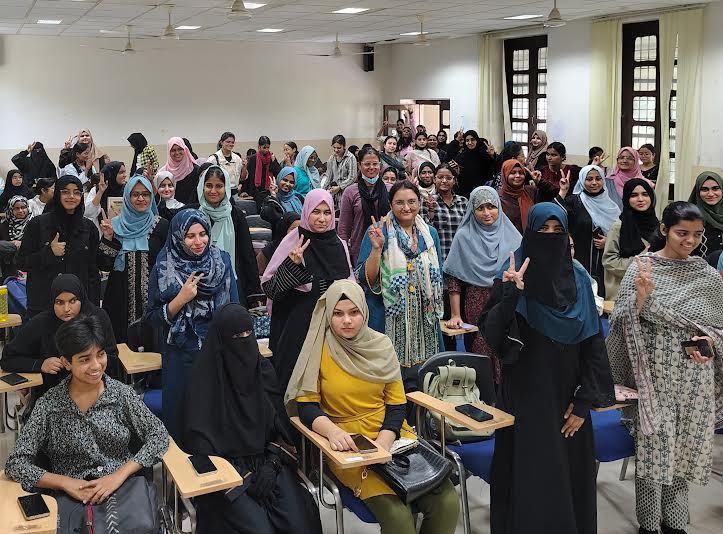
The Social Work and Outreach Activities Club of Women’s College, Aligarh Muslim University held an inaugural talk and launched its membership programme.
Highlighting the objectives of the club, Prof. Shadab Bano drew the critical distinction between charity and social work, and stressed that receiving an education gives us a responsibility to share its benefits with others. She urged the students to view social work as a civic duty.
Prof. Nazura Usmani emphasized the importance of the disability support committee and discussed strategies to foster inclusivity and increase the representation of differently-abled students on campus. She stressed the need for disability sensitization among the student body to build a more understanding and accessible environment for everyone.
Dr. Eisha Rahman announced the club’s committees and introduced the coordinators; Prof. Nazura Usmani and Prof. Shadab Bano as Main Coordinators; Dr. Arshi Shoaib and Dr. Shagufta Munir for Remedial Classes for Abdullah School students; Dr. Shagufta Niyaz and Dr. Mahjabeen for Disability Support; Dr. Arshia Shafqat, Dr. Fozia Waheed, and Dr. Eisha Rahman for Tuitions for Non-Teaching Staff’s children; Dr. Heena Parveen and Dr. Eisha Rahman for Adult Education for Fourth Grade Employees; and Dr. Fozia Waheed, Dr. Mohd. Firoz Ahamed, Dr. Mahjabeen and Dr. Masudullah Khan for the Locality Cleanliness Drive.
Prof. Shadab Bano and Dr. Eisha Rahman addressed the queries of the participants, providing clarity on the club’s goals and activities. About 65 students registered themselves as the members of the club.
Dr. Mohd Firoz Ahamed concluded the event, encouraging students to join the club for bringing meaningful changes and making a positive impact on their community.
source: http://www.indiaeducationdiary.in / India Education Diary / Home> National News / by India Education Diary / November 07th, 2024
Late Abdur Razzak Kalsekar, Chairman, Rasasi Group
Dubai/Mumbai:
Distinguished citizen, pioneer businessman and philanthropist, Haji Abdul Razak Kalsekar passed away on Monday at Dubai.
The well-known educationist and philanthropist who ran Kalsekar Trust, Kalsekar College and Kalsekar Hospital among many other charitable institutions. His special interest lay in the education sector and he had established many schools, colleges and orphanages.
“His philanthropy in India and West Asia will be remembered forever. He was very much concerned towards the upliftment of the downtrodden and empowerment of women.
Among his educational institutions, Kalsekar Girls Degree College for Women in Mumbra was established in order to provide quality education to girls. He was also very instrumental in setting up many hospitals, engineering, pharmacy and architecture colleges,” Aamir Edresy, president of the Association of Muslim Professionals, said.
Razzaq ran a perfume business in Dubai.
The AMP team offered deep condolences to his family and thousands of people, who considered him not just as an employer but also as a father and a guide.
source: http://www.twocircles.net / TwoCircles.net / Home> Indian Muslim / by TCN News / August 11th, 2015
Indian Muslims as a community, due to various social and political influences, have remained educationally backward. The Sachar Committee Report in 2006 revealed the dismal state of education among Muslims. The report was an eye-opener for the community and led to the efforts to spread education among Muslims. Muslims introspected and asked how come a community that believes in “Read with the name of your Lord who created (everything)” – the first Quranic revelation – lagged in education. Not only did the community urge the country’s political leadership to address it but also made efforts to improve the state of affairs.
The efforts have not gone in vain. The data compiled in the Unified District Information System for Education (UDISE) by the Union Ministry of Education, points towards a remarkable increase in school-going Muslims in Uttar Pradesh, the most populous state in India.
Changing trends among Muslims
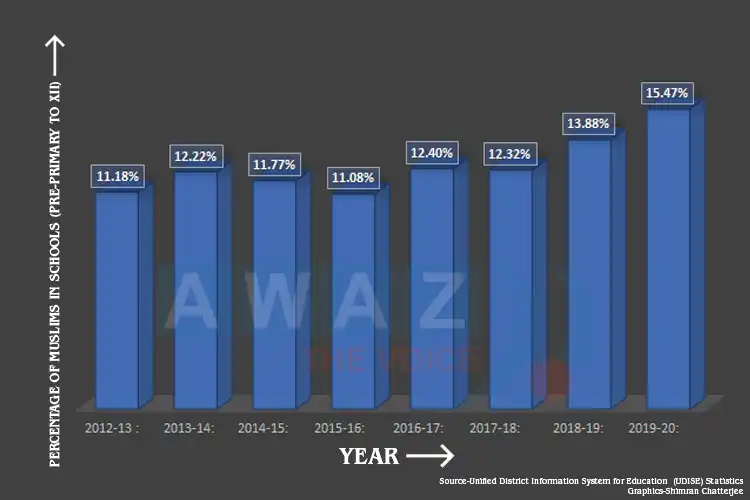
The UDISE survey reveals that in U.P, 4,53,62,059 students were studying in schools, from pre-nursery to class XII, during the 2019-20 session. Out of these, 70,18,201, or 15.47%, were Muslims. Because the Muslims are 19.26% of the population in the state, this number seems insufficient, which it is. But, if we consider the fact that seven years ago, in the 2012-13 session, out of 4,69,61,179 school-going children only 52,49,664, or 11.18%, were Muslims, the significance of the present numbers becomes evident.
The numbers show that the proportion of Muslims is steadily increasing and moving towards their proportion in the population, i.e. 19.26%. From the 2015-16 session till 2019-20, the percentage of Muslims among school-going children has been registered to be 11.08%, 12.40%, 12.32%, 13.88%, and 15.47% in successive years. If we talk in pure numbers, in 2015-16, there were 53,63,670 Muslim kids out of 4,84,06,853 students. In 2019-20, this figure has increased by more than 16 lakh to reach 70,18,201 as the total school enrolment in the state dropped by more than 30 lakhs.
Graphic explanation of the changing trend in Muslim education-1
In order to understand the recent awakening in the community, one needs to look at the new enrollments. At the entry-level, Muslim students have reached very near to their proportion in the population. In the 2019-20 session, out of 51,48,352 students enrolled in class I, 9,71,229 were Muslims. This translates into 18.86% of the total class I students. It is a significant increase from 2018-19 when 16.92% of class I students were found to be Muslims, and in the year before the ratio was at 16.23%.
The people working in the education sector among the Muslims of U.P often complain about the high dropout rates. As we go up the education levels, the proportion of Muslims tends to decrease. The apprehension is true, but the recent trends show an improvement in Muslim representation in higher classes. The survey found 3,73,304 Muslim students out of a total of 30,73,228 studying in class X, during the 2019-20 session. This makes 12.15% of the total class X students in the state, a significant rise from 2016-17 when only 7.65% of the total class X students were from the community. In the last four academic sessions, the proportion of Muslims in class X is, 7.65%, 8.38%, 10.90%, and 12.15%, successively.
At Higher Secondary (+2), XI & XII, the proportion of Muslims enrolled has increased from 7.24% in the 2016-17 to 10.48% in the 2019-20 session. In successive sessions this proportion has been registered as 7.24% in 2016-17, 7.81% in 2017-18, 10.08% in 2018-19 and 10.48% in 2019-20.
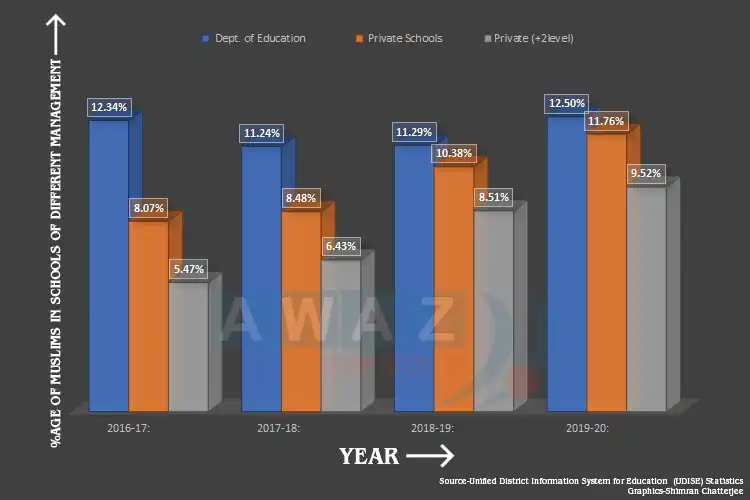
These numbers are no yardstick of the quality of education Muslims are availing. To get an idea we need to look at the type of schools at which these students are enrolled. As a matter of fact, in U.P, it is commonly believed that private schools are in a better condition than schools owned by the Department of Education. Out of the total 2,20,69,303 students enrolled in private schools, 25,95,073, or 11.76%, were found to be Muslims in 2019-20. This was a considerable increase from 2016-17 when 8.07% of the private school students were Muslims. In the last four academic sessions since 2016-17, the Muslim proportion in private schools was found to be 8.07%, 8.48%, 10.38%, and 11.76% respectively.
Changing trends in Muslims’ education Graph-II
On the other hand, in the schools of the Department of Education, Muslim proportion remained more or less constant. In 2016-17, 12.34% of the students at the Department’s schools were Muslims which has shown a marginal increase at 12.50% in 2019-20. Another very important aspect of education among Muslims is that almost one out of every five school-going Muslims attends a Wakf/ Madrasa Board recognized Madrasa/ Maktab. In the 2019-20 session, 19.76% of the Muslim children were enrolled in these Madrasas. It is an increase from 2016-17 when 16.49% of Muslims were attending these institutions. But this shift can be attributed to a positive shift. In 2016-17, 5.31% of Muslim kids were attending unrecognized Madrasas which came down to 3.10% in 2019-20. It is a welcome change that Madrasa-going children are attending recognized Madrasa of Madrasa / Wakf Board instead of unrecognized Madrasas.
Prof. Aquil Ahmed (Statistics & OR), AMU, believes that an increase in enrolments in private schools and status quo in Department of Education’s schools is a pointer that this increase in education among Muslims owes itself to the efforts from within. In recent years, he says that the community has started understanding the importance of education and hence without much help from the government people have started spending on education more and sending their children to schools.
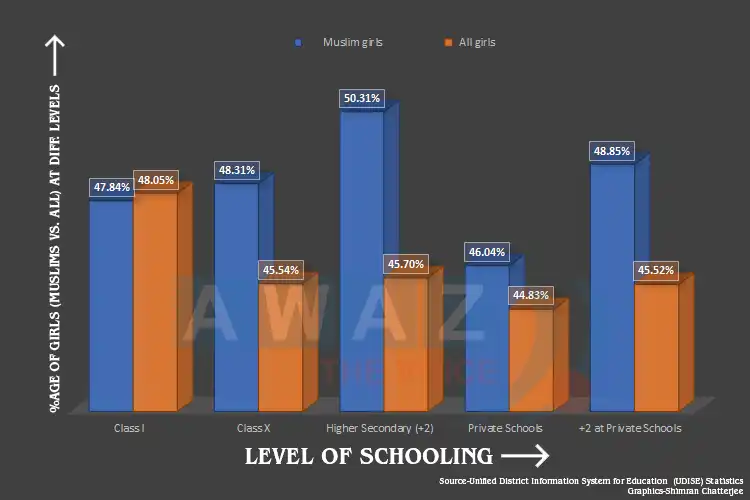
Bhim Rao Ambedkar said that women’s education and empowerment were the yardstick to measure the development of a society. The survey gives us immense hope as we analyze the data on girl students among Muslims. It is an open secret that ours is a patriarchal society. Irrespective of religion or caste, people discriminate against girls. It was not a surprise to see that, in 2019-20, out of 45,39,933 students enrolled in Higher Secondary (+2) in the state, 54.30% were boys and 45.70% were girls. Similarly, in class X, 54.46% of the total students were boys. On a similar pattern, for the same session, 55.17% of students enrolled in private schools were boys during the same session. But, the sweet surprise was the ratio of girls among Muslim students of U.P. In Higher Secondary,
Changing trends in Muslims’ education Graph-III
In 2019-20, 50.31% of the total Muslim students were girls while their proportion was 48.31% in class X. In private schools also enrolment of boys among Muslims was 53.96%. This means, among Muslims, proportionally more girls are being admitted in private schools than the average of the state. This positive approach towards women’s education is a welcome trend.
The survey suggests that Muslims as a community are paying more attention to women’s education. As discussed above, in 2019-20, 10.48% of the total enrolments in Higher Secondary (+2) belonged to the Muslim community. If we look at gender then we find that, in 2019-20, of all the girls enrolled in +2, 12.06% were Muslims while 9.67% of the boys came from the community. This trend is a feature of all the preceding years as well. In 2019-20, in private schools out of all the girls enrolled 12.08% were Muslims while the proportion among boys was 11.50%.
Interestingly, in higher secondary education in private schools, the proportion of Muslims among girls stands at 10.22% while among boys it is 8.94%. In each session we find more Muslim girls taking admissions in higher secondary than Muslim boys. The proportion of Muslims among girls is much higher than their proportion among boys. For class X, in 2019-20, 12.88% of girls were Muslims while among boys they were 11.53%. The trend breaks the stereotype that Muslims do not send their girls to school. Moreover, it shows that Muslims are moving away from the orthodox traditions faster than the other communities.
Prof. Nazura Usmani (AMU), believes that access of younger generations to religious texts has made this women empowerment possible. Muslims, on understanding the true message of religion, are breaking the shackles of traditional orthodoxies, which kept women caged for centuries. Now, people are understanding that women’s education is part of religion and also there is growing acceptance in the community towards economically working women. She says that those people who do not identify themselves with revolutionary feminism are accepting that women should be educated and economically independent.
The UDISE survey report brings out a positive trend of increasing education among Muslims. Though the community is still lagging the developments of recent years instills hope. Moreover, the survey brings out that Muslims are showing more gender parity when it comes to education than other communities.
(Saquib Salim is a Historian and a Writer)
source: http: //www.awazthevoice.in / Awaz, The Voice / Home> Stories / by Saquib Salim / December 09th, 2021
Women’s education in nineteenth-century India was no easy task. In the case of Muslim women, the task was even more difficult due to their triply marginal identity: as colonial subjects, as women, and as Muslims. Not only did the custom of purdah added to their seclusion from the social and cultural changes, their men hated everything about the western cultural influence (being displaced as rulers by the British). As a result, the middle class (the initiators of reform) was to develop late among the Indian Muslims than their Hindu counterparts. Nevertheless, by the late nineteenth century, a middle-class among the Indian Muslims was fledging. For this, no institution of the nineteenth-century can be given more commendation than Aligarh Muslim University.
Formed in 1920, the Aligarh Muslim University just completed its hundred years as a modern residential university. There has been a perception that the Aligarh Movement, for whatever reasons, neglected the issue of modern education to Muslim women. But there is more to this argument, some things to be explored, some to be re-interpreted.
This article, therefore, attempts to trace the genesis and trajectory of women’s educational reform in Aligarh through the profile of a woman reformer – Waheed Jahan (1886-1939), wife of Shaikh Abdullah (1874-1965), and the co-founder of Aligarh’s first girls’ school. Waheed Jahan was a pioneer of Muslim women’s education at Aligarh in the early twentieth century. Her role in ending the relative isolation of Indian Muslim women, while at the same time preserving the Muslim identity of the community, is worthwhile to recall. Her biography was published in Urdu by her husband in 1954. [1]
The educational reforms among Indian women were mostly started by men. Such men started with writings advocating women’s education. In this regard, among Muslims, Nazir Ahmad (1833-1912) published his novel, Mirat-ul-Arus, in 1869; Altaf Hussain Hali (1837-1914) published Majlis-un-Nissa, in 1874. Soon, magazines and journals followed, like the Tahzib un-Niswan by Sayyid Mumtaz Ali (1860-1935), the Khatoon by Shaikh Abdullah and Waheed Jahan, and the Ismat by Rashid-ul- Khairi (1868-1936). Gail Minault regards these as ’The Big Three.’ [2] Apart from literary activism, others tried more practical measures, like opening schools for Muslim girls.
As the movement intensified, so did the opposition against it. In such an atmosphere, even the talk of women’s education by a woman herself was quite a chivalry.
Yet, unexpectedly, there were women who defied the odds and broke the ground. Rashid-un-Nissa of Patna, became the first Muslim woman to write an Urdu novel, Islah-un-Nissa in 1881 (published in 1894), when writing was a distant dream for Muslim women. Rokeya Sakhawat Husain (1880-1932), a widow herself, pioneered Muslim women’s education in Bengal. Muhammadi Begam (1878-1908) edited one of the leading ladies’ home journals, Tahzib-un-Niswan. One such icon of women’s education at Aligarh was Waheed Jahan.
Waheed was born in 1874 in a landholding family in Delhi. Her father Mirza Ibrahim Beg was of Mughal ancestry, serving as a minor municipal official in Delhi. Her only brother, Bashir Mirza went to the Mohammadan Anglo-Oriental College (MAO Colege), Aligarh, where he befriended Shaikh Abdulla (a Kashmiri convert to Islam, named Thakur Das before conversion).
As was the custom, Waheed received no formal schooling. She learnt Urdu and Persian from her father and arithmetic and elementary English from a visiting English tutoress.
Ismat Chughtai, in her autobiography, Kagazi hai Pairahan, records, how Waheed Jahan, before her marriage, had dreamt of establishing a school for the girls. She would gather the servants’ children and teach them, and soon the rudimentary school became popular among her neighbours. It is noteworthy that, at a time when others (mostly men) were still imagining a school for girls (that too only in their writings), Waheed, in her own limited capacity, was practically making a difference.
In 1902, Waheed married Shaikh Abdullah – a lawyer at Aligarh, and an ardent supporter of women’s education since his school days. Following the marriage to a woman with some education, he began to consider concrete ways to promote Muslim women’s education. The Mohammadan Education Conference (MEC, founded at Aligarh by Sir Syed Ahmad in 1886) had established a Women’s Education Section (WES) in 1896 to start a Normal School for girls and to train female (zenana) teachers. In 1902, Shaikh became the secretary of WES, which by then had merely achieved anything beyond discussions and debates around women’s education.
Luckily, Waheed’s marriage to a reformist like Abdullah helped her materialize her dream. To champion women’s education, they started an Urdu monthly, the Khatoon, in 1904 with Waheed Jahan as editor. Begum Sultan Jahan (1858-1930) of Bhopal, Binnat Nazir-al-Baqir, Suharwardiya Begum, and Binnat Nasiruddin Haider were some important female contributors to the journal.
The paucity of funds made it impossible to start a Normal School. Waheed Jahan advised her husband to start a primary school for the elite (Sharif) girls. In 1904, the Mohammadan Educational Conference passed a resolution to start a girls’ school in Aligarh. Waheed proved to be an efficient manager and fund-raiser for the cause.
Her capacities as a fund-raiser and organizer were displayed in 1905, when she organized a meeting of Muslim women in Aligarh, with participants from far corners of Lahore and Bombay. Judging from the context of the time when purdah among Muslims was so harsh, even the idea of organizing such an event was quite revolutionary.
Aware of women education in Turkey and Egypt and its benefits to society, she tried to convince other women; she said:
When women meet among themselves, there will be more solidarity. . . Now there is a division between educated and uneducated women. Uneducated women, who do not go out, think that respectability is confined to the four walls of their houses. They think that people who live beyond those walls are not respectable and not worthy of meeting. But God has ordained education for both men and women, so that such useless ideas can be dispensed with. . . [3]
The meeting was a success, the exhibition of women’s craft secured good funds; finally, the women passed a resolution favouring a girls’ school in Aligarh. In October 1906, Aligarh Zenana Madrasa (girls’ school) opened its doors, and seventeen students were enrolled. Urdu, arithmetic, needlework, and the Quran formed the curriculum. Leaving her own children in servants’ care, Waheed took the responsibility of supervising the school. Within six months, the number of students increased to fifty-six. Waheed’s efforts secured the school a cumulative grant of Rs. 15,000 and a monthly grant of Rs. 250. By 1909, the school taught 100 students and shifted to a larger building.
The opposition to girls’ school took new forms. One amusing story is recorded in Shaikh Abdullah’s Urdu memoir (1969), Mushahedaat o Taaassuraat. [4] Maintaining purdah, the girls were carried in daulis (curtained carriages) to school, and some street urchins started harassing the school going girls by lifting the curtains of their daulis. The mischief only stopped when Shaikh gave one of the miscreants a good thrashing. In another incident, Shaikh confronted a tehsildar who had accused the school of making the girls insolent.
When the Abdullahs proposed a girls’ boarding school, it invited opposition from elite corners. The European principal of MAO College, W.A.J Archbold; Ziauddun Ahmad (1873-1947); and Viqar-ul-Mulk (1841-1917) opposed vehemently.
The couple, however, succeeded in 1914, witnessing the transformation of the school into a boarding school. The same year saw the culmination of Muslim women’s activism by the foundation of Anjuman-i-Khavatin-i-Islam (AKI) at the same venue. Begum Sultan Jahan (1858-1930) of Bhopal graced the foundational ceremony of the boarding school, felicitating Waheed; she urged other women to follow her example. Fyzee sisters, Abru Begum, Begum Shafi, and Begum Shah Nawaz were the other dignitaries.
The Begum was already active in various social and educational reform projects. She served as the first chancellor of AMU from 1920 until her death in 1930. Having a woman as the first chancellor was indeed a historic feat.
Only nine girls became the residents, most of them from Waheed’s own family. By the end of the year, the enrollment rose up to twenty-five. This was the result of what the historian Gail Minault calls as Abdullahs’ portrayal of girls’ school as an extension of girls’ families and also of their own. To make the school successful, Waheed used to invite the parents of girls to Aligarh, for a few days stay in the hostel, to convince them that the conditions there were safe enough to let their daughters stay, records Sheikh Abdullah, in his Mushahedaat o Taaassuraat. She supervised everything – housekeeping, laundry, shopping, and even tasted each dish cooked for the girls.
It could be said that Waheed Jahan acted as a foster mother to these girls, counselling, nursing, and treating them as a part of her own extended family. They called each other as Apa (sister), Shaikh Abdullah as Papa Mian, and Waheed Jahan as Ala Bi. This created a sense of sisterhood among the girls.
This familial system of ethos still remains unique to the Aligarh Women’s College.
The boarding school project contained other complex problems, such as maintaining proper purdah. Both Shaikh and Waheed agreed that the purdah practiced in the Sharif society was more restrictive than purdah sanctioned by the Shari’a (Islamic Law). But to secure social acceptance for their school, they chose to go with strict purdah, building fortress-like walls to fend off the male gaze, students’ mails were scrutinized, and only close relatives were allowed inside.
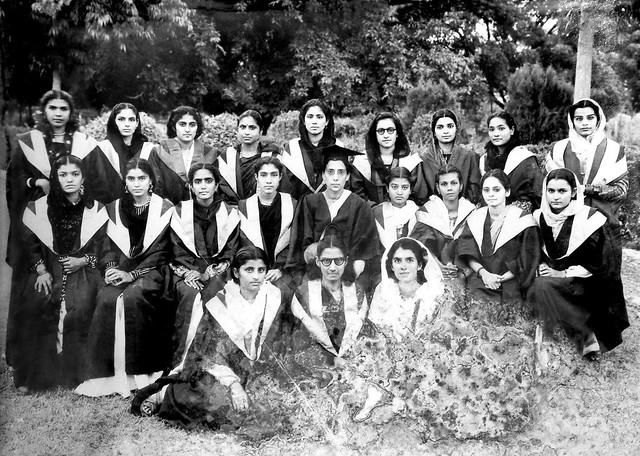
This accommodation of purdah within the gamut of their reformist agenda, to gain social acceptance, was indeed very astute of the Abdullahs. Thus, Waheed Jahan succeeded in preserving both the elite and the “Muslim” identity of herself and her community while simultaneously breaking the relative isolation of Indian Muslim women. The girls’ school became an intermediate college in 1925 and started degree classes in 1937 (with 250 students). Waheed passed away in 1939, only after seeing her school becoming a degree college.
The relation between education and social change is complex, varying from culture to culture and among different classes in the same culture.
True, that Aligarh movement was late to include women’s education in its fold. Even the school founded by the Abdullahs did not fulfil all its expectations – their choosing an exclusively elite (Sharif) clientele limited the impact of their reforms.
But their efforts indeed bore fruits; the educational reforms for Muslim women at Aligarh contributed to many social developments. After the formation of AKI in 1914, the number of meetings and associations (for women-only) increased rapidly in the 1930’s. The growth in the number of educated women created a market for new publications for and by women.
The Aligarh Women’s College produced many women of substance, who made sure to shine above and beyond purdah, some figuratively and others literally. These ladies excelled in various fields, from teaching to medicine to writing.
Rashid Jahan, Waheed Jahan’s daughter, became a successful physician, a radical writer, and a staunch communist. Her short stories in Angare (1932) became the opening salvo of the Urdu Progressive Writers Movement (1936). Rakhshanda Jalil, in her biographical work on Rashid, A Rebel and her Cause: The Life and Work of Rashid Jahan, writes that Angare was a “document of disquiet”; a self-conscious attempt “to shock people out of their inertia, to show how hypocrisy and sexual oppression had so crept in everyday life”. Rashid became an inspiration for a generation of women writers such as Ismat Chughtai, Attia Hosain, Sadia Begum Sohravi, and Razia Sajjad Zaheer, among others.
Like all other reform movements of that time period, the Aligarh movement had its limitations too. For a start, it did prioritize men’s education over women’s, for various reasons (a story that needs to be told elsewhere), but by the early twentieth century, things were changing. The Aligarh movement not only took up the cause of women’s education actively, but it also let women (Like Wahid Jahan) be a part of the process.
Notes
[1] Shaikh Abdullah, Savanih-i- Umri-i- Abdullah Begum, Aligarh, 1954
[2] Gail Minault, Gender, Language, and Learning: Essays in Indo-Muslim Cultural History, Permanent Black Publications, Ranikhet, 2009, p. 87
(Ishrat Mushtaq is PhD Candidate, Centre of Advanced Study in History, Aligarh Muslim University and Sajad Hassan Khan is PhD. Candidate, Centre of Advanced Study in History, Aligarh Muslim University. Article courtesy: Mainstream Weekly.)
Janata Weekly does not necessarily adhere to all of the views conveyed in articles republished by it. Our goal is to share a variety of democratic socialist perspectives that we think our readers will find interesting or useful. —Eds.
source: http://www.janataweekly.org / Janata Weekly / Home / by Ishrat Mushtaq and Saad Hassan Khan / January 24th, 2021
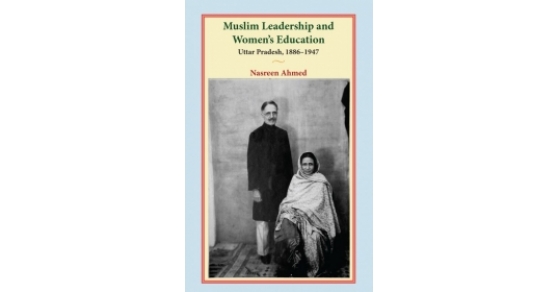
By Nasreen Ahmed / First Edition Pub. October 2012, x+190 pages, 8.5 x 5.5 in. / ISBNs: 978-81-88789-82-5
This is a broad study of the efforts at modern education for Muslim women, especially with reference to the Aligarh Movement and the initiatives inspired by it in other parts of UP, namely Lucknow, Allahabad, Rampur and Agra. The role of Muslim leaders, both male and female, the nature of the problems they encountered and the manner in which they countered them is the major thrust of this study. In the process we are introduced to the major debates on women and education during the course of late nineteenth and the first half of the twentieth century.
The author breaks many stereotypes as we learn that it was the more traditional among the Muslim leadership, rather than the ‘modernisers’, who pioneered women’s education and that Muslim women themselves played a major role in nurturing the first institutions under their personal care.
Based on an extensive range of primary sources and contemporary writings in English, Urdu, Hindi and Persian, this is a definitive work in many ways, gives food for thought on developments other than its main theme and will be useful to those concerned with women’s studies, social reform, education and modernity in colonial India, particularly with reference to Muslims.
CONTENTS
Muslim Women’s Education in the Nineteenth Century: A Study of the Traditionalist Attitudes
Efforts for the Education of Muslim Women, 1857-1885
Aligarh Movement and Muslim Women’s Education, 1875-1902
Female Education Section: Early Discussions, 1896-1904
A School for Muslim Girls at Aligarh
From Female Normal School to Muhammadan Girls’ School, 1906-1910
A Degree College Managed by the University
Establishment of Schools by Other Indigenous Efforts: Lucknow, Allahabad, Rampur and Agra.
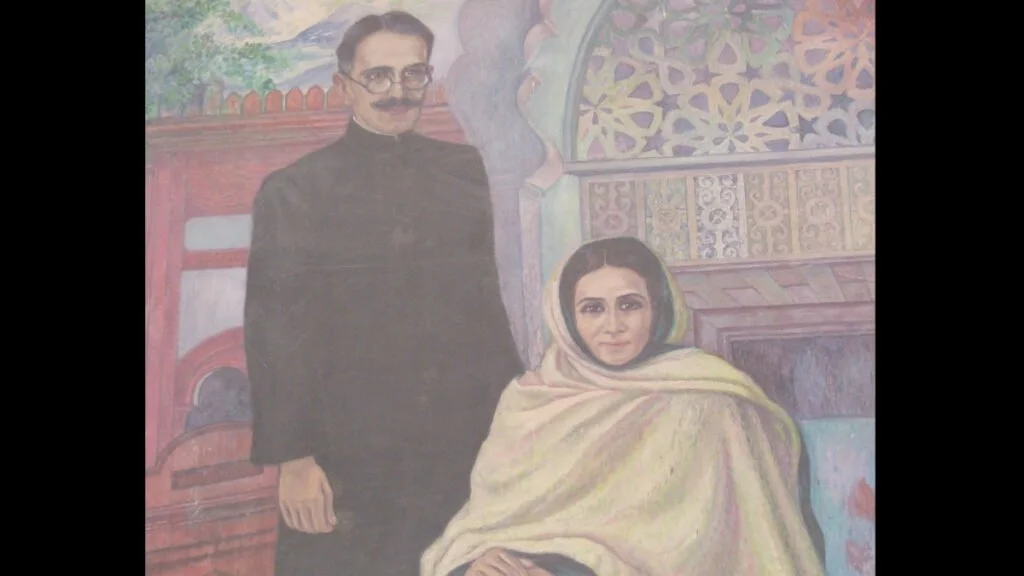
Cover photo: Papa Mian (Sheikh Abdullah, 1864-1965) and Waheed Jahan Begum (1884-1939), founders of the first school for Muslim girls in Aligarh. Back cover: Carriage used to bring girls to school, accompanied by a female escort. (1923)
Nasreen Ahmed
Nasreen Ahmed (1954-2009) studied at the Aligarh Muslim University and later taught at the Karamat Husain College, Lucknow.
She is a pioneer among historians on concerns of Muslim women’s education, as her early essays on the theme published in the late 1970s show. Thereafter she presented her work at various national conferences and seminars. Her studies are rich in sociological data: she records a great deal that feminist scholars writing on Muslim women today have missed. She is author of many research articles published in the Proceedings of the Indian History Congress, a journal of frontier scholarship in history.
source: http://www.threeessays.com / Three Essays Collective
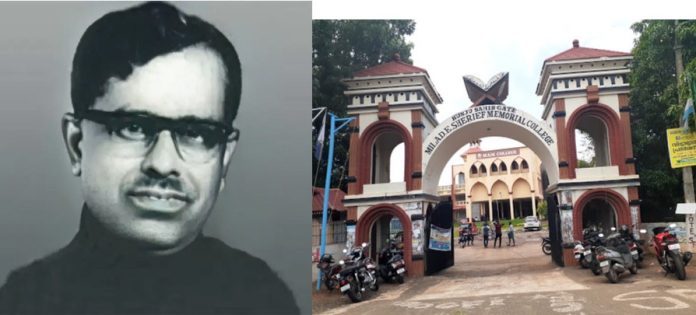
A college has been named after Prophet Muhammad’s ﷺ birthday celebrated as Seerat-un-Nabi across the globe. The 60-year old Muslim institution – Milad-E-Sherief Memorial College – stands tall at Kayamkulam in Alappuzha district in God’s Own Country. Thanks to the visionary Alhaj P K Kunju Sahib, a former Finance Minister in Kerala between 1967-69, who was instrumental in establishing the institution.
Perhaps in a first of its kind, a Muslim minority institution in Kayamkulam situated in Alappuzha district in God’s Own Country has been named ‘Milad-E-Sherief Memorial College’ (MSM) reminiscing the birthday of Prophet Muhammad ﷺ celebrated as Seerat-un-Nabi across the globe.
The timely info was shared by journalist Colachet Azheem in his Facebook page which sheds light on the munificence of Alhaj P K Kunju Sahib, a former Finance Minister in Kerala between 1967-69, who established the institution.
Flipping through the pages of MSM College portal, it revealed that late Alhaj P.K. Kunju Sahib as a realisation of his long-cherished dream of cultural advancement of the uneducated people of central Travancore named the college as Milad-E-Sherief Memorial College.
Interestingly, it stands as a monument speaking volumes about Prophet Muhammad’s teachings and preachings and his way of life. A veritable champion of the masses, he envisioned that the progress of the poor and the downtrodden is possible only through education. Hence he undertook the great mission of imparting the radiance of knowledge to all, especially to the marginalised, to whom the college was established in 1964. The unseen but domineering presence of his social commitment, continues to enthuse the MSM fraternity for relentless pursuits to scale heights of excellence.
Notably, the MSM College is a symbol of empowerment and education located in the centre of Kayamkulam. It is a monument to his visionary leadership and commitment to helping the underprivileged and worthy minorities in society.
Managed by the MSM Trust, MSM College is more than just a college, it has served as a beacon of knowledge and hope for many generations. Not to be left behind, the institution grew from a modest beginning to become the region’s centre of academic achievement over time. The institution is proud of its highly effective faculty members who are committed to developing students’ potential and encouraging critical thinking. Over its history, MSM College has had a significant impact on establishing the cultural ethos of the community as well as the academic environment of Kayamkulam.
Noted alumni members included Mollywood’s Rasul Pookutty, Oscar award recipient, T P Srinivasan, former Ambassador of India, Permanent representative of India to UN, Justice K Harilal, former Kerala High Court, Brigadier Suresh G, Indian Army, Dr P Sujatha Devi, chief scientist, CSTD, NIIST, Thiruvananthapuram, C S Sujatha, former MP.
For well over six decades, MSM College played a key role in catering socially backwards through enlightenment. In consonance with the vision of the founder, this shrine of letters looks forward to the heydays of a classless society. The programmes launched by the institution as part of this mission focus on academic excellence of global dimension, value-based personality development and training for leadership, and soft skill development. The college has produced many professionals for the industry and is one of the leading colleges in the region.
[The author is former Indian Express and Deccan Chronicle chief]
source: http://www.radiancenews.com / Radiance News / Home> Features> Focus / by M Rafi Ahmed / by Radiance News Bureau / August 28th, 2025
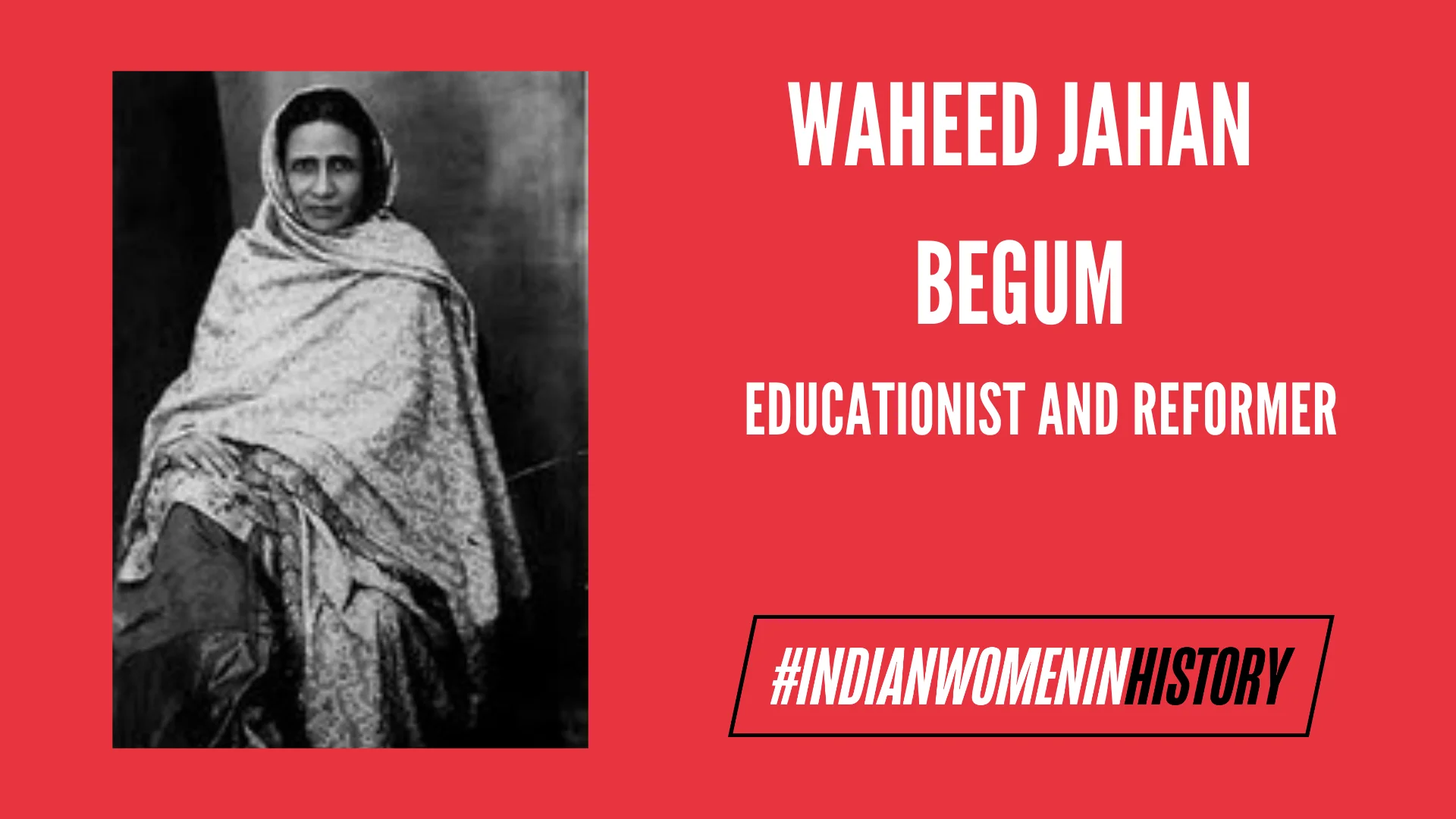
In a time when women were relegated to the home and the hearth, and their dreams resigned to those of little other than a committed marriage and devout motherhood, Waheed Jahan Begum proved that women could want more for themselves.
Throughout India’s modern history in the struggle for women’s rights, many Indian reformers have gravitated towards upholding the crusade for women’s education as their foremost priority. For the everyday individual, the topic of women’s education tends to bring to mind a few notable Indian reformers who fought for women’s rights to pursue an education, albeit the large majority of these names are of men.
Throughout India’s modern history in the struggle for women’s rights, many Indian reformers have gravitated towards upholding the crusade for women’s education as their foremost priority. For the everyday individual, the topic of women’s education tends to bring to mind a few notable Indian reformers who fought for women’s rights to pursue an education, albeit the large majority of these names are of men.
Jyotirao Phule’s wife, Savitribai, was responsible for opening the first school for girls in the Indian subcontinent, yet her contributions and accomplishments are often accredited to their union than to her alone, and she is often overlooked for her importance to the movement while her husband is remembered by history as one of the leading reformers for it.
Similarly, in the union between Sheikh Abdullah and Waheed Jahan Begum, we see an identical dichotomy emerge as the husband rises to prominence for his contributions to women’s rights movements, while the wife is remembered only as his counterpart, or inspiration.
Source: Book Women Education by Dr Nasreen Ahmad
Today we understand the importance of education in the lives of modern women, as a means to achieve financial independence in a patriarchal set-up that favours women as being financially dependent on their fathers, and later, their husbands. But despite the well-established variety of schools and colleges for women we have in India today, it was not always as such and the story of the path to women’s education would be incomplete without the role played by Waheed Jahan Begum.
An early educator
Waheed Jahan Begum was the youngest daughter born to Mirza Mohammad Ibrahim Beg, a minor municipal official, in a landholding family from Delhi in 1874. Though she did not have the means to pursue formal schooling, her father personally ensured she would be fluent in Urdu and Persian, while also hiring English tutors to provide her with an understanding of arithmetic and elementary English.
She subtly began to implement her lifelong dream to start a school for girls in her surroundings growing up, by gathering up the houseworkers’ children and teaching them. Through this method, she succeeded at establishing one of the first concerted efforts at providing girls with an education in a group setting, akin to a school. She attempted to make education accessible to girls within her locality, regardless of their background, at a time when few others were able to say the same.
In one simple gesture, she managed to lay down the foundations upon which she built her career from the ground up.
Source: Aligarh Muslim University
But as a single Muslim woman in the Indian subcontinent, it would have been nearly impossible to single-handedly bring about concrete change.
Sheikh Abdullah, however, was a Kashmiri lawyer who was a prominent leader in the Aligarh Movement, which encouraged the Muslim youth to pursue a modern English education. Though many in the movement rejected Muslim women’s right to an education as well, Sheikh Abdullah represented one of the few men in the movement who was outspoken regarding the need to educate girls and women. This made him a suitable candidate for Waheed Jahan Begum to partner with in her pursuit of fighting the cause for women’s education. They also later had five daughters and a son together.
Creating a class of well educated muslim women
On marrying Sheikh Abdullah, Waheed Jahan Begum encouraged him in his quest to appeal to the issue of women’s education to the masses. Together, the couple concluded that female teachers needed to be trained to impart education to young girls.
While Sheikh Abdullah took up the matter of women’s education in front of the Muslim Education Conference and was subsequently elected secretary of the Female Education Section, Waheed Jahan Begum became editor of an Urdu monthly, Khatoon, that the couple began publishing in 1904 to further the cause of women’s education. Additionally, they opened a primary school for the elite populace of Muslim girls.
Waheed Jahan Begum also hosted meetings among educated Muslim women from across the country to champion the advantages and benefits of women’s education in the country, consequently securing funding for establishing a girls’ school.
Sheikh Abdullah with his daughters, son-in-law and grandchildren
However, Waheed Jahan Begum’s secular approach to women’s education growing up proved to be difficult to maintain going forward into her professional life as her lifelong goal to establish a school for girls proved to be a challenge amongst those in charge.
As when the couple then moved on to start a primary school for girls on various disciplines relevant to the education of Muslim women, including Urdu, the Quran, arithmetic, and needlework, it was restricted to the daughters of elite families who could afford to educate their girls. Additionally, though the school opened with only seven students in 1906, it grew over the years to accommodate around a hundred students in 1909.
This, however, did not come without its societal dangers, as the girls enrolled in the school faced harassment from the local boys and men in the process of travelling from their homes to the school in curtained carriages. This led to their families pulling them out of school once they reached puberty.
To counteract the threats posed to the girls in their travels, the couple then proceeded with, and succeeded at, pushing for the opening of a boarding school for girls. Leaving her children to be overseen by houseworkers’, Waheed Jahan Begum committed herself to establish the boarding school within the paradigm of a family structure, taking care of each of the girls enrolled in the boarding school as though they were her daughter.
From personally overseeing each aspect of the daily lives of her pupils regarding housekeeping, laundry, and shopping, she would even go as far as inviting the families of the girls to stay in the hostels for a few days to assure them of the safety of the boarding school and to secure their trust.
In addition to such measures, strict purdah was enforced in the form of walls built around the facility to garner social acceptance from the Muslim elite, though both husband and wife agreed on the restrictive nature of purdah. Their battle for women’s education was riddled with compromises and concessions made which reveal the complexities of the arena of women’s education within the given historical context, as families would assign greater value to their daughters’ “honour” than their education as the former kept them marriageable. The latter held little weightage to their prospects in the market.
A legacy to look upto
By the time Waheed Jahan Begum passed away in 1939, the boarding school had developed into a women’s college which offered several degree courses.
Waheed Jahan Begum turned her dreams into reality, by handing down the gift of education to a new generation of Muslim women, with the women’s college she opened with her husband now boasting a strength of around 40,000 students and counting. Students travel from across the world to study at the college she opened back in the days when even moderately educated women were few and far between.
Source: Aligarh Muslim University
To have achieved such a lasting change in the sphere of women’s education is no small feat, and while it is bleak to confront how little ability women have to bring forth a change within their material reality without the support of the progressive men in their lives, such as their husbands or fathers, it would altogether be impossible to bring to fruition without the hard work of inspiring women such as Waheed Jahan Begum.
She paved the way for the first steps to be taken in the emancipation of Muslim women in the Indian subcontinent, she believed in the power of education as a stepping stone to liberation from traditionalism which would have women confined to the knowledge of the four walls of their husband’s home and little of the vast world that lay beyond.
As a woman who sacrificed so much of her freedom to dedicate her life to striving for the progress of future generations of Muslim women, she is deserving of recognition beyond her role as a supportive and ingenious partner to Sheikh Abdullah as he set the wheels in motion for women’s education within Muslim society at large.
In a time when women were relegated to the home and the hearth, and their dreams resigned to those of little other than a committed marriage and devout motherhood, Waheed Jahan Begum proved that women could want more for themselves, and for women at large, by leaving their mark on history in their words and actions, to inspire and leave room for future generations of women to add on to their legacy and change the world we live in, bit by bit.
source: http://www.feminisminindia.com / Feminism in India – FII / Home / by Tanya Roy / January 13th, 2023
Ghiasuddin Babukhan, one of Hyderabad’s most respected builders, philanthropists, and educationists, died Monday at 83. He is survived by his wife, three sons, and a daughter.
Known for his compassion, Babukhan leaves behind a legacy that bridged stone and society — architectural heritage inherited from his father and a philanthropic network of his own making.
He was the son of Khan Bahadur Abdul Karim Babukhan, a legendary builder who left an indelible mark on India’s architectural history. Abdul Karim Babukhan’s construction empire produced some of the most celebrated structures of the 20th century, including the Arts College at Osmania University, the Hyderabad House in New Delhi, and the Kadam Dam in Nirmal, then in Adilabad district.
Ghiasuddin inherited not just this construction legacy, but also the conviction that enterprise must serve society. In the early 1990s, he shifted decisively from business to social service. In 1992–93, he founded the Hyderabad Zakat and Charitable Trust (HZCT), creating a structured and transparent system of charitable giving. For him, philanthropy was not about token donations but about building institutions that could sustain dignity and hope for generations.
The trust focused primarily on education, which Babukhan believed to be the most powerful tool for empowerment. Its annual scholarship program for orphans became one of its most impactful initiatives. For more than a decade, over 10,000 orphaned students across Andhra Pradesh and Telangana pursued education with dignity through these scholarships. Many went on to become doctors, engineers, teachers, and entrepreneurs — living proof of Babukhan’s belief that charity must enable, not merely provide.
Unlike many who confined themselves to charity within their community, Babukhan’s work cut across religious and social lines. He was committed to humanitarian relief, healthcare support, and the preservation of Hyderabad’s plural cultural ethos. His schools, social programs, and charitable initiatives reflected an inclusive philosophy rooted in compassion, justice, and service.
“The passing of Ghiasuddin Babukhan is a great loss for Hyderabad. He was a dedicated philanthropist whose efforts in educating the poor will be remembered. My condolences to his family and friends. May Allah grant him maghfirah and patience to his loved ones,” Hyderabad MP Asaduddin Owaisi said in an X post.
Jamaat-e-Islami Hind president Syed Sadatullah Husaini called him a “true champion of education and a benefactor to the Muslim community.” In a post on X, Husaini said Babukhan’s contributions through the Hyderabad Zakat and Charitable Trust transformed the lives of thousands and would be remembered for generations.
“He was a true champion of education, a liberator of the marginalised, and a benefactor of the Muslim community — an embodiment of the noble spirit of zakat and compassion. Through his philanthropic initiatives, he played a pivotal role in the educational upliftment of the Ummah, poverty alleviation, relief work, and community development,” Husaini wrote.
source: http://www.maktoobmedia.com / Maktoob Media / Home> India / by Maktoob Staff / August 26th, 2025