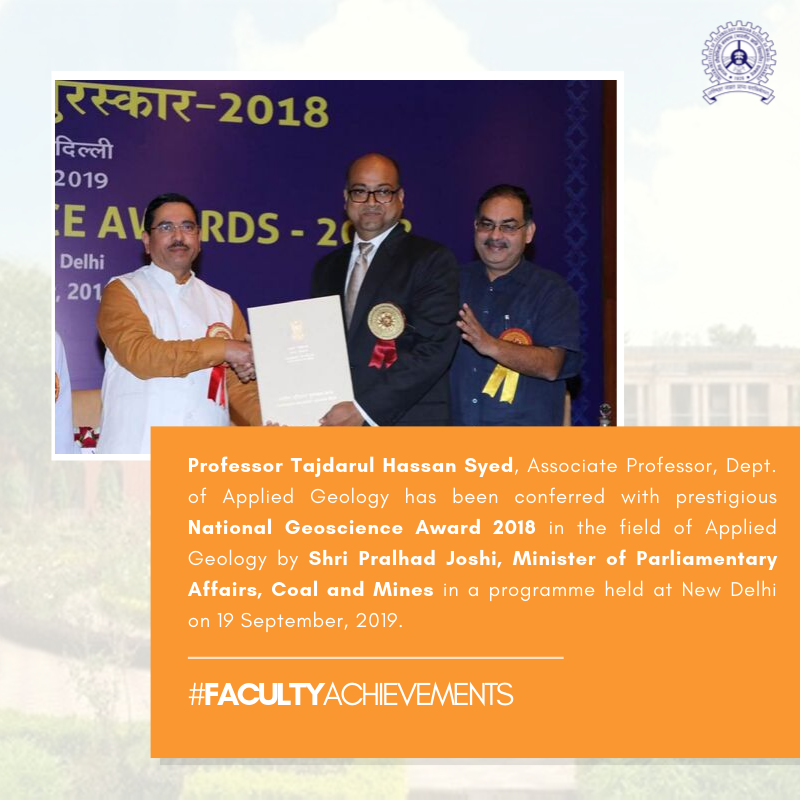
Professor Tajdarul Hassan Syed, Associate Professor, Dept. of Applied Geology has been conferred with prestigious National Geoscience Award 2018 in the field of Applied Geology by Shri Pralhad Joshi, Minister of Parliamentary Affairs, Coal and Mines in a programme held at New Delhi on 19 September, 2019.
Prof. Syed was honoured with this award for his contributions in the area of Remote Sensing within Applied Geosciences.
source: http://www.facebook.com / Indian Institute of Technology Dhanbad, Jharkhand / September 26t, 2019
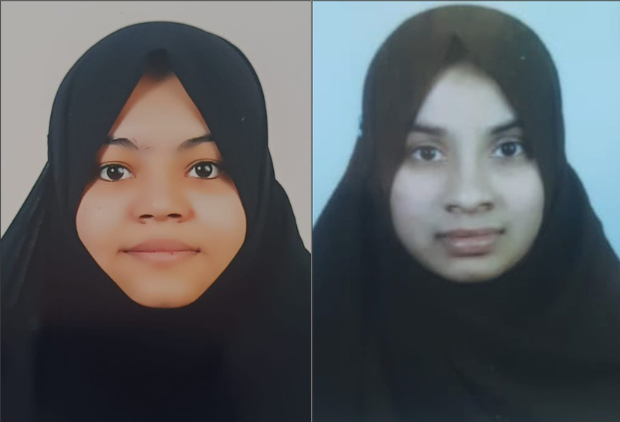
Two students from TGMREIS have secured Scholarship for Higher Education under INSPIRE by virtue of performance of being within top one percent in class XII Board Examination held during the academic session March 2024.
Hyderabad :
Two students of Telangana Minorities Residential Educational Institutions Society (TGMREIS) have secured a Scholarship for Higher Education (SHE) under Innovation in Science Pursuit for Inspired Research (INSPIRE) of the Department of Science & Technology of the Government of India.
According to Aisha Masarath Khanam, Secretary TGMREIS, students of TGMREIS are continuing their excellence in academics.
Two of our students from TGMREIS have secured Scholarship for Higher Education under INSPIRE by virtue of performance of being within top one percent in class XII Board Examination held during the academic session March 2024.
Asma Sultana and D. Saniya from Vikarabad Girls’ Junior College have made TGMREIS proud.
INSPIRE is an innovative programme sponsored and managed by the Department of Science & Technology for attraction of talent to Science.
SHE component of the INSPIRE aims to encourage meritorious students to study basic and natural sciences at undergraduate level through attractive scholarship and mentorship opportunities. SHE offers 12,000 scholarships every year to meritorious students in the age group 17-22 years.
Mohammed Faheemuddin Qureshi, Vice-Chairman and President, TGMREIS, Shahanawaz Qasim, Secretary to Chief Minister, Tafseer Iqbal, Special Secretary to Government, Minorities Welfare Department and Aisha Masarath Khanam have congratulated the students and teachers on their achievement.
TGMREIS, earlier called TMREIS, was launched in 2017 with the aim of providing quality education and holistic development opportunities to the minority communities in the state.
The society was formed under the Telangana State Public Societies Registration Act with a vision to bridge the educational gap and promote social inclusion among minority communities. TMREIS aims to create an environment where students from minority backgrounds can access quality education, develop their talents, and build a strong foundation for their future.
TMREIS runs 204 minority residential schools and junior colleges across the state, where about one lakh students are getting education.
source: http://www.radiancenews.com / Radiance News / Home> Education> Focus / by Radiance News Bureau / August 23rd, 2024
Students of the colleges run under Anjuman Hamai Muslim Bhatkal continue to get ranks at the university level and this time Najda Ekiri, a student of Anjuman Institute of Management and Computer Applications (AIMCA). Anjuman College has made the name of Anjuman College bright in the entire state by securing first rank in Bachelor of Computer Applications (BCA) at Karnataka University, Dharwad.
AIMCA Principal Muhammad Mohsin has said in a press release that Najda Ekiri, of Mubeen Ahmed Ekiri and Nusrat Jahan, has also achieved a remarkable feat by memorizing the Holy Quran during her three-year BCA course. According to the press release, Najda secured 3421 marks out of 3700 marks, resulting in a pass rate of 92.46%. The BCA exams were held in August-September 2023.
It has been found that while Najda, a student of Bhatkal Anjuman, secured the first rank in Dharwad University, Dekshanagappa Kharvi, a student of Bhatkal Sri Gurusdhiendra BCA College, secured the third rank at the university level, with an average success rate of 91.73%. has been done.
The university’s second rank went to Shantala Raibagh, a student of Global College of Computer Applications, Hubli, who registered a pass rate of 92.27 percent.
It should be noted that more than fifty BCA colleges are affiliated to Karnataka University, Dharwad, and among the students of all these colleges, a student of Bhatkal Anjuman getting the first rank is a great achievement. In such a situation, memorizing the Holy Quran with modern education is also a big challenge.
The management of Anjuman Hamai Muslimin, the principal and other staff of the college have congratulated Najda for this wonderful achievement and wished her all the best for her future.
source: http://www.sahilonline.net / Sahil Online / Home> Coastal News / by IG Bhatkali, SO News Agency / August 23rd, 2024
Mumbai, MAHARASHTRA / Chennai, TAMIL NADU / INDIA :
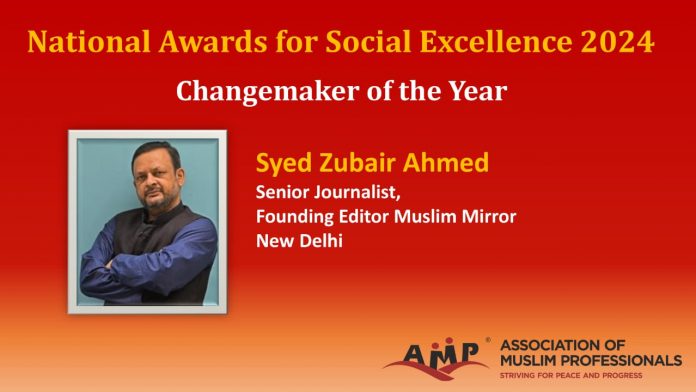
Syed Zubair Ahmad, the founding editor of Muslim Mirror, has added another feather to his cap by being declared one of the prominent Changemakers of 2024 by the Association of Muslim Professionals (AMP). The prestigious recognition was announced during a grand event held at the B.S. Abdur Rahman Crescent Institute of Science & Technology, a deemed university in Chennai, Tamil Nadu. The event was graced by honorable guests and attended by a large gathering of participants from across India.
Ahmad, a distinguished journalist, is known for his powerful advocacy for the rights and representation of marginalized communities, particularly Muslims, in India. Over the course of his career, spanning more than two decades, he has built a reputation for his unwavering commitment to truth, justice, and journalistic integrity.
The Association of Muslim Professionals (AMP) is Mumbai based pan India non-profit organization dedicated to the socio-economic empowerment of the Muslim community in India. Through initiatives in education, employment, and community development, AMP works to foster leadership, skill-building, and social welfare, connecting professionals and organizations nationwide for collective progress.
“In a memorable ceremony, 100 inspiring individuals were honored with Changemaker Awards, and 100 state-level NGOs were recognized in the Best and Jury categories. Additionally, 10 organizations were celebrated in prestigious national categories,” said a press statement issued by AMP.
Notable national NGO awardees include;
ALTNEWS
APCR (Association for Protection of Civil Rights)
IMRC (Indian Muslim Relief & Charities??)
Institute of Objective Studies (IOS),
Allana CSR
Pataka CSR and
Seethakathi Trust
Some of the prominent Changemaker awardees included;
Syed Zubair Ahmad (Muslim Mirror)
Mohammed Wajihuddin (Times of India)
Aslayah Kallakath (Maktoob Media)
Abdur Rahman IPS (Retd.)
Akramul Jabbar IRS (Retd.)
Hammad Rahman
Adil Meraj and
Syeda Ruksheda.
The Lifetime Achievement Award was posthumously bestowed upon the Late Moosa Raza, IAS (Retd.), which was received by his family.
The Omar Khatani Memorial Award was presented to the Tarraqi I Foundation, while BSA Crescent Institute of Science & Technology received the Partner of the Year Award.
Mrs. Mariam Habib, Trustee of B.S. Abdur Rahman Crescent Institute of Science & Technology, served as the Chief Guest and commended AMP’s efforts in education, employment, and empowerment. She emphasized the role of NGOs in bringing about significant societal change in collaboration with policymakers, and she noted that the legacy of the late B.S. Abdur Rahman is being continued with great dedication by the current leadership.
Dr. N. Raja Hussain, Registrar of B.S. Abdur Rahman Crescent Institute of Science & Technology and Guest of Honour, praised AMP’s work in recognizing and motivating various organizations and individuals. He highlighted the ongoing collaboration between the university and AMP in developing students and faculty through guest programs. The event was presided over by University Vice-Chancellor Prof. Dr. T. Murugesan.
Motahar Hosain, Chief Executive and Guest of Honour, congratulated AMP for instituting these much-needed awards to acknowledge the contributions of individuals in the development sector. He remarked that despite the sacrifices made by these individuals in service to others, they seldom receive the appreciation they deserve, making these awards a significant recognition of their efforts.
Mr. Farooq Siddiqui, Head of the AMP National Coordination Team and the driving force behind these awards, stated, “AMP believes in collaboration and has been working alongside multiple organizations since its inception. Through the AMP NGO Connect project, we are connected with over 7,000 social organizations across nearly all districts of India, helping them with capacity building and implementing AMP’s social welfare projects in their regions. These awards are our way of appreciating their efforts and motivating them to continue their impactful work.” He also thanked the AMP Chapter and state teams for mobilizing massive nominations and captivated the audience at the packed Crescent Convention Center Hall with his superb and engaging awards announcement.
Ms. Shereen Sultana, State Head – AMP Tamil Nadu, in her address, shared details about AMP’s initiatives and invited everyone to join hands for the betterment of society and nation-building. She expressed her gratitude to the management and staff of B.S. Abdur Rahman Crescent Institute of Science & Technology for their cooperation in hosting the event and mentioned how she took up the challenge of organizing the awards ceremony in Chennai.
AMP Tamil Nadu State Executive Team member Mr. Yahya Rasheed welcomed the guests and successfully hosted the event with the support of Prof. Ansar.
The awards process for the NASE was multi-layered, with state, central, and a 9-member distinguished jury led by A.R. Khan, IAS (Retd.), President of A.R. Welfare Foundation, Dr. Syed Zafar Mahmood, Founder & President of Zakat Foundation of India, Dr. Farah Usmani, Founder & Chairperson of Rising Beyond The Ceiling, Prof. Zubair Meenai, Professor & Former Head of the Dept. of Social Work, JMI, Prof. Naseem Ahmed Khan, Chairman of the Dept. of Social Work, AMU, Dr. Shazia Manzoor, Head of DSW, University of Kashmir, Sherin Ali, Global Lead – Corporate Social Responsibility, WNS, Sajid Ali, COO of Tech Mahindra Foundation, and Gulzar Hussain, Head of Government Partnerships, UN World Food Program (India).
The success of the 4th edition of the awards was attributed to the collaborative efforts of key AMP team members, including Sajjad Parvez, AMP Zonal Head – South India; Dr. B. Raja Hussain, State Secretary; Syed Faheem, Chennai Chapter Head; and Syed Deen, Chennai Chapter Secretary. Their contributions, along with the support from the back-office teams at the Central Offices in Mumbai and Vaniyambadi, were instrumental in making the event a success.
source: http://www.muslimmirror.com / Muslim Mirror / Home> Indian Muslim> Media> Positive Story / by Muslim Mirror Desk / August 22nd, 2024
The center was established in February 2021 by Faiz Aam Trust and Siasat Millat Fund with the aim to provide assistance to the residents of Osman Nagar.
Dr Mateen ul Jabbar Skill Centre
Hyderabad:
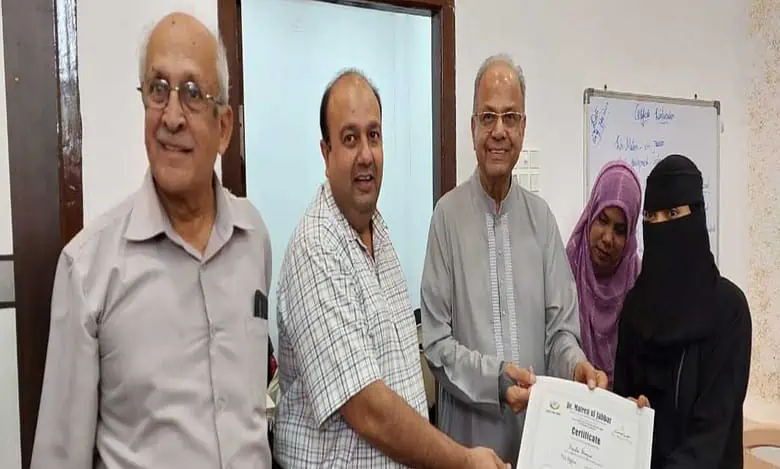
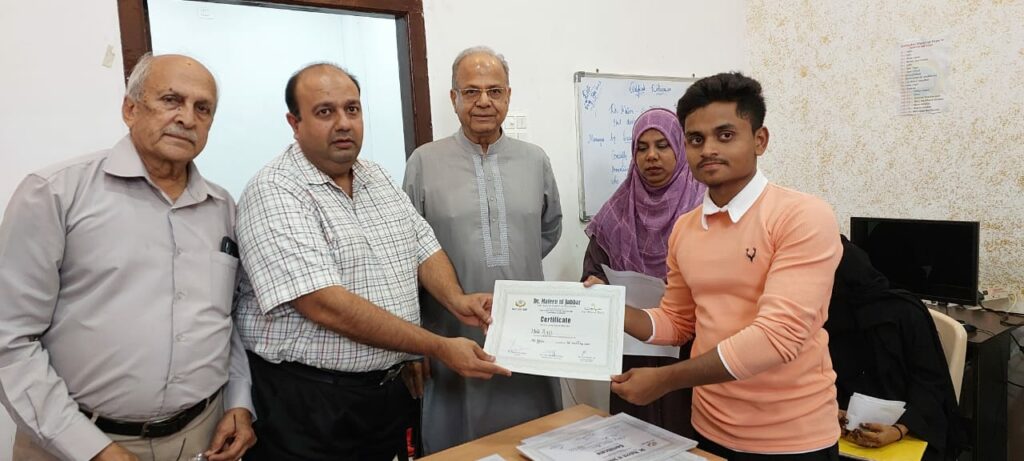
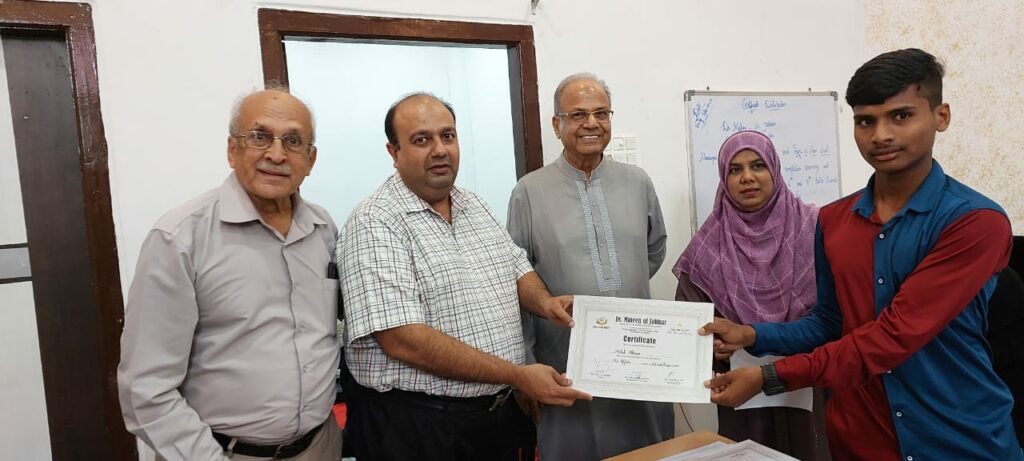
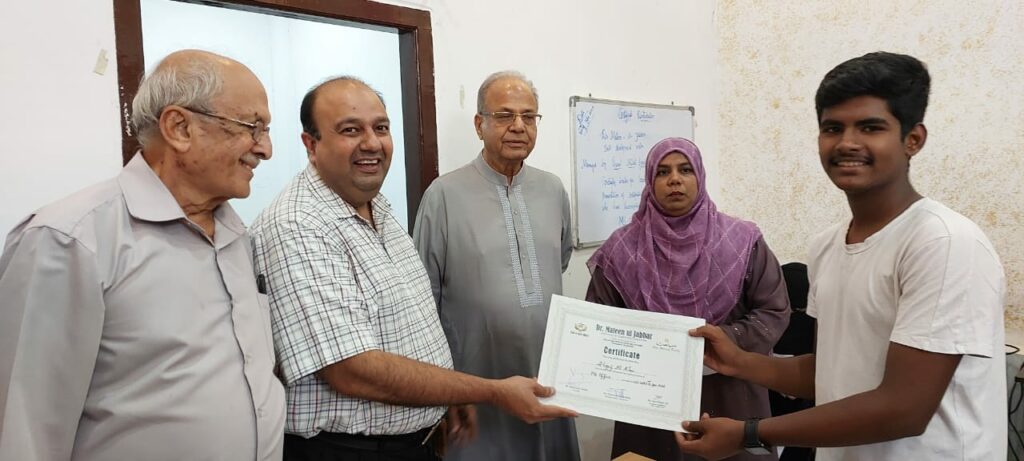
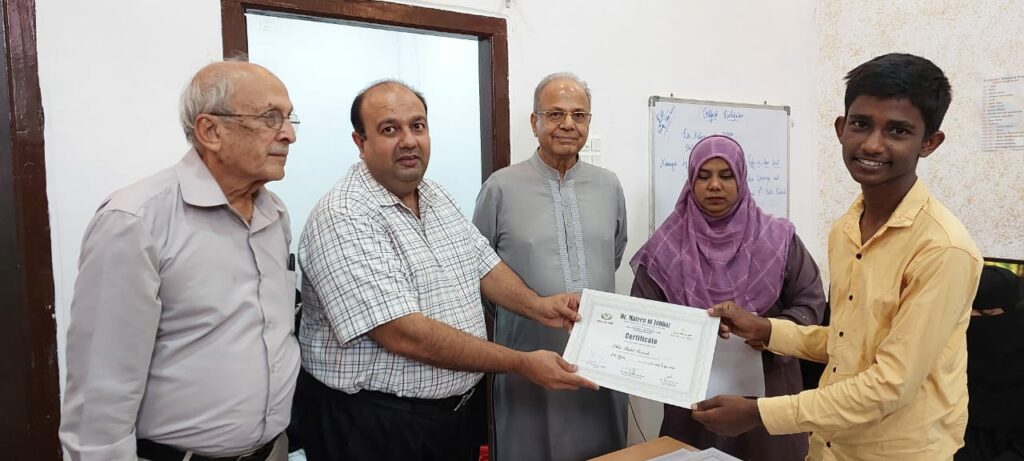
The convocation ceremony of Dr. Mateen ul Jabbar Computer and Skill Development Center located in Osman Nagar held at the office of Faiz-e-Aam Trust.
The center was established in February 2021 by Faiz Aam Trust and Siasat Millat Fund with the aim to provide assistance to the residents of Osman Nagar in Shaheen Nagar locality, which were severely affected by floods. In response to the devastating situation, the Faiz-e-Aam and Siasat Millat Fund initiated relief efforts, and under the guidance of Editor Siasat Mr. Zahid Ali Khan, Secretary, Faiz-e-Aam Mr. Iftikhar Hussain, and Managing Editor Siasat Mr. Zaheeruddin Ali Khan, various courses were taught to boys and girls to help rehabilitate and empower them.
Through this initiative, kits containing essential items such as masonry, bedding, medicines, and food were distributed to flood victims. Later, the Dr. Mateen Al Jabbar Computer and Skill Development Center was established, providing training opportunities for local students and individuals. Seven batches have already completed their training at the center and are now employed in Amazon, schools, colleges, supermarkets, and shopping centers, contributing to their families and society.
source: youtube.com
Mr. Iftikhar Hussain, Secretary of Faiz Aam Trust, praised the efforts of Zahid Ali Khan and Zaheeruddin Ali Khan in their vision to empower the youth and residents of Osman Nagar. The Skill Development Center has been instrumental in providing training and employment opportunities to numerous girls, a majority of the center’s beneficiaries.
During his address, News Editor, The Siasat Daily, Mr. Amer Ali Khan emphasized the importance of discipline, time management, for a bright future. He said “in the pursuit of success and development, discipline, time management, and hard work play crucial roles in shaping the younger generation of any community. Time management is a concept that has been emphasized in various organizations. However, this concept is not new; Islam introduced it 1445 years ago through the five daily prayers, serving as a prime example of time management and discipline.
He stated that Indians and Muslims in particular possess inherent abilities, and what they need is proper guidance. He compared children to diamonds that need shaping and polishing to shine. Khan highlighted the success stories of thousands of Muslim boys and girls who now serve in multinational companies.
He encouraged the youth to develop artistic skills and acquire practical knowledge, inspiring them to collaborate and establish start-ups.
Certificates were awarded to 66 students during the ceremony, and the efforts of Ms. Ayesha Samad, who provides diligent training to the students, were highly commended. Syed Abdul Sattar, Manager of Faiz Aam Trust, expressed gratitude to everyone involved and extended a vote of thanks to conclude the event. The Dr. Mateen ul Jabbar Computer and Skill Development Center stands as a testament to the power of education and empowerment in uplifting communities.
source: http://www.siasat.com / The Siasat Daily / Home> News> Hyderabad / by Zahed Farooqui / July 30th, 2023
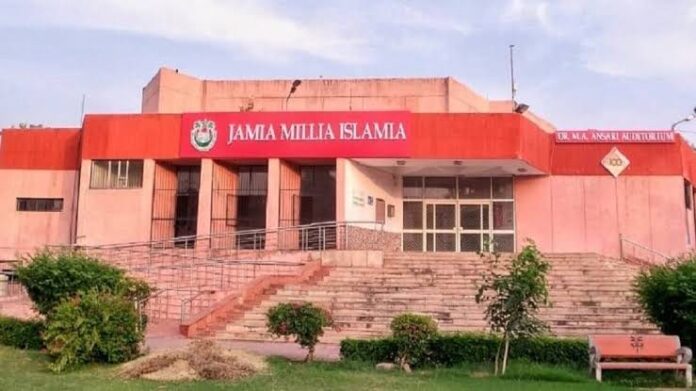
In a significant move to support education and empower those in need, the Professor Obaid Siddiqui Memorial Scholarship 2024 has been awarded to six incoming students of the MA Convergent Journalism (MACJ) programme at Jamia Millia Islamia.
The announcement was made by the MACJ alumni group in July 2024, ahead of the new academic session.
The MACJ programme, established in 2005 and upgraded to a two-year master’s degree in 2007, is renowned as one of the top journalism programmes in India. Named after Professor Siddiqui, a veteran journalist and the programme’s founder, the scholarship offers substantial financial aid, covering up to 75% of the tuition fee. This initiative helps alleviate the financial burdens faced by students, particularly those from less affluent backgrounds.
Since its inception in 2022, the scholarship has been a beacon of hope for students struggling with tuition and living expenses.
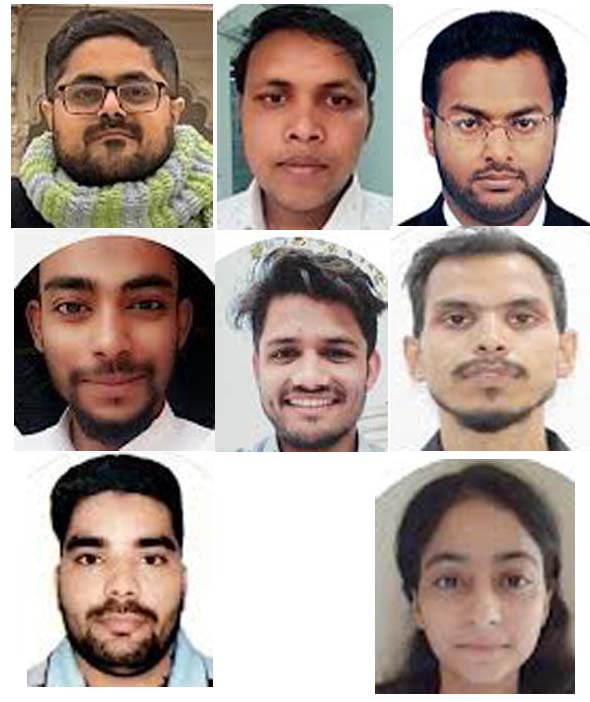
This year’s recipients include Nida Fatima Momin, Shoaibur Rahman, Mohammad Naiyar Azam, Adnan Ali, Saher Hiba Khan and one student who chose to remain anonymous.
The fund, totaling Rs 2.5 lakh, was raised through contributions from alumni, with an additional Rs 75,000 collected to support two more students. This financial assistance goes beyond mere support; it empowers students to pursue their academic and career aspirations without financial constraints.
Shoaibur Rahman, a recipient from Katihar, Bihar, shared his experience of overcoming financial hurdles. “I initially considered leaving the course due to financial difficulties. However, a friend informed me about this scholarship, which eased my financial worries and allowed me to continue my studies,” he explained.
His story highlights the transformative power of the scholarship in enabling students to follow their dreams.
Sidra Fatima, a student from the outgoing 2025 batch, praised the scholarship as a crucial initiative. “Not everyone can afford the high fees for a master’s degree. The scholarship provides relief to those who excel academically but face financial barriers,” she said.
Fatima hopes that in the future, more deserving students will benefit from this support.
The scholarship exemplifies how educational support can empower individuals and transform lives. It honors Professor Siddiqui’s legacy by providing not just financial assistance but also hope and confidence to students.
Raghu Kalra, a member of the scholarship selection committee and alumnus of the 2014 batch, expressed his confidence in the recipients’ future success. “These students are exemplary and will undoubtedly achieve great things in journalism.”
Alia (name changed on request), an alumnus of the 2022 batch, highlighted the scholarship’s broader impact. “Many students across various demographics face financial barriers to pursuing higher education. This scholarship addresses that gap, but it’s crucial to ensure diversity and representation in future awards,” she noted.
In a world where education is often a privilege, initiatives like the Professor Obaid Siddiqui Memorial Scholarship play a vital role in making education accessible. They demonstrate the power of collective effort, and its impact on individuals and society, inspiring a brighter and more inclusive future in journalism.
source: http://www.twocircles.net / TwoCircles.net / Home> Education / by Sanjana Chawla, TwoCircles.net / July 30th, 2024
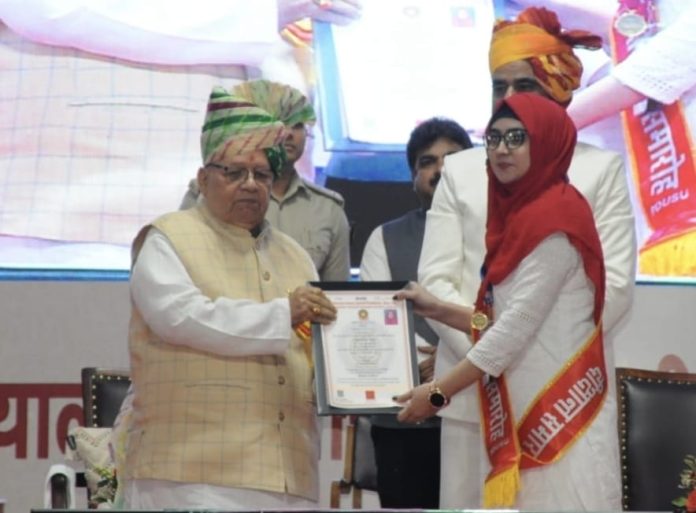
In a convocation ceremony held at Pandit Deendayal Upadhyaya Shekhawati University in Sikar, Rajasthan, Nigar Chaudhary, a student of Islamia PG College, was awarded gold medal by Governor Kalraj Mishra. Nigar Chaudhary achieved the top position in PG Home Science at Shekhawati University for the year 2022, marking a significant milestone in her academic journey.
Governor Kalraj Mishra, serving as the Chancellor of the university, awarded gold medals to a total of 72 outstanding students during the event. The convocation witnessed the conferral of degrees upon a vast number of graduates across various faculties, emphasizing the institution’s commitment to academic excellence and holistic education.
Among the dignitaries present were Haji Anwar Ahmed Qureshi, Chairman of Islamia Management Committee, and numerous well-wishers who congratulated Nigar Chaudhary, recognizing her dedication and academic prowess. The ceremony underscored the university’s role in nurturing talent and preparing students to contribute meaningfully to society and the nation at large.
The event also featured Governor’s address, highlighting the pivotal role of education in shaping a progressive society and urging students to pursue excellence with dedication and determination.
source: http://www.radiancenews.com / Radiance News / Home> Pride of the Nation> Awards / by Radiance News Bureau / July 07th, 2024
The students and teachers of the German Section, Department of Foreign Languages, Aligarh Muslim University (AMU) contributed significantly to the Translation Project conducted by Goethe-Institut, Max Mueller Bhavan, Mumbai.
The South Asian regional translation project, “Diamantenschliff: The Digital Translation Academy” focused on the translations of German literary works into the South Asian languages with special emphasis on the translation of selected works of Franz Kafka from German into various South Asian languages, including Bangla, Hindi, Kannada, Malayalam, Marathi, Sinhala, Tamil and Urdu.
Syed Salman Abbas, Assistant Professor, German Language and Literature, Department of Foreign Languages, who was the mentor for Urdu translations, moderated a lecture session on translation delivered by Dr Almuth Degener, a retired professor from the Indology Department, University of Mainz, Germany.
The current and former students of the German Section, including Mohammad Uzair, Mohammad Khalid, Sadique Khan, Mohammad Intizar, Muhammad Fahad and Syeda Alina Ali translated different works of Kafka from German into Urdu, while Mr Syed Salman Abbas contributed to and edited the Urdu translations for the website.
Dr Subair PM, Assistant Professor, made contributions as one of the translators of German texts into Malayalam.
The one-year-long project concluded with the launch of the translations on the official website of Goethe-Institut, on July 3, marking Franz Kafka’s birthday. The voice recordings of the Urdu translations are also available on the website.
Prof Muhammad Azhar, Dean of the Faculty of International Studies and Chairman of the concerned department appreciated the unique achievement of the students and faculty members of the department and congratulated them for their outreach.
source: http://www.radiancenews.com / Radiance News / Home> Education> Latest News / by Radiance News Bureau / July 31st, 2024
The Samastha Kerala Sunni Students Federation (SKSSF), the student wing of the Samastha Kerala Jem-iyyathul Ulama, a scholarly body in Kerala, has partnered with the Falcon group of institutes in Bengaluru for a one-year free residential civil service coaching program.
Falcon Civil Services Academy is renowned as one of the premier IAS coaching institutes in Bengaluru, specializing in preparing candidates for the UPSC exam in India. The FALCON IAS Residential Academy represents a prestigious initiative aimed at offering comprehensive and high-quality coaching at no cost to aspiring civil services candidates.
This academy is specifically designed to support individuals aiming for success in the challenging and esteemed field of civil services, including the Indian Administrative Service (IAS), Indian Police Service (IPS), and other allied services.
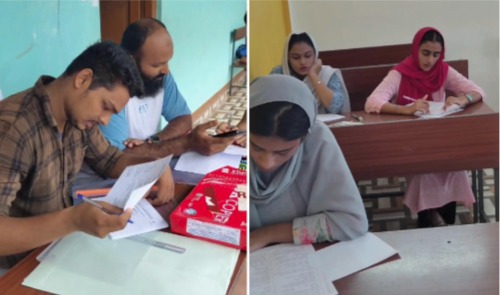
Recently, the academy conducted its inaugural entrance test at Iqra Public School, South Andaman, on June 30. O Bilal, a member of SKSSF, informed Radiance that similar tests are being held wherever SKSSF operates across India, with Iqra Public School being just one of the venues.
Fifteen students participated in the entrance test. Successful candidates will receive free residential civil services coaching in Bengaluru.
One candidate, speaking to Radiance, praised the inaugural scholarship civil service entrance exam in their city, noting the high standards, well-equipped facilities, professional conduct of proctors, and the motivational impact of thought-provoking questions. They expressed gratitude for the opportunity provided by their city to showcase their abilities and move closer to their goals.
Many students expressed concern about the short notice for the exam, which was not widely advertised and announced just one week before its date.
Mr. Shahid, General Secretary of SKSSF Andaman, spoke to Radiance, emphasizing that students in the Andaman Islands have long desired access to scholarship and coaching opportunities available on the mainland. Recognizing this need, SKSSF Andaman collaborated with Falcon and the national committee to establish an examination center on the islands, thereby enhancing accessibility for local students facing financial constraints or other challenges.
This partnership endeavors to provide outstanding education, fostering aspiring civil servants with thorough knowledge and skills. Its goal is to develop leaders who possess critical thinking abilities, capable of addressing complex societal challenges while maintaining steadfast ethics and principled behavior.
source: http://www.radiancenews.com / Radiance News / Home> Education> Focus / by Radiance News Bureau / July 01st, 2024
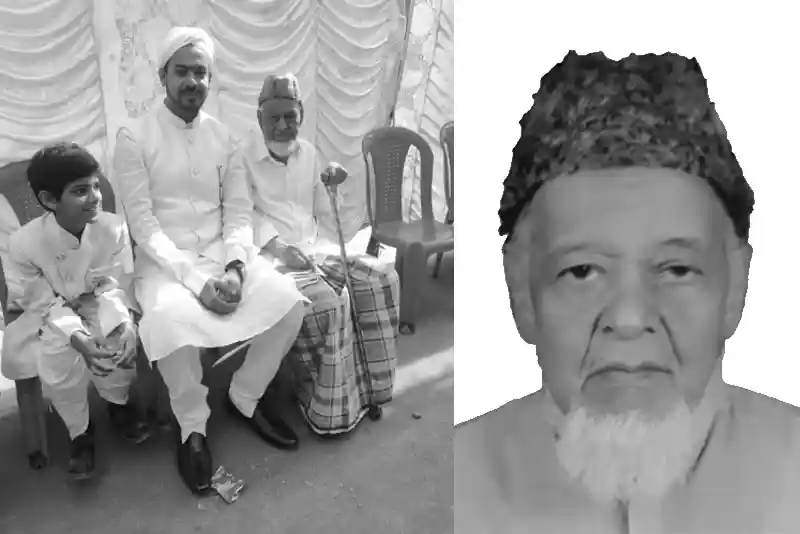
Ansari Mohammad Ayyub, popularly known as Ayyub Ansari Sir, passed away in Malegaon on Sunday June 30, 2024. Read on as one of his students pays tribute to this admired teacher.
Malegaon:
Ansari Mohammad Ayyub, popularly known as Ayyub Ansari Sir, passed away in Malegaon on Sunday June 30, 2024. He was 83.
Ayyub Ansari Sir retired as Assistant Head Master in 1997 after more than 35 years of service at A.T.T. High School and Junior College, Malegaon.
Ayyub Ansari Sir is survived by 07 sons, 04 daughters and hundreds of students who are spread across Malegaon, and also in other parts of India and abroad.
Early Life and Education
Ansari Mohammad Ayyub was born to Haji Abdus Shakoor Allah Rakhu, a resident of Angnu Seth Ka Malla in Fateh Maidan area of Malegaon. Ayyub Sir’s father Haji Abdus Shakoor was in the business of textiles and yarn trading.
The very first batch of Pilgrims from Malegaon that went to Makkah was in 1881. Ayyub Sir’s father Abdus Shakoor was among the second or third batch of Pilgrims who went to Makkah. Family remember does not remember the exact date, but said he performed Hajj about a decade before his death in 1960.
Ayyub Sir completed his early education at A.T.T. High School in Malegaon. He later went to Ismael Yusuf College in Mumbai. Ismael Yusuf College at that time was the preferred institution for the students of Malegaon.
For, after Matriculation the only institution in Malegaon for Pre-University (PU) or Inter was M.S.G. College where medium of instruction was Marathi. English Medium Ismail Yusuf College hence was suitable for the Malegaonians.
After completing graduation from Ismael Yusuf College, Ayyub Sir joined the Government College of Education Mumbai for B.Ed. Two years later, a teacher was born who later became one of the finest Mathematics.
Ayyub Ansari Sir’s Journey as Teacher
Ayyub Sir joined A.T.T. High School, his alma mater, sometimes in 1962 as Assistant Teacher. Mathematics was his forte, and he soon became the students’ darling.
“Ayyub Sir was a teacher of class. He was gifted with a very good hand writing and drawing skills, and used to explain his topics with artistically drawn geometrical figures”, Jameel Karanti, Vice Chairman of A.T.T. High School told ummid.com.
Jameel Karanti is one of the hundreds of students who learned Mathematics and Geometry from Ayyub Sir.
Colleagues recall, Ayyub Sir was very polite yet very strict and would always like to maintain discipline in classroom.
“He had a unique style of teaching, and had total control of the class and complete grip on the topic. He had smartly prepared his lessons to finish them in the allotted time”, Mushir Ansari said.
Mushir Ansari is one of Ayyub Sir’s students who also had a chance to teaching with him in the same school. He said Ayyub Sir was a master in time management and class control.
“He was neither very fast nor very slow and used to satisfy almost whole of the class. He was the one who will complete the syllabus with the end of the term. After taking charge as Asst HM, he used to say a teacher asking for Extra Class means he did not efficiently utilize the time allotted to him as per the time table”, Mushir Ansari Sir recalled while talking to ummid.com.
Personal Tragedy
Ayyub Sir would spend most of his time in the school. After school hours, he would be at home with the family and come out only for daily prayers.
In 1981, he lost his wife. The sudden demise of his wife changed Ayyub Sir further and he would now spend more of his time in the school and less at home.
“His wife’s death was a great loss for him. But he never expressed his grief in public. People would suggest him to opt for second marriage so as to fill the gap. He however never agreed. He in fact reprimanded a friend when he insisted him to marry again”, said Abdul Khalique, retired officer at Janata Co-Operative Bank and a colleague of Ayyub Sir’s eldest son Ashfaque.
A man of helping nature
Besides his unique teaching style and his commitment to duty, Ayyub Ansari Sir was also admired for his helping nature.
“He was the one to stand by the school and the students whenever they needed him. He was always ready to go an extra mile to help the school progress and students shine in the local and board exams”, Jamaluddin Abdullah, his colleague of 30 years at A.T.T. High School, recalled.
Jamaluddin Sir, one of my father Mohmmad Anwar Faizee’s best friends, was my patron at A.T.T. High School. I had topped the school in classes 8th and 9th. In 1985, when I was to appear in the SSC Board Exams, the target was to register a place in the Maharashtra State Board Merit List.
Ehtesham Sir was very kind to take the responsibility of preparing me in Social Sciences. English, General Science and other subjects were taken care of by Shakeel Ansari Sir, Abdul Latif Ansari Sir and others. Mathematics and Geometry were tricky as the board had introduced the new syllabus and the board exam pattern too was changed.
Jamaluddin Sir and Ehtesham Sir wanted Ayyub Ansari Sir to give me tuition. But, the problem was that after his wife’s death Ayyub Ansari Sir had lost interest in private coaching.
While working together, the two – Ayyub Ansari Sir and Jamaluddin Sir, had developed a special bond. It was because of this bond, Ayyub Ansari Sir, against his will, accepted Jamaluddin Sir’s request to provide me private tuition in Mathematics and Geometry.
The efforts of these noble souls bore fruits. Though I missed the Merit List by just 06 marks, I emerged the topper of the Nashik District scoring the highest marks in all subjects except Hindi and Marathi – Marathi being the subject introduced in the board exams for the first time.
Seven sons and four daughters – Ayyub Sir had a big family to take care of. He was living in a joint family where his brothers too had large families. The family’s ancestral textile business was not doing well. Neither was the salary Ayyub Sir was drawing enough to feed his children and other family members.
“We joined the service at a salary of INR 3,000 and the last salary we drew was a little over INR 12,000”, Jamaluddin Sir recalled.
With this salary, Ayyub Sir not only managed the routine expenses of the family but also made sure his children complete their education. The result is that his eldest son Ashfaque joined as an Officer at a bank, the younger son Altaf and daughter Aafiya became doctors, Khaleel Ansari and Naeemurrehman are teachers whereas Ataurrehman, Shafeequrrehman and Hifzurrehman are good at business. His grandchildren and granddaughters, in plenty, too are well educated, about half a dozen pursuing MBBS.
Besides the family members, a large number of colleagues and students were present for the final journey of Ayyub Sir. There was a somber yet tearful atmosphere, with light shower pouring down the sky, as the admired teacher was laid to rest Sunday night, in the same grave where his wife was buried 43 years ago at the iconic Bada Qabristan of Malegaon.
[The writer, Aleem Faizee, s Founder Editor of ummid.com. He can be reached at aleem.faizee@gmail.com]
source: http://www.ummid.com / Ummid.com / Home> Obituary / by Aleem Faizee, ummid.com / July 01st, 2024