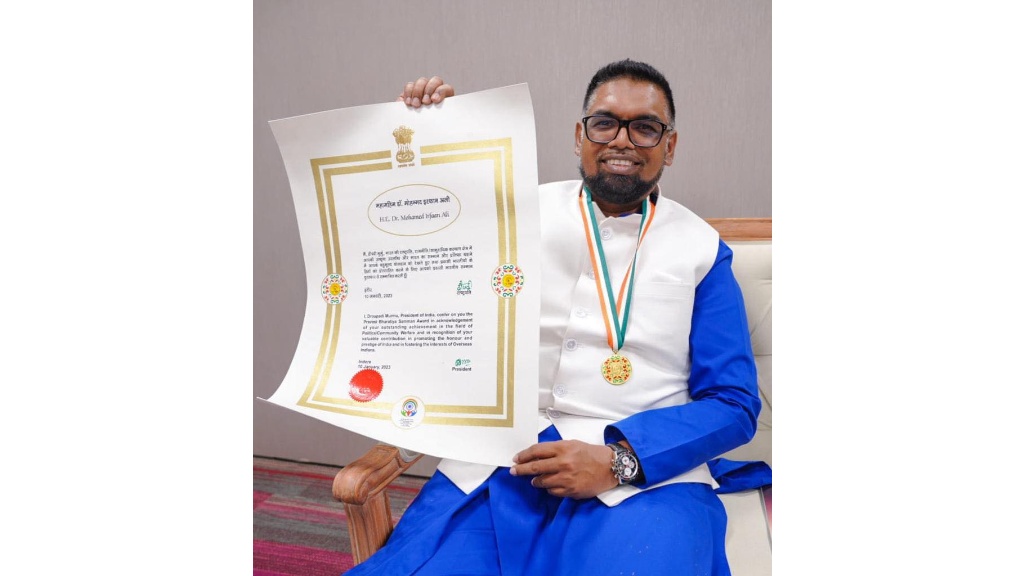
President Dr Mohammed Ifraan Ali receiving the Pravasi Bharatiya Samman Award from Indian President Droupadi Murmu.
Guyanese President Dr Mohamed Irfaan Ali was conferred today with the Pravasi Bharatiya Samman Award (PBSA).
The award is India’s highest honour for members of the Indian diaspora.
Indian President Droupadi Murmu presented Ali with the award at a special ceremony in Indore, India
President Dr Mohammed Ifraan Ali after receiving the Pravasi Bharatiya Samman Award. Photo: Office of the President
Ali, Trinidadian judge, Justice Frank Arthur Seepersad and Suriname’s Dr Dewanchandrebhose Sharman are the three Caribbean nationals of Indian origin, who were presented with the PBSA this year.
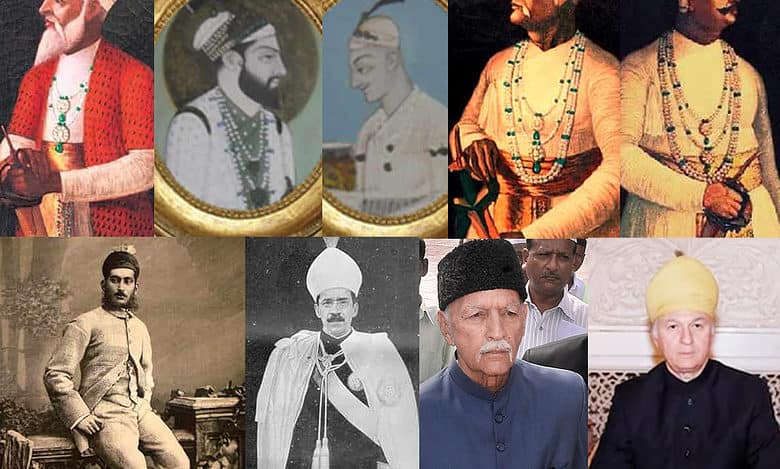
Ever since the death of Prince Mukarram Jah on 14th January 2023, who was considered the last and titular Nizam, Hyderabad’s Nizams, the rulers of the Asaf Jahi dynasty are in the news on every tabloid, newspaper and news channel. A lot is being debated about the Nizams from their lineage to titles to connections to inheritance.
Let us understand their lineage and the use of the title Nizam-ul-Mulk Asaf Jah. Basing my views on Henry George Briggs book The Nizam: His History and Relations with the British Empire published in 1861 and Roper Lethbridge’s book The Golden Book of India: A Genealogical and Biographical Dictionary of the Ruling Princes, Chiefs, Nobles, and Other Personages, Titled or Decorated, of the Indian Empire, with an appendix for Ceylon, published in 1893, when we look at the remote ancestry of the Nizams, their lineage is traced to two lines of descent.
The first line of descent is from Shaikh Shah Abudin Suharwardi, a lineal descendent of Caliph Abu Bakr, the father-in-law, of Prophet Muhammad. Shaikh Shah Abudin Suharwardi who lived in Persia was a contemporary of the Persian poet Sadi and finds reference in his thirteenth century poetic composition, Bostan, as his murshad or spiritual guide. It is believed that some of the immediate descendants of the shaikh settled in Turkey and also some of them travelled to Samarqand, and became ulema there. The popular ulema from this line were Khwaja Ismail, his son Khwaja Abid who later on was designated as Qazi and Shaikh-ul-Islam.
The second lineage of the Nizams of Hyderabad’s ancestry is traced to the family of Tartars and claim descent from Bahauddin who was the founder of the Naqshbandi Sufi silsilah. Most Naqshbandis prefix the word Khwaja to their names to imply an honourable position of a learned person. Bahauddin was a contemporary of the Turko-Mongol conqueror Timur and his descendent was Khwaja Abid who was the first from the family to visit India. He travelled from Samarqand to Delhi during Mughal emperor Shah Jahan’s reign. Whichever lineage is looked at, we see that Khwaja Abid ultimately travelled to India.
Khwaja Abid was given the title of Sadr-us-Sadr by the Mughal emperor Aurangzeb for his services rendered and was also made the Subedar of Multan. Soon, he was awarded more titles of Azeem Khan and Qillich Khan. Qillich also spelt as Kulij or Qulij in Turkish and Qillich in Persian denoted shamsher, a sword in both languages. Qillich Khan also led campaigns into Bijapur and Golconda during which he was injured badly on his right arm and eventually after battling for his life, he died. He was well-known for his military exploits and was buried at Attapur near Hyderabad in 1686.
Qillich Khan left behind a son, Mir Shahabuddin, born in 1644, who was also later employed by the Mughals. Like his father, he too exhibited exceptional bravery and was awarded by Aurangzeb with the title of Ghaziuddin as he was one of the greatest of the generals of Aurangzeb. For his military and administrative services rendered in the Deccan, he received another title Feroz Jung and Aurangzeb even referred to him as Ghaziuddin Bahadur Feroz Jung Farzand Arjumand meaning dear son.
When Aurangzeb died in 1707, Ghaziuddin was the subedar of Berar and Elichpur. The next Mughal successor, Bahadur Shah, made him the Subedar of Gujarat before the latter died in 1711. Ghaziuddin had married the daughter of Saadaullah Khan, a minister of Shah Jahan, in Delhi and a son had been born to them in 1671 who was named Mir Qamaruddin who came to be known in Deccan’s history as Asaf Jah I.
In 1699, Mir Qamaruddin had received the title of Chin Qilich Khan commanding the imperial troops at Bagul Kota.
He then became Faujdar of the Carnatak at Bijapur and also the Subedar of Bijapur. He was given one of Aurangzeb’s own horses on the battle field in one of the campaigns he led in the Deccan. He remained loyal to Prince Azam but eventually differences arose and they went separate ways. But under Bahadur Shah, he was again invited to the Mughal court and was conferred the Subedari of Oudh and Faujdari of Lucknow with the title Khan-e-Dowran, but soon he was disgusted with the politics at the court and retired by relinquishing all his appointments he was holding under the Mughals.
Next, when Farrukh Siyyar started contesting for the Mughal throne, Chin Qilich Khan was roped in once again and he started to fight on the side of Farrukh Siyyar. He was rewarded in 1713 by Farrukh Siyyar with the title of Nizam-ul-Mulk Asaf Jah and Viceroy of the Imperial Dominions in the Deccan and as Faujdar of Carnatak. He continued to fight against the Marathas for the Mughals. There were a series of rapid developments and conflict with the Syed brothers who had emerged as the king makers to the Mughal throne. This finally led to his independently laying the foundation of his own administration in the Deccan with the battle of Shaker Kheda near Aurangabad in 1724.
Asaf Jah had won battles east, west, north and south, dealt effectively with the kingmaker Syed brothers and successfully established his authority over a vast region that came to be called the Asaf Jahi or Asafiya state.
The title of Asaf Jah was named after the rank of Asaf who was supposed to be a minister of Solomon, the Hebrew king. The title of Asaf was not new; the Mughals had used it many a time earlier. The name Asaf was conferred in Mughal India on Nurjahan’s brother and Mumtaz Mahal’s father and in other instances. It was but natural that the Mughal titles were retained by the nobles of the Deccan. These titles were conferred in ascending order of Jung, Daula, Mulk, Umara or Jah. The British equivalent of Jah or Umara was the English Dukes and Marquesses, Mulk was equivalent to Earl, Daula was equivalent to Viscount, and Jung was like a baron. All the successors of the Nizams have the word Jah appended to their name. The only officer or Prime Minister on whom the title of Jah was conferred was Arastu Jah.
Until the Nizams started ruling independently of the Mughals in the Deccan, they were known as Subedars of the Deccan showing their allegiance to higher authority in Delhi. While the British referred to them out of respect as Nawabs of Hyderabad or Bundagan-e-alee meaning slaves of the highest rank.
Professor Salma Ahmed Farooqui is Director at the H.K.Sherwani Centre for Deccan Studies, Maulana Azad National Urdu University, Hyderabad.
source: http://www.siasat.com / The Siasat Daily / Home> Featured News / by Salma Ahmed Farooqui / January 23rd, 2023
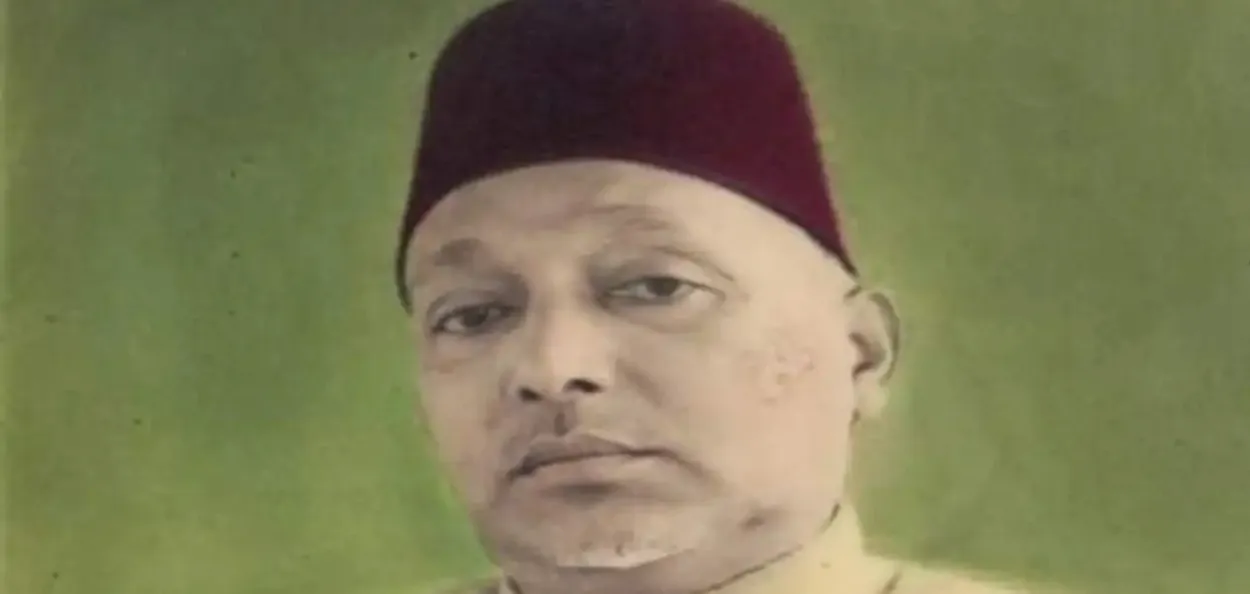
Sir Syed Muhammad Saadullah is one among the Indian Muslim leaders who made an immense contribution to shaping Independent India and yet remained unsung. He was the only Muslim among the members of the Drafting Committee for the Constitution of India, led by Dr. Babasahib Bhimrao Ambedkar.
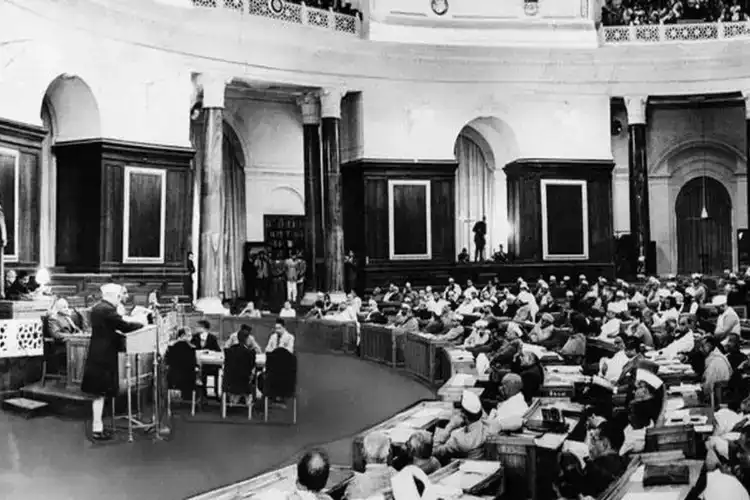
Before shedding light on Saadullah’s role in the Constitution Drafting Committee, let us know about the Assembly that drafted the Constitution of India.
On December 9, 1946, the Constituent Assembly was formed. Its meeting was boycotted by the Muslim League. Soon after, on December 11, Dr. Rajendra Prasad was elected as its chairman. It had 389 members which were reduced to 299 after the partition.
On January 22. 1947 it adopted the Objectives Resolution unanimously. In the same year, the national flag was adopted on July 22, and Independence was achieved on August 15, 1947, with the partition of the country.
On 29 August 1947, a drafting committee was appointed with Dr. BR Ambedkar as its chairman. Other members of the committee were KM Munshi, Muhammad Saadullah, Aladi Krishna Swami Iyer, Gopala Swami Iyengar, N Madhav Rao, DP Khetan, and TT Krishnamachari.
On 22nd November 1949, the ‘Constitution of India’ was passed in the assembly and the last session of the Constituent Assembly was held on 24th January 1950. On 26th January 1950, the ‘Constitution of India’ came into effect after 2 years, 11 months, and 18 days.
The Constituent Assembly in session
Who was Sir Syed Muhammad Saadullah?
Sir Syed Muhammad Saadullah was a member of the draft committee but even before that, he was a well-known leader of India. He was the Prime Minister of Assam in British India. He was also Chairman of Guwahati Municipality and Minister of Education and Agriculture of Assam from 1924 to 1934. Saadullah was a highly educated jurist.
Syed Muhammad Saadullah was born on 21 May 1885 in Guwahati into a traditional Assamese Muslim family and died in 1955. He was educated at Cotton College, Guwahati, and Presidency College, Calcutta. After receiving higher education, he started practicing law in Guwahati and soon made his mark as a lawyer. He also practiced in the Calcutta High Court for some time. He became the Chairman of the Guwahati Municipality and was nominated as a member of the Legislative Council in Shillong.
Assam became a Chief Commissioner Province in April 1912. Saadullah participated enthusiastically in the Council’s deliberations and spoke freely on matters of interest to the people of Assam.
He soon became an important figure in the province of Assam. He established his identity as a lawyer after just a decade of struggle. In later days, he also practiced in the Calcutta High Court. Among his neighbours and contemporaries, were Fazlul Haque, Nawab Attaur Rahman, and Barrister. Khuda Bakhsh and Nawabzada AFM Abdul Ali.
He was also important in British India. He was knighted in the 1928 Birthday Honors and made a Knight Commander of the Order of the Indian Empire in the 1946 Birthday Honours.
In his political life, Syed Muhammad Saadullah was closely associated with the All-India Muslim League. He attended the 10th session of the League in Calcutta in December 1917 and served as a member of the committee that negotiated the Lucknow Pact between the Muslim League and the Congress.
In 1946, he participated in the demand for Pakistan and supported the inclusion of Assam in Pakistan. However, when Assam seceded from Pakistan at the time of partition, he remained in Assam. Similarly, as the Prime Minister of Assam, he contributed to the building of a modern Assam.
He was an able parliamentarian, an eloquent orator, an experienced administrator, and a moderate and liberal leader in ideology. Saadullah is regarded as one of the architects of modern Assam. As the head of the Assam government, he planned well and developed development plans. He took a special interest in the promotion of industries. He is said to have supported and encouraged the migration of peasants from Bengal to develop agriculture in Assam and to introduce jute cultivation. His critics accuse him of deliberately settling Bengali Muslims in Assam.
Muhammad Saadullah is also known for his generosity, honesty, and competence. He also worked for the tribal people of the North Eastern region and inducted a tribal leader JJM Nicholas Roy in his first cabinet. He was considered the best person because of his experience, ability, and honesty.
source: http://www.awazthevoice.in / Awaz, The Voice / Home / by Ghaus Siwani, New Delhi / posted by Aasha Khosa / January 26th, 2023
“Material culture is the history and philosophy of objects and the myriad relationships between people and things.” Bernard Herman, material culture scholar.
I have always had a fascination with old homes. I grew up in one – Abid Manzil in Aligarh, built in 1935. Well-known as the home of Aligarh Muslim University, the town in western Uttar Pradesh saw many Indian Muslims migrate there in the early 1900s from different parts of the erstwhile United Provinces. This included the Muslim zamindar elites who came from neighbouring principalities as well as working-class and middle-class families from eastern Uttar Pradesh. Many wanted to give their children the chance of a good education at the university. These people brought their cultures and histories with them, blending with the Islamic yet liberal intellectual philosophy propagated by AMU and spearheaded by its founder, Sir Syed Ahmed Khan. The homes of these people, mostly built in the 1930s, are evidence of this syncretic tradition.
On my most recent visit to Aligarh I realised that these pre-Partition houses were gradually disappearing. I met with some of the remaining families, who wanted to talk about the rich history of their homes, the culture and ways of life they embodied, and the measures they were currently taking to secure a future for their homes and themselves. This photo essay tells the story of these homes and the people who live in them.
Ibne Sahab was born in 1923. He lost his mother when he was just a month old and was raised by his father. Ibne Sahab’s childhood was spent in Chattari and he moved to Aligarh to pursue his formal education when he was 15 years old. He studied Persian and Psychology at Mohammedan Anglo Oriental College.
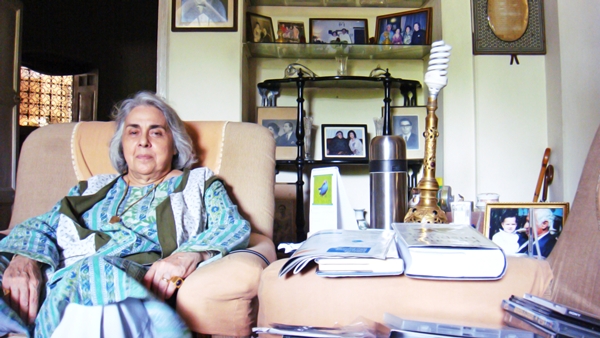
Sir Syed Ahmed Khan, the founder of Aligarh Muslim University (AMU) was Scheherazade Alim’s paternal great, great-grandfather. She spent her childhood in Aftab Manzil, named after her maternal great-grandfather Aftab Ahmed Khan, who built the house in 1904. Scheherazade Begum studied law at Oxford and became a barrister and has taught law at AMU. After two decades of living and working in Dubai, Scheherazade Begum and her husband Abdul Alim Khan returned to Aligarh and to Aftab Manzil in 1997, and have lived there since.
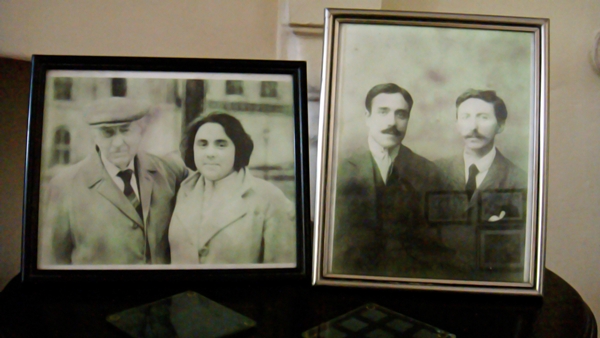
Aftab Manzil saw the comings and goings of influential men and women. One of them was E M Forster. Scheherazade Alim’s grandfather Sir Ross Masood was a close friend of the writer, who dedicated A Passage to India to him. Masood became the Vice Chancellor of AMU in 1929, a position he held for three years. The photograph on the right was taken in Italy in 1911. The photograph on the left shows Scheherazade Begum with Forster. It was taken in England in 1962. She herself cultivated a deep bond with the writer, calling him “Forster Chacha”.
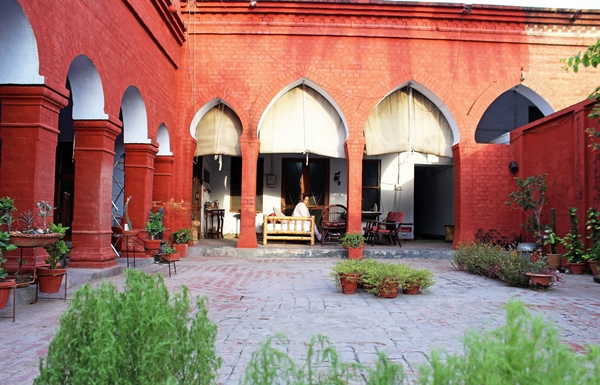
Aftab Manzil was built using bricks manufactured by Ford and MacDonald, the company responsible for supplying red bricks for the building of AMU. Other homes such as Habibullah Manzil were also constructed using surplus material from AMU. Courtyards like this, at Habibullah Manzil, are typical features in old homes. They are public spaces that allow family members to socialise, yet at the same time are private and separated from the outside world.
Professor Tariq Gilani, who lives in Habibullah Manzil, says that it is difficult to secure an old house, especially since there is no one, single uninterrupted wall, each room having several doors. David Lelyveld, in Aligarh’s First Generation, explains that this was the case “so that different sorts of people might come and go without crossing paths.” The architecture, therefore, reflected the norms of social interaction in the early 20th century.
These norms dictated that spaces within a household be separated on the basis of gender. Purdah was adhered to, especially among the elite. To enter the ladies’ quarter, or zenanah, male servants and visitors had to announce themselves first. In the case of Rahat Manzil’s haveli, non-related males would have entered through a zigzag corridor, preventing them from directly viewing the zenanah.
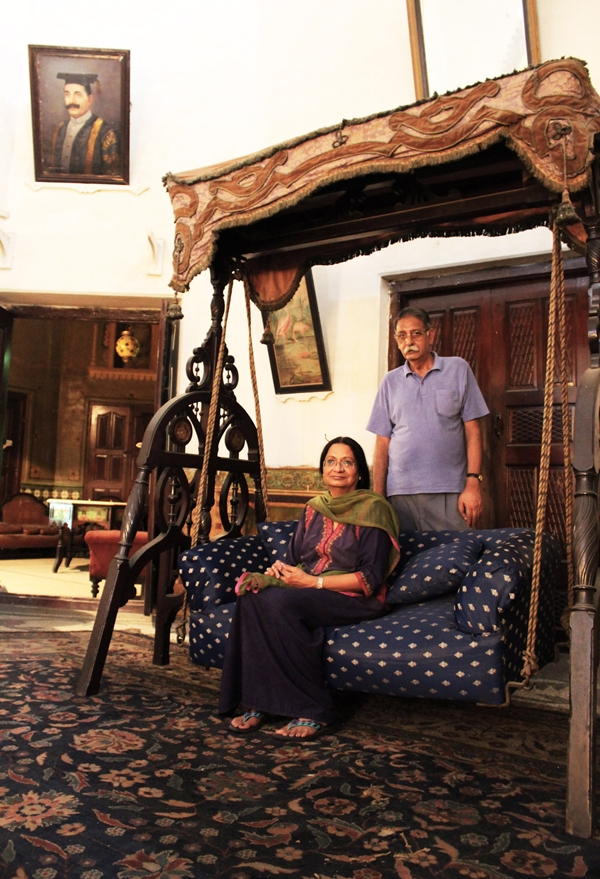
Farrukh Said Khan with his wife Faizana Said Khan in their formal living room in Rahat Manzil. Faizana Said Khan is the great, great-granddaughter of the Nawab of Jaipalguri. The swing is about ninety years old. The photograph of Ahmed Said Khan on the wall is from when he received an honorary doctorate from AMU. Farrukh Sahab recounts that his grandfather, Ahmed Said, was born in 1889. He was an orphan. His parents died in Saudi Arabia in the early 1890s. After the Sepoy Mutiny of 1857, Mahmud Ali was unwilling to stay under British rule. But when his son (Ahmed Said’s father) and daughter-in-law died, he had to return to take care of his grandson. Ahmed Said was eight years old when his grandfather passed away. He was sent to English House (AMU’s old guest house) by the British, who had taken control of Chhatari – Ahmed Said’s ancestral zamindari. When he turned 21, Ahmed Said was made the Nawab of Chhatari. He built Rahat Manzil in 1920 as a guesthouse to accommodate his family when they travelled to Aligarh from Chhatari.
Raja Masudul Hasan, also known as the Raja of Asgharabad, supervised the building of Hasan Manzil. He was a keen collector, and according to Zafar Sahab (his son and current owner of Hasan Manzil), he bought this copper ashtray from Chinese traders who frequented Aligarh in the 1930s. He moved to Aligarh in 1925 from Asgharabad, where he was a zamindar, and died in 1954.
Over the years, the landscape of Aligarh has undergone dramatic changes. Where there were once independent bungalows and havelis surrounded by orchards, now stand three or four storey apartment buildings. Many more people have migrated to Aligarh in search of education or employment. This changed landscape, although inevitable and positive in some ways, has imposed stress upon those who live in old homes in Aligarh. Some are uncertain about what will happen to their homes after they are gone. Will their children come back and take charge of things or will their homes, like many others, be broken down and apartment buildings erected in their place?
People have coped with these challenges in different ways. Ibne Said Khan has transformed Rahat Manzil’s formal dining room into a museum dedicated to the life and career of his father, statesman Ahmed Said Khan. He says that one winter evening, after his father’s death in 1982, he saw that his servant was bringing bundles of old paper to feed the angethi (brazier). He asked the servant where he was getting these papers and discovered stacks of old documents and photographs in the storage area. He rescued these and set to work, chronologically organising documents and photographs that captured the breadth of his father’s work. With more than a hundred photographs and documents mounted in the main dining area, Ibne Sahab says that there are still many photographs and documents to be sorted and incorporated into this museum.
The Sherwanis of Muzammil Manzil have renovated a section of their house and transformed it into a school, which they run. Blossoms started in 2001 in a rented house and later shifted to Muzammil Manzil. What was once an aangan (courtyard) is now a school playground. The school has over 800 students.
The Sherwanis also maintain a library in one section of their house named after Syed Sherwani’s grandfather and the original owner of Muzammil Manzil – Nawab Muzammil Ullah Khan. The library started with 500 books but Sherwani Sahab’s father, Rahmatullah Khan Sherwani, expanded it over four decades. It now holds 16,000 books and 2400 rare manuscripts.
This door was hand painted by Rashid Sahab’s nephews. Like Zafar Sahab, Rashid Sahab says that the family has inculcated a sense of responsibility in the next generation to take care of Saman Zaar. For the future, he adds, “We should try to come back to this place and live together (as a family).”
~ Meher Ali is a freelance journalist from Aligarh. She is currently based in Ahmedabad.
source: http://www.himalmag.com / Himalmag, South Asia / Home> Culture> Photo Essay / by Meher Ali / December 19th, 2013
India’s new ambassador to Saudi Arabia Dr. Suhel Ajaz Khan assumed office on Monday amid welcoming voices and expectations from many quarters amidst positive momentum of deepening engagement between both countries.
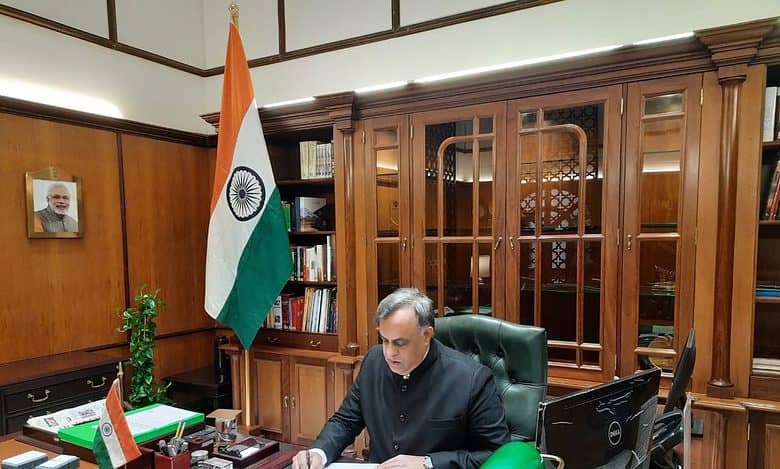
Dr. Khan formally assumed charge in the embassy on Monday by unfurling the national flag following presenting his credentials to the Saudi foreign affairs ministry where he was received by the Chief of Protocol at the ministry, according to the Indian Embassy.
His posting is considered important as cooperation between the two countries have assumed greater significance in the last few years. Some high profile and key official visits between both countries are expected to begin soon.
Dr. Khan, a 1997-batch IFS was Indian Ambassador to Lebanon. A medical graduate and native of Indore in Madhya Pradesh, he had two stints earlier in Saudi Arabia.
source: http://www.siasat.com / The Siasat Daily / Home> News> Middle East / by Irfan Mohammed / posted by Neha Khan / January 16th, 2023
Popularly known as Frontier Gandhi, Badshah Khan, Bacha Khan and Fakhr-e-Afghan, his indomitable political spirit has found a place in all of his names.
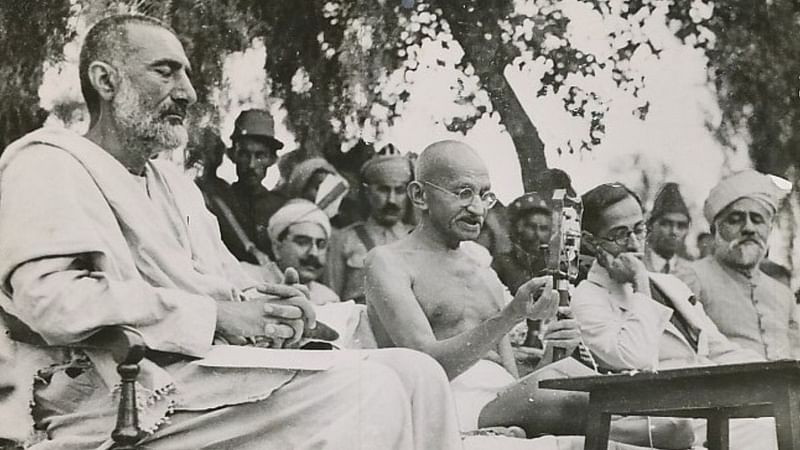
Khan Abdul Ghaffar Khan (L) with Gandhi at King Edward’s College, NWFP, in 1938 | Wikimedia commons
Buried under the historical violence of Pakistan’s tribal belt is a sliver of peace—and it is because of Khan Abdul Ghaffar Khan, a lifelong pacifist who mobilised Pathans against British colonialists in India. Popularly known as ‘Frontier Gandhi’, Badshah Khan, Bacha Khan and Fakhr-e-Afghan, his indomitable political spirit has found a place in all of his names, a reminder of peace, secularism and unity even 35 years after his death in January 1988.
Born into a wealthy Sunni Pashtun family in Pakistan’s Utmanzai in 1890, Khan hailed from the landowning Mohammadzai clan. He devoted his life and resources to upending poverty and promoting education and Hindu-Muslim harmony. But his biggest contribution to the Indian subcontinent, perhaps, came with the ‘Khudai Khidmatgar’, or Servants of God, movement in 1929—the beginning of mass mobilisation against an exploitative British Raj.
Khan’s innate ability to unite the masses non-violently turned him into a ‘powerhouse Muslim leader’ from the erstwhile North West Frontier Province (NWFP). Crackdowns, custodial violence and imprisonment only hardened his anti-colonial stance, laying the foundations for a spiritual resilience which is talked about to this day.
“It is my inmost conviction that Islam is amal, yakeen, muhabat – selfless service, faith, and love,” Khan had said. He had also urged Pathans to “arise and rebuild” their “fallen house.”
Powerhouse Pathan
While Khan’s life was fraught with hurdles and clashes with the colonial government, his political fervour refused to die. For instance, in 1921, he was asked to lead the Khilafat Committee in Peshawar as its president. During his tour of the province, he delivered speeches and emphasised the need to eliminate British imperialism in South Asia. He was subsequently jailed and tortured by the British for three years.
“When Abdul Ghaffar came out of jail in 1924, he was frail and worn-out in body, but his spirit was unvanquished. His blue eyes were proud of their suffering, determined and cold. The Pathans looked at Abdul Ghaffar with admiration; they had found their leader, thanks to the British,” writes documentary filmmaker Dinanath Gopal Tendulkar, in his book Abdul Ghaffar Khan: Faith is a Battle.
Khan led the Khudai Khidmatgar movement with the call to lay down arms and use civil resistance to challenge British rule. This massive movement involved 100,000 Pathans who took an oath to join the movement: “Since God needs no service, I promise to serve humanity in the name of God. I promise to refrain from violence and from taking revenge. I promise to forgive those who oppress me or treat me with cruelty. I promise to devote at least two hours a day to social work.”
Within a short time, they established a network in the province, particularly in neglected rural areas.
The leaders of the Khudai Khidmatgar movement put great emphasis on discipline. The volunteers were organised and drilled in a military fashion, given the ranks of generals, colonels, captains, etc. They even wore identical shirts in shades of brown or dark red. This move invited extensive propaganda from the British Indian government, which equated Khidmatgars to the Bolsheviks. But Khan never left his non-violent ideals.
“There is nothing surprising in a Muslim or a Pathan like me subscribing to the creed of non-violence. It is not a new creed,” Khan had once declared, as per his biographer Eknath Easwaran.
Friendship with Gandhi, relationship with Congress
Khan is also often remembered in history for his curious and close friendship with M.K. Gandhi. The link that connected the two has its roots in the 1919 Rowlatt Act. Khan stood up against the Act—which promoted indefinite imprisonment without a trial—and mobilised 50,000 people in Utmanzai to raise their voices in protest.
Scholars have differentiated how Khan and Gandhi approached their respective philosophies of non-violence. In popular discourse, it is often portrayed that Gandhi heavily inspired Khan’s ideals of non-violence. But J.S. Bright, a biographer of Khan, thinks differently.
Bright also said that in Gandhi’s case, his ideals received more publicity and that he should be called “Indian Khan” instead.
Khan never supported Partition
In December 1929, Ghaffar Khan and other prominent members of the Khudai Khidmatgar attended the Lahore Session of the Indian National Congress to raise awareness of the volatile situation in the NWFP.
Impressed with the Congress’s support, Khan endorsed the party’s programme of complete independence and non-payment of taxes and revenues.
But when it came to the issue of Partition, Khan felt “betrayed” by the Congress Working Committee. Owing to the violence and realpolitik, most Congress leaders agreed to the Partition plan laid out by British viceroy Louis Mountbatten, with the Congress Working Committee overwhelmingly ratifying it. Only four leaders held out – Gandhi, Khan, Ram Manohar Lohia and Jayaprakash Narayan.
“You have thrown us to the wolves,” Khan said in resentment, according to an article about his death published in Los Angeles Times.
The Pashtuns were only given the choice of going with India or Pakistan; independence was out of the question. Convinced that his participation in the decision-making referendum would lead to violence and bloodshed among Pathans, Khan and the Khudai Khidmatgars left the ball in the Muslim League’s court.
The NWFP eventually voted to join Pakistan, where Khan fought for a better deal for the frontier region and advocated for the province’s autonomy. For this, he spent years in prison.
After 17 years of isolation and imprisonment in Pakistan, Khan went on to live in Kabul in the mid-1970s.
He spent his last years in the Afghan city of Jalalabad, visiting India occasionally for medical treatment, mainly for arthritis. Khan died on 20 January 1988 of complications from a stroke while under house arrest in Peshawar and was laid to rest in Jalalabad.
(Edited by Zoya Bhatti)
source: http://www.theprint.in / The Print / Home> The Print Profile / by Shania Mathew / January 20th, 2023
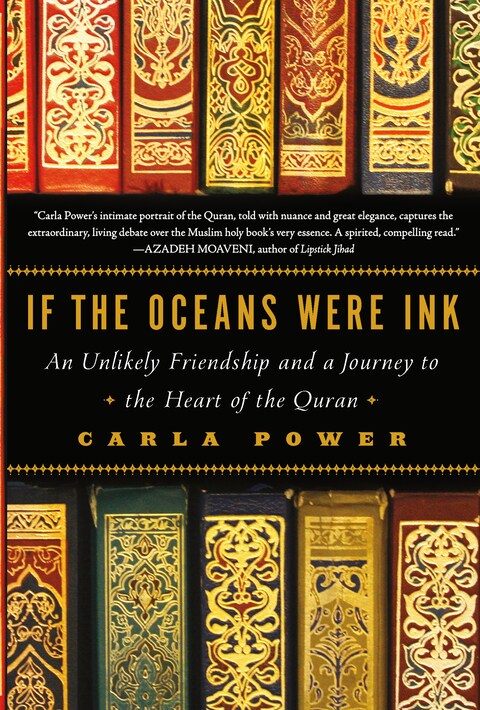
An Unlikely Friendship and a Journey to the Heart of the Quran
by Carla Power
Henry Holt. 336 pp. Paperback, $19
Since Sept. 11, 2001, popular media has tended to represent Islam as monolithic and menacing, a faith whose adherents spend their time plotting to murder infidels, oppress women and instill sharia law in Western democracies. While the actions of groups like the Islamic State seem to confirm the worst stereotypes, the worldviews of extremists do not account for the belief systems of the majority of the world’s 1.6 billion Muslims, who are, by journalist Carla Power’s account, “people as diverse as Pathan tribals and Kansan surgeons.”
Weary of the stereotypes and “blithe generalizations about ‘the Islamic world’ and ‘the West,’ ” Power, who holds a degree in Middle East studies from Oxford and has worked as a foreign correspondent in Muslim countries, decided to strike back. “If the Oceans Were Ink” is a unique account of the Islamic faith that focuses on the perspective of Sheikh Mohammad Akram Nadwi, a scholar and imam whom Power has known for more than 20 years. It is an unusual book, simultaneously an exploration of faith and of Islam as it is lived by those who know it most intimately.
The journalist became acquainted with the imam in the 1990s, when both were conducting research on Islamic scholars and mystics at a think tank, the Oxford Centre for Islamic Studies. Their paths crossed during the intervening years, as Akram achieved renown as a religious scholar and Power established herself as a successful journalist. After years of reporting on strongmen, politics and identity in Muslim societies, Power decided that she wanted “to explore the beliefs behind that identity and to see how closely they matched my own.” She asked Akram if he would take her on as a student. Over the years, Power had developed great respect for his scholarship, particularly his extensive biographical dictionaries on early Islam’s female scholars, whose lives have almost disappeared from the scholarly record. Through this work, Akram hopes to remind Muslims of the importance of women’s education and contributions to society.
Power turns what could have been a dry account of a series of interviews into a vibrant tale of a friendship and of her search for meaning through the contemplation of another religious tradition. Above all, her goal is to gain a deeper understanding of the importance of the Koran, whose “limitless possibilities” are best represented in the words of the Sura that give her book its name: “If the oceans were ink, for (writing) the words of my Lord, the ocean would be exhausted, before the words of my Lord were exhausted.”
Akram and Power meet regularly at Akram’s office, at an Oxford coffee shop, and at the study groups and lectures he leads for the local community. She gets to know his family and his followers well, and is particularly impressed by a group of outspoken, educated Muslim women who debate Akram and even cause him to change his position on controversial issues. Inspired by their time together, Power writes that “studying with a man who saw everything from tea leaves to algebra as gifts from God, I was struck by a new seam of gratitude running through me. I’d emerge from a lesson not with faith, but with what I suppose a fashionable guru would call mindfulness.”
Power skillfully navigates multiple layers of cultural interpretation that make subjects such as veiling so controversial in the West. Akram explains to her that, in Islam, modest dress is not meant to make women invisible but rather allows them “to be present and visible, with the power of their bodies switched off.” However, geopolitics has added additional layers of complexity. From the time of Algerian colonialism until 21st-century Afghanistan, Western military occupation has often been linked to the unveiling of Muslim women. “In the months after the Taliban’s fall, the Western press would rush to capture women shedding their veils. It was as though this transition from burqaed lump to woman was a 21st-century Pygmalion myth: a breathing of life into Afghanistan’s people.”
In contrast to some of his students, Akram eschews politics. He urges his students to focus solely on taqwa, or God-consciousness. Throughout the book, Akram disdains the idea of Islam as a tool to reach political ends, believing that those Muslims with the goal of a state governed by sharia law have a “deep envy of the West’s power and geopolitical supremacy.” Not all of his students agree with him, especially those espousing the need to participate in the revolutions against dictatorships that have wracked the Middle East since 2011. Yet to Akram, the concerns of this world are insignificant compared with the importance of becoming close to the divine.
As Power wraps up her studies with the imam, she concludes that they share many values, including ethics, democracy, equality and human rights. She envies Akram the feeling that prayer “could feel like returning to ‘the arms of your mother, when you are a child.’ ” For Akram, she writes, “existence was a circle, with God at its end, beginning, and every point in between.” For the pious individual, life, from birth to death, is a cycle of return, with the words of God at the center. Yet although the year leaves her with an enhanced appreciation of the complexity of the Koran — even to call the Koran a book is to limit it; “it is a place to which the faithful return, again and again,” she writes — she is ultimately unable to embrace Akram’s sense of religious conviction.
“If the Oceans Were Ink” should be mandatory reading for the 52 percent of Americans who admit to not knowing enough about Muslims. Years of anti-Muslim rhetoric in the media are beginning to take a toll on Muslims in the United States. According to a 2011 poll by the Pew Research Center, 6 percent said they had been victimized by hate crimes in the preceding year. FBI statistics for reported hate crimes against Muslims are five times higher since 9/11. Most recently, the killing of three Muslim students in North Carolina, ostensibly over a parking dispute, has also been alleged to be a hate crime. A Zogby poll released by the Arab American Institute in 2014 showed that only 27 percent of Americans reported favorable opinions of Muslims, down eight points from a poll in 2010. Yet among those polled who reported knowing Muslims firsthand, favorability was 33 percent higher.
Akram, steeped in religion but also thoughtful and open to dialogue, emerges from these pages as a complex and likable man, and it is hard to imagine readers not being moved by Power’s humanistic, evenhanded portrayal of him. “If the Oceans Were Ink” is a welcome and nuanced look at Islam through the eyes of an individual who lives his faith with every breath. It goes a long way toward combating the dehumanizing stereotypes of Muslims that are all too common in the United States today.
By Rachel Newcomb / Rachel Newcomb is associate professor of anthropology at Rollins College, where she also directs the Program in Middle Eastern and North African Studies.
source: http://www.washingtonpost.com / Washington Post / Home> Opinion / by Rachel Newcomb / April 30th, 2015
Jamdahan Village (Jaunpur District), UTTAR PRADESH / London, U.K. :
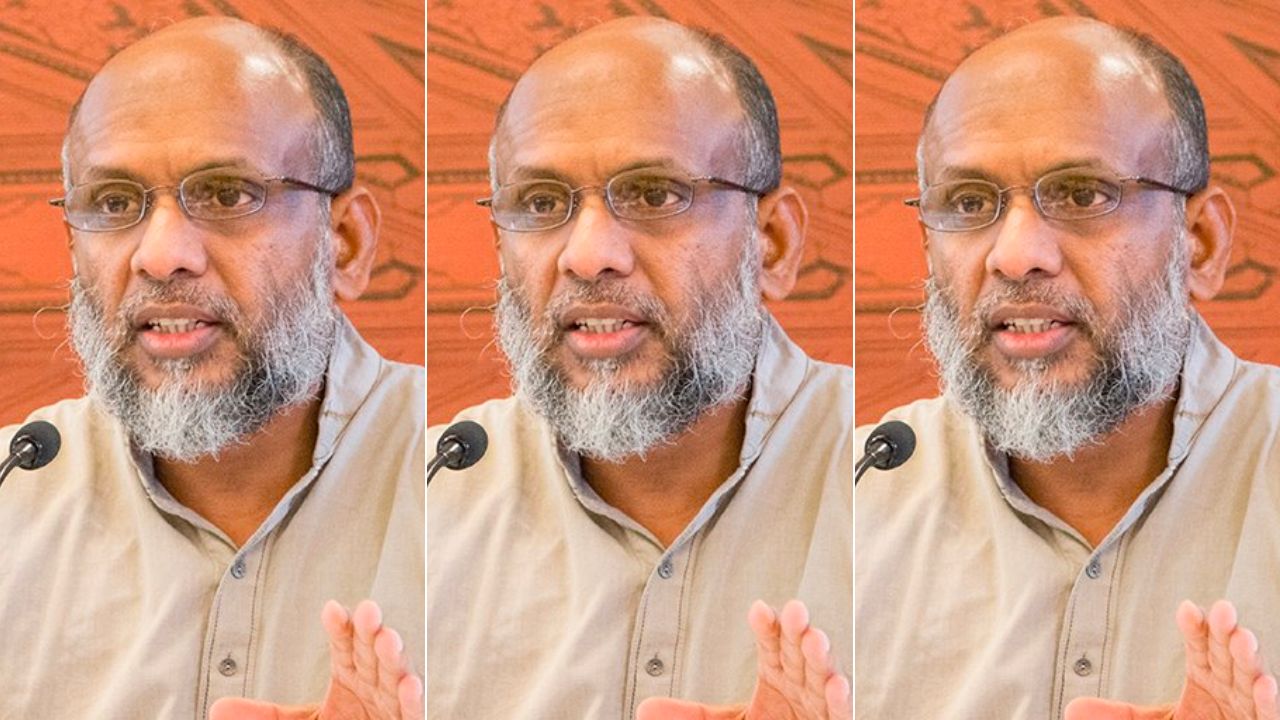
Mohammad Akram Nadwi is a renowned Islamic scholar, theologian, author and professor of Arabic and Islamic studies. He is known for his extensive knowledge of the Quran, Hadith, and Islamic law, as well as his ability to convey complex concepts in a clear and accessible manner.
Early Life and Education
Mohammad Akram Nadwi was born in India in 1963. He comes from a family with a long tradition of Islamic scholarship, and from a young age, he showed a strong interest in Islamic studies. He began his formal education by studying the Quran and Hadith under the guidance of local scholars and his father.
In 1975, Nadwi traveled to the city of Lucknow, India to study at the famous Nadwatul Ulama, an Islamic university and seminary. He studied under some of the most renowned scholars of his time, including Maulana Abul Hasan Ali Nadwi and Maulana Sayyid Abul Hasan Ali Hasani. He earned a degree in Islamic studies and later completed his PhD in Islamic theology from the University of Lucknow. Thereafter he was sent to England as Abul Hasan Ali Nadwi’s representative, becoming a Research Fellow at the Oxford Centre for Islamic Studies.
Personal Life
Mohammad Akram Nadwi is married and has children. He is known for leading a simple and humble lifestyle, and is dedicated to spreading the teachings of Islam to as many people as possible.
Career
After completing his studies in India, Nadwi began teaching at various universities and Islamic institutions in the United Kingdom, including the Oxford Centre for Islamic Studies and the Markfield Institute of Higher Education. He has also taught at universities in India and the United States.
In addition to his academic work, Nadwi is also a respected speaker and lecturer. He has delivered speeches and lectures at various conferences and events around the world, and is known for his ability to convey complex Islamic concepts in a clear and accessible manner.
Muhammad Akram Nadwi is also a founder of Al-Salam Institute, UK where he also serves as a principal. The Institute is dedicated to the traditional Islamic sciences and provide a platform for the authentic Islamic scholarship to be studied and transmitted.
Books
Mohammad Akram Nadwi is a prolific author, who has written several books and articles on various Islamic topics. Some of his most notable works include:
“Al-Muhaddithat: The Women Scholars in Islam” – This is a 43-volume biographical dictionary of female scholars of Hadith, and is considered one of the most comprehensive works on the subject. It is the first book of its kind in the Muslim world, and provides valuable insight into the role of women in the study and transmission of Islamic knowledge.
Madrasah Life: A Student’s Day at Nadwat al-‘Ulamā’
Al-Fiqh Al-Islāmī According to the Hanafi Madhab Rites of Purification, Prayers and Funerals Vol 1
Abū Ḥanīfah His Life, Legal Method & Legacy
Shaykh ‘Abū al-Ḥasan ‘Alī Nadwī: His Life & Works
Ibn Ḥazm on the Lawfulness of Women Attending Prayers in the Mosque
Journey to Andalus – Translated and edited by Dr. Abu Zayd.
Lessons Learned: Treasures from Nadwah’s Sages
Remembering Beautiful Days In Jerusalem
Foundation To Ḥadīth Science: A Primer on Understanding & Studying Hadith – Translated and edited by Dr. Abu Zayd.
He is also the subject of the best-selling book: If the Oceans Were Ink: An Unlikely Friendship and a Journey to the Heart of the Qur’an (2015).
Overall, Mohammad Akram Nadwi is a respected and influential Islamic scholar, known for his extensive knowledge of the Quran, Hadith, and Islamic law, as well as his ability to convey complex concepts in a clear and accessible manner. His work has helped to promote understanding and harmony within the Muslim community, and his lectures and writings continue to inspire and guide people on their spiritual journey.
source: http://www.thecognate.com / The Cognate / Home> Famous Muslims / by The Cognate News Desk / January 12th, 2023
In a ceremony held at Chowmahalla Palace which was attended by close family members, Azmat Jah was coronated as successor to Mir Barkat Ali Khan Mukarram Jah Bahadur.
Hyderabad:
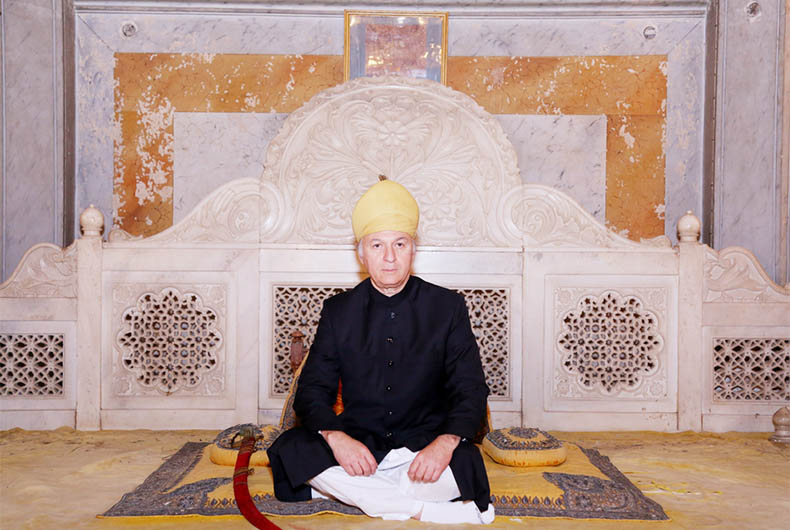
Azmat Jah, a professional photographer and filmmaker who worked with leading Hollywood directors, has taken over as successor of his father Mukarram Jah, the eighth and last formal Nizam of Hyderabad who passed away in Turkey last week.
In a ceremony held at Chowmahalla Palace which was attended by close family members, Azmat Jah was coronated as successor to Mir Barkat Ali Khan Mukarram Jah Bahadur.
Mukarram Jah’s first wife and Azmat Jah’s mother Princess Esra, sister Shekhyar and some other family members attended the ‘Dastar Bandi’ or coronation.
It was at the same palace that Mukarram Jah was coronated at in 1967 after the death of his grandfather and seventh Nizam Mir Osman Ali Khan, who was the last ruler of Hyderabad State.
‘No official status’
His coronation will have no official status or title of ninth Nizam as the government of India had abolished princely titles and privileges in 1971. As per the wish of his late father, he will be the caretaker of Nizam’s properties and Nizam Trusts.
According to sources, Mukarram Jah desired that his eldest son becomes his successor. It is believed that the coronation as successor will be symbolic but significant for legal purposes.
Mir Mohammed Azmat Ali Khan, also known as Azmat Jah, was born in London on July 23, 1960. He had early education in London and later studied at the University of Southern California.
A professional photographer and filmmaker, he has worked with leading Hollywood directors such as Steven Spielberg and Richard Attenborough.
Mukarram Jah Bahadur, the titular eighth Nizam of Hyderabad who passed away in Turkey on January 14, was buried at the historic Mecca Masjid in Hyderabad on January 18 with full state honours.
Mukarram Jah, grandson of last Nizam of Hyderabad Mir Osman Ali Khan Bahadur, passed away in Istanbul at the age of 89.
Born to Prince Azam Jah and Princess Durru Shehvar, the imperial princess of the Ottoman Empire, on October 6, 1933 in France, Mukarram Jah was coronated as Asaf Jah the Eighth on April 6, 1967, after the passing away of Mir Osman Ali Khan in February 1967.
Mukarram Jah was called Prince of Hyderabad till 1971, when then Prime Minister Indira Gandhi abolished all titles. He was also said to be India’s richest person till the 1980s. He lived most of his life in Turkey and Australia.
source: http://www.ummid.com / Ummid.com / Home> Education & Career / by IANS / January 22nd, 2023
“With the advent of modern science and technology, there has been a revolution in the world wherein changes are taking place at a very fast pace. There is no corner of life that is not affected by science and technology with the invention of Internet along with other technological sciences which have forced individuals and nations to bring about change within them, with the change of the time.
“While changing oneself is no longer optional but has become a necessity today I am reminded of the historic saying of Hazrat Maulana Shah Muhammad Abdul Rahim Sahib Naqshbandi Mujaddadi, the founder of Jamea-tul-Hidayah in Jaipur, that today the change in the curriculum of madaris and the inclusion of modern sciences is optional but tomorrow such a time will come that then it would be mandatory rather than optional”.
“Hazrat Abdul Rahim Mujaddadi felt this far-reaching vision 40 years ago, but it is a pity that the madaris did not pay attention to his voice then. However, today the management committees of all the madaris are feeling the need to change their curriculum forced by the requirements of the present day times. As such they have taken steps towards the inclusion of modern sciences in their curriculum”.
These above thoughts were expressed by Maulana Muhammad Fazl-ur-Rahim Mujaddidi, the present rector and son of the founder Jamea-tul-Hidayah, while addressing Azmat-e-Qur’an Conference which was held on 12th January 2023 at Shaghafta Ehsan Hall here. He addressed Ulema, intellectual Muslims from all over the country, and Imams of mosques and principals of the city of Jaipur.
Maulana Fazl-ur-Rahim Mujaddidi said Jamea-tul-Hidayah Jaipur in its curriculum has included Qur’an and Hadith, Islamic jurisprudence, Seerat-un-Nabi, History, Arabic language and literature as well as keeping in view the requirements of the modern times contemporary sciences such as geography, mathematics, English, Hindi language etc.
Continuing Maulana Mujaddidi said that for students to be self-sufficient in their livelihood, technical education has also been made part of the curriculum. While keeping in view the demands of the modern times, Jamea has started many new courses. One of them is a one-year online English speaking course for graduates of Madaris, wherein not only Indian but also students from abroad are benefiting from this.
He informed that in the near future an online course of Hindi language will also be started for Madaris graduates. For this Jamea-tul-Hidaya, in collaboration with Aligarh Muslim University (AMU), has decided to start a course of Hindi language & literature and the Indian society. Thereby, the Madaris graduates will get employment opportunities and they will also be able in create inter-religious harmony and clear doubts and misunderstandings amongst communities. The national language of India is Hindi, so learning Hindi and getting acquainted with India’s religious communities is a social necessity and a religious responsibility of Ulema.
Maulana Mujaddadi drawing attention of Muslims towards modern education advised them to establish institutions of professional courses including medical education. He said that the Qur’an has been revealed for humanity till the Day of Judgment. It is our responsibility to convey its message to all mankind. Today doubts, suspicions and misunderstandings against Islam and Muslims are being spread through various sources and means. “We should come forward to clear the air through our character, moral values and might of the pen. Islam does not create hurdles and stops us from acquiring modern knowledge. Moreover, our forefathers were leading the world in these scientific inventions”, he revealed.
He pointed out thatduring the dark ages of medieval Europe; incredible scientific advances were made in the Muslim world. “Our Genius ancestors in Baghdad, Cairo, Damascus and Cordoba took on the scholarly works of ancient Egypt, Mesopotamia, Persia, Greece, India and China, developing what we would call “modern” science. Muslim mathematicians such as Al-Khwarizmi, Avicenna and Jamshīd al-Kāshī made advances in Algebra, Trigonometry, geometry and Arabic numerals as well as major advances in medicine, astronomy, engineering and agriculture. Arabic texts replaced Greek as the fonts of wisdom, helping to shape the scientific revolution of the Renaissance”, he disclosed.
‘Aalami Muzahira-e-Qirat’
Meanwhile, Maulana Mujaddadi announced on the occasion that Jamea-tul-Hidaya will be organising an “Aalami Muzahira-e-Qirat” (Global Demonstration of Qur’an Recitation) in Jaipur on 28th January, 2023. After Maghrib prayer, the international gathering of Qaris of repute will assemble to demonstrate their art. In this programme renowned Qari Shaikh Abdul Nasir Harak of Egypt along with well-known Qaris of the country will be participating.
While inviting Muslims from all over Rajasthan to participate in the grand event he said: “Qur’an the word of Allah, is the ultimate source of guidance for mankind, the creator of the universe, which is no less than a blessing in terms of its sound and beauty.
The Holy Prophet (PBUH) had said: “Embellish the Qur’an with your voices”. This is a very beautiful, inspiring and eloquent phrase that came out of the pure language of the Holy Prophet (PBUH).
It is narrated from Hazrat Abu Musa Ash’ari that one day the Holy Prophet (PBUH), said to me: “I was listening to your Quran recitation at night. I said, O’ Messenger of Allah, if I had known that the Holy Prophet was listening, I would have recited it with excellence”. (Sahih Ibn Hibban: 3513)
The Holy Prophet (PBUH) taught his Companions (Sahaba) the meaning and knowledge of the Holy Qur’an as well as taught them how to recite the Holy Qur’an correctly while following the rules of Tajweed. The Holy Prophet blessed four of his companions with the knowledge of recitation, and ordered the common companions to learn the Qur’an from them. These four companions were Abdullah bin Masoud, Salim Mawla Huzaifah, Mu’adh bin Jabal and Ubi Ibn Ka’ab.
The Holy Qur’an is a book of guidance, love, connection and devotion to it is a part of Islamic faith and a sign of being a Muslim. The teaching of the Holy Qur’an, its publication, and the desire to recite it and listen to the Quran remain in the heart of every believer. He considers it as a means of his happiness and salvation in the Hereafter.
source: http://www.indiatomorrow.net / India Tomorrow / Home> Education / by Pervez Bari / January 20th, 2023