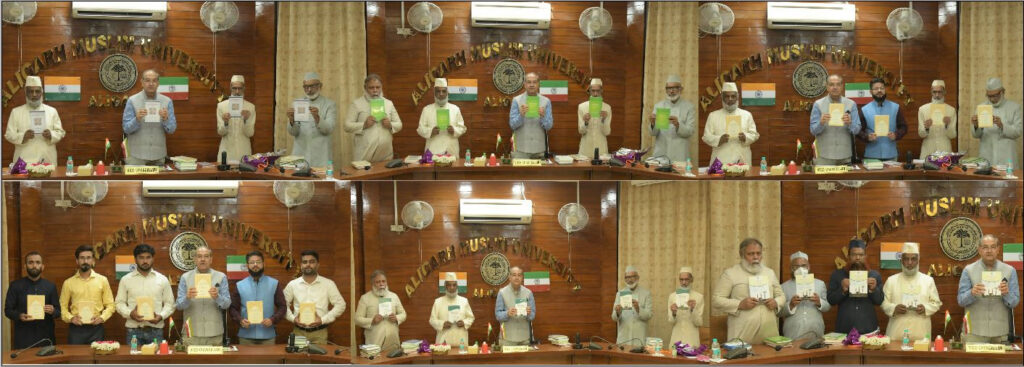
Eight books published by the K A Nizami Centre for Quranic Studies, Aligarh Muslim University (AMU) addressing key themes on the history of South Asian Muslims, diverse responses to the scholarly contributions and rationalist traditions of Islamic scholarship were released today at the Vice Chancellor’s Office.
They are ‘Contemporary Islamic Scholarship in South Asia: An Assessment’, ‘Humanness of Prophets: The Quranic Prophetology’ and ‘Contribution of Dar-ul-Uloom Deoband to Tafasir’ by Dr Abdul Kader Choughley; ‘Dil Jo tha Zulmat Kadah, Ma’ah-e-Munawwar Hogaya’ by Dr Mohammad Haris Mansoor; ‘Qurani Ulum ka Irtiqa Ahd-i-Islami ke Hindustan Mein’ by Prof Zafarul Islam; ‘How to Promote the Study of Quran among Women’, edited by Dr Nazeer Ahmad Ab. Majeed and Dr Arshad Iqbal; ‘Tarjumani Rahmani’ by Prof A R Kidwai and ‘Allah ki Kitab ki Paanch Mangay’ by Prof Fazlur Rahman Gunnouri.
“These books will answer some of the most frequently asked questions about traditions in Islamic faith, offer a new understanding on the works of Islamic scholars, explore key Islamic events and provide an understanding of important traditions in Islamic philosophy and the intellectual movement that emerged from South Asian Islam”, said AMU Vice Chancellor, Prof Tariq Mansoor while releasing the books.
Prof A R Kidwai (Honorary Director, K A Nizami Centre for Quranic Studies) pointed out: “The K A Nizami Centre has published over 80 titles on Quran-related scholarship since 2013. Publications of the Centre represent contemporary literature on furthering Quranic understanding and research in Hindi, English and Urdu by authors from various disciplines including translations from various languages”.
source: http://www.amu.ac.in / Aligarh Muslim University / Home / by Public Relations Department / Aligarh, July 13th, 2022
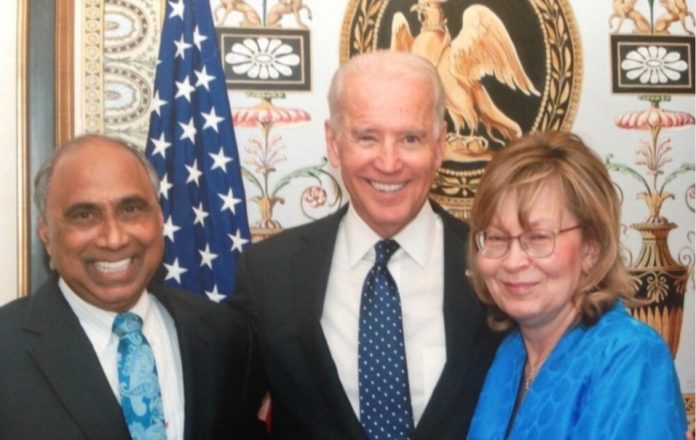
Frank Islam and his wife Debbie Driesman with Joe Biden.
Washington :
President Biden has appointed Dr. Frank Islam as a member of Commission on Presidential Scholars.
The Commission on Presidential Scholars is a group of eminent private citizens appointed by the President to select and honor the Presidential Scholars.
Commissioners are selected from across the country, representing the fields of education, medicine, law, social services, business, and other professions. The Commissioners make the final selection of the 161 Presidential Scholars. The Scholars demonstrate exceptional accomplishments in academics, the arts, career and technical education and an outstanding commitment to public service.
Dr. Frank Islam
Indian born Frank Islam is an entrepreneur, philanthropist, and civic leader with a special commitment to civic, educational, and artistic causes.
He currently heads the FI Investment Group, a private investment holding company that he founded after he sold his information technology firm, the QSS Group, in 2007.
Islam serves and has served on numerous boards and advisory councils including the John F. Kennedy Center for the Performing Arts, the U.N. Foundation, the U.S. Institute of Peace, and the Woodrow Wilson Center. He has also served or serves on boards and councils at several universities including John Hopkins, American University, George Mason University, the University of Maryland, and Harvard University.
An AMU alumnus Islam has written two well-regarded books on the American condition: Working the Pivot Points: To Make America Work Again and Renewing the American Dream: A Citizen’s Guide for Restoring Our Competitive Advantage.
He blogs regularly on Medium and was a contributor to the Huffington Post for nearly a decade.
In 2018, Islam established the Frank Islam Institute for 21st Century Citizenship which maintains a website and publishes a monthly newsletter featuring articles and other material directed at addressing the civic engagement deficit and challenges to democracy in the U.S. and internationally.
Islam received his B.S. and M.S. in Computer Science from the University of Colorado at Boulder.
source: http://www.muslimmirror.com / Muslim Mirror / Home> Education> Indian Muslim> Positive Story / by Muslim Mirror Network (headline edited) / July 16th, 2022
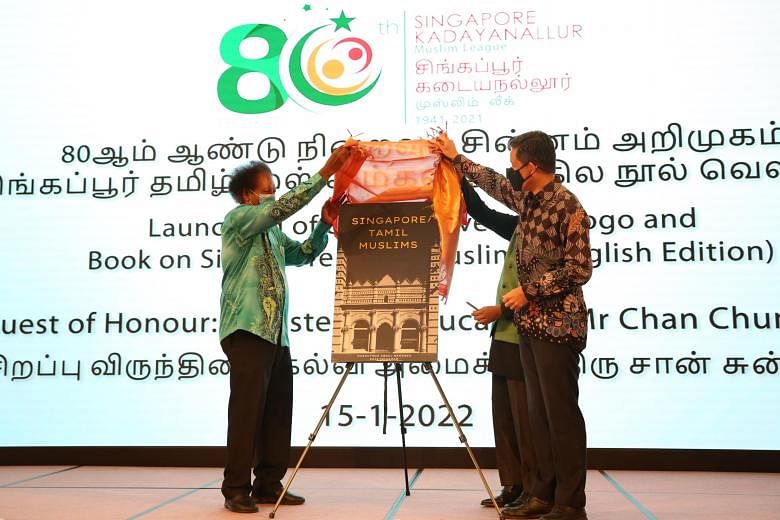
(From left) Co-authors A R Mashuthoo and Raja Mohd with Education Minister Chan Chun Sing at the launch of the English edition of Singapore Tamil Muslims. PHOTO: TAMIL MURASU
Singapore :
The Tamil Muslim community in Singapore has contributed to the Republic’s multiracial and religious harmony, with collective efforts that have strengthened the nation’s social compact, said Education Minister Chan Chun Sing on Saturday (Jan 15).
In 1946, for example, members of the community dedicated a portion of their salaries to help the Singapore Kadayanallur Muslim League (SKML) start the Umar Pulavar Tamil School, the first Tamil-medium secondary school in South-east Asia at the time.
The school played an important role in advancing and shaping Tamil language education here, and many graduates have taken up the baton and become Tamil teachers today, Mr Chan said.
“While the school was closed 40 years ago, its name lives on in today’s Umar Pulavar Tamil Language Centre, which continues the important mission of transmitting Tamil language and culture to the next generation.”
The centre is in Beatty Road.
Mr Chan was speaking at the launch of the English edition of a book titled Singapore Tamil Muslims.
The event was held in conjunction with SKML’s 80th anniversary celebrations in Chui Huay Lim Club in Newton.
The book, which looks to provide a better understanding of the Tamil Muslim community in Singapore, is supported by organisations including the National Heritage Board and Islamic Religious Council of Singapore.
It has forewords by President Halimah Yacob and former senior minister of state Zainul Abidin Rasheed.
The English edition of the book, which was first published in Tamil in 2015, is authored by SKML president Raja Mohamad and deputy president A. R. Mashuthoo.
In his speech, Mr Chan highlighted how the spirit of grit, resilience and service to community has shone brightly among Singapore’s Tamil Muslims.
Many have become successful professionals and leaders of the community, he said.
“But they have all imbibed the spirit of service, and continued to pay it forward to the community and nation.
“Importantly, these collective efforts by your community have also strengthened Singapore’s social compact – where we help the young to have a good start in life, give more to those with less, and enable our people to bounce back from adversity.”
The minister expressed his hope that the book can serve as a reminder, not just for the Tamil Muslim community but also to a broader audience, that Singaporeans must honour and protect what they have, and inspire the next generation to continue paying it forward.
The book can be purchased by contacting SKML, and funds raised will be used for its work to support the disabled community and education needs of children from low-income families.
source:http://www.straitstimes.com / The Straits Times / Home / by Choo Yun Ting / Jan 15th, 2022
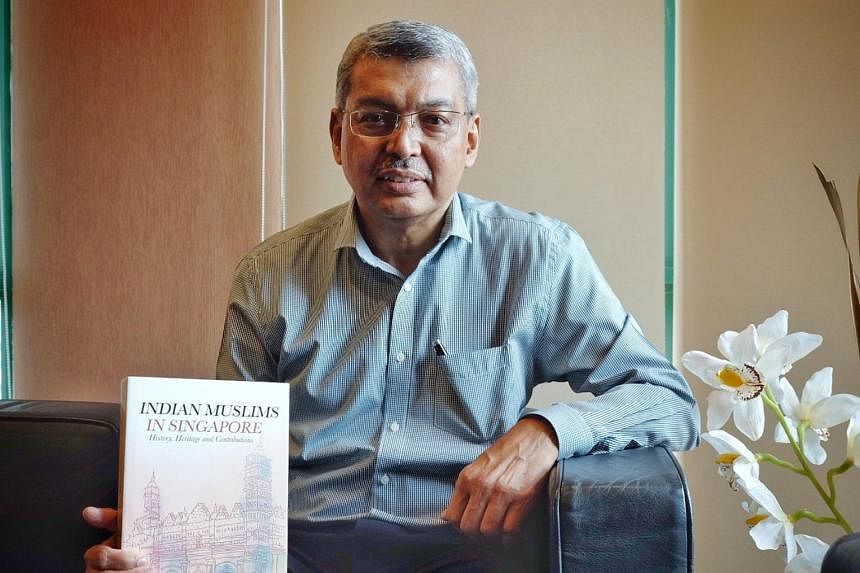
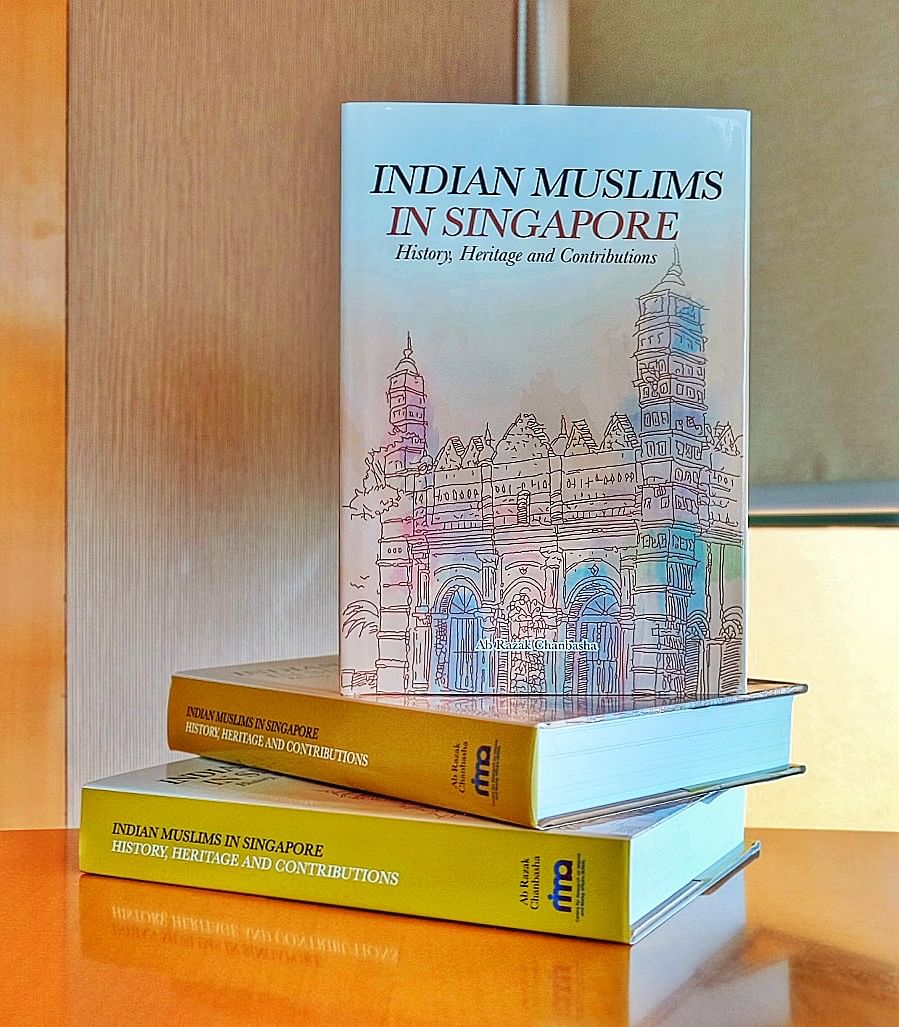
Indian Muslims in Singapore: History, Heritage and Contributions is authored by Dr Ab Razak Chanbasha and published by the Centre for Research on Islamic and Malay Affairs. PHOTO: BERITA HARIAN
Singapore :
A number of Indian Muslims here face a dilemma: To hold on to the languages and customs of their forefathers or to embrace a “practical assimilation” into the wider Muslim community. This issue is raised in the new book Indian Muslims In Singapore: History, Heritage And Contributions, which documents the history, heritage and contributions of the community.
It is authored by Dr Ab Razak Chanbasha and published by the Centre for Research on Islamic and Malay Affairs (Rima). Launched by President Halimah Yacob on Saturday (June 11), the book traces the community’s transition from groups of sojourners who came to colonial Singapore to make a living into a settled community forming a sizeable minority within both the Indian and Muslim populations.
Rima is a subsidiary of AMP Singapore, which raised more than $250,000 for the benefit of the community in conjunction with the book launch.
As at 2020, Indian Muslims constituted about 23 per cent of the Indian community and 13 per cent of the Muslim community.
Speaking to an audience of about 140 at the Islamic Religious Council of Singapore, President Halimah said that while the contributions of some Indian Muslim pioneers like writer Munshi Abdullah are well documented, others have only been remembered in word-of-mouth accounts and are not sufficiently researched and codified.
“This book therefore strives to fill this gap for the Indian Muslim community, so that we can better appreciate the significance of their contributions,” she said. “Let us emulate the pioneers who never viewed their circumstances as limiting, but instead focused on how they could do better for the community and their children; always looking at the possibilities ahead.”
The book begins by tracing the ethnic and geographical origins of the community and the trades they came to work in the growing port city that was Singapore in the 1800s.
Muslims of various ethnicities migrated here from British India, including Tamils from the south and Gujeratis from the west. Some set down roots and began building mosques, including Angullia Mosque and Bencoolen Mosque.
The book details the history of these mosques, the families, institutions and personalities behind them, and the religious and civic contributions of the community, many of whom donated generously to social causes. There is a chapter on prominent figures, including former MP Mohamed Kassim Abdul Jabbar and Singapore’s first attorney-general, Professor Ahmad Ibrahim.
In an interview before the launch, Prof Ahmad Ibrahim’s grandson, Mr Ibrahim Tahir, 48, said he is happy his grandfather’s life and achievements have been recorded in the book.
Mr Ibrahim, who owns bookstore Wardah Books, said: “It is good not just for the community and the family but because stories like his can lift young people’s aspirations. He was at the centre of things, and operating in a multiracial country and system, he was a minority without being marginal and held a seat at the table.”
Dr Razak, 63, who is a physicist by training and a board member at Rima, said the book is meant for the general reader.
“The book is by no means exhaustive or complete, but I hope it can serve as a starting point for more research into the community.”
Speaking of the challenge he raised about contemporary Indian Muslim identity and the choice between tradition and assimilation, he added: “It is all about finding balance. All communities in Singapore face problems like waning language use, but it is important to think about which of our forefathers’ values to hold on to.”
The book is on sale for $60 at this website and selected bookstores.
source:http://www.straitstimes.com / The Straits Times / Home / by Ng Wei Kai / July 13th, 2022
Navabharat Night High School, considered the first night school in the country, has been serving society for last 8 decades.
Mangaluru :
As a high school boy, Khalid Mohammed used to often find illiterate people knocking on his doors to read letters for them. The visitors were mostly elderly and disadvantaged whose children had migrated from Mangaluru to Mumbai and elsewhere in search of greener pastures.
It was then that the young Khalid, motivated by Mahatma Gandhi’s call for adult education movement, decided to teach such people how to read and write. Mohammed, a tin maker in the neighbourhood who was also not educated, was generous enough to spare his courtyard for a few hours each day for the noble cause.
Five adults — Khader, Krishna, Kusappa, Rahiman and Mohammed himself — were the first students when the night school came into existence on March 15, 1943.
Buoyed by the good response, the next year Khalid started primary classes in a building opposite KRK Shet Building on BEM High School Road in Mangaluru and named it Noubahar Night School. Gradually, middle and high school classes were added. Later, during its golden jubilee celebration in 1992, the school managed to get its own three-storeyed building on Car Street.
Called Navabharat Night High School now, it is run by the Navabharat Education Society. Said to be the first night school in the country and the only one still functioning, it is celebrating 80 years of its existence this year. Khalid, who was an English teacher at Badriya High School for a while, later became the headmaster of the night school and continued in the same post till he passed away a few years ago. The school, which does not charge any fee from students, has seen a lot of transformation over the last eight decades.
During its initial years, the school got a stream of adults who did not know how to read or write. Later it started getting adults who had dropped out of schools due to financial constraints but wanted to complete their schooling to get a job or promotion. Those who study here write the SSLC examination by enrolling as private candidates.
The institution now has over 60 students, who are mostly children of labourers. Almost all these kids go to day schools, but also come to the night school as their parents are away at work in the evenings.
Dr Vaman Shenoy, president of the Navabharat Education Society, beams with pride when he says many students from here have gone on to become doctors, engineers, advocates and also are employed abroad. There was a time when the school used to brim with 250-300 students, who used to stand outside the doors and windows of classrooms to listen to lectures. Bicycles used to be parked on both sides of the narrow road in front of the school building in Bunder.
The school has not received any government grant since its inception and runs only on donations. “Our founder Khalid Mohammed’s son Dr AR Nazeer who is a professor at a university in Saudi Arabia, Dr Vinay Hegde of Nitte, Kind Foundation, Canara Foundation and others contribute to the cause,” said M Ramachandra, secretary of the Society. Ramachandra himself was a student at the school. He later became its manager before he became secretary. “I dropped out of school after Class 8 because of poverty. After a gap of five years, I joined the night school,” he says.
The free school has six teachers and two office staff. Dinesh Kumar, a clerk at Canara College, has been teaching at the night school for the last 25 years. “I wanted to contribute something for society and that is the reason I am here,” he says. He teaches at the school from 6 am to 8.30 pm. Varkady Ravi Alevoorya, the present headmaster, says they have not kept the count of the total number of students educated in the school, but it could be in thousands.
“The student strength has dwindled over the last few years as the government now lays a lot of stress on education and makes regular follow-ups on absentee students to bring them back. But we still keep our doors open as there may be people who still need our help,” he adds. The school has a computer centre and also teaches Yakshagana. Dr AR Naseer says the school belongs to the public and they need to take it forward.
“As a teenager, my father was drawn to Mahatma Gandhi’s adult education movement which led him to start this school. It was the first home for my father and he used to spend most of his time here,” he recalls.
source: http://www.newindianexpress.com / The New Indian Express / Home> Good News / by Vincent D’Souza, Express News Service / June 26th, 2022
Over the past few years, and particularly after their recent tussle with the government over the statue of Bangabandhu Sheikh Mujibur Rahman, the Ulama’s involvement in politics has come back under scrutiny in Bangladesh. Since the 10th century, the Ulama have been exercising strong authority over religious issues; yet they have been accused of failing to respond to modernity and to the changes in society.
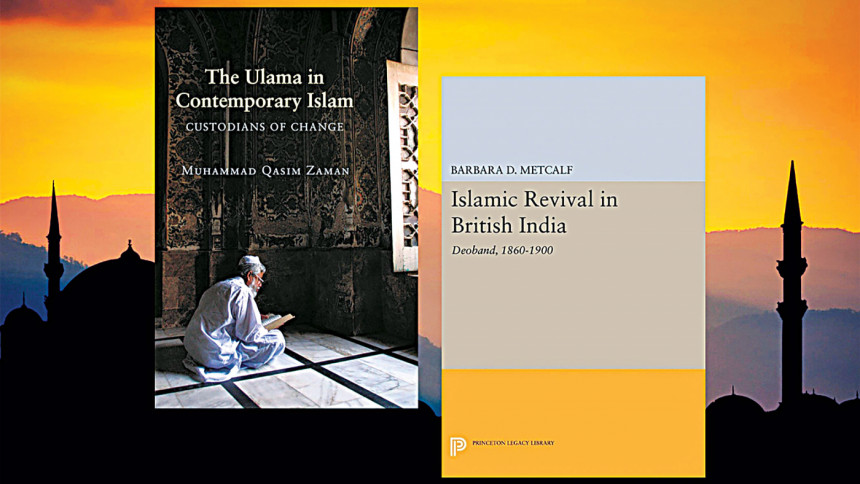
Against this backdrop, the actions, discourses, and history of the Ulama are well worth looking into. Muhammad Qasim Zaman’s The Ulama in Contemporary Islam: Custodian of Change (2002) and Barbara D Metcalf’s Islamic Revival in British India: Deoband, 1860-1900 (2016), both published by the Princeton University Press, are two outstanding studies in this regard. While Metcalf looks into the emergence, proliferation, and responses of the Deobandi Ulama to “modernity” when Muslim power in India was declining, Zaman looks at their strategy to establish authority in British India and Pakistan.
Shifting sands of influence
In pre-British India, religious education was a private enterprise and individual tutelage was the usual mode of the dissemination of religious knowledge. This tradition was to change with the emergence of the Farangi Mahall Ulama as custodians of Muslim intellectual traditions.
The Lucknow-based Farangi Mahall Ulama were known by the family of Mulla Hafiz, who received a land grant from Mughal Emperor Akbar sometime in the sixteenth century. He was the ascendant of Qutbu’d – Din (d. 1691), a Mughal courtier who participated in the collection of Fatawa-yi ‘Alamgiri’. The latter is a collection of Fatwa to be used in the Mughal courts. The family and students who took lessons from this family were known by the name of Farangi Mahall. The activities of the Ulama of Farangi Mahall, however, were confined to producing graduates for princely services. Their most significant contribution was their systemisation of the curriculum—dars-i-Nizami—for religious education. As Metcalf informs us, this curriculum came to Bengal when a Farangi Mahall graduate was appointed as the first principal of the madrasa yi ‘Aliyah’, Calcutta in 1780.
Farangi Mahall’s dominance declined and the centre for religious studies shifted from Lucknow to Delhi by the late 18th century. The person who played a key role in this shift was Shah Waliyu’llah, who advocated for more social and political responsibilities for the Ulama as opposed to those of the Farangi Mahall. Waliyu’llah’s successors had studied legal codes and written fatwa for the Muslim community, which had once become the main tool to disseminate religious instructions when the British were about to establish political authority over India. Besides claiming centrality of the hadith in the interpretation of the sharia, Shah Waliyu’llah discouraged blindly following the rulings of the earlier generations (taqlid). He suggested going back to the Quran or Sunnah for legal solutions.
The 1857 revolution landed heavily upon the revivalist movement initiated by Shah Waliyu’llah. Suspecting the Ulama’s involvement, British colonisers took all religious institutions in Delhi under their control. Fourteen hundred people were shot by British soldiers in Kuchah Chelan, where Shah Abdul Aziz (son of late Shah Waliyu’llah) used to preach, according to Metcalf. The Delhi-based Ulama were forced to move to the countryside and establish a madrasa at Deoband in 1867.
After the revolution, Deoband became the centre for Muslim intellectuals. They introduced formal religious education for Muslims in British India. Students had separate classrooms and a library, and the curricula were organised according to departments, such as Arabic, Persian, and others. A formal examination system was introduced and successful students were issued certificates of award. Graduates came from different corners of India. Most significantly, these graduates went back home and set up madrasas in their respective localities. By the end of the 18th century, nearly every town held the presence of the Deobandi Ulama.
One well known Deobandi Ulama was Muhammad Ashraf Ali Thanawi (1863-1943), who authored Bahishti Zewar (1981)—among the most popular books for Muslims of India, and masterminded the Dissolution of Muslim Marriages Act 1939—the first reformist legislation for Muslims of British India.
In the late 19th century, the Ulama played a crucial role in upholding the pride of their religion and their community through publications and public debate on religious issues. Their intellectual exercise peaked with the invention of print technology, multiplying the scale of the transmission of knowledge all over India. Publishing in local languages such as Urdu, instead of Arabic, was one of their effective strategies to establish authority. This also served as a medium of communication between common Muslims and the Ulama, and helped renew Muslim traditions against local customs. Following the birth of Pakistan on August 14, 1947, the Ulama consolidated their authority and forced the then government not to pass a law against sharia. Over the next few years, their continuous efforts would force the Pakistani government to establish a Supreme Sharia Board to oversee any inconsistencies between sharia and laws passed by the parliament.
The historiography of these two books may be compared with Geoffrey G Field’s Blood, Sweat and Toil: Remaking the British Working Class, 1939-1945 (Oxford University Press, 2011), in which Field understands “class” from multi-dimensional approaches including its relationship with the state, society, and family. Similarly, Barbara Metcalf and Qasim Zaman define the Ulama as a class by providing a social and intellectual history of their presence in South Asia. Metcalf highlights their hardships in the post-1857 revolution and the silent “intellectual” revolution of the Deobandi Ulama. Hers is an excellent cultural history. Despite being published earlier, Zaman fills in what Metcalf’s study left to be addressed: it focuses on how the Ulama have played an active role in different social and political contexts, particularly in post-colonial Pakistan. He disapproves of the allegation that the Ulama are against changes. The common mistake that most studies make, says Zaman, is not to consider the social and political context within which the Ulama work. To him, the flexibility of sharia depends on a socio-political context. Zaman suggested that the Ulama do not respond to changes as not because they do not like it but because of their fear of losing authority over religious issues in a modern state.
None of the above-mentioned studies, however, concerns the Ulama of Bangladesh. The growing presence of the Bangladeshi Ulama in the public sphere, particularly their increasing involvement in the political issues, merits investigation into—in Zaman’s words—their “transformation, their discourses, and their religio-political activism.” Could the Ulama in Bangladesh inherit the wind of the Islamic intellectual traditions? The question deserves to be addressed amongst others.
Dr Md Anisur Rahman is a legal historian at Asian University for Women. His research interests include Islam in Asia and South Asian Islamic Law and Society.
source: http://www.thedailystar.net / The Daily Star / Home> Reviews / by Md. Anisur Rahman / January 28th, 2021
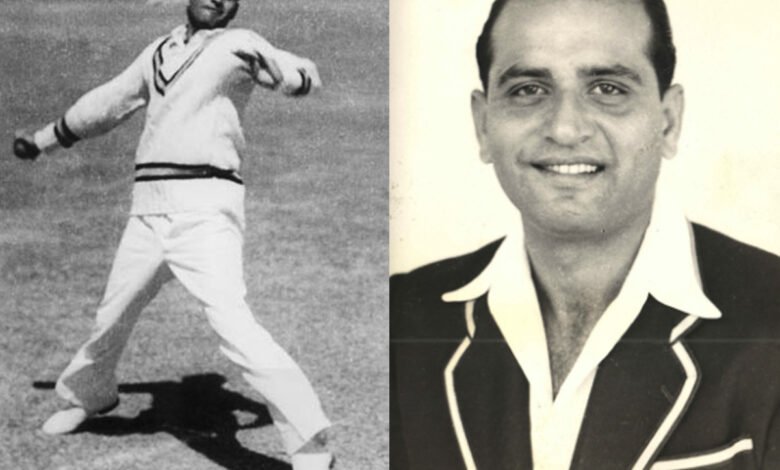
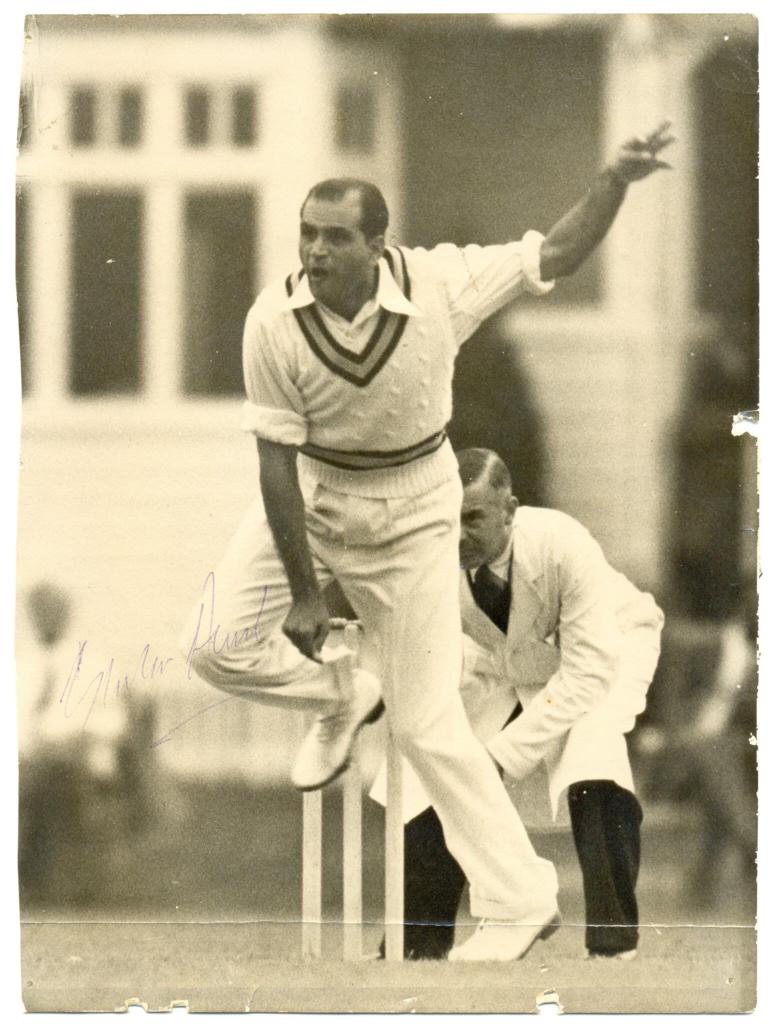
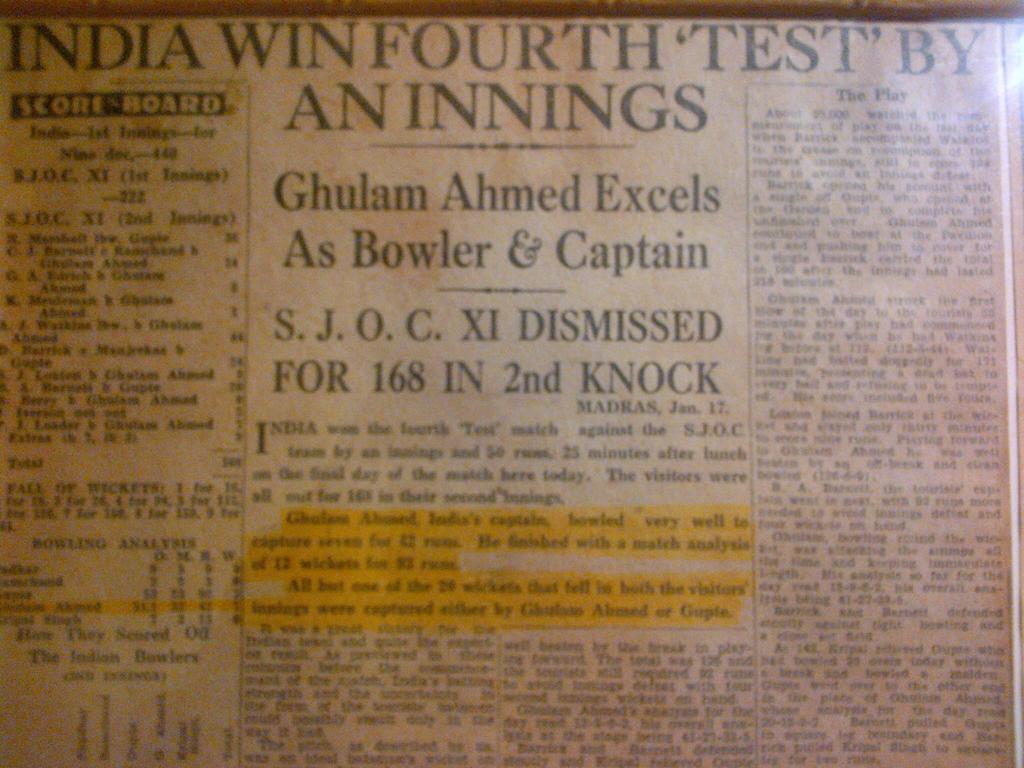
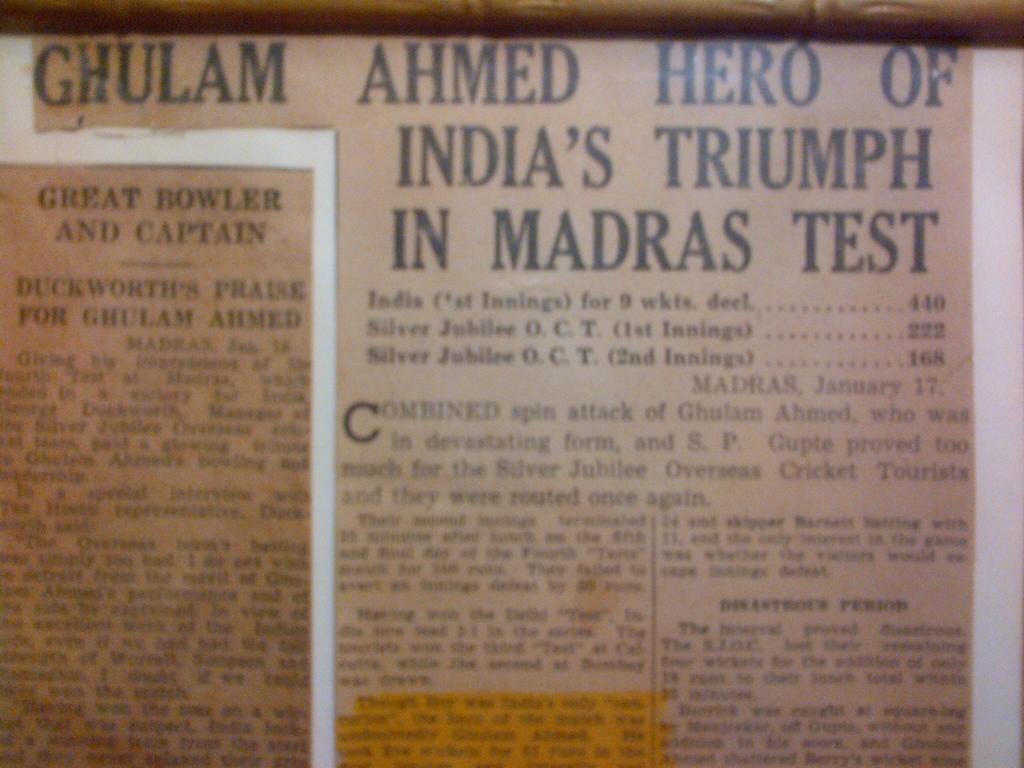
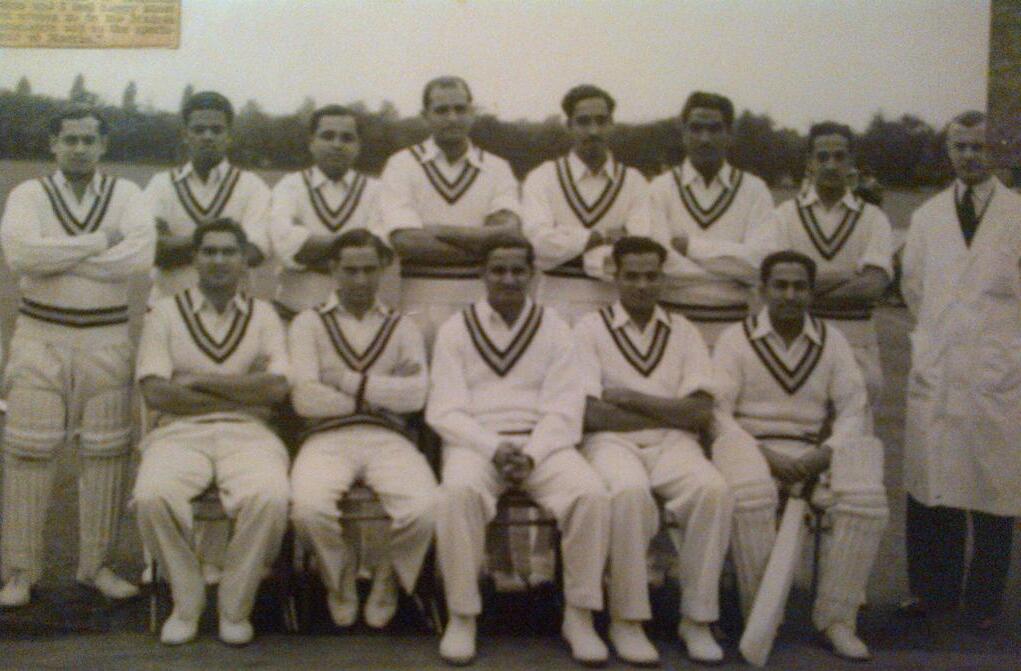
The contribution of Ghulam Ahmed to cricket in Hyderabad and India is extremely difficult to quantify in mere words.
He was a legendary player, inspirational leader, far thinking administrator and a very capable manager. Whichever role he played, he did so with a measure of excellence that was unmatchable. The Greek philosopher Aristotle once said: “Excellence is never an accident. It is always the result of high intention, sincere effort and intelligent execution. Choice, not chance, determines our destiny.” The words can be applied most aptly to the life and career of Ghulam Ahmed, one of Indian cricket’s most accomplished off spinners and administrators, whose 100th birth anniversary falls on 4th of July, 2022.
But any person who knows about the family from which Ghulam Ahmed emerged, will not be surprised by the fact that this gentleman cricketer achieved so much in his lifetime.
In a way, this illustrious family can be called the first family of Hyderabad sports. Others who are connected to the Razvi family are Pakistan’s former captain Asif Iqbal, India’s former captain Mohammed Azharuddin and tennis champion Sania Mirza. Since Sania’s husband is an ace Pakistan cricketer Shoaib Malik, he too is connected to this family by marriage. So that makes it two captains of India, two captains of Pakistan and a tennis Grand Slam winner in doubles and mixed doubles, all belonging to or connected to one family.
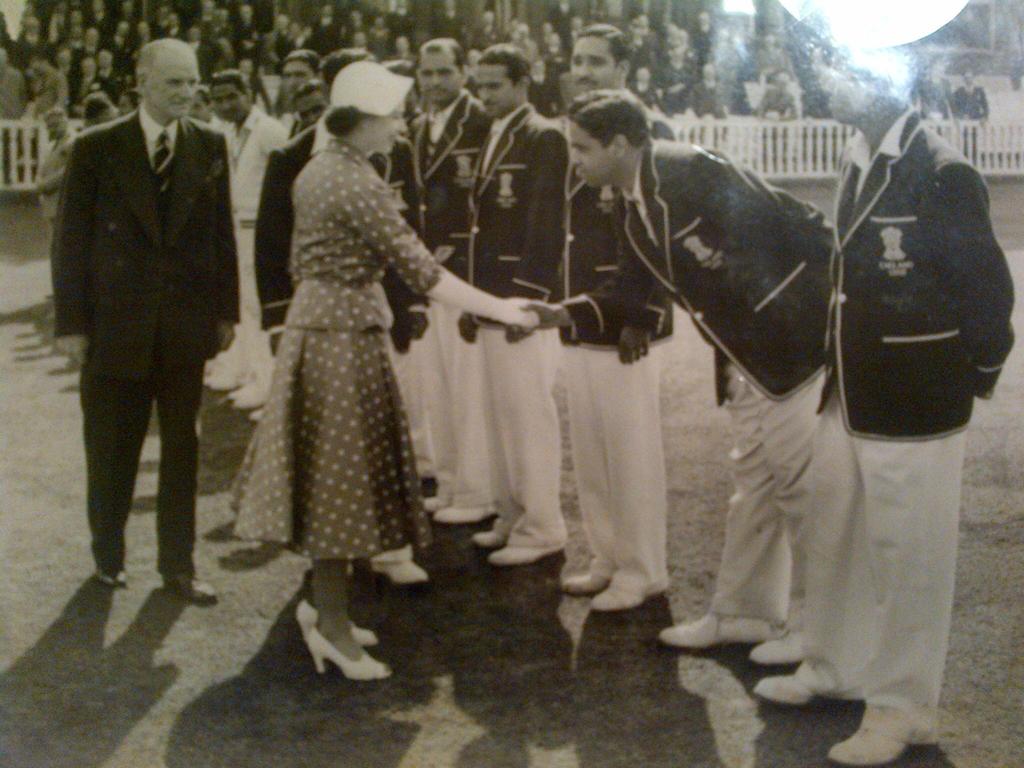
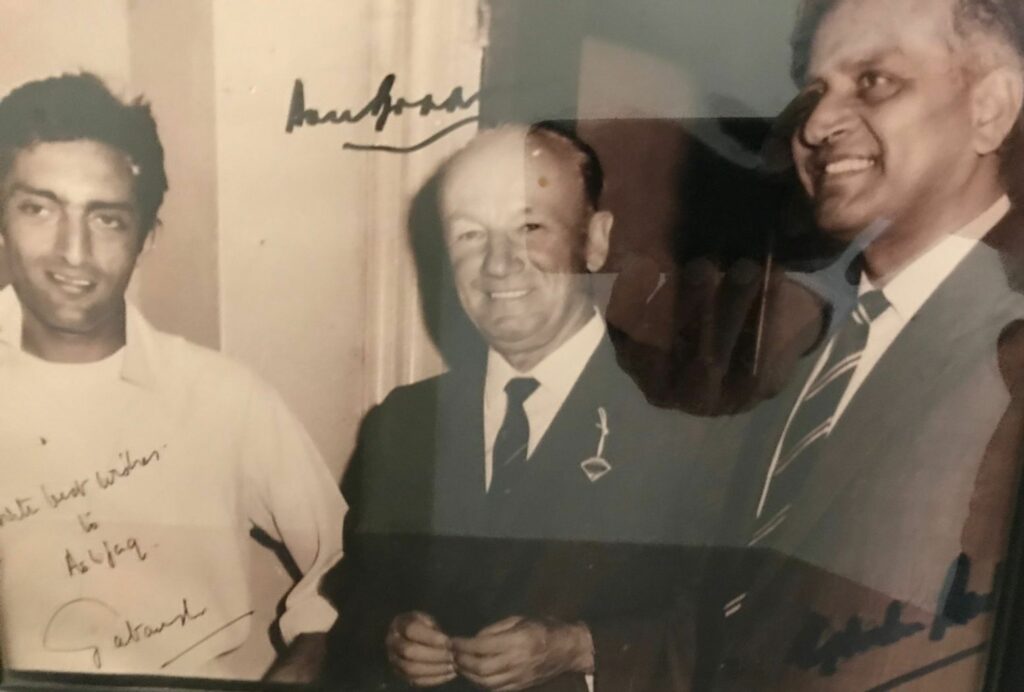
Ghulam Ahmed meets the queen
We all know about the famous off spinner’s exploits on the cricket field. But what was he like as a person? Was he a disciplinarian or was he indulgent? Was he a strict parent or a friendly person who could be addressed as Dad? After siasat.com spoke to several persons who knew him well, an interesting picture emerged.
Apparently Ghulam Ahmed was a person whose character and conduct were unblemished. It was his most outstanding trait. He was painstakingly honest and fair in his thought and judgement. If he made a decision, everyone would accept it because they knew his reputation for being impartial and equitable. As a parent he was not the old fashioned taskmaster. Instead he obtained the love, affection and friendship of all his children. As a person he stuck to his principles but did so with a measure of kindness and tact that earned the willing cooperation of his colleagues.
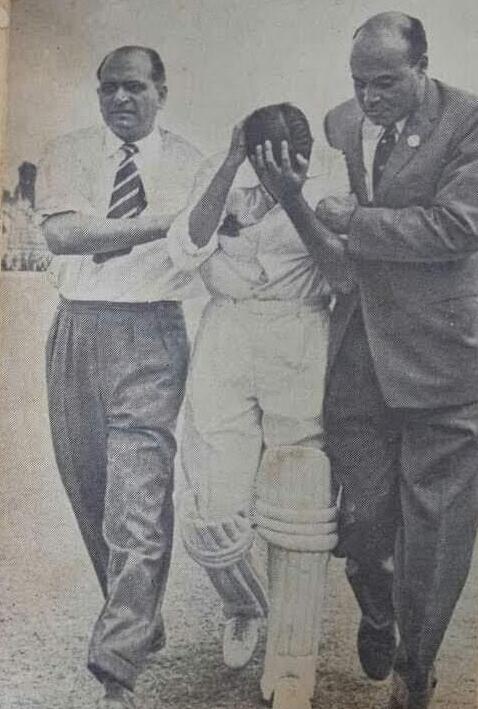
When Nari Contractor was injured
He hailed from a family wherein the male members had mostly served in the civil services. Ghulam Ahmed himself chose the same path. He was the chairman of the A.P. Public Service Commission and then also the Hyderabad Race Club. He handled sensitive issues with graceful prudence. He had a large group of friends and was well loved and respected by all. Often there would be large gatherings of his friends at his house. The men would play cards and sometimes go out on hunting trips which was a popular pastime among young men of those days.
Ghulam Ahmed studied at the famous Madrasa-E-Aliya and then at Nizam College. In his cricket career, his seniors were the well known brothers S.M. Hussain and S.M. Hadi. The latter was an all round sportsman who excelled at many sports while the former was a member of the Indian cricket team. When he was a raw beginner, he once sought permission to bowl against Hussain. After he was allowed to do so, he bowled the experienced batter with his very first delivery leaving Hussain highly impressed.
Later Ghulam Ahmed grew up and became a very renowned player himself. He grew to be very close to some of the most famous names of those days. They often dropped in at his house. Cricket administrators such as M.A. Chidambaram, M. Chinnaswamy and Kishan Rungta visited him regularly.
The legendary Lala Amarnath, Test cricketers C.D Gopinath, Hemu Adhikary and Polly Umrigar – all these people used to visit his house.
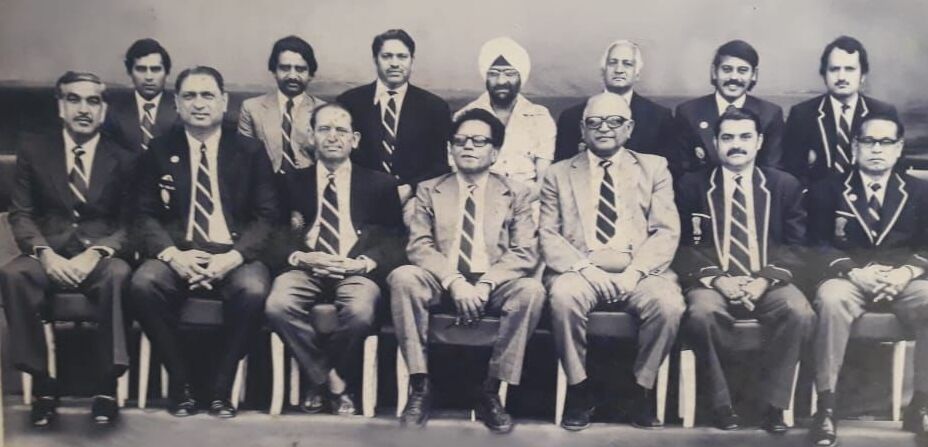
Later, Ghulam Ahmed also served as a cricket administrator both in Hyderabad as well as the BCCI.
Besides serving as the Secretary and Vice President of the BCCI, he was the Chairman of the BCCI selection committee which selected the Indian team that won the World Cup in 1983. He was also given honorary membership of the prestigious Marylebone Cricket Club (MCC).
When Ghulam Ahmed passed away after a long and illustrious life, encomiums flowed in from all parts of the world.
This is what The Independent (UK) wrote: “His smooth action enabled him to bowl for long spells while his clever flighting and variations of pace, length and line brought him comparisons with Jim Laker. He made his debut at 17 for Hyderabad but the second world war interrupted his further progress so that he did not appear in Test cricket until 1948 when he was chosen for the third Test against West Indies in Calcutta. He captained India against New Zealand in 1955 and also twice against the West Indies in 1958-59.”
In Shakespeare’s play Caesar, the character of Mark Antony says about his dear departed friend: “Here was a Caesar! When comes such another?” Meaning that Rome will probably never have another outstanding and upright personality like Caesar. The same can be said of Ghulam Ahmed. Like Caesar, Ghulam Ahmed too can never be replaced. His 100th birth anniversary is an occasion to remember with pride and affection, the excellent achievements of the man who was the first cricketer from Hyderabad to lead the nation in the international cricket arena.
source: http://www.siasat.com / The Siasat Daily / Home> News> Sports / by Abhijit Sen Gupta / July 04th, 2022
Calling it ‘The Tribute Run’, Sufiya Sufi is dedicating this challenge to the Bravehearts of the Indian Army.
Guinness record holder Sufiya takes on Siachen to Kargil run; to salute sacrifices of Indian Army.
New Delhi:
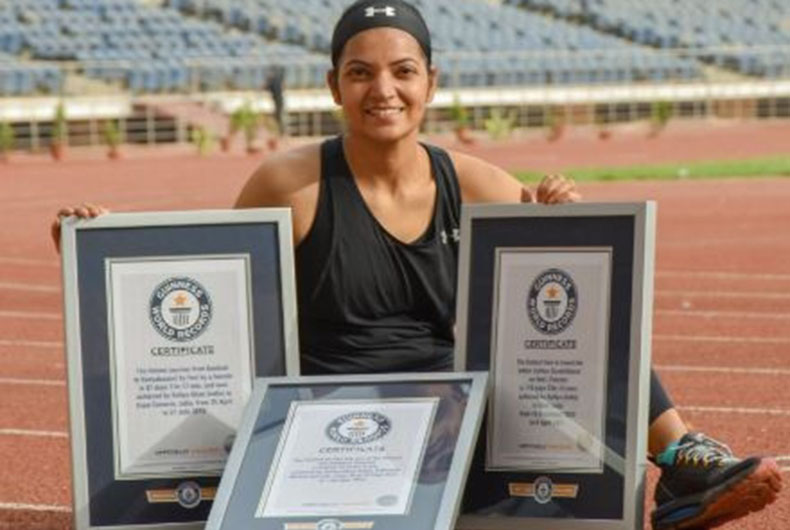
Indian Ultrarunner Sufiya Sufi ‘Runner’ is no stranger to challenges. After entering the Guinness Book of World Records for the third time earlier this year, Sufiya is now set for her next challenge — a run from Siachen Base to Kargil War Memorial.
Calling it ‘The Tribute Run’, she is dedicating this challenge to the Bravehearts of the Indian Army who have made unmatched sacrifices for our country. The 7-day-long expedition will begin at Siachen War Memorial on July 17 and conclude at Kargil War Memorial, on July 23, ahead of the 23rd Kargil Vijay Diwas.
During the 470 km long expedition, Sufiya will navigate through difficult terrain and hostile conditions. The run will begin at an altitude of 3400m, reaching up to 5359m at Khardung La with oxygen levels dropping 40 to 60 percent and temperature dipping much below zero degrees.
Commenting on her upcoming run, the Under Armour athlete said, “Ever since I have taken up the discipline, I have worked continuously towards pushing my limits and encouraging more people to take up running.
“My upcoming run is special and close to my heart and through this run, I want to pay tribute to the deeds of our soldiers and their selfless service to our nation.”
“As I prepare for this run, I have a great team, be it my coaches or Under Armour, who have supported and motivated me to take up every challenge including this expedition. I have put in the work training continuously for the past 6 months.”
In 2018, Sufiya took up running to break away from her aviation job, to relax and de-stress. Since then, she has entered the Guinness Book of records three times and has set several benchmarks for ultrarunning in India.
She holds the records for covering the Manali-Leh stretch on foot in the year 2022, the fastest time by a female to complete the Golden Quadrilateral in 2021, and the fastest woman to traverse from Kashmir to Kanyakumari in 2019. Sufiya has been an Under Armour Athlete since her first big achievement in 2020.
source: http://www.ummid.com / Ummid.com / Home> Life & Style / by IANS / June 28th, 2022
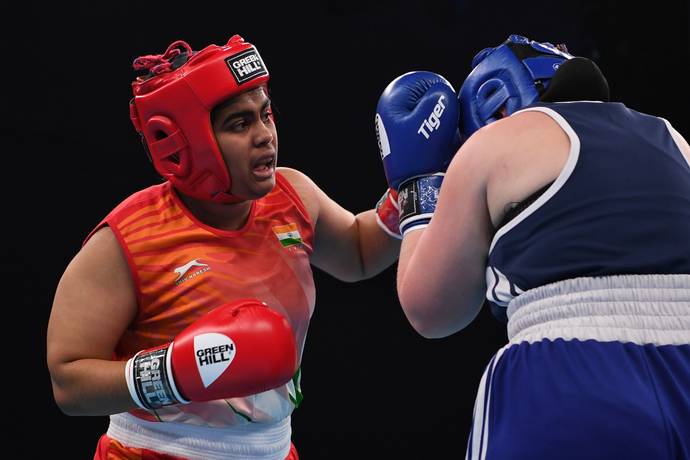
India’s Alfiya Pathan and Gitika produced sensational performances to win gold medals in the Elorda Cup in Kazakhstan on Monday.
Alfiya in action. (File Photo) – SPECIAL ARRANGEMENT
India’s Alfiya Pathan and Gitika produced sensational performances to win gold medals in the Elorda Cup in Kazakhstan on Monday.
On the other hand, Gitika, who hails from Rohtak, handed the country first gold by winning an intense all-Indian final against Kalaivani wherein both the boxers started off with an aggressive intent and kept attacking each other. While they continued to exchange heavy punches, Gitika effortlessly shifted the gears as the bout progressed and did enough in the end to tilt the result in her favour.
“It was a great feeling to win a gold medal in the first senior international tournament. This is a start; I want to win more medals at the senior level in international competitions,” Gitika said after her win.
Meanwhile, the 2019 World Championships bronze medallist Jamuna gave her all against Uzbekistan’s Nigina Uktamova but ended up with a 0-5 loss in the 54kg final.
Alfiya and Gitika fetched themselves a prize money of USD 700 for their gold medal-winning feats while silver and bronze medal winners were awarded with USD 400 and USD 200 each respectively.
With the addition of two gold and as many silver medals on the final day, the Indian contingent also concluded their campaign with 14 medals, including 10 bronze, in the inaugural edition of the tournament.
Indian women boxers secured two gold, two silver and six bronze medals in the tournament which witnessed top players in action from strong boxing countries such as India, Uzbekistan, hosts Kazakhstan, Cuba, China and Mongolia.
Jyoti Gulia (52kg), Sakshi (54kg), Sonia Lather (57kg), Neema (63kg), Lalita (70kg) and Babita Bisht (81kg) were the six bronze medallists in the women’s category.
Among men, Kuldeep Kumar (48kg), Ananta Chopade (54kg), Sachin (57kg) and Jugnoo (92kg) claimed bronze medals.
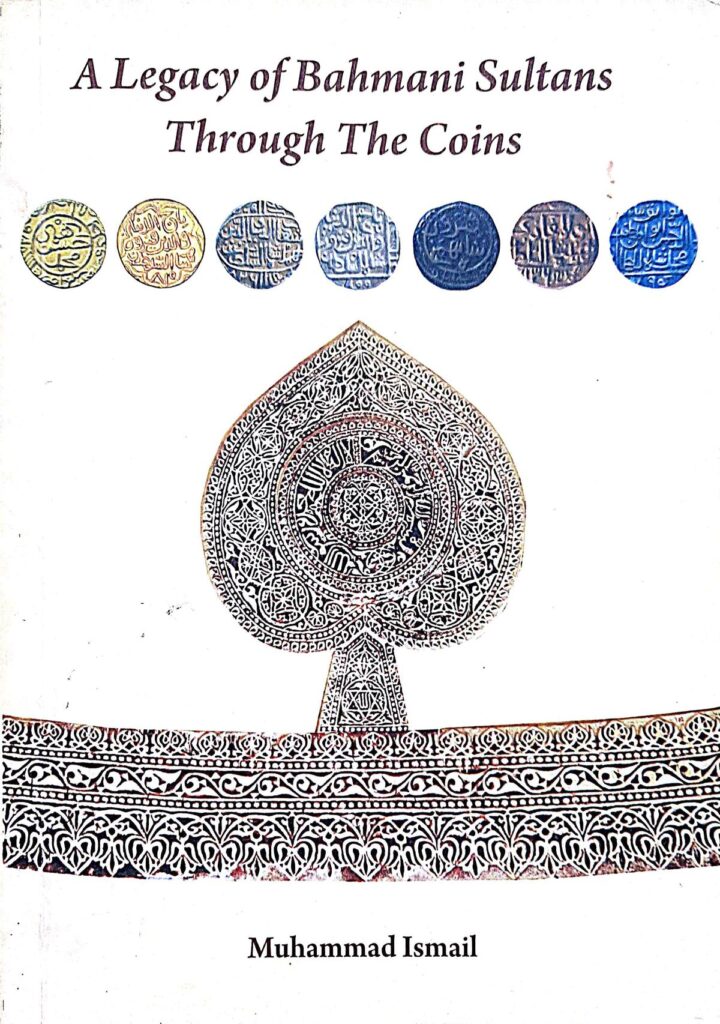
Cover page of the book ‘A Legacy of Bahmani Sultans through Coins’ published by the Gulbarga Bahmani Numismatics Research and Educational Trust. | Photo Credit: ARUN KULKARNI
Mohammad Ismail has got a rare treasure of coins dating back to Bahmani Sultans from 14th to 16th Century
The Gulbarga Bahmani Numismatics Research and Educational Trust recently published a book titled ‘A Legacy of Bahmani Sultans through coins’ authored by Numismatist Mohammad Ismail in which he depicts the numismatic journey of Bahmani Sultans through his collections.
The book traces the journey of coins belonging to all the 18 Bahmani Sultans starting from Alauddin Hasan Bahman Shah (1347-58), till the last Sultan – Kalimullah Shah (1526-1538). Mr. Ismail has meticulously worked, richly illustrated, about each coin issued during Bahmani Sultans period.
Mr. Ismail has got a rare treasure of antique coinage, belonging to Bahmani Sultans from 14th Century to 16th Century. The numismatist has more than 2,500 coins in his collection of various rulers, dynasties and kingdoms. Among his treasury are also coins dating back to 1,600 years ago.
The numismatist also organises a campaign “Save Coin Save Heritage.” The objective of this campaign is to spread awareness about ancient coins at schools and to take forward the legacy to younger generations.
Speaking to The Hindu, the numismatist explained the legacy of Bahmani Sultans and displayed a collection of nearly 80 copper coins issued in one year period between 1378-1379, and said that all the four Sultans including Dawood Shah-I, Muhammad Shah-II, Ghiyasuddin Tahmathan Shah, Shamshuddin Dawood Shah–II (4th, 5th, 6th and 7th sultans, respectively), have ruled for less than a year. His collection has got nearly 500 coins issued during Tajuddin Firoz Shah (8th Bahmani sultan), followed by 400 coins of Muhammad Shah-I (the second Bahmani sultan), and 300 coins of Kalimullah Shah (18th Bahmani sultan) Period.
According to Mr. Ismail, the study of coins gives insights into history as no other source does. The enthusiast numismatist tries to enhance his collection by getting in touch with collectors across India. His collection includes coins of various shapes, sizes and weights issued during different reigns made up of gold, silver, bronze and copper, some very rare.
When asked about the estimated value of coins in his collection, Mr. Ismail said that the value of each coin varied depending on its age, rarity and material. “But for me, as a numismatist, it is the coin’s age and rarity which matters more than its price,” he said.
Some of the rarest coins in his collections are of Tahmatun Shah, Dawood Shah, Ahmed Shah III, Muhammad Shah IV and Mujahidin Shah. Mr. Ismail’s rare collection includes 10 copper and one gold and silver coin minted during the Tahmatan Shah period. It took him eight years to find those coins. His collection also includes the rare gold and silver coins of Ahmed Shah II and Mujahidin Shah.
He also has coin collections belonging to Chalukyas, Kakatyas, Rashtrakutas, and the Vijayanagara Kingdom. Mr. Ismail wants to bring out a catalogue of these collections too.
source: http://www.thehindu.com / The Hindu / Home> News> National> Karnataka / by Praveen B Para / Kalaburagi – July 03rd, 2022