Category Archives: Leaders

Qasim Nanautawi : The Scholar who awakened Muslims through education

UTTAR PRADESH :

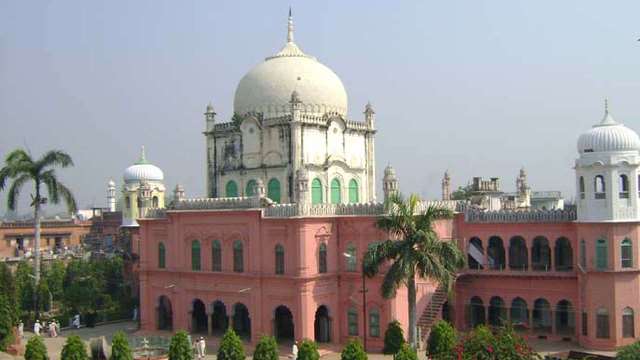
Darul Uloom Deoband

He is truly a forgotten warrior of the freedom movement. Few know about him and fewer are familiar with his name but delve into the pages of history and you realise that he deserves a better place.

He participated in the Indian Rebellion of 1857 in the Battle of Shamli between the British and the anti-colonialist ulema. The scholars were ultimately defeated at that battle.

He was Mohammad Qasim Nanautawi.

Nanautawi was born in 1832 into the Siddiqui family of Nanauta, a town near Saharanpur in Uttar Pradesh.

He was schooled at Nanauta, where he memorised the Quran and learned calligraphy.

At the age of nine, Nanautawi moved to Deoband where he studied at the madrasa of Karamat Hussain. The teacher at this madrasa was Mehtab Ali, the uncle of Mahmud Hasan Deobandi.

On the instruction of Mehtab Ali, Nanautawi completed the primary books of Arabic grammar and syntax.

Thereafter, his mother sent him to Saharanpur, where his maternal grandfather Wajihuddin Wakil, who was a poet of Urdu and Persian, lived.

Wakil enrolled his grandson in the Persian class of Muhammad Nawaz Saharanpuri, under whom, Nanautawi, then aged twelve, completed Persian studies.

In 1844, Nanautawi joined the Delhi College. Although was enrolled in the college, he would take private classes at his teachers’ home, instead of the college.

Nanautawi stayed in Delhi for around five or six years and graduated, at the age of 17.

After the completion of his education, Nanautawi became the editor of the press at Matbah-e-Ahmadi.

During this period, he wrote a scholium on the last few portions of Sahihul Bukhari.

Before the establishment of Darul Uloom Deoband, he taught for some time at the Chhatta Masjid. His lectures were delivered at the printing press. His teaching produced a group of accomplished Ulama, the example of which had not been seen since Shah Abdul Ghani’s time.

In 1860, he performed Haj and, on his return, he accepted a profession of collating books at Matbah-e-Mujtaba in Meerut. Nanautavi remained attached to this press until 1868.

In May 1876, a Fair for God-Consciousness was held at Chandapur village, near Shahjahanpur.

Christians, Hindus, and Muslims were invited through posters to attend and prove the truthfulness of their respective religions.

All prominent Ulama delivered speeches at the fair. Nanautawi repudiated the Doctrine of the Trinity, speaking in support of the Islamic conception of God.

Christians did not reply to the objections raised by the followers of Islam, while the Muslims replied to the Christians word by word and won.

Mohammad Qasim Nanautawi established the Darul Uloom Deoband in 1866 with the financial help and funding of the Muslim states within India and the rich individuals of the Muslim Indian community.

He conformed to the Sharia and worked to motivate other people to do so. It was through his work that a prominent madrasa was established in Deoband and a mosque was built in 1868. Through his efforts, Islamic schools were established at various other locations as well.

His greatest achievement was the revival of an educational movement for the renaissance of religious sciences in India and the creation of guiding principles for the madaris (schools).

Under his attention and supervision, madaris were established in several areas.

Under Muhammad Qasim Nanautvi’s guidance, these religious schools, at least in the beginning, remained distant from politics and devoted their services to providing only religious education to Muslim children.

Nanautawi died on 15 April 1880 at the age of 47. His grave is to the north of the Darul-Uloom.

Since Qasim Nanautawi is buried there, the place is known as Qabrastan-e-Qasimi, where countless Deobandi scholars, students, and others are buried.

Significantly, the elders of Deoband took more and more part in the struggle for the independence of the country.

After the establishment of Darul-Uloom, the period of participation in national politics began.

Darul-Uloom, Deoband, was a centre of revolution and political, training. It nurtured such a body of such a body of self-sacrificing soldiers of Islam and sympathisers of the community who themselves wept in the grief of the community and also made others weep; who themselves tossed about restlessly for the restitution of the Muslims’ dignity and caused others also to toss about.

They shattered the Muslims’ intellectual stagnation, they broke up the spell of the British imperialism, and, grappling with the contemporary tyrannical powers, dispelled fear and anxiety from the minds of the country.

They also kindled the candle of freedom in the political wilderness.

It is a historical fact that the political awakening in the beginning of the twentieth century was indebted to Deoband and some other revolutionary movements in the country, and the revolutionary freedom-lovers who rose up there were the products of the grace from the spring of thought of Deoband.

Then, after the establishment of Pakistan, the Indian leaders of Deoband guided the Indian Muslims in utterly adverse circumstances and helped keep up their spirits high. — IANS

source: http://www.muslimmirror.com / Muslim Mirror / Home / by Amita Verma / July 31st, 2022
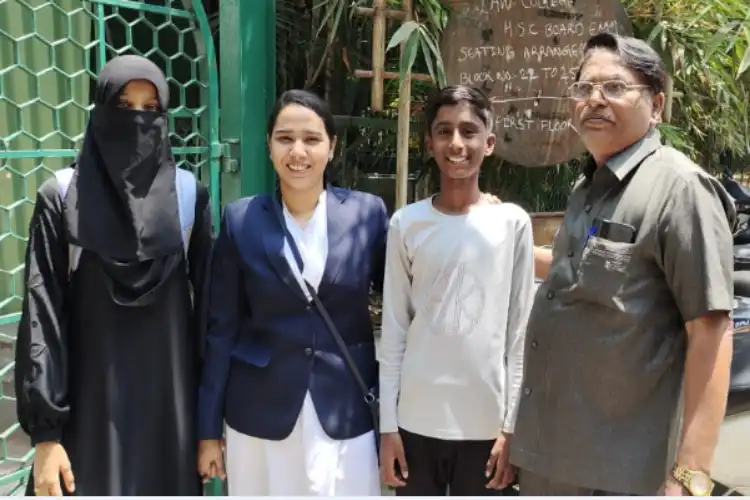
Shahnawaz Pathan becomes first Muslim woman judge of Pune

Pune, MAHARASHTRA :

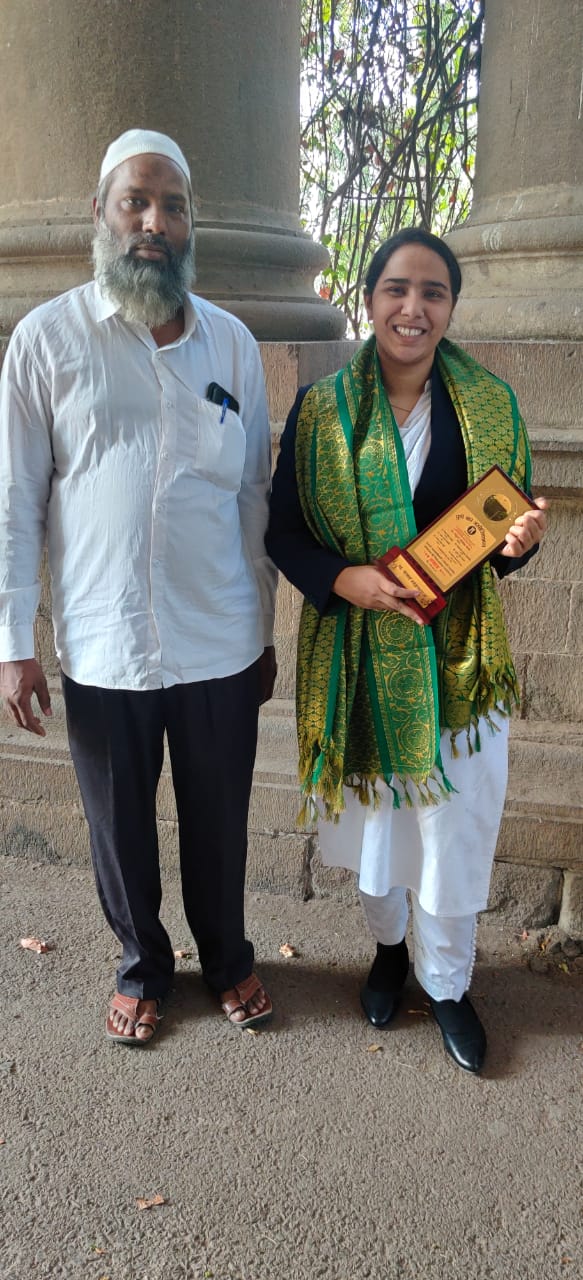
Shahnawaz Khan Pathan with her parents and brother

Come August and Shahnawaz Khan Pathan of Pune would join the training course for the First Class Judge. Her’s is an incredible journey from living with her family in a ten-by-ten space in Ghorpadi Pait Lohia Nagar slum settlement where she grew up and studied. 

Shahnawaz Khan’s story proves that success is not achieved in a day and only one who has the determination to make it will succeed. Shahnawaz Khan Pathan is the third sibling among her four sisters and one brother. Their father Aman Khan Pathan manages the family with his earnings from a small grocery shop.

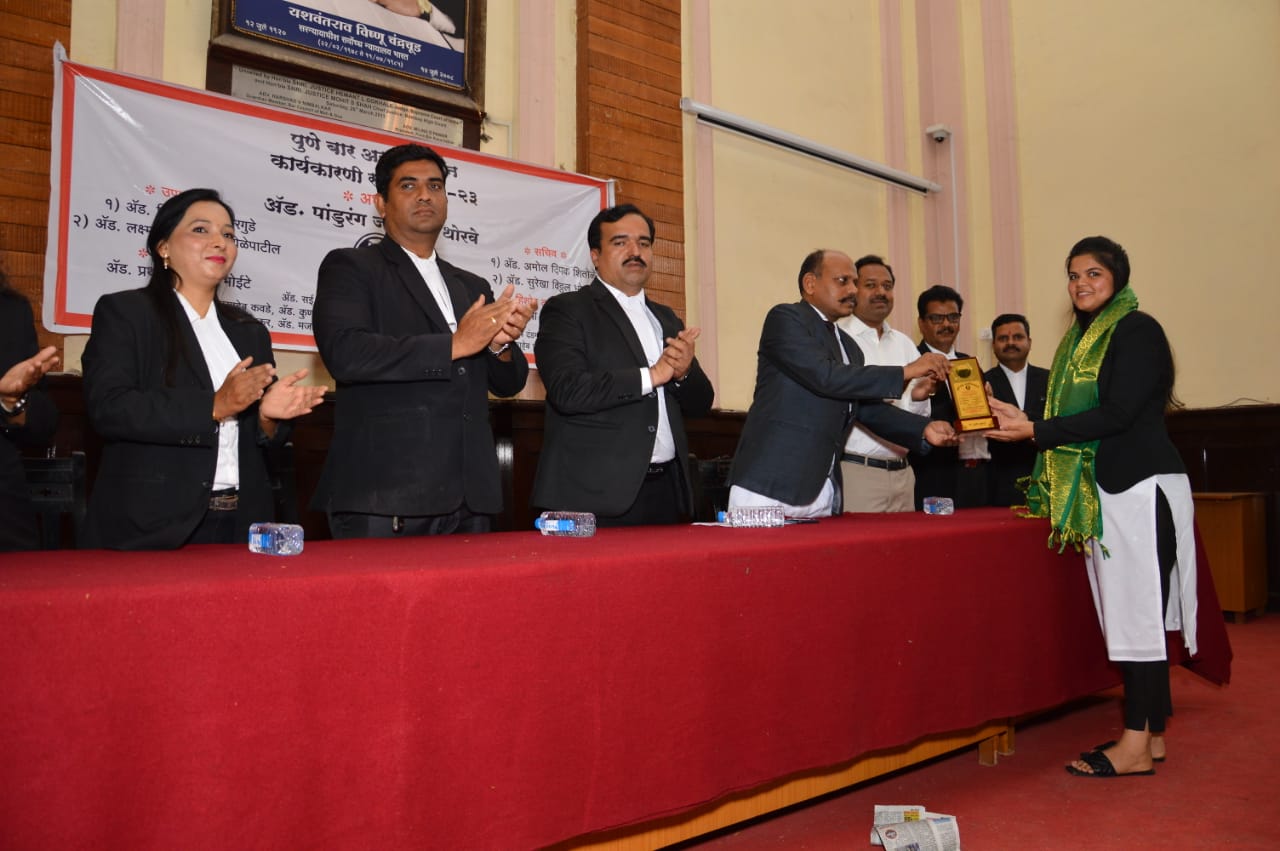
Shahnawaz Khan Pathan being felicitated by the Pune Bar after her selection as Judge

Despite Aman Khan’s low income,  he tried his best to provide proper education to his children as a result all his children are educated.

Shahnawaz Khan Pathan’s success has her father happy and proud. Aman Khan Pathan says that due to the poor financial condition of his family, he was not able to study. Sumaiya not only made his dream come true and also made him a proud father who can tell the world that he is the father of Shahnawaz Khan Pathan. 

Speaking with Awaz-the Voice, Aman Khan Pathan became emotional and said: “I am proud of Shahnawaz.” 

Her mother  Sugrabi Pathan wipes her tears of joy and says that her daughter was always very good in her studies from the very beginning. “We had high hopes from her and see she did it. I always pray for her success and success.”

Shahnawaz Khan with her Uncle Jia Khan Pathan

The family has lived all through in a small hut in the narrow streets of Lohia Nagar. There is hardly an environment conducive to studies.

However,  Shahnawaz Khan Pathan worked hard and made history by becoming the first Muslim first-class judge of Pune. 

Shahnawaz says that mere imagination does not lead to success. One needs to work hard to fulfill one’s dreams and achieve success. 

On her family’s support, Shahnawaz says that her father was always there to guide her. “Even with his meager income, he made every effort to provide for me whenever I needed something.” 

However, Shahnawaz has another hero in her life: her uncle Jia Khan Pathan, and his wife – whom she credits with encouraging her and filling her with hope and enthusiasm to keep moving.

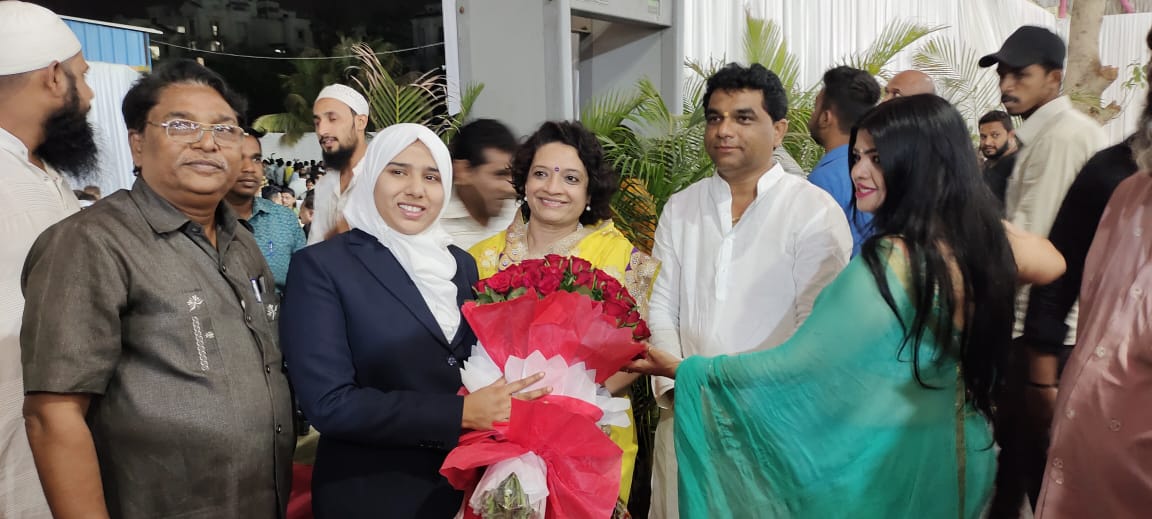
Shahnawaz being felicitated by a civil society organisation in Pune

“From the first day till the JFMC interview, Uncleji was with me like my shadow. Whenever I had to go outside the city for writing an examination, my uncle and aunty would accompany me. He never left me alone. My mother and my entire family, friends, and neighbors all kept encouraging me.” 

However, her failure to clear the Public service Commission conducted Maharashtra Judicial Services Examination in her first attempt in 2019  caused her disappointment. “At that time my father encouraged me and told me to try it again. I tried with renewed vigor and confidence and this time my name figured in the list of results declared in 2020,” she says.

 Shahnawaz has studied at Maharishi Annasaheb Shinde, Zilla Parishad School. Today, when she is all set to become the first Muslim judge of Pune, Shahnawaz says she believes that “education is not preparation for life but education is life.” 

She says she was always determined to not let the circumstances of her life become a hindrance in her path. It was only some time back that her family shifted to their new house in the Kondhwa area. 

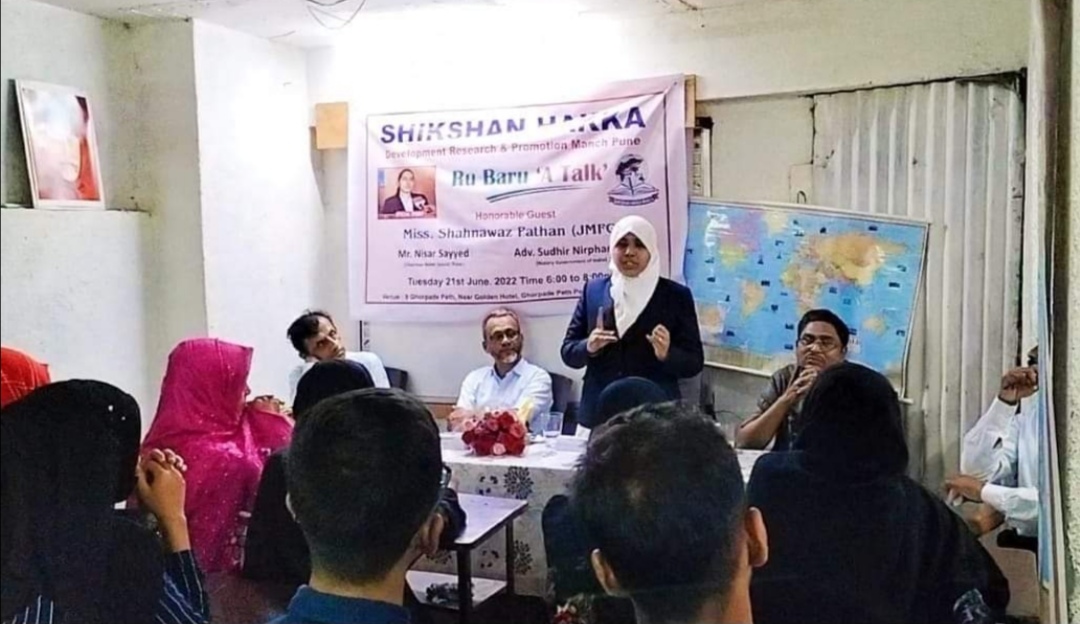
Shahnawaz Khan Pathan speaking at a function

Shahnawaz was a practicing lawyer before becoming a civil judge-cum-judicial magistrate first class (JFMC). She married software developer Sunny Sayyed before on May 25 before the JFMC results were out. She lives with her husband in the Urudi Kanchan area of Pune. 

As a legal professional Shahnawaz says that awareness campaigns should be launched to make common people aware of the legal options and legal aspects of life. Legal camps and street plays can be very helpful in this direction. She says that lack of proper information aggravates many problems.

Shahnawaz believes that a common citizen can become a force multiplier in the progress of the country by staying within the purview of the law for redressal of his grievances.

source: http://www.awazthevoice.in / Awaz, The Voice / Home> India / by Shahtaj Khan, Pune / July 14th, 2022

Remembering 4 Muslim women who fought for Indian independence

UTTAR PRADESH / PUNJAB :

Hyderabad: 

On the occasion of 74th Independence Day, let us remember these Muslim women who proved their strength, enthusiasm and determinism in the fight for freedom.

These women broke the stereotype of Muslim women in the society, who are merely perceived to be clad in Burqha and were never let out of the house. They participated in the India’s struggle for independence and emerged victorious.

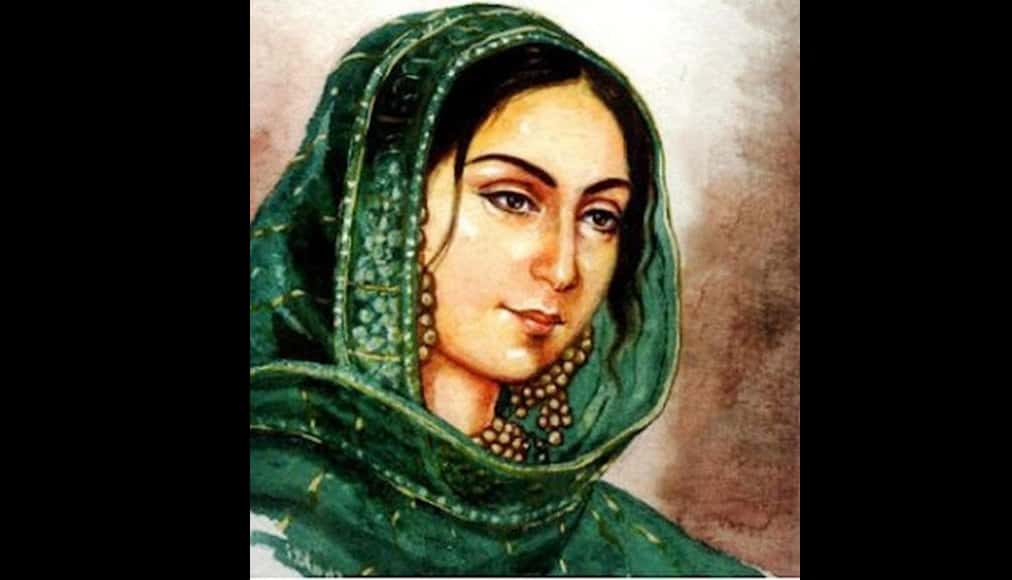
Begum Hazrat Mahal (1830–1879)

Begum Hazrat Mahal, a prominent woman of 1857 rebellion, was born in 1830 Faizabad of Uttar Pradesh. Her actual name was Muhammadi Khanum. Her father is Gulam Hussain of Faizabad. At her tender age itself, she showed good talent in literature.

She was married to Wajid Ali Shah, the Nawab of Awadh. They were blessed with a son Mirza Birjis Khadir Bahadur. On 13 February, 1856, the British troops imprisoned Wajid Ali Shah. They sent him to Calcutta on 13 March and occupied Awadh illegitimately. This irked the people and native rulers.

They revolted against the British under the leadership of Begum Hazrat Mahal. The native rulers and people met at Chavani area of Lucknow, the capital of Awadh on 31May, 1857 and declared independence. They taught a lesson to the British troops and wiped out their power in Lucknow. Later, Begum Hazrat Mahal declared her son Birjis Khadir as the Nawab of Awadh on 7 July, 1857.

As the King’s mother, she gathered 1,80,000 troops and renovated the Lucknow fort spending huge amount of money. She established a high level committee for the good governance of the state. Hazarat Mahal ruled the state on behalf of her son for about ten months and challenged the British force by inspiring patriotism among the people and the fellow native rulers. She issued a historic statement on 31 December, 1858 challenging the proclamation issued by the Queen Victoria on November 1, 1858.

But, when Delhi, the prime center for the First War of Independence was captured, the British troops surrounded and attacked Lucknow in March 1859. There was a fierce battle between the Company troops and the Begum troops. When defeat became inevitable, Begum Hazrat Mahal retreated to the Nepal forests along with the co-revolutionary leaders like Nana Sahib Peshwa and others.

The British rulers offered her huge amount of money and luxurious facilities in order to bring her back to Lucknow. But, the Begum denied them and made it clear that nothing else was acceptable to her except Independent Awadh state. Begum Hazarath Mahal was struggling for the independence of her state till her last breath. She passed away at Khathmound of Nepal on 7 April, 1879. In 1984 Government of India released a postal stamp in her honour.

Abadi Bano Begum (1852-1924)

Abadi Bano Begum, who took active part at par with men in the Indian National Movement, was born in 1852 in Amroha village, Moradabad district of Uttar Pradesh. She was married to Abdul Ali Khan of the Princely State Rampur.

Though she lost her husband at a young age, she did not remarry. She had two sons Moulana Mohammed Ali and Moulana Showkath Ali, who were famous as ‘Ali Brothers’. She nurtured her children, into becoming memorable leaders of the Indian Independence Movement. Her involvement in the freedom movement began with the Home Rule Movement, to which she rendered moral and most importantly, financial support.

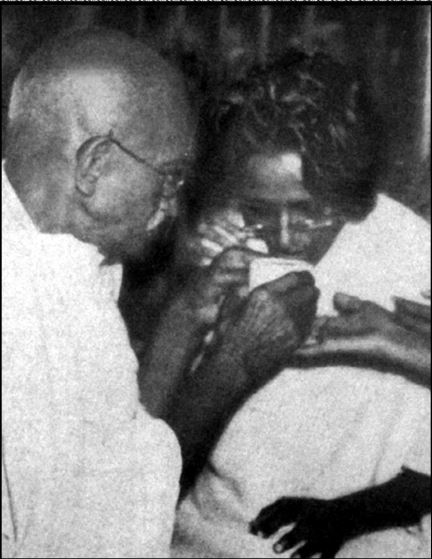
When the British government detained the Ali Brothers in Chindanwad village, under the Indian Defence Regulations, she went along with them. When a police official proposed for the surrender of her sons, she bluntly refused saying, ‘If my sons agree to the proposal of the government, I will kill them by strangulation. I hope God will bestow enough energy into this old woman’s hands’. Abadi Bano met Mahatma Gandhi in 1917 for the first time.

There after Mahatma Gandhi always addressed her ‘Ammijan’, and all other freedom fighters followed Gandhi’s address. She helped Mahatma Gandhi and other Khilafath leaders financially for undertaking all India tours.

She attended the Indian National Congress and the All India Muslim League sessions in 1917, held at Calcutta. She spoke in those meetings emphasising that complete freedom could be achieved through unity between Hindus and Muslims.

She also played a constructive role in the Khilafat and Non[1]Cooperation Movement in 1919. She declared in several meetings that ‘it was her ambition that even the dogs and cats of her country should not be under the slavery of the British’.

The fact that the British government official records treated her as a ‘dangerous person’, which established the kind of challenge she hurled at the colonial rule.

 Apart from participating in politics she also guided several women’s organisations all over India. So intensely patriotic and nationalist that Abadi Bano Begum who played an active role in national movement without caring old age, ill health and cruel atrocities of police, breathed her last on 13 November, 1924.‹

BIBI AMATUS SALAM (1907-1985)

Bibi Amatus Salam, who strongly believed that freedom from the slavery of British could be achieved, through the Gandhian methods only, was born in 1907 in Patiala of Punjab in Rajputhana family.

Her father was Colonel Abdul Hamid and her mother Amatur Rehaman. Amatus Salam was the younger sister of six elder brothers. Her health was very delicate since her childhood. She was inspired by her eldest brother, freedom fighter Mohammad Abdur Rashid Khan.

Following the footsteps of her brother, she decided to serve the people of the country.

Amatus Salam participated in the Khadi Movement and attended the meetings of the Indian National Movement along with her brother. She was attracted towards the Non[1]Violence theory of Mahathma Gandhi and Sevagram Ashram.

She decided to join Sevagram Ashram, and went there in 1931. She joined Ashram and followed the strict principles of the Ashram. With her selfless service she became very close to Gandhi couple.

They considered Amatus Salam as their beloved daughter. During the Indian National Movement, she went to jail along with other women in 1932 despite her illness with the permission of Gandhi.

After being released from Jail, she reached Sevagram and took over the responsibilities as Personal Assistant of Gandhi. She said that besides achieving independence, harmony between the Hindus and Muslims, Welfare of the Harijans and Women were her life ambitions. When communal riots erupted, she toured North-West Frontier, Sindh and Noukhali areas as an ambassador of Gandhi.

She held Satyagraha for 20 days to normalize the situation in those areas. After Independence, she rededicated herself to the Public Service. She published an Urdu Magazine called ‘Hindustan’ to promote national integration and communal harmony. When Khan Abdul Gaffar Khan toured in India in 1961, she travelled with him as his personal assistant. When India was at war with

China in 1962 and with Pakistan in 1965, she took all the pains in reaching the mountains or war area along with her adopted son Sunil Kumar to encourage our soldiers and to serve them. Bibi Amatus Salam, who spent all her life following the Gandhian ideology, breathed her last on 29 October, 1985.‹

HAJARA BEGUM (1910-2003)

Hajara Begum, who fought against the British to liberate the Nation and worked for the welfare of the toiling masses of the country, was born on 22 December, 1910 at Saharanpur in Uttar Pradesh. She came to know about the sacrifices of the freedom fighters who were fighting against the British from her father, who was a police officer.

After the failure of her marriage, she went to London to pursue her higher education, where she got acquainted with the anti-British forces. This led her to decide to fight against the British Imperialist forces to liberate the nation. She had to face the anger of the British Government as she was criticizing their acts in several International fora.

She returned to India and joined as a lecturer in the Karamat Hussain women’s College at Lucknow in 1935.

She also worked along with famous poet Sajjad Zahir in the formation of All India Progressive Writers’ Association.

She got married to a nationalist leader Dr. Zainul Abedeen Ahmed in 1935 and in the same year both of them took membership in the Indian National Congress. Since the police were after them for their anti-British activities, they resigned their jobs and dedicated themselves totally to the Indian National Movement.

While participating in the activities of the Indian National Congress, Hajara Begum also campaigned for the Communist Party without the knowledge of the Police. She actively took part in the election campaign in those days, and as a result of this a number of Congress leaders could get elected. She attended a secret political workshop at Kotthapatnam in Andhra Pradesh in 1937.

 She spoke on different subjects in the workshop as a lecturer. Hajara Begum was against the gender bias since her younger age. She fought against all types of inequalities successfully. She left the Indian National Congress in 1940 along with her husband. Since then, she played a vital role in organizing the unorganized labour sector.

She became very popular as ‘Hajara Aapa’ in the circles of toiling people and women. The Soviet Union honoured her with ‘Supreme Soviet Jubilee Award’ in 1960 in recognition of her work for the downtrodden people on the eve of the birth centenary of Lenin. Hajara Begum, who spent her entire life in the service of the country, breathed her last on 20 January, 2003.


Syed Naseer Ahamed can be contacted at Phone: +91 94402 41727

source: http://www.siasat.com / The Siasat Daily / Home> Featured News / by Nihad Ahmed / Input by Syed Naseer Ahmed / August 15th, 2020

Madhya Pradesh : PFI’s political wing SDPI wins 3 municipal seats in Neemuch district

MADHYA PRADESH :

The first phase civic body election results in Madhya Pradesh were declared on Sunday, while the counting of votes for the second phase of polling was held on Wednesday.

The three-tier urban civic body elections in MP for 347 municipal bodies, including 16 municipal corporations, 76 municipal councils and 255 Nagar Parishads, were held in two phases – on July 6 and 13. (ANI File Photo)

The three-tier urban civic body elections in MP for 347 municipal bodies, including 16 municipal corporations, 76 municipal councils and 255 Nagar Parishads, were held in two phases – on July 6 and 13. (ANI File Photo)

Bhopal:

Three candidates of the Social Democratic Party of India (SDPI), a political wing of the Popular Front of India (PFI) won the councillor elections from Neemuch, which witnessed communal tension in May this year.

SDPI candidates Arbina Bi and Jafar Shah won from wards 10 and 11 of Rampur municipality of Neemuch district by defeating two BJP candidates while Jafar Shah won from wards no 11 of Manasa by defeating a Congress candidate.

PFI and SDPI have become active in a dozen districts of Madhya Pradesh over the past two years.

SDPI leader K Saleem from Indore said, “Congress leaders have asked us not to contest the election because it will help BJP like AIMIM. By defeating BJP candidates, we have proven that SDPI is fighting for the rights of people.”

In the run-up to the civic elections, state home minister Narottam Mishra had repeatedly targetted the SDPI, calling it anti-national.

Saleem attributed the party’s win to the goodwill for SDPI after its volunteers saved lives during the floods in the city two years ago.

BJP spokesperson Rajneesh Agrawal insisted that too much should not be read into the SDPI wins., “Many factors are involved in local bodies election so it is wrong to say that they (candidates) won because of SDPI.”

In May this year, communal violence erupted in Neemuch after some people tried to install a Lord Hanuman idol near a Muslim Shrine.

source: http://www.hindustantimes.com / Hindustan Times / Home> Cities> Bhopal News / by Shruti Tomar / July 22nd, 2022

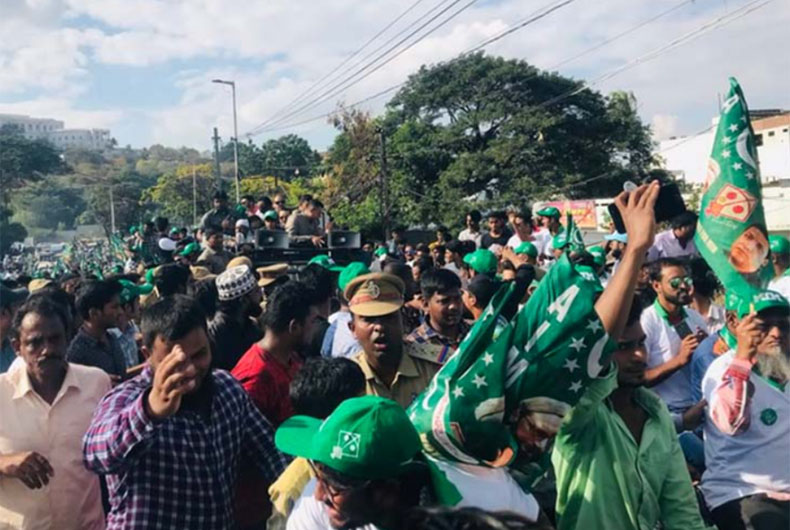
Asaduddin Owaisi’s AIMIM Wins 7 Seats In Madhya Pradesh Local Body Polls

Hyderabad, TELANGANA / MADHYA PRADESH :

Madhya Pradesh local body elections: In the first phase of the local polls held on July 6, Asaduddin Owaisi’s AIMIM won four seats.

Asaduddin Owaisi's AIMIM Wins 7 Seats In Madhya Pradesh Local Body Polls
Asaduddin Owaisi’s AIMIM contested civic body polls in BJP-ruled Madhya Pradesh for the first time

Bhopal: 

The All India Majlis-E-Ittehadul Muslimeen (AIMIM) on Wednesday won three seats in the civic body elections in Madhya Pradesh, taking its overall tally in the local polls held earlier this month in the state to seven.

In the first phase of the local polls held on July 6, the Asaduddin Owaisi-led party had won four seats, while in the second phase conducted on July 13, the counting of votes for which is currently underway, it won three seats so far, officials said.

The Hyderabad-headquartered party won these three seats in the Khargone Municipal Council (KMC).

This is for the first time AIMIM contested civic body polls in BJP-ruled Madhya Pradesh.

AIMIM’s Aruna Bai won from ward number 2 of KMC by defeating her nearest rival and BJP candidate Sunita Devi by a margin of 31 votes.

Aruna Bai, who belongs to the Scheduled Castes (SC) community, said she joined AIMIM as she was influenced by Mr Owaisi’s views on Dr Babasaheb Ambedkar.

Two other winners from the AIMIM are Shakeel Khan from ward 15 and Shabnam from ward 27 in KMC.

The BJP won 18 seats in the KMC, the Congress three and independent candidates eight.

In the first phase results on Sunday, the AIMIM won four seats – two in Jabalpur and one each in Burhanpur and Khandwa.

Mr Owaisi had addressed public meetings in Khandwa, Bhopal and Jabalpur to campaign for his party’s candidates for the polls held earlier this month.

The local body elections in Madhya Pradesh for 413 municipal bodies, including 16 municipal corporations, 99 municipal councils and 298 Nagar Parishads, were held in two phases – on July 6 and 13.

(Except for the headline, this story has not been edited by NDTV staff and is published from a syndicated feed.)

source: http://www.ndtv.com / NDTV / Home> All Indian / by Press Trust of India / July 20th, 2022

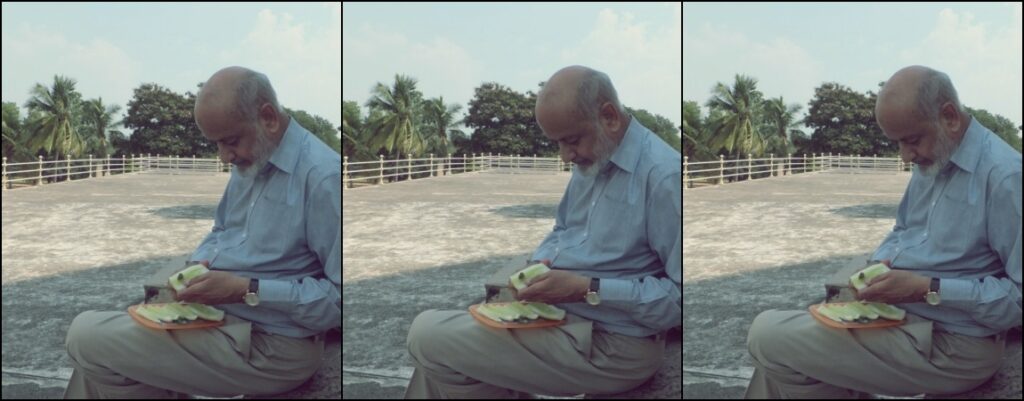
Mohammed Shakeb: Preserver of Mughal Archival Documents and Reconstructor of Libraries

Kokori, UTTAR PRADESH /Hyderabad, TELANGANA / London, U.K :

A tribute to a polymath historian who recently passed away.

Dr Ziauddin Ahmed Shakeb at the Qutb Shahi tombs in Hyderabad, October 2013. Photo: Author provided

I first met Dr Mohammed Ziauddin Ahmed Shakeb in the summer of 2011, as a naïve PhD student who’d arrived in Hyderabad from Los Angeles wanting to “read Shah Jahan’s documents”. He asked me the very standard question asked of research students in India, “What is your topic?”

I only had a rather incoherent answer to give to Shakeb, the man who had, among other things, created the Mughal Record Room, in what is today known as the Telangana State Archives. Located in a nondescript building at the periphery of the Osmania University campus in the dusty precinct of Tarnaka, this institution has undergone numerous transformations over the course of a half-century of its existence in Hyderabad. But institutions were often narrow and unimaginative places for sustaining a towering figure such as Shakeb. He went on to have a long and eclectic life and career that consistently defied the logic and constraints of institutions, for he was himself an institution. The loss of Shakeb is thus far more than the loss of an individual.

His was a formidable generation of post-Independence intellectuals from different parts of the subcontinent who, from the 1950s, devoted themselves to preserving its languages, repairing and reconstructing our scattered archives and libraries, and re-imagining our past(s) long before colonialism. Shakeb embodied, above all, a boundless curiosity coupled with a complete disregard for trends, ‘schools,’ cliques, and fancy theories.

He was not interested in being a Marxist or a nationalist nor in chasing the Western academy’s greener pastures. In some ways, his foremost allegiance was to the detritus of the past itself – to what paper, ink, and materiality mean and what they can tell us about our past and present selves. He asked, what a document or manuscript had gone through over centuries, how had it come to be, and how can we best preserve thousands of paper fragments for future generations so we can continue to tell their stories?

This rare commitment to the study and preservation of archival knowledge led him to write the landmark catalog, Mughal Archives Vol I: A Descriptive Catalogue of the Documents Pertaining to the Reign of Shah Jahan, in 1977, followed by many publications for The British Library, State Archives Andhra Pradesh, and other repositories, universities, and auction houses. I remember asking Shakeb once why he was so committed to creating reference tools to access rare historical materials, and he answered, “because I know no one will care to read them in the future!” In some ways, he was right.

Today, when the stakes for writing about the subcontinent’s pasts are fraught and closely tied to an ongoing project of hollowing out academic institutions, it’s worth remembering a very different kind of Indian historian.

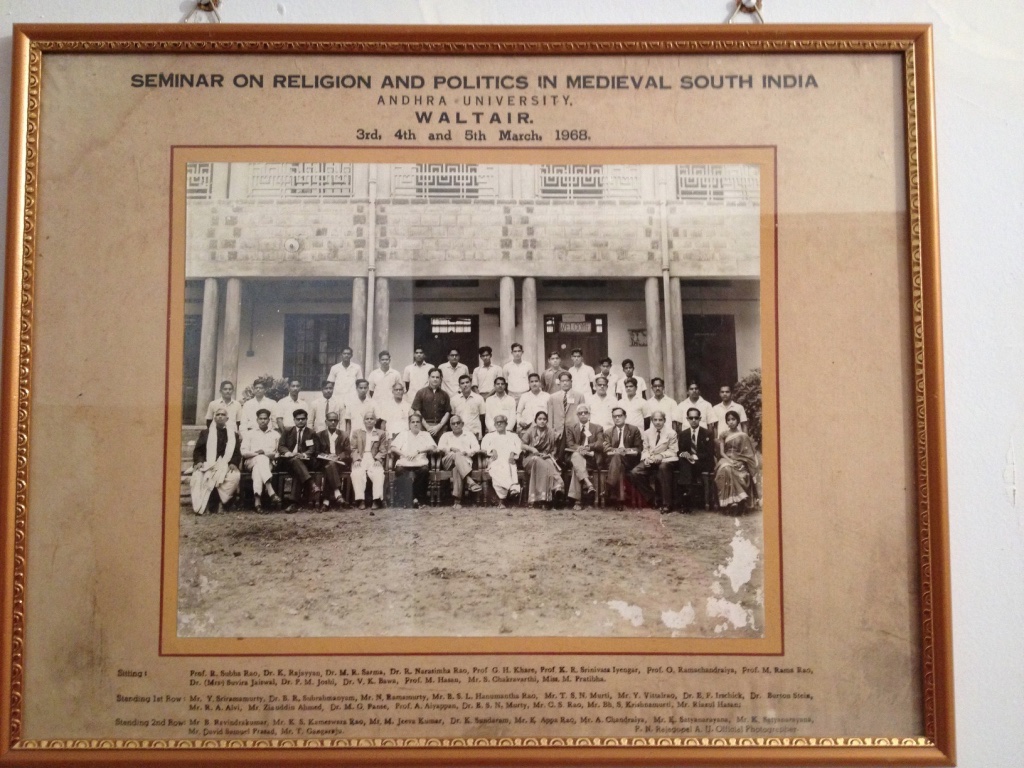
Shakeb standing in the second row, in a group photo from a conference in March 1968 at Andhra University, Visakhapatnam. Also pictured are G.H. Khare, Mohibbul Hasan, V.K. Bawa, P.M. Joshi, Suvira Jaiswal, Burton Stein, and Eugene Irschick, among others. Photo: Author provided

Born on October 21, 1933, Shakeb grew up in Hyderabad and Aurangabad. He studied Political Science and English at Osmania University before heading to Aligarh Muslim University in 1956 for his Masters, where he was taught by Mohammed Habib and S. Nurul Hasan. In 1962, he returned to the south where he was employed as an archivist at what was then known as the State Archives Andhra Pradesh. There, Shakeb acquired the unique training of deciphering documents and identifying their categories, genres, and forms from the last generation of the traditional jagirdari staff of the Nizam’s state who were retiring when he joined the archives. He also worked under Yusuf Husain Khan who had begun the work of processing Mughal administrative documents. The archives thrived under the directorship of committed scholar-administrators such as Hadi Bilgrami and V.K. Bawa.

As rich documentary caches from families, Sufi shrines, and samsthanams were discovered and deposited into state institutions, post-independence archivists and historians confronted challenges, including the reluctance of individuals to part with materials that had been in their homes for centuries. Debates and disputes ensued about what constituted a ‘valuable’ manuscript or document, how to classify materials, and to which regional-linguistic nationalism a remnant ‘belonged.’

These were debates that had already begun in the pre-Independence period, in the work of institutions like the Indian Historical Records Commission. Recent studies of the debates between Jadunath Sarkar and the Maratha historians have traced the longer history of such tensions. Part of the problem was the mutual suspicion between scholars oriented to modern social sciences and those with a more ‘traditional’ orientation and training. Shakeb, the archivist-historian, was at once both and neither.

At a distance from the halls of JNU and Aligarh, where the Mughal state’s merits were being debated, Shakeb inhabited yet another set of worlds. He was at ease reconstructing the household library of Chishti Sufi Abu’l Faiz Minallah in Bidar, discussing the southern India Cholas with the American historian Burton Stein, and discovering a shipwreck off the coast of Masulipatnam in the late 1960s.

Based on newly-processed materials, in 1976, he would complete his doctorate under P.M. Joshi at Deccan College in Pune, a connected history that examined circulation and political diplomacy between Safavid Iran, Mughal India, and the Golkonda sultanate. Shakeb’s study brought the question of mobility and exchange to the centre stage at a time when the norm was to study either the Mughal heartland (often synonymous with Delhi or the northern Indian plains) or select one province of the empire. After many years in archives and universities, Shakeb charted his own path beyond academia. His forensic ability for assessing manuscript provenance, material objects, and documentary genres, allowed him to thrive in other professional contexts, leading to work as a consultant for Christie’s in London.

But, to restrict myself to Shakeb the historian would fail to capture the range of subjects, languages, and disciplines over which he had complete mastery – Persian and Urdu literature, Islamic studies, geography, philosophy, linguistics, and art history. Shakeb always kept the historian’s arrogance in check by reminding her of the literary critic’s skills. The study of prosody and poetics was just as important for making sense of an India without and before English.

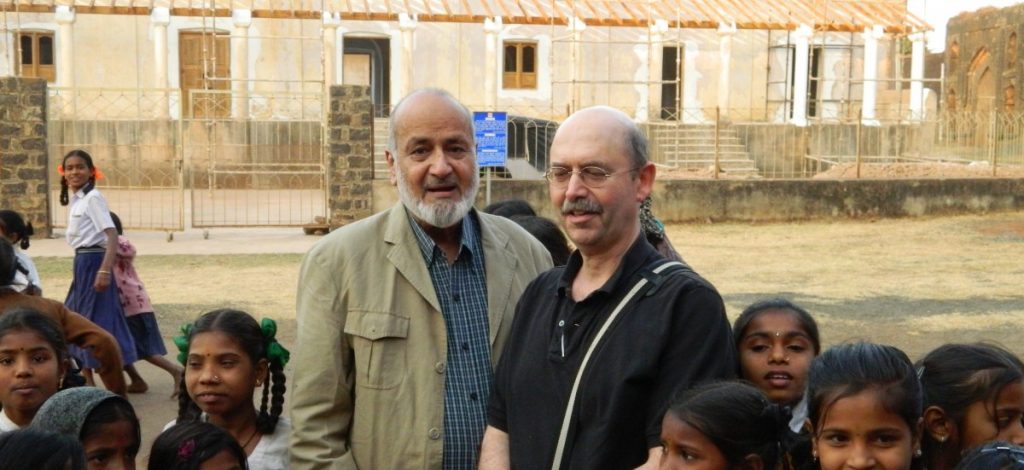
Dr Ziauddin Ahmed Shakeb (L) with his friend Dr Leonard Lewisohn (R) at Bidar fort in January 2012. Photo: Author provided

Literary circuits would light up the minute Shakeb landed back in Hyderabad (as they often would in London). He had been working for many years on translating Iqbal’s Persian poetry into Urdu. He was equally committed to the study of Bedil, Ghalib, Dagh, and Amir Minai. He would unveil to students the unique phonetics and cadence of Dakani, the pan-regional literary idiom of southern India, with many living poets and a long literary history, which he emphasised, is yet to be fully understood for its role in shaping classical and modern Urdu.

When he published his dissertation, Relations of Golkonda with Iran, in book form in 2017, he dedicated it to his grandchildren – Itrat, Taha, Mahamid, Khadija, Tawsin, Mahd, Istafa, Fatima, ‘Ali, Nuha – all of whom embody their dadasaab’s fortitude and resilience. I haven’t sufficient words to describe the patience of his wife, Farhat Ahmed, and the enormity of what she has taught me over many years about balancing the scholarly life with everyday living. It was this reminder that grounded Shakeb’s engagement with multiple worlds. His hands that treated every piece of archival paper like a newborn child. Lethal scoldings hurled at junior scholars too convinced of their own greatness. And, never forgetting to make fun of people who take themselves too seriously. With Shakeb’s passing, we are reminded how fragile the threads are that connect us to the past, and how dependent we are on a handful of such individuals. It’s difficult to imagine what, if anything, might come after such larger-than-life figures.

Subah Dayal is Assistant Professor at New York University’s Gallatin School of Individualized Study. Her research is on social and cultural histories of the Deccan and the Indian Ocean world.

source: http://www.thewire.in / The Wire / Home> English> Culture> History / by Subah Dayal / February 10th, 2021

Shabana Faizal, Nagma Mallick, Sara Aboobacker among ‘Inspiring Muslim Women of Kerala’ list by RBTC

KERALA :

‘RISING BEYOND THE CEILING’ releases list of Seventy Inspiring Muslim Women of Kerala

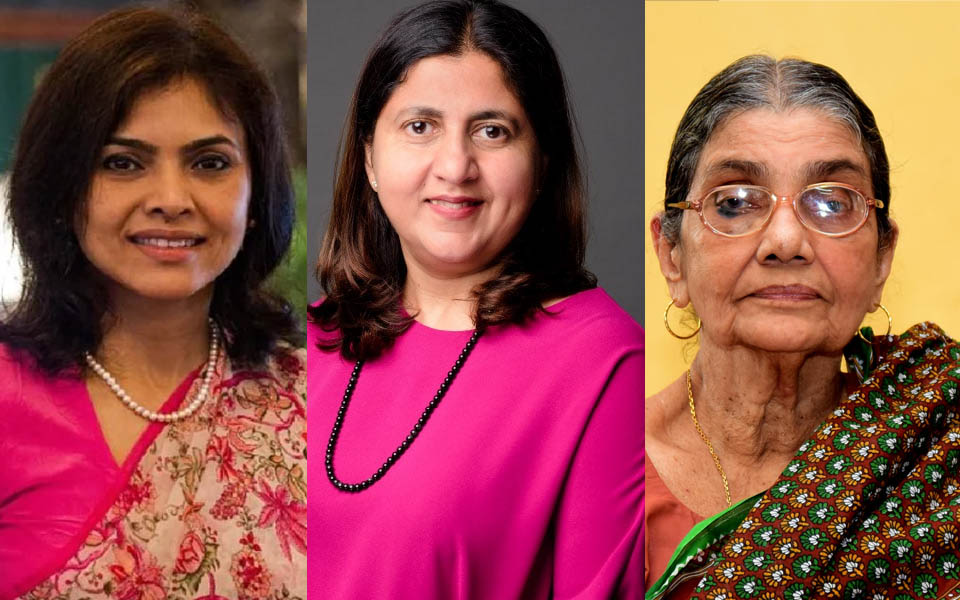
Nagma Mallick(L), Shabana Faizal(M) and Sara Aboobacker(R)

Kerala: 

‘Rising Beyond the Ceiling’ (RBTC), an initiative born out of the need to change the stereotypical narrative about Muslim women in India has released its list of seventy Inspiring Muslim Women of Kerala. The list includes names like Shabana Faisal, Nagma Mohamed Mallick, Sara Aboobacker, and others.

“The seventy RBTC Honorees from Kerala celebrated in this book have displayed exemplary accomplishments in various fields. They are flying planes, serving as Civil Police Officers in the state, joining the national Indian Police Service, and leading as District Police Chief. They are contributing to nation-building in the Indian Foreign Service, Indian Administrative Service, and Indian Information Service and as Education Administrators, Directors of Departments of Industry.” RBTC said in its statement.

“They are contributing in leadership positions as managing directors, CEO, vice-chairperson, founders. They are influencers and singers, having an individual social media following of over 1 million and have been recognized in international and national awards including YouTube’s Golden Play Button,” it further added.

Global Inspiration Shabana Faizal:

Shabana Faizal, Chief Corporate Officer (CCO) and Vice-Chairperson of KEF Holdings UAE has been listed in the category of ‘Global Inspirations’.

“Shabana started her entrepreneurial career in 1995, when she set up Sophiya’s World – luxury and special items studio – in Calicut, following her marriage to Faizal E Kottikollon, chairman of KEF Holdings.” RBTC wrote about Shabana.

“Shabana has a driving passion to make a difference in the lives of the underprivileged, which led to the setting up of the Faizal and Shabana Foundation. The Foundation carries out campaigns to improve education, healthcare, sustainable livelihood, humanitarian assistance, youth development, and housing in India and the UAE. Her most recent passion project was the revamp and enhancement of the GVHSS in Nadakkavu, Kerala which has empowered more than 2,400 young girls to believe in themselves and their dreams and impacted the lives of more than 69,000 students across 65 schools in Kerala.” It further added.

Shabana is the daughter of a well-known entrepreneur and philanthropist late B.Ahmed Haji Mohiuddeen from Thumbay, Mangalore.

Impassioned author and writer Sara Aboobacker:

Kannada fiction writer Sara Aboobacker has been listed in the category of ‘Impassioned authors and writers’ adding that her stories narrate Muslim lives in the areas bordering Karnataka and Kerala, focusing on the inequities and injustices meted out to women by the male society.

“Aboobacker’s books largely focus on the lives of Muslim women living in the Kasaragod region, bordering the Indian states of Kerala and Karnataka. She focuses on issues of equality and injustice within her community, critiquing patriarchal systems within religious and familial groups. Her writing style is direct and simple, and she has stated that she prefers a realist approach to literature, prioritizing the expression of social concerns over stylistic embellishments. Her books have dealt with complex subjects such as marital rape, communal and religious violence, and individual autonomy.” RBTC wrote about Aboobacker.

Sara Aboobacker has received many prestigious literary awards, such as the Karnataka Sahitya Akademi Award, 1984; Anupama Niranjan Award, 1987; Rathnamma Heggade Mahila Sahitya Award, 1996, etc. She has seven novels, four collections of short stories, and one collection of essays to her credit. The Library of Congress has acquired eight of her works.

Leader in Administration Nagma Mohamed Mallick:

First Muslim woman in Indian Foreign Service (IFS) Nagma Mallick who is currently serving as Additional Secretary in the Ministry of External Affairs, has been named in the category ‘Leadership in Administration’ for contributing to nation-building in the Indian Foreign Service.

“An IFS officer of the 1991 batch, Nagma Mallick has served as the High Commissioner of India to Brunei from 2015 to 2018, and as India’s Ambassador to Tunisia between 2012 to 2015. Earlier she served as a staff officer to Prime Minister I.K. Gujral, then served as the first woman Deputy Chief of Protocol (Ceremonial). During her career in the IFS, Ms. Mallick has also served in France, Middle East, Sri Lanka, and Nepal.” It wrote about Nagma.

The list features a total of seventy Muslim women from Kerala and their stereotype-shattering stories of courage hard work and resilience. The list includes names like Airline pilot Afra Abdullah, IAS Officer Adeela Abdullah, Student Activist Aysha Renna, Life Coach Sahla Parveen and others.

About RBTC:

Rising Beyond The Ceiling (RBTC) is an initiative born out of the need to change the stereotypical narrative about Muslim women in India. It is a celebration of the achievement, endeavor, and diversity of Indian Muslim women. RBTC shines a spotlight on Muslim women’s contributions to nation-building in a variety of ways and professions. Founded in April 2020 by Dr. Farah K. Usmani, this initiative aims to make Muslim women’s stories more visible, provide positive role models for future generations, nurturing young women’s confidence and ambition in all spheres. RBTC works across various platforms- the website, publications, multimedia as well as an outreach young women’s mentorship programme.

RBTC is putting together inspiring profiles from fourteen states in India that are home to nearly eighty percent of the country’s hundred million Muslim women population. Besides state and national levels, there is also an RBTC 100 list under finalization of Global Inspirations which includes women who have done their initial studies in Indian institutions and are now making their mark in countries across the globe. A compendium of Inspirations from the Past compendium of those amazing Muslim women who are not with us now, but on whose shoulders we stand today. We are also excited about our amazing Under-30 Youth Inspirations list. RBTC will continue to institute annual Muslim women honorees lists to share the stories of achievements, courage and resilience.

source: http://www.english.varthabharati.in / Vartha Bharati / Home> India / by Rising Beyound the Ceiling / January 30th, 2022

Juned and Ramandeep rewrite men’s and women’s 35km race walk national records

HARYANA :

The 23-year-old Ramandeep clocked 3:00.04s and clipped more than 13 minutes from Priyanka Goswami’s earlier national record of 3:13.19s.

Juned Khan of Haryana and Ramandeep Kaur of Punjab. (Photo | Twitter)
Juned Khan of Haryana and Ramandeep Kaur of Punjab. (Photo | Twitter/ ians india)

The 23-year-old Ramandeep clocked 3:00.04s and clipped more than 13 minutes from Priyanka Goswami’s earlier national record of 3:13.19s, set in the World Athletics Race Walking Championships in Muscat last month. Goswami did not take part in the 35km event on Sunday. She had taken part in the 20km event on Saturday but could not finish the race.

Ramdeep’s Punjab team-mate Manju also came inside Goswami’s earlier national mark to take the silver in 3:07.49s.

In the men’s 35km event, 22-year-old Juned pulled away from Ram Baboo and Chandan Singh after the 20km mark to lower the national record by five minutes, clocking 2:40.16s. Eknath Sambhaji Turambekar, who held the earlier national record of 2:45.17s, was among the four who were bunched in the lead till the 20km mark but dropped out after being second with 10km to go.

The 35km race walk event was introduced in India only last year in the wake of World Athletics’ decision to do away with the 50km event after the Tokyo Olympics.

Uttarakhand’s Sachin Bohra edged out Gujarat’s Rohit Kumar Yadav by a mere second to win the men’s U-20 10km crown with a time of 43:12s. Deepika Sharma of Rajasthan won the women’s U-20 10km race with a time of 51:32s

The Results:

Men’s 35km:

1. Juned Khan (Haryana) 2:40.16;

2.Ram Baboo (Uttar Pradesh) 2:41.30;

3. Chandan Singh (Uttarakhand) 2:42.02.

Women’s 35km:

1. Ramandeep Kaur (Punjab) 3:00.04;

2. Manju (Punjab) 3:07.49;

3. Payal (Uttarakhand) 3:15.47.

Men U-20 10km:

1.Sachin Bohra (Uttarakhand) 43:12;

2. Rohit Kumar Yadav (Gujarat) 43:13;

3. Aditya Negi (Uttarakhand) 44:27.

Women’s U-20 10km:

1. Deepika Sharma (Rajasthan) 51:32;

2. Bharti Bhadana (Haryana) 52:23;

3. Indu (Haryana) 52:40.

source: http://www.newindianexpress.com / The New Indian Express / Home> Sports> Others / by PTI / April 18th, 2022

BDO inspires young girls

WEST BENGAL:

This IAS officer held a career counselling camp at the recent Islampur Book Fair.

This IAS officer held a career counselling camp at the recent Islampur Book Fair.

In the few months following her first posting at Goalpokhar-I in November 2014, Shama Parveen, “BDO Mam” as she is addressed by many, has become a source of inspiration to several, especially young women belonging to the minority community.

She is the first woman IAS officer in North Dinajpur district from the minority community.

Shama, a 2013 batch officer from Kanpur, had wanted to do something for the underprivileged. At Goalpokhar-I, one of the most impoverished areas of North Dinajpur, she began to act on her dreams.

Goalpokhar is largely agriculture-based. There are no industries here and not a single college in the block. People from the minority community comprise roughly 80 per cent of the block’s population. 

During her short stint — she is waiting for a transfer order — Shama has, on her own, held career counselling sessions by visiting schools in her area. She told the young girls as well as their parents that if she could make it, these girls could too.

“The main impediment for the girls from my community are members from their own families. It is a popular belief that we cannot do well in higher studies. Whenever I meet the guardians, I tell them their daughters have the capacity to do well in higher studies. Please stand beside them. I tell them, let them shine. I am a woman from a humble background and if I can achieve what I have, so can these girls,” said Shama, who hails from a middle-class family. Her father is a businessman and her mother a homemaker.

Shama said her younger sister is studying civil engineering and her brother is a schoolteacher. She said her father is proud of both his daughters.

“When I started preparing for the civil service exams, I went to a tutorial in Delhi. But I realised that it was not the proper way, it was a kind of cheating. I left the tutorial and began preparing at home. I concentrated on reading media reports and hunting up events and data on the Internet. I had done my masters in history and that remains my favourite subject. I tell young people to read books as they are the cornerstone of success,” Shama added.


Choudhury Abdul Karim, minister for library services and mass education and Islampur MLA, could not praise the young bureaucrat enough. “She is an inspiration for the women of our community,” Karim said.

Rashid Alam, resident of Lodhan in Goalpokhar, said that this year’s Madhyamik exams were being conducted smoothly mainly because of the efforts of the BDO. Examinations have often been conducted here among allegations of cheating and violent reactions.

Shama’s interactions with school students have prepared the way for peaceful examinations. “She has been keeping a watch. My daughter is sitting for her Madhyamik and all arrangements are being overseen by the BDO. We know that she will be promoted and leave the block. But she will remain an inspiration for all of us,” he said. The students of the schools that Shama has visited fondly recall her quiet manners and gentle way of persuading them to carry on their studies. 

“Once she came to our school. The manner in which she spoke to us was very impressive. I do not know about the others but I am determined to pursue higher studies. I used to be convinced that higher secondary would be as far as I would be able to study. Almost all girls here do not go to college as the two colleges are far away in Islampur or Dalkhola. But BDO Mam has kindled a tremendous urge in me to study,” said Arjuna Khatun, a resident of Goagaon, a village in the block.

Shama’s formula of success is simple. “If you have nek irada (honest resolve), it can help you achieve anything,” she said.

source: http://www.telegraphindia.com / The Telegraph Online / Home> West Bengal / by Mehdi Hedaytullah / March 09th, 2015

AIMIM wins Local Polls in Khandwa, plays spoiler for Cong in Burhanpur

Hyderabad, TELANGANA / MADHYA PRADESH :

Making entry in Madhya Pradesh (MP) politics, Asauddin Owaisi’s AIMIM won local elections in Khandwa and played a spoiler for Congress in Burhanpur Mayor Elections 2022

Bhopal : 

Making entry in Madhya Pradesh (MP) politics, Asauddin Owaisi’s AIMIM won local elections in Khandwa and played a spoiler for Congress in Burhanpur Mayor Elections 2022, results of which were announced Sunday.

Khandwa and Burhanpur both have considerable population of Muslims. Khandwa was recently in news for the exodus of migrant labourers for lack of jobs.

The AIMIM candidate, Shakira Bilal, won the election from ward number 14 of the Khandwa Municipal Corporation by defeating her nearest Congress rival Noorjahan Begum by a margin of 285 votes.

Besides fielding its nominee Kaniz Fatima for Khandwa Mayor Election 2022, the AIMIM had fielded candidates in 10 wards of the Khandwa Civic Body that has a total of 50 seats.

Burhanpur Mayor Election Result

In Burhanpur Mayor Elections, AIMIM candidate polled a total of 10,274 votes – a huge number if compared with the margin of 542 votes by which the BJP Mayoral candidate defeated her nearest rival of Congress.

Madhuri Patel got a total of 52,823 whereas Shahnaaz Bano of Congress got 52, 281 votes in Burhanpur Mayor elections 2022.

AAP Debut in MP

Meanwhile, the debutant Aam Aadmi Party (AAP) also made its entry in Madhya Pradesh politics after winning mayoral post of Singrauli Municipal Corporation, the district which is filled with coal mining and also called – ‘energy capital of India’.

AAP candidate Rani Agrawal has won the election for mayoral post against BJP’s Chandra Prakash Vishwakarma.

Polling was held for mayoral posts in 11 municipal corporations, including Bhopal, Indore, Gwalior, Jabalpur, Sagar, Satna, Singrauli, Chhindwara, Khandwa, Burhanpur and Ujjain. A total of 101 candidates are fighting for the mayoral posts.

The counting of votes for the second phase of the MP municipal elections will be held on July 20.

source: http://www.ummid.com / Ummid.com / Home> India / by Ummid.com with input from Agencies / Jujly 17th, 2022