Category Archives: Travel & Tourism

The Winners scripts a success story in Kolkata Police

Kolkata, WEST BENGAL :

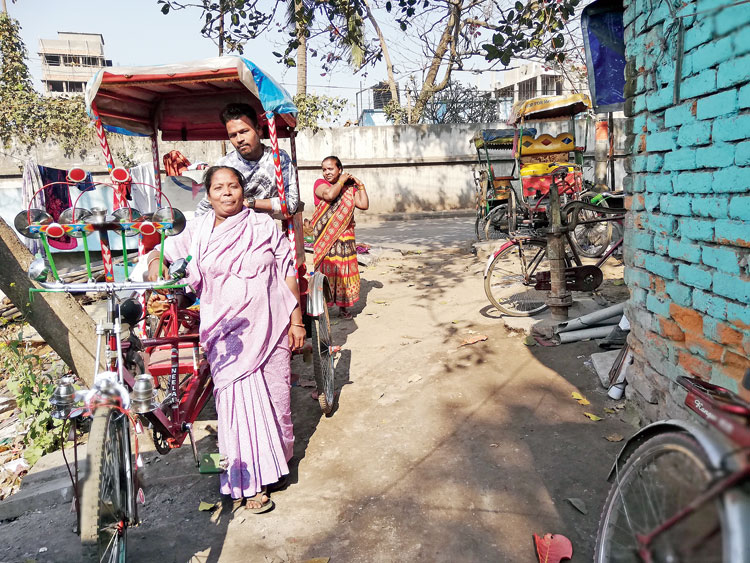
The Winners, an all-women patrolling team by the Kolkata Police, was launched in July 2018, with an aim to check crimes against women and make public places safer for them.

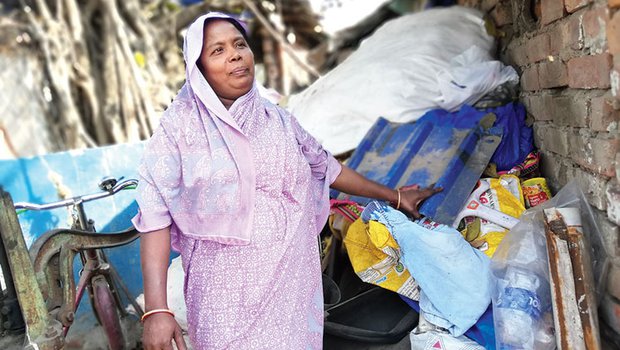
“Oye, akeli hai kya? Chalegi park me? 300 dunga. Arey bol na, jyada chahiye? (Hey, will you come with me to Park, I will pay you 300 bucks. If you want more, tell me,” said a man in his twenties to a woman near Mohor Kunja Park under Hastings police station area around four months ago. The offender had no clue that he was messing with the wrong person. Arpita Mallik, a constable with the Kolkata Police and a member of the team The Winners, made her first arrest that day.

The Winners, an all-women patrolling team by the Kolkata Police, was launched in July 2018, with an aim to check crimes against women and make public places safer for them. The team with personnel trained in self-defence has so far apprehended more than 200 “Road Romeos”.

“I was on duty in civil dress. When the man teased me, I asked him to wait and grabbed him by the collar. He put up stiff resistance but was soon surrounded by a group of policewomen and he started apologising. We arrested him and I felt good,” Arpita said with a wide smile. She stays alone and meets her husband in Malda on holidays.

EXPLAINED

Step towards better gender equation in Kolkata Police

The Kolkata Police has always been keen on increasing the presence of women in their force. The State Home Department has set up eight women-only police stations in Kolkata to investigate crimes against women. A rape or molestation survivor will be comfortable with a woman police officer, they feel. More women in the force means more women reaching out to report incidents that bother them. Several crimes, including eve-teasing, often go unreported. An all-women battalion is a step towards betterment of city police’s gender equation — 800 women in the 26,000-strong police force.

“He wasn’t very keen on me joining police but I managed,” she said. The Winners has 28 women personnel, including three senior officers. All the 25 constables are in their mid-twenties. In white uniform, they conduct patrol on scooty.

“They have been rigorously trained in self-defence and have revolver licence. Our objective is to make the city safe for women,” said Sampa Guha one of the senior officers of the team. “I am happy to see such young, smart women cops in our city. Once a man in lungi started following me on the street and retreated as soon as he spotted a group of policewomen. Cheers to these ladies,” said Anindita Ray Choudhuri, a management student.

However, the team has to fight odds while on duty. Once a constable in the team was bitten on her hand while another was heckled while on patrol inside the Millennium Park. Six persons, including two women were arrested for allegedly harassing personnel on duty.

“We face a lot of challenge and even get teased but when we are in uniform, people respect us also. There have been instances when during midnight patrolling, women came and thanked us for making them feel safe. It gives us immense satisfaction,” said Zinnatara Khatun, another member of the team.

Team Winner is headed by three sub-inspectors, including Sampa Guha, Mita Kansabanik and Zinnatara Khatun. Sampa has various accolades to her credit in power lifting in international, Asian and national events. Zinnatara Khatun is an athlete who has won the Indian Police Medal. Mita is also a power lifting champion.

When Kolkata Police decided to launch the all-woman team under the instruction of Chief Minister Mamata Banerjee, these three women were the first choice. “We were the only three women in the force who could ride a Bullet and had an edge over the others. All the team members are extremely hardworking, managing their personal and profession lives pretty well. We enjoy our job,” said Mita.

“We love catching Road Romeos,” laughs Zinnatara. Mita is married and has a 16-year-old daughter, while Zinnatara and Sampa are single.

“Earlier marriage used to give a woman financial security and an identity, but nowadays it has nothing exceptional to offer a woman,” said Zinnatara and Sampa.

Madhumita Mahapatra, another member of the team, says, “My husband is very proud to see me in uniform. I have a tight schedule but he is always there to pick me up when I finish work.” Another member, Debolina Das Rai, feels they stand for themselves to bring the change. “My husband mostly takes care of our son as I have a tight schedule. We manage well and he never complains,” she said.

Their message on Women’s Day

“People talk about women empowerment but hardly practice it. We are educated and present ourselves well but our mentality remains the same. Real change has to come from within. All women should be financially independent and should speak up. Once a woman starts sharing financial responsibility of her family and her parents, people will stop craving for male child. To bring a change, it is important for women to learn self-defence. Girls are mentally much stronger than men and we must celebrate womanhood.”

source: http://www.indianexpress.com / The Indian Express / Home> Cities / by Sweety Kumar / Kolkata / March 08th, 2019

World War II spy first Indian-origin woman to get Blue Plaque in UK

London, UNITED KINGDOM :

The Blue Plaque scheme run by English Heritage honours notable people who lived or worked in particular buildings across London.

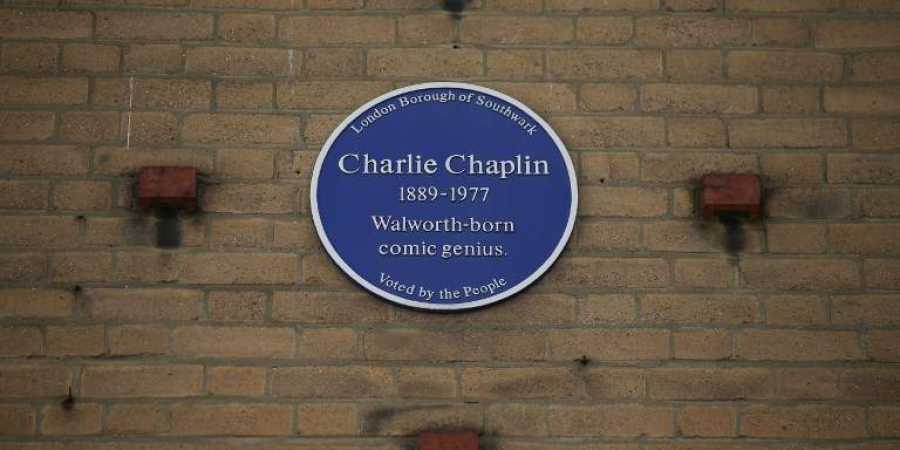
A Blue Plaque about Walworth-born comedian and actor Charlie Chaplin is seen near East Street Market in south London on September 1, 2017. (Photo | PTI)

London :

Britain’s World War II spy Noor Inayat Khan was on Monday confirmed as the first Indian-origin woman to be honoured with a Blue Plaque at her former London home.

The Blue Plaque scheme run by English Heritage honours notable people who lived or worked in particular buildings across London.

Khan’s plaque is set to go up at 4 Taviton Street in Bloomsbury, where she lived as a secret agent during the war. Khan, the daughter of Indian Sufi saint Hazrat Inayat Khan, was an agent for Britain’s Special Operations Executive (SOE) during World War II and was captured and killed by the Nazis in 1944 at just 30 years of age.

“It is from this house that she left on her final and fatal mission. Noor gave her life in the fight against fascism and her message of peace and tolerance of all religions is even more relevant today,” said Shrabani Basu, Chair of the Noor Inayat Khan Memorial Trust (NIKMT).

“The blue plaque will be a wonderful addition to the area that has a special association with Noor. It will be the first Blue Plaque for a woman of Indian-origin in Britain and is a real honour,” said Basu, who has been campaigning for the plaque since 2006 as the author of ‘Spy Princess: The Life of Noor Inayat Khan’.

Taviton Street is close to Gordon Square, which the NIKMT chose for the installation of a memorial bust in 2012 of the spy, a descendant of the 18th century Mysore ruler Tipu Sultan.

The Blue Plaque at her home is expected to be installed following building approval within the next few years.

“The Blue Plaques Panel have agreed that Noor Inayat Khan should be commemorated with a plaque. Once a nomination has been approved, it can take a further two or three years for a plaque to be unveiled,” an English Heritage spokesperson said.

“Noor Inayat Khan has deserved recognition for years. A hero who joined Britain’s effort to fight tyranny,” said Tom Tugendhat, Chair of the UK Parliament’s Foreign Affairs Committee. Born in September 1914 in Moscow to an Indian father and American mother, Khan was raised in both Paris and Britain.

As a Sufi, she believed in non-violence and also supported the Indian Independence movement but she felt compelled to join the British war effort against fascism. She went on to become the first female radio operator to be infiltrated into occupied France, where she was tortured and killed at Dachau concentration camp.

The SOE was an underground force established in Britain in 1940 by war-time Prime Minister Winston Churchill to “set Europe ablaze”.

It recruited men and women to launch guerilla war against Adolf Hitler’s forces.

Historial records show that despite being repeatedly tortured and interrogated, Khan revealed nothing and was executed by a German SS officer and her last word was recorded as “Liberte” or freedom.

She was later awarded the George Cross, the highest civilian decoration in the UK, in recognition of her bravery.

In recent months, Khan was also a frontrunner of a campaign for an ethnic minority personality to be honoured as the face of a redesigned GBP 50 note until the Bank of England announced that the note would feature a scientific figure.

Major Indian figures to be honoured with Blue Plaques in London include Mahatma Gandhi, Jawaharlal Nehru and B R Ambedkar, who spent time in the city during the Indian national movement against Britain’s colonial rule.

source: http://www.newindianexpress.com / The New Indian Express / Home> World / by PTI / February 25th, 2019

Fatima and Fatima

Kolkata, WEST BENGAL :

Two remarkable women from the family of Wajid Ali Shah, the last king of Awadh, are reviving his culinary tradition in Calcutta, the city where he famously introduced potatoes into the biryani!

Last king of Awadh,Wajed Ali Shah,Manzilat Fatima

Manzilat Fatima is a descendent of Wajid Ali Shah, the last Nawab of Awadh who spent 29 years in exile in Metiayaburj, a Calcutta suburb. She launched a pop-up restaurant of Awadhi cuisine in 2014 and a home dining service, Manzilat’s, in 2018 in Calcutta. (Arijit Sen/HT Photo)

What do you do you do if a goose is plump beyond reason, won’t lay eggs and needs too much feed? Cook it, I guess. And that’s what the British Crown did to Wajid Ali Shah, the last king of Awadh, who ascended the throne as a 25-year-old in 1847 and was dethroned nine years later in 1856, a year before the first war of Indian Independence broke out.

The British said this was done because he lived and ate like a king and did little else, thus overlooking his military reforms, his attempts at administration which the East India Company did its best to thwart, and his immense popularity with his subjects.

Packed off to Metiyaburj, about four miles south of Calcutta, the ousted king was joined by his prime minister, some of his wives, musicians and officials. His chefs attended to this displaced court as best as they could. They prepared their master’s banquets with the lavishness of his days as monarch, so that when he sat for his meals, he would remember Lucknow as his great romance and not the painful reality of its passing.

If five kilogrammes of lamb mince was used to make a single kofta when he had been the king, they were not going to scale down, when he was no longer one.

Wajid Ali shah during his days in exile in Metiyaburj, a Calcutta suburb, wearing his trademark kurta with part of his chest exposed. His descendants say it was an expression of his heart being open to his subjects. ( Arijit Sen/HT Photo )

But how do you claim, centuries later, that one of India’s most famous ex-royal is your old man and that you are the sole inheritor of the royal cuisine he helped found? Wajid Ali Shah’s descendants Manzilat Fatima, 51, and Fatima Mirza, 45, of Calcutta are doing that, courtesy the documents of political pensions of their families on the one hand, and by cooking his food, on the other. Team Manzilat and Team Fatima, both say they are the real thing.

***

Family recipes are a cook’s real estate. Wajid Ali Shah’s descendants face the problem of plenty. At the time of his death, the king had 250 wives and 42 children so no ‘family recipe’ matches the other. The British also made sure that after the king’s death in 1887, his days in exile would go undocumented.

On Fatima Mirza’s table: Kachhe Tikia ke Kebab, Mutton biryani, Nargisi Kofta. Mirza is a great-great grandchild of the last king of Awadh. ( Arijit Sen/HT Photo )

“His successors and his subjects were left with nothing,” says Wasif Hussain, the manager of the king’s mausoleum in Metiyaburj. “I’ve heard that in Chartwell House [the country home of a former British premier, Winston Churchill], his kitchen with its tea-kettle, his flour bin, the utensil rack and the weighing machine have been left intact…. It’s a museum….”

A law graduate, Manzilat Fatima, is from the ‘ruling line’. Her father, Kaukub Meerza, a former Reader of the Aligarh Muslim University, is the grandson of Birjis Qadr, the son of Begum Hazrat Mahal and Wajid Ali Shah. Birjis was crowned king by Mughal emperor Bahadur Shah Zafar during 1857 as Wajid Ali Shah was by then in Calcutta. Birjis met his death in 1893 after dinner at a relative’s home in Metiyaburj.

This was not the first time that poisoning had killed an Awadhi royal, Sudipta Mitra, author of Pearl by the River, a book on Wajid Ali Shah’s exile, points out. Royal biographies mention a consort sending the king paan as a token of her love during their better days and the king not putting it past her to lace its leaves with poison when those days were over.

The murder of Birjis and its memory have stayed with the family for over 120 years. It has seeped into Manzilat’s remembrances of her childhood home (“My paternal grandmother would always check the food before it was served to family members”), and explains her impatience with ‘proof’-seekers. Ever since she launched a pop-up restaurant of Awadhi cuisine in 2014 and a home dining service, Manzilat’s, in 2018 in Calcutta, there are some set questions she has had to answer.

“ ‘Do I have monogrammed table-mats from Wajid Ali’s time?’ ‘Did I inherit a recipe book?’ No, I didn’t! Birjis’ murder snapped our links with the other branches of the family. His wife escaped from Metiyaburj to Calcutta…. And besides, my great-great-grandmother, Hazrat Mahal, was a queen who was fighting the British, not writing cookbooks. For a while, I made this my FB status,” says Manzilat cheekily while adding finishing touches to an order of Ghutwaan Kebab (made of mashed meat marinated with papaya) that a delivery man from Swiggy is waiting for her to complete, besides the mandatory biryani.

Manzilat makes a good mutton biryani, but with mustard oil to keep it non-greasy and light; Fatima Mirza, a school principal (she is of the line of Wajid Ali Shah’s principal consort, Khas Mahal) and her husband Shahanshah Mirza (his father Wasif Mirza is another great grandson of Wajid Ali Shah) consider the leaving out of ghee an overturning of the “basic biryani rule-book”. Both families, however, have more in common than they think.

While Manzilat’s cooking displays her control in colour, sense of proportion and spicing so integral to Awadhi cooking, Fatima, too, has considerable domain knowledge. Since 2018, she has been working on a cookbook penning family recipes such as the Kachhe Tikia ke Kebab.

“This is the only Awadhi kebab in which sattu is added and it was a Wajid Ali Shah favourite,” she says. “To neutralise the heat of meat and to make it easily digestible, hakeems advised chefs to add sattu (ground Bengal gram) as the king aged. The trend seems to have been to keep things light and fragrant.”


Shahanshah Mirza, another descendant of Wajid Ali Shah, with a family heirloom – a ceramic bowl. Such bowls were common in royal households. Their contents were checked by food inspectors before they were placed before the nawab. They had a special coating which would ‘crack’ if the food had poison, says Mirza. ( Arijit Sen/HT Photo )

Shahanshah Mirza, a government official and heritage enthusiast, elaborates on the difference between Awadhi and Mughlai cuisine. “Unlike Mughlai, ours has no overdose of mace or cardamom or dry fruits. We say about Urdu, Urdu aap ke zubaan pe hamla nahin karta hai, speaking it, does no assault to your tongue… Likewise, Awadhi food plays on understatement. It is big on presentation though.” Any aspiration to cheffy-ness of the standard of the former royal house of Awadh has to get the food styling right.

Wajid Ali’s descendants also make great allowances for a master chef’s ego. It was not uncommon in the heyday of the king to have his chefs refuse to cook for any other branch of the family. Some of the chefs even announced during the time of seeking employment that they were not going to expand their expertise! That is, the maker of dal would remain a dal specialist throughout his life. A biryani cook would touch nothing else.

***

The Sibtainabad Imambara, the mausoleum of Wajid Ali Shah and his son Birjis Qadr at Metiayaburj. Birjid was declared king in the absence of his father by the sepoys during 1857 and his kingship was acknowledged by the Mughal emperor, Bahadur Shah Zafar. ( Arijit Sen/HT Photo )

In Metiyaburj, Guddu, a grandson of Puttan, a descendant of one of Wajid Ali Shah’s great chefs, drops by at the Shahi Imambara, for a chat. He talks of a dish that has the sound of one made in Awadh’s hoary past. There are few “with the stomach and liver of Wajid Ali Shah” to digest dishes like a meat mutanjan (a rice dish) now, Guddu says. But Nawabi biryani, and yes, with the potato, is everywhere.

Do kings thus prepare the future food of the people? The rich trying out the pleasures that the masses will eventually grasp is something historian Fernand Braudel has elaborated upon in his works. Rows of biryani shops of various prices line the road on either side of the king’s mausoleum. “Jameson Inn, a branch of Shiraz [an old Calcutta eatery], began to make a Murgh Hazrat Mahal in 2011,” informs Hussain, the Imambara manager. But there is a piece of information doing the rounds he would like to correct.

“The potato was added to the biryani because of its exotic value. It was a new vegetable in the market introduced by the Portuguese,” says Hussain. Both Fatimas back this view. According to Abdul Halim Sharar’s Guzishta Lucknow, considered to be the go-to book for any information on Wajid Ali Shah’s exile, the king spent Rs 24,000 on a pair of silk-winged pigeons, Rs 11,000 on a pair of white peacocks and approximately Rs 9,000 a month on food for some animals in his zoo in Metiyaburj.

“If a man could afford so much, he could certainly add more meat to his biryani and not bulk it up with potatoes,” suggests Fatima Mirza. The king would presumably also not risk his social prestige. At the evening concerts in the then resplendent Sultan Khana that had all the splendour of his palaces in Lucknow, when the Calcutta elite would visit, with thumri, there was biryani and it had potatoes. Surely Wajid Ali Shah would not have a dish served that had hard times written all over it.

(L-R) Mohammad Sulaiman Qadr Meerza with his grandfather, Kaukab Meerza, the great grandson of Wajid Ali Shah and Begum Hazrat Mahal, and his father, Kamran Meerza. ( Arijit Sen/HT Photo )

******

Mohammad Sulaiman Qadr Meerza, 9, in a yellow tee and jeans is following the discussion on food and music, and the Awadh royal family closely. When he was six, his father Kamran (Manzilat’s brother), a businessman, disclosed his antecedents. He told his friends in between classes at school that he belonged to a royal family.

His friends asked: “Which one?” Sulaiman said he was the fifth generation of Wajid Ali Shah and Begum Hazrat Mahal. They did not believe him.

Next year, when he is 10, Sulaiman has plans to grow bigger. And then he will try to convince them. He says he must give it one last try.

Kitchen confidential- Nawabi recipes passed down the family
MANZILAT FATIMA’S PINEAPPLE MUTANJAN
INGREDIENTS
  • 1 cup Gobindo Bhog rice soaked for an hour
  • 1 cup sugar
  • 2 cups chopped pineapples
  • 2 1/4 cups boiling hot water (boiled with saffron strands and a pinch of kesariya colour)
  • 1 tbspoon pure ghee
  • 1 cup grated mawa
  • 1 clove; 1 cardamom; almond slivers
METHOD:

Take a heavy-bottom handi, add ghee. When hot, add cloves and the cardamom, then add the whole of the drained rice and saute quickly on medium flame.

Pour the hot water in the handi. Keep the flame high for 2-3 minutes, lower the flame and keep on sim till the rice is 3/4 cooked.

In another handi, scoop out the cooked rice and make a layer; sprinkle 1/2 of the sugar and 1/2 of the chopped pineapples and 1/2 the grated mawa.

Similarly, repeat a second layer, cover the lid and keep the handi on a tawa on sim. Leave for 5-10 minutes till the sugar melts and all ingredients blend well. Switch off the gas.

Before serving lightly mix the layers, serve hot after garnishing with silver leaf and almond slivers.

FATIMA MIRZA’S KACHHE TIKIA KE KEBAB
INGREDIENTS
  • Mince meat 500 gms; salt to taste
  • Bengal gram flour (roasted, powdered) 2 tsp
  • Garam Masala powder -1 teaspoon
  • Paste of nutmeg and mace -1 tsp
  • Onions -2 big ones; ginger-garlic paste -3 tsp; raw papaya paste -2 tsp
  • Green chillies -2; coriander leaves
  • Ghee for frying
METHOD:

Wash the minced meat. Fry the onions till they are golden brown. Mix garam masala, a paste of nutmeg, mace, fried onion and ginger-garlic paste. Sprinkle salt as desired. Add the raw papaya paste. Keep it aside for 10 minutes.

When the mutton turns tender, then mix the chopped coriander leaves and green chillies.

Using the mince mixture make flat round patties (tikia) of even size. Pour ghee into a pan. Heat it on a low flame. When the ghee crackles, start frying the patties till golden brown.

Drain out the excess ghee and serve it hot.

source: http://www.hindustantimes.com / Hindustan Times / Home> India / by Paramita Ghosh / Hindustan Times / February 24th, 2019


Rs 70-lakh US grant for conservation of tombs in Hyderabad

TELANGANA :

It is the second time that the US Ambassadors Fund for Cultural Preservation (AFCP) grant, a US Department of State initiative, is being awarded to the Qutb Shahi tombs.

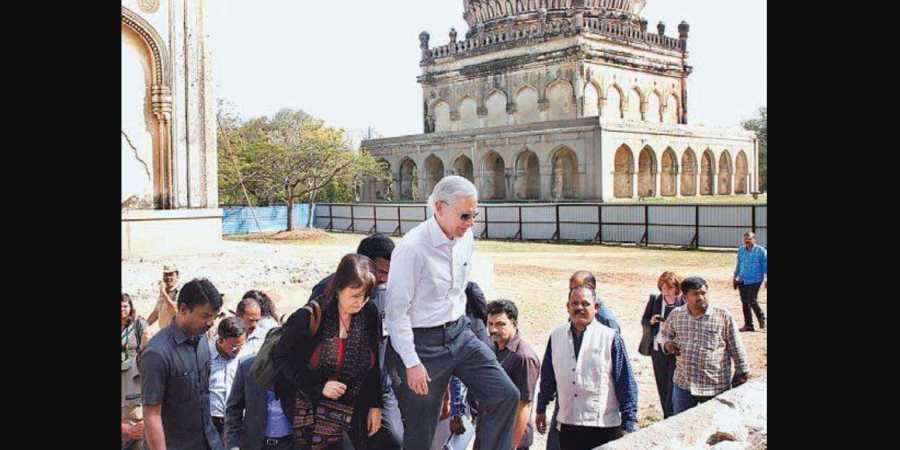
Kenneth I Juster, US Ambassador to India and Consul General Katherine Hadda visit the Qutb Shahi tombs complex in Hyderabad on Thursday | Express

Hyderabad :

The US Ambassador to India Kenneth I Juster, who was in the city on Thursday, announced a grant of over Rs 70 lakh towards conservation of the 17th-century tombs of Taramati and Premamati, located within the Qutb Shahi tombs complex.

It is the second time that the US Ambassadors Fund for Cultural Preservation (AFCP) grant, a US Department of State initiative, is being awarded to the Qutb Shahi tombs.

The grant is awarded to the Aga Khan foundation, which is in the process of restoring the tomb complex. The previous grant, awarded in 2014, supported the documentation of archaeological finds at the Qutb Shahi tombs complex. Earlier in 2009, the program supported restoration at the garden tomb of Mah Laqa Bai at Moula Ali.

Stating he was pleased to announce, Juster said the present grant was only “just one in a long line of projects that we have proudly supported across India. “Through these efforts, we seek to demonstrate the enduring respect of the United States for other cultures and our commitment to conserving the architectural wonders of humanity,” he said.

The restoration’s primary aims will be to conserve the final resting places of famed dancers Taramati and Premamati, and restore the tombs to their original grandeur.  CEO of Aga Khan Trust for Culture Ratish Nanda said the conservation works have commenced with structural repairs, and will require careful removal of 20th century cement, with use of lime plaster applied by master-craftsmen to restore the authenticity of the structures.”

Photo exhibition of US Consulate at RGIA 
As the US Consulate in city celebrates its 10th anniversary, the US Mission has partnered with RGIA to launch a photo exhibition chronicling the Consulate’s activities over the past decade.  On hand to launch the exhibition were US Ambassador to India Kenneth I. Juster; CEO of GMR Hyderabad International Airport SGK Kishore and US Consul General in Hyderabad Katherine Hadda. The Consulate in Hyderabad has curated this selection of 30 photographs after evaluating thousands of photos for inclusion.

source: http://www.newindianexpress.com / The New Indian Express / Home> Cities> Hyderabad / by Express News Service / February 22nd, 2019

The haveli of Mughal fireworks in Chandni Chowk

Chandni Chowk, DELHI :

Delhi did have fire-crackers much more than 200 years ago and Haider Quli, the artillery chief, made good use of them at his haveli, now lying deserted.

The cluttered entrance to Haveli Haider Quli in Chandni Chowk

Delhi did have fire-crackers much more than 200 years ago and Haider Quli, the artillery chief, made good use of them at his haveli, now lying deserted. In Chandni Chowk is Haveli Haider Quli, whose inhabitant till February 2016 was the nonagenarian Narain Prasad. The double-story apartment he lived in was only a part of the original mansion, where now houses and shops have mushroomed and the garden that was one of its attractions has disappeared in the ensuing rabbit of a warren locality.

Haider Quli was the chief of the artillery during the reign of Mohammad Shah Rangila (1719-1748) in whose reign Nadir Shah invaded Delhi and took away the Peacock Throne and Kohinoor, along with other fabulous treasure.

Haider Quli got his exalted post because of his patron Hussein Ali, but later turned against his mentor and got him murdered while he was on his way home in Chandni Chowk. A boy related to him fired at one of the assailants, killing him on the spot but the others hacked the boy to pieces with their swords. It is said that Mohd Shah was also involved in the conspiracy, along with his mother as he had become wary of Hussein Ali.

It was Haider Quli who organized the first fireworks in 18th century Delhi some 260 years ago under his supervision as Mir Atish, whose descendants had fireworks shops behind the Jama Masjid.

The Mughal emperors preceding Mohd Shah celebrated Diwali with illuminations but there were no fireworks as such. Possibly the only cracker was a ball of gunpowder exploded by the Mir Atish and a crude kind of Phuljhari (sparkler) for the amusement of the ladies of the harem when the Seths of Chandni Chowk were worshipping Lakshmi in their shops.

It is pertinent to remember that Babur brought guns with him when he invaded India in 1526 and on whose firepower he won the First Battle of Panipat against Ibrahim Lodi-the Sultan’s elephants running amuck at the sound of the blazing cannon and the fireballs they ejected.

Gunpowder was invented or discovered in China in the ninth century and India was practically devoid of it till AD 1250. The Mughals’ ancestor, Changez Khan had made use of gunpowder during his Mongol raids because of which it made its way into parts of Russia. Evidence of this found in the story of Alibaba and the Forty Thieves, in which the chief of the robbers Abu Hassan used gunpowder (Shaitani Rait or Devil’s Sand) to overawe his victims. Then after depositing the loot in his treasure-house Simsim, he retired to the fort, where he resided as the seemingly pious Imam Sahib, to whom people went with their complaints against Abu Hassan. The hypocrite, with his lust for the slave girl Marjina, would then march out with troops in a mock campaign to nab the robber chief.

History shows that before the Mughals some sort of atishbazi was introduced into Delhi during the reign of Nasiruddin Mahmud, Chirag Delhi. But he and other Slave kings are not known to have celebrated Diwali, which was first patronised by Mohmmad bin Tughlak. The succeeding Sayyids and Lodhis may also have willy-nilly followed the custom. Babur and Humayun had their Nauroz celebrations, but Akbar did celebrate Diwali on a grand scale because of his Rajput wives. Jahangir and Shah Jahan had an even more elaborate Diwali, with the latter emperor being bathed in waters collected from seven rivers and pandits chanting mantras while the Maulvis looked askance. However, his daughter Jahanara was not burnt during Diwali celebrations but one evening at the daily lamp-lighting. Aurangzeb, despite his orthodoxy, did observe Diwali with the Rajput chiefs coming to him with sweets and gifts. Gossip would have us believe that his first Diwali was celebrated with his beloved Hira Bai Zainabadi in his arms and offering him a cup of wine to prove his love for her. But when Aurangzeb moved as if to sip it, Zainabadi (appreciating the gesture) took away the cup from his hand. No wonder when she died an early death. Aurangzeb was devastated Jahander Shah, his grandson, celebrated Diwali with concubine Lal Kanwar in Lahore (1712), when he bought all the oil available in the city for illuminations, though fireworks were absent till Mohd Shah took over after the death of Farrukhseyar and some puppet kings.

Historians, however, fix the date when Diwali crackers became popular as 200 years from now, though the British were enjoying fireworks on Guy Fawkes Night in observance of the Gunpowder Plot of 1605 (the year Akbar died). Mirza Ghalib was one of those who were present at the Diwali celebrations of Bahadur Shah Zafar, who released the bluejay or Neelkanth bird as a sign that Durga was on her way home after Dussehra. But Prof Ram Nath observes that it was actually Shah Jahan who first did so. For the later Mughals fireworks were also the main observance during Shabhe-Barat, heralding the approach of Ramzan.

This display of crackers was extended to Diwali. As a matter of fact, during Mohd Shah Rangila’s reign it was a cracker thrown at the palanquin of the emperor’s jeweller, Sukh Karan that led to the March 8, 1729, shoesellers’ riot in which Rangila Piya’s favourite concubine Nur Bai, on her way back home in Chawri Bazar from the Red Fort, lost a tooth when she was hit by a stone thrown by the rioters. So Delhi did have crackers much more than 200 years ago and Haider Quli, the artillery chief, made good use of them at his haveli-now lying deserted as even the last occupant, Narain Prasad’s 94-year-old sister has left it after her brother’s death. But whenever you see the place you instinctively think of fireworks as happened during Guru Nanak’s birthday celebrations amid a crescendo of crackers despite the ban on them.

source: http://www.thestatesman.com / The Statesman / Home> Supplements> Section 2 / The Statesman News Service / New Delhi – February 09th, 2019

Old wives’ tales

Chaat01MPOs09feb2019

Theories abound about the origin of chaat

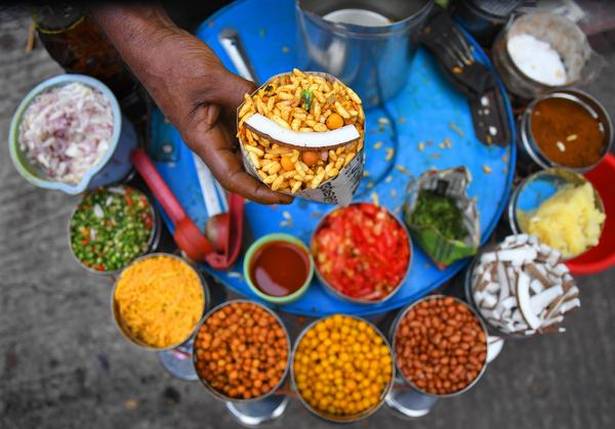
There are those who say the word chaat originated from its literal meaning ‘to lick’. It was so delicious that people licked their fingers and the bowl made of peepal leaves, called donas, in which it is often served. Others think it originated from the term chatpati (tangy). However, no one truly knows the origin.

One story goes thus: During the reign of Emperor Shah Jahan, in the 16th Century, there was an outbreak of cholera. Desperate attempts were made to control it by physicians and sorcerers. One remedy suggested was to make food with loads of spices so that it would kill the bacteria within. Thus was born the spicy tangy chaat, which the entire populace of Delhi is believed to have consumed. A slight variant attributes it to the court physician called Hakim Ali, who realised that the foul water in a defunct local canal could result in serious water-borne diseases and thought the only way to prevent it was to add a liberal dose of spices — tamarind, red chillies, coriander, mint etc to the food. Hence, the food came to be called chatpati (tangy).

However, no one knows the veracity of these stories.

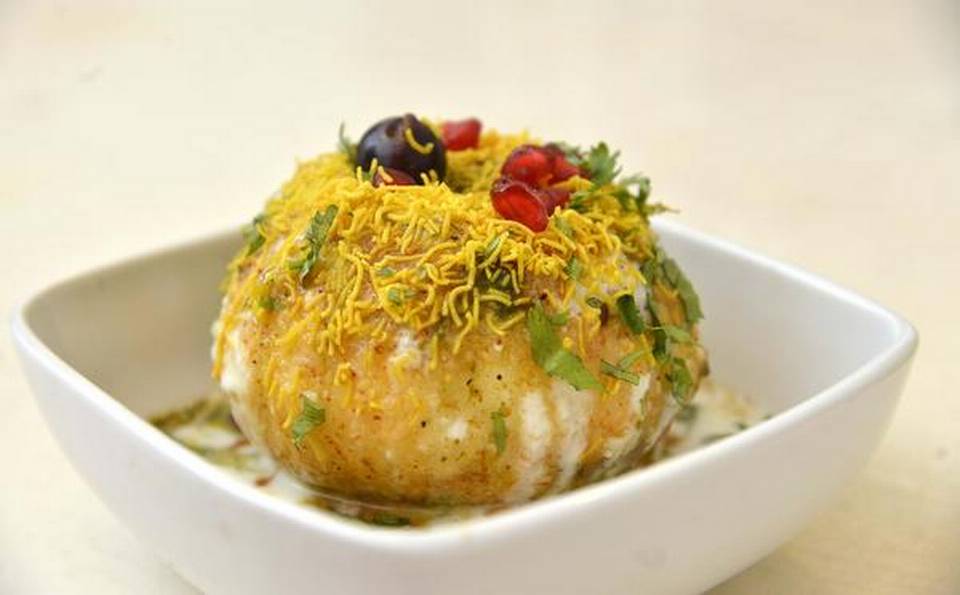
The grandmaster of history of our cuisine and food, KT Achaya, gives plenty of references to various ingredients and dishes which make up the repertoire of chaats. In his book, A Historical Dictionary of Indian Food, Achaya’s description of dahi vadas is interesting. He says the vadas were first mentioned in the Sutra literature of 500 BC. The Mânasollasa of the 12th Century talks of soaking vadasin milk, rice water or curd. Curd is also mentioned in the Vedas, and curd in Tamil literature is said to have been spiced up using pepper, cinnamon and ginger. Therefore, it may be conjectured that adding curd to the dahi vada and spicing it up with various chutneys and pomegranate seeds could be an ancient habit.

Chaat02MPOs09feb2019

Achaya further writes of how papdi finds a mention in Mânasollasa in the 12th Century as purika. The description fits the present-day papdi which is fried crisp with the addition of cumin seeds and ajwain, using chickpea flour, maidaor wheat flour and not puris.

The use of rock salt or sendha namak and black salt with chaat is common. Alooor potato cubes, fried in oil, is spiced up using a combination of salts, which also have ancient origins. According to Achaya, Mahabharata refers to the use of rock salt or sendha namak and black salt. It is also mentioned in the Buddhist Vinaya Pitaka and by Charaka.

The tale of paani puri can be linked to chappatis. Achaya talks of how cave paintings show balls of dough being made, and how, in Harappan sites, flat metal and clay plates have been seen, which look like the modern-day tava. Hence, chappatis may have a long history, and so do puris.

The Sanskrit word pura, meaning blown up, could be the genesis of the name puris. He further describes puris and paani puris as, “tiny gol guppas, globular puris eaten during festivals or as a roadside snack in North India with a cold, fiery, pepper-mustard liquid concoction”.

Tamarind, whose water-soaked version is the mainstay of panipuris today, was grown in India in prehistoric times. Tamar-ul-Hindi — fruit of India — is how it was referred to by the Arabs and Marco Polo refers to it in 1298 AD as tamarindi.

In Indian Food: A Historical Companion, KT Achaya mentions Sādava from the Buddhist era, which connotes either a spiced fruit dish or a spiced fruit drink. Ginger, cumin and cloves make their way in the Buddhist era. The Aryan era talks of black pepper (maricha) and asafoetida (hing). Spicing up water including tamarind, and fruits was prevalent.

source: http://www.thehindu.com / The Hindu / Home> Life & Style> Food / by Chitra Balasubramaniam  / February 07th, 2019

A testimony to broken dreams

Murshidabad, WEST BENGAL :

PhutiMasjidMPOs07feb2019

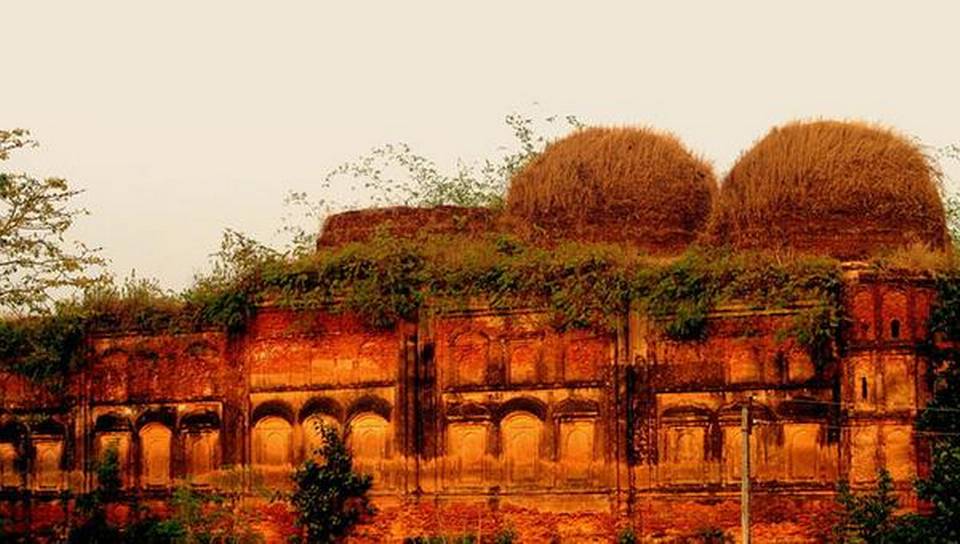
A journey through the ruins of Phuti Masjid, built by Sarfaraz Khan, in Murshidabad

It is difficult to imagine that Murshidabad, now a small, sleepy town in West Bengal, was among the richest courts of the 18th and 19th century. It hides many conspiracies, power brokers, pawns and fallen emperors in its heart.

One such fallen emperor was Sarfaraz Khan, the maternal grandson of Murshid Quli Khan, the founder of the city and the Nasiri dynasty. Nawab Murshid Quli Khan appointed Sarfaraz Khan as his successor before his death in 1727 as there was no direct heir to the throne. However, his son-in-law (Sarfaraz’s father) Shuja Khan frustrated Sarfaraz’s dreams. He felt that he had a bigger claim to the musnad, or the throne, of Murshidabad. Sarfaraz could only ascend the throne in 1739 with the title Alauddin Haider Jung.

A short-lived reign

But his problems did not stop there. The newly crowned Nawab fell out with his Wazir, Haji Ahmed. The Wazir won over the rich banker Jagat Seth Fateh Chand and Rai Rayan Chand and started plotting against the Nawab. Haji Ahmed invited Ali Vardi Khan, the Nawab Nazim of Bihar, to seek someone from the Mughal empire to replace Sarfaraz Khan. In the battle of Giria, Ali Vardi Khan defeated Sarfaraz Khan. The Musnad of Murshidabad, compiled by Purna Chandra Majumdar, mentions that the Jagat Seths suborned the Nawab’s men to place bricks and clods instead of cannon balls and fodder in Sarfaraz Khan’s magazine. Though the Nawab found out and gave charge of his artillery to a Portuguese, he was killed by a bullet as he rode out to battle on his elephant. Nawab Sarfaraz Khan ruled only for a year.

Inside Phuti Masjid

When I went to Murshidabad, I visited the grand mosques, palaces and imambaras constructed by the Nawabs who ruled for a longer time and in happier circumstances. But it was the Phuti Masjid that I found fascinating.

The mosque is quite large: 135 ft. long and 38 ft. wide with four cupolas at the corners. Only two of its five planned domes were completed. Dangerous looking spiral staircases lead up to the cupolas. As the builder died soon after construction began, the mosque was never completed. And so the name Phuti Masjid, or broken mosque. It is also known rather morbidly as Fouti Masjid. ‘Fout’ means death, and the name was apparently given after the builder’s death.

As I approached the mosque, I first saw brick walls surrounded by small cottages and fields on a dusty road. The walls were covered with moss. I went eastward, which is the direction in which people generally enter mosques. But I found to my dismay that the entrance was at a height and there were no steps leading up to it. My guide was young and he quickly climbed up. With his help, I somehow managed to scramble up the mud incline. I am glad that I did, for I immediately saw a huge hall and soaring arches. There was a sense of desolation, mystery and a strange undercurrent of spirituality in the mosque. An extremely religious and devout Nawab with money, power and resources had wanted to build a house of worship, yet no one ever prayed there. It was more like a scene from a horror movie: there was a semi-open roof, wild undergrowth, and trees and the sun rays peeped in through apertures. Just then I heard shrill voices. Two children from a nearby cottage, aged four and five, had clambered up to ask if they could be my guides!

One legend goes that this mosque was built in one night by Sarfaraz Khan. Another says that a number of workers toiled for several months to construct it. During roll call one day, it was found that one worker was not present. This happened a number of times and as the story became famous, the mysterious workman disappeared leaving his work incomplete and no one could match his skill. Both stories point to the hand of Djinns. Whatever be the truth, this broken structure is still standing despite all the odds, surrounded by houses, fields and hostile elements, a mute testimony to broken dreams.

source: http://www.thehindu.com / The Hindu / Home> Opinion> Columns – Where Stones Speak / by Rana Safvi / January 06th, 2019

Beyond Sacred: Kerala Muslims Build An Inspiring Mosque With A Modern Art Gallery

Fort Kochi, KERALA :

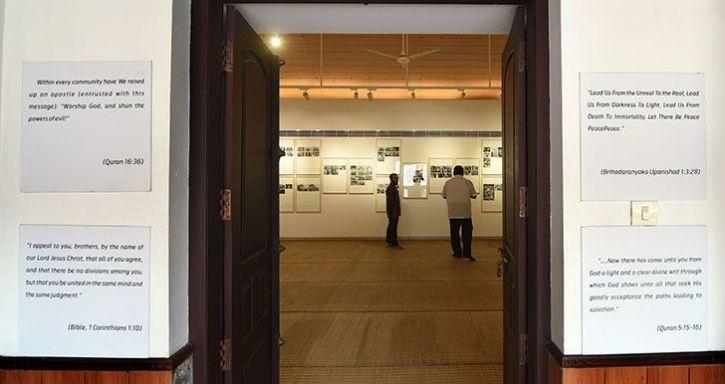
For the past 10 months, the faithful offering jumu’ah (Friday afternoon prayer) at Masjid-ul Islam in a lane opposite the RDO office in Fort Kochi have been doing so in a hybrid space — for, inside the mosque is a modern art gallery which was opened in April last year.

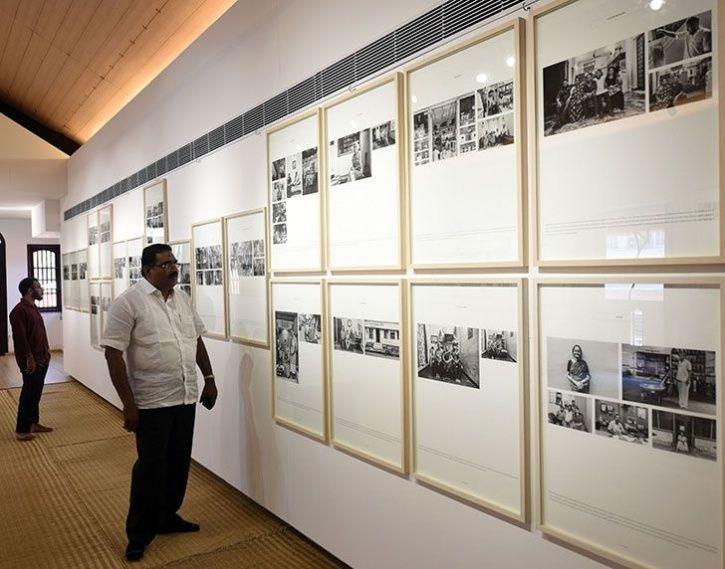
On Fridays, when it is prayer time, white curtains are hung from discreet hooks covering the art works; currently on show is a photo documentation of 42 communities found in the 5.5 sq km area of Mattancherry and Fort Kochi.

“The only reason why we are covering them during prayers is to ensure that people are not distracted,” says K A Mohammed Ashraf, chairman of the mosque committee, a businessman who set up the place of worship with his own funds four years ago.

Mosque01MPOs30jan2019

Kerala mosque welcomes all, irrespective of faith & gender

The mosque has a board welcoming all, irrespective of faith and gender, and celebrates the diversity of religion with citations from revered spiritual texts. “We want to be inclusive. We don’t have restrictions on the type of dress one should wear,” Ashraf says, adding that the gallery, close to biennale venue, is visited by lot of foreigners.

As one climbs the marble-paved, narrow flight of stairs to the Islamic Heritage Centre (IHC) art gallery on the second floor of the building, two quotes welcome you: a sukta from the Rigveda on the right and a verse from the Quran on the left, epitomising the shared destinies of both religions. The balcony space has several other quotes that build on the syncretic tradition.

On one side of the art gallery, neatly-labelled wooden shelves showcase books ranging from religious texts to even novels and poetry. “This is not much but we are trying to source some rare books. A large reference library is also on the anvil,” says Ashraf, who also runs Masjidul Islam charitable trust.

BCCL
BCCL

The IHC and the gallery is a joint initiative of the trust and Forum for Faith and Fraternity (3F) who are fascinated by the golden age of Islam between AD 8 and AD 14, when mosques were centres of learning and art and science flourished.

“We want people to understand the principles of pluralism, cultural diversity and the importance of upholding these traits in the contemporary world,” says Ashraf who feels this is the only mosque in India which houses an art gallery.

C H Abdul Rahim, chairman, 3F, describes their organisation as a small group of professionals working silently to promote cultural diversity through study of different religions.

“It is a myth that Islam is antithetical to art. It has always promoted art and music and historically mosques were seats of learning,” said Rahim, former executive director of KIMS and a chartered accountant.

The show Transcendence by Biju Ibrahim is emblematic of this vision of plurality. From Lohanas, who are followers of Jhulelal, to Dhakni Muslims and 24 Telugu Manai Chettiars, Biju’s photographs capture vibrant communities in all their diversity.

“I don’t think there is any place in the world that houses so much diversity within such a small geographic space,” says Biju, who began working on the project in 2017 as a resident of Uru Art Harbour.

Most of these community members have strived to preserve their language and culture within their home but share a common identity when they step out of the four walls. “The show began in April but once the biennale kicked off I added five more panels to the exhibition,” he says. His show will be on till end of March.

Originally Published In The Times Of India

source: http://www.indiatimes.com / India Times / Home> News> India / by Binu Karunakaran / TNN / January 14th, 2019

Nizam’s jewels set to go on display in Delhi again

Hyderabad, TELANGANA :

The date of inauguration of the exhibition hasn’t been decided yet, but most of the groundwork for the event has been completed.

For the first time in almost 12 years, the National Museum in Delhi is preparing to display the priceless jewellery collection of the Nizam of Hyderabad.

The date of inauguration of the exhibition hasn’t been decided yet, but most of the groundwork for the event has been completed. The National Museum exhibited the jewellery for the first time in 2001 and again e in 2007. There have also been two exhibitions of the jewellery at the Salarjung Museum in Hyderabad during the same period.

“In India, jewellery is an integral part of lifestyle. Among them, the Nizam’s collection of jewels is especially unique. It, therefore holds a significant position in the history of gemology and jewellery,” said Sanjib Kumar Singh , curator of the exhibition.

Soon after India’s independence and the annexation of erstwhile princely state of Hyderabad, the seventh and last Nizam, Mir Osman Ali Khan, created 54 trusts. The jewels, now in the custody of the Indian government, were part of the assets of these exclusive trusts. In March 1951, HEH the Nizam’s Jewellery Trust was created and it took over 103 items including state regalia; in February 1952, HEH the Nizam’s Supplemental Jewellery Trust took custody of 144 pieces of jewellery.

Negotiations began in 1972 between the Indian government and the family for the sale of the priceless heritage. In 1995, the Indian government finally acquired a part of the inventory for Rs. 217 crore. The actual value of this precious legacy is difficult to asses because it not only represents some of the finest jewels found in the Indian subcontinent, but also stands as a silent witness to the history of the Deccan region.

According to the government, the present collection comprises a total of 173 items acquired from the two trusts. The actual number of pieces, if pairs and groups of ornaments are split up, is 325 not, including 22 unset emeralds, and the 185-carat Jacob diamond, one of the world’s largest by size.

The collection includes turban ornaments, necklaces, earrings, armbands, bracelets, bells, buttons and cufflinks , anklets, watch chains and rings—all jewels once worn by the once fabulously wealthy Nizams of Hyderabad, their wives, children and grandchildren.

“This collection is a national treasure and comprises of jewels of fine beauty and rarity. I believe the jewels should be on permanent display as they belong to the people of India,” says art historian Deepthi Sasidharan, who has co-authored the book, Treasures of the Deccan–Jewels of the Nizams, published recently.

The exhibition is likely to feature around 33 showcases. The National Museum proposes to charge visitors Rs 50 for a 30-minute tour of the exhibition.

source: http://www.hindustantimes.com / Hindustan Times / Home> India / by Vanita Srivastava, Hindustan Times, New Delhi / January 11th, 2019

Meet ‘Mullah Ji’, the Muzaffarnagar Man Who Lights Up Kumbh for Sadhus

Muzaffarnagar, UTTAR PRADESH :

Mehmood is an electrician whose business of setting up lights for festivals spans from Janmasthami celebrations in Muzaffarnagar to the famous Nauchandi Mela in Meerut

Prayagraj:

In a sea of saffron, he stands out with his skull cap and gray beard. To the first time visitor, a board reading ‘Mullah Ji Light waale’ (Mullah Ji, the lighting man) at the Kumbh Mela may be an odd sight but to the Sadhus who have gathered at the confluence of the Ganga and the Yamuna , Mohammed Mehmood aka Mullah Ji is a permanent feature of every Kumbh. To some, he is even a friend.

Mehmood is a 76-year-old businessman from Muzaffarnagar in Western UP. In 1986, he acquainted himself with the Sadhus of the Juna Akhara – the largest and one of the fiercest Akharas of the Naga Sadhus; an ancient order of warrior monks. They hired him to set up the lights around their tents. Today, every six years, he travels over 800 kms to Allahabad, now named Prayagraj, and camps out at the Kumbh Mela.

Sandwiched between the tents of the Juna Akhara, he talks of his journey to Kumbh. “I am an electrician. When you come here at night, you will see that the entire area where Sadhus have pitched their tents is dazzling with bright lights of all colours. That is my doing,” he says proudly. Mehmood’s business of setting up lights for festivals spans from Janmasthami celebrations in Muzaffarnagar to the famous Nauchandi Mela in Meerut. ‘Mullah Ji’ had started his business from scratch.

“The first Kumbh I ever attended was the 1986 Kumbh in Haridwar. Apart from the mela that happens in Nashik, I have attended every one. I haven’t kept count of how many Kumbh Melas I have attended, maybe you can do the maths,” he jokes, sipping a cup of tea at his 11th mela.

Naga Baba Sangam Giri, a warrior monk from the Juna Akhara, is Mehmood’s neighbor on the sands in Kumbh. “I have seen him at nearly every Kumbh Mela I’ve been to. I never even bothered to ask him, his real name. For us he is, and will always be, simply ‘Mullah Ji’ – our friend,” he says, adding, “For Hindus, we are gurus. For Muslims, we are Pirs. They (Muslims) worship niraakar (a formless God) and we worship aakar (idol worship). There may be different routes, but we are all going to the same place. There are 25 different ways to get to Allahabad. Everyone takes a different route to the railway station. But eventually, everyone ends up at the railway station.”

Mehmood says he is treated with respect among the Sadhus. The day that stops, he says, that will be his last Kumbh. “The Babas make me feel at home. Sometimes they ask me to sit on their gaddi (padded mattress), but I respect them too much to do that. I read my namaz five times a day in the presence of these Sadhus and they always give me the space,” he said.

If the Sadhus hadn’t treated Mehmood differently, he probably would not have come to Kumbh, he recalls in nostalgia.

Over the last three decades, Kumbh has become an integral part of his life. Will Mullah Ji come back for his 12th Kumbh? “Inshallah! If Allah commands me to, I will come back,” he says.

source: http://www.news18.com / News18 / Home> English> India / by Uday Singh Rana / January 15th, 2019