A forgotten heirloom

TAMIL NADU :

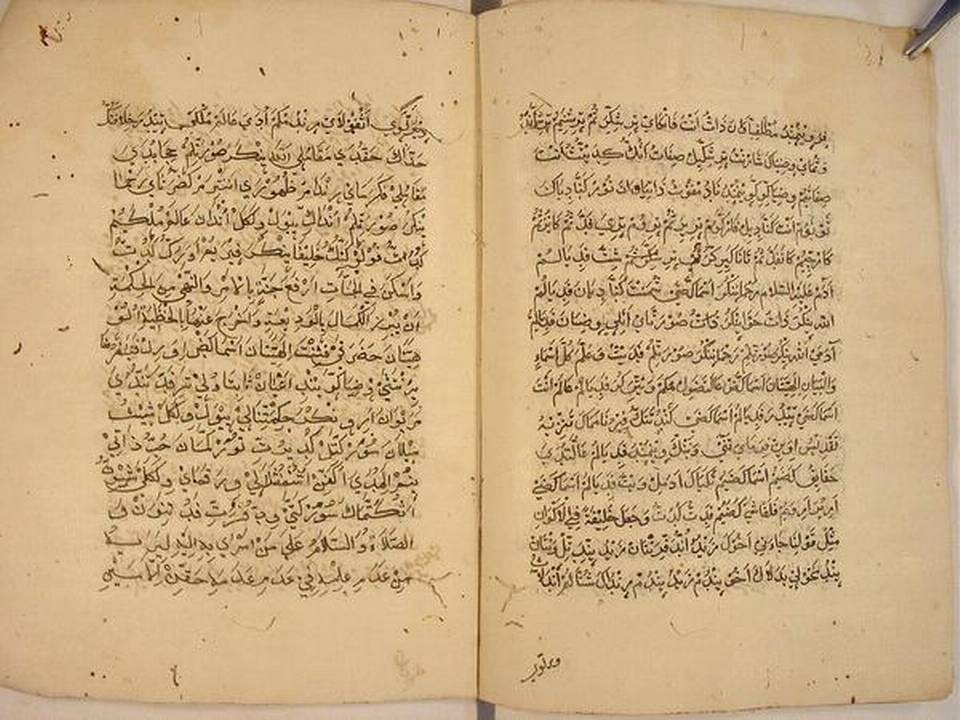
An Arwi manuscript. Photo: Special Arrangement/The Hindu

Tracing the roots of Arabu-Tamil, a link-language that evolved to facilitate communication between Arab settlers and Tamil Muslims

A hush falls over the room when Ammaji Akka starts reading out from the yellowing pages of a textbook called Simt-us-Sibyan (Pearls of Wisdom for the Young). Her voice may quaver, but her fingers glide surely on the modified Arabic alphabet that expresses ideas in Tamil.

The Salem-based septuagenarian is among a dwindling number of people who know Arabu-Tamil (or Lisan al-Arwi), the link-language that texts like Simt-us-Sibyan are written in. A language that evolved to facilitate communication between Arab settlers and the Tamil Muslims in southern India and Sri Lanka, Arwi was in active use from the 8th century up to 19th century.

A former Ustad Bi, or female teacher of Islamic scriptures, Ammaji Akka used to visit Tamil Muslim families at home to tutor adolescent girls and women in how to recite the Holy Quran in Arabic.

Simt-us-Sibyan (written by Maulana Mohamed Yusuf al-Hanafi al-Qadiri) was a learning tool in religious studies; and for many Tamil Muslim children up to the 1970s, used to be a part of Quran recitation classes.
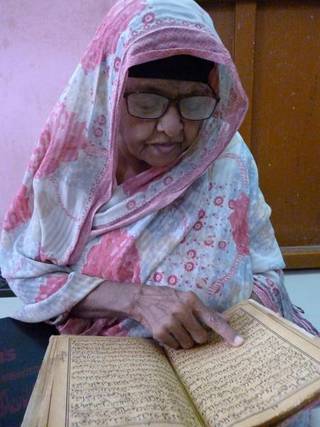
Ammaji Akka, a former Ustad Bi or teacher of Islamic scriptures, reads an Arabu-Tamil booklet at her home in Salem. Photo: Special Arrangement/The Hindu

“I have four Arabu-Tamil books — Noor Nama (an account of Prophet Muhammad’s life), Simt-us-SibyanYa Sayed Maalai (songs in praise of the Prophet) and Penn Buththi Maalai (advice for Muslim women). Though nobody wants to learn Arabu-Tamil anymore, I still read these books out loud after the evening (Maghrib) prayer, because I believe they will bring good fortune to the neighbourhood,” says Ammaji Akka.

Linguistic influence

The impact of Arabs on the Indian subcontinent is most evident in its languages; and Arabu-Tamil is just one of the several hybrid tongues that were once prevalent here.

“The vocabulary and certain grammatical features of indigenous languages like Hindi, Punjabi, Bengali and Sindhi have been affected by Arabic,” says KMA Ahamed Zubair, assistant professor, Department of Arabic, New College, Chennai, who has written four books on Arabu-Tamil. “Some of the languages along the western and southern coasts of India even adapted the Arabic script, as evident in Sindhi, Arabu-Tamil, Gujarati, Arabu-Malayalam, Arabu-Telugu and Arabu-Bengali.

“According to catalogues maintained in the Madras Archives Library, there are 3000 Arabu-Tamil books dating from 1890-1915, on a variety of subjects,” says Zubair. While the Arabu-Tamil texts still in use seem to be primarily religious in nature, the language had covered general topics like sports, astronomy, horticulture, medicine, and children’s literature, among others, when it was in common usage. On most social occasions, such as weddings, invitations would be issued in Arabu-Tamil.

“The Bible was translated in Arwi. There are four Arwi dictionaries published in the 1930s. Magazines in the language were printed in Ceylon and Rangoon since the 1870s,” says Zubair.
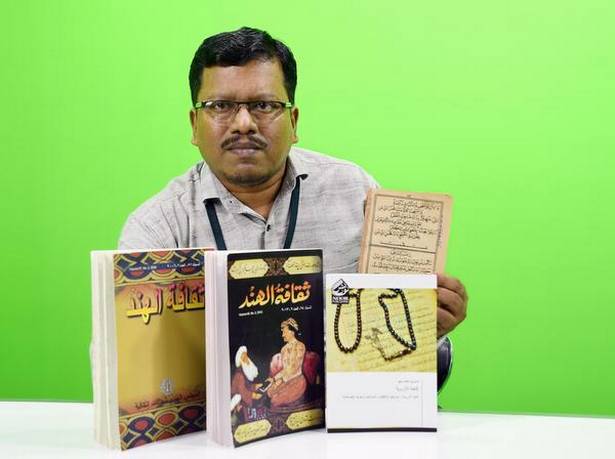
Dr KMA Ahmed Zubair of New College, Chennai, with books on Arabu-Tamil. Photo: R. Ravindran/The Hindu

Literacy drive

Arabu-Tamil spurred a major literacy drive in the Tamil Muslim community in pre-independence India, with women especially using the language to play vital roles in education, medicine and even politics.

“In those days, Tamil Muslims were invariably taught Arabic, not Tamil,” says J Raja Mohamed, former curator of Pudukottai Government Museum, who has chronicled the use of the language in his book Maritime History of the Coromandel Muslims (A Socio-Historical Study on the Tamil Muslims 1750-1900). “In conservative families, women were educated in Arabu-Tamil rather than Western languages. Many people still have archive files of personal correspondence and bookkeeping ledgers in Arabu-Tamil. Most of the Islamic folkloric traditions such as prayer songs and hymns in praise of the Prophet were recorded in this language.”

Tamil Muslim merchants were the descendants of Arab maritime traders who had settled down in the coastal areas of southern India. The power of this mercantile community declined in the early 20th century due to stiff competition from the British and the reluctance of the Tamil Muslims to adopt new shipping technology and modern education.

After independence, Arabu-Tamil started losing out to the predominance of English in nearly every sphere of life, and has become an heirloom language that only a few can remember. Seminaries in Kayalpattinam and Kilakkarai are among the places where rare Arwi manuscripts can be found. With qualified calligraphers of Arwi no longer available, most printers have stopped publishing Arabu-Tamil books.

_________________________________________

How it works
  • The Arwi alphabet consists of 40 letters, out of which 28 are from Arabic, and 12 are devised by adding diacritical marks that allow Arabic letters to express sounds particular to Tamil.
  • Common loan words from Arabic that are still in use in Tamil:
  • Abattu (danger, from the Arabic root Aafat)
  • Baaki (remaining, from Arabic root Baaqi)
  • Jilla (district/zone, from Arabic root Zill’a, one side of a triangle)
  • Wasool (levying/collection, from the Arabic root Wusool, arrival

_______________________________________

Need for revival

It is ironic that while Arabic is taught at graduate level in several colleges across the State, Arabu-Tamil doesn’t get much attention, except in a few madrassas (religious schools).

“Arwi works should be introduced as Open Educational Resources (OER) content to reach Tamil Muslims and the diaspora living in Malaysia, Singapore, Myanmar and Bangladesh,” says Zubair, who has devised Unicode substitutes for four Arwi characters in a research paper.

There are others who are hoping to revive interest in the language among young people. E Mohamed Ali, a former telecom employee based in Tiruchi, learned Arwi in his childhood through the devotional songs taught by his mother.

He is currently transliterating into Tamil, the Arwi song anthologies Tohfat-ul-Atfal and Minhat-ul-Atfal written by noted Sri Lankan Islamic scholar Syed Mohamed Alimsa for a local magazine, and is also planning to release an audio CD of the same with young singers.

“Arabu-Tamil enriched not just Arabic, but also Tamil, in many ways. Notable poets and writers of the coastal districts have written extensively in this language. Bringing it back would be a rewarding experience for the coming generations,” says Ali.

source: http://www.thehindu.com / The Hindu / Home> Society> History & Culture / by Nahla Nainar / May 24th, 2019
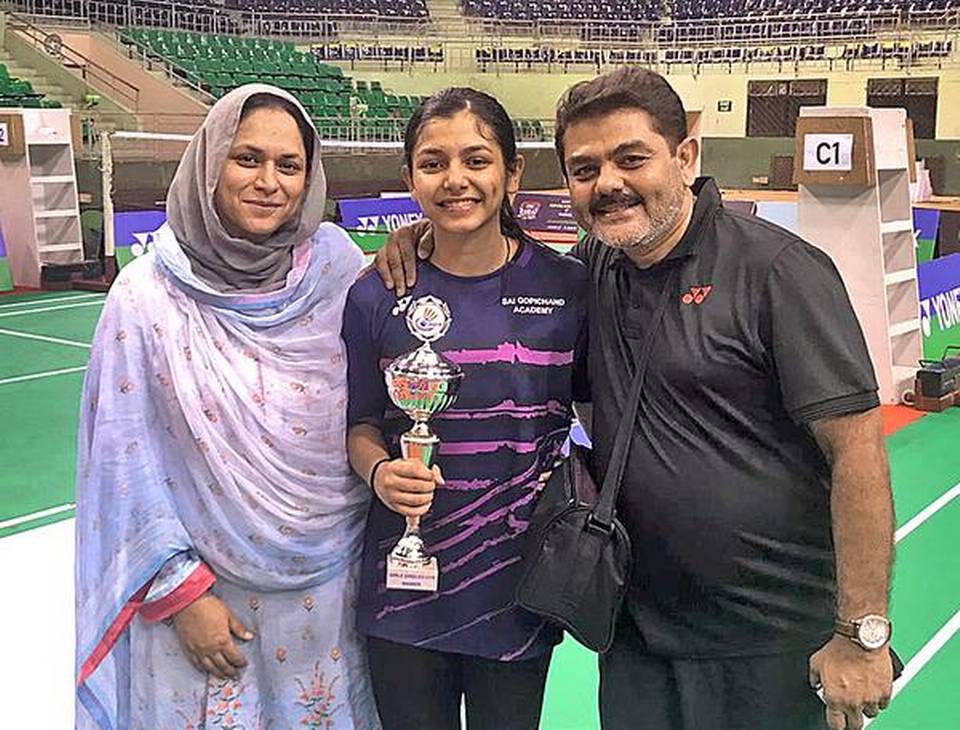

Samiya is another Saina in the making

TELANGANA :

Champion shuttler Samiya Imad Farooqui with her parents.

City girl wins national ranking tourney in Chennai

She is rated to be one of the best young badminton talent in India. And, on Sunday, the 15-year-old gifted shuttler from the city, Samiya Imad Farooqui, served a reminder of her growing stature, winning her maiden National under-19 ranking tournament in Chennai on Sunday.

“It feels great to win the first-ever title as I really worked had in extremely hot weather and it will remain a special one. Frankly, I never expected to win it but just tried to give off my best,” the articulate young champion from the city informed The Hindu on her return on Sunday evening.

The 10th standard Open school student interestingly won the ABC under-15 title two years ago but never a national-ranking event. “Yes, when I look ahead, this title is sure to spur me to achieve big. I am thankful to Gopi Sir who has been my mentor and always there to help me in giving those invaluable tips,” says Samiya. “I am privileged to see the big guns like Saina, Sindhu train in the same Academy since 2009 and sometimes they do encourage me, stressing the importance of fitness,” she said.

A huge fan of the World No.1 Tai Tzu Ying of Taipei, the young Hyderabad shuttler confesses that sometimes she tries to play like her idol even while acknowledging that it is never going to be easy. “Yes I see a lot of her videos, she is such a great player,” she added. Samiya also points out that she needs to work a lot more on fitness and reduce the unforced errors for better results.

Mantra for success

Her mantra for success is pretty simple – under pressure, keep the shuttle in play and minimise the errors. And, Samiya says she did exactly that in Chennai to win her maiden national title and hopes to repeat such performances in the days to come.

And, her next big assignment is in Thiruvananthapuram – All India ranking championship this month-end. This young girl will be flying back from the city within two days and is not deterred by the hectic schedule.

source: http://www.thehindu.com / The Hindu / Home> News> States> Telangana / b y V.V. Subhrahmanyam / Hyderabad – May 26th, 2019

Muslim representation in Indian Parliament

From face book of Imtiyaz Jaleel , MP

This year again, the number of parliamentarians elected from the Muslim community are 27  as compared to previous Lok Sabha elections when there were only 23 MPS out of the 542 constituencies.

The MPs are from only 11 states across India even though there are more than 40 constituencies that have a sizeable Muslim population estimated to be at least 30%.

The MPs who won this election are:

SN Name State Party
1 BADAHRUDDIN AJMAL ASSAM AIUDF
2 ABDUL KHALEQUE INC
3 CHOWDHIRY MAHBOOB ALI BIHAR LJP
4 DR. MOHAMMED JAVED INC
5 HUSSAIN MASOODI JAMMU &KASHMIR JKNC
6 MOHAMMED AKBER LONE JKNC
7 FAROOQ ABDULLAH JKNC
8 A M ARIF  KERALA CPI-M
9 ET MOHAMMAD BASHIR IUML
1- P.K. KUNHALIKUTTY IUML
11 MOHAMMED FAZAL LAKSHADWEEP NCP
12 IMTIYAZ JALEEL MAHARASHTRA AIMIM
13 K. NAVAZ KANI TAMIL NADU IUML
14 MOHAMMED SADIQ PUNJAB INC
15 ASADUDDIN OWAISI TELANGANA AIMIM
16 DANISH ALI UTTAR PARDESH BSP
17 AFZAL ANSARI BSP
18 ST HASSAN SP
19 MOHAMMED AZAM KHAN SP
20 HAJI FAZRUL RAHMAN BSP
21 DR SHAFFEQ UR RAHMAN SP
22 NUSRATH JAHAN ROOHI WEST BENGAL AITC
23 KHALEEL UR RAHMAN AITC
24 ABU TAHIR KHAN AITC
25 SAJJAD AHMED AITC
26 ABU HASEM KHAN CHOWDHURY INC
27 AFRIN ALI AITC

Muslim population in India is 14.2% as per the census of 2011 and can be approximated to be at 15.5% as on December 2018 . And as per the population of Muslims the number or parliamentarians to represent them should be at least 65.

But looking at the Muslim MPs from Uttar Pradesh, it is a leap forward as compared to previous LS elections of 2014 when there was not even a single Muslim representative. This time we have 6 of them – 3 from Samajwadi party SP) and 3 from Bahujan Samajwadi party (BSP).

Another area where Muslims are in large numbers from and where Trinamool Congress Party gives tickets to a good number of Muslims is West Bengal.  There have been 6 winners as compared to 8 Muslim MPs last time.

Bhartiya Janta Party that has secured majority in Lok Sabha had fielded 6 Muslim candidates – 3 from Kashmir, 1 from Lakshadweep and 2 from West Bengal. But none of them won.

From the Congress Party there are 4 Muslim MPs who made it to the parliament from Assam, Bihar, Punjab and West Bengal.

Bihar that had 4 Muslim MPs last time has only 2 this term.

AIMIM has 2 MPs this time with Asaduddin Owaisi winning once again for the 4th time while Jaleel from Aurangabad won against all odd as his constituency is not Muslim dominated one. But the alliance with Vanchit Bahujan Aghadi helped him get Dalit votes.  This is the first time since the inception of the party that there will be two representatives in the parliament from AIMIM which is historic in itself.

Indian Union Muslim League won in three places – 2 in Kerala and 1 in Tamil Nadu. The one in Tamil Nadu – Rramanthapuram is in alliance with DMK.

JK National conference has won in the same three constituencies which were won by PDP in 2014 i.e., Anantnag, Srinagar and Baramulla.

There are no Muslim MPs from either Gujarat, Madhya Pradesh, Rajasthan, Karnataka, Andhra Pradesh, Delhi where there are a good number of Muslims residing.

The highest number of Muslim parliamentarians elected were 34 in 2004 when the Congress led UPA had formed the government.

source: http://www.twocircles.net / TwoCircles.net / Home> Elections Update> Indian Muslim > Lead Story / TCN News / May 24th, 2019

Darrang’s Khushboo Firdous tops HS 2019 exam in Arts stream

ASSAM :

Khushboo Firdous
Khushboo Firdous

Guwahati :

Khushboo Firdous of Brilliant Academy in Darrang district of Assam secured the first position in the arts stream in the HS 2019 examination. The results were declared on May 25.

Firdous secured 478 marks and letter marks in five subjects.

A total of 13,44,96 students appeared for the HS examination in the arts stream. Out of 13,44,96 students, 44,377 were males and 57,696 were females. The pass percentage among the male candidates stands at 76.29 and female at 82.09.

source: http://www.guwahatiplus.com / G Plus / Home> Daily News / May 25th, 2019

IMTECH’s novel compound treats colistin-resistant bacteria

Chennai, TAMIL NADU :

Klebsiella-pneumoniae | Photo Credit: www.niaid.nih.gov

Very low concentration of the compound was able to kill all the bacteria in four to eight hours; there was no regrowth of bacteria even after a day.

A novel compound isolated from a soil bacterium shows promise in killing Gram-negative bacteria (Klebsiella pneumoniae and E. coli) that are resistant to colistin, a powerful, last-line antibiotic. The compound was effective in killing colistin-resistant bacteria in studies done in vitro and on mice models. Unlike colistin, the compound was found to be safe and did not damage the kidney of mice, a team led by Dr. Hemraj Nandanwar from the Institute of Microbial Technology (CSIR-IMTECH) found.

The bacterium (Paenibacillus sp) was found in the soil at Malvi village in Jind district, Haryana in January 2016.

“Colistin-resistant bacteria are increasing at an alarming rate in India and outside. It is a serious medical issue. The extent of resistance varies from one bacterial species to another and from one hospital to another. If colistin-resistant bacteria are found in the blood there is 80% chance of death,” says Dr. Abdul Ghafur from Apollo Speciality Hospitals, Chennai and co-author of a paper published in the journal Antimicrobial Agents and Chemotherapy.

The colistin-resistant bacteria were provided by Dr. Ghafur. Nineteen Kpneumoniae samples were from humans and three E. coli were from food samples.

Based on the amino acid composition and other studies, the team found the compound to be a new variant of the tridecaptin family; the variant was named tridecaptin M (the letter M standing for Malvi). Colisitin belongs to a different class of antibiotics, and so there is no cross resistance with the tridecaptin family of compounds.

The compound is novel and this is also the first time that antibacterial effects of tridecaptin family of compounds on colistin-resistant bacteria have been studied.

Interestingly, the new compound was more effective on K. pneumoniae bacteria that were colistin-resistant and less effective on colistin-sensitive bacteria, the team found. When the purified compound was tested on colistin-resistant bacteria, 16 times less amount of the compound was enough to kill the bacteria, compared with colistin.

Studies on resistance

More importantly, studies found that there is less likelihood of bacteria developing resistance against the compound. Very low concentration of the compound was able to kill all the bacteria in four to eight hours; there was no regrowth of bacteria even after a day. So this suggests that the compound resists spontaneous mutation. To further study the evolution of acquired resistance, they exposed the bacteria to very low concentration of the compound for 20 days. Even after 20 days the bacteria showed very low acquired resistance.

Mechanism of action

The mechanism by which the compound kills the bacteria is very different from most of the other drugs, especially colistin. The compound affects the ATP synthesis by the bacteria. With less fuel being produced, the bacteria are unable to multiply and thus killed.

Compared with colistin, the compound shows less ability to get into the bacteria (membrane permeability). So it forms specific pores in the membrane which disturbs the movement of ions leading to a reduction in ATP production. If the compound is used along with low concentration of colistin, the amount of compound required to kill colistin-resistant bacteria is 16-fold less. Thus colistin and the compound act synergistically.

Animal studies

The effectiveness of the compound was tested on mice by infecting the thigh muscle with colistin-resistant bacteria. Whereas colistin failed to kill the bacteria, about 90% of bacteria were killed by the compound.

Acute toxicity was tested by injecting 12 mg per kg every two hours till the accumulated dose became 72 mg per kg. All mice injected with colistin died within a day but no mice injected with the compound died. The kidney of the sacrificed mice did not show any damage.

source: http://www.thehindu.com / The Hindu / Home> Sci-Tech / by K. Prasad / Chennai – May 24th, 2019

Jahanara Begum: The Forgotten Mughal Princess Who Designed Chandni Chowk

DELHI :

She was one of the most powerful women of medieval India, a Mughal princess like no other. And yet, her extraordinary story remains lost in the pages of history.

In an unassuming part of India’s capital city, amidst winding alleys lined with attar and chadar sellers, lies the 800-year-old dargah of Hazrat Nizamuddin Auliya—one of the most revered saints in Sufism. From dusk to dawn, thousands of devotees throng this bustling complex to pay their respects.

Yet, few know that Delhi’s most famous Sufi shrine is also home to the tomb of one of the most powerful women of medieval India, Jahanara Begum.

A writer, poet, painter and the architect of Delhi’s famous Chandni Chowk, Jahanara was a Mughal princess like no other.

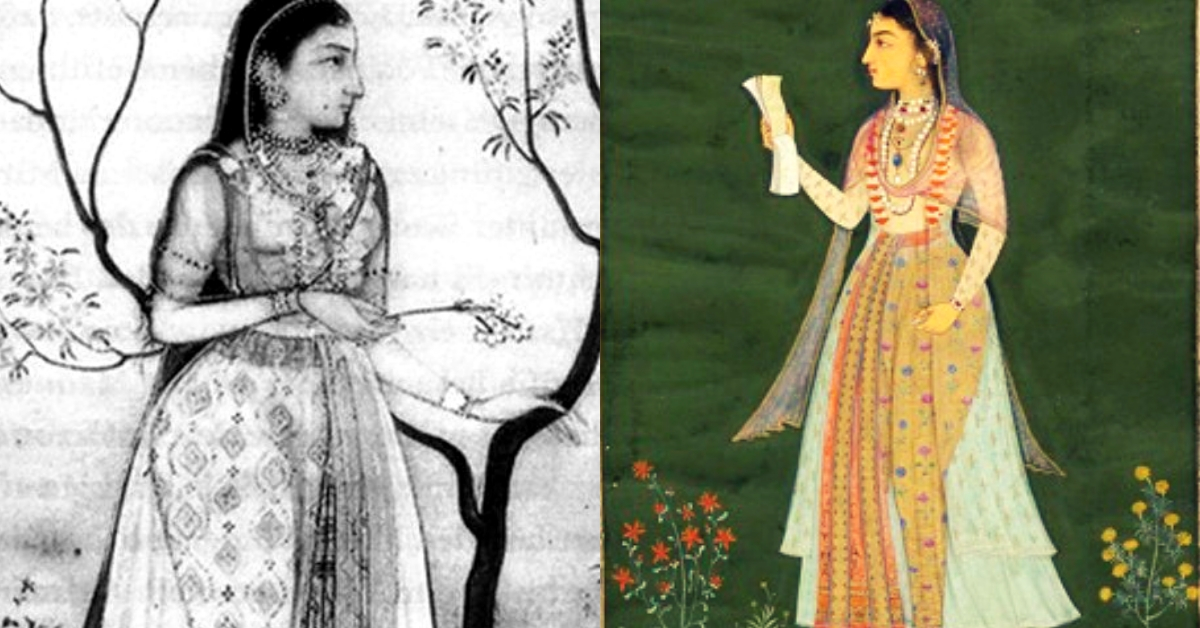
Portraits of Jahanara Begum. Source: Wikimedia Commons

This is her story.

The eldest child of Emperor Shah Jahan and his favourite wife, Mumtaz Mahal, Jahanara was born in Ajmer in 1614. Growing up in one of the richest and most splendid empires in the world, the young princess spent her childhood in opulent palaces, humming with family feuds, battle intrigues, royal bequests and harem politics.

As such, she was well-versed in statecraft by the time she was a teenager.

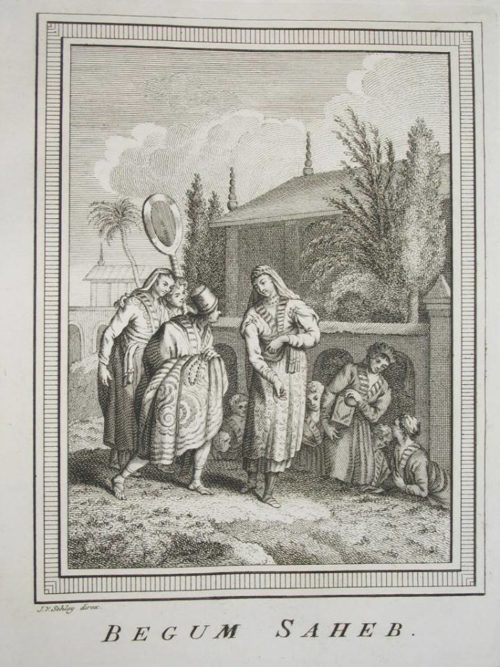
Soon after, Jahanara was appointed Begum Sahib (Princess of Princesses) by her doting parents. She would often spend her evenings playing chess with Shah Jahan, understanding the workings of the royal household, and helping her father plan the reconstruction of other palaces.

As French traveller and physician François Bernier writes in his memoirs, Travels in the Mogul Empire  ,

“Shah Jahan reposed unbounded confidence in his favourite child; she watched over his safety, and so cautiously observant, that no dish was permitted to appear upon the royal table which had not been prepared under her superintendence.”

Jahanara was also especially close to Dara Shikoh, Shah Jahan’s eldest son and her favourite brother. The two shared a love of poetry, painting, classic literature and Sufism.

In fact, she also wrote many books, including a biography of Ajmer’s Sufi saint Khwaja Moinuddin Chishti, displaying her flair for prose.

The Begum Sahib. Source: Royal India Families/Facebook

But tragedy struck the young princess’s life with the untimely demise of her beloved mother, Mumtaz, in 1631. At the tender age of 17, she was entrusted with the charge of the Imperial Seal and made Malika-e-Hindustan Padshah Begum—the First Lady of the Indian Empire—by the shattered Emperor, whose grief kept him away from his royal duties.

It was only on Jahanara’s behest that the inconsolable Shah Jahan came out of mourning.

In the years to follow, she became her father’s closest confidante and advisor. Highly educated and skilled in diplomatic dealings, her word became so powerful that it could change the fortunes of people. Her favour was much sought-after by foreign emissaries.

In 1654, Shah Jahan attacked Raja Prithvichand of Srinagar. Despairing of success in the battle, the Raja sent a plea for mercy to Jahanara. The Princess asked him to send his son, Medini Singh, as a sign of his loyalty to the Mughal Empire, thereby getting him a pardon from the Emperor.

The following year, when Aurangzeb was the viceroy of the Deccan, he was bent on annexing Golconda, ruled by Abdul Qutb Shah. The Golconda ruler wrote an arzdast(royal request) to the Princess, who intervened on his behalf. Qutb Shah was pardoned by Shah Jahan (against Aurangzeb’s wishes) and secured his safety on payment of tax.

Interestingly, Jahanara was also one of the few Mughal women who owned a ship and traded as an independent entity.

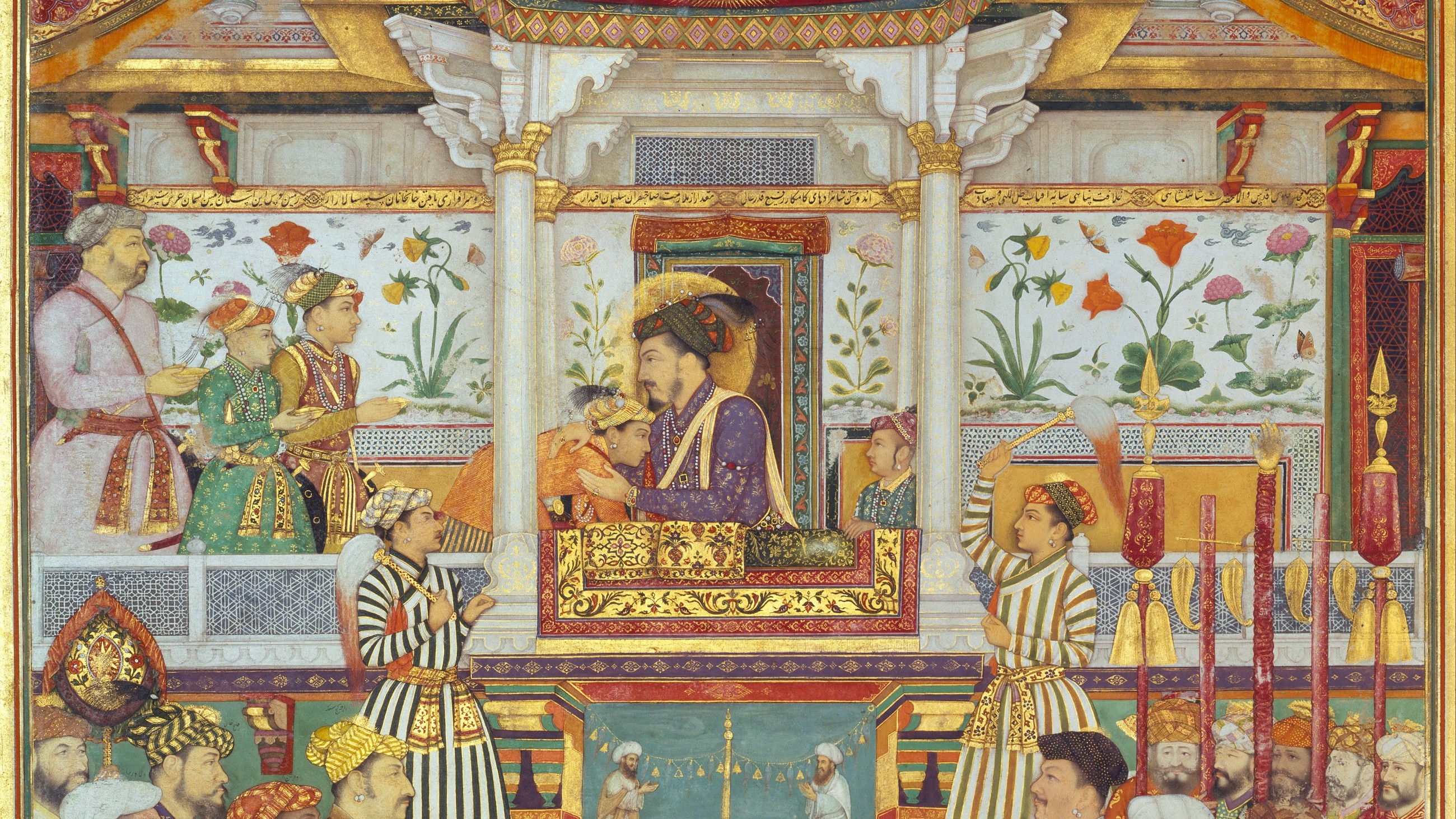
Padshahnama plate 10 : Shah Jahan receives his three eldest sons and Asaf Khan during his accession ceremonies (8 March 1628). Source: Wikimedia Commons

Named ‘Sahibi’ after its owner, Jahanara’s ship would carry the goods made at herkarkhanas (factories) and dock at her very own port in Surat; its revenue and the colossal profits she made via trade significantly boosted her annual income of three million rupees!

In his book Storia Do Mogor, Italian traveller Niccolao Manucci writes, “Jahanara was loved by all, and lived in a state of magnificence.” The book is considered to be one of the most detailed accounts of Shah Jahan’s court.

But Jahanara’s political and economic clout failed to have an impact on the bitter war of succession between her brothers, Dara Shikoh and Aurangzeb. She made several attempts to mediate between them, but as Ira Mukhoty writes in her book Daughters of The Sun , she had “underestimated the corrosive loathing that Aurangzeb has for Dara, whom he blames for his father’s cold criticism throughout his career”.

Aurangzeb ultimately killed Dara Shikoh and placed an ill Shah Jahan under house arrest in Agra Fort’s Muthamman Burj (Jasmine Tower). Faithful to her father, Jahanara set aside her lucrative trade and luxurious lifestyle to accompany him into imprisonment.

A constant presence beside Shah Jahan in his exile, she took care of him for eight years, till he breathed his last in 1666.

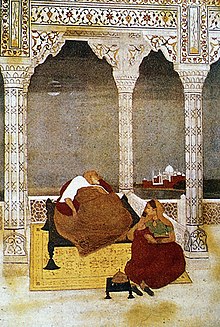
“The Passing of Shah Jahan” (1902), a painting by Abanindranath Tagore. At the foot of the bed is Jahanara Begum, the daughter of Shah Jahan; the Taj Mahal is in the background. Source: Wikimedia Commons

It says much for her stature in the Mughal court that after Shah Jahan’s death, Aurangzeb restored her title of Padshah Begum and gave her a pension along with the new title of Sahibat al-Zamani (Lady of the Age)—befitting for a woman who was ahead of her time.

Unlike other royal Mughal princesses, she was also allowed to live in her own mansion outside the confines of the Agra Fort.

“Jahanara establishes herself in the city as the most influential woman patron[s] of literature and poetry. She collects rare and beautiful book[s], and her library is peerless. She donates money to charity, especially Sufi dargahs, and carries on a genteel diplomacy with minor rajas who come to her with grievances and gifts,” writes Ira Mukhoty in her book.

Spending her last years in the pursuit of her artistic and humanitarian passions, Jahanara passed away in 1681 at the age of 67 but not before she etched her mark in the annals of history in a manner that would have made her father proud.

She commissioned several architectural spectacles, mosques, inns and public gardens across the Mughal empire.

But she is best remembered as the architect of Old Delhi’s legendary bazaar, Chandni Chowk—which translates to ‘Moonlit Intersection’.

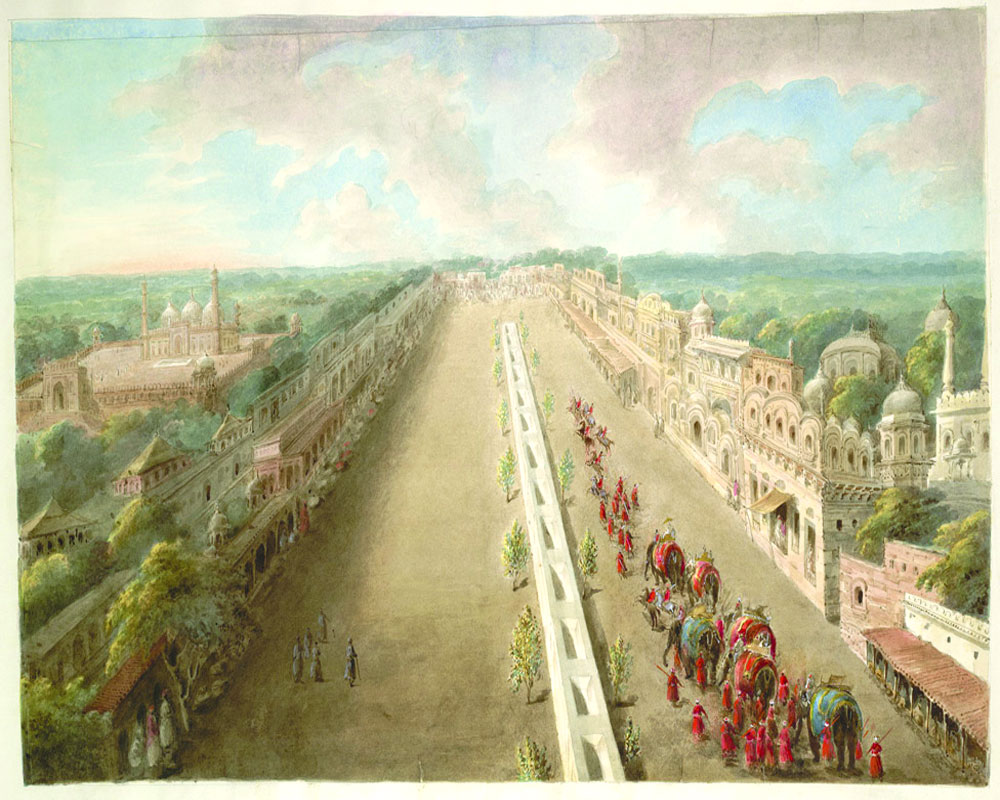
Water colour of Chandni Chowk in Delhi from ‘Views by Seeta Ram from Delhi to Tughlikabad Vol. VII’. Source: British Library

In his book  Shahjahanabad : The Soverign City in Mughal India , Stephen Blake writes,

“The chowk was an octagon with sides of one hundred yards and a large pool in its center. To the north, Jahanara built a caravansarai (roadside inn) and a garden and, to the south, a bath. On certain nights, the moonlight reflected pale and silvery from the central pool and gave to the area the name Chandni Chawk (Silver or Moonlight Square). This name slowly displaced all others until the entire bazaar, from the Lahori Gate to the Fatehpuri Masjid, became known as Chandni Chawk.”

Today, many of Chandni Chowk’s ancient buildings have been torn down, as its lanes brim with new shops and colliding crowds. And yet, somehow it manages to invoke the spirit with which Jahanara lived—the same spirit that helped her survive and thrive amidst betrayals and tragedies.

Interestingly, Jahanara’s resting place in the Nizamuddin Dargah is of her own choosing, just like her character.

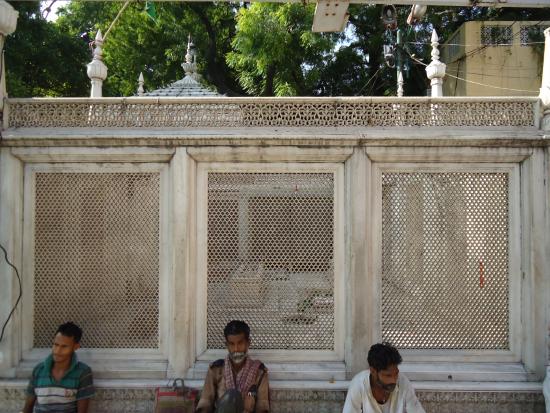
Jahanara’s tomb at the Nizamuddin Dargah. Source

Unlike the giant mausoleums built for her parents, she rests in a simple marble tomb open to the sky, inscribed with her own couplet in Persian:

Baghair subza na poshad kase mazar mara, (Let no one cover my grave except with green grass,)
Ki qabr posh ghariban hamin gayah bas-ast. (For this very grass suffices as a tomb cover for the poor.

Perhaps it is poetic justice that green vines grow on the grave of this extraordinary princess of India.

(Edited by Shruti Singhal)

source: http://www.thebetterindia.com / The Better India / Home> History> Women / by Sanchari Pal / May 24th, 2019

Bengaluru: Auto driver rewarded for honesty on the job

Bengaluru, KARNATAKA :

When Syed Ahmed noticed the bag, he waited at the same spot thinking the passenger would return to collect the bag.

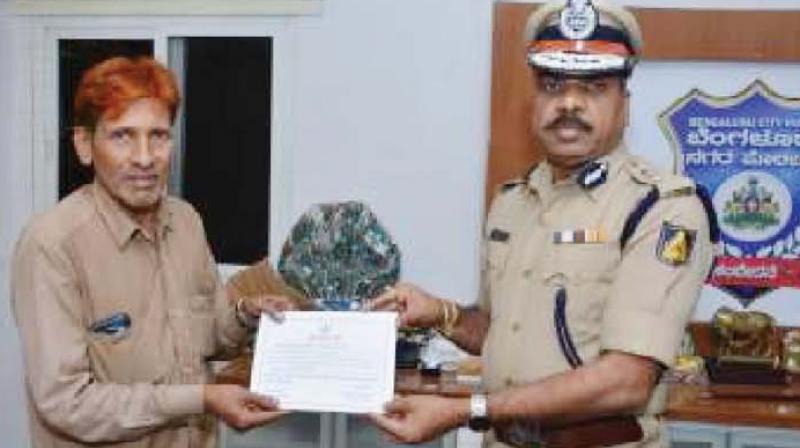
Syed Ahmed receives his award from Police Commissioner T. Suneel Kumar.

Bengaluru:

The city Police Commissioner T. Suneel Kumar rewarded a 45-year-old autorickshaw driver for his honesty, when he returned a bag containing cash, ATM cards and an expensive mobile phone which was left behind by a passenger on Wednesday.

The passenger, identified as Pramod Kumar Jain, took the autorickshaw from Majestic driven by Syed Ahmed. When Jain got off at the City Railway Station, he left behind a bag containing cash and other valuables.

When Syed Ahmed noticed the bag, he waited at the same spot thinking the passenger would return to collect the bag.

When the passenger did not return even after hours, Ahmed took the bag to the city Police Commissioner’s office seeking help in returning the bag to its owner. The police checked the bag and found a visitng card of Jain.

The police him to collect the bag, which contained Rs 45,000 in cash, two ATM cards and an i-Phone.

The bag was handed over to Jain in the presence of the Commissioner.

Kumar gave Ahmed a certificate of appreciation and a cash reward.

source: http://www.deccanchronicle.com / Deccan Chronicle / Home> Nation> Current Affairs / May 23rd, 2019

Zewan Girl, Nahida finally conquers Mt. Everest, becomes first Kashmiri to do so

JAMMU & KASHMIR :

NahidaMPOs22may2019

Srinagar:

Nahida Manzoor has become first Kashmiri woman to successfully summit the World’s highest peak, Mount Everest.

The news about Nahida’s successful summit was made public by Transcend Adventures, the company with which she had gone for her maiden attempt to scale the Everest.

“The Fourth summit of the day is Nahida Manzoor along with her Sherpa Guide Nima Kancha. Nahida hails from the state of Jammu & Kashmir. The 26-year old lady has been passionate about the snow peaks and took to the mountains at a very young age,” Transcend Adventures posted on their official Facebook page.

Nahida along with her group had left from Everest Base camp for the summit on Saturday and on Tuesday she made successful summit of the peak.

The experienced trained mountaineer had on March 4 started crowd funding to support her dream journey.

source: http://www.thedespatch.in / The Despatch / Home> Chai Khana / by The Despatch Staff / May 22nd, 2019

Baramulla Activist elected as delegate for UN conference

Baramulla, JAMMU & KASHMIR :

TouseefRainaMPOs21may2019

Srinagar:

Activist Touseef Raina has been elected as delegate for UN Conference. Touseef Raina, hailing from Baramulla was selected among thousands of applications from across the world.

Arab Youth International Model United Nations (AYIMUN) is an annual conference where young leaders from all over the world sir together in an assembly called a Meeting session and each of them play the role as a diplomat representing the country they are assigned to.

A conference where hundreds of youth will gather, Touseef Raina was selected from Kashmir, to discuss the global issues and represent their countries as diplomats on a global level.

It will be held in Dubai United Arab Emirates Le Méridien Dubai Hotel, UAE.

Raina said, “It is a great opportunity and he is overwhelmed. He is looking forward to learn new things and share his idea and discuss Kashmir.”

Raina is currently working as the Advisor to Municipal President, Sopore. He had recently contested ULB polls.

source: http://www.qns24x7.com / QNS24X7 / Home> Kashmir / May 20th, 2019

Ahamed scores big in opening round of national bike rally

Mangalore, KARNATAKA :

Bengaluru, May 19 (IANS):

Mangalore bike racer Adnaan Ahamed proved to be the consummate racer in the opening round of the FMSCI Indian National Rally Sprint Championship here on Sunday, winning two categories in style on an action packed day.

Adnaan, winner of various national and regional championships, clocked the fastest time of 06:34.00 mins in the Group B 131cc-165cc category to win this title; he was equally invincible in the Group B 166cc to 260cc class, posting a time of 06:33.00 mins to reign supreme.

Bengaluru’s star rider Yuva Kumar trailed him in both the categories, clocking 06:36.00 mins in the Group B 131cc-165cc and 06:41.00 mins in Group B 166cc to 260cc to finish second on the podium.

Samuel Jacob with a time of 06:52.00 mins finished third in the Group B 131cc-165cc category while Vinay Prasad (07:00.00 mins) grabbed the third spot in the Group B 166cc to 260cc competition.

In the Group A up to 800cc category, it was Jeevan Gowthalli who reigned supreme after completing the 6. 2 km run with a timing of 06:49.00 mins. He was followed by Badal S. Doshi (06:50.00 mins) and Vishwas SD (06:55.00 mins) on the podium.

In the Group B 261cc to 400cc classification, Sudeep Kottary outran his competitors and clocked 07:38.00 mins to come out on top followed by Samarth (07:51.00 mins) and Hitesh Subhash Ghad (07:54.00 mins).

source: http://www.daijiworld.com / DaijiWorld.com / Home> Sports / by IANS / May 19th, 2019