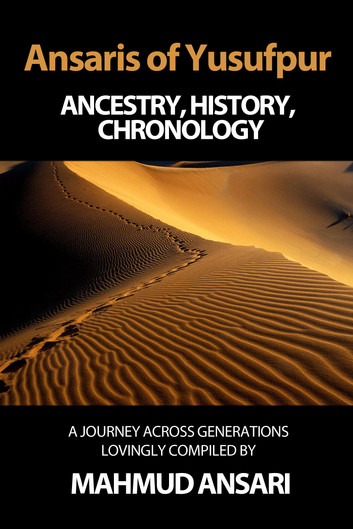
A fascinating history of Ansaris who began their journey in this mortal world a few thousand years ago in the peninsula of Arabia, then called Araba.
As Islam grew and took in its fold various other lands and nations, Ansars, being valiant warriors, became part of just about every major battle that took place from Badr to Constantinople, Qandahar, Herat, and finally to India.
Ansaris were not mere bystanders as history unfolded; they played significant roles and made valuable contributions in the fields of religion, medicine, literature, law, politics and media, no matter which part of the world they chose to settle in.
Since this book is about a branch of Ansaris who arrived in India, i.e. the Ansaris of Yusufpur, they will be covered in depth.
However, as the first book on Ansaris in English language, it would also be of interest to all Ansaris whose ancestors moved from Madinah-e-Munawwara to other countries of the Gulf, Middle East, Iran, Afghanistan, India, Pakistan and other parts of the world.
It is, after all, a common lineage and history that all Ansaris share from the pre-Islamic era and this book provides a ready reference to the origin and history of their ancestors.
This book is a fascinating history of Ansaris who began their journey in this mortal world a few thousand years ago.
As the first book on Ansaris in English language, it would also be of interest to all Ansaris whose ancestors moved from Madinah-e-Munawwara to other countries of the Gulf, Middle East, Iran, Afghanistan, India, Pakistan and other parts of the world.
source: http://www.kobo.com / Rakuten Kobo / Home> Biography & Memoir / by Mahmud Ansari
Yusufpur (GhazipurDistrict), UTTAR PRADESH / NEW DELHI / London, U. K :
Begum Zohra Ansari sold away ‘Dar-us-Salam’ to raise party funds and worked for the victory of the candidates of the Indian National Congress and for the defeat of the candidates of the Muslim League, who wanted partition.
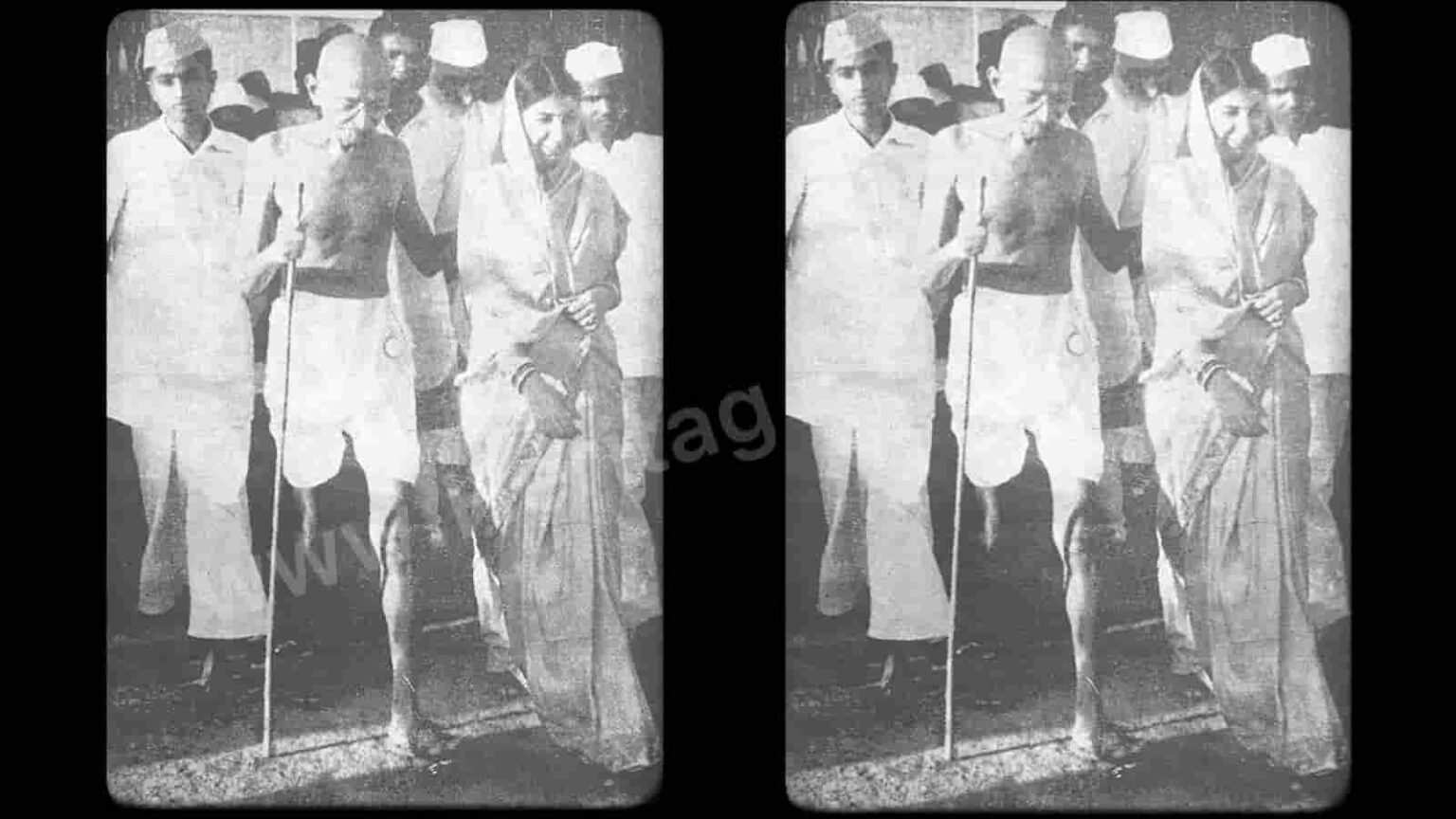
Begum Zohra Ansari, an activist of the Indian National Movement whom Mahatma Gandhi addressed as “Vasthad Bi, was born in Delhi. She was the adopted daughter of freedom fighters, Dr. Mukhtar Ahmed Ansari and Begum Shamsunnisa Ansari.
Besides playing an important role in the National Movement, her parents provided hospitality to leaders and a cadre of the Indian National Movement and scholars and people of repute in different walks of life in their residence ‘Dar-us-Salam’. It was very spacious like a royal palace.
While Begum Shamshunnisa Ansari was busy in these responsibilities, Zohra helped her. Thus she had an opportunity to see from close-quarters leaders such as Mahatma Gandhi, Pandit Motilal Nehru, and the Ali Brothers and to serve them. Right from childhood she evinced interest in literature, history, and social sciences. She also gained proficiency in Urdu, Arabic, Persian, and Hindi.
Zohra Ansari and Mahatma Gandhi
Zohra Ansari rendered her services in Wardha Ashram for a long time. Mahatma Gandhi came to know about her command over Urdu and started learning the language from her. He used to address her in his letters as ‘Vastad Bi’ and ‘Beti.
Zohra Ansari and Mahatma Gandhi used to have regular correspondence on various issues. In his letter dated 22 December 1932 to Dr Ansari, Gandhiji remarked that he used to look forward to Zohra’s letter every week. When Zohra expressed her desire to go to jail as a part of the National Movement, like her parents, Gandhiji asked her to wait and promised to allow her to go to jail.
Begum Zohra Ansari married Dr Shaukatulla Shah Ansari (1908-1972) who was her relative and leader of the Indian National Movement. Begum Zohra Ansari lost her father in 1936 and mother in 1938. She took an active part in the Freedom Struggle along with her husband. Both wife and husband opposed the partition of India.
She sold away ‘Dar-us-Salam’ to raise party funds and worked for the victory of the candidates of the Indian National Congress and for the defeat of the candidates of the Muslim League, who wanted partition. Post Independence, Begum Zohra Ansari led a simple life and passed away on 28 July 1988 in England.
source: http://www.heritagetimes.in / Heritage Times / Home / by Syed Naseer Ahamed / December 12th, 2023
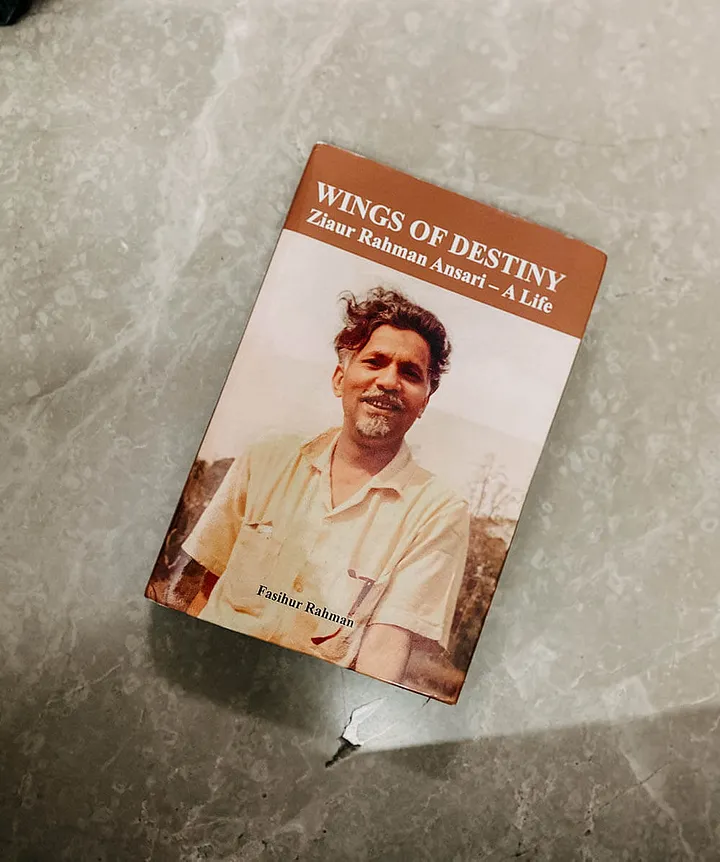
Ziaur Ansari was a prominent political figure, having served as the Union minister in the council of 2 Prime ministers Indira and Rajiv Gandhi. Wings of Destiny written by his son Fasihur Rahman is an ode to his entire political career spanning more than three decades and highlights the stalwart’s remarkable, inspirational life as well as clears the air around the controversies surrounding him.
When the truth stands coy in a corner, visible and yet under the pretence of being unknown and unacknowledged, you know that something somewhere is unfair.
Indeed, many times in life, there comes a threshold where one needs to understand and realize that truth which is the most supreme of all, can be an eye opener, as well as a beautiful and also a terrible thing, many a time. Terrible because there may be more to the situation than what meets the eye.
Yes, we all know and have read about the countless hardships that all of us underwent during the Indian freedom struggle. But, surely not all has come to light as far as the involvement of all parties, be it left or right is concerned. Yes, Muslims too were an integral part of the struggle towards Independence, their contribution being extremely indispensable. A prominent figure among them is Ziaur Rahman Ansari who served as Union minister from 1973 to 1977 and from 1980 to 1989 during the council of two Prime Ministers -Indira Gandhi and Rajiv Gandhi, this book which is written by his nephew Fasihur Rahman is a memoir cum biographical sketch of Ziaur Ansari’s life.
Ziaur Ansari was primarily in the spotlight in the year 1985, when he participated in a debate on a private Member Bill related to the SC judgement on the Shah Bano case, which to date remains one of the most debated issues in India as well as abroad. Having been often misquoted, misinterpreted and improperly perceived, Fasihur has taken it upon himself to finally take the opportunity to tell the world the true story behind Ziaur’s life.
The book which began with giving an ancestral account of Ansari primarily spoke about his father Habibur Rahman Ansari’s invaluable contribution to the freedom movement. What followed was the journey through Ziaur Rahman’s pursuit of politics which was turbulent and spanned a period of almost three decades, showing how he contested 9 elections.
Ziaur, not only being a man of strong ethics and politics, nevertheless was a man with a passion for fine arts, poetry, literature and music too. Ziaur was also inspired by Abul Kalam Azad’s legacy which was one of the cores of Rahman’s life. The hardships suffered by the Ulamas aka the religious scholars after the Mutiny of 1857 have also been explored by Fasihur here highlighting the true role of Darul Uloom Deoband in the Indian freedom struggle. I, for once, was amazed by this one since like mentioned earlier, I realized that many religious scholars, many freedom fighters have remained unsung, unacknowledged in their role in the struggle against the British rule for reasons which were, are and perhaps will always be something we shall never be able to comprehend fully. Racism, unfortunately, in the most erred way possible, nevertheless, Fasihur has brought forth a lot of undeciphered and unknown details forward.
Have you ever known or read about the famous Shah Bano case and the subsequent judgement of 1985? Well, the book explores the same in its entirety giving us Ziaur’s intervention in the Parliamentary debate on the SC judgement.
Ziaur Rahman was the president for a tenure of almost three decades at the All India Momin conference. The book provides a complete walk through the evolution, historical significance, mandate, and contribution of the conference in the complete socio-economic upliftment of the Muslim artisans. It also highlights their contribution to the freedom movement in India.
The last two years of Ziaur’s life were traumatic as Amyotrophic Lateral Sclerosis, an incurable neurological disorder, marked them. Characterized by loss of speech this is one of the most painful possible diseases and indeed Ziaur’s pain and anguish must have been sheer agony.
Lagate ho jigar pe teer par hum kuch nahi kehte. Zabaan hote hue ye bezabaani dekhte jao…
This Urdu couplet which was used by Ziaur himself to express the trauma of the condition he was reduced to was something that shook me personally, making me fathom and realize the kind of inability and pain the disease might have led him to. It was heartbreaking to read the complete scenario, especially since Fasihur has revealed how even being the prominent voice he had been, Ziaur was unable to speed track the path to going abroad and procuring the treatment which would have cured him.
A brilliantly written book, this one is a memoir you surely should not miss. Fasihur Rahman is impeccable in detail, immaculate in expression, not shying away from portraying facts as well as refraining from giving any kind of a judgmental tonality to any of the data he has provided. A crisp narration, this one will give you a lot of detail especially as it delves into pre as well as post-independence happenings and thus will be of interest as well as use to readers and historians too alike.
The centuries-old Islamic educational centre, birthplace of the Urdu Qur’an translation, struggles to protect its legacy amid growing Hindu-led development projects.
New Delhi :
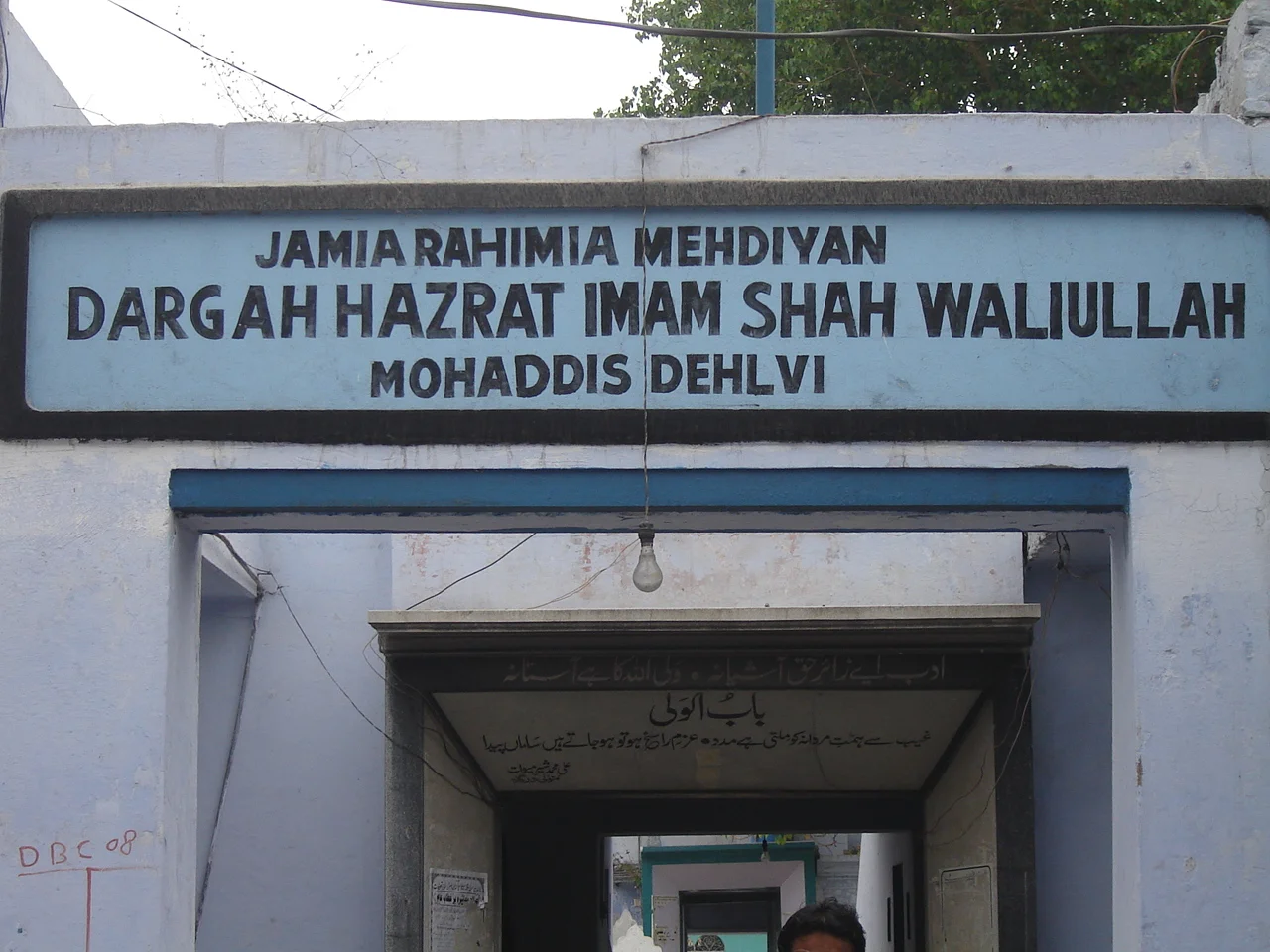
Hidden along the busy Bahadur Shah Zafar Highway, Mehdiyan — home to the revered Madrasa Rahimiya, also known as Jamia Rahimia — stands as one of Delhi’s oldest Islamic learning centres. Established by Shah Abdul Rahim, father of the famed scholar Shah Waliullah Muhaddith Dehlvi, this madrasa has for centuries served as a vital institution nurturing Islamic scholarship. However, today its existence is threatened by creeping urban development dominated by Hindu groups, threatening to erase a vital piece of Muslim heritage.
“Madrasa Rahimiya was not just a school; it was a movement to bring Muslims closer to the Qur’an’s true teachings,” explains Mufti Muhammad Sabir, a Hadith instructor at the madrasa. “But its history is being erased by those who prioritise development over our heritage.”
Madrasa Rahimiya holds a proud place in history, especially for pioneering the first Urdu translation of the Qur’an. In the late 1700s, Shah Abdul Qadir, a key scholar educated under his father and others, undertook the translation project at the Akbarabadi Mosque. This effort laid the foundation for making Islamic scripture accessible to millions of Urdu-speaking Muslims across India, who were otherwise unable to understand the original Arabic text.
“Shah Abdul Qadir’s translation was revolutionary, yet it faced strong opposition from scholars who considered translating the Qur’an sacrilegious,” says Maulana Sabir. “Despite this, his work endured and shaped generations.”
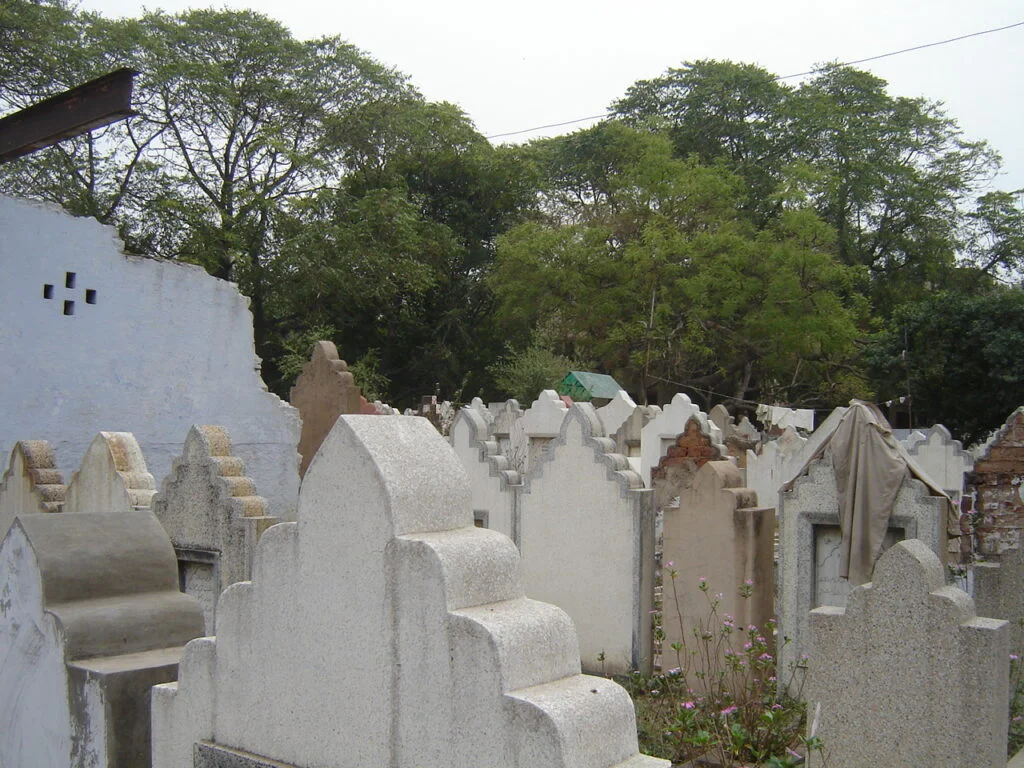
But this rich history has not been free from hardship. After the 1857 War of Independence, British colonial forces destroyed the Akbarabadi Mosque and shuttered the madrasa. The adjoining Mehdiyan cemetery, the resting place of Shah Waliullah and his family members, was drastically reduced. Historian Rana Safavi laments, “Mehdiyan was once a vast necropolis for saints and commoners alike. Now, much of it is lost to encroachment, with what remains used merely as a washing place.”
In the 1960s, Delhi’s expanding urban sprawl posed new threats. Plans to demolish Mehdiyan to build flats and houses were only halted because of the heroic resistance of Ali Muhammad, known locally as Sher-e-Mewat. “He lay down in front of bulldozers and even Pandit Nehru’s car to protect these sacred shrines,” recalls resident Bilal Ahmed. “He broke his leg but ensured our heritage survived.” Jawaharlal Nehru himself was moved by Ali Muhammad’s determination and ordered the preservation of these sites, which were later enclosed by a boundary wall.
Yet, the madrasa’s survival is once again at risk. Critics point out that the latest wave of urban planning, heavily influenced by Hindu groups, disproportionately targets Muslim heritage areas. Historian Zafar Khan asserts, “Hindu groups have long viewed places like Mehdiyan as obstacles to their vision of a ‘modern’ Delhi. This is not just about land — it’s an attempt to erase Muslim identity.”
Local Muslims feel the marginalisation acutely. “Our history is being systematically sidelined,” says Ayesha Begum, a teacher at Jamia Rahimia. “While Hindu temples receive government protection and funding, our sacred sites are neglected, ignored, or demolished.” She highlights the glaring lack of state support for the madrasa compared to the ample aid granted to Hindu religious institutions.
Despite the ongoing pressures, Madrasa Rahimiya endures as a symbol of resilience and faith. Its small mosque and student quarters continue to operate, preserving the teachings that Shah Waliullah and his predecessors established centuries ago.
“We teach the same Qur’an and Hadith that Shah Waliullah did,” says Mufti Sabir. “No matter the encroachment or neglect, that legacy will not disappear.”
The battle to save Mehdiyan reflects wider tensions in India, where Muslim cultural and religious heritage frequently confronts Hindu nationalist agendas. For now, the madrasa stands firm — a testament to Delhi’s Muslim scholars’ enduring spirit and their steadfast commitment to preserving Islamic knowledge and identity.
source: http://www.clarionindia.net / Clarion India / Home> Culture> Editor’s Pick> India / by Mohammed Bin Ismail / May 24th, 2025
Maulana Shahabuddin Razvi New Book: Maulana Shahabuddin Barelvi’s historical book ‘Tarikh-e-Islam Mukammal’ was released in Bareilly.
This book, prepared after 10 years of hard work, was described as the heritage of the Muslim society and it was announced to be published in many languages.
Maulana Shahabuddin’s new book released in Bareilly
BareillyNews Today :
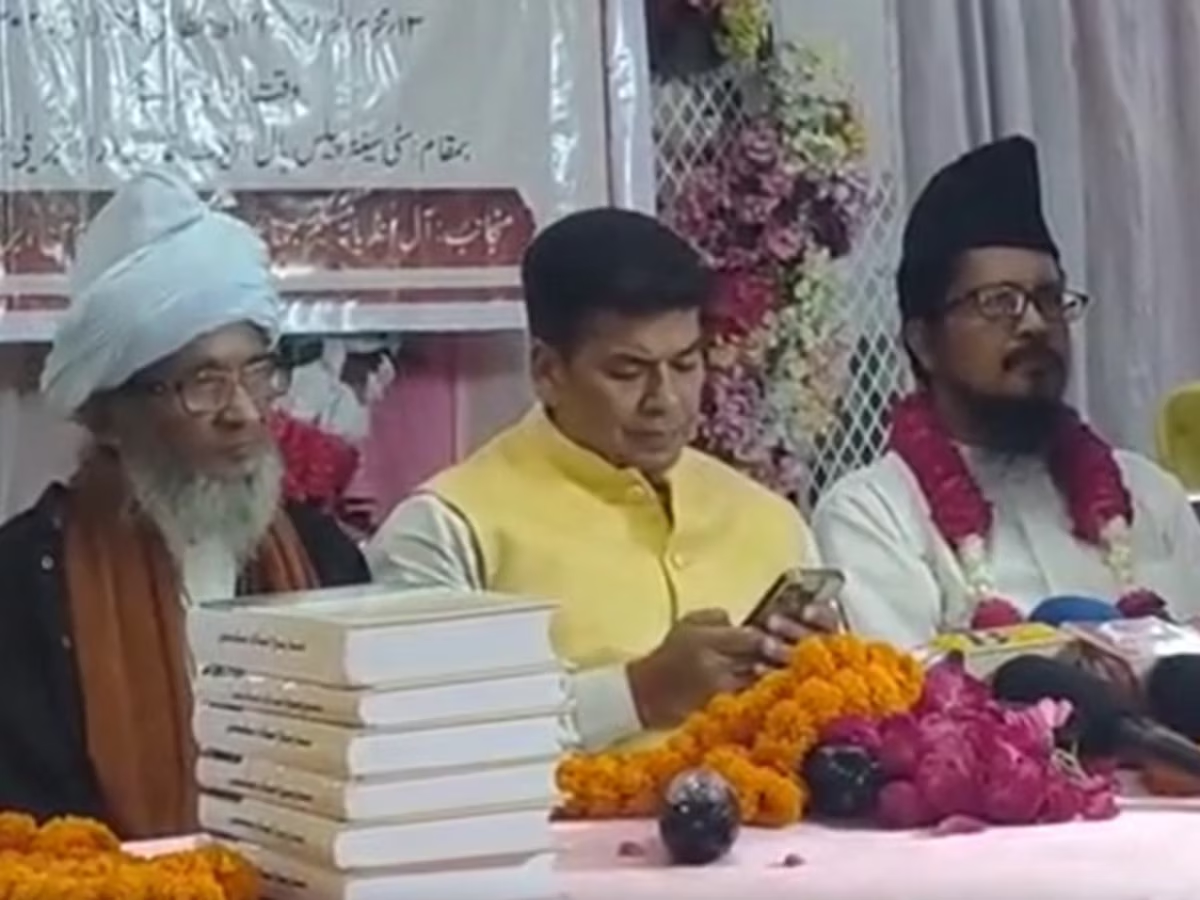
A grand launch program of the historical book ‘Tareekh-e-Islam Mukammal’ by the National President of All India Muslim Jamaat, Maulana Shahabuddin Barelvi was organized in Bareilly. On this occasion, the Chairman of Uttar Pradesh Waqf Development Corporation Shafakat Hussain was present as the chief guest. At the same time, Bharatiya Janata Party (BJP,Bareilly Mayor Umesh Gautam also participated specially.
On this occasion, National President of All India Muslim Jamaat Maulana Shahabuddin said that ‘Tarikh-e-Islam Mukammal’ mentions in detail the events from the beginning of Islam to the present time. He said that it took him 10 long years to prepare this book and for this he had to travel to many parts of the world.
Many eminent personalities participated in the program
Chief guest Shafqat Hussain praised Maulana’s hard work and historical research and said that this book will become an important source for the new generation to understand Islamic history. At the same time, BJP Mayor Umesh Gautam said that Maulana’s book will give a new direction to the society and will prove helpful in strengthening mutual brotherhood. Many intellectuals, religious leaders and social workers also participated in the program.
History of Islam in six volumes
,’Tarikh-e-Islam Mukammal’ is based on a total of six volumes and 3500 pages. This detailed book contains documentary details of Islamic movements, events and important periods from the birth of the Prophet of Islam, Hazrat Muhammad Sallallahu Alaihi Wasallam to today.
Maulana Shahabuddin Razvi said that it took about 10 years to prepare this book.
For this, he visited the big libraries of India as well as 12 foreign countries and made a deep study of the major Arabic, Persian and English books there.,This book is based on extensive research and historical facts.,
It will be published in several languages
In the program, Maulana also told that ‘Tarikh-e-Islam Mukammal’ will soon be published in many languages including Hindi, English and Arabic, so that more and more people can read it. On this occasion, many dignitaries including Idara-e-Shariah’s Chief Mufti Qazi Abdul Mannan Kalimi from Patna (Bihar), Bareilly Mayor Umesh Gautam and Waqf Development Corporation Director Shafaat Hussain called this book a milestone for the Muslim community.
source: http://www.zeenews.india.com / Zee News / Home> Salaam Zee News / by Raihan Shahid (translated from Hindi into English) / July 10th, 2025
Pallikkere (Kasargod District) / Kozhikode, KERALA / Dubai, U.A.E :
Kozhikode:
PA Ibrahim Haji, one of the most prominent businessmen, educational entrepreneurs, and philanthropists of India and the Middle East, passed away on Tuesday in Kozhikode aged 78.
According to the reports, Ibrahim Haji was first hospitalized on December 11 in Dubai Healthcare City on December 11 after he suffered a major cardiac arrest. He was later shifted to MIMS Hospital in Kozhikode on December 20. He breathed his last on Tuesday afternoon at the hospital.
Ibrahim Haji was the founder vice-chairman of Malabar Gold and Diamonds. He also served as the director of Chandrika newspaper, vice-chairman of Indus Motors, and founder chairman of PACE Group of Institutions.
Born in Pallikkara in Kasaragod district on September 6, 1943, Ibrahim Haji migrated to the Gulf in 1966 where he set up the successful textile, garment, and jewelry businesses. He ventured into the education sector with the launch of Pace Group of Institutions in 1999. At present, 20,000 students from 25 countries pursue many courses in various PACE institutions in India, United Arab Emirates, and Kuwait. In Kerala, the group owns RIMS International School in Kannur, PACE Residential School, and Blossom Public School, both in Manjeri. The group also owns the PA College of Engineering, PA College of Pharmacy, PA Institute of Physiotherapy, PA Polytechnic, and PA First Grade College in Mangaluru in Karnataka.
His mortal remains will be kept for public viewing at his house in Kuttikkattoor in Kozhikode till 3 pm.
Burial will take place at Vettekkad Juma Masjid in Manjeri after 4pm.
source: http://www.english.varthabharati.in / Vartha Bharati / Home> Karavali / by Vartha Bharati / December 12th, 2021
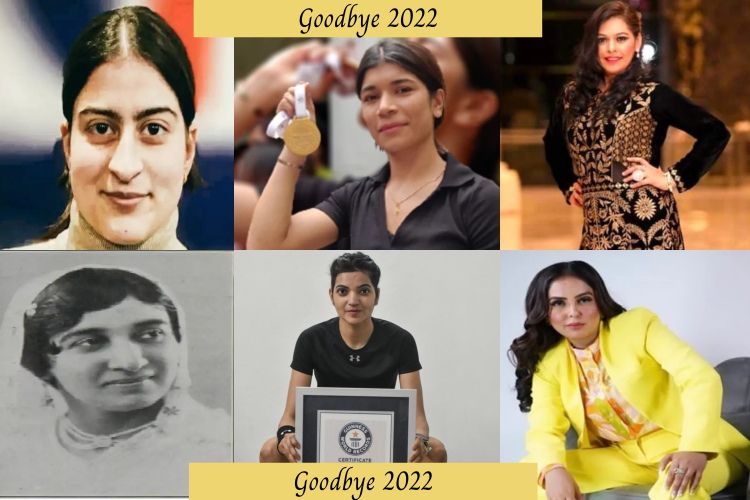
As we gear up to bid goodbye to the year 2022, here’s an about-turn to look at the most influential Muslim women who with their girt and strength have embedded their names in history.
Meet Mehr Sheikh from being a news anchor working with a company in Noida, Uttar Pradesh, to setting up her office in front of the same company, she has come a long way. She is presented as one of India’s youngest mainstream female motivational speakers, founder-director of Papr Network, and Editor-in-Chief of Nikology, a YouTube channel with nearly 2 million subscribers.
From being routed in regular corporate life to breaking the barriers and taking running as a full-time profession Sufiya Sufi set many records. From being the fastest female to run the Indian Golden Quadrilateral Road in 6 days, 12 hours, and 6 minutes to taking up the challenges of running continuously 200 km in Qatar and later running across the globe she has come a long way.
With many beauty pageants coming back to India in 2022, Tabassum took the podium a notch up when she represented India as one of the jury members in a beauty event held in South Korea’s Seoul
In the field of sports, Nikhat brought laurels to India as apart from winning the gold at the world championship, she won gold at the National Championship, the CWG and the Stranjde Memorial championship.
Do not marry your sisters, daughters, and other relations to men as their second wives or to those who are inclined on marrying another woman for no reason.” Hundreds of Muslim women unanimously passed the above resolution moved by Begum Jahanara Shahnawaz at the 7th All India Muslim Ladies Conference in 1920.
The All India Muslim Ladies Conference was established in 1914 under the presidentship of Begum Sultan Jahan, the ruler of Bhopal, and the leadership of women like Begum Waheed, Abru Begum, and Begum Shafi to bring social, educational, and economic reforms among Muslim women. Within six years of its inception membership of the Conference increased from a few dozens to hundreds. These women raised money to open and maintain girls’ schools in different parts of India and formed a public opinion in support of education.
Apart from the white robe of a doctor and the operation theatre, Dr. Jahanara Begum, a prominent obstetrician of Assam, also dons colourful costumes and has a wide stage to perform. Away from the hospitals and clinics, Dr. Begum has made theatre a part of her life despite her hectic professional schedule. While she has healed thousands of people as a doctor, she has also impressed numerous playwrights and audiences as an actor.
Syeda Salva Fatima – Amazed at her confidence, he decided to give wings to her dreams and she was enrolled in the Andhra Pradesh Aviation Academy in 2007. Despite failures, she remained undeterred and finally completed her training. She logged in 200 hours of flying in the Cessna 152 aircraft and 123 Hours of solo flight. She says,My best moment was when I flew for the first time. Also, every time I fly the big bird Airbus 320 in command, that’s the best feeling ever!
Farida Jalees, the founder of Lucknow Mahila Sewa Trust, who had boldly four startups during the Covid-19 lockdown to sustain the livelihoods of some 2.5 lakh women associated with her self-help group, said, “we have never felt these two (festivals) are different. We endeavor to make Jeevika Bakers viable and for this, I have been making use of every festival to sell baked foods under a canopy in marketplaces.”
Dr.Muhammad Raziul Islam Nadvi is a renowned Urdu author advocates Muslim women’s participation in mosques and namaz
Naseem Shafaie, the only Kashmiri woman to get the Sahitya Akademi award and the recipient of this year’s State Award for Literature rues that the Kashmiri language is being ignored by natives who prefer to speak with their children in Urdu (Hindustani) and not in their mother tongue. She laments that the language was not getting due treatment by its natural speakers. “Let all read it and be it our language,” she told Awaz-the Voice. She said there is a general trend among people in Kashmir to speak in the Urdu (Hindustani) language to their children at their homes.
source: http://www.awazthevoice.in / Awaz, The Voice / Home> Stories / by Shaista Fatima, New Delhi / December 29th, 2022
Once confined to royal palaces, the Begmati language shaped the unique feminine idioms of Muslim households but now survives only in whispers and memories.
New Delhi :
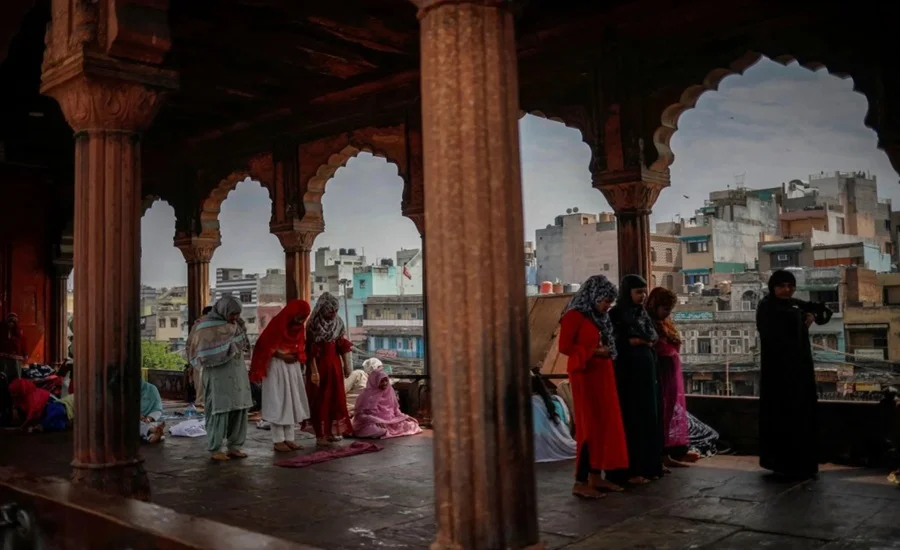
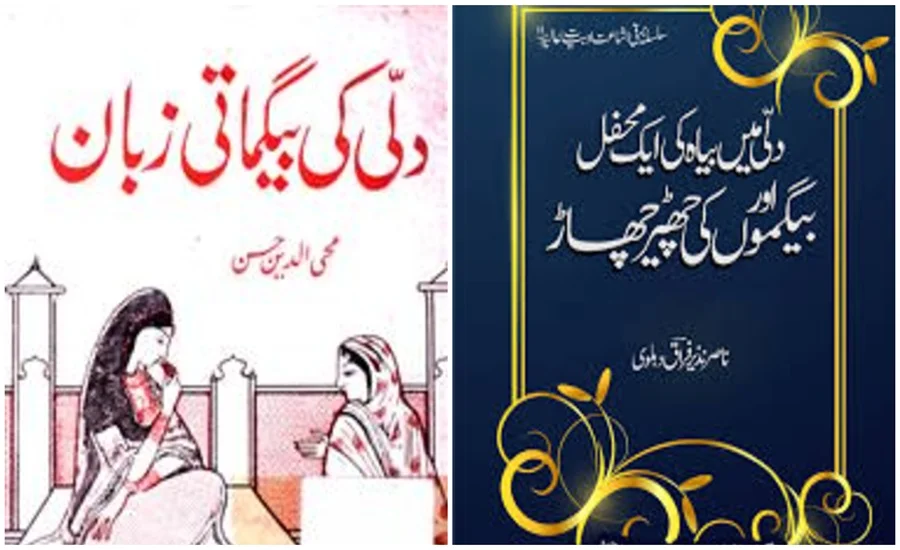
In the narrow lanes of Old Delhi, the echoes of a unique language once spoken behind the veils of royal and noble Muslim households are gradually fading. Known as the Begmati language, this distinctive way of conversation carried the idioms, proverbs, and expressions exclusive to the women of the forts and palaces — a language that was as much about identity as it was about communication.
Sania, a doctoral researcher from Jamia Millia Islamia University studying the Begmati language, explains that “Begmati language is actually Urdu, but used in a very special way during conversations among women.” She notes that it was initially limited to the ladies of forts and royal palaces, who communicated through a code rich in kitchen-related idioms and feminine references.
“After the political turmoil in Delhi, this language spread beyond the confines of the forts and into the streets of Old Delhi,” Sania says. “Even today, many old families in Delhi retain the flavour of Begmati.
The Begmati language thrived as a cultural vessel among women — grandmothers, aunts, sisters, daughters, and household maids — who managed and nurtured the home. Sania remarks, “The language women spoke had a completely different flavour, a vocabulary distinct from that of men. Just as men’s conversations were incomplete without poetry, women’s speech was never without proverbs or idioms, sometimes sharp with scorn, other times filled with desire.”
One example she shares is the word ‘Nikhto’, once used to describe women who were considered impolite or outspoken — a word now absent from modern male speech. Another charming idiom contrasts male and female speech: men might say “Reinhold the tongue” to tell someone to be quiet, referencing horse riding, but women, unfamiliar with horses, would say, “Is the stitch of the tongue broken?” borrowing from the language of sewing and embroidery.
The deep roots of Begmati language lie in everyday female experiences — kitchen work, childcare, household management — shaping a linguistic heritage that remains unique. Sania adds, “Many proverbs related to maternal care or household chores are pure Begmati. For instance, if someone repeatedly visits a place, it’s said their ‘umbilical cord is stuck there,’ a phrase reflecting the language’s intimate connection with womanhood.”
Despite its rich cultural value, the Begmati language is now nearly extinct. Social reformers in the 19th century, including figures like Deputy Nazir and Hali, criticised it as a “bad language,” leading to its decline. The spread of education among girls also meant that standardised languages replaced the once-vibrant Begmati. “Begmati language is no longer in vogue,” Sania laments. “It was not preserved strictly because there was no need, and much of what remains has been recorded by male writers raised in women’s homes.”
The word ‘Begum’ itself hints at class and caste dimensions embedded in the language, which also found variants in places like Lucknow, Bhopal, and the Deccan region — areas with strong veiling traditions and feminine cultures. “The songs and speech of women in Hyderabad, for example, have a melody and rhyme much like the Begmati language’s rhythm,” Sania observes.
Political and social changes in the 19th century further pushed the language into obscurity. As wealth and status became more important, “people lacked taste,” and the Begmati language was dismissed as the talk of a “special kind of women” who should not be emulated. Sania quotes a popular saying mocking women of the time: “I forgot the lime, I forgot the tot, I started eating wheat, I started sleeping on khat,” illustrating how Begmati was ridiculed and sidelined.
Yet the language’s musicality and self-mockery shine through in its verses: “Wood burns like coal, coal burns like ash, I don’t burn coal like ash,” a phrase women would use to express frustration or resignation with their fate.
Today, while the Begmati language no longer flourishes as it once did, its traces linger in the conversations of old Delhi’s Muslim families — a living heritage of a time when women’s voices spoke their own truths behind palace walls.
source: http://www.clarionindia.net / Clarion India / Home> Culture> Featured> India / by Mohammed Bin Ismail / May 23rd, 2025
The acclaimed Urdu and Hindi writer from Allahabad exposes how poverty forced him to ghostwrite 1,065 novels.
New Delhi :
In the decades before television became a household staple in India and Pakistan, millions turned to novels filled with mystery, romance, and detective tales for entertainment.
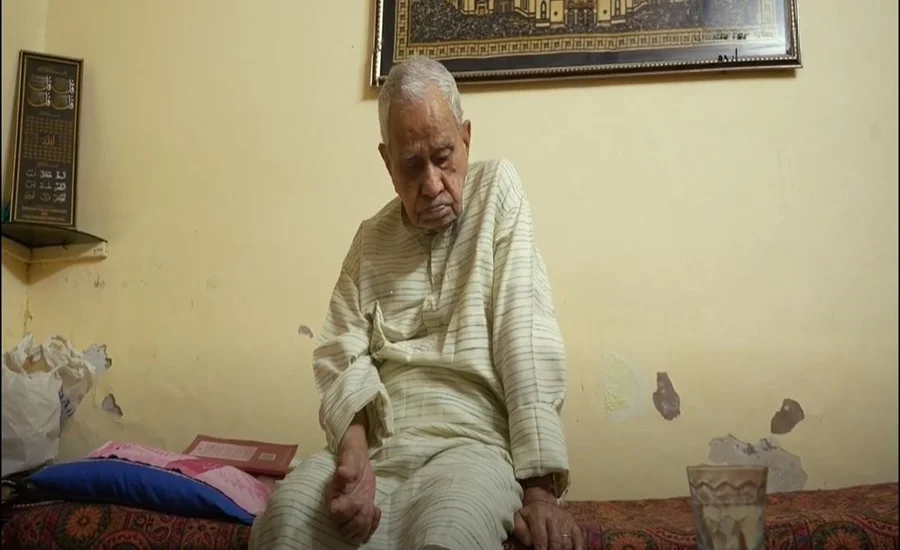
One Muslim writer’s story reveals the untold hardship and exploitation faced by many like him during that time. Mujawar Hussain, a prolific Urdu and Hindi author from Allahabad, has exposed the difficult truth behind the 1,065 novels he ghostwrote for Hindu publishers, many under pseudonyms.
Now in his elderly years but still sharp, Hussain shared his painful journey of writing stories for survival rather than pride. “The number of such books combined is 1,065,” he told Clarion India recently. “But the books I consider a source of pride are my research paper, Elements of National Unity in Urdu Poetry, and a collection of my religious essays,” he said.
Hussain’s writing career began in the 1950s when major publishers churned out fiction in bulk to satisfy growing demand. Muslim writers like him were often paid meagre sums to produce thick novels under pseudonyms for Hindu authors and publishers, including names such as Janardan Prasad Jaiswal, Shambhu Prasad Jain, Ashok BA, and the mysterious “Neqab Posh Bedi.” Hussain estimates he wrote 30 to 32 novels under Bedi’s name alone.
“Some of them were non-Muslims,” Hussain said, naming former students turned authors. “I wrote in their names because I had to. The money kept my family alive.”
His words underline the economic hardship faced by many Indian Muslims, forced to work behind the scenes without recognition while Hindu publishers reaped profits. Hussain recalls the pressure of poverty pushing him to write constantly. “I remember those days when I’d enter the house, and my wife would tell me food and drinks would last until the next evening. I’d sit down with a pen, write, and hand over the manuscript to the publisher. I’d take money — 30 rupees at first, then 60, then 100, and finally up to 2,500 rupees. With that, household expenses were met.”
Hussain’s experience highlights the sidelining of Muslim talent in the Indian literary scene, where Hindu publishers held most of the power. “That forced me,” he said. “The memory of that time is painful, and the work was painful. After that, I put down the pen.”
He also revealed working for Nikhat Publications, famous for publishing the works of legendary Urdu detective novelist Ibne Safi. When Ibne Safi’s manuscripts stopped coming to India due to political tensions between India and Pakistan, Hussain was asked to fill the void by writing novels under his name. “When I realised the institution was going to close, I started writing under his name,” he said. “I wrote very few novels in Urdu under his name — half partridge, half quail, meaning some was his, some I mixed.”
In Hindi, Hussain wrote extensively in Ibne Safi’s style, including the novel The Barrister’s Wife, though he remains uneasy about these works. “Even now, I don’t feel good about them,” he admitted. “I didn’t consider them a source of pride.”
Despite his difficult path, Hussain’s academic achievements stand tall. He earned an MA in Urdu in 1958 with two gold medals, a silver medal, a Victoria Gold Medal, and another prize he cannot recall. “No one has ever scored higher than me,” he said proudly. Yet this success did not shield him from the economic hardship that forced him into ghostwriting.
Dr Ayesha Khan, a literary historian specialising in the pre-television literary world, explains that Hussain’s story reflects a larger pattern of exploitation faced by Muslim writers. “Many Muslim authors like Mujawar Hussain were sidelined, forced to write under pseudonyms or for others to survive,” she said. “Hindu publishers often held the power, dictating terms and profiting from their work.”
Hussain’s reflections carry a sense of regret. Quoting a poem, he said, “Remembering the past is a punishment.” He sees much of his commercial writing as a compromise born of necessity, not passion. “Due to the compulsion of circumstances, I wrote some books that I do not consider a source of pride,” he said. “I was writing incessantly.”
Today, Hussain hopes that sharing his story will reveal the struggles of Muslim writers who toiled behind the scenes while others took credit. “I wrote for survival,” he said quietly. “But I want people to know the real story behind those books.”
source: http://www.clarionindia.net / Clarion India / Home> Editor’s Pick> Featured> India / by Mohammed Bin Ismail / May 26th, 2025
From rose syrup to mango panna, Indian Muslims continue the Mughal tradition of crafting cooling summer drinks originally developed by royal physicians.
New Delhi :
Muslims in India proudly carry forward the centuries-old tradition of crafting refreshing drinks that originated in the Mughal era, a time when royal physicians invented syrups not only for their enduring taste but also for immense health benefits.
Salma Hussain, a researcher who has studied Mughal food and drink habits for over fifty years, explained: “Most of the drinks were invented by the royal physicians, who sometimes prepared drinks for medicinal purposes and sometimes for a refreshing taste, and they were very popular.”
She shared how the art of making these drinks flourished under royal patronage, especially during the reign of Empress Noor Jahan, whose influence in the royal kitchen brought many innovations. “Noor Jahan had creative talent. Under her leadership, excellent syrups were developed. The food was also good, tasty. She especially supervised the royal kitchen,” she told Clarion India recently.
Salma recalled an interesting anecdote from the Mughal court: “Once Queen Noor Jahan was strolling in the garden. Rose flowers were in full bloom. Noor Jahan’s mother, Ismat Ara Begum, used to make perfumes from these flowers. Noor Jahan called the royal physician and said many medicines were made from flowers; why cannot a syrup be extracted from the roses? ‘Many people drink in the name of medicine, but you should make something that will relieve us from the heat and be refreshing, and we will also enjoy it.’”
This simple request from the queen gave birth to the now-famous rose syrup, a cooling drink cherished across the Indian subcontinent to this day.
According to Salma, syrups were not limited to rose alone. “Syrups started to be made from roots, like khus syrup; Panna from mango. Similarly, vine syrup came up. Pomegranate syrup was made by cooking sour and ripe fruit, both said to be very beneficial for the skin,” she said. These drinks were especially popular among the royals, famous for their passion for beauty and health.
Salma further highlighted how Indian Muslims and Mughal royalty took special care to combat the intense Indian heat. “The heat in India was extreme, like today’s heat. Kings also used to cool drinks. Emperor Akbar started ordering ice from the mountains.”
The knowledge of cooling drinks extended to using yoghurt, lemon, and various salts to make beverages like shikanji and lassi, which remain popular today.
“Rose syrup was made from flowers, custard from custard. Jamun syrup was made from fruits, vine syrup was made from mango syrup. Yoghurt was used a lot then. We learned how to make raita from it. They used to cool the yoghurt or mix it in water and make a drink,” she said.
She also pointed to the influence of neighbouring cultures: “A syrup came from Turkey, Aryan, which is the buttermilk we drink today. Almonds were used to make a lot of syrups. It is said that in Iran, almonds were put in hot water and savoured.”
Salma stressed the importance of these drinks beyond refreshment. “There are some unsubstantiated stories about drinks, but all of them seem appropriate, such as the first among the sages who made syrup; his name was Fitha Ghoras. Sage Fitha Ghoras was the first to give a medicinal drink the form of a syrup, like a decoction, etc. Over time, the trade in syrup gradually started and all kinds of syrups started being made.”
She also mentioned that in 1906, Hakim Abdul Majeed (founder of Hamdard) made the spirit-enhancing syrup. The same refreshing syrup is still alive, and we drink it to relieve the heat.
The purity and quality of ingredients were also important to the Mughals. Salma explained: “The water mixed in the syrup was from the Ganges, although the Yamuna River was closer to Delhi. Its water was not used because of the belief that it caused diseases.”
Water management was taken seriously: “The Mughals used to inspect water tanks. Special officers were assigned to procure and preserve the Ganges water.”
This careful tradition of preserving royal recipes and using pure ingredients continues in India’s Muslim communities, who keep the memory of Mughal cuisine alive through generations.
Local historian Ahmed Khan commented, “These drinks are not just a part of our culture, they connect us to our glorious past. They remind us of the wisdom of our ancestors and the care they took in making life enjoyable and healthy.”
As the summer sun blazes, families across the subcontinent continue to enjoy these time-honoured drinks, a tribute to the enduring legacy of the Mughal era and the Indian Muslim custodians who have preserved these traditions.
source: http://www.clarionindia.net / Clarion India / Home> Editor’s Pick> Indian Muslims / by Mohammed Bin Ismail / May 26th, 2025