Bibi Tabassum and Suraiya Quraishi who embroidered the Quran.
Bengaluru :
This is a miracle. An awe-inspiring phenomenon took place in this city a few days back, as two sisters- Bibi Tabassum and Suraiya Quraishi- embroidered the sacred Quran onto 604 pages of plush velvet cloth.
Showing excellent craftsmanship, they used needles and threads to meticulously prepare an embroidered holy Quran. This embroidered Quran, prepared under the watchful guidance of an Alim-e-deen (religious scholar), is not only easily legible but also heavenly captivating.
Bibi Tabassum, the younger of the two sisters, holds a great fondness for doing embroidery ever since she was a child. In the beginning, she used to embroider only small verses of the Quran, but one day, an idea graced Bibi Tabassum’s mind – to intricately embroider the entire holy Quran. This took her on a laborious journey, one fueled by love and devotion.
Expressing extreme gratitude to Allah for giving them the opportunity to prepare this embroidered Quran, Bibi Tabassum says that she aspires to gift this embroidered holy Quran to a library in the holy city of Madina.
Venturing on this embroidery voyage of the Quranic verses along with her elder sister Suraiya Quraishi, Bibi Tabassum started with the first inaugural Surah of the Quran i.e. Surah Al-Fatiha, and continued diligently. The last surah- Surah An-Nas marked the culmination of their hard labour.
This embroidered holy Quran is divided into five volumes, and each volume consisting of six chapters. It went through a meticulous binding process by the skilled hands of its creators.
Initially, in the detailed process of embroidery, Bibi Tabassum used to inscribe the verses of the Quran with a pencil on the velvet cloth, followed by both the sisters intricately weaving threads along those sacred lines.
Carrying on the demands of daily life, both sisters, driven by unwavering dedication, used to finish their household chores and then engage in the embroidery work of the holy Quran.
To ensure the utmost accuracy of the embroidered work, a learned religious scholar closely scrutinized each verse upon the completion of a page. Bibi Tabassum says, ‘After completing every page of the embroidered holy Quran, we would show that to our scholar and do any correction if required.”
In the aftermath of this big achievement, family members are thoroughly elated for the two sisters. They say that the two sisters have utilized their time for a very noble endeavour. Extending heartfelt gratitude, they thank Allah for the manifestation of this lovely artwork, which stands as a testament to the beautiful blending of devotion and artistry.
source: http://www.indiatomorrow.net / India Tomorrow / Home> News> Society / by India Tomorrow (headline edited) / February 05th, 2024
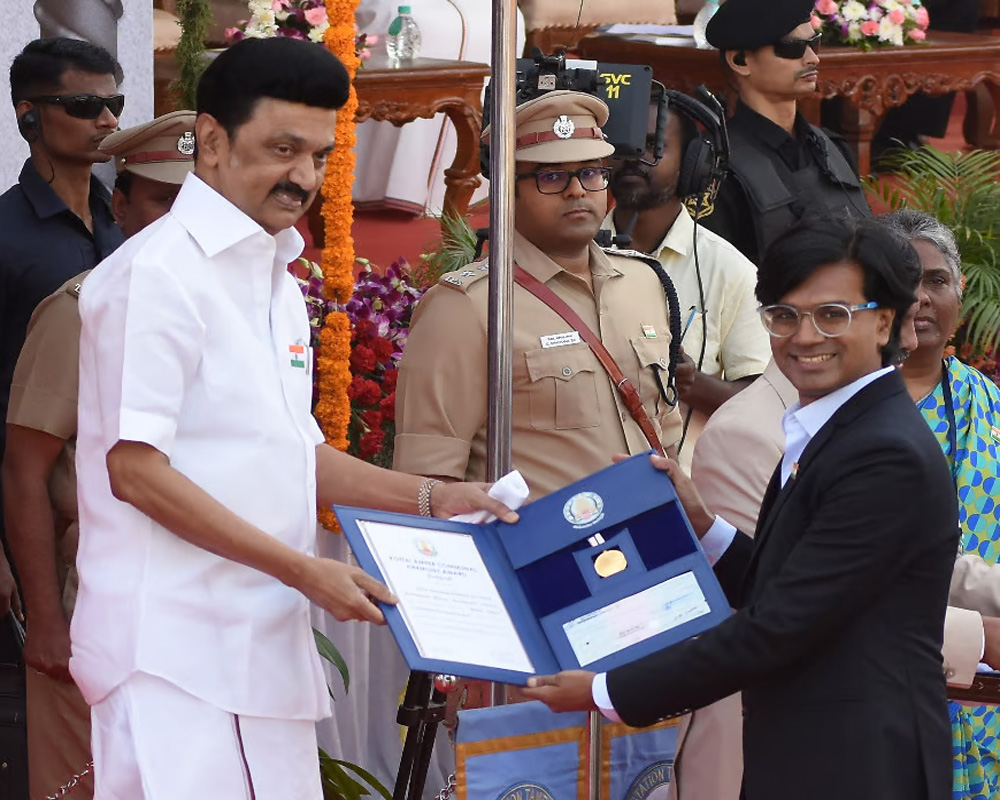
TN chief minister M.K. Stalin with Mohammed Zubair at the awarding ceremony. Photo: Video screengrab.
The government noted that his “work helps prevent the occurrence of violence in society likely to be caused by fake news.”
New Delhi:
Fact-checker and journalist Mohammed Zubair is the recipient of the 2024 Kottai Ameer Communal Harmony Award given by the Tamil Nadu government.
The citation notes that Zubair has been “rendering various services to promote communal harmony.”
It observes that in creating the website Alt News – which he co-founded with Pratik Sinha – Zubair has set up an instrument to analyse the “veracity of the news coming out on social media,” giving primacy to real news.
The government noted that his “work helps prevent the occurrence of violence in society likely to be caused by fake news.”
The citation especially says that in March 2023, when there was a rapid spread on social media of the disinformation that migrant workers were being attacked in Tamil Nadu, Alt News‘s verification of the authenticity of the video was instrumental in proving that the footage was not from Tamil Nadu at all.
It “stopped the spread of rumours against Tamil Nadu and acted to prevent violence caused by caste, religion, race and language in Tamil Nadu,” the government said.
In 2022, Zubair was arrested by the Delhi police for a 2018 tweet in which he shared a screenshot from a 1983 Hindi movie. Six cases were slapped on him during the period of his incarceration until the Supreme Court gave him bail.
Zubair is often attacked online by Hindutva commentators for fact-checking viral claims and disinformation.
source: http://www.thewire.in / The Wire / Home> Media> Government / by The Wire Staff / January 26th, 2024
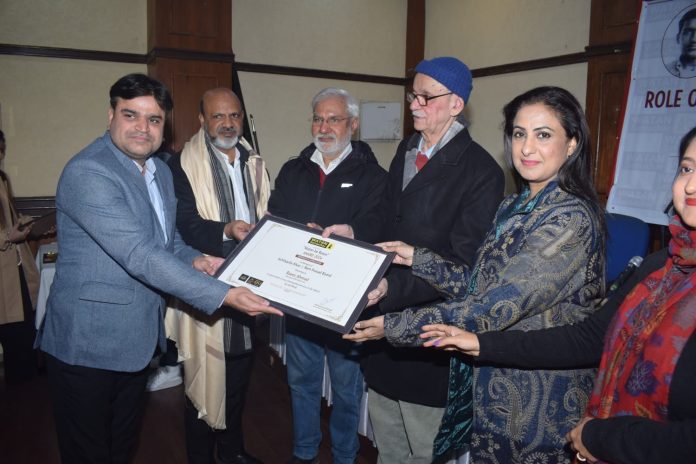
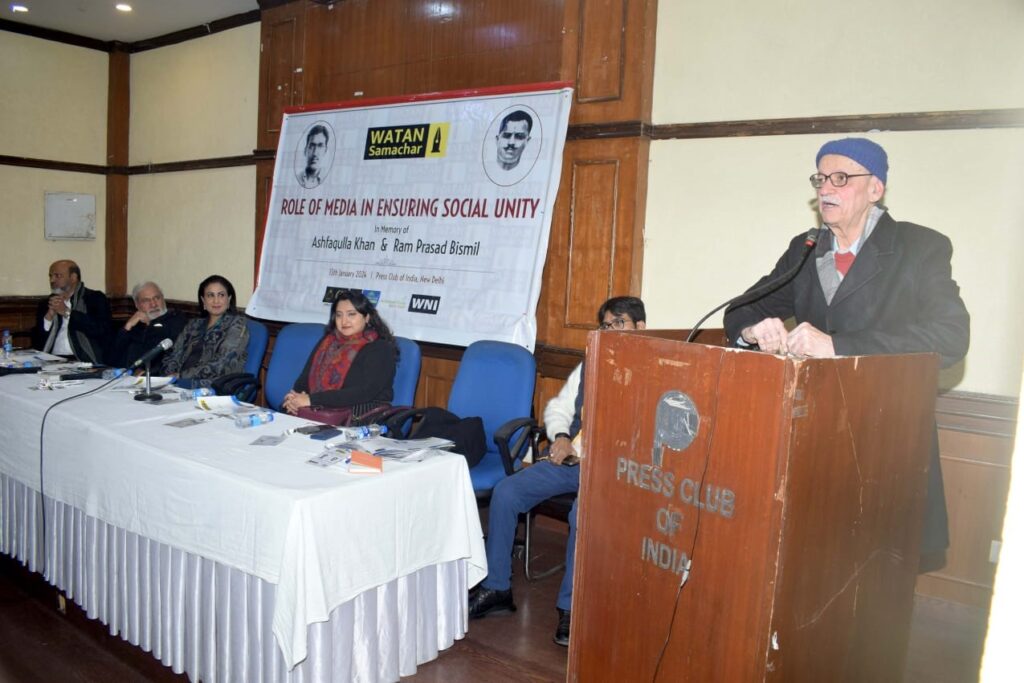
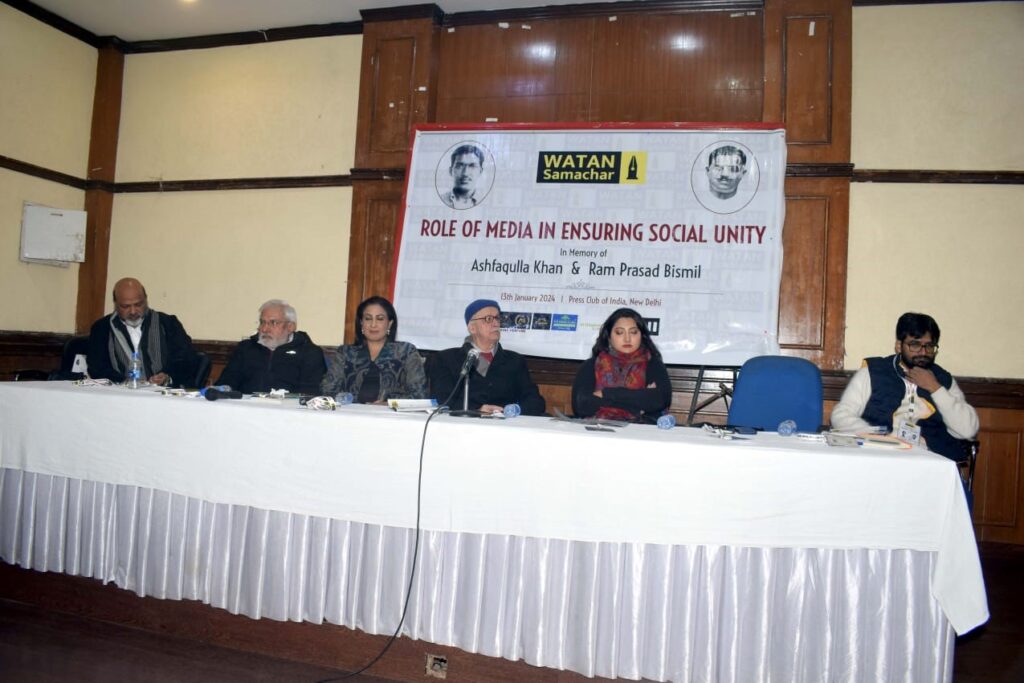
WNI Media Group organized a conference on Role of Media in Ensuring Social Unity in the memory of great freedom fighters Shaheed Ashfaqullah Khan and Ram Prasad Bismil at the Press Club of India here. A large number of dignitaries as well as renowned journalists, social workers and lawyers participated in the conference.
Senior journalists Rahul Dev, Qamar Agha, TV9 Bharatvarsh anchor Sumera Khan, India Today journalist Milan Sharma jointly honored Delhi Minority Commission Advisory Committee former member and Advocate Raees Ahmed with the ‘Watan Ke Ratan’ Award for 2024 for his social and legal services.
Qamar Agha said Ashfaq and Bismil wanted a non-partisan and democratic country. Journalist Rahul Dev said given the current situation that the disease will have to be talked about only then treatment will be possible.
Milan Sharma said hatred spread in the society will be cured through joint efforts. While, Sumera Khan termed the efforts of the Forum as a commendable step.
Advocate Raees Ahmed said that it is important to maintain our mutual brotherhood and unity strongly. We should try to remove misunderstandings and dispute, for which we need to take the help of mutual dialogue, only then society will be free from hatred.
Senior journalist Mohammad Ahmed convened the program.
Professor Farhat Basir, Dr. Zubaidur Rahman alias Babban Mian, Jamal Ahmed Alig, Firoz Ghazi, Neha Garg, Muhammad Akbar, Syed Muhammad Mujahid Hussain, Muhammad Ramish, Asad Sabri, Advocate Anwar Hussain Saifi, Mirza Anwarulhaq Baig, Hunaiza Khan, Jyoti Yadav, Dr. Syed Muhammad Asdar Ali, Shahid Ansari, Vipul, Muhammad Ali, Arshita, Asrar Ahmed, Iqrar Ahmed, Bhavana Yadav, Vakil Aslam (Supreme Court), Haji Zahoor Ataichi Wale, Nisar Ahmed, Nawab Akhtar, Shahnawaz Badar Qasmi, Dawood Bhai Shaikh, Shadab Ahmed Patrika, Aqeel Salmani, Archana Gaod and others were also honored with the Watan Ke Ratna Award- 2024.
Aslam Ahmed Advocate of Supreme Court on record extended vote of thanks.
source: http://www.radiancenews.com / Radiance News / Home> Pride of the Nation> Awards / by Radiance News Bureau / by Shakilur Rahman / January 15th, 2024
Chhowsia, Islampur (Uttar Dinajpur District), WEST BENGAL :
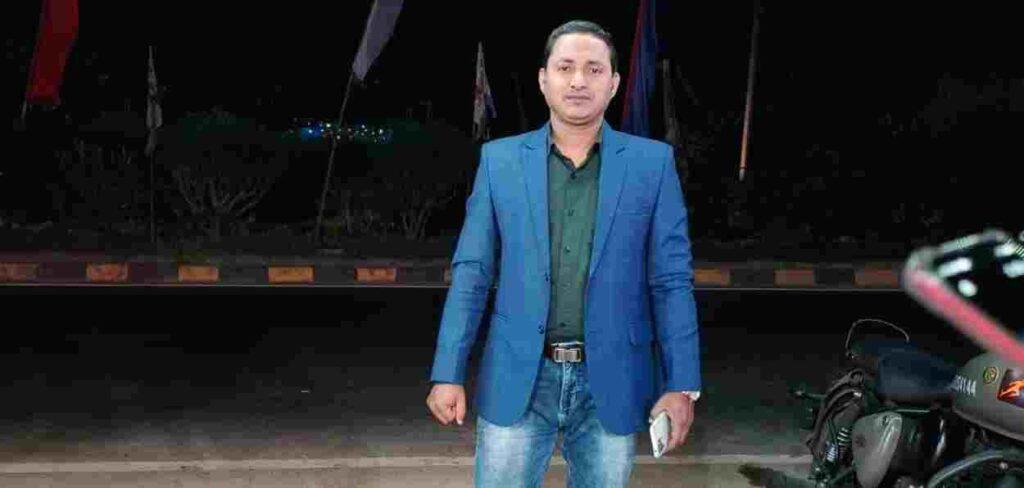
Mohammad Masroor Alam during a campaign
Mohammad Masroor Alam’s life took him through a different route in Gujarat in 2001 when he was enrolled for a computer course and the horrific Bhuj Earthquake shook the state on 26 January at 08:46 in the morning killing 20,023 people, injuring about 167,000 while bringing about 340,000 buildings down to rubble.
As a young man, he was shaken by the massive devastation. Stirred by the voluminous urgent need for assisting hands, he rose out of compassion and got involved with a team of people to help the people ravaged by the wreckage. The victims were people from all communities – Hindus, Muslims, Christians, etc. living in makeshift tents.
They all received food, utensils, clothes, blankets, and many other provisions through the efforts of Masroor Alam and all the others in the busy team.
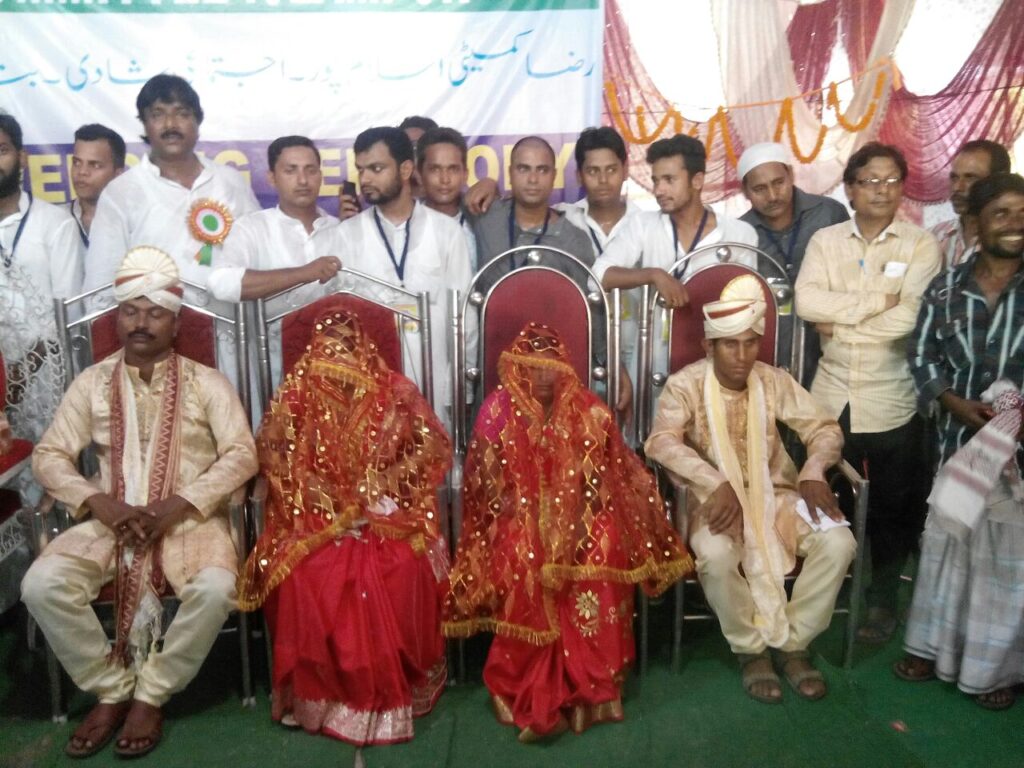
A group wedding organised by Masroor Alam’s group
In a turbulent world of survival of the fittest where each looks for their own, it’s hard to find people like Masroor Alam.
The 34-year-old social activist is the son of Md Rakimuddin and Najrun Nisha of Chhowsia, in the Uttar Dinajpur district in Islampur, West Bengal. He has five brothers and one sister and his parent’s deep values on humanity instilled an indelible root of compassion in him.
He held degrees of M.A. and LLB at the time of being in Gujarat to study computers at the time of the earthquake.
Md Masroor Alam shared, “It felt good not only to give and relieve them from their sufferings but also add a blanket of warmth to our hearts, and we also felt better and happier when we did good deeds for them.”
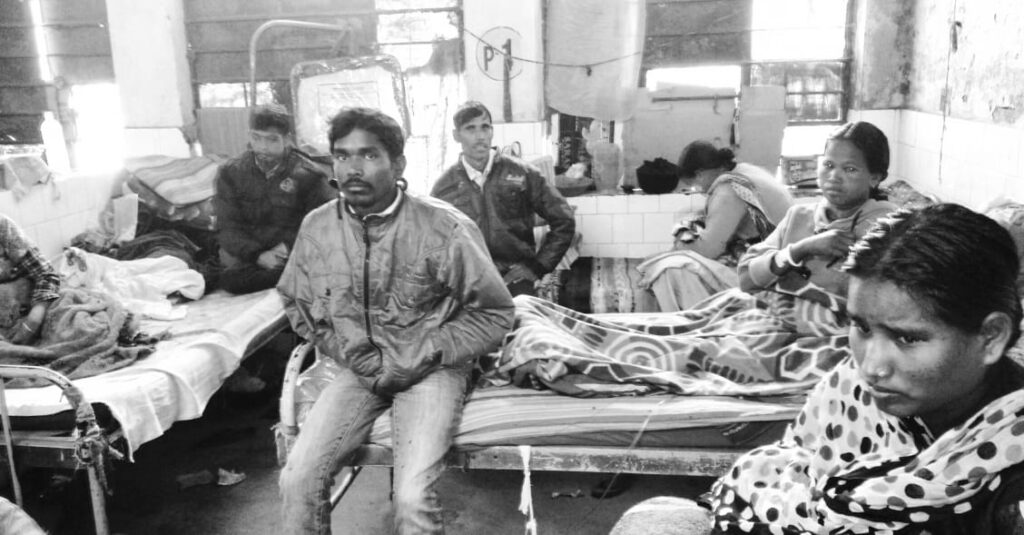
Victims of cylinder blast
The urge to start a proper Non-Government Organization to help the needy started churning in his heart. He said, “I saw people using NGOs for their benefits, just to meet their own needs without really helping the deprived people, I saw it as a sort of corruption in one way. I wanted to help the people desperately crying for help because I noticed they were overlooked many times. I also believe we must help all people equally, not looking at religion, caste, or race.”
In 2007, Md Masroor Alam became the President of the All India Raza Committee. They held a massive Blood Donation Camp in 2007 during April with a total of 152 blood donation camps and the work involved was stupendous.
During the time of the floods that engulfed the Kishanganj district, he and the team reached out to 26 villages serving them cooked hot khichdi (rice and lentils porridge) as well as giving them lentils, rice salt, wheat flour, sugar, tea leaves and other commodities.
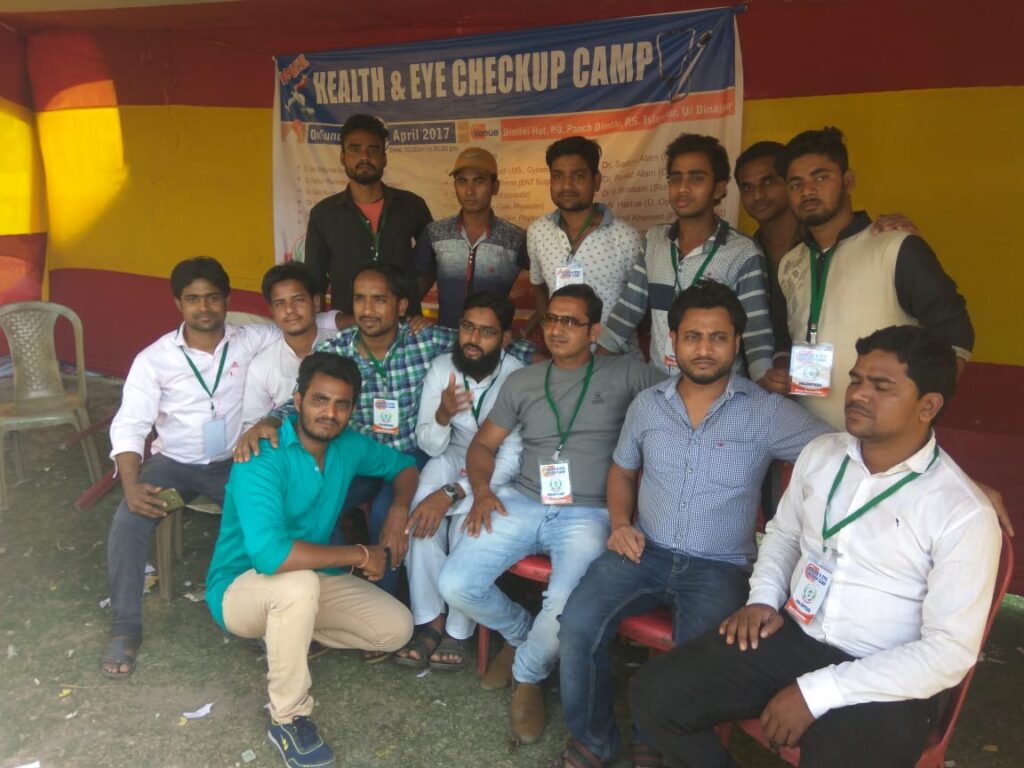
Md Masroor Alam with members of his group at a health camp
It was a tenuous hard labour pushing through swarming waterlogged regions which threatened to sweep away anyone at a moment. The grateful victims called them messengers of good tidings. In another instance, during a gas cylinder blast in the Islampur area, where 37 families were burnt and two men were struggling to live, Masroor Alam and the crew gave them all the help and provided their requirements during that difficult time.
One particular defining time for Md Masroor Alam was working with politicians and understanding how much help they too give during times of disaster. At that time, they helped people to get their ration cards and gifted warm blankets and food to members of some caste communities.
Sometimes, a village would suddenly catch on fire either due to dry twigs or some sudden accident and the group would rush to those areas to help with food, plates, utensils, glasses, and even pressure cookers as some families had their entire homes burnt to ashes.
Masroor Alam (In white Kurta-Pajyama) with a volunteer
The time of COVID-19 pandemic heightened food insecurity in India, leading to a hunger crisis affecting extensive rural regions and certain urban areas with job losses and reduced incomes. Activists monitoring coronavirus-related fatalities have reported that over 300 individuals have lost their lives due to starvation, exhaustion, and accidents apart from dying from the pandemic.
During this time, Md Masroor Alam and the team visited the people in the village and advised them to stay indoors, taught them about masking and sanitation, and gave food to over 8000 families, mostly labourers and truck drivers.
Another help they rendered in 2014 was organising and funding ten poor Muslim girls’ mass weddings and in 2015, they assisted six girls, which was a big financial relief for their parents.
Masroor Alam expressed that ever since he was a child, he was deeply concerned about the suffering of others and always wanted to do something significant to make a difference.
While he was studying computers in Gujarat, after the Bhuj Earthquake, his life was steered in a new direction and he started to get more deeply involved in helping all people of all communities during times of distress giving dal, rice, atta, tea leaves, sugar and many such food commodities during famines and earthquakes as well.
Feeding those in need
The beautiful aspect of Md Masroor Alam’s life and help is his along with the team’s outreach to all people of all communities without ever thinking of the differences of religion or caste. This is the language of humanity.
All India Raza Committee runs an old people’s home where the very poor beggars, sick, and old people can live in dignity. Most of them are rescued from the grips of begging out on pavements, streets, and near garbage dumps.
He says that Islampur is still an impoverished region, underdeveloped and there are many poor people there. During the winter, it is very cold and the NGO started to give warm clothes and blankets to the poor families.
Masroor Alam (in the center) holding a meeting with his volunteers
As the president of All India Raza Committee which is a Sunni Muslim Islamist group based in Maharashtra, India formed in 1978 by Alhaj Mohammed Saeed Noori. Md Masroor has reached out to help people in all parts of India such as Gujarat, Maharashtra, Karnataka, West Bengal, and many other states.
Inspired by the Holy Quran which says in Surah 17:70, “Because everyone is created by God Almighty, the Maker of all, humans must treat one another with full honour, respect, and loving-kindness.” In another ayat, it is written, “Help one another in acts of piety and righteousness.”
Md Masroor Alam is inspired by this one line, “Be certain that you do not die without having done something wonderful for humanity.”— Maya Angelou. This is the philosophy by which he lives and those waves resound loudly wherever he goes sending out a good message.
Rita Farhat Mukand is an independent writer in West Bengal
source: http://www.awazthevoice.in / Awaz, The Voice / Home> Stories / by Rita Farhat Mukund / February 01st, 2024
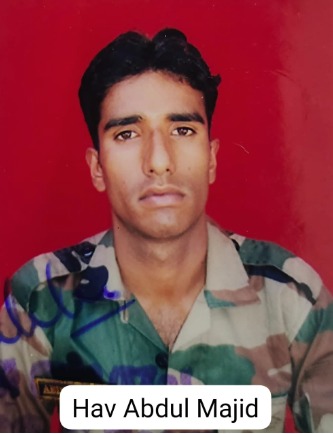
Havildar Majid Hussain, a local hero hailing from Poonch, exemplified the true spirit of a commando through his unwavering commitment to defending his homeland.
The Army said on Friday. “In the challenging terrain of Poonch and Rajauri, he stood as a formidable force against terror, displaying unparalleled courage and determination in the highest traditions of the Indian Army. His supreme sacrifice in the pursuit of peace resonates deeply with the hearts of the people in Poonch and Rajouri,” PRO Defence said in a statement issued here.
The GOC 25 Infantry Division, representing GOC-in-C, NC and GOC 16 Corps, expressed profound gratitude to Havildar Majid Hussain’s family. “In a heartfelt tribute to a local son who went above and beyond in the line of duty, the family of the Braveheart was visited by his seniors and colleagues bestowing the spirit of care for their fallen brother,” the statement said.
The awarding of the Kirti Chakra is a symbol of conspicuous bravery of Havildar Majid Hussain’s selfless sacrifice, the Army said, adding, “Poonch, Rajauri, and the entire population of UT of J&K, stand indebted to this courageous commando. His actions go beyond a single moment in time; they serve as a perpetual source of inspiration for future generations.”
The PRO Defence added, “As the Hero of Poonch, Havildar Majid Hussain’s legacy lives on, becoming an enduring beacon of selflessness and dedication. His story will continue to resonate in the hearts of those from his hometown and across the nation.
The gallantry award bestowed upon him is not just a medal; it is a symbol of honour, bravery, and a reminder of the sacrifices made in the relentless pursuit of peace and security.”
source: http://www.risingkashmir.com / Rising Kashmir / Home / by RK News / January 27th, 2024
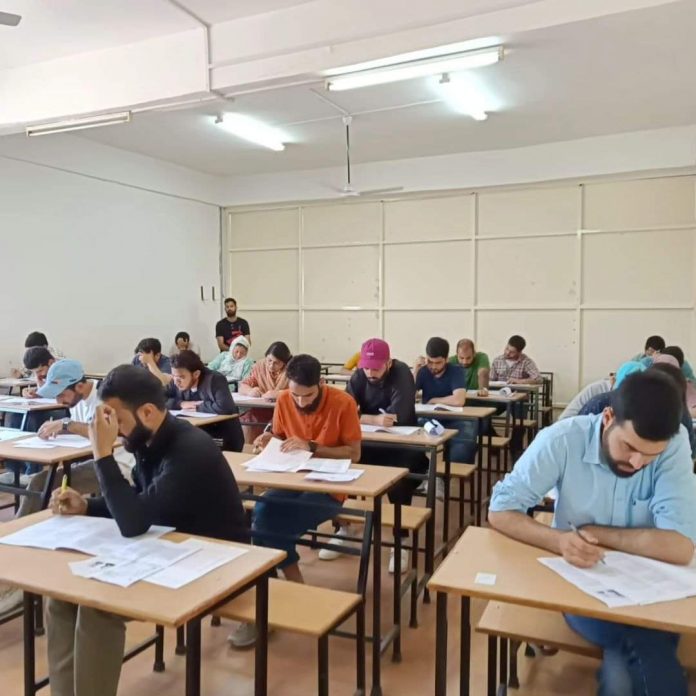
UPSC aspirants preparing at Shibli Residential Coaching Academy, Azamgarh.
Nestled in the historic city of Azamgarh, Uttar Pradesh, Shibli Residential Coaching Academy stands as a beacon of hope for UPSC aspirants across the nation.
Established with a vision to empower and guide students towards a bright future in civil services, the academy offers a holistic approach to UPSC preparation, combining academic excellence with personalized mentorship and a conducive residential environment.
Setting the Stage:
As dawn breaks over the serene campus of Shibli Residential Coaching Academy, aspiring civil servants begin their day with a sense of purpose and determination. The tranquil surroundings provide the perfect backdrop for intense study sessions and thoughtful contemplation, setting the stage for a transformative journey ahead.
Academic Excellence:
Led by a team of seasoned educators and subject matter experts, the academy’s curriculum is meticulously crafted to cover the vast syllabus of the UPSC examination. From comprehensive study materials to interactive classroom sessions and regular mock tests, every aspect of the learning experience is designed to instill confidence and competence in aspirants.
Personalized Mentorship:
At Shibli Residential Coaching Academy, every student is more than just a name on a roster – they are individuals with unique strengths, weaknesses, and aspirations. That’s why the academy takes pride in its personalized mentorship program, where experienced faculty members offer one-on-one guidance, constructive feedback, and strategic advice tailored to each student’s needs.
Beyond the Classroom:
Recognizing that success in the UPSC examination requires more than just academic prowess, Shibli Residential Coaching Academy places a strong emphasis on holistic development. From personality development workshops and communication skills training to extracurricular activities and community engagement initiatives, students are encouraged to cultivate a well-rounded skill set that extends beyond the confines of the classroom.
A Supportive Community:
More than just an educational institution, Shibli Residential Coaching Academy is a close-knit community of like-minded individuals bound by a shared goal – to crack the UPSC examination and serve the nation with distinction. Whether it’s late-night study sessions in the library, spirited debates in the common room, or impromptu brainstorming sessions over chai, the camaraderie among students fosters a supportive and collaborative learning environment.
As the sun sets on another productive day at Shibli Residential Coaching Academy, UPSC aspirants retire to their dormitories with a sense of accomplishment and purpose. With unwavering dedication, personalized mentorship, and a supportive community by their side, they are well-equipped to embark on the challenging yet rewarding journey towards realizing their dreams of serving the nation through the civil services.
source: http://www.muslimmirror.com / Muslim Mirror / Home> Positive Story / by Muslim Mirror Network / February 01st, 2024
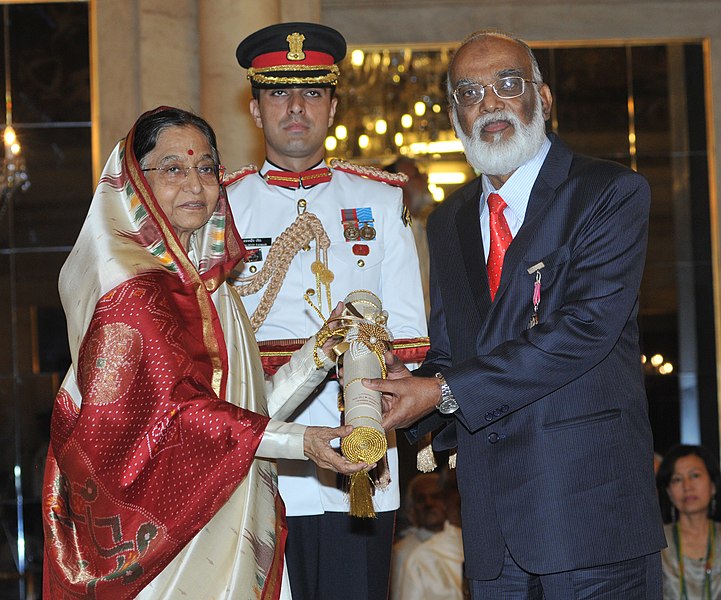
The President, Smt. Pratibha Devisingh Patil presenting the Padma Shri Award to Prof. (Dr.) M. Ahmed Ali, at an Investiture Ceremony II, at Rashtrapati Bhavan, in New Delhi on April 01, 2011./ pix: en.wikipedia.org
Dr. Ahmed Ali can perhaps scale Mount Everest to gain knowledge in surgery, and will come back to serve the poor and needy. That is the thirst he has, and the skill gained by his extra ordinary, photographic memory power.
After obtaining the highest degree in surgery such as M.Ch, he was awarded the prestigious Doctor of Science D.Sc.in surgery.
The Padma Shree Awardees, listed on January 31, 2011, Dr. Ahmed Ali, won the nation’s prestigious award.
A dedicated, and most devoted to his profession, he declined an opportunity, assigned in New York soon after post graduation in gastroenterology and proctology. Surgery is an art to him same as a gifted and a born artist plays with his brush and colors. There is no exaggeration that if it is said that his tournament is surgery.
He visits every month to his native town to impart free service, in addition he gives nutrient suppliments and other vitamins and other additives to less fortunates. He does this as a token of gratitude to the school he studied and for the people who mutually loved.
Born in Ambur in 1940, graduated from Madras Medical College, and after retiring from service, he is concentrating his profession in Mehtha Nursing Home,Chetpet in Chennai.
His only son Dr. Mansoor is a surgical specialist in liver, pancreas, and bile duct (Hepato Pancreato Bilary Specialist) working in Kings Hospital, London UK. Dr. Mansoor is as good as his father, and was the student of Dr. Rela, the world renowned liver specialist.
Ambur, a town in Vellore District in Tamil Nadu is famous for leather industry, as well the elite of the society Ambur Muslim Educational Society, and it is fully devoted in concentrating women’s education and the students performance is par excellent.
Mr. Mecca Rafeeque Ahmed, a renowned leather industrialist, from Ambur also awarded Padma Shree for his industrial achievements.
Dr. Ali was felicitated with standing ovation by different groups elites, but he stood humble and modest.
source: http://www.amityindias.blogspot.com / April 05th, 2011
Sahaswan (Budaun) , UTTAR PRADESH / Kolkata, WEST BENGAL :
He could captivate the audience and eradicate the thin line between a structured format and the playfulness of a classical composition while his voice moved through the shades of ragas.
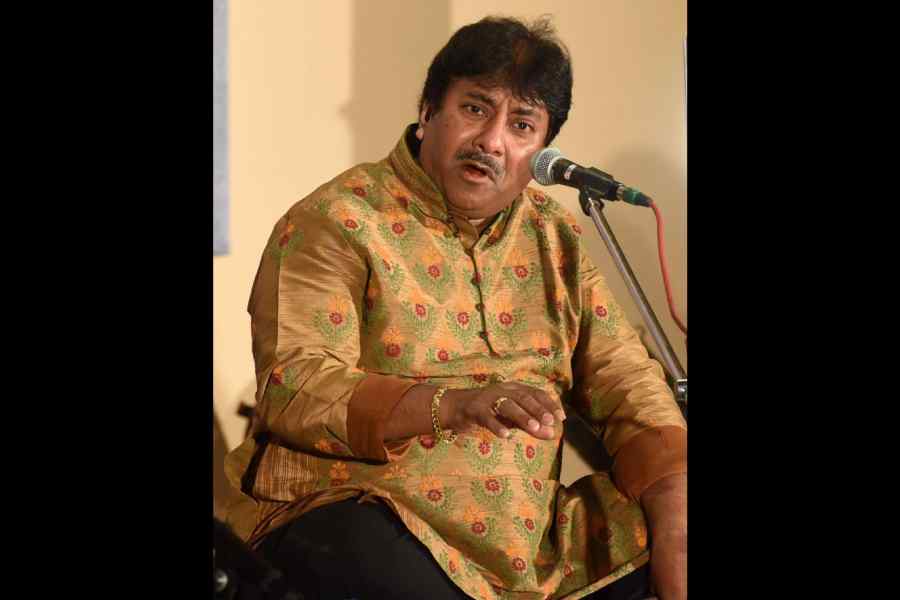
Rashid Khan./ Sourced by The Telegraph
The name of Ustad Rashid Khan reminds one of the words of T.S. Eliot: “Music heard so deeply/that is not heard at all, but/you are the music/while the music lasts.’’
A born genius, talented and extraordinary musician… adjectives are too limited to describe the golden voice of Rashid Khan.
The fulfilment of an art form touches immortality when the artist becomes the art, as the poet said. Diehard listeners of Rashid Khan and ardent music lovers know the truth because they have discovered the artiste’s voice in different genres of music and steeped integrated melodies.
The great-grandson of the legendary Ustad Inayat Hussain Khan, the founder of the Rampur Sahaswan Gharana, Rashid was born on July 1, 1968, at Badaun in Uttar Pradesh.
Memory and melancholy created the soul of the artiste, although he was completely unaware he would one day become one of the greats of Indian classical music. He lost his mother and younger brother at a very early age; he found solace in kabaddi and cricket.
Rashid studied in Mumbai for about a year and after coming back to his hometown, his tutelage was started under his illustrious granduncle and guru, Ustad Nissar Hussain Khan. He also carried the lineage of renowned vocalists like Mushtaq Hussain Khan and Ghulam Mustafa Khan. But the rather authoritarian Ustad Nissar Hussain Khan changed the course of his life and made him what he became over the years. He nurtured the latent potential of Rashid through his training, first at his own residence at Badaun and subsequently at the Sangeet Research Academy in Calcutta.
Young Rashid Khan, an assured voice of the future of Indian classical vocal music, certified by none other than Pandit Bhimsen Joshi, was to evolve into a formidable talent, especially with his prowess in taankari and gamak.
His full-throated voice was an exceptional amalgamation of depth and rhythmic generosity. He could captivate the audience and eradicate the thin line between a structured format and the playfulness of a classical composition while his voice moved through the shades of ragas. He was adept at the instrumental stroke-based style which he inherited from his gharana, as well as an expert at infusing emotion into an elaborate musical verse.
Probably this is the reason he was successful in different styles of singing and innovation despite being a rooted classical musician.
For example, when he sang Tagore songs based on various ragas, he focused on the rendition of the quintessential flavour; his command over the notes and tunes brought out the charm of the song with skilful originality.
Rashid had fond memories of the town of Badaun and its surroundings where he spent his early days. The river which flows by the town was a witness to the number of hours Rashid spent by its side singing.
He paid his respects on his visits to his hometown at the cemetery where his parents and young brother were laid to rest.
It may well be the inexplicable pain and loneliness of childhood filtered through his every rendition of ‘Yaad Piya ki Aye’ (composed originally by Ustad Bade Ghulam Ali Khan) — a Rashid reinvention that became very popular. As with the Bollywood hit ‘Aoge Jab tum o saajna’ from Jab We Met.
He skilfully obliterated differences between musical genres and was able to recreate a unique combination of love and exuberance with the full boom of his voice in three octaves, as manifested in each and every song. In numerous playback essays, he successfully broke traditional boundaries with his scintillating voice and evoked sensibilities even when he was out of his core expertise.
In the words of senior organiser of the Dover Lane Music Conference, Bappa Sen: “Rashid contributed an unparallel range to the music fraternity. We have seen him grow as a man as well as an artiste and witnessed his excellence in all spheres of music. He was an integral part of this music festival from a very young age and even performed in the periodicals. Along with his talent, he excelled himself to heights that required enormous hard work and open-mindedness. As a person he was as humble and respectful to all of us as he was from the very first day.”
Sarodiya Amaan Ali Khan thinks: “Unki voice mein to Ishwar hain.” He had countless memories with this senior artiste, fellow musician and co-performer who, Amaan says, was always an inspiration to him. “He was a person as clear as water,” said Amaan.
To his close friends and contemporary musicians, Rashid Khan was an irreplaceable voice and human being in every sense. The absence of Rashid’s mortal existence has now created a vacuum in the world of Indian classical music which is now devoid of his rich depth of voice.
Rashid’s son Armaan is carrying the torch of the legacy, his daughters Suha and Shaona are into Sufi music.
Rashid flourished as the breaking dawn with Lalit, Ahir Bhairon, Miyan ki Todi, returned to the root with Puriya Kalyan, Puriya Dhaneshree, Shree, sparkled with Sohini.
He has left behind an unforgettable repertoire of renditions and the gift of his unbridled imagination to lovers of his singular work.
source: http://www.telegraphindia.com / The Telegraph Online / Home> Culture> Music / by The Telegraph / January 10th, 2024
In 2004, she completed her PhD from the Jawaharlal Nehru University (JNU) on “Central Asians in Mughal India: Migration, Settlement and Impact on North Indian Culture”.
Prof Tasneem Suhrawardy (Photo | Twitter)
New Delhi :
Tasneem Suhrawardy, a well-known Indian medieval history academic who was teaching at the Delhi University’s St Stephen’s college , died at the Fortis hospital in Gurugram on Tuesday. She was 58.
Suhrawardy passed away after suffering a cardiac arrest in the morning. She was ailing for some time and was being treated at the hospital for pneumonia.
Suhrawardy graduated with an Honours in History from the St Stephen’s college in 1986.
In 2004, she completed her PhD from the Jawaharlal Nehru University (JNU) on “Central Asians in Mughal India: Migration, Settlement and Impact on North Indian Culture”.
Besides teaching at the St Stephen’s college, she was also invited as a guest teacher in prestigious American and Indian educational institutions.
Suhrawardy was an associate professor at the St Stephen’s college and was well known academically for her specialisation in Indian medieval history.
She was the daughter of late Syed Saeedul Haq and late Shahida Suhrawardy.
Her brother Anis Suhrawardy was a noted lawyer who died in 2012.
She is survived by her sister Nilofar Suhrawardy, a senior journalist, and other relatives.
Her demise was described as a great loss to the academic world by her students and colleagues.
source: http://www.newindianexpress.com / The New Indian Express / Home> Cities> Delhi / by PTI / December 26th, 2023
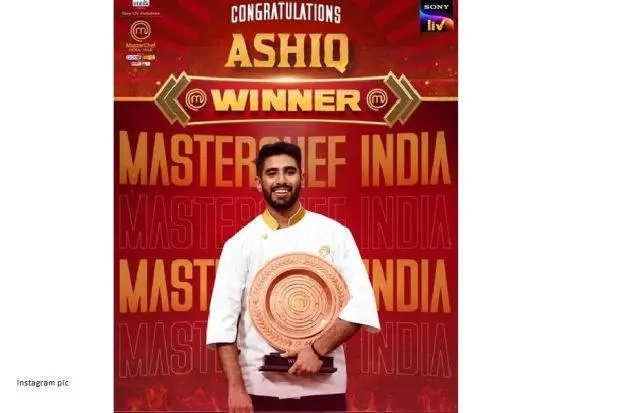
The winner of ‘MasterChef Season 8’ is Mohammed Aashiq, who fought against Suraj Thapa, Rukhsaar Sayeed, and Nambie Jessica Marak in the finale.
MasterChef India Season 8 unveiled the winner on Friday. ( Image Source : X/@ranveerbrar )
New Delhi:
The long-running Indian cooking competition MasterChef has finally come to an end. After eight weeks of delicious challenges, Mohammed Aashiq emerged as the winner of the show. The talented home chefs are mentored by Vikas Khanna, Ranveer Brar, and Pooja Dhingra in thrilling competitions.
Mohammed Ashiq, a 24-year-old contestant, wins MasterChef India’s eighth season. He takes home a coat, the trophy, and a cash reward of Rs 25 lakh. Rukhsaar Sayeed and Nambie Jessica, two home chefs, and Suraj Thapa competed in an exciting finale. Nambie and Rukhsaar won second and first runner-up, respectively.
On social media, judge Ranveer Brar sent his congratulations to Mohammed Ashiq. He wrote, “From an inspirational start to a challenging journey, you never stopped daring for more. Congratulations on becoming the MasterChef Mohd. Ashiq!”
Aashiq sent a press statement and discussed his feelings. “I am immensely grateful for the whirlwind journey I’ve had on MasterChef India. From facing elimination to holding the trophy, every moment was a profound lesson. This experience has completely reshaped my life, and winning this esteemed title feels surreal.”
He added, “Coming back with stronger determination after narrowly missing out last season was tough, but I devoted myself entirely to the culinary craft. This victory isn’t just mine; it’s for every dreamer who defies the odds to chase their aspirations. I owe immense gratitude to the judges- Chef Vikas, Ranveer, and Pooja, fellow contestants, the audience, and all the renowned chefs who pushed me to perform better with each passing day in the kitchen. I’ve grown significantly and noticed a remarkable shift in my cooking skills, all thanks to an incredible boot camp experience.”
Instagram ashiqrex
Who is Mohammed Aashiq?
Mohammed is originally from Mangalore, Karnataka. At the time when Aashiq entered the MasterChef India competition, he was the owner of a juice shop in his village called Kulukki Hub. By combining his passion for cooking with his talent for creating one-of-a-kind meals, Mohammed has been able to support his family financially.
source: http://www.news.abplive.com / ABP Live / Home> Entertainment> TV / by ABP News Service / December 08th, 2023