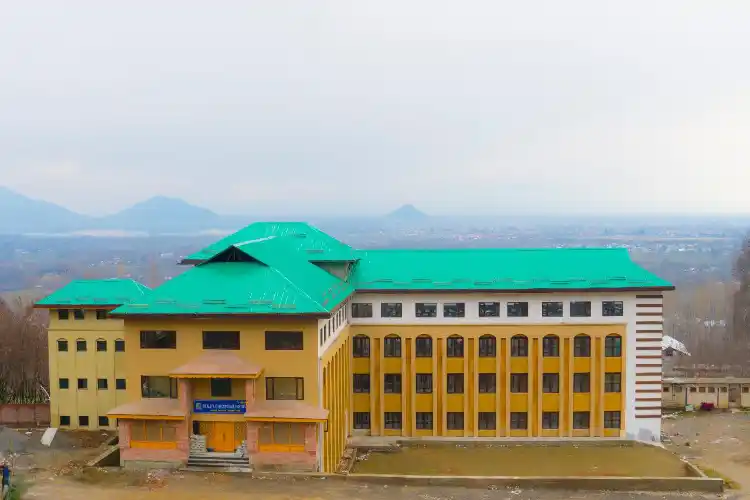
In a major initiative set to generate new avenues, the Jodhpur-based Maulana Azad University, which is the first private university established by the Muslim community in Rajasthan, has set up a Minorities Research Chair for conducting targeted studies and research on the issues, problems and challenges confronting the minority communities in the state. The research chair will make important recommendations after its studies.
The Minorities Affairs Department of the Congress government in Rajasthan has sanctioned Rs. 2 crores as financial assistance for the research chair. The university was established by the Marwar Muslim Educational & Welfare Society (MMEWS) at Bujhawar village on the outskirts of Jodhpur in 2013. The institution of higher education is now imparting education to more than 15,000 students belonging to Muslim and other less privileged communities in multiple disciplines of studies.
The Minorities Research Chair will function under Maulana Azad University’s Centre of Excellence and Research, for which Chief Minister Ashok Gehlot had granted Rs. 15 crores in 2022. The research chair, which is expected to make a meaningful intervention for the development of Muslims and other minorities, is the brainchild of noted educationist Mohammed Atique, who is the MMEWS Chief Executive Officer and the Founder-Chancellor of Maulana Azad University.
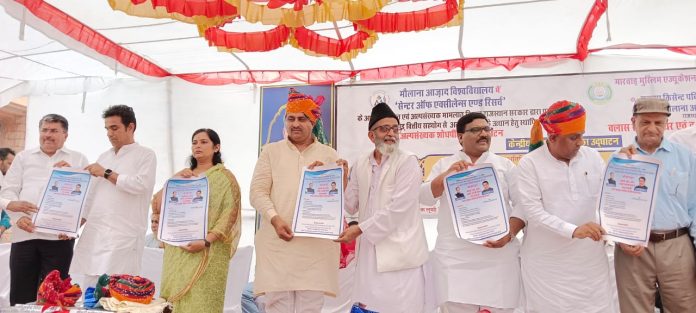
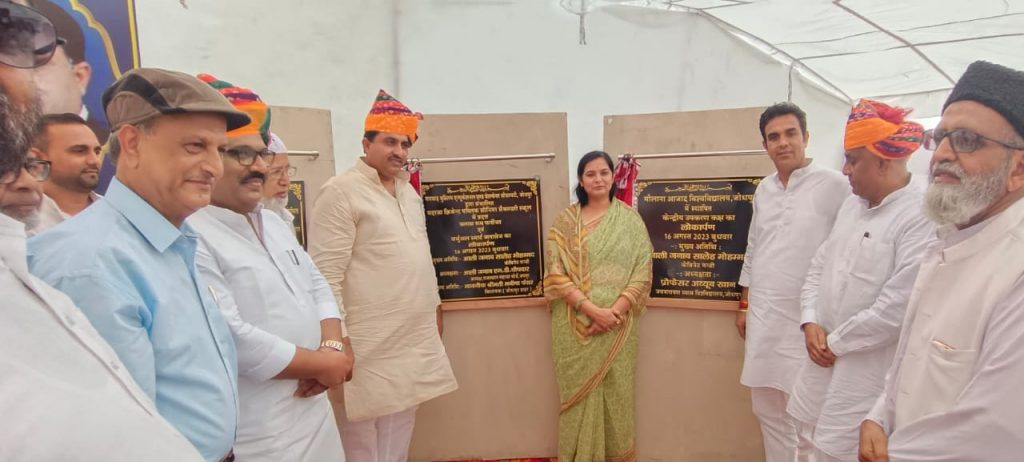
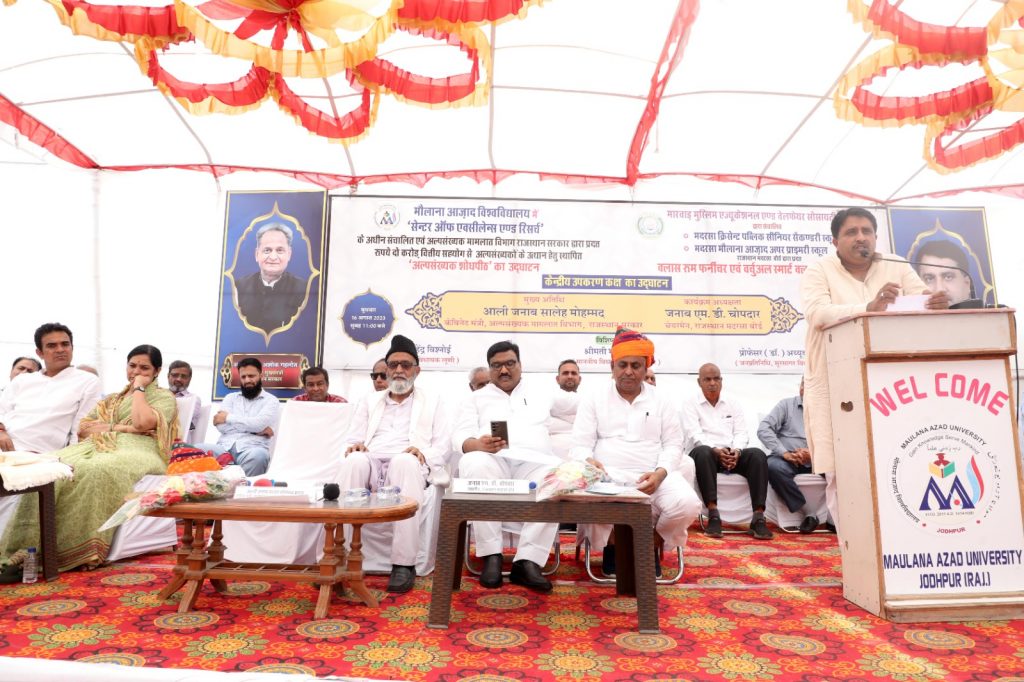
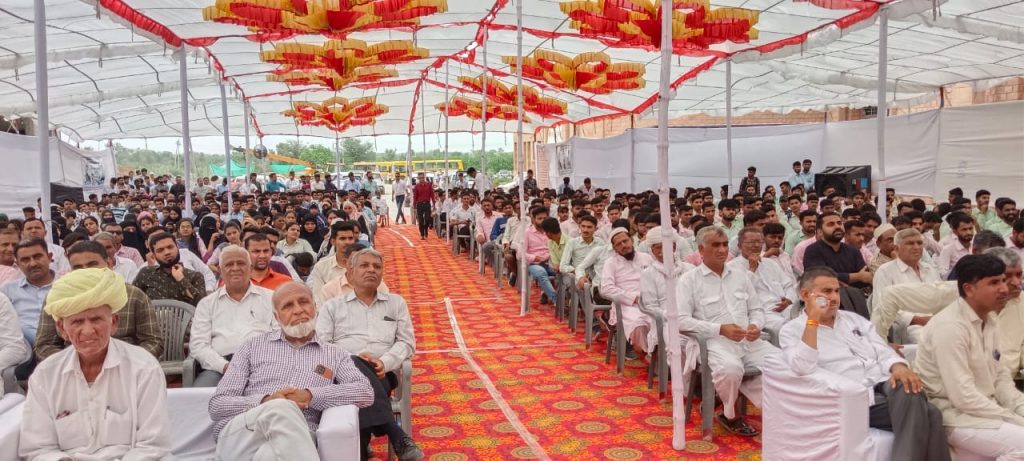
The research chair was inaugurated at a grand function organized on the university premises in the presence of Rajasthan Minorities Affairs Minister Saleh Mohammed, Rajasthan Madrasa Board Chairman M.D. Chopdar, several MLAs, public representatives, government officers, educationists, distinguished citizens, journalists and social activists on August 16. The university is already running M.Phil and Ph.D. programmes in various streams.
In his address, Saleh Mohammed said the Maulana Azad University, which had made consistent progress during the last 10 years, was another name for high-quality scientific education in the future. The Minorities Research Chair would prove to be extremely beneficial for research and education in the areas crucial for the development of minority communities, he said.
After the research chair’s inauguration, the Central Equipment Room of the university’s Faculty of Pharmacy, and the classroom furniture and virtual smart classes of Crescent Public School and Maulana Azad Upper Primary School run by MMEWS were dedicated to the students. A poster of the foreign language training programme under the Chief Minister’s Minority Language Proficiency and Communication Skills Development Scheme was also released on the occasion.
Mr Atique said the Maulana Azad University was making sincere efforts to achieve the goal of “education for all” with a clear objective that no child from the weaker sections of any community should be deprived of education because of the lack of basic facilities. University president Jameel Kazmi said the research chair would review the progress of the government’s schemes for the development of minority communities and evaluate their achievements and success, besides identifying the obstacles in their implementation.
Presiding over the function, M.D. Chopdar described Atique as “Sir Syed” of the modern era while pointing out that the initiatives taken under his leadership in Jodhpur had made a record of sorts. He said the Madrasa Board was taking steps for the modernization and development of madrasas, for which the MMEWS was rendering full cooperation to it. Chopdar also flagged off a vehicle carrying the furniture supplied by the Madrasa Board to various schools in the city.
Luni MLA Mahendra Singh Bishnoi, Jodhpur City MLA Manisha Panwar and Congress leader from Soorsagar Assembly constituency, Ayub Khan, were special guests at the function. All of them praised the stellar role played by the MMEWS and Maulana Azad University in improving the educational standard of the Muslim community in Jodhpur. A large number of distinguished citizens from Barmer, Jaisalmer, Pokhran and Phalodi in western Rajasthan also came to attend the function.
The MMEWS, established in 1929 during the pre-Independence era, runs as many as 330 educational, health and social institutions. Atique has been instrumental in easing the lives of more than 45,000 youths through these institutions working in varied fields of education, health care, community development, rural development, waste-to-wealth initiatives and skill development programmes during the last four decades.
The then ruler of Jodhpur princely state, Maharaja Umaid Singh, was the patron of MMEWS and had gifted a school named ‘Durbar Muslim School’ to the Society in 1936. The Rajasthan government allotted five acres of land to the MMEWS in 1978, on which the Maulana Abul Kalam Azad Muslim Senior Secondary School was constructed.
Since then, the MMEWS has established several institutions, including the Industrial Training Institute, Nursing College, Pharmacy College, B.Ed. College, Mai Khadija Hospital, Rahmatul-Lil-Alameen Blood Bank, Marwar Adarsh Gaushala and Bujhawar Veterinary Hospital.
The MMEWS established the university in 2013 with the intention of providing higher education to the most deprived and marginalized sections of society.
The first president (Vice-Chancellor) of Maulana Azad University was the noted Islamic scholar from New Delhi, Akhtarul Wasey. The current president, Jameel Kazmi, hailing from Jaipur, has taken steps for interdisciplinary studies while maintaining the indigenous ethos and the spirit of plurality in the university’s functioning.
About 45,000 students have so far passed out from the MMEWS group of institutions and become doctors, engineers and business people and entered other professions as well. Some of them have also established nursing homes and clinics in remote rural areas, which are often ignored in the government’s development plans. Maulana Azad University has set the motto, “Gain Knowledge and Serve Mankind”, for itself.
source: http://www.indiatomorrow.net / India Tomorrow / Home> Education / by the India Tomorrow Correspondent / August 25th, 2023
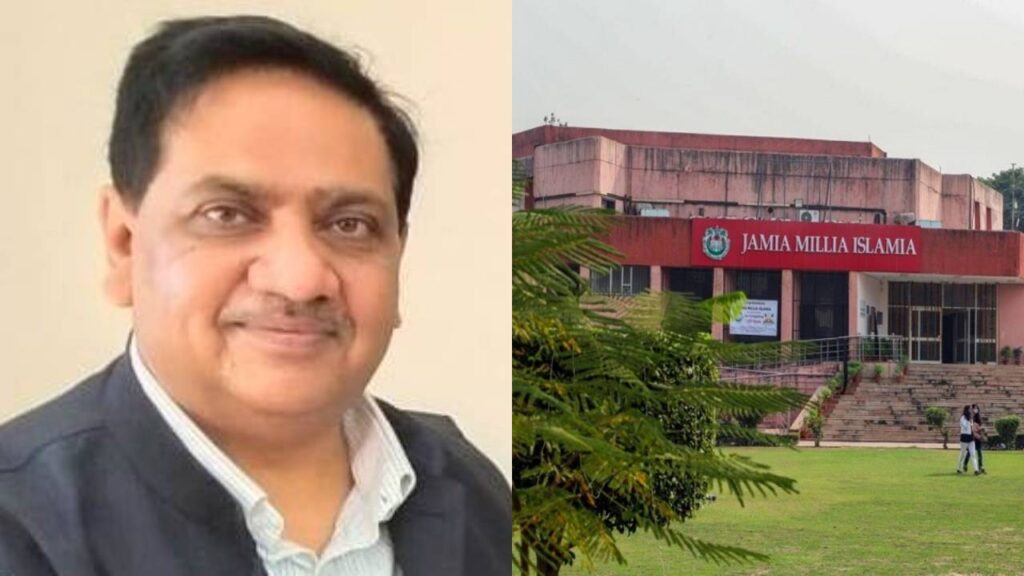
Professor Shehzad Anjum, Department of Urdu, Jamia Millia Islamia (JMI) is a renowned critic, researcher and the senior most Professor of the department.
Parvez Shahidi Award:
Professor Shehzad Anjum, Department of Urdu, Jamia Millia Islamia (JMI) has been conferred the prestigious ‘Parvez Shahidi Award’ of the West Bengal Urdu Academy for his great work in Urdu language. He is a renowned critic, researcher and the senior most Professor of the department.
JMI Vice Chancellor Professor Najma Akhtar, faculty members and students congratulated Professor Anjum for their great achievement.
Professor Anjum is one of the few prominent writers of the present era whose writings are thought-provoking.
Some of his published books are Urdu Ke Ghair Muslim Shaura-o-Udaba, Ahad Saz Shaksiyat: Sir Syed Ahmed Khan, Deedawar Naqqad: Gopi Chand Narang, Azadi Ke Baad Urdu Shairi, Azhar Inayati: Ek Sukhanwar Shayar, Ehtisham Hussain Ki Takhliqi Nigarishat, Tanqeedi Jehaat, Urdu Aur Hindustan Ki Mushtarka Tahzeebi Virasat, Rabindranath Tagore: Fikr-o-Fan, have been published.
He successfully completed the “Tagore Research and Translation Scheme” started by the Ministry of Culture, Government of India as the Coordinator, Department of Urdu, JMI. It is a historic, exemplary and proud achievement in the field of Urdu literature.
Professor Anjum also authored several monographs including Muhammad Ali Johar, Syed Ehtisham Hussain and Syed Muhammad Hasnain for Sahitya Academy, Delhi, Altaf Hussain Hali for Urdu Academy, Delhi, West Bengal Urdu Academy, Mirza Ghalib for Kolkata and Urdu Directorate. The Kalam Hydari monograph for Patna is particularly noteworthy. Several books translated by him have also been published. He also wrote a literary column on non-Muslim Urdu poets and writers for the daily ‘Inqlab’, Delhi, for about two and a half years.
source: http://www.shiksha.com / Shiksha / Home> News> College / by Anum Ansari, Asst Mgr Content, New Delhi / September 09th, 2022
Distinguished Indian scholars have congratulated Grand Mufti of India, Sheikh Abubakr Ahmad on being conferred with Hijrah Award, the Malaysia’s highest civilian honour for Influential Muslim Scholars worldwide.
Indians have also welcomed Malyasian Government’s gesture on giving honour to the proponents of moderate Islam.
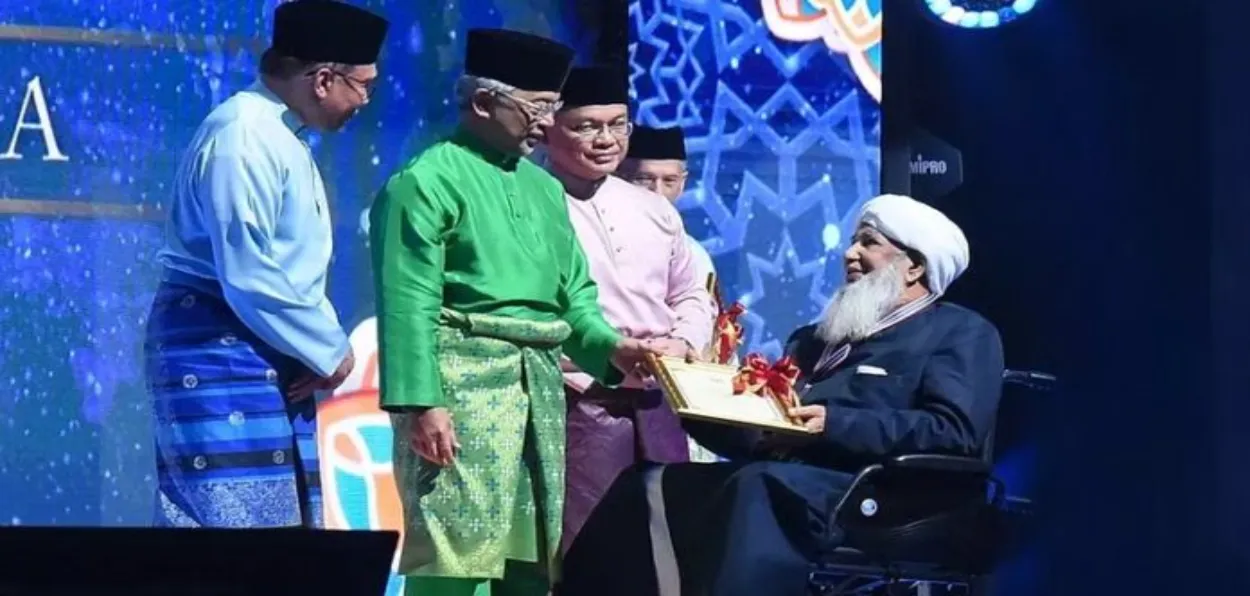
Grand Mufti of India, Sheikh Abubakr Ahmad was conferred with Hijrah Award, Malaysian King Al-Sultan Abdullah Sultan Ahmad Shah presented the award at a grand ceremony held at the Kuala Lumpur World Trade Centre.
The event was attended by Prime Minister Anwar Ibrahim, Minister of Religious Affairs Dr Muhammad Nahim bin Mukhtar among many others.
In a grand ceremony Sheikh Abubakar was felicitated with the prestigious international award for his significant contributions in the field of Islamic knowledge, social development, and peacebuilding.
The Hijrah award committee also acknowledged the educational activities Sheikh Abubakr and his organizations initiated among various communities in India.
Upon receiving the award, Sheikh Abubakr Ahmad expressed his delight and stated that this is an international recognition for Indian community and their contributions to humanity.
Last year, Hijrah award was given to Dr Sheikh Mohammed bin Abdul Karim Al Issa, Secretary General of the Muslim World League, who recently visited India upon the invitation of Indian Government.
Dr Abdul Hakeem, son of Sheikh Abubakr Ahmad, said congratulatory messages are coming in from all over the world, people of various faiths are saying he is deserving of the award for his services as a scholar for the downtrodden and the backward community.
Sheikh Abubakr Ahmad has successfully established a multi-discipline institute for education, health, agriculture, technology, hospitality, and spirituality together in one city.
He has also contributed to the Prime Minister Modi’s vision of a smart city. “The award is an honour to India as Sheikh has always represented India’s multi-cultural diversity and unity in several countries in the world,” he added.
President of Interfaith Harmony Foundation of India, Dr Khwaja Iftekhar Ahmad said: Sheikh Abubakr is running a chain of religious and modern education institutes in Kerala including an orphanage. This puts him in the category of a highly distinctive Indian Muslim religious scholar, who deserves many honours for his services towards the field of education.
He has done a remarkable thing by establishing in a few hundred acres of land a knowledge city in Kerala. It is an eye-opener for those who wish to contribute in the field of education.
“I congratulate the King of Malaysia for conferring him the award. It is an honour for Indian and an honour for the freedom that minorities enjoy in India,’’ he added.
Haji Syed Salman Chishty, Chairman – Chishty Foundation, said: “It is a well-deserved recognition for his significant contributions to Islamic knowledge, social development, and peacebuilding. His educational initiatives have positively impacted various communities in India, and this award is a proud moment for the Indian community and their contributions to humanity.
Grand Mufti Sheikh Abubakr Ahmad’s dedication to promoting Islamic knowledge and fostering social development has truly made a lasting impact. The recognition bestowed upon him by the Malaysian King Al-Sultan Abdullah Sultan Ahmad Shah highlights the global influence of his work as an influential Muslim scholar.
The Hijrah Award’s history of honoring notable figures like Dr Sheikh Mohammed bin Abdul Karim Al Issa further solidifies the significance of this recognition. With influential personalities like Sheikh Abubakr Ahmad and Dr Sheikh Mohammed bin Abdul Karim Al Issa collaborating and fostering dialogue between nations, it enhances interfaith relations and promotes mutual understanding.
Zafar Mahmood, noted Islamic scholar and former civil servant, said: “The Malaysian award is a recognition of Sheikh Abubakr Ahmad for his remarkable work in the field of education and social harmony. Recognition of efforts in the field of education uplift is heartwarming. It also elevates our spiritual level because of the spiritual mandate.’’
Sheikh Abubakr Ahmad is widely respected not only in religious fraternity of Muslims but by the people of all communities. His contribution in interfaith dialogue is noteworthy.
source: http://www.awazthevoice.in / Awaz, The Voice / Home> Story / by Awaz, The Voice / July 20th, 2023
Nida Ansari, is a Delhi based development practitioner and consultant with over 12 years of experience in working with national and international non-profit foundations, grassroots organisations and funding agencies in the field of youth centric development, organisational development, agency and ending violence, community development and social entrepreneurship. She describes herself as a community campaigner, and an ‘Arctivist’ with a decade of experience of designing, facilitating and leading large scale national programs and campaigns.
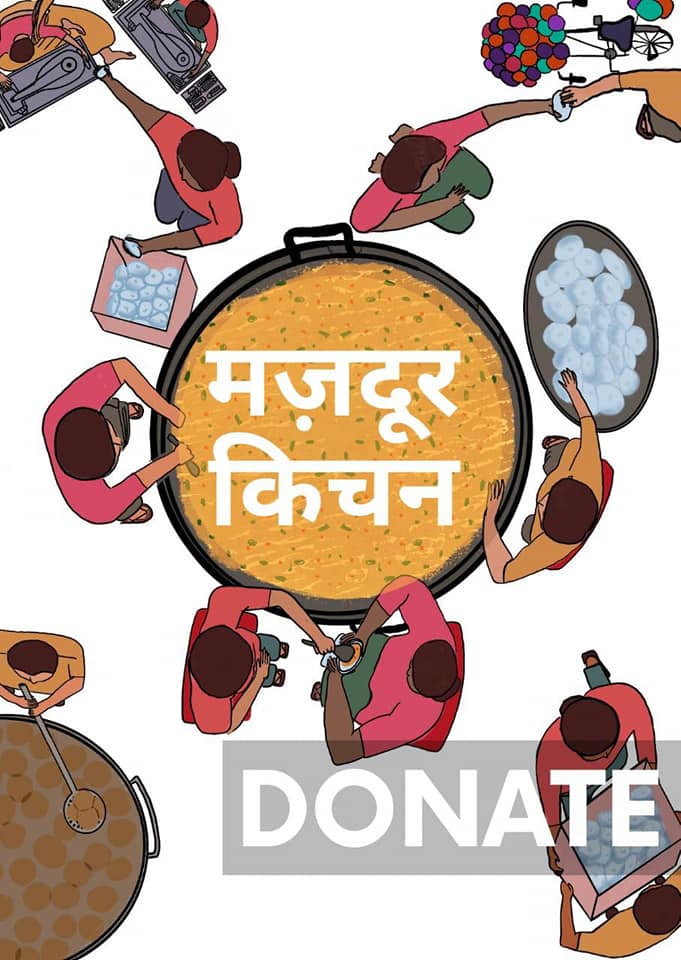
She is also the co-founder of Mazdoor Kitchen, and has been closely involved with many grassroots initiatives, public campaigns associated with food security, public health, education and rights-based movements with workers, farmers, women and marginalised communities.
Q. How did the idea of the Kitchen come to be?
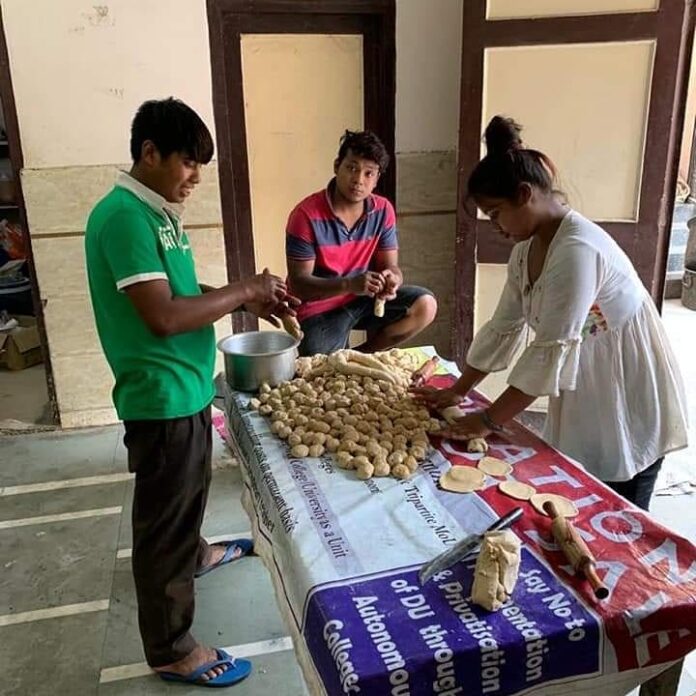
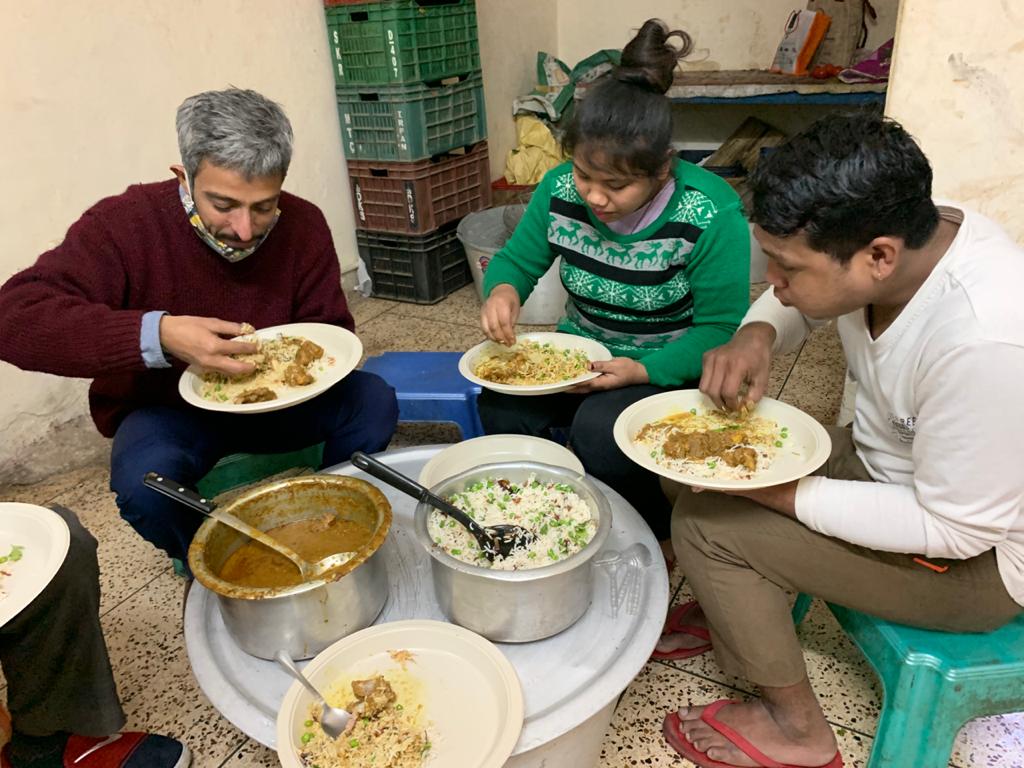
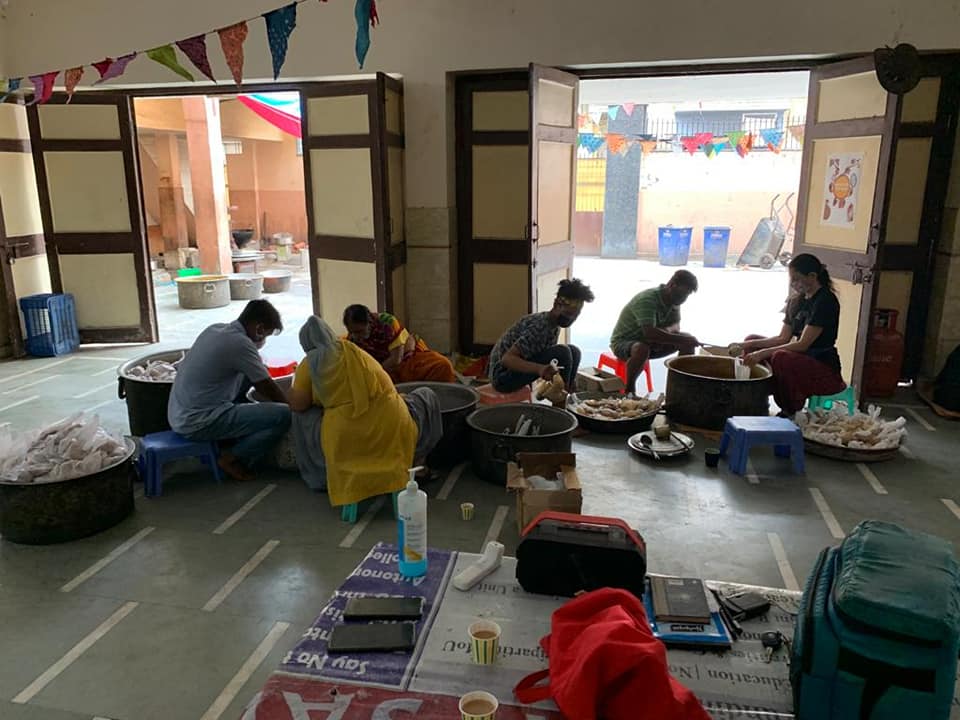
ND: Mazdoor Kitchen is a citizen run voluntary initiative, working to provide meals and subsistence to daily wage workers in North Delhi. Run by a dedicated team of volunteers comprising professors, students, artists and people from the community itself, it has been providing meals and ration kits to hundreds of people across north Delhi, ever since the beginning of the lockdown since May 2020.
In March, my parents – Delhi University professor Nandita Narain and her husband Rashid Ansari, a martial arts instructor and performing arts practitioner-director, joined a collective of teachers in North Delhi to start ‘Mazdoor Dhaba’ (workers’ café). It had 3 community kitchens running under its banner in North Delhi, from the garage of the Principal’s house in St. Stephens College. I remember my mother, Nandita saying , “I’d heard from many of my colleagues that this isn’t something we, at the age of 60+ years, should be doing. But we felt that even if there is risk involved, we want to take that risk; after all, when there are wars, people who volunteer, go to the frontiers to support wounded and war-affected people. And if they can do that, then the risk is surely not greater for us.”
By July, the lockdown in Delhi had ended and many in the group felt the need to shift operations away from cooking to other relief work. But my parents decided to venture out independently and started ‘Mazdoor Kitchen’ (a citizen-run voluntary workers’ kitchen) in Jawahar Nagar, Malka Ganj- as they felt there was still a need to support people with food and rations. I recalled what my father said to me in 2020 – when hoards of migrant workers walked back to their homes, on feet – “how can I be comfortable sitting in the confines of my home, eating a hot meal, when there are people on the road who have to travel thousands of kilometres just to be safe and alive?’,”
Q. In what capacity are you associated with MK? Pls describe the team and their responsibilities.
ND: I have been associated with MK right from the beginning supporting my parents, raising funds, running the crowdfunding campaigns and building collaborations with many grassroots groups, CSRs, partners, voluntary groups.
Q. What are the pros and cons of running an independent, voluntary citizen run initiative?
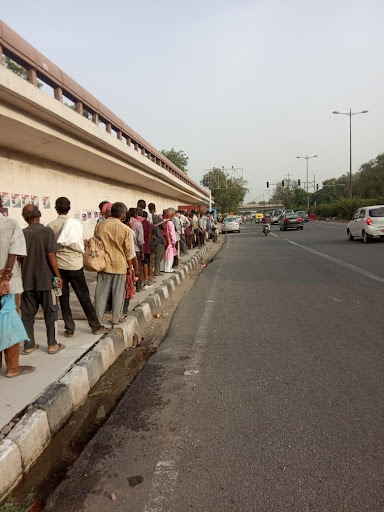
ND: The 500 meals, ration kits and monthly rations that we’re able to support people with, is the pros. These meals are distributed to individuals and marginalised communities, who do not have the socio-economic means to feed themselves. Cooked meals are given in North Delhi across- Nigambodh Ghat – Monastery market road, behind geeta mandir, north delhi. These areas have a growing population of displaced vulnerable people, living on the streets – homeless, beggars, daily wage workers, migrants, rickshaw drivers, rag pickers etc. For some of these folks, the cooked meal packet that they get from Mazdoor kitchen, is their only source of food in the day.
For many migrant families, these cooked meals allow them to save some of their meagre daily earnings, which they can then put to use for other purposes of everyday living like medicines, rations , education of their children and deal with inflation. We have also been able to generate livelihood, medical and education support through direct reliefs/ cash transfers to different families, individuals from marginalised socio-economic communities. We’ve also been able to support disaster responses to support groups during floods, and extreme hunger through kits, ration, blankets, clothes, medicines and other relief material across the country.
We’ve been able to demonstrate how a community owned – and run kitchen can benefit countless people and bring people together. But there have been a host of challenges – running a community kitchen is not easy! From being a small team, to managing with small budgets and the constant challenge of raising more funds, persuading people to donate – in face of the widespread belief that ‘since the pandemic is now over, people in the community are alright. ‘ This is a complete mismatch with reality, because poverty, unemployment, rising expenses and cost of basic living all remain a stark reality and crisis for those on the margins.
The country has been witnessing unending cycles of migration and now, reverse migration of workers who found no support in the cities and now, find no sources of income in the villages too. Most who have lost employment as industries stand devastated by the economic repercussions of the virus and the safety concerns brought about by physical proximity, will not see opportunities open up for months to come. The need to continue the work of the kitchen remains urgent. Several beneficiaries of the initiative have no other source of income or subsistence.
Q. Apart from cooking daily meals, what are the other issues MK deals with?
ND: While the initiative was born in the middle of the pandemic, as a response to the urgent need of the hour, over the last few years it has developed deeper relationships with the local communities it serves in slum colonies of Kingsway Camp, Pul Bangash, Bahadurgarh Road, Azad Market, Roop Nagar, and Patel Chest, Nigambodh Ghat. Many working-class people and migrants who had travelled back to the cities hunting for jobs depend on that one meal a day that the kitchen provides. In the heightened phases of Covid till 2021 they fed up to 800+ people daily in different communities and supplied dry ration kits, blankets, and gas cylinders, even relief material and clothes in the areas. Currently the kitchen runs daily and feeds people with up to 500 meals in a day, and supports 20-70 families with ration kits in a month.
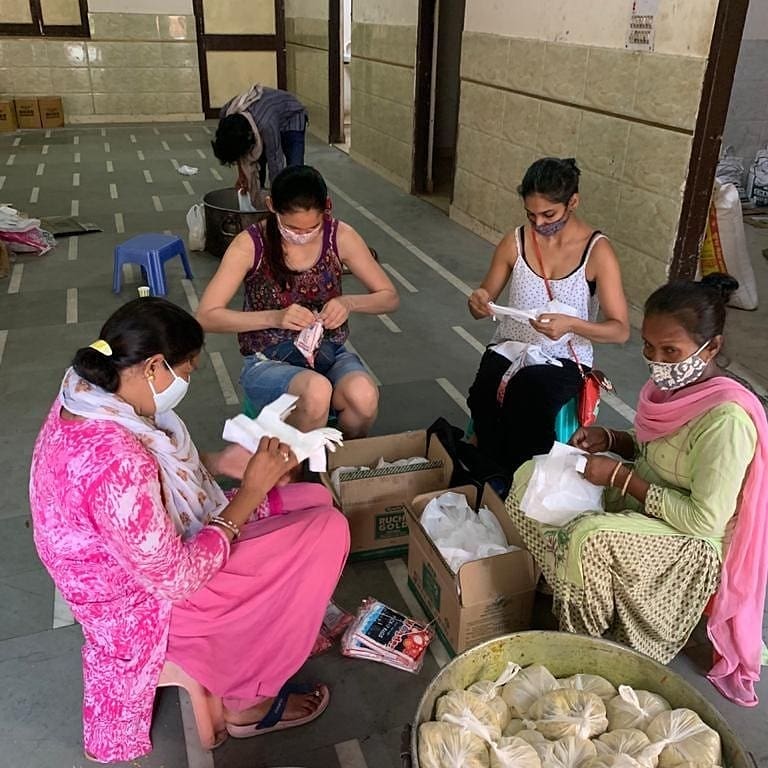
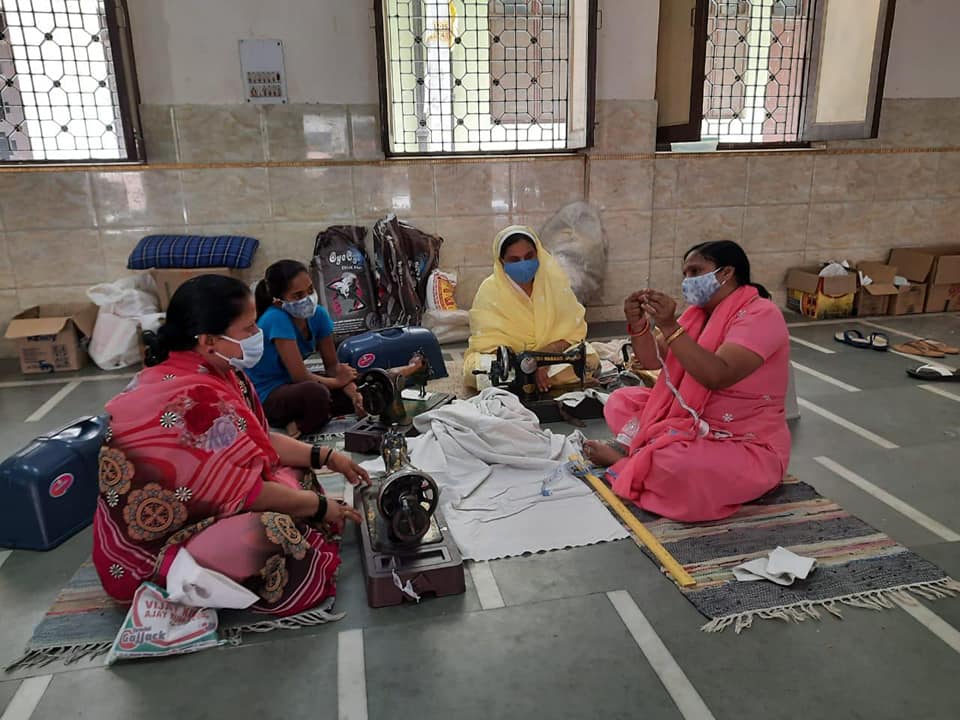
Through a sustained effort, the initiative has also developed a keen relationship with members of the community. We also give monthly ration kits to families, medical relief and gas subsidies, Aside from food and ration, we’ve has also started a ‘livelihoods initiative’ , under which local community members (women) have been making and distributing thousands of masks and other small vendors like balloon sellers and food carts have been able to restart their businesses with small funds, Our relief efforts have included helping those struck by natural disasters with material or monetary support, supporting students from underprivileged communities pay their college fees, rickshaw pullers procure a new rickshaw if needed and medical fees.
Q. Would you like to share an incident that personally left a deep impact on you?
ND: In 2020-21, a migrant worker, who received daily meals from MK, from bada hindu rao- Bulla, a daily wage labourer from Bihar, had an accident and his spine was dislocated. He was admitted into Safdarjung hospital and had an operation on his spine. Bulla was living alone in Delhi, in shanties on the streets, and after hearing about his accident his family had just come to Delhi. His time in the hospital was dismal and scary to say the least, as none of the family members were literate and struggled to engage with a chaotic hospital system. Our team, including my parents, visited the hospital- and talked to the floor doc, name of the unit head etc. Bulla has had one surgery, doesn’t require another, but was paralysed from the waist down, with physiotherapy after the stitches are opened, might regain mobility in maybe six months, maybe longer, maybe never! Our team, along with the help of good folks like Ankit Jhamb of Aao Khilayein, were able to facilitate Bulla’s discharge from the hospital to a rented accommodation that we managed to procure and furnish in time for him to get there, including a much-needed air mattress.We tried to provide all the necessary things required for day to day living, and what is needed for his medical care too. We have engaged a day nurse, Raj Rani, to come and do his dressing etc. every alternate day. His recovery is going to be long, arduous and difficult. We and more importantly, Bulla and his family, needed all the help that they could get. While initial surgery costs have been taken off by the hospital, we knew that supporting a family who has no source of income ( as bulla was the main bread earner), rented accommodation for 6 months, food, medical expenses, nurse for day care, physiotherapy- will cost anything from 2.5-3 lacs in total. We were able to raise the funds to pay off Rajrani who was a compounder in a hospital and would go and do his physiotherapy every day. But eventually the trauma from his accidents were too grave – and he passed away. For me – this was a mirror image of the shattered socio-economic structure of our society – it felt futile and overwhelming, just how deep this structural inequality goes. I had the same feeling in 2022 when I started hearing about more and more migrant suicides. It made me more resolute to keep trying to do whatever bit we can, no matter how small the impact.
Q. Have you come across issues of caste purity and untouchability with respect to the menu?
ND: While distributing food we have by and large not come across caste purity and untouchability with respect to our food. All the 400+ people we feed, love our meals, they wait for us graciously. In the middle when we were shut for a week, while shifting to a new place – when we went back the 1st day so many of them came howling to us – ‘ where were you? had you forgotten about us ? ‘ Many people distribute food near nigambodh ghat, but often it is baasa, waste food. My father had told me, “The other day I had people take 2-3 meals from me; they sat on the pavement and ate those meals, telling me how hungry they were. We give the food packets to them in their hands and we ask them to take care. We give them as many meals as they ask for, as long as we have it. We try to ensure that everyone who’s standing in the line gets food. I don’t differentiate between a rag picker or a drunkard or someone who’s dressed well. I don’t question anyone; I just give them food.”
Q. Do you see MK as a long term venture especially when the State is refusing to perform its basic duties of providing food and shelter?
ND: While it is constantly challenging to raise enough funds to sustain the kitchen – we are always trying. In a country like ours, if communities were to go an extra mile, support their own local vulnerable populations just around their homes – the 80% of this country on the margins would not be as vulnerable as they are right now. Why can;t we have a community owned, run, funded and employed community kitchen in every mohalla ? Despite everything, we are trying to continue this initiative as long as we can. My father says, “This might be just a drop in the ocean, but it is a regular consistent drop,”. My mother said to me once – ” ” There was this idea amongst friends that this sort of work doesn’t really bring about any social transformation. You are just doing charity. You are just filling in where the government should be doing it. But I don’t even see it as charity. I see myself as a beneficiary of this inequality. The fact that I have got a public funded education, there is a debt of gratitude. There is a debt. On my soul, or psyche or whatever you call it. And that is a debt that I cannot repay in one lifetime. ”
Q. Anything else you’d like to share?
ND: I would like to thank the supporters and funders of this initiative and would appeal to more people for funding. Because of them MK has been running for almost 3 years, supporting people from marginalised communities with cooked food, ration and financial assistance. I have never been prouder of our small team of 10 community members which keeps the kitchen going. With 1 in 4 suicides in India being of a migrant worker, the need for food, rations and financial assistance for marginalised communities is still very dire.
We are currently running out of funds and may only be able to sustain till the end of the year. To keep the kitchen running till 2025 and beyond, we need support to raise funds.
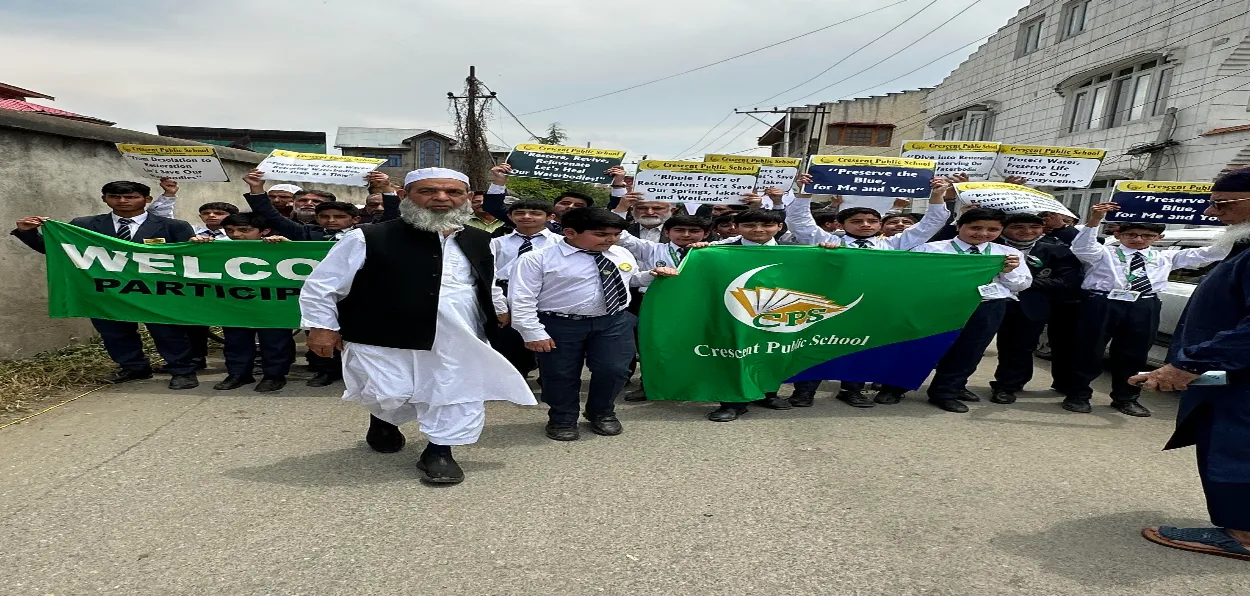
Manzoor Wangnoo leading school Children during an environmental campaign in Srinagar
About two and a half years ago when Manzoor Ahmad Wangnoo, a prominent businessman of Kashmir was asked by the anchor during a television show that he must say in 20 seconds what inspired him to work for saving and restoring Kashmir’s water bodies, he replied “Ehsaas”.
His reply explained how realization and concern on seeing the water bodies of the Valley shrink and gets degraded due to human greed and official negligence became the key to his massive efforts to awaken the public and undertaking the work to restore the Lakes to health.
He remembers visiting the 1.6 km by 0.6 km Khushal Sar Lake located on Srinagar outskirts in February 2021 for the first time. “It was in bad shape, choked with solid waste and smelling foul”, he told Awaz-the Voice at his office in Kashmir Mahal Resorts in the Nishat area overlooking the Dal lake.
“When I told the residents that it needs efforts to clean up the lake, they laughed”, he said, as he was accompanied by his team of volunteers of the Nigeen Lake Conservation Organisation (NLCO), established in 2000. He remember his three counsins – Latief, Riyaz and Muzaffar also joining him from the beginning of his campaign.
NLCO started with cleaning up the Nigeen Lake, and is currently focused on Khushal Sar, Manzoor Wangnoo recalled the oft-quoted couplet from India’s 20th century famous Urdu poet, Majrooh Sultanpuri (Asrar-ul-Hassan Khan): Meein akela hi chalaa thaa janibe manzil magar’; Loag Saath aatey gaye aur karwaan banta gaya”.“That actually happened”, he said. The target of cleaning Khushal Sar was completed in 100 days under the “Mission Ehsaas” (phase 1), which began on February 21, 2021. With the help of SMC (Srinagar Municipal Corporation) and other agencies, NLCO removed “3000 truckloads of muck from the Lake till date”, Wangnoo said.
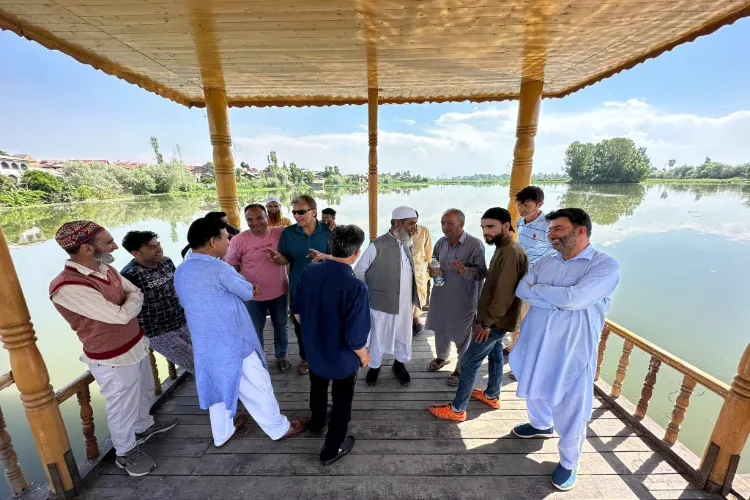
Wangnoo with local resident at Gilsur bridge
“Now this (Khushal Sar) is not a dustbin”, he said and appealed to the Government to provide a drainage system and demarcation on the lake peripheries. The traditional navigational route, Zadibal-Sazgaripora in the lake was restored in phase 2 of “Mission Ehsaas” last year. Wangnoo said that the lake was orphaned and had been neglected for the past 30 years.
Without the efforts of the Lake Conservation and Management Authority (LCMA), which keeps Nallah Amir Khan clean, the restoration work of Khushal Sar and Gilsar would not have been possible, Manzoor Wangnoo said. The authorities have prevented solid waste from flowing into the twin water bodies. He also praised successive Divisional Commissioners for supporting his work.
He called for a “competent authority” to take responsibility of the lake’s conservation, though J&K Lake Conservation and Management Authority (LCMA) looks after Dal Lake. “It (Khushal Sar) needs complete attention”, Manzoor Wangnoo told Awaz-the Voice, as phase 3 of clearing the muck began earlier this year.
“The mission received an encouraging response”, Wangnoo said and referred to its mention by Prime Minister Narendra Modi in his Mann Ki Baat last year. Lt Governor, Manoj Sinha also expressed his “gratitude” to Wangnoo at least on three occasions in the last two years. “The idea of cleaning the Khushal Sar was of a prominent businessman of Srinagar city, Manzoor Ahmad, and the cleaning process was started with the help of the administration coupled with the efforts of the locals. It is a great example of public participation,” Sinha commented on one occasion.
“People in the vicinity (of Khushal Sar) have started to realize the importance of the conservation of the water body. Administration lent its support for the cause, especially SMC has been there to collect the waste from day one”, he commented.
The restoration of choked Khushal Sar to its pristine glory is not the first venture undertaken by Manzoor Ahmad Wangnoo, who has established his business in carpet and Kashmir handicrafts over the last nearly five decades. The 70 years old businessman, who was educated at Tyndale Biscoe School and S P College, Srinagar, learned the trade from his father in his early childhood.
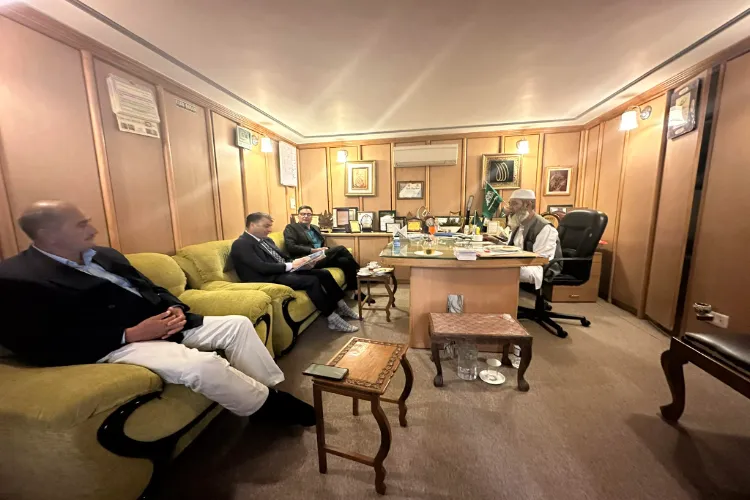
Wangnoo in his office
As a businessman over the decades, what concerned him was the need “to create awareness regarding environment and saving water bodies of Kashmir, endangered by pollution”. Thus, he constituted a local NGO, Nigeen Lake’s Conservation (NLCO) in 2000 for the restoration of water bodies. “I took the challenge to restore the glory of the lake with the active participation of peoples… it aims to save the (Nigeen) lake from becoming a cesspool”, he said.
“This is our (team’s) identity wherever we go with efforts of saving the environment”, the devout Muslim pointing towards his white round cap, commented. “NLCO has taken on the role of a watchdog organization, to check vandalism, create awareness about the importance of conservation of water bodies in particular and the environment in general”.
Speaking of challenges, Manzoor Wangnoo said “land mafia and encroachers tried their best to stop us. But when three people, administration and NGOs – join hands everything becomes possible.”
After several years there was a sea change in the Nigeen Lake as “the people became aware of the importance of the pollution-free lake”, he said. Wangnoo has also contributed to helping the 2005 quake-hit people of Uri and Tangdhar by constituting Kashmir Welfare Trust and in the education sector by setting up Bilaliya Educational Institute.
Educational Institute, Srinagar
Nigeen Lake is connected via a narrow strait flowing beneath the Ashai Bagh bridge on the Lal Chowk-Rainawari-Hazratbal road. It is further connected to Khushal Sar and Gilsar through Nallah Amir Khan.
While he was continuing with his mission “to help enrich the quality of life of the community and preserve ecological balance and heritage through a strong environment conscience”, the October 2005 earthquake posed another challenge to him.
With the support of the concerned persons to deliver, he initiated the relief measures in the quake-hit areas of North Kashmir, which led to the formation of Kashmir Welfare Trust (KWT), an NGO to undertake the relief operations. The KWT, which initiated with the adoption of 69 earthquake victims from Tangdhar in 2005 has set up the Bilaliya Educational Institute in Srinagar where 1900 boys and girls are today enrolled. Also, it’s one of the leading schools in Srinagar.
He proudly says that some of the students of the school have shown excellent results with scoring distinction in the board examinations.
It Trust has also contributed to the relief and rehabilitation of the 2014 floods in Kashmir.
source: http://www.awazthevoice.in / Awaz The Voice / Home> Stories / by Ehsan Fazili, Srinagar / June 26th, 2023
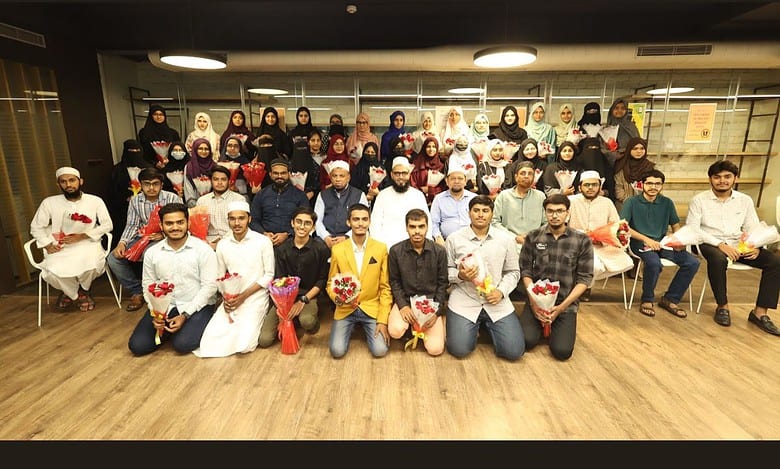
Six students from MS achieved scores above 600 marks in this year’s NEET examination.
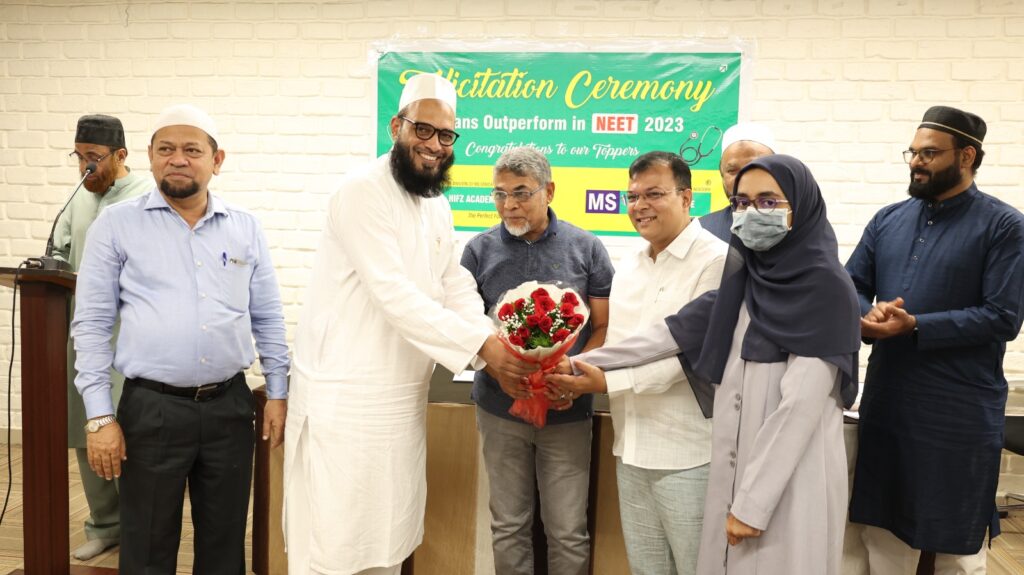
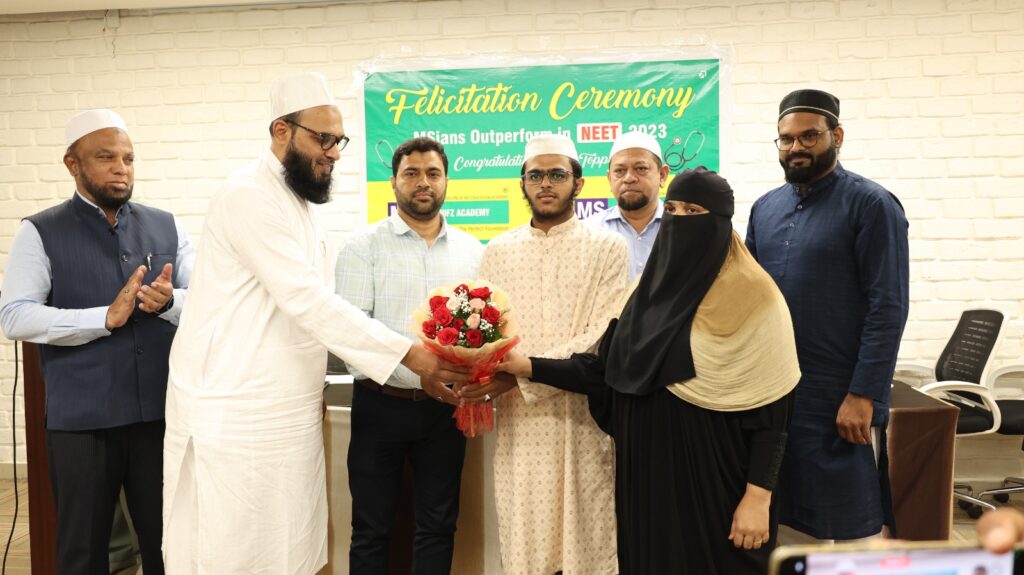
MS felicitates successful NEET candidates
Hyderabad:
The MS Education Academy has organized a felicitation ceremony to honour the successful candidates of the NEET 2023 batch.
Mohammed Lateef Khan, addressing the ceremony, expressed his delight and announced that this year, approximately 169 candidates are expected to secure free seats in MBBS. He emphasized the academy’s mission and vision for 2036, aiming to produce 10,000 doctors dedicated to serving the country and the Muslim community. These doctors will be committed to providing exceptional healthcare and making the well-being of the people their primary goal.
Khan expressed his gratitude to Allah Almighty and proudly stated that 1,763 students from the MS Education Academy have been admitted to MBBS programs. Many of them have also pursued MD degrees and are currently serving both within the country and abroad. He extended his heartfelt congratulations to the NEET-qualified students and their parents, emphasizing that these students are valuable assets to the community. He expressed his hope that their service to the people would contribute to a better world for themselves and their parents.
It is worth noting that six students from MS achieved scores above 600 marks in this year’s NEET examination. Hafiz Abdul Rahim Shukoor secured the top position with 670/720 marks, followed by Syed Abdul Basith Rehan with 665/720 marks in the second position. Shabana secured the third position with 650/720 marks, and Muhammad Abdul Malik, son of Muhammad Abdul Hameed, obtained the fourth position in MS with 647/720 marks. Amara Fatima bint Mohammad Rahman brought great honor to MS, her family, and the country by scoring 624/720 marks. Notably, Amara Fatima is the granddaughter of Mohammad Osman Ali, the younger brother of State Home Minister Mohammad Mahmood Ali.
At the beginning of the event, Mohammad Ghousuddin, the Director of MS Education Academy, warmly welcomed the students and eloquently described the educational journey of MS. He proudly mentioned that the academy, which started with just two rooms in 1991, has now expanded to 106 educational institutions nationwide. These institutions collectively accommodate more than 30,000 students and employ over 3,000 teachers.
Mohammed Lateef Khan assured the community that MS students would strive to become achievers with perfect scores of 720/720 in the future.
During the felicitation ceremony, Mr. Mohammad Anwar Ahmed and Dr. Muhammad Moazzam Hussain, Trustees of MS Education Academy, provided insightful guidance to the students. Mufti Shakeel, the imam and khateeb of the Spanish Mosque (Masjid Iqbal-ud-Daula) in Begumpet, received special recognition during the event. It is worth mentioning that his fourth daughter achieved impressive marks in NEET, joining her siblings in the prestigious accomplishment of securing free MBBS seats through MS Education Academy.
source: http://www.siasat.com / The Siasat Daily / Home> News> Hyderabad / by Zahed Farooqui / June 15th, 2023
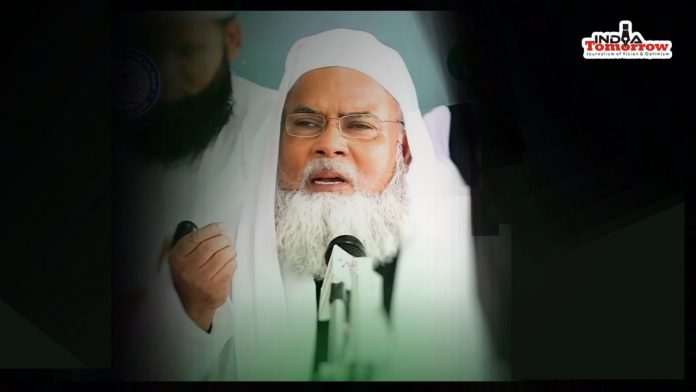
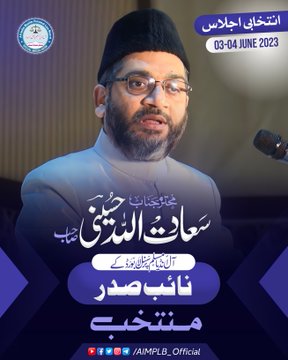
A top Islamic scholar – Maulana Khalid Saifullah Rahmani – was elected fifth president of the All India Muslim Personal Law Board (AIMPLB), with Jamaat-e-Islami Hind president Syed Sadatullah Husaini and Gulbarga-based Maulana Khusro Hussaini as vice-presidents.
Maulana Khalid Saifullah replaced Maulana Rabey Hasani Nadawi who passed away in April this year.
Maulana Fadl al-Rahim Mujaddidi has been elected as the General Secretary. He will be supported by secretaries – Maulana Umrain Mahfouz Rahmani, Maulana Syed Bilal Hussaini Sahib, Maulana Yasin Ali Usmani Sahib, and Maulana Ahmed Faisal Rahmani.
The board elections took place in the town of Mhow near Indore during the board’s executive committee meeting on June 3 and 4.
Maulana Khalid Saifullah was elected unanimously. There are 251 members of the board, including 51 executive members.
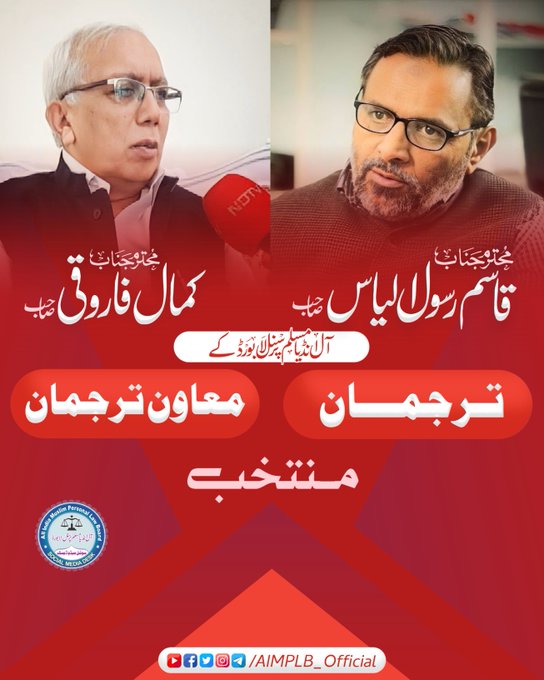
Welfare Party of India (WPI) president Dr. Syed Qasim Rasool Ilyas has been elected as the spokesperson and Kamal Farooqui, a practicing chartered accountant and former chairman of Delhi Minorities Commission, has been elected as deputy spokesperson.
Maulana Khalid Saifullah Rahmani was elected through consensus. A proposal was mooted by Hazrat Maulana Muhammad Sufyan Qasmi Sahib of Darul Uloom, Deoband, and subsequently supported by Maulana Shahid Hosni and Maulana Syed Mahmood Madani. All members unanimously voted for Moulana Rahmani.
After Wali Rahmani’s death, Moulana Khalid Rahmani was appointed as the interim general secretary of the All India Muslim Personal Law Board. He is also a member of the Legal Council of the All India Muslim Personal Law Board and serves as the general secretary of the Islamic Fiqh Academy in New Delhi.
He regularly contributes as a columnist for the Friday edition of Munsif and holds the position of editor for the Islamic juristic quarterly journal – Behs-o-Nazar – which was originally founded by Mujahidul Islam Qasmi.
Born in 1956 in Darbhanga district in Bihar, he has a rich educational background in Islamic studies and is renowned for his insightful teachings on various aspects of Sharia law. He began his education at home and then spent two years at Madrasa Qasimul Uloom Hussainia. He pursued further studies at Jamia Rahmani in Munger, where he earned his degree.
He was enrolled in the Dawra-e-Hadith program at Darul Uloom Deoband where he focused on the study of Hadith within the Dars-e-Nizami curriculum. He successfully completed his studies and graduated from Darul Uloom Deoband in the year 1395 AH (according to the Islamic calendar) or 1975 as per Gregorian calendar. Later, he specialized in Islamic law and jurisprudence at Amarat-e-Sharia in Patna.
He has been a student of Anzar Shah Kashmiri, Mahmud Hasan Gangohi, and Muhammad Salim Qasmi, and also benefited from the guidance of his uncle Mujahidul Islam Qasmi.
Established in 1973, AIMPLB serves as an authoritative body responsible for interpreting and implementing Muslim personal law in India. It comprises distinguished scholars, jurists, and community leaders who work collectively to uphold and protect the rights of Muslims in matters pertaining to marriage, divorce, inheritance, and other aspects of personal and family law.
source: http://www.indiatomorrow.net / India Tomorrow / Home> Breaking News / by admin india tomorrow / June 06th, 2023
Once elected, he will be the first Muslim leader to occupy the Speaker’s post in Karnataka.
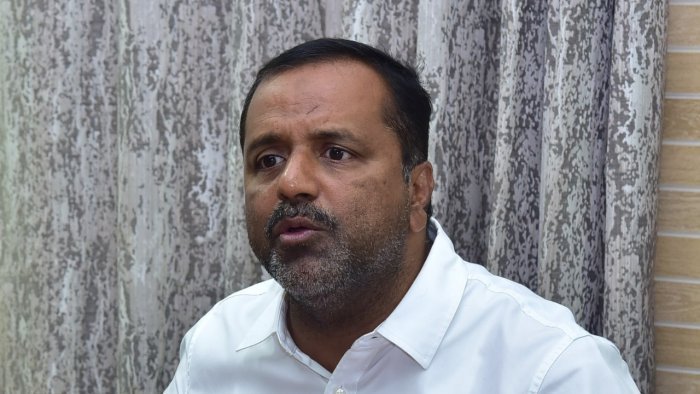
Former minister and five-time legislator UT Khader. Credit: DH Photo
Former minister and five-time legislator UT Khader is all set to be the Speaker of the Sixteenth Legislative Assembly of Karnataka.
Khader will file the nomination for the Speaker’s post by 10:30 am today, Congress sources said. His election to the post will be formalised on Wednesday. The ruling party’s nominated candidate is generally, unanimously elected as the Speaker. Once elected, he will be the first Muslim leader to occupy the Speaker’s post in Karnataka.
While the names of senior Congress leaders RV Deshpande and HK Patil were being considered, sources said neither of these leaders was interested in the post.
Khader served as the Deputy leader of the Opposition during the previous BJP-led government. A five-time MLA, he first contested in the 2007 bypolls from the erstwhile Ullal constituency (now Mangaluru), after his father UT Fareed’s demise.
Fareed was a four-time legislator from the same constituency and his demise necessitated the bypolls. Ever since, Khader has consecutively won from Mangaluru constituency.
In the 2013 Siddaramaiah-led government, he was first the health minister and later in held the Food and Civil Supplies portfolio. In the Congress-JD(S) coalition government in 2018, Khader held both the Housing and Urban Development portfolios.
Khader, who holds a bachelor’s degree in law, started his political career as a district functionary in the NSUI way back in 1990. The former minister is also a sports enthusiast. He is into Motor Sports, cricket, hockey, tennis and volleyball.
source: http://www.deccanherald.com / Deccan Herald / Home> State> Top Karnataka Stories / by Shruthi H M Sastry, DHNS, Bengaluru / May 23rd, 2023
Nargis is the first student in Chhattisgarh to pass the Class 10 board exam at her age and achieve a remarkable feat.
Nargis Khan, a student of Class VII with Chhattisgarh CM Bhupendra Baghel | express
Raipur:
Nargis Khan, a 12-year-old Class 7 student appeared for the Class 10 Board exam and passed with 90.5 per cent marks. The daughter of a small farmer and resident of Ghumka village in Balod district, Nargis is an exceptional student and has been a topper in her class.
A student of the Chhattisgarh government Atmanand English medium school, Nargis has excellent mathematical skills and a strong command of the English language, said her father Firoz Khan.
Khan had, last year visited several offices, including of the Governor, chief minister and the district collector seeking approval to allow her to appear for Class 10 exams this year. Impressed with her confidence and potential, Chief Minister Bhupesh Baghel had asked the Chhattisgarh Board of Secondary Education (CGBSE) to take an expedient decision for Nargis’ education prospects.
The CGBSE allowed her to appear in the Class 10 board exam on the basis of her outstanding academic performance, medical reports and high intelligence quotient (IQ) level test score, which was conducted by the district government hospital and the clinical psychology department of the composite regional centre of social justice and empowerment ministry, said Prof V K Goyal, secretary CGBSE.
A student needs to be of 15 years age to appear in class 10 board exams, according to the rule. Nargis is the first student in Chhattisgarh to pass the Class 10 board exam at her age and achieve a remarkable feat. Meanwhile, Nargis is not satisfied with the result and has applied for a re-evaluation.
“Till class 6, she always topped securing 99 per cent. With her zeal and high diligence towards study, we even had to sometimes ask her to take a break”, her father told this newspaper.
Along with Class 10, she also appeared for the Class 7 exam this year and secured 91 per cent marks. “My dream is to clear the UPSC exam and serve the country”, she said.
The Chhattisgarh CM, appreciating her extraordinary talent and accomplishment, assured her of facilitating free coaching for the competitive exams in the future.
source: http://www.newindianexpress.com / The New Indian Express / Home> Nation / by Ejaz Kaiser, Express News Service / May 22nd, 2023
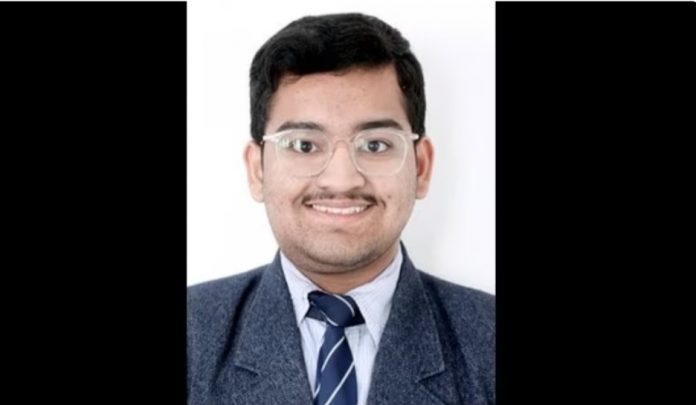
Mohd Aryaan Tariq jointly shares the first rank with four others in ISC. ( Photo courtesy HT )
In the results announced yesterday, a total of 98,505 students participated in the Council for Indian School Certificate Examinations 2023.
Of them, five students shared the top most rank with all scoring 99.75% marks.
Mohd Aryaan Tariq, Montessori Inter College, Rajajipuram, Lucknow is one of the top most scorers in the examination.
Riyya Aggarwal (Guwahati), Ipsita Bhattacharya (Thane), Shubham Kumar Aggarwal (Bhaktinagar) and Manya Gupta (Kolkata) are the other ones.
Tariq informed media that he regularly spent four hours daily for his studies. He remained cut off from social media to focus on his academic preparation.
He scored perfect 100 in chemistry, physical education and biology and hauled 99 out of 100 each in English and biotechnology.
Congratulations to all the successful students and good luck to those who couldn’t do better this time.
source: http://www.muslimmirror.com / Muslim Mirror / Home> Indian Muslim> Positive Story / by Muslim Mirror / May 15th, 2023