Tag Archives: Muslims of India – Positive News

Why India Must Remember its First Muslim Jurist

Delhi, Mughal Period / Sitapur, British India:

The first Muslim judge of a high court in colonial times, Syed Mahmood’s professional conduct offers a counterpoint to the declining standards in Indian judiciary.
WHEN Justice Abdul Nazeer addressed the 16th national council meeting of the RSS-affiliated Akhil Bharatiya Adhivakta Parishad at Hyderabad last December, he said, “Great lawyers and judges are not born but made by proper education and great legal traditions, as were Manu, Kautilya, Katyayana, Brihaspati, Narada, Parashar, Yajnavalkya, and other legal giants of ancient India.” In the symposium on “Decolonisation of the Indian Legal System”, Justice Nazeer also said the “continued neglect of their great knowledge and adherence to the alien colonial legal system is detrimental to the goals of our Constitution and against our national interests…”.

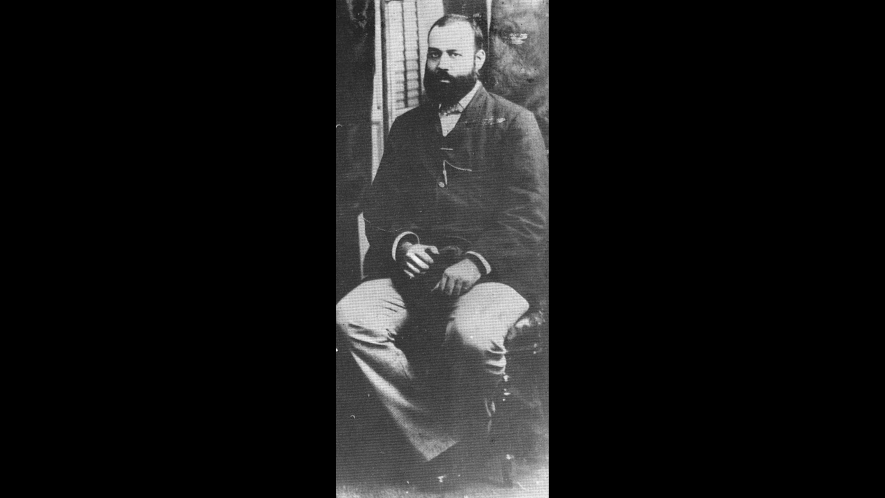
Perhaps Justice Nazeer should have also recalled 19th-century jurist Justice Syed Mahmood (1850-1903). A pioneer in bold assertions against the colonial judiciary, he produced incisive legal commentaries that reflect an audacious dissenter’s point of view. Writing in an Urdu newspaper, his father, Sir Syed Ahmed Khan, narrates Mahmood’s resignation from the Allahabad High Court in 1893 to “protect the self-respect of Indians against the racism of British judges”.

In that era, conceptions of nationhood were still evolving in India. Indian judges would not muster the courage to contest the racism of the imperial power or fellow European judges. But Mahmood did, in intrepid ways. Khan founded the Mohammedan Anglo-Oriental (MAO) College at Aligarh in 1877 and figures prominently but contentiously, stereotyped as a British loyalist and separatist in debates on contemporary nationalism. Mahmood supported his father’s modern education project, but unfortunately, his contributions are largely ignored by historians and the legal fraternity.

By 1920, MAO College, now Aligarh Muslim University, was the most prominent residential university in the country. Its history department has been a premier centre for advanced studies for a half-century. In 1889, primarily on Syed Mahmood’s initiative and his gifts in terms of books, journals and cash, AMU established a law department. Yet, he was neglected in its research. Only in 1973, seven years after the centenary of the Allahabad High Court, the Aligarh Law Journal brought out Mahmood’s contributions, and legal scholars reflected on his high calibre as a lawyer and judge.

The good news is, in 2004, Alan M. Guenther did his doctoral thesis on Mahmood at McGill University, Canada, which is available online for the public to access. His meticulous and well-researched account touches almost every aspect of Mahmood’s public life. Guenther also published an extended essay in 2011on Mahmood’s views on English education in 19th-century India. (In 1895, Mahmood had written a book on the theme for his speeches at the Educational Conference.)

In 1965, Asaf Ali Asghar Fyzee (1899-1981) complained, “Syed Mahmood’s contributions to the transformation of Muslim law in India have been largely neglected by historians and survive primarily as footnotes in legal texts on Muslim law.” Guenther, too, observes, “…overshadowed by the life and writings of his illustrious father, Ahmad Khan, his legacy has not received the attention it deserves. A large part of his father’s achievements in the reform of education, in fact, would not have been possible without the assistance of Syed Mahmood. But when he reached the age at which his father had made his most significant achievements, [Mahmood] had his life cut short.”

Mahmood had laid out his life plans clearly. S. Khalid Rashid, writing in 1973, reports that Mahmood decided early on that, like his ancestors, he would devote the first third of his life to educating himself, the second to earn a living, and the last to “retired study, authorship and devotion to matters of public utility”. But Guenther writes about how Mahmood’s health had deteriorated through alcohol abuse and disease. He died before he turned 53, broken by forced retirement, estranged from his father (who had died five years previously), stripped of responsibilities at the college he had helped found, separated from wife and son, and in poverty. He was selling personal items to repay debts. “His father’s numerous writings and letters are still republished, but Syed Mahmood’s contributions to Muslim thought are hidden in bound volumes of the Indian Law Reports and brittle files of government correspondence,” Guenther writes.

One aspect of Mahmood’s last years is captured by Prof. Iftikhar Alam Khan’s Urdu books, Sir Syed: Daroon-e-Khana (2006, 2020) and the recent Rufaqa-e-Sir Syed: Rafaqat, Raqabat wa Iqtidar Ki Kashmakash. These accounts expose the smear campaigns of the three companion successors of Sir Syed—Samiullah, Mohsin-ul-Mulk and Viqar-ul-Mulk—against Syed Mahmood as they vied for the secretary’s post at MAO College. Often European members of MAO College conspired with them. Exploiting his weaknesses and eccentricities, they ousted him to get a hold over college affairs, compounding his hurt during his tragic final years.

SYED MAHMOOD’S ROLE IN SIR SYED’S EDUCATIONAL ENTERPRISE

Having returned to India in 1872 after studying in England, Mahmood took time out of his budding legal career to assist his father’s reform work, particularly setting up MAO College. He prepared a detailed plan along the lines of his experiences in Cambridge. His specific aim, explained in February 1872, was to produce future leaders of India through an educational institution whose residential nature would be “as indispensable an education as the course of study itself”. The aim was to create a society of students and teachers quite different from the rest of society.

He travelled with his father to Punjab in 1873 and spoke at a rally to promote the project. In 1889, Sir Syed introduced a motion to nominate Mahmood as joint secretary of the board of trustees of MAO College by highlighting his assistance despite the opposition he faced. In particular, he considered his son’s influence the primary factor that persuaded European professors to come to India and teach there.

European staff members confirmed this around six years later when there was renewed opposition to Mahmood continuing as joint secretary. The principal, Theodore Beck (1859-1899), testified, “Syed Ahmad….acknowledged his reliance on Syed Mahmood for advice in all matters, and his imprint could be noted in the correspondence relating to the school. He declared his firm conviction that Syed Mahmood was the one person who shared his vision for the college, and apart from him, no one would be able to administer the school in keeping with that vision.” However, Samiullah (1834-1908) disagreed with Sir Syed on this count. As a result, a tussle for power began in the college management. The power-play could explain why AMU felt inhibited in bringing out a biography of Mahmood, a research gap that Guenther’s doctoral thesis fills. He has extensively relied on important correspondences of Mahmood preserved in the London India Office (British) Library.

SYED MAHMOOD’S TRYST WITH MUSLIM LAW

Mahmood is a forgotten pioneer of the transformation of Muslim law in modern South Asia. In 1882, at just 32, he became the first Muslim judge of the high courts in British India. He delivered numerous landmark decisions that shaped Muslim law, the law in general, and its administration.

Earlier, he blazed a trail his younger contemporaries followed in their judicial roles in British India. He was one of the first Indian Muslims to study in England and train in the English system of jurisprudence, the first Indian to enrol as a barrister in the High Court of Judicature at Allahabad in 1872, the first appointed as a district judge in the restructured judicial system of Awadh in 1879 and the first Indian assigned as a puisne judge to the High Court at Allahabad. He was the first Muslim in any High Court of India. He cleared a path for Indian Muslims to participate in administering justice in India. But his contribution is not limited to creamy career opportunities for Muslim youngsters. His lasting legacy is how Muslim law is perceived and administered in South Asia today.

CHAMPION OF ACCESSIBLE JUSTICE

An abiding concern of Mahmood was the cost of administration of justice. Court procedures were lengthy and expensive, and the “mass of law” was complicated. Distance from courts was another concern, for which he proposed a network of village courts for “on-the-spot” adjudication. He sought to make justice accessible through unpaid tribunals and honorary munsifs. He prepared a comprehensive draft for this, Guenther informs.

Furthermore, he attacked the [racial] mindset and court fees and stamp duties on legal documents. He ruled in August 1884 and February 1885 that “…if justice costs the same amount [to the] rich and poor, it follows that the rich man will be able to purchase it, whilst the poor man will not.” He declared, more than once, that British judges in India were too quick to find fraud.

In a speech at the Allahabad Bar in April 1885, Mahmood raised the language issue in judicial transactions, saying laws should be in languages intelligible to the masses. He insisted on the vernacular in arguments, pleadings and justice delivery and translated verdicts so that people unfamiliar with English could rest assured that judgments are reasoned. Of course, the issue of judicial language continues to be debated, and for this, acknowledgement is due to Mahmood.

AN INDIAN DISSENTER IN THE HIGH NOON OF BRITISH COLONIALISM

Mahmood is known most for outstanding dissenting judgements. In volume 2 of his 2021 book, Discordant Notes, Justice (retd.) Rohinton F. Nariman writes that Mahmood was known for detailed judgments, some of which stand out for thoroughness and fearless language. Mahmood would refer to the original Sanskrit versions when ruling on Hindu laws and the Arabic texts for Muslim laws, rather than using interpretations of the relevant texts.

From the 1860s to 1880s, during the codification of laws, he sought limits on importing British laws and protested that the local context was getting overlooked. His concern was not just the laws but their efficacy and adaptability within India’s cultural diversity.

Guenther observes, “…throughout his life, he identified himself as a Muslim as well as an Indian and a subject of the British crown, and that he was actively involved in the education and improvement of the Indian Muslim community. At the same time, Mahmood… [made] efforts to promote harmony between people of diverse backgrounds, and…[supported] initiatives that improved the situation of all Indians, regardless of religious affiliation…”

An anecdote from Altaf Hali’s Hayat-e-Javed (1901), cited by Shamsur Rahman Faruqi (2006), is worth sharing. “Contrary to the culture of sycophancy and genuflecting before the English colonial authority….Syed Ahmad Khan and his high-profile and brilliant son Syed Mahmud strived to conduct themselves as if they were equal to the English….Syed Ahmad Khan had stayed away from the [1867 Agra] Durbar because Indians had been given seats inferior to the English. A medal was to be conferred on Syed Ahmad Khan at that Durbar. Williams, the then Commissioner of Meerut, was later deputed to present the award to Syed Ahmad Khan at Aligarh railway station. Willams broke protocol and showed his anger at having to do the task under duress and said that government orders bound him, or he wouldn’t be presenting the medal to Syed Ahmad Khan. Syed Ahmad Khan accepted the medal, saying he wouldn’t have taken the award, except that he too was bound by government orders.”

Indian democracy is an outcome of anti-colonial nationalism, and dissent is its core component: Mahmood’s dissent contributed to nationalism in his time. In 2022, the V-Dem Institute described India as an electoral autocracy where dissent is being criminalised, and the judiciary is failing to contain the majoritarian upsurge. Mahmood’s professional conduct is an encouraging counterpoint to the degeneration in the Indian judiciary.

WHAT DID MAHMOOD THINK OF THE INDIAN NATIONAL CONGRESS?

According to Guenther, though Mahmood never joined the Congress, he was “equally aloof” from the anti-Congress propaganda his father indulged in. “…a rare catholicity characterised his views on most of the controversial questions,” he writes. He adds, “His acceptance among the Hindus [elites] generally was demonstrated by the fact that they tried to send him as their representative to the Imperial Legislative Council, though he never received that appointment.”

Nonetheless, like his father, Mahmood harboured class and regional prejudices. Guenther reveals an article Mahmood wrote in The Pioneer on 4 September 1875, suggesting the government must strive to with the sympathies of the “higher classes of natives”. When challenged to defend his position by “Another Native” in the same newspaper two weeks later, Mahmood responded that people in Punjab and the North-western Provinces [now Uttar Pradesh] were, historically speaking, of “much greater political significance” than those of Lower Bengal. Gunther cites his write-up: “…any educational system that succeeded in ‘attracting the Bengalee and fail(ed) to exercise any influence upon the higher classes of the Rajpoot, the Sikh, and the Mussulman’ must be regarded as a failure.”

Considering the socio-regional composition of top functionaries of AMU, even impartial insiders would testify that it still harbours regional and sub-regional prejudices. The Sir Syed Academy is releasing many publications during the ongoing centenary celebration of AMU. Publishing Guenther’s dissertation may be a fitting tribute to Mahmood, who must be regarded as a prominent co-founder of MAO College.

Mohammad Sajjad teaches modern and contemporary Indian History at Aligarh Muslim University. Md. Zeeshan Ahmad is a lawyer based in Delhi. The views are personal.

First published by Newsclick.

source: http://www.theleaflet.in / The Leaflet / Home> History / by Mohammad Sajjad and Zeeshan Ahmad / April 01st, 2022
Nusrat Noor: First Muslim Woman to Top Jharkhand Public Service Commission

Jamshedpur, JHARKHAND:

Nusrat Noor from Jamshedpur not only cleared the Jharkhand Public Service Commission (JPSC) examination but also secured the highest rank in the list of successful candidates

Ranchi:

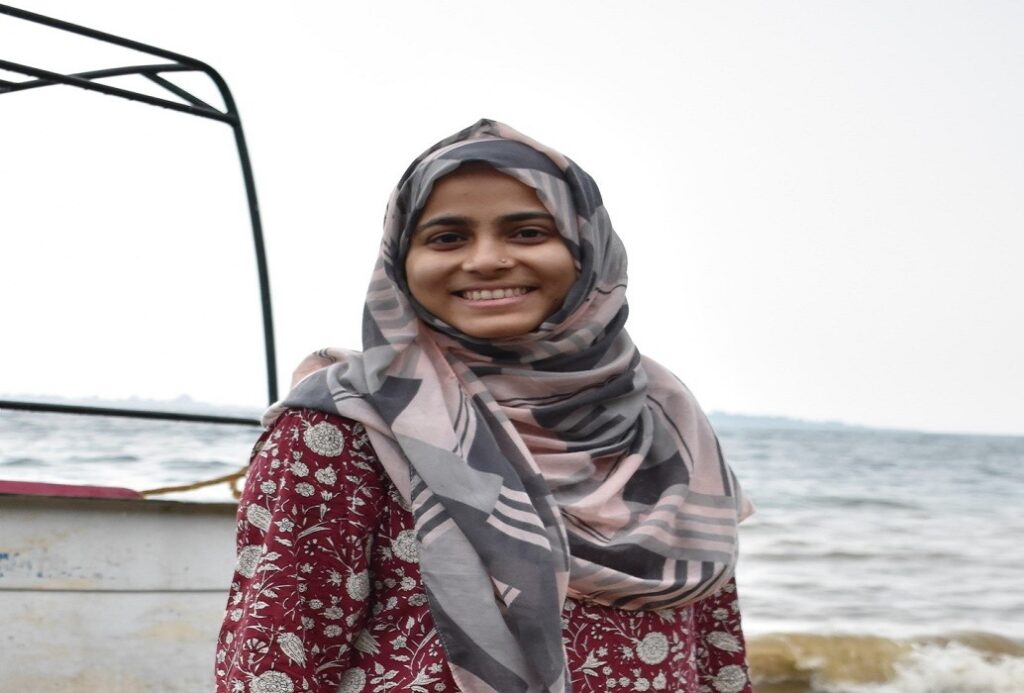
Nusrat Noor has become the first Muslim woman to top the Jharkhand Public Service Commission examination 2022 securing the first rank. She not only cleared the Jharkhand Public Service Commission (JPSC) examination but also secured the highest rank in the list of successful candidates who cleared the coveted examination the result of which was declared two days ago.

Nusrat Noor, 27, applied for the examination a year ago under the medical category soon after application forms were made available on the website. She prepared for the exams with due diligence, appeared for an interview last month, performed brilliantly in the exam and eventually came out with flying colours to become the first Muslim woman to ever top the JPSC examination.


On the empowerment of Muslim women, Nusrat Noor said, “Participation and initiative are key to increasing women’s representation. It doesn’t matter what the result might be, Muslim women should come forward to get into civil services. This is how we can increase our representation and benefit our community and the nation at large.”

The Jharkhand Public Service Commission conducts the state-level civil services examinations to make recruitment for top governmental posts in various departments, including teaching, medical, and healthcare, in the state. It is also responsible to conduct written and verbal examinations to appoint candidates for these prestigious government positions.

On being asked what motivated her to go for civil services, she said, “I noticed that the representation of Muslim women in the government workforce is negligible. It’s high time Muslims got highly educated. Especially our women should be in the forefront when it comes to grabbing the opportunities that come our way from every sector.”

Born and brought up in the Jamshedpur city of Jharkhand, Noor, a mother of one is a medical practitioner with a specialisation in neurology.

After completing her primary education at Sacred Heart Convent School in Jamshedpur, she moved to Ranchi to pursue her degree in medical sciences from the Rajendra Institute of Medical Science.

She completed her degree of MBBS in the year 2020, and consequent to this, she was posted in the same medical college to practice what she refers to as a junior residentship.


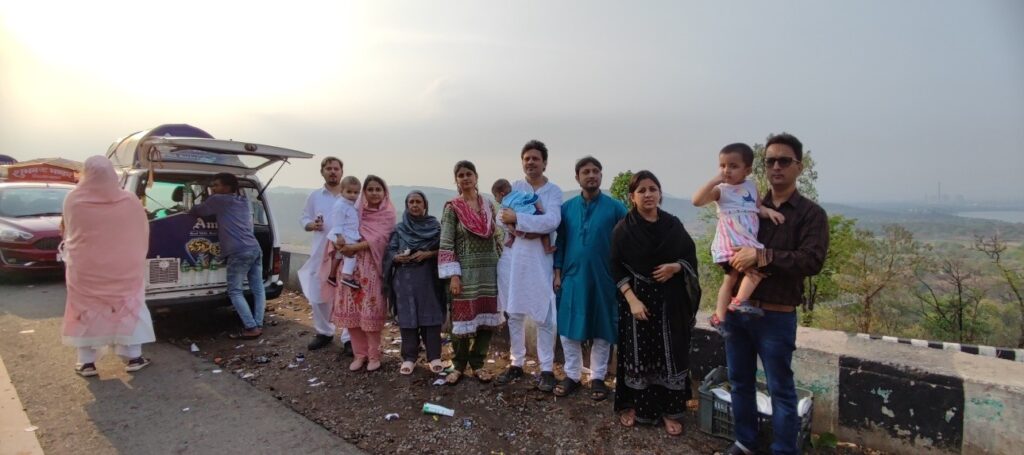
During her residentship, she got married. But her marriage has not come in the way of her studies and her dedication to pursue her goals. She lives in a joint family where, she says, everyone is very supportive. Her in-laws never discouraged her from pursuing her dream and goals.

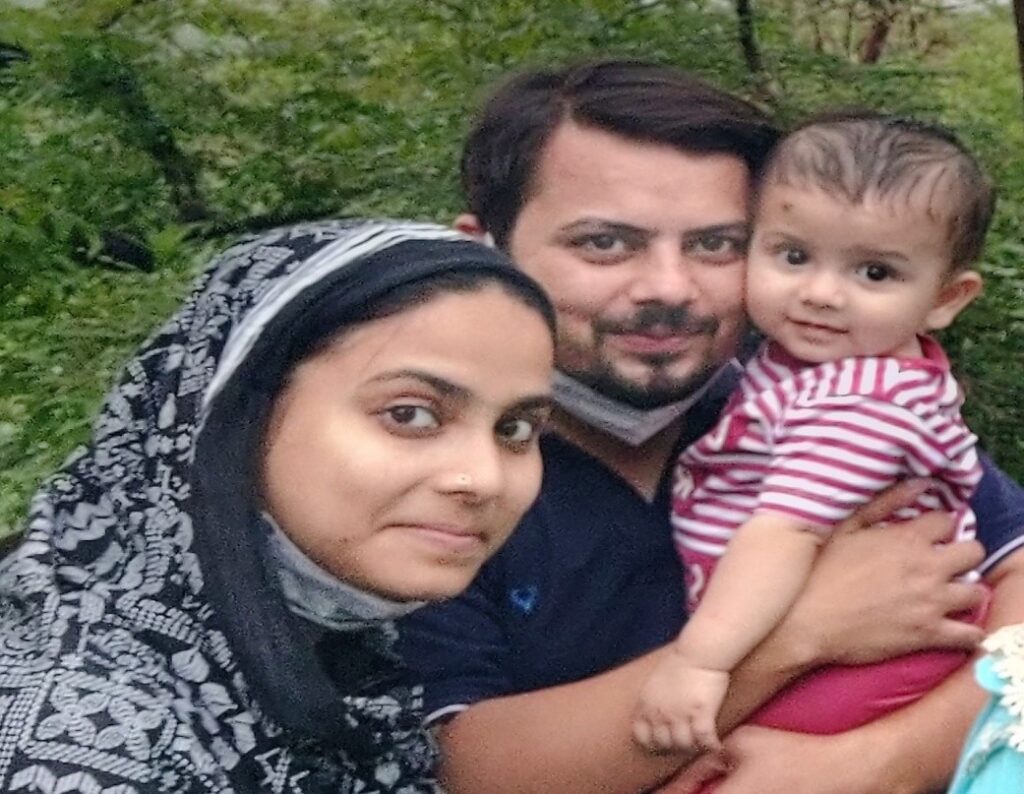
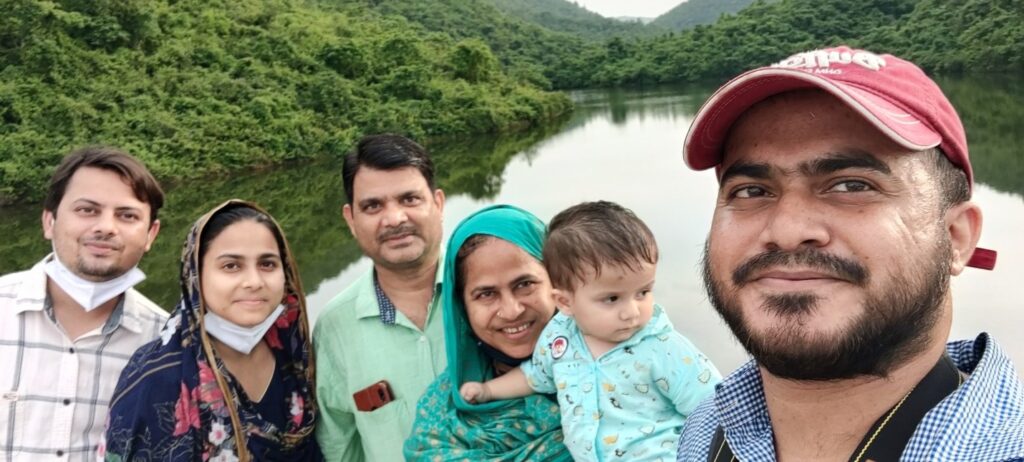
During an outing with her in-laws

She says, “My husband and in-laws are very encouraging and supportive, I am lucky in a way, but this is how it should be in every household. I would say my family is a role model for every other family which treats its daughter-in-law as someone who is no more than a person whose job it is to do all the household chores.”

She looks at her family of more than 10 members as her strength and backbone. “I have a very big family, but it never has been a setback in doing whatever I wanted to do”.

Her husband, Mohammad Umar, is also a doctor and a consultant surgeon. He has always been by her side during her entire journey.


“My husband has always motivated me; he switched roles and helped me in my household chores. He did everything possible to make me achieve my goal, from setting up the timetable for me to study to taking care of our two-year-old child,” she recounts with a sense of gratitude.

With husband Dr. Mohd Umar and son Mohd Saad

Noor’s father, Md. Noor Alam, is in a managerial post at Tata Steel, Jamshedpur while mother Seerat Fatima is a homemaker. She is the youngest in her family. The news of her becoming the first Muslim woman in the entire state to top the JPSC examination makes them proud.

Her elder brother, Mohammad Faisal Noor, is pursuing his research in industrial engineering at the National Institute of Technology, Jamshedpur.

He says, “We were quite confident about her selection, but the news of that she got the first rank was, Alhamdulillah, a pleasant surprise.”

With her elder siblings

The one thing that she will never forget about in her entire journey, right from her school days to becoming a doctor to now cracking the JPSC, is that people and society even in the 21st century don’t consider a woman’s approach to her career as a personal achievement. Society still believes that a woman’s well-being lies in her traditional role as a homemaker.

She recalled the moment she got married, she was told by a friend that getting married ‘on time is an achievement in life and she has achieved it.

She said, “Personal life can be an aspect to achieve the ‘progress’, but there is much more to it. For me, apart from my personal life, achieving goals set by myself counts as progress. Society still needs to evolve to address the needs of today’s generation. My husband’s family, which is mine too, present an example of a ‘just’ and ‘progressive’ society which looks at the woman more than someone whose responsibility is confined to looking after the household.”

Nusrat now aims to start preparing for her post-graduation while taking charge as a medical officer in one of the government hospitals as appointed by the administration. She also looks forward to encouraging and facilitating other women to take up professional and administrative positions.

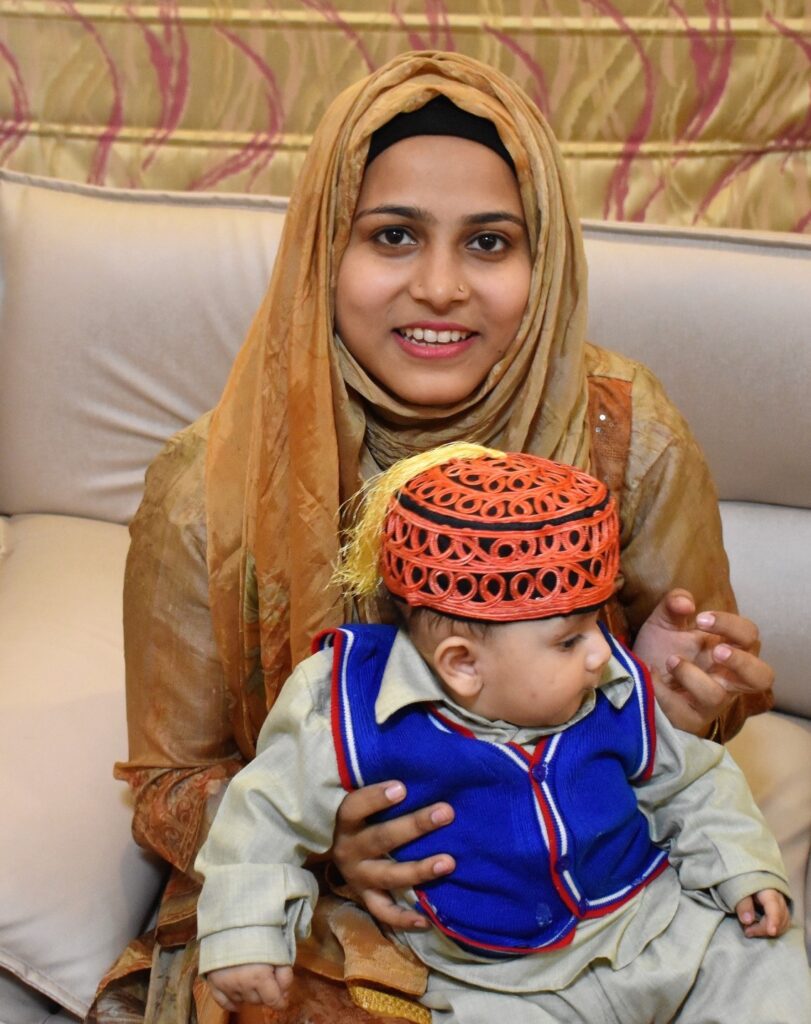
Proud mother of a two-year-old Mohd Saad

“Women should participate more to come into the mainstream. I also make an appeal to families to encourage their daughters to educate themselves as much as possible, as this is the only way to make them economically independent and socially self-sufficient.”

source: http://www.clarionindia.net / Clarion India / Home / by Ghazala Ahmad, Clarion India / December 11th, 2022

‘Born a Muslim: Some Truths about Islam in India’ review: A sense of disillusionment

Agra, UTTAR PRADESH :

Ghazala Wahab explains what it is to be a Muslim, a member of the largest religious minority in India today, and why the community lives in fear as prejudices persist.

Soma Basu reviews Born a Muslim: Some Truths about Islam in India, by  Ghazala Wahab - The Hindu

The book opens with an unputdownable 42-page introduction that delves into the root of fear and despair among Muslims who have embraced the country as theirs but are polarised because of the identity they bear.

The shock and shame of communal riots, orchestrated mass violence and lynchings that served political agendas and led to societal divisions during the past decades hits you, as journalist Ghazala Wahab lays bare instances from her life.

Balanced narrative

She meticulously balances her narrative because she wishes to build a bridge of conversation. While she addresses fellow Muslims asking them to embrace modernity and be an integral part of positive change, she also alerts non-Muslim Indians about their perception of Muslims based on prejudice and hearsay, not facts.

Self-examining her own community members, she admits it never struck her how an average Muslim struggles to stay alive because she looked at things from her position of privilege. As she researched, she found equal opportunity and justice are only concepts and that law- making and law-enforcing agencies act in contradiction to vilify and stigmatise Muslims.

It is a vicious cycle, writes Ghazala, because the post-partition Muslims have remained an irrelevant votebank and sought security in their ghettos perpetuated by illiteracy, poverty and unemployment. The mullahs and clergy have easily taken them under their religious fold to exploit them. The general backwardness of the community has fed into a sense of loss of identity and unmet aspirations for Muslim youth, men and women.

Personal experience

In the mid-80s, Ghazala’s father shifted from their ancestral home in a middle class mohalla to an upscale Hindu-majority neighbourhood in Agra. His successful business and hobnobbing with the powerful, gave him the comfort of keeping his family under a security net. But that was till Agra was engulfed in violence post-kar seva after BJP leader L.K. Advani rolled out his rath yatra from Somnath to Ayodha in October, 1990, and was subsequently arrested. As sporadic violence spread across north India, Ghazala’s family wondered where they would be more secure — in their new neighbourhood or in a Muslim majority insulated mohalla.

Ghazala’s father called his brothers to safety and her mohalla uncles requested them to move back to the old Muslim locality. Ultimately everybody stayed where they were as fury was unleashed on their community everywhere. A young collegian then, Ghazala, her parents and three siblings were at home when an angry mob led by a neighbour shouted slogans, smashed windows, pelted stones and damaged their car. Desperate phone calls for help went unanswered.

When Ghazala’s father went to the police station to enquire about the adult males who were forcibly picked up from the mohalla during search operations, senior officials known to him avoided him. Those he thought had accepted him treated him as nothing more than a Muslim when it came to communal division. For Ghazala’s father it was not about being a victim but it was more about the humiliation, a betrayal of belief.

Turning point

Her family survived the riots but it left a scar. Her parents chose to go silent and it irked Ghazala that a victim should feel ashamed. She saw the same resignation and defeatist attitude when the Babri Masjid was razed. It unnerved her because she sensed it was a turning point not just for her family but for most Indian Muslims.

“Civility was the first casualty, replaced by communal prejudice and demonstrative religion,” she writes.

Many members in her extended family began to draw comfort from religious conservatism. She talks about a cousin who started wearing a headscarf and told her she was more comfortable with her Muslim friends as they didn’t have to pretend with one another, whereas to her Hindu friends she was a validation of their liberal outlook.

The conversation disturbed Ghazala as she never perceived two distinct identities in herself — a Muslim and an Indian. The issue was complex and so were several disparate questions.

Ghazala leans on poignant narration about the average Muslim being confused and scared through examples of those who have hidden their identity and reverted to Hinduism under perceived coercion. “They could never participate as equal partners in the country’s development. Only 2.6 per cent of Muslims are in senior-level jobs and a small number have achieved a reasonable upward mobility,” she writes.

On a positive note, Ghazala says Muslim society is changing. The protests against CAA/NRC in December 2019, she feels, has given rise to an assertive community even though her 1990 experience returned to haunt her in February 2020 when her paternal aunt’s family panicked as a mob reached their northeast Delhi colony. Anger and helplessness resurfaced when her aunt called her for help and her uncle refused to escape or abandon his life’s savings. The sense of fear doesn’t leave, she says.

Born a Muslim: Some Truths about Islam in India ; Ghazala Wahab, Aleph Book Company, ₹999.

soma.basu@thehindu.co.in

source: http://www.thehindu.com / The Hindu / Home> Books. Reviews / by Soma Basu / May 15th, 2021

Unique autograph museum of Hyderabad’s Imtiazuddin

Hyderabad, TELANGANA :

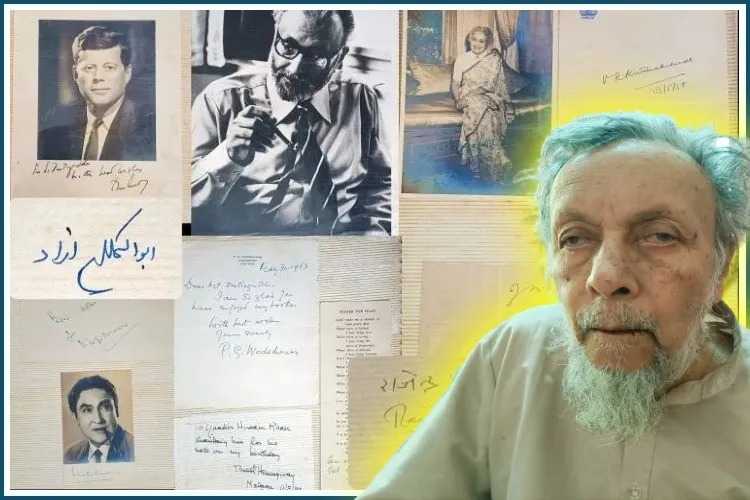
Syed Imtiazuddin with his collection of autographs

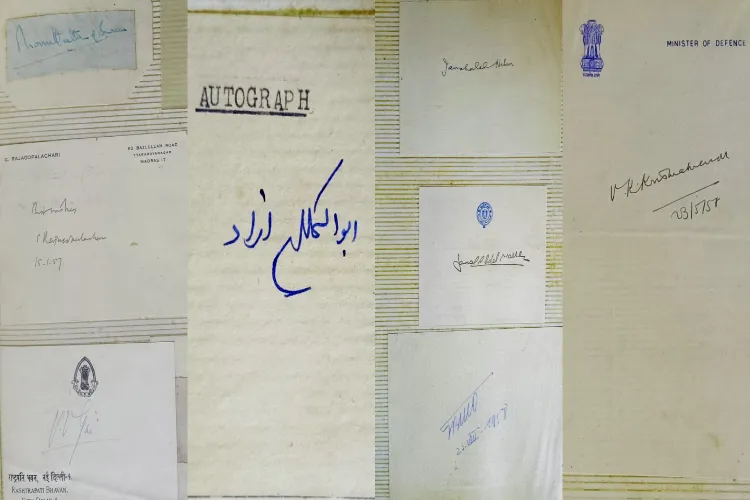
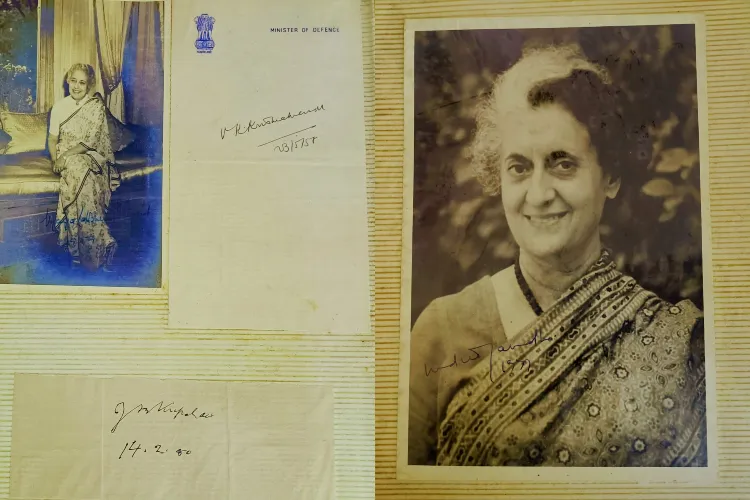
Syed Imtiazuddin of Hyderbad has turned his hobby of collecting autographs of famous personalities into a body of work that is bound to be of great historic value for the future generations.

His collection of autographs of important world and Indian personalities has reached up to 200 so far.

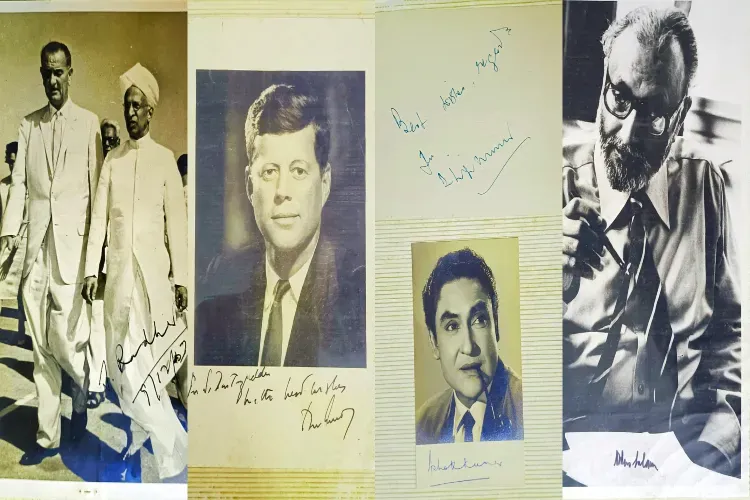
The famous people whose signatures are part of Syed Imtiazuddin’s proud collection include Nobel laureates, politicians, writers and poets of Urdu and English, the heads of state and prime ministers of many countries, and film stars.

His passion for collecting the signatures of important and famous people transcends borders. Syed Imtiazuddin says he had to be patient while waiting for the signatures of famous personalities to whom he wrote letters requesting the same inside India and abroad.

Syed Imtiazuddin narrated an interesting incident from his student days. He was a 7th-grade student at Gandhi Bhavan Middle School, Nampally, Hyderabad. He says it was triggered when he was learning a chapter on India’s renowned Nobel laureate, Physicist-scientist Sir C.V. Raman. Dr. Raman discovered what is now known as the ‘Raman Effect.’

awazthevoice
Dr Rajendra Prasad’s signature in Urdu

When the school teacher was imparting the lesson on the life of Sir C. Raman in the classroom, Imtiaz Ahmed thought of if only he could write to the great scientist. He tried to search for his mailing address with no success.

Finally, he did write to Sir C V Raman and posted it to on the address: Sir CV Raman, Bangalore.’ In the postcard addressed to the scientist, he wrote, ‘I was very impressed when I read about you today and I want your signature.’

To his pleasant surprise, a few days later he received a letter from Sir CV Raman. Dr Raman appreciated his passion.

Syed Imtiazuddin says that this was the first ‘happy and memorable day’ for him and it sparked his passion for getting autographs from celebrities.

After receiving Raman’s reply letter and signature, his happiness knew no end.

awazthevoice
Prime Minister Indira Gandhi’s signature

Syed Imtiazuddin said that he passed the class 10 examination from a famous school – Chadar Ghat High Schoo and graduated from Osmania University.

He worked in the Andhra Pradesh State Electricity Department (APSEB) and simultaneously completed his MBA. He retired as Superintending Engineer in year 2001.

The famous poet of Hyderabad, Shaz Tamkant was Syed Imtiazuddin’s elder brother. Shaz Tamkunat was invited to mushairas in Delhi, Lucknow, and other states of the country

Syed Imtiazuddin says, “When Shaz went to Delhi to participate in Mushaira, he also carried an autograph book with him, in which he obtained the signatures of many well-known poets.”

Seeing this, I also decided to follow him. In late 1957, I wrote to the former President of India Dr. Rajendra Prasad expressing my desire to meet him. I received a reply from the Rashtrapati Bhawan that the President is due to visit Hyderabad in June 1958 and I would come to him there at his residence.”

awazthevoice
A glimpse of Syed Imtiazuddin’s collection

“As the day of my meeting with Dr Rajendra Prasad was approaching, my anxiety knew no bounds. When I got the message that Rajendra Prasad had come to Hyderabad, I reached Hyderabad Resident with my elder brother Shaz Tamkant and met Rajendra Prasad. I was very happy to meet him. Even Rajendra Prasad appreciated my passion. He had already kept his signatures – in Hindi and English – on an expensive paper ready for me.”

The President also penned his signature in Urdu on his request.

Syed Imtiazuddin is fond of Allama Iqbal’s poetry. He is invited for delivering talks in the ‘Mahfil Iqbal Shanahi’ held every Wednesday.

Syed Imtiazuddin obtained the signatures of more than 200 personalities including Lord Mountbatten, the last Viceroy of India and first Governor-General of India.

Apart from them, the forty-second president of the United States, Jimmy Carter, the second president of Egypt, Gamal Abdel Nasser, the former president of Yugoslavia Josip Broz Tito, the Thirty-fifth US President John F. Kennedy, Indonesia’s first President Abdul Rahim Sukarno.

awazthevoice
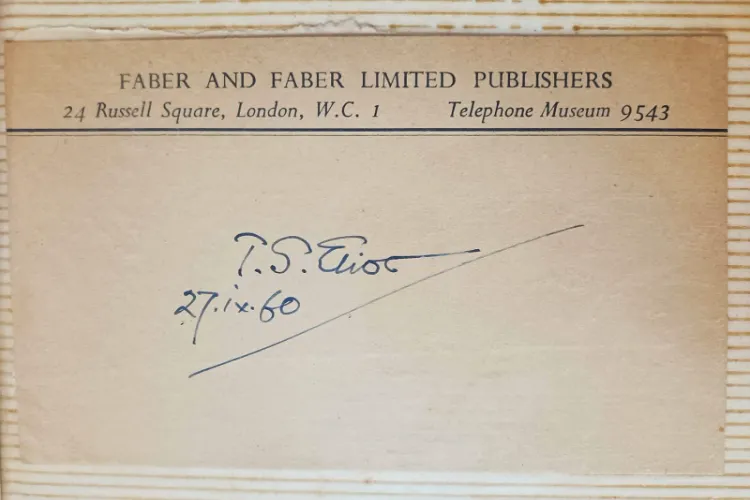
Signature of Writer T S Eliot

Israel’s first Prime Minister David Ben-Gurion, former King Hussein bin Talal of Jordan, famous American actress Elizabeth Taylor, her husband, famous Hollywood actor Richard Burton, Mother Teresa, and Charlton Heston, the hero of the famous American film The Ten Commandments.

Syed Imtiazuddin also obtained signatures from Pakistan’s first Nobel laureate Dr. Abdus Salam. Many of these personalities presented him with their photo as a gift.

Among the Indian leaders’ collection, Syed Imtiazuddin has the signatures of Pandit Jawaharlal Nehru, Indira Gandhi, Dr. Zakir Hussain, Maulana Abul Kalam Azad, Vijaya Lakshmi Pandit, VK Krishna Menon, Moraraji Desai, V. V. Giri, Dr. Sarvapalli Radhakrishnan, Neelam Sanjeeva Reddy.

Syed Imtiazuddin says he feels literature, film, and sports are close to human life and this is the reason why most of his collection relates to personalities from these fields.

He has an unenviable collection of signatures of TS Eliot, American writer John Steinbeck, British mathematician and Nobel laureate Bertrand Russell, Novelist Ernest Hemingway, Dr. AJ Cronin (Scotland), American writer Pearl S. Buck, English writer Aldous Huxley, Josh Malihabadi, Rashid Ahmad Siddiqui, Jigar Moradabadi, Faiz Ahmed Faiz, Khalilur Rahman Azmi, Sohail Azimabadi, Ahmad Nadeem Qasmi, Makhdoom Mohiuddin, Qaratul Ain Haider Krishna Chandra, Rajendra Singh Bedi, Maulana Syed Abul Hasan Ali Nadvi and Maulana Abdul Majid Dariyabadi.

Besides he has the signatures of Bollywood legends Dilip Kumar, Ashok Kumar, Sunil Gavaskar, Sachin Tendulkar, and Amitabh Bachchan.Syed Imtiazuddin said he used to study at an American library near the famous Muazzam Jahi Market in Hyderabad. While going through the book “Who’s Who in America” made him familiar with many top personalities.

Syed Imtiazuddin says success comes only if a person has passion and true dedication to a cause.

source: http://www.awazthevoice.in / Awaz, The Voice / Home> India / by Abdul Rahman Pasha, Hyderabad / by awazthevoice.in / November 26th, 2022

Know Your City: Perfumes made in Chennai for the world

Chennai, TAMILNADU:

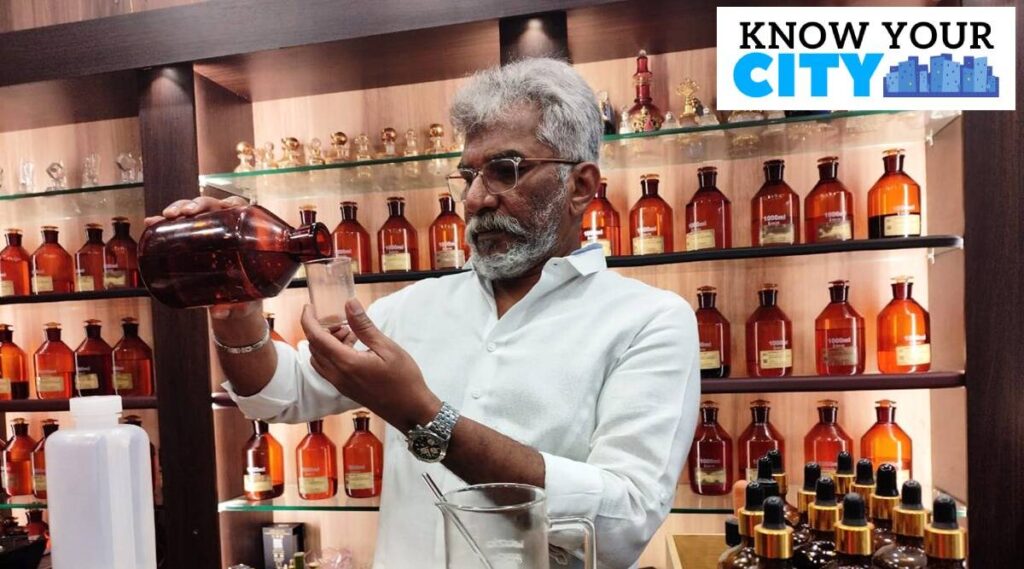
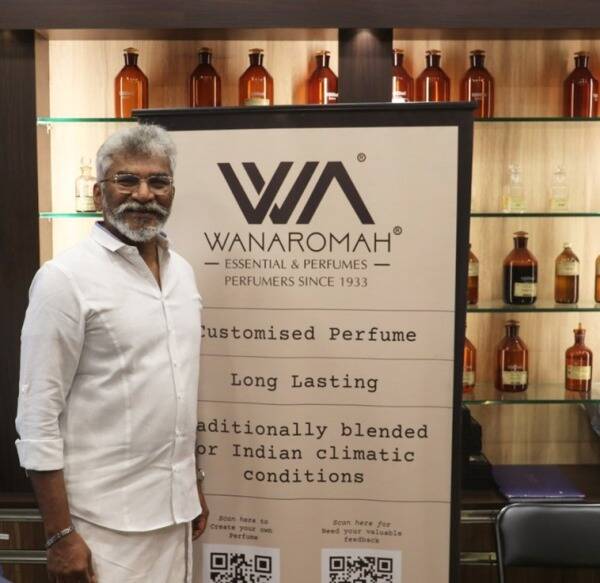
Wanaromah Essential and Perfumes at RK Salai in Chennai has been producing customised perfumes since 1933.

Mohamed Sadik, 56, the proprietor of Wanaromah Essential and Perfumes (Express)

“You can figure out people with the kind of perfume they use,” says Mohamed Sadik, 56, the proprietor of Wanaromah Essential and Perfumes at RK Salai in Chennai, which has been producing customised perfumes since 1933.

“My father Mohamed Hanifa started Wanaromah when he was 18. He was a widely-travelled man interested in aromatic perfumes and so he started this brand. He aimed to make a product here and sell them overseas. He made his first product in his village at Vadakarai, in Thanjavur district. We are a family of five, I am the youngest of five brothers. After completing my graduation, I took over the business here. My brothers are taking care of it overseas. I am the second generation in my family to take care of the business and now my son is also involved and I am helping him in every possible way,” Mohamed says.

Just like there is a difference between wearing a readymade shirt and wearing one stitched by a tailor as per your desire, there is a difference between standard and customised perfumes, according to him. (Express)

Mohamed says people usually associate perfumes with foreign brands and even in the local market, they try to buy those. He terms it as an “infatuation” towards foreign products.

Apart from perfumes, Wanaromah also sells incense sticks and handmade body bars. (Express)

“We can make a better product than any foreign brand. In perfumes, there are two types, one is natural and the other is synthetic. The former has got its natural odour, we cannot bring a fancy fragrance on that. Earlier, when we started here, we were making perfumes for other industries and later we set up our shop here. We started creating fragrances and we work for other companies as well.

Wanaromah’s speciality is that it is tailor-made for each individual. Perfume plays a major role based on your region, and what kind of work you do among other factors. Whenever customers visit our shop, we ask them a few questions and suggest them a perfume as per their lifestyle,” says Mohamed.

“Whatever you eat, you get that in your body odour. Suppose you work outdoors, naturally, you are going to be in a polluted atmosphere and your body odour would not be pleasant so we blend a perfume that would last longer and provide a sense of calmness amid your hectic schedule,” he says.

Mohamed says all the perfumes they blend are to be used on apparels and not directly on the skin. “If you are in a cold region, the perfume lasts longer and in hot places like Chennai, the perfume has to be a bit stronger. So if someone buys something overseas and uses it here, they are not going to get the proper result because the climatic conditions differ.”

Mohamed says people ask their friends and family abroad to bring two things compulsorily; one is chocolate and the other is perfume. (Express)

The proprietor notes that perfumes are made up of more than 25 fragrance families. After analysing various factors of several regions, they decided to blend their perfumes with five fragrance families.

These are ‘oriental/woody’, which is a blend of wood, amber, tobacco and animalic, and is widely used in India as well as West Asian countries. The ‘fresh/aqua’ fragrance has clean bright scents with citric and aquatic notes while ‘floral’ is for spring and evenings. Then there is ‘sweet/fruit’ which is a blend of wild berries and exotic fruit fragrances. Wanaromah’s ‘spicy’ fragrance is made up of pepper, fresh ginger and cinnamon.

“Each fragrance has got its properties. If you are a sports personality, you can use a citrus note, you can use them when you are on a holiday as well. If you are going for a function, you can use oriental notes. Floral and sweet notes are preferred by women,” he says.

Mohamed adds preferences differ by gender and age. “Teenagers prefer berry notes…. If you are in an office, your perfume should be subtle and nice, so we blend it accordingly… For festivals we should be using a different note,” he says.Don’t miss 

Mohamed notes that perfume is not just another ordinary product but it is linked intrinsically to our life. “You can think of your loved ones even in their absence by using a perfume which they had used or a perfume which you used that was liked by them. Perfume plays a major role in our life,” he says.

Mentioning an incident that happened while he was travelling abroad, Mohammad says in an area where a thick labour population was located, he noticed the smell of a jasmine fragrant perfume. While he enquired, the labourers told him that these were perfumes used by their wives and since they would be able to go back to their hometowns only after the end of their contract period and they used that fragrance to remember their wives.

Mohamed, curiosly, mentions that several people approach him to suggest a perfume that would attract the opposite gender.

“Perfume plays a major role in intimacy. It is like a time machine which helps you to remember beautiful moments that happened in your life. I had several requests from customers to blend a perfume similar to the one their father or mother had used so that they can feel them in their home even in their absence,” he adds.

Mohamed says people ask their friends and family abroad to bring two things compulsorily; one is chocolate and the other is perfume. Wanaromah is proud that it is making people take their favourite perfume abroad.

“A product made in India, in Tamil Nadu, is going global and I can’t be more proud than that. ‘Made in Tamil Nadu for the world’ was my father’s motto and we are going to realise it,” he says.

Mohamed also stresses the importance of using more Indian products that will boost the economy. He claims people nowadays are attracted more towards foreign brands without realising that Indians were the pioneers in producing aromatic fragrances. He says their attempt to spread more awareness about local products is an act of reviving history.

At Wanaromah, the price of the perfumes ranges from Rs 2,000 for 130 millilitres up to lakhs of rupees. When asked if they have come across requests to lower their price, Mohamed says there is no space for bargaining in their store as it spoils the time of both parties. Also, he doesn’t believe in franchising his business.

“Quality is everything to me. The business is very personally involved with the family members, and hence even in our stores in Indonesia and Singapore, my cousins are taking care of them. Secondly, we can make a perfume with all these ingredients and sell them at a cheaper price but we know when we make that we are cheating our customers, and I will never do that.

We handpick the best quality raw materials and prepare the pure blend. We don’t degrade our concentration level. When the customers use them and tell us that they have never experienced this kind of a product, it sort of gives us satisfaction which cannot be achieved by anything. So I tell my customers that I offer you the best service and the product price range will be accordingly,” he says.

Apart from perfumes, Wanaromah also sells incense sticks and handmade body bars.

Mohamed says he is thinking about expanding the business further but it would take some time.

source: http://www.indianexpress.com / The Indian Express / Home> Cities> Chennai> Know Your City / by Janardhan Koushik / Chennai – November 19th, 2022

After halt of 2 years, country’s largest Islamic congregation commences in Bhopal

Bhopal, MADHYA PRADESH :

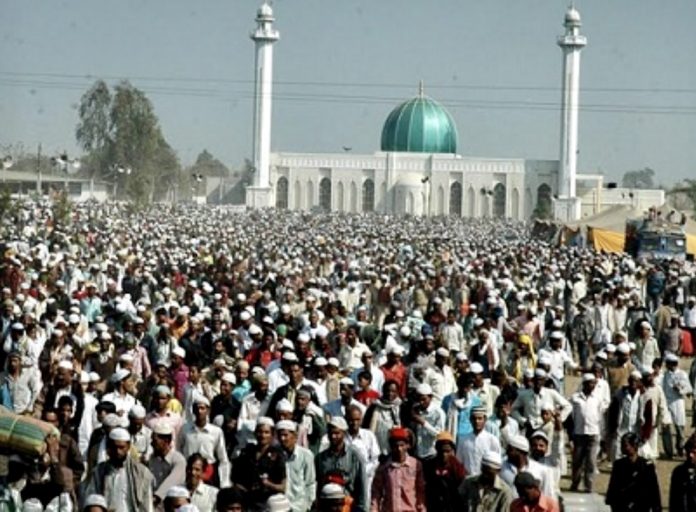
Picture of the Alami Tablighi Ijmeta held in 2019. | Picture: Tablighi News 365

Held for the first time in 1948, the Bhopal Ijtema is known for its massive participation of people and for promotion of peace and inclusivity.

Bhopal (Madhya Pradesh) :

The Alami Tabhligi Ijtema, an annual Islamic congregation held every year in Madhya Pradesh commenced today in the outskirts of the capital Bhopal. The four-day religious event is the third-largest Islamic congregation globally. The first such congregation was held 73 years ago. The event is taking place after two years of halt caused by the Covid-19 pandemic. 

The congregation is not only popular for being the largest religious gathering in India but is also well known for the promotion of peace and inclusivity. 

For the first time, international participants will not be in attendance at the congregation. 

According to a report in Dainik Bhaskar, the congregation will be held on 300 acres of land. “20,000 volunteers will handle management. More than 17,000 taps are installed for ablution only. 7 crore litres of water will be consumed every day for drinking, ablution, and cleansing. Non-veg food is banned due to Lumpi Virus. There will be 45 parking slots and 7000 dustbins. 5000 volunteers will take care of the cleaning. 5 fire brigades and 6 fire bullets will be present there. 2000 policemen will manage security and 500 will handle the traffic management. There will be 3 hospitals of 10 beds each as well,” the report said. 

History of the congregation
Shams Ur Rehman Alavi, a prominent journalist and former editor with Hindustan Times told TwoCircles.net that even though this grand congregation of Muslims is a purely religious event but in Bhopal, it means much more. “It has a unique relationship with the city and its inhabitants irrespective of their beliefs. Come winter and there is a buzz about the dates of Ijtima. Though such gatherings are now held in different cities across the country, the Ijtima here has an altogether different ‘connect’ with the people,” he said. 

Shams Ur Rehman Alavi said that after the independence of the country, the first congregation was held in Bhopal in 1948 at Masjid Shakoor Khan. 

It is said that the first congregation was a small gathering. Later, it was shifted to Taajul Masajid and became a big event. In 2002, it was shifted to outside the city in Eintkhedi as the gathering had become too big by then with a participation of 5 lakh people. Today, nearly 1.5 people congregate at the event. “People still get nostalgic when it was held in Tajul Masajid for over half a century. In those days, the temporary market that came to be associated with the gathering gave the congregation another meaning for Bhopalites,” Shams Ur Rehman Alavi said. 

Preparations run for months
The preparations for the congregation began several months ago. Many youths from the nearby areas volunteer to help with the preparations. “This is farmland. It is very difficult to clean it and make it suitable for the congregation. We made drainage to discharge water from the farms with the help of a generator to dry the land sooner,” Abuzer, a volunteer, told TwoCircles.net. 

Abuzer said all volunteer work is done by Muslims. “People willingly come here and do labour without demanding charges. We do it for the sake of Allah,” he said. 

Atiq Ul Islam is a member of the organizing team that is looking after the preparations. He told TwoCircles.net that the 300 acres of farmland where the congregation is taking place is lent free by locals, which include both Muslims and non-Muslims. 

“Non-Muslims have never refused to lend their lands to this congregation. We organize this Ijtima to please God and send a message to the world to follow God’s commandments which is to do good and refrain from evil,” Atiq Ul Islam said. 

He said that the congregation is held to send a message of peace. “Every faithful attends this Ijtima,” he said. 

Atiq Ul Islam informed that Muslim volunteers also take responsibility for security and traffic management. “The administration plays a supporting role by keeping an overall eye on things. Rest everything is managed by our volunteers,” he said. 

Akram Ahmed Khan is a resident of Bhopal who has been attending the congregation since childhood. For many years, he has volunteered at the event.  

Akram said that the congregation has a cross-functional team that has a dedicated system including a security team, transportation and commute team, road management (traffic management) team, parking team, and emergency and procurement (medical team). “The management skills I learned here have helped me in my professional life as well,” Akram Ahmed said. 

For effective disposal of waste, the management collaborates with Bhopal Municipal Corporation (BMC). For its zero-waste, the congregation has earned laurels.

Huneza Khan is a student and a budding journalist from Bhopal, Madhya Pradesh. She tweets  @KhanHuneza

source: http://www.twocircles.net / TwoCircles.net / Home> Lead Story / by Huneza Khan, TwoCircles.net / November 18th, 2022

Huge Loss To Civil Society In Bengaluru: Activist Firdouse Khan Passes Away

Bengaluru, KARNATAKA :

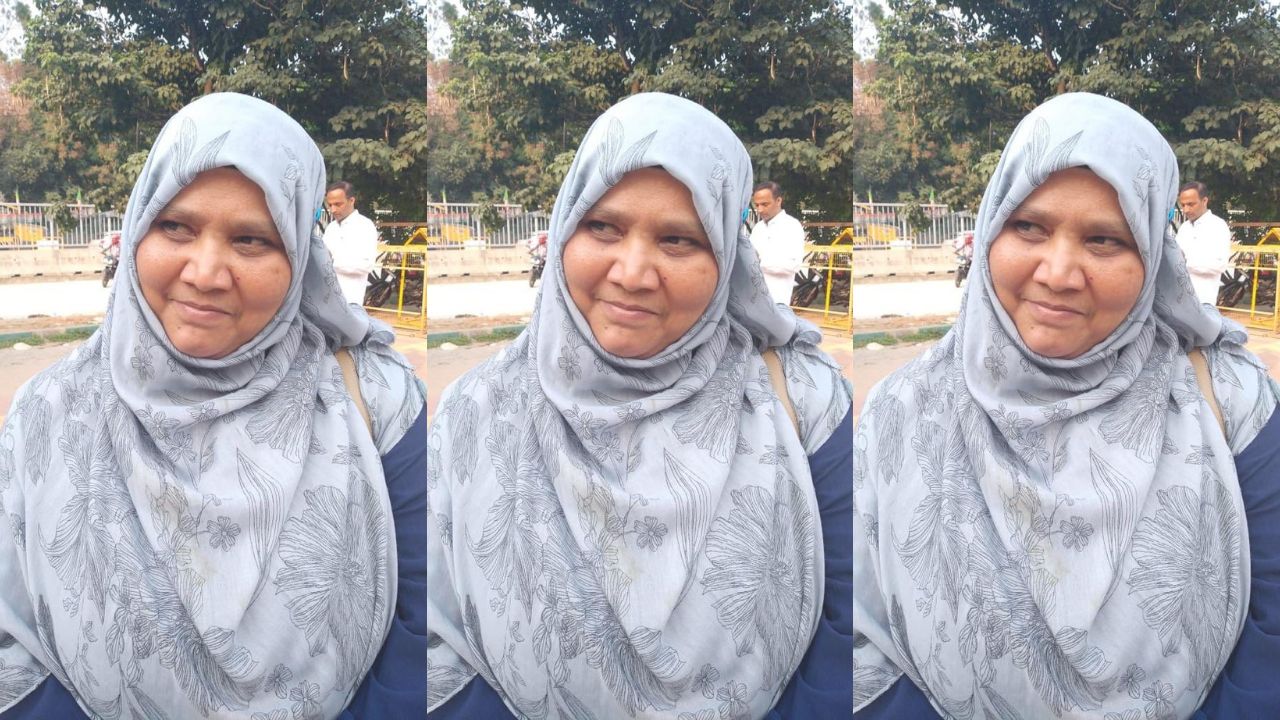
Firdouse Khan, a prominent Muslim activist passed away at her residence on Friday morning in Bengaluru.

Firdouse was the secretary and consultant at the city-based Forward Trust, a family and marital counselling organisation. She was actively involved with Bahutva Karnataka, Communal Friendship Forum, Jamaat-e-Islami Hind and other civic organisations.

Speaking of the demise of Firdous, Bahutva Karnataka activist Adv Vinay Sreenivas told The Cognate, “She cared a lot about society and was a person like who exhibited a lot of goodness. It was her dream to live in a society which is in harmony.”

The 52-year-old previously held the post of manager at HCL. She later resigned from the post and was involved in social activities. She took part in several protests, including the anti CAA/NRC protests. The activist regularly organised legal literacy workshops.

“Firdouse was interested in building bridges across people, faiths, and like, there are different communities. She stayed in touch with everybody and was like a very spirited person. Her life was committed to support others and she did what she could do to ease somebody’s pain,” Vinay said.

“A personification of the kind of values we want in a fraternity, Firdous was a believer and she had made connections with people from other faiths. It’s just it’s a very big loss for the civil society in Bangalore because we have very few people like this.”

The deceased is survived by her husband Waseem Khan, one son and a daughter.

source: http://www.thecognate.com / The Cognate / Home> News / by Rabia Shireen / November 11th, 2022

Jamaat-e-Islami Hind President mourns demise of renowned economist Dr Nejatullah Siddiqui

Gorakhpur / Aligarh /UTTAR PRADESH / U.S.A. :

New Delhi : 

Jamaat-e-Islami Hind (JIH) President Syed Sadatullah Husaini has mourned the passing away of renowned economist Dr. Nejatullah Siddiqui

In a media statement, the JIH President said that Dr. Nejatullah Siddiqui’s contribution to the field of Islamic economics was unparalleled and he pioneered the concept of Islamic banking and laid the foundations of what is currently a thriving multi-billion-dollar industry.

Mr.Husaini held that Dr. Nejatullah was a very versatile personality dedicated to learning and development and, despite living abroad, he contributed intellectually to many forums and institutions in India. Calling his demise, a great loss to the Muslim world and the Islamic Movement, Mr.Husaini said, “his passing away leaves a great vacuum in the field of Islamic economics and finance.”

Offering his heartfelt condolences to the bereaved family members, the JIH leader said, “May Allah forgive him, grant him the highest position in Paradise and bestow patience upon his family members.”

Dr. Mohammad Nejatullah Siddiqui, an Indian economist, was awarded the King Faisal International Prize (Saudi Arabia) for Islamic Studies in 1982. Born in India in 1931, he was educated at Aligarh Muslim University as well as Rampur and Azamgarh.

He served as Associate Professor of economics and Professor of Islamic studies at the Aligarh Muslim University and as Professor of economics at the King Abdul Aziz University, Jeddah, Saudi Arabia, in its Center for Research in Islamic Economics.

He later became a Fellow at the Center for Near Eastern Studies at the University of California, Los Angeles (USA), and after that a visiting scholar at the Islamic Research and Training Institute, Islamic Development Bank, Jeddah.

He was a prolific writer in Urdu and English with 63 works in 177 publications and 1301 library holdings to his credit. Several of his works have been translated into Arabic, Persian, Turkish, Indonesian, Malaysian, and Thai languages. He was also the recipient of the Shah Waliullah Award in New Delhi for contributions to Islamic Economics.

Some of his notable books are Recent Theories of Profit: A Critical Examination, Economic Enterprise in Islam, Muslim Economic Thinking, Banking Without Interest, Partnership and profit-sharing in Islamic law, Insurance in an Islamic Economy, Teaching Economics from in Islamic Perspective, Role of the State in Islamic Economy, Dialogue in Islamic Economics, and Islam’s View on Property.

source: http://www.indiatomorrow.net / India Tomorrow / Home> National Interest / November 12th, 2022

Udupi Fire Service Officer Meer Mohammed Ghouse receives President’s Medal for Meritorious Service

Udupi, KARNATAKA:

Meer Mohammed Ghouse, assistant fire station officer, Udupi received the President’s medal for his meritorious service from Karnataka state governor Thawar Chand Gehlot at the Raj Bhavan, Bengaluru on November 7.

Ghouse had joined the fire service in 1992.

He had received promotions during his service period of the last 30 years and is serving as an assistant station officer at present.

The department has presented cash prizes to him 33 times and two certificates of excellence.

He was felicitated with the chief minister’s gold medal in 2012.

source: http://www.daijiworld.com / DaijiWorld.com / Home> Top Stories / by Daijiworld Media Network – Udupi (JS/EP) (headline edited) / November 09th, 2022

Bengaluru: Man leaves gemstone biz, strikes gold in growing tropical fruit plants

Bengaluru, KARNATAKA :

The 52-year-old Devanahalli farmer grows Avocados, Macadamia nuts, Rambutan, Bush Orange, Water Apple, Star Fruit and Lychee Thai Guava among others in his one-acre nursery.

Avocados. (Photo|Associated Press)

Bengaluru :

Eleven years ago, Mohammed Adil bid adieu to his 20-year-old gemstone business and turned to his interest in growing tropical fruit plants full-time. The decision helped him reap rich dividends as now his turnover by selling exotic saplings in Bengaluru is over Rs 1 crore annually.

The 52-year-old Devanahalli farmer grows Avocados, Macadamia nuts, Rambutan, Bush Orange, Water Apple, Star Fruit and Lychee Thai Guava among others in his one-acre nursery.

“I had 4 acres of land where I had many Jamun trees. But, since the yield was less, I searched for exotic fruit trees and my journey as a farmer began 11 years ago. I converted one acre into a nursery where I grew all the mother saplings. In Avocado alone, I have 13 types with four types named after Bengaluru nursery,” said Adil.

In the last five years, he has sold over lakh Avocado saplings. “This tropical fruit is easy to grow with zero maintenance and the yield is just in three years. All one has to do is ensure good care for the first two years,”  said Adil.

source: http://www.newindianexpress.com / The New Indian Express / Home> Cities> Bengaluru / by Mohammed Yacoob , Express News Service / November 04th, 2022