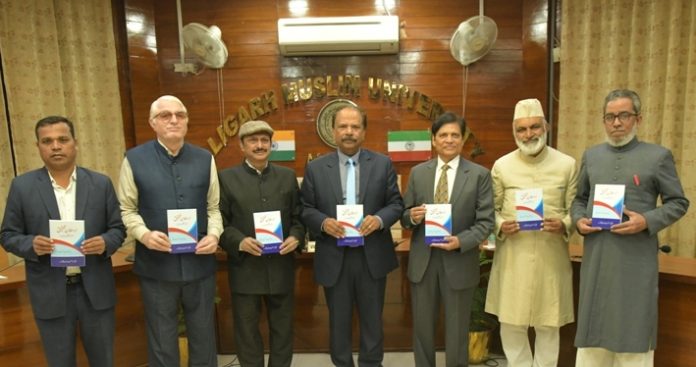
Prof Mohd Gulrez with Prof AR Kidwai, Prof Tariq Chahtari, Prof Siraj Ajmali and others releasing the book of Prof Zia ur Rahman
Aligarh :
Professor Mohammad Gulrez, Vice Chancellor, Aligarh Muslim University released “Armughan-e-Tehqeeq”, a book written by noted Urdu writer and critic, Professor Ziaur Rehman Siddiqui, Department of Urdu, Aligarh Muslim University.
Prof AR Kidwai, Director, Centre for Quranic Studies, AMU, Professor Tariq Chhatari, Professor Mushtaq Ahmed Zargar, Professor Syed Sirajuddin Ajmali and Mr. Tahir H. Pathan were present on the occasion.
Professor Ziaur Rehman Siddiqui has published 20 books, including the History of Urdu Literature, Urdu-Hindi Dictionary and translation of Ruskin Bond’s stories in Urdu, etc.
source: http://www.radiancenews.com / Radiance News / Home> Review Article> Book Review>Latest News / by Radiance News Bureau / March 06th, 2024
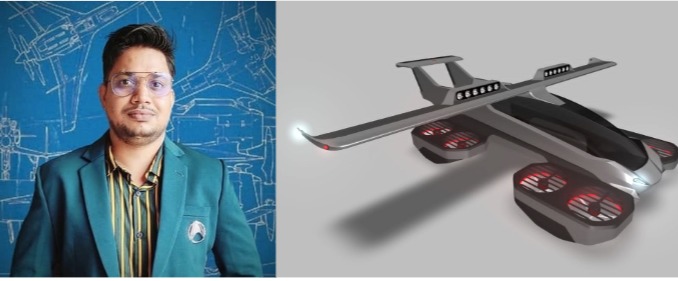
In a groundbreaking revelation, Roxtern Aerospace has introduced a paradigm-shift flying supercar, harnessing the cutting-edge power of hydrogen fuel cell technology. This visionary aircraft, conceptualized and brought to life under the inventive leadership of CEO and Chief Inventor Mohammad Furkan Shoaib, is poised to redefine the aviation industry with its exceptional blend of efficiency, speed, and safety.
Mohammad Furkan shared exciting news from Roxtern Aerospace about the unveiling of their innovative Flying Supercar powered by hydrogen fuel cell technology. A patent has been published for this supercar, which promises quieter take-offs, faster speeds, improved safety, and zero emissions.
Specifications Overview
The Roxtern Aerospace flying supercar stands as a pinnacle of innovation, tailored for urban air mobility and intercity flights. With a two-passenger payload capacity, this sleek vehicle spans 10.5 meters in length, flaunts an 11-meter wingspan, and reaches a height of 2.3 meters. Boasting a maximum takeoff weight of 1450 kg and an empty weight of 1250 kg, the flying supercar achieves a remarkable endurance of 100 minutes, propelling itself at speeds of up to 300 km/h and covering a substantial range of 500 km.
Propulsion System
The heart of this marvel lies in Roxtern Aerospace’s unwavering commitment to efficiency and innovation. Eight propellers, strategically mounted for vertical takeoff and landing, not only minimize propeller noise for discreet take-offs and landings but also reduce disc loading and enhance hovering efficiency. During horizontal flight, a sophisticated electric jet engine comprising 12 units ensures higher forward flight speed and efficiency, making it an optimal choice for swift intercity travel.
Safety Features
Roxtern Aerospace’s flying supercar distinguishes itself with a comprehensive safety system. Multiple motors and propellers facilitate safe vertical takeoff and landing, ensuring a secure descent in the event of propeller or motor failure. Simultaneously, multiple electric jet engines engage during cruise flight, providing redundancy in case of engine failure, elevating the overall safety profile of the aircraft.
To further fortify safety, multiple hydrogen fuel cells power the aircraft, offering redundancy in case of fuel cell failure. The incorporation of multiple batteries acts as a fail-safe mechanism, ensuring a secure landing in the event of a complete fuel cell system failure.
Additional Safety Measures
In a testament to safety innovation, Roxtern Aerospace has incorporated features to mitigate risks during unforeseen circumstances. Parachutes, seamlessly integrated and ready to deploy in the event of multiple motor and propeller failures, guarantee a safe descent to the ground.
Furthermore, strategically placed airbags within the aircraft are designed to eject and reduce crash forces during emergency landings on both solid ground and water surfaces. This additional layer of safety underscores Roxtern Aerospace’s unwavering commitment to passenger well-being and accident prevention.
The unveiling of Roxtern Aerospace’s flying supercar, spearheaded by Shoaib’s inventive leadership, signifies a pivotal shift in the aerospace industry. By merging cutting-edge technology with an unyielding commitment to safety, this aircraft emerges as a key player in shaping the future of urban air mobility and intercity travel.
Earlier in September 2021, the world was introduced to Asia’s first hybrid flying car, developed by Vinata Aeromobility. The innovator behind Asia’s first hybrid flying car, Mohammed Furkan Shoaib, was the chief technology officer of Vinata Aeromibility, a start-up based in Chennai.
Furkan, from Kannauj (Kanpur) Uttar Pradesh, is an Indian inventor, an aeronautical engineer as well as a certified UAV pilot. He is an expert in Aerospace Design and UAV Engineering. He has a passion for making advanced aircraft and UAVs. He also has experience in the research and development of UAVs and aircraft.
source: http://www.radiancenews.com / Radiance News / Home> Focus> Markers of Excellence / by Raheem Khan / February 19th, 2024
Dr. Mohd. Umar Farukh, Post-Doctoral Fellow in the Department of Commerce, Aligarh Muslim University (AMU), has been conferred the Best Paper Award at the Kathmandu International Conference on “Innovative Practices for Accelerated Growth in Commerce, Management, Humanities, Science & Technology”. He is conducting his research under the supervision of Professor Nawab Ali Khan.
This recognition was awarded for Dr. Farukh’s research paper titled “FinTech Revolution in Rural India: A Study of Digital Financial Inclusion in Western Uttar Pradesh”, presented during the conference’s Online Technical Sessions.
Dr. Farukh’s study explores the transformative role of financial technology in reshaping the rural economy of Western Uttar Pradesh. It highlights how innovations such as mobile banking, UPI platforms, and Aadhaar-enabled payment systems have expanded access to formal financial services for previously unbanked and under-banked populations.
While acknowledging persistent challenges including digital illiteracy, infrastructural constraints, and cybersecurity concerns, the study underscores the impact of increasing smartphone penetration and government-led initiatives such as the Pradhan Mantri Jan Dhan Yojana in driving digital financial inclusion.
Congratulating Dr. Farukh on his achievement, Professor Mohd. Asif Khan, Chairman, Department of Commerce and Dean, Faculty of Commerce, remarked, “This recognition brings pride to the and the University. It is a testament to the quality of research being carried out at AMU.”
source: http://www.radiancenews.com / Radiance News / Home> Pride of the Nation> Awards> Latest News> Research / by Radiance News Bureau / July 08th, 2025
Researchers at the Interdisciplinary Biotechnology Unit of Aligarh Muslim University have identified a new multidrug-resistant bacterial genome in wastewater flowing through Aligarh city, raising concerns over the growing threat of antibiotic resistance in densely populated urban areas.
The findings, published in the April edition of the scientific journal ‘Molecular Biology Reports’, are based on a long-term study by a team of scientists led by Asad Ullah Khan, Shamsi Khalid and Absar Talat, who have been tracking the evolution of antibiotic resistance genes (ARGs) for over a decade.
According to the study, genome sequencing of a bacterial isolate, identified as ‘AK 633’ from a major city drain revealed the presence of a rare “mosaic plasmid” carrying the NDM-7 gene, which is associated with resistance to multiple antibiotics.
In microbiology, plasmids are small DNA molecules inside bacteria that can transfer genetic material, including drug-resistance traits, from one bacterium to another. A “mosaic plasmid” refers to a plasmid formed through genetic recombination, enabling it to carry resistance traits from different bacterial sources.
The researchers said the NDM-7 gene belongs to the New Delhi Metallo-beta-lactamase (NDM) family of resistance genes, which make bacteria resistant even to “last-resort antibiotics” such as carbapenems that are often used when other antibiotics fail.
The study noted that the sequencing of AK 633 pointed to the role of the plasmid ‘p1550’ in the possible global spread of high-risk antibiotic-resistant bacterial clones.
Talking to PTI, researcher Asad Ullah Khan said the findings underscore the urgent need for a wider national surveillance and awareness programme to monitor and contain the growing menace of drug-resistant bacterial genomes.
He said antibiotic resistance has emerged as a major public health challenge worldwide and pointed to untreated waste disposal, particularly hospital waste, and poor drainage management as important contributing factors.
Khan also stressed the need for vigilance during drain-cleaning operations in urban areas.
“Very often after drains are cleaned, the sludge is left on the roadside for long periods instead of being immediately removed. Such practices can contribute to the spread of resistant organisms,” he said.
According to the researchers, genotypic analysis — the study of the genetic composition of bacterial isolates — is essential to understand how resistance genes spread between bacteria in community and hospital settings.
Khan said at least 94 variants of NDM genes have so far been identified globally, many of which are increasingly being found both in hospitals and in the community.
“These are among the main causes of resistance against last-resort antibiotics,” he said.
The researchers noted that while similar work is being carried out in a limited number of laboratories in India, a much larger scientific and public health effort is needed to combat the growing threat posed by multidrug-resistant bacterial genomes.
source: http://www.english.varthabharati.in / Vartha Bharati / Home> India / by Musthafa / May 20th, 2026
The book reads more like a collection of anecdotes
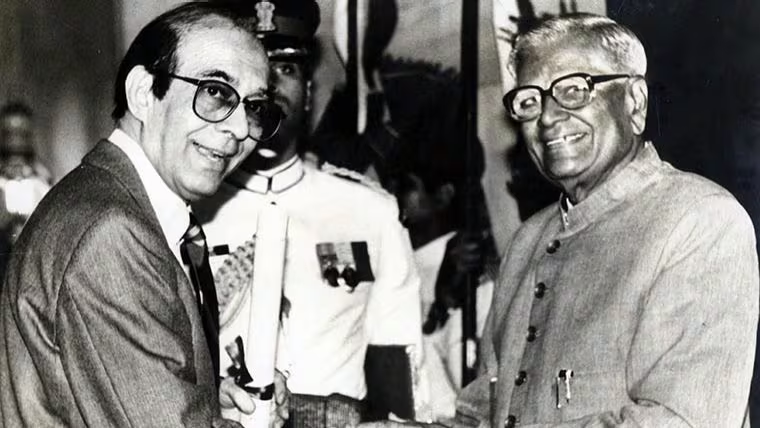
Nation’s pride: Talat Mahmood receiving Padma Bhushan from president R. Venkataraman in 1992 | P. Musthafa
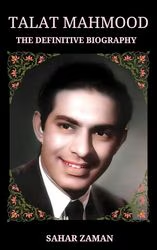
To encapsulate the life of a man often described the ‘King of Ghazals’, though he was much more than that, is no easy task. Just for attempting that, Sahar Zaman deserves applause.
” Mahmood’s musical life was a rich amalgamation of traditions and languages “
Talat Mahmood, born in Lucknow and trained at what was then the Marris College of Music (now Bhatkhande Sanskriti Vishwavidyalaya) was a singer unlike any other. His natural velvet voice bore a slight quiver. It is a quiver which singers take years to cultivate. Musically termed vibrato, this quick and subtle change of voice between notes which are pitched very closely conveys emotions more powerfully than lyrics. When used without dedicated cultivation, a vibrato sounds contrived and the unevenness of breath can be made out by the trained ear; but when it comes naturally, it is as smooth as the wax and wane of emotion. Yet, in his early years in Mumbai, Mahmood strove to hide this unique quality, attempting often to sing in the nasal tones of his idol K.L. Saigal. This would not last long as Anil Biswas, a composer he had worked with for long, angrily walked out of a recording studio asking Mahmood to return only when the real Talat was found.
Ghazals came first to Mahmood because of his affinity with Urdu, and also because of the cultural bearings at home. His father, Manzoor Mahmood, who was a member of the Indian Medical Mission to Ottoman, would often sing to pep up his fellow travellers, while his sisters were flawless renderers of the nath (songs in praise of the Prophet), and his elder brother, Kamal, too, had a rich singing voice. While everyone in the family had strong voices with good throws, Mahmood’s was tuned differently. It was far gentler, almost like a dewdrop caressing a rosebud. It was the kind of voice that could dull the impact of the unkindest of blows. In the 2022 release Gangubai Kathiawadi, for instance, when the lead character learns of being sold to a brothel by her boyfriend, there is a snippet of a song that plays in the background. Mahmood’s voice is like a gentle nuzzle that softens the harsh truth.
Pathos was the most marked emotion of Mahmood’s voice. It was the embodiment of a disembodied, deep sadness. No wonder then that ‘Tragedy King’Dilip Kumar spoke of him as the ‘true musical speaker of my soul’.
Mahmood’s musical life was a rich amalgamation of traditions and languages. Under the name Tapan Kumar, he was a leading voice of the modern Bengal Music movement in which lyrics became as important as the music. He sang in 16 languages including Malayalam, Tamil and Kannada. And while you can close your eyes and imagine him most readily as a dejected Dilip Kumar pictured behind gauzy, fluttering curtains singing ‘Shaam-e-Gham ki qasam’ (On the promise of this sadness soaked evening), close them for some more time and you will just as easily picture him as a boyish Raj Kapoor singing ‘Main dil hun ek armaan bhara’ (I am a heart full of desires), a song that lends itself most readily to the waltz.
As a singer he had many firsts to his name, including being the pioneer of world tours. His pleasant face (which incidentally is also the meaning of Talat) made him a singing-actor and he also dabbled in composition. To audiences in the USA, he was introduced as the Frank Sinatra of India. He became a recognised voice, courtesy All India Radio, at just the age of 16. The book records a delightful incident in which the young Mahmood was accosted by a group of girls in Lucknow to sing as he cycled his way to his music college. Among that gaggle of fans was Qurratulain Hyder, who would go on to become a famed Urdu writer.
He was also a man deeply devoted to the larger cause of his art. He raised his voice for the payment of royalties to singers and also became a part of programmes to raise funds for senior, out-of-work artists. He joyfully gave away songs to Mukesh when he was going through a rough patch. His delight in singing for troops and in encouraging new talent all made him a perfect gentleman, a word often used in the book to describe him.
Biographies can never be divorced from the times that their subjects lived in. Thus, we read in bits about the decline of the film industry in Kolkata after the partition of Bengal, the government’s press for the Bhoodan movement, for which Mahmood sang; the start of recordings in sound-proof rooms; the introduction of multi-instrument orchestra for playback singing; and the rise of version songs. We also read of how the Partition tore apart Mahmood’s family. In a particularly poignant recollection, his father asked his elder son who would water the plants in the courtyard if he left for Pakistan (he did anyway).
The book at places digresses from a linear telling of Mahmood’s story and moves to talking about other stars of the time. This could appear jarring to some, but it is perhaps inevitable given that Mahmood’s journey was intertwined with those of others. One example being that of the actor Shyam, whose death resulting from an accident on a film set is talked about in some detail, to later merge it with the fact that his last three songs, sung by Mahmood, became ‘locked’in his voice.
If you are looking for a book which offers an undeviating narrative of Mahmood’s life, this perhaps is not it. This book reads more like a collection of anecdotes―some known, some not so well known. His gentleness is a quality emphasised throughout the book. He earned it perhaps from spending his formative years with his paternal aunt Mahlaqa Begum. We also come to know that he was a keeper of his words―both to friends and the girlfriend he left in Kolkata.
To those who have known the music of Mahmood, this book is a ready reckoner of his songs and will send you to listen to those you have loved and search for those you have forgotten. To those who do not know the music of Mahmood, take this as a befitting introduction to a singing genius. To do both in under 500 pages, in easy language, peppered with countless photos of the handsome Mahmood, is Zaman’s biggest achievement.
TALAT MAHMOOD: THE DEFINITIVE BIOGRAPHY / Author:Sahar Zaman / Pages: 480
source: http://www.theweek.in / The Week / Home> TheWeek / by Puja Awasthi / February 11th, 2024
Seohar Town (Bijnor District), BRITISH INDIA / NEW DELHI :
For too long, a handful of names have dominated the history of the years leading up to 1947 with Gandhi, Nehru, Jinnah, Patel being the most-often cited.
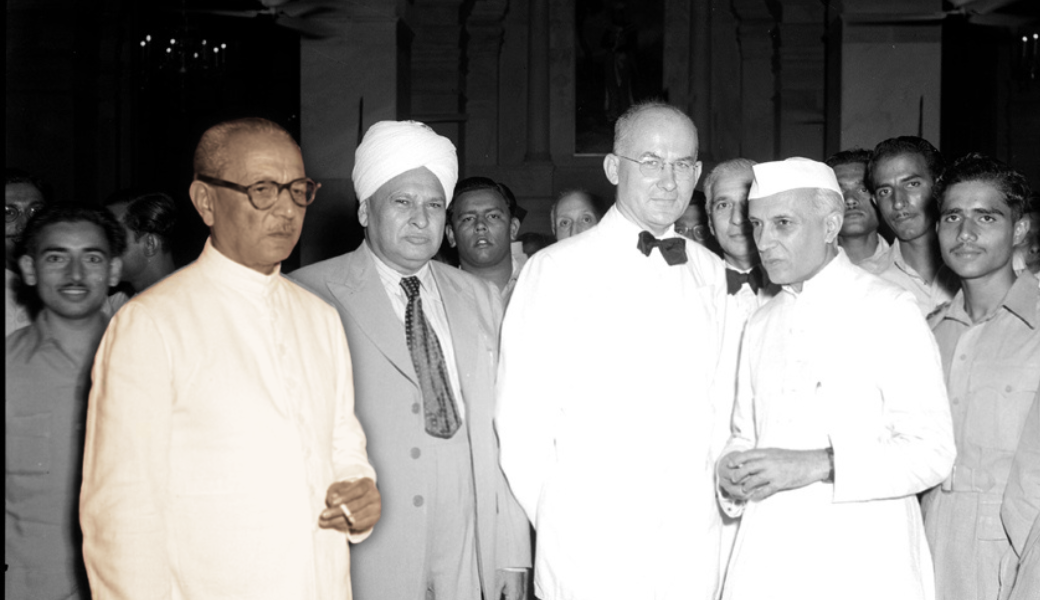
Pandit Jawaharlal Nehru and others at Governor-General‘s Dussehra reception held at Government House, New Delhi on September 29,1949. At extreme left is Asaf Ali, the then Governor of Orrisa. Edited via Canva. Photo: Photo Division, Govt. of India
For several years I worked in a publishing company situated on the bustling Asaf Ali Road, a road that serves as a cordon sanitaire between the squalor of Old Delhi and the (relative) order of New Delhi. Once an important business hub, by the time I went to work there in the late 1980s, this long stretch of colonnaded corridors with a warren of densely-packed offices wore an unmistakably grubby, down-at-heel look. At the head of the road, stood the statue of Asaf Ali in a derelict enclosure near Delhi Gate (or Dilli Gate as the locals pronounced it). The dark statue, generously speckled with startlingly white droppings from the many pigeons that frequent this neighbourhood, looked forlorn, especially so with the shervani-clad, bespectacled figure standing with hands clasped in a peculiarly supplicatory posture.
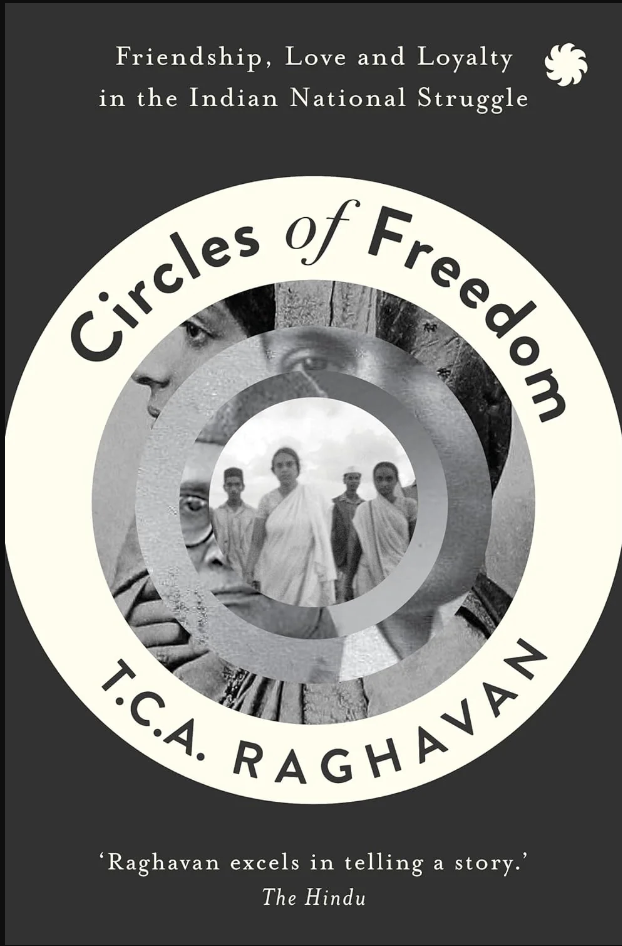
TCA Raghavan, Circles of Freedom: Friendship, Love and Loyalty in the National Freedom Struggle, Juggernaut (2024)
I must confess that in the four years I worked at Asaf Ali Road and passed this statue twice a day, morning and evening, it evoked no curiosity in me and I knew virtually nothing about Asaf Ali. Perhaps, his wife Aruna Asaf Ali’s name seemed more familiar given that she was still alive and active. I suspect I was not alone in this. For most people in Delhi, Asaf Ali is a forgotten footnote from long-ago history lessons, one of the many ‘obscure’ people who were part of the national freedom struggle. If the situation is so dismal in Delhi, where he had lived and worked, a city that had been home to his ancestors, I suspect it can only be worse in the rest of the country.
In writing Circles of Freedom: Friendship, Love and Loyalty in the National Freedom Struggle, TCA Raghavan corrects an old wrong. For far too long the tall poppies of the freedom movement have overshadowed the countless others who devoted their entire lives to the cause of independence and struggle against colonial rule. For too long, a handful of names have dominated the history of the years leading up to 1947 with Gandhi, Nehru, Jinnah, Patel being the most-often cited.
Over the past decade, with history being rewritten by new, dominant players, new names are being invoked and icons fashioned from often slender resources. In this unseemly clamour for space and recognition, some names have almost slipped through the crevices of the popular imagination, neglected and overlooked by the professional historian or, at best, relegated to the lowest rungs in a carefully crafted hierarchy of heroes. A park or a road named after the lesser-known evokes neither curiosity nor interest in their lives and the place they occupied in the shaping of a young nation. Asaf Ali (1888-1953) is one such person.
Raghavan’s book, however, is not a straightforward biography for it is not about Asaf (as the author calls him) alone. Instead, he chooses to tell his story through five protagonists who were inextricably tied by the threads of friendship and solidarity: Asaf Ali, Sarojini Naidu, Syud Hossain, Syed Mahmud and Aruna Asaf Ali. While Aruna enters this narrative quite late when she marries the much older Asaf, the other four meet in England just before the Great War where the three men have gone to study and Naidu, recuperating from an illness, is the erudite diva, eloquent poet, ardent nationalist and a veritable magnet for impressionable young men dreaming impossible dreams.
Over the next four decades, they meet, write long letters to each other, take a lively interest in each others’ lives and careers but ‘what gave meaning to their lives,’ as Raghavan notes in his conclusion, ‘was the great enterprise they chose to become part of’. And so it was the freedom struggle that not just formed the core of their relationship but also, in effect, shaped their lives. Were it not for this one singular, overwhelming zeal to seek freedom for their country, they could very well have lived other lives: Naidu would have remained a dulcet-voiced poet, both Asaf and Mahmud successful and wealthy barristers, Hossain a journalist and Aruna a do-gooder with no special qualifications. But such were the exigencies of the times that all five were caught up in different ways and different degrees with the national freedom struggle and that singular ‘great fight’ defined their lives.
With three extremely well-received books behind him – Attendant Lords: Bairam Khan and Abdur Rahim – Courtiers and Poets in Mughal India, The People Next Door: The Curious History of India’s Relations with Pakistan and History Men: Jadunath Sarkar, G. S. Sardesai, Raghivir Sinh and Their Quest For India’s Past – Raghavan, a former diplomat, can recreate history with the aplomb of a master story-teller and the meticulousness of a professional historian. Here, he weaves the events of the tumultuous years leading up to Independence with the lives of his five principal characters, keeping Asaf at the centre of his concern. Through Asaf, he teases out the nuances and dilemmas of the moderate Muslims in India who refused to be enamoured by the lures and promises of the Muslim League and remained steadfast in their devotion to the Congress and, by extension, Nehru.
The extreme deference that the nationalist Muslim leaders displayed towards Nehru is noted; each time a Muslim leader attempted to bring the ‘communal problem’ to Nehru’s notice, the latter would brush aside these concerns by saying, ‘The real problem is a political problem – the conflict between an advanced organisation like the Congress and a politically reactionary organisation like the League.’ Concerns of leaders such as Asaf who believed ‘self determination was preferable to a union that was forced’ were disregarded. Mindful of the suspicion that Muslim leaders within the Congress evoked amongst their colleagues, Raghavan notes, ‘Because he was a Muslim, the impression among some was that he was a fifth columnist for the League’. The coming of independence didn’t make it any easier for those Muslims who chose to stay on in India. Nationalism increasingly began to mean thinking and living in the Congress way and none other. Those who lived or thought another way came to be regarded as anti-national, a phenomena we see repeated in the New India that is Bharat, except that it is the ruling Bharatiya Janata Party that has replaced the ideological hegemony of the Congress.
Different readers will possibly take different things from this book: the broad brush strokes that delineate milestone moments from modern Indian history, Gandhi’s irresistible call to Quit India, the unfurling of the national flag at Gowalia Tank by a young Aruna that catapults her to national fame, the detailed account of jail-life for a group of high-profile, political prisoners inside the Ahmadnagar fortress, a meticulous dove-tailing of accounts from different sources and disparate perspectives to create a bright, colourful and immensely readable patchwork quilt of modern Indian history, and much else in this engrossing book.
I, however, was left with an ineffable sadness and a sense that the more things change, they remain the same – at least for India’s Muslims. Despite his many sterling qualities of heart and mind, despite a fine legal education, Asaf neither made a mark as a lawyer or a politician. Though seemingly destined for greatness, having aided fate by preparing himself assiduously for a life devoted to the larger good, Asaf never quite scaled the heights he aspired to. The few successes that came his way, such as a seat in the Constituent Assembly (from Delhi) or fighting high-profile cases such as those of Bhagat Singh or Shaikh Abdullah, were marred by controversy or a smaller share in the limelight than he felt he deserved. The mantle of statesmanship that should have fallen on him with the passing of Dr Ansari and Hakim Ajmal Khan, both national leaders from Delhi like him, and a seat at the high table that should have been offered to him as a veteran Muslim leader, did not happen.
Given the price paid by far taller leaders in the Congress – such as C. Rajagopalachari and Bhulabhai Desai – for showing initiative and thus offending the party high command, shows the extent to which the Congress, not unlike the League, was becoming a personality-dominated organisation. Asaf’s case was compounded – to use a modern expression – by the optics; his timorousness, his ‘going to pieces’ fretting with worry over his wife during his long years of incarceration, his marital woes, the shadow of mistrust and suspicion that clung to him all his life combined to create a persona that failed to inspire confidence.
For all his loyalty to Nehru, Asaf was not chosen for any cabinet position or placed on any important committee. Instead, he was sent as Ambassador to Washington, brought back to serve as Governor of Orissa and then sent again as Ambassador to Sweden where he died barely a few months into his tenure.
Just as being a moderate Muslim defined Asaf’s public persona, so did his marriage to Aruna. From a political novice she rapidly transformed into a stormy petrel causing immense anxiety, consternation and eventually a sadness in her husband. Raghavan is to be credited for staying steadfastly away from prurient gossip and portraying the changing contours of the marriage objectively: ‘… in fact the relationship had started changing quite early in the marriage and here Aruna’s own political journey was the driving factor.’ Reading between the lines of Raghavan’s carefully crafted text, one picks up the whiff of misogyny in the higher echelons of our national leadership. While acknowledging Aruna’s bravery and patriotism, Gandhi saw her as a ‘perpetual rebel’ and Nehru went so far as to call her ‘hysterical’ on one occasion – something Aruna never forgot.
Incidentally, Gandhi, who was vehemently opposed to inter-religious marriages and had opposed his son Manilal’s relationship with Fatima (a Gujarati Muslim) and Hossain’s alliance with Nehru’s sister Sarup Rani (later known as Vijay Lakshmi Pandit), endorsed Asaf’s marriage to Aruna. Read Circles of Friendship to find out why.
Rakshanda Jalilis a Delhi-based writer, translator and researcher.
source: http://www.thewire.in / The Wire / Home> Books / by Rakshanda Jalil / August 29th, 2024
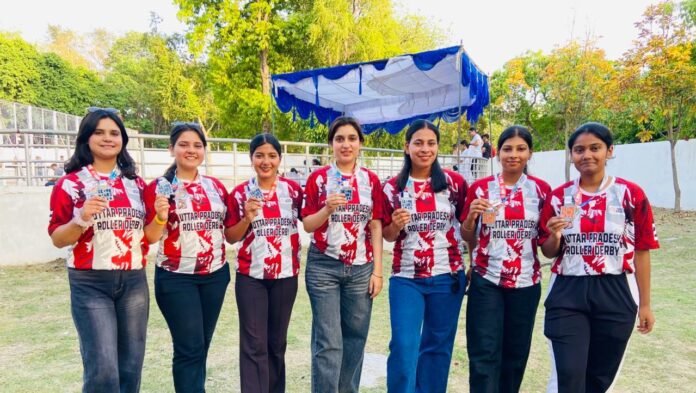
Students of Women’s College, Aligarh Muslim University, brought laurels to the institution as Nabeela Khan (B.Sc. Biochemistry) and Ashfia Khan (B.A. Psychology) secured a silver medal at the Indiaskate National Championship 2026 held from April 23 to 28.
Leading the Uttar Pradesh team, captain Nabeela Khan displayed strong leadership and determination throughout the tournament. In the final against Tamil Nadu, the team delivered a spirited performance, finishing 16–8 to clinch the silver medal.
Both players played a key role in guiding the team to the finals, showcasing excellent coordination, resilience and competitive spirit at the national level.
source: http://www.indiaeducationdiary.in / India Education Diary / Home> National News> University News / by India Education Bureau / May 02nd, 2026
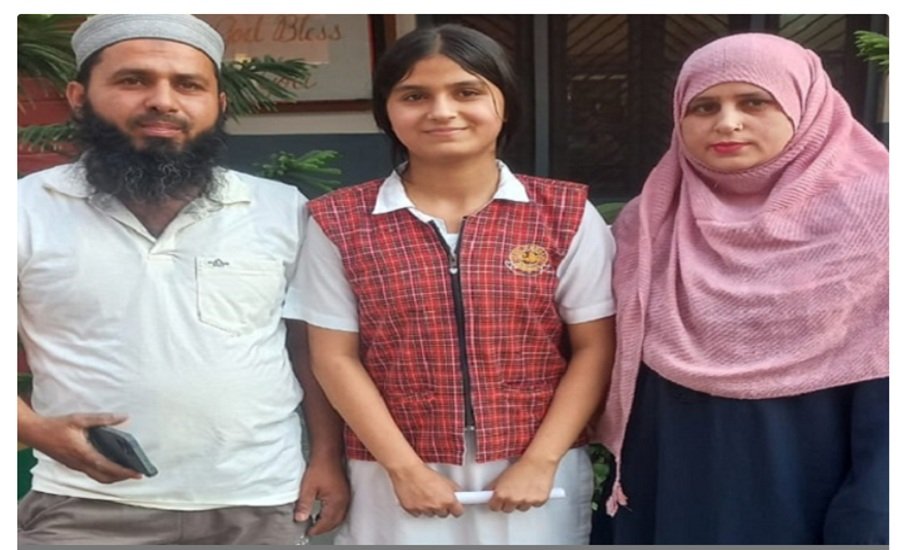
Amima Jauhar, daughter of Mohammad Afaque Jauhar, has emerged as the top scorer of Prestigious Al Barkat Public School, Aligarh, securing an outstanding 96.6% in her CBSE 10th board examinations. Interestingly another student Aleena Akhter also made the school proud by getting the same excellent result.
Amima’s result stood out with a perfect 100 marks in both Urdu and Information Technology, reflecting her exceptional command over languages as well as technical subjects. Her consistent hard work, disciplined study routine, and academic focus have been widely appreciated by teachers and school authorities.
A student of Al Barkat Public School, Amima also received guidance from Image Classes, Aligarh, which played a supportive role in her preparation. Her achievement has brought pride to her family, school, and the Aligarh academic community.
source: http://www.theindianawaaz.com / The Indian Awaaz / Home> Campus / by Indian Awaaz / April 18th, 2026
The sisters come from a modest background. Their father, Abdul Malik, works as a carpenter, while their mother studied up to Class 9.
Two sisters from Meerut have drawn attention with their impressive performance in the Uttar Pradesh Madhyamik Shiksha Parishad examinations, securing the top two positions in the district.
Adeeba Malik scored 95.68 per cent in the high school examination to secure first place, while her sister Shifa Malik ranked second with 82 per cent in the science stream.
Their achievement has brought joy to the locality, with residents visiting their home to congratulate the family.
Adeeba attributed her success to discipline and consistency. “I studied for long hours every day and stayed focused. Hard work and a proper routine helped me achieve this result,” she said. She scored full marks in mathematics, her strongest subject.
Notably, she prepared entirely at home without any tuition or coaching support.
The sisters come from a modest background. Their father, Abdul Malik, works as a carpenter, while their mother studied up to Class 9. Expressing his pride, Abdul Malik said, “I could not study much myself, but my daughter is making me proud. There is no difference between a son and a daughter. I want her to study and move ahead.”
The sisters were felicitated at St Joseph Inter College, where teachers and students celebrated their success. Sweets were distributed, and similar celebrations were held at their home.
Family members said the achievement reflects the sisters’ consistent dedication and hard work.
Adeeba aspires to become an IAS officer and serve the country.
Education experts say such success stories are significant, especially in areas where awareness about girls’ education is still evolving and students often face challenges in continuing their studies. The sisters’ achievement is being seen as an inspiring example for others.
source: http://www.clarionindia.net / Clarion India / Home> Editor’s Pick> India> Indian Muslim / by Mohammad Bin Ismail / April 25th, 2026
The Ministry of Environment, Forest and Climate Change awarded a major research project to Professor Atiqur Rahman, Head of the Department of Geography at Jamia Millia Islamia. The project focuses on studying the reduction of urban heat through the presence of water bodies and tree cover. The research carries a funding allocation of Rs 47.46 lakh.
The study will examine three Indian cities located in different climatic zones. These include Kolkata with a warm and humid climate, Bengaluru with a temperate climate, and Udaipur with a semi arid climate.
Urban areas across India face rising temperatures due to the urban heat island effect. Built up surfaces, reduced vegetation, and the loss of water bodies increase surrounding temperatures. These changes intensify heat stress and increase health risks. Low income and marginalized communities face greater exposure to these conditions.
The project aims to measure the role of water bodies and tree cover in lowering urban temperatures. Natural elements such as vegetation and water surfaces support cooling through shade and evaporation. These features help maintain surface energy balance and reduce heat accumulation in cities.
Researchers view these elements as nature based solutions which support climate adaptation in urban environments. The findings will contribute to policies related to urban environmental planning and climate resilience.
The research also supports national climate policy goals. It aligns with the National Action Plan on Climate Change and Sustainable Development Goal 11, which focuses on creating safe and sustainable cities under the Vision Viksit Bharat 2047 initiative.
Professor Rahman has worked on multiple international and national research collaborations. His work covers urban environmental management, climate change, water resources, and disaster management. He has guided thirteen doctoral researchers and produced eighteen books along with two hundred research papers.
source: http://www.radiancenews.com / Radiance News / Home> Latest News> Report / by Radiance News Bureau / March 10th, 2026