Tag Archives: Muslims of Uttar Pradesh

AMU Junior Resident Doctor Bags Best Paper Award at National Event in Mumbai

Aligarh, UTTAR PRADESH :

Dr. Fasna K receiving the best paper award at Mumbai

Aligarh:

Dr. Fasna K, a Junior Resident-III in the Department of Pediatric and Preventive Dentistry, Dr. Z.A. Dental College, Aligarh Muslim University got the Best Paper Award at the 21st National Postgraduate Convention of the Indian Society of Pedodontics and Preventive Dentistry (PedoSoch 2025), held in Mumbai, recently.

Her Guide, Prof Saima Yunus Khan, Chairperson of the department congratulated Dr. Fasna on the achievement.

source: http://www.radiancenews.com / Radiance News / Home> Pride of the Nation> Awards> Latest News / by Radiance News Bureau / February 05th, 2025

Prayagraj Muslims set an example of communal harmony by helping out pilgrims stranded in Maha Kumbh stampede

Prayagraj (Allahabad), UTTAR PRADESH :

New Delhi :

Setting a rare example in communal harmony, the Muslim community in Prayagraj has extended a helping hand to the pilgrims stranded in the city after the stampede in the ongoing Maha Kumbh on Mauni Amavasya, in which more than 30 persons have died.

Muslims have opened their homes, mosques, dargahs and public spaces to accommodate the Hindu pilgrims needing help and depicted the laudable Islamic spirit of compassion during the crisis.

The tragedy of stampede occurred in Prayagraj in the night intervening January 28 and 29 when the pilgrims rushed to participate in the ritual of bathing and taking a dip in the confluence of Ganga and Yamuna rivers during the night. The people sleeping and sitting on the ground near the rivers were trampled by huge swells of devotees coming towards them in the darkness.

Significantly, the selfless service from the Muslim community for the Hindu pilgrims has come when they were facing a financial and social boycott during the Maha Kumbh. Muslims have been kept away from the Kumbh festivities with an open boycott and banned from taking up the event-related employment works. Despite this, the local Muslims have disregarded their exclusion and are providing food, shelter, and medical aid to stranded pilgrims.

Reports emerging from Prayagraj say that Muslims have actively come forward to the rescue of pilgrims caught in distress. They are offering food, water, clothes, medicine, and even shelter to the devotees, displaying an unshaken commitment to humanitarian values. Videos and pictures circulating on social media depict local Muslims distributing essential supplies and aiding the pilgrims, defying efforts to sow division.

The Muslim community in Prayagraj, earlier known as Allahabad, has historically played an active role in Kumbh Mela, which has benefited both Hindus and Muslims socially and economically. The event had long provided business opportunities for Muslim shopkeepers, transporters and labourers. This year, calls for their boycott from certain religious figures led to their exclusion from trade and services at the event. Even Muslim shopkeepers who attempted to operate discreetly were targeted and harassed.

Despite being told that they were not welcome in the Maha Kumbh and the labour force being denied work, Muslims have not turned their back on the Hindus in the hour of need. Following the stampede, several mosques, including Jama Masjid at Chowk and another in Khuldabad, were opened to house distressed pilgrims.

Moreover, Muslim volunteers have set up food stalls and medical aid stations to assist the injured and hungry. A community-run ‘bhandara’ (free meal service) has been organised, serving hundreds of devotees irrespective of religion. Even the Muslim medical professionals have also stepped forward to help, and a local physician, Dr. Naz Fatima, has turned her clinic into a relief centre, offering free treatment to injured devotees.

The stampede in Maha Kumbh led to a complete collapse of arrangements made for the devotees and their entry to the venue was stopped. Whoever had reached at a nearby point, he was stopped there. In such a situation, Muslims living in more than 10 areas in the city showed a big heart and opened the doors of mosques, shrines, dargahs, imambaras and their homes for 25,000 to 26,000 devotees. Arrangements were made for people to stay and food, water and tea were provided to them, while those who needed medicines were taken care of.

A news report carried in ‘Dainik Bhaskar’ newspaper stated that ‘bhandaras’ were organised for pilgrims in more than 10 areas. On the night of January 28, there were 8 crore people in the 10 km area of the Maha Kumbh. After the stampede, the highways got jammed and all the vehicles carrying the pilgrims came to a halt. A large number of people had to spend the night on the roads.

The devotees had to spend the night of January 29 also on the road. In this situation, the Muslims accommodated the Hindu pilgrims in Khuldabad Sabzi Mandi Mosque, Bada Tazia Imambara, Himmatganj Dargah and Chowk Mosque, 10 km away from the fair area. Some pictures and videos of this were also circulated on the social media platforms.

People of the Muslim-dominated localities, such as Nakhas Kohna, Roshanbagh, Himmatganj, Khuldabad, Ranimandi and Shahganj, accommodated the devotees in their homes. A local resident, Irshad, said: “They were our guests, we took full care of them.” Bahadur Ganj locality’s Mohammed Irshad said: “After the stampede that night, we realised that a large number of people were in trouble. Where would they go in the cold night? After this, mosques and dargahs were opened. Many people were given shelter in Muslim homes. Arrangements for their stay and food were made. Later, bhandaras were organized. They were guests of Prayagraj; we tried to take full care of them.”

The news report in ‘Dainik Bhaskar’ quoted a Muslim man, Masood Khan, as saying: “Muslims were following their religion by helping out the people in need.” Masood Ahmed, a teacher from Chowk area, said: “Such a big event is being organised in Prayagraj. That night when it was time to help, we all worked together. Food stalls were set up. Muslims came forward to help as a gesture of humanity.”

“Our aim was that the people who have come here should not face any problem of accommodation. There should not be any problem of food and water. This is our responsibility. The elderly people walking on foot were helped, they were taken to the places for stay. We just wanted that whoever goes back from here should take the message of humanity with them,” Masood Ahmed said.

Another local resident, Afsar Mahmood, living in Khuldabad area, said: “While earlier it was announced that Muslims should not enter Maha Kumbh, ultimately the fair itself came to the Muslim localities.” Moinuddin of Chowk area said: “The Muslims of Prayagraj only wanted that whoever is coming here should not spend the night under the open sky, so everyone opened the doors of their homes. This is an example of harmony.”

Mohammed Azam of Civil Lines area said: “Food was arranged at night in front of Hari Masjid. People were suffering from cold that night. As many blankets and quilts as possible were made available. We only wanted that they should not face any problem. Arrangements for their food were also made at night.”

The spirit of mutual support was not limited to providing shelter, as the arrangements were made for food, water, and medicines for those in need. Hundreds of blankets were distributed to protect people from the cold. Local Muslim organisations, social activists, and common citizens actively participated in this initiative, making the relief efforts even more effective.

The assistance provided by Muslims in Prayagraj was not just a humanitarian aid, but it also sent a strong message of communal harmony, unity, and human values to the society. The devotees not only appreciated this generosity but also described it as a symbol of India’s rich composite culture, where different communities consider each other’s hardships as their own responsibility.

source: http://www.indiatomorrow.net / India Tomorrow.net / Home> News / by Correspondent India Tomorrow / February 02nd, 2025

Umair Manzar recalls days he was teaching Urdu to Rekhta Founder Saraf

Lucknow, UTTAR PRADESH / NEW DELHI :

Founder of the Rekhta Foundation Sanjeev Saraf (left) with Dr Umair Manzar

“Umair Manzar was the first to join me in my journey of Rekhta,” said Sanjeev Saraf, the founder of the Rekhta Foundation. He said this before a smaller audience at the launch of the first Jashn-e-Rekhta, the festival of literature and performing arts in 2012.

The festival has become a major annual cultural event in Delhi, and the Rekhta Foundation portal is a key resource for Urdu language and literature and a peg for the online and offline community of Urdu literature lovers.

This year the three-day Jashn-e-Rekhta is being held in Delhi from December 13.

Saraf said Umair was his first Urdu teacher. He was the one who proposed the name Rekhta for the website and became the first member of the online community of Urdu aficionados on Rekhta Foundation.

Stage for artists to perform in Jashn-e-Rekhta

Today, Dr. Umair Manzar is an Assistant Professor in the Urdu Department of Maulana Azad National Urdu University, Lucknow Campus When Awaz-the Voice contacted him, he was surprised at his name being mentioned by Safar.

Awaz-The Voice contacted Umair Mazhar on the phone. He came across as a simple and humble person not too keen to take credit for his key role in setting up Rekhta.

After initial reluctance, Umair Manzar agreed to share his interaction with Sanjeev Saraf.

Manzar’s version of the initial days of Rekhta threw up many more characters in this journey. He says many other people also played their part in helping Sanjeev Saraf concretize what was his passion for the language.

Umair Manzar said that he met Saraf during the 2010 spring.”Summer had not started.”

One day Vice Chancellor Jamia Millia Islamia Najeeb Jung called Urdu’s Head of Department Professor Khalid Mahmood and asked him to send a tutor to a particular person to teach Urdu. At that time, Umair was teaching at the university. His HOD gave him a piece of paper with a name and a telephone number scribbled on it and asked him to contact him.

“The name was Sanjeev Saraf. I called that number, we fixed a time for the tuition class.”

Jashn-e-Rekhta festival

“The first time I met him at his home. I had no idea who he was. Yet I found him a serious person; there was a certain calm in his way of speaking.”

“I liked him instantly as he spoke candidly. After a few meetings, he told me that he was very fond of Urdu and wanted to learn it.

“He especially wanted to understand poetry. In a few meetings, I realized that apart from learning the language, he was also interested in creating an Urdu website. He has nursed a dream of starting an Urdu website for many years,” Manzar said

Sanjeev Saraf seemed to be learning the language out of love for it. He also thought Urdu could become a bridge among diverse people of India who loved the language.

He thought the website of this idea could increase their love for Urdu. Thousands of people want to learn the language because of its poetry. However, there is no one to help them. Sanjeev Saraf had faced this problem and therefore empathized with others. He had the resources, including time to learn Urdu. However, everyone could not do it.

Manzar told Awaz that he soon realized Sanjeev Saraf wanted to do something beyond learning Urdu.

After a few days, he said, “Every person needs a teacher; my website can fulfill the needs of all such people.”

Manzar said, “This got me thinking seriously about this issue. By now I was visiting the Noida office of Mr Saraf. One day he said that we can start Urdu work in a part of that office.”

Umair Manzar also did not realize that he had become a part of the initiative to establish a website that would help Urdu lovers all over the world and bind them in a community.”

He also realized that he was dealing with a passionate lover of Urdu and not a mere learner. 

A bookshop in Jashn-e-rekhta

One day Safar spoke formally to him. We decided to discuss it in detail.

And finally one day Sanjeev Saraf asked him to start work on the website,

The first name for the website he suggested was Kavita. This was already bought by someone. The same was the case with many other titles. “I also felt if we had to buy the already registered name for the website, the prices were ridiculously high.”

He suggested ‘Rekhta’ to Sanjeev Saraf. ”He asked me its meaning. When I explained it to him he was happy. Soon we registered rekhta.org as the domain name. I remember he liked the harmony of the words. He was sitting with us during the entire process of registration online.”

Thereafter the work on the website started and many targets were achieved before the scheduled time. This was the journey of paper preparation for the Rekhta Foundation.”

Umair Manzar says he had met Sanjeev Saraf with the sole purpose of teaching him the language but he got involved in his mission.

When asked about the preparations after naming, Umair Manzar said, “After the name was decided, work on the website started. In the summer of 2011, I officially launched the website. The first step was to choose poems of classical poets and the unanimous choice was Mirza Ghalib.”

The selection of contemporary poets started from Jamia Millia Islamia and other libraries. Their compositions were recorded. Saraf hired composers and they worked out of the Noida office. It started slowly and then it gained momentum.”

Umair Manzar said, he also contacted Professor Ahmed Mahfooz and Professor Abdul Rashid for their suggestions and advice.”I also arranged a meeting of both gentlemen with Sanjeev Saraf and this meeting lasted for several hours.”

Saraf expressed his intentions and ambitions; the professors also gave their input and suggestions. “Sanjeev Saraf noted every suggestion and tip the two learned professors  offered.”

Prof. Rashid suggested that the way to preserve old books was to scan them and upload them on the website.

Umair Manzar says,” One day when I went to the office, Sanjeev Saraf announced the (scanning) machine had arrived. “Now you people bring the books. The scanning process will begin.”

This was a challenge to all of us. Initially, we tried to upload only selected and important books on the website. Later this also opened a new possibility.

A poster of Jashn-e-Rekhta

Umair Manzar says that initially, people like Rehman Farooqi, Prof. Shamim Hanafi, and Prof. Walwasa ignored the website as another wannabe.

Probably the first column about Rekhta was written by Professor Vasa, Vice President of the Urdu Academy. He also gave Rekhta an award for the promotion of Urdu.

Umair Manzar joined Maulana Abul Kalam Azad Urdu University as an assistant in the early days of Rekhta.

Initially, the Rekhta Foundation was recruited only on the recommendation of a group of like-minded people like Professor Ahmed Mahfooz, Professor Abdul Rashid, and Umair Manzar.

Abdul Rashid, who is from Delhi, had done his research on dictionaries. This year the Ghalib Institute is giving him its prestigious literary and research award. Professor Ahmed Mahfooz is the HOD Urdu Department of Jamia Milia Islamia. He is an expert on poetry.

Professor Abdul Rashid and Dr. Amir Manzar are among the people who have been actively associated with the Rekhta Foundation since its inception.

Dr. Umair Manzar and Prof. Abdul Rashid were included in this team to scan books from Raja Mahmoodabad library and make them part of e-books.

Similarly, access to some private libraries and some important books was very active. Along with them, Professor Abdul Rashid and Dr. Umair Manzar have played a role.

source: http://www.awazthevoice.in / Awaz, The Voice / Home> Stories / by Mansooruddin Faridi, New Delhi / December 12th, 2024

Prof. M Saud Alam Qasmi Conferred Lifetime Achievement Award by Jamitul Hidayah, Jaipur

Aligarh, UTTAR PRADESH / Jaipur, RAJASTHAN :

Aligarh:

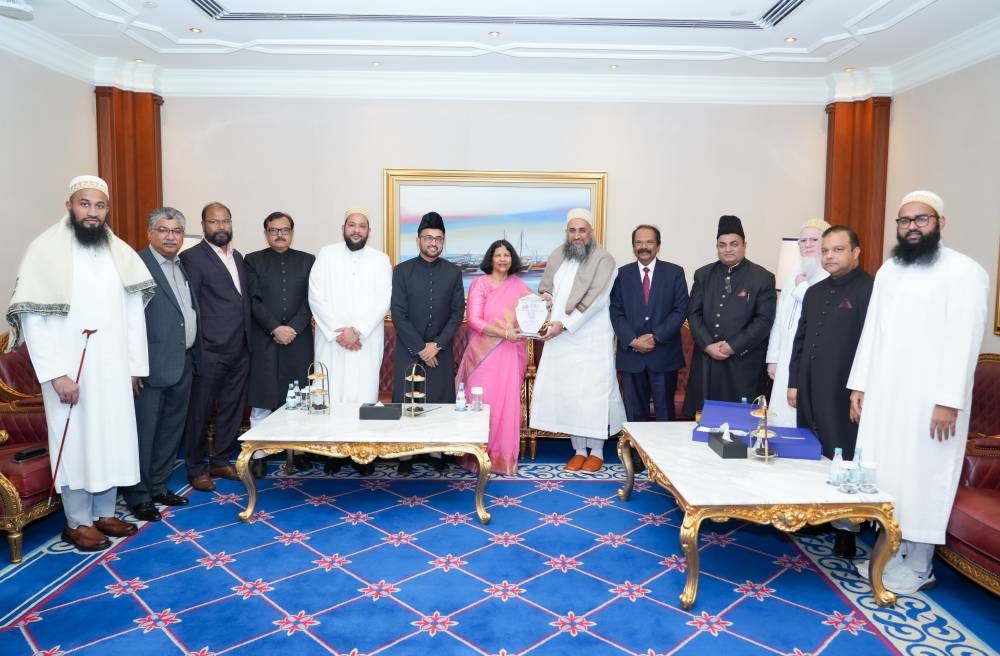
The Islamic scholar and former Dean, Faculty of Theology, Aligarh Muslim University (AMU), Professor M Saud Alam Qasmi, has been conferred with the Lifetime Achievement Award by Jamitul Hidayah, Jaipur.

While conferring the award, the Rector of Jamia, Maulana Fazlur Raheem Mujaddidi, praised Professor Qasmi as a distinguished scholar and lauded his books as a “treasury of India.” He urged young scholars to draw inspiration from Professor Qasmi’s academic legacy.

Editor of Tahzeebul Akhlaq, Professor Qasmi has authored 40 books and 400 articles in English, Urdu, and Arabic.

A celebrated orator, he has held several prestigious roles at AMU and is associated with numerous academic institutions and editorial boards.

source: http://www.radiancenews.com / Radiance News / Home> Pride of the Nation> Awards>Latest News / by Radiance News Bureau / January 28th, 2025

AMU Students Win Top Honours in Kafka-Themed National Competition

Aligarh, UTTAR PRADESH :

Aligarh:

Students from the Department of Foreign Languages at Aligarh Muslim University (AMU) secured top prizes in a national competition organised by the Department of German, University of Mumbai, under the theme “100 Years of Kafka.”

Ramsha Afzal, a Master’s student in German Studies, won first place in the Comic Strip category for her creative take on Kafka’s novella Die Verwandlung (The Metamorphosis), highlighting themes of alienation and transformation. Azhar Zia, a final-year undergraduate, clinched first prize in the Short Films category for his cinematic interpretation of Kafka’s narrative Gibs auf! (Give it Up!), reflecting a nuanced grasp of existential themes.

Professor Muhammad Azhar, Chairman of the Department, commended the students, stating, “These achievements showcase the academic excellence and creativity nurtured at AMU, reaffirming the importance of foreign language studies.”

Assistant Professor Syed Salman Abbas applauded the winners, emphasising their engagement with German literature and culture.

source: http://www.radiancenews.com / Radiance News / Home> Education> Latest News / by Radiance News Bureau / January 23rd, 2025

Maulana Ammar Hasani Nadwi Appointed Nazim-e-Aam of Nadwatul Ulama

Lucknow, UTTAR PRADESH :

Lucknow:

Following the sad demise of Maulana Jafar Masood Hasani Nadwi, the position of Nazim-e-Aam (General Manager) of Nadwatul Ulama had fallen vacant. In a unanimous decision, the Majlis-e-Nizam (Governing Council) has appointed Maulana Ammar Abdul Ali Hasani Nadwi to the esteemed role.

Maulana Ammar is the son of the renowned Islamic scholar and journalist Maulana Muhammad Hasani and the younger brother of Maulana Abdullah Hasani Nadwi. He has been serving as the head of Madrasa Mazhar-ul-Islam, a significant branch of Nadwatul Ulama located in Balochpura here for a considerable time.

The Nadwi community has extended heartfelt congratulations to Maulana Ammar on his appointment. They expressed their confidence that, under his leadership, the institution will continue to progress and flourish.

Prayers were also offered for the institution’s protection from envy and hypocrisy, seeking Allah’s guidance and support for its continued growth and prosperity.

source: http://www.radiancenews.com / Radiance News / Home> Latest News> Report / by Radiance News Bureau / January 25th, 2025

Prof Farah Ghaus Bags Indian Golden Personalities Award

Aligarh, UTTAR PRADESH :

Prof Farah Ghaus, Department of Anatomy, J.N. Medical College, Aligarh Muslim University with the Best Indian Golden Personalities Award, 2025

Aligarh:

Prof Farah Ghaus, Department of Anatomy, J.N. Medical College, Aligarh Muslim University has been honoured with the Best Indian Golden Personalities Award, 2025 by the Friendship Forum of India, New Delhi.

Prof Ghaus has been chosen for the award for her commitment to advancing educational excellence in India and empowerment through education, and for her relentless pursuit of innovation, creativity and quality of work on the educational landscape.

The award recognises her pivotal role in shaping the future of thousands of students through her deep commitment to educational reforms, mentorship, and for fostering a culture of lifelong learning.

source: http://www.radiancenews.com / Radiance News / Home> Pride of the Nation> Awards / by Radiance News Bureau / January 12th, 2025

Prof Nizamuddin Khan Bags Bhoogol Vachaspati Award

Aligarh, UTTAR PRADESH :

Prof. Nizamuddin Khan receives the prestigious Bhoogol Vachaspati Award at Osmania University Hyderabad

Agra :

Prof. Nizamuddin Khan, former Chairman, Department of Geography, Aligarh Muslim University has been honoured with the prestigious Bhoogol Vachaspati Award, conferred on him by the National Association of Geographers, India (NAGI) at the inaugural function of Indian Geography Congress organised by the Department of Geography, Osmania University, Hyderabad.

The award recognises Prof Khan’s seminal contributions and services in promoting the cause of Geography in India.

Prof. Khan has had an illustrious teaching career spanning over thirty years with a special thrust on agricultural geography, livestock and rural marketing, livelihood generation, poverty reduction, sustainable development in rural regions and environmental studies.

source: http://www.radiancenews.com / Radiance News / Home> Awards> Focus / by Radiance News Bureau / January 01st, 2025

AMU Professor Dr Nishat Afroz gets International Award as ‘Distinguished Researcher in Histopatholgy’ for Research and Innovation in Medical Sciences

Aligarh, UTTAR PRADESH :

Dr Nishat Afroz receives the international award for research and innovation in medical sciences

Aligarh:

Dr Nishat Afroz, Professor, Department of Pathology, JN Medical College, Aligarh Muslim University (AMU) has been honoured with the award of “Distinguished Researcher in Histopathology” for her contribution and achievement in the discipline of Health and Medical Sciences by the Venus International Foundation.

The award was bestowed upon her at the 10th Annual Research Meet – ARM 2024 on the theme “Diverse Approach to Address Societal Challenges and Deliver Novel Solutions”, organised by the Centre for Research and Innovation – Venus International Foundation at Chennai.

Earlier, Dr Nishat Afroz attended the Pathology Conferences at Subharti Medical College Meerut, Narayana hospital & RN Tagore Medical College, Kolkata and SMS Medical College, Jaipur as guest speaker and workshop convener.

source: http://www.radiancenews.com / Radiance News / Home> Pride of the Nation. Awards> Focus / by Radiance News Bureau / December 12th, 2024

Khan Bahadur Khan & Battle at Bareilly

Bareilly, UTTAR PRADESH :

One of the most significant features of the rebellion of 1857-58 was that many scions of the former ruling houses took part in it. One such man was Khan Bahadur Khan (1860), a descendent of Hafiz Rehmat Khan (d. 1774). In this very blog of the Independence Week series, we will be throwing some light on Khan Bahadur Khan and his rebellion. How almost an eighty year old man kept the torch of rebellion against the Company in Bareilly burning.

Source: https://images.app.goo.gl/kLJF62BfAdgBSyRu5

Very little is known about the early life of Khan Bahadur Khan. It seems that having acquired traditional education in Arabic and Persian and Islamic learning; he joined the Company’s service, rising to the position of Sadar Amin (arbitrator or a native civil judge).

Upon retirement he continued to live at Bareilly where he enjoyed considerable status as grandson of the widely venerated Ruhela chief, Hafiz Rahmat Khan. In 1857 when the rebellion began, Khan Bahadur Khan was well over 82 years of age. During the rebellion, Bareilly became one of the important centers of the rebels under Khan Bahadur Khan’s leadership. In course of time, many rebel leaders came to Khan with a view to continue the struggle against the Company’s Government. A communal harmony was maintained in Bareilly despite the constant efforts of the Company to ignite the flame of hatred amongst the people through Bribery and inciting the Rajputs against Khan. This maintenance of harmony amongst the different classes of people in Bareilly is considered one of the major achievements of Khan despite the constant attack by the Company.


The old farmers of the region were affected badly because of the forceful sale of their lands by the British to suit a “capitalist” concept of property. This constant suppression led the uprising of 1816 when the company imposed the Chowkidari taxes. This uprising was soon crushed but it had led to a widespread range and discontent and people from all other regions came to Bareilly to join the uprising. The Rebellion of Bareilly was not just a religious war against the Company, it was due to the bitterness of those who had lost their lands and the anxiety of those who would be forced to lose them.


The rumors of trouble had started circulating in the region a couple of months before the actual revolt took place. The 18th Infantry Regiments and the 8th Irregular Cavalry were stationed at Bareilly. Of these the 8th Irregular Cavalry consisted almost entirely of Pathans. No European troops were stationed at Bareilly. The artillery branch which had in its ranks, as a subedar, Bakhat Khan, a disciple of Moulvi Sarfaraz Ali, the latter took a leading part in the Rebellion of 1857 and brought numerous Ulema of Delhi to call the struggle against the British as Jihad (holy war). It seems that the rebel sepoys were keen to raise Khan Bahadur Khan the Nawab of Bareilly as their leader but in the beginning he did not respond favourably to their overtures.

Ultimately on May 31, 1857. i.e. twenty-one days after the outbreak of the revolt in Meerut, Bareilly joined the rebellion. On 1 June under the guidance of Bakht Khan, concerted efforts were made by the rebels to persuade Khan Bahadur Khan to assume leadership. How Khan came to be persuaded by the rebels is evident from his own letter to the Governor General dated 14th February 1860 where he states that upon the deterioration in law and order, a deputation of the citizens of Bareilly headed by Syed Miyan Jan, Syed Faizullah, Miran Khan from Nau Mahla Mohalla, accompanied by several other persons and traders of the city approached him to take step to restore order. Syed Miran Jan at last prevailed upon him to move out of his residence.


Khan, now assuming leadership visited the city to restore order once again. He held a Darbar were prominent Hindu and Muslims were present. Like other rebel leaders, Khan Bahadur Khan also issued a proclamation addressed to all the Rajas and others, appealing to their zeal in defending religion. The main thrust of his proclamation was that the Indians’ religions (Hinduism and Islam) were in danger owing to the Company’s pro-Christian policy and attempts at Christianizing Indians. The proclamation also criticized some of the progressive measures taken by the Company’s Government such as the prohibition of Sati and widow- remarriage. The Bareilly proclamation was clearly an attempt to win the support of the Rajputs, a social group which practiced Sati and adoption, and so resented their suppression. The Bareilly proclamation also added that the Muslim leaders had to ban cow slaughter — a step considered of vital importance to maintain communal harmony. This was specially so when the majority of the rebel sepoys consisted of Hindus.


Khan Bahadur Khan was so keen to raise an efficient army that he did not burden the Rebel treasury with the pensions he had been receiving earlier from the Company.


The end of March 1858, Bareilly remained in the able control of Khan Bahadur. Despite a clear state resolution, the British policy, just to incite a division of the rebels assumed a new proportion on the cow slaughter issue. This time some Muslims mongers became active and insisted on slaughter on public places which was unacceptable to the Hindu sepoys. This led Khan hold a meeting of both the prominent Hindus and Muslims. It was attended by 12 Hindus and 20 Muslims. It was a tense atmosphere for obvious reasons and an axious and sad Khan Bahadur intervened saying “O Allah, why is so? Why is there so many squabble and blood-shed among the brothers, Hindus and Musalmans? The Hindus are my right hand and my right ear, because of their support and strength; I am able to sit on this seat. From today I declare that if any Muslim oppresses any Hindu or kills a cow at a forbidden place, he would be punished severely. Hindus and Muslims are the same. This ought to be the slogan of the two communities from this day”. In order to further strengthen the communal harmony, Muhammad flags by Hindus and Mahabiri flags by Muslims were hoisted in Bareilly and people were requested to gather under the respective flags to unite against the British. Khan himself visited different parts of the city to unite people and raised the slogans “Hindu and Muslims are one”, “Ram and Rahim are one”, and the people pledged to oust the British from this country.


One of the reasons for the long duration of the rebel regime at Bareilly was the British pre-occupation with the rebellion at other places. During this period Bareilly became a refuge for rebel leaders from far and near.


The movements of the rebel to and from Bareilly were very closely monitored by the British. The rebels lacked an efficient system of communication and the British on the other hand started communicating with Delhi, Agra, Nainital and Ambala and couriers with areas where they had no complete control. The rebels were fully aware of the danger that they had from the British Army and they made elaborate arrangements for guarding various ferry crossings. They also attempted to dislodge the Company officials from Nainital and other places, capturing Haldwani and Bhamauri (October 1857), and then Bundia on the high road between Haldwani and Bareilly. Their advance was checked by Colonel Mclausland at Baheri. The reverse was enough to persuade Khan Bahadur Khan to change the strategy. He instructed the rebel forces: “Don’t attempt to meet the regular column of the infidels, because they are superior to you in discipline and bandubast. and have big guns, but watch their movements. guard all the ghauts on the rivers, intercept their communication, stop their supplies, cut up their daks and posts, and keep constantly hanging about their camps; give them no rest”.

Though the company’s attempt to put the Rajputs against Khan in Bareilly had failed, they had succeeded in pitting the Rajputs of Dhatiganj in Bafaun against Khan, and Khan on the other hand had to take care of the Shia’s and the Sunni’s at this juncture.

The British in Bareilly had caused an explosion with the help of their agents on 24th March 1858, killing 63 people. At the same time, the strength of the rebels were fast deteriorating due to the constant pressing forward of the company forces. They had recovered areas around Bareilly by the company troops, and the rebels were surrounded from all the sides. The company troops led by Brigadier General Jones surrounded Bareilly on 6th May. Khan Bahadur Khan had no option but to fight a pitched battle. He divided his troops into two lines. The first line was supported by the artillery commanding the bridge. The second comprising the Ghazis, defended the suburbs of the city. The British forces speedily broke the first line. They, however, had to face stiff resistance from the second line which displayed remarkable courage and determination against the enemy’s trained and organized forces. They resisted with such energy and boldness that Sir Colin Campbell was taken by surprise. To quote Russell “…a lot of Gazees got in pass the left of their right wing, attacked Walpole and Cameron, and wounded them……Sir Colin (Campbell) had a narrow escape… The Gazees were fine fellows, grizzly bearded elderly men for the most part, with green turbans and cummerbunds, and every one of them had a silver signet-ring, a long text of Koran engraved on it. They came on with their heads down below their shields, and their tulwars flashing as they whirled them over their heads, shouting, Deen! Deen! And dancing like mad men (6 May 1858)”. Sheer chivalry was, however, futile. The rebels lost the battle. Bareilly was occupied by the British forces on 7 May 1858.

“Conflict with the Ghazees before Bareilly, scence from the Indian Mutiny. Engraving from 1858, Engraver Unkown Photo by D Walker” / Source : https://www.istockphoto.com/vector/battle-at-bareilly-gm172740161-5022003

Having lost the battle, Khan Bahadur Khan took to flight. At this critical moment, the Kurmis around Bareilly provided shelter to the fugitives. From Bareilly, Khan Bahadur Khan moved towards Shahjahanpur with the intention of joining Ahmadullah Shah. Khan kept on moving and attacked the out skirts of Shahjahanpur on 12 June driving in all the pickets posted there.

He, however, could not join Ahmadullah Shah as the latter was treacherously killed by the Raja of Pawayan on 15th June. Ahmadullah Shah’s death left Khan Bahadur Khan alone. The British forces were at their heels. He took shelter in the Terai forest bordering Nepal. He wandered from place to place until Rana Jung Bahadur captured him, in December 1859, near Butwal. For some time he remained a prisoner of the Rana. Subsequently he was brought to Bareilly and confined in the Bareilly fort. He was charged with rebellion and inciting others to rebel and tried by a special Commission of enquiry. He was sentenced to death. He was hanged and laid to rest at the Bareilly Jail on 24 March 1860.

Reference/s :

Bareilly in 1857, Indian History Congress

source: http://www.sanelywritten.com / Sanely Written / Home> Freedom Fighters / by Sanely Written / August 10th, 2020