Tag Archives: Positive News of Muslims of Uttar Pradesh

Why India Must Remember its First Muslim Jurist

Delhi, Mughal Period / Sitapur, British India:

The first Muslim judge of a high court in colonial times, Syed Mahmood’s professional conduct offers a counterpoint to the declining standards in Indian judiciary.
WHEN Justice Abdul Nazeer addressed the 16th national council meeting of the RSS-affiliated Akhil Bharatiya Adhivakta Parishad at Hyderabad last December, he said, “Great lawyers and judges are not born but made by proper education and great legal traditions, as were Manu, Kautilya, Katyayana, Brihaspati, Narada, Parashar, Yajnavalkya, and other legal giants of ancient India.” In the symposium on “Decolonisation of the Indian Legal System”, Justice Nazeer also said the “continued neglect of their great knowledge and adherence to the alien colonial legal system is detrimental to the goals of our Constitution and against our national interests…”.

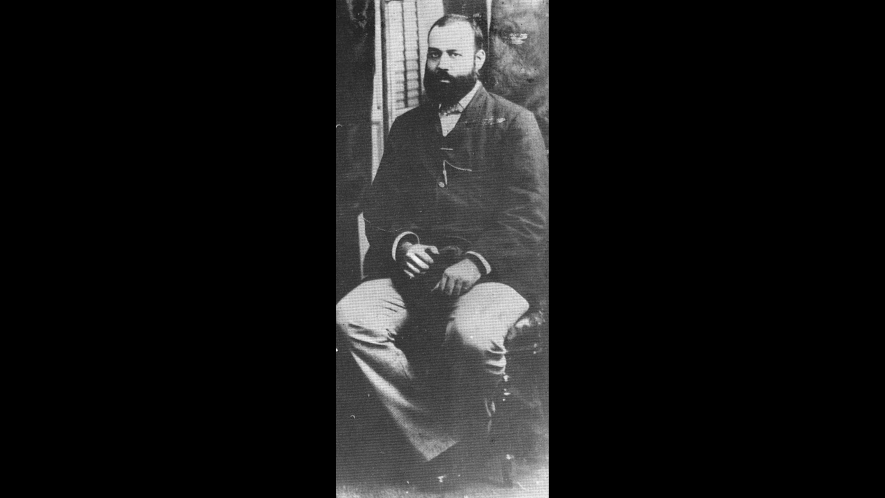
Perhaps Justice Nazeer should have also recalled 19th-century jurist Justice Syed Mahmood (1850-1903). A pioneer in bold assertions against the colonial judiciary, he produced incisive legal commentaries that reflect an audacious dissenter’s point of view. Writing in an Urdu newspaper, his father, Sir Syed Ahmed Khan, narrates Mahmood’s resignation from the Allahabad High Court in 1893 to “protect the self-respect of Indians against the racism of British judges”.

In that era, conceptions of nationhood were still evolving in India. Indian judges would not muster the courage to contest the racism of the imperial power or fellow European judges. But Mahmood did, in intrepid ways. Khan founded the Mohammedan Anglo-Oriental (MAO) College at Aligarh in 1877 and figures prominently but contentiously, stereotyped as a British loyalist and separatist in debates on contemporary nationalism. Mahmood supported his father’s modern education project, but unfortunately, his contributions are largely ignored by historians and the legal fraternity.

By 1920, MAO College, now Aligarh Muslim University, was the most prominent residential university in the country. Its history department has been a premier centre for advanced studies for a half-century. In 1889, primarily on Syed Mahmood’s initiative and his gifts in terms of books, journals and cash, AMU established a law department. Yet, he was neglected in its research. Only in 1973, seven years after the centenary of the Allahabad High Court, the Aligarh Law Journal brought out Mahmood’s contributions, and legal scholars reflected on his high calibre as a lawyer and judge.

The good news is, in 2004, Alan M. Guenther did his doctoral thesis on Mahmood at McGill University, Canada, which is available online for the public to access. His meticulous and well-researched account touches almost every aspect of Mahmood’s public life. Guenther also published an extended essay in 2011on Mahmood’s views on English education in 19th-century India. (In 1895, Mahmood had written a book on the theme for his speeches at the Educational Conference.)

In 1965, Asaf Ali Asghar Fyzee (1899-1981) complained, “Syed Mahmood’s contributions to the transformation of Muslim law in India have been largely neglected by historians and survive primarily as footnotes in legal texts on Muslim law.” Guenther, too, observes, “…overshadowed by the life and writings of his illustrious father, Ahmad Khan, his legacy has not received the attention it deserves. A large part of his father’s achievements in the reform of education, in fact, would not have been possible without the assistance of Syed Mahmood. But when he reached the age at which his father had made his most significant achievements, [Mahmood] had his life cut short.”

Mahmood had laid out his life plans clearly. S. Khalid Rashid, writing in 1973, reports that Mahmood decided early on that, like his ancestors, he would devote the first third of his life to educating himself, the second to earn a living, and the last to “retired study, authorship and devotion to matters of public utility”. But Guenther writes about how Mahmood’s health had deteriorated through alcohol abuse and disease. He died before he turned 53, broken by forced retirement, estranged from his father (who had died five years previously), stripped of responsibilities at the college he had helped found, separated from wife and son, and in poverty. He was selling personal items to repay debts. “His father’s numerous writings and letters are still republished, but Syed Mahmood’s contributions to Muslim thought are hidden in bound volumes of the Indian Law Reports and brittle files of government correspondence,” Guenther writes.

One aspect of Mahmood’s last years is captured by Prof. Iftikhar Alam Khan’s Urdu books, Sir Syed: Daroon-e-Khana (2006, 2020) and the recent Rufaqa-e-Sir Syed: Rafaqat, Raqabat wa Iqtidar Ki Kashmakash. These accounts expose the smear campaigns of the three companion successors of Sir Syed—Samiullah, Mohsin-ul-Mulk and Viqar-ul-Mulk—against Syed Mahmood as they vied for the secretary’s post at MAO College. Often European members of MAO College conspired with them. Exploiting his weaknesses and eccentricities, they ousted him to get a hold over college affairs, compounding his hurt during his tragic final years.

SYED MAHMOOD’S ROLE IN SIR SYED’S EDUCATIONAL ENTERPRISE

Having returned to India in 1872 after studying in England, Mahmood took time out of his budding legal career to assist his father’s reform work, particularly setting up MAO College. He prepared a detailed plan along the lines of his experiences in Cambridge. His specific aim, explained in February 1872, was to produce future leaders of India through an educational institution whose residential nature would be “as indispensable an education as the course of study itself”. The aim was to create a society of students and teachers quite different from the rest of society.

He travelled with his father to Punjab in 1873 and spoke at a rally to promote the project. In 1889, Sir Syed introduced a motion to nominate Mahmood as joint secretary of the board of trustees of MAO College by highlighting his assistance despite the opposition he faced. In particular, he considered his son’s influence the primary factor that persuaded European professors to come to India and teach there.

European staff members confirmed this around six years later when there was renewed opposition to Mahmood continuing as joint secretary. The principal, Theodore Beck (1859-1899), testified, “Syed Ahmad….acknowledged his reliance on Syed Mahmood for advice in all matters, and his imprint could be noted in the correspondence relating to the school. He declared his firm conviction that Syed Mahmood was the one person who shared his vision for the college, and apart from him, no one would be able to administer the school in keeping with that vision.” However, Samiullah (1834-1908) disagreed with Sir Syed on this count. As a result, a tussle for power began in the college management. The power-play could explain why AMU felt inhibited in bringing out a biography of Mahmood, a research gap that Guenther’s doctoral thesis fills. He has extensively relied on important correspondences of Mahmood preserved in the London India Office (British) Library.

SYED MAHMOOD’S TRYST WITH MUSLIM LAW

Mahmood is a forgotten pioneer of the transformation of Muslim law in modern South Asia. In 1882, at just 32, he became the first Muslim judge of the high courts in British India. He delivered numerous landmark decisions that shaped Muslim law, the law in general, and its administration.

Earlier, he blazed a trail his younger contemporaries followed in their judicial roles in British India. He was one of the first Indian Muslims to study in England and train in the English system of jurisprudence, the first Indian to enrol as a barrister in the High Court of Judicature at Allahabad in 1872, the first appointed as a district judge in the restructured judicial system of Awadh in 1879 and the first Indian assigned as a puisne judge to the High Court at Allahabad. He was the first Muslim in any High Court of India. He cleared a path for Indian Muslims to participate in administering justice in India. But his contribution is not limited to creamy career opportunities for Muslim youngsters. His lasting legacy is how Muslim law is perceived and administered in South Asia today.

CHAMPION OF ACCESSIBLE JUSTICE

An abiding concern of Mahmood was the cost of administration of justice. Court procedures were lengthy and expensive, and the “mass of law” was complicated. Distance from courts was another concern, for which he proposed a network of village courts for “on-the-spot” adjudication. He sought to make justice accessible through unpaid tribunals and honorary munsifs. He prepared a comprehensive draft for this, Guenther informs.

Furthermore, he attacked the [racial] mindset and court fees and stamp duties on legal documents. He ruled in August 1884 and February 1885 that “…if justice costs the same amount [to the] rich and poor, it follows that the rich man will be able to purchase it, whilst the poor man will not.” He declared, more than once, that British judges in India were too quick to find fraud.

In a speech at the Allahabad Bar in April 1885, Mahmood raised the language issue in judicial transactions, saying laws should be in languages intelligible to the masses. He insisted on the vernacular in arguments, pleadings and justice delivery and translated verdicts so that people unfamiliar with English could rest assured that judgments are reasoned. Of course, the issue of judicial language continues to be debated, and for this, acknowledgement is due to Mahmood.

AN INDIAN DISSENTER IN THE HIGH NOON OF BRITISH COLONIALISM

Mahmood is known most for outstanding dissenting judgements. In volume 2 of his 2021 book, Discordant Notes, Justice (retd.) Rohinton F. Nariman writes that Mahmood was known for detailed judgments, some of which stand out for thoroughness and fearless language. Mahmood would refer to the original Sanskrit versions when ruling on Hindu laws and the Arabic texts for Muslim laws, rather than using interpretations of the relevant texts.

From the 1860s to 1880s, during the codification of laws, he sought limits on importing British laws and protested that the local context was getting overlooked. His concern was not just the laws but their efficacy and adaptability within India’s cultural diversity.

Guenther observes, “…throughout his life, he identified himself as a Muslim as well as an Indian and a subject of the British crown, and that he was actively involved in the education and improvement of the Indian Muslim community. At the same time, Mahmood… [made] efforts to promote harmony between people of diverse backgrounds, and…[supported] initiatives that improved the situation of all Indians, regardless of religious affiliation…”

An anecdote from Altaf Hali’s Hayat-e-Javed (1901), cited by Shamsur Rahman Faruqi (2006), is worth sharing. “Contrary to the culture of sycophancy and genuflecting before the English colonial authority….Syed Ahmad Khan and his high-profile and brilliant son Syed Mahmud strived to conduct themselves as if they were equal to the English….Syed Ahmad Khan had stayed away from the [1867 Agra] Durbar because Indians had been given seats inferior to the English. A medal was to be conferred on Syed Ahmad Khan at that Durbar. Williams, the then Commissioner of Meerut, was later deputed to present the award to Syed Ahmad Khan at Aligarh railway station. Willams broke protocol and showed his anger at having to do the task under duress and said that government orders bound him, or he wouldn’t be presenting the medal to Syed Ahmad Khan. Syed Ahmad Khan accepted the medal, saying he wouldn’t have taken the award, except that he too was bound by government orders.”

Indian democracy is an outcome of anti-colonial nationalism, and dissent is its core component: Mahmood’s dissent contributed to nationalism in his time. In 2022, the V-Dem Institute described India as an electoral autocracy where dissent is being criminalised, and the judiciary is failing to contain the majoritarian upsurge. Mahmood’s professional conduct is an encouraging counterpoint to the degeneration in the Indian judiciary.

WHAT DID MAHMOOD THINK OF THE INDIAN NATIONAL CONGRESS?

According to Guenther, though Mahmood never joined the Congress, he was “equally aloof” from the anti-Congress propaganda his father indulged in. “…a rare catholicity characterised his views on most of the controversial questions,” he writes. He adds, “His acceptance among the Hindus [elites] generally was demonstrated by the fact that they tried to send him as their representative to the Imperial Legislative Council, though he never received that appointment.”

Nonetheless, like his father, Mahmood harboured class and regional prejudices. Guenther reveals an article Mahmood wrote in The Pioneer on 4 September 1875, suggesting the government must strive to with the sympathies of the “higher classes of natives”. When challenged to defend his position by “Another Native” in the same newspaper two weeks later, Mahmood responded that people in Punjab and the North-western Provinces [now Uttar Pradesh] were, historically speaking, of “much greater political significance” than those of Lower Bengal. Gunther cites his write-up: “…any educational system that succeeded in ‘attracting the Bengalee and fail(ed) to exercise any influence upon the higher classes of the Rajpoot, the Sikh, and the Mussulman’ must be regarded as a failure.”

Considering the socio-regional composition of top functionaries of AMU, even impartial insiders would testify that it still harbours regional and sub-regional prejudices. The Sir Syed Academy is releasing many publications during the ongoing centenary celebration of AMU. Publishing Guenther’s dissertation may be a fitting tribute to Mahmood, who must be regarded as a prominent co-founder of MAO College.

Mohammad Sajjad teaches modern and contemporary Indian History at Aligarh Muslim University. Md. Zeeshan Ahmad is a lawyer based in Delhi. The views are personal.

First published by Newsclick.

source: http://www.theleaflet.in / The Leaflet / Home> History / by Mohammad Sajjad and Zeeshan Ahmad / April 01st, 2022
Sania Mirza of UP will be India’s 1st Muslim woman fighter pilot

Jasovar Village (Mirzapur District), UTTAR PRADESH :

Sania Mirza of Uttar Pradesh’s Mirzapur district earned this position by passing the National Defense Academy 2022 examination (NDA) exam.

On December 27, Sania Mirza will join NDA Khadakwasla in Pune.(ANI)

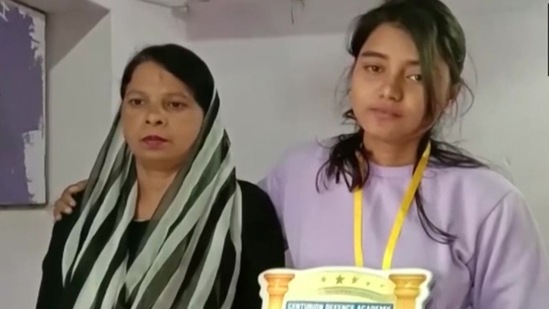
Sania Mirza, daughter of a TV mechanic from Mirzapur, has been selected to become a fighter pilot in the Indian Air Force and would be the country’s first Muslim girl and the state’s first IAF pilot.

Sania Mirza is a resident of Jasovar village under the Mirzapur Dehat Kotwali police station area. She secured this position by passing the NDA exam. She has brought laurels not only to the district but also to the state and the country.

Sania, who studied in a Hindi medium school, said that Hindi medium students too can achieve success if they are determined. On December 27, she will join NDA Khadakwasla in Pune.

The parents as well as the villagers are feeling proud at her.

Sania’s father Shahid Ali said, “Sania Mirza considers the country’s first fighter pilot Avni Chaturvedi as her role model. From the beginning, she wanted to be like her. Sania is the second girl in the country who has been selected as a fighter pilot.”

She studied from primary to Class 10 at Pandit Chintamani Dubey Inter College in the village itself. After that, she went to Guru Nanak Girls Inter College in the city. She was the district topper in the 12th UP Board. She started her preparations at Centurion Defense Academy.

She gives the credit for success to her parents as well as to the Centurion Defense Academy.

She said that only two seats were reserved for women in fighter pilot in National Defense Academy 2022 exam . “I could not grab a seat in the first attempt but I have found a place in my second attempt.”

Sania’s mother Tabassum Mirza said, “Our daughter has made us and the entire village proud. She fulfils the dream of becoming the first fighter pilot. She inspired every girl in the village to follow their dreams.”

In the National Defense Academy 2022 examination, there were a total of 400 seats including male and female. In which there were 19 seats for women, and two seats were reserved for fighter pilots. In these two seats, Sania managed to get a place on the strength of her talent.

source: http://www.hindustantimes.com / Hindustan Times / Home> India News / by ANI / posted by Lingamgunta Nirmitha Rao / December 23rd, 2022

Urdu Scientific Society felicitates Dr. Kausar Usman at Lucknow

Lucknow, UTTAR PRADESH:

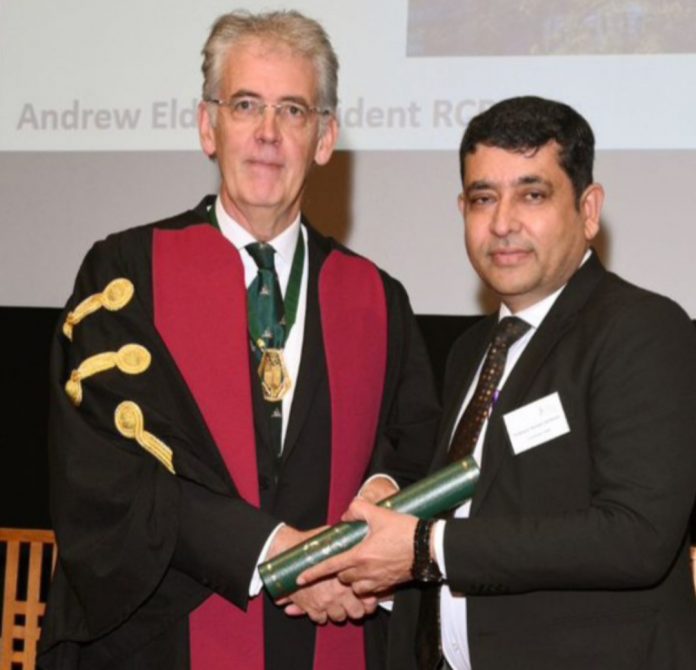
At a meeting of the Urdu Scientific Society, attended by prominent Doctors of Lucknow, Dr. Kausar Usman of King George Medical University, Lucknow was felicitated for the honor he received as a Fellow of the Royal College of Physicians, Edinburgh.

Presently working as a Professor of Internal Medicine at one of the prestigious medical institutions of India King George’s medical university, Dr. Usman is known for his expertise in the field of Medicine in general and Diabetes in particular. In 2016, Dr. Usman became the first Muslim Professor in the medicine department of King George’s Medical University, Lucknow.

Dr. Usman has participated actively in several national and international investigations and has a very solid foundation in research. Numerous national and international publications have published his work. He has more than 70 Publications to his name.

Prior to joining King George’s Medical University as a teaching faculty member, he worked in reputable medical institutions like Indraprasth Apollo Hospital in New Delhi.

In 2017, Dr. Usman had received a Fellowship Award FACP (Fellow of American College of Physicians) in San Diego, California.

Senior Urdu Scientific Society office bearers Padma Shri Dr. Mansoor Hasan, Maulana Khalid Rasheed, Dr. Iqtedar Farooqi, and Dr. Shakir Hashmi congratulated Dr. Usman for his extraordinary achievements.

source: http://www.muslimmirror.com / Muslim Mirror / Home> Indian Muslim> Positive Story / by Muslim Mirror Network / December 13th, 2022

Lucknow Diary: Innovation on a dozen wheels

Lucknow, UTTAR PRADESH :

Azamgarh:

With petrol prices increasing, Asad Abdullah conceptualised the idea of developing an electric cycle in which six people can be accommodated.

Image for representation purpose
Innovation on a dozen wheels by ITI-trained diploma engineer in electricals, Asad Abdullah. (Photo | EPS)

Innovation on a dozen wheels

All that innovation needs is a brilliant mind and passion coupled with the patience to apply it. Asad Abdullah, 22, of Azamgarh proved it by developing a 6-seater electric cycle. Asad’s innovation got recognised by none other than Anand Mahindra, chairman of Mahindra Group, who tweeted a small video of the cycle and made the innovation so viral that the video crossed 1 million views since December 1.

Mahindra tagged the chief design officer of the auto sector of his company asking if this device could find global application. With petrol prices increasing, Abdullah conceptualised the idea of developing an electric cycle in which six people can be accommodated.

He used scrap material and the motor of an old battery-operated. two-wheeler to develop the cycle in a month’s time at a cost of Rs ₹10,000-12,000. “I want to make it commercial and sell it to others at an affordable price,” says Asad Abdullah, an ITI-trained diploma engineer in electricals.

Lucknow touches zero covid mark

After a long span of 32 months, the city of Nawabs touched zero Covid figure mark as the last patient recovered from the ailment and no new case was reported, claim health authorities. The last patient who recovered and was discharged on Tuesday had tested positive last week. “This zero is a precious figure and we are making all efforts to sustain the status in Covid,” said Dr Manoj Agrawal, Lucknow CMO.

Lucknow has never had a status of zero Covid active cases since the 2020 pandemic. The first case in the state capital was reported in the third week of March 2020. Lucknow’s first Covid-19 patient was a doctor who returned from Canada. The second case reported was also that of a doctor and the third one was of a Bollywood singer Kanika Kapoor, who turned out to be a mass spreader after returning from the UK.

10 UP heritage sites up for adoption

UP Archaeological directorate has shortlisted 10 heritage sites up for adoption under the ‘Adopt Heritage Scheme.’ These sites include the Alambagh building of Lucknow, Potrakund in Mathura, Kalpa Devi and Astik Baba temples in Sitapur, Caves of Devgarh of Lalitpur, Raj Mandir Guptar Ghat in Ayodhya, Lakshmi temple in Jhansi, Fort of Tahrauli in Jhansi, Fort of Balabehat in Lalitpur, Digragarhi in Jhansi and Shiv temple of Bithoor in Kanpur.

Those interested in adopting the heritage site would be known as Smarak Mitra who would sign a memorandum of understanding (MoU) with the department and work towards the conservation of the site. Smarak Mitras will also be responsible for arranging logistics for the tourists at the site.

source: http://www.newindianexpress.com / The New Indian Express / Home> Nation / December 07th, 2022

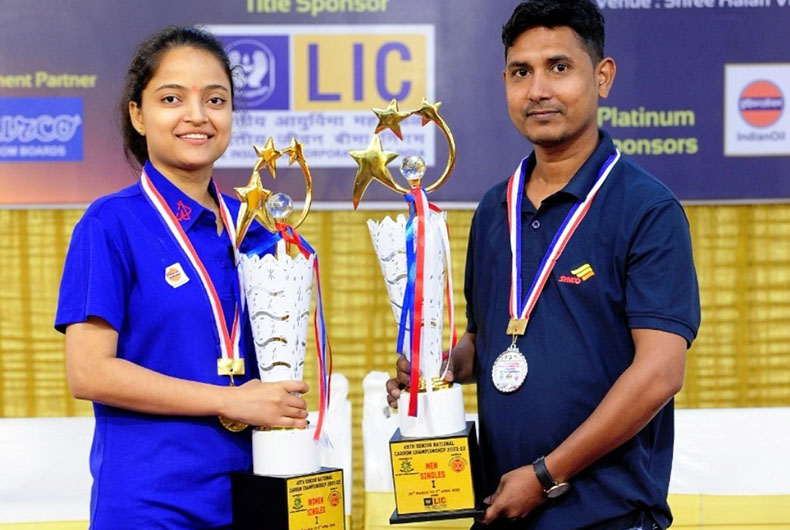
Abdul Rahman wins 49th Sr National Carrom Championship

UTTAR PRADESH:

The less fancied 27-year-old Rahman dished out a cool calculated performance to outshine the experienced Pasha and smoothly cruise to a deserving 25-0, 21-16 without much ado.

Carrom nationals: Abdul Rahman wins men’s crown, Kajal Kumari takes women’s title. (credit :Twitter)

Mumbai: 

Unassuming sixth seed Abdul Rahman of Uttar Pradesh cornered all the glory recording an authoritative straight sets victory against international and fourth seed Zaheer Pasha of Reserve Bank of India (RBI) in the men’s singles final of the 49th Senior National Carrom Championship on Monday.

The less fancied 27-year-old Rahman dished out a cool calculated performance to outshine the experienced Pasha and smoothly cruise to a deserving 25-0, 21-16 without much ado and clinch his maiden crown in the national championship organised by the All-India Carrom Federation (AICF) and hosted by the Maharashtra Carrom Association (MCA).

In the women’s competition, international and fifth seed Kajal Kumari of PSPB (Petroleum Sports Promotion Board) overcame the spirited challenge from fourth seed Nilam Ghodke of JISL (Jain Irrigation System Limited) snatching victory in two closely-contested sets, 15-12, 17-10 to emerge champion.

Pasha, who had knocked out teammate and top seed Prashant More in the semi-finals, was erratic and surprisingly missed some easy shots which proved to be his downfall.

In contrast, Rahman played steadily and confidently executed his shots and gradually gained the momentum which he hung on to throughout the contest, which turned out to be a one-sided affair.

In the first set, Rahman settled down quickly and won the first six boards to pocket the set 25-0 and open up a 1-0 lead. Pasha showed signs of fighting back as he won the opening two boards to take an 8-0 lead in the second, but Rahman bounced back and steadily won the next three and with the eight points won on the fifth board he jumped to a 20-8 points lead.

Pasha managed to win four points in the sixth to narrow the lead to 12-20, but he lost a close seventh board as Rahman led 21-12 going into the 8th and final board. Pasha was left with an uphill task of getting 10 points from the final board and he tried his best but lacked consistency and with that, his hopes of staying alive faded away. Rahman capitalized on every chance to sink his black coins and ensure his success.

Meanwhile, Mantasha Iqbal of AAI (Airports Authority of India) defeated Debagani Tamuly of DASCB (Defence Accounts Sports Promotion Board) 8-25, 19-15, and 22-11 in the women’s third-fourth place match.

In the men’s third-fourth place match, Maharashtra’s Sandeep Dive defeated World champion and top seed Prashant More of RBI 25-19, 18-1.

Results:

Women’s singles (final): Kajal Kumari (PSPB) beat Nilam Ghodke (JISL) 15-12, 17-10. Third-fourth place: Mantasha Iqbal (AAI) Debagani Tamuly 8-25, 19-15, 22-11.

Men’s singles (final): Abdul Rahman (UP) beat Zaheer Pasaha (RBI) 25-0, 21-16. Third-fourth place: Sandeep Dive (Mah) beat Prashant More (RBI) 25-19, 18-1.

source: http://www.ummid.com / Ummid.com / Home> India> Sports / by IANS / April 04th, 2022

AMU students win Judges Choice Award in NASA Space App Challenge

Aligarh, UTTAR PRADESH :

Aligarh :

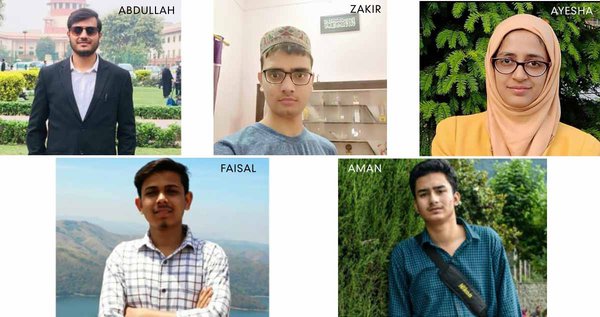
An unintended but welcome consequence of the lockdown to contain the coronavirus has been improved air quality stated the presentation of ALTAIR, a team of Aligarh Muslim University (AMU) students led by MBBS first-year student, Ayesha Samdani, which won the ‘The Judges Choice Award’ in the International NASA Space App Challenge-2020 for presenting a solution in response to the NASA’s Challenge ‘A One Health Approach’.

Ayesha and team members, Mohd Zakir Husain (MBBS), Aman Ahmad Khan (MBBS), Faisal Jamil (B.Tech) and Abdullah Samdani (BA LLB) gave an analysis on air quality of the pre and post lockdown periods in the Indo Gangetic region of Northern India. Their study gave details about how an improvement in the air quality benefited the health of people.

For the presentation, the ALTAIR members also coded an Air Quality Index (AQI) Calculator to measure AQI of a certain region, which is helpful in giving health and cautionary statements and providing guidance to common people on pollution related health issues.

Congratulating the students on the achievement, Prof Shahid Ali Siddiqui, Principal, Jawaharlal Nehru Medical College (JNMC) of the university and Prof Shakeel Samdani, Dean, Faculty of Law said that the work of these AMU students is formative as it provides a clear comparison of average concentration levels during the months before the lockdown and the time period during the lockdown restrictions, showing a reduction in SO2 level.

The event was judged by ISRO and NASA scientists including Tazeen Siddiqui of NASA.

source: http://www.milligazette.com / The Milli Gazette / Home> News> Community News / by The Milli Gazette Online / October 06th, 2020

AMU faculty elected Fellow of the National Academy of Sciences

Aligarh, UTTAR PRADESH :

Prof Nafees Ahmad Khan, Department of Botany, Aligarh Muslim University, has been declared as the Elected Fellow of the National Academy of Sciences, India (NASI).

The National Academy of Sciences,  recognises researchers who excel in the field of their research as Fellow of the Academy, which is considered as the most coveted accomplishment in academics.

Prof Khan has worked on the mechanisms of hormonal and nutritional regulation of plant development with emphasis on plant resilience against stressful environments using nutriomics and metabolomics. 

He has published many research papers in crucial high Impact Factors journals and collaborated internationally for research. He has published about 200 research papers(H-index 67; i–10 index 175)and was noted as one of the most-cited Indian researchers in the area of Plant Science by Elsevier every year from 2019 to 2022. 

He has edited 19 books published by Elsevier, Springer-Nature, Frontiers, NOVA, Alpha Science and others. Supervised research projects focused on signalling molecules-nutriomics and abiotic stress tolerance mechanisms, and served as Editor/Guest Editor of the leading plant science journals, published by Elsevier, Frontiers, Springer-Nature MDPI.

Prof Khan is also fellow of The Linnean Society, Indian Botanical Society, Indian Society for Plant Physiology.

source: http://www.amu.ac.in / Aligarh Muslim University / Home / by Public Relations Office / November 04th, 2022

Shotgun WC: India’s Areeba Khan wins silver in junior skeet

Aligarh, UTTAR PRADESH:

Areeba Khan

Osijek (Croatia):

At the 2022 International Shooting Sport Federation (ISSF) Shotgun World Championship, which was held on Monday in Osijek, Croatia, Indian shooter Areeba Khan took home the silver medal in the individual women’s junior skeet event.

Areeba Khan hit 29 of her 40 shots in the final, missing her final attempt, while Sophie Herrmann of Great Britain scored 30 shots to win the gold.

Raveca-Maria Islai of Romania took home the bronze medal after striking 20 shots, while Muffaddal Zahra Deesawala of India placed fourth after hitting 12 targets.

After Shapath Bharadwaj, Shardul Vihan, and Arya Tyagi won gold in the junior trap men’s team competition, this is India’s second medal in the shotgun competition.

After a shoot-off, Areeba Khan came in third place in the qualifying round. She then won her ranking match to advance to the final.

The 19-year-old Indian shooter competed for India’s junior women’s skeet squad in 2021, which won a gold medal.

No Indian shooter qualified for the ranking matches in the junior men’s individual skeet later in the day.

In qualifying, Bhavtegh Singh Gill, Abhay Singh Sekhon, and Ritu Raj Bundela came in at positions 32, 33, and 36, respectively. The ranking matches are limited to the top eight competitors. 

source: http://www.awazthevoice.in / Awaz The Voice / Home> Sports / Ocotber 05th, 2022

Arif Mohammed Khan | His own man

Bulandshahr, UTTAR PRADESH:

The Kerala Governor is in the midst of a controversy after he launched an attack on the State government in a press conference 

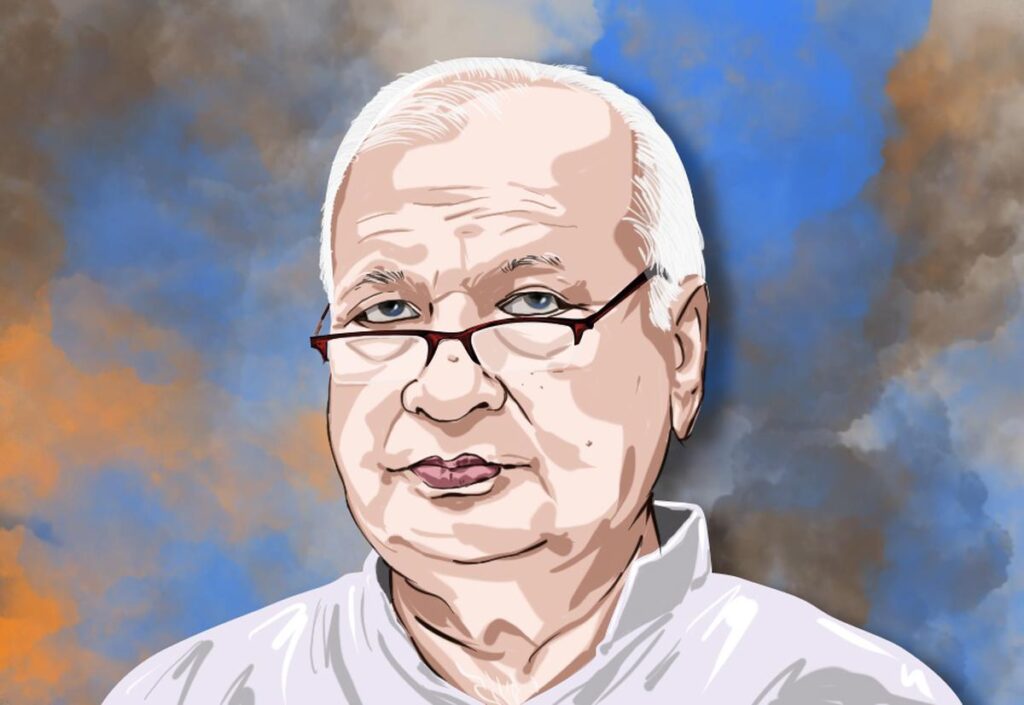
What’s unfolding now in Kerala is merely the latest episode in Arif Mohammed Khan’s lifelong story of being his own man, whatever the stakes, whichever the stage. Often loathed, sometimes loved but hard to ignore, Mr. Khan was that way when he entered student politics in Aligarh Muslim University (AMU) in the early 1970s and rose to be the president of the students union. It wasn’t any different when he became an MLA in 1977, aged 26. Or a Minister of State during the Rajiv Gandhi Government. It is scarcely any different now when he is into his 70s and occupies the august, if increasingly controversial, office of the Governor of Kerala. He is his own man.

Another matter not everyone shares his view of what’s right. Least of all Kerala Chief Minister Pinarayi Vijayan. There is little, if any, love lost between the two. There is a reason: Mr. Khan has been publicly critical of the appointment of Mr. Vijayan’s private secretary’s wife as an Associate professor in Kannur University, where Mr. Khan is the Chancellor. So upset was Mr. Khan that casting custom aside, he called a press conference at Raj Bhawan where he fumed against the elected LDF government.

Unsurprisingly, the LDF government can barely stand him today. It is unlikely to worry Mr. Khan a bit. He is known to express himself even at the risk of social opprobrium. His old friends in AMU and Jamia Millia Islamia, where the Bulandshahr-born young man sought education, remember him as a frank and fearless person who was reasonable and open to debate. He is said to have been a good host who loved his Mughlai food and served it with relish to his guests. Today, they are both surprised and a shade speechless at the ideological and political vicissitudes in Mr. Khan’s life.

Indeed, what is happening today in Kerala is not without precedence in Mr. Khan’s multi-layered career which has seen him making pit stops over the Bharatiya Kranti Dal (the predecessor of Rashtriya Lok Dal), the Congress, the Janata Dal, the Bahujan Samaj Party before finally finding a bit of an echo to his views in the BJP. His stint in Kerala, his vehement opposition to noted Marxist historian Irfan Habib and constant run-ins with the Kerala Chief Minister are all attributed to his saffron leaning. Never mind the fact that he has won elections, notably from Kanpur and Bahraich on the tickets of non-BJP parties and has lost elections, as in Kaiserganj, on the BJP ticket in 2004.

Clash with clerics

Back in the mid-1980s, a section of Muslim clerics had no love lost for him at the height of the Shah Bano controversy when he risked it all in opposing Prime Minister Rajiv Gandhi’s move to virtually overturn the Supreme Court verdict on maintenance to divorced Muslim women.

Faced with calls for social boycott and possibility of political oblivion, Mr. Khan did not equivocate then. He is not likely do that now too.

Mr. Khan is a redoubtable scholar of Islam with a uniquely his own interpretation of religion. One could question his interpretation of scripture, not his facts. Equally, unlike many clerics, he is open to being corrected. Faizur Rehman, an independent Chennai-based Islamic scholar himself, at one time agreed with him on the Shah Bano case, but later made his disapproval known when Mr. Khan supported the criminalisation of triple talaq following the Shayara Bano verdict. “Our friendship was not affected by my criticism of his views on criminalisation of talaq,” Mr. Rehman recalls.

One may disagree with Mr. Khan but there is merit in listening to him, even if he himself could do with being a better listener. In the Shah Bano case, the Muslim clerics had agreed for the husbands to pay a substantial one time alimony to a divorced wife. They later retracted. If the maulanas had listened to him then, India’s political trajectory would have been very different.

As for Mr. Khan, he would do well to remember the letter of the rule book he quotes against the Kerala government expects a certain spirit, a certain decorum from the Governor too. It’s time to listen to Mr. Khan as much as for him to listen to voices of constitutional propriety.

source: http://www.thehindu.com / The Hindu / Home> News> India / by Ziya Us Salam / September 25th, 2022

Mairaj Ahmad Khan snatches skeet gold

Khurja, Bulandshahar District, UTTAR PRADESH :

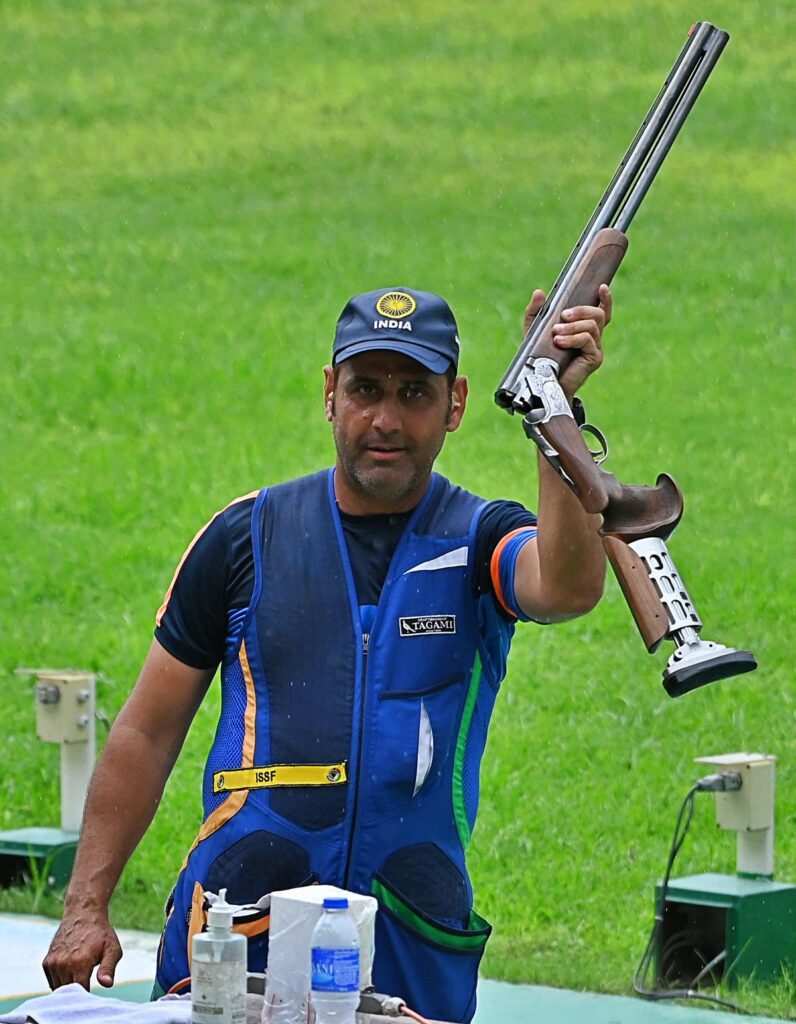
Mairaj Ahmad Khan wins a spectacular gold from nowhere in the Digvijay Singh shotgun championship in Delhi on Sunday. | Photo Credit: Kamesh Srinivasan

New Delhi:

Darshna Rathore had a chance to fight for gold but missed the last two birds and thus had to settle for the bronze.

Olympian and World Cup gold medallist Mairaj Ahmad Khan asserted his class yet again as he accelerated to a smart finish in grabbing the skeet gold in the Digvijay Singh shotgun championship at the Dr. Karni Singh Range, Tughlakabad, on Sunday.

The 46-year-old Mairaj beat Arjun Thakur 35-30 for the gold, as he missed only one bird in the medal round. He had qualified on top in the semifinal with 27 hits, after having made the final with a modest score of 115, six point behind qualification topper Gurjoat Khangura.

‘’Final and semifinal are great. I am going to work only on qualification for the next three months’’, said Mairaj, understandably happy about the way he had competed despite not being at his best.

It was a similar case during the last World Cup in Changwon, when Mairaj had to win a shoot off with four others after being tied on 119 for the last two berths, before racing to the gold.

Anantjeet Singh Naruka who had shot 120 in qualification lost the shoot off against Amrinder Singh Cheema for a berth in the medal round.

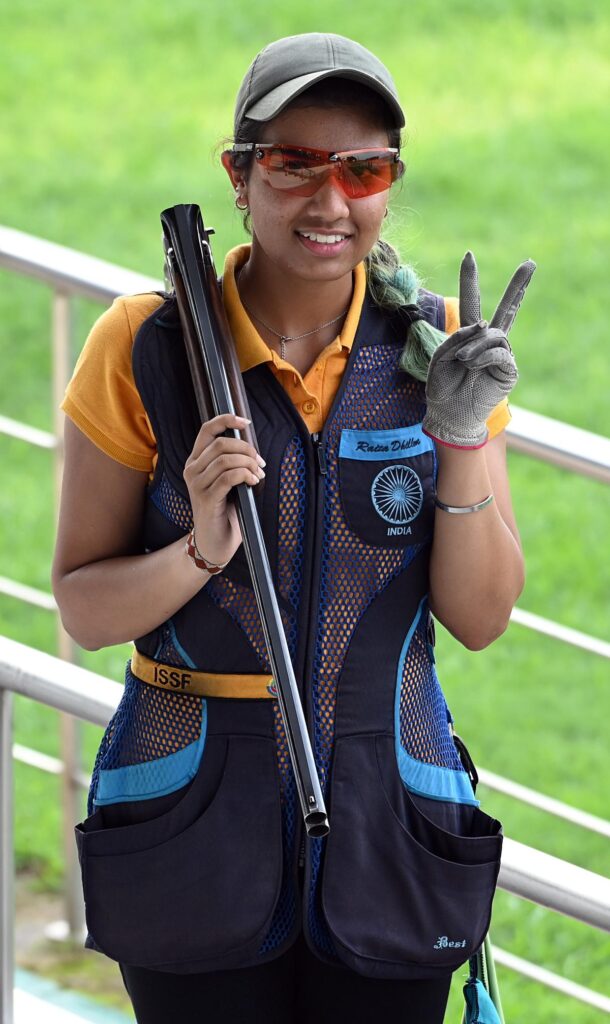
Raiza Dhillon won both the women’s and junior skeet gold medals. | Photo Credit: Kamesh Srinivasan

It was Raiza Dhillon all the way as she won both the women’s and junior gold. Raiza beat qualification topper Ganemat Sekhon 36-35 for the women’s gold, and beat Parinaaz Dhaliwal 33-32 for the junior gold.

Darshna Rathore had a chance to fight for gold but missed the last two birds and thus had to settle for the bronze.

The results:

Skeet: Men: 1. Mairaj Ahamed Khan 35 (27) 115; 2. Arjun Thakur 30 (27) 119; 3. Gurjoat Khangura 24 (29) 121; 4. Amrinder Singh Cheema 15 (24) 113.

Juniors: 1. Harmehar Singh Lally 28 (25) 112; 2. Bhavtegh Singh Gill 23 (25) 113; 3. Rajveer Singh Gill 19 (26) 112; 4. Abhay Singh Sekhon 14 (26) 116.

Women: 1. Raiza Dhillon 36 (25) 113; 2. Ganemat Sekhon 35 (27) 118; 3. Darshna Rathore 26 (22) 109; 4. Zahra Mufaddal Deesawala 11 (21) 112.

Juniors: 1. Raiza Dhillon 33 (23) 113; 2. Parinaaz Dhaliwal 32 (23) 109; 3. Darshna Rathore 24 (28) 109; 4. Sanjana Sood 14 (26) 113.

source: http://www.thehindu.com / The Hindu / Home> Sport / by The Hindu Bureau / New Delhi, August 01st, 2022