Tag Archives: Salman Khurshid – Foreign Minister of India

“Kashmir: A Journey Beyond Time”: Book Launch Triggers Debate on History, Article 370

NEW DELHI :

New Delhi :

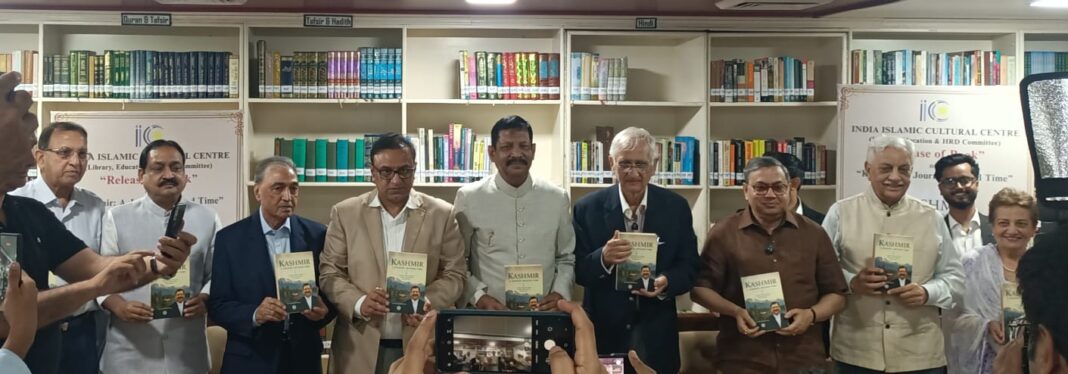
Advocate Irshad Ahmad’s book titled “Kashmir – A Journey Beyond Time” was released at the India Islamic Cultural Centre (IICC) on Wednesday, bringing together former judges, political leaders, legal professionals and public figures who reflected on Kashmir’s history, natural beauty, political developments and the experiences of its people.

Speaking at the book release, Justice Iqbal Ansari, former Chief Justice of the Patna High Court, congratulated Ahmad and urged people to read the book to develop a deeper understanding of Kashmir. Recalling his own visits to the region, Justice Ansari said that Kashmir’s extraordinary natural beauty stood in sharp contrast to the difficult circumstances he witnessed there.

Describing Kashmir as a “tragic place”, he said its people were good and hospitable but had experienced difficult lives. He recalled seeing restrictions and challenging conditions during his visits and said these experiences left him deeply saddened.

Justice Ansari also discussed the historical circumstances surrounding Jammu and Kashmir’s accession to India. Recalling the events following the end of British rule, he said Jammu and Kashmir was a princely state whose ruler, Maharaja Hari Singh, initially sought to maintain an independent position. According to Ansari, the situation changed following the entry of forces from Pakistan into the region, after which the Maharaja sought India’s assistance and signed the Instrument of Accession.

He emphasised that the accession initially related to three subjects, defence, foreign affairs and communications, while Jammu and Kashmir retained substantial autonomy in other areas.

Justice Ansari subsequently turned to the history and constitutional significance of Article 370. He questioned the popular narrative that Sardar Vallabhbhai Patel was unaware of, or opposed to, the provision. According to him, discussions concerning Article 370 took place at Patel’s residence, while a draft letter concerning Sheikh Abdullah was also sent to Patel for approval.

He said Patel subsequently played a role in securing support for the provision within the Congress Working Committee. Justice Ansari argued that Article 370 was conceived as a constitutional mechanism through which the applicability of provisions of the Indian Constitution to Jammu and Kashmir could be determined while preserving the state’s special constitutional position.

He stressed that claims concerning Article 370 and Patel’s role should be assessed in light of historical records rather than simply repeated as established facts. Referring to the subsequent abrogation of Article 370, Justice Ansari said there had been limited opportunity for a dispassionate public discussion about its constitutional and political implications.

He expressed appreciation for Ahmad’s effort to document his journey through Kashmir and said the book could encourage readers to engage more deeply with the region’s history, people and contemporary realities.

Former Union Minister Salman Khurshid also congratulated Ahmad on the publication. He said the book on Kashmir should perhaps have been written much earlier and suggested that greater engagement with the region could have contributed to addressing some of the problems associated with it.

Khurshid referred to the Supreme Court’s judgment concerning Article 370 and noted that Justice Iqbal Ansari had articulated his views on Kashmir and the constitutional provision. He also suggested that a separate book should be written on the Central Bureau of Investigation (CBI) and its significance in India’s constitutional and institutional framework.

Addressing the question of Kashmir’s relationship with the rest of the country, Khurshid said that even if some people believed the situation had improved, sustained efforts were necessary to ensure that the people of Jammu and Kashmir never felt separated from the rest of India.

He emphasised the importance of strengthening relationships with the people of the region and avoiding actions or approaches that could deepen feelings of alienation.

Recalling former Prime Minister Atal Bihari Vajpayee’s formulation of “Kashmiriyat, Insaniyat and Jamhooriyat”, Khurshid described the phrase as an important message associated with Kashmir. He said India should work towards an era in which Kashmir makes a significant contribution to the country’s future and receives the attention and care appropriate to its place as the “crown of India”.

The author, Advocate Irshad Ahmad, described the occasion as a deeply emotional moment, saying he had never imagined that he would become the author of a book. Recalling his journey to Kashmir, he said he had initially travelled there as an ordinary visitor but returned with experiences and impressions that eventually inspired him to write.

Ahmad said the beauty of Dal Lake, mountains, valleys, shikaras and gardens, along with the warmth and hospitality of Kashmir’s people, left a lasting impression on him. These experiences, he said, became the foundation of his book.

He said the central theme of his journey was “Sangharsh”, or struggle, which he described as an integral part of human life and an important source of inspiration and strength. Referring to Winston Churchill’s well-known exhortation to “never give in”, Ahmad said the spirit of perseverance had remained an important part of his own journey through different phases of life, including engineering, politics and public service.

Ahmad said he had already published around 650–700 books and credited the encouragement of friends and well-wishers for motivating him to continue writing. He particularly addressed young people, saying that determination and sustained struggle could help them achieve their objectives irrespective of the profession or field they chose.

He clarified that Kashmir – A Journey Beyond Time was not intended to be a conventional historical work. Instead, he said, it was based on what he personally saw, experienced and felt during his journey through Kashmir. He also indicated that he planned to write another book dealing with Islamic culture and animal cultural history.

Sirajuddin Qureshi, former President of the India Islamic Cultural Centre, congratulated Ahmad for completing the book, particularly because the project had been undertaken quietly and without much public attention. He said the author deserved appreciation for presenting Kashmir in what he considered its proper context rather than attempting to write about the region without experiencing it firsthand.

Qureshi highlighted Kashmir’s natural beauty and recalled its longstanding reputation as a destination comparable to Switzerland. While acknowledging that numerous books had already been written about Kashmir, he said Ahmad’s effort to present the region through his own journey and observations added significance to the work.

Pradeep Rai, President of the Supreme Court Bar Association, also congratulated Ahmad and reflected on the enduring significance of books. He said societies had undergone enormous changes over thousands of years, with rulers, communities and social structures changing, while Kashmir’s mountains, rivers and natural landscape had remained enduring features of the region.

Rai said books had the power to make writers’ names live on through generations because readers continued to remember authors through their works. Referring to his interest in Amir Khusro and writings in which Kashmir has been mentioned, he said successive dynasties and historical developments had shaped the region and its society.

He praised Ahmad for travelling through Kashmir and documenting what he personally witnessed. Rai observed that understanding contemporary Kashmir required a willingness to see the region directly and engage with its people and society.

The book release thus became not merely a literary occasion but a wider discussion about Kashmir’s history, constitutional evolution, social experience, natural beauty and relationship with the wider Indian society. Across their remarks, the speakers emphasised the value of documenting personal experiences and engaging with Kashmir through history, literature and direct human interaction.

source: http://www.indiatomorrow.net / India Tomorrow / Home> News> Society / by India Tomorrow / October 01st, 2026

Muslim Mirror Releases List of 100 Most Influential Indian Muslims 2025; Young Faces Gain Prominence

INDIA :

Muslim Mirror’s 100 Most Influential Muslims of 2025

New Delhi: 

Muslim Mirror has released its much-anticipated annual list of the “100 Most Influential Indian Muslims of 2025,” spotlighting individuals who have made significant contributions to India’s public life across a wide spectrum of fields including politics, culture, education, business, media, religion, sports, and social service. Now in its second edition, the list aims to document influence not merely as power or popularity, but as sustained impact, leadership, and the ability to shape public discourse.

A defining feature of the 2025 edition is the growing prominence of younger achievers, signalling a visible generational shift within Indian Muslim leadership. Alongside established national figures, the list includes emerging voices who have built influence through grassroots activism, professional excellence, digital platforms, legal advocacy, education, and community engagement. Editors associated with the project said this was a deliberate attempt to recognise new centres of influence beyond traditional hierarchies.

The list reflects the diversity and plural character of Indian Muslim society, cutting across geography, ideology, profession, and language. From seasoned politicians and religious scholars to artists, entrepreneurs, academics, and social reformers, the compilation offers a broad snapshot of leadership trends at a time when issues of representation, constitutional values, and social justice remain central to national debate.

Representation Across Sectors

The 2025 list features several eminent academicians and intellectuals who have shaped higher education, policy discourse, and social research. Among them are Abul Qasim Nomani, Ameerullah Khan, Furqan Qamar, Shahid Jamil, and Ubaid-ur-Rahman, recognised for their contributions to education, public policy, and academic leadership.

In the business and entrepreneurship category, the list includes influential names such as Azad Moopan, Azim Hashim Premji, Farah Malik, Irfan Razack, M. P. Ahammed, Mecca Rafiq Ahmed, Meraj Manal, Syed Mohamed Beary, P. Mohammed Ali, Shahnaz Hussain, Tausif Ahmad Mirza, Yusuff Ali, and Ziaullah Sharif. Their inclusion underlines the growing economic footprint of Indian Muslim entrepreneurs, both domestically and globally, spanning sectors from retail and healthcare to infrastructure and consumer goods.

Community leadership remains a strong pillar of the list, with figures such as Arshad Madani, Mahmood Madani, Malik Motasim Khan, Mehmood Pracha, Syedna Mufaddal Saifuddin, Navaid Hamid, Pirzada Md Abbas Siddiqui, Qasim Rasool Ilyas, Sadatullah Husaini, Umer Ahmed Ilyasi, and Yusuf Mohamed Abrahani recognised for their roles in religious guidance, legal advocacy, social mobilisation, and institutional leadership.

Culture, Media, and Public Discourse

In arts and entertainment, globally recognised names such as A. R. Rahman, Aamir Khan, Mammootty, Munawar Faruqui, and Shah Rukh Khan continue to command immense cultural influence, shaping narratives that extend well beyond cinema and music into social consciousness.

The list also acknowledges the growing importance of media and journalism in shaping opinion and challenging dominant narratives. Journalists and commentators such as Arfa Khanam, Irfan Meraj, and Seema Mustafa are recognised for their consistent engagement with issues of democracy, minority rights, and constitutional values.

Religious and Intellectual Scholarship

A significant section of the list is devoted to Islamic scholars and religious thinkers, reflecting their continued influence on moral leadership and intellectual discourse. Names such as A. P. Aboobacker Musliyar, Qasim Nomani, Prof. Akhtarul Wase, Asghar Ali Imam Mahdi Salafi, Asjad Raza Khan, Ibraheem Khaleel Al-Bukhari, Javed Jamil, Khalid Saifullah Rahmani, Khaleelur Rahman Sajjad Nomani, Qamaruzzaman Azmi, Rashid Shaz, Shakir Ali Noori, Shamail Nadvi, and Yasoob Abbas find place for their scholarly work, writings, and public engagement.

Politics and Governance

The political category features leaders cutting across party lines and regions, including Asaduddin Owaisi, Ghulam Nabi Azad, Hamid Ansari, Mehbooba Mufti, Omar Abdullah, Salman Khurshid, Najeeb Jung, Syed Naseer Hussain, Engineer Rashid, Akhtarul Iman, Iqra Hasan, Zameer Ahmed Khan, Rakibul Hasan, K. Rahman Khan, Kadir Mohideen, Mohibullah Nadvi, Md Shafi, Agha Mahadi, Asim Waqar, and Sadiq Ali Shihab Thangal. Their inclusion reflects influence exercised through electoral politics, governance, diplomacy, and legislative advocacy.

Changemakers and Social Reformers

One of the most dynamic sections of the 2025 list is that of changemakers and social reformers, featuring individuals such as Safeena Husain, Shahabuddin Yaqoob Quraishi, Syeda Hameed, Zameer Uddin Shah, Mahbubul Hoque, Sabahat S. Azim, Mehmood Pracha, Faiz Syed, and Zahir Ishaq Kazi, among others. Many of these figures have earned recognition through long-term grassroots work rather than formal authority.

International Booker Prize 2025 winner Banu Mushtaq for Heart Lamp, along with renowned poet Wasim Barelvi, has been placed in the category of Literary Figures.

In sports, iconic names Sania Mirza and Irfan Pathan continue to inspire younger generations through excellence and public engagement beyond the playing field.

Beyond Rankings

The editors emphasised that the list does not claim to be exhaustive, nor does it measure influence solely through fame, wealth, or official position. Instead, it seeks to capture real-world impact, moral authority, intellectual contribution, and the ability to shape conversations within and outside the community.

The annual list has increasingly become a reference point for understanding evolving leadership patterns among Indian Muslims. By foregrounding both established figures and rising talents, the 2025 edition reflects continuity as well as change, underscoring how Indian Muslims continue to contribute meaningfully to India’s democratic, cultural, and social field.

source: http://www.muslimmirror.com / Muslim Mirror / Home> Indian Muslim / by Muslim Mirror / January 15th, 2026

9th Anniversary of Millat Times: Prominent figures appreciate its efforts, extend good wishes

NEW DELHI :

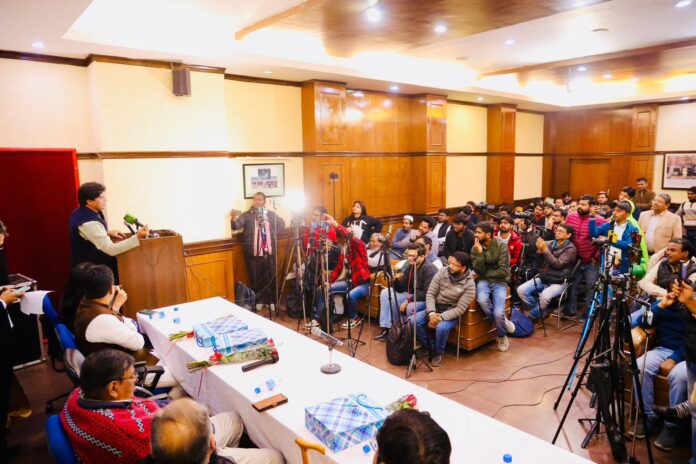
Renowned media house Millat Times celebrated its 9th anniversary on January 18 at the Press Club of India. The event witnessed participation from prominent intellectuals, politicians, and journalists who shared their thoughts on the theme, “The Role of Media in Democracy.” Attendees lauded the platform’s fearless journalism, its remarkable achievements, and its commitment to amplifying marginalized voices.

Former Foreign Minister and President of the India Islamic Cultural Centre, Salman Khurshid, highlighted the media’s role as a mirror of society and emphasized the need for independent responsibility. Praising Millat Times for its unique position in alternative media, he remarked, “Millat Times has countered the mainstream media’s negative propaganda by shaping truthful narratives. Shams Tabrez Qasmi and his entire team deserve congratulations and my best wishes.”

Imran Pratapgarhi, Rajya Sabha MP and Chairman of the Congress Minority Department, expressed delight at the presence of numerous young journalists. Applauding the platform’s achievements, he said, “In challenging times when the voice of the pen is silenced, Millat Times fearlessly speaks truth to power.” He urged the community to financially support independent media platforms to ensure their sustainability.

Former Rajya Sabha MP and Chairman of Indian Muslims for Civil Rights, Mohammed Adeeb, lamented the commercialization of media. “Newspapers are sold even before they reach the readers’ hands, becoming tools of mockery. Amid this, Millat Times lights the path of truth,” he said, commending Shams Tabrez Qasmi for giving a voice to the unheard.

Syed Sadatullah Husaini, Ameer of Jamaat-e-Islami Hind, underscored the importance of free media in sustaining democracy. Expressing concern over India’s low ranking on the Press Freedom Index, he congratulated Millat Times for its responsible journalism. Husaini encouraged expanding the platform’s multilingual content into regional languages like Gujarati and Malayalam.

Veteran journalist Bhasha Singh criticized the communalization and government alignment of mainstream media while lauding Millat Times for upholding journalistic integrity. “Congratulations to Shams Tabrez Qasmi and his team for their steadfast commitment to true journalism,” she said.

Dr. Khalid Anwar, Chief Editor of Hamara Samaj and JDU MLC from Bihar, acknowledged the unparalleled power of media to shape narratives. “In a deteriorating environment, platforms like Millat Times are vital for representing our voices,” he noted.

Gautam Lahiri, President of the Press Club of India, stressed the critical need for independent, people-oriented media. Highlighting the Press Club’s opposition to government-imposed restrictions, he recognized Millat Times as a standout platform and commended Shams Tabrez Qasmi’s contributions.

Iqra Hasan Chaudhary, MP from the Samajwadi Party, sent a written message appreciating Millat Times as a vital need of the hour.

In his inaugural address, Shams Tabrez Qasmi, the Founder and Editor-in-Chief, reflected on the journey of Millat Times. He shared how the platform was established to address the need for amplifying Muslim and marginalized voices. “In nine years, we’ve trained over 100 journalists and covered issues such as riots, mob lynching, crimes, and elections from the ground. Despite hurdles, including FIRs and government actions like shutting down our Facebook page with over a million followers, we remain committed to our work,” he said. He proudly announced that Millat Times now reaches over 70 million people monthly, with nearly five million subscribers and followers across platforms.

The event’s anchoring was managed by Shruti Sharma and Mohammad Sufiyan Saif, while Ruba Ansari delivered the vote of thanks.

Notable attendees included Mirza Qamar Hasan Baig (Chairman, Jamia Cooperative Bank), Mufti Athar Shamsi (Director, Al-Quran Academy), Mufti Ansar-ul-Haq Qasmi (President, Jamia Al-Qasim, Supaul), senior journalists Iqbal Ahmed (BBC) and Armanlesh (NewsClick), activist Safoora Zargar, Aditya Menon (Political Editor, The Quint), and others.

The event’s success was attributed to the dedicated efforts of the Millat Times team, including Mohammad Sufiyan Saif, Ruba Ansari, Mohammad Afsar, Mohammad Tamanna, Mazhar Khan, Sarem Ahmed, Rehan Razi, Talha Shameem, Mohammad Shameem, Sarah Khan, Advocate Abu Nasr, Nazim Hasan, Amir Zafar Qasmi, and Maulana Zafar Siddiqui Qasmi.

With its fearless journalism and unwavering commitment to truth, Millat Times continues to inspire hope for a more inclusive and democratic India

source: http://www.muslimmirror.com / Muslim Mirror / Home> Indian Muslim> Media / by Special Correspondent / January 19th, 2025