All posts by mpositiveone@gmail.com

Khan Sir’s affordable hospital in Patna becomes lifeline for poor

Patna, BIHAR :

Khan Sir Hospital, Patna

In an era where escalating medical explosive costs are making healthcare inaccessible to millions, Khan Sir has given India a reason to take pride. Patna is set to experience a significant enhancement in healthcare access with the launch of the hospital for those who can’t afford the highend treatments and diagnosis of the diseases.

The hospital, established by Faizal Khan—founder of the world’s largest and most affordable online education platform—known as Khan Sir, provides low-cost diagnostic and treatment services for the poor. Khan Sir’s initiative is inspired by his mother’s vision of making healthcare affordable and removing financial barriers to medical care. 

Speaking to the media, Khan Sir said. “I have started this initiative for the ease of the residents of my nation. It was my mother’s dream to build a hospital that gives affordable medical treatments to everyone. Building upon that, I am trying to create a situation where women of my country, whom I consider family, don’t have to mortgage their jewellery for any medical treatment. My further motive is not to earn out of this initiative; I would rather curb the brokerage that is involved in the medical facilities of Bharat.”

The hospital is located on Ashok Rajpath in Patna, Bihar, and has been designed to serve low income families, daily wage earners, senior citizens, and economically underprivileged patients who struggle with high healthcare costs. Khan Sir has stated on multiple occasions that the facility’s mission is to provide quality care at costs much lower than even government hospitals. 

Khan Sir Hospital, Patna (Bihar)

From the start, the hospital has focused on keeping diagnostic and treatment costs extremely affordable. For example, a blood test is charged at only Rs 7, while an ECG (electrocardiogram) costs Rs 25 figures that have caught public attention for being significantly lower than typical lab charges. Initial pricing also includes minimal fees for X rays and kidney tests designed to ensure that essential diagnostics are accessible to all. 

According to the hospital’s official information, even more services are priced affordably: Digital X rays at Rs 30, CT scans from Rs 150, ultrasound for Rs 100, blood tests around Rs 50, and consultations at just Rs 20. These rates make basic medical care much less burdensome for patients who previously had to choose between health and household expenses. 

खान सर का हॉस्पिटल इस दिन से होगा चालू, 35 रु में X-Ray से लेकर काफी सस्ता ईलाज! पटना में कुल 5 बड़े Ai जेनरेटेड हॉस्पिटल खोलेंगे! Khan Sir Hospital Patna pic.twitter.com/TTxoq3Jy7R

— छपरा जिला 🇮🇳 (@ChapraZila) January 4, 2026

Beyond basic diagnostics, Khan Sir Hospital offers a 24/7 blood bank and dialysis centre, with trained nephrology teams and modern equipment. A dedicated emergency department and general OPD services ensure continuous care for various health needs. The hospital also runs community health programmes and patient education initiatives to encourage preventive care.

In line with his charitable mission, Khan Sir plans to expand services across Bihar by establishing dialysis centres and blood banks in other districts with advanced machines imported from Germany and Japan aiming to provide affordable care where it is most critical. 

The hospital’s community outreach has included blood donation drives, where more than 150 units were collected, helping save lives in emergencies. Such efforts demonstrate the institution’s commitment to community health, not just commerce. 

The initiative has inspired strong emotional support from followers. In one notable example, a young fan from Uttar Pradesh drew attention by creating and gifting paintings made with her own blood to Khan Sir in Patna, a symbolic tribute to his work in healthcare and education. 

With this combination of ultra-low fees, modern treatment facilities, community outreach programmes, and a mission rooted in service, Khan Sir Hospital is positioning itself as a lifeline for affordable healthcare in Bihar. It represents a growing model of healthcare that prioritises accessibility and compassion at its core.

source: http://www.awazthevoice.in / Awaz, The Voice / Home> Stories / by Asshhar Alam / February 09th, 2026 

Book on Umar Khalid Released in New Delhi

DELHI :

New Delhi :

An overflowing audience of the young and the very old at the Press club of India, New Delhi, on Tuesday witnessed the release of a book on Umar Khalid, a JNU scholar now in jail these last six years.

The book titled Umar Khalid and His World: An Anthology, published by Three Essays Collective, is edited by Anirban Bhattacharya, Banojyotsna Lahiri, and Shuddhabrata Sengupta.

It is an anthology of writings by and about the incarcerated activist, featuring contributions from various public figures, intellectuals, and friends.  The anthology is curated by researcher/activist Anirban Bhattacharya, writer and activist Banojyotsna Lahiri (who is also Umar Khalid’s partner), and artist/writer Shuddhabrata Sengupta.

The book features letters, essays, and reflections, including writings from Umar Khalid himself, along with contributions from Romila Thapar, Ramachandra Guha, Anand Teltumbde, and Kunal Kamra. It highlights themes of resistance, the injustice of prolonged detention, and the political atmosphere in India.

source: http://www.radiancenews.com / Radiance News / Home> Review Article> Book Release> Focus / by Radiance News Bureau / February 17th, 2026

Kerala schoolboy’s bravery brings three back from the brink of death

Mankada Village (Malappuram District), KERALA :

Mohammed Shamil C

That Sunday afternoon still lingers in Mohammed Shamil’s mind: the loud cries for help and the rush to save lives. Without hesitation, he dived into a murky village pond and brought three girls back to life from the brink.

One of them needed CPR, and he gave her the breath of life with the little knowledge he learned from school. Now, Shamil is hailed as a hero and showered with felicitations, trophies and mementoes – more than three dozen in less than two weeks.

Schools and clubs invite him to share his story, inspiring others to act in moments of crisis. For the Class 12 boy, it is about saving lives and not seeking praise.

Mohammed Shamil (right) and his younger brother Mohammed Shehin being felicitated with currency garlands at their school. | Photo Credit: SAKEER HUSSAIN

On July 13, around 2 p.m., Shamil’s peaceful afternoon at his Puthanveedu home at Mankada near Manjeri was disrupted. His mother Shahida had just received a distressing alert from ASHA worker Hafsath Palliyalthodi that three girls were drowning in a nearby pond.

Shahida’s frantic cry propelled Shamil into action. He sprinted 200 meters to the pond and plunged into the muddy waters, where two girls were desperately struggling to stay afloat while the third had already slipped underwater.

Muslim Youth League national secretary Najma Thabsheera felicitating Mohammed Shamil. | Photo Credit: SAKEER HUSSAIN

With careful precision, Shamil rescued the two girls. He was mindful of not putting himself in danger. “When one girl raised her hand, I did not grab it,” he said. “Instead, I caught her dress from behind and pulled her to safety.”

Just as Shamil thought it was over, the rescued girls broke down in tears, revealing that one more person was still submerged underwater. “That moment sent shivers down my spine,” Shamil recalled. “Initially, I was unsure what to do, but I took a few deep breaths and dived multiple times in a desperate attempt to rescue the last one.”

Fire and Rescue Services officers felicitating Mohammed Shamil. | Photo Credit: SAKEER HUSSAIN

The pond was over two meters deep, with murky water, making it difficult to locate the missing girl. As more people arrived, Shamil dove in three times before finally pulling out the 12-year-old girl with the help of his younger brother, Mohammed Shehin, who is a class 8 student.

She was not breathing, and her face was pale. Shamil used his school biology knowledge to do chest compressions. When she showed signs of life, he gave her mouth-to-mouth resuscitation. Within minutes, she started breathing again. The girl was then rushed to the hospital.

Shamil’s parents, Shahina and Ashraf, beamed with pride as they looked at the table filled with trophies and mementoes. The recognition came from all corners – the Fire and Rescue Services, local clubs, the MLA, the district, block, and grama panchayats.

Shamil, once just a student, has become a symbol of hope and bravery for the people of Mankada. “I just did what needed to be done,” he humbly said.

source: htttp://www.thehindu.com / The Hindu / Home> News> India> Kerala / by Abdul Latheef Naha / July 25th, 2025

Maroof Raza – A bridge between academia and rugged realities of battlefield dies at 67

INDIA :

Gurugram (TIP) :

Major Maroof Raza (retd), a respected voice in India’s strategic circles, passed away today, February 27, following a prolonged battle with cancer.

Major Raza, 67, who breathed his last in Gurugram, was an Army officer with ground experience in tackling counter insurgency in the north-east. After leaving the Army, he blossomed as a military historian, a respected strategic affairs commentator and authored several books on Pakistan and China.

Known for his analytical mind he connected the gap between military doctrine and public understanding of military jargon. His work was a ‘bridge’ between academia and the rugged realities of the battlefield. “Maroof had great confidence and oratory skills, the transition towards being a strategic commentator was natural for him,” says Maj Gen Jagatbir Singh (retd), a long-standing friend of Major Raza.

Born into a military family — his father was Brigadier MM Raza from the Grenadiers regiment. Schooled at Mayo College, Ajmer, Major Raza graduated in history honors from the St Stephen’s College, New Delhi.

He joined the Army and was commissioned into the 6th battalion of the Grenadiers regiment and later the battalion was converted into 14 Mechanized Infantry. In his early days, he had extensive involvement in counter-insurgency (CI) operations, in the north -east. He later served as instructor at the Indian Military Academy (IMA), Dehradun, from where had passed out in December 1980.

Major Raza resigned from his commission to pursue a career in strategic studies and media and did his Master’s in War Studies from King’s College, London, and did an MPhil in International Relations from Cambridge University.

Around the same time 24×7 news channels were holding daily shows in the evening and Raza became a household name providing the “soldier’s perspective” on national security issues. His ability to explain the nuances of the Line of Control (LoC) with Pakistan or the Line of Actual Control (LAC) with China was his forte.

His major published books include: Low Intensity Conflicts (1995); Wars and No Peace Over Kashmir (1996); Kashmir’s Untold Story: Declassified (2019); Contested Lands: India, China and the Boundary Dispute (2021).

Prime Minister Narendra Modi said Maroof Raza made a rich contribution to the world of journalism. He enriched public discourse with his nuanced understanding of defense, national security as well as strategic affairs. Pained by his passing.

source: http://www.theindianpanorama.news / The Indian Panorama / Home> United Nations / February 27th, 2026

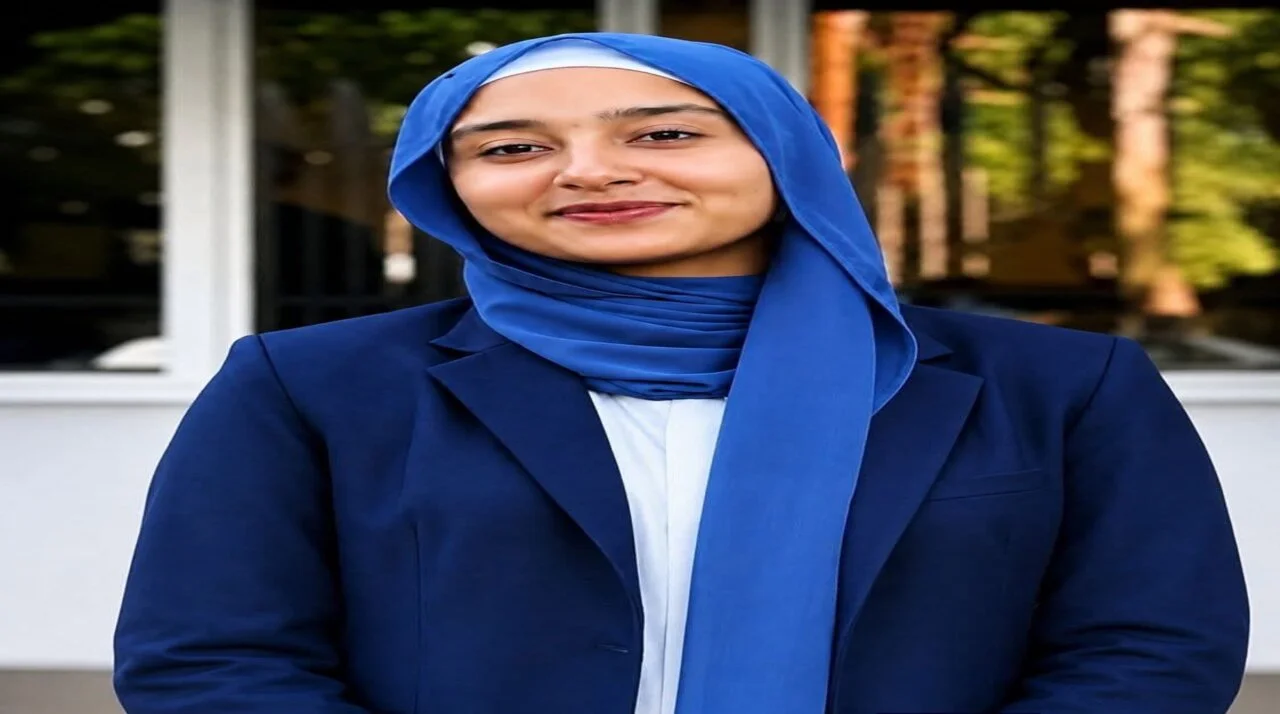
From Balaghat to bureaucracy: Farkhanda Qureshi’s inspiring rise to UPSC Rank 67

Balaghat, MADHYA PRADESH:

Balaghat (Madhya Pradesh):

When she was in Class 8, a young girl in Balaghat sat watching television as district collector B Chandrasekharan appeared on a local channel. For many, it was just another news segment. For Farkhanda Qureshi, it was a turning point. In that moment, a dream quietly took root — she would one day become a civil servant.

Years later, that dream has turned into reality.

Farkhanda Qureshi, a determined young woman from the small town of Balaghat in Madhya Pradesh, has secured an impressive 67th rank in the UPSC Civil Services Examination 2024. She will soon begin her training at the Lal Bahadur Shastri National Academy of Administration in Dehradun, stepping into the journey she once only imagined.

“I had decided that one day I would become a collector and work for society,” she recalls — a promise she made to herself as a schoolgirl.

Her success did not come easily. Farkhanda began preparing for the UPSC in 2021. The road was marked by setbacks and disappointments. Yet, she chose persistence over defeat. It was her fourth attempt that finally brought her success.

Through every failure, her parents stood firmly beside her. “My parents never let me break down. They kept telling me that I would succeed one day. Without their support, I might have given up after my first or second attempt,” she shared with media persons.

Farkhanda’s preparation strategy challenges common myths about the UPSC. She believes that marathon study sessions are not the key. “Studying 18 hours a day is not necessary. What matters is consistency and the right strategy,” she says. She dedicated 6 to 8 focused hours daily, ensuring that she studied every single day. Previous years’ question papers, standard reference books, newspapers, and current affairs formed the backbone of her preparation.

An alumna of St Mary’s School for her 10th standard and Methodist Mission for her 12th, Farkhanda believes that coming from a small town was never a disadvantage. “Balaghat has never been my weakness. If young people here get the right guidance and resources, they too can achieve national success,” she asserts.

She calls her father, Abdul Malik Qureshi, a lawyer, and her mother, Nikhat Anjum Qureshi, a homemaker, her true heroes. Their faith in her, she says, is the foundation of her achievement.

Farkhanda Qureshi’s journey is more than a rank on a list. It is a reminder that dreams born in small towns can reach the highest corridors of power — with courage, consistency, and unwavering support.

source: http://www.daijiworld.com / DaijiWorld.com / Home> Top Stories / by Daijiworld Media Network – Balaghat / February 26th, 2026

Two Muslim Youth Honoured for Saving Drowning Hindu Man in Ranchi

Ranchi, JHARKHAND :

Ranchi :

In a remarkable demonstration of courage and humanity, two young men from this capital city of Jharkhand, Abul Fazal and Mohammad Naushad, saved the life of Narayan Pandey, who was drowning in Bada Talab. Their swift and fearless action has earned them widespread accolades across the city.

According to eyewitnesses, Narayan Pandey was struggling in the waters of Bada Talab when Abul and Naushad immediately jumped in, pulling him to safety without any hesitation. “I couldn’t believe my eyes,” said one onlooker. “They didn’t think of anything else; their only concern was saving a life.”

Residents have praised the two youths, emphasising that their bravery is not only heroic but also a strong message against communal prejudice. “The courageous act by Abul and Naushad is like a slap on the face of those who try to divide people on religious lines,” said a local community leader.

Recognising their selfless act, Shamsher Alam, Vice President of the Minority Commission, formally honoured the youths by presenting them with a memento and incentive money. “This work is an example of true humanity,” Alam said. “They did not see religion or caste; they saved a life for the sake of humanity alone. I urge the district administration and government to provide them employment for their brave efforts.”

The Mahavir Mandal has also appealed to local authorities to encourage and reward such acts of heroism. Jai Singh Yadav, President of Mahavir Mandal, said, “Youth like Abul and Naushad should be recognised and provided small employment opportunities as a token of appreciation for their dedication to human life.”

This incident has highlighted the spirit of communal harmony and the exemplary bravery of young Muslims in the country. Social media users have shared their admiration widely, calling Abul Fazal and Mohammad Naushad role models for all.

In the current climate, where communal tensions often make headlines, the actions of these two youths remind the nation of the enduring values of courage, humanity, and unity. “We must celebrate people who rise above divisions to protect life,” said one resident. “Abul and Naushad have shown the true meaning of bravery.”

As the city hails their heroism, calls for formal employment and recognition reflect a broader desire to encourage selfless acts and reinforce inter-community respect. Their story now serves as an inspiring example for young Indians everywhere.

source: http://www.clarionindia.net / Clarion India / Home> Editor’s Pick> India> Indian Muslims / by Team Clarion (headline edited) / September 05th, 2025

Muslim scrap-dealer sets an exemplary precedent of honesty, returns jewellery worth Rs 15 lakh to owner Sharmaji

Ballabgarh (Faridabad), HARYANA / Delhi NCR :

New Delhi:

In a period marked by suspicion and sharp communal divides, a quiet act of integrity by a Muslim scrap dealer in Faridabad has drawn attention for its moral clarity.

Haji Akhtar Khan, a kabadi trader in Ballabhgarh, returned gold jewellery worth around Rs 15 lakh to its Hindu owner nearly four months after unknowingly buying it as scrap. The jewellery, weighing close to 100 grams, had been accidentally mixed with household waste during a Diwali clean up and sold along with other discarded items.

The ornaments belonged to Ashok Sharma, a resident of Ballabhgarh. Weeks after selling the scrap, the Sharma family realised that a small packet containing gold jewellery was missing. The loss caused distress, since the ornaments represented years of savings and family memory. By then, the scrap had already passed into the informal recycling chain.

Khan had purchased the scrap in bulk, a routine practice in the trade. Months later, while sorting stored material in his warehouse, he noticed a packet hidden among old items. On opening it, he discovered gold jewellery. The find came at a time when Muslims in several regions face frequent suspicion in public life and trade.

Instead of treating the discovery as an unexpected gain, Khan chose a different path. When Sharma later approached him with inquiries, Khan admitted finding the jewellery and promised to return it without delay.

To maintain transparency, the handover took place at the office of ACP Ballabhgarh Jitesh Malhotra, in the presence of police officials. The moment carried visible emotion for the Sharma family, who received back their belongings intact. Police officers present described the act as rare and worthy of recognition.

Those familiar with Khan describe him as a practising Muslim who has performed Hajj and regards honesty as central to faith and livelihood. In Islamic teaching, amanah or trust holds deep importance, especially in trade and public dealings. Khan reportedly said the discovery felt like a trust placed upon him and returning it remained a duty before God.

The episode unfolded against a broader backdrop of heightened communal tension, economic boycotts, and stereotyping directed at Muslims in public discourse. In such an environment, everyday acts often receive communal labels. Khan’s decision challenged such narratives through conduct rather than argument.

Faridabad, part of the National Capital Region, mirrors many of north India’s social complexities. It hosts factories, migrant labour, and small traders from diverse communities. In this setting, an ordinary scrap transaction turned into a moment of shared trust between neighbours of different faiths.

For Ashok Sharma and Haji Akhtar Khan, the exchange rested on honesty rather than identity. The story has since circulated locally as an example of lived communal harmony. It offered a reminder that ethical choices remain possible even amid strained social conditions.

What began as a Diwali mistake ended with restored faith in human conscience. The return of the jewellery did more than correct a loss. It affirmed dignity, trust, and coexistence through a simple decision guided by principle.

source: http://www.radiancenews.com / Radiance News / Home> Latest News> Report / by Radiance News Bureau / February 23rd, 2026

Mumtaza Begum’s sheep farm is inspiring women in Kashmir

Watrina Village (Bandipora District, North Kashmir), JAMMU & KASHMIR :

Mumtaza Begum, Sheep farm owner

Mumtaza Begum, a 33-year-old homemaker from Watrina village in Bandipora district, North Kashmir, has changed her life through sheep farming. Despite limited resources, social challenges, and the compulsion to drop out of college early, Mumtaza refused to give up and is today recognised as a successful female entrepreneur in the area.

Mumtaza’s story is one of struggle and the spirit of fighting out adversity. Financial difficulties forced her to drop out of college, but she never gave up on her dreams. Her matrimonial family had 10 to 15 sheep, which were reared using traditional methods. This sparked the idea of ​​pursuing sheep farming on a larger scale.

Mumtaza’s dream wasn’t limited to mere subsistence; she wanted to turn it into a systematic and successful business.

With this thought in mind, she approached the Animal Husbandry Department in Bandipora. With the department’s guidance, she applied under the state-sponsored subsidy scheme, “Mini Sheep Farm.” In February 2019, she was selected and allotted a unit of 50 sheep.

Sheep rearing requires hard work and patience. Besides, for Mumtaza, the lack of experience was also a major challenge. But Mumtaza didn’t give up. Through persistent hard work, a passion for learning, and a strong will, she gradually expanded her business. Over time, her experience grew, and her farm expanded.

Mumtaza credits her family, especially her husband, for her success. She says that her husband stood by her every step of the way. “He is always there for me, offering emotional support and actual help with work,” she says.

Mumtaza believes that family support is crucial for women entrepreneurs, especially when they have to juggle both home and work responsibilities.

Mumtaza also praises the officials of the Animal Husbandry Department for her success. Proper guidance, technical advice, and knowledge of government schemes helped her overcome many challenges. With the department’s support, she could manage her farm efficiently and increase production.

Today, Mumtaza Begum owns a successful farm with over 210 sheep. She earns a net income of over 5 lakh rupees annually. Most of her sheep are sold during Eid al-Adha, providing her with a substantial income. This work has not only improved her financial situation but also boosted her confidence and self-worth.

Mumtaza no longer considers herself merely a sheep herder; She wants to inspire other women to opt for entrepreneurship.

She shares her experiences with women and encourages them to move forward. She says that if women utilise the opportunities available to them, they can certainly improve their social and economic status.

Mumtaza says that the true rewards of hard work come when one proves oneself. For her, sheep farming is not just a means of earning money, but a path to self-reliance and respect.

This woman from Bandipora has proven that with the right mindset, hard work, and support, any dream can become a reality.

source: http://www.awazthevoice.in / Awaz, The Voice / Home> Stories / by Arsla Khan, New Delhi / February 11th, 2026

Sahill Zaheer awarded Indo Arab Social Icon Award in Saudi Arabia

Mangaluru, KARNATAKA / Al Khobar, SAUDI ARABIA :

Al Khobar, Saudi Arabia:

International host Sahill Zaheer was honoured with the Indo Arab Social Icon Award at an international gathering held in Al Khobar on February 7, where the Saudi Arabia Chapter of SIBEC – SYPA International Business & Entrepreneurs Chamber was officially launched.

SIBEC is a global business and economic collaboration platform that brings together entrepreneurs, investors and professionals to strengthen cross-border partnerships. The Saudi chapter launch was organised in association with Enerfac Solutions.

Enerfac Solutions, led by CEO Nazurudin Ahamed and Director Sivaprakash Umapathy along with its board members and team, describes itself as a company focused on ethical business practices and inclusive growth. The organisation has been supporting entrepreneurs, small and emerging businesses as part of its CSR initiatives, while encouraging partnerships and industry development. Company representatives said its approach centres on responsible business and ensuring that growth benefits the wider community.

Sahill Zaheer, who works as a host and event manager, has earlier been associated with Namma TV as a VJ and with Radio Mirchi 98.3 FM as an RJ. Over the years, he has hosted national and international shows, corporate events and award functions. He has shared stage space with singers such as Sonu Nigam, Udit Narayan and Shreya Ghoshal. He has also anchored events connected to cricket tournaments, including T10 and T20 formats and IPL-related programmes.

Recently, he hosted the Festival of Cricket – Women’s Edition in Al Khobar, described as the first women’s cricket celebration of its kind in the Kingdom of Saudi Arabia.

The award was presented in recognition of his contributions as a host and his involvement in international events connecting Indian and Arab audiences.

source: http://www.english.varthabharati.in / Vartha Bharati / Home> Gulf / February 15th, 2026

Muslim Man Keeps Century Old Jewish Store Alive in Kochi

Kochi, KERALA :

Kochi:

A video by American author Aija Mayrock has drawn global attention to a small embroidery shop in Jew Town, Mattancherry. The store stands as one of the last working links to the once thriving Cochin Jewish community of Kerala.

The shop belonged to Sarah Cohen, born in 1925. She was among the last Jews who lived permanently in Jew Town. Her store sold hand embroidery and souvenirs and became a known landmark in the area. After large scale emigration in the mid twentieth century, many Jewish homes and businesses shut down. This shop stayed open.

Thaha Ibrahim, a Muslim man, now runs the store. As a child, he sold goods on the street near Cohen’s shop. She later hired him and taught him embroidery and shop management. He assisted her for decades, handling customers, production, and daily operations.

Before her death in 2019, Cohen asked Ibrahim to continue the shop and preserve its character. He agreed. Today, the store functions under the same name and layout. It closes on Saturdays in respect of the Jewish Sabbath. Candles are lit on Friday evenings. Cohen’s photographs and belongings remain displayed inside.

Ibrahim has stated he remains Muslim. He sees his role as protecting the legacy entrusted to him.

Historians note that Jews lived in Kerala for over two thousand years. Although the community declined sharply after 1948, synagogues and heritage sites in Kochi still reflect that history. This small embroidery shop now stands as a living record of shared trust and continuity.

source: http://www.radiancenews.com / Radiance News / Home> Latest News> Report / by Radiance News Bureau / February 21st, 2026