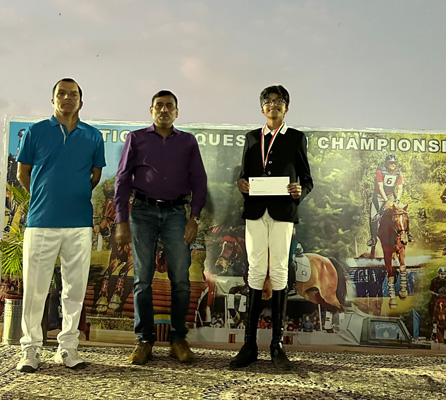
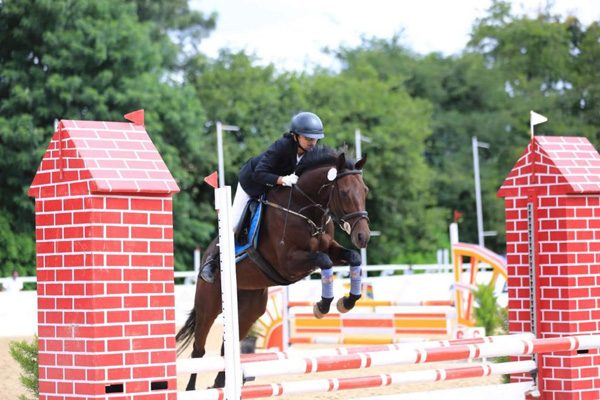
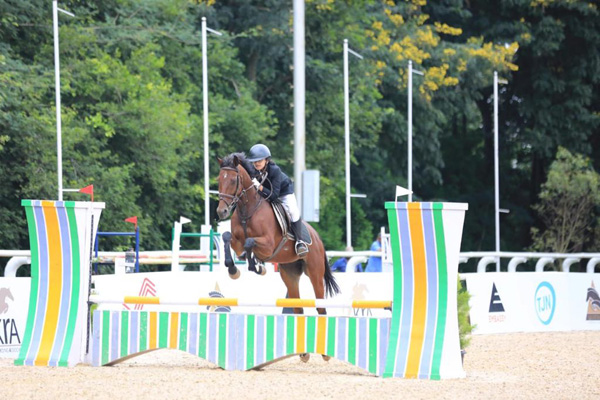
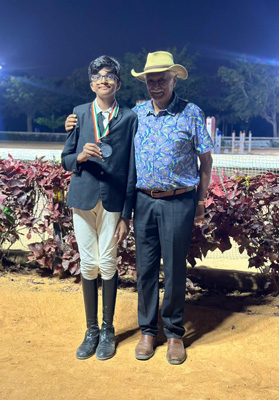
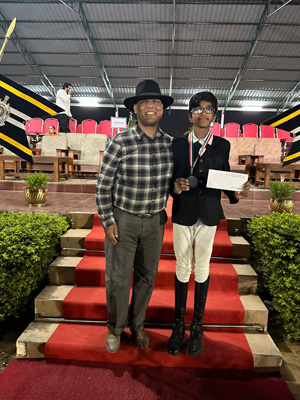
In a remarkable feat of equestrian prowess, a young talent from Mangaluru Armaan Mohammed Asif galloped his way to victory, clinching a bronze medal at the Junior National Equestrian Championship held in Bengaluru on December 22 and 23.
He rode his horse Tara from Covai stables and clocked timing of 47.12 seconds, enabling him to win the Bronze in children 1 category.
It was national championship where a total of about 800 plus entries from all over India had reached to participate.
The Junior National Equestrian Championship is India’s biggest national equestrian championship where the top riders of the country compete with their best horses to get the top positions.
Armaan is the first rider from Mangaluru who won the national equestrian championship whose name is now etched in the annals of equestrian history, displayed a perfect blend of skill, finesse, and a deep connection with his equine partner. The duo maneuverer through challenging courses with grace and precision, earning accolades from spectators and judges alike.
The bronze medal not only symbolizes the individual triumph of the Mangalorean rider but also reflects the growing prominence of equestrian sports in India. As the sport gains traction, such achievements contribute to the broader narrative of the nation’s prowess in diverse fields of competition.
The entire community in Mangaluru is celebrating this victory, proud of their local hero who has made a mark on the national equestrian stage. This accomplishment not only brings glory to the rider but also shines a spotlight on the rich potential that exists in smaller towns and cities across India, reinforcing the belief that talent knows no geographical boundaries.
Armaan is in his 7th grade and the son of Mohammed Asif and Sajida.
Armaan received his initial training at Mangaluru Horse Riding Academy by Avinand Anchanahalli. Since two years, he is been riding and getting trained for nationals in Bengaluru under guidance of Abdul Rahman Shariff and Rajan Diwakar.
source: http://www.daijiworld.com / Daijiworld / Home> Karnataka / by Media Release / December 29th, 2023
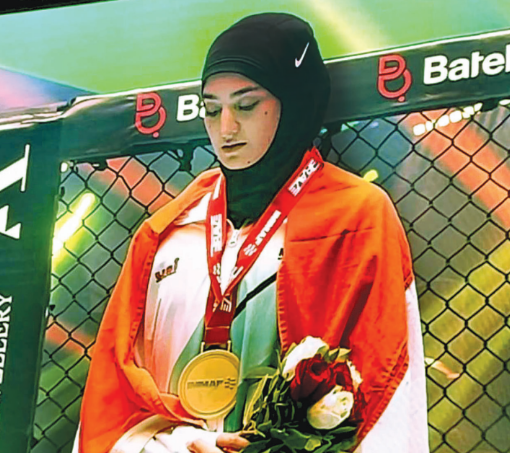
Fiza Nazir, the emerging martial arts sensation hailing from Jammu and Kashmir, has etched her name in the annals of sports history by clinching the gold medal in the senior women’s -56.7 kg weight category at the Asian MMA Championship 2023 (IMMMAF) held in Bahrain.
With unwavering focus, dedication, and a relentless pursuit of her dreams, Fiza Nazir has consistently demonstrated her mettle on grand stages. Currently training at one of Asia’s premier MMA schools, Fiza’s triumph in Bahrain has propelled her to new heights in the world of martial arts.
The gold medal at the Asian MMA Championship marks a pivotal moment in Fiza’s career, and she is now setting her sights on representing India in the upcoming World Championship later this year. Her success is a testament to her resilience, skill, and commitment to excellence.
Expressing her gratitude, Fiza acknowledges the crucial support of her sponsors, TCI Cements, along with the unwavering backing from her family and coaches. Their encouragement and support played a vital role in her journey to becoming a trailblazer for Indian women in the field of mixed martial arts.
source: http://www.greaterkashmir.com / Greater Kashmir / Home> Latest News / by GK News Service / December 26th, 2023
A college professor from the J&K’s Higher Education Department (JK-HED) has published a book with the Indian branch of the reputed publishing company, Oxford…
Srinagar:
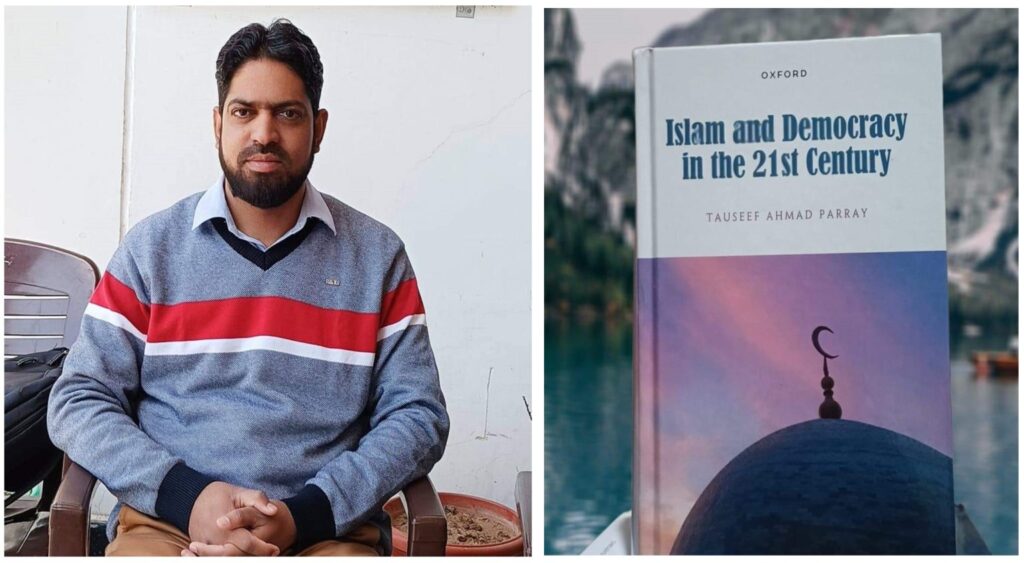
A college professor from the J&K’s Higher Education Department (JK-HED) has published a book with the Indian branch of the reputed publishing company, Oxford University Press.
The book, authored by Dr Tauseef Ahmad Parray, highlights an emerging discourse in the Islamic political thought, “Islam and Democracy in the 21 st Century”.
Dr. Parray, an Assistant Professor of Islamic Studies in the JK-HED since 2016, is presently posted at GDC Sogam, Kupwara, and hails from south Kashmir’s Tral, Pulwama.
His major areas of specialization are Islamic political thought, Islam and modernity, Islamic intellectual tradition and Quranic studies.
Spanning over 400-pages, the book offers very “useful discussions in framing the contemporary debates surrounding Islam and democracy”, by treading through “diverse theoretical Islamic texts like the Qur’an, Sunnah and other more contemporary works by eminent scholars” and analysts and activists of the Arab world, sub-continent and the Muslims scholars of the West of the last two-and-half-centuries. It consists of seven chapters and discusses democracy and democratization in the Muslim world, democratic notions in Islam, Islam-democracy discourse (from mid-19 th to 21 st centuries) in the light of both proponents and opponents. It addresses the crucial question: Is Islam compatible with democracy?
The book was announced officially by OUP on 13th September and is currently available on OUP website, Amazon and other online portals (Publisher’s Link; Amazon Link) by publishing this book, Dr Tauseef, in his late 30s, has become one of the youngest academicians of J&K to be published by OUP and thus is a feat attained by a college Professor. It is “a huge accomplishment at such a young age”, said a professor.
The book has endorsements and praise from internationally acclaimed eminent scholars and specialists of Islamic Studies and Islamic political thought from the USA (Professor Asma Afsarudin), Australia (Professor Abdullah Saeed), Qatar (Professor Louay Safi) and Bosnia (Dr. Joseph J. Kaminski).
Furthermore, it has a foreword by Dr. M. A. Muqtedar Khan (an Indian-American Professor and expert on Islam and global affairs at the University of Delaware, USA), who has described it as being “central to Islam and democracy, and any future research on the topic can and should begin with this book”.
The book is a helpful source for the students and scholars of comparative politics and islamic studies, and is equally fascinating for the readers interested in knowing the contemporary political dynamics of the Muslim world.
source: http://www.greaterkashmir.com / Greater Kashmir / Home> Education / by GK News Service / September 30th, 2023
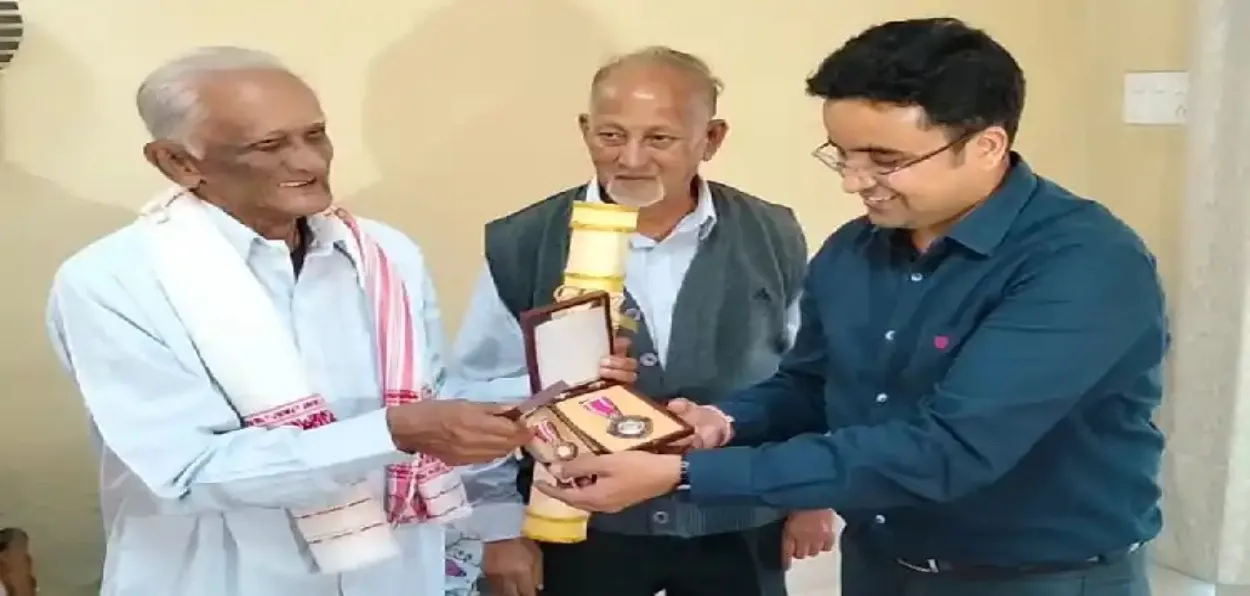
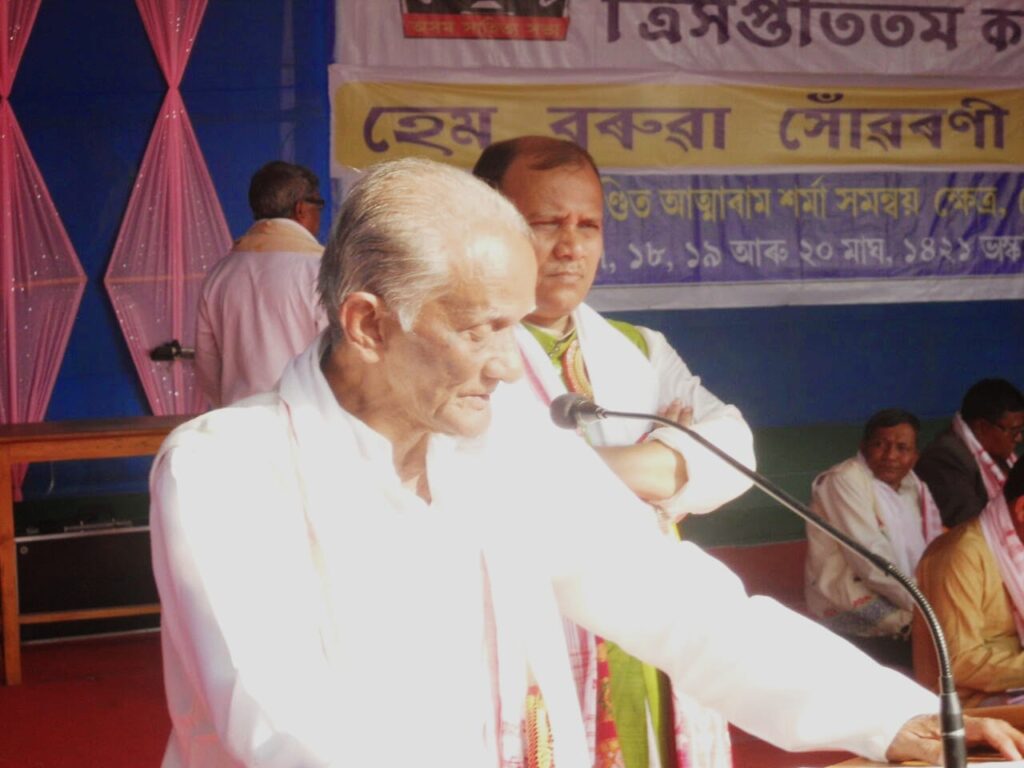
If Dr Bhupen Hazarika is known as the Bard of the Brahmaputra, Imran Shah is the Nawab of Assamese literature. Known for his powerful writings, this soft-spoken and shy doyen is one of the literary giants of Assam. Imran Shah, 90, invariably wears a smile on his face and flashes it even to strangers. Honoured with the Padma Shri in 2021, Imran Shah, a wizard in wordplay, the poet, lyricist, writer, novelist, playwright, scholar and educationist has enriched Assamese literature with his works.
He is generally called the Nawab of Assamese writing but he also writes under the pen names Ishan Dutta, Anamika Baruah, Kumbhakarna, and Animesh Baruah. He has also been conferred with the Assam Valley Literary Award (2009) by Magor Education Trust, Ajan Pir Award (2008) by the government of Assam, Sahityarathi Lakshminath Bezbarua Award (2022), Sabdwa Sahitya Award, Syed Abdul Malik Award (2013), Rangpur Gaurav Award (2016), Bor Asom Samannoy Award (2021) and many more for his contributions to the Assamese literature. He has so far published his 19 Novels, innumerable short stories, and poetry collections and many more manuscripts are ready to go to press.
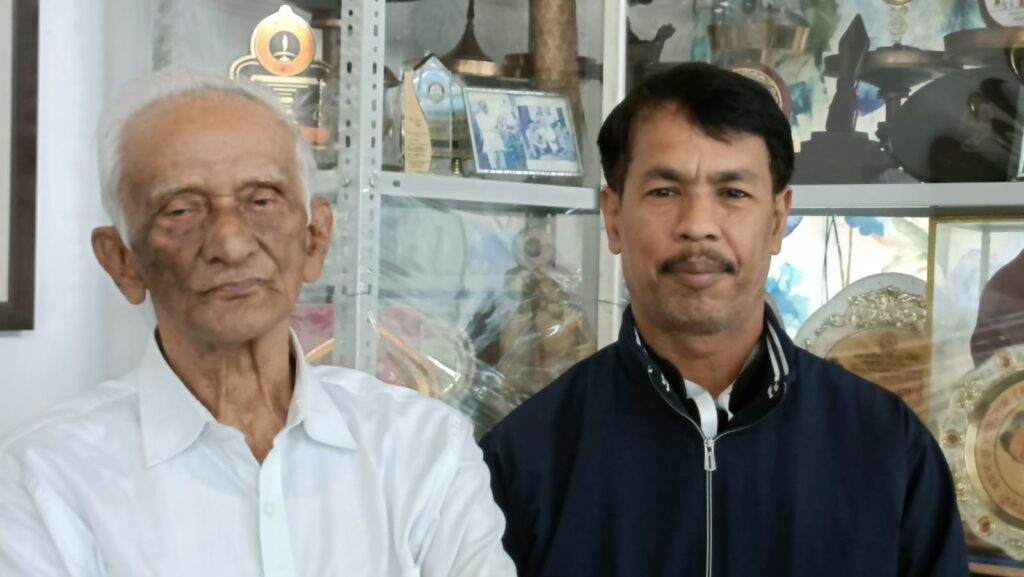
Imran Shah with Rajib Dutta
Born on 23 November 1933 at Dhai Ali, Sivasagar, Imran Shah rates Assamese literature as the best in contemporary India. He says three Assamese litterateurs have so far been awarded the – Jnanpith – India’s highest award in litterateur. This distinction is achieved by no other Indian language so far. The former Asam Sahitya Sabha president is disappointed to see the lack of promotion of Assamese literature. He feels Assamese literature is still facing a lack of patronage as far as publishing is concerned. The ‘Assamese by heart and soul’ is also unhappy with the government trying to create a divide in the Assamese society – majority, minority, indigenous, etc.
Awaz-The Voice caught up with Imran Shah for a tête-à-tête at his Dhai Ali residence in Sivasagar town in eastern Assam. Excerpts:
To begin with, please tell us what inspired you to take up the pen and paper.
It all started during my school days (at Sibsagar Govt HS & MP School) when I used to compose poems for my friends. I penned several short poems for them. However, I was not seriously into poetry at that time. Soon I gained confidence, and my first anthology Banavashi (1951) was published while I was in Class IX. (His classmate Liyakat Hussain was the publisher). Inspired by my friends in Class X, I wrote my first novel Sangeetor Hkhipaare (1952, again published by Liyakat Hussain).
Soon after my college life started, I took up the pen to write seriously. My short story was published in Ramdhenu, then a highly influential Assamese literary magazine in 1957-58. Since then I have been writing without a break. I write whatever I like, and people give me a lot of love in return.
Which is your most prized work so far and why do you like it so much?
I have no answer because I love all my creations. If you ask me which one is your favourite creation, I would say I like all the short stories, novels, and poems I have penned. Based on contemporary psycho, I go on writing on varied subjects. I can’t answer which is my favourite.
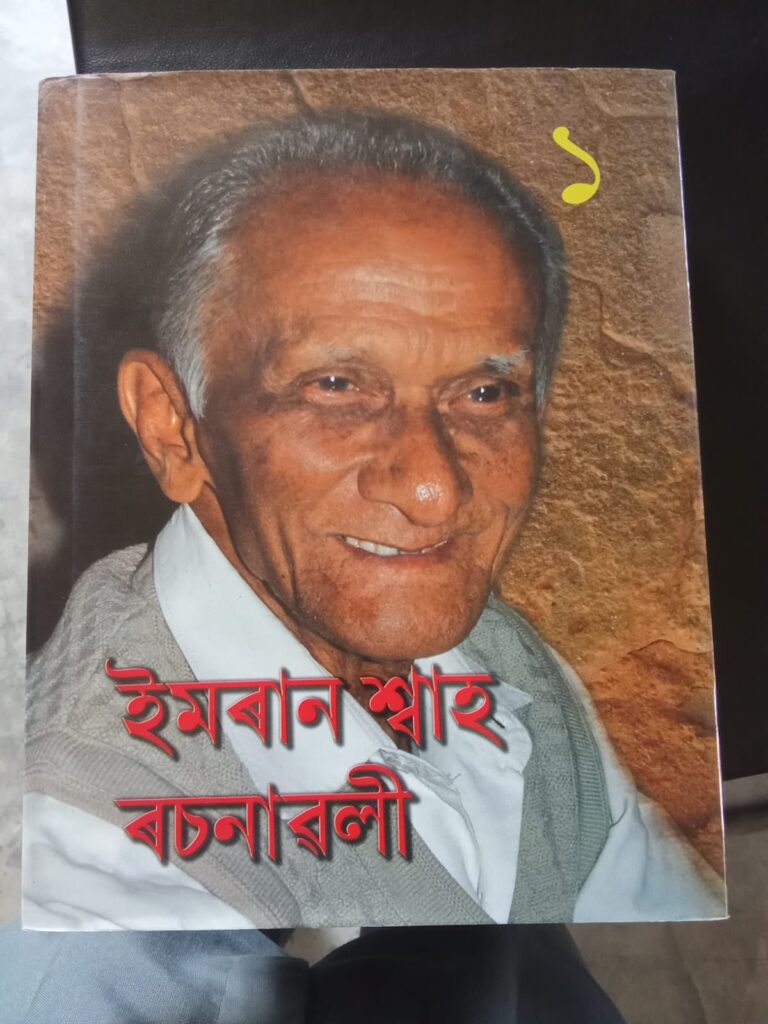
A book on Imran Shah’s writtings
For which work you had to work the hardest and why?
Imran Shah: All of my creations needed equal efforts. I haven’t encountered any hardship in writing. Whenever I find myself free I sit down with my ink and paper. Whenever I have resources enough, I indulge in my habit (writing).
Do you feel recognitions came on time? Or was it late?
I don’t think so. I have never written for awards, prizes, and recognition. Based on my literary achievements, I have been awarded by the people. Only the readers reserve the right to evaluate me.
Belonging to a small community (Assamese Muslim) as far as number is concerned, how do you feel about your rise to the pinnacle of literature in Assam?
The question has pained me. I am neither a minority nor a majority. I am an Assamese by heart and soul. Why should I be singled out only for my name? Religion in personal belief. I always keep myself far away from the division of minority and majority. This kind of bifurcation harms the society. Presently it is also included in our textbooks. This is an irreparable injustice to the Assamese community and society. Any answer to this question can mislead our society.
Did you face any kind of hurdle during your accent to the position of president of Assam Sahitya Sabha?
There had not been any issue in my becoming the president of Asam Sahitya Sabha. My name was proposed by someone. Till then I was a person who would not step out of my home. I never campaigned or lobbied. I was elected the president with a majority of votes which was undoubtedly a big recognition of my work.
Imran Shah speaking as President of Assam Sahitya Sabha
What is your take on contemporary Indian literature?
Very bright, Assamese literature is lagging due to a lack of publishers. No publisher at all! The writers are publishing themselves. There are a large number of colleges and universities in Assam. I don’t understand why those institutions don’t come forward to publish. One of my stories, Etuku Dukh was translated into Hindi by a former professor of Banaras Hindu University Dr Charbey. After three months, the story was translated into English with the title A Piece of Sadness. Later on, it was translated into Bengali, Telegu, Tamil, Malayalam, and other languages of the world. Besides my short stories Morom, Yudha, and other select stories were published in various Indian languages. You see if my works or those of Syed Abdul Malik and Saurav Chaliha get translated into different Indian languages, the Assamese language can gain a lot.
Where do you think is Assamese literature placed in the contemporary Indian literary scenario?
It’s in definitely number one. You know Jnanpith is the highest literary award in India and it has been conferred on 3 Assamese writers, namely Birendra Kumar Bhattacharya, Dr Mamoni Roisom Goswami alias Indira Goswami, and Nilamani Phukan. Then why do we suffer from an inferiority complex? Can anyone take away that position from us?
How can Assamese literature grow further?
Our publishing agencies are very weak. There is no publisher to publish and that can lead to the development of Assamese literature. They do only business. In developed countries, the universities have their publications and this is something we lack in our country. Even during British rule, the PhD thesis of Dr Moidul Islam Borah, the first Assamese doctorate, was published by the then-education department of Assam. The developed nations have a culture of patronizing literature which we have to emulate.
Although Assam’s population comprises over 34% Muslims, the Assamese Muslim community is still a negligible minority as far as numbers are concerned. The present Assam government has recognized 5 ethnic groups of Assamese Muslims as indigenous. What is your take on it? How should the government take it forward to develop the community?
I think otherwise. Those who are concerned with these issues, let them solve it. I do never take part in any kind of conflict arising out of the issue and shall never claim as majority, minority, or indigenous. My forefathers have passed away living here as Assamese. I also think of myself as an Assamese from the core of my heart. The government should not take any initiative, especially for the minorities. They should be made part of the all-round development process meant for all the communities. Then all would prosper.
source: http://www.awazthevoice.in / Awaz, The Voice / Home> Stories / by Rajib Dutta, Sivasagar / December 19th, 2023
The perfume town of Hojai, nestled in the plains between Nagaon and Dima Hasao in central Assam, was once known as the trading hub of agarwood. On the other hand, Kolkata and Guwahati, the capitals of West Bengal and Assam respectively, were known to be the educational hubs of the entire Northeast India.
The picture is different today. For the aspiring NEET, JEE, CEE, and civil services examination students, Hojai is the Kota of Eastern India. Meritorious students from not only Assam but also from West Bengal, Sikkim, and all the other states of the Northeast flock into Hojai to prepare themselves to crack the competitive examinations like their counterparts from parts of the country do in Kota in Rajasthan. When a team from Awaz – The Voice traveled to Hojai, almost every alternate youngster it came across was from Guwahati or Kolkata with high hopes in their minds.
Thanks to the Ajmal Foundation, a charitable organization run by a perfume baron family of Assam the Ajmals, including Dhubri Lok Sabha MP Maulana Badruddin Ajmal and his brother Sirajuddin Ajmal, who is the MLA from Jamunamukh in Assam Legislative Assembly. The Dimasa rulers named the place Hojai, meaning priest in the Dimasa language, and the Ajmal Foundation is now producing real priests; though not to preach faith but to master science and modern education.
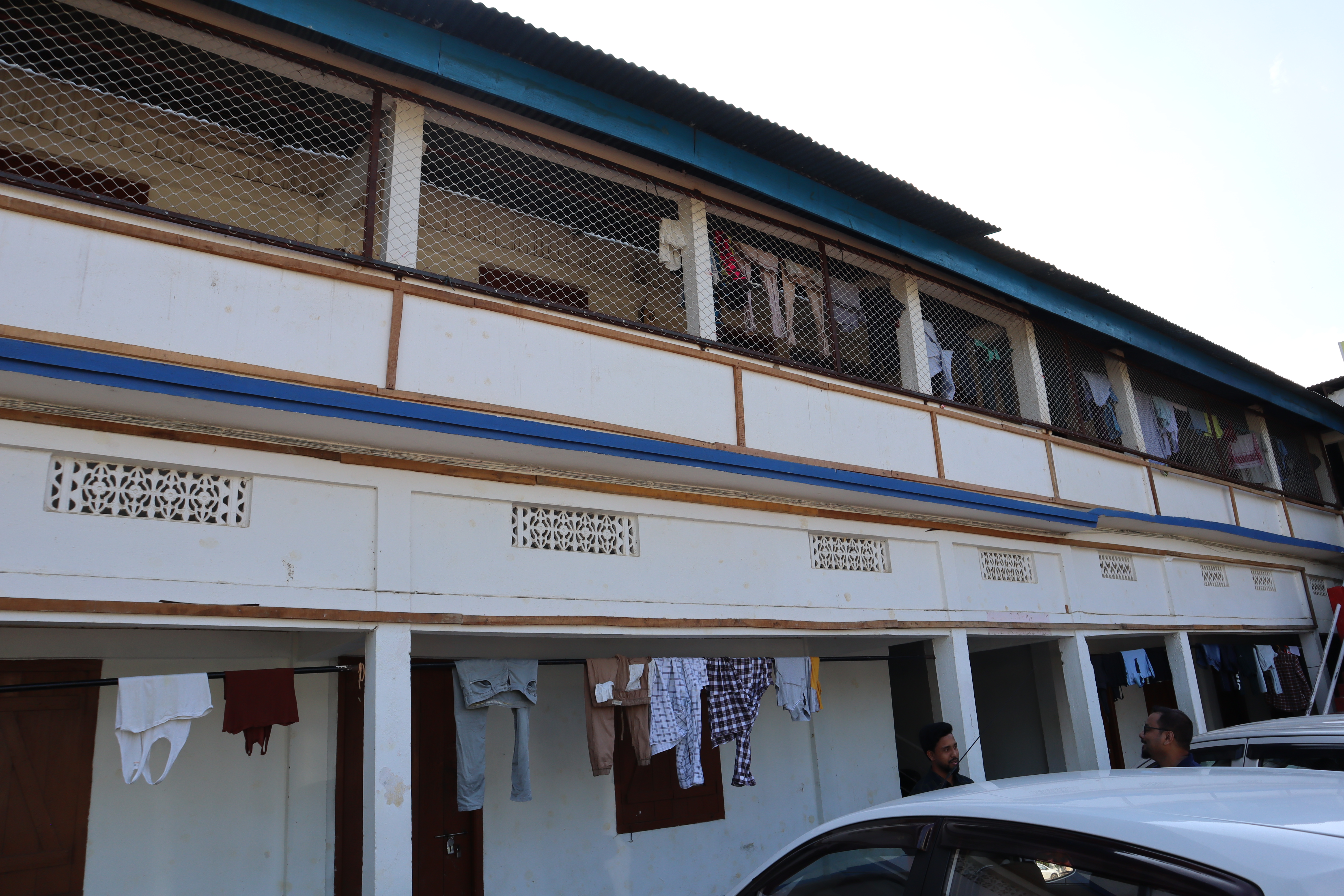
Hostel of Ajmal Super 40
Ajmal Foundation’s education empire in Hojai comprises not only a junior college and coaching institute called Ajmal Super 40, which has been one of the most successful institutions in cracking competitive examinations but also the Ajmal Residential Schools in the entire Hojai district, the Maryam Ajmal Women’s College of Science and Technology, the Najir Ajmal College of Education, Ajmal Law College, Ajmal IAS Academy and others. All the institutions are residential and impart modern education in an atmosphere where students are meant only to study and play sports physically.
It all started in the early 2000s when the Ajmal family started the Markazul Ma’arif School and the Ajmal Hospital in Hojai. After that, the Ajmal Foundation was raised in 2005 to work in the education sector for the underprivileged. The first initiative of the Foundation was to set up a college for underprivileged women.
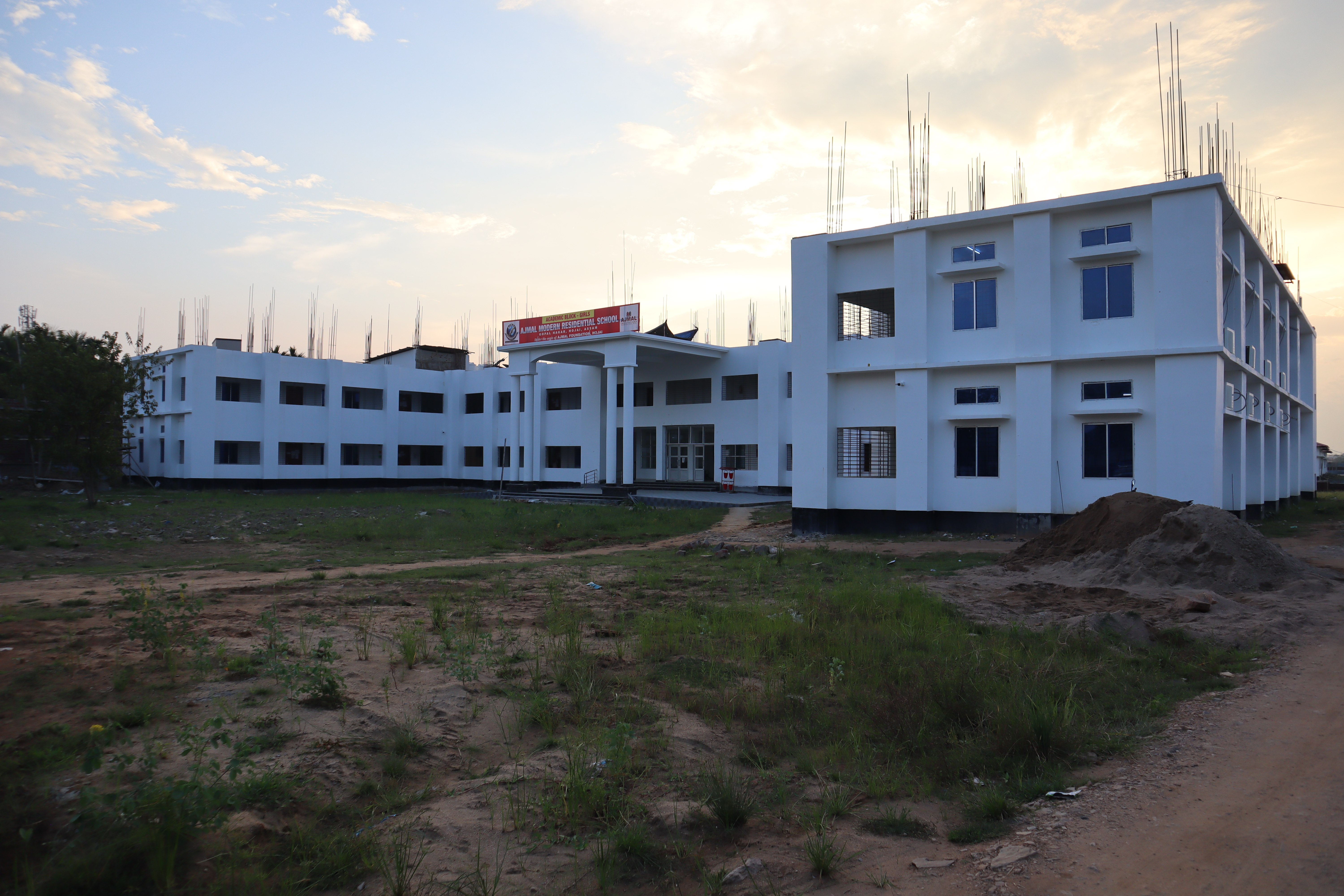
The under construction building of the Ajmal Residential school
“When I joined the Ajmal Foundation in 2005, Maulana Badruddin Ajmal told us that he wanted to see Hojai as an education hub. With only the Markazul Ma’arif School in place, it was beyond our imagination to fulfill his dream. Our journey began with the setting up of the Maryam Ajmal Women’s College of Science and Technology for those women who could hardly afford higher education … But, one must appreciate the amazing far-sightedness of this person. In hardly a decade, Hojai has become an education hub not only for Assam but also for the students of different states of the country. It gives us great pleasure and motivates us to do more. Our next objective would be to set up a Maryam Ajmal Women’s University and an Ajmal University for the underprivileged students,” said Ajmal Foundation’s director Dr Khasrul Islam.
Opportunities for celebration come to Ajmal Foundation every time the results of a competitive examination are declared. One of the secrets behind the success story is a blanket ban on the use of mobile phones in any of its educational institution campuses. Students are allowed to talk to their families on the phone only twice a week unless there is an emergency. All the campuses wear only academic atmosphere.
Abdul Qadir, head of Ajmal Super 40
“We get results because we have created such an academic atmosphere in our campuses. Students from different parts of eastern India come here to shape their academic careers. Last year we received applications from 21,000 candidates. However, we could accommodate only about 1500 in our limited infrastructure. Ajmal Super 40 structure now has students from Class VIII to XII and about 3000 students are studying.
“One of the major factors that has made our campuses fully academic is that they are all residential and have a completely disturbance/distraction-free atmosphere. We don’t allow any electronic devices such as mobile phones, on our campuses. During the day time, the students attend classes and the self-study time in the evening is constantly monitored by us. Thus everybody is bound to study,” Abdul Qadir, head of Ajmal Super 40 told Awaz – The Voice.
Ajmal Super 40 started as a coaching centre for 40 economically backward meritorious students in 2016 providing Class XI and XII education along with coaching for Medical and Engineering entrance examinations. It tasted success in the very first year when its student Amar Singh Thapa topped the Higher Secondary Science examination in Assam. It made the institute an instant hit in the academic circles of the state as well as the region. Demands for accommodation of more students increased rapidly forcing the Ajmal Foundation to increase it to 40 boys and 40 girls. Thereafter, pressure mounted on the Foundation to accommodate students on a payment basis.
Ajmal Foundation’s director Dr Khasrul Islam
The institute has constantly been producing successful candidates in all competitive examinations ever since.
“I have chosen Ajmal Super 40 over any other college because of its student life discipline which is a key to success. Not only are we taught by very highly qualified and competent teachers, but our self-study is also constantly monitored,” said Vijay Singha of Doboka in Hojai district who aims to be a doctor.
“Ajmal Super 40 is such a place where there is great motivation for study. The study material and the mock tests here are very useful,” David of Bokajan in Karbi Anglong said, adding that his focus is on the 720 marks in NEET like almost all other students of the institute.
“The transition from Class X to XI and XII has a vast gap. But Ajmal Super 40 is a place with highly competent teachers who bridge the gap so smoothly that students don’t lose the first 3-4 months in adapting to the new course,” Rizwan Ahmed of Juria in Nagaon district said.
To prevent untoward incidents like Kota where students come under tremendous pressure to develop the tendency for drastic steps, Ajmal Super 40 has also involved psychological counselors to constantly monitor the student’s progress and keep them stress-free.
source: http://www.awazthevoice.in / Awaz, The Voice / Home> Stories / by Imtiaz Ahmed & Ariful Islam, Hojai / November 27th, 2023
In 2004, she completed her PhD from the Jawaharlal Nehru University (JNU) on “Central Asians in Mughal India: Migration, Settlement and Impact on North Indian Culture”.
Prof Tasneem Suhrawardy (Photo | Twitter)
New Delhi :
Tasneem Suhrawardy, a well-known Indian medieval history academic who was teaching at the Delhi University’s St Stephen’s college , died at the Fortis hospital in Gurugram on Tuesday. She was 58.
Suhrawardy passed away after suffering a cardiac arrest in the morning. She was ailing for some time and was being treated at the hospital for pneumonia.
Suhrawardy graduated with an Honours in History from the St Stephen’s college in 1986.
In 2004, she completed her PhD from the Jawaharlal Nehru University (JNU) on “Central Asians in Mughal India: Migration, Settlement and Impact on North Indian Culture”.
Besides teaching at the St Stephen’s college, she was also invited as a guest teacher in prestigious American and Indian educational institutions.
Suhrawardy was an associate professor at the St Stephen’s college and was well known academically for her specialisation in Indian medieval history.
She was the daughter of late Syed Saeedul Haq and late Shahida Suhrawardy.
Her brother Anis Suhrawardy was a noted lawyer who died in 2012.
She is survived by her sister Nilofar Suhrawardy, a senior journalist, and other relatives.
Her demise was described as a great loss to the academic world by her students and colleagues.
source: http://www.newindianexpress.com / The New Indian Express / Home> Cities> Delhi / by PTI / December 26th, 2023
In your final rest
on a rope-cot,
were you still dreaming
of a piece of bread?
Beloved one,
we the people
of this country,
of that country,
can make anything
but a piece of bread
for you.
--Evening with a Sufi: Selected Poemsby Afsar Mohammad, translated from the Telugu by Afsar Mohammad & Shamala Gallagher, Red River Books, 2022.
These lines send shivers down the spine and recreate an empathetic longing for immigrant souls in search of succour. They also swiftly draw an image laced with poignancy — a loss, a regret, the economics that deny innovative young men their keep and force immigration in search of sustenance. Would the poet have been one of them?
Travelling from a small village in the South Indian state of Telangana, Afsar Mohammad has journeyed across continents and now teaches South Asian Studies at the University of Pennsylvania. Known as a trendsetting poet and literary critic for post-1980s Telugu literature, Afsar has brought out five volumes of poetry, one collection of short stories and two volumes of literary theory essays. He is also a distinguished scholar of Indian studies and has published extensively with various international presses, including Oxford and Cambridge. He is currently working on a translation of Sufi poetry from Telugu to English. In this interview, we trace his growth as a writer and editor of the webzine, Saranga, which now seems to be transcending linguistic barriers to give voice to multiple cultures…
Tell us about your journey as a writer. When and how did it start?
It’s a long story, but to cut it short — the beginnings were somewhat puzzling… Inspired by Shakespearean sonnets, I first wrote some sonnets in English, and then switched to free verse. Since most of my friends in my high school started pushing me to write something in Telugu, I had to migrate to Telugu. Quite surprisingly, I was first published in English, and then it took me a while to get something published in Telugu. I had hard time getting published in Telugu due to its newness in expressions and most editors felt that there was nothing “Telugu” in that kind of writing. So, my early writings quite naturally found their home in some English journals!
Your poetry rings with the pain of distance, the pain and struggle from others’ suffering transcending your own self. What is the source of your inspiration — is it your past or your present?What affects you more — your being an immigrant or a Sufi?
We’re distanced by many things — not just physically! We live in many shattered and scattered worlds, and sometimes we fail to reflect on those worlds. I feel like I’m a constant immigrant — despite my formal citizenship and legal boundaries. Sufism is merely a segment of this expansive realm. Both past and present define our destiny, right?! Of course, I try to live in the present rather than in the past, but never deny the baggage of the past.
Why do you subscribe to the Sufi school of poetry? What is Sufism all about?
I come from an extremely local rural setting where such Sufi mystical practices openly defined my everyday life. It’s not about the technicalities and theories or institutionalised Sufi schools of their philosophies, this is more about what I learned from my childhood, and its physical surroundings dotted by several hybrid shrines. I’ve described this cultural setting in my 2013 Oxford University Press publication, The Festival of Pirs: Popular Islam and Shared Devotion in South India. This version of Sufism has more to do with everyday life rather than a spiritual domain.
You have lived away from your country for long, and yet the past seems to still haunt you. What is the identity you seek as a poet? Is it necessary to have a unique identity or can one be like a drop that flows and moulds as per the needs of the vessel?
In a way — physically– I’m away from my birth place, but in many ways, I’m also closer to my homeland than in my past. When I moved away from the actual picture, I see many dimensions from a new lens. Each dimension contributed to my rethinking and reconsidering the idea of India. As I wander around and meet totally different places and people, I learn more about my birthplace and moved a little closer to it. I totally understand this as a process to reconcile with the past and connect it to a new present intensified by many factors, not just personal. We’re living in a virtual world, which also looks like “real” in its sounds, colours and words. Every moment it makes me realise that I’m actually not that far. On the other hand, I also see the people in my homeland who are far more removed by their immediate reality and everyday experiences. We need to read this conditionality more in terms of perspective rather than physical distance.
You are fluent in Telugu, Urdu and English. You started writing in English and then moved to Telugu. And all your poetry collections have been in Telugu. Why? Would the outreach of English not have been wider? What made you pick Telugu over English?
Great question! My literary graph is neither linear nor simplistic. When I look back and reflect on it, it’s a quite messy roadmap — actually, there’s nothing like a map to get its contours. Yes, I started writing in English and then suddenly stopped sending out the poems to magazines. In fact, I write more in my personal journals rather than in print journals. Theoretically, I saw poetry as a personal diary for my experiences for many years. Due to financial concerns within my family, I had to start working very early on and left most of my journals at home. Then, my friends found them by chance and put them together that became my first collection of poems in Telugu. The collection was an instant success for its innovative style and then that opened up my career in Telugu rather than English which was my first language of literary expression.
You are now bringing out a bi-lingual online magazine, Saranga? What made you think of a magazine in two languages?
Before entering into teaching career, I worked as an editor of the literary supplement and Sunday magazine for a largest circulated Telugu newspaper. When we moved to the USA, I thought it would be better to have some outlet to engage with my home language and literature. In the early phase, Saranga was primarily a Telugu webmagazine. When I started teaching South Asian literature, then I realised the importance of making Indian literary texts available to contemporary generation in the USA. That was just one reason, but there’re were many factors as our team saw a rise in the Indian diaspora writings in the new millennium. Luckily, we got wonderful support from writers and poets in various Indian languages. The humble beginnings have actually ended up as a rewarding experience.
What is it you look for in contributors from two languages? Is it the same guidelines or different?
We’re still learning how this works! As it appears now, these two sections require two different approaches and guidelines. Since the English section has been now attracting writers from various languages, it’s moving more towards a multi-lingual base. We’re trying to accommodate more translations into English from different Indian languages. We still need to do lots of work there.
Is the journal only aimed at South Asian diaspora or would you be extending your services to all cultures and all geographies?
Saranga, as we see it right now, is more about South Asia and its diaspora. As you know, we need more such spaces for South Asia and its diaspora. Not sure about its future directions at this point, however, if the situation demands, we will extend its services further.
You have number of essays and academic books in English. But all your creative writing is in Telugu. Why? Would you be thinking of writing in English too because proficiency in the language is obviously not an issue?
Most of my academic writing came out of my teaching experience. As I started teaching new courses, I then realised that we need more material from South Asia. I started focusing on producing such materials primarily for my courses and then gradually, they became useful for many academicians elsewhere too. I still believe creating writing as a more personal space — that enables me to articulate more about myself. However, the publication of Evening with a Sufi, brought a new change — as I’ve been getting more requests for more writing in English for the last two years. As you know pretty well, I’m an extremely slow writer.
How do you perceive language as a tool for a poet?
I see language working many ways since I dwell in multiple languages. I started my elementary education in Urdu, and my middle school was in Telugu, and the subsequent studies were in English. Through the last day of her life, my mother was extremely particular about me learning Arabic and Farsi. So, I believe that helped me so much to understand how language works in a poem. When I published my first poem in Telugu, the immediate critique was it was a not a “Telugu” poem. Telugu literary critics labelled me as a poet who thinks either in Urdu or English, then writes in Telugu. Of course, most of them were also fascinated by the new syntax of my Telugu poems and the new images and metaphors—that totally deviate from a normative or mainstream Telugu poem of those days. The uses of language in a poem varies for each poet. If you’re reading, writing and thinking in just “one” language, that might be a safe condition. A contemporary or modern poet, however, belongs to many languages and cultures. We also migrate from one language to another in our everyday life.
Do borders of nationalism, mother tongue and geographies divide or connect in your opinion? Do these impact your writing?
The response to this question might be an extension to the above conditionality of a person. Anyway, I’m not a big fan of those ideas of nationalism, mother tongue and singular geographies. They don’t exist in my world. Most of my writings both creative and academic contest such boundaries and borders. To describe this in a single term- borderless. In fact, I believe we’re all borderless, but unfortunately, many boundaries and borders are now being imposed on our personalities.
(The online interview has been conducted by emails by Mitali Chakravarty)
The Additional Chief Secretary (Finance) to the Government of Karnataka L.K.Atheeq has been transferred as the Additional Chief Secretary to the Chief Minister of Karnataka with immediate effect.
A order issued on Monday stated that Atheeq will be replacing Dr. Rajneesh Goel as Additional Chief Secretary to the Karnataka CM. Dr. Rajneesh Goel will be the new Chief Secretary of the state.
The press release added that Atheeq, a 1991-batch IAS officer, will also hold concurrent charge as the Additional Chief Secretary of the Finance Department till further orders.
source: http://www.english.varthabharati.in / Vartha Bharati / Home> Karnataka / by Vartha Bharati / November 27th, 2023
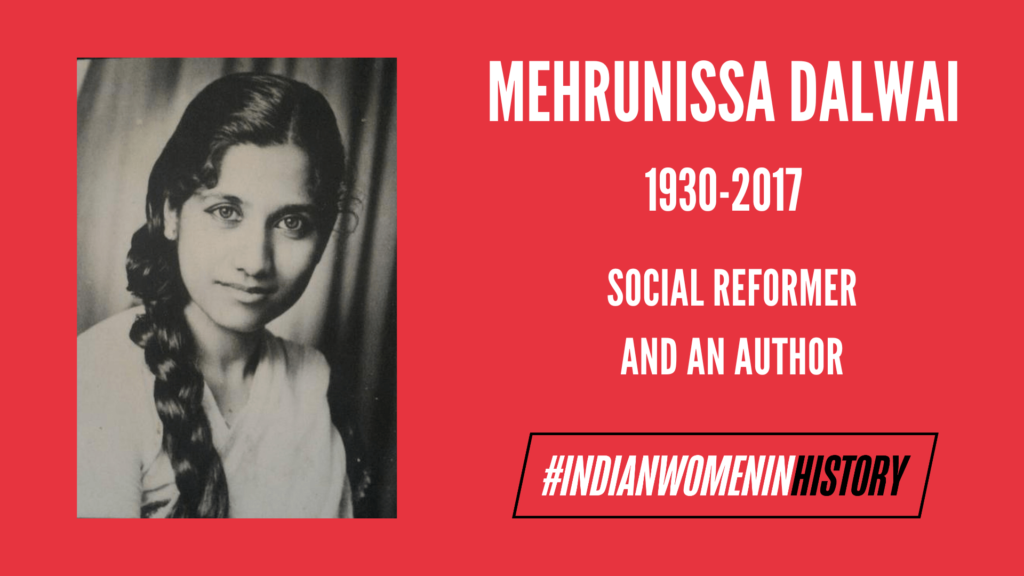
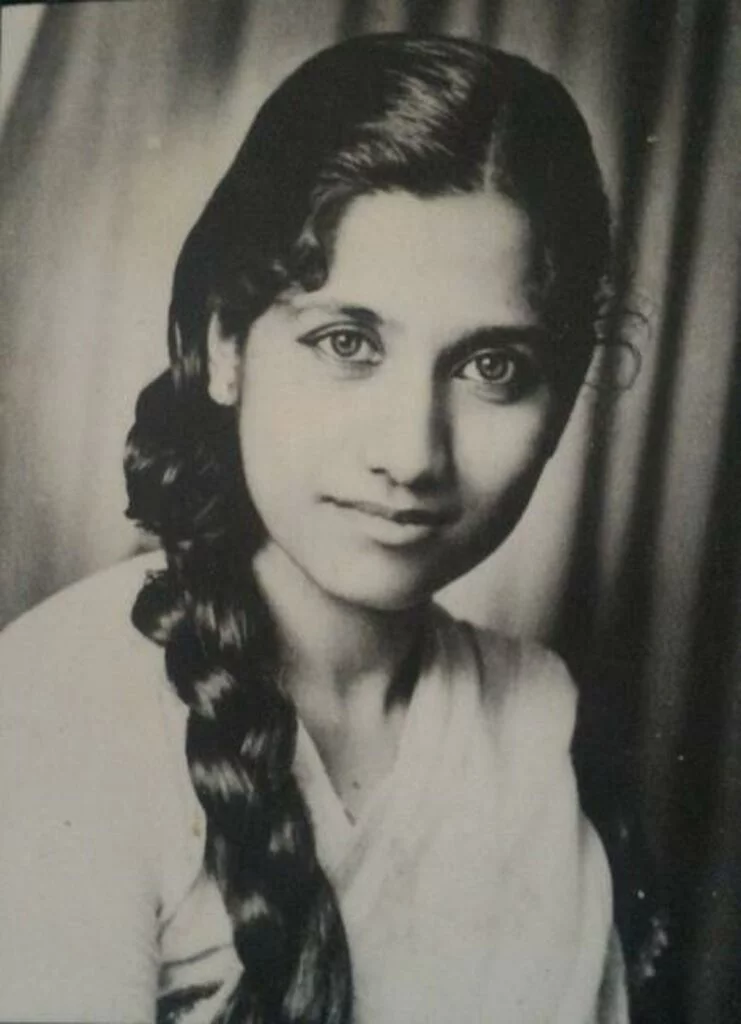
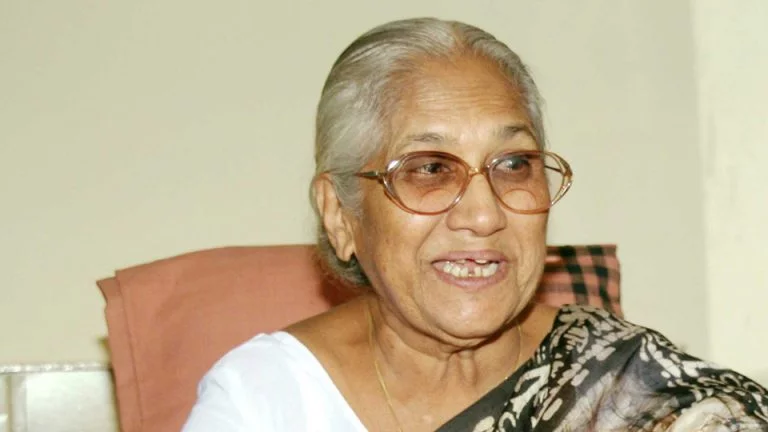
Mehrunissa Dalwai is not a common name heard amongst the slew of activists & yet she played an integral role in the Muslim reformist movement.
India, as a nation, treasures the ‘image‘ of women. There is a great sense of respect and reverence for female goddesses, traditional housewives and of course, the concept of our ‘motherland‘. Yet, when this image of a woman intersects with religion, caste and class, this view gets blurry and distorted. Similarly, being a Muslim woman in India is a battle unlike any other and brings with it a series of struggles, discrimination and prejudice. The nation is graced with a history of several prominent social activists who have been instrumental in bringing about change across the country, with several of them being unhonoured and forgotten, such as Mehrunnisa Dalwai.
Source: The Hindu
Mehrunissa Dalwai is not a common name heard amongst the slew of social reformers and activists that are popular in Indian society. Yet here we have a woman who played an integral role in the Muslim reformist movement. Born on May 25, 1930, and brought up in Pune, Dalwai came from a conservative, Urdu-speaking Muslim family.
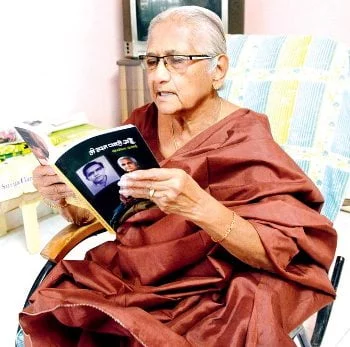
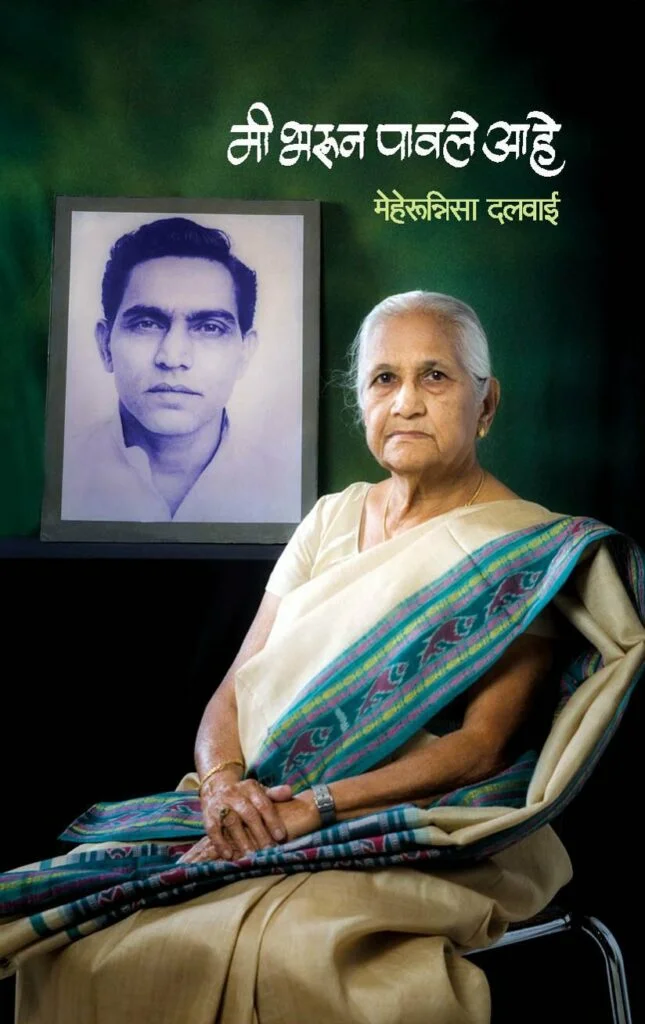
While Mehrunnisa Dalwai underwent a traditional Urdu education, she still managed to master the language of Marathi. She later went on to write her autobiography ‘Mi Bharoon Paavle Aahe‘ in the Marathi language (where she also writes in detail regarding food and recipes). After completing her matriculation, she worked at the Khadi and Village Industries Commission (KVIC) in the city of Mumbai.
The beginning of her journey
After moving to Mumbai, it was here that Mehrunnisa Dalwai met the progressive Muslim reformer, Hamid Dalwai, and thus her fate as a future representative of the Muslim community was sealed. Hamid came from a poor Konkani Muslim family, a stark difference from Mehrunissa, and worked for the upliftment of the poor status of women in the Muslim community.
His name was established in the community for his daring stances like the condemnation of practices of triple talaq, alimony and polygamy. He was also an author, publishing the classic, ‘Indhan’ in 1965 and was courageous to take a stand against Brahmanical Hinduism as well as radical Islam and the two of them contributed greatly towards the liberalisation of the Muslim community.
Being a Muslim woman in India is a battle unlike any other and brings with it a series of struggles, discrimination and prejudice.
However, being such a controversial figure, he remained unemployed. His most controversial take yet was when Mehrunnisa Dalwai declared that she would marry him. The large class disparity and general stigma of an upper-class woman marrying beneath her caused quite the stir which Hamid of course was used to. The two were married through traditional Muslim rituals and after a month also married through the ‘Special Marriage Act‘ (1954), which possibly made them one of the first marriages of a Muslim couple to be registered that way.
Source: Jargon Josh
The Special Marriage Act was one of Independent India’s methods of maintaining a secular fabric in society, mainly to protect and legalise interreligious and inter-caste marriages that were atypical to the usually arranged marriages of dominant Indian culture. The newly married couple found a space for themselves in the Majaswadi area of Jogeshwari. They resided in a small room which got even smaller as they were joined by Hamid’s younger siblings, one of whom was Hussain Dalwai, the Rajya Sabha MP of the Congress party, who had completed his education in Mumbai.
The social work of the Mehrunnisa Dalwai
In his wife, he found a partner in crime, a fellow crusader and together they took many bold stands for justice and equal rights of Muslim women. Mehrunnisa Dalwai continued working as well as remaining dedicated to her ascribed role of a housewife, maintaining their life at home. Although juggling the two seems like a modern concept of a 21st-century working woman, Mehrunissa was ahead of her time and supported her husband’s endeavours.
Mehrunnisa’s salary was their only stable and regular source of income, but along with this she still found the time to put a part of herself into Hamid’s work of the organisation of movements, social protests and campaigns along with bringing about a rational and scientific school of thought to the forefront to eradicate the rigid and blind dogmas within Muslim community which caused an unequal balance of power and rights of men and women.
Source: Amazon
In Mehrunissa Dalwai’s autobiography, she mentions her husband’s gratitude for her role and the satisfaction that she was able to economically support her family during these times. The life of a social activist and reformer is not one of ease. Dalwai also mentions the tensions within the protest movements and the threats that were posed against her husband by the orthodox Muslim community. Although she herself was not actively involved in the movement until after his death, through her writing, it is visible that being tied to Hamid meant being under the fire.
Source: The Indian Express Marathi
Sadly, Hamid passed away from kidney failure in 1977 at the age of 44. After the tragic death of her husband, she threw herself into his work. She dedicated her time to the Muslim Satyashodak Mandal which was the reformist organisation founded by Hamid in Pune, focussing on providing solutions to the Muslim community and creating a space for its history and socio-cultural transformation.
Mehrunissa Dalwai dedicated a good part of her life to this organisation and was the first executive President and later served as President for several decades.
Mehrunnisa’s journey of leadership
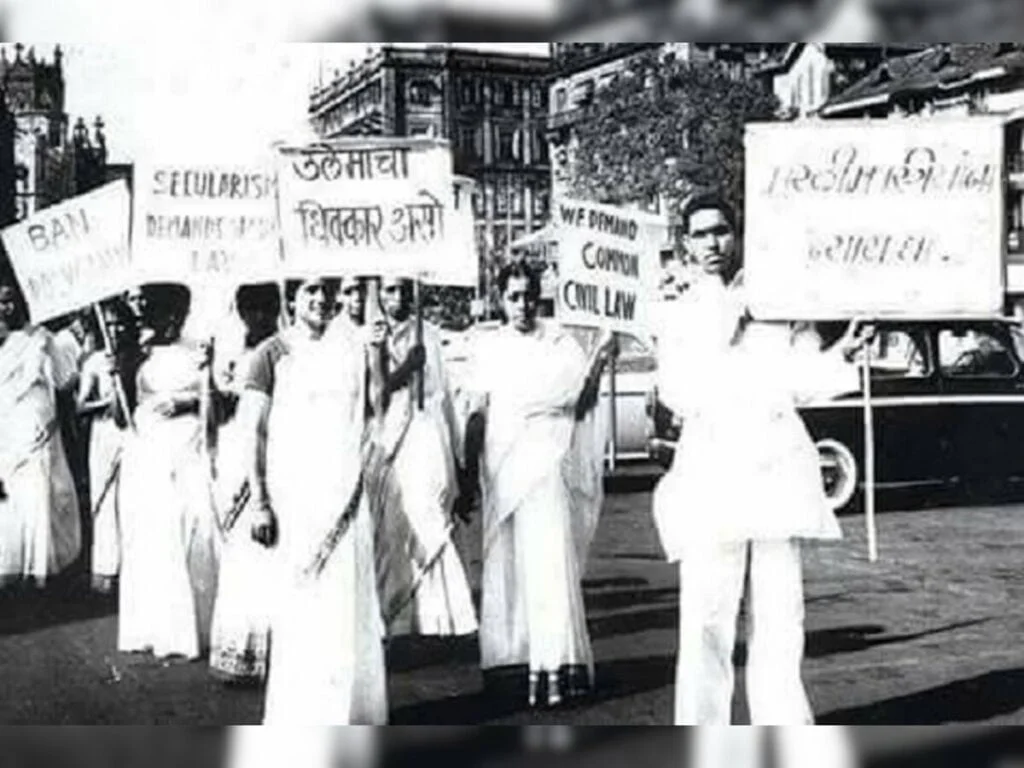
In April 1996, Mehrunissa Dalwai boldly led a march to ‘Mantralaya’ in Mumbai along with six other women carrying on the work of her late husband in the abolition of triple talaq. There, they met Vasantrao Naik, the Chief Minister of Maharashtra at the time and gave him their memorandum of demands. This caused a big stir leading to strong opposition, meetings being constantly interrupted and even reached the extent of death threats.
Source: News 18
Mehrunissa Dalwai continued to lead the movement of protecting the rights of Muslim women and the modern reformation of the Muslim community. She later founded the Hamid Dalwai Islamic Research Institute as well as the Maharashtra Talaw Mukti Morcha.
The Shah Bano case
During Dalwai’s leadership of the Muslim Satsyashodak Mandal, the organisation played an important role in the Shah Bano case. This case was seen as a milestone in the fight for equal rights of Muslim women in India as well as the ongoing battle against the orthodoxy of Muslim personal law. The case was unprecedented and paved the way for other women to make similar legitimate claims.
In 1978, a 62-year-old Muslim woman, Shah Bano filed a petition in court against her divorced husband Mohammed Ahmad Khan, demanding maintenance (alimony)after she was given talaq by Khan. After a series of detailed sessions in court, in 1985, it was taken to the Supreme Court where Chief Justice Y. V. Chandrachud upheld the decision made in the High Court, ensuring that maintenance would be given to Shah Bano (under CrPC, the Code of Criminal Procedure). However, the Congress led by Rajiv Gandhi overturned the decision of the Supreme Court under serious pressure faced by Ulemas and Maulavis but the Muslim Satyashodak Mandal boldly opposed this action and through a series of protests, insisted that it be implemented.
Source: One India One People
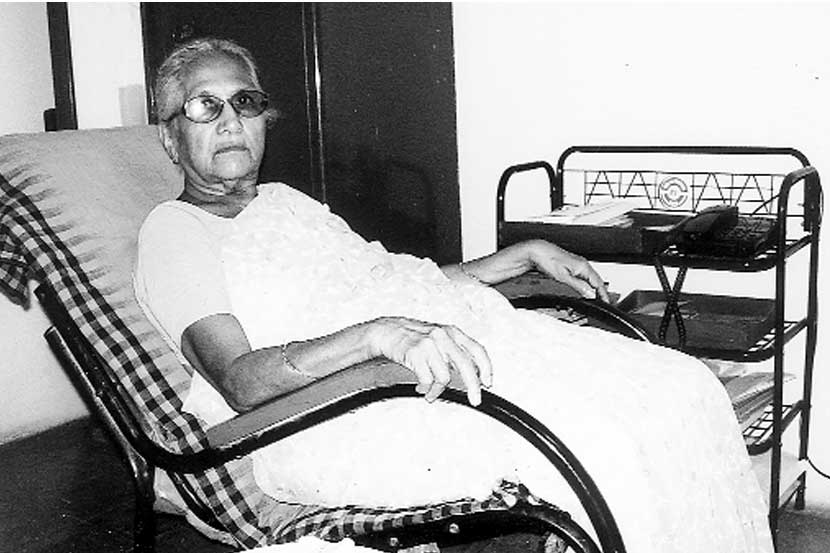
Mehrunissa Dalwai passed away at the age of 87 at her home in Pune, survived by her two daughters and as per her last wishes, her body was donated. Maharashtra has had a history of significantly active social reformers and social activists, especially in Pune. They have been important in altering the culture and norms of the city with their hard work and effort and have brought about positive change in society.
In this process, there are many names that get lost, therefore it is essential to remember those like Mehrunissa Dalwai so as to not forget that they are an important and enriching part of our history.
source: http://www.feminisminindia.com / Feminism In India / Home> History / by Gia Alvares / April 10th, 2023
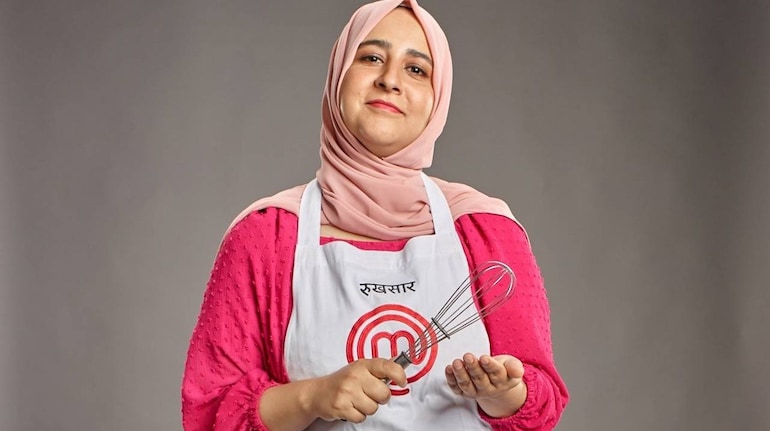
Rukhsar Sayeed wishes to see a lot more young Kashmiri girls and boys in MasterChef India.
Kashmir’s Rukhsar Sayeed.
A 34-year-old woman food entrepreneur has become the first contestant from Kashmir to participate in MasterChef India, a cooking reality show which is being broadcasted on SonyLIV.
Hailing from south Kashmir’s Pampore, where India’s 90 per cent saffron is cultivated, Rukhsar Sayeed has shown a tremendous culinary passion and determination by reaching among the top 12 contestants of the show.
“Breaking barriers and stereotypes I have finally made it to MasterChef India to fulfil my dream. I no doubt had culinary passion since I was a teenager, then the food-specialised education was also at my back but on top of all the support shown by my family was unwavering,” says Sayeed who is currently in Mumbai for the shooting of the show.”
Born and brought up in Srinagar’s Hyderpora, in the year 2010 Sayeed was watching the shows of MasterChef Australia from which she developed the culinary passion and decided to study food technology. “I am on the top of the world to see myself among the top 12 contestants of MasterChef India, the country’s favourite cooking reality show. I am really proud of where I am standing today. I am also overwhelmed to find the support of my family including my husband, parents and in-laws, ” Sayeed tells Moneycontrol.
Calling herself an avid foodie Sayeed has two children while her husband Saqib Javaid Qadri is an assistant executive engineer.
After completing B.Tech in food technology from Islamic University of Science and Technology, Awantipora Sayeed did M.Tech in food technology from Amity University and finally completed her PhD in food technology in 2020.
Sayeed has not only made J&K Union Territory proud by being selected to compete in the prestigious MasterChef India but also expressed her feelings through Kashmiri cuisine and eventually impressed the judges. “So far I had a roller-coaster ride with ups and downs in the kitchen like other contestants but I have made some very good dishes which impressed the judges sitting in the show. I am confident to become the winner of the show because for the first time Kashmiri food is being presented on a large platform. I am trying my best to innovate something with our Kashmiri food. For example, I made Rogan Josh, (mutton dish with red gravy) which apparently does not look Rogan Josh but it does taste like Rogan Josh.”
So far in 11 episodes Sayeed says she made mouth watering cuisines like Babri Boul Falouda (basil seeds drink) usually served during Ramadan in Kashmir, Kashmiri Dhaniwal Korma (lamb curry bursting with coriander) and Kashmiri Dodhe Aal (pumpkin chutney), mesmerizing the judges and celebrity chefs like Vikas Khanna, Ranveer Brar, and Pooja Dhingra.”
Her father M Sayeed Shah says, “It is a dream come true for the whole family. It is a great honour to see her in Masterchef India. I don’t have words to express my happiness. I wish a great future and good luck to my darling daughter.”
Her mother Naseema Kirmani while expressing her happiness says that she is the happiest person to see her daughter in MasterChef India and wishes her best of luck for the show.
Before reaching the MasterChef India show in 2019, Sayeed emerged as the first woman from the Valley to start a frozen food venture — Khalis Foods. “After doing my PhD I was not interested in conventional jobs and therefore I opened a startup to provide people with unadulterated snacks and other healthy foods mainly for children. I along with my six employees are operating from my home in Pampore.”
The young food technologist explains that she is getting to see some of the ingredients for the first time in her life. “I am using some ingredients which are new to me in various foods. For instance, I use some of the popular food ingredients from down south with Kashmiri food.”
Sayeed maintains that being a mother of two children the decision to become a part of Masterchef India show was not easy. “It was a big sacrifice to leave behind my two children at home and participate in the show in Mumbai. I miss my children a lot but I am confident that I will return home as the winner of the show.”
Before getting selected for Masterchef India, Sayeed had participated in the state-level culinary competition and bagged second position in the competition.
She had also served her homemade snacks at an exhibition held at Sheri Kashmir International Convention Centre (SKICC) Srinagar, tickling the taste buds of people around.
In June this year, Rukhsar went through a rigorous audition process before being among the 12 contestants.
For young techie, the MasterChef India journey is a stepping stone in realising her dream of setting up a culinary school in the Valley and creating a chain of restaurants to provide healthy food for the food lovers. “I hope this show can give me limelight and help to boost my food business venture, currently operating in Srinagar. I am also thinking of creating a chain of restaurants in the Valley to provide healthy dishes to people. As a food technologist I am fully conscious of the hazardous preservatives, taste enhancers and food colours that go into our daily food and which is why I lay emphasis on healthy, pure and safe food.”
Regarding her favourite food Sayeed names Hakh (collard green; the staple diet of Kashmir) and Wazwan, (Kashmir’s famous multi-course meal). “Every dish is special but I am in love with Kashmiri food, mainly Hakh especially prepared by my mother and Wazwan prepared by our amazing cook locally known as Waza. From the beginning of my childhood the dishes prepared by my mother in the kitchen have been unmatched.”
Sayeed wishes to see a lot more young Kashmiri girls and boys in MasterChef India. “Since I am the first Kashmiri woman who has reached the famous cooking reality show I would want more people from my homeland to come here and show their food skills.”
She also claims that despite facing criticism from the people in Kashmir she managed to participate in the show to represent the Kashmiri cuisine and culture to a larger audience.
source: http://www.moneycontrol.com / Money Control / Home> News> Trends> Lifestyle / by Irfan Amin Malik / November 05th, 2023
.webp)