Category Archives: Amazing Feats

Malerkotla, Where Tolerance is a Way of Life

Malerkotla, PUNJAB :
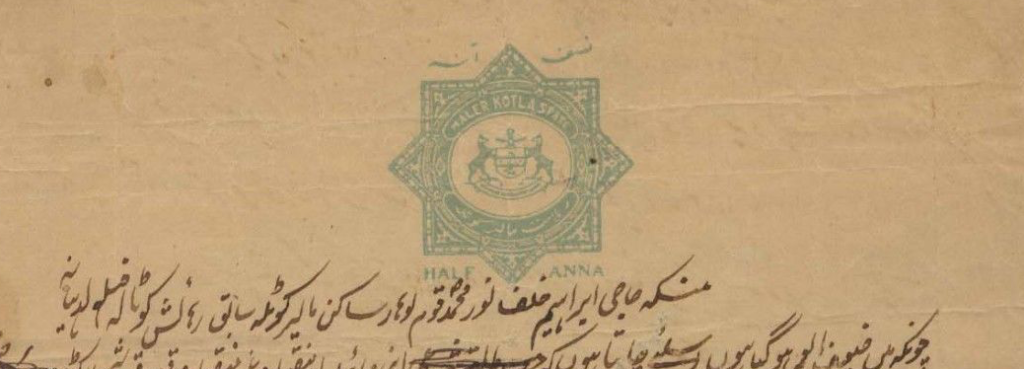
In the darkest hour of partition, when the whole of East Punjab was engulfed in a frenzy of communal violence, the town remained calm. And has stayed that way ever since.
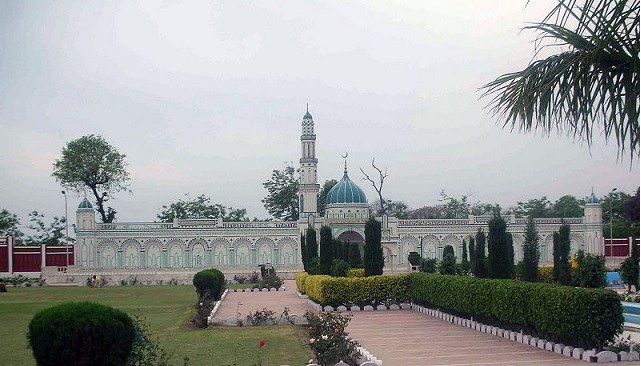
Idgah, Malerkotla: a remembered history of co-existence. Credit: Mohd. Imran, GNU license

Ten years ago, my wife Amarinder and I moved to Bathinda, her home town, to manage a rural school started by her family. For me, a Tamil speaking person originally from Bangalore, it marked a sea change of place and culture. As I gradually acquainted myself with the new rhythms of everyday life in present-day Punjab, I came across sights such as abandoned monuments and ruins battling undergrowth and living Sufi dargahs (shrines) that spoke of the past in an intriguing manner.

It was the shrines that first caught my attention. During my travels in Punjab, I noticed Sufi shrines frequented by people from all communities, the famous Haji Ratan Dargah in Bathinda being one such example. If asked about any dargah dotting the local landscape, people would refer to its past and say that the Muslims who had looked after it originally had all left. In Bathinda itself, of the two schools that were well known before partition – the Khalsa School and Islamia School – the latter no longer exists, for the city has a minuscule Muslim population. In the erstwhile princely state of Kapurthala, the regal Moorish Mosque built in 1930 by Jagatjit Singh for his Muslim subjects – 60 % of the population then – is mostly deserted except for the odd tourist.

The overall demographic of Punjab in the pre- and post-partition period is revealing: Muslims comprise 1.9% of Punjab’s population today in contrast to 51% in undivided Punjab. The Muslim families that one came across in several villages of rural Punjab weren’t usually locals but migrants from Uttar Pradesh or Bihar.  My curiosity about Punjabi Muslims remained unabated.
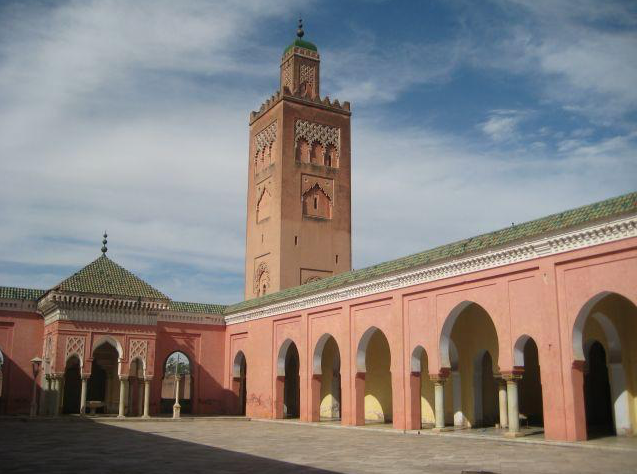
The inner courtyard of the Moorish Mosque, Kapurthala. Credit: Wikimapia

It was during a discussion with my wife’s late grandfather that I first heard the name of Malerkotla – Punjab’s only ‘Muslim pocket’ as he put it, located in Sangrur District. A princely state before Independence, in fact the only  Muslim ruled state in erstwhile East Punjab, it was now the sole Muslim majority city in Punjab, he said. And then he told me something that left me stunned: In the darkest hour of partition, when the whole of East Punjab, including the princely states of Nabha, Jind and Patiala, was engulfed in a frenzy of communal violence, Malerkotla remained calm. Not just that, it became a life-saving refuge for Muslims on their way to Pakistan. Anybody I spoke to on this topic echoed the same sentiment.

Around that time I happened to watch Ajay Bhardwaj’s Punjabi documentary, Rabba Hun Ki Kariye (Thus Departed Our Neighbours), based on the memories of the partition generation. In the film, a resident of Malerkotla recounts how Muslims were chased by mobs till the borders of the state and no further, as if something stopped them from crossing the line.

What I gleaned from conversations, articles and scholarly writings was that even after independence, during several critical flash points in the history of the state and the nation, such as during the years of militancy in Punjab or the Ramjanambhoomi movement leading to the Babri Masjid demolition, Malerkotla remained committed to the spirit of communal harmony that has been a defining aspect of its history. An aspect all communities choose to remember as part of their local history, folk memory  and heritage.

Not that this place has been in an eternally idyllic state. As scholar Anna Bigelow notes in an illuminating paper, the conditions that provide fodder for social conflict and make communities “riot-prone” in South Asia have existed in Malerkotla as well, be it flash points  between religious groups or economic and political rivalries between communities. The difference, she emphasises, lies in the proactive intent of  “local authorities and residents to make the unique history of the town a symbolically significant resource for community building and pluralism in the present.”

Living in times of increasing intolerance for the notion of pluralism, this aspect struck me as being of immense importance. Among the myriad strands that make up local histories and folk memory, some are positive and create common ground, while others are  contentious. That the communities of a particular place should choose to recognise their shared history of mutual cooperation as their biggest strength and work towards resolving conflicts in the interests of mutual co-existence was incredible.
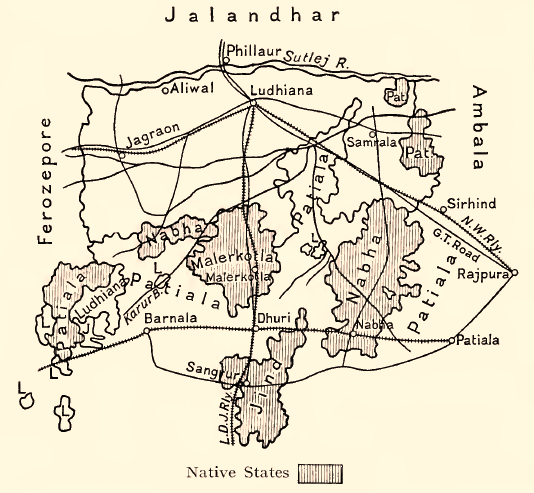
A 1911 map of Ludhiana District showing Malerkotla and the neighbouring princely states.  Credit: Government of India

Unravelling the 500 year old skein of Malerkotla, ruled by nawabs of Afghan Pathan descent, was an instructive exercise. In 1454, the Maler settlement was granted to the Sufi saint Shaikh Sadruddin Sadar-i-Jahan, commonly known as Haider Shaikh, by the Lodis who preceded the Mughals in Delhi. The princely state of Malerkotla (the fortress city) came into being in 1657 when Haider Shaikh’s descendant, Bayzid Khan was given the title of nawab by the Mughals.

Thereafter, the fortunes of the tiny princely state kept see-sawing as it went through a series of alignments and realignments in a time of shifting politics common to the region in the 18th century – local kingdoms fought each other repeatedly in different permutations, sometimes on the say-so of more powerful powers, be it the Mughals, Marathas, invaders such as Ahmad Shah Abdali, or Maharaja Ranjit Singh. With the gradual waning of Mughal power after Aurangzeb, the nawabs sought to assert their independence – in the mid-18th century they supported Ahmad Shah Abdali. During the time of Ranjit Singh (1799 – 1839), they allied  with the Sikh kingdoms of Nabha, Jind and Patiala to stay out of his grasp, ultimately accepting British protection in 1809. In January 1872, during the Kuka rebellion by the Namdharis, who were opposed to the British, 69 members of the sect, including some women and children, were strapped to a cannon and blown away on the orders of the British Resident. The nawab of the day was still a minor.

As independence brought British rule to an end and partition became a reality, Malerkotla, the sole Muslim ruled state in erstwhile East Punjab, found itself in a vulnerable position. Yet it survived virtually intact.

The most common explanation given by locals and people across Punjab is the role played by Malerkotla’s celebrated ruler, Nawab Sher Mohammad Khan (1672-1712), during a significant period of Sikh history. It was a time when the increasing following commanded by the Sikh gurus posed a serious challenge to Mughal authority. Although the nawab supported the Mughals in their campaigns against the Sikh gurus, he protested the decision of the Mughal governor to brick alive two sons of Guru Gobind Singh who were captured in Sirhind in 1705. In the nawab’s eyes, it was  an un-Islamic act to punish the children when the battle was  against their father.

Though this nuanced and principled stand fell on deaf ears, Malerkotla came to command a special place in the hearts of Sikhs.  In the popular imagination, Guru Gobind Singh’s blessings ensured that the princely state remained virtually untouched by the communal violence that engulfed the neighbouring Sikh kingdoms. The protective power of saints across denominations, including figures such as Haider Shaikh, is also cited as one of the reasons for its good fortune.

Bigelow adds that the enlightened policies pursued by the Nawabs at critical junctures fostered the spirit of harmony and co-existence in the kingdom. For example, when Bayzid Khan established the foundation of Malerkotla, he summoned a Chishti Sufi saint, Shah Fazl, and a Bairagi Hindu saint, Baba Atma Ram, to bless the site, thereby declaring his faith in pluralism.
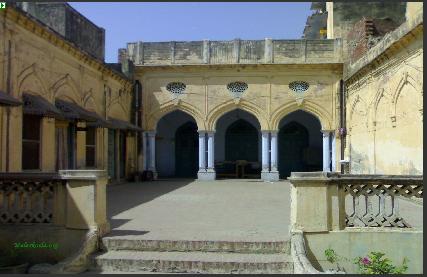
Nawab Sher Mohammad Institute of Advanced Studies in Urdu, Persian and Arabic, started in 1988. Credit: Abdur Punjabi/Wikimedia Commons, CC BY-SA 3.0

The princely state is a thing of the past, but Malerkotla continues to be in a league of its own even in democratic India (at the time of independence, it had a population of 85,000 in an area of 432 sq km). The fact that it has survived in its present demographic form is an indicator that the spirit of co-existence is still alive: as per the 2011 Census, Muslims, a minority in India and a tiny minority in Punjab, comprise 68% of the city’s population of 1.35 lakh; Hindus, the majority community across India, are placed at 20%, while Sikhs, who comprise the majority in Punjab, are only 10%.  The current MLA, Farzana Alam (Akali Dal), has the distinction of being Punjab’s first non-Punjabi state legislator (she is originally from Uttar Pradesh).

Punjab has witnessed communal conflicts between Hindus and Muslims, and Sikhs and Muslims as well as between Hindus and Sikhs in more recent times during the days of militancy. Malerkotla has not been entirely free of flash points arising out of these  developments.What sets it apart is that the focus of local authorities and community leaders at all times has been not only to defuse the situation but to approach it in a way as to foster greater solidarity, in keeping with its heritage.

Over a period of time, integrative practices like communal celebration of festivals, visits to each other’s sacred sites and mixed residential localities and joint businesses have helped immensely. Heritage organisations too have done their best to keep alive the memory of the city’s plural traditions.  Bigelow cites two examples to illustrate how incidents threatening to upset the peace have been contained: In the aftermath of the Babri Masjid demolition in 1992, some Muslim youths vandalised a Hindu temple and Jain Sabha hall. Local Muslim leaders promptly checked them; some Muslims came forward to pay for the damage, while the Muslim MLA ensured that funds from the state were used for the complete restoration of the damaged buildings. The local Hindus too opted to work with local peace committees. The final message that was sent out was that there was no place for such acts in Malerkotla.

In the other incident, the destruction of the Bamiyan Buddhas by the Taliban in 2000 led to several anti-Muslim actions – in one place the Quran was burnt, at another place pig meat was hurled into a mosque. To protest the Bamiyan Buddhas’ destruction and the local acts against Muslims, the Hindus, Muslims and Sikhs went on a general strike for a day. Says Bigelow, a potentially divisive issue was “transformed into an act of symbolic  solidarity against a variety of injustices.”

In the ultimate analysis much of the credit goes to the general population which has proved to be far wiser than it is sometimes perceived to be. The lived reality of Punjab’s sole Muslim-majority city, echoing aspects of a Punjabiyat that once exemplified the region, is a pointer to the fact that pluralism is the strongest weave for a democracy like India, and the strongest antidote to the intolerance of majoritarianism.

Karthik Venkatesh runs a rural school in Bathinda, Punjab

source: http://www.thewire.in / The Wire / Home> Culture / by Karthik Venkatesh / January 16th, 2016
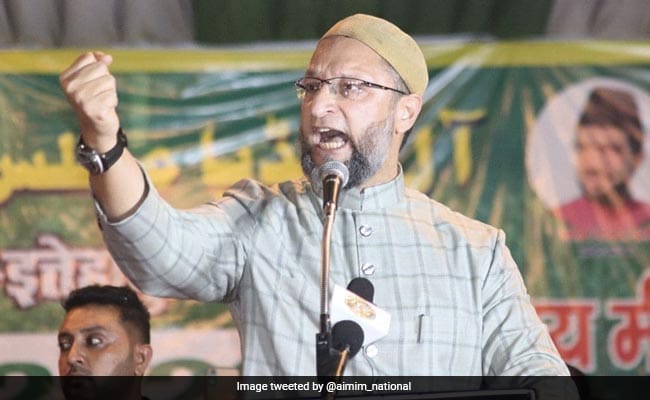
Asaduddin Owaisi’s AIMIM Wins 7 Seats In Madhya Pradesh Local Body Polls

Hyderabad, TELANGANA / MADHYA PRADESH :

Madhya Pradesh local body elections: In the first phase of the local polls held on July 6, Asaduddin Owaisi’s AIMIM won four seats.

Asaduddin Owaisi's AIMIM Wins 7 Seats In Madhya Pradesh Local Body Polls
Asaduddin Owaisi’s AIMIM contested civic body polls in BJP-ruled Madhya Pradesh for the first time

Bhopal: 

The All India Majlis-E-Ittehadul Muslimeen (AIMIM) on Wednesday won three seats in the civic body elections in Madhya Pradesh, taking its overall tally in the local polls held earlier this month in the state to seven.

In the first phase of the local polls held on July 6, the Asaduddin Owaisi-led party had won four seats, while in the second phase conducted on July 13, the counting of votes for which is currently underway, it won three seats so far, officials said.

The Hyderabad-headquartered party won these three seats in the Khargone Municipal Council (KMC).

This is for the first time AIMIM contested civic body polls in BJP-ruled Madhya Pradesh.

AIMIM’s Aruna Bai won from ward number 2 of KMC by defeating her nearest rival and BJP candidate Sunita Devi by a margin of 31 votes.

Aruna Bai, who belongs to the Scheduled Castes (SC) community, said she joined AIMIM as she was influenced by Mr Owaisi’s views on Dr Babasaheb Ambedkar.

Two other winners from the AIMIM are Shakeel Khan from ward 15 and Shabnam from ward 27 in KMC.

The BJP won 18 seats in the KMC, the Congress three and independent candidates eight.

In the first phase results on Sunday, the AIMIM won four seats – two in Jabalpur and one each in Burhanpur and Khandwa.

Mr Owaisi had addressed public meetings in Khandwa, Bhopal and Jabalpur to campaign for his party’s candidates for the polls held earlier this month.

The local body elections in Madhya Pradesh for 413 municipal bodies, including 16 municipal corporations, 99 municipal councils and 298 Nagar Parishads, were held in two phases – on July 6 and 13.

(Except for the headline, this story has not been edited by NDTV staff and is published from a syndicated feed.)

source: http://www.ndtv.com / NDTV / Home> All Indian / by Press Trust of India / July 20th, 2022

Mohammed Shakeb: Preserver of Mughal Archival Documents and Reconstructor of Libraries

Kokori, UTTAR PRADESH /Hyderabad, TELANGANA / London, U.K :

A tribute to a polymath historian who recently passed away.

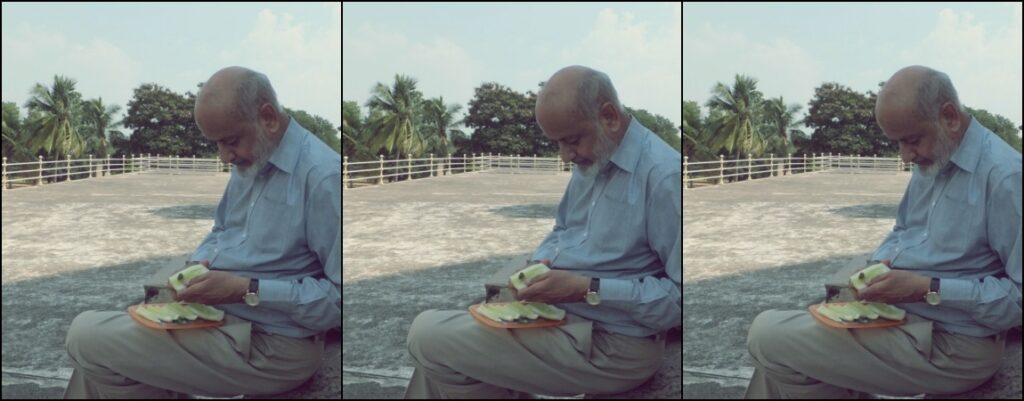
Dr Ziauddin Ahmed Shakeb at the Qutb Shahi tombs in Hyderabad, October 2013. Photo: Author provided

I first met Dr Mohammed Ziauddin Ahmed Shakeb in the summer of 2011, as a naïve PhD student who’d arrived in Hyderabad from Los Angeles wanting to “read Shah Jahan’s documents”. He asked me the very standard question asked of research students in India, “What is your topic?”

I only had a rather incoherent answer to give to Shakeb, the man who had, among other things, created the Mughal Record Room, in what is today known as the Telangana State Archives. Located in a nondescript building at the periphery of the Osmania University campus in the dusty precinct of Tarnaka, this institution has undergone numerous transformations over the course of a half-century of its existence in Hyderabad. But institutions were often narrow and unimaginative places for sustaining a towering figure such as Shakeb. He went on to have a long and eclectic life and career that consistently defied the logic and constraints of institutions, for he was himself an institution. The loss of Shakeb is thus far more than the loss of an individual.

His was a formidable generation of post-Independence intellectuals from different parts of the subcontinent who, from the 1950s, devoted themselves to preserving its languages, repairing and reconstructing our scattered archives and libraries, and re-imagining our past(s) long before colonialism. Shakeb embodied, above all, a boundless curiosity coupled with a complete disregard for trends, ‘schools,’ cliques, and fancy theories.

He was not interested in being a Marxist or a nationalist nor in chasing the Western academy’s greener pastures. In some ways, his foremost allegiance was to the detritus of the past itself – to what paper, ink, and materiality mean and what they can tell us about our past and present selves. He asked, what a document or manuscript had gone through over centuries, how had it come to be, and how can we best preserve thousands of paper fragments for future generations so we can continue to tell their stories?

This rare commitment to the study and preservation of archival knowledge led him to write the landmark catalog, Mughal Archives Vol I: A Descriptive Catalogue of the Documents Pertaining to the Reign of Shah Jahan, in 1977, followed by many publications for The British Library, State Archives Andhra Pradesh, and other repositories, universities, and auction houses. I remember asking Shakeb once why he was so committed to creating reference tools to access rare historical materials, and he answered, “because I know no one will care to read them in the future!” In some ways, he was right.

Today, when the stakes for writing about the subcontinent’s pasts are fraught and closely tied to an ongoing project of hollowing out academic institutions, it’s worth remembering a very different kind of Indian historian.

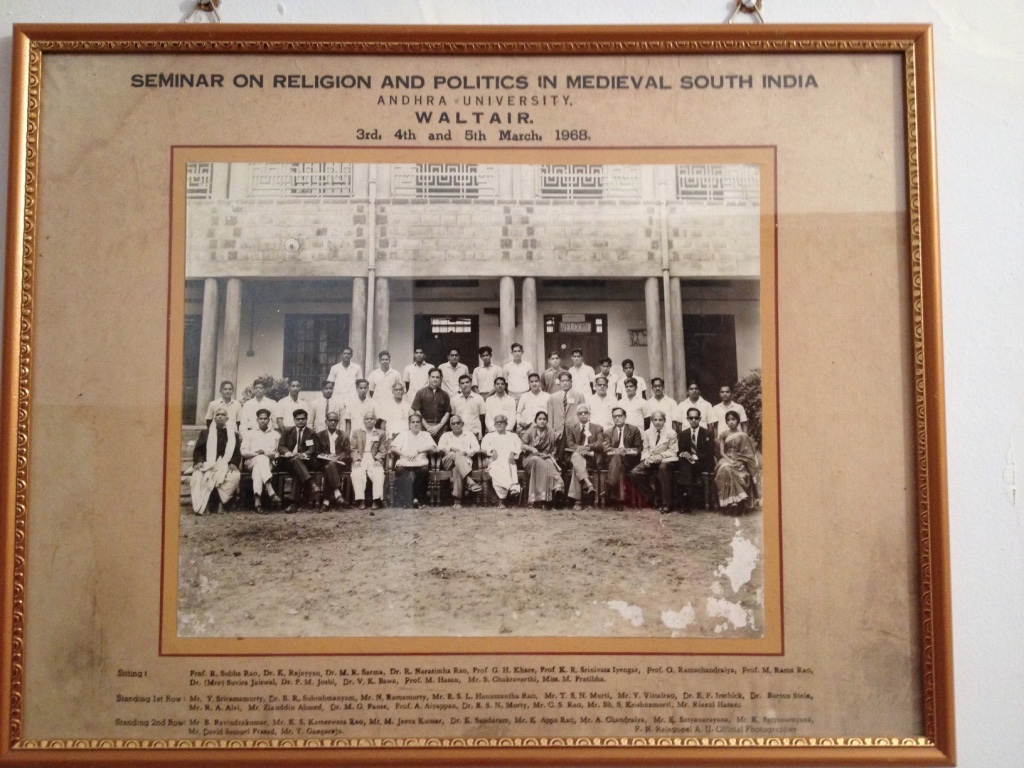
Shakeb standing in the second row, in a group photo from a conference in March 1968 at Andhra University, Visakhapatnam. Also pictured are G.H. Khare, Mohibbul Hasan, V.K. Bawa, P.M. Joshi, Suvira Jaiswal, Burton Stein, and Eugene Irschick, among others. Photo: Author provided

Born on October 21, 1933, Shakeb grew up in Hyderabad and Aurangabad. He studied Political Science and English at Osmania University before heading to Aligarh Muslim University in 1956 for his Masters, where he was taught by Mohammed Habib and S. Nurul Hasan. In 1962, he returned to the south where he was employed as an archivist at what was then known as the State Archives Andhra Pradesh. There, Shakeb acquired the unique training of deciphering documents and identifying their categories, genres, and forms from the last generation of the traditional jagirdari staff of the Nizam’s state who were retiring when he joined the archives. He also worked under Yusuf Husain Khan who had begun the work of processing Mughal administrative documents. The archives thrived under the directorship of committed scholar-administrators such as Hadi Bilgrami and V.K. Bawa.

As rich documentary caches from families, Sufi shrines, and samsthanams were discovered and deposited into state institutions, post-independence archivists and historians confronted challenges, including the reluctance of individuals to part with materials that had been in their homes for centuries. Debates and disputes ensued about what constituted a ‘valuable’ manuscript or document, how to classify materials, and to which regional-linguistic nationalism a remnant ‘belonged.’

These were debates that had already begun in the pre-Independence period, in the work of institutions like the Indian Historical Records Commission. Recent studies of the debates between Jadunath Sarkar and the Maratha historians have traced the longer history of such tensions. Part of the problem was the mutual suspicion between scholars oriented to modern social sciences and those with a more ‘traditional’ orientation and training. Shakeb, the archivist-historian, was at once both and neither.

At a distance from the halls of JNU and Aligarh, where the Mughal state’s merits were being debated, Shakeb inhabited yet another set of worlds. He was at ease reconstructing the household library of Chishti Sufi Abu’l Faiz Minallah in Bidar, discussing the southern India Cholas with the American historian Burton Stein, and discovering a shipwreck off the coast of Masulipatnam in the late 1960s.

Based on newly-processed materials, in 1976, he would complete his doctorate under P.M. Joshi at Deccan College in Pune, a connected history that examined circulation and political diplomacy between Safavid Iran, Mughal India, and the Golkonda sultanate. Shakeb’s study brought the question of mobility and exchange to the centre stage at a time when the norm was to study either the Mughal heartland (often synonymous with Delhi or the northern Indian plains) or select one province of the empire. After many years in archives and universities, Shakeb charted his own path beyond academia. His forensic ability for assessing manuscript provenance, material objects, and documentary genres, allowed him to thrive in other professional contexts, leading to work as a consultant for Christie’s in London.

But, to restrict myself to Shakeb the historian would fail to capture the range of subjects, languages, and disciplines over which he had complete mastery – Persian and Urdu literature, Islamic studies, geography, philosophy, linguistics, and art history. Shakeb always kept the historian’s arrogance in check by reminding her of the literary critic’s skills. The study of prosody and poetics was just as important for making sense of an India without and before English.

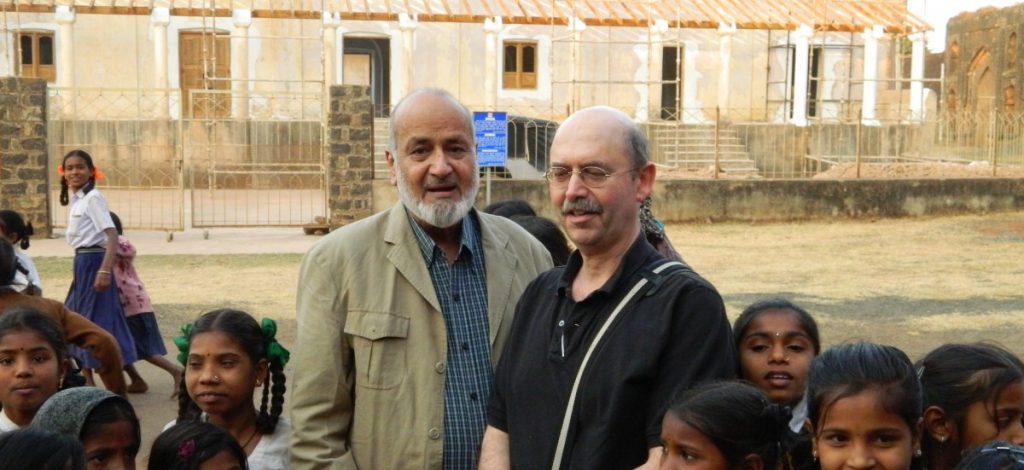
Dr Ziauddin Ahmed Shakeb (L) with his friend Dr Leonard Lewisohn (R) at Bidar fort in January 2012. Photo: Author provided

Literary circuits would light up the minute Shakeb landed back in Hyderabad (as they often would in London). He had been working for many years on translating Iqbal’s Persian poetry into Urdu. He was equally committed to the study of Bedil, Ghalib, Dagh, and Amir Minai. He would unveil to students the unique phonetics and cadence of Dakani, the pan-regional literary idiom of southern India, with many living poets and a long literary history, which he emphasised, is yet to be fully understood for its role in shaping classical and modern Urdu.

When he published his dissertation, Relations of Golkonda with Iran, in book form in 2017, he dedicated it to his grandchildren – Itrat, Taha, Mahamid, Khadija, Tawsin, Mahd, Istafa, Fatima, ‘Ali, Nuha – all of whom embody their dadasaab’s fortitude and resilience. I haven’t sufficient words to describe the patience of his wife, Farhat Ahmed, and the enormity of what she has taught me over many years about balancing the scholarly life with everyday living. It was this reminder that grounded Shakeb’s engagement with multiple worlds. His hands that treated every piece of archival paper like a newborn child. Lethal scoldings hurled at junior scholars too convinced of their own greatness. And, never forgetting to make fun of people who take themselves too seriously. With Shakeb’s passing, we are reminded how fragile the threads are that connect us to the past, and how dependent we are on a handful of such individuals. It’s difficult to imagine what, if anything, might come after such larger-than-life figures.

Subah Dayal is Assistant Professor at New York University’s Gallatin School of Individualized Study. Her research is on social and cultural histories of the Deccan and the Indian Ocean world.

source: http://www.thewire.in / The Wire / Home> English> Culture> History / by Subah Dayal / February 10th, 2021

Shabana Faizal, Nagma Mallick, Sara Aboobacker among ‘Inspiring Muslim Women of Kerala’ list by RBTC

KERALA :

‘RISING BEYOND THE CEILING’ releases list of Seventy Inspiring Muslim Women of Kerala

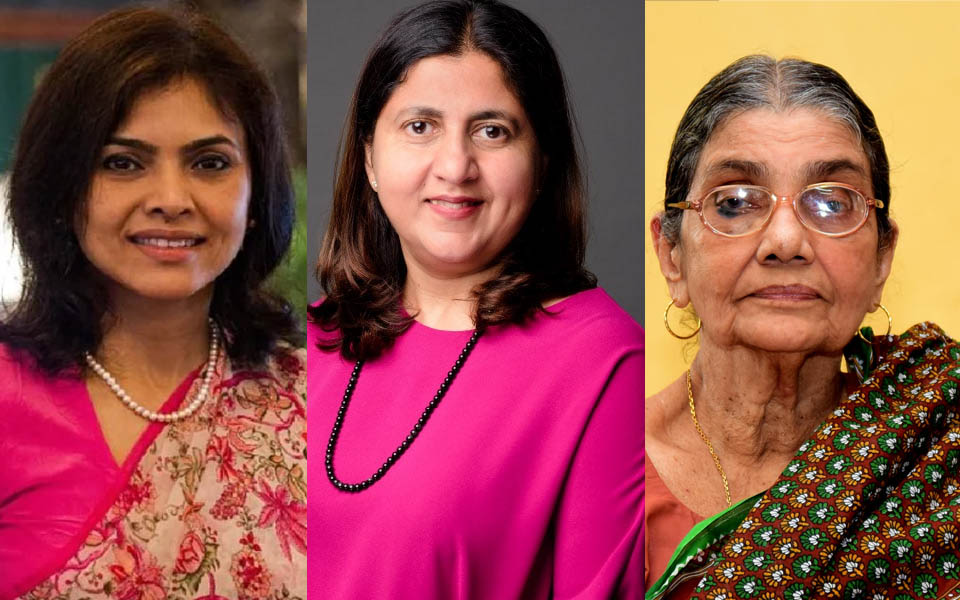
Nagma Mallick(L), Shabana Faizal(M) and Sara Aboobacker(R)

Kerala: 

‘Rising Beyond the Ceiling’ (RBTC), an initiative born out of the need to change the stereotypical narrative about Muslim women in India has released its list of seventy Inspiring Muslim Women of Kerala. The list includes names like Shabana Faisal, Nagma Mohamed Mallick, Sara Aboobacker, and others.

“The seventy RBTC Honorees from Kerala celebrated in this book have displayed exemplary accomplishments in various fields. They are flying planes, serving as Civil Police Officers in the state, joining the national Indian Police Service, and leading as District Police Chief. They are contributing to nation-building in the Indian Foreign Service, Indian Administrative Service, and Indian Information Service and as Education Administrators, Directors of Departments of Industry.” RBTC said in its statement.

“They are contributing in leadership positions as managing directors, CEO, vice-chairperson, founders. They are influencers and singers, having an individual social media following of over 1 million and have been recognized in international and national awards including YouTube’s Golden Play Button,” it further added.

Global Inspiration Shabana Faizal:

Shabana Faizal, Chief Corporate Officer (CCO) and Vice-Chairperson of KEF Holdings UAE has been listed in the category of ‘Global Inspirations’.

“Shabana started her entrepreneurial career in 1995, when she set up Sophiya’s World – luxury and special items studio – in Calicut, following her marriage to Faizal E Kottikollon, chairman of KEF Holdings.” RBTC wrote about Shabana.

“Shabana has a driving passion to make a difference in the lives of the underprivileged, which led to the setting up of the Faizal and Shabana Foundation. The Foundation carries out campaigns to improve education, healthcare, sustainable livelihood, humanitarian assistance, youth development, and housing in India and the UAE. Her most recent passion project was the revamp and enhancement of the GVHSS in Nadakkavu, Kerala which has empowered more than 2,400 young girls to believe in themselves and their dreams and impacted the lives of more than 69,000 students across 65 schools in Kerala.” It further added.

Shabana is the daughter of a well-known entrepreneur and philanthropist late B.Ahmed Haji Mohiuddeen from Thumbay, Mangalore.

Impassioned author and writer Sara Aboobacker:

Kannada fiction writer Sara Aboobacker has been listed in the category of ‘Impassioned authors and writers’ adding that her stories narrate Muslim lives in the areas bordering Karnataka and Kerala, focusing on the inequities and injustices meted out to women by the male society.

“Aboobacker’s books largely focus on the lives of Muslim women living in the Kasaragod region, bordering the Indian states of Kerala and Karnataka. She focuses on issues of equality and injustice within her community, critiquing patriarchal systems within religious and familial groups. Her writing style is direct and simple, and she has stated that she prefers a realist approach to literature, prioritizing the expression of social concerns over stylistic embellishments. Her books have dealt with complex subjects such as marital rape, communal and religious violence, and individual autonomy.” RBTC wrote about Aboobacker.

Sara Aboobacker has received many prestigious literary awards, such as the Karnataka Sahitya Akademi Award, 1984; Anupama Niranjan Award, 1987; Rathnamma Heggade Mahila Sahitya Award, 1996, etc. She has seven novels, four collections of short stories, and one collection of essays to her credit. The Library of Congress has acquired eight of her works.

Leader in Administration Nagma Mohamed Mallick:

First Muslim woman in Indian Foreign Service (IFS) Nagma Mallick who is currently serving as Additional Secretary in the Ministry of External Affairs, has been named in the category ‘Leadership in Administration’ for contributing to nation-building in the Indian Foreign Service.

“An IFS officer of the 1991 batch, Nagma Mallick has served as the High Commissioner of India to Brunei from 2015 to 2018, and as India’s Ambassador to Tunisia between 2012 to 2015. Earlier she served as a staff officer to Prime Minister I.K. Gujral, then served as the first woman Deputy Chief of Protocol (Ceremonial). During her career in the IFS, Ms. Mallick has also served in France, Middle East, Sri Lanka, and Nepal.” It wrote about Nagma.

The list features a total of seventy Muslim women from Kerala and their stereotype-shattering stories of courage hard work and resilience. The list includes names like Airline pilot Afra Abdullah, IAS Officer Adeela Abdullah, Student Activist Aysha Renna, Life Coach Sahla Parveen and others.

About RBTC:

Rising Beyond The Ceiling (RBTC) is an initiative born out of the need to change the stereotypical narrative about Muslim women in India. It is a celebration of the achievement, endeavor, and diversity of Indian Muslim women. RBTC shines a spotlight on Muslim women’s contributions to nation-building in a variety of ways and professions. Founded in April 2020 by Dr. Farah K. Usmani, this initiative aims to make Muslim women’s stories more visible, provide positive role models for future generations, nurturing young women’s confidence and ambition in all spheres. RBTC works across various platforms- the website, publications, multimedia as well as an outreach young women’s mentorship programme.

RBTC is putting together inspiring profiles from fourteen states in India that are home to nearly eighty percent of the country’s hundred million Muslim women population. Besides state and national levels, there is also an RBTC 100 list under finalization of Global Inspirations which includes women who have done their initial studies in Indian institutions and are now making their mark in countries across the globe. A compendium of Inspirations from the Past compendium of those amazing Muslim women who are not with us now, but on whose shoulders we stand today. We are also excited about our amazing Under-30 Youth Inspirations list. RBTC will continue to institute annual Muslim women honorees lists to share the stories of achievements, courage and resilience.

source: http://www.english.varthabharati.in / Vartha Bharati / Home> India / by Rising Beyound the Ceiling / January 30th, 2022

Juned and Ramandeep rewrite men’s and women’s 35km race walk national records

HARYANA :

The 23-year-old Ramandeep clocked 3:00.04s and clipped more than 13 minutes from Priyanka Goswami’s earlier national record of 3:13.19s.

Juned Khan of Haryana and Ramandeep Kaur of Punjab. (Photo | Twitter)
Juned Khan of Haryana and Ramandeep Kaur of Punjab. (Photo | Twitter/ ians india)

The 23-year-old Ramandeep clocked 3:00.04s and clipped more than 13 minutes from Priyanka Goswami’s earlier national record of 3:13.19s, set in the World Athletics Race Walking Championships in Muscat last month. Goswami did not take part in the 35km event on Sunday. She had taken part in the 20km event on Saturday but could not finish the race.

Ramdeep’s Punjab team-mate Manju also came inside Goswami’s earlier national mark to take the silver in 3:07.49s.

In the men’s 35km event, 22-year-old Juned pulled away from Ram Baboo and Chandan Singh after the 20km mark to lower the national record by five minutes, clocking 2:40.16s. Eknath Sambhaji Turambekar, who held the earlier national record of 2:45.17s, was among the four who were bunched in the lead till the 20km mark but dropped out after being second with 10km to go.

The 35km race walk event was introduced in India only last year in the wake of World Athletics’ decision to do away with the 50km event after the Tokyo Olympics.

Uttarakhand’s Sachin Bohra edged out Gujarat’s Rohit Kumar Yadav by a mere second to win the men’s U-20 10km crown with a time of 43:12s. Deepika Sharma of Rajasthan won the women’s U-20 10km race with a time of 51:32s

The Results:

Men’s 35km:

1. Juned Khan (Haryana) 2:40.16;

2.Ram Baboo (Uttar Pradesh) 2:41.30;

3. Chandan Singh (Uttarakhand) 2:42.02.

Women’s 35km:

1. Ramandeep Kaur (Punjab) 3:00.04;

2. Manju (Punjab) 3:07.49;

3. Payal (Uttarakhand) 3:15.47.

Men U-20 10km:

1.Sachin Bohra (Uttarakhand) 43:12;

2. Rohit Kumar Yadav (Gujarat) 43:13;

3. Aditya Negi (Uttarakhand) 44:27.

Women’s U-20 10km:

1. Deepika Sharma (Rajasthan) 51:32;

2. Bharti Bhadana (Haryana) 52:23;

3. Indu (Haryana) 52:40.

source: http://www.newindianexpress.com / The New Indian Express / Home> Sports> Others / by PTI / April 18th, 2022

Hyderabad mosque allots space for free dialysis centre

Hyderabad, TELANGANA :

The unit is being run under medical supervision of Dr Shoeb Ali Khan, leading consultant nephrologist and a kidney transplant surgeon.

A patient undergoes dialysis at the unit

Hyderabad :

Probably for the first time in the world, a mosque in Hyderabad has allotted space on its premises for establishing a full-fledged haemodialysis unit. Masjid-e-Mohammadia, located in Langar Houz area now houses a state-of-the-art free dialysis centre that mainly caters to the weaker sections of the society, regardless of caste and creed.

The centre, set up by two NGOs – Helping Hand Foundation and SEED US, has five latest Fresenius brand machines and will acquire five more machines in the next three months.  The swanky centre, designed like a corporate hospital, has a separate access for dialysis patients and it is equipped with high quality equipment, clinical care as well as facility to manage onsite emergencies.

The unit is being run under medical supervision of Dr Shoeb Ali Khan, leading consultant nephrologist and a kidney transplant surgeon.A medical doctor, ANMs, dialysis technicians and an ambulance will be available at the centre from 8 am to 8 pm on any given day. “We have invested about Rs 45 lakh for the initial setup of this unit. About Rs 2 lakh per month will be managed by Helping Hand Foundation,” said Mazhar Hussaini of SEED.

To register for free dialysis, one can call Ph: 9603540864.

source: http://www.newindianexpress.com / The New Indian Express / Home> Good News / by Express News Service / July 22nd, 2022

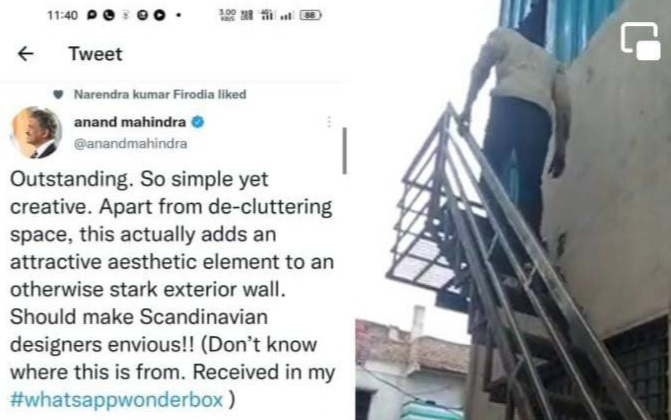
Innovative staircase of Sameer Bagwan wins heart of Anand Mahindra

Ahmednagar, MAHARASHTRA :

Video of Sameer Bagwan and his foldable staircase are  being admired on social media platforms widely.

This fabricator has successfully designed a low cost folding staircase,video of this went viral in minutes and  trending on social media.

The CEO of mahindra and mahindra company noticed the invention and cheered him up by tweeting .

Sameer  is an owner of a small fabrication welding shop in Ahmednagar. He undertakes  the orders of  steel and iron furniture and other items.

As soon as the construction work  began at site, people started complaining about the ladder which was an  obstacle for padestrians and

Considering the site conditions  sameer decided to make a 14 x 12 size foldable ladder and he within ten days at the cost of only 25 thousand rupees he made the staircase.

Sameer  Ishaque Bagban a 31 year old fabricator  is originally from Ahmed Nagar city. Interestingly this skilled young man  has no relevant qualification, diploma or certification in the field of fabrication, however he managed to complete education till 10 th std.

Sameer is running his firm “Darbar Fabrication” since 5 years.

During conversation with Muslim Mirror Sameer said that our fixed stair case was obstructing padestrians, owner of the firm requested us resolve the issue by doing some Jugad, I took it as a challenge, after four days work and discussion with my partners Eijaz Khan and  Asif Pathan we decided to make this staircase foldable.

As we make and design foldable tables and other items, we thought we should try foldable staircase too, and Alhamdulillah we did it. Now it is functioning normally, Sameer added.

Sameer thanked Industrialist Anand Mahindra for his tweet and expressed happiness, he says, I am feeling myself fortune that such high profile person of the country and renowned industrialist has taken note of my work and  praised the idea.

He  further said after Mahindra sir’s tweet I started receiving  calls continuously from friends, relatives and media persons.

source: http://www.muslimmirror.com /Muslim Mirror / Home> Indian Muslim> Positive Story / by Imran Inamdar / July 17th, 2022

BDO inspires young girls

WEST BENGAL:

This IAS officer held a career counselling camp at the recent Islampur Book Fair.

This IAS officer held a career counselling camp at the recent Islampur Book Fair.

In the few months following her first posting at Goalpokhar-I in November 2014, Shama Parveen, “BDO Mam” as she is addressed by many, has become a source of inspiration to several, especially young women belonging to the minority community.

She is the first woman IAS officer in North Dinajpur district from the minority community.

Shama, a 2013 batch officer from Kanpur, had wanted to do something for the underprivileged. At Goalpokhar-I, one of the most impoverished areas of North Dinajpur, she began to act on her dreams.

Goalpokhar is largely agriculture-based. There are no industries here and not a single college in the block. People from the minority community comprise roughly 80 per cent of the block’s population. 

During her short stint — she is waiting for a transfer order — Shama has, on her own, held career counselling sessions by visiting schools in her area. She told the young girls as well as their parents that if she could make it, these girls could too.

“The main impediment for the girls from my community are members from their own families. It is a popular belief that we cannot do well in higher studies. Whenever I meet the guardians, I tell them their daughters have the capacity to do well in higher studies. Please stand beside them. I tell them, let them shine. I am a woman from a humble background and if I can achieve what I have, so can these girls,” said Shama, who hails from a middle-class family. Her father is a businessman and her mother a homemaker.

Shama said her younger sister is studying civil engineering and her brother is a schoolteacher. She said her father is proud of both his daughters.

“When I started preparing for the civil service exams, I went to a tutorial in Delhi. But I realised that it was not the proper way, it was a kind of cheating. I left the tutorial and began preparing at home. I concentrated on reading media reports and hunting up events and data on the Internet. I had done my masters in history and that remains my favourite subject. I tell young people to read books as they are the cornerstone of success,” Shama added.


Choudhury Abdul Karim, minister for library services and mass education and Islampur MLA, could not praise the young bureaucrat enough. “She is an inspiration for the women of our community,” Karim said.

Rashid Alam, resident of Lodhan in Goalpokhar, said that this year’s Madhyamik exams were being conducted smoothly mainly because of the efforts of the BDO. Examinations have often been conducted here among allegations of cheating and violent reactions.

Shama’s interactions with school students have prepared the way for peaceful examinations. “She has been keeping a watch. My daughter is sitting for her Madhyamik and all arrangements are being overseen by the BDO. We know that she will be promoted and leave the block. But she will remain an inspiration for all of us,” he said. The students of the schools that Shama has visited fondly recall her quiet manners and gentle way of persuading them to carry on their studies. 

“Once she came to our school. The manner in which she spoke to us was very impressive. I do not know about the others but I am determined to pursue higher studies. I used to be convinced that higher secondary would be as far as I would be able to study. Almost all girls here do not go to college as the two colleges are far away in Islampur or Dalkhola. But BDO Mam has kindled a tremendous urge in me to study,” said Arjuna Khatun, a resident of Goagaon, a village in the block.

Shama’s formula of success is simple. “If you have nek irada (honest resolve), it can help you achieve anything,” she said.

source: http://www.telegraphindia.com / The Telegraph Online / Home> West Bengal / by Mehdi Hedaytullah / March 09th, 2015

“Heemal” — The unsung illiterate poetess of Kashmir

Srinagar, JAMMU & KASHMIR :

Photo: Ahsaan Ali

Khatija Begum (75) over the past 40 years has written thousands of poems and has compiled hundreds of books. It was not an easy job for her to do so, being illiterate she could not pen it down by herself. Whenever some verse come to her mind she would call somebody to write it. It was through her dedication to poetry that she was able to compile her couplets into books successfully.

The narrow allies of Zaina Kadal area of Srinagar lead to her house. Every day she looks at the pile of her poetry collection placed on a desk in her room with a deep sigh hoping that her books will be published someday.

“While I was into the journey of my poetic life, It was not easy for me to memorize each verse of my poetry so I asked my son to bring a tape recorder for me”. Heemal (pen name) recalls how she used to wake up at night to offer prayers and on the same prayer mat record the verses that would come up to her mind.

When Khatija took bundles of those recorded cassettes to a writer for transcription he asked for 70 ₹ per page which was a huge amount at that time so she start doing hand embroidery to earn some money. And spend all that money to preserve her poetry.

It took her 7 years to get her first book published through J&K State Cultural Academy by the title “Ser e-Asraar” which means “The secret of Mysticism”.

Khatija says that the journey of her poetic life started when she was 35 years old. At that time she was busy with her ill mother spending all her time with her, praying for her recovery. One day when she brought her mother to visit a doctor she encountered something unusual, some verses came up to her mind but she was not able to apprehend what was happening to her. After returning home she told her niece about it who wrote those verses for her.

She believes that poetry came into her life because of the prayers she got from her ill mother during her ailment. She dedicates her poetry to a Sufi saint whom she was very close to and consider like her father.

“When I took my books to show him, he was overwhelmed and he told me to endure a lot of patience so that I can bear all the hurdles that will come to my path in this journey. Moreover, he told me that what I have achieved is priceless” with teary eyes she said.

When she recites her poetry, everything around gets blurred and one gets lost in those mystic verses. She is a poetess who needs love and support so that she will be always remembered among the great poets of Kashmir.

source: http://www.milligazette.com / The Milli Gazette / Home> Community News / by Urvat Il Wuska / The Milli Gazette Online / April 10th, 2022

Jamia Professor Dr. Shama Parveen Wins Women Scientist’s Prize

NEW DELHI :

Jamia Millia Islam faculty member, Dr. Shama Parveen, to receive prestigious Sayeeda Begum Women Scientist Prize 2018 to be presented by Hon’ble Vice President of India.

Dr. Shama Parveen, Assistant Professor at the Centre for Interdisciplinary Research in Basic Sciences, Jamia Millia Islamia (JMI) has been selected for the prestigious “Sayeeda Begum Women Scientist Prize 2018”, instituted by Jamia Hamdard (University).  

pix: @ Twitter

Dr. Parveen is actively involved in research in the area of Molecular Biology of human viruses and focuses on Dengue, Chikungunya, Zika and respiratory viruses (human metapneumovirus, influenza and respiratory syncytial virus). Her research articles published in journals of international repute are being well cited.

The award is given annually in the memory of Late Mrs. Sayeeda Begum, wife of Late Hakeem Abdul Hameed, founder of Jamia Hamdard. The award aims at recognizing the academic excellence of women scientists working at any minority institution of the country in basic and applied research in the areas of biosciences, biotechnology, biomedical, pharmaceutical and environmental sciences. Scientific contributions of the candidate during last 5 years are evaluated for the award. The award carries a citation and prize money.

The award was announced on 14th September 2018 at the Founder’s Day of the Jamia Hamdard University and it will be presented to Dr. Shama Parveen during the forthcoming Convocation of the University on 23rd October 2018 by the Chief Guest, Hon’ble Vice President of India. (PRO, JMI)

source: http://www.milligazette.com / The Milli Gazette / Home> News> Community News / The Milli Gazette Online (headline edited)/ by PRO, JMI / September 21st, 2018