Category Archives: Amazing Feats

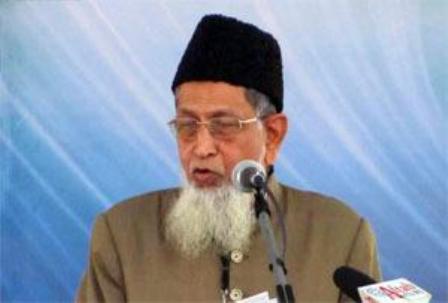
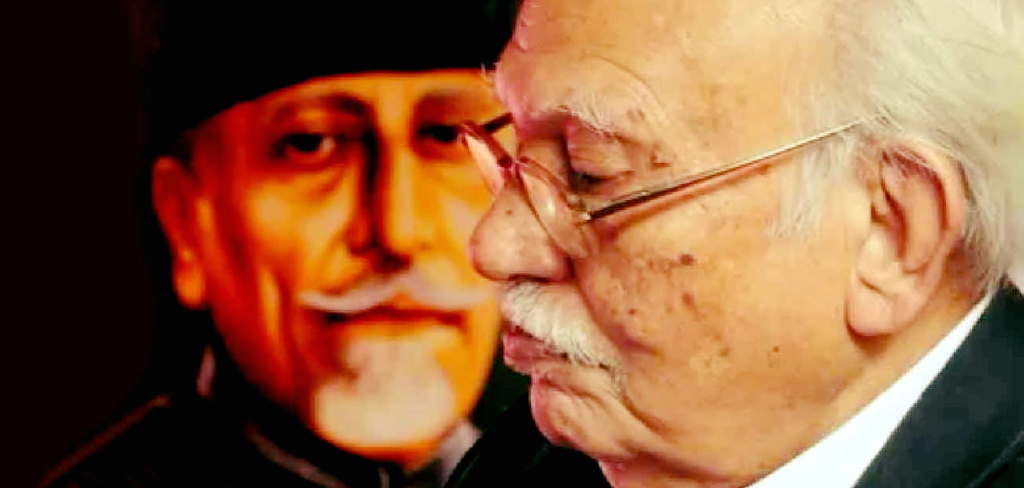
Renowned historian and academician Prof. B Sheikh Ali passes away in Mysuru

Mysuru, KARNATAKA :

pix: facebook.com

Mysuru:

Prof B Sheikh Ali, a veteran historian, academician and former Vice-chancellor of Goa and Mangaluru Univeristiy  has passed  away at a private hospital in the city on Thursday. He was 98.

He was a resident of third Cross, seventh main, Saraswatipuram in the city.

He is survived by his son, daughter and relatives and friends. The mortal remains will be taken to Muslim Hostel, Saraswatipuram, Mysuru for Deedar, followed by burial at main Khabrasthan behind Mysore Jail at Tipu Circle.

Sheikh Ali, B was an eminent historian and his contribution to the theory of history and its application to the ground realities of Karnataka is marvelous.

He was a student of University of Mysore and retired from the same institution as a professor of History.

A brief  profile

Academic Distinctions

1. B.A. (Hons.) of Mysore University, I Rank, Gold Medalist, 1945.
2. MA. II Rank, Mysore University, 1946.
3. Ph.D., Aligarh Muslim University, 1954.
4. Ph.D., London University, 1960.
5. General President, Indian History Congress, 47th session, 1986.
6. President, Indian History Section, XXVIII International Congress of Orientalists, Canberra, Australia, 1971.
7. Founder President of Karnataka History Conference.
8. President, South India History Congress, 1985.
9. Delegate to the International Seminar at Ankara, Turkey, 1982.
10. Delegate to the International Seminar at Sofia, Bulgaria, 1986.
11. Delegate to the International Seminar, Moscow, Soviet Union, 1989.
12. Delegate to the International Seminar at Ras-al-Khairna, UAE, 1990.
13. Invited as Consultant to set up Indian Studies Departments and to teach at the University of Georgia, U.S.A. 1976-7.
14. Author of over 100 papers and 40 books.

Awards Conferred

1. Golden Jubilee Award of Mysore University for research in Humanities and Social Sciences.
2. Rajyotsava award of Karnataka State as Distinguished Educationist.
3. Mythic Society of India Award as Distinguished Historian.
4. Maulana Jauhar Award, 2003.
5. Sir Syed Award by American Federation of Muslims of Indian Origin (AFMI) -2004.
6. Canara Bank Award.
7. D.Litt. (Han. Causu) Kannada University, Hampi, 1998.
8. D.Litt. (Hon. Cause) Karnataka State Open University, Mysore.
9. D.Litt. (Han. Causa) Tumkur University, Tumkur.
10. D.Litt. (Han. Causa) University of Mysore, Mysore.
11. Government of Karnataka Award for Social Service.
12. Al-Ameen All-India Community Leadership Award, 2008.

Membership of Prestigious Bodies

1. Member, South and West Asian Regional Branch of the International Council of Archives, New Delhi.
2. Member of the Review Commission of the Karnataka Universities, Bangalore (1992-1994).
3. Member, Indian Historical Records Commission, New Delhi.
4. Member, All India Educational Movement, New Delhi.
5. President of the Cell to draft a project for a new University for the Muslim, New Delhi.
6. Former Member, Dr. Zakir Hussain Memorial Trust, New Delhi. (Prime Minister of India is its Chairman).
7. Member of the Value-Orientation of Education Committee, Planning Commission, New Delhi.
8. Founder Vice-Chancellor of two new Universities, Mangalore and Goa.

Abroad Tours

Great Britain, France, Germany, Switzerland, Portugal, Soviet Union, United States of America, Canada, Turkey, Egypt, Saudi Arabia, United Arab Emirates, Australia, Malaysia, Brunei and Singapore.

Social and Educational Activities 

As the Founder President of Sultan Shaheed Educational Trust, Mysore he established the following institutions.

a) Deeniyat Madrasa : Ghousianagar, Mysore.
b) Belagodu Abdul Sattar Nursery School: Ghousianagar, Mysore.
c) Sultan Shaheed Lower Primary School: Urdu Medium, Ghousianagar, Mysore
d) Sultan Shaheed Higher Primary School: English Medium, Ghousianagar, Mysore.
e) Sultan Shaheed Women’s Tailoring Centre: Ghousianagar, Mysore.
f) Sultan Shaheed Women’s Craft Centre: Ghousianagar, Mysore.
g) Sultan Shaheed Clinic for Women and Children (Charitable): Ghousianagar, Mysore.
h) Azad National Nursery School: Radhakrishna Nagar, Mysore.
i) Azad National Lower Primary School: (Kannada Medium), Radhakrishna Nagar, Mysore.
j) Maulana Azad Girls High School: (English Medium), Radhakrishna Nagar, Mysore.
k) Maulana Azad B.Ed., College: Radhakrishna Nagar, Mysore.
l) Maulana Azad D.Ed., College: Radhakrishna Nagar, Mysore.
m) Maulana Azad AFMI PUC College: Radhakrishna Nagar, Mysore.
n) Maulana Azad Hostel for Girls: Radhakrishna Nagar, Mysore.
o) School for Challenged Children: Ghousianagar Mysore.

He was president of Mountain View chain of institutions in Chikmangalur, Karnataka, where in a sprawling campus of 35 acres of land classes run from Nursery to Degree level with 2500 children with facilities of Hostel both for boys and girls.

As the President of Muslim Education Society in Mysore, he established a dozen Nursery and Primary Schools which have now been upgraded to First grade College level.

He was also president of Central Muslim Welfare Council, Mysore, and  instituted Micro-Finance Credit Scheme benefiting hundreds of poor Muslim women and their families, together with coaching classes both for High School and PUC classes.

He was Editor-in-Chief of Premier Urdu print media of Karnataka, Daily SALAR and Weekly SALAR.

As the President of the New Muslim Hostel Mysore, he completed the following projects:

a. Utility Block
b. Dormitory Block
c. Prayer Hall
d. Commercial Complex, 1st Main, Saraswathipura, Mysore, facing western side.
e. Another Commercial Complex on the same road facing eastern side.

Publications :

He authored  following books:

1) A Leader Reassessed, Life and work of Sir Syed Ahmed Khan: Mysore, 1999.
2) Abul Kalam Azad, Vision and Action: Hyderabad, 2008.
3) Tipu Sultan, a Study in Diplomacy and Confrontation: Rao and Raghavan, Mysore, 1982.
4) Tipu Sultan: National Book Trust of India, New Delhi, 1972.
5) Tipu Sultan, a Great Martyr: Bangalore University, 1993 (Edited).
6) British Relations with Hyder Ali: Rao and Raghavan, Mysore, 1963.
7) Dr. Zakir Hussain, Life & Times, a Comprehensive Biography: Vikas, New Delhi, 1991.
8) Education and National Development: Translation of Dr. Zakir Hussain’s Talimi-Quthbat: New Delhi, 1993.
9) A Great Teacher: Life & Work of Dr: Zakir Hussain: Prasaranga, Mysore, 1997.
10) Makers of Indian Literature series, Dr. Zakir Hussain: (Co-author with Khursheed Alam Khan), Sahitya Akademi, New Delhi, 1991.
11) History: Its Theory and Method: Macmillan Company of India, 1978.
12) Islam, A study in Cultural Orientation: Macmillan Company of India, New Delhi, 1982.
13) Essence of Islam: Mysore, 2004.
14) Comprehensive History of Karnataka: Vol. IV & V Hampi, 1998.
15) Gangas of Talkad: Volume under History of Karnataka, Prasaranga, University of Mysore, Mysore, 1975.
16) The Hoysala Dynasty (Edited): Prasaranga, University of Mysore.
17) A Short History of World Civilization; Prasaranga, University of Mysore.
18) Essentials of Indian Culture Prasaranga University of Mysore.
19) History of Modern Asia: Mysore, 1976.
20) History of South India: Prasaranga, University of Mysore, 1977.
21) Approaches to Harmony, Mysore University, 1994 (Edited).
22) Goa Wins Freedom: Reflections and Reminiscences: Goa, Daman and Diu Silver Jubilee Celebration Volume, Edited, Goa University Publication Series, Goa University, Bambolim, Goa, 1986.
23) Javeed Nama of Allama Iqbal: (English Translation), Knowledge Society Publications, Mysore, 2008.
24) Moulana Jalaluddin Rumi: Knowledge Society Publications, Mysore, 2008.
25) Imam Ghazali: Knowledge Society Publications, Mysore, 2009.
26) Hafiz-e-Shiraz: Knowledge Society Publications, Mysore, 2009.
27) Shaikh Sa’di: Knowledge Society Publications, Mysore, 2009.
28) Umar Farooq: Knowledge Society Publications, Mysore, 2010.
29) Moulana Altaf Hussain Hali: Knowledge Society Publications, Mysore, 2010.
30) Mirza Asadullah Khan Ghalib: Knowledge Society Publications, Mysore, 2011.
31) History of Bahmani and Bijapuri Rulers: Mysore Book House, 2011.
32) My life, (Autobiography): Knowledge Society Publications, Mysore, 2009.

Urdu Publications

1) Hind ki Maya Naz Hastiyan: Urdu, Development Bureau, New Delhi, 1992.
2) Roshan Nuqoosh : Tamilnadu Urdu Publications, Madras, 1995.
3) Irtikh-e-Kayinath aur Insan: Urdu Development Bureau, New Delhi, 1998.
4) Alam-e-Islam-ke-Jawahar-pare: Urdu Vols. Dar-ul-Umoor, Mysore, 2004.
5) ilm-e-Tarikh kay Mukhtalif Goshe : Dar-ul-Umoor, Mysore, 2008.
6) Armughan-e-Salar : Salar Publications, Bangalore – 2008.
7) Anwar-e-Iqbal: Salar Publications, Bangalore – 2011.
8 Noor-e-Baseerath: (26 Special Numbers) (1997-2008).

source: http://www.muslimmirror.com / Muslim Mirror / Home>Obituary / by Muslim Mirror Staff / September 01st, 2022

Al-Kareem School SSLC Toppers Feted

Mysuru, KARNATAKA :

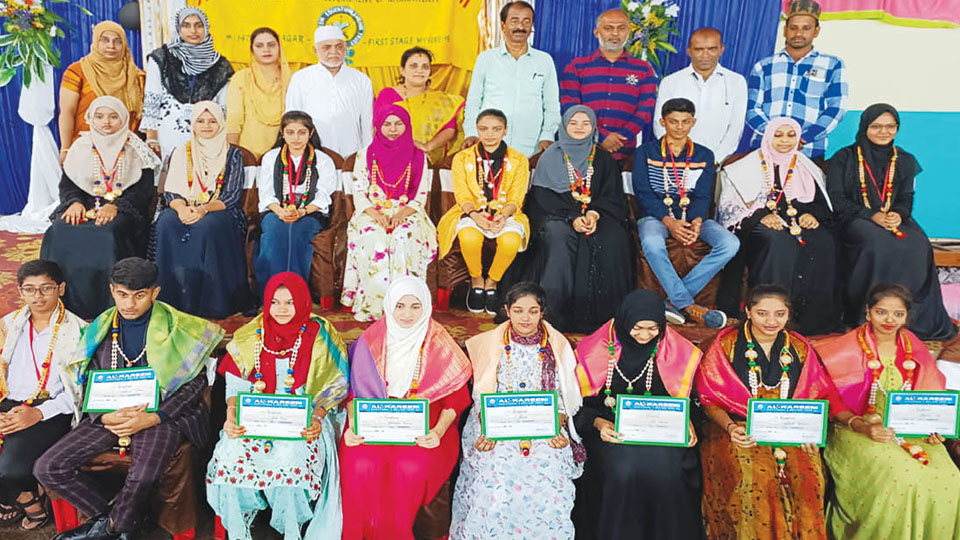
The SSLC students of Al-Kareem School, Rajivnagar, who secured more than 500 marks in board exams, were felicitated by former MLA Vasu and ex-Mayor Pushpalatha Jagannath recently.

Others seen are ex-Corporator Suhail Baig, social worker Tousif Chandan, Founder of Al-Kareem School Alhaj Hussaini Baig, School Chairman Kaleemulla Baig and Head Mistress Yasmeen Sultana.

source: http://www.starofmysore.com / Star of Mysore / Home> PhotoNews / August 30th, 2022

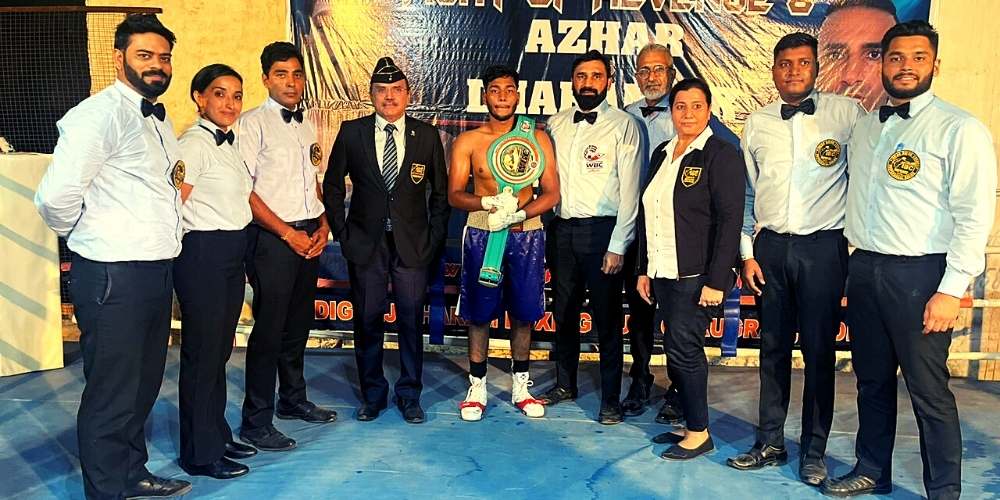
Super Featherweight boxer Md Azahar crowned WBC India champion

NEW DELHI :

pix: asianboxingcouncil.com

Delhi boxer Md Azahar was crowned the WBC India champion in the super featherweight division after registering a unanimous win over Dharamvir Singh.

The judges scored the fight 79-72, 76-75 and 79-72 in Azahar’s favour after 32 minutes of boxing on Sunday night.

The 25-year-old Azahar lost the first round on all three judges’ cards but went on to win the next seven rounds convincingly.

Azhar, proved to be the better technical fighter before a partisan crowd. He now has a record of five wins and as many losses with four knockouts to his name.

“I was comfortable, just sticking to doing what I do best,” Azahar said.

“The game plan was to hit and not get hit. I fought a good smart fight. He couldn’t hit me with any of his best shots.” Dharamvir, on the other hand, has a record of seven wins and four losses. His previous loss had come over three years ago before the COVID-19 pandemic.

WBC India Champion - Md Azahar
pix: indianboxingcouncil.com

The Indian Boxing Council-sanctioned fight night witnessed seven other fights.

In an exciting four round cruiserweight contest, Jaskaran Singh from Punjab won a points decision over debutante compatriot Harsamardeep Singh.

Middleweight Shiva won a close six round bout against Karanjeet Singh.

Shiva was making a comeback after two years and looked rusty in the early rounds. Karanjeet, despite his record of four losses, looked comfortable and even took the second and third rounds. But Shiva, hung on. The final scores were 58-56, 58-56, 58-56.

source: http://www.sportstar.thehindu.com / SportStar / Home> Boxing / by PTI text) / pix: sources as credited above / August 29th, 2022

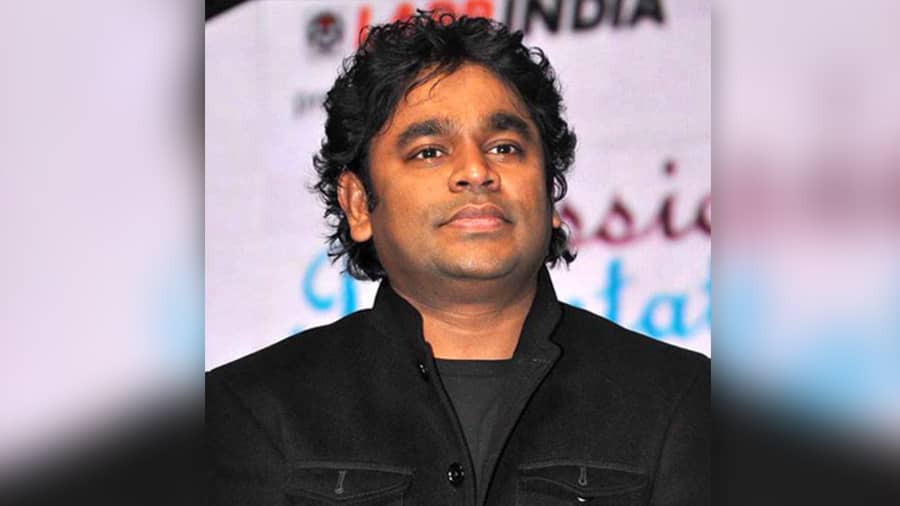
Canadian city Markham names street after A.R. Rahman

Chennai, TAMIL NADU :

The celebrated music composer says the honour has made him more committed to working hard.

After Markham, a city in Canada, honoured A.R. Rahman by naming a street after him, the celebrated music composer said he now feels more committed to working hard and inspiring people.

Rahman, who completed three decades in the Indian film industry earlier this month, penned a note of gratitude for the authorities of Markham in Ontario, Canada, on Twitter.

“I never imagined this ever in my life. I am very grateful to all of you, the Mayor of Markham, Canada (Frank Scarpitt) and counsellors, Indian Consulate General (Apoorva Srivastava) and the people of Canada…” his tweet reads.

“I feel like this gives me immense responsibility to do much more and be inspiring, not so get tired and not to retire yet. Even if I get tired I’ll remember that I have more things to do, more people to connect, more bridges to cross,” the multiple award-winning musician said.

The 55-year-old, currently in Canada for his musical tour, also shared pictures from the inauguration ceremony on the microblogging site on Sunday. The city of Markham had announced that a street would be named in Rahman’s honour back in November 2013.

“The name AR Rahman is not mine. It means merciful. The merciful is the quality of the common God we all have and one can only be the servant of the merciful. So let that name bring peace, prosperity, happiness and health to all the people living in Canada. God bless you all,” he added.

Rahman also thanked the people of India and his collaborators. “I want to thank my brothers and sisters of India for all the love. All the creative people who worked with me, who gave me the inspiration to rise up and celebrate hundred years of cinema; with all the legends included. I am a very small drop in the ocean,” the composer said.

His upcoming releases include films such as “Cobra” and “Ponniyin Selvan: I”.

source: http://www.telegraphindia.in / The Telegraph Online / Home> Entertainment /by PTI / New York / August 30th, 2022

Free cleft surgery camp planned in Vizianagaram

ANDHRA PRADESH :

Mission Smile and Tirumala Medicover Hospitals representatives releasing posters for the programme, in Vizianagaram on Monday.

Mission Smile, Tirumala Medicover Hospitals join hands for the cause

Charity organisation Mission Smile and Tirumala Medicover Hospitals will jointly conduct cleft palate surgeries free of cost for 80 children from September 3 to 6 in Vizianagaram, Mission Smile programme manager Rafiur Rahman and the hospital’s centre head V.N. Padma Kumar said.

Addressing a press meet, Mr. Rahman said that parents of the children with cleft problems living in North Andhra, Telangana, and Odisha have registered for the camp during which free surgeries will be performed for children with cleft palate and cleft lip deformities.

Mr. Rahman said that malnutrition among pregnant women and marriages among close relatives were identified by medical experts as the primary reason for the birth of children with cleft problems. He said that the organisation has conducted 119 medical camps across India since 2003, helping treat nearly 40,800 patients. He thanked Colgate Palmolive for extending funds for charitable programmes

ensured operations for nearly 40,800 patients across India since 2003 by conducting 119 special medical camps conducted across India. He thanked Colgate Palmolive for extending funds for charitable programmes under its CSR activities.

He said that each operation cost around ₹1.5 lakh, adding that the cost of operations had now come down significantly with many doctors performing surgeries free of cost. Medical Superintendent of the hospital Ch. Mahesh and programme coordinator of Mission Smile Sameer said that senior doctors were coming to Vizianagaram to perform the operations. They urged parents to approach hospital authorities to enrol the names of their children suffering from cleft problems.

source: http://www.thehindu.com / The Hindu / Home> News> India> Andhra Pradesh / by K Srinivasa Rao / Vizianagaram / August 30th, 2022

A Muslim freedom fighter for whom British Police brought horse to ride him to jail

Bethra Village (Sultanpur District), UTTAR PRADESH :

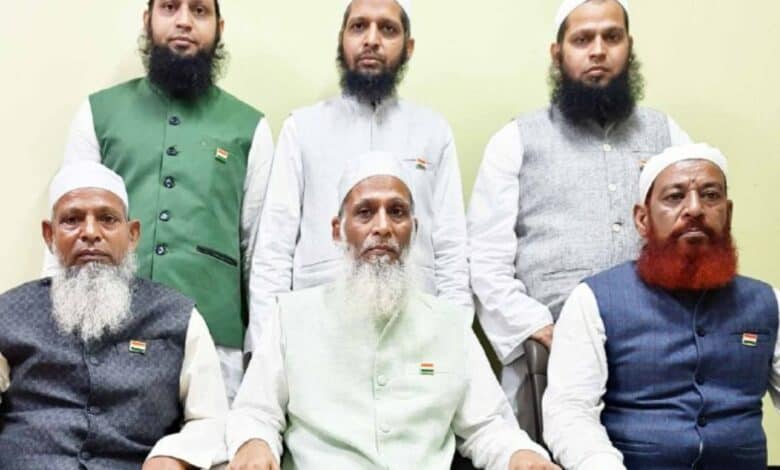
The Surviving kin of Jameel Ahmed Khan, Niayz Ahmed Khan, Nisar Ahmed Khan, Fayyaz Ahmed Khan, Abdul Rehman Khan, Ubaiur Rehman Khan and Wahedur Rehman Khan

British ruled over India, exploiting its people, resources, and wealth. But then there were heroes, the Indian Freedom fighters, who liberated the land through extraordinary acts of courage, valour, and a never-say-die spirit, despite having to make numerous physical, emotional, and personal sacrifices. Some get the limelight, while others remain in the shadows and contribute just as much as the others.

This is the story of one such true freedom fighter, whose tale will inspire you with courage, emotion, and patriotism.

Jameel Ahmed Khan, a resident of Bethra village in the Sultanpur district of Uttar Pradesh, was remembered for his extraordinary contribution and inordinate struggle.

Jameel Ahmed Khan was an ardent, outspoken anti-British activist who was at the forefront of many activities considered against the then British Raj.

This incident demonstrates his patriotism and altruistic behaviour, as when he was sentenced to imprisonment, he discussed the matter with his wife and divorced her so that she could marry someone else, as he was well aware of the uncertainty of his release and the sufferings his wife could face.

When the British Raj Police arrived to arrest him, Jameel Ahmed Khan refused to be handcuffed, declaring, “It is an honour to be a prisoner in the struggle to liberate my homeland, but I will not be handcuffed, and I will go to jail on horseback only because for me this is not a punishment, but a celebration and pleasure.” As a result, he had a horse brought to him and rode it to jail.

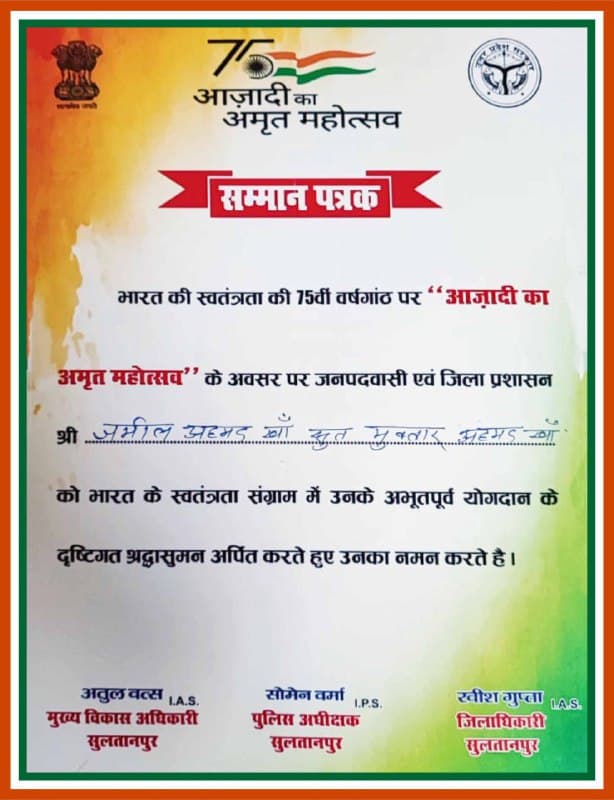
In Bethara, IAS and IPS Sultanpur District visited Jameel Ahmed Khan’s surviving kins and presented them with the Praman Patra in recognition of their ancestors’ contributions.

Shrimati Jabbarunnisa, Jameel Ahmed Khan’s only daughter, has four sons Jalal Ahmed Khan (died in Makkah, Saudi Arabia, in 1984), Niayz Ahmed Khan, Nisar Ahmed Khan, Fayyaz Ahmed Khan and two daughter Razia and Zareena.

Niyaz Ahmed Khan sons, i.e. the fourth generation of freedom fighter Jameel Ahmed Khan are Abdul Rehman Khan, the founder and Chairman of Mumbai’s Bilal School, Ubaiur Rehman Khan, the Founder and Director of Blossom Media Pvt. Ltd. and Abyaz Textile CEO Wahedur Rehman Khan.

The family is pleased that Jameel Ahmed Khan’s contribution is remembered during this historic and significant Indian festival, 75th Azaadi Ka Amrit Mahotsav.

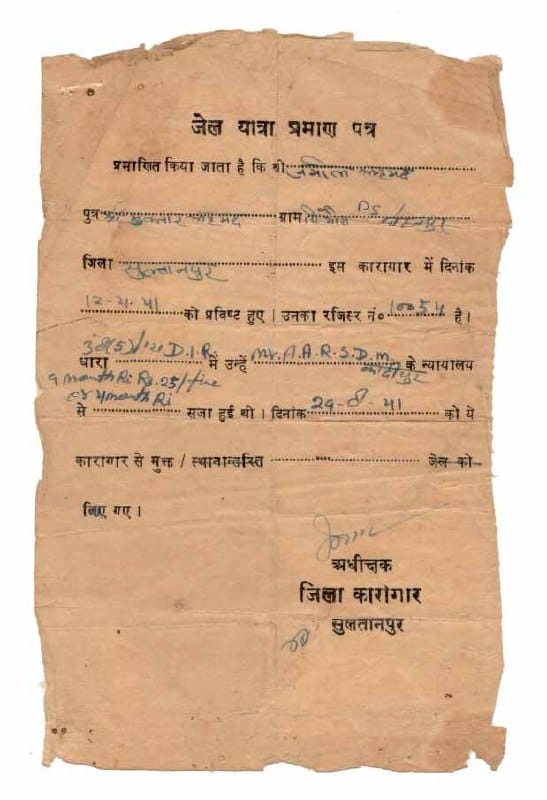
Jail Yatra Certificate issued by Dist. Jail Authority of Sultanpur.

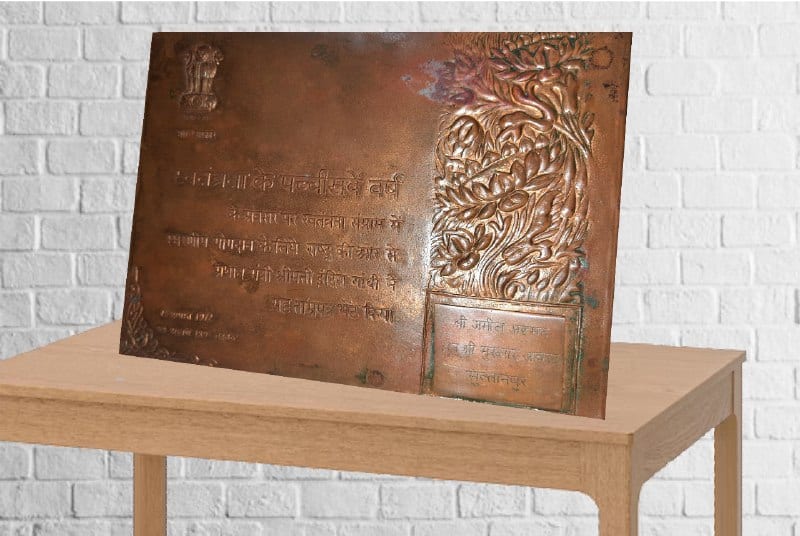
Tamr Patra presented to Jameel Ahmad Khan by Prime Minister Shmt. Indra Gandhi on the occasion of 25th Anniversary of Independence on August 15, 1972

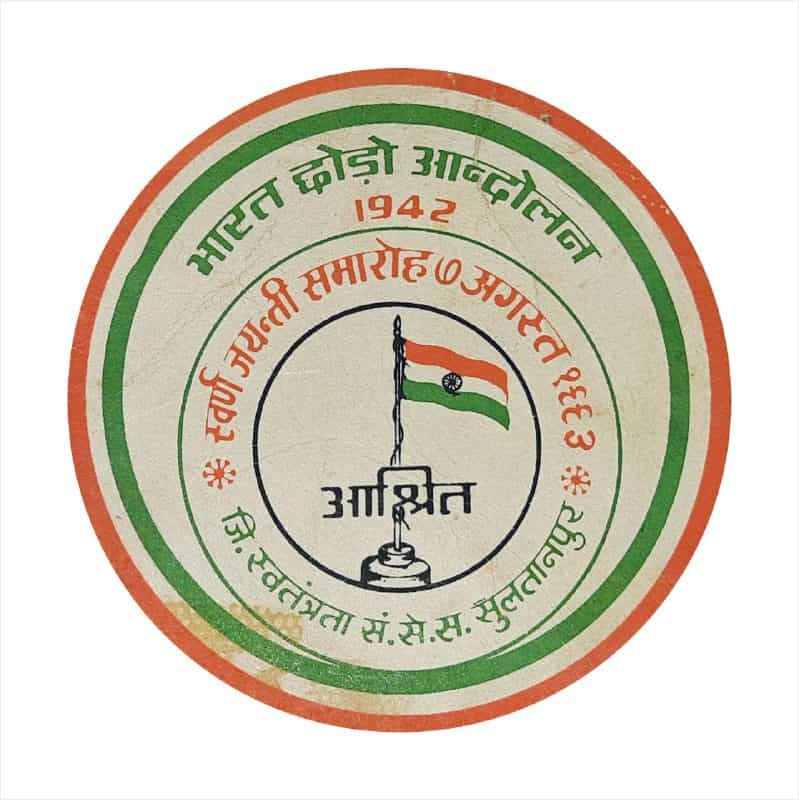
Badge presented to the kin of Jameel Ahmad Khan by Motilal Vora, the Governor of Uttar Pradesh on the occasion of 50th Anniversary of Independence on August 7, 1993

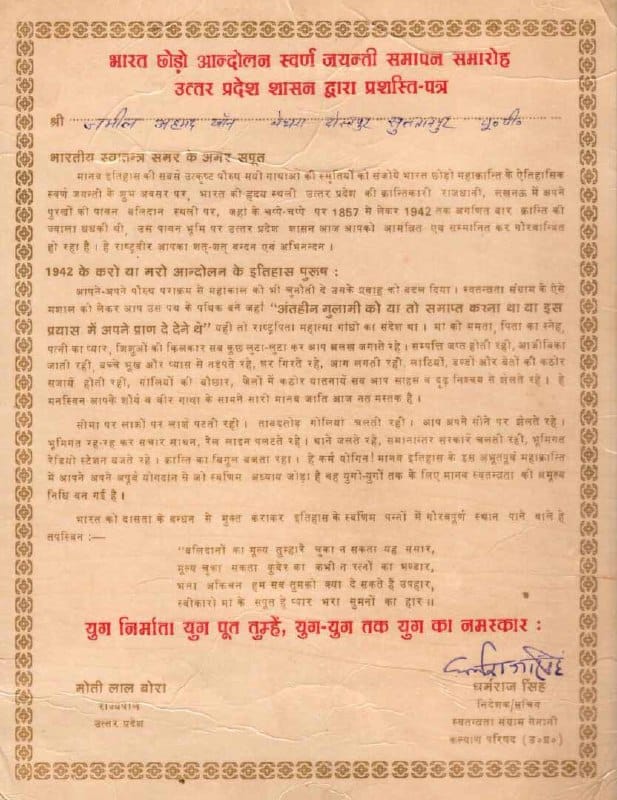
Certificate presented to the kin of Jameel Ahmad Khan by Motilal Vora, the Governor of Uttar Pradesh on the occasion of 50th Anniversary of Independence on August 7, 1993

Praman Patra presented to the kin of Jameel Ahmad Khan by Sultanpur Dirtrict Authorities Ravish Gupta (IAS), DM Sultanpur and Soman Varma (IPS) the Superintendent of Police, Sultanpur on the occasion of 50th Anniversary of Independence on August 7, 1993

source: http://www.siasat.com / The Siasat Daily / Home> Opinion / by Neha Khan, Guest Contributor / August 20th, 2022

On top of world with 81 certificates in 24 hours — meet Kerala’s Rehna Shajahan

Illickall (Kottyam District), KERALA :

Rehna has set a world record for the maximum number of online certificates secured in a day, reports Cynthia Chandran.

Kottayam:

Rehna Shajahan was devastated when half a mark cost her an MCom seat at the Jamia Milia Islamia. However, she did not lose heart. The 25-year-old enrolled for two postgraduate courses online — a master’s in social work and a diploma in guidance and counselling

She went on to prepare for the common admission test in management studies. As she cracked the CAT exam, Rehna was the only Malayali in her batch to get admission to the Jamia Millia Islamia for an MBA programme. And now, her zeal for study has earned her the world record for the maximum number of online certificates secured in a day — a whopping 81.

A resident of Illickal in Kottayam district, Rehna says her sister Nehla, whom she fondly calls ‘itha’, inspired her. Nehla got a lucrative job after pursuing her master’s in operational research from the London School of Economics and was always the studious one. “But I was determined to overcome the tag of an average student,” Rehna says.

When her sister got admission in Lady Sriram College, New Delhi, Rehna too wanted to try her luck in getting into a central university. She missed by a whisker and the rest is history. While pursuing the two post-graduate degrees simultaneously, she worked with an NGO, ‘Women’s Manifesto’, based in New Delhi that worked for women’s empowerment.

“When I cracked the CAT exam, I realised I can excel in studies. We need to try rather than just dream. I was keen on enhancing my repertoire by pursuing certification courses,” she says.

The previous world record for maximum online certificates received in one day was 75. She had recently quit her cushy job as a management professional in Dubai to attend to her father PM Shajahan, who has had a transplant surgery. For Rehna, her family comprising father, mother CM Rafiath, husband Ebrahim Riyaz, who is an IT engineer, and her sister is her priority. For that is the support system that gives her the courage and the inspiration to reach for the stars.

source: http://www.newindianexpress.com / The New Indian Express / Home> Good News / by Cynthia Chandran / Express News Service / August 28th, 2022

Renowned Islamic scholar Maulana Syed Jalaluddin Umri passes away in Delhi

Puttagram (North Arcot District, TAMIL NADU / NEW DELHI :

Moulana Syed Jalaluddin Umri

Renowned Islamic scholar Maulana Syed Jalaluddin Umri has passed away in Delhi at 8:30 pm Friday. He was 87.

Maulana Umri was president of Jamaat e Islami Hind for consecutive three terms( 2007-19).

Maulana Umri was born in 1935 in a village called Puttagram, District of North Arcot, Tamil Nadu, British India. He was a graduate of Jamia Darussalam, Oomerabad, Tamil Nadu. He recieved a master’s degree in Islamic Studies from Jamia Darussalam. He also received a bachelor’s degree in English literature from Aligarh Muslim University

Maulana Umri began his association with Jamaat-e-Islami Hind during his student years. After completing his studies, he dedicated himself to its research department. He officially became its member in 1956. He served as the city Ameer of Jama’at of Aligarh for a decade, and the editor of its monthly Zindagi-e-Nau for five years. Later, the Jama’at elected him to its All-India deputy Ameer, which he served for four consecutive terms (sixteen years). In 2007, the Jama’at’s Central Council of Representatives elected him its Ameer (Chief). He was again re-elected as Jama’at’s Ameer

Maulana Umri was elected as Ameer, Jamaat-e-Islami Hind for the fourth term (April 2015 – March 2019).

Jalaluddin Umri was widely-considered, among the Islamic circles of India, an authority on human rights and Muslim family system.

Jalaluddin Umri had written over two dozen books which were translated  various languages:

  • Maroof wa Munkar
  • Islam ki Dawat
  • Musalman Aurat ke Huquuq aur Un par aeterazaat ka Jaiza (Rights of Muslim Women – A Critique of the Objections)
  • SeHat-o-marz aur Islam ki Taleemat
  • Islam meN khidmat-e-khalq ka Tasawwur (Social Service in Islam)
  • Inabat Ilallah
  • Sabeele Rab
  • Islam Aur Manav Adhikkar
  • State of Our Community and Nation and Our Responsibilities.

source: http://www.muslimmirror.com / Muslim Mirrror / Home> Obituary / by Muslim Mirror Desk / August 26th, 2022

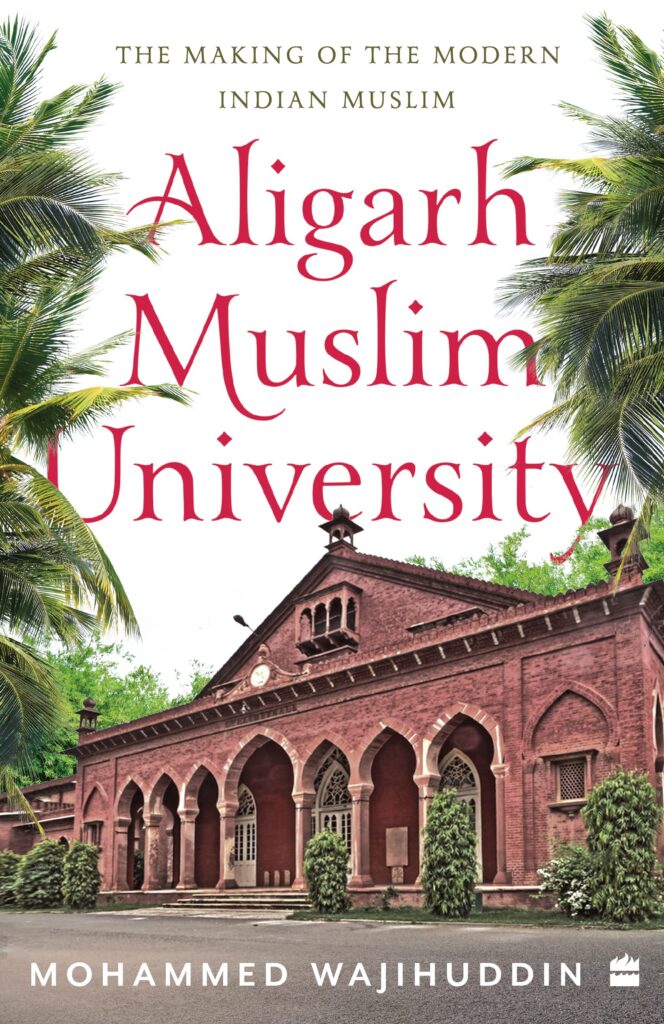
Book: The role Aligarh Muslim University played in the making of the modern Indian Muslim

Mumbai, MAHARASHTRA / Aligarh, UTTAR PRADESH :

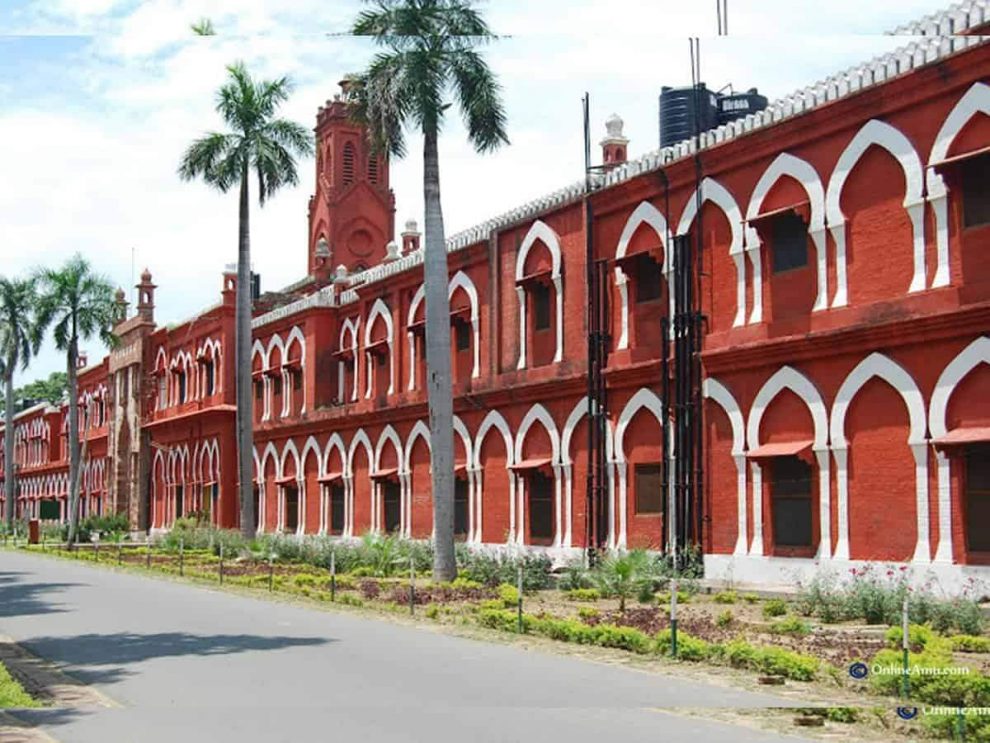
  • The book “Aligarh Muslim University: The Making of the Modern Indian Muslim” by Mohammed Wajihuddin  sheds light on AMU and its role in determining where the Muslim community stands in modern-day India.
  • The Aligarh Muslim University (AMU) completed a hundred years in December 2020. In December 1920, the Mohammedan Anglo Oriental (MAO) College founded by Sir Syed Ahmed Khan in 1877, was transformed into AMU. Sir Syed also established the All India Mohammedan Educational Conference to infuse the subcontinent’s Muslims with a spirit of modernism. This helped prepare the community, devastated in the aftermath of the Revolt of 1857, for new challenges.
  • Zakir Hussain, AMU alumnus, its former Vice-Chancellor and a former President of India, said over fifty years ago, ‘The way Aligarh participates in various walks of national life will determine the place of Muslims in India’s national life. The way India conducts itself towards Aligarh will determine largely, the form which our national life will acquire in the future.’
  • Read an excerpt from the book below.

With AMU turning a hundred, one is beholden to the MAO College Fund Committee’s first meeting on 10 February 1873. The fund committee was formed a year earlier, in 1872. Addressing the meeting, Syed Ahmad Khan’s son Syed Mahmood (1850–1903), had said: ‘I think what we mean to found is not a College but a university, and I hope the members will consent to my proposal that instead of the word “College”, the word “University” may be substituted.’

Since the formal opening of MAO College was getting delayed, the fund committee began a school called Madrasatul Uloom Musalmanan-e-Hind on 24 May 1875 at Aligarh. The school was a precursor to MAO College, which metamorphosed into AMU in 1920, and during whose foundation-stone-laying ceremony on 8 January 1877, presided over by Viceroy of India Lord Lytton, Sir Syed had observed:

… this is the first time in the history of Muhammedans of India that a college owes its establishment not to the charity or love of learning of an individual nor to the splendid patronage of a monarch, but to the combined wishes and the united efforts of a whole community. It has its origin in causes which the history of this country has never witnessed before.

So, what were the causes Sir Syed alluded to?

The large-scale killings and destruction in the wake of the failed 1857 Mutiny had unsettled Sir Syed, a judicial official in the East India Company. Muslims, who had borne the brunt of British repression heavily because the British held them responsible for the rebellion, had become fatalists. Irrationality, an obsession with obsolete and redundant social mores, rigidity in religious practices and a refusal to adapt to the new realities made them misfits in the era that the British Raj heralded. On close scrutiny, Sir Syed found that the reasons for the Muslims’ unfathomable desolation lay mainly in their educational backwardness and resistance to modern, scientific thinking. Therefore, he saw a panacea for the community in modern, scientific learning. He began thinking about ways and means to bring his community out of the stupendous self-pity it wallowed in.

A visit to England in 1869 enabled Sir Syed to see first-hand the education system of the West, including that at Oxford and Cambridge. With the dream of an Indian college modelled on Oxbridge before his eyes, he returned to India and set out to realize that cherished dream. He quit his job in Benares and made Aligarh, then a small mofussil town 100 miles off Delhi on the Delhi–Calcutta route, his home. Since Sir Syed had saved several family members, including women and children, of some senior British officials during the 1857 Mutiny from Indian rebels and was among the defenders of British rule in India, no roadblocks in his path to founding his college remained permanent.

In Aligarh, he set up a residential college which would become the heartbeat of Muslims, as well as of a large swathe of undivided India. Alongside the college project, Sir Syed began the herculean task of social and religious reform. For this he established the Tahzibul Akhlaq or Mohammedan Social Reformer, a magazine in Urdu, which began hitting at the obscurantist, obsolete views that fettered the community. Other magazines were specially published to counter the views spread by the Tahzibul Akhlaq. Some of Sir Syed’s religious views were unpalatable to the ulema and against accepted Islamic beliefs, and earned him the wrath of the orthodox elements in the community. He had to face the fury of fatwas. A maulvi even went all the way to Mecca to fetch a fatwa of kufr, declaring him an infidel. Sir Syed only chuckled at the serious drive to declare him a heretic, kafir or infidel, as it gave some of his tormentors an opportunity to visit Islam’s holiest places. Sir Syed’s debt to India in general and Muslims in particular lies not just in the college that he established but in the overall impact he left on the lives of Indians, especially Muslims.

Over 123 years after his death, Sir Syed is not considered a heretic, a naturi (one who propagated the belief that Islam is compatible with nature), a British stooge—epithets that some of his own community members hurled at him in his lifetime. Today, the orthodox ulema publicly say that Sir Syed, like any other person, is merely accountable to God for his lapses, and that his achievements and noble works outweigh his shortcomings and will pave his way to paradise.

Tomes have been penned on Sir Syed, MAO College, AMU and the movement Sir Syed and his associates like Mohsinul Mulk, Viqarul Mulk, Maulana Shibli Nomani, Maulana Zakaullah, Altaf Hussain Hali, Nazir Ahmad, and Chiragh Ali launched. This was called the Aligarh Movement, and it can only be described as the trigger for the Muslim renaissance in the subcontinent in late nineteenth and early twentieth centuries. It is easy to do a panegyric while evaluating the 100-year-long journey of a university which was born in the tumultuous times of India’s freedom struggle of the 1920s.

The circumstances in which Jamia Millia Islamia came up deserve some detailing. In 1920, Mahatma Gandhi gave a call for the boycott of government and government-aided schools and colleges. Muhammad Ali opposed MAO College as it was pro-government, since it received government grants. Gandhi, Muhammad Ali and Shaukat Ali tried to persuade the pro-government elements at Aligarh to join the nationalist movement and turn the college into a nationalist institution. The pro-government group at Aligarh opposed the presence of Gandhiji and the Ali brothers at the campus as they were trying to persuade students to join their movement. On 12 October 1920, Mahatma Gandhi addressed the students and left. But the real drama happened on 13 October, when the Ali brothers suddenly appeared at a meeting being held at the students’ union. Since they had been witness to Gandhiji being hooted and booed the previous day, the Ali brothers didn’t speak but said they had only come only to say goodbye to the students of their alma mater. And they wept too because they had seen Gandhiji being booed. Present there was also Zakir Hussain, who had done his MA in economics from AMU and was a part-time teacher at the university. Zakir Hussain had arrived from Delhi the same day; he was running a fever and didn’t want to speak. But he couldn’t hold back his own tears when he saw the Ali brothers weeping. He stood up and declared that he had decided to resign from his teaching assignment at MAO College and forego the scholarship being given to him. This tilted the balance and changed the mood. Many students joined him in boycotting government institutions. In his biography Dr Zakir Hussain, M. Mujeeb, a colleague and friend of the professor, says that Hussain went to Delhi, where he met Dr M.A. Ansari, Hakim Ajmal Khan, Muhammad Ali and many others and ‘assured them that a large number of teachers and students would leave the MAO College to join a national institution, if one was established. The leaders could ask for nothing better. On 29 October 1920, the Jamia Millia Islamia came into existence, and Maulana Mahmudul Hasan of Deoband delivered an address indicating its aims and ideals.’

Excerpted with permission from Aligarh Muslim University: The Making of the Modern Indian Muslim, Mohammed Wajihuddin, HarperCollins India. Read more about the book here and buy it here.

source: http://www.thedispatch.in / The Dispatch / Home> Book House / by Mohammed Wajihuddin / January 25th, 2022

Maharashtra: Hospital run by Muslim religious body to meet healthcare needs of poor

Solapur, MAHARASHTRA :

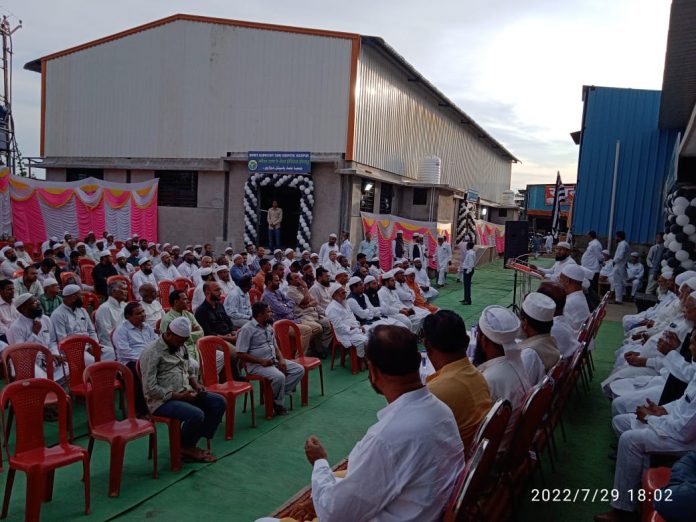
The day of inauguration at the Jamiat-E-Ulema Day-Care Hospital on July 29. | Picture by arrangement

The hospital built by Jamiat-e-Ulema Hind (JUH) in Solapur, Maharashtra will provide healthcare services to poor patients at minimum rates regardless of caste, religion and creed.

Solapur (MAHARASHTRA) :

To meet the healthcare needs of poor and marginalized sections of society, Jamiat-e-Ulema Hind (JUH) has built a hospital in Solapur, Maharashtra. 

Thrown open to patients in late July this year, Jamiat-E-Ulema Day-Care Hospital aims to make health facilities accessible to the poor and needy at a minimum charge. The hospital was inaugurated by Maharashtra state president of JUH Maulana Nadeem Siddique and attended by several eminent doctors and activists. 

During his address, Maulana Nadeem said that “the hospital will provide excellent services to the poor patients at a very modest rate regardless of caste, religion and creed.” 

“The OPD (outpatients department) and a medical store are functioning right now and the daycare facilities will begin soon,” the medical superintendent of the hospital Dr Farooque Mulla told TwoCircles.net. 

Dr Farooque said that besides having an OPD, the hospital also administers ESG, and all types of blood tests at 30 to 50% discounted charges. “Specialist doctors also visit us to handle major cases.” 

Talking about the need to open such a healthcare facility for the needy, JUH district president Maulana Ibrahim Qasmi told TwoCircles.net that “health and education are basic facilities which should be provided free of cost or lowest fees but unfortunately these two have become a lucrative business.” 

“Considering the need of the hour we have started this hospital on a 5000 square feet plot,” he said. 

Maulana Ibrahim said that “serving the poor is the aim of the hospital.” 

“We are concentrating on the health and education sector by using all our resources. Our new venture will be to prepare students from marginalized communities for competitive exams by holding classes,” he said. 

The infrastructure cost of the hospital was borne by collecting donations from people. 

“We are doing all this by collecting donations from people. I must say that our city-based Biradaris (sections) have donated wholeheartedly,” Hasib Nadaf, General Secretary JUH told TwoCircles.net. 

Nadaf said that during the pandemic, JUH set up a Covid Care centre at the same premises. 

“This new multi-speciality hospital is our dream project,” he said. 

Social activist Salahuddin Peerzade lauded this initiative by JUH. 

“JUH always takes the lead in all humanitarian work. Everyone must come forward and help them to achieve their targets,” he said. 

For Ashfaque Bagwan, a young political and social activist, the city of Solapur is in dire need of speciality hospitals, especially for women. “I frequently receive complaint calls from many women who face neglect at government hospitals. The fact is that poor patients always struggle to get their healthcare needs met,” he said. 

Bhagwan added that he hoped the new hospital set up by the JUH will have a well-equipped gynaecology department.  

Imran Inamdar is a Goa based journalist. He writes positive stories on education and healthcare. He tweets at @ImranIn6379033

source: http://www.twocircles.net / TwoCirlces.net / Home> Lead Story / by Imran Inamdar, TwoCircles.net / August 24th, 2022