Category Archives: Amazing Feats

Meet Ariba Khan, who is helping people fight mental health issues with an AI-based ‘safe space’

Gurgaon, HARYANA / NEW DELHI :

Ariba Khan of Jumping Minds
Ariba Khan is the founder of Jumping Minds, which promotes mental well-being. Image courtesy: Ariba Khan

Technology and human emotions may seem a mismatch, but at Ariba Khan has fused them for a mental health platform.

As a young, spirited and ambitious 30-year-old, Ariba Khan can relate to mental health challenges that people her age are fighting. The lack of a safe space where such people could open up about their thoughts anonymously is what spurred her business idea – an artificial intelligence-based deep tech mental health app.

With Jumping Minds, this IIT-Rourkee and IIM-Bengaluru alumnus, along with co-founder Piyush Gupta, built a space where people could chat with individuals in a similar situation without exposing their identity.

“All of us require a safe space where you can talk about the challenges you may be facing. It doesn’t have to be clinical stress, but all of us are facing one stress or another – a bad breakup, difficult time at work, adjusting with the family. So, we thought of creating a digital space where you connect to people who may have gone through similar stressors, share your experiences, and release emotions,” Khan tells Health Shots.

Mental health matters

In the past few years, global celebrities have broken their silence on facing mental health issues. Somewhere, destigmatization has happened, but there’s a long way to go. It is because of the continued stigma around mental health that Khan chose to make Jumping Minds an anonymous space.

“Otherwise, there’s always a judgment factor,” says the Delhi dweller, adding that even though her platform is all about tech, at the heart of lies human interaction through technology.

“It helps people to release emotions, clear their head and find solutions,” asserts Khan.

Just five years ago, talking about stress and feeling burnt out at work would have been unimaginable. But the Covid-19 pandemic has pushed people into taking their mental health more seriously.

“The Gen-Z, especially, is more unapologetic about their mental health. They have an aspirational lifestyle, they want to live a well-balanced, happy life. And so, I would say the younger generation is leading the change in mindset and the positive shift towards wellness. Still, there’s a stigma around mental health and limited safe spaces where people don’t feel ashamed or guilty about sharing their story. Instead, people should feel empowered that there are so many other people going through the same,” Khan says.

Jumping Minds founder Ariba Khan
“It’s okay to not be okay,” believes Ariba Khan. Image courtesy: Ariba Khan

Mental health issues of the young generation

As someone who believes in the adage that “it’s okay to not be okay”, Khan outlines the most common health problems that youngsters in the 20-30 age group are going through these days.

1. Relationship troubles:

Whether you are stressed at work or family life, it directly impacts your interpersonal relationships. People are getting increasingly stressed about how to maintain relationships.

2. Anxiety

This is why people need a digital detox from time to time! “Anxiety is the after-effect of social media. The need to be perfect, with filters on all the time,” explains Khan, stressing on how social anxiety and social comparison are turning out to be spoilers.

“People tend to think, ‘Maybe I am not enough’, ‘I am working so much, but I am not upto that level.’ And that social anxiety has become very prominent in the post-Covid era,” she explains.

3. Sexual wellness:

This is the age when early professionals and college students explore their body and preferences. So, people have a lot of questions around sexual wellness.

4. Career:

The desire to reach career milestones leads to undue pressure and stress on people. They overthink things like, ‘Are we in the right job? Are we working with the right people?’ But talking about these things, instead of keeping the thoughts to yourself, will give you a feeling of validation.

Jumping Minds for mental health

3 happiness hacks for women, suggested by Ariba Khan

Khan has three simple suggestions for women to follow for the sake of their mental peace.

1. Find peaceful breaks in a day

“I know we are women of the 21st century, always leading the way – whether it is in personal life or professional life. But it is very important to have time in a day when you are by yourself, living in the moment,” she suggests.

Khan assures that doing so even for a few minutes every day will help people become more productive and more appreciative of the positive results of the everyday hustle.

2. It’s okay, to err is human

Even research says women tend to have higher stress levels than men ! “The society has made women accustomed to keeping everyone around them happy – be it colleagues, friends, family.

But it is okay to sometimes make mistakes, feel bad or low. We may think we are superwomen, but we are humans after all! We should’t expect ourselves to be perfect all the time, because there’s true beauty in being imperfect,” she adds.

3. Talk it out

Don’t keep your thoughts to yourself. If you are stressed, talk about it. “Don’t feel ashamed about it, and who knows, it may give courage to others to talk about their journey. Once you start releasing the monster from your head, it becomes smaller. And if you do it in a community, you will see magic!”

source: http://www.healthshots.com / Health Shots / Home> She Says> by Radhika Bhirani / August 02nd, 2022
List of Important Leaders Associated with the Revolt of 1857

INDIA :

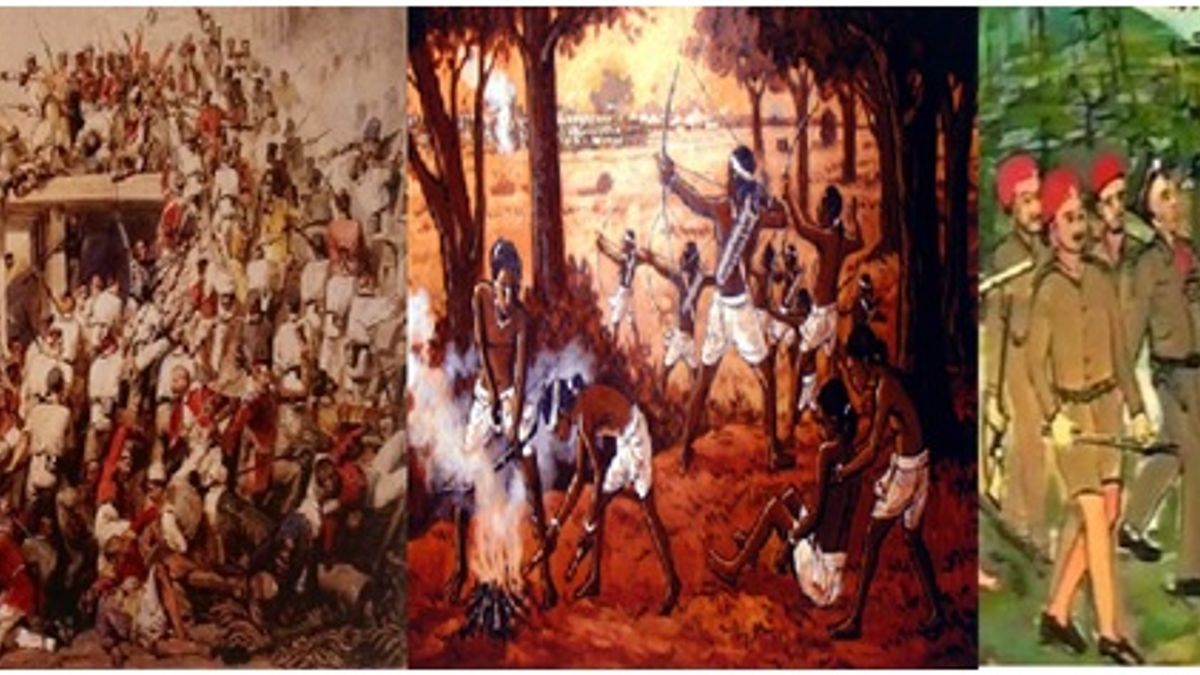
The Revolt of 1857 was not merely a product of Sepoy mutiny but was accumulated grievances of the people against the Company’s administration and of their dislike for the foreign regime. Here is the List of important leaders Associated with the Revolt of 1857.

_______________________
Shakeel Anwar / Updated Nov 10, 2020, 11:10 IST

Important leaders Associated with the Revolt of 1857

_____________________________

The Revolt of 1857 is also called the Sepoy Mutiny or India’s First War of Independence. It was started on 10 May 1857 at Meerut, as a mutiny of sepoys of the British East India Company’s army.

It was a prolonged period of armed uprising as well as rebellions in Northern and Central India against the British occupation of that part of the subcontinent. It began as a revolt of the sepoys of the British East India Company’s army but eventually secured the participation of the masses. The revolt is known by several names: the Sepoy Mutiny (by the British Historians), the Indian Mutiny, the Great Rebellion (by the Indian Historians), the Revolt of 1857, the Indian Insurrection, and the First War of Independence (by Vinayak Damodar Savarkar).

The revolt spread over the entire area from the neighborhood of Patna to the borders of Rajasthan. The main centers of revolt in these regions namely Kanpur, Lucknow, Bareilly, Jhansi, Gwalior, and Arrah in Bihar. Following is a list of important leaders who took part in the revolt from different parts of the country: 

Important leader Associated with the Revolt of 1857

PlaceLeader
BarrackporeMangal Pandey
DelhiBahadur Shah II, General Bakht Khan
DelhiHakim Ahsanullah (Chief advisor to Bahadur Shah II)
LucknowBegum Hazrat Mahal, Birjis Qadir, Ahmadullah (advisor of the ex-Nawab of Awadh)
KanpurNana Sahib, Rao Sahib (nephew of Nana), Tantia Tope, Azimullah Khan (advisor of Nana Sahib)
JhansiRani Laxmibai
Bihar (Jagdishpur)Kunwar Singh, Amar Singh
Allahabad and BanarasMaulvi Liyakat Ali
FaizabadMaulvi Ahmadullah (He declared the Revolt as Jihad against English)
FarrukhabadTufzal Hasan Khan
BijnaurMohammad Khan
MuradabadAbdul Ali Khan
BareillyKhan Bahadur Khan
MandsorFiroz Shah
Gwalior/KanpurTantia Tope
AssamKandapareshwar Singh, Manirama Datta
OrissaSurendra Shahi, Ujjwal Shahi
KulluRaja Pratap Singh
RajasthanJaidayal Singh and Hardayal Singh
GorakhpurGajadhar Singh
MathuraSevi Singh, Kadam Singh

The revolt of 1857 was an unprecedented event in the history of British rule in India. It united, though in a limited way, many sections of Indian society for a common cause. Though the revolt failed to achieve the desired goal, it sowed the seeds of Indian nationalism.

source: http://www.jagranjosh.com / Jagrn Josh / Home> General Knowledge> History / by Shakeel Anwar, Jagran Josh / November 10th, 2022

A Shia Mirza Ismail constructed a Sunni mosque

Bengaluru / Mysuru, KARNATAKA :

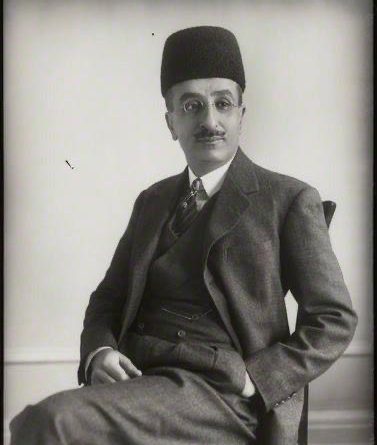
“I believe deep down in my heart that the great reality of spiritual revelation given to humanity by the Prophet (blessed be His name) is an infinitely greater thing than any sectarian difference (Shia & Sunni) imposed upon it by subsequent human feeling and by lesser vision than his of the inner realities from which the external life of humanity has developed.” Mirza Ismail, a Shia Muslim by faith, who was the Prime Minister of Mysore had spoken these words at the inauguration of Jamia Mosque, a Sunni mosque, in Bengaluru on 30 May 1941.

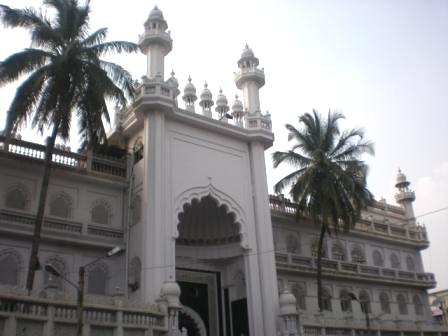
Jamia Masjid, Bengaluru

Mirza Ismail remained one of the most important politicians in India as he held the position of Prime Minister (PM) of the second wealthiest state, Mysore, from 1926 to 1941 after which he became PM of Jaipur and Hyderabad.

A Shia by his faith whose foreparents had migrated from Iran and stayed in India, Ismail remained committed to the unity of humans. He believed that Shia and Sunni, Hindu and Muslim, or any caste difference among humans could not stop them from living together harmoniously. 

Ismail inaugurated the mosque at Bangalore, which was one of the most important cities in Mysore state, as his last public ceremony in the capacity of the PM of Mysore after resigning from the post. On the occasion he noted, “I am particularly happy that this function, which is the last of my period of service as Dewan of Mysore, gave me the opportunity of expressing an ideal of my life which has been foremost in the past and will remain foremost in the future.” 

What was the ideal Ismail talking about? Making a mosque or something else?

The ideal he was talking about was the unity of Shia and Sunni as one Muslim community. He told the people gathered there that the non-Muslims observing this ceremony would not think much about it. In their view a Muslim had come to lay the foundation stone of a mosque of his fellow Muslims. “But to you”, Ismail argued, “fellow-Musalmans, it is not so simple. You know that in the historical development of Islam I belong to a section of the organised expression of the Faith that for centuries has been in sharp opposition to the section to which you, who are going to build this mosque, belong.” He expressed satisfaction that Sunnis had invited him for this event. He told the people that since its very inception he had taken “the greatest possible interest” in this mosque where Sunni Muslims would pray in the manner they wanted. 

Ismail went on to tell the people;

“At the centre of Islam is the teaching and practice of brotherhood. You would have been false to the truth of life if, because I am a Shia by birth, you had not invited me to this function, and I would have been equally false to the brotherhood of Islam if, because you are Sunnis, I had not accepted your invitation. Our differences are transient, even trivial, in comparison with the spiritual reality which these differences tend to obscure and weaken.”

Ismail went on to state that love and peace are the essence of Islam and Muslims should stop fighting among themselves as well as with their coreligionists in the country. The mosque is one of the most important mosques in Bengaluru today.

(Author is a neurobiologist with a keen interest in history, society and culture of India)

source: http://www.heritagetimes.in / Heritate Times / Home> Featured Posts> Heritage> Leaders / by Mahino Fatima / March 08th, 2022

“Education abroad” was the theme of Star Talk held in Guwahati

ASSAM :

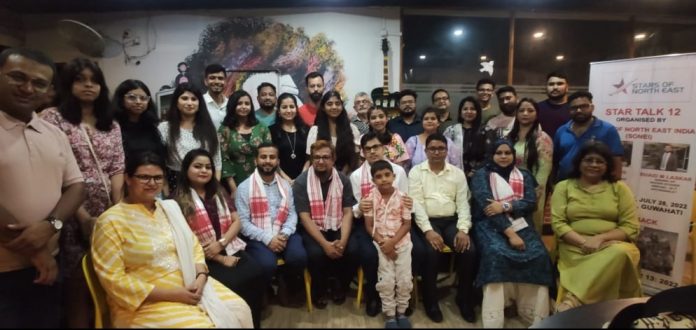
Members of SONEI along with guests pose for a group photo on the sidelines of the ‘Star Talk-12’ event held in Guwahati on Thursday.

Guwahati :

‘Star Talk-12’, an initiative of the Stars of North East India (SONEI), a registered public charitable trust and talent hunt platform, was held in Guwahati on Thursday.

The first appointed speaker of the event was Aman Wadud, a young lawyer who recently got his Masters in Law from the University of Texas under a Fulbright Scholarship. Besides sharing his American experience, Aman Wadud gave a very informative presentation of the evolution of Civil Rights in the USA.

The second appointed speaker, Suaid M Laskar, Head of Pan-India Sales, Admissify made a presentation to clear the common doubts people have about studying abroad. Laskar, who has been instrumental in facilitating overseas studies of more than 350 students from Assam, over the last five years, in countries like Australia, Germany, UK and USA, informed the audience that 93 per cent of the students who go abroad for studies belong to middle class families.

Abhishek Kumar, a graduate from Guwahati Commerce College, who is all set to study his Masters in Supply Chain Management at Cranfield University, UK also shared his experience on the occasion.

Alemoon Nessa of Bongaigaon, who recently received two national MSME awards along with a cash component of Rs eight lakh from the hands of Prime Minister Narendra Modi, was felicitated on the occasion.

Dr Faizuddin Ahmed, a physicist from Dhubri, who has made it to the Stanford list of world’s top 2% scientists, was also honoured on the occasion.

Shahnaz Islam, a budding poet whose book “Midnight’s melancholy” was launched from Sikkim recently, enthralled the audience by reciting a few poems from her book.

Mirza Arif Hazarika’s short film “Sorry” starring Barasha Rani Bishaya and Ravi Sharma is now live on Disney+Hotstar, a rare honour for an Assamese short film. Mirza shared his experiences of making the film.

Priyanka Paul Banerjee, an upcoming PR practitioner, was also felicitated along with other achievers at the event.

SONEI will complete eight years of its existence in September 2022 during which new projects will be announced in addition to its existing programmes in the field of education, promotion of skills, and social service.

The event was hosted by Samima Sultana Ali and Sharique Hussain.

source: http://www.muslimmirror.com / Muslim Mirror / Home> Education> Positive Story / by Special Correspondent / July 29th, 2022

Qasim Nanautawi : The Scholar who awakened Muslims through education

UTTAR PRADESH :

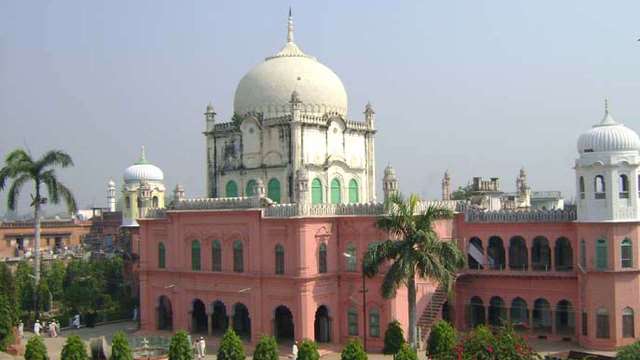
Darul Uloom Deoband

He is truly a forgotten warrior of the freedom movement. Few know about him and fewer are familiar with his name but delve into the pages of history and you realise that he deserves a better place.

He participated in the Indian Rebellion of 1857 in the Battle of Shamli between the British and the anti-colonialist ulema. The scholars were ultimately defeated at that battle.

He was Mohammad Qasim Nanautawi.

Nanautawi was born in 1832 into the Siddiqui family of Nanauta, a town near Saharanpur in Uttar Pradesh.

He was schooled at Nanauta, where he memorised the Quran and learned calligraphy.

At the age of nine, Nanautawi moved to Deoband where he studied at the madrasa of Karamat Hussain. The teacher at this madrasa was Mehtab Ali, the uncle of Mahmud Hasan Deobandi.

On the instruction of Mehtab Ali, Nanautawi completed the primary books of Arabic grammar and syntax.

Thereafter, his mother sent him to Saharanpur, where his maternal grandfather Wajihuddin Wakil, who was a poet of Urdu and Persian, lived.

Wakil enrolled his grandson in the Persian class of Muhammad Nawaz Saharanpuri, under whom, Nanautawi, then aged twelve, completed Persian studies.

In 1844, Nanautawi joined the Delhi College. Although was enrolled in the college, he would take private classes at his teachers’ home, instead of the college.

Nanautawi stayed in Delhi for around five or six years and graduated, at the age of 17.

After the completion of his education, Nanautawi became the editor of the press at Matbah-e-Ahmadi.

During this period, he wrote a scholium on the last few portions of Sahihul Bukhari.

Before the establishment of Darul Uloom Deoband, he taught for some time at the Chhatta Masjid. His lectures were delivered at the printing press. His teaching produced a group of accomplished Ulama, the example of which had not been seen since Shah Abdul Ghani’s time.

In 1860, he performed Haj and, on his return, he accepted a profession of collating books at Matbah-e-Mujtaba in Meerut. Nanautavi remained attached to this press until 1868.

In May 1876, a Fair for God-Consciousness was held at Chandapur village, near Shahjahanpur.

Christians, Hindus, and Muslims were invited through posters to attend and prove the truthfulness of their respective religions.

All prominent Ulama delivered speeches at the fair. Nanautawi repudiated the Doctrine of the Trinity, speaking in support of the Islamic conception of God.

Christians did not reply to the objections raised by the followers of Islam, while the Muslims replied to the Christians word by word and won.

Mohammad Qasim Nanautawi established the Darul Uloom Deoband in 1866 with the financial help and funding of the Muslim states within India and the rich individuals of the Muslim Indian community.

He conformed to the Sharia and worked to motivate other people to do so. It was through his work that a prominent madrasa was established in Deoband and a mosque was built in 1868. Through his efforts, Islamic schools were established at various other locations as well.

His greatest achievement was the revival of an educational movement for the renaissance of religious sciences in India and the creation of guiding principles for the madaris (schools).

Under his attention and supervision, madaris were established in several areas.

Under Muhammad Qasim Nanautvi’s guidance, these religious schools, at least in the beginning, remained distant from politics and devoted their services to providing only religious education to Muslim children.

Nanautawi died on 15 April 1880 at the age of 47. His grave is to the north of the Darul-Uloom.

Since Qasim Nanautawi is buried there, the place is known as Qabrastan-e-Qasimi, where countless Deobandi scholars, students, and others are buried.

Significantly, the elders of Deoband took more and more part in the struggle for the independence of the country.

After the establishment of Darul-Uloom, the period of participation in national politics began.

Darul-Uloom, Deoband, was a centre of revolution and political, training. It nurtured such a body of such a body of self-sacrificing soldiers of Islam and sympathisers of the community who themselves wept in the grief of the community and also made others weep; who themselves tossed about restlessly for the restitution of the Muslims’ dignity and caused others also to toss about.

They shattered the Muslims’ intellectual stagnation, they broke up the spell of the British imperialism, and, grappling with the contemporary tyrannical powers, dispelled fear and anxiety from the minds of the country.

They also kindled the candle of freedom in the political wilderness.

It is a historical fact that the political awakening in the beginning of the twentieth century was indebted to Deoband and some other revolutionary movements in the country, and the revolutionary freedom-lovers who rose up there were the products of the grace from the spring of thought of Deoband.

Then, after the establishment of Pakistan, the Indian leaders of Deoband guided the Indian Muslims in utterly adverse circumstances and helped keep up their spirits high. — IANS

source: http://www.muslimmirror.com / Muslim Mirror / Home / by Amita Verma / July 31st, 2022

Shahnawaz Pathan becomes first Muslim woman judge of Pune

Pune, MAHARASHTRA :

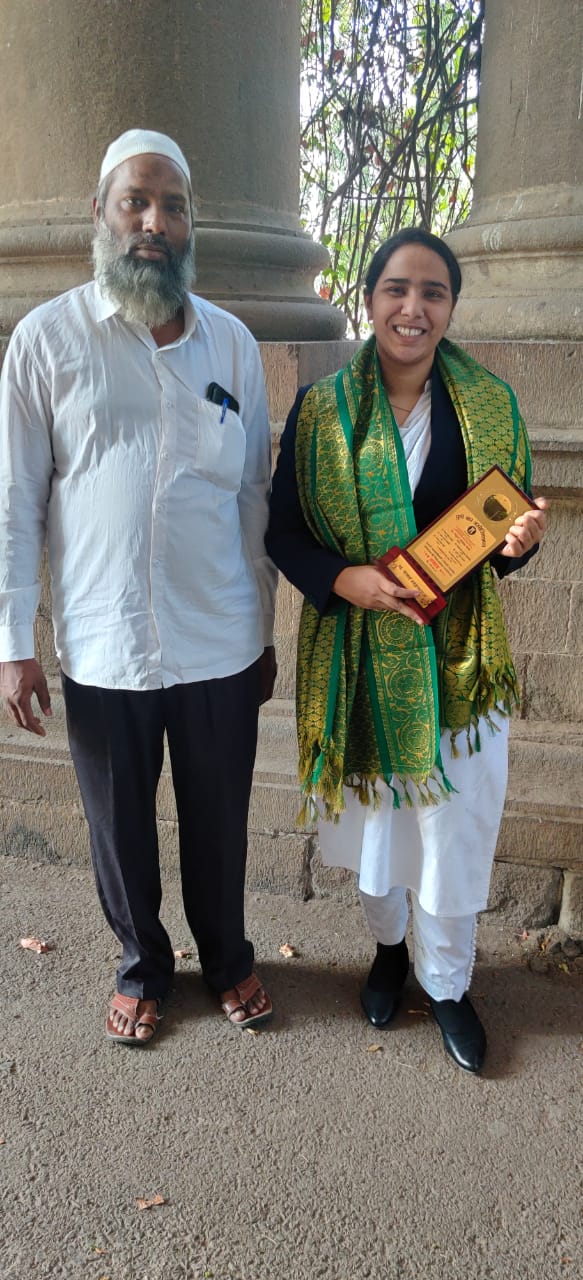
Shahnawaz Khan Pathan with her parents and brother

Come August and Shahnawaz Khan Pathan of Pune would join the training course for the First Class Judge. Her’s is an incredible journey from living with her family in a ten-by-ten space in Ghorpadi Pait Lohia Nagar slum settlement where she grew up and studied. 

Shahnawaz Khan’s story proves that success is not achieved in a day and only one who has the determination to make it will succeed. Shahnawaz Khan Pathan is the third sibling among her four sisters and one brother. Their father Aman Khan Pathan manages the family with his earnings from a small grocery shop.

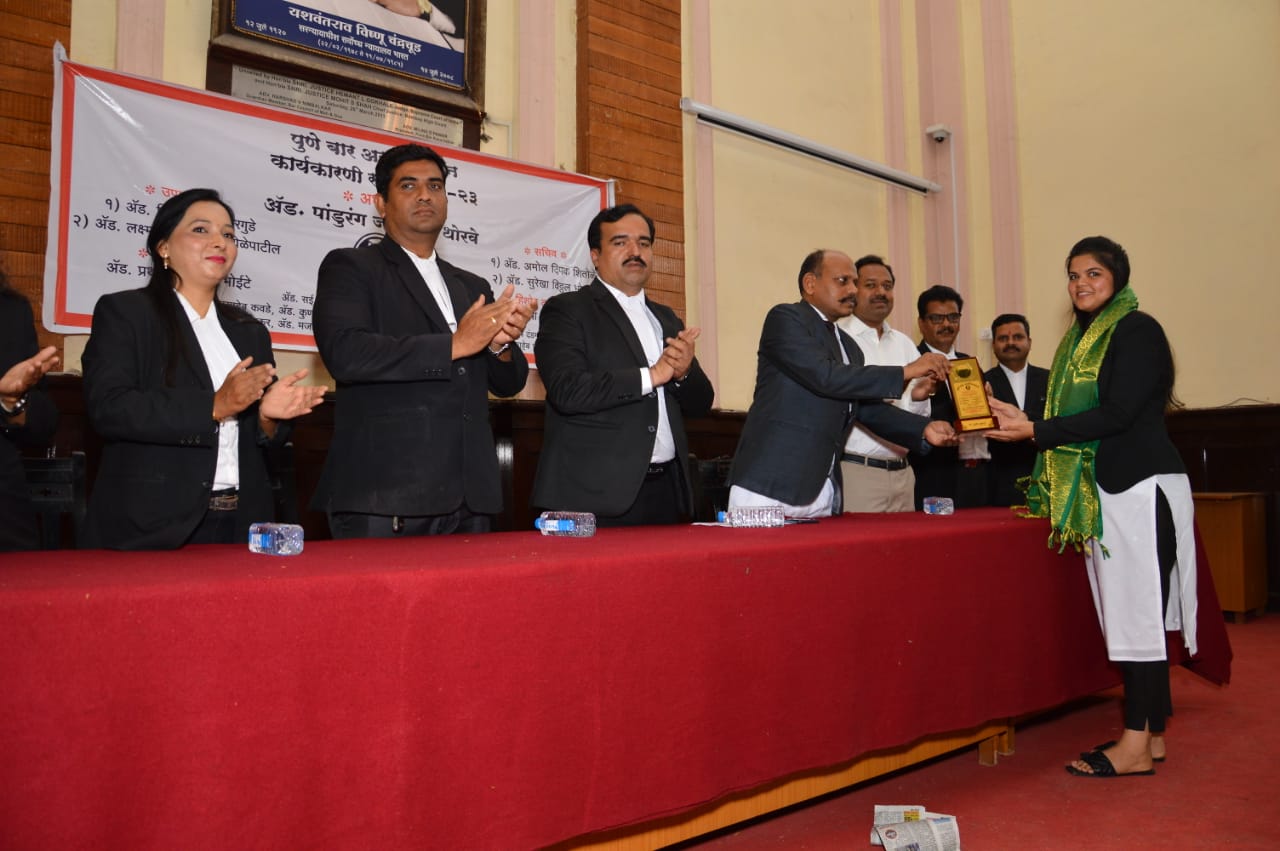
Shahnawaz Khan Pathan being felicitated by the Pune Bar after her selection as Judge

Despite Aman Khan’s low income,  he tried his best to provide proper education to his children as a result all his children are educated.

Shahnawaz Khan Pathan’s success has her father happy and proud. Aman Khan Pathan says that due to the poor financial condition of his family, he was not able to study. Sumaiya not only made his dream come true and also made him a proud father who can tell the world that he is the father of Shahnawaz Khan Pathan. 

Speaking with Awaz-the Voice, Aman Khan Pathan became emotional and said: “I am proud of Shahnawaz.” 

Her mother  Sugrabi Pathan wipes her tears of joy and says that her daughter was always very good in her studies from the very beginning. “We had high hopes from her and see she did it. I always pray for her success and success.”

Shahnawaz Khan with her Uncle Jia Khan Pathan

The family has lived all through in a small hut in the narrow streets of Lohia Nagar. There is hardly an environment conducive to studies.

However,  Shahnawaz Khan Pathan worked hard and made history by becoming the first Muslim first-class judge of Pune. 

Shahnawaz says that mere imagination does not lead to success. One needs to work hard to fulfill one’s dreams and achieve success. 

On her family’s support, Shahnawaz says that her father was always there to guide her. “Even with his meager income, he made every effort to provide for me whenever I needed something.” 

However, Shahnawaz has another hero in her life: her uncle Jia Khan Pathan, and his wife – whom she credits with encouraging her and filling her with hope and enthusiasm to keep moving.

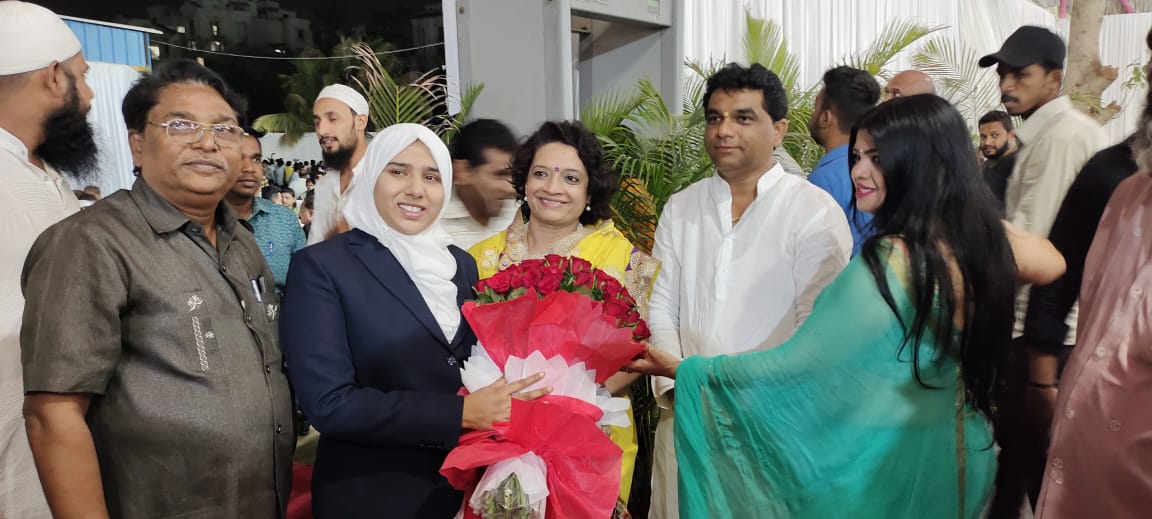
Shahnawaz being felicitated by a civil society organisation in Pune

“From the first day till the JFMC interview, Uncleji was with me like my shadow. Whenever I had to go outside the city for writing an examination, my uncle and aunty would accompany me. He never left me alone. My mother and my entire family, friends, and neighbors all kept encouraging me.” 

However, her failure to clear the Public service Commission conducted Maharashtra Judicial Services Examination in her first attempt in 2019  caused her disappointment. “At that time my father encouraged me and told me to try it again. I tried with renewed vigor and confidence and this time my name figured in the list of results declared in 2020,” she says.

 Shahnawaz has studied at Maharishi Annasaheb Shinde, Zilla Parishad School. Today, when she is all set to become the first Muslim judge of Pune, Shahnawaz says she believes that “education is not preparation for life but education is life.” 

She says she was always determined to not let the circumstances of her life become a hindrance in her path. It was only some time back that her family shifted to their new house in the Kondhwa area. 

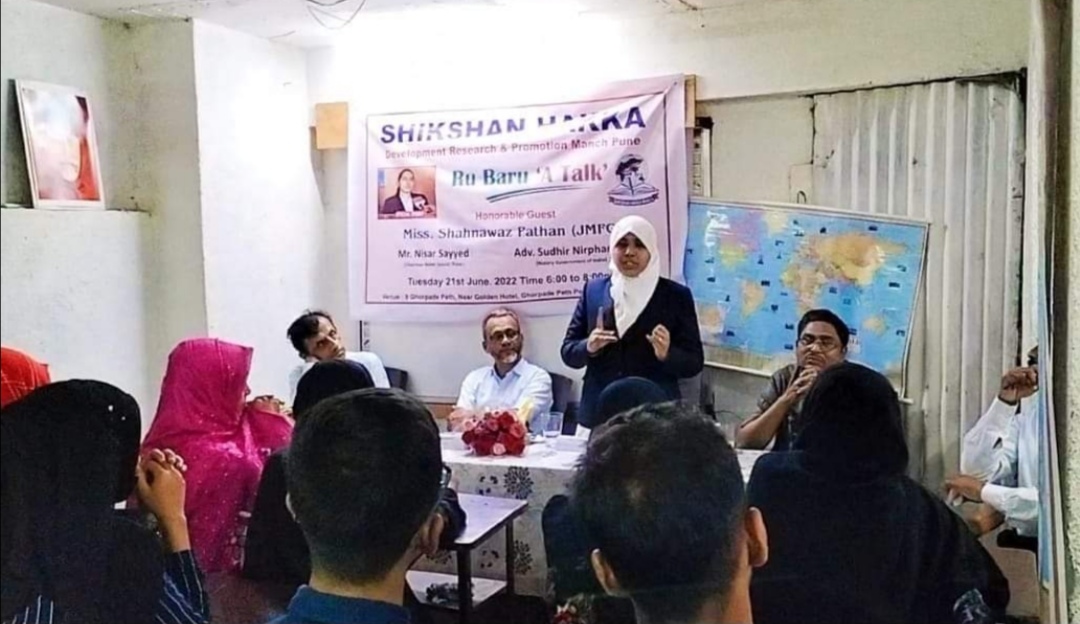
Shahnawaz Khan Pathan speaking at a function

Shahnawaz was a practicing lawyer before becoming a civil judge-cum-judicial magistrate first class (JFMC). She married software developer Sunny Sayyed before on May 25 before the JFMC results were out. She lives with her husband in the Urudi Kanchan area of Pune. 

As a legal professional Shahnawaz says that awareness campaigns should be launched to make common people aware of the legal options and legal aspects of life. Legal camps and street plays can be very helpful in this direction. She says that lack of proper information aggravates many problems.

Shahnawaz believes that a common citizen can become a force multiplier in the progress of the country by staying within the purview of the law for redressal of his grievances.

source: http://www.awazthevoice.in / Awaz, The Voice / Home> India / by Shahtaj Khan, Pune / July 14th, 2022

Yasmeen Khan teaches children on roadside in Mumbai

Mumbai, MAHARASHTRA :

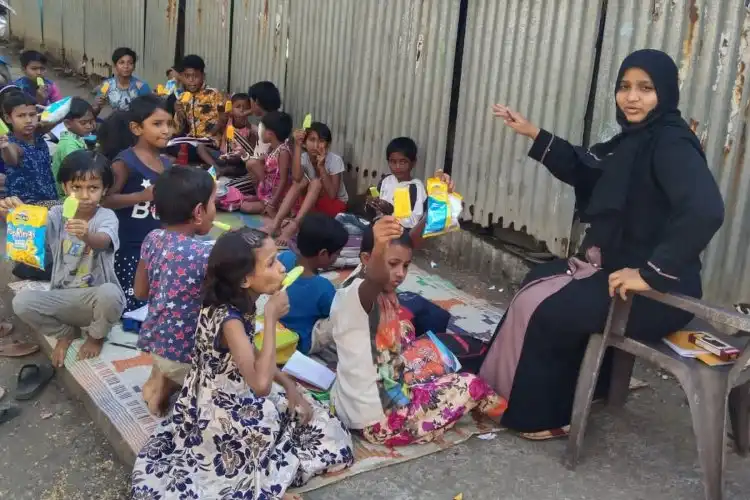
Yasmeen with her students

A few mats and a blackboard make a school on a city lane for 50 kids. This footpath of V Power Gym Street in the Kanakia area of Mira Road in Mumbai attracts the attention of the passers-by but the children remain engrossed in studying and oblivious of the world passing by.

The noise of passing traffic and pedestrians does not affect the privacy of students – mostly children of construction labourers and other daily wage earners – for their minds are focused on what their Yasmeen Madam says.

Yasmin Parvez Khan, a homemaker whose husband is a manager in a  global software company, has been trying to provide basic education to children in this makeshift roadside school. She has been setting it up from 3 to 5 pm every day for the past ten years. 

She is a volunteer who wants to change the lives of children who can’t afford a regular school for various reasons; she neither runs an NGO nor is affiliated with any government agency.

awaz
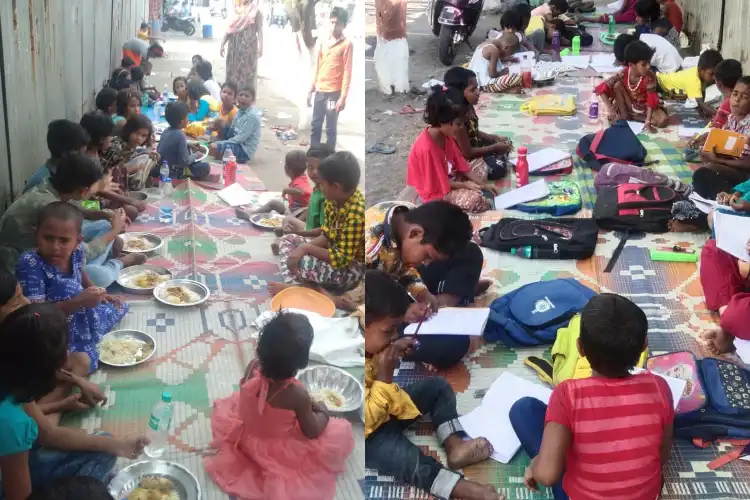
Gallery of images from Yasmeem’s school

Yasmeen says: “One day I thought of doing something for these poor children. After much deliberation, I realized that no amount of monetary or material help will be of much use to them while education has the potential to change their lives and also impact the future of their families. With this idea, I started teaching two kids and today I have 50 of them.”

Yasmeen’s school is for slum children where they receive basic education and then for formal education, Yasmin Madam takes the children for admission to regular schools. This way Yasmeen plays an important role in initiating these underprivileged children into regular education by invoking their interests in studies and knowledge. “It takes time to get children from very poor families interested in education and getting their parents to understand the importance of education is no less than a harder task.”

Yasmeen says she doesn’t charge a fee but children need many things like notebooks, pencils, books, colours, bags, etc. She has an innovative idea for getting these needs of children fulfilled. Pointing to her blackboard, she says, “Whenever I need something for children, write it on the board and you will be surprised that within a short time, someone delivers it.”

To date, children have never had to wait more than half an hour to get their basic things for studies. She smiles and says that she feels happy to cook for children each Thursday and feed them. After seeing this, many passersby and neighbours have started bringing food and gifts for the children. This makes children very happy and adds to their enthusiasm.

awaz
Children enjoying meals cooked by Yasmeen Khan on a Thursday

Yasmeen Madam’s teaching sidewalk has neither walls nor roof, but education is complete. The first child who got his primary education from this footpath and reached school today has reached the 11th standard.

People are often inquisitive about Yasmin Parvez Khan, who wears a Burqa. People stop for a moment when they see a veiled woman teaching children on the sidewalk.

Yasmeen says that initially, even her family was not happy with her decision. “When I explained my point that she has to go to them and teach, they understood.”

She says: “Today, my family including my mother-in-law, father-in-law, husband, and my children support me.” Yasmeen Parvez Khan’s husband is a project manager at Wipro Company.

These days Yasmeen’s school is on Monsoon break. She is looking forward to the end of the monsoon and the resumption of her school.

source: http://www.awazthevoice.in / Awaz, The Voice / Home> India / by Shantaj Khan, Pune / July 26th, 2022

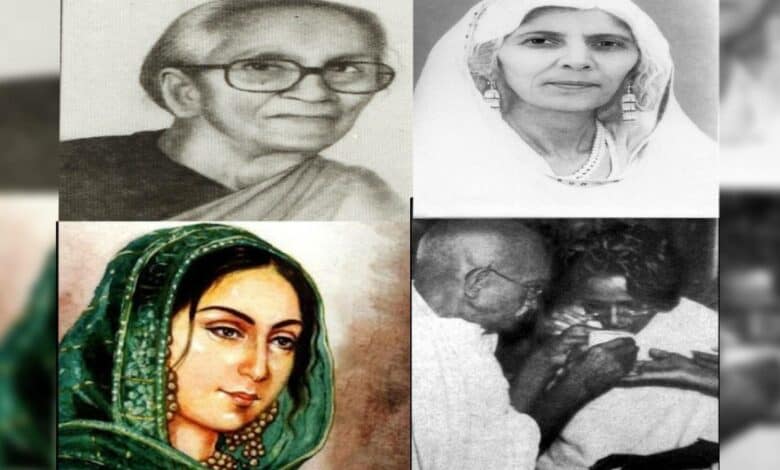
Remembering 4 Muslim women who fought for Indian independence

UTTAR PRADESH / PUNJAB :

Hyderabad: 

On the occasion of 74th Independence Day, let us remember these Muslim women who proved their strength, enthusiasm and determinism in the fight for freedom.

These women broke the stereotype of Muslim women in the society, who are merely perceived to be clad in Burqha and were never let out of the house. They participated in the India’s struggle for independence and emerged victorious.

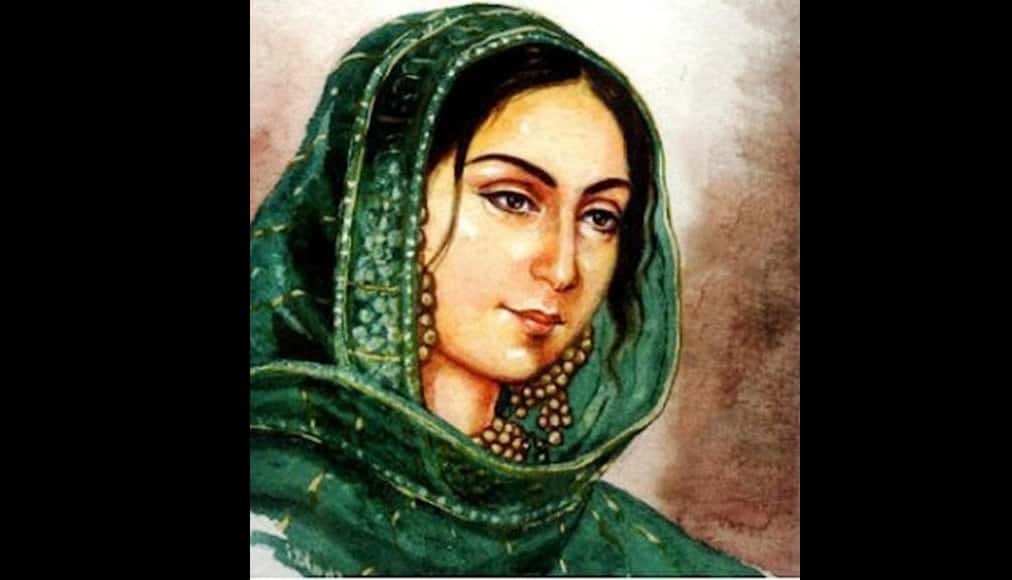
Begum Hazrat Mahal (1830–1879)

Begum Hazrat Mahal, a prominent woman of 1857 rebellion, was born in 1830 Faizabad of Uttar Pradesh. Her actual name was Muhammadi Khanum. Her father is Gulam Hussain of Faizabad. At her tender age itself, she showed good talent in literature.

She was married to Wajid Ali Shah, the Nawab of Awadh. They were blessed with a son Mirza Birjis Khadir Bahadur. On 13 February, 1856, the British troops imprisoned Wajid Ali Shah. They sent him to Calcutta on 13 March and occupied Awadh illegitimately. This irked the people and native rulers.

They revolted against the British under the leadership of Begum Hazrat Mahal. The native rulers and people met at Chavani area of Lucknow, the capital of Awadh on 31May, 1857 and declared independence. They taught a lesson to the British troops and wiped out their power in Lucknow. Later, Begum Hazrat Mahal declared her son Birjis Khadir as the Nawab of Awadh on 7 July, 1857.

As the King’s mother, she gathered 1,80,000 troops and renovated the Lucknow fort spending huge amount of money. She established a high level committee for the good governance of the state. Hazarat Mahal ruled the state on behalf of her son for about ten months and challenged the British force by inspiring patriotism among the people and the fellow native rulers. She issued a historic statement on 31 December, 1858 challenging the proclamation issued by the Queen Victoria on November 1, 1858.

But, when Delhi, the prime center for the First War of Independence was captured, the British troops surrounded and attacked Lucknow in March 1859. There was a fierce battle between the Company troops and the Begum troops. When defeat became inevitable, Begum Hazrat Mahal retreated to the Nepal forests along with the co-revolutionary leaders like Nana Sahib Peshwa and others.

The British rulers offered her huge amount of money and luxurious facilities in order to bring her back to Lucknow. But, the Begum denied them and made it clear that nothing else was acceptable to her except Independent Awadh state. Begum Hazarath Mahal was struggling for the independence of her state till her last breath. She passed away at Khathmound of Nepal on 7 April, 1879. In 1984 Government of India released a postal stamp in her honour.

Abadi Bano Begum (1852-1924)

Abadi Bano Begum, who took active part at par with men in the Indian National Movement, was born in 1852 in Amroha village, Moradabad district of Uttar Pradesh. She was married to Abdul Ali Khan of the Princely State Rampur.

Though she lost her husband at a young age, she did not remarry. She had two sons Moulana Mohammed Ali and Moulana Showkath Ali, who were famous as ‘Ali Brothers’. She nurtured her children, into becoming memorable leaders of the Indian Independence Movement. Her involvement in the freedom movement began with the Home Rule Movement, to which she rendered moral and most importantly, financial support.

When the British government detained the Ali Brothers in Chindanwad village, under the Indian Defence Regulations, she went along with them. When a police official proposed for the surrender of her sons, she bluntly refused saying, ‘If my sons agree to the proposal of the government, I will kill them by strangulation. I hope God will bestow enough energy into this old woman’s hands’. Abadi Bano met Mahatma Gandhi in 1917 for the first time.

There after Mahatma Gandhi always addressed her ‘Ammijan’, and all other freedom fighters followed Gandhi’s address. She helped Mahatma Gandhi and other Khilafath leaders financially for undertaking all India tours.

She attended the Indian National Congress and the All India Muslim League sessions in 1917, held at Calcutta. She spoke in those meetings emphasising that complete freedom could be achieved through unity between Hindus and Muslims.

She also played a constructive role in the Khilafat and Non[1]Cooperation Movement in 1919. She declared in several meetings that ‘it was her ambition that even the dogs and cats of her country should not be under the slavery of the British’.

The fact that the British government official records treated her as a ‘dangerous person’, which established the kind of challenge she hurled at the colonial rule.

 Apart from participating in politics she also guided several women’s organisations all over India. So intensely patriotic and nationalist that Abadi Bano Begum who played an active role in national movement without caring old age, ill health and cruel atrocities of police, breathed her last on 13 November, 1924.‹

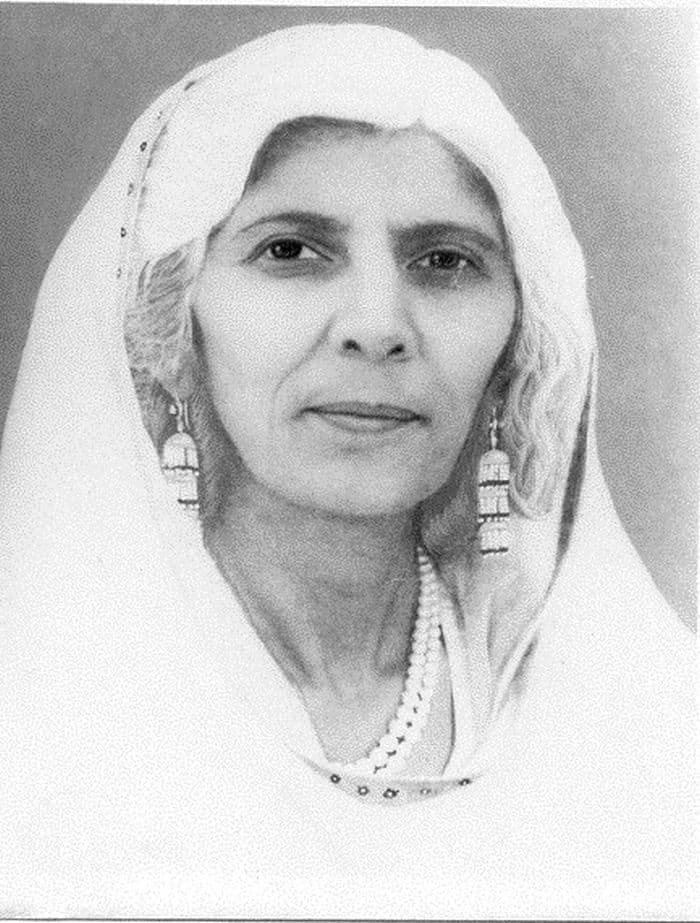
BIBI AMATUS SALAM (1907-1985)

Bibi Amatus Salam, who strongly believed that freedom from the slavery of British could be achieved, through the Gandhian methods only, was born in 1907 in Patiala of Punjab in Rajputhana family.

Her father was Colonel Abdul Hamid and her mother Amatur Rehaman. Amatus Salam was the younger sister of six elder brothers. Her health was very delicate since her childhood. She was inspired by her eldest brother, freedom fighter Mohammad Abdur Rashid Khan.

Following the footsteps of her brother, she decided to serve the people of the country.

Amatus Salam participated in the Khadi Movement and attended the meetings of the Indian National Movement along with her brother. She was attracted towards the Non[1]Violence theory of Mahathma Gandhi and Sevagram Ashram.

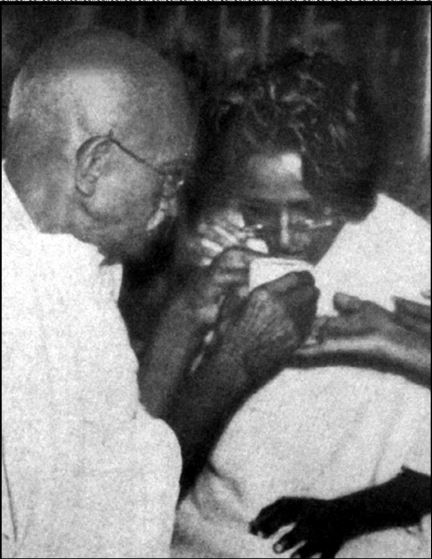
She decided to join Sevagram Ashram, and went there in 1931. She joined Ashram and followed the strict principles of the Ashram. With her selfless service she became very close to Gandhi couple.

They considered Amatus Salam as their beloved daughter. During the Indian National Movement, she went to jail along with other women in 1932 despite her illness with the permission of Gandhi.

After being released from Jail, she reached Sevagram and took over the responsibilities as Personal Assistant of Gandhi. She said that besides achieving independence, harmony between the Hindus and Muslims, Welfare of the Harijans and Women were her life ambitions. When communal riots erupted, she toured North-West Frontier, Sindh and Noukhali areas as an ambassador of Gandhi.

She held Satyagraha for 20 days to normalize the situation in those areas. After Independence, she rededicated herself to the Public Service. She published an Urdu Magazine called ‘Hindustan’ to promote national integration and communal harmony. When Khan Abdul Gaffar Khan toured in India in 1961, she travelled with him as his personal assistant. When India was at war with

China in 1962 and with Pakistan in 1965, she took all the pains in reaching the mountains or war area along with her adopted son Sunil Kumar to encourage our soldiers and to serve them. Bibi Amatus Salam, who spent all her life following the Gandhian ideology, breathed her last on 29 October, 1985.‹

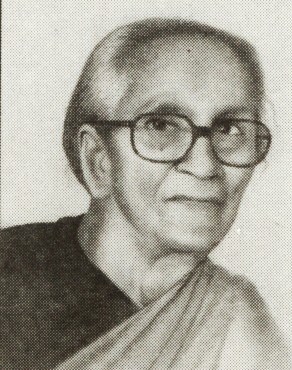
HAJARA BEGUM (1910-2003)

Hajara Begum, who fought against the British to liberate the Nation and worked for the welfare of the toiling masses of the country, was born on 22 December, 1910 at Saharanpur in Uttar Pradesh. She came to know about the sacrifices of the freedom fighters who were fighting against the British from her father, who was a police officer.

After the failure of her marriage, she went to London to pursue her higher education, where she got acquainted with the anti-British forces. This led her to decide to fight against the British Imperialist forces to liberate the nation. She had to face the anger of the British Government as she was criticizing their acts in several International fora.

She returned to India and joined as a lecturer in the Karamat Hussain women’s College at Lucknow in 1935.

She also worked along with famous poet Sajjad Zahir in the formation of All India Progressive Writers’ Association.

She got married to a nationalist leader Dr. Zainul Abedeen Ahmed in 1935 and in the same year both of them took membership in the Indian National Congress. Since the police were after them for their anti-British activities, they resigned their jobs and dedicated themselves totally to the Indian National Movement.

While participating in the activities of the Indian National Congress, Hajara Begum also campaigned for the Communist Party without the knowledge of the Police. She actively took part in the election campaign in those days, and as a result of this a number of Congress leaders could get elected. She attended a secret political workshop at Kotthapatnam in Andhra Pradesh in 1937.

 She spoke on different subjects in the workshop as a lecturer. Hajara Begum was against the gender bias since her younger age. She fought against all types of inequalities successfully. She left the Indian National Congress in 1940 along with her husband. Since then, she played a vital role in organizing the unorganized labour sector.

She became very popular as ‘Hajara Aapa’ in the circles of toiling people and women. The Soviet Union honoured her with ‘Supreme Soviet Jubilee Award’ in 1960 in recognition of her work for the downtrodden people on the eve of the birth centenary of Lenin. Hajara Begum, who spent her entire life in the service of the country, breathed her last on 20 January, 2003.


Syed Naseer Ahamed can be contacted at Phone: +91 94402 41727

source: http://www.siasat.com / The Siasat Daily / Home> Featured News / by Nihad Ahmed / Input by Syed Naseer Ahmed / August 15th, 2020

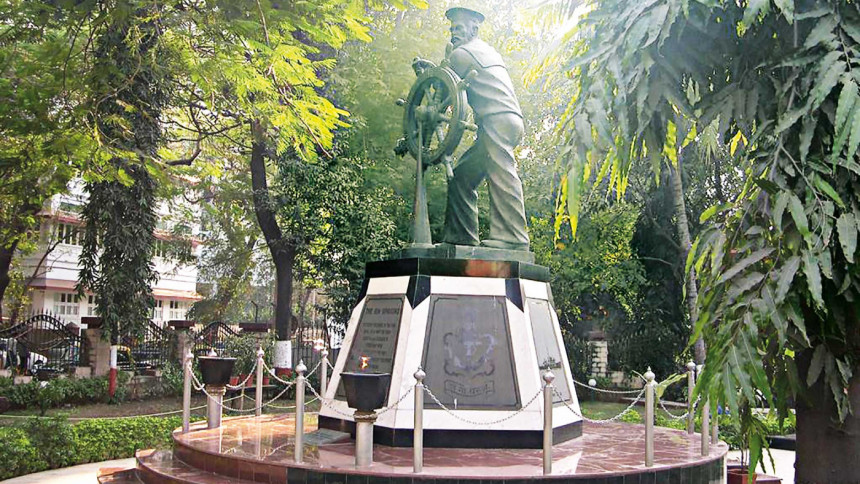
The Muslim Martyrs of Royal Indian Naval Mutiny of 1946

BRITISH INDIA :

After the Second World War, soldiers of the Azad Hind Fauj (Indian National Army) were captured by the British forces. They were charged with treason and tried by tribunals as war criminals. Indians protested against this treatment given to the freedom fighters of Azad Hind Fauj.

In February, 1945, soldiers and officers of the Royal Indian Navy mutinied in Mumbai and Karachi. English officials including the Viceroy took this mutiny as a sign of leaving India. The British forces killed many to quell the mutiny, many of which were Muslims.

Here, we are sharing names of the few Muslims we know, who attained martyrdom for taking part in the mutiny or supporting it.

Abdul, Ali, Din Mohammad: born 1929, took part in the popular demonstrations in support of the revolt by ratings of the Royal Indian Navy, received a bullet wound in firing by the police at Nagpada, Bombay, on 23 February 1946, died the same day.

Abdul Aziz: born 1921, domestic servant, hit by bullet in the premises of his employers as a result of firing by the police at Bombay on people demonstrating in support of the revolt by ratings of the Royal Indian Navy on 22 February 1946, died the same day.

Abdul Razak: born 1916, took part in the popular demonstrations in support of the revolt by ratings of the Royal Indian Navy, received a bullet wound on 22 February 1946 in firing by the police near Crawford market, Bombay, died on 24.2.46.

Abdul Rehman: born 1911, employee of private firm, hit by a bullet as a result of firing by the police at Doctor’s Street, Bombay, on people demonstrating in support of the revolt by rating of the Royal Indian Navy on 22 February 1946, died the same day.

Abdul Gani: born 1901, took part in the popular demonstrations in support of the revolt by ratings of the Royal Indian Navy, received a bullet wound in firing by police at Bombay on 22 February 1946, died the same day.

Abdul Karim: born 1926, took part in the popular demonstrations in support of the revolt by ratings of the Royal Indian Navy, received a bullet wound in firing by the police near Crawford Market, Bombay, on 22 February 1946, died the same day.

Abdul Sattar, Mohmmad Umar: born 1924, took part in the popular demonstrations in support of the revolt by ratings of the Royal Indian Navy, received a bullet wound in firing by the police on 22 February 1946 at Bombay, died the same day.

Abdulla, Abdul Kadar: born 1921, took part in the popular demonstrations in support of the revolt by ratings of the Royal Indian Navy, received a bullet wound in firing by the police at Bern- bay on 22 February 1946, died the same day.

Abdulla, Safi: born 1933, took part in the popular demonstrations in support of the revolt by ratings of the Royal Indian Navy, received a bullet wound on 22 February 1946 in firing by the police at Fort, Bombay, died in hospital the same day.

Adamji, Mohamed Hussain: born 1924, son of Allauddin Adamji, took part in the popular demonstrations in support of the revolt by ratings of the Royal Indian Navy, received a bullet wound on 22 February 1946, in firing by the police at Bombay, died in hospital.

Ali Mohammad: born 1906, hit by bullet in firing by the police at Dadar, Bombay, on people demonstrating in favour of the revolt by ratings of the RIN on 22 February 1946, died the same day.

Anwar Hossain: a student of Lahore College, hoisted the flags of revolt in the rating vessel Bahadur in Karachi, died with flags in hand on 23 February 1946.

Asgar Ismail: born 1934, received a bullet wound in firing by the police on people demonstrating in support of the revolt by ratings of the Hoyal Indian Navy on 23 February 1946, near the Paxsi Statue, at Byculla, Bombay, died on the spot.

Asghar Miya, Nawsati: born 1916, took part in the popular demonstrations in support of the revolt by ratings of the Royal Indian Navy, received a bullet wound in firing by the police near the J. J. Hospital, Bombay, on 23 February 1946, died in hospital.

Aziz, Chhotu: born 1921, took part in the popular demonstrations in support of the revolt by ratings of the Royal Indian Navy, received a bullet wound in firing by the police at Bombay on 23 February 1946, died in hospital the same day.

Dilawar, Abdul Malik: born 1931, son of Dilawar Muzawar, student, hit by bullet in firing by the police at Dongri, Bombay, on people demonstrating in support of the revolt by ratings of the Royal Indian Navy on 22 February 1946, died the same day.

Fida Ali, Kayam Ali: born 1933, received a bullet wound in firing by the police near J. J. Hospital, Bombay, on people demonstrating in favour of the revolt by ratings of the Royal Indian Navy on 23 February 1946, died the same day.

Gulam Hussain, Ali Mohammad: born 1906, took part in the popular demonstrations in support of the revolt by ratings of the Royal Indian Navy, received a bullet wound in firing by the police’ at Bombay on 22 February 1946, died the same day.

Haroon, Hamid: born 1931, took part in the popular demonstrations in support of the revolt by ratings of the Royal Indian Navy, received a bullet wound in firing by the police at Bombay, on 23 February 1946, died the same day.

Ibrahimji, Yusufali: born 1910, received a bullet wound in firing by the police at Bombay on people’s demonstrations in support of the revolt by ratings of the Royal Indian Navy on 22 February 1946, died the same day. 

Ismail Hussain: born 1932, hit by bullet as a result of firing by the police at Bombay on people demonstrating in support of the revolt by ratings of the Royal Indian Navy on 22 February 1946.

Ismail, Rahimtulla: bom 1911, took part in the popular demonstrations in support of the revolt by ratings of the Royal Indian Navy, received a bullet wound in firing by the police near the Imperial Bank, Abdul Rehman Street, Bombay, on 22 February 1946, died the same day.

Jamal Mohammed: born 1926, took part in the popular demonstrations in support of the revolt by ratings of the Royal Indian Navy, received a bullet wound in firing by the police at Bombay on 22 February 1946, died the same day.

Khuda Bakhsh, Pyare: born 1876, hit by bullet as a result of firing by the police at Bombay on people demonstrating in support of the revolt by ratings of the Royal Indian Navy on 23 February 1946, died the same day.

Manzoor Ahmed: born 1906, took part in the popular demonstrations in support of the revolt by ratings of the Royal Indian Navy, received a bullet wound; in firing by the police at Bombay on 22 February 1946, died in hospital the same day.

Mohammed, Aboobakar: born 1928, took part in the popular demonstrations in support of the revolt by ratings of the RIN, received a bullet wound in firing by the police near Crawford Market, Bombay on 22 February 1946, died in hospital the same day.

Mohammed Aziz: born 1911, took part in the popular demonstra- lions in support of the revolt by ratings of the Royal Indian Navy, received a bullet wound in firing by the police at Bombay on 22 February 1946, died in hospital the same day.

Mohammed Hussain: born 1931, son of Mulla Gulam Ali Abdul Hussain, took part in the popular demonstrations in support of the revolt by ratings of the Royal Indian Navy, received a bullet wound in firing by the police near J. J. Hospital, Bombay, on 22 February 1946, died the same day.

Mohammed Sheik, Sayed Hassan: born 1921, took part in the popular demonstrations in support of the revolt by ratings of the Royal Indian Navy, received a bullet wound in firing by the police near Null Bazar police station, Bombay, on 22 February 1946, died the same day.

Mohiddin, Sheik Ghulam: born 1928, took part in the popular demonstrations in support of the revolt by ratings of the Royal Indian Navy, received a bullet wound in firing by the police at Parel, Bombay, on 22 February 1916, died the same day.

Mohmed Samikh, Taja-Urkh: born 1920, hit by bullet as a result of firing by the police at Kamathipura, Bombay, on people’s demonstration in support of the revolt by ratings of the Royal Indian Navy on 23 February 1946, died the same day.

Moula Bakhsh, Abdul Aziz: born 1906, took part in the popular demonstrations in support of the revolt by ratings of the Royal Indian Navy, received a bullet wound in firing by the police at Kamathipura, Bombay, on 22 February 1946, died the same day.

Siddik Mohamed: born 1921, son of Isak Mohamed, took part in the popular demonstrations in support of the revolt by ratings of Royal Indian Navy, received a bullet wound in firing by the police at Kamathipura, Bombay, on 23 February 1946, died the same day.

Sulemanji, Zakiuddin: took part in the popular demonstrations in support of the revolt by ratings of the Royal Indian Navy, received a bullet wound in firing by the police at Bombay on 22 February 1946, died in the hospital the same day.

Taj Mohamed, Fazal Mohamed: born 1930, took part in the popular demonstrations in support of the revolt by ratings of the Royal Indian Navy, received a bullet wound in firing by the police near the Salvation Army office at Bombay, on 22 February 1946, died the same day.

Vazir, Mohamed: born 1891, took part in the popular demonstrations in favour of the revolt by ratings of the Royal Indian Navy, received a bullet wound in firing by the police near Hindmata Cinema, Bombay, on 22 February 1946, died the same day.

source: http://www.heritagetimes.in / Heritage Times / Home> Featured Posts> Freedom Movements / by Mahino Fatima / August 14th, 2021

The forgotten mutiny for India’s independence

BRITISH INDIA :

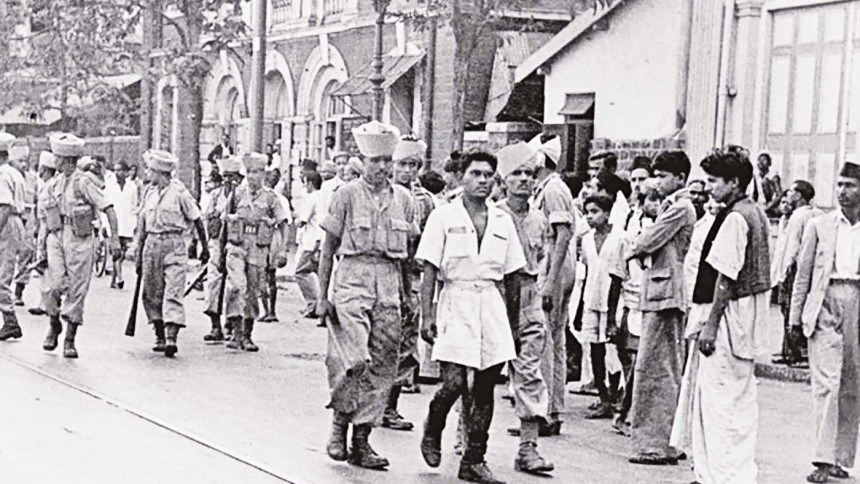
A sailor being arrested after the Naval mutiny.

One of the most important but undervalued events of India’s independence movement was the naval revolt of 1946, about which Indian historian Sumit Sarker wrote, “Had this insurrection succeeded, India’s struggle for freedom might have taken a different turn.” From February 18 to 23 that year, more than 20,000 ordinary sailors, known as ratings, and low-ranking officers of 74 warships and 20 installations took part in a strike, which was termed as a mutiny or rebellion.

After Bengal lost its independence at Palashi’s Mango grove in 1757, the British Raj in India faced two major armed revolts: the first one was exactly after one hundred years, the military revolt of 1857, and the second one was 189 years later, the naval mutiny. Both in 1757 and 1857, the freedom fighters were defeated by the arms and tactics of the British rulers, but the naval mutiny failed because of the politicians in India then. It was not only the ratings’ mutiny that the political leadership had decided not to support – the civilian uprising triggered by the naval mutiny, too, was condemned by them. The scale of the civilian uprising, if it happened in a post-colonial era, would have created a revolution or at least caused the fall of the government of the day.

Three days after the mutiny ended and the civilian uprising was crushed with brutal force, the then British Prime Minister Clement Atlee told the House of Commons on February 26, 1946, “I regret to inform the House that grievous loss of life, injury and destruction of property have resulted from all these disturbances. In Bombay, there have been 223 deaths and 1,037 persons have been injured. The total damage includes the looting or destruction of nine banks, 32 government grain and cloth shops which the public can ill-afford to lose, 30 other shops, 10 post offices, 10 police stations and 1,200 street lamps. The number of vehicles destroyed is not yet estimated. In Karachi, there have been seven deaths and 21 cases of injury. In Madras, up to last night, one person has been killed and another seriously injured” (Source: Hansard). 

Mr Atlee in his statement said, “Both Congress and Muslim League leaders cooperated in condemning and attempting to stop the disturbances, but the Communist Party issued a manifesto at midnight on Thursday thanking the public for its support.” It perhaps explains why, to this day, the political classes of the three countries born from the partition of India are not willing to admit their failure and give those mutineers and civilian martyrs their due credit. Therefore, in 2021, there was no big event in the subcontinent to mark the 75th anniversary of the naval revolt.

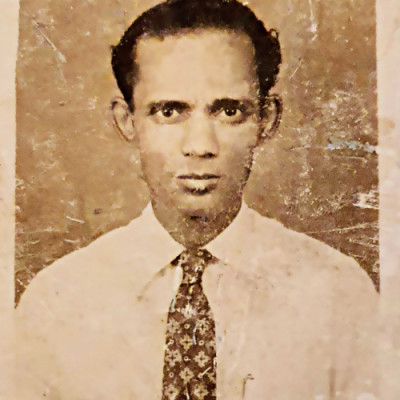
Mohammad Dewan Ali Nazir, Royal Indian Navy, Index no: 34499.

On a personal level, it’s ironic that, despite studying history at the country’s two top universities, I, too, did not take much interest in it during my student life. When I first heard of the rebellion from a mutineer, I had already taken a job and started my professional journey devoid of in-depth history. The mutineer I am talking about was my father, who spoke about his role and feelings about the lost cause during one of my short home visits. My father, Mohammad Dewan Ali Nazir (Royal Indian Navy, RIN, Index no: 34499) was one of the last 3,500 sailors and 300 sepoys who refused to surrender until the last on board of HMIS Akbar.

They were detained after surrendering and were released in August of that year. The mediation and the assurances given by the leaders of both Congress and Muslim League turned out to be nothing but betrayal. Though the uprising was a challenge to the Empire, shaking up the British imperial order, the leaders of the nationalist movement waiting to form an interim government through negotiations were not ready to derail that prospect.

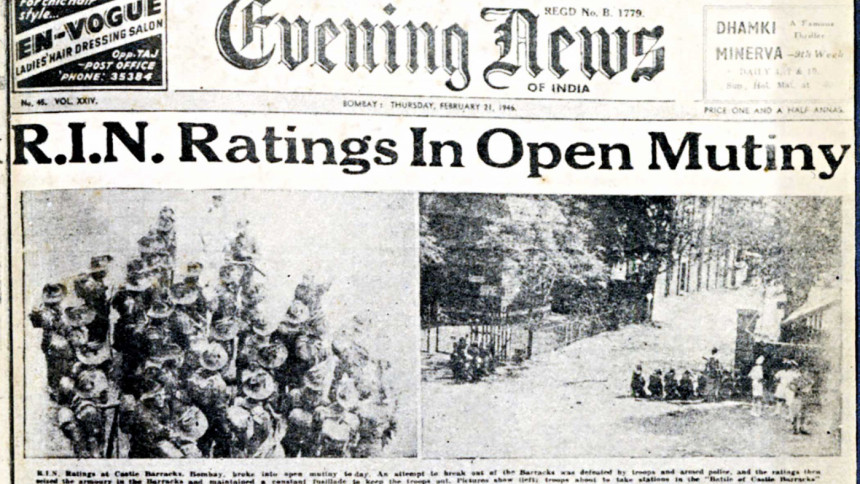
Newspaper clipping of the Evening News.

The leaders of the Congress and the Muslim League did not want a revolution – they wanted a peaceful transfer of power. Among the leading politicians, only Congress leader Aruna Asaf Ali extended her support to the ratings’ strike and tried to persuade her party leaders to take a stand in favour of the strikers, but failed in the face of opposition from Vallabhbhai Patel. On February 22, Vallabhbhai Patel sent a message to the rebels to surrender. Only the Communist Party of India came forward in support of the naval revolt and called a general strike. Reading the memoir of one of the key figures of the revolt, Balai Chand Dutt (BC Dutt), and a few other publications, one can easily imagine how much frustration and pain those mutineers felt because of the national leaders’ silence, which they saw as a betrayal. Perhaps it explains why my father, too, lost interest in politics and didn’t speak much about the heroic uprising that ended in a tragedy. 

Those nationalist leaders, including Gandhi, Jawaharlal Nehru and Muhammad Ali Jinnah, advised them “not to mix up ‘political demands along with service demands’; to ‘remain calm’ and to formulate to the naval authorities their service demands.”

But from the very beginning, those naval ratings were raising political demands – particularly, the Quit India slogan.

Their Charter of Demands asked for: 1. Release of all Indian political prisoners; 2. Release of all Indian National Army personnel unconditionally; 3. Withdrawal of all Indian troops from Indonesia and Egypt; 4. British nationals to leave India; 5. Actions against the commanding officer and signal bosonshead for rough treatment of the crew; 6. Release of all detainees (naval ratings); 7. Speedy demobilisation of the RIN ratings and officers; 8. Equal status with the British navy regarding pay, family allowances and other facilities; 9. Best class of Indian food; 10. No return of clothing kit after discharge from service; 11. Better treatment from officers to subordinates; and 12. Installation of Indian officers and supervisors. (Source: Meanings of Failed Action: A reassessment of the 1946 Royal Indian Navy uprising by Dr Valentina Vitali, University of East London, UK.)

Autobiographies of two rebels  – BC Dutt and Biswanath Bose – suggest that the then (undivided) India could have been a different place if the revolt of that day had succeeded. The rise of communal politics, the division and instability that is spreading in the states and society, would not have happened.

BC Dutt was one of the organisers of the HMIS Talwar, the ship where the mutiny started. He was arrested and tried for writing a new slogan on a ship on February 1, three weeks before the start of the February 18 mutiny. His book, The Mutiny of the Innocents, contains details of how political literature and pro-independence activities were organised much before their strike.

Biswanath Bose’s RIN Mutiny, 1946 also gives detailed descriptions of how the revolt unfolded. But politicians argued that the revolt was mostly due to the resentment among Indian ratings over low wages, poor quality of food and housing, which was lower than that of the Whites, and racial discrimination.

After the mutiny of 1857, the British rulers banned the entry and discussion of political leaflets in all forces, but BC Dutt used to secretly discuss political documents in the ship HMIS Talwar. Two months before the mutiny, on the Naval Day on December 1, when it was open for public visit, they wrote various slogans, including “Quit India” and “Jai Hind” on the ship. Explaining the reason why the mutiny failed, BC Dutt wrote that while all Europeans and Indians were stunned by the course of events and wondering if it was a revolt, unfortunately the political parties had nothing to say. When it was time to lower the British Union Jack and fly the Indian flag, they felt unprepared.

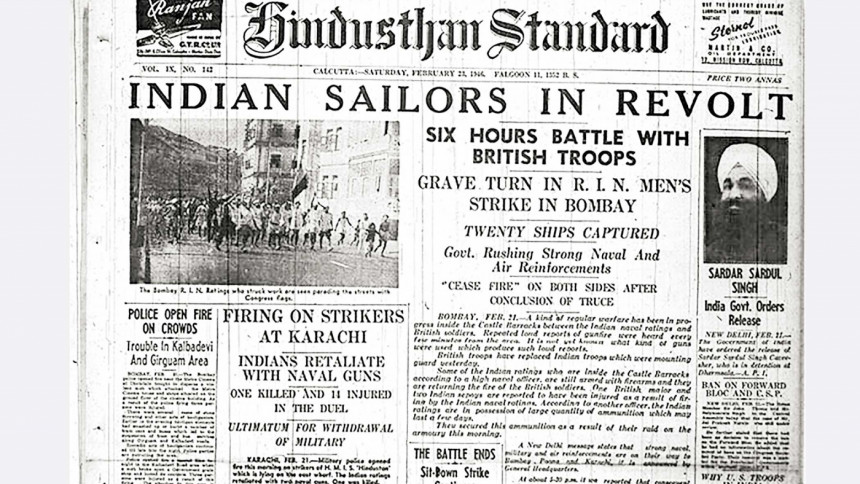
Newspaper clipping of the Hindusthan Standard

On February 22, 1946, when the nationalist leaders were busy arranging the ratings’ surrender, Prime Minister Clement Attlee told the parliament that the sailors had given political slogans and demanded that a political leader be given a chance to speak. He also said in the statement that Congress had nothing to do with the insurgency, but the communists and leftists could try to exploit sympathy.

William Richardson, a British researcher, writes in The Society for Nautical Research that the political movement for India’s independence was at the root of the revolt (The Mutiny of the Royal Indian Navy at Bombay in February 1946, May 1993).

Author of the book 1946: The Unknown Mutiny, Promod Kapoor wrote that the navies fell between the two aspirations of the two rulers. One side wanted their impending departure not to be tarnished by the stigma of rebellion. On the other hand, when power was imminent, the other rulers were anxious to see if there were any signs of chaos in the armed forces. Because in the future, they would have to manage these forces. 

Politicians assured that no one would be punished, no compensation would be paid, and steps would be taken to meet the demands. In reality, the opposite had happened. Rebel leaders were arrested, tried and punished. Other rebels were told to grab third-class train tickets to return home and to never return to Bombay again. Showing various excuses, deductions were made from salary arrears even for minor damages in their uniforms.

Biswanath Bose’s book gives a glimpse of how frustrated and angry these rebels became with the behaviour of the government and the breach of promises by the political leaders. He wrote, “If patriotism is a crime, then we must be criminals.” Expressing his frustration for not being reemployed in the Indian Navy, he wrote a letter to Prime Minister Nehru asking if there was any law banning his return to the force due to dismissal for taking part in the freedom movement, and how, as a leader of the Congress, Nehru could be the prime minister.

Nationalist leaders were so reluctant to give the mutineers their due credit, that the Indian government banned the Bangla play Kallol (Sound of the Wave), based on the mutiny, by playwright Utpal Dutt, and he was imprisoned. The play was first performed in 1965 in Calcutta at the Minerva Theatre and it drew large crowds.

At the beginning of the naval strike, a Central Strike Committee (NCSC) was formed by the representatives of the ships stationed in Bombay. The committee renamed the Royal Indian Navy as The Indian National Navy. The committee was chaired by Signalman MS Khan, and Madan Singh was the vice-president. One remarkable element of the naval rebellion was the unity of various faiths among both the naval force and the civilians who took to the street. They raised slogans “Hindu-Muslim unite” and “Inquilab Zindabad” on the streets of Bombay.

BC Dutt’s book also speaks of this communal harmony. He wrote, “We are from different regions, and from families of Hindu, Muslim, Christian and Buddhist, but after spending years in the Navy, we sailors have become Indians. The irony is that the politics of communal division and hatred is now intensifying across the subcontinent.

(After leaving the job of a naval instructor, my father joined the office of Indian Civil Supply, and after a short stay in Kolkata, he was transferred to East Bengal. He retired as a magistrate and died on August 29, 2001.)

Kamal Ahmed is an independent journalist and writes from London, UK. His Twitter handle is @ahmedka1

source: http://www.thedailystar.net / The Daily Star / Home> In Focus / by Kamal Ahmed / July 25th, 2022