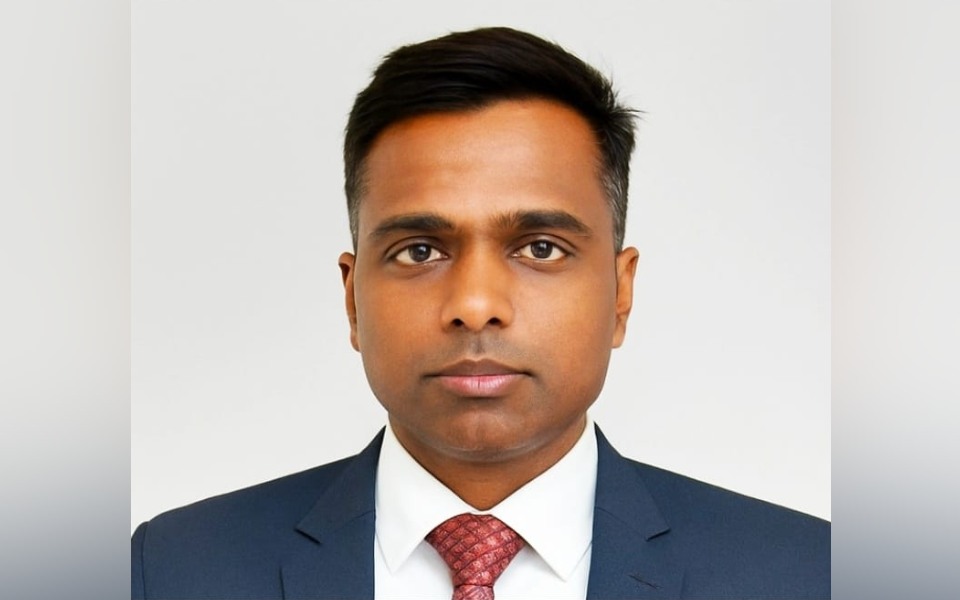
Prof. Nizamuddin Khan, a retired faculty member from the Department of Geography, Aligarh Muslim University
Aligarh:
Prof. Nizamuddin Khan, a retired faculty member from the Department of Geography, Aligarh Muslim University, has been conferred with the Best Presentation Award at the International Conference on Asian and Pacific Studies (ICOAAPS-25), held in Abu Dhabi, UAE.
Prof. Khan presented a research paper titled “Impact of Urbanisation on Dairy Farming and Sustainable Rural Development in Peri-Urban Area in India: A Case Study of Aligarh City”.
His work was lauded for its scholarly depth and relevance to contemporary urban-rural dynamics in developing regions.
Organised by the Association for Scientific and Academic Research (ASAR) with support from Google Scholar, the conference attracted researchers and academicians from around the world, providing a platform to exchange ideas and findings on pressing regional issues.
source: http://www.radiancenews.com / Radiance News / Home> Pride of the Nation> Awards / by Radiance News Bureau / May 09th, 2025
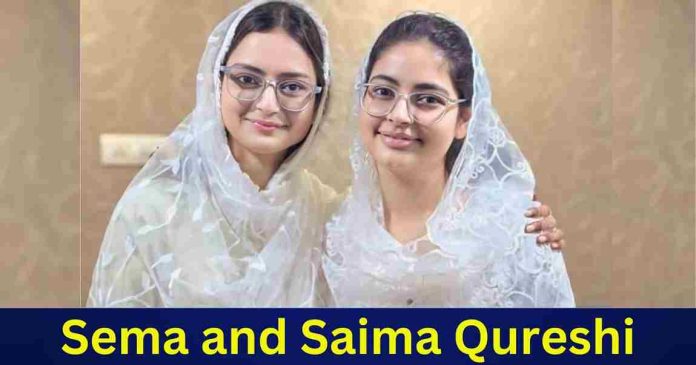
In a shining example of determination, hard work, and the power of education, sisters Sema Qureshi and Saima Qureshi, daughters of Abdul Nabi Qureshi, have successfully completed their MBBS degrees and officially earned the title of doctors. Their achievement marks a moment of immense pride for their family and community, highlighting the importance of female empowerment through education, reported the NewsofKashmir.
Raised in a home where education and moral values were deeply cherished, both sisters had aspired to become doctors from a young age. Their father, Jenab Abdul Nabi Qureshi, a strong proponent of academic excellence, provided unwavering support throughout their journey. “My daughters have made not just me, but our entire family proud. They are proof that with hard work and faith, anything is possible,” he said.
Their accomplishment comes at a time when encouraging girls to pursue professional education is critical, especially in regions where access and opportunities remain limited. Sema and Saima’s story stands as an inspiring example for young girls who dream of careers in demanding fields like medicine.
Expressing gratitude for the support they received, the sisters said in a joint statement, “This success belongs to our parents and teachers as much as it belongs to us. We hope to serve the people with sincerity and compassion in our medical careers.”
With their degrees now in hand, the duo is set to begin internships in local hospitals and is also exploring options for further specialization, particularly in healthcare services for underprivileged communities.
Their journey is not just one of academic success—it is a powerful reminder of the role that family encouragement, community support, and access to education play in shaping the future of young women in Kashmir and across the country.
source: http://www.radiancenews.com / Radiance News / Home> Focus> Markers of Excellence / by Radiance News Bureau / May 08th, 2025
Former president of the All India Muslim Majlis-e-Mushawarat (AIMMM) and general secretary of the Movement for Empowerment of Indian Muslims (MOEMIM), Navaid Hamid, honoured with the Qaide Millat Award.
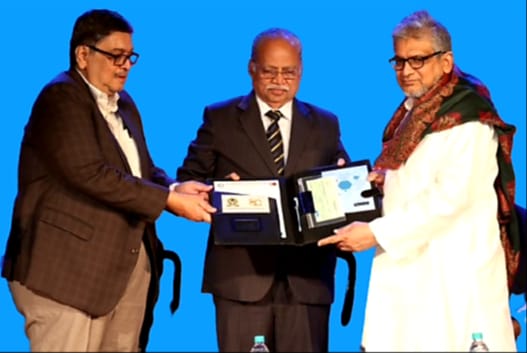
The award was presented by former Madras High Court judge, Justice KN Basha at an event held at a grand ceremony at the Music Academy on Saturday.
Renowned human rights activist John Dayal, and founder of the Sadbhavana Mission, distinguished scientist Professor Vipin Kumar Tripathi, were also honoured by the southern Indian institution, Qaide Millat Educational and Social Trust (Chennai).
The annual award is given for probity in political/public life and consists of a certificate of appreciation, a cash prize of five lakh rupees, and shawl.
Congratulating the awardees on the occasion, Justice Basha said he felt honoured and privileged to present the awards to individuals who serve as beacons of light amidst the darkness of the current environment while M G Dawood Miyakhan, general Secretary of the trust, said “the awardees are based on their unblemished track record of integrity in political and personal life in India”.
Retired CSI Bishop Dr V Devasagayam said while facilitating the awardees “we are here to recognise your services, support your initiatives and to wish that you continue your fight in spite of all the odds”.
The event was presided over by the president of the Qaide Millat Trust, Qazi Dr Salahuddin Muhammad Ayub, while announcement the awards and introduction of awardees were made by the Trust’s general secretary.
On this occasion, Dr S Sadiq, former Vice-Chancellor of Madras University, and retired CSI Bishop Dr V Devasagayam, were also honoured. General Secretary Dawood Miyan Khan, Treasurer S Mushtaq Ahmed, and Principal of Qaide Millat College, Dr MA Thawab, presented certificates of honour, prize, and shawls to the dignitaries.
The announcement of the 2024 Qaide Millat Award was made in February 2025. The award jury comprised Dr Vasanti Devi (former Vice-Chancellor), Dr V Devasagayam (former Bishop), Paneerselvam (Readers’ Editor, The Hindu), and Dawood Miyan Khan (general secretary, QEST).
Born on June 23, 1963, in the walled city of Delhi, Navaid Hamid has been associated with the All India Muslim Majlis-e-Mushawarat since the late 1980s. He served as its President from 2016 to 2023. A graduate in English from Zakir Hussain College, University of Delhi, Navaid Hamid has been actively involved in political and social work since his student days at the university.
During the UPA Government (2004–2014), he was appointed as a member of the National Integration Council for two terms. He is the founding secretary of the South Asian Council for Minorities (SACM) and also serves as the national general secretary of the Movement for Empowerment of Muslim Indians (MOEMIN). He has worked actively to support and uplift marginalized communities.
In 2008, at the Global Minorities Meet held in New Delhi and attended by delegates from 18 countries, Navaid Hamid was elected General Secretary of the Global Minorities Forum for Justice and Peace.
Previously, the Trust has presented the Qaide Millat Award to eminent personalities, including Teesta Setalvad and Nilakanoo (2015), N. Shankariah and Syed Shahabuddin (2016), Manik Sarkar and Muhammad Ismail (2017), Vice President of India Dr. Hamid Ansari and Aruna Roy (2018), AG Noorani and Thiru V mavalavan (2019), Harsh Mander and Bilkis Bano (2020), Dr Irfan Habib and Samyukt Kisan Morcha (2021), Thiru Veeramani and The Wire news (2022), N Ram (The Hindu) and Dr Abu Saleh Sharif.
The Qaide Millat award is presented in memory of Qaide Millat Maulvi Muhammad Ismail, a selfless servant of the community, freedom fighter, and a distinguished national leader. His significant contributions to the development of the country and community after independence are widely acknowledged.
As a member of the Constituent Assembly, a Member of Parliament in both the Lok Sabha and the Rajya Sabha, and as the founder-leader of the Indian Union Muslim League, his services are considered unforgettable. He was also among the founding members of the All India Muslim Majlis-e-Mushawarat (AIMMM).
The Qaide Millat Trust instituted this award on the 40th death anniversary of Maulvi Muhammad Ismail, and it is awarded annually to distinguished individuals active in public life.
source: http://www.theokhlatimes.com / The Okhla Times / Home> Local / by The Okhla Times / May 01st, 2025
At 21, Muskan Begum from Hyderabad becomes licensed commercial pilot
A 21-year-old from Hyderabad, Muskan Begum.
Hyderabad:
A 21-year-old from Hyderabad, Muskan Begum, has obtained her commercial pilot licence after completing training in Cape Town, South Africa, becoming one of the youngest from the city to have achieved the feat.
She completed her schooling from Narayana and her intermediate education from Chaitanya before starting her aviation journey. “I did my medicals in Hyderabad and cleared the Directorate General of Civil Aviation (DGCA) exams from V2 Aviation Academy in Khader Bagh,” she said.
She joined the 4 Aviators Flying School in Cape Town in 2023 after receiving her South African visa. “I completed both my theory and practical exams there, and I was tested with the examiner for my CPL checkride,” she said.
“I’ve flown more than 250 hours and now legally hold a commercial pilot licence,” she told Siasat.com.
Belonging to a middle-class family of seven, Muskan credits her parents for their unwavering support. “My mom does small businesses, and my dad works in Doha, Qatar. Initially, convincing them was a tough task due to the community and irrelevant stereotypes, but in the end, I had their full support,” she said.
“Being a hijabi and getting trained in South Africa was fine with a bit of struggle. But the key was not letting others’ opinions influence me,” she added.
She is currently pursuing instructor training from the same flying school. “I’ll be working here as an instructor to build a good amount of hours and experience,” she said. “So when airline vacancies are available, I can join directly.”
Recalling where it all began, she said, “As a child, I used to see aircraft near the airport. Since then, I imagined myself sitting in the cockpit, flying it by myself.”
“Aviation was a dream at first. Now, it’s everything,” she added further.
source: http://www.siasat.com / The Siasat Daily / Home> News> Hyderabad / by Tamreen Sultana / May 06th, 2025
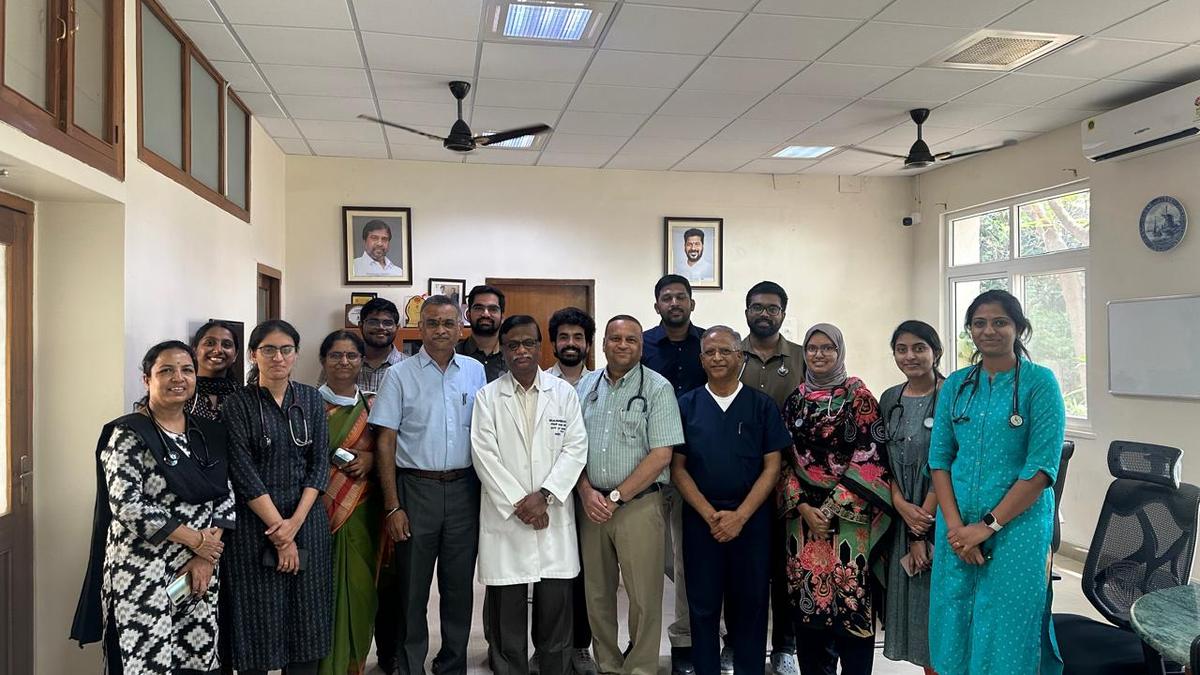
Director of Nizam’s Institute of Medical Sciences (NIMS) Dr. N. Bheerappa and senior faculty along with the top rank-holders of NEET-SS 2024. | Photo Credit: Special Arrangement
Doctors from the Nizam’s Institute of Medical Sciences (NIMS), Hyderabad, have secured top positions in the National Eligibility-cum-Entrance Test Super Speciality (NEET SS) 2024. The institution has produced the national first rank holder for the second year in a row.
Dr. Zakir Hussain led the achievements this year by clinching the All India Rank 1.
In total, twelve doctors from NIMS secured top ranks, ensuring their admission into prestigious super-specialty programmes across the country.
Among the top scorers are Dr. Bhanuchand (Rank 9), Dr. Rohit (14), Dr. U. Soumya (21), Dr. Syed Khalilullah (43), Dr. Krishna Kishore Somani (50), Dr. V. Sai Spurthi (58), Dr. Dheeraj Anirudh (67), Dr. Amtul Rahim Suryam (361), Dr. P.S.N. Rajitha (420), and Dr. A.V.S. Srilekhya (456).
source: http://www.thehindu.com / The Hindu / Home> News> Cities> Hyderabad / The Hindu Bureau / May 04th, 2025
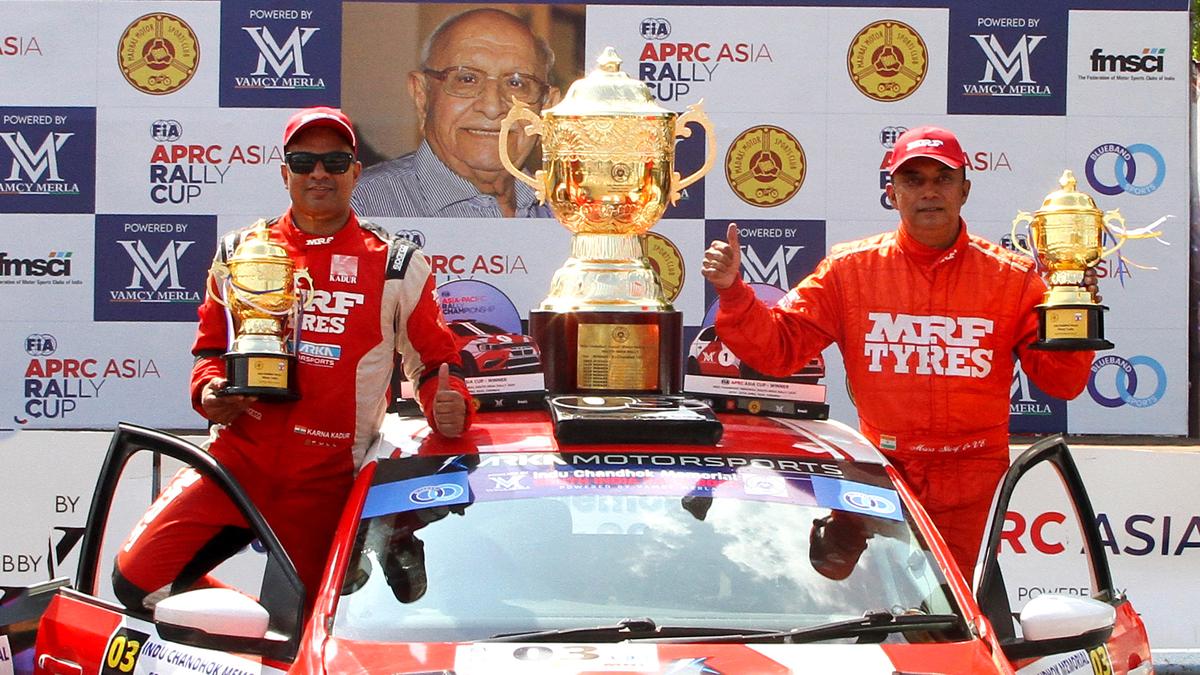
Karna Kadur (left) and co-driver Musa Sherif with the Indu Chandhok Memorial South India Rally overall winners’ trophy. | Photo Credit: Special Arrangement
Bengaluru’s reigning National champion Karna Kadur of Arka Motorsports won a round of the FIA-Asia Pacific Rally Championship after three years at the Madras International Circuit (MIC) here on Sunday.
It was a near-flawless drive in the Volkswagen Polo by the 36-year-old Kadur, who was greatly aided by his experienced co-driver Musa Sherif from Kasargod. The duo also clinched the crown in the first round of the Blueband Fmsci Indian National Championship, organised by the Madras Motor Sports Club (MMSC).
Kadur attributed his success to a judicial blend of caution and aggression. “After a long time, we had a trouble-free run. We had carefully planned our strategy, and it was executed flawlessly. We could have gone faster, but in view of the rising temperature, we had to exercise some caution. A few competitors suffered as they did not back off, and having seen this, I kept something in reserve in case I needed to push hard,” he said.
The results: Provisional final classification: FIA-APRC (Asia Cup):1. Kadur and Musa Sherif (Arka Motorsports) 2:03:44s; 2. Amittrajit Ghosh and Ashwin Naik (Arka) 2:04:35.8; 3. Harkrishan Wadia and Kunal Kashyap (Arka) 2:07:38.5.
Junior APRC: 1. Wadia and Kashyap 2:07:38.5; 2. Arnav Pratap Singh and N. Rohit (SNAP Racing) 2:09:25.9; 3. Abhin Rai and K.M. Moideen Jasheer (Pvt.) 2:10:16.9.
INRC Overall:1. Kadur and Sherif; 2. Ghosh and Naik; 3. Fabid Ahmer and Milen George (Chettinad Sporting) 2:06:9.5.
INRC1:1. Kadur and Sherif; 2. Ghosh and Naik; 3. Suhem Kabeer and Vinay Padmashali (Pvt.) 2:12:15.2.
INRC2: 1. Ahmer and George 2:06:9.5; 2. Wadia and Kashyap; 3. Pragathi Gowda and M. Chandramouli (Pvt.) 2:07:23.5.
INRC3: 1. Arnav Pratap Singh and N. Rohit (SNAP Racing) 2:09:25.9; 2. B. Vishak and Chiranth Jain (Chettinad Sporting) 2:09:27.4; 3. Rai and Jasheer (Pvt.) 2:10:16.9.
INRC 3T (Turbo): 1. C. Ramcharan and Vignesh Mahalingam (Falkon Motorsports) 3:15.3; 2. Naveen Puligilla and Santosh Ritchy Thomas (Pvt.) 2:28:34.9; 3. Jeet Jhabhak and V. Sekar (Pvt.) 2:59:9.9.
Women INRC: 1. Tarushi Vikram and Vybhav Mukund Rao (Chettinad Sporting) 2:17:7; 2. Phoebe Nongrum Dale and Nash Ross (Pvt.) 2:20:17.9; 3. Anushriya Gulati and Karan Aukta (Arka) 2:48:58.8.
Junior INRC: 1. Rai and Jasheer (Pvt.) 2:10:16.9; 2. Ajay Shankar and Venu Ramesh Kumar (Falkon) 2:11:47; 3. R.B. Kharbirymbai and C.P. Dhanush (Snap) 2:14:26.1.
Fmsci Gypsy Challenge: 1. Sanjay Agarwal and Dheeraj Manae (Pvt.) 2:22:23; 2. Kariappa Mekerira and Supreeth Sagar (Pvt.) 2:24:49.7; 3. Pankaj Dutt and Jibran Ahmed (Pvt.) 2:33:15.9.
Fmsci Classic Challenge: 1. Pramod Raman and K.V. Dheeraj (Pvt.) 2:21:1; 2. Siddhartha Santhosh and Sawan Satyanarayan (Pvt.) 2:22:13.6; 3. P. Satish P and S. Dinesh (Pvt.) 2:31:54.8.
In 2000, Rabiya was diagnosed with cancer, which she later overcame, after which she returned to social work.
In 2022, she was honoured with the Padma Shri for social work. (File Photo)
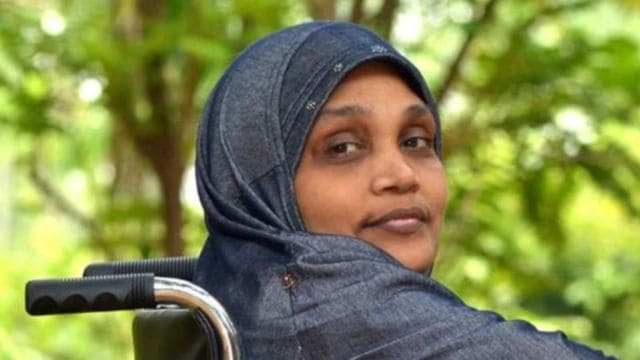
K V Rabiya, known for her prominent role in Kerala’s adult literacy programme, died at her home in Malappuram on Sunday. She was 59.
A native of Vellikakkad in Malappuram district, Rabiya fought against heavy odds and personal tragedies, right from childhood, to work relentlessly for the betterment of the differently abled and inspired thousands of women to enter the world of letters.
In 2022, she was honoured with Padma Shri for social work.
While still a school student, Rabiya contracted polio at the age of 12, which would eventually leave her paraplegic. Despite this, she completed her schooling and joined a college. However, she could not complete the degree course.
Rabiya then turned to books, reading everything from science to literature. Wheelchair-bound by then, Rabiya also started taking tuition classes for local children at a nominal fee.
It was by chance that Rabiya became a part of Kerala’s literacy movement, which began in the late 1980s. A college degree was a must for a literacy instructor. However, an instructor, who could not continue with the programme, sought Rabiya’s help. This marked the birth of a social worker and the beginning of her legacy.
She started teaching literacy classes in June 1990, and local elderly women and housewives were her students. She worked to convince women from orthodox families about the importance of education, and told them inspiring stories of world leaders and social reformers to get them interested in her classes.
When her number of students started swelling, Rabiya became a full-time literacy instructor. Later, she also established a library for women and became instrumental in the development of her locality, which did not have basic facilities such as roads and electricity, telephone, and water connections.
She eventually launched a voluntary organisation named Chalanam (movement), which also spearheaded literary programmes.
Her intervention was not limited to literacy alone. She started six schools for children with special needs and trained and empowered more than 250 women through a small-scale manufacturing unit. She was also at the forefront of the movement to create awareness against dowry and superstition. In later years, she was also actively involved in the e-literacy programme, Akshaya, in Malappuram.
In 2000, Rabiya was diagnosed with cancer, which she later overcame, after which she returned to social work.
In her autobiography, Swapnangalkku Chirakukalundu (Dreams Have Wings), Rabiya told the story of her inspiring life and how she chased her dreams. She also authored four other books, including the memoir, Mouna Nombarangal (Silent Pains). A documentary was also made on her life, titled Rabiya Moves.
She received several honours, including the Kannagi Devi Stree Shakti Puraskar, instituted by the Child Welfare Department of the Union government, in 2000. She also won the Youth Volunteer against Poverty award, jointly instituted by the Union Youth Affairs Ministry and the United Nations Development Programme.
source: http://www.indianexpress.com / The Indian Express / Home> India / by Shaju Philip, Thiruvananthapuram / May 05th, 2025
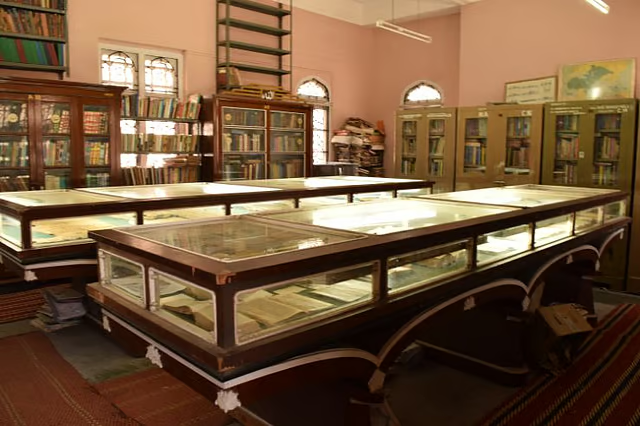
With over 4,000 manuscripts and 25,000 books, Hazrat Pir Mohammad Shah Library is a sanctuary of knowledge and wisdom.
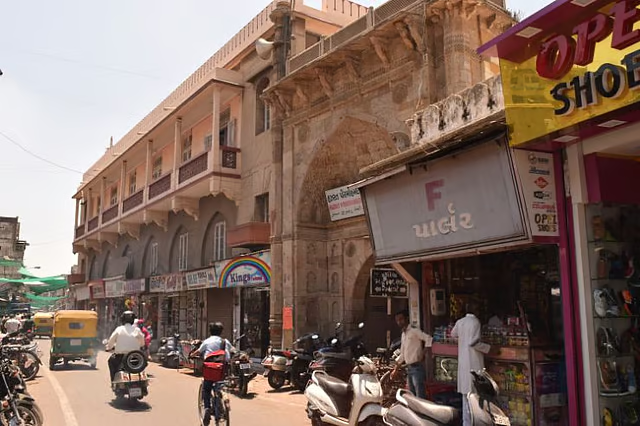
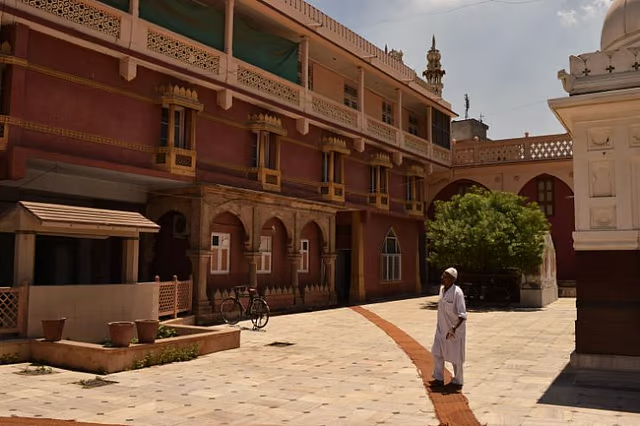
Stepping into the Hazrat Pir Mohammad Shah Library, the oldest library of the city, feels like entering a secret realm concealed within the narrow lanes of Pankora Naka, Ahmedabad. This hidden sanctuary of wisdom resides within the majestic tomb-shrine complex dedicated to the esteemed Pir Muhammad Shah.
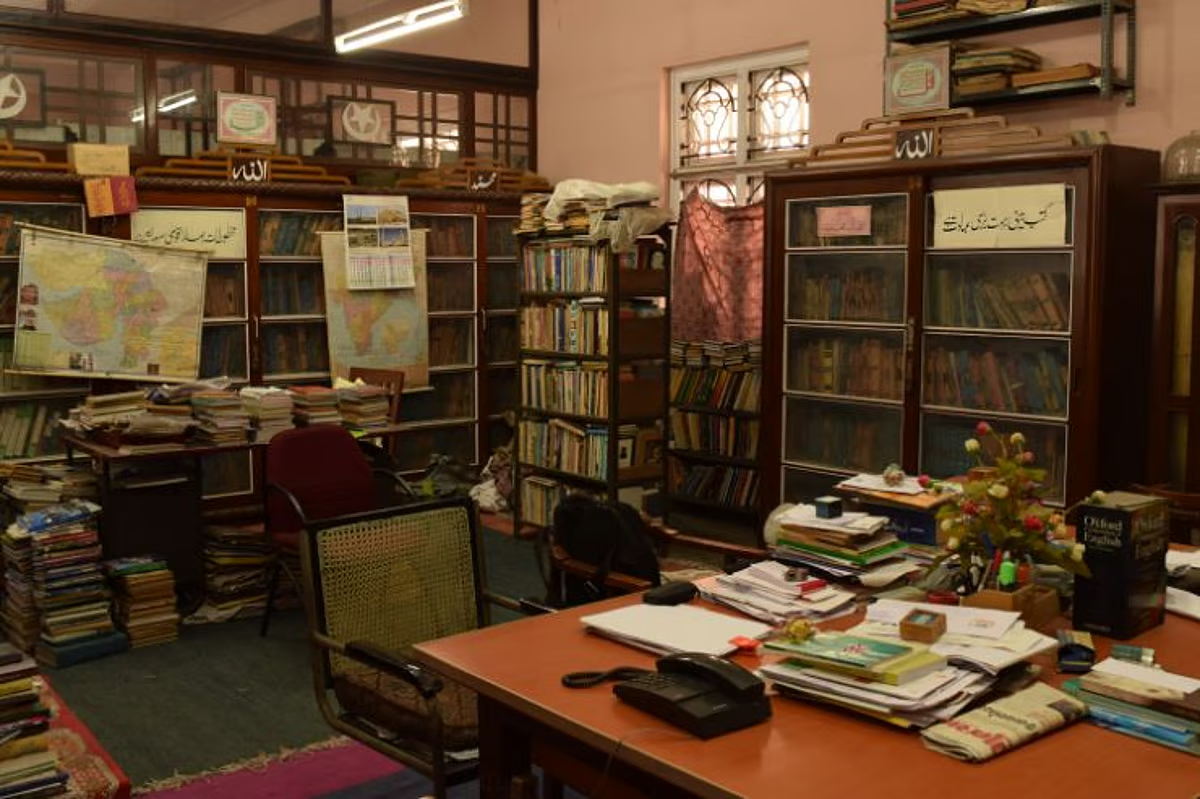
The library’s journey commenced over 250 years ago when Pir Mohammad Shah and his devoted disciples gathered a humble collection of 300 manuscripts. Now, this literary haven proudly safeguards an expansive repertoire of over 4,000 manuscripts, establishing its position as such largest collection in Western India. Moreover, it boasts an impressive assortment of over 25,000 books.
About Mohammad Shah
Let us delve deeper into the enigmatic figure of Mohammad Shah, the driving force behind the library. Born in Bijapur in 1688 AD, he embarked on a transformative journey to Mecca, where he immersed himself in the teachings of practical Sufism.
Eventually, he settled in Ahmedabad in 1711, where he would offer his daily prayers in the Jama Masjid and rest in the humble hut of a benevolent elderly woman. It is in this very location that the awe-inspiring mausoleum-mosque-library complex now stands.
A treasure trove of manuscripts and books
During his lifetime, Pir Muhammad Shah, along with his devoted disciples, amassed a treasure trove of manuscripts and books, encompassing a wealth of academic and spiritual wisdom. This invaluable collection finds its residence in the esteemed “kutubkhana”. The Pir himself was a gifted bilingual poet, penning abundant verses in Persian and Dakhani.
Today, the library stands as a testament to its illustrious past, harboring more than 4,000 manuscripts—the largest collection in Western India, alongside a rich trove of over 25,000 books. Its extensive catalog covers diverse subjects such as spirituality, Quran Knowledge, music, literature, history, geography, language, astronomy, astrology, agriculture, and more.
Within its hallowed halls, one can explore literature in Urdu, Gujarati, Arabi, Parsi, Hindi, and English. The library features a special chamber dedicated to ancient manuscripts, some dating back 800 years, as well as a display of Hazrat Pir Mohammad Shah’s personal belongings, carefully encased in glass to ensure their preservation.
Translations of sacred texts and unique manuscripts
The library’s treasures extend beyond its own collection, offering translations of sacred texts such as the Bible, Rigveda, and Geeta. Visitors are also privileged to behold unique manuscripts, including a handwritten Quran by the illustrious Mughal Emperor Aurangzeb.
This historic repository not only embodies a wealth of knowledge, wisdom, and heritage but also exudes an aura of serenity and tranquility. Explore the mosque, wander through the tranquil courtyard, lose yourself in the pages of ancient tomes, marvel at rare manuscripts, and surrender to the enchantment of bygone era. A captivating journey back in time awaits within these hallowed walls.
source: http://www.knocksense.com / Knock Sense / Home> Ahmedabad / by Zeal Jani / June 27th, 2023
Anantnag District / Kupwara District : JAMMU & KASHMIR :
Two out of 12 aspirants from Jammu and Kashmir who qualified for the UPSC Civil Services 2024 have followed their passion for “Yeh Dil Mange More” (My heart wants more) and improved their rankings in the administrative services for which they had already qualified.
The duo is Mohammad Muneeb Bhat from Anantnag district of South Kashmir (AIR 131) who is already serving the J&K government after clearing the JK Public Service Commission examination; and Mohammad Haris Mir, AIR 314 from Kupwara district of North Kashmir.
Haris Mir hit the All India rank of 345 in the UPSC Civil Services examinations of 2023 and has improved his rankings.
Interestingly, a woman – Iram Choudhary from Rajouri district of Jammu region – is the topper from the UT with AIR 40.
Mohammad Muneeb Bhat, son of the government teachers from Anantnag town of South Kashmir, had set his goal of joining the civil services while pursuing his Civil Engineering degree at the Lovely Professional University in Punjab.
He told Awaz-The Voice that he started preparing for the coveted UPSC exam soon after completing his Engineering degree. He took the exam in 2017. “The motivation for civil services came from those already qualified persons from J&K like Shah Faesal (2009) and Athar Aamir Khan (2016), though there has been a considerable number of UPSC qualifiers over the past about two decades.
“I continued to achieve the goal” till my success in the last attempt this year”, Bhat said. He stayed in Delhi to attend different institutions including the Residential Coaching Academy (RCA) at the Jamia Millia Islamia.
While preparing for the UPSC examination, Mohamad Muneeb Bhat qualified for the J&K (UT) PSC examination in 2023 and was allocated the J&K Police Services. He is presently undergoing probation with the UT government.
His father, Mohammad Ashraf Bhat retired as a Zonal Education Officer (ZEO) last year, while his mother recently retired from service.
Mohammad Haris Mir qualified for the UPSC with AIR 345 last year but made yet another attempt to achieve a higher rank. He was allotted Revenue Services ((IRS) and is presently undergoing probation at the National Academy of Direct Taxes (NADT) in Nagpur.
“To achieve a higher rank, I prepared during my probation”, Mohammad Haris Mir told Awaz The Voice from Nagpur. “The motivation (to achieve a higher rank) was like any other aspirant and the hard work has been fruitful”, he said.
As it’s permitted, Haris took leave fromn the Lal Bahadur Shastri National Academy of Administration (LBSNAA), Mussoorie, to prepare for the mains of the 2024 examinination and later joined the Uttarakhand, and took leave to prepare for mains of the Civil services 2024. He later joined NADT at Nagpur.
Mohammad Haris was also motivated by the success of senior bureaucrats like Shah Faesal and Athar Amir. He qualified for the UPSC on the first attempt last year.
Though his father is a doctor, Haris opted for the humanities. Hailing from a remote area of Handwara in the border district of Kupwara, Dr Mir had shifted to Srinagar as he was posted in the Oncology Department at the SKIMS Hospital, Soura in Srinagar.
After completing the XII examination, Haris, 26, joined the 5-year degree course in Law, B A, LL.B from the Jamia Millia Islamia, Delhi. Though Jamia Millia Islamia offers free coaching to students from minority communities for the UPSC examinations (Residential Coaching Academy) Haris preferred to prepare without joining coaching classes. “Soon after completing his Law degree, I began to prepare through self-study for the UPSC examination….it was a full year of studies involving hard work, which led me to clear the examination in the first attempt”, he told Awaz-the Voice
source: http://www.awazthevoice.in / Awaz, The Voice / Home> Stories / by Ehsan Fazili, Srinagar / April 30th, 2025
Kooli Village (Ranebennur, Haveri District), KARNATAKA :
Abu Saliya Khan
Mangaluru/Ranebennur:
Abu Saliya Khan, a former student of Ace IAS Academy in Mangaluru, has cleared the prestigious UPSC Civil Services Examination with an All India Rank (AIR) of 588, bringing pride to the academy and his hometown of Ranebennur in Karnataka’s Haveri district.
Hailing from Kooli village in Ranebennur taluk, Abu Saliya completed his primary education in a Kannada-medium school before joining RTS College, Ranebennur for his pre-university education in 2014. He later pursued his B.Sc in Agriculture at Shivamogga, graduating in 2019. His journey toward UPSC preparation took a significant turn when he shifted to Mangaluru and enrolled at the Ace IAS Academy for intensive training.
Speaking to Vartha Bharati, Abu Saliya credited his success to the foundation laid during his training at the Ace IAS Academy. “It was here in Mangaluru that I got my basics right. The environment at Ace helped me understand the significance of public service and mentally prepared me for this long journey,” he said.
After his training in Mangaluru, he moved to Delhi and continued his preparation at Jamia Millia Islamia’s Residential Coaching Academy. His perseverance paid off in his fourth attempt. He had earlier cleared the prelims in 2023, which gave him a renewed sense of hope and motivation to make one final attempt, resulting in this year’s success.
Coming from a modest background, Abu Saliya’s story is an inspiration to many. His father, the late Hussain Khan Kulkarni, was a bus conductor with NWKRTC and passed away earlier last year. His mother, Arshad Banu, is a homemaker. Despite financial and emotional hardships, the family stood by his side as he pursued his dream of joining the civil services.
On being asked about his preferred service, Abu Saliya shared that while he had aspired to join the Indian Administrative Service or Indian Police Service, he now expects to be allotted the Indian Revenue Service based on his rank. He also revealed that he had been attempting to qualify for the Indian Forest Services.
Reacting to the news of his success, he said, “My family is overjoyed. These are the moments that come once in a lifetime. There was a time I had almost decided to give up and pursue a career in agriculture. But after clearing the prelims in 2023, I decided to try again—and I’m glad I did.”
His success has been hailed by many in Mangaluru’s civil service aspirant community, with Ace IAS Academy calling it a proud moment for the institution.
source: http://www.english.varthabharati.in / Vartha Bharati / Home> Karavali / by Vartha Bharati / April 24th, 2025