Category Archives: Amazing Feats

Ayan Sheikh Gets 12th Rank in GATE Exam, Dreams of Joining IIT Bombay

Mumbai, MAHARASHTRA :

Mumbai student overcomes cramped living conditions to achieve national success in the prestigious entrance exam.

Mumbai:

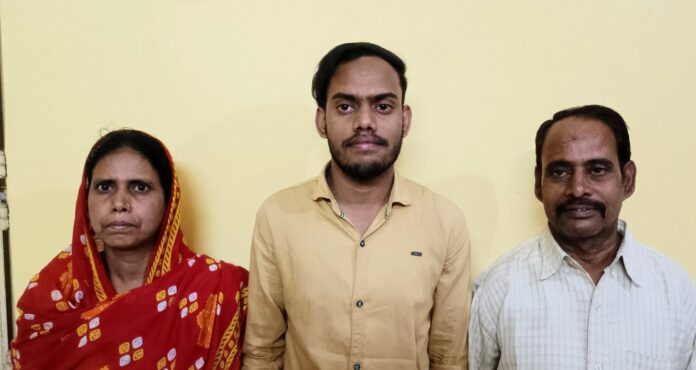
Ayan Sheikh, a 20-year-old student from a modest 96-square-foot house in Byculla, has achieved an extraordinary feat by securing the 12th rank in the Graduate Aptitude Test in Engineering (GATE) in his first attempt. Ayan, currently in his third year of a computer science degree, hopes to follow in his elder brother’s footsteps and secure admission to IIT Bombay for his master’s degree.

Living in a cramped chawl in Mustafa Bazaar’s Haji Alana with his parents and elder brother, Ayan’s journey to success is a testament to determination and hard work. With limited space at home, Ayan and his brother Aman, who previously cracked the Joint Entrance Examination (JEE) and graduated from IIT Bombay, often studied on a makeshift platform built in their small house.

“My success is the result of my parents’ prayers and their constant hard work,” Ayan told Clarion India. “Even with a limited income, my father tried his best to give both of us brothers a better and higher education. Despite the lack of space, we made the most of what we had. This platform has been our study spot for years, and it holds a special place in our hearts.”

Ayan scored an impressive 89.04 percent marks in the exam, which is considered one of the toughest national-level entrance tests for postgraduate engineering courses. Out of 1.8 lakh candidates who appeared for the exam, Ayan’s 12th rank is a remarkable achievement.

His father, Akhtar Sheikh, a senior fitter at BEST’s Mumbai Central Depot, expressed his joy and pride. “Ayan’s result is like the blessings of Ramadan for us,” he said. “One lakh 80 thousand students appeared for the GATE exam, and Ayan secured the 12th position. This is a huge achievement for our family.”

Ayan’s academic journey has been marked by consistent excellence. He scored 90% in his SSC exams from Enza English High School in Byculla and 78% in his HSC exams from Peace College in Dadar. He is currently pursuing a computer science degree at DJ Sanghvi College in Vile Parle and will complete his four-year course next year.

Ayan’s elder brother, Aman Sheikh, is an inspiration for the family. Aman secured 90% in SSC and 89% in HSC before cracking the JEE exam with a rank of 1,023 out of 1.5 lakh candidates. He went on to complete his B.Tech and M.Tech in electrical engineering from IIT Bombay and now works for an American company in Bengaluru with an annual package of Rs 12 lakh.

“I hope to get admission to IIT Bombay, just like my brother,” Ayan said. “This platform in our house has been our study corner for years. Even today, I sit here and study for three to four hours daily. It’s a part of our lives.”

Ayan’s story is a shining example of how perseverance and family support can overcome even the most challenging circumstances. As he prepares to take the next step in his academic journey, his family and community are filled with pride and hope for his future.

source: http://www.clarionindia.net / Clarion India / Home> India> Indian Muslim / by Team Clarion India / March 24th, 2025
What Days They Were: Memoir sheds light on events before India’s partition and its aftermath

Bayara Village (Basti District), UTTAR PRADESH :

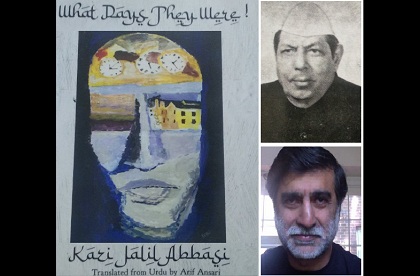
Kazi Jalil Abbasi was a leader, freedom fighter and politician who witnessed key events of twentieth century–not just as an observer but as someone who took active part in public life, participated in movements and after independence went on to fight elections and become a legislator, minister and Parliamentarian.

When a large number of Muslims from Uttar Pradesh including elite and the community leaders, were leaving the country, he remained committed to his political ideology, kept opposing communalism and led from the front–fighting and raising his voice democratically in independent India.

Uttar Pradesh, the heartland and the most populous state in the country, had been the battleground for Congress and Muslim League before 1947. It had seen competitive communalism, inter-religious tensions and riots. On the ground, situation in UP was complex and different from other states.

Kazi Jalil Abbasi’s autobiography is insightful and reveals a lot about the period and the struggles. Abbasi was born in Bayara in Basti district in1912. He studied in different schools in Gonda, Unnao and Basti before he joined the Aligarh Muslim University (AMU) from where he was expelled.

All these circumstances, his idealism, role in freedom struggle are part of the book. He was against the political stand of Muslim League. The books also provides information about Congress’ organisation and the politics in UP, its leaders. There are interesting anecdotes about top leaders, ranging from Rafi Ahmad Kidwai to Indira Gandhi. 

The autobiography titled ‘Kya Din The!’ was originally published in Urdu. 

Arif Ansari has now translated it in English. Ansari is settled in Washington DC. The book that runs into nearly 350 pages is a must-read for anyone who is interested in the era, important events and the post-partition situation in Uttar Pradesh.

Notionpress has published the book and it is available online. 

source: http://ww.newsbits.in / Newsbits.in / Home> Special / by Shams Ur Rehman Alavi, Bhopal / January 26th, 2021

Shakib Shah, Rukaiya Fatima Claim Top Spots in Bihar Board 12th Exam

BIHAR :

Remarkable achievements highlight talent and determination in Bihar’s intermediate results.

New Delhi :

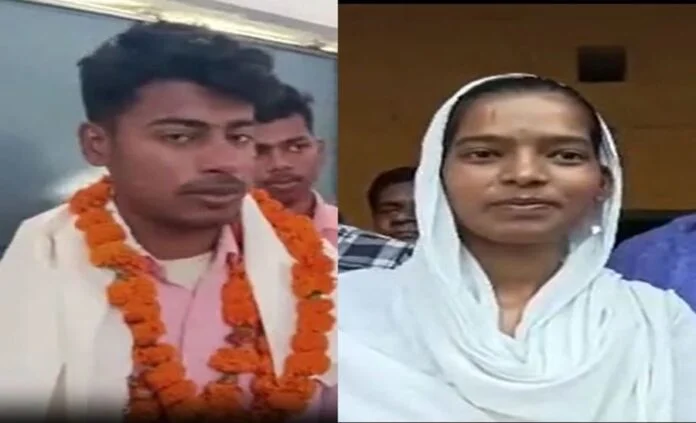
The Bihar School Examination Board (BSEB) on Tuesday revealed the 2025 Class 12 exam results, and this year, two Muslim students from modest backgrounds have made headlines by securing the first and second positions. Shakib Shah from Buxar district and Rukaiya Fatima from Begusarai have not only made their families proud but also demonstrated the power of hard work and ambition in overcoming challenges.

Shakib Shah, a student at Plus Two High School Koransarai in Buxar, achieved an impressive 473 out of 500 marks, securing the top position in the Arts stream. His 94.6% score has ignited celebrations in his village, with locals and teachers praising him as a source of inspiration. “I studied hard every day, and my teachers supported me throughout. My dream is to crack the Bihar Public Service Commission (BPSC) exam and serve as an administrative officer,” Shakib told Zee Media, his determination evident in his words.

Following the announcement of his results, Shakib received a flood of congratulations at his home in Koransarai. Teachers from his school, along with the District Education Officer, visited the school to honour their star student. “Shakib has always been a focused student. His success is a testament to his hard work and the guidance he received here,” said one of his teachers, beaming with pride.

Meanwhile, Rukaiya Fatima, a student at BN High School Teyai in Begusarai’s Teghra subdivision, earned the second position with 471 marks, achieving 94.2% marks. The daughter of Mohammad Abu Salem, a bidi trader from Kolkata, Rukaiya comes from a family of seven sisters, where she is the third child. Despite her father’s modest income and the challenges of supporting a large family, Rukaiya’s resolve to excel never wavered. “I want to become an IAS officer and work for the poor. Education is my way to change my family’s future,” she shared with local reporters.

Rukaiya’s success has brought joy to her community in Begusarai. Her school principal described her as a diligent and bright student who balanced her studies with household responsibilities. “She would often stay back after classes to clear her doubts. Her success shows what girls can achieve with determination,” the principal remarked.

The Bihar Board 12th exams, held between 1 and 15 February 2025, saw over 12.92 lakh students appear across 1,677 centres in the state. This year’s results reflect an overall pass percentage of 86.50%, with the Arts stream recording 82.75%. Shakib and Rukaiya’s stellar performances stand out, not only for their academic brilliance but also for their powerful message of resilience and hope.

For Shakib, topping the state is just the beginning. Growing up in a simple family in Koransarai, he credits his family’s encouragement and his own disciplined routine. “My parents never let me feel any pressure. They just told me to do my best,” he said. His ambition to join the administrative services stems from a desire to uplift his community and tackle local issues like education and employment.

Rukaiya’s journey is equally inspiring. Despite growing up in a family with limited resources, she often studied by candlelight during power cuts. Her father, Mohammad Abu Salem, expressed his pride over the phone from Kolkata: “I always knew Rukaiya was special. She has made us all proud, and I hope she achieves her dream of becoming an IAS officer.” Rukaiya’s six sisters also look up to her, with the youngest saying, “I want to study hard like Rukaiya Apa.”

The success of these two students has also highlighted the untapped potential within Bihar’s Muslim community, which often faces socio-economic challenges. Local leaders and educators have hailed their achievements as a beacon of hope. “Shakib and Rukaiya have shown that talent knows no boundaries. Their success will inspire countless others,” said a senior official from the BSEB during the result announcement press conference in Patna.

However, their triumphs stand in contrast to the broader narrative in Bihar, where tensions between communities have occasionally erupted. Critics have often pointed to the state’s history of communal friction, exacerbated by divisive politics and economic disparities. Some have accused Hindu groups of marginalising minority achievements in educational settings. Yet, Shakib and Rukaiya’s success challenges these narratives, proving that merit and perseverance can overcome prejudice.

To celebrate their achievements, the BSEB has announced cash prizes and scholarships for the toppers, with Shakib set to receive £2 lakh and Rukaiya £1.5 lakh, along with laptops to support their future academic pursuits. These rewards, doubled from last year, reflect the state’s commitment to nurturing talent. “We are proud of all our students, and these two have set an exceptional standard,” said BSEB Chairman Anand Kishore.

As Bihar celebrates its top achievers, the stories of Shakib Shah and Rukaiya Fatima resonate beyond their exam results. Their journeys embody the dreams of millions in a state where opportunities are scarce, and their success serves as a shining example of the transformative power of education. For now, the spotlight remains on these remarkable individuals, whose stories are only beginning to unfold.

source: http://www.clarionindia.net / Clarion India / Home> Editor’s Pick> Indian Muslim / by Mohammad Bin Ismail, Clarion India / March 26th, 2025

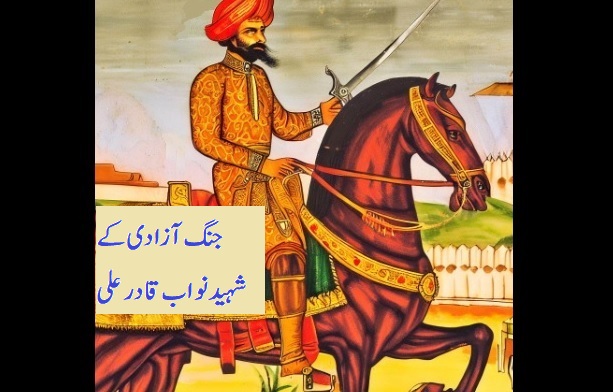
Forgotten martyrs: Nawab Kadar Ali, his companions were hanged by British at Sitabuldi fort in Nagpur

Nagpur, MAHARASHTRA :

More than seven decades after India achieved independence, the role of innumerable martyrs and freedom fighters who gave their blood and offered lives for the motherland, needs to be remembered. 

Many of them got harsh punishments, didn’t get proper last rites, remain forgotten and even those whose sacrifices are known, don’t have monuments or memorials built in their memory.

The martyrdom of Nawab Kadar Ali, and his companions, who planned attack on residency and to take on the East India Company forces in Nagpur, also needs to be recalled. They were hanged here for their role in 1857–the first war of independence.

Though there is no monument named after them and no big memorial, they remain heroes in public memory. The fort that had been a base of 118 Infantry Battalion for years, is opened on three days including August 15 and January 26. Thousands of people arrive on these days, and also pay visit to the grave and offer their respects.

The flame for independence was already lit. History books mention that soon after Meerut, the anger was palpable among soldiers and citizens in this region too. On June 13 1857, a large gathering took place near Mission High School. The soldiers too were anxious and ready. 

Scared, some of the East India Compnay officials ran towards Kamptee Cantonment, while others went inside the Sitabuldi Fort. It was due to treachery that the attack plans had been leaked and the news reached British officers. More EIC forces were called from other places to control and overpower the rebels.

Rani Baka Bai, wife of late Raghoji II, was supporting the British and issued a warning that anyone abetting or aiding the revolutionaries would be arrested and handed to the East India Company. It’s a long story and how the soldiers and citizens suffered, refused to name the leaders of the movement. 

Historical texts say that the signal of a fire balloon was decided. But after the traitors gave information to East India Company officers, Plowden, the commissioner, ordered a regiment to move into the city. The irregular calvary at Tali was dismayed. Major Arrow tried to get information from ring leaders but no one gave names.

Baka Bai summoned all her relations, and dissuaded them with threats. This chilled the spirit of public. However, later when Company officials’ strengthened their hold, the rebels were identified. Arms were collected and after inquiry, Dildar Khan, Inayatullah Khan, Vilayat  Khan and Nawab Kadar Ali were tried and executed.

KILLED, HANGED, BURIED IN A COMMON PIT

The Gazetteer briefly mentions that ‘tucked away between the easter walls of the inner fort and the barracks is a large grave known as Nav Gazah Baba…the grave of Nawab Kadar Ali…and his eight associates..who were killed and hanged by the ramparts of the fort due to their role in the war of independence”. 

“They were all buried in a common pit, nine yards long. The fort recalls to our mind the memory of the brave soldiers who fought in an attempt to preserve the independence of the mother land”. It was treachery that was responsible for the arrests and the punishment.  Those who helped the British, got ‘jagirs’ as rewards.

Ghulam Rasool ‘Ghamgeen’, the poet, wrote these lines in Farsi :

Choo.n Qadar Ali Khan Ameer Kabeer
Shud-az-tohmat, ahl-e-balwa aseer

Bajurm shiraakat girafaar shud
Chau mansoor, Hallaj, bar-daar shud

Duaa’e shahaadat ba-raahe Khuda
shab w roz mi kard aa.n mahtada
…
…
Khirad guft ee.n misra-e-silk-e-noor
Za-daar-e-jafaa shud ba-daar-e-suroor

The last couplet of this long Persian verse, brings out the ‘tarikh’, the year of execution. The complete verse is mentioned in Dr Mohammad Sharfuddin Sahil’s book ‘Tarikh-e-Nagpur’. It shows the impact of the hangings on the people in the region. Nagpur is geographillcally considered to be a part of Central India and is the biggest city in Vidarbha region of Maharashtra.

The fort for a long period remained the base of 118 Infantry Battalion of Territorial Army. Every year, on August 15 and January 26, fort is opened for public so that it can pay respect to the freedom fighters. It’s also opened on May 1 i.e. Maharashtra Day. [Illustration is representive]

source: http://www.newsbits.in / NEWS Bits / Home> Top News / by Shams Ur Rehman Alavi / August 15th, 2021

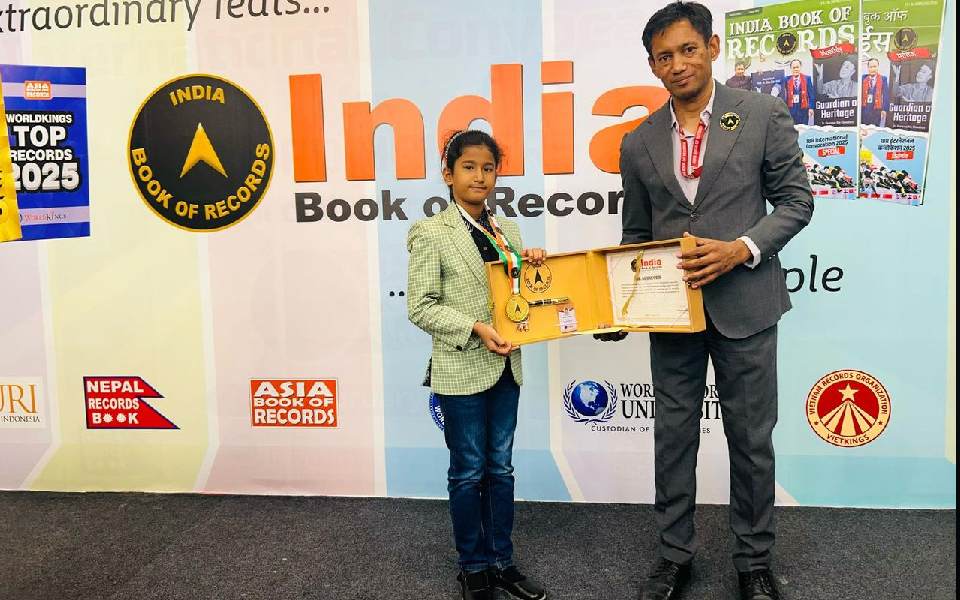
Eva Fathima Basheer Receives India Book of Records Award

Aramboor (Sullia, Dakshina Kannada), KARNATAKA / Sharjah, U.A.E :

Sharjah, UAE: 

Eva Fathima Basheer, a Grade 3 student of GEMS Millennium School, Sharjah, has been recognised by the India Book of Records for her exceptional feat of reading English storybooks for the longest uninterrupted duration by a child.

At just nine years old, Eva read aloud from six English storybooks for 4 hours, 31 minutes, and 38 seconds without a break. She received the India Book of Records Achievers Award for this accomplishment at a ceremony held on 29 March 2025 at the organisation’s centre in Faridabad, Haryana.

Apart from this record, Eva has excelled in academics, securing gold medals in various national and international Olympiads conducted by reputed institutions. She is also actively involved in extra-curricular and social activities, including cleanliness drives, environmental awareness campaigns, fundraising efforts, and promoting safety practices.

Eva’s interests extend to writing stories, poems, and articles, as well as drawing and singing.

She hails from Aramboor in Sullia, Dakshina Kannada, and currently lives in Sharjah with her parents.

source: http://www.english.varthabharati.in / Vartha Bharati / Home> Gulf / by Vartha Bharati / March 29th, 2025

Why Guru ki Maseet in Punjab has no Muslim worshippers

Hargobindpura, PUNJAB :

Guru ki Maseet at Hargobindpura, Punjab

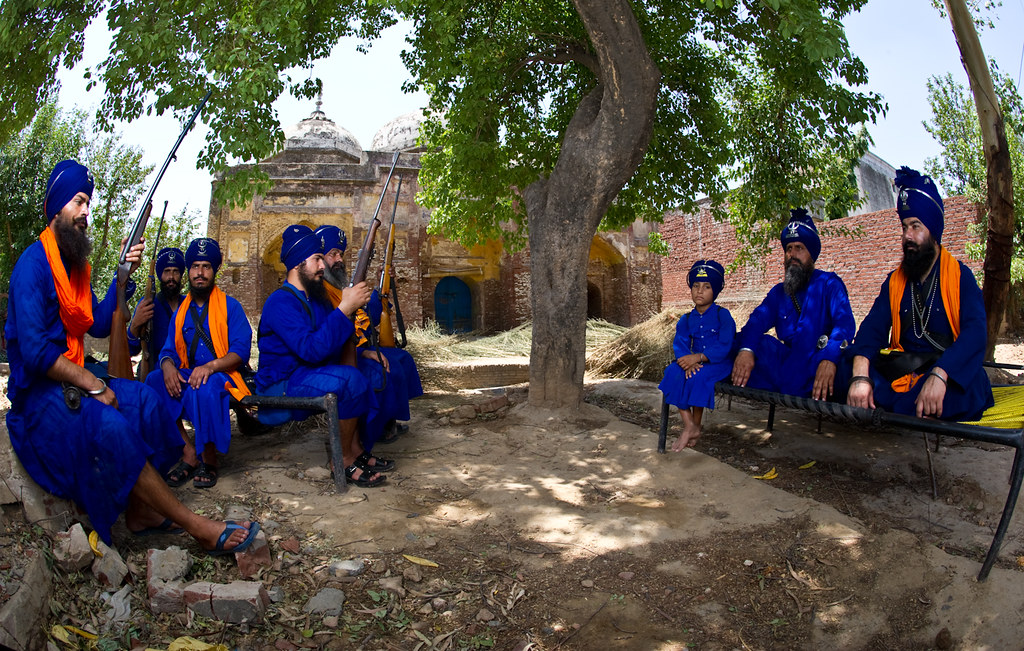
A 17th century mosque in Punjab declared declared as a symbol of religious tolerance by the UNESCO and UNDP has no Muslim worshippers. Called Guru ki maseet (Mosque of the Guru) it is being looked after by the Sikhs.

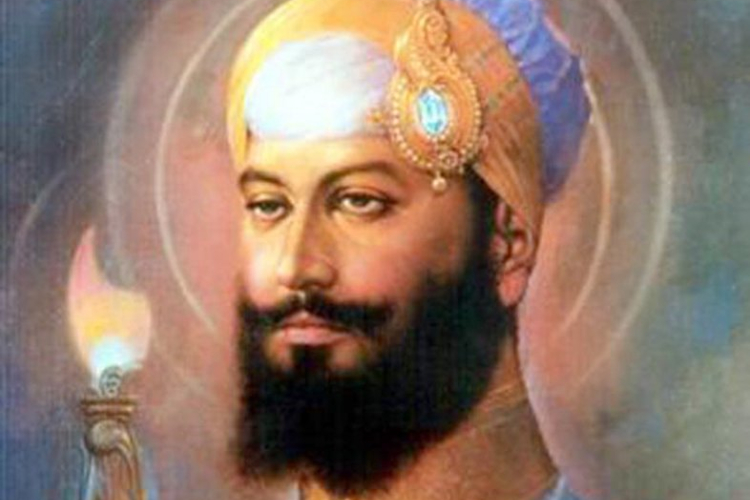
Its story dates to the early 17th century. When the sixth Sikh Guru, Hargobind Singh, took over the throne, Emperor Akbar’s efforts to bring all religions together had already failed. In the reign of Jahangir, animosities based on religious difference had begun to surface across India.

Soon, Hargobind Singh realized that in the midst of growing tension and threats, only spirituality would not work.

With this idea, Guru Hargobind Singh started wearing two swords on his body. He called them the swords of Piri and Miri. Piri referred to spirituality and Miri to power. He also raised an army to fight wars.

In one of his armed campaigns, his army camped on the banks of the Beas River. Soon a big settlement came up here and it was called Hargobindpur. Today one can reach this place while travelling on Hoshiarpur-Batala Road in Punjab.

The township had people of all religions. Soon a temple and a Gurudwara were built there. There were only a few Muslims there and they had no place of worship. As their numbers were low, building a mosque was not feasible at the community level.

They went to Guruji and told him their problem.

Guru Hargobind Singh instructed his authorities to build a mosque for the Muslims to worship. In no time the mosque was built on a small hillock on the banks of the Beas River. The sound of Azan from the mosque reverberated in the air for the next several hundred years.

Guru ki Maseet at Hargobindpura, Punjab

However, after the partition of India and many Muslims leaving for Pakistan in 1947, this mosque was deserted. All the Muslim families of Hargobindpura had left for Pakistan.

As the mosque was related to Guru Hargobind Singh, the Nihang Sikhs built a Gurudwara there. Today, the sounds of Gurbani resonate there the place every morning and evening.

In the last decade of the twentieth century, Muhammad Rizwanul Haq of the Punjab Waqf Board visited the town and met many Sikh leaders. He requested the Sikhs that since this mosque was built on the orders of Sikh Guru it should be allowed to remain a mosque.

The Sikh leaders consulted historians; they too concurred with the idea of the place being retained as a mosque.

Soon a consensus was reached. Once again the kar seva started and the mosque was renovated. Some people from the Punjab Waqf Board also came there but most of the kar seva was done by Sikhs.

Nihang Sikhs who look after the mosque sitting outside Guru ki Maseet

The mosque was restored to its original shape in 2002.

For its inauguration, the locals invited Imam Maulana Hamid Hussain Qasmi of Amritsar’s Jama Masjid to lead the Eid-ul-Fitr prayers at the mosque.

Even today there is no Muslim living in Hargobindpur and yet the mosque stands tall. Today, Guru ki Maseet is cared for by Nihang sevadars.

In 2003, this historic mosque gained international recognition when UNESCO and the UNDP’s Culture for Peace project highlighted its importance as a symbol of religious tolerance. 

(The author is a senior journalist)

source: http://www.awazthevoice.in / Awaz, The Voice / Home> Stories / by Harjinder / April 01st, 2025

Jamia Millia Islamia hosts exhibition on rare Quran calligraphy from the 15th to the 20th Century

NEW DELHI :

New Delhi : 

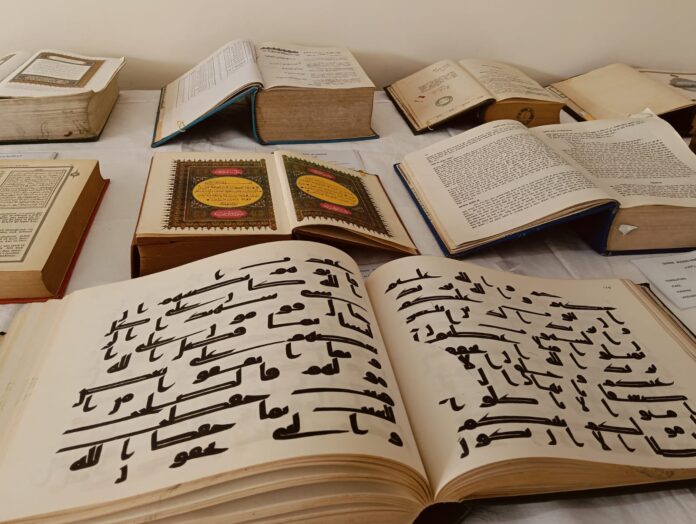
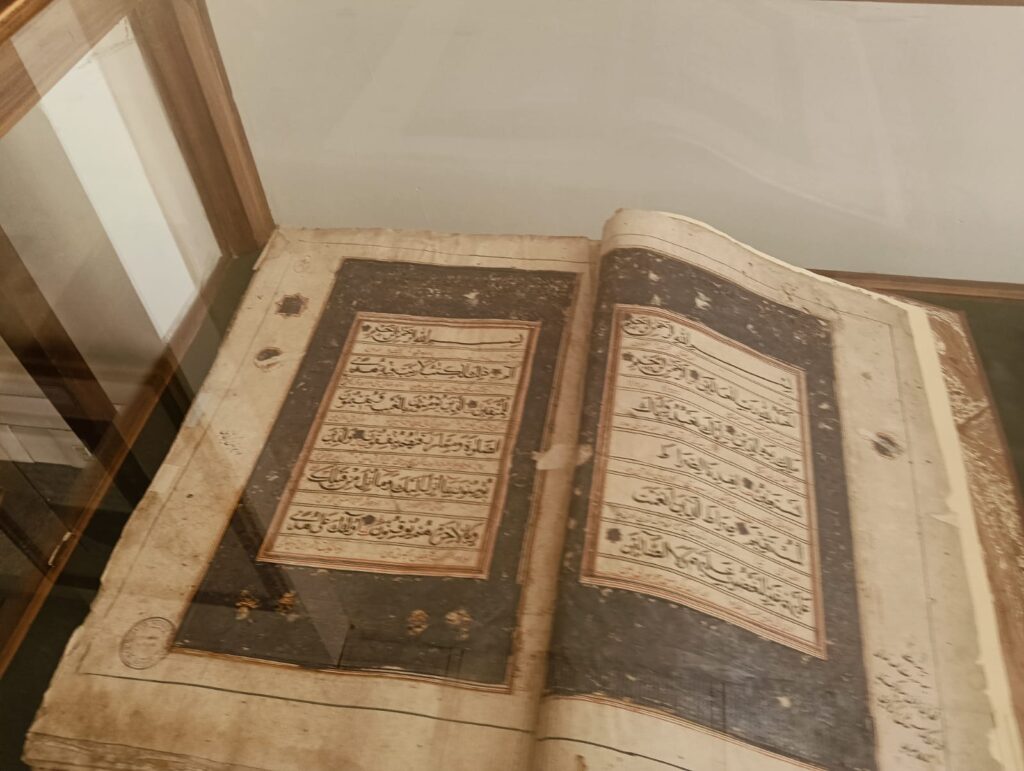
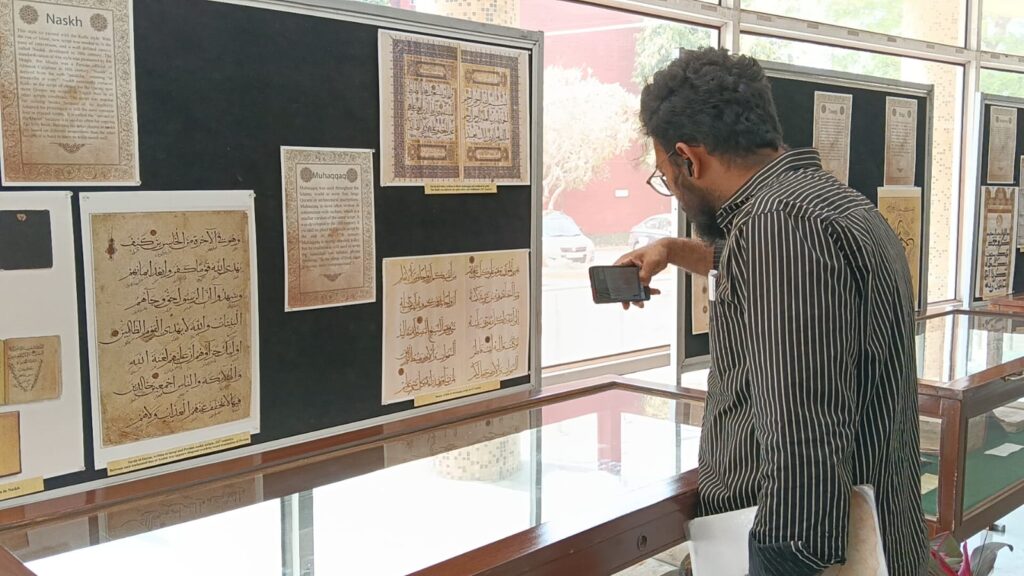
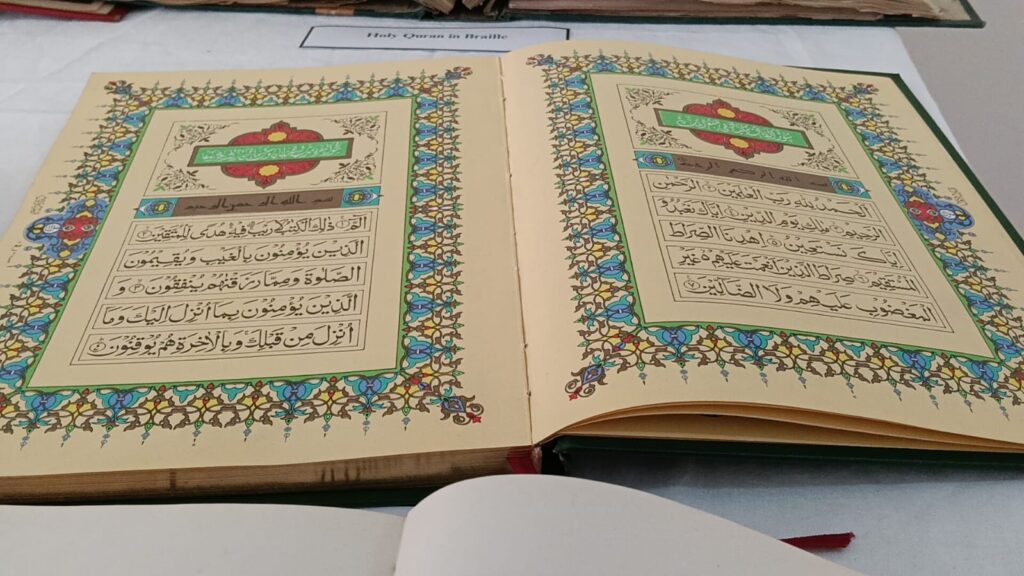
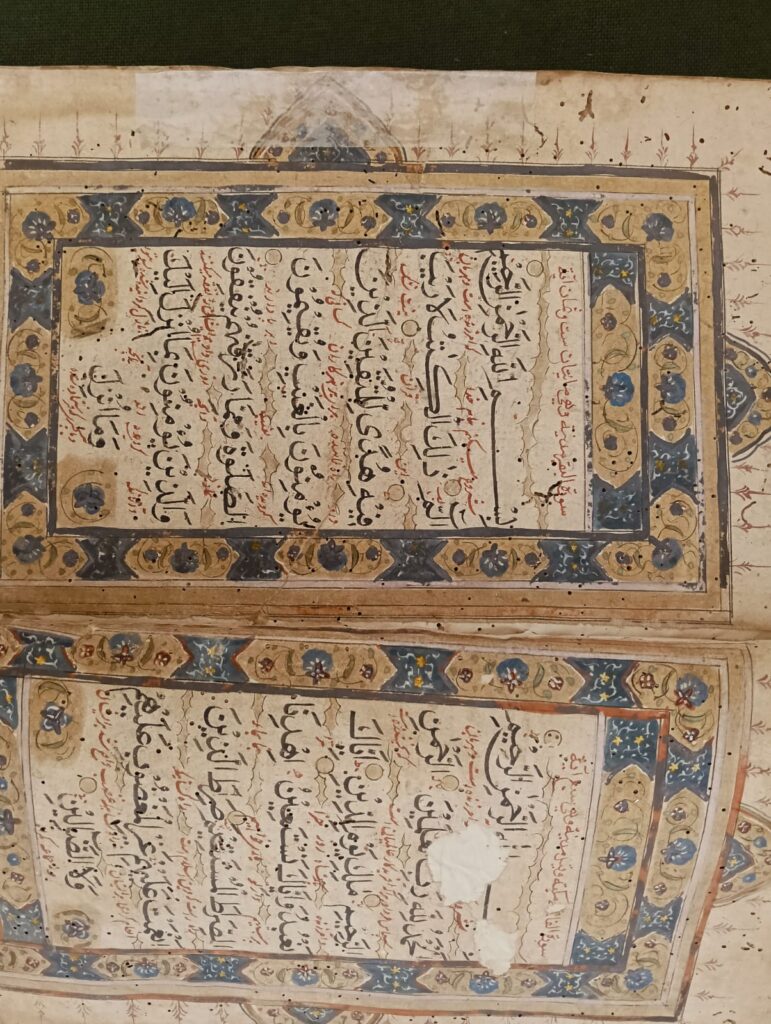
Jamia Millia Islamia has launched a special week-long exhibition showcasing rare and ancient Quran manuscripts at its Dr. Zakir Husain Library during the holy month of Ramadan. The exhibition, titled “Muqaddas Quran,” was inaugurated by Professor Mazhar Asif Sheikh-ul-Jamia and features a diverse collection of calligraphy spanning from the 15th to the early 20th century.

Through meticulously crafted posters, the exhibition traces the development of Islamic calligraphy from the 7th to the 14th century, offering a comprehensive visual exploration of how Quranic calligraphy evolved over time.

Alongside the manuscripts, the exhibition presents an impressive collection of printed Qurans in various national and regional languages, including Malayalam, Kannada, Hindi, Urdu, Tamil, and Bengali. The display also includes translations in foreign languages such as Chinese, Japanese, German, Turkish, Russian, English, Spanish, Albanian, Myanmar (Burmese), and Persian. A special Quran in Braille was also featured, emphasizing the importance of inclusivity and ensuring that visually impaired individuals can access the sacred text.

Professor Mazhar Asif, Sheikh-ul-Jamia(Vice Chancellor )of Jamia Millia Islamia, expressed his satisfaction with the exhibition, saying, “It is a privilege for the university to open its rare collection during the holy month of Ramadan, allowing people to benefit from the teachings, knowledge, and moral values of the Quran. The Quran promotes helping the poor, equality, and justice, and by presenting this exhibition to the public, we aim to encourage accountability, bringing people from darkness to light.”

The exhibition also showcases rare Arabic manuscripts, including Tafseer Baizawi and Tafseer of Ibn Abbas, both from the 16th century. Additionally, books in eleven foreign languages and six regional translations illustrate the rich diversity of Jamia’s collection.

Professor Asif highlighted the rarity of the Japanese translation of the Quran, which was produced by the Islamic Society of Koshikawa in Tokyo, calling it an extremely rare edition globally.

Professor Mohammad Mahtab Alam Razvi, Registrar of Jamia Millia Islamia, emphasized the significance of the exhibition. “This collection reflects our rich heritage of Quranic manuscripts and printed copies from the 15th century to the early 20th century, including small Quranic manuscripts. With thirty-five rare handwritten manuscripts and twenty-seven printed translations, the exhibition offers valuable insights into the evolution of Quranic script.”

Dr. Lucas S. Nigrale, who also participated in the event, spoke about the importance of such exhibitions during Ramadan, a time for reflection, devotion, and learning. “This exhibition shines a light on the Quran’s timeless wisdom and universal message,” Dr. Nigrale said, expressing hopes for future exhibitions that further promote awareness and cultural dialogue at the university. The Dr. Zakir Husain Library holds a total of 2,243 Quranic manuscripts.

The exhibition serves as an important platform for enhancing public understanding of the Quran’s linguistic, intellectual, and literary traditions. It highlights the eternal teachings of the Quran in a contemporary context, fostering greater cultural and educational dialogue.

source: http://www.indiatomorrow.net / India Tomorrow / Home> Education / by Mohammad Akram / March 30th, 2025

Assam: CRPF chief visits family of martyr Nasiruddin ahead of Eid-ul-Fitr

Banbaria Village (Barpeta District), ASSAM :

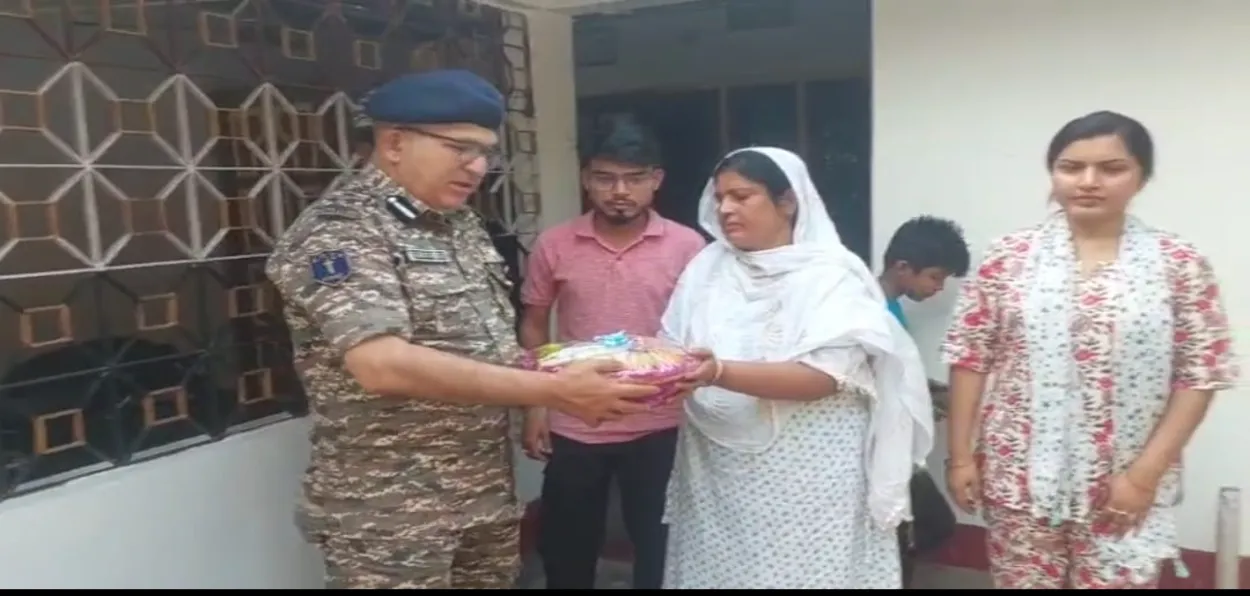
CRPF DIG Sunanda Kumar with the family of late Nasiruddin Sarkar

As Muslims around the world prepare for the joyous culmination of Ramzan into Eid-ul-Fitr celebrations, for many families, especially those of national martyrs, it’s a painful experience to celebrate the day without their loved ones.

Uneasy calm prevails in a household in Assam’s Barpeta district in the last days of Ramzan. The house, located in the remote Banbaria village under the Bhella police station area, is throbbing with grief and painful silence.

The house belongs to the Late Nasiruddin Sarkar, a brave CRPF jawan who laid down his life in the line of duty on April 27, 2024.

Sarkar was deployed along with his other colleagues in Manipur during the elections when suspected Kuki militants attacked a CRPF convoy in the Bishnupur district of Manipur on April 27. Sarkar was among the two CRPF personnel who laid down their lives fighting extremists.

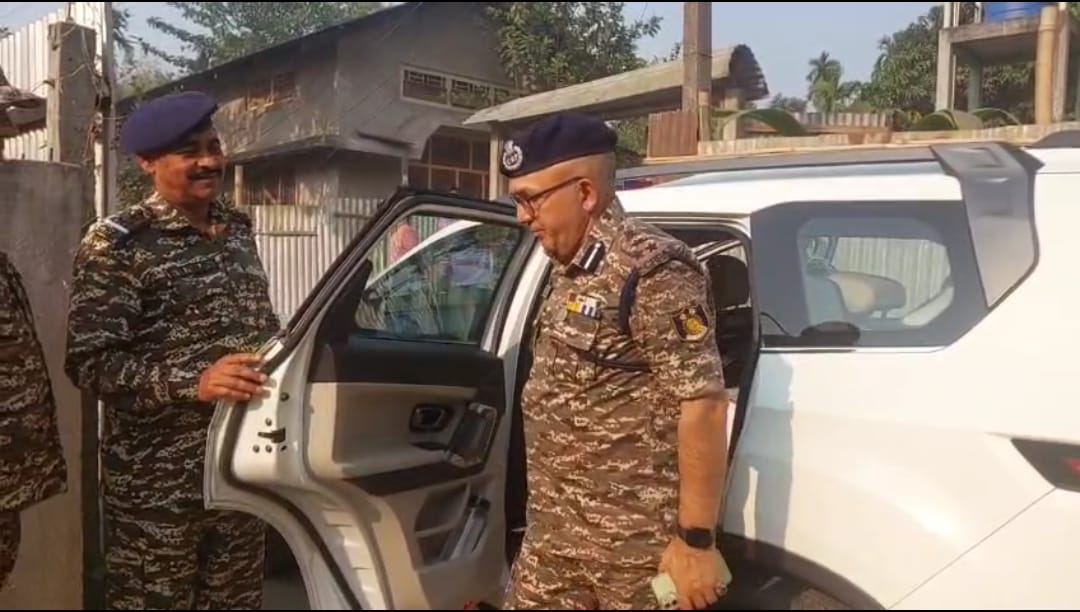
CRPF DIG Sunanda Kumar arriving at the house of Martyr Nasiruddin Sarkar

However, a team of CRPF officials recently visited Sarkar’s house in Banbariya village and wished his family Eid-ul-Fitr.

The CRPF team included CRPF’s Deputy Inspector General (DIG), Lower Assam range Sunanda Kumar, Area Commander of the CRPF’s 10th Battalion Deepak Kumar Singh, and others, who met the family members of Sarkar including his wife, son and daughter.

“Our colleague Nasiruddin Sarkar had attained martyrdom last year while working in Manipur. In CRPF we have a rule that we never leave the family of our soldiers alone. Every year, our senior officers visit such families in March and note down their problems and try to help them,” CRPF DIG Sunanda Kumar told this journalist.

“Similarly, in the case of Late Sarkar also we came here to take care of the family. Sarkar was the breadwinner of the family. So definitely there are issues faced by the family. We came here to talk to them and ensure that they never feel lonely particularly when the grand festival like Eid-Ul-Fitr is coming. We hope that the family of Nasiruddin will enjoy this Eid,” said Kumar.

source: http://www.awazthevoice.in / Awaz, The Voice / Home> Stories / by Karabi Sharma, Barpeta / March 28th, 2025

From the Land of ‘Gangs of Wasseypur’, Ekhlaq Gets Top Rank in GATE

Pathardih (Mohan Bazar, Dhanbad District) , JHARKHAND :

Ekhlaq Sarwer with his parents

Patna: 

On March 19, Ekhlaq Sarwer, a B.Tech. (Mining) student, received his Eid gift a little earlier this year. He secured an impressive All India Rank of 4 in Graduate Aptitude Test in Engineering (GATE) 2025.

GATE is widely regarded as the key to securing admission to postgraduate courses in India’s top engineering colleges and opens doors to jobs in Navratna Public Sector Undertakings (PSUs).

Ekhlaq’s score in GATE was 904 out of 1000, with a remarkable mark of 69 out of 100.

Hailing from Pathardih, the semi-urban town of Mohan Bazar (around 16 kilometers from Dhanbad), in Dhanbad district, Ekhlaq is presently pursuing his B.Tech. from BIT, Sindri (Jharkhand) in the Mining Engineering branch in 2021-25 batch. His hometown, which has gained notoriety for its association with violence, served as the backdrop for the Bollywood movie ‘Gangs of Wasseypur’ that highlighted the region’s troubled history.

Ekhlaq’s father, Eqbal Sarwer, works as an informal medical practitioner (RMP), and his mother, Khurshida Parween, is a homemaker.

Speaking to TwoCircles.net, Eqbal expressed immense joy and gratitude. Noting the timing of his son’s achievement during the holy month of Ramadan, he said, “I feel elated as a father when I recall my childhood, which lacked proper resources. My father passed away early, and we had to struggle. But I ensured that my sons received a proper education. Although it was beyond my means to afford an English-medium CBSE school, I made sure Ekhlaq was enrolled there, cutting down on other expenses to make it happen.”

He continued, “Ekhlaq has always been good at studies, and we encouraged him every step of the way. He has consistently ranked at the top since grade 7. He secured 97% marks in 10th grade and 95% in 12th grade board exams under the CBSE system.”

The Sarwer family celebrated their son’s success by distributing sweets, with plans for a grand celebration after the fasting month of Ramadan ends, marking a “double Eid”.

Ekhlaq’s father proudly said, “We are thrilled that a place once infamous for ‘Gangs of Wasseypur’ is now in the news for such achievements. The area is improving, and it fills me with pride.”

Ekhlaq Sarwer

BIT Sindri, where Ekhlaq is currently studying, is an engineering college under the Jharkhand government. Admission to the prestigious institution is based on the Joint Entrance Examination (JEE), which also opens doors to top institutions like the IITs.

Ekhlaq had scored around 90 percentiles in his first attempt at JEE Main, securing his place at BIT Sindri. Initially uncertain about his choice of Mining Engineering, he now expresses a deep fascination for the field.

Despite being busy with his academic projects, Ekhlaq shared his preparation strategy for GATE. He began preparing for the examination in September 2024, all while also preparing for his final B.Tech. exams.

“My parents were my inspiration for GATE. My professors at college were immensely helpful, and my friends always encouraged me. I used PYQs (Previous Years’ Questions) and relied on textbooks. I also took test series to keep myself on track,” he shared, expressing his hope to join a PSU of his choice when the opportunity arises.

Ekhlaq also emphasised the importance of having a structured routine. “I made a schedule for my preparation, designating specific hours for watching preparatory videos and solving test papers,” he explained.

He added that focus and time management are essential for anyone hoping to clear GATE. “One needs to be clear about what he/she wants to study. Time management is crucial, as is practice,” he advises. “Shedding nervousness is also important.”

The BIT Sindri community celebrated Ekhlaq’s success. Dr. Pankaj Pal, the director of the institution, and Dr. PK Singh, head of the Mining Engineering Department, along with other faculty members, congratulated Ekhlaq and the other students for their academic achievements. “Ekhlaq has made the institution proud with such a stellar rank,” they said, underscoring the significance of his success.

Ekhlaq Sarwer’s journey from a troubled region to an outstanding academic achievement is not only reflective of his dedication but also to the unwavering support of his family and the transformative power of education.

source: http://www.twocircles.net / TwoCircles.net / Home> India News> India Politics> Indian Muslim> Lead Story> TCN Positive / by Sami Ahmad, TwoCircles.net / March 25th, 2025

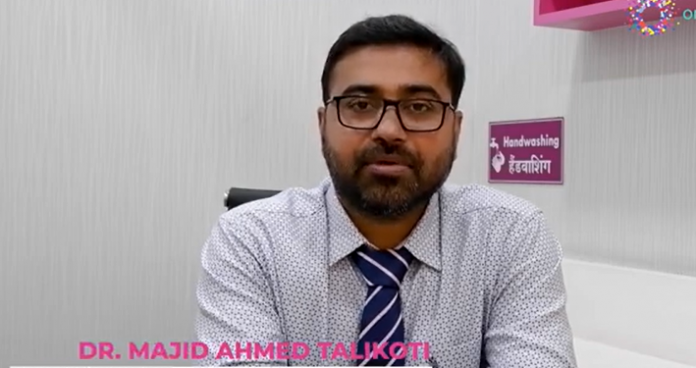
Renowned cancer surgeon Dr Majid Ahmed Talikoti made Honorary Health Commissioner by India-GCC Trade Council

Shakhapur Village, KARNATAKA / NEW DELHI / Bokharo, JHARKHAND:

Dr. Majid Ahmed Talikoti

The India GCC (Gulf Corporation Council) Trade Council has announced renowned oncologist surgeon Dr Majid Ahmed as its Honorary Health commissioner.

Dr. Talikoti was recently recognised as one of the 100 most influential Indian Muslim figures by Muslim Mirror. He is a chairman of a ‘Medicant Hospital’ in Jharkhand’s Bokaro. The hospital is known and praised for treating patients at very affordable fees.

In an event in Delhi, Dr. Talikoti was presented with the appointment letter of honorary health commissioner. The India-GCC Trade Council presented the offer recognising his contributions in the field of oncology and his health initiatives between India and Gulf countries.

Accepting the letter, doctor talikoti said the role offered to me is a significant step and I am eager to contribute to health initiatives that bridge India and Gulf countries together. Let’s work to build strong diplomatic ties and healthy Nations across borders.

Earlier, Dr Talikoti had gained recognition in Dubai and was awarded with Healthcare “Excellence Asian Arab Award 2025.”