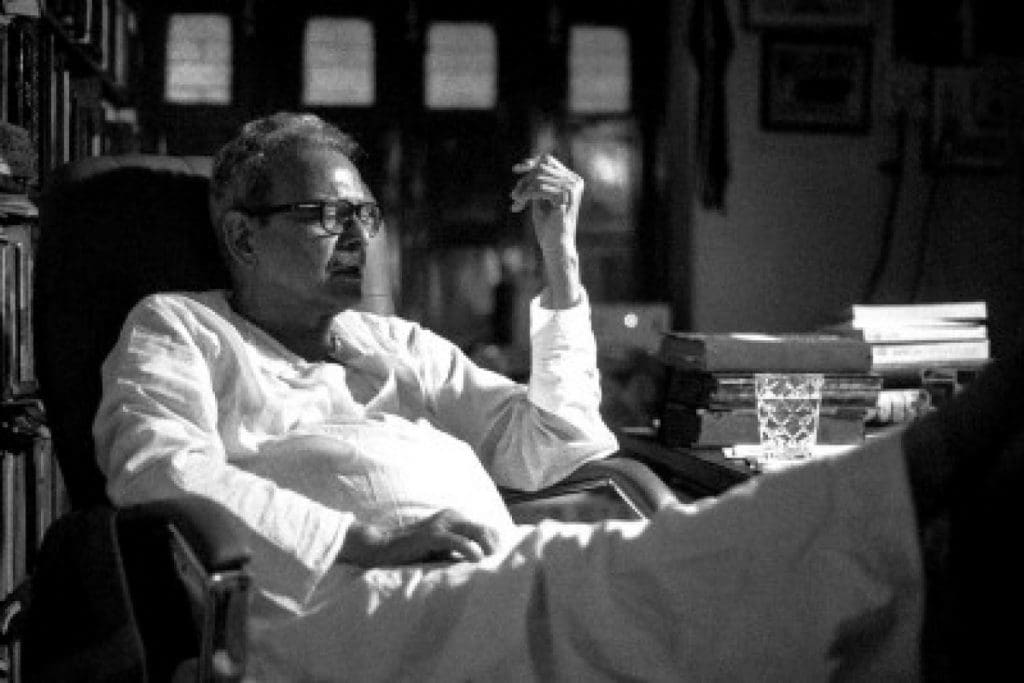
“It’s not just the world of Urdu, I feel I’ve been orphaned again,” historian Rana Safvi sent her condolences.
It's not just the world of Urdu, I feel I've been orphaned again.💔 Go well Sir. Allah Jannat mein jagah ata farmaaye Inna Lillahi wa inna ilayhi raji'un pic.twitter.com/zhcGb6nqWO
Writer and historian William Dalrymple took to Twitter to mourn the demise of Faruqi, calling him “one of the last great Padshahs of the Urdu literary world.”
Sanjiv Saraf, the founder of Urdu festival Jashn-e-Rekhta, also condoled the death of “the century’s most iconic figure in the realm of Urdu literature”.
“His demise has left us bereaved as an entire generation of literature lovers mourn this loss. I extend heartfelt condolences to his family and loved ones,” Saraf said.
“Shamsur Rehman Farooqui’s demise is a big loss to the world of scholarship, and adab. His work built many bridges across India’s diverse traditions. He was immensely valuable to us in so many ways and will be sorely missed, ” said CPIM general secretary Sitaram Yechury.
Shamsur Rehman Farooqui’s demise is a big loss to the world of scholarship, and adab. His work built many bridges across India’s diverse traditions. He was immensely valuable to us in so many ways and will be sorely missed. Heartfelt condolences. pic.twitter.com/CKy0Dan0Lq
“Am just gutted. Shamsur Rehman Faaroqui saheb has passed away. Innalillahi wa inna ilayhi rajeeon. May allah grant him jannat..aameen,” wrote journalist Rana Ayyub.
“His modernist style had irked the traditionalists and contemporaries in the sixties, seventies. But he wasn’t just a critic and theorist, whenever he took to fiction, he created magic. And, his Allahabad home had been the nucleus of Urdu literary world, for over half-a-century,” wrote journalist Shamsur Rehman Alavi in a condolence note.
His modernist style had irked the traditionalists and contemporaries in the sixties, seventies. But he wasn't just a critic & theorist, whenever he took to fiction, he created magic. And, his Allahabad home had been the nucleus of Urdu literary world, for over half-a-century.
A profile of his on Caravan Magazine alluded to his immense and immeasurable contribution to Urdu literature.
Shemsur Rehman began writing in 1960. Initially he worked for the Indian postal service (1960–1968), and then as a chief postmaster-general and member of the Postal Services Board, New Delhi until 1994. He was also editor of his literary magazine Shabkhoon and part-time professor at the South Asia Regional Studies Center at the University of Pennsylvania.
An expert in classical prosody and ‘ilm-e bayan (the science of poetic discourse), he has contributed to modern literary discourse with a profundity rarely seen in contemporary Urdu critics. His most recent books, The Mirror of Beauty (translated into English from the Urdu Kai Chaand The Sar-e-Aasmaan in 2006), and The Sun That Rose From The Earth (Penguin India, 2014), have been highly critically acclaimed. He is the recipient of numerous honors and awards. Most recently he was awarded the prestigious Saraswati Samman for his work She`r-e Shor-Angez, a four-volume study of the eighteenth-century poet Mir Taqi Mir.
He was awarded the Saraswati Samman, an Indian literary award, in 1996. The Government of India awarded him the civilian honour of Padma Shri in 2009.
source: http://www.maktoobmedia.com / Maktoob Media / Home> India / by Maktoob Staff / September 25th, 2020
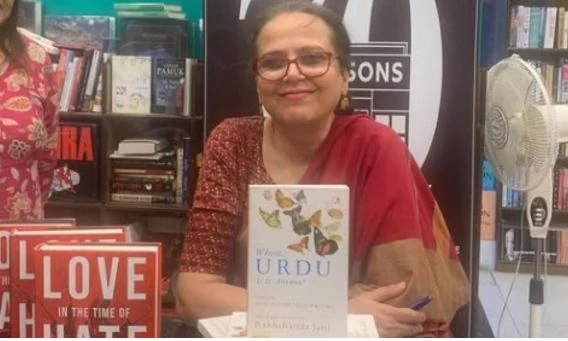
Literary historian Dr Rakhshanda Jalil has once again reminded Indians that Urdu is deeply rooted in the country’s soil and belongs to all communities, not only Muslims. In a detailed interview with the Indian Express about her new anthology Whose Urdu Is It Anyway?, Jalil traced the rise, decline, and contested identity of Urdu in modern India.
She explained that Urdu developed through centuries of cultural exchange, drawing from Persian, Arabic, Turkic, and local dialects, and eventually became the lingua franca of North India. From courtrooms to markets, it was a language spoken across caste and creed. Yet, political movements in the early twentieth century began to link Hindi with Hindu nationalism, sidelining Urdu and associating it exclusively with Muslims.
Jalil underlined how Partition worsened this perception. With Pakistan adopting Urdu as its national language in 1947, Urdu was treated as “enemy property” in India. This shift, she argued, accelerated the decline of Urdu and restricted its public identity. Today, while the government occasionally honours Urdu writers, stereotypes and misinformation continue to reduce Urdu to a religious marker rather than a shared cultural heritage.
Her anthology features sixteen short stories by non-Muslim Urdu writers such as Krishan Chander, Rajinder Singh Bedi, and Gulzar. The collection challenges the misconception that Urdu belongs only to Muslims. Jalil believes that Urdu is “as Indian as anybody or anything can be regarded as Indian” and insists that the language is willing to belong to anyone who values it.
Despite fears about its future, she remains optimistic. Urdu continues to thrive in poetry, Bollywood lyrics, and growing digital platforms. While fewer people read its script, its cultural resonance persists. Echoing Manto, Jalil recalled his words that no human effort can kill a language. Urdu, she said, will remain part of India’s consciousness for years to come.
Dr Rakhshanda Jalil is a noted literary historian, translator, and cultural commentator with over 25 books to her credit. She is widely recognized for her work on Urdu literature and the Progressive Writers’ Movement.
source: http://www.radiancenews.com / Radiance News / Home> Arts & Culture> Focus> Report / by Radiance News Bureau / August 29th, 2025
BanuMushtaq was accompanied by Chief Minister Siddaramaiah, several ministers in the state cabinet, among others.
Banu Mushtaq inaugurated the Mysuru Dasara festival.
Mysuru :
The famous Mysuru Dasara festival commenced in the city and palaces on Monday with religious and traditional fervour, with International Booker Prize-winning writer Banu Mushtaq inaugurating the festivities.
Banu Mushtaq inaugurated the festivities during the auspicious “Vrushchika Lagna” by showering flowers on the idol of goddess Chamundeshwari, the presiding deity of Mysuru and its royals, amid chanting of Vedic hymns by priests, at the premises of Chamundeshwari temple atop the Chamundi Hills here.
Celebrated as ‘Nada Habba’ (state festival), the 11-day Dasara or ‘Sharan Navaratri’ festivities are expected to be a grand affair this year, showcasing Karnataka’s rich culture and traditions, coupled with reminiscence of royal pomp and glory.
In the inaugural event, Banu Mushtaq was accompanied by Chief Minister Siddaramaiah, several ministers in the state cabinet, among others.
Earlier, Banu Mushtaq, along with Chief Minister and other dignitaries, visited the Chamundeshwari temple and offered prayers to the goddess, referred to as the “Naada Devate” (state deity), ahead of the inaugural.
(This story has not been edited by NDTV staff and is auto-generated from a syndicated feed.)
source: http://www.ndtv.com / NDTV / Home> News> India News / by Press Trust of India / September 22nd, 2025
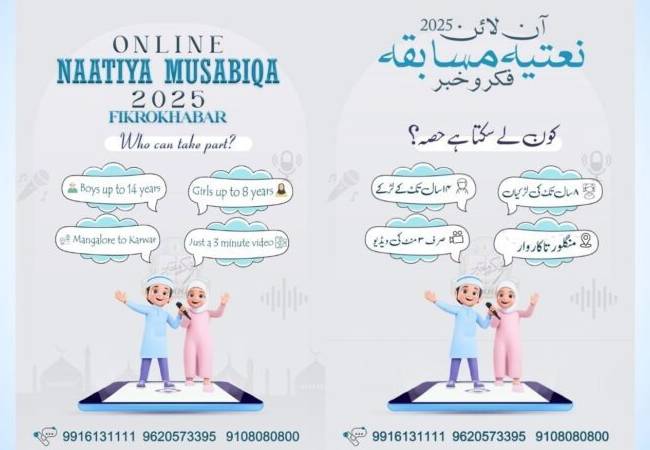
Fikrokhabar, a news portal based in Bhatkal, has announced its Online Naat Competition 2025, inviting children from coastal Karnataka to take part in the programme during the holy month of Rabi al-Awwal.
The initiative is aimed at celebrating the birth anniversary of Prophet Muhammad by encouraging children to express their devotion through Naat recitation.
According to the organisers, the contest has been designed to nurture both the spiritual and creative growth of children by giving them a platform to present Naats in a digital format. The online mode ensures easy access and wider participation across the region.
The competition is open to boys up to the age of 13 years and girls up to the age of 8 years.
Participants are required to record a video of their recital, which should not exceed three minutes, and submit it through the Google Form link shared by the organisers.
The event has been divided into categories based on age and gender to ensure fair participation.
The organisers said that the programme is not merely a contest but also an opportunity for children to learn more about the life of the Prophet, strengthen their faith, and showcase their talent before a larger audience. It also encourages memorisation and thoughtful reflection on poetic tributes dedicated to the Prophet, fostering deeper appreciation of Islamic teachings.
Parents and guardians interested in registering their children have been asked to get in touch with the coordinators for more details regarding deadlines, judging process and prizes.
Further information can be obtained by contacting +91 9916131111, +91 9620573395 or +91 9108080800.
source: http://www.english.varthabharati.in / Vartha Bharati / Home> Karavali / by Vartha Bharati / September 05th, 2025
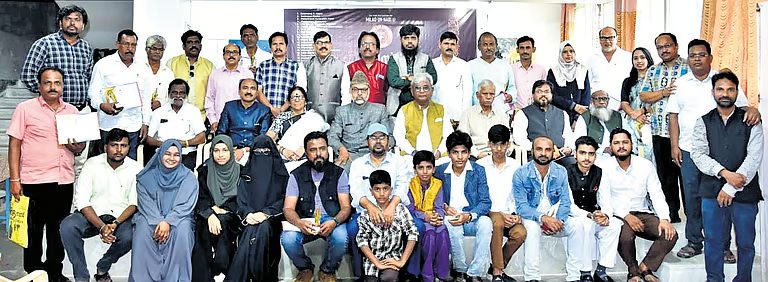
Around 40 artists from all faiths are on a campaign to preserve the Islamic art, and build communal harmony
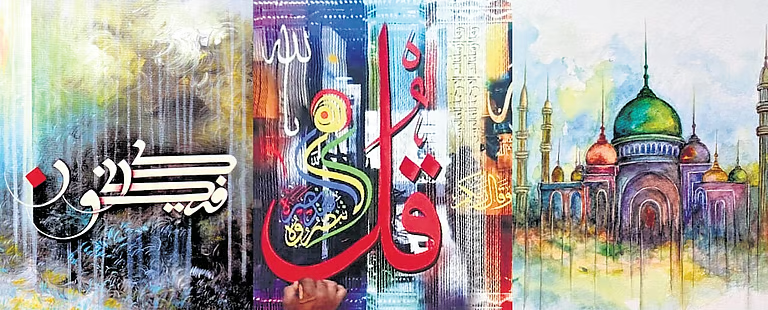
Calligraphy paintings created by various artists
Vijayapura :
When veteran artist Dr Subbayya Neela was invited to join a campaign to spread communal harmony through the ancient but fading art of Islamic calligraphy, he could not hide his delight. For him, the idea was not merely about preserving an art form, but about exploring the potential of art to transcend barriers of faith and culture.
“I have always believed that art knows no religion or boundaries. Art has the power to touch the hearts of people across communities. That is why, when I was approached to contribute to this unique initiative, I immediately agreed. I prepared a few pieces of Arabic calligraphy that were later exhibited in different places as part of the campaign,” recalled Dr Neela.
Among his works was a calligraphic representation of the Arabic phrase ‘Allahu Akbar’, which means ‘God is Great’. “I was given the liberty to interpret the phrase through my own artistic imagination, while maintaining the sanctity of the verse. It was both a responsibility and a joy,” he said.
Dr Neela is among 40 artists from across Karnataka, both Hindus and Muslims, who have joined this movement that began in Kalaburagi in 2020. The campaign was conceived not only to preserve Islamic calligraphy, which has been steadily losing ground, but also to foster unity at a time when society is fractured along communal lines.
The group of artists who joined the campaign
The Initiative
It was the brainchild of noted artist Mohammed Ayazuddin Patel, a veteran painter from Kalaburagi and recipient of the Lalit Kala Akademi Award. “When hatred and intolerance seemed to be gaining ground in society, we felt the need to bring people together. We thought of reviving Arabic and Islamic calligraphy because it embodies both artistic beauty and deep spiritual messages. At the same time, it offered us a platform to involve artists of all faiths to work together for harmony,” he explained.
Ayazuddin was soon joined by another respected artist, Rehman Patel, and together they expanded the circle of participants. What started with around 15 artists, junior and senior, has now grown into a diverse collective of 40, half of whom are Hindus. These artists work closely with their Muslim counterparts to ensure accuracy in Arabic writing, while retaining artistic freedom.
The campaign, in many ways, draws inspiration from the history of the Deccan itself. Rehman Patel points out that after the decline of the Chalukyan dynasty, many local artisans and craftsmen found themselves unemployed. With the arrival of Muslim rulers in the region, particularly in erstwhile Bijapur and Gulbarga, these artisans were drawn into projects that fused Persian and Turkish influences with local Indian traditions.
“The architecture of that time was a collaboration. While designs came from foreign artists, the actual construction was executed by local Hindu craftsmen. The result was Indo-Persian art, a blend of Indian and Islamic architecture that still stands testament to cultural harmony,” he said. Arabic and Islamic calligraphy flourished during this period, adorning monuments and manuscripts, but over the centuries, as tastes and practices changed, the art form began to fade. “Our campaign is an attempt to not only revive this vanishing tradition but also to remind people of the harmony that once defined this land,” he added.
Preserving sacredness
A key aspect is the selection of verses from the Quran. The organizers have been deliberate in choosing verses that emphasize unity, peace and brotherhood, values that are not confined to one faith but resonate universally. “The artists are given complete freedom to use their imagination while ensuring that calligraphy remains the focal point. We guide them on the technicalities of Arabic script, but artistic interpretation is entirely theirs,” explained Ayazuddin. “This way, we safeguard the sacredness of the verses while allowing creativity to flourish.”
For many Hindu artists like Basavaraj Totad and Rajani Talwar who are involved in it, it has been a learning experience. Working with Arabic characters is not easy, and ensuring accuracy requires constant collaboration. Yet, this very collaboration has built bonds of trust and friendship. “It is heartening to see artists from different backgrounds sit together, discuss and create something so meaningful,” said Ashok Hiremath, an artist from Bidar.
To showcase their work and reach a wider audience, the collective has organized exhibitions, usually coinciding with Id-Milad, the birth anniversary of Prophet Mohammed. So far, five exhibitions have been held, each drawing large crowds from different faiths. “The response has been overwhelming,” Ayazuddin said. “We have seen people from all communities attend and appreciate the art. Many told us that such initiatives give them hope that religious harmony is still alive in our society, and voices of hate and division are not as strong as they seem.”
The exhibitions are not limited to calligraphy, but also feature paintings and photographs of ancient monuments from the Deccan region, tying the campaign to the cultural and architectural heritage of Karnataka. “This serves two purposes. It connects people with their shared history, and encourages them to protect and preserve monuments that are our national heritage,” said Rehman Patel.
Messages beyond borders
For the participating artists, the project is as much about personal conviction as it is about art. Dr Neela believes the messages of peace from saints and prophets have universal appeal. “Prophet Mohammed spread the message of peace, which can be accepted by anyone, anywhere in the world,” he said.
“If art can be used as a language of unity, it should not remain confined to one place. Art has always been a reflection of society. If society is fractured, art can heal and unite. That is what we are trying to do through this campaign,” Ayazuddin said.
source: http://www.newindianexpress.com / The New Indian Express / Home> Good News / by Firoz Rozindar / September 14th, 2025
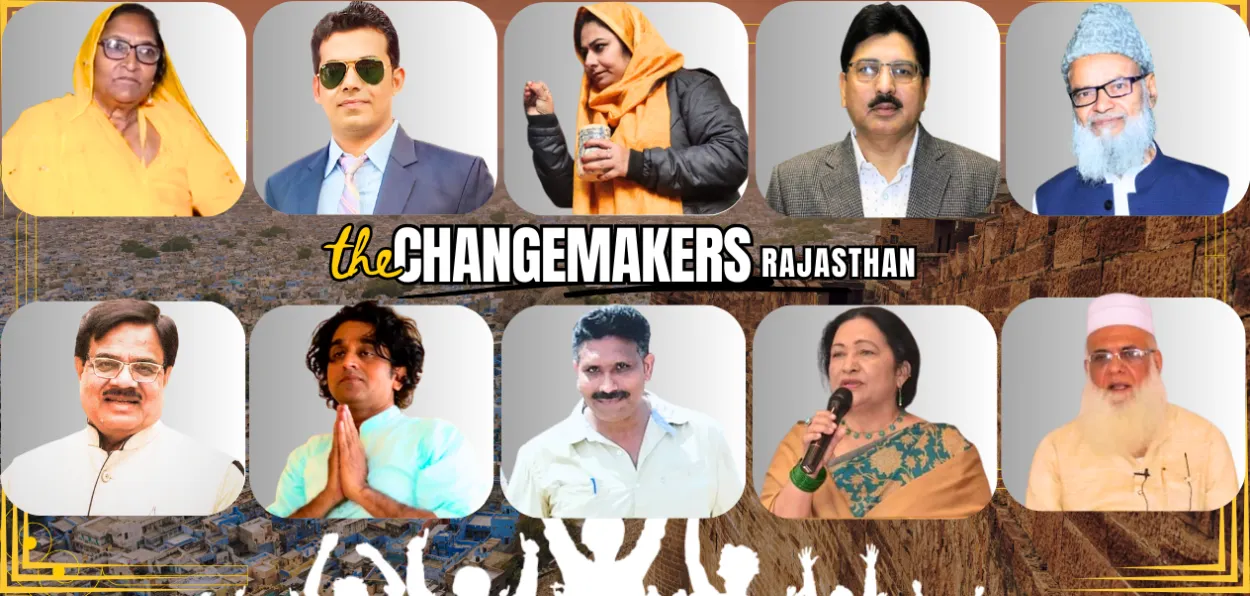
Rajasthan is known for its sandy deserts, historical monuments, especially forts, vibrant culture, and above all, its brave people, some of whom are inspiring others and changing society for the better. Under our series ‘The Changemakers’, Awaz-The Voice, brings you ten such personalities of Rajasthan, who have done extraordinary and pioneering work. Batool Begum: A living legacy of musical heritage.
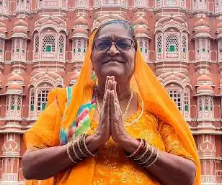
Batool Begum: Woman who took traditional music to the world
One name that resonates in the streets of Jaipur is that of Batool Begum. Born in Kerap village of Nagaur district, Rajasthan, this extraordinary singer is a living legacy of Indian classical music. Batool developed a deep passion for music in her childhood. Despite facing social and economic challenges, she continued her singing.
Her melodious voice and her passion for music not only earned her recognition as an artist but also proved that talent can break all barriers. Her art is a source of inspiration for her community and the entire Rajasthan.
Abdul Salam Johar: A lac bangle maker who received global recognition
The vibrant spirit of India’s Pink City, Jaipur, doesn’t only emanate from its colours and people but also from the traditional handicrafts that are made and sold here. Bangles worth lakhs are made in these streets, which are a symbol of the traditional beauty and hard work of thousands of its people.
Abdul Salam Johar is one such artist who not only preserved the traditional art of the State but also brought about a social change in a major way. Coming from the Manihar community, Johar was born in a family with little means, but his dreams were extraordinary. Seeing the struggles of his grandfather Hafiz Mohammad Ismail and parents Haji Abdul Aziz and Hajjan Qamar Jahan, he made hard work, dedication, and social service the main mantra of his life.
He began his journey from his ancestral shop ‘Indian Kangan and Colour Store’ located in Tripolia Bazaar of Jaipur, and today his wares are being sold under brands ‘Johar Design’, ‘Johar King’ and ‘Indian Crafts’ in the global markets. He is not only a successful entrepreneur, but also a social reformer who took his community and traditional art to new heights.
Abdul Latif ‘Arco’: A confluence of business and social service
Abdul Latif, who lives in Chini ki Burj in the capital Jaipur, and is known as ‘Arko’ in Rajasthan, is one such special personality. Born in a small village of Chomu in 1946, Abdul Latif’s father, Rahmatullah, and mother, Hafijan, taught him hard work, honesty, and the passion to help people, which became the basis of his life.
His company, Abdul Razzaq & Company (ARCO), is today a big name for social service along with electric motors, fans, and coolers. Apart from this, his hotel, ARCO Palace, is a symbol of his hard work and foresight. Abdul Latif’s story is not just of a businessman, but of a person who chose to work as a changemaker by combining his business and social responsibilities.
Qazi Nishat Hussain: A new voice breaking stereotypes
The voice rising from a small office located in the narrow streets of Johri Bazaar in Jaipur, the capital of Rajasthan, is today inspiring society to change. This voice is of Nishat Hussain, Rajasthan’s first Muslim female Qazi, social worker, and a strong advocate of the rights of Muslim women.
Her life journey is an example of courage, struggle, and change, which not only made thousands of women aware but also gave them a new direction to live.
Born in Sitabari Mohalla of Karauli district, Nishat’s childhood was spent in an environment of communal harmony. His family was the only Muslim family in the neighbourhood. There were three temples in front of her house. She says, “We did not know who was a Hindu and who was a Muslim.” In a backward area like Karauli, where girls’ education was not given importance, Nishat created history. She became the first Muslim girl in the district to pass the tenth standard, that too as the only Muslim student among 1200 girls. Today, she has become a torchbearer of the rights of Muslim women.
Captain Mirza Mohtasim Baig and Ruby Khan: An Inspiring couple in social service
An inspirational couple, Captain Mirza Mohtasim Baig and his wife Ruby Khan, hail from Jaipur. Captain Mirza is the first Muslim pilot of Rajasthan and has been operating national and international flights for the last 25 years. At the same time, his wife Ruby is an active social worker and politician.
Both believe that if one wants to bring change in society, then he has to take the initiative. Together, they had organised medical camps, documentation camps, free ration distribution, and offered financial help to families in the marriage of their daughters. The couple is an epitome of change brought about by spirited people.
Dr. Arif Khan: The village scientist who created history
Thirty-four years ago, a child was born in the small village of Masani in the Hanumangarh district of Rajasthan. Today, he is Dr. Arif Khan, a scientist who has brought laurels to India. In his village, most of the people toiled in the fields. His father, Advocate Farid Khan, wanted his son to become a doctor. His mother and grandfather also had the same dream. But there were few schools in Masani, and the path to making dreams come true was difficult. Still, Arif had a passion to do something extraordinary in his life.
With his hard work and dedication, he became a bio-scientist and brought glory to his family and village. His research on milk and food products brought a wave of change. His story proves that if the intentions are strong, then even a boy from a small village can become a scientist and make the country feel proud.
Mainuna Nargis: First Shia Muslim woman in art conservation
In a vast country like India, art conservation is important since it not only preserves history but also connects future generations to our heritage. Mainuna Nargis, the country’s first and so far the only Shia Muslim woman art conservator, does the same work. Born in Bahjoi, a small town in Moradabad district of Uttar Pradesh, Maimuna’s childhood was ordinary, but her dreams were extraordinary. Rajasthan has now become Mainuna’s second home.
Her father, a Policeman in UP, always encouraged her. After studying Fine Arts from Aligarh Muslim University (AMU), she did a diploma in Museology, which became the most decisive turning point in her life. Maimuna’s story is not just of professional success, but a story of passion, struggle, and self-confidence, which revived the broken pieces of history.
Yoga Guru Naeem Khan: Global journey from music to yoga
The life journey of Yoga Guru Naeem Khan, who rose from the streets of Jodhpur, the cultural capital of Rajasthan, to spread his spiritual aura on international platforms, is a unique example. He rose from a common man to a global yoga guru and presented yoga as a universal energy beyond religion, culture, and boundaries.
Naeem Khan was born in a family where music was in every breath. His grandfather, Ustad Umardin Khan, was the court musician of the Jodhpur royal family, while his maternal uncle was Padma Bhushan-awarded Sarod player Ustad Sultan Khan. However, with changing times, that traditional flame of music started to fade. Naeem and his brother got involved in business, but yoga gave Naeem a new direction, and he took it to a global platform.
Syed Anwar Shah: A man who introduced girls to education
Thirty years ago, a dream was born in a small room in Jaipur, which has today become the light of education for thousands of girls. This is the story of Syed Anwar Shah, whom people fondly call Master Anwar Shah. He not only dreamt of his daughter’s education, but also made it a means of progress for the daughters of society.
Today his educational institution, Al-Jamia-tul Alia, is spreading the message of knowledge and Islamic ethics not only in Jaipur, but also in the whole of India and abroad. After completing his M.A. in Public Administration from Rajasthan University in 1980, he dedicated his entire life to the welfare of society and the service of education. In 1995, when his daughter Alia was born, he decided to set up an institution for the education of girls, which would impart both worldly and divine teachings.
Today, his effort has become a boon for thousands of families.
Padma Shri Shakir Ali: Patron of Miniature Painting
It’s no exaggeration to say that Jaipur is the art capital of Rajasthan. And in the field of miniature painting, the name of Syed Shakir Ali comes to the fore spontaneously. This genre of painting is an identity of the state of Rajasthan.
Padma Shri awardee Syed Shakir Ali is not only a great practitioner of this art, but he is also the guardian of that heritage, which is an integral part of the cultural identity of Rajasthan. Born in 1956 in Jalesar village of Uttar Pradesh, Shakir Ali’s family soon settled in Jaipur, where his art got a new direction.
Today, he has given recognition to this traditional art of Rajasthan not only in India but also on international platforms.
source: http://www.awazthevoice.in / Awaz, The Voice / Home> The Changemakers / by Aasha Khosa, ATV / September 14th, 2025
Senior writer, multilingual scholar and progressive thinker Prof. M. Karimuddin (95) passed away at his home in Ganjam, Srirangapatna on Saturday morning due to age-related illness.
Karimuddin, who was unmarried, had served as a Kannada professor and later as a principal in government degree colleges in Mysore, Mandya, Madikeri and elsewhere before retiring.
A student of Kuvempu, he had studied Kannada, English, Urdu, Persian, Arabic and Sanskrit.
He had written many works including Orphan Muslims, Sanchita Chintana, and Baalu Baddu. Many of his thought-provoking speeches on All India Radio were popular. ‘Prof. Karimuddin’s Life and Literature’ was the text for students of class 9 who were studying Kannada as a second language in Urdu medium.
A good orator, Karimuddin was actively involved in farmer, Dalit, pro-Kannada, progressive, and anti-idiotic movements even in his later years. His ancestors were relatives of Tipu Sultan.
Karimuddin, who retired as a Kannada professor at Maharaja’s College, Mysore, was well-versed in Kannada grammar, Old Kannada and New Kannada literature.
He had also done a lot of research on Tipu Sultan. It is said that he had written many collected works on the history of Tipu Sultan.
His friend Prof. Nanjaraja Urs expressed his condolences, saying that his death is a huge loss to the Kannada nation.
Chief Minister’s condolences
“I am saddened to hear the news of the death of senior writer and popular professor Prof. M. Karimuddin. A simple gentleman, Prof. Karimuddin used to help educate the children of the poor. I also share in the grief of his family. I pray that God may grant peace to his soul.”
– Chief Minister Siddaramaiah
ಹಿರಿಯ ಸಾಹಿತಿ ಮತ್ತು ಜನಪ್ರಿಯ ಪ್ರಾಧ್ಯಾಪಕರಾಗಿದ್ದ ಪ್ರೊ.ಎಂ.ಕರಿಮುದ್ದೀನ್ ಅವರ ಸಾವಿನ ಸುದ್ದಿ ತಿಳಿದು ದು:ಖವಾಯಿತು.
ಸರಳ ಸಜ್ಜನರಾಗಿದ್ದ ಪ್ರೊ. ಕರಿಮುದ್ದೀನ್ ಅವರು ಬಡವರ ಮಕ್ಕಳ ಶಿಕ್ಷಣಕ್ಕೆ ನೆರವಾಗುತ್ತಿದ್ದರು. ಅವರ ಕುಟುಂಬ ವರ್ಗದ ದು:ಖದಲ್ಲಿ ನಾನೂ ಭಾಗಿಯಾಗಿದ್ದೇನೆ.
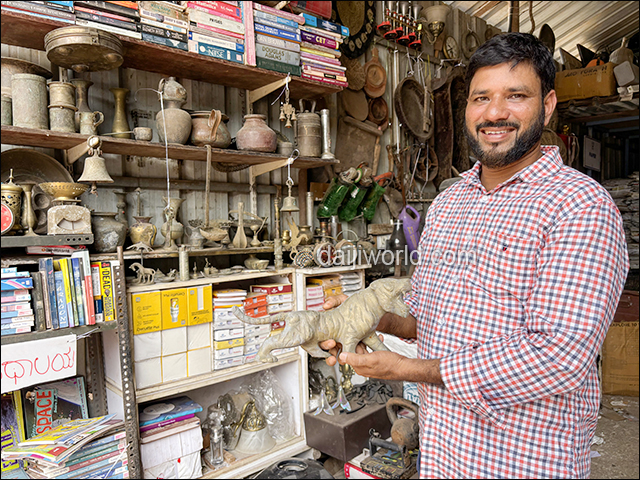
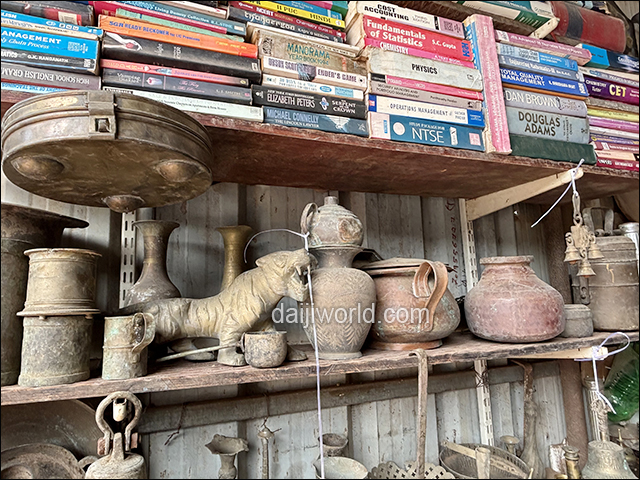
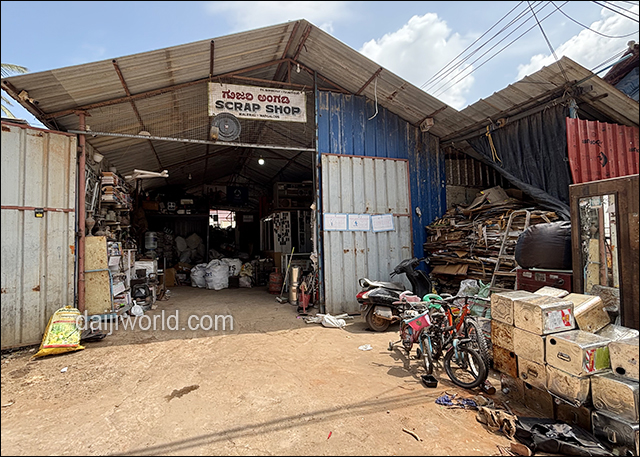
In the heart of Malemar stands a unique museum that has become a treasure trove of memories for the community. What began as a small scrap business two decades ago, and later transformed into a distinctive museum eight years ago, is today capturing the attention of visitors with its fascinating collection of vintage artefacts — all thanks to the dedication of Ibrahim Khaleel.
Originally hailing from Kulur, Khaleel developed the idea of converting his scrap shop into a museum when he noticed antique and traditional pieces entering scrap shops.
Determined to preserve them for future generations, he began collecting items not only from his own shop but also from households and other scrap dealers. Over the years, his efforts have turned discarded objects into priceless memorabilia — truly creating ‘wealth out of waste’.
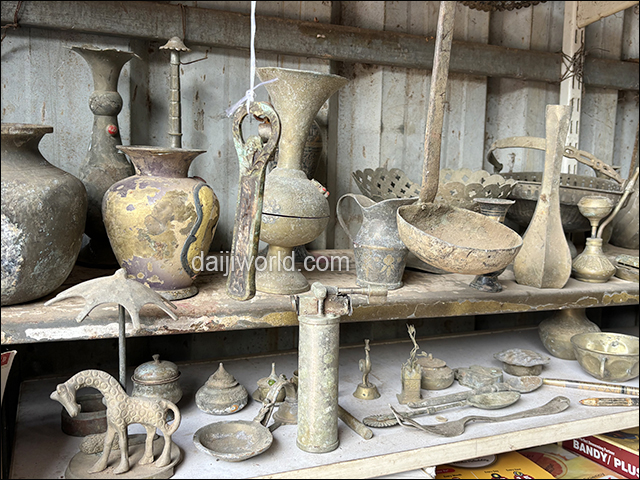
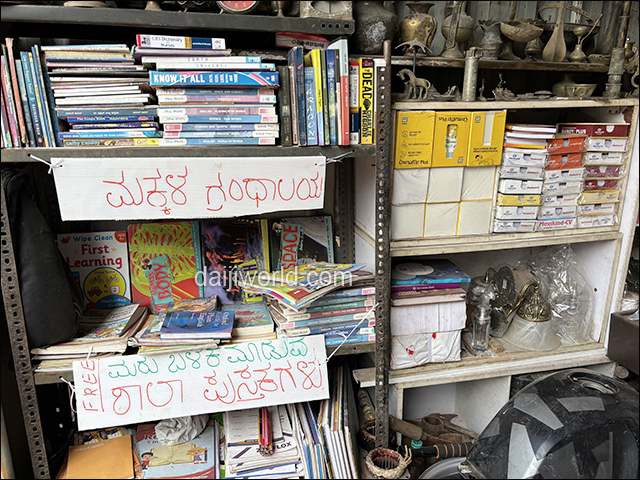
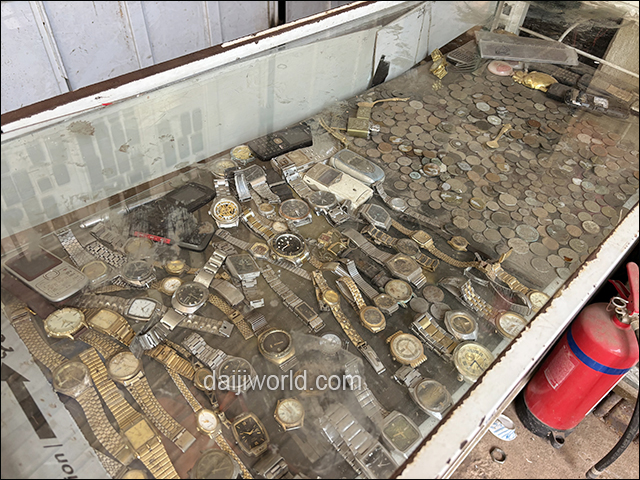
Khaleel’s museum now showcases a wide array of antiques, including coins, watches, tape recorders, gramophones, vintage telephones, lanterns, and traditional household items. He has also created a small library within the museum, where children and students can access books free of cost, making his initiative both nostalgic and educational.
His work has received valuable support from organisations such as Plastic for Change, which helped him organise the scrap shop into different sections. Khaleel has also invested in machines to shred waste paper, ensuring sensitive documents are not misused, and to separate cable wires from copper for effective recycling.
Looking ahead, Khaleel hopes to create a separate, larger space for his museum so that more people can visit, relive memories, and appreciate the craftsmanship and design of a bygone era.
Khaleel’s scrap museum is not just a collection of old objects; it is a space where history lives on, nostalgia is rekindled, and generosity flourishes. For anyone visiting Malemar, it is undoubtedly a must-see destination.
Scrap Shop Turns Museum in Mangalore | Creativity of Ibrahim Khaleel / source: youtube.com
source: http://www.daijiworld.com / Daijiworld / Home> Top Stories / by Daijiworld Media Network – Mangaluru / pics: Dayanand Kukkaje / September 11th, 2025
Apart from the need for education, it underlines the importance of representation in legislative bodies and jobs
Syed Ahmed Khan biopic | Photo Credit: SPECIAL ARRANGEMENT
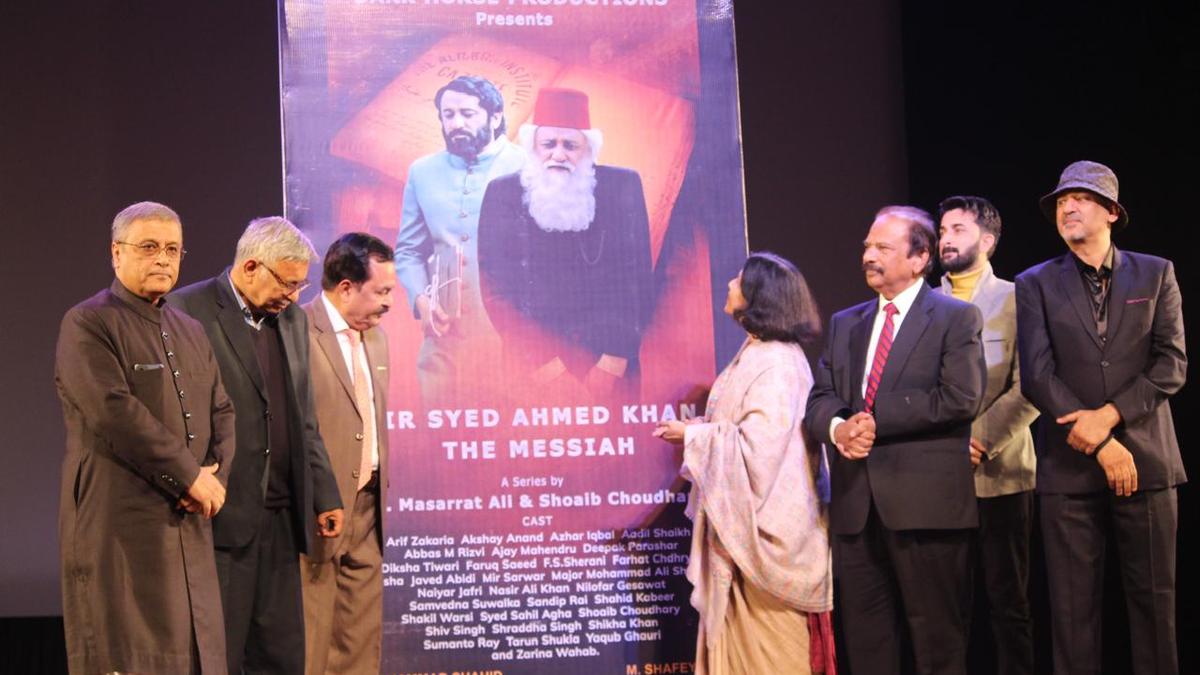
He is one of the architects of modern India or a proponent of the two-nation theory. However, moving away from easy binaries, the first biopic of Sir Syed Ahmed Khan attempts to find answers to the contested legacy of the founder of the Muhammedan Anglo-Oriental College that took the shape of Aligarh Muslim University (AMU). Long in the works, a two-hour cut of the OTT series, The Messiah premiered at the iconic Kennedy Auditorium in AMU on Monday, before the series streamed on Apple TV.
Coming at a time when the minority status of the Central University is being hotly debated in courts and society, the series details how Sir Syed confronted a section of the clergy and conservative elements within the Muslim community by creating a modern centre of learning to build bridges between the Muslims and the British government after the revolt of 1857, when the colonial power held the community largely responsible for the rebellion. “He held the ignorance as the primary reason behind the political decay of Muslims and thus pushed for modern education,” says Shoaib Hussain Chaudhary, who not only directed the series but also played the title role. “The role fell into my lap after big names declined to take up the challenge, perhaps because of the stigma attached to him.”
A known name in the television circuit, Chaudhary sees Sir Syed as an advocate of Hindu-Muslim unity, who was wrongly associated with the two-nation theory. “The theory came into being long after his demise in 1898. What he asked for was Muslim representation in legislative bodies and it remains relevant considering the political status of the community today.”
As someone who believed in answering a book with a book, Sir Syed responded to William Muir’s controversial commentary on Prophet Muhammad with a rational interpretation of Islamic tradition in Khutbat-e-Ahmadiya.
An adaptation of Hayat-e-Javed, Khwaja Altaf Hussain Hali’s biographical account of Sir Syed’s life, the series puts him in the league of reformists like Raja Ram Mohan Roy and Ishwar Chand Vidyasagar and argues that he was not a communal figure but a communitarian who was conscious of the fact that Hindus of Bengal were at least 50 years ahead of Muslims in taking up modern education.
Interestingly, the spark came from Mirza Ghalib. When Sir Syed approached the poet to write the preface of his translation of Ain-e-Akbari, he advised him to concentrate on the contemporary issues of the community and said there was no point in celebrating Akbar’s rule when the constitution of the world was being written in Calcutta.
‘Controversial ideas’
The series also critiques Sir Syed’s point of view on girls’ education and backward Muslims and debates whether he made a mistake by not joining hands with the Indian National Congress. It also explores his tumultuous relationship with his son Syed Mohammad, the first Muslim judge of a High Court during the British Raj, whose proclivity towards alcohol created problems in his personal and professional life. “Sir Syed’s character appears dichotomic but if you see him as a product of his times, things fall in place,” says screenwriter Mutyim Kamalee. “While Islam abhors slavery, he opted for pragmatism as after the revolt of 1857, the community was not in a position to take on the colonial power. Mahatma Gandhi also didn’t take the path of armed rebellion.” Kamalee says Sir Syed didn’t join the Congress but towards the end of his life he showed a change in his point of view and perhaps would have joined the Congress had he lived longer.”
Describing the series as an authentic portrayal of Sir Syed’s life and works, Prof. Shafey Kidwai, an authority on Sir Syed says, “Sir Syed views on women’s education and backward Muslims are widely misunderstood. The film tries to put the record straight in a convincing manner.”
Made on a tight budget, the series was shot on sets after AMU declined permission. “Filmmakers in the past didn’t live up to their promises, so the previous administration was circumspect about our intentions but I am glad now the university has embraced the film,” says Chaudhary.
Apart from Chaudhary, the series stars Akshay Anand, Zarina Wahab, Arif Zakaria, and Deepak Parashar in important roles.
source: http://www.thehindu.com / The Hindu / Home> News> India> Uttar Pradesh / by Anuj Kumar / December 20th, 2024
Asma Hussain, an iconic name in the Indian fashion industry, is renowned for her remarkable designs and her deep-rooted connection to the royal family of Awadh. As a descendant of Shuja-ud-Daula, a ruler from the 18th century, Asma carries with her a rich legacy that has greatly influenced her work in fashion. Born into a family that has always been associated with culture and heritage, Asma Hussain’s foray into the world of fashion was a natural extension of her upbringing.
Since unveiling her first collection in 1994, Asma Hussain has become a household name in India and across the world, known not only for her royal heritage but also for her impeccable craftsmanship.
She is the founder of the Asma Hussain Institute of Fashion Technology (AIFT), an institution dedicated to imparting high-quality fashion education to young aspiring designers….
Early Life and Inspirations: Shaping a Designer’s Vision
Asma Hussain’s lineage has greatly shaped her journey as a designer. The royal family of Awadh is known for its contributions to art, culture, and history, and Asma has absorbed these influences into her design philosophy. Raised in a family that placed immense value on tradition, culture, and the finer things in life, Asma’s designs reflect a deep understanding of Indian craftsmanship, royal grandeur, and modern aesthetics.
While Asma’s royal connection often takes center stage in media discussions, it is her extraordinary skill and passion for design that truly sets her apart. Asma’s collection is an intersection of history and modernity, reflecting both her ancestry and the needs of the contemporary fashion world. She drew upon royal Indian textiles, ornate embroideries, and rich fabrics such as silk, velvet, and brocade to create collections that exude royalty while maintaining a sense of modern sophistication.
Her collection’s distinctive blend of Eastern and Western elements has helped her carve a unique niche in the fashion industry. Over the years, she has showcased collections that feature traditional styles combined with avant-garde concepts, which have gained the attention of both Indian and international clientele.
From AIFT to Fashion House: A Pioneer in Fashion Education
In addition to her success as a designer, Asma Hussain has contributed to the fashion industry in another significant way. In 1999, she founded the Asma Hussain Institute of Fashion Technology (AIFT) in Uttar Pradesh. The institute is recognized as one of the top fashion design schools in the country, offering comprehensive courses in fashion design, fashion technology, and merchandising.
AIFT was born out of Asma’s vision to provide young, aspiring designers with the skills, tools, and guidance they need to succeed in the competitive fashion world. Asma’s institute is unique because it goes beyond just offering technical knowledge—it teaches creativity, innovation, and critical thinking. The curriculum integrates both traditional and modern techniques of fashion design, which allows students to learn everything from embroidery and fabric manipulation to fashion history and business strategies.
Since its inception, AIFT has produced several successful fashion designers, many of whom have gone on to work for major fashion houses or start their own design labels. Asma’s role as an educator and mentor has become a cornerstone of her legacy, further cementing her influence on the Indian fashion scene.
Asma Hussain’s clientele speaks volumes about her versatility and reach. Her designs have been worn by some of the most influential figures in India, including Bollywood legends, politicians, and celebrities. Asma’s ability to create outfits for a diverse group of people—from film stars to political leaders—demonstrates her exceptional skills and understanding of different tastes.
Some of Asma Hussain’s most notable clients include Bollywood actress Saira Banu, known for her timeless elegance, and Shabana Azmi, an award-winning actress and social activist. In addition to Bollywood icons, Asma’s fashion has also attracted attention from politicians, including the Prime Minister of India, Narendra Modi, and Uttar Pradesh Chief Minister, Yogi Adityanath. The fact that these high-profile figures have chosen Asma’s creations is a testament to her ability to craft outfits that blend traditional beauty with contemporary style.
In 1996, her fashion house was inaugurated by the legendary Bollywood actor Dev Anand, who was known for his style and charisma. Dev Anand’s association with Asma Hussain further solidified her reputation as a designer with a strong sense of elegance and sophistication. Since then, Asma’s creations have graced numerous high-profile events, cementing her position as one of India’s leading fashion designers.
Design Philosophy and Signature Style
Asma Hussain’s design philosophy is deeply rooted in the rich cultural traditions of India, especially those from her home state of Uttar Pradesh. Drawing from the royal aesthetics of Awadh, Asma’s clothing collections often feature ornate embroidery, luxurious fabrics, and rich color palettes. She is known for her use of traditional Indian textiles, such as Banarasi silks, georgette, and velvet, to create elegant yet modern garments.
One of the key elements of Asma’s designs is the intricate work on fabrics, especially hand-embroidered motifs that reflect the grandeur of royal craftsmanship. From sarees to lehengas, and even contemporary Western-style outfits, Asma’s attention to detail and craftsmanship is unparalleled. She is particularly known for her bridal collections, which are often a blend of traditional and contemporary styles, making them perfect for the modern bride who wants to feel regal on her special day.
Her designs are not limited to one particular category or occasion. Whether it is a wedding, a red-carpet event, or a festive occasion, Asma’s clothes can be seen on people from all walks of life. Her ability to create both traditional and contemporary looks has made her a favorite among clients looking for timeless elegance with a modern twist.
The Royal Influence: Awadh’s Rich Cultural Heritage in Every Stitch
The legacy of the royal family of Awadh plays a significant role in Asma Hussain’s designs. As a descendant of Shuja-ud-Daula, a ruler known for his opulence and patronage of arts and culture, Asma’s upbringing was steeped in the cultural richness of the region. The intricate embroidery and regal fabrics used in her creations are reminiscent of the royal courts of Awadh, where intricate craftsmanship was highly valued.
The use of zari work, brocade, and gold thread embroidery in her creations adds an aura of luxury and tradition. Each piece is meticulously crafted to ensure that it embodies the royal aesthetic, while also incorporating contemporary elements that make it relevant in today’s fashion landscape.
The Future of Asma Hussain in the Fashion Industry
Asma Hussain has not only succeeded in her career as a designer but has also played a pivotal role in shaping the future of fashion in India. Through her institute and her dedication to educating young talent, she is creating a legacy that will continue for generations. Asma’s vision for the future of fashion is one that embraces both tradition and innovation, ensuring that Indian fashion continues to evolve while staying grounded in its cultural heritage.
Her influence on the fashion industry is undeniable, and she continues to be a source of inspiration for aspiring designers. Asma Hussain is not just a fashion designer; she is a symbol of how tradition, culture, and modernity can come together to create something truly exceptional.
Asma Hussain’s Legacy in Indian Fashion
Asma Hussain is a name that has become synonymous with elegance, sophistication, and cultural heritage. With her roots deeply entrenched in the royal family of Awadh, Asma has successfully blended her ancestral legacy with her modern fashion sensibility. Her designs reflect the rich cultural heritage of India while catering to the modern woman’s needs, making her one of India’s most respected and successful designers.
Her legacy extends beyond her own creations to the many students who have passed through the Asma Hussain Institute of Fashion Technology, taking forward her vision and continuing to innovate in the world of fashion. Asma Hussain’s contribution to Indian fashion is undeniable, and her influence will be felt for years to come.
source: http://www.atlucknow.com / @Lucknow / Home> Lifestyle / by Mohd Badar / November 09th, 2024