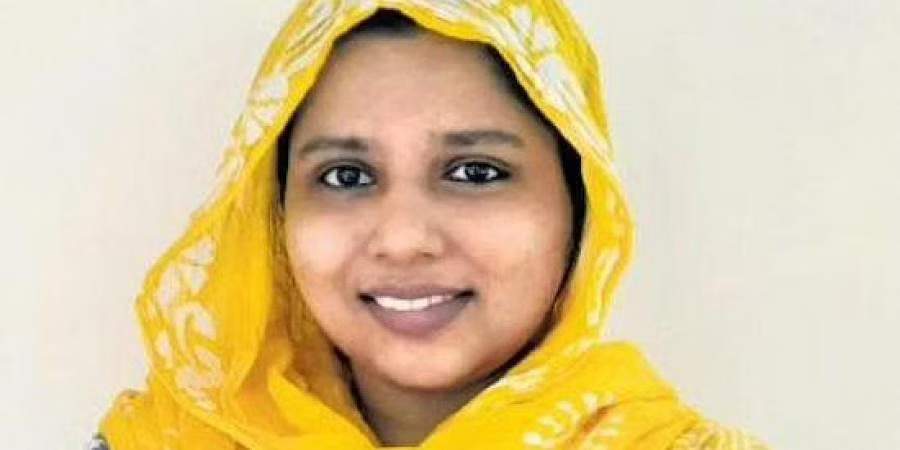
Nasreen Anshad’s brand SAWB makes beautiful garments specially created for Namaz with dreamy designs.
Nasreen Anshad
Picture this. The next time you offer Namaz, you are in a single, free-flowing, comfortable garment adorned with flowers or stars and sometimes even polka prints. The prayer dresses or Jilbabs may not be that familiar to people in Kerala . However, 28-year-old Nasreen Anshad is bringing Jilbab into vogue among the women here through her venture SAWB.
The whole idea is to offer dresses for Muslim women that they could wear with elegance during prayers. An MCA graduate, Nasreen’s foray into garment designing happened by chance. It all started last year when Nasreen was just searching for modest wear on the web. “I came across the prayer dresses on my search. But these weren’t available here. So I thought of making one for myself. I designed a Jilbab and my mother stitched it. After a few trials, we eventually got the attire right,” says Nasreen.
Nasreen started getting some customers for this specially designed prayer garment. And soon it turned into a huge business with over 1,000 pieces of Jilbabs getting sold every two weeks. Usually, women wear an Abaya and a Makhana while praying. The Jilbab comes as a single piece, making it a convenient garment for the prayers. It is also easy to carry as well. “A lot of people prefer buying Jilbab because it is comfortable and convenient. It is also beautiful and elegant to wear and is travel friendly,” says Nasreen.
The prayer dresses that Nasreen makes are modelled after the kinds available in Dubai. Nasreen says the style of these dresses changes according to the country. “The prayer dresses made in London or Indonesia are completely different. The reason Jilbab isn’t available here is since it is very pricey to even import. I wanted to make them and offer them to everyone at an affordable price,” says Nasreen.
The main challenge the novice designer faced was to convince people of the faith that wearing a colourful dress while praying was okay. “There is a misconception that you should wear only white. But this is nowhere mentioned in the Quran. What the Quran says is that one should wear the best dress while offering prayers,” says Nasreen.
So, Nasreen’s Jilbabs come in a grand array of colours and patterns, all designed by her. When she started out, it was her mother who used to stitch the garments. Now she has employed a women’s collective to stitch the garments. The Jilbabs are available in three sizes — for kids, teens and adults. The garment is made out of soft crepe and will last for three to four years, she says. “I feel so happy and proud now. This is a venture that happened by chance and people have embraced it. I want to incorporate more styles into the Jilbab, like the different versions available in various countries,” Nasreen says.
source: http://www.indulgexpress.com / The Indian Express – INDULGE / Home> Fashion / by Aathira Haridas / April 13th, 2022
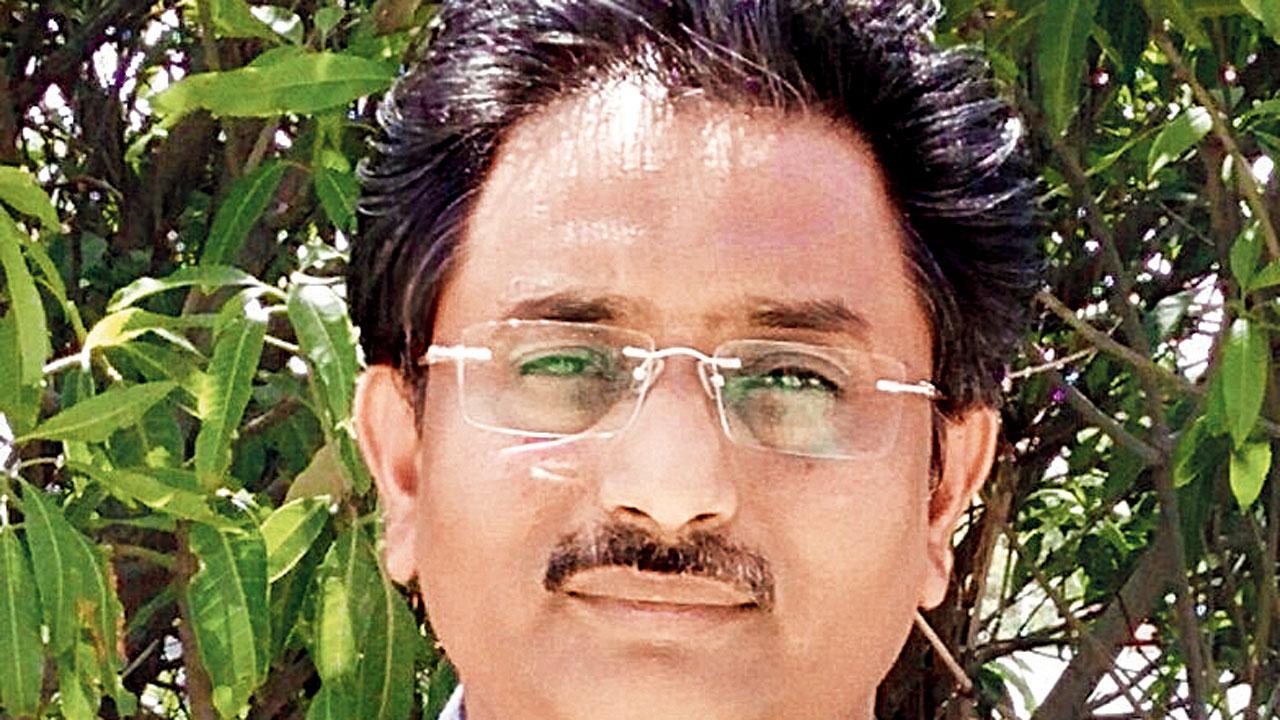
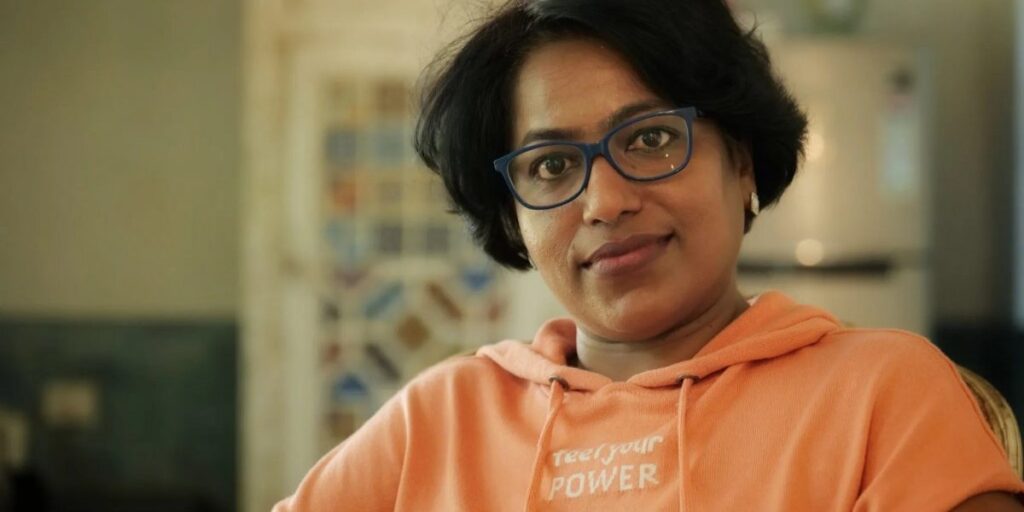
Shahina was one of the first Indian journalists to be charged under the draconian Unlawful Activities (Prevention) Act for her work in Tehelka magazine.
Indian journalist and senior editor of Outlook magazine Shahina K.K. is one of the journalists honoured in this year’s International Press Freedom Awards given by the Committee to Protect Journalists.
Shahina, the CPJ points out, was one of the first Indian journalists to be charged under the draconian Unlawful Activities (Prevention) Act for her work in Tehelka magazine. The CPJ note continues:
“She has continued her reporting in various posts despite awaiting trial for a case opened in 2010, when local government officials in Karnataka state sought to criminalize her reporting published in Tehelka, a prominent investigative magazine where she worked at the time. Her report cast doubt on a police investigation into 2008 bomb blasts in Bengaluru, alleging that the police had fabricated witness statements to arrest a local Muslim cleric.
She faces three charges under the penal code, including criminal intimidation, intent to commit a criminal act, and criminal conspiracy, and one count under UAPA pertaining to threatening witnesses. As of June 2023, Shahina is out on bail pending trial. If convicted, she faces a maximum of three years in prison and a fine.
A Muslim by birth, Shahina has also been subjected to extensive harassment by Indian right-wing groups seeking to silence her reporting on religious minorities and vulnerable caste groups. She has faced persistent online harassment and lewd threats, and in 2020, several right-wing publications falsely implicated her in that Bengaluru bombing.
Based in Kochi, in the southern state of Kerala, Shahina has worked as a reporter, production associate, and news anchor with well-known news outlets including Asianet News, Janayugom, Open, and The Federal. She also has contributed to The Washington Post.”
The CPJ has said in its note announcing Shahina’s win that this also highlights “India’s increasingly repressive environment for press freedom, with the targeting of journalists under draconian security laws, and toxic online campaigns particularly aimed at vilifying women journalists and ethnic or religious minorities.”
Other awardees for this year include Nika Gvaramia from Georgia (founder and director of independent broadcaster, Mtavari Arkhi), María Teresa Montaño from Mexico (investigative reporter and founder and editor of The Observer, a fact-checking and investigative website) and Ferdinand Ayité from Togo (head of L’Alternative, one of Togo’s top investigative outlets).
This year’s Gwen Ifill Press Freedom Award from CPJ, which goes to “an individual who has shown extraordinary and sustained achievement in the cause of press freedom”, has been awarded to Alberto Ibargüen, who recently announced he is stepping down as president of the Knight Foundation after 18 years at its helm. “Under his leadership, the foundation invested over $2.3 billion in journalism, arts, economic development, and research. Ibargüen is the former publisher of the Miami Herald and El Nuevo Herald. During his tenure, the Miami Herald won three Pulitzer Prizes and El Nuevo Herald won Spain’s Ortega y Gasset Prize for excellence in journalism. He served on the board of CPJ from 1993 to 2005,” CPJ has said.
source: http://www.thewire.in / The Wire / Home> Media / by The Wire Staff / November 20th, 2023
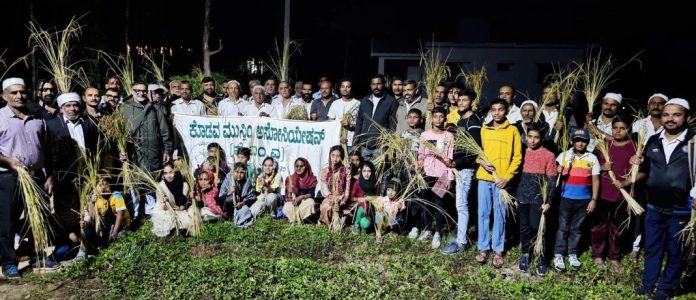
The Kodava Muslim Association (KMA) illuminated the night with joy as they celebrated the ancient custom of removing the traditional Kadiru (New Rice Crop) on the auspicious occasion of Puttari festival. The festivities took place on Monday night, drawing the spirited participation of hundreds of members from the Kodava Muslim community, marking the Harvest Festival of Kodavas.
At the striking hour of 8:30 PM, the Kadiru removal ceremony unfolded in the Jamma Gadde of the Kolumanda family in Aimangal village, Gonikoppa. Led by KMA President Duddiyanda H. and Sufi Haji, the event saw elders from Aimangala village, KMA members, and Kootambattira Hussain coming together to share in the holy Swalat. Boiled rice milk, a symbol of abundance, was distributed to all attendees, fostering a sense of unity and community spirit.
Key figures in the program included KMA Vice President Akkalatanda S. Moidu, General Secretary Italathanda Rafiq Tuchamakeri, Treasurer Harishchandra A. Hamsa, Joint Secretary Karatorera K Mustafa, Organizing Secretary Meetalathanda M. Ismail, and Senior Director Chimmichira K. Ibrahim (Ummani).
The presence of local Jamaat presidents, such as the head of Kondangeri Jamaat and K.M.A. Director Kuppandir K. Yusuf Haji, and the President of Katrakolli Jamaat, Alira M., added a distinguished touch to the celebration.
Residents from various areas, including Kottamudi, Cheriyaparambu, Kunjila, Kolakeri, Kondangeri, Chamiyala, Gundikere, Nalvathoklu, Ambatti Kandangala, Katrakolli, Halligattu, and Begur, joined the festivities alongside children from Aimangal.
The program, hosted by Kolumanda Rafeek, extended its warmth with a traditional Tambittu-Puttari sweet potato breakfast and dinner, showcasing the rich cultural heritage of the Kodava Muslim community.
The Kadiru, symbolizing the new rice crop, was then respectfully taken to households, marking the culmination of a joyous and culturally significant event.
source: http://www.thehindustangazette.com / The Hindustan Gazette / Home> News> Latest News / by The Hindustan Gazette / November 28th, 2023
Long before India became the first country to introduce mid-day meals to children in government schools to supplement their nutritional needs and to encourage poor families to send their children to school, Anjuman-e-Islam, a Muslim institution had started the scheme in Mumbai.
Ajmunan-e-Islam ursu school was established some 150 years ago. It was the brainchild of a group of progressive Muslim intellectuals of Mumbai.
The initiative for this was taken by Badruddin Tyabji, the first Indian barrister of the Bombay High Court, Qamaruddin Tyabji, the third president of the Indian National Congress, his elder brother and lawyer Nakhuda Mohammad, Ali Roge, businessman and social activist, Ghulam Mohammad Munshi, The school came up at Babula Tank near Umarkhadi in the then Bombay province and started as a small place.
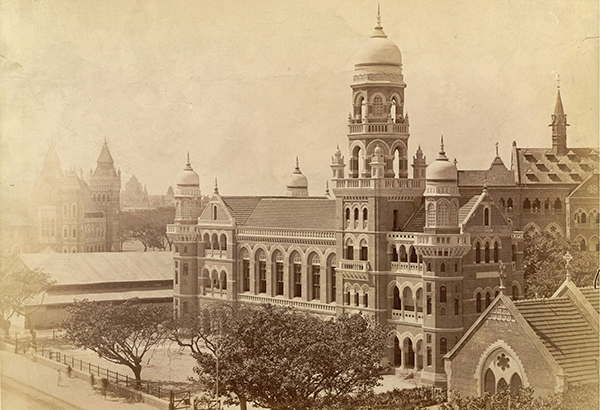
An old picture of the Anjuman-e-Islam in Bombay
In 1893, ‘Anjuman-e-Islam’ was shifted to a building opposite Victoria Terminals (presently ‘Chhatrapati Shivaji Maharaj Terminus’) from where it continues to operate.
At that time many facilities were provided to the students coming to study in ‘Anjuman’. The facilities included a mid-day meal comprising boiled eggs, bread, and bananas.
It was established a year before the establishment of ‘Aligarh Muslim University’ (AMU) in Aligarh by Sir Syed Ahmed with the sole motive of providing modern education to Muslims.
‘Anjuman’ school initially ‘only admitted boys and it was much later that it opened the doors to girl students. In 1936, a separate school for girls was also started by the name ‘Saif Tayyabji Girls High School’ on Bellasis Road.
The students of Anjuman e islam taking part in a cultural programme
This school, which started on 21 February 1874 with three teachers and 120 students, has now transformed into 97 institutions. Today more than 1.1 lakh students are studying right from nursery classes to PhD – are enrolled in its educational institutions. Interestingly, 70 percent of students enrolled are the first ones from their families to receive education.
Anjuman-e-Islam played a major role in India’s freedom struggle. Many people including Moinuddin Harris and Mustafa Fakih of ‘Anjuman’ were sentenced to imprisonment during the freedom struggle. Many policy meetings for the freedom struggle were held on its premises.
‘Anjuman’ has a long history in nation-building.
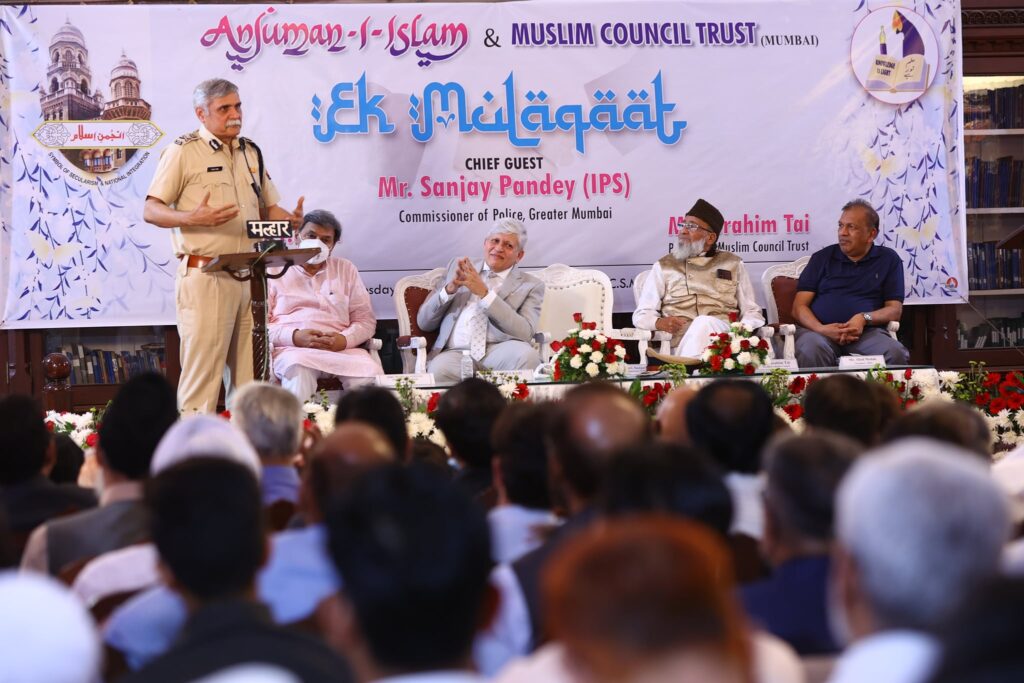
Mumbai police commissioner Dr Sanjay Pandey addressing the students of Anjuman-e-Islam
Today the main administrative office of the organization is located at the same place where the seed of ‘Anjuman’ was sown. Five colleges – two catering colleges, a business-management college, a home science college, and a law college – have been established on the institute’s three-acre campus. In addition, there is a polytechnic, a junior college for women, and two schools in both English and Urdu medium.
The campus also has a large library and a research center.
Sir Karimbhoy Ibrahim, Haji Yusuf Haji Ismail Sobani, Justice A. M. Qazi, Justice Faiz B. Tayyabji, Sardar Sir Suleman Kulsoom Mitha, Hussain B. Tayyabji, Usman Sobani, Mohammad Haji Ahmed, A. I. Maskati, Hadi C. Tayyabji, Saif F. B. Tayyabji, Akbar A. Pirbhoy, A. K. Hafeez, A. R. Persons like Antulay, Moinuddin Harris, Dr. M. Ishaq Jamkhanwala, Sami Khatib made special efforts. Presently Dr. Zaheer Kazi is its President.
`Anjuman’ has two main objectives, first – ‘to provide quality education at minimum cost’ and second – ‘to prevent any student from being deprived of education due to lack of funds’
More than 50 percent of the students in ‘Anjuman’ come from economically weaker sections. Anjuman has created a ‘Special Zakat Fund’ to enable these students to complete their education. The economically weaker students are given a 50 to 100 percent discount in education fees.
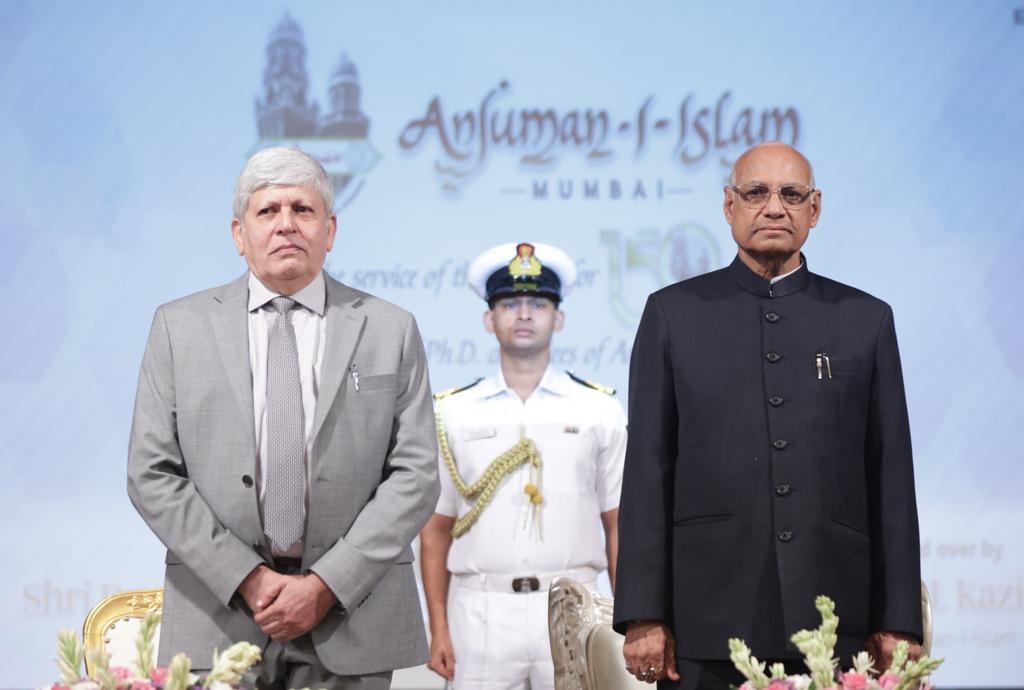
Vice Chancellor of the Amjuman-e-islam Dr Sahir Qazi and Governor of Maharashtra
The Anjuman is inspired by Maulana Abul Kalam Azad’s message that ‘Education given from the heart can bring revolution in the society’, the organization has been doing this work. The ‘Anjuman’ has more than 40 percent girls on roll.
Today the institution offers courses like Engineering, Medicine, Architecture, Pharmacy, Hospitality, Catering and Hotel Management, Law, Business Administration, Home Science, and Teacher’s Training.
Some, 3000 employees work in the Anjuman institutions. In the year 2000, `Anjuman’ was awarded the ‘Best Educational and Social Institution in Maharashtra’ by the State government. Recently the institution has been awarded the ‘Sir Syed Award of Excellence’ of AMU, Aligarh University.
The alumni of `Anjuman’ are today working in high positions in various fields like business, technology, arts, sports, media, medical science, and politics in many countries. Former Chairman of Fortune Company and Indian Oil Corporation, M.A. Pathan, former Chief Minister of Maharashtra A. R. Antulay, famous actor Dilip Kumar, Ismail Merchant of `Merchant of Merchant Ivory Productions’, former Deputy Editor of `Illustrated Weekly’ Fatima Zakaria, former editor of `Mumbai Mirror’ and `Sunday Times’ Farida Naik and famous cricketer Salim Durrani. Celebrities have been alumni of ‘Anjuman’.
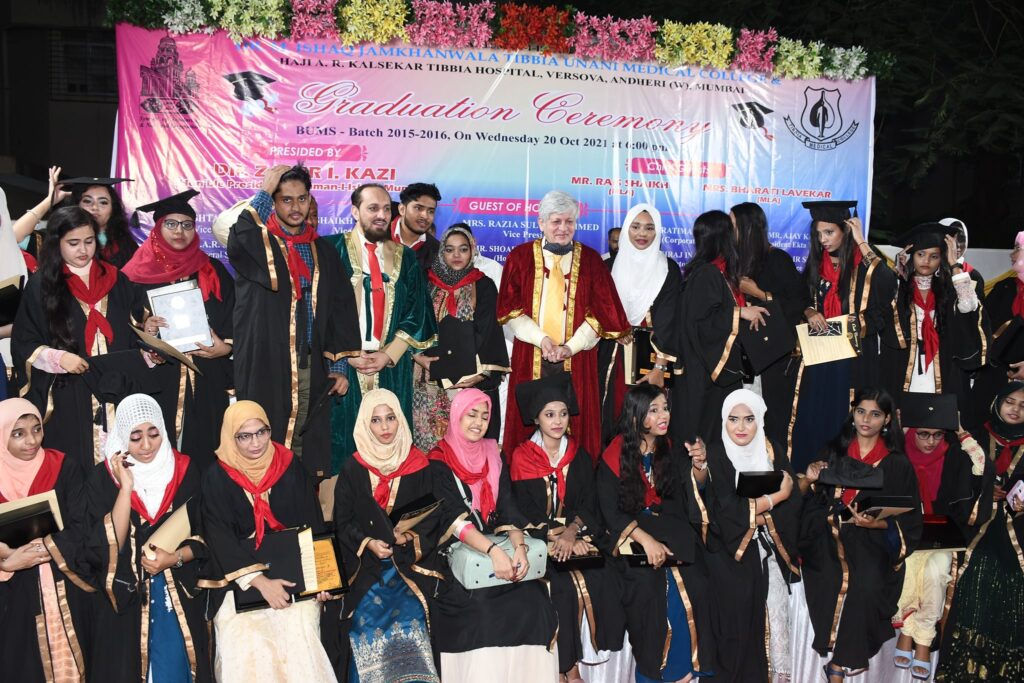
Students at the Convocation of Anjuman-e-Islam
Dr. Zaheer Kazi, current president of ‘Anjuman’, says, “We are constructing a state-of-the-art building in the Sabu Siddiqui College campus in Byculla. There will be an incubation center as well as post-graduation and PhD courses taught there. “Besides, there will also be an integrated center.”
Apart from this, a health education campus will be built in Kalyan-Bhiwandi or Panchgani, in which MBBS courses, Dental College, College of Nursing, Physiotherapy, and Homeopathy will be started. Pharmacy, law college, degree college, and high school for girls will be started in the Solapur campus. Also, land acquisition for catering, pharmacy, and high school-cum-college in Panaji, Goa is in the final stages.
He said, “’Anjuman-e-Islam’ has partnered with MIT University in Cambridge, England, and its five Faculties of Engineering, Master of Business Administration (MBA), Pharmacy and Elementary Education. In addition, ‘The Kalsekar School of Pharmacy’ (Panvel), and The Maryland School of Pharmacy’, Baltimore, (Washington DC) have been approached for collaboration with Anjuman-e-Islam. Philadelphia’s ‘Temple University’ asked ‘A. of Anjuman-e-Islam’ for cooperation. R. Antulay College of Law has also been contacted.”
‘Anjuman’ has 97 educational institutions including schools and colleges. These include pre-primary schools (15), primary schools (15), secondary schools (20), junior colleges (10), polytechnics (4), degree colleges (15), other institutions (10), proposed institutions (2), Consists of hostels, auditorium (3), support units (2) and orphanage (2).
source: http://www.awazthevoice.in / Awaz, The Voice / Home> Story / by Chaya Kavire, Pune / November 22nd, 2023
Mohammad Naushad, a retired man from Bengaluru had plans to travel the world after completing his tenure in the steel industry. He landed as a tourist in Samarkand a year ago and his quest for his morning masala tea and paratha prompted him to settle here and open the only Indian restaurant in the second-largest city of Uzbekistan.
Called “The Indian Kitchen”, the restaurant came as a respite to Indian students who are studying medicine here and used to miss Indian food. The locals here also fancy the wide-ranging menu from lip dosas to chicken biryani.
“I had no plans to work post-retirement and had no experience of working at a restaurant let alone running one. When I came here as a tourist, I headed out to have my usual breakfast of masala tea and paratha.
“I have travelled to so many countries and have always found some or the other place where Indian food is available. I was surprised to find out that there is not a single eatery or restaurant which serves Indian meals,” 61-year-old Naushad told PTI.
“A week more and the vibrant culture and simplicity of people here, prompted me to give it a shot and now Samarkand is my permanent home,” he added.
According to Naushad, the restaurant receives around 350-400 visitors per day and there are catering orders for weddings and events where having Indian cuisine as an option is a hit here.
His day starts with going to the “bazaar” with his staff to buy groceries as he prefers everything to be cooked afresh at the restaurant.
“There are over 3,000 Indian students in Samarkand and they tell me often that they used to miss Indian meals. The shahi paneer and naan and the rotis used to be a rare sight here. I expected the Indians to love the restaurant but the response I have received from Uzbeks is phenomenal,” he said.
Behind the lip-smacking dishes available at the restaurant is Ashok Kalidasa, a chef who hails from Madras. He earlier used to live in Uzbekistan’s Tashkent and is now settled in Samarkand.
“We enquire from each customer about the kind of spices they like us to use, whether they want it less spicy or tangy because Uzbek food is very different. The effort to customise the popular Indian dishes to their taste is what attracts the local crowd here. Indian students come here because they get their home food and the meals are not expensive,” he said.
Kalidasa says the most popular dishes at the restaurant are “masala dosa” and “chicken biryani” which is much different from the Uzbek “Pilaf”.
Asked about her favourite pick at the restaurant, Zarina, an Uzbek woman, said “I love masala chai”.
While right now the Indian Kitchen offers meals at the restaurant, Naushad has expansion plans.
“We are also thinking of starting a tiffin service for Indian students. Also, we get a lot of tourists. So I am contemplating opening similar setups in Bukhara and Khiva which are popular tourist destinations in Uzbekistan but do not have any Indian restaurants,” he said.
According to the Uzbekistan Embassy in New Delhi, the Indian diaspora in Uzbekistan has more than 5,000 people. In pre-Covid year 2019, over 28,000 Indian tourists visited Uzbekistan. However, the number has crossed over 30,000 this year so far.
source: http://www.english.varthabharati.in / Vartha Bharati / Home> World / November 19th, 2023
In a sweep of the University of Hyderabad’s student union elections, an alliance comprising the Students’ Federation of India (SFI), the Ambedkar Students’ Association (ASA), and the Tribal Students Forum (TSF) won all six elected positions. The official announcement of the election results came late on Friday night, following the polls on Thursday.
Elected Student Leaders
Mohammed Ateeq Ahmed of SFI, who is a student at the School of Humanities, was elected as the president of the students’ union with 1,880 votes.
Ahmed beat Akhil Bharatiya Vidyarthi Parishad (ABVP) candidate Shaik Aayesha by over 470 votes. Aayesha was the first Muslim candidate of ABVP, which is affiliated to the Rashtriya Swayamsevak Sangh (RSS), in University of Hyderabad (UoH) elections.
Jalli Akash of ASA-SFI alliance was elected as the vice president with 1,671 votes. Deepak Kumar Arya of ASA-SFI was elected as the general secretary with 1,765 votes. Lavudi Bala Anjaneyulu of SFI-TSF was elected as the joint secretary with 1,775 votes.
Samim Akter Sheikh of ASA-SFI and Athul of SFI were elected as the cultural secretary and the sports secretary respectively.
Several colleges have not held student elections since the Covid-19 pandemic, which caused disruptions to the academic calendar until 2022.
But UoH elections for the previous academic year, which the SFI-ASA-Dalit Students Union alliance had won, were held in February 2023.
(With inputs from PTI)
source: http: //www.freepressjournal.in / The Free Press Journal / Home> Education / by PTI / November 11th, 2023
The ongoing exhibition on iconic birder Dr Salim Ali at Bombay Natural History Society offers rare insight into the meticulous life of the man who shaped India’s avian conservation programme.
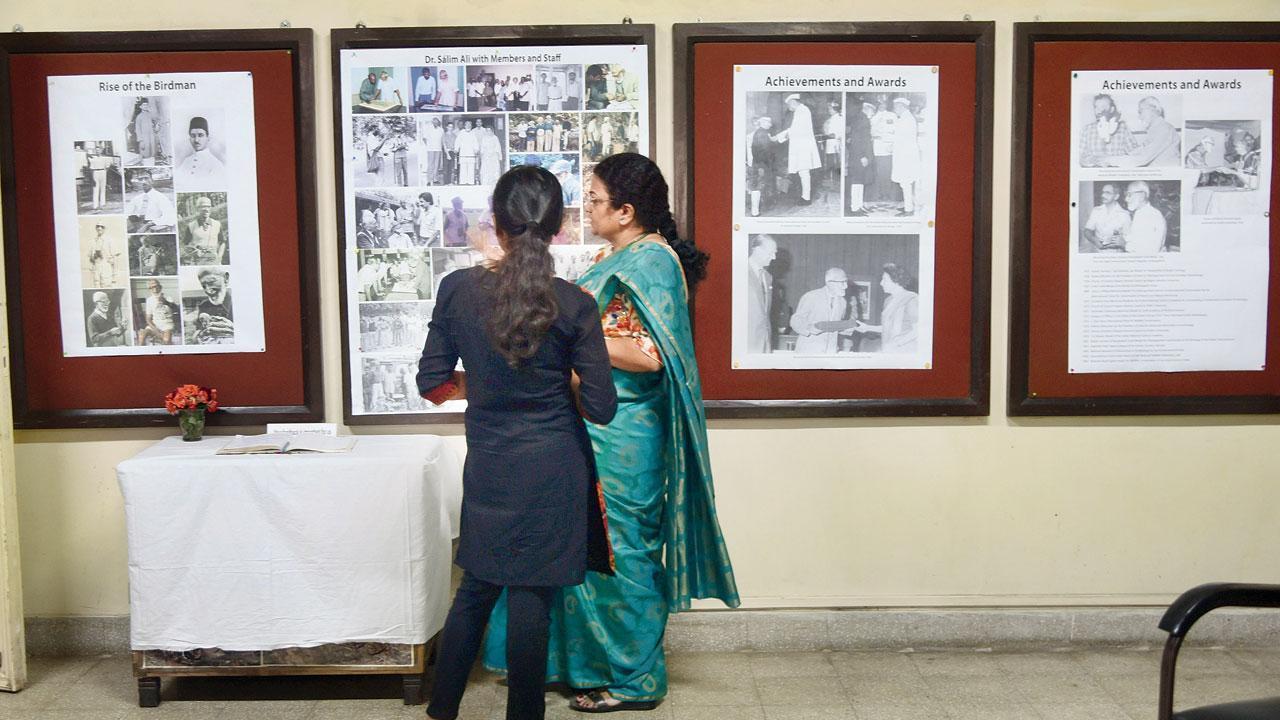
Barure (in saree) guides a visitor
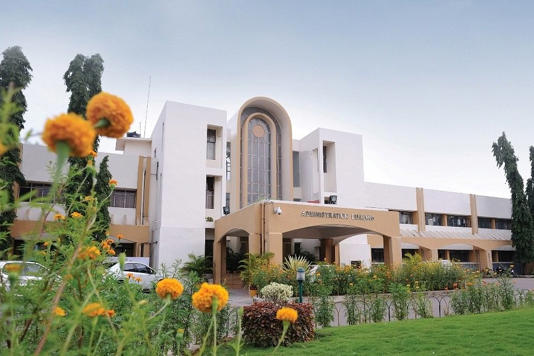
In the quiet landmark of Hornbill House at Fort, a buzz is slowly developing. On International Bird Week (November 5 to November 12), the Bombay Natural History Society (BNHS) is celebrating one of the pioneers of Indian ornithology, Dr Salim Ali, with an exhibition from his personal archives. Today might be the last opportunity to peek into the life of a man whose efforts paved the way for conservation study in the country.
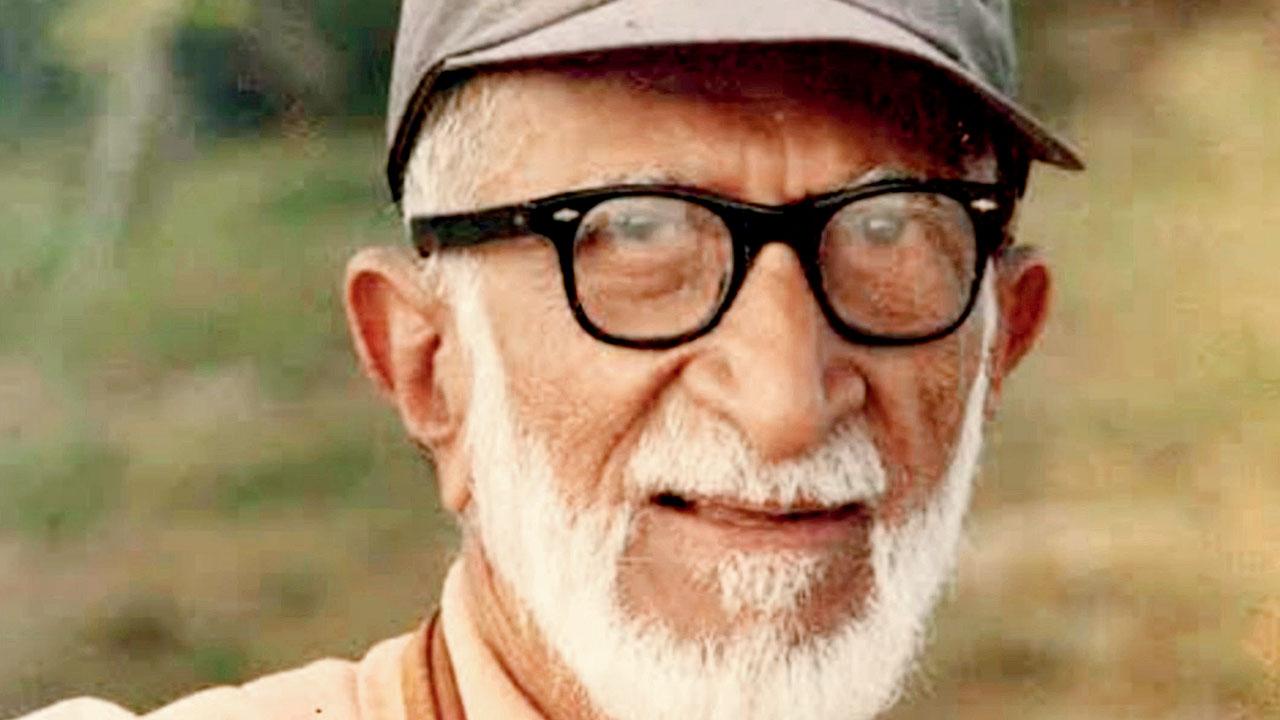
Dr Salim Ali. / File pic
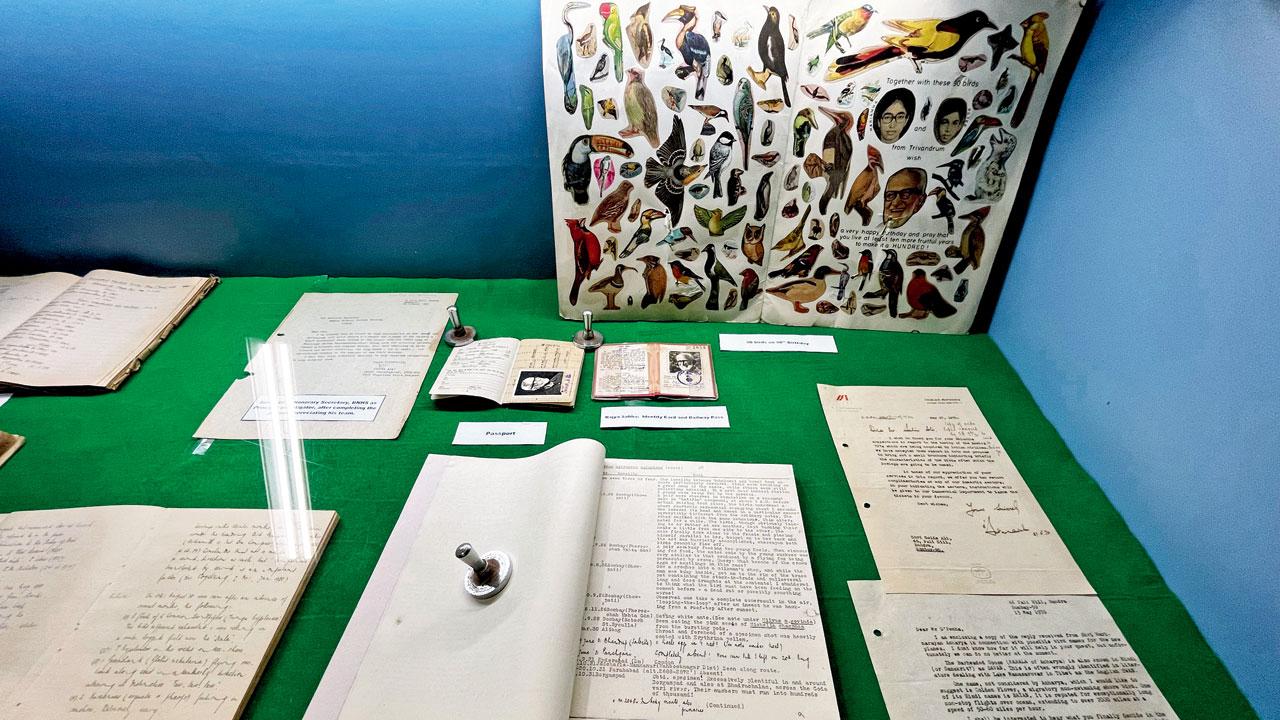
“Research and conservation were two very important facets of his life,” shares Kishor Rithe, director, BNHS. The exhibition brings to fore his professional expanse and personal meticulousness. The collection was brought together by curator and BNHS librarian, Nirmala Barure. The work began in 2014, she reveals. “The process is still ongoing since it is such a monumental record of correspondence, research and notes over a period of 60 years,” Barure remarks.
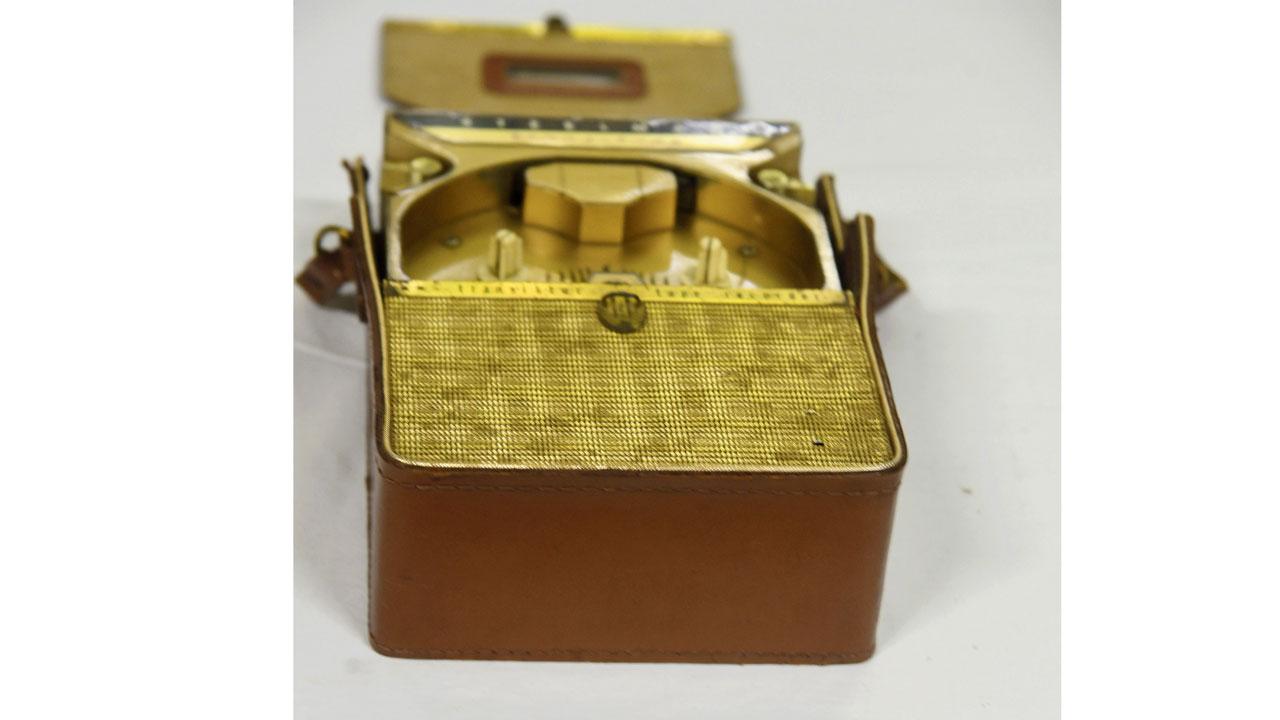
The tape recorder used by Dr Ali to record bird sounds
The theme for the exhibition, Rithe adds, is a focus on the layman. It includes correspondence to prime ministers, policy makers, as well as people on the ground — from forest officials to students and villagers. Barure points out that the correspondence also has some touching personal moments.
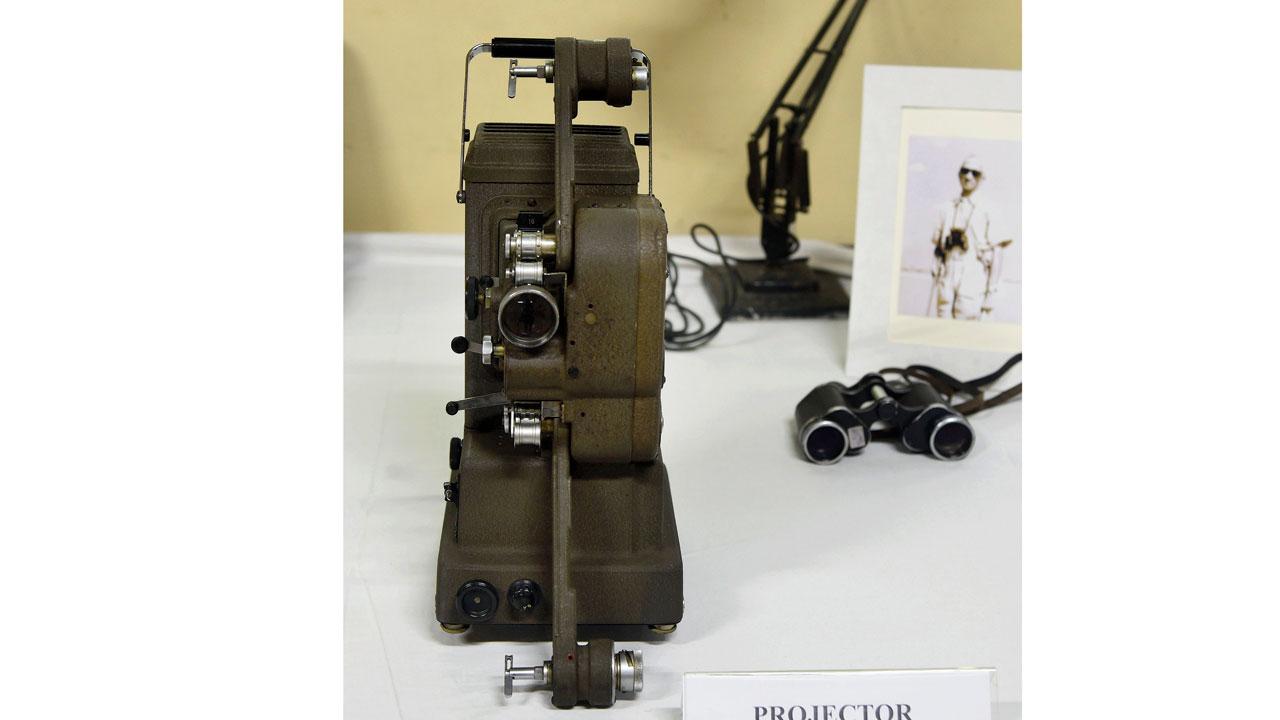
His filming equipment. Pics/Atul Kamble
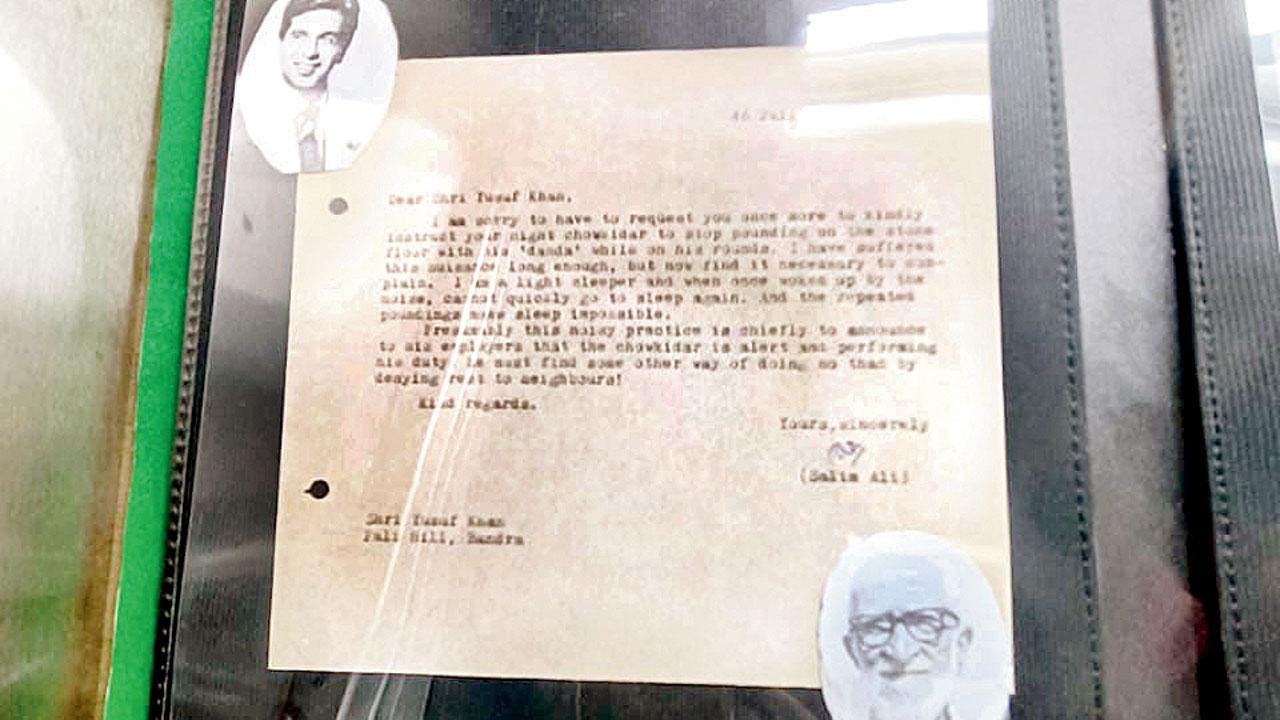
“There are greeting cards from Mrinalini Sarabhai, and a commendation letter from the famed botanist Ethelbert Blatter of St Xaviers’ College,” she notes. One of the more remarkable objects was a complaint written by Dr Salim Ali to a Bandra neighbour — Yusuf Khan aka Dilip Kumar — complaining about the noise the latter’s watchman made in the night.
A letter written by Dr Salim Ali to Dilip Kumar from 1975
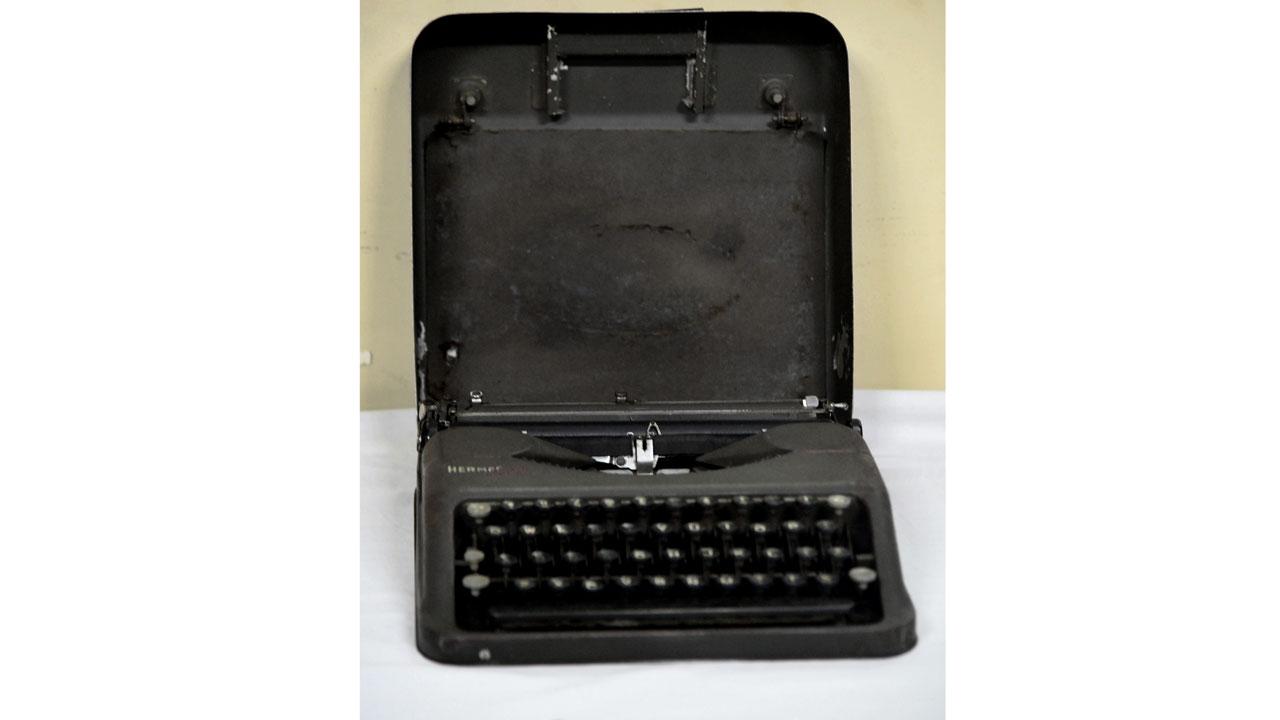
Then, there is his equipment — from typewriters and cameras to telescopes and lenses. “While technology has advanced, this equipment is proof of how challenging it was for the early pioneers to make audio visual records and document their studies,” Rithe notes. Among the equipment on display is a rare find of 16mm films, shot by Dr Ali during his many journeys, that were preserved by the Smithsonian Institution in Washington DC.
Dr Ali’s portable typewriter
The society is already in the process of dedicating a space to honour Dr Ali’s collection. Rithe shares, “This year, we plan to begin renovation work on the space, and will dedicate some part of it to Dr Salim Ali’s collection. This exhibition is just a rehearsal of those plans.” For now, visitors would want to hurry to Hornbill House to catch a glimpse of the rare treasure trove.
A collection of Dr Ali’s correspondence
On: Today; 10 am to 5 pm At: BNHS, Hornbill House, opposite Lion Gate, Fort. Call: 9594953425 Log on to: bnhs.org
Kishore Rithe
source: http://www.mid-day.com / mid-day.com / Home> Mumbai Guide News> Things to do News/ Article / by Shriram Iyengar (shriram.iyengar@mid-day.com) / November 10th, 2023
While the world is fast moving forward with technology, how could search for spiritual journey lag behind. Sometimes you don’t aim to offer your services just to increase your clientele or followers, it’s just a way to open the door to a spiritual journey, especially when you are young.
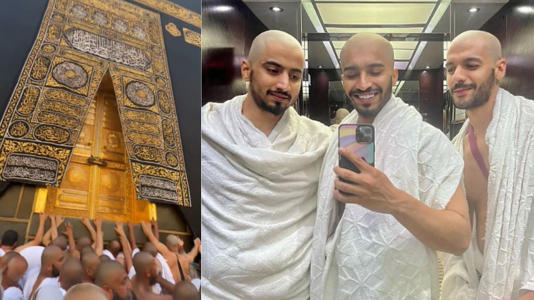
Mumbai’s Cosmic Tours and a few social media influencers joined hands for this very reason. While Cosmic provided their expertise, the social media influencers dished out their platforms as they embarked upon the journey to the Holy cities of Makkah & Madina.
“It was an attempt to help people connect with their spiritual side,” Baba Ebrahim of Cosmic Tours made their intentions clear.
Based out of Pydhonie, Cosmic has been operating Hajj, Umrah excursions since 1990.
The operator claims they have spread their wings not only in India, but even abroad with just word of mouth publicity.
“Besides India, pilgrims join us from America, UK, New Zealand, Barbados. Currently we have a couple pilgrims from Japan. We are slowly working on that region as well,” the operator said.
Cosmic Tours, however, is aiming to move with time. They feel social media influencers and actors are now paying attention to their spiritual side as well. “Even Shah Rukh Khan went for Umrah recently,” he said.
Check Instagram handle of Cosmic Tours
“They want to connect with the fans who seek spiritual motivation. They not only on Instagram, but are on YouTube as well. They are, in fact, on all over social media channels. They are present in the Metaverse. They are everywhere now, on TV soaps, dance shows and reality shows.”
Recently, Cosmic Tours had Faisal Shaikh aka Faisu (29.4 million Instagram followers), Faiz Baloch (9.6 million Instagram followers) and Shayan Siddiqui (7,80,000 Instagram followers) for Umrah.
Check pictures below
If Cosmic Tours is to be believed, there is no particular age group that goes for Umrah. Today, even children go for Umrah. “Earlier, only old people would go for Umrah, but now everyone goes,” he said.
According to them, their only motive in taking social media influencers was not only to target youngsters for Hajj and Umrah, but every individual who is active on social media.
“We are not chasing results. We have already achieved the result. Those who have joined us bear testimony to our services. Apart from our achievements and awards received in this field, it is just that people are acknowledging our effort and services,” he said.
Most pilgrims for Cosmic are repeaters. “We wanted to target their followers, especially the young lot. We want to reach out to people in each and every corner of the world. And that is possible through this move and their own presence on social media,” he said.
source: http://www.freepressjournal.in / The Free Press Journal / Home> Lifestyle / by Mufeed Mahdi Rizvi / April 05th, 2023
Dubai’s CHS GROUP’s Founder-President Nasir Syed to Sponsor Event
Anjuman Taraqqi-e-Urdu Urdu, DK and Udupi districts is set to host the Urdu poetry festival, ‘Urdu Mehfil-e-Mushair,’ at the Town Hall in Mangaluru on Friday, November 24, with the aim of promoting Urdu language, literature, and culture. The event, scheduled to begin at 6:30 pm, will feature renowned Urdu poets from Karnataka and other states.
The event is sponsored by Nasir Syed, a distinguished NRI businessman and founder-president of the CHS Group of Dubai. Abdul Salam Madani, President of Anjuman Taraqqi-e-Urdu of Dakshina Kannada and Udupi districts, announced the event through a press release.
Participating poets include Azizuddin Aziz Belgaumi from Bengaluru, Dr. Mohammed Haneef Shabab, and Syed Ahmed SaliK from Bhatkal, Siraj Sholapuri from Mumbai, Rahmatullah Rahmat from Shivamogga, Usama Qazi Asad Karnataki from Gangolli, and Abdul Salam Madani from Mangaluru. Nasir Syed will chair the event.
The program will not only feature poetic performances but also include the distribution of prizes for various competitions and the acknowledgment of emerging talents.
Anjuman Taraqqi-e-Urdu President has urged Urdu poetry enthusiasts to actively participate in the event along with their friends and family members.
source: http://www.english.varthabharati.in / Vartha Bharati / Home> Karavali / by Vartha Bharati / November 22nd, 2023
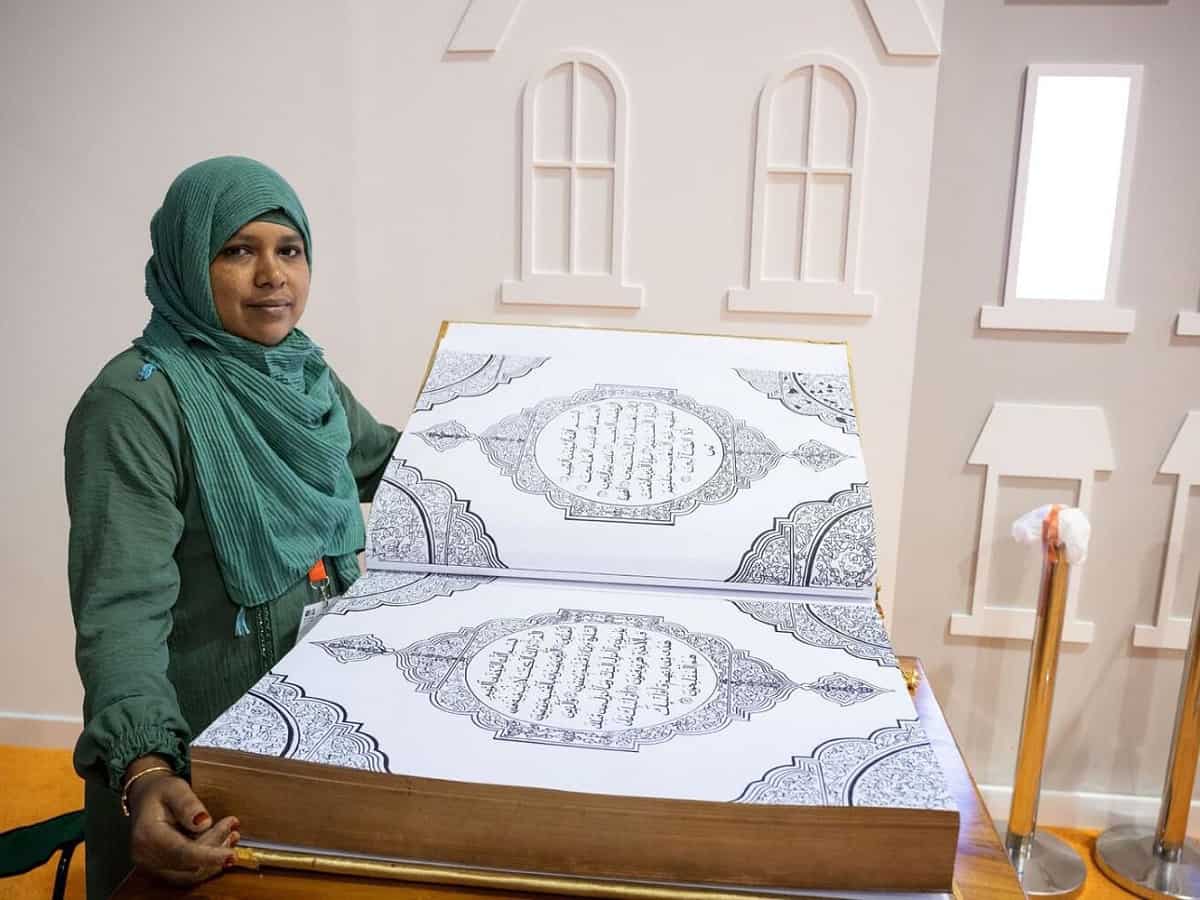
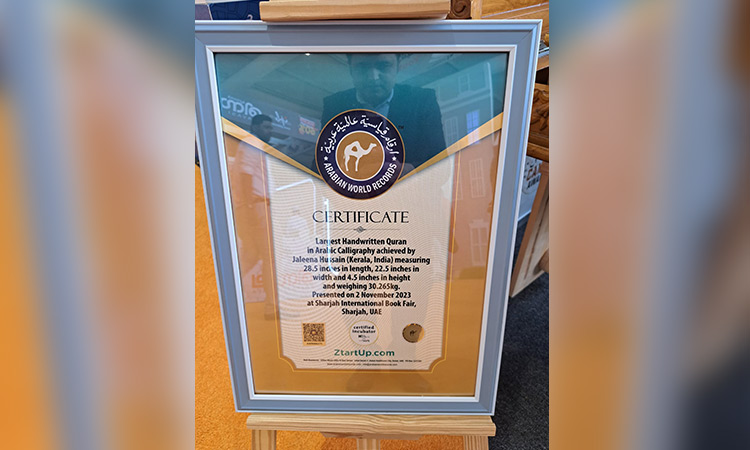
The holy book, which weighs 54 kg with the cover, measures 28.5 inches long, 22.5 inches wide, and 4.5 inches high.
Abu Dhabi:
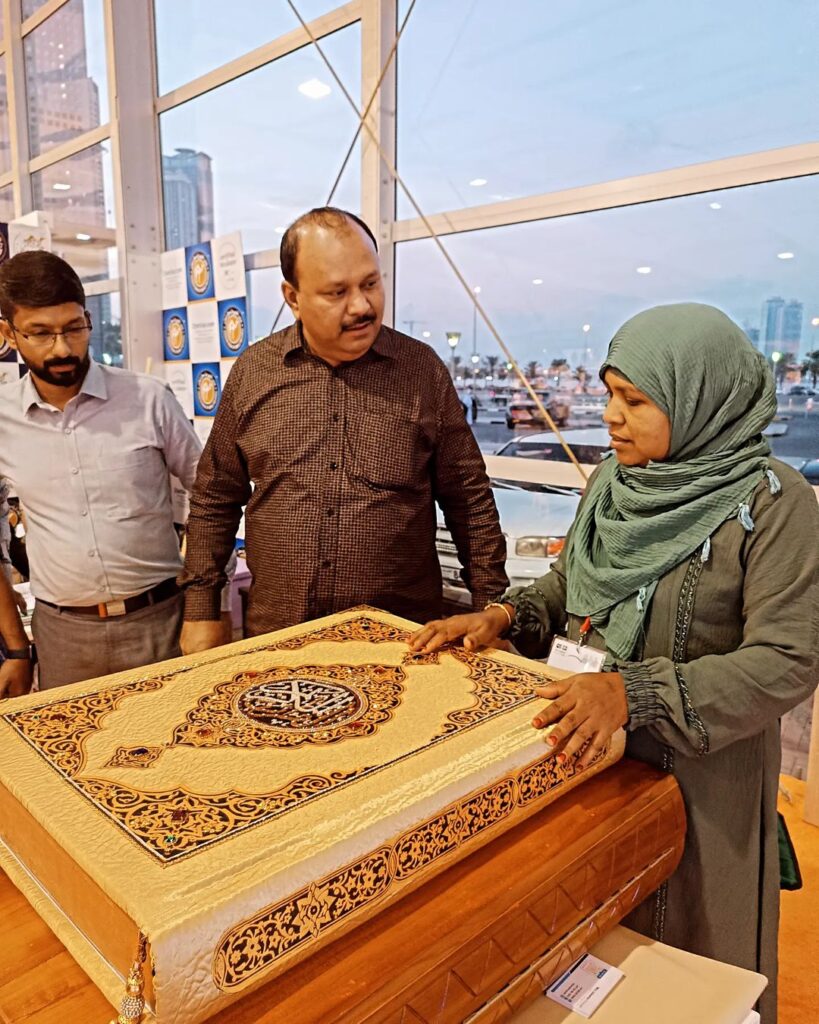
A 46-year-old Indian woman has displayed her handwritten Holy Quran in Arabic calligraphy weighing over 30 kgs at the 42nd Sharjah International Book Fair (SIBF).
Jaleena Hussain, who hails from Indian state of Kerala, has spent over a year creating a unique edition of 114 surahs, covering 604 pages.
Speaking to Sharjah 24, Jaleena said writing the Quran was her way of fulfilling her desire to memorize the Holy Book.
She expressed gratitude to the Sharjah authorities for allowing her to showcase her talent.
Jaleena, a former rubber plantation worker and Urdu teacher, has been recognized by the Arabian World Records and the India and Asia Book of Records for her handwritten Quran.
source: http://www.siasat.com / Siasat.com / Home> News> India / by Sakina Fatima X / November 12th, 2023
.webp)
.webp)