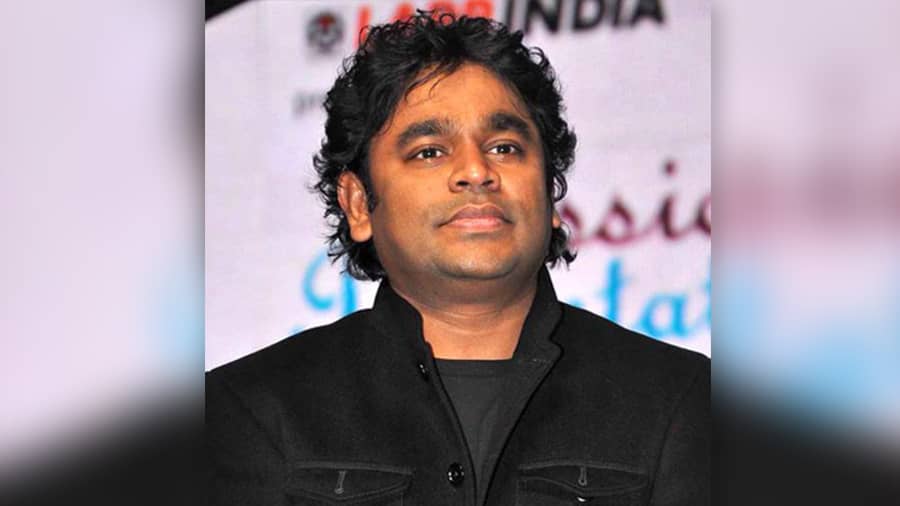
The celebrated music composer says the honour has made him more committed to working hard.
After Markham, a city in Canada, honoured A.R. Rahman by naming a street after him, the celebrated music composer said he now feels more committed to working hard and inspiring people.
Rahman, who completed three decades in the Indian film industry earlier this month, penned a note of gratitude for the authorities of Markham in Ontario, Canada, on Twitter.
“I never imagined this ever in my life. I am very grateful to all of you, the Mayor of Markham, Canada (Frank Scarpitt) and counsellors, Indian Consulate General (Apoorva Srivastava) and the people of Canada…” his tweet reads.
“I feel like this gives me immense responsibility to do much more and be inspiring, not so get tired and not to retire yet. Even if I get tired I’ll remember that I have more things to do, more people to connect, more bridges to cross,” the multiple award-winning musician said.
The 55-year-old, currently in Canada for his musical tour, also shared pictures from the inauguration ceremony on the microblogging site on Sunday. The city of Markham had announced that a street would be named in Rahman’s honour back in November 2013.
“The name AR Rahman is not mine. It means merciful. The merciful is the quality of the common God we all have and one can only be the servant of the merciful. So let that name bring peace, prosperity, happiness and health to all the people living in Canada. God bless you all,” he added.
Rahman also thanked the people of India and his collaborators. “I want to thank my brothers and sisters of India for all the love. All the creative people who worked with me, who gave me the inspiration to rise up and celebrate hundred years of cinema; with all the legends included. I am a very small drop in the ocean,” the composer said.
His upcoming releases include films such as “Cobra” and “Ponniyin Selvan: I”.
source: http://www.telegraphindia.in / The Telegraph Online / Home> Entertainment /by PTI / New York / August 30th, 2022
Kakkore Village (Malappuram District) KERALA / Doha, QATAR :
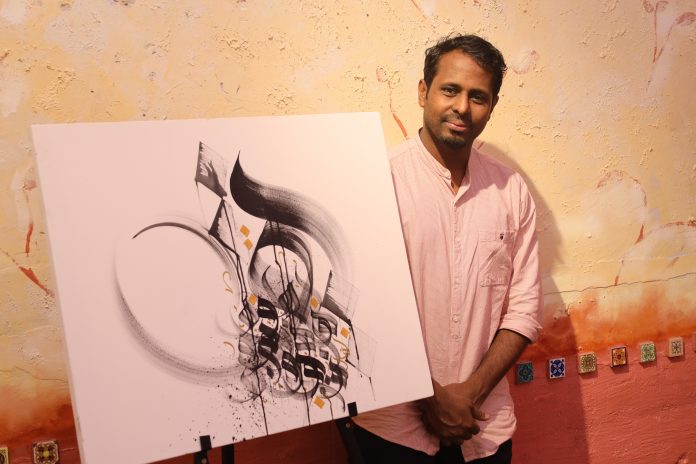
Abdul Kareem with his calligraphy art. | Picture by Lulu Ahsana
A graphic designer by profession, Abdul Kareem, who is popularly known as Kareemgrahy, left his job at an American company in Qatar last month to pursue his passion for calligraphy.
Kerala:
When tea-seller Abdurahman from Kerala bought a calligraphic painting from a Sufi saint to his home one day in the early 1980s, he hadn’t imagined that his six-year-old son Abdul Kareem will make calligraphy his profession. The painting had Arabic verses written in the shape of a person offering the Islamic prayer.
“That image was inscribed in my heart,” said Abdul Kareem, 44, a popular calligrapher from Kerala, popularly known as Kareemgraphy. Originally hailing from the Kakkove village in Malappuram district in Kerala, Kareem presently lives in Qatar with his wife and three children.
A graphic designer by profession, Kareem left his job at an American company in Qatar last month to pursue his passion for calligraphy.
Love for calligraphy art was imbibed in Kareem from his childhood. Recalling an incident during his Madrasa days, Kareem said when his teacher wrote some Arabic words on the board, he was moved and could see “the beauty in how the words were written and shaped.”
In 1996, Kareem had to drop out of his course at the School of Arts in Kerala due to financial constraints. He was 18. This, however, didn’t deter him from pursuing his passion. He started work as a painter of hoardings and a few years later, he moved to Saudi Arabia to earn a living, where eventually he became a graphic designer.
“The beautiful symmetrical patterns on the Roudha Shareef (where the Prophet (PBUH) is buried), and the calligraphy on the pillars and walls there influenced me a lot,” said Kareem about the city of Madina, one of the holiest cities of Islam.
Kareem said he wanted to devote all his focus to calligraphy and left his job to pursue it.
“Calligraphy has been my passion for more than 20 years, but I took to serious learning and experimentation only five years ago and left my job to pursue this dream,” he said.
Kareem credits his teachers for instilling a passion for knowledge in him and his success. “All those who give ilm (knowledge) in my journey are my ustaads (teachers),” he said.
Calligraphy art has different forms and styles. Kareem follows the contemporary style.
“Art and rule are combined in traditional calligraphy. But in contemporary art, it is freedom. I do calligraphy on things and ideas that people in my locality can relate to. As an artist, I am trying to blend different styles, without conforming to any specific script or style,” he said.
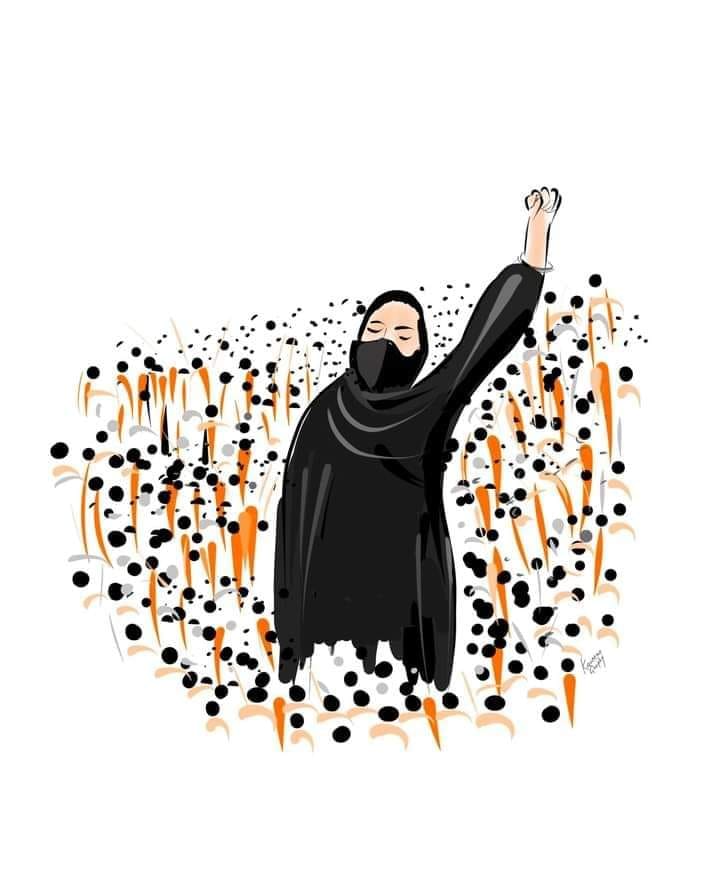
Abdul Kareem’s portrayal of a student during the Hijab row in Karnataka | Picture: Abdul Kareem Facebook
As his fame grew in the last five years, Kareem started conducting calligraphy workshops in India, UAE, Qatar, and Turkey. On August 10 this year, he attended the All India Calligraphy Akshar Mahotsav organised by the Calligraphy Foundation of India in New Delhi. He has also won a few awards for his work, including the Youth Icon Award-Doha (2017) and the Youth Signature Award (2021).
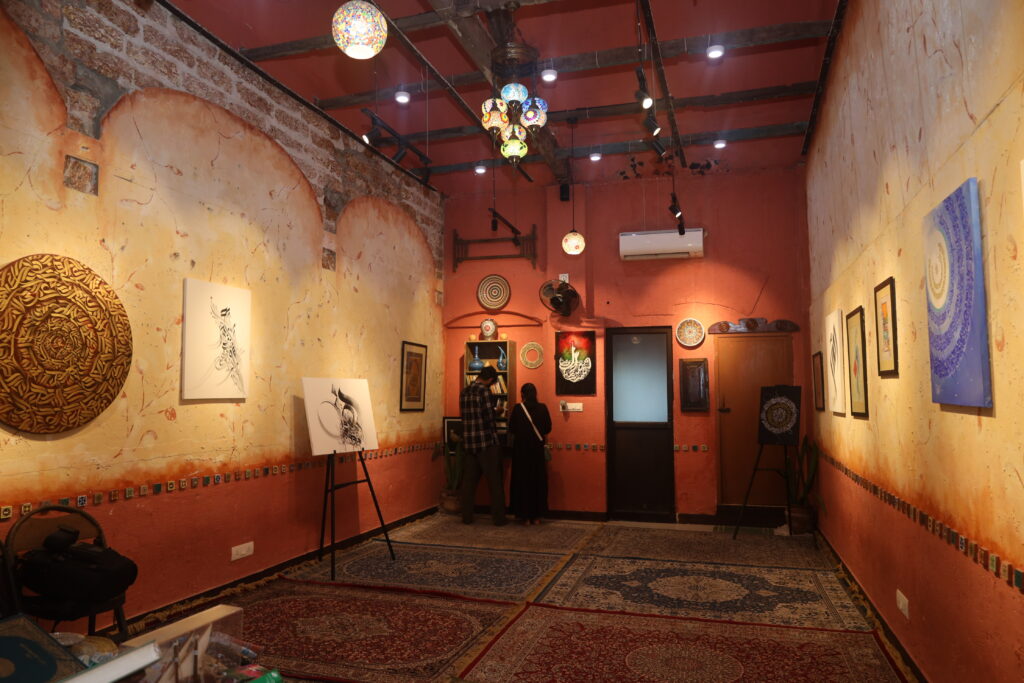
Last year, Kareem founded a centre for calligraphy in Kozhikode called the KagrArt. Its logo was launched online by famous French-Tunisian calligraffiti artist ElSeed. “I want to popularise this art. It is more important than being famous. There should be a physical space for artists to meet and interact,” he said.
KagrArt was founded by Abdul Kareem last year as a centre for calligraphy art. | Picture by Lulu Ahsana
In addition to his calligraphy works, KagrArt displays art pieces like lanterns, carpets, calligraphy and images from different countries.
In one of the programmes held at KagrArt last month, Kareem talked about his visit to Uzbekistan and his love for travelling.
“Instead of calling it a trip to Turkey or Uzbekistan, we can call it going to different people, and seeing things that they built and wrote in the past,” he said.
Kareem’s dream is to build a bridge through his art between different religions, peoples and countries, between traditional and contemporary calligraphies, between Arabic and Malayalam calligraphies, and between old and new generations.
“I want to work on a serious theme in future which would fill the minds of people with hope, and which would give the message that no one should run away from anywhere and that people can be where they are,” he added.
Kareem’s wife Fasija said that “calligraphy is more than just a passion for him.” She credits his “hard work and dedication for the success he has achieved.”
Najiya O is an independent journalist from Kerala. She tweets at @najiyao
source: http://www.twocircles.net / TwoCircles.net / Home> Lead Story / by Najiya O, TwoCirlces.net / August 18th, 2022
He was 92 and breathed his last after battling multiple ailments at Breach Candy Hospital around 3 a.m. today.
IANS
Mumbai:
Veteran Bollywood producer of ‘multi-starrer masala films’ Abdul Gaffar Nadiadwala passed away here following a prolonged illness, his son Mushtaque Nadiadwala said on Monday.
He was 92 and breathed his last after battling multiple ailments at Breach Candy Hospital around 3 a.m. today.
Gaffarbhai – as he was popularly known in the film industry – is survived by his three sons, Feroze, Hafiz and Mushtaque, daughters, and his nephew and well-known film-maker Sajid Nadiadwala.
The last rites of Gaffarbhai – who was one of the founders of the major Nadiadwala films banner, with studios in Mumbai and Gujarat – shall be performed at the Irla Masjid Cemetery in Vile Parle, today at 4 p.m., his family informed.
In his film-making career spanning over five decades, he made several memorable movies like ‘Aa Gale Lag Ja’, ‘Lahu Ke Do Rang’, ‘Shankar Shambhu’, ‘Jhutha Sach’, ‘Sone Pe Suhaga’, ‘Watan Ke Rakhwale’ and more.
source: http://www.siasat.com / The Siasat Daily / Home> Entertainment> Bollywood / by IANS / posted by Umm e Maria / August 22nd, 2022
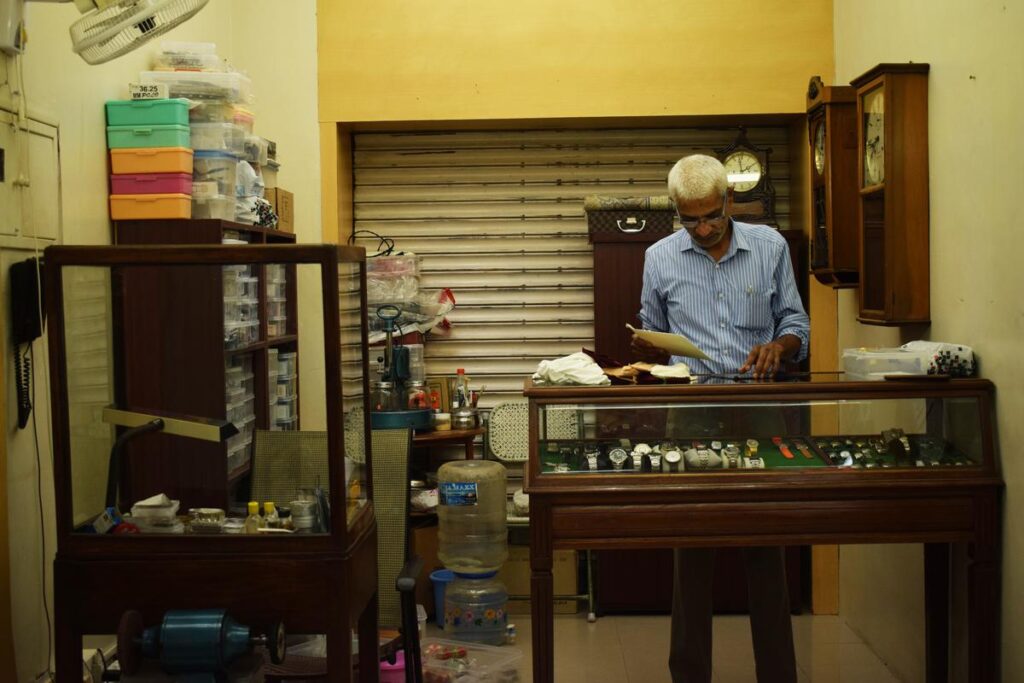
B Abdul Haq at the counter of Connoisseur Collection, originally the Bharath Watch Company, Chennai | Photo Credit: S Aswini Rao
The Connoisseur Collection family has been the guardian of innumerable timepieces in Chennai for the past 64 years. This Madras Week, they share a few memories.
It is easy to lose yourself in the labyrinth that is Spencer Plaza, with its narrow alleys and seemingly identical corridors. But it is worth it, for tucked away between stores selling T-shirts, phone covers and silver jewellery is a quaint space where time has stopped.
Connoisseur Collection, originally the Bharath Watch Company, was launched in 1958 in Pondy Bazaar by R Abdul Bari, then shifted to Spencer Plaza in 1999. It is now run by his son B Abdul Haq who holds aloft the 64 years of legacy single-handedly.
”My father’s work intrigued me, so I entered the field after discontinuing my education,” says Haq, who learned the craft from his father when he was just 12 years, at the shop. Here, dead watches and clocks come alive at the hands of their knowledgeable and skilled owner.
A six-decade-old timepiece at Connoisseur Collection, Chennai | Photo Credit: S Aswini Rao
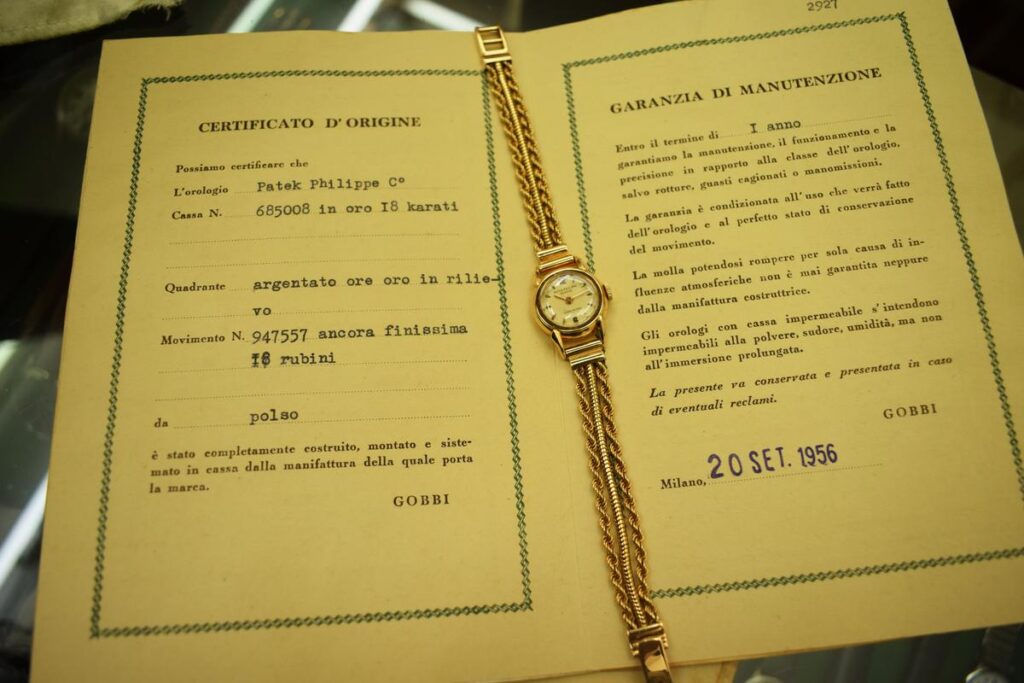
Haq’s passion is evident in the way he handles the watches, and shows off his collection of rare luxury pieces from brands like Patek Philippe and Rolex. He opens a case to reveal a Patek Philippe Nautilus 5711, made in the mid-1970s by the legendary watch designer Gerald Genta. He moves on to reveal similar vintage watches like Patek Philippe Geneve watches made of 18k gold, and a Patek Phillipe 2583 specially made in 1956.
As he carefully places these prized possessions back in a box and locks them away, he reminisces about the late Chief Minister J Jayalalithaa, and actress Sowcar Janaki visiting his father’s shop with timepieces of their own.
“The rarest watch I have repaired is a Moon Phase by Patek Philippe,” he says, adding, “Customers bring in mechanical watches, Rolex, Omega, and other expensive Swiss watches for servicing, usually to fix broken glass dialsor button malfunctions.”
The entrepreneur reminisces the earlier times of Spencer’s Mall, saying it used to be an international hub with tourists from all over the world visiting in search of high-end brands. Those brands have since migrated to other malls, and visitors to Spencer’s have dwindled. But this shop stays put, he says, as the cost of running a business in Spencer’s is reasonable, and those in the know can always find their way to him.
As the self-styled “police officer in the field of watches” fastidiously wipes dials, he disapprovingly speaks of those who run businesses motivated only by money, with no technical knowledge. Gently wrapping each watch in velvet-lined covers he states, “Custom-made watches have no value, there is no originality left in them. When a company manufactures a watch you should not change anything.”
He wears a Rolex Deepsea watch and says his one of his favourite pieces is the Nautilus series from Patek Philippe. His father bestowed him a Vulcain cricket solid gold wrist alarm from the 1950s— his most prized possession.
source: http://www.thehindu.com / The Hindu / Home> Life & Style / by Shivani Illakiya PT / August 20th, 2022
Who is interested to know the story of Mohsin Jamal? A gentleman who was a La Majaz and a La Sahir-rolled into one! It is certainly very unbecoming of me to contain my emotional expel, to write on a friend whom I had met around 25 years back, probably in 1997-98, and never found him to be emotionally or socially fatigued. Welcome to the world of Mohsin Jamal, someone who never had a watch or a calendar in his hamlet and was buried at Aishbagh cemetery, on July 28, 2022.
I very vividly remember, Mohsin Jamal, who was a journalist, writer, and always ‘updated’ into the world news, as once he had got a three-phase electricity, and a generator, all installed, for he wanted to see every moment of the last rites of Princess Diana. He would never let his eye slip any detail, perhaps, he was quite hitched to the departed-soul, as he himself was the one who did not find-his-love, and remained a bachelor throughout his life.
He was a virtual encyclopedia of Urdu poetry, for he remembered more than the proverbial ‘a lakh shairs’ (poetic renditions) of Asrar-ul-Haq ‘Majaz’, Raghupat Sahay ‘Firaq’, Abdul Hayee ‘Sahir’, Shabbir Hasan Khan ‘Josh’, Abdul Hameed ‘Adam’, Ahsan Danish, Faiz Ahmed ‘Faiz’, Parveen Shakir, Jan Nisar ‘Akhter’, Riaz Khairadabi, Khumar Barabankavi, Jaun Elia apart from the stalwarts like Ghalib, Sauda, Meer, Zauq, Aatish, Nasikh, Wali etc. Never there was a moment when he would not come-up with a ‘proportionate or an appropriate’ shair for any occasion. Apart from all that, what also made him was his cigarette smoking, which he never smoked till its last fag, his voice was always modulated like a professional anchor, which was God-gifted, and his sentences were always synchronized like that of newspaper-headlines. He had every prowess to impress anyone, let alone at times, even hypnotize!
His persona had everything which inculcated his cultural ethos; he was ceaselessly help a struggler in the field of media, music or into writing. He would never see the sun rise, his day started at 5 pm and he would retire back home always deeply post-midnight. He was very fond of dressing, most often a spotless white shirt, grey pants, shining always shoes, Ambedkerite glasses, pockets always loaded with wads of US Dollars, yes, Dollars, and a puffing cigarette is what was his cover-story, to hundreds of friend/associates he had in Lucknow. Never in my association with him for over a quarter of a decade did I dwell to unravel as to what he would do for his living! The question was simply out of place, for he never exuded on it. He would move always on his chartered-rickshaw! Was a darling of everyone in any function, and would, make himself overshadow anyone on any given occasion.
The veritable ease with which he would shorten sentences by his ‘dropping-words’ was always a feast to the ears. His rendezvous with theater, arts, music, voice-over, play-back singing etc made him a dynamic presence into what is called as a ‘world-of-finer-aspects’. His knack for music could not be tapped for he knew personal histories of films, songs, musicians, singers etc from Bombay. He had an impeccable memory and would delve hours on the making of films like Mughal-e-Azam, Baiju Bawra, Sita Aur Gita, Bobby etc. There were quite a few cinema stars, who knew him personally and some even often make long-distance-calls, before the advent of cell-phones, to listen from him endlessly the-‘shairs’, which was his forte. His zest encompassed Marsiye, Manqabat, Musaddas, but he was shy-enough, to get them recorded in audio form or for Youtube. Had it was done, it was to be a treasure trove, as certainly it was to be a recipe for any budding actor or a cinema-vérité. He would narrate scene after scene from Agha Hashr Kashmiri, in accordance to characters and their vile. Where? At Sarwar hotel, his favourite pastime, ay Lal Khan ka Hata, , to the rapt attention of his friends who constituted doctors, engineers, editors, lecturers, academicians, businessmen all alike. Obviously, he was always the host.
He would regale ceaselessly his gatherings at Nazeerabad, who would flock around him, not always for his poetic-exuberance but for his versatile genius in colloquial accents. He was perhaps the last of the genre who would quote Asmat Chugtai, Saadat Hasan Manto, Rajender Singh Bedi, Ali Sardar Jafri etc, on their almost unknown aspects, always much to the awe of even research scholars. He would bring the gatherings ‘alive to thrive’ on his incessant quotations from Ameer Meenai, Momin Khan Monin.
I on many occasions would carry him finally to Pioneer, the spot in Lucknow which remained opened 24X7. He would always syntax it from the words of Akbar Allahabadi, “ Ghar se aayi hai Khabar Kal hai Chehleum Unka/ Pioneer likhta hai ki beemaar ka haal ach_cha hai ( Family informs that the 40th day of the dead is the next day/ Pioneer nevertheless tell the ill is still better) in the famous retort of the poet towards the end of the British rule and Pioneer’s biased reporting to it. We would sit there until the wee hours as then I would drop him home. Once we ended up having 27 teas together, as he enamored the lines “Us se paimaan-e-wafa baandh rahi hai bulkul/ Kal na pehchan sakegi gul-e-tar ki soorat” (The nightingale is swearing by the flower/ will not be able to figure it out tomorrow as the flower will be worn-out after tears)
There are hordes of ‘listeners and moaners’ who are now no more to listen or see Mohsin Jamal. One of his friend, Himanshu Bajpayee, who is now a Daastan Go, of international acclaim, says that he could not see Majaz but ‘Mohsin Bhai’ lessened the pain, for he fathomed Majaz to the full-potential. Mohsin Bhai, therefore from now on, will remain out of the purview of people’s gaze, but will forever live in the heart of ‘everyone’ into which he kindled the fire of Majaz and would never let it flicker, until he himself flickered to it. “Haqq Magh.firat kare ajab Azaad mard tha” (May God bless the fearless-independent man) he would sometime requiem for himself.
Lucknow remained a bit same after Majaz, for Mohsin Jamal, inherited the echo, but will it now remain the same? May be yes or may be even no. Long-live Mohsin Bhai.
**
The writer is a former UP State Information Commissioner and writes on politics.
source: http://www.muslimmirror.com / Muslim Mirror / Home> Literature> Obituary / by Haider Abbas / August 14th, 2022
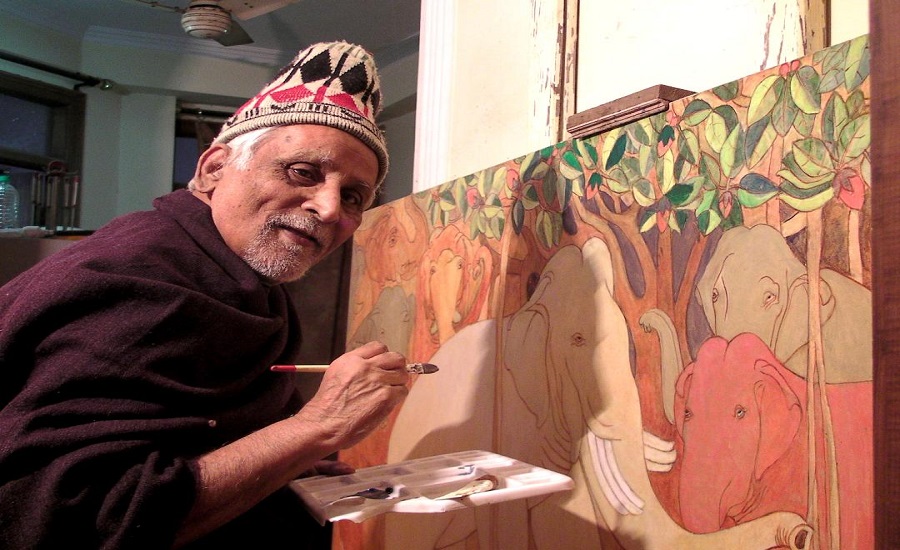
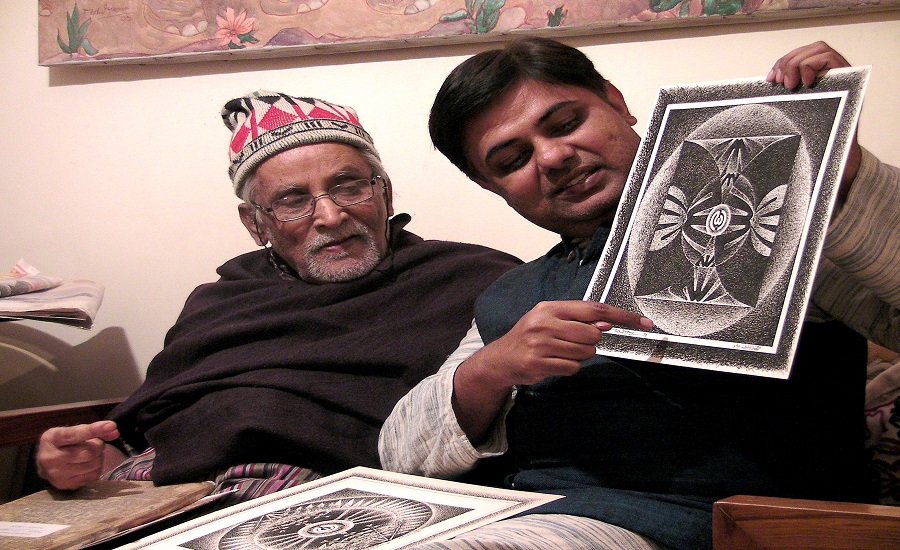
Mohammed Yasin, veteran painter and one of the best calligraphers in the subcontinent.
OBITUARY
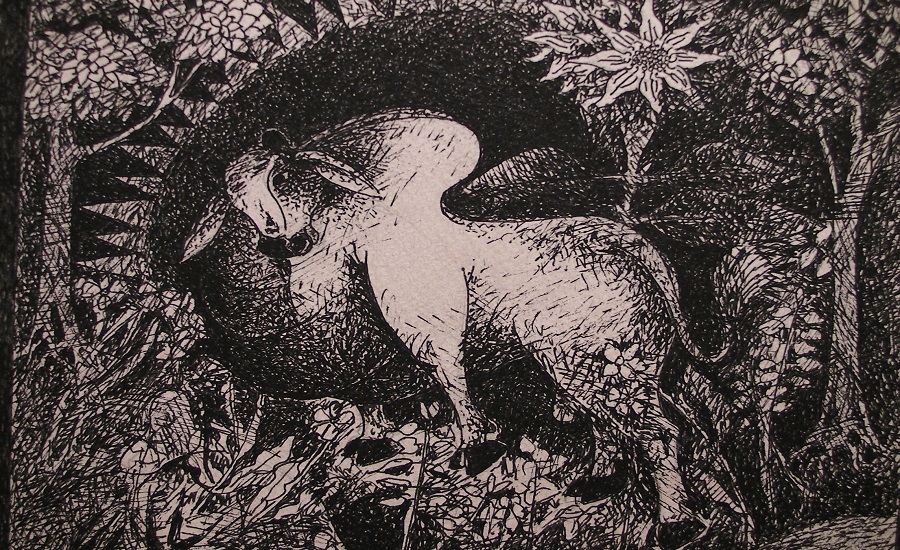
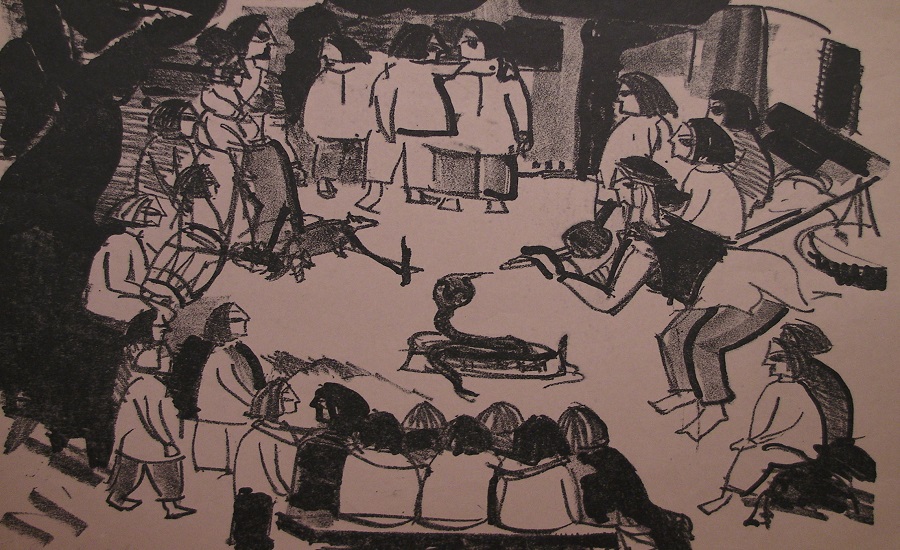
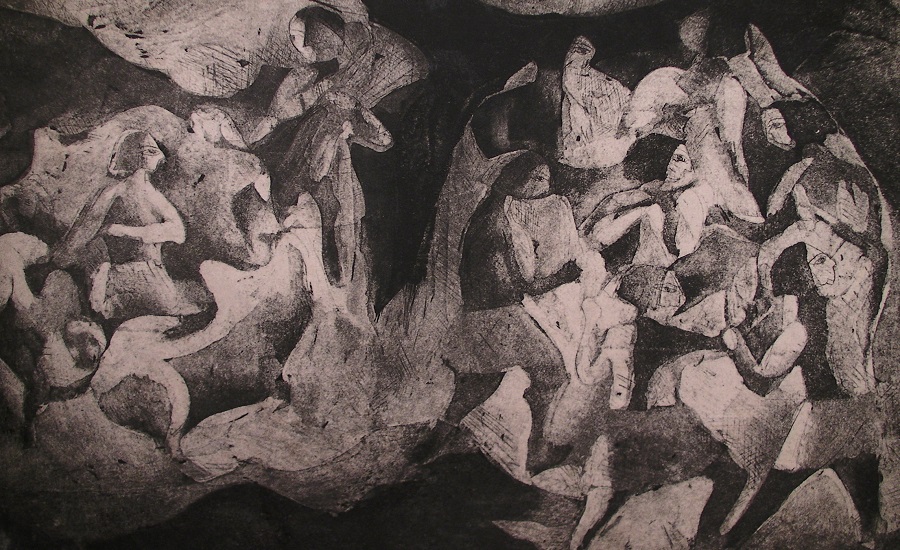
Yasin’s early works have explored all available mediums from lithography, etching, aquatint, engraving, dry point, serigraphy, mezzotint water colours, oils, gouache and egg tempera.
“85-year-old veteran artist Mohammed Yasin’s character impresses as a person and his characteristics as an artist. Perhaps the distinction is unreal, for, in his case, it is the same integrity that reveals itself in the structure of life and in self-expression through art.”
These were the words said a few years ago by a noted art critic for Mohammed Yasin, veteran painter and one of the best calligraphers in the subcontinent, who passed away on August 19.
Yasin was born in Mogalgidda, a village near Shadnagar, 30 km from Hyderabad. As a young school boy, he felt an aptitude for Art when he was just 14 years old. After passing his elementary and intermediate drawing examinations, he moved to Hyderabad city with his family members from his birthplace Mogalgidda.
Showcasing art work.
Though quiet in his demeanour, Yasin has had seriously tragic experiences. His father passed away when he was only 14 months old. He was brought up under his mother’s care and guidance. He had to grow up with many hardships. While as a boy, he was affected by tuberculosis of the spine which has left a limp which necessitates the use of a stick to aid in walking. But through a sustained musing, he has won an inner serenity.
Art works displayed in an art gallery
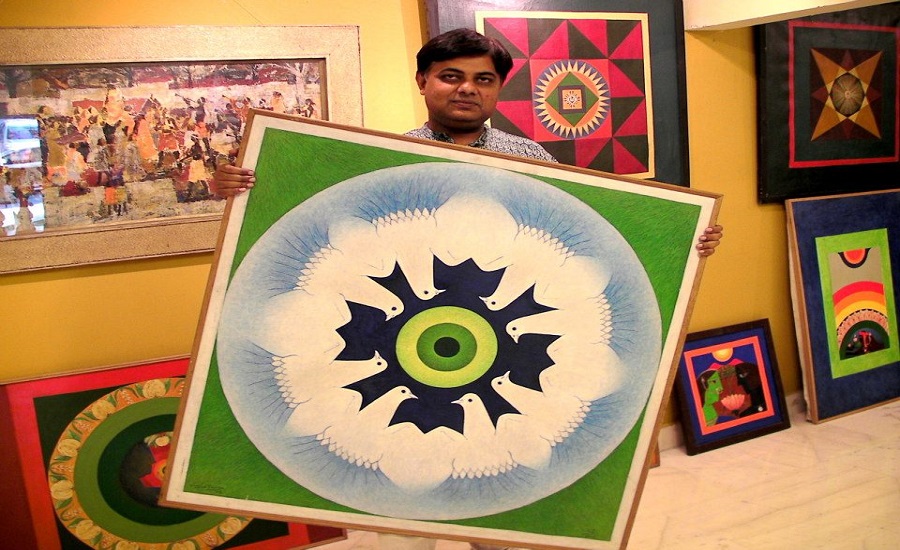
His most important contribution goes to the art of calligraphy. He chose to work in an abstract symbolic manner. Geometrical elements like the circle within the square, concentric circles, etc. comprise the basic structure emphasizing a symmetrical arrangement and abstract formal values–calm and quiet but they are, nevertheless, active fields. They seem to be deeply influenced by the Buddhist art. They generate impulses of colour and focus attention on the symbolic images they contain.
The use of circle, square, triangle adds to his innovation a transparency, a water colour. The orthodox prohibition of representational figuration in art made the Islamic tradition turn to calligraphy. Yasin has brought to this tradition a modernist love of abstraction and monumental geometricism.
His early works have explored all available mediums from lithography, etching, aquatint, engraving, dry point, serigraphy, mezzotint water colours, oils, gouache and egg tempera.
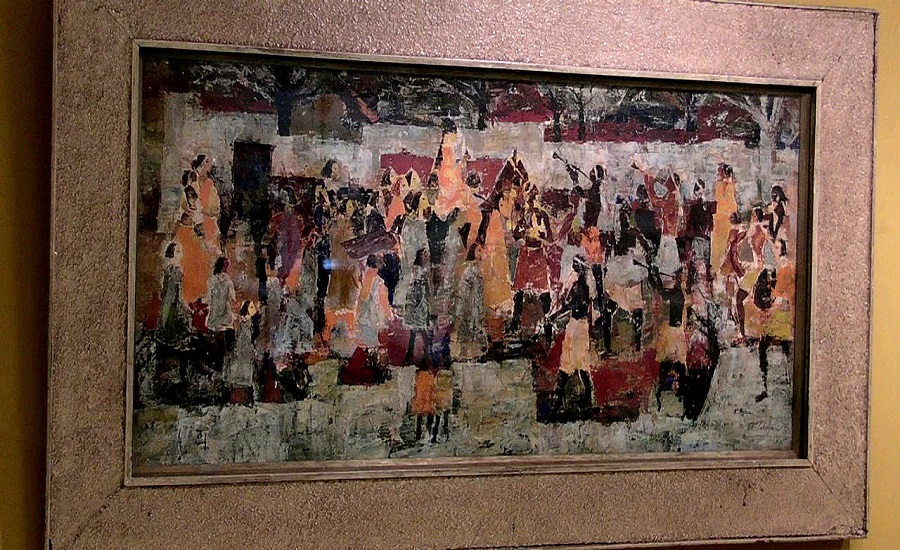
His works are very poetic and also dramatic; actually they are calligraphic in nature. Tantric symbolism, Sufi mysticism, echoes of the miniature schools, shades of thankas and pictorialised Arabic Calligraphy are all inspirations which could be identified in Yasin’s work.
Aseem Asha Usman is founding director of Aseem ASHA Foundation, and has been documenting the life and works of the veteran calligrapher and painter.
source: http://www.clarionindia.net / Clarion India / Home / by Aseem Asha Usman / August 20th, 2020
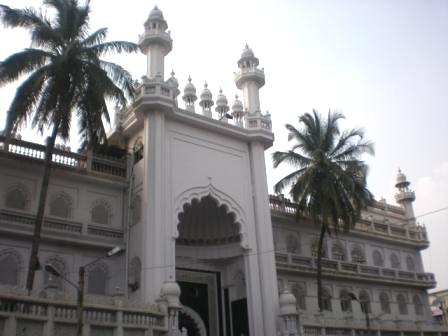
“I believe deep down in my heart that the great reality of spiritual revelation given to humanity by the Prophet (blessed be His name) is an infinitely greater thing than any sectarian difference (Shia & Sunni) imposed upon it by subsequent human feeling and by lesser vision than his of the inner realities from which the external life of humanity has developed.” Mirza Ismail, a Shia Muslim by faith, who was the Prime Minister of Mysore had spoken these words at the inauguration of Jamia Mosque, a Sunni mosque, in Bengaluru on 30 May 1941.
Jamia Masjid, Bengaluru
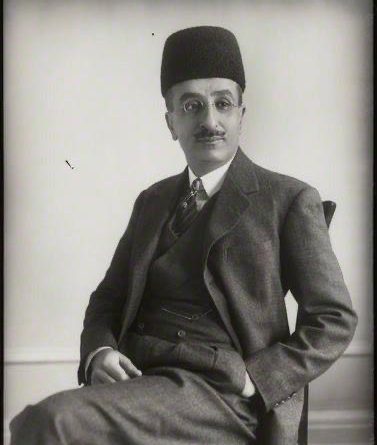
Mirza Ismail remained one of the most important politicians in India as he held the position of Prime Minister (PM) of the second wealthiest state, Mysore, from 1926 to 1941 after which he became PM of Jaipur and Hyderabad.
A Shia by his faith whose foreparents had migrated from Iran and stayed in India, Ismail remained committed to the unity of humans. He believed that Shia and Sunni, Hindu and Muslim, or any caste difference among humans could not stop them from living together harmoniously.
Ismail inaugurated the mosque at Bangalore, which was one of the most important cities in Mysore state, as his last public ceremony in the capacity of the PM of Mysore after resigning from the post. On the occasion he noted, “I am particularly happy that this function, which is the last of my period of service as Dewan of Mysore, gave me the opportunity of expressing an ideal of my life which has been foremost in the past and will remain foremost in the future.”
What was the ideal Ismail talking about? Making a mosque or something else?
The ideal he was talking about was the unity of Shia and Sunni as one Muslim community. He told the people gathered there that the non-Muslims observing this ceremony would not think much about it. In their view a Muslim had come to lay the foundation stone of a mosque of his fellow Muslims. “But to you”, Ismail argued, “fellow-Musalmans, it is not so simple. You know that in the historical development of Islam I belong to a section of the organised expression of the Faith that for centuries has been in sharp opposition to the section to which you, who are going to build this mosque, belong.” He expressed satisfaction that Sunnis had invited him for this event. He told the people that since its very inception he had taken “the greatest possible interest” in this mosque where Sunni Muslims would pray in the manner they wanted.
Ismail went on to tell the people;
“At the centre of Islam is the teaching and practice of brotherhood. You would have been false to the truth of life if, because I am a Shia by birth, you had not invited me to this function, and I would have been equally false to the brotherhood of Islam if, because you are Sunnis, I had not accepted your invitation. Our differences are transient, even trivial, in comparison with the spiritual reality which these differences tend to obscure and weaken.”
Ismail went on to state that love and peace are the essence of Islam and Muslims should stop fighting among themselves as well as with their coreligionists in the country. The mosque is one of the most important mosques in Bengaluru today.
(Author is a neurobiologist with a keen interest in history, society and culture of India)
source: http://www.heritagetimes.in / Heritate Times / Home> Featured Posts> Heritage> Leaders / by Mahino Fatima / March 08th, 2022
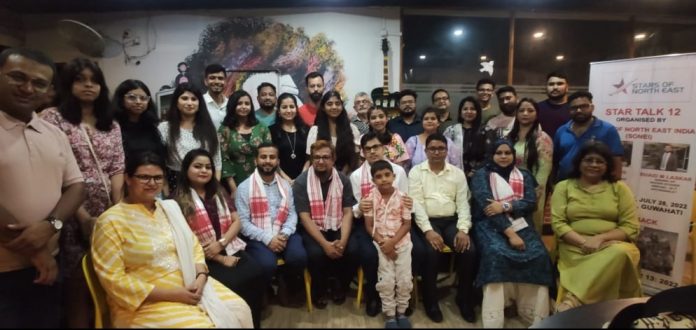
Members of SONEI along with guests pose for a group photo on the sidelines of the ‘Star Talk-12’ event held in Guwahati on Thursday.
Guwahati :
‘Star Talk-12’, an initiative of the Stars of North East India (SONEI), a registered public charitable trust and talent hunt platform, was held in Guwahati on Thursday.
The first appointed speaker of the event was Aman Wadud, a young lawyer who recently got his Masters in Law from the University of Texas under a Fulbright Scholarship. Besides sharing his American experience, Aman Wadud gave a very informative presentation of the evolution of Civil Rights in the USA.
The second appointed speaker, Suaid M Laskar, Head of Pan-India Sales, Admissify made a presentation to clear the common doubts people have about studying abroad. Laskar, who has been instrumental in facilitating overseas studies of more than 350 students from Assam, over the last five years, in countries like Australia, Germany, UK and USA, informed the audience that 93 per cent of the students who go abroad for studies belong to middle class families.
Abhishek Kumar, a graduate from Guwahati Commerce College, who is all set to study his Masters in Supply Chain Management at Cranfield University, UK also shared his experience on the occasion.
Alemoon Nessa of Bongaigaon, who recently received two national MSME awards along with a cash component of Rs eight lakh from the hands of Prime Minister Narendra Modi, was felicitated on the occasion.
Dr Faizuddin Ahmed, a physicist from Dhubri, who has made it to the Stanford list of world’s top 2% scientists, was also honoured on the occasion.
Shahnaz Islam, a budding poet whose book “Midnight’s melancholy” was launched from Sikkim recently, enthralled the audience by reciting a few poems from her book.
Mirza Arif Hazarika’s short film “Sorry” starring Barasha Rani Bishaya and Ravi Sharma is now live on Disney+Hotstar, a rare honour for an Assamese short film. Mirza shared his experiences of making the film.
Priyanka Paul Banerjee, an upcoming PR practitioner, was also felicitated along with other achievers at the event.
SONEI will complete eight years of its existence in September 2022 during which new projects will be announced in addition to its existing programmes in the field of education, promotion of skills, and social service.
The event was hosted by Samima Sultana Ali and Sharique Hussain.
source: http://www.muslimmirror.com / Muslim Mirror / Home> Education> Positive Story / by Special Correspondent / July 29th, 2022
He is truly a forgotten warrior of the freedom movement. Few know about him and fewer are familiar with his name but delve into the pages of history and you realise that he deserves a better place.
He participated in the Indian Rebellion of 1857 in the Battle of Shamli between the British and the anti-colonialist ulema. The scholars were ultimately defeated at that battle.
He was Mohammad Qasim Nanautawi.
Nanautawi was born in 1832 into the Siddiqui family of Nanauta, a town near Saharanpur in Uttar Pradesh.
He was schooled at Nanauta, where he memorised the Quran and learned calligraphy.
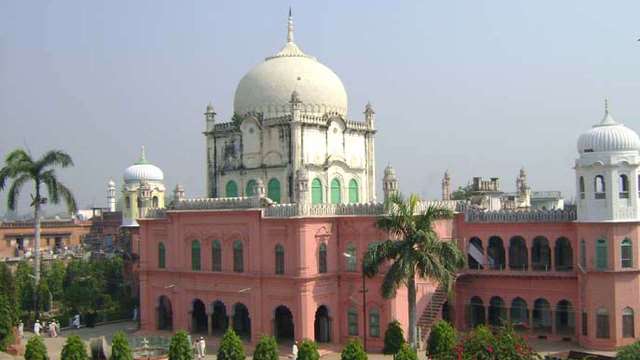
At the age of nine, Nanautawi moved to Deoband where he studied at the madrasa of Karamat Hussain. The teacher at this madrasa was Mehtab Ali, the uncle of Mahmud Hasan Deobandi.
On the instruction of Mehtab Ali, Nanautawi completed the primary books of Arabic grammar and syntax.
Thereafter, his mother sent him to Saharanpur, where his maternal grandfather Wajihuddin Wakil, who was a poet of Urdu and Persian, lived.
Wakil enrolled his grandson in the Persian class of Muhammad Nawaz Saharanpuri, under whom, Nanautawi, then aged twelve, completed Persian studies.
In 1844, Nanautawi joined the Delhi College. Although was enrolled in the college, he would take private classes at his teachers’ home, instead of the college.
Nanautawi stayed in Delhi for around five or six years and graduated, at the age of 17.
After the completion of his education, Nanautawi became the editor of the press at Matbah-e-Ahmadi.
During this period, he wrote a scholium on the last few portions of Sahihul Bukhari.
Before the establishment of Darul Uloom Deoband, he taught for some time at the Chhatta Masjid. His lectures were delivered at the printing press. His teaching produced a group of accomplished Ulama, the example of which had not been seen since Shah Abdul Ghani’s time.
In 1860, he performed Haj and, on his return, he accepted a profession of collating books at Matbah-e-Mujtaba in Meerut. Nanautavi remained attached to this press until 1868.
In May 1876, a Fair for God-Consciousness was held at Chandapur village, near Shahjahanpur.
Christians, Hindus, and Muslims were invited through posters to attend and prove the truthfulness of their respective religions.
All prominent Ulama delivered speeches at the fair. Nanautawi repudiated the Doctrine of the Trinity, speaking in support of the Islamic conception of God.
Christians did not reply to the objections raised by the followers of Islam, while the Muslims replied to the Christians word by word and won.
Mohammad Qasim Nanautawi established the Darul Uloom Deoband in 1866 with the financial help and funding of the Muslim states within India and the rich individuals of the Muslim Indian community.
He conformed to the Sharia and worked to motivate other people to do so. It was through his work that a prominent madrasa was established in Deoband and a mosque was built in 1868. Through his efforts, Islamic schools were established at various other locations as well.
His greatest achievement was the revival of an educational movement for the renaissance of religious sciences in India and the creation of guiding principles for the madaris (schools).
Under his attention and supervision, madaris were established in several areas.
Under Muhammad Qasim Nanautvi’s guidance, these religious schools, at least in the beginning, remained distant from politics and devoted their services to providing only religious education to Muslim children.
Nanautawi died on 15 April 1880 at the age of 47. His grave is to the north of the Darul-Uloom.
Since Qasim Nanautawi is buried there, the place is known as Qabrastan-e-Qasimi, where countless Deobandi scholars, students, and others are buried.
Significantly, the elders of Deoband took more and more part in the struggle for the independence of the country.
After the establishment of Darul-Uloom, the period of participation in national politics began.
Darul-Uloom, Deoband, was a centre of revolution and political, training. It nurtured such a body of such a body of self-sacrificing soldiers of Islam and sympathisers of the community who themselves wept in the grief of the community and also made others weep; who themselves tossed about restlessly for the restitution of the Muslims’ dignity and caused others also to toss about.
They shattered the Muslims’ intellectual stagnation, they broke up the spell of the British imperialism, and, grappling with the contemporary tyrannical powers, dispelled fear and anxiety from the minds of the country.
They also kindled the candle of freedom in the political wilderness.
It is a historical fact that the political awakening in the beginning of the twentieth century was indebted to Deoband and some other revolutionary movements in the country, and the revolutionary freedom-lovers who rose up there were the products of the grace from the spring of thought of Deoband.
Then, after the establishment of Pakistan, the Indian leaders of Deoband guided the Indian Muslims in utterly adverse circumstances and helped keep up their spirits high. — IANS
source: http://www.muslimmirror.com / Muslim Mirror / Home / by Amita Verma / July 31st, 2022
A tribute to a polymath historian who recently passed away.
Dr Ziauddin Ahmed Shakeb at the Qutb Shahi tombs in Hyderabad, October 2013. Photo: Author provided
I first met Dr Mohammed Ziauddin Ahmed Shakeb in the summer of 2011, as a naïve PhD student who’d arrived in Hyderabad from Los Angeles wanting to “read Shah Jahan’s documents”. He asked me the very standard question asked of research students in India, “What is your topic?”
I only had a rather incoherent answer to give to Shakeb, the man who had, among other things, created the Mughal Record Room, in what is today known as the Telangana State Archives. Located in a nondescript building at the periphery of the Osmania University campus in the dusty precinct of Tarnaka, this institution has undergone numerous transformations over the course of a half-century of its existence in Hyderabad. But institutions were often narrow and unimaginative places for sustaining a towering figure such as Shakeb. He went on to have a long and eclectic life and career that consistently defied the logic and constraints of institutions, for he was himself an institution. The loss of Shakeb is thus far more than the loss of an individual.
His was a formidable generation of post-Independence intellectuals from different parts of the subcontinent who, from the 1950s, devoted themselves to preserving its languages, repairing and reconstructing our scattered archives and libraries, and re-imagining our past(s) long before colonialism. Shakeb embodied, above all, a boundless curiosity coupled with a complete disregard for trends, ‘schools,’ cliques, and fancy theories.
He was not interested in being a Marxist or a nationalist nor in chasing the Western academy’s greener pastures. In some ways, his foremost allegiance was to the detritus of the past itself – to what paper, ink, and materiality mean and what they can tell us about our past and present selves. He asked, what a document or manuscript had gone through over centuries, how had it come to be, and how can we best preserve thousands of paper fragments for future generations so we can continue to tell their stories?
This rare commitment to the study and preservation of archival knowledge led him to write the landmark catalog, Mughal Archives Vol I: A Descriptive Catalogue of the Documents Pertaining to the Reign of Shah Jahan, in 1977, followed by many publications for The British Library, State Archives Andhra Pradesh, and other repositories, universities, and auction houses. I remember asking Shakeb once why he was so committed to creating reference tools to access rare historical materials, and he answered, “because I know no one will care to read them in the future!” In some ways, he was right.
Today, when the stakes for writing about the subcontinent’s pasts are fraught and closely tied to an ongoing project of hollowing out academic institutions, it’s worth remembering a very different kind of Indian historian.
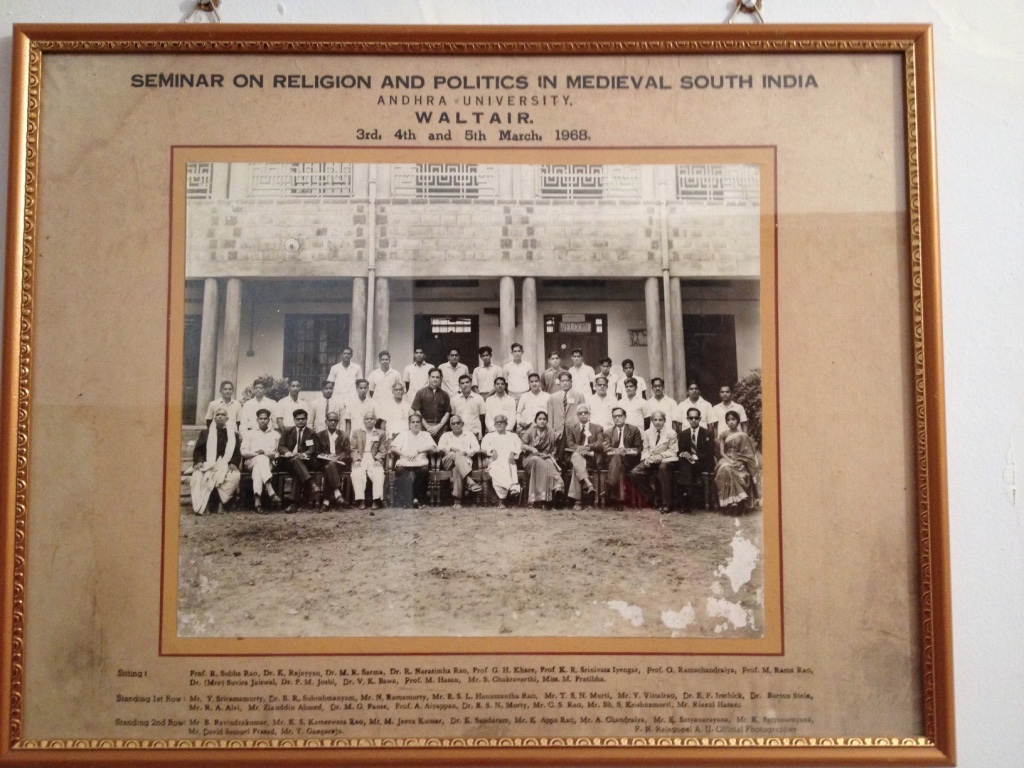
Shakeb standing in the second row, in a group photo from a conference in March 1968 at Andhra University, Visakhapatnam. Also pictured are G.H. Khare, Mohibbul Hasan, V.K. Bawa, P.M. Joshi, Suvira Jaiswal, Burton Stein, and Eugene Irschick, among others. Photo: Author provided
Born on October 21, 1933, Shakeb grew up in Hyderabad and Aurangabad. He studied Political Science and English at Osmania University before heading to Aligarh Muslim University in 1956 for his Masters, where he was taught by Mohammed Habib and S. Nurul Hasan. In 1962, he returned to the south where he was employed as an archivist at what was then known as the State Archives Andhra Pradesh. There, Shakeb acquired the unique training of deciphering documents and identifying their categories, genres, and forms from the last generation of the traditional jagirdari staff of the Nizam’s state who were retiring when he joined the archives. He also worked under Yusuf Husain Khan who had begun the work of processing Mughal administrative documents. The archives thrived under the directorship of committed scholar-administrators such as Hadi Bilgrami and V.K. Bawa.
As rich documentary caches from families, Sufi shrines, and samsthanams were discovered and deposited into state institutions, post-independence archivists and historians confronted challenges, including the reluctance of individuals to part with materials that had been in their homes for centuries. Debates and disputes ensued about what constituted a ‘valuable’ manuscript or document, how to classify materials, and to which regional-linguistic nationalism a remnant ‘belonged.’
These were debates that had already begun in the pre-Independence period, in the work of institutions like the Indian Historical Records Commission. Recent studies of the debates between Jadunath Sarkar and the Maratha historians have traced the longer history of such tensions. Part of the problem was the mutual suspicion between scholars oriented to modern social sciences and those with a more ‘traditional’ orientation and training. Shakeb, the archivist-historian, was at once both and neither.
At a distance from the halls of JNU and Aligarh, where the Mughal state’s merits were being debated, Shakeb inhabited yet another set of worlds. He was at ease reconstructing the household library of Chishti Sufi Abu’l Faiz Minallah in Bidar, discussing the southern India Cholas with the American historian Burton Stein, and discovering a shipwreck off the coast of Masulipatnam in the late 1960s.
Based on newly-processed materials, in 1976, he would complete his doctorate under P.M. Joshi at Deccan College in Pune, a connected history that examined circulation and political diplomacy between Safavid Iran, Mughal India, and the Golkonda sultanate. Shakeb’s study brought the question of mobility and exchange to the centre stage at a time when the norm was to study either the Mughal heartland (often synonymous with Delhi or the northern Indian plains) or select one province of the empire. After many years in archives and universities, Shakeb charted his own path beyond academia. His forensic ability for assessing manuscript provenance, material objects, and documentary genres, allowed him to thrive in other professional contexts, leading to work as a consultant for Christie’s in London.
But, to restrict myself to Shakeb the historian would fail to capture the range of subjects, languages, and disciplines over which he had complete mastery – Persian and Urdu literature, Islamic studies, geography, philosophy, linguistics, and art history. Shakeb always kept the historian’s arrogance in check by reminding her of the literary critic’s skills. The study of prosody and poetics was just as important for making sense of an India without and before English.
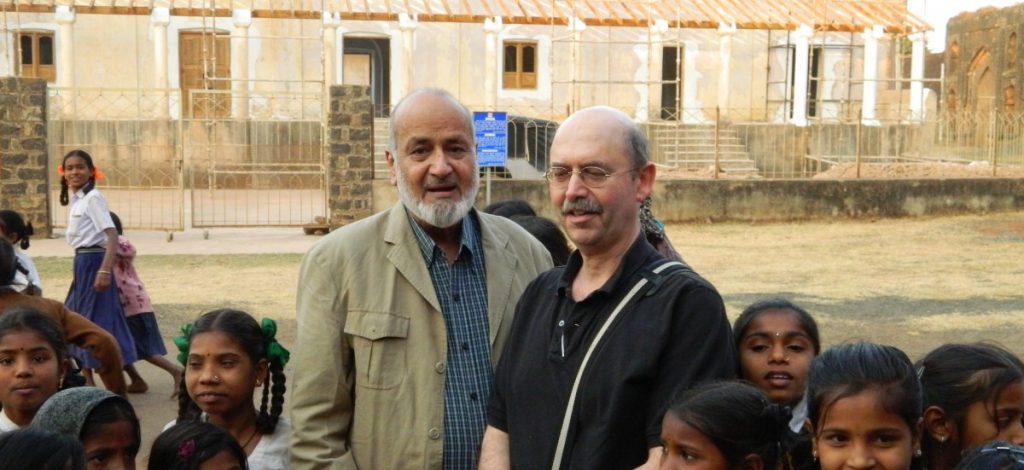
Dr Ziauddin Ahmed Shakeb (L) with his friend Dr Leonard Lewisohn (R) at Bidar fort in January 2012. Photo: Author provided
Literary circuits would light up the minute Shakeb landed back in Hyderabad (as they often would in London). He had been working for many years on translating Iqbal’s Persian poetry into Urdu. He was equally committed to the study of Bedil, Ghalib, Dagh, and Amir Minai. He would unveil to students the unique phonetics and cadence of Dakani, the pan-regional literary idiom of southern India, with many living poets and a long literary history, which he emphasised, is yet to be fully understood for its role in shaping classical and modern Urdu.
When he published his dissertation, Relations of Golkonda with Iran, in book form in 2017, he dedicated it to his grandchildren – Itrat, Taha, Mahamid, Khadija, Tawsin, Mahd, Istafa, Fatima, ‘Ali, Nuha – all of whom embody their dadasaab’s fortitude and resilience. I haven’t sufficient words to describe the patience of his wife, Farhat Ahmed, and the enormity of what she has taught me over many years about balancing the scholarly life with everyday living. It was this reminder that grounded Shakeb’s engagement with multiple worlds. His hands that treated every piece of archival paper like a newborn child. Lethal scoldings hurled at junior scholars too convinced of their own greatness. And, never forgetting to make fun of people who take themselves too seriously. With Shakeb’s passing, we are reminded how fragile the threads are that connect us to the past, and how dependent we are on a handful of such individuals. It’s difficult to imagine what, if anything, might come after such larger-than-life figures.
Subah Dayal is Assistant Professor at New York University’s Gallatin School of Individualized Study. Her research is on social and cultural histories of the Deccan and the Indian Ocean world.
source: http://www.thewire.in / The Wire / Home> English> Culture> History / by Subah Dayal / February 10th, 2021