Category Archives: Community Involvement / Social Issues

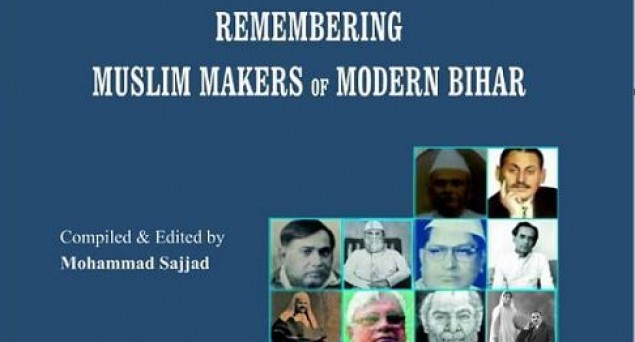
Bihar Collective to Release Booklet “Remembering Muslim Makers of Modern Bihar” in Patna on Feb 23

Patna, BIHAR :

Patna :

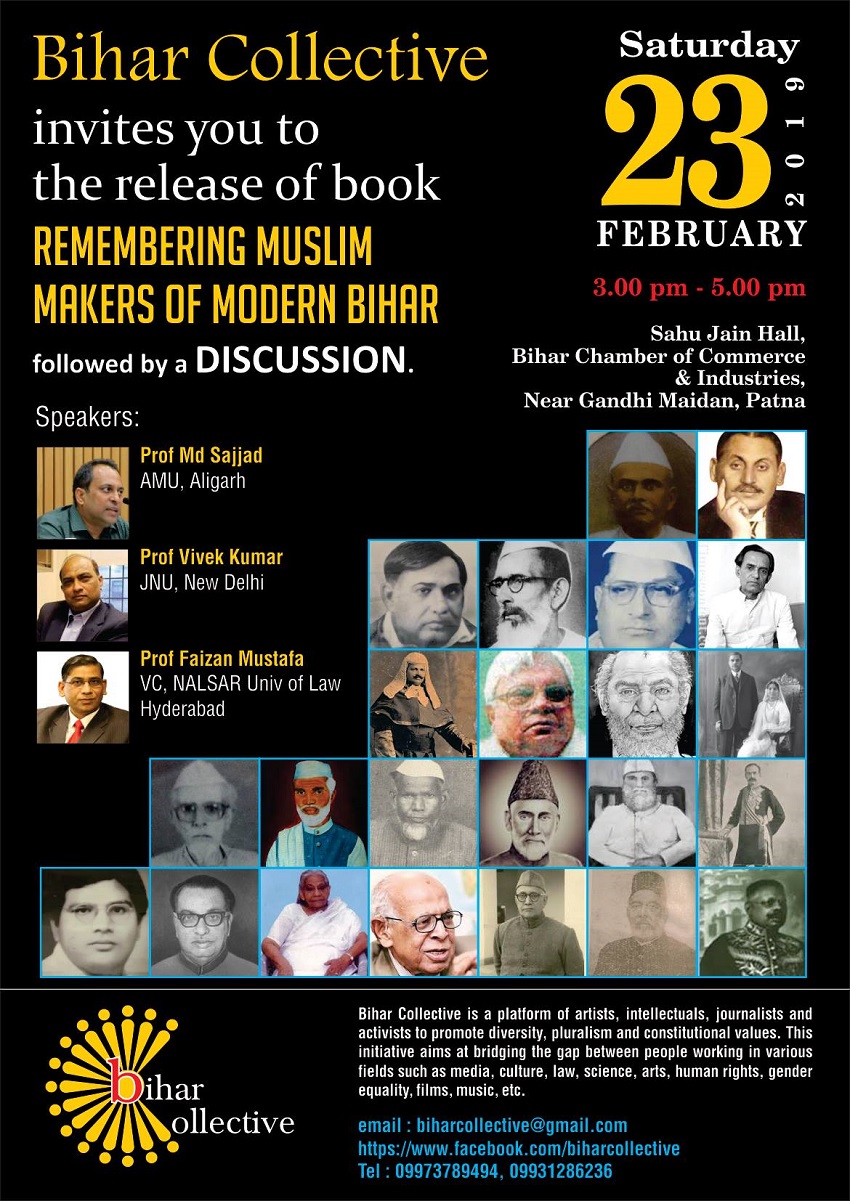
In an era of unprecedented majoritarian ascendance and anti-Muslim hatred, Bihar Collective, a platform of intellectuals and activists, has brought out a booklet highlighting the contribution of eminent Muslims in making the modern Bihar in the last 200 years.

The booklet titled Remembering Muslim Makers of Modern Bihar has been compiled and edited by renowned academician and writer Prof. Mohammad Sajjad on the initiative of Bihar Collective.

The booklet will be released at an event in Patna on Saturday (February 23).

On the occasion, a discussion will also be held with Prof Faizan Mustafa, Vice Chancellor, NALSAR University of Law, Hyderabad; Prof Vivek Kumar, JNU, New Delhi; and Prof Mohammad Sajjad, AMU, Aligarh as panelists.

A Brief about Booklet:


Pre-empting a reasonable question about the title of the booklet, Prof Sajjad, who has compiled and edited it, writes in its preface: “A simple and obvious question that may readily arise is: why only Muslim makers of modern Bihar? Why not others too? This is indeed a valid and pertinent question.”

Responding to the question, he further says: “Candidly put, this is because of an unprecedentedly menacing rise of majoritarianism, bigotry, and anti-Muslim hatred, with open support of the state.

The Muslim identities are ominously threatened. There are also unabated attempts to dilute (or even take away) whatever little accomplishments have been made by the forces of social justice and secularism.

Only the Muslim segment however is threatened by the jingoist, exclusionary, violent nationalists, to be thrown out to another country. As if the other country is a dustbin, owned by these bigots, into which they can throw away everything they dislike! As if only the religious majority constitutes the nation! Notably, these jingoists had aligned with the British and had stayed away from the national movement.”

“Muslim contributions in the nation-making (and in the freedom movement) remain under-acknowledged, forgotten or even omitted. Erasure of their histories and memories seem to have become even more pronounced and vociferous, now, than ever before…The Bihar Collective therefore decided to compile a short profile of these inspiring role models, history-makers…This is small and humble step towards retrieving and restoring the nationalist provincial pantheons bearing Muslim identities,” says Prof Sajjad.

He, however, admits that the list of Muslim heroes of Bihar given in the booklet is not exhaustive as “…many have been left out essentially because of lack of documentations and researches. Not many have left their own accounts/memoirs; the available memoirs/accounts have not written much about all the personalities. In many cases, even otherwise “resourceful” descendants and/or associates of the history-makers have not been able to provide us with adequate (and credible/verifiable) details.”

Prof Sajjad hopes this small exercise may lead to some big academic work on these history-makers. “In short, this kind of venture may be said to be an ongoing exercise. This effort may hope to open up (and obtain) more details about such history-makers and would also get to know about many more of such peoples and processes, we failed to include here in this hastily prepared tiny volume, amidst constraints of resources and time.”

Names of Muslim Makers of Modern Bihar Mentioned in Booklet:
1. Syed Imdad Ali (d.1886]
2. Khuda Bakhsh (1842-1908)
3. Syed Amir Husain (1843-1910)
4. Imdad Imam Asar (1849-1934)
5. Shah Badruddin(1852-??)
6. Syed Ali Bilgrami (1853-1911)
7. Rasheed-un-Nesa (1855-1926)
8. Syed Noorul Huda (1855-1939)
9. Justice Syed Sharfuddin (1856-1921)
10. Shaikh Gulab (1857-1920)
11. Sarfaraz Husain Khan (1860-1931)
12. Maulana Mazharul Haque (1866-1930)
13. Batakh Miyan Ansari (1867-1957)
14. Sir Fakhruddin (1868-1933)
15. Syed Ali Imam (1869-1932)
16. Syed Hasan Imam (1871-1933)
17. Salahuddin Khuda Bakhsh (1875-1931)
18. Shafi Daudi(1875-1949)
19. Khwaja Md. Noor(1875-??)
20. Abdul Wadood (d.1955)
21. Syed Abul Hasan (1878-1960)
22. Sir Sultan Ahmad (1880-1963)
23. Maulana Sajjad (1880-1940)
24. Pir Mohammad Munis (1882-1949)
25. Abdul Bari (1882-1947)
26. Syed Sulaiman Nadvi (1884-1953)
27. Mohammad Yunus (1884-1952)
28. Shah Md. Zubair (1884-1930)
29. Syed Abdul Aziz (1885-1948)
30. Zubaida Begum Daudi (1886-1972)
31. Syed Tafazzul Karim (1886-1964)
32. Mr. Mohammad Shafi (1888-1955)
33. Qazi Ahmad Husain (1889-1961)
34. Dr. Syed Mahmud (1889-1971)
35. Ali Husain Aasim Bihari (1890-1953)
36. Shah Mohammad Umair (1894-1978)
37. Abdul Ahad Mohammad Noor (1894-1975)
38. Hakeem Md. Kabiruddin (1894-1976)
39. Maulana Usman Ghani (1896-1977)
40. Manzoor Ahsan Aijazi (1897-1969)
41. Shah Md Ozair Muni’mi (1899-1961)
42. Maghfur Aijazi (1900-1966)
43. Syed Jafar Imam (1900-1965)
44. Syed Badruddin Ahmad (1901-1983)
45. Mohammad Tahir (1903-???)
46. Syed Jafar Imam (1903-1979)
47. Syed Fida Husain (1904-80)
48. Abdul Qaiyum Ansari (1905-1974)
49. Wajihuddin Minhaji (1907-1984)
50. Syed Md. Aiyub (1910-1964)
51. Abdul Sami Nadvi (1913-????)
52. Abul Hayat Chand (1914-1958)
53. Ahad Fatmi(1915-1980)
54. Zawwar Husain (1916-80)
55. Shafiqullah Ansari (1917-1980)
56. Shah Mushtaq Ahmad (1917-2002)
57. Abdul Ghafoor (1918-2004)
58. Col. Mahboob Ahmad (1920-1992)
59. Taqi Raheem (1920-1999)
60. Zahra Daudi(1923-2003)
61. Shakoor Ahmad (1924-1981)
62. Syed Hasan (1924-2016)
63. Yunus Lohia (1925-2019)
64. Ghulam Sarwar (1926-2004)
65. Syed Shahabuddin (1935-2017)

A Brief about Author:


Prof Mohammad Sajjad teaches late-colonial and post-independent Indian history at the Centre for Advanced Study in History, Aligarh Muslim University. He has written several books including Muslim Politics in Bihar: Changing Contours; and Contesting Colonialism and Separatism: Muslims of Muzaffarpur since 1857.

His articles are published in reputed academic journals from Routledge, Sage, EPW etc. and also in anthologies from the Oxford University Press and Cambridge University Press.
Bihar Collective:
It is a platform of artists, intellectuals, journalists and activists to promote diversity, pluralism and constitutional values. It aims at bridging the gap between people working in various fields such as media, culture, law, science, arts, human rights, gender equality, films, music, etc.
Email: biharcollective@gmail.com
Facebook: https://www.facebook.com/biharcollective

source: http://www.indiatomorrow.net / India Tomorrow / Home> Society / by India Tomorrow / February 21st, 2019
A worthy example of communal harmony

Rasipuram Town (Namakkal District) , TAMIL NADU :

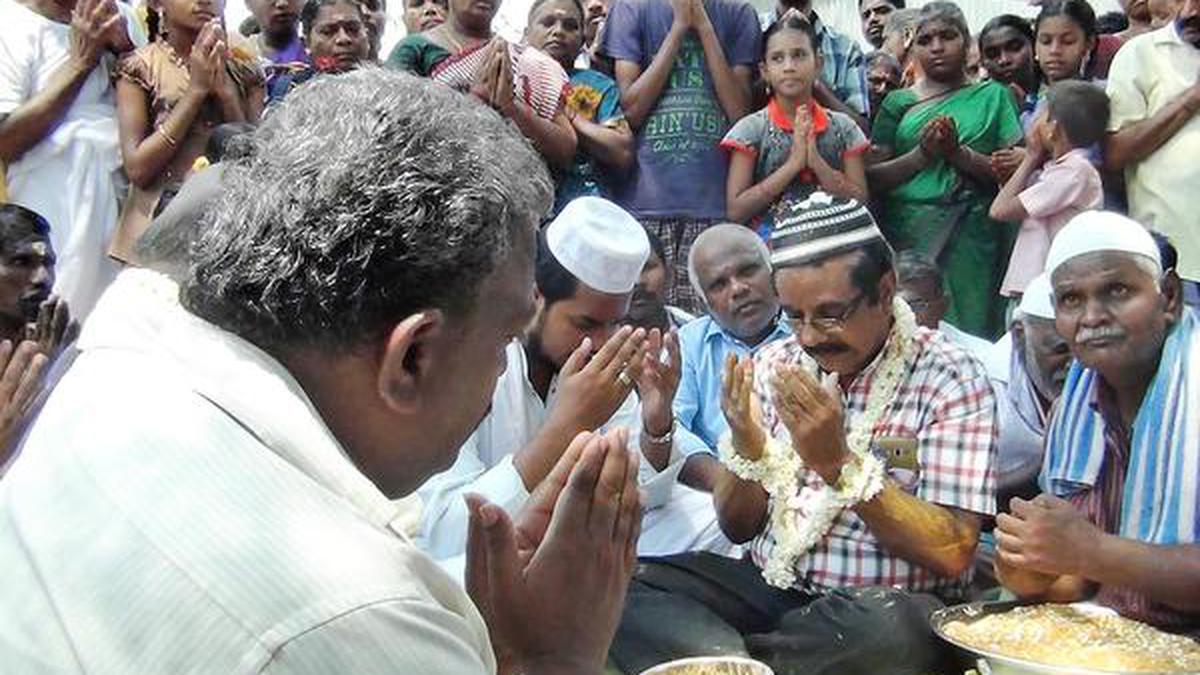
Joint celebration: Hindus and Muslims at the valediction of the Panguni Uthiram festival in Namakkal.

By honouring members of the Muslim community at the annual Panguni Uthiram festival on Wednesday, the Hindus in Gurusamipuram, a small village near Rasipuram, have set a worthy example of communal harmony.

It is a thanksgiving gesture to the Muslims of Rasipuram town, whose forefathers were believed to have cured through prayers many children of the Hindu community of cholera.

This practice has been in vogue for over a century now, the village elders say.

The Panguni Uthiram is a major festival of Arulmigu Sivasubramaniar Temple and is celebrated with usual gaiety every year. It is at the valediction of this festival the Hindus honour the Muslims.

According to K. Thalamuthu, a former school headmaster and president of the Sengunthar Nala Kalvi Arakkattalai, and Devarajan, its treasurer, many children of the weaver community in Gurusamipuram were affected during a cholera outbreak in the village.

On learning about this, the Muslims of Raispuram who used to visit the village for business transactions, offered special prayers by tying a white holy flag to a tree. They smeared sandalwood paste on the doors and walls of each and every house in the village. Following this, all the children were believed to have recovered.

Since then, the residents of the village make it a point to honour the Muslims of Rasipuram at the annual Panguni Uthiram festival.

The organising committee of the festival visited Rasipuram and extended invitation to members of the Muslim community belonging to Achukatti Street Mosque Jamath.

The Jamath members, accepting the invitation, visited the village on Wednesday with fruits and sweets . The Hindus and Muslims holding the holy white flag went through all the streets in the village, when the Muslims smeared sandalwood paste on the doors of all the houses. After tying the flag to the tree, which is popularly known as ‘jhanda’ (flag) tree, they assembled at the Paavadi ground.

The Hindus honoured the visiting Muslims with garlands and vice-versa. Special ‘fathiha’ was recited by the Muslim religious scholar for communal harmony , followed by the distribution of a mixture of jaggery and roasted gram by the visitors.

Later the Muslims took leave.

“This is a worthy gesture practised by our forefathers and we are continuing this tradition in the interest of strengthening the bond between both the communities for decades together,” says Mr. Thalamuthu.

source: http://www.thehindu.com / The Hindu / Home> Today’s Paper> National> Tamil Nadu / by Syed Muthahar Saqaf / April 15th, 2017

Standing tall with the new minaret

Salem, TAMIL NADU :

The latest addition at the historic Jamia Masjid, Salem, is the nine-tier tower

The historic Jamia Masjid on the southern banks of River Tirumanithar in the heart of Salem city has got a 135 ft. tall ‘minaret.’ This is said to be one of the tallest minarets to be constructed in a mosque in South India in the recent past.

The minaret is a significant feature of mosques across the world, and is one of the earliest characteristics of Islamic architecture. The ‘muezzin,’ a person who announces the call of prayer, usually delivers the ‘azaan’ from the minarets.

Jamia Masjid in any town or city is considered as the chief mosque. They are known as congregational mosques, as Muslims gather in large numbers to offer prayers on Fridays and during Ramzan, Bakrid and other festivals.

Rich past

Jamia Masjid in Salem city, standing on about 1.5 acres of land, has a rich past. It is one of the oldest mosques in the state and was said to have been built by the Mysore ruler Tipu Sultan (1750 – 1799), popularly known as the Tiger of Mysore, more than two centuries ago. Tipu Sultan, who had visited the Salem region on various occasions, is said to have offered prayers in this mosque. He has also donated inams (properties) for this mosque. The British regime, which understood the importance of this Jamia Masjid, also extended assistance to this mosque and gave ‘inams’.

This Jamia Masjid is built on the lines of the North Indian mosques. The prayer hall of this grand mosque stands on an elevated ground and is decorated with tall, elaborate granite pillars. On Fridays, this masjid gets more worshippers from the town and neighbouring areas of Salem.

According to S.R. Anwar, the Muthawalli of the Jamia Masjid, the minaret has nine small tiers ranging between 10 ft. and 20 ft. The cornice (metal kalasam), atop the minaret was made in Kumbakonam. A silver cone and crescent decorate this metal structure.

Anwar says that this Jamia Masjid plays a stellar role in promoting communal harmony in the entire western belt and has been held in high esteem by everyone.

S. Veerappan, an expert architect from Kamanayakkanpatti, led a team which was in-charge for the construction of this minaret. His name is engraved on the inaugural stone. “It is a great honour that my name is on the tablet stone of the mosque,” says Veerappan. “This highlights the mutual respect and goodwill that the people from different communities have for each other,” he adds.

The new minaret was inaugurated recently by A. Anwar Raajha, MP and Chairman of Tamil Nadu Wakf Board, in the presence of MPs V. Panneer Selvam, P.R. Sundaram and K. Kamaraj.

source: http://www.thehindu.com / The Hindu / Home> Today’s Paper> Features> Friday Review / by Syed Muthahar Saqaf / July 06th, 2018

Tamil scholar Nainar Mohamed passes away

Tiruchirapalli, TAMIL NADU / Texas, U.S.A :

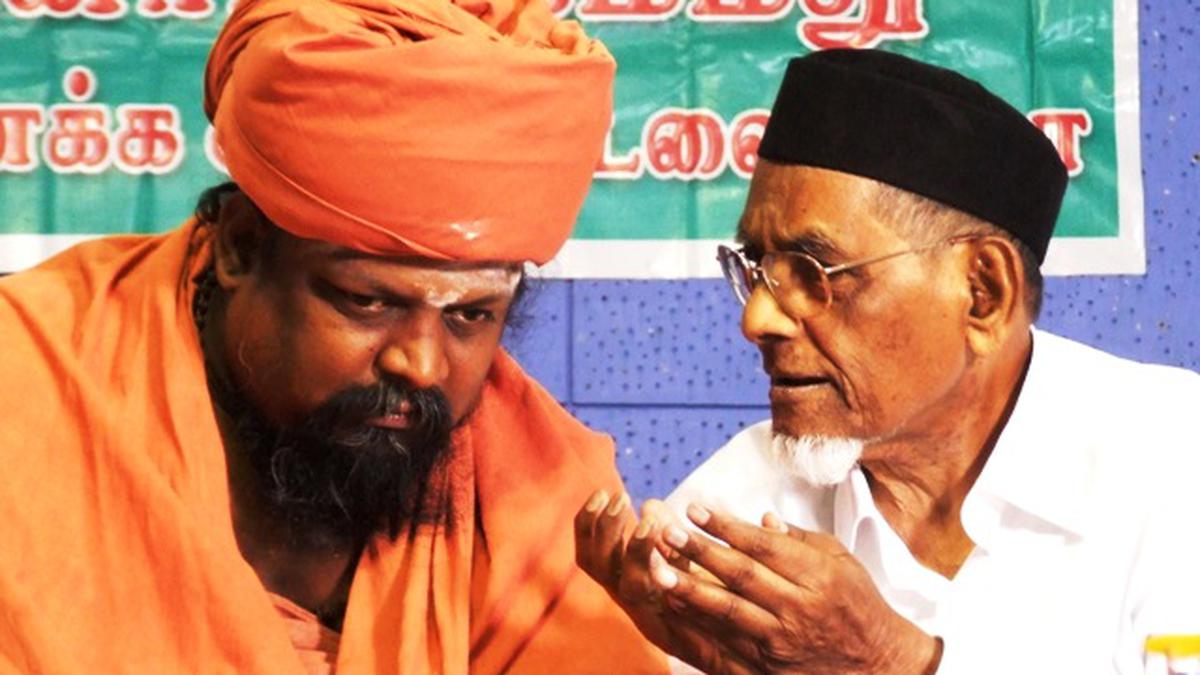
Thavathiru Kundrakudi Ponnambala Adigalar having a word with C. Nainar Mohamed (right). File Photo: R.M. Rajarathinam

Renowned Tamil scholar, writer and former Principal of Jamal Mohamed College, Tiruchi, C. Nainar Mohamed passed away at his daughter’s residence at Texas in USA on Wednesday night. He was 85.

Popularly known as ‘Perum Pulavar’, a title conferred on him by late Kundrakudi Adigalar, Nainar Mohamed served as the Head of the Department of Tamil of Jamal Mohamed College for a record 32 years, and its Principal for four years in the 1980s. After retiring from the college service, he served as professor at Tamil University, Thanjavur for five years.

 He launched the Tamizhaga Pulavar Kuzhu along with late K.A.P. Viswanatham and served as its secretary for 28 years. He also set up the Islamia Ilakkiya Kazhagam. A leading figure in Tiruchi Tamil Sangam, he continued to remain as its deputy Minister till now.

The Madurai Kamaraj University honoured him with ‘Tamil Chemmal’ award and the Ulaga Tirukkural Peravai with ‘Tirukkural Neri Thondral’ and ‘Kural Gnayiru’ awards. Through the Islamia Ilakkiya Kazhagam, he organized five International Tamil Literary conferences, which brought to light the richness of the Islamic Tamil literary works to the world. 

A regular in world Tamil conferences, he has authored many books.

He is survived by wife Hasina Nainar, four sons and a daughter.

source: http://www.thehindu.com / The Hindu / Home> News> Cities> Tiruchirapalli / by Syed Muthahar Saqaf / July 24th, 2025

Nabila Cracks TNPSC Group I Services Exam, Turns Cumbum’s Pride

Cumbum (Theni District), TAMIL NADU :

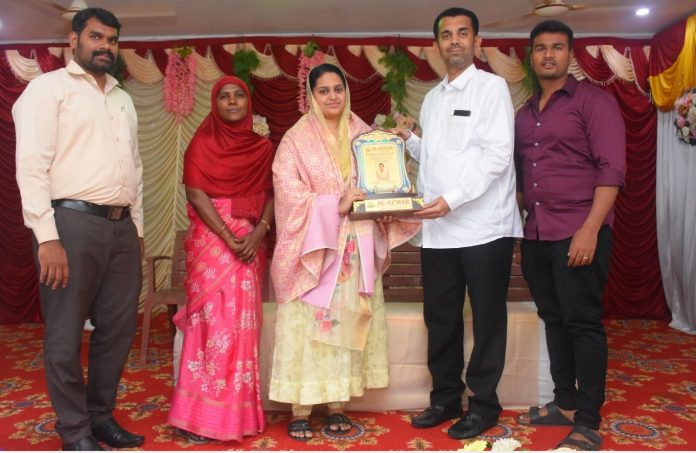
A Nabila, native of Cumbum in Theni district made the town proud in cracking the TNPSC Group I services exam in getting a posting as Assistant Commissioner (Commercial Taxes). Her alma mater Al Azhar Matriculation Higher Secondary School correspondent Nainar Mohamed and principal Ahamed Meeran felicitated for her achievement and presented a memento. Also present is her mom and husband Mohamed Afzal.

“Consistent effort and simple strategy is the mantra for success,” said 28-year-old A. Nabila, who cracked the TNPSC Group I services exam with 27th rank for the position as Assistant Commissioner (Commercial Taxes).

Hailing from Cumbum, a picturesque town nestled in the backdrops of Western Ghats known for its serene atmosphere, vibrant culture and rich history in Theni district, the enterprising young woman is on cloud nine thereby bringing laurels to her hometown.

To be precise, she brought to the fore that there is no shortcut for victory, be it course or career. In fact, she has proved that more than hard work, smart work will definitely fetch fruitful results. Giving useful tips in a lucid style to government job aspirants through a YouTube channel (Geethasamy Publishers), she made it clear that candidates must make it a point to complete question papers within the timeframe more importantly legibly while ensuring neat presentation.

Great to infer that the promising young woman had earlier cleared Group II services to become the State topper to join the subordinate services in the Tamil Nadu Agri and Farmers Welfare department at the Secretariat. Even while serving, she had a vision to scale new heights as to the inspiring words of American General and Diplomat Colin Powell – There are no secrets to success. It is the result of preparation, hard work and learning from failure. Undoubtedly, she romped home to victory through dedication and determination.

Armed with her BSc (2014-2018 batch) from Madurai Agriculture College and Research Institute (a constituent college under Tamil Nadu Agricultural University), she prepared for the competitive exams soon after her graduation without any second thought with a firm belief to excel in her vision.

Lady luck failed to smile at her in her first attempt in 2019.After getting into wedlock, she took a break only to continue her TNPSC Group II exam in 2022 and emerged successful. She dedicated her success to her parents, in-laws, brother Faizal and more particularly her hubby Mohammed Afzal while not to speak of her director and the faculty at the coaching institute. Her dad, A Ahamed Kabeer, is serving as Sanitary Inspector at Bodinayakanur Municipality.

At an event held yesterday, Cumbum Al Azhar Matriculation Higher Secondary School correspondent Nainar Mohamed and principal Ahamed Meeran felicitated Nabila for her achievement and presented a memento. Later, she addressed the students narrating the road she had travelled to be what she is now and urged them to have an ambition in life to reach dizzy heights in their chosen line of interest.

It is learnt that Nabila had her schooling from LKG to 8th at Cumbum Al Azhar Matriculation Higher Secondary School and continued her 9th and 10th at Theni MelaPettai Hindu Nadar Uravinmurai Saraswathy school and completed her Plus One and Plus Two at Tiruchengode Vidyaa Vikas school.

Quite encouraging to witness many female candidates from the rural background cracking UPSC civil services and TNPSC exams.

[The author is former Indian Express and Deccan Chronicle chief]

source: http://www.radiancenews.com / Radiance News / Home> Muslims World> Asia / by M Rafi Ahmed / June 20th, 2025

UAE-based Indian doctor Shamsheer Vayalil announces Rs 6 crore aid for Air India crash victims

KERALA / Abu Dhabi, U.A.E :

PC: mathrubhumi

Dubai :  

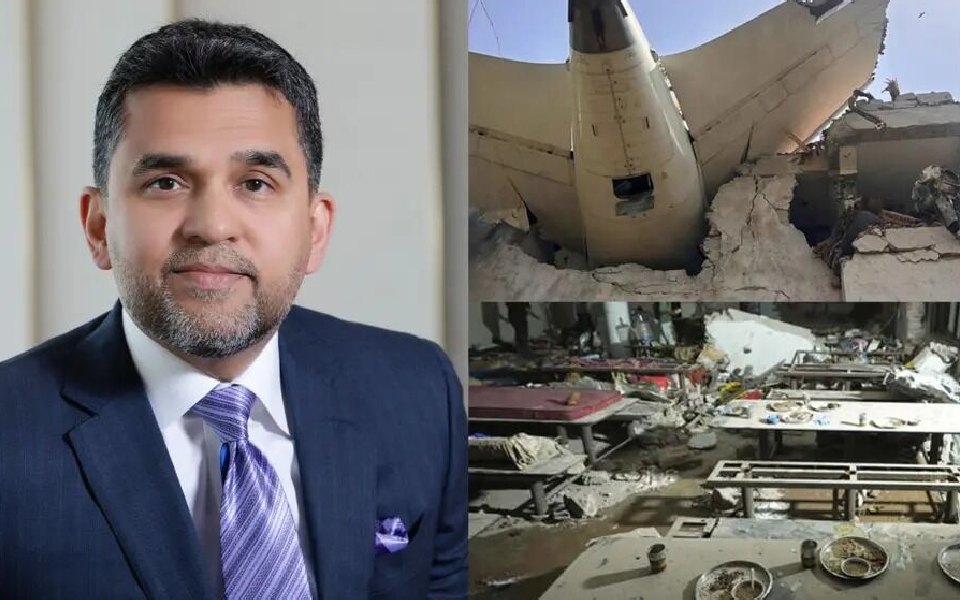
UAE-based Indian doctor and philanthropist Dr Shamsheer Vayalil has announced Rs 6 crore in financial aid for the families of medical students and doctors affected by the Air India plane crash in Ahmedabad last week.

The ill-fated aircraft struck the BJ Medical College’s Atulyam hostel complex during lunch hour, reducing student residences and the dining hall to rubble.

All but one of the 242 passengers and crew on board the Boeing 787-8(AI 171) and another 29 persons, including five MBBS students, on the ground were killed when the London-bound aircraft crashed, moments after it took off from the Sardar Vallabhbhai Patel International Airport.

Announcing the relief from the UAE capital of Abu Dhabi, Dr Shamsheer, founder and chairman of Burjeel Holdings and managing director of VPS Health, said he was deeply shaken when he saw the aftermath of the crash.

As someone who had lived in similar hostels during his medical education at Kasturba Medical College in Mangalore and Sri Ramachandra Medical College in Chennai, the images struck a chord, he said.

“I saw the footage from the mess and the hostel, and it truly shook me. It reminded me of the places I once called home, the corridors, the beds, the laughter, the pressure of exams, and the anticipation of a call from family,” he said.

“No one expects a commercial aircraft to come crashing into that world,” he added.

“Those students started the day thinking about lectures, assignments, and patients. Their lives ended in a way none of us could ever imagine. It hit close. Too close,” he said.

Dr Shamsheer’s relief package includes Rs 1 crore for each of the four deceased students’ families, Rs 20 lakh each for five seriously injured students, and Rs 20 lakh each for the families of doctors who lost loved ones.

The financial assistance will be delivered in coordination with the Junior Doctors’ Association at BJ Medical College, ensuring that those in need receive support swiftly.

This is not the first time Dr Shamsheer has responded to such a crisis. In 2010, following the Mangalore air crash, he provided financial assistance and employment opportunities to affected families at Burjeel Holdings, a leading healthcare provider in the Middle East.

source: http://www.english.varthabharati.in / Vartha Bharati / Home> Gulf / by Vartha Bharati / June 17th, 2025

KKMA Karnataka branch hands over two new homes to needy families

KERALA / KARNATAKA / KUWAIT :

Mangaluru :

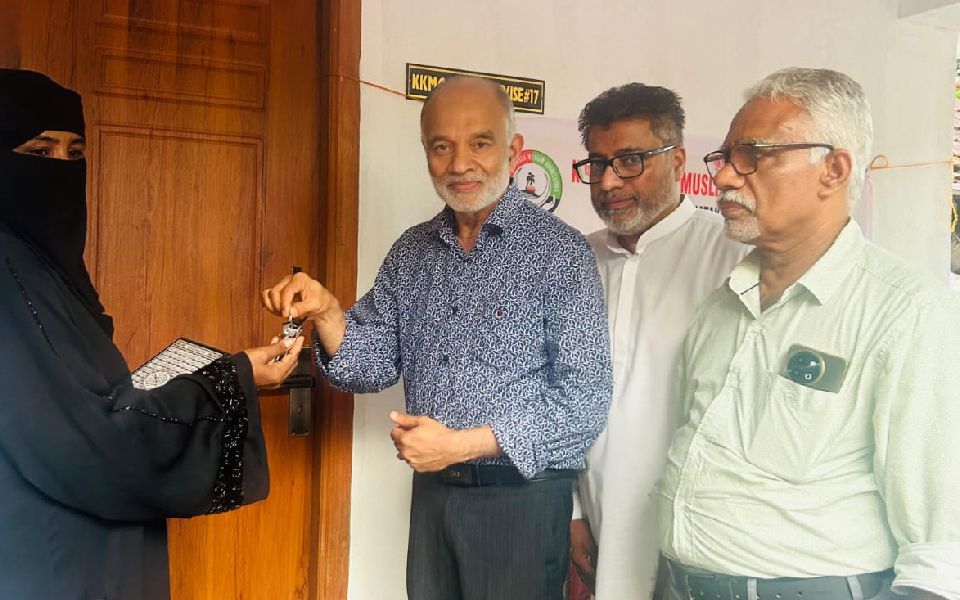
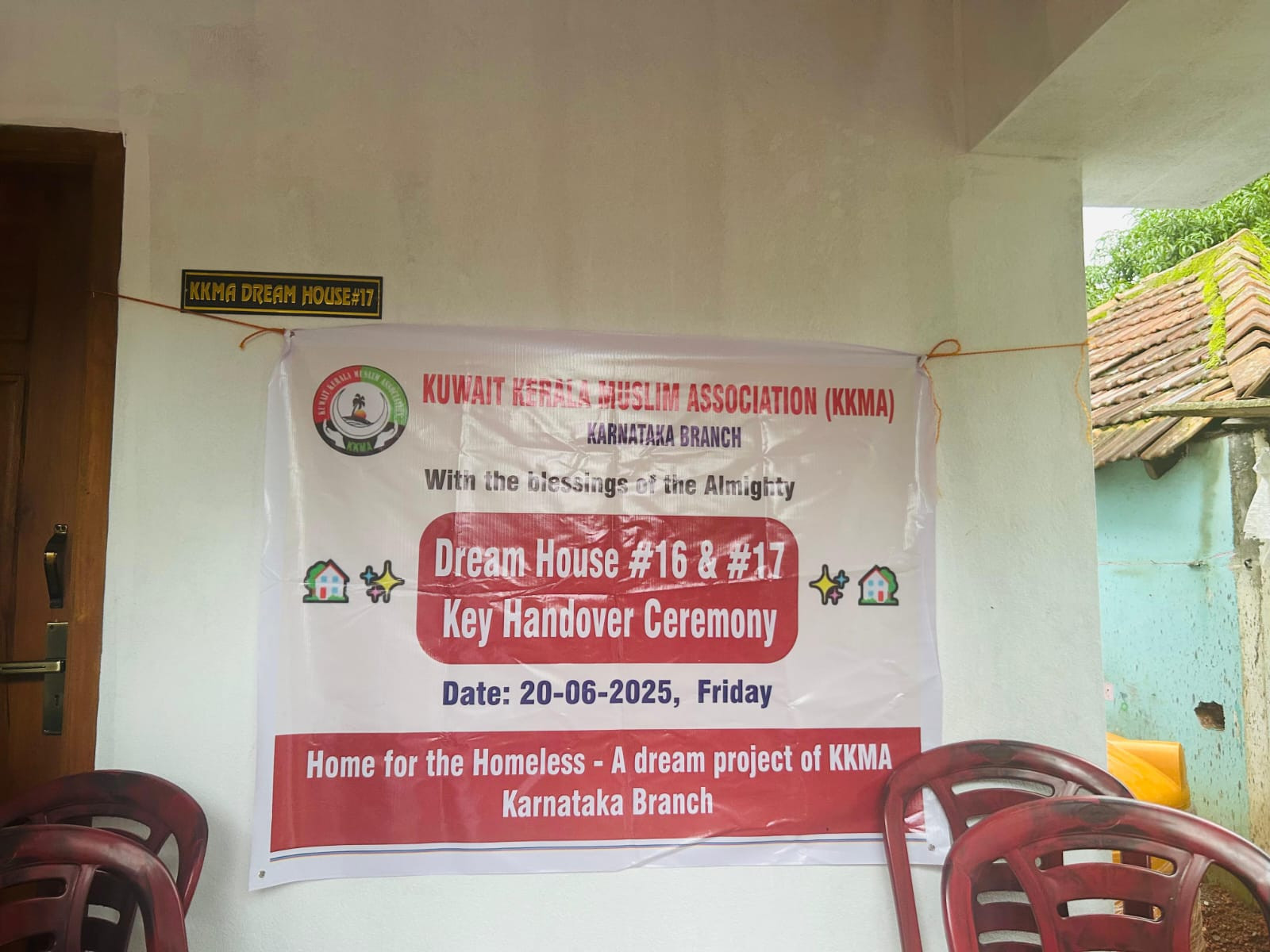
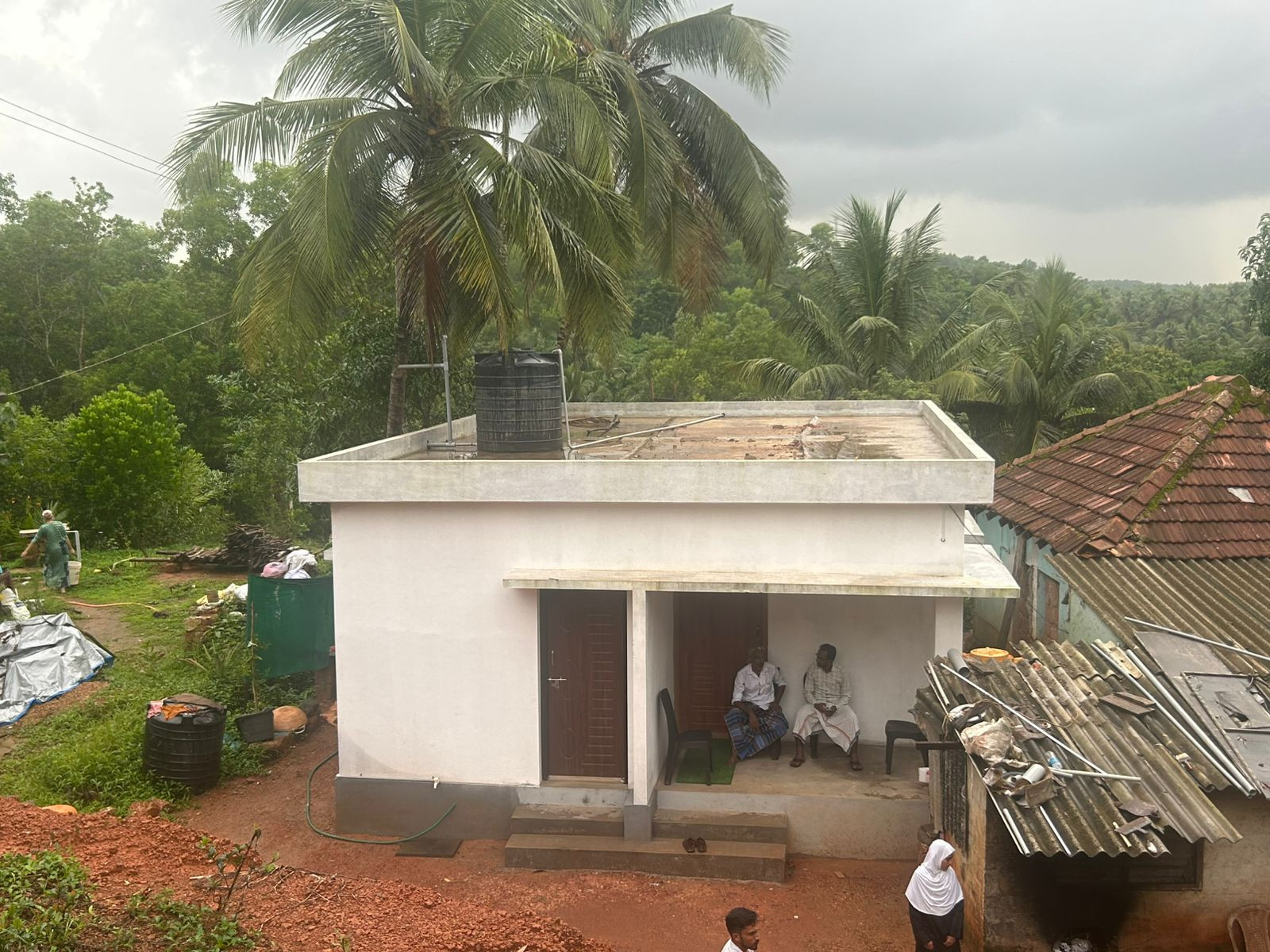
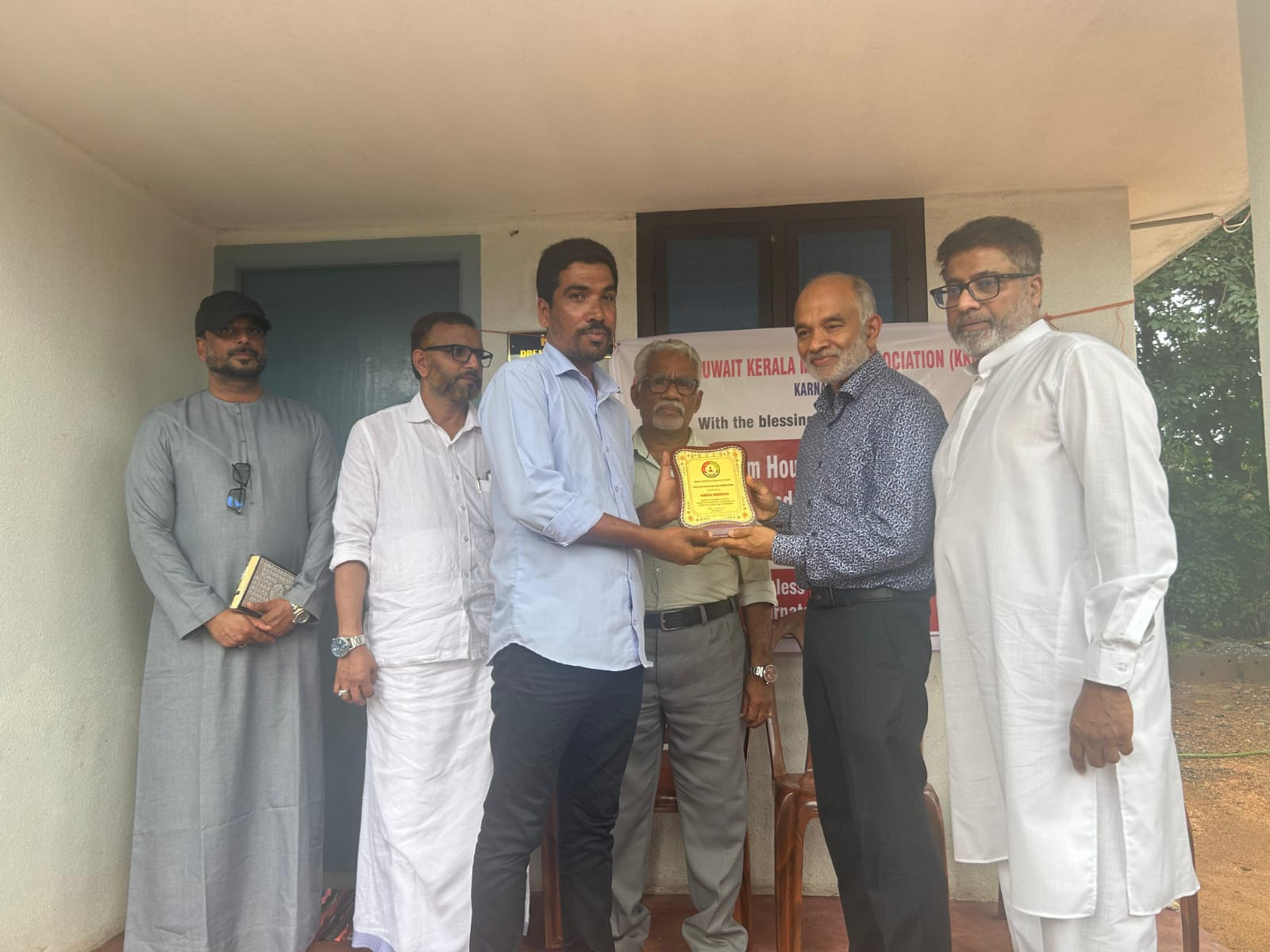
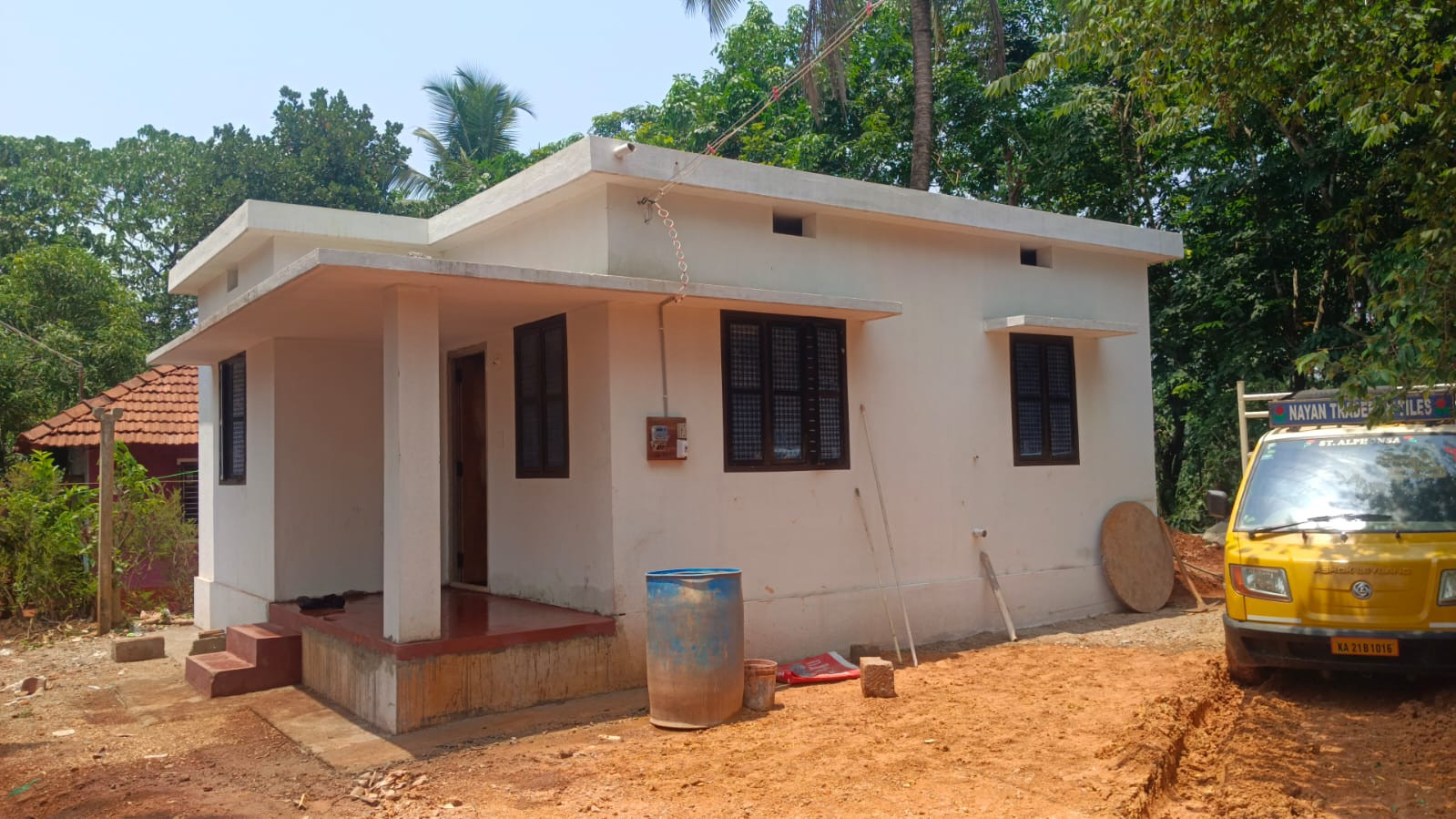
 As part of its efforts to support poor families, the Kuwait Kerala Muslim Association (KKMA), Karnataka Branch handed over two newly built houses on June 20 under its flagship project, ‘Home for Homeless’.

The houses were given to deserving families in the villages of Nelyadi and Kukkaje of Dakshina Kannada, who were in need of permanent shelter. With this, KKMA has now completed 17 homes under the project, marking an important achievement in its mission to help the underprivileged.

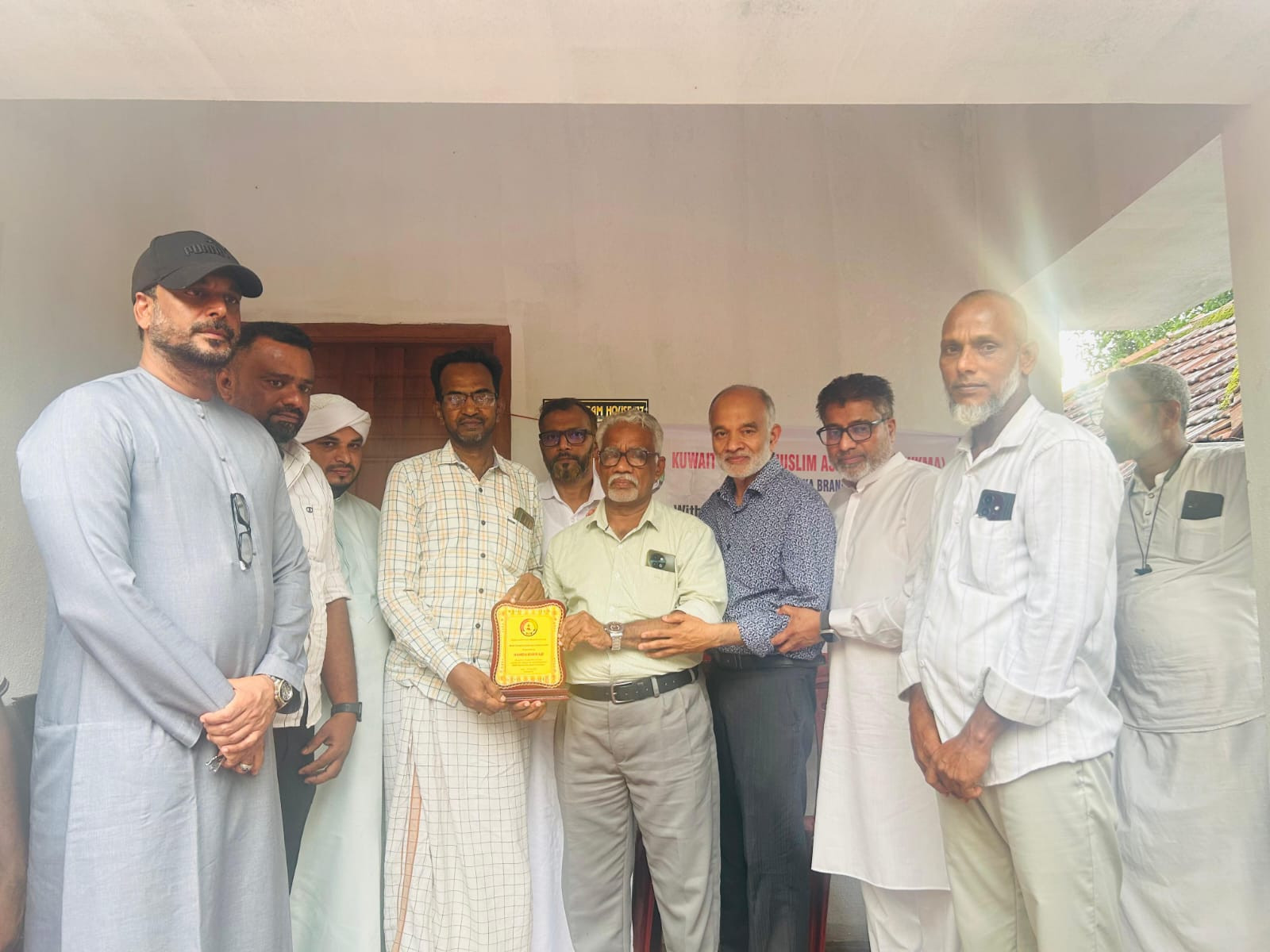
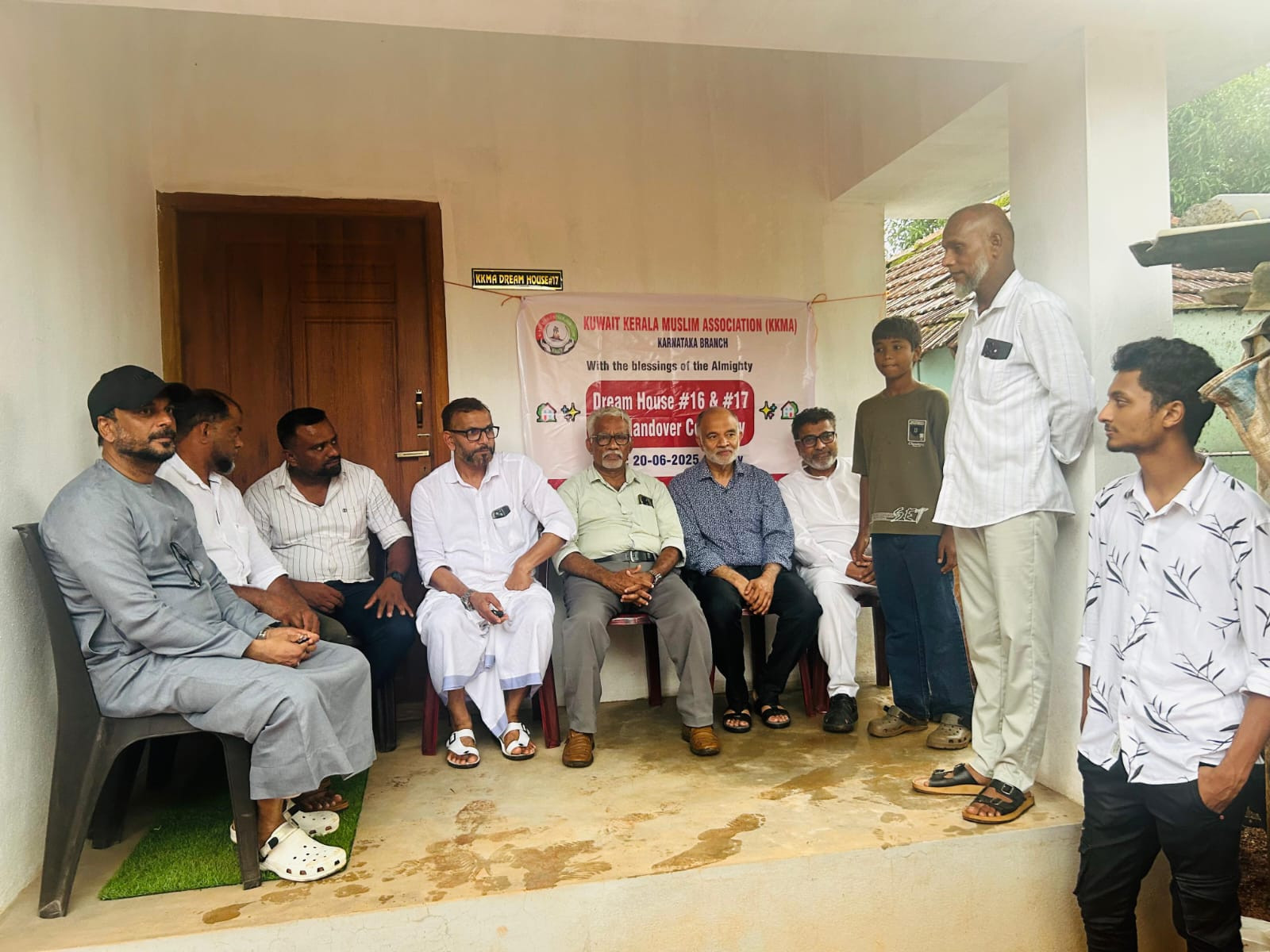
The key handover event was attended by senior leaders from KKMA Central, Kerala, and Karnataka units. Their presence showed the unity and strong commitment of the organization toward community service.

The ‘Home for Homeless’ project is led by the KKMA Karnataka Branch and its State Committee. The goal is to build strong, good-quality homes that improve the lives of poor families in rural areas. The project is a clear example of KKMA’s long-term dedication to social welfare.

This work is made possible by the generous support of Malayali and Kannadiga expatriates, as well as kind-hearted donors and well-wishers who believe in helping others and giving back to society.

Important guests at the event included KKMA Patron P. K. Akbar Siddique, KKMA Kerala State Secretary Abdul Razak Melady, KKMA CFO Rafiq Mulky, KKMA Karnataka State President S. M. Farooq, senior member Rafiq Manchi, and community members Shaz Yusuf, Salam, Adam Aahil, among others.

KKMA celebrates more than 20 years of service, and continues to be recognised for its helpful projects and strong commitment to social responsibility.

source: http://www.english.varthabharati.in / Vartha Bharati / Home> Karavali / by Vartha Bharati / June 21st, 2025

From Orphanage to IAS: Abdul Nasser of Kerala Overcomes Poverty, Hardship

Thalassery (Kannur District), KERALA :

Abdul Nasser’s childhood in orphanages and years of working multiple jobs show his courage and determination. His phenomenal rise proves that dedication can defeat all obstacles

New Delhi :

Abdul Nasser’s life began in the modest town of Thalassery in Kerala’s Kannur district. His early years were shadowed by tragedy when his father passed away when Nasser was only five years old. This loss pushed the family into severe financial difficulties. His mother, striving to make ends meet, took on various jobs to feed her children, but the hardship was such that Nasser and his siblings had to spend a large part of their childhood in orphanages.

Nasser spent about 13 years in various orphanages across Kerala. Despite the challenges of living without parental support and the difficulties of orphanage life, he never lost his desire to learn. At times, he ran away from these institutions, but the pull of education and a better future brought him back each time.

Speaking about his early struggles, Nasser once said, “I never allowed my circumstances to define me. Each time I faced hardship, I reminded myself that education was my way out.”

While still a child, Abdul Nasser took on multiple jobs to support his education and ease his family’s burden. When he was just ten, he began working as a cleaner in a local hotel. His hard work earned him additional responsibilities, and soon he was also helping as a supplier at the same hotel. To raise more funds for his studies, he also distributed newspapers, took up tuitions, and worked as a phone operator.

This early experience of juggling work and education shaped Nasser’s character and showed his commitment to personal growth. “Every job I did was a step towards my dream. I never allowed fatigue or failure to stop me,” he explained in a recent interview.

Despite these difficulties, Nasser’s dedication to education remained strong. He completed his graduation at a government college in Thalassery, a significant achievement for someone from his background. Determined to further his knowledge, he earned a postgraduate degree in 1994.

Education was not just a personal achievement for him but also a beacon of hope for those in similar difficult situations. His academic success inspired many young people in Kerala facing financial or family hardships.

After completing his postgraduate degree, Nasser entered the Kerala Health Department as a government employee. His sincerity, hard work, and dedication quickly became apparent to his superiors. He earned respect and opportunities through his honest approach to public service.

In 2006, Nasser took the Kerala State Civil Services Examination. His success led to his appointment as Deputy Collector, an important administrative post. His work was marked by sensitivity and a focus on social welfare, which earned him special recognition. In 2015, he was named the best Deputy Collector in Kerala, a clear sign of his dedication and impact.

Traditionally, entry into the Indian Administrative Service (IAS) requires passing the Union Public Service Commission (UPSC) examination, considered one of the most difficult exams in India. However, Abdul Nasser’s journey took a different path.

Because of his consistent performance, leadership skills, and administrative ability, the Kerala government promoted him to the IAS cadre in 2017 without requiring the UPSC exam. This rare achievement highlights the respect he had earned within the government.

“This promotion showed me that honest work and dedication can break barriers. It was a moment of great pride not just for me but for all those who struggle silently,” Nasser said.

After becoming an IAS officer, Abdul Nasser was appointed to key roles, including Kollam District Collector and Housing Commissioner in the Kerala Government. In these positions, he continued to serve the public with the same passion and commitment that had defined his career.

Nasser’s life story is more than just personal success. It sends a powerful message to all young people facing difficulties: with determination and hard work, one can rise above any circumstance.

People who know Abdul Nasser well speak highly of his journey and character. A fellow officer commented, “Nasser’s rise is an example of true grit and dedication. His background shows how difficult it is to succeed, yet he has done it with humility and hard work.”

A local social worker added, “His life encourages so many children who have lost their families or face poverty. He proves that where there is will, there is a way.”

Abdul Nasser’s story stands out because it breaks common stereotypes about who can succeed in the Indian civil service. Coming from a background without financial support or family guidance, many would have given up. Instead, Nasser found ways to keep moving forward.

In a society where many young people struggle to access education and opportunities, Nasser’s life offers hope and inspiration.

“I want every child growing up in hardship to know that their past does not determine their future. Keep working, keep believing,” he said.

source: http://www.clarionindia.net / Clarion India / Home> Editor’s Pick> India> Indian Muslims / by Team Clarion / June 20th, 2025

Assam: 2 Hafiz-e-Quran from Assam on their way to become doctors

ASSAM :

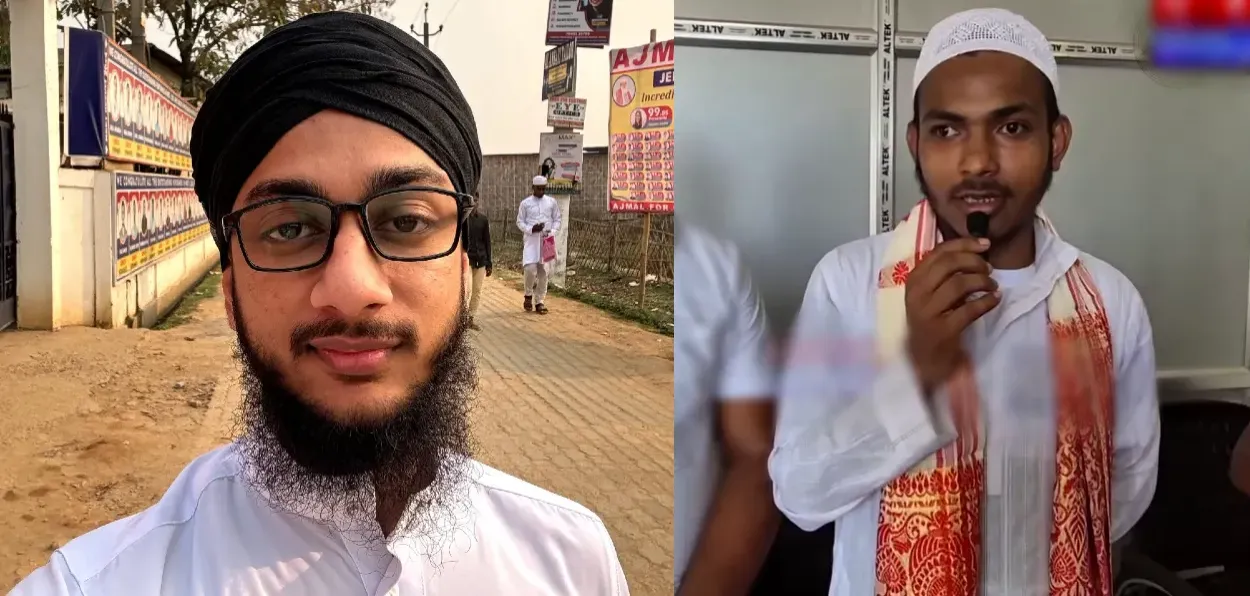
Hafiz Huzaifa Laskar (right) and Hafiz Momtazul Hassan Choudhury

Most people have a misconception that students of madrasa can only become Hafiz or Maulana. Breaking this myth two Hafiz-e-Quran (Degree in memorizing Quran) in Assam have cracked the National Eligibility cum Entrance Test 2025, (NEET) examinations, 2025, and are on their way to joining Medical college to fulfill their dream of becoming doctors.

Hafiz Momtazul Hassan Choudhury and Hafiz Huzaifa Laskar proved that one can become a doctor even after enrolling themselves in a Madrasa.

Thanking his parents and teachers, Momtazul Hassan Choudhury said: “If anyone works selflessly behind their children’s success, it is their parents. At first, when I was weak in studies and did not even know the basic formulae of Mathematics, my brothers Noor Ahmed and Anwar Hussain Laskar helped me.”

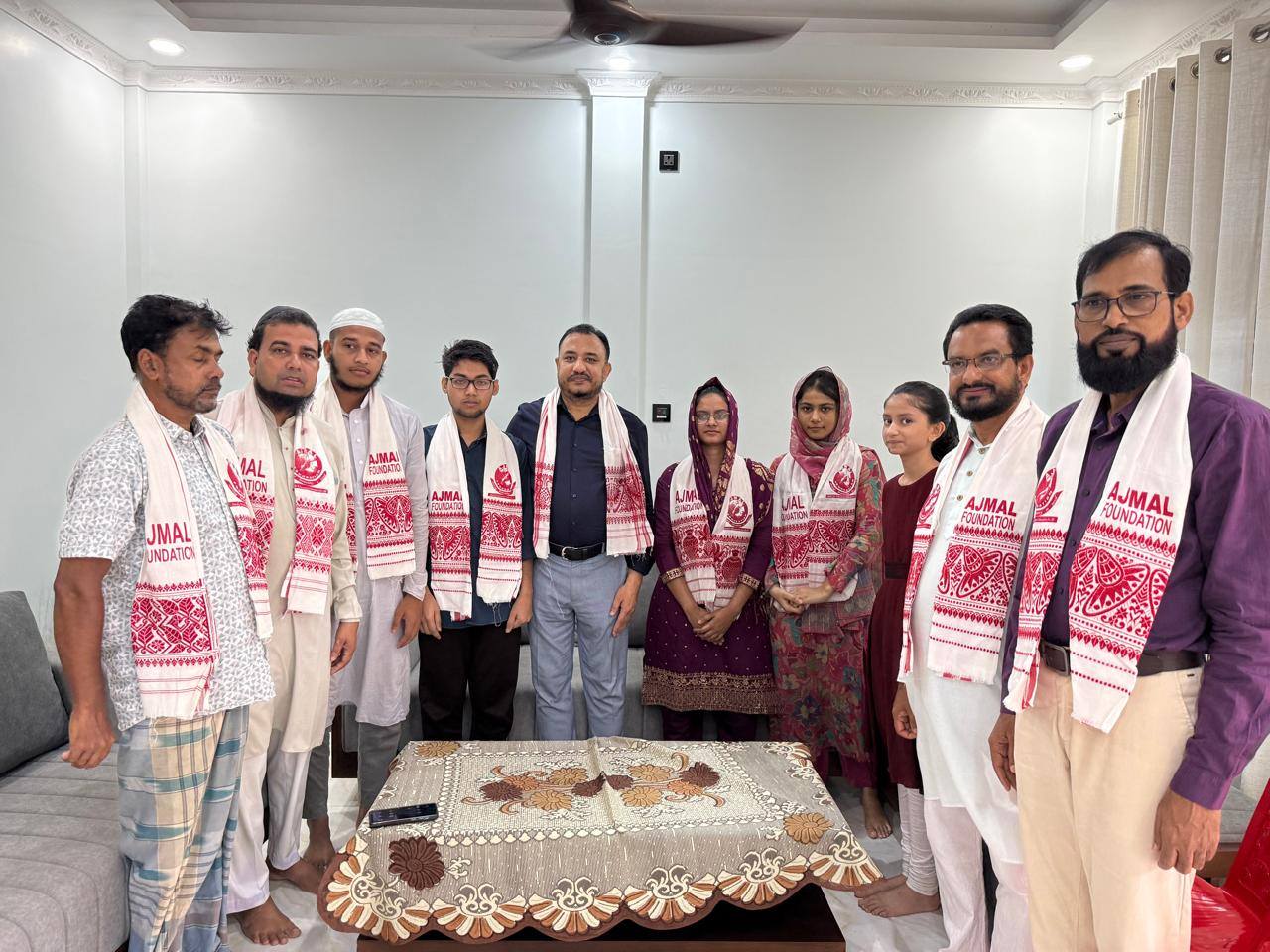
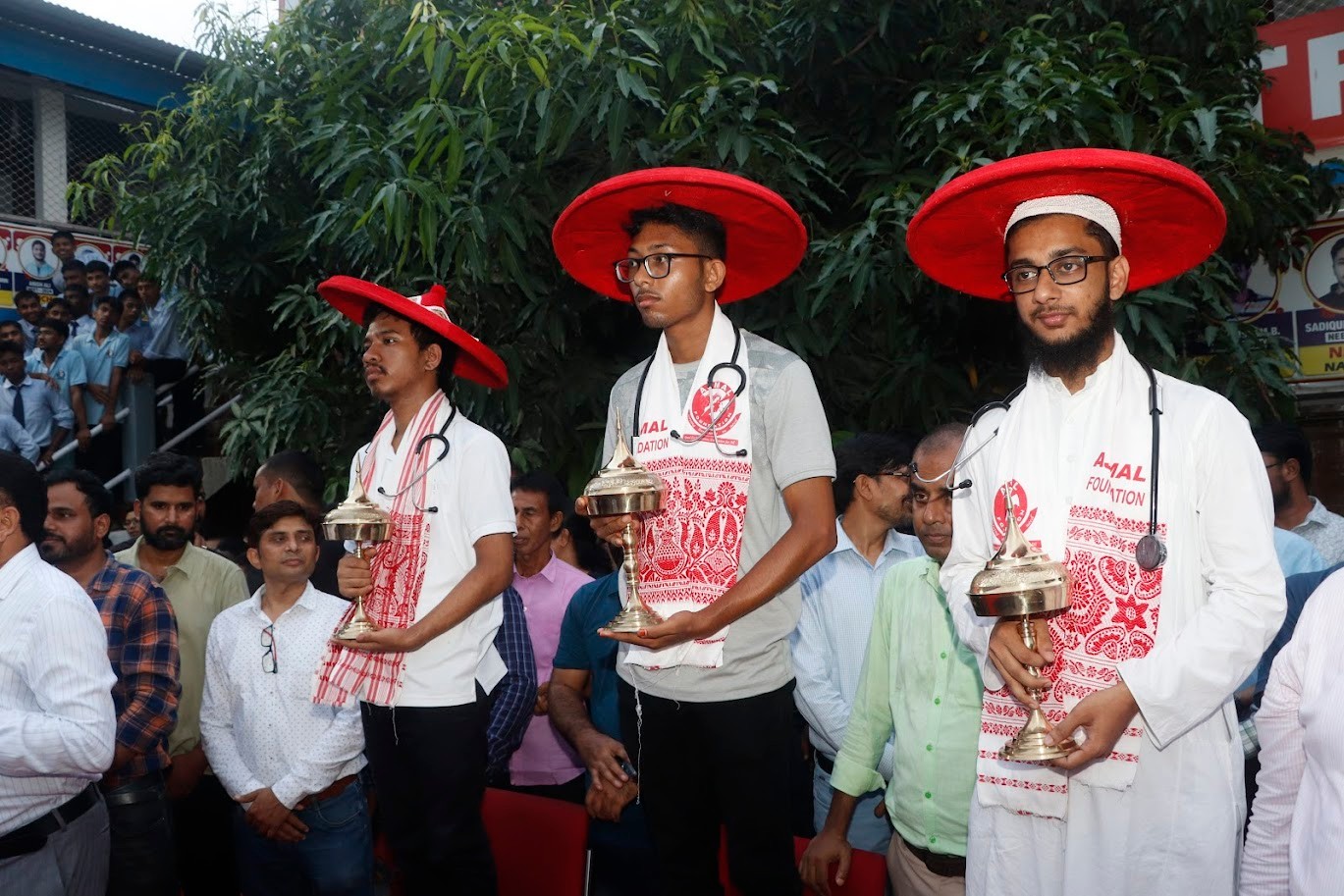
Hafiz Huzaifa with other successful candidates of Ajmal Super40’s andd their guardians and Ajmal Foundation officials

“I want to go further. I want to crack higher examinations. Please pray for me. And I will work tirelessly to be successful,” he added.

Momtazul Hassan Choudhury took the NEET examination after attending coaching classes at the Anfar Super 50 at Hojai in central Assam. This is the second year of the center preparing students for the NEET examination.

This year, Momtazul Hassan Choudhury and seven other students from the centre have cleared the NEET examinations.

Maulana Mustaq Anfar, founder of the coaching center had waived off the fee for Hafiz Momtazul Hassan Choudhury.

On the other hand, Hafiz Huzaifa Laskar of Ganirgram Shantipur in Katigora area of the Cachar district wrote the NEET examinations after preparing at the Ajmal Super 40, another Hojai-based coaching institute. Huzaifa Laskar, son of Abdullah Laskar and Fatima Bilkis Laskar, cleared the NEET with distinction with 547 marks. Huzaifa’s brother Muyaz Laskar recently cracked the JEE examination and is studying at NIT Silchar.

Hafiz Huzaifa Laskar being felicitated along with other successful NEET at Ajmal Super40 in Hojai

Talking to Awaz –The Voice, Islamic scholar Maulana Nurul Amin Qasimi said: “One can pursue general education along with madrassa education. People may not have understood this. Those who want to study for Hafiz, they enroll themselves in madrassas after studying general school till class five or six. A good student completes the Hafiz course in three years. He also pursues general education alongside the standard of Class IX. Once they clear Hafiz, they are promoted to Class IX where they are registered for the High School Leaving Certificate examinations and they concentrate on the rest of their general education from there.”

“There are many examples of students educated in madrasas who have secured good jobs or got good positions in society. So, nowadays people are understanding it and preparing accordingly to become doctors, engineers, professors, etc after completing Hafiz or Maulana courses in madrassas,” Qasimi added.

A total of 22,76,069 students from across India applied for the NEET UG examination this year out of which 22,09,318 took the examinations. 12,36,531 students emerged successful in the examination.

Mohammad Musa Kalim of Assam secured the All India 509th rank in the NEET 2025 examination. Musa Kalim has topped the list of students in Assam. Musa Kalim secured the 99.97 percentile.

From Assam, 41,848 candidates wrote the examination in 2025 and 19,809 cleared it.

source: http://www.awazthevoice.in / Awaz, The Voice / Home> Story / by Ariful Islam, Guwahati / June 20th, 2025

A Madrasa Like No Other: Inside India’s First Inclusive Madrasa for the Deaf, Mute and Blind

Pune, MAHARASHTRA :

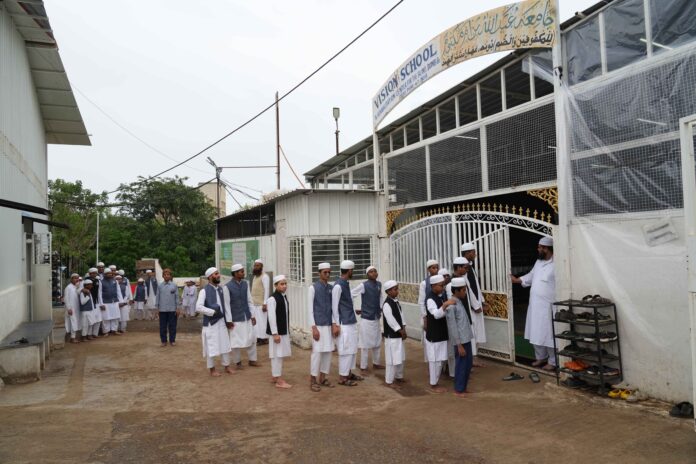
Students at Jamia Abdullah Ibne Umme Maktoom, India’s first inclusive madrasa for differently-abled children in Pune, Maharashtra, walk in a queue as they enter the Vision School campus. The madrasa provides free Islamic and contemporary education to mute, deaf and visually impaired students from 17 states across India.

In Pune, Maharashtra, Jamia Abdullah Ibne Umme Maktoom offers free Islamic and contemporary education to mute, deaf, and blind children from across 17 states—proving that disability is no barrier to dignity, faith, or ambition.

Pune (Maharashtra): 

In a small park in Maharashtra’s Pune, on a Thursday morning in May, a group of well-dressed uniformed students stood barefoot, wearing white skull caps. Many of them were mute or visually impaired. As the national anthem played in the background, the students stood in solemn attention, while others – mute and deaf – used sign language to express the lyrics. It turned the moment into a display of patriotism and unity.

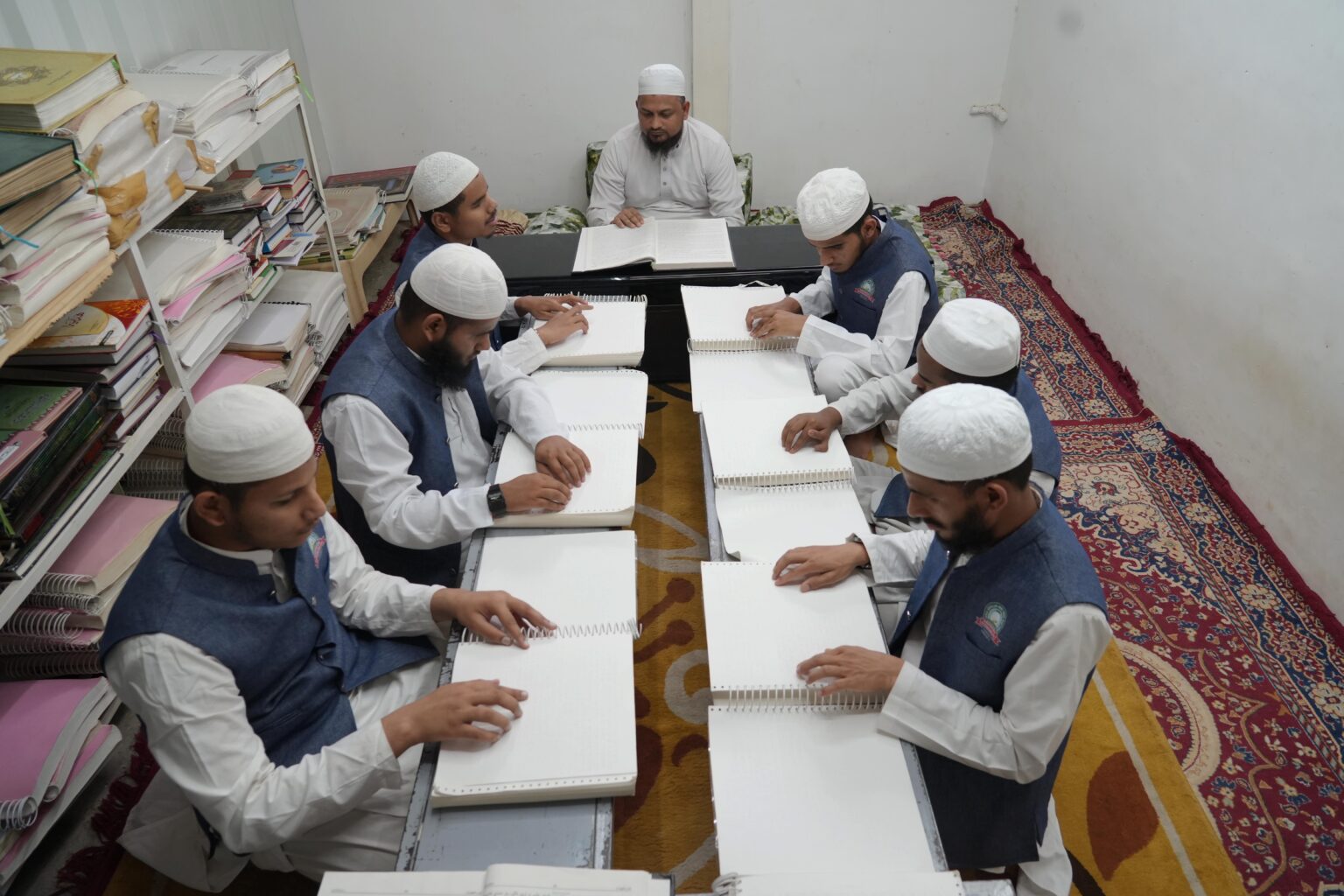
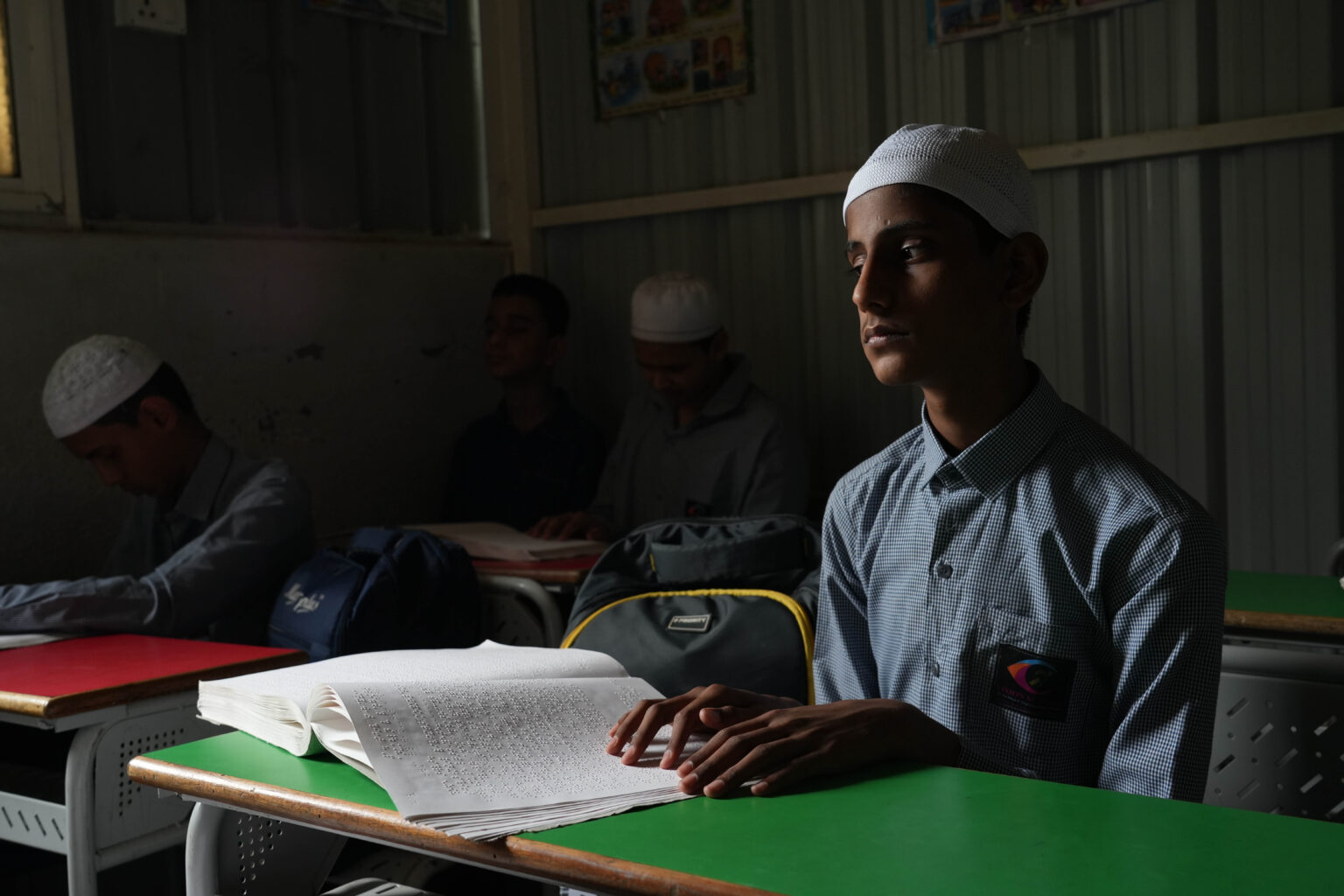
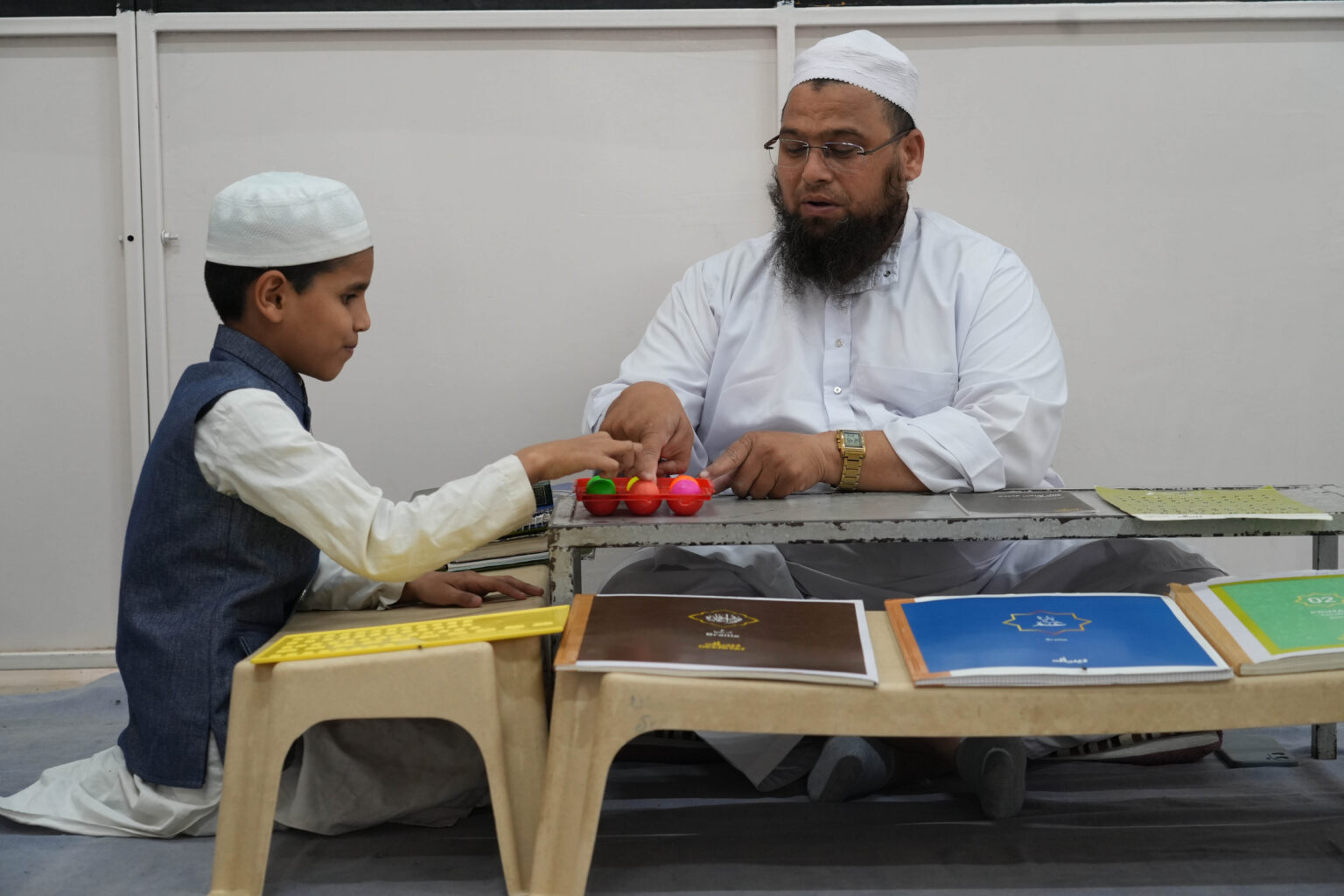
This is the usual beginning of the day at Jamia Abdullah Ibne Umme Maktoom (a religious seminary in Pune), where hundreds of mute, deaf and blind students receive free Islamic and contemporary education.

“It took us years to convince families of the importance of education for their special children,” says Nayeem Ahmad Qasmi, a secretary of the madrasa.

The institution was founded in 2013 with only two children with the vision to uplift differently abled children from across India through inclusive education.

According to the Census of 2011, approximately 2.2% of the population, around 26.8 million people, were identified as living with disabilities.

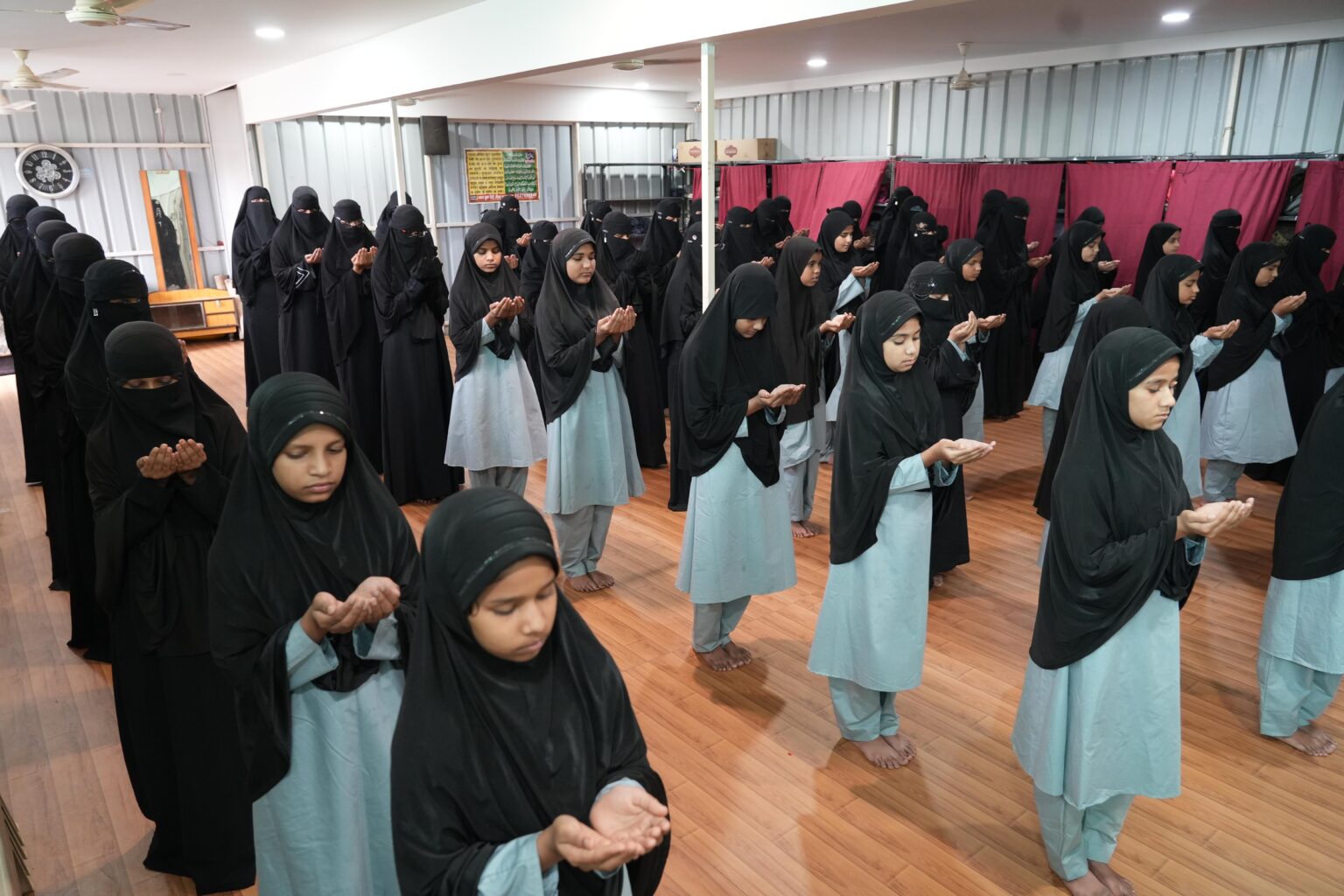
Female students at Jamia Abdullah Ibne Umme Maktoom in Pune, Maharashtra, offer prayers during school hours. The madrasa currently educates over 70 differently-abled girls – many of whom are mute, deaf or visually impaired – providing them with a safe and inclusive environment for both Islamic and contemporary learning.

Unfortunately, many families abandon differently abled children or keep them confined at home – considering them a burden.

“It is the duty of every person to support differently abled children so they can prove their capabilities,” he adds.

Many students come from rural areas in different states, where families often do not know the value of education or the opportunities available to them.

“Before coming to Jamia, I did not know anything about Islamic and contemporary education,” says 18-year-old Rehan Saleem from Jalgaon in Maharashtra.

Many students have received opportunities to present their skills on different platforms across India. Several have represented their school and secured positions in various sectors.

“By the grace of God, I have completed the Hifz-e-Quran (memorisation of the entire holy Quran) at this Jamia and got the opportunity to perform Umrah,” says Rehan.

Students at Jamia Abdullah Ibne Umme Maktoom in Pune attend a classroom session where they receive both Islamic and contemporary education, guided by their teacher.

Today, the Jamia hosts 210 mute, deaf and blind students from 17 states across India. The seminary provides free education from Grade 1 to Grade 12, including subjects like science, computers, Islamic studies and advanced education.

Many students have gone on to study at various universities and colleges. For those unable to attend in person, the madrasa has launched an online education programme. Children here are provided with education, food, accommodation and even uniforms free of cost.

“Our mission is to see these children represent the country on every platform one day,” says Qasmi.

Despite the struggle, they have succeeded in building a thriving institution. In 2021, the madrasa launched separate sections for mute, blind and deaf women to ensure inclusive learning environments. Women’s education is just as important as men’s, and this initiative reflects that commitment.

Mubashira Sadiya Khan, who teaches specially abled girls at the madrasa, says, “Women’s education is equally important as male education. These girls are usually occupied with household work at their homes, but we are giving them better education and showing them the purpose of life.”

A young visually impaired student sits attentively in class, beside a Braille slate and stylus used for writing. At Jamia Abdullah Ibne Umme Maktoom, visually impaired children are given tools and support to receive religious and formal education in an inclusive environment.

Since safety is a major concern for women in the country, the madrasa has provided separate rooms for them, with all female helpers to ensure a secure learning environment.

Mubashira adds, “Usually, women are not safe in the country, but here we have created a safe space where they can learn and grow with confidence.”

Despite progress in education, children with disabilities in India often remain invisible – excluded from schools, denied opportunities and treated as burdens. Many end up begging or isolated at home, not by choice, but because society offers them no alternatives.

“We often see them begging on the roads, not because they want to, but because the society has failed to give them a chance,” says Qasmi.

Students in uniform attend class at Jamia Abdullah Ibne Umme Maktoom in Pune, where multiple sessions are held simultaneously in a shared hall to support inclusive learning.

The Jamia has been working to ensure that students with disabilities receive quality education, access to proper infrastructure and opportunities to engage in play and creative activities on campus. Its vision is to provide them with equal opportunities so they can compete and thrive like any other student.

“Our goal was simple – give them dignity, knowledge and a future,” Qasmi explains.

The Jamia is already offering digital learning tools, smart boards and inclusive facilities to ensure that the students receive a modern and accessible education. The institution continues to innovate and expand its reach through technology and tailored teaching methods.

“We have introduced smart boards, digital tools and inclusive classrooms because every child no matter their ability deserves access to quality, modern education,” says Qasmi.

In the current political climate in India, the Muslim community has often been portrayed in a negative light, and madrasa education is frequently misunderstood or dismissed. Despite these challenges, Jamia Abdullah Ibne Umme Maktoom continues to provide quality Islamic and contemporary education to differently-abled children, aiming to empower them with knowledge and confidence.

source: http://www.twocircles.net / TwoCircles.net / Home> Disability / by Suhail Bhat, TwoCircles.net / June 21st, 2025