Muqita, Fatima and Shakila are a few of the over hundred persons who get monthly pension from the Soghra Waqf Estate of Bihar Sharif in Bihar. They are quite thankful for the Waqf Estate but they are not aware about the controversial Waqf (Amendment) Act.
This is just one of the hundreds of Waqf Estates which is providing help to the needy in one or the other way. Apart from the monthly pension, it also provides financial help for medical treatment to the needy.
BBC Hindi recently made a video report about the financial help being provided by the Soghra Waqf Estate.
According to this report Muqita Khatoon is about to turn eighty. Sadly, mother of four sons Muqita lives alone. Twenty-five years back her husband Bashir passed away. Muqita has nothing but the memory of her husband and a few utensils in her rented house. She pays the rent of this single room from the pension of Rs. 600 she gets from Soghra Waqf Estate. She says that many a time she is forced to sleep without any food.
Sogra Waqf Estate was established in the year 1896. Bibi Sogra, an enlightened lady, donated land for Waqf in sixteen districts, including Nalanda, Muzaffarpur, Darbhanga and Nawadah. It is reported that Soghra Waqf Estate consists of around twenty-one thousand acres of land. It is said that Bibi Soghra set priority for women as beneficiary of the Waqf.
Fatima, 66, of village Sabbait in Nalanda district is dependent on the pension she gets from Soghra Waqf Estate. She was deserted by her husband only after three years of marriage. Fatima lived with her father but after he died, she was left helpless. Then she got a pension of Rs. 500.00 per month from the Soghra Waqf Estate. She is happy that someone from her neighbourhood also filled the form for the social welfare scheme of Bihar government from which she gets Rs. 400.00 per month. She is happy to get Rs. 900.00 per month and terms it as ‘bahut rahat’ (big relief).
Soghra Waqf Estate is providing monthly pension for 113 needy persons of Nalanda, Sheikhpura, Nawadah and Gaya districts.
Mokhtarul Haque, Mutawalli of Soghra Waqf Estate, says that there are talks of no representation of women and Pasmanda but it must be said that Bibi Soghra herself was the Mutawalli of this Waqf from 1896 to 17 March 1909. “Thus the leadership was in the hands of a woman.”
Shakila Khatoon lost her husband and son. She is forced to cover her face with a dupatta because of cancer. She is getting financial help from this Waqf Estate for her treatment. She used to make Bidis and smoke it also. She quite emotional says that she gets financial help from the ‘Estate’. “I used to get Rs. 1000-2000 for my treatment. Though it was not a big amount but when you get nothing from other sources, it becomes more important,” said Shakila.
source: http://www.radiancenews.com / Radiance News / Home> Features> Focus / by Md. Sami Ahmad / Radiance News Bureau / May 11th, 2025
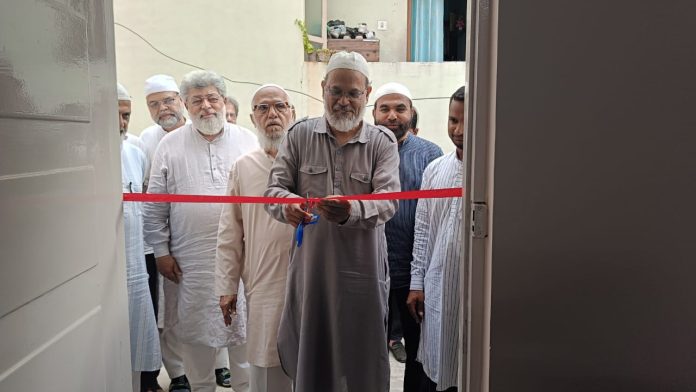
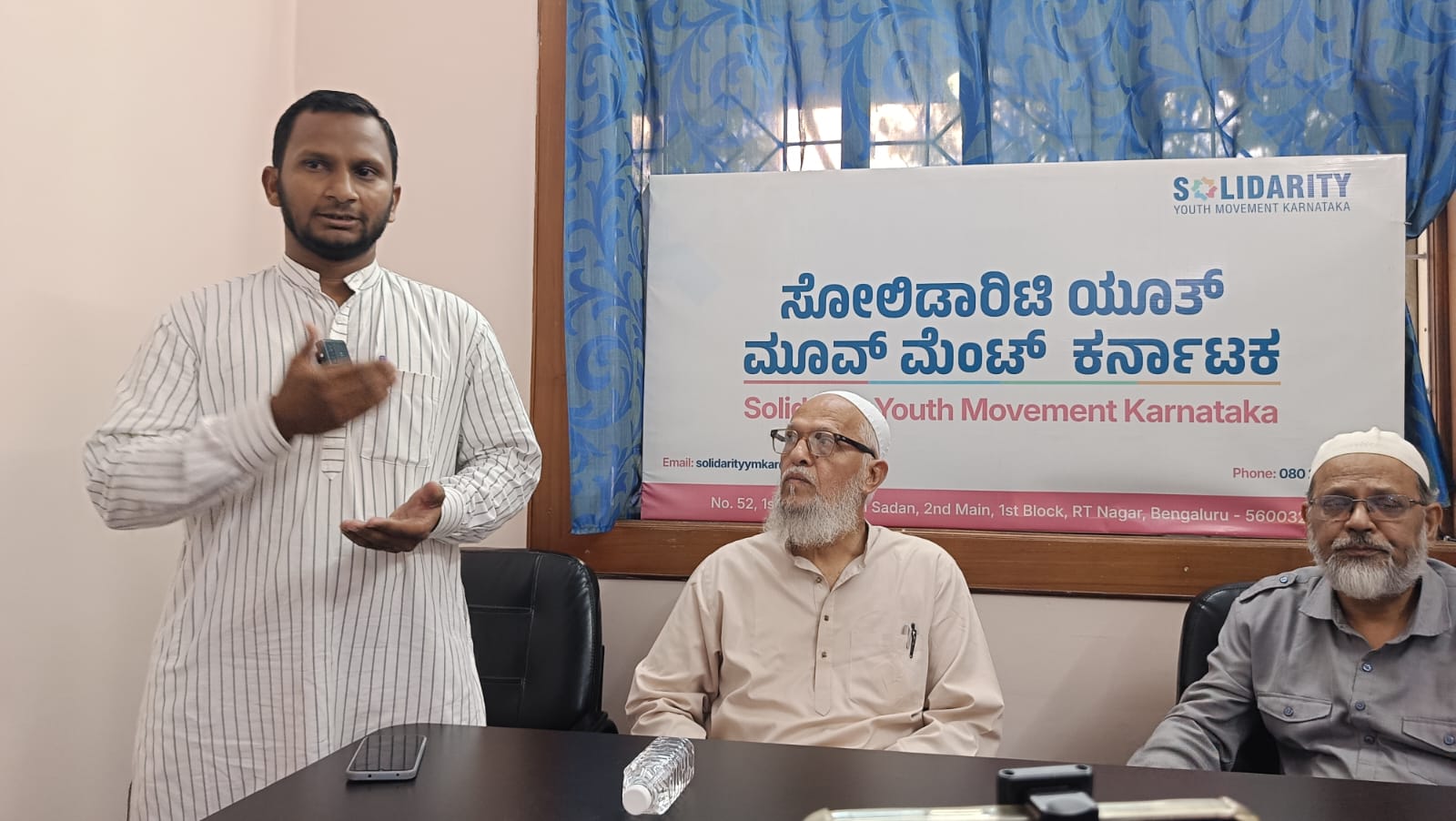
In a bold stride towards structured youth empowerment, the Solidarity Youth Movement Karnataka marked a significant milestone with the inauguration of its new state office in Bengaluru.
The formal opening ceremony was led by Dr. Mohammed Saad Belgami, Ameer-e-Halqa of Jamaat-e-Islami Hind, Karnataka, coinciding with the annual state Shura session.
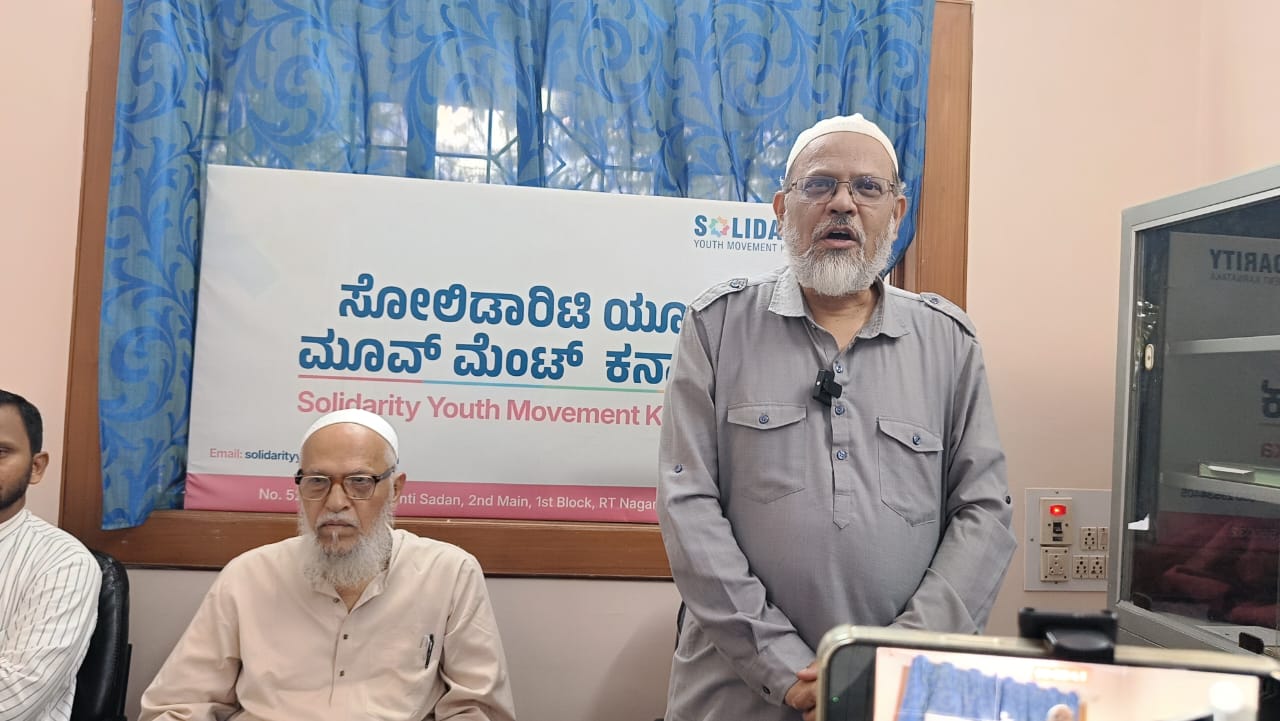
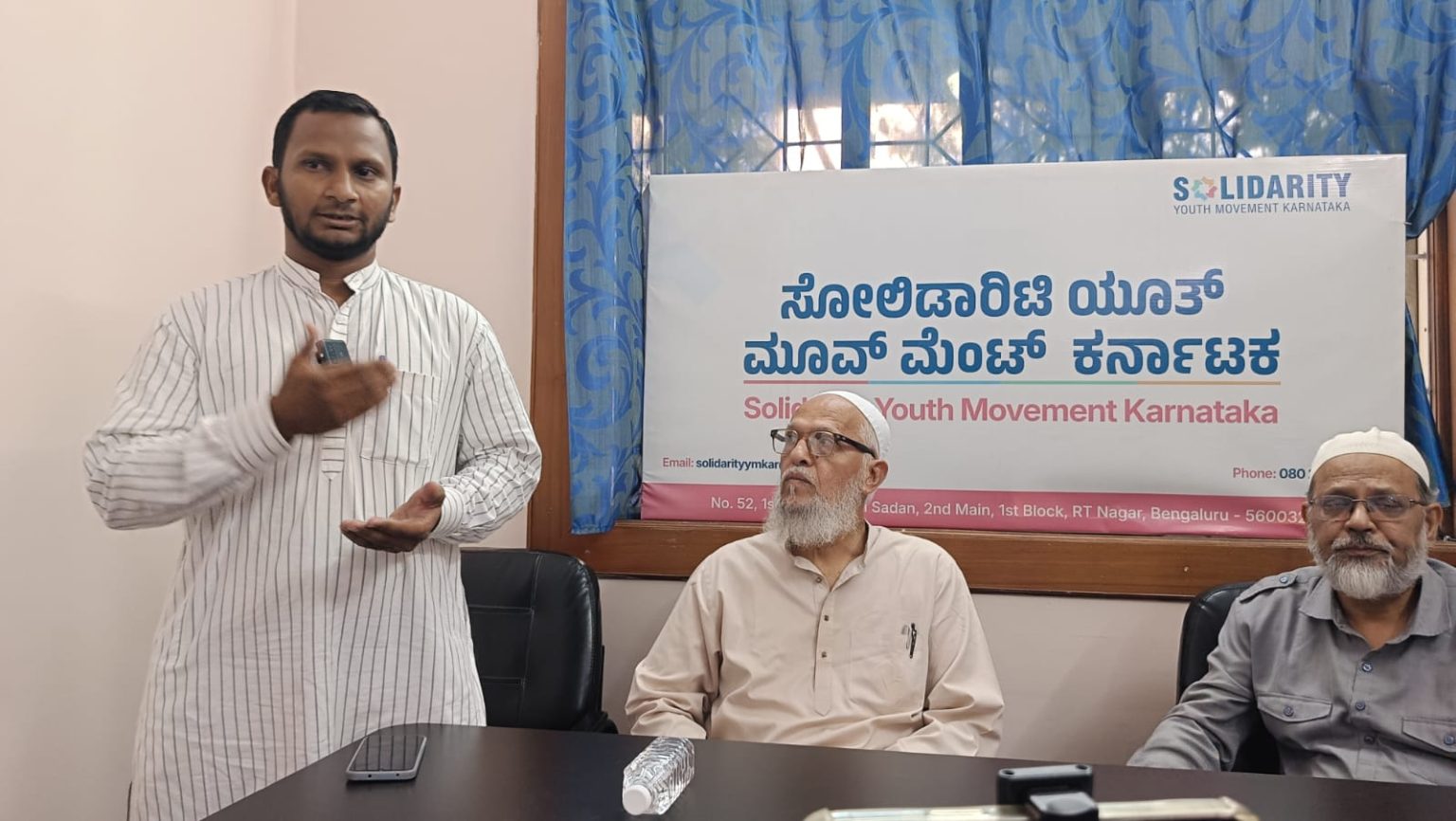
Far from being a mere administrative facility, the new office symbolises the growing institutional presence and ideological clarity of a movement that has evolved from grassroots activism to state-wide influence. Speaking at the event, Dr. Naseem, State President of Solidarity Youth Movement, described the organisation not just as a protest platform, but as “a transformative force for grooming morally conscious and socially responsible youth leaders.”
From a Youth Wing to a Mass Movement What began in 2008 as the “Youth Wing of JIH Karnataka” with just 250 members, formally transitioned into the Solidarity Youth Movement in 2016. Today, it boasts an expansive network across 27 districts with over 80 local units and a membership exceeding 7,000 – out of which more than 900 are actively engaged as trained “Activists.”
According to Dr. Naseem, this journey reflects the urgent need to channel the dynamism of youth towards constructive and long-term social reform. “We envision a generation of youth who are ethically upright and capable of leading society toward peace, progress, and justice,” he said. He emphasised the movement’s focus on skill development, employability training, and intellectual empowerment, aligning with both the constitutional ethos of India and the legacy of Islamic civilizational values.
Leadership Speaks Addressing the gathering, Dr. Saad Belgami remarked, “From its inception, the Islamic movement has placed youth at the centre of its mission. Solidarity Youth Movement is a natural extension of this vision – shaping minds and building character.” He added that the 2022 Youth Convention acted as a catalyst, significantly expanding the movement’s outreach and operational capacity across Karnataka.
The event was also graced by former state presidents of JIH, Mr. Iqbal Mulla and Mr. Atherulla Shariff, along with other senior functionaries from various wings of the organisation.
A Nerve Centre for Change With the establishment of this new state office, Solidarity Youth Movement is poised to further institutionalise its efforts in leadership training, civic engagement, and ideological grounding. The office is envisioned as a nerve centre for nurturing grassroots leadership, mentoring youth activists, and coordinating state-wide programs aimed at social justice and pluralistic harmony.
“This will be more than brick and mortar. It will be a lighthouse for Karnataka’s aspiring youth leadership,” said Dr. Naseem. “And a strategic base for long-term nation-building efforts,” he added with conviction.
As the curtain drew on the inaugural ceremony, the message was loud and clear: Solidarity Youth Movement is not just responding to the times – it is shaping them. And this new office stands as a testament to that mission. A platform today, a movement tomorrow. Indeed, a future-defining institution in the making.
source: http://www.radiancenews.com / Radiance News / Home> Latest News / by Mohammed Talha Siddi Bapa / May 12th, 2025
The Sarojini Naidu Centre for Women’s Studies in collaboration with the Dr Zakir Hussain Institute of Islamic Studies, Jamia Millia Islamia, hosted a special extension Lecture titled, “Unpacking the Myths: Separating Fact from Fiction about Women in Islam” on April 24, 2025, at Mir Anis Hall of Jamia Millia Islamia.
The lecture was delivered by noted British Islamic Scholar Dr Shiekh Mohammad Akram Nadwi. Formerly the Dean of Cambridge Islamic College and currently the Principal of the Al-Salam Institute and famous for his multi volume book Al-Muhaddithat, which documents female scholars in Islamic history, he is a leading authority on Islamic jurisprudence and Hadith, inspiring global audiences with his teachings.
The event opened with a soulful recitation of the Holy Quran, followed by a warm welcome from the honorary director of SNCWS Prof Nishat Zaidi.
The introduction of the speaker was given by Prof. Habibullah Khan, Honorary Director of the Dr Zakir Hussain Institute of Islamic Studies. Prof Habibullah praised Dr Nadwi’s globally recognised contributions to Islamic scholarship, particularly his work on gender and Hadith.
Dr Nadwi’s lecture captivated the large audience present in the hall as the urging open dialogue to dismantle stereotypes about women in Islam.
Referencing his monumental 40-volume work, Al-Muhaddi that: the Women Scholars of Islam that chronicles the contributions of female Islamic scholars.
The speaker presented a compelling case for re-evaluating historical narratives, generalisations, myths and patriarchal notions through rigorous scholarship and proper understanding of Islam. His call for mutual respect and understanding across cultures sparked vibrant discussions among attendees, reinforcing the lecture’s relevance in today’s diverse world.
The lecture was followed by the presidential remarks by the Vice-Chancellor, Prof. MazharAsif, who emphasised Jamia’s commitment to inclusive discourse and highlighted the pivotal role of women in shaping Muslim society.
He urged audience to practice equality of women in their lives and shape a society that respects women.
Among the attendees were Prof Mohammad Muslim Khan (Dean, Faculty of Social Sciences), Prof Iqtidar Khan (Dean, Faculty of Humanities and Languages),Prof Kausar Mazhari , faculties and staff of SNCWS and Dr Zakir Hussain Institute of Islamic studies besides teachers, researchers and students from across the faculties of the Social Sciences, Humanities and Languages and from various Centers of the University.
Dr Tarannum Siddiqui of the Sarojini Naidu Centre for Women’s Studies convened and moderated the program. Dedicated volunteers, including Vaibhav, Zoyba, Gargi Mishra, Shubhangi, RaiyahQamar, and Fatima Zohra from MA Gender Studies of SNCWS ensured a seamless experience.
“Dr Nadwi’s lecture is a clarion call to challenge misconceptions and embrace informed dialogue,” said Prof Nishat Zaidi while thanking the speaker. She further said: “His scholarship inspires us to bridge tradition and modernity in pursuit of equity and understanding.”
The session concluded with pertinent Q&A session in which students satisfied their curiosities by asking relevant questions to the speaker.
A formal vote of thanks was presented by Gargi Mishra, student of MA Gender studies. Students and particularly girls who attended the talk were well impressed to know about the historical contributions of women in shaping society and their contributions in nation building.
source: http://www.theokhlatimes.com / The Okhla Times / Home> JMI-EDU / by theokhlatimes / April 29th, 2025
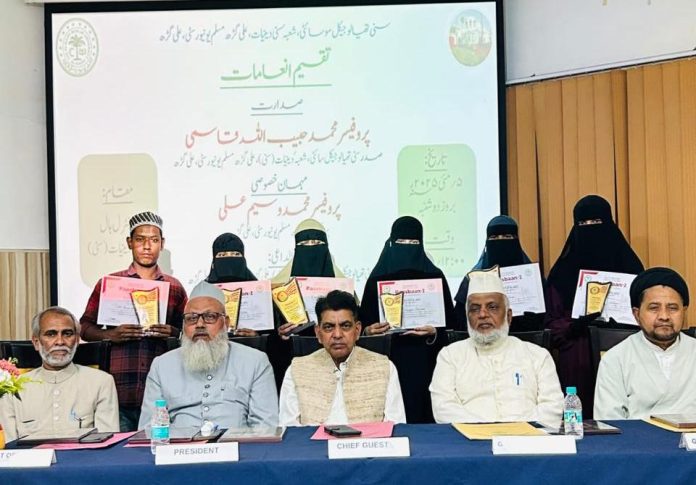
Prof M Waseem Ali, Prof Saud Alam Qasmi, Prof. Syed Tayyab Raza Naqvi, Prof. Mohammad Habibullah and Prof Mohd Rashid with the prize winners at Theology Department of AMU
Aligarh:
The Sunni Theological Society of the Department of Sunni Theology, Aligarh Muslim University (AMU), organised a prize distribution ceremony to honour the winners of a writing competition held on the theme, “The Legal and Historical Status of Waqf and the Formation of a Peaceful Society in the Light of Islamic Teachings.”
Professor Mohammad Wasim Ali, Proctor of AMU and the Chief Guest, commended the choice of a socially and religiously significant topic. He noted that while such themes deserve broader academic engagement, the Faculty of Theology has set a precedent for others to follow.
Presiding over the event, Professor Mohammad Habibullah Qasmi, Dean of the Faculty and Head of the Department, lauded the efforts of the Society and emphasised the importance of organising such programmes to showcase students’ academic and intellectual potential.
Guest of Honour, Professor Mohammad Saud Alam Qasmi encouraged students to take their dual expertise in modern and religious education beyond the university. “Your responsibilities are greater, and you must rise to meet them at the national academic stage,” he advised.
Professor Mohammad Rashid urged students not to be discouraged by competition outcomes, reminding them that many more opportunities lie ahead. Professor Tayyab Raza Naqvi, former Head of the Department of Shia Theology, also congratulated the Society for its timely theme selection.
Dr. Nadeem Ashraf, faculty member of the department, delivered the welcome address.
The programme was conducted by Zahid Ali, Vice President of the Sunni Theological Society. Dr. Raihan Akhtar Qasmi delivered the vote of thanks.
The event drew a large audience, including faculty, students, and staff from various departments.
source: http://www.radiancenews.com / Radiance News / Home> Latest News> Report / by Radiance News Bureau / May 08th, 2025
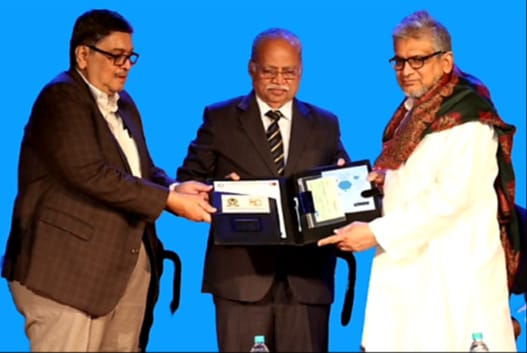
Former president of the All India Muslim Majlis-e-Mushawarat (AIMMM) and general secretary of the Movement for Empowerment of Indian Muslims (MOEMIM), Navaid Hamid, honoured with the Qaide Millat Award.
The award was presented by former Madras High Court judge, Justice KN Basha at an event held at a grand ceremony at the Music Academy on Saturday.
Renowned human rights activist John Dayal, and founder of the Sadbhavana Mission, distinguished scientist Professor Vipin Kumar Tripathi, were also honoured by the southern Indian institution, Qaide Millat Educational and Social Trust (Chennai).
The annual award is given for probity in political/public life and consists of a certificate of appreciation, a cash prize of five lakh rupees, and shawl.
Congratulating the awardees on the occasion, Justice Basha said he felt honoured and privileged to present the awards to individuals who serve as beacons of light amidst the darkness of the current environment while M G Dawood Miyakhan, general Secretary of the trust, said “the awardees are based on their unblemished track record of integrity in political and personal life in India”.
Retired CSI Bishop Dr V Devasagayam said while facilitating the awardees “we are here to recognise your services, support your initiatives and to wish that you continue your fight in spite of all the odds”.
The event was presided over by the president of the Qaide Millat Trust, Qazi Dr Salahuddin Muhammad Ayub, while announcement the awards and introduction of awardees were made by the Trust’s general secretary.
On this occasion, Dr S Sadiq, former Vice-Chancellor of Madras University, and retired CSI Bishop Dr V Devasagayam, were also honoured. General Secretary Dawood Miyan Khan, Treasurer S Mushtaq Ahmed, and Principal of Qaide Millat College, Dr MA Thawab, presented certificates of honour, prize, and shawls to the dignitaries.
The announcement of the 2024 Qaide Millat Award was made in February 2025. The award jury comprised Dr Vasanti Devi (former Vice-Chancellor), Dr V Devasagayam (former Bishop), Paneerselvam (Readers’ Editor, The Hindu), and Dawood Miyan Khan (general secretary, QEST).
Born on June 23, 1963, in the walled city of Delhi, Navaid Hamid has been associated with the All India Muslim Majlis-e-Mushawarat since the late 1980s. He served as its President from 2016 to 2023. A graduate in English from Zakir Hussain College, University of Delhi, Navaid Hamid has been actively involved in political and social work since his student days at the university.
During the UPA Government (2004–2014), he was appointed as a member of the National Integration Council for two terms. He is the founding secretary of the South Asian Council for Minorities (SACM) and also serves as the national general secretary of the Movement for Empowerment of Muslim Indians (MOEMIN). He has worked actively to support and uplift marginalized communities.
In 2008, at the Global Minorities Meet held in New Delhi and attended by delegates from 18 countries, Navaid Hamid was elected General Secretary of the Global Minorities Forum for Justice and Peace.
Previously, the Trust has presented the Qaide Millat Award to eminent personalities, including Teesta Setalvad and Nilakanoo (2015), N. Shankariah and Syed Shahabuddin (2016), Manik Sarkar and Muhammad Ismail (2017), Vice President of India Dr. Hamid Ansari and Aruna Roy (2018), AG Noorani and Thiru V mavalavan (2019), Harsh Mander and Bilkis Bano (2020), Dr Irfan Habib and Samyukt Kisan Morcha (2021), Thiru Veeramani and The Wire news (2022), N Ram (The Hindu) and Dr Abu Saleh Sharif.
The Qaide Millat award is presented in memory of Qaide Millat Maulvi Muhammad Ismail, a selfless servant of the community, freedom fighter, and a distinguished national leader. His significant contributions to the development of the country and community after independence are widely acknowledged.
As a member of the Constituent Assembly, a Member of Parliament in both the Lok Sabha and the Rajya Sabha, and as the founder-leader of the Indian Union Muslim League, his services are considered unforgettable. He was also among the founding members of the All India Muslim Majlis-e-Mushawarat (AIMMM).
The Qaide Millat Trust instituted this award on the 40th death anniversary of Maulvi Muhammad Ismail, and it is awarded annually to distinguished individuals active in public life.
source: http://www.theokhlatimes.com / The Okhla Times / Home> Local / by The Okhla Times / May 01st, 2025
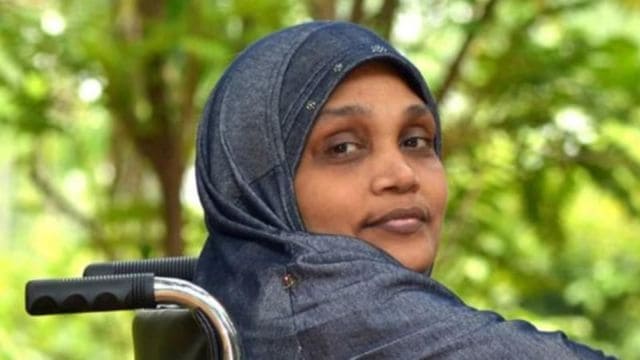
In 2000, Rabiya was diagnosed with cancer, which she later overcame, after which she returned to social work.
In 2022, she was honoured with the Padma Shri for social work. (File Photo)
K V Rabiya, known for her prominent role in Kerala’s adult literacy programme, died at her home in Malappuram on Sunday. She was 59.
A native of Vellikakkad in Malappuram district, Rabiya fought against heavy odds and personal tragedies, right from childhood, to work relentlessly for the betterment of the differently abled and inspired thousands of women to enter the world of letters.
In 2022, she was honoured with Padma Shri for social work.
While still a school student, Rabiya contracted polio at the age of 12, which would eventually leave her paraplegic. Despite this, she completed her schooling and joined a college. However, she could not complete the degree course.
Rabiya then turned to books, reading everything from science to literature. Wheelchair-bound by then, Rabiya also started taking tuition classes for local children at a nominal fee.
It was by chance that Rabiya became a part of Kerala’s literacy movement, which began in the late 1980s. A college degree was a must for a literacy instructor. However, an instructor, who could not continue with the programme, sought Rabiya’s help. This marked the birth of a social worker and the beginning of her legacy.
She started teaching literacy classes in June 1990, and local elderly women and housewives were her students. She worked to convince women from orthodox families about the importance of education, and told them inspiring stories of world leaders and social reformers to get them interested in her classes.
When her number of students started swelling, Rabiya became a full-time literacy instructor. Later, she also established a library for women and became instrumental in the development of her locality, which did not have basic facilities such as roads and electricity, telephone, and water connections.
She eventually launched a voluntary organisation named Chalanam (movement), which also spearheaded literary programmes.
Her intervention was not limited to literacy alone. She started six schools for children with special needs and trained and empowered more than 250 women through a small-scale manufacturing unit. She was also at the forefront of the movement to create awareness against dowry and superstition. In later years, she was also actively involved in the e-literacy programme, Akshaya, in Malappuram.
In 2000, Rabiya was diagnosed with cancer, which she later overcame, after which she returned to social work.
In her autobiography, Swapnangalkku Chirakukalundu (Dreams Have Wings), Rabiya told the story of her inspiring life and how she chased her dreams. She also authored four other books, including the memoir, Mouna Nombarangal (Silent Pains). A documentary was also made on her life, titled Rabiya Moves.
She received several honours, including the Kannagi Devi Stree Shakti Puraskar, instituted by the Child Welfare Department of the Union government, in 2000. She also won the Youth Volunteer against Poverty award, jointly instituted by the Union Youth Affairs Ministry and the United Nations Development Programme.
source: http://www.indianexpress.com / The Indian Express / Home> India / by Shaju Philip, Thiruvananthapuram / May 05th, 2025
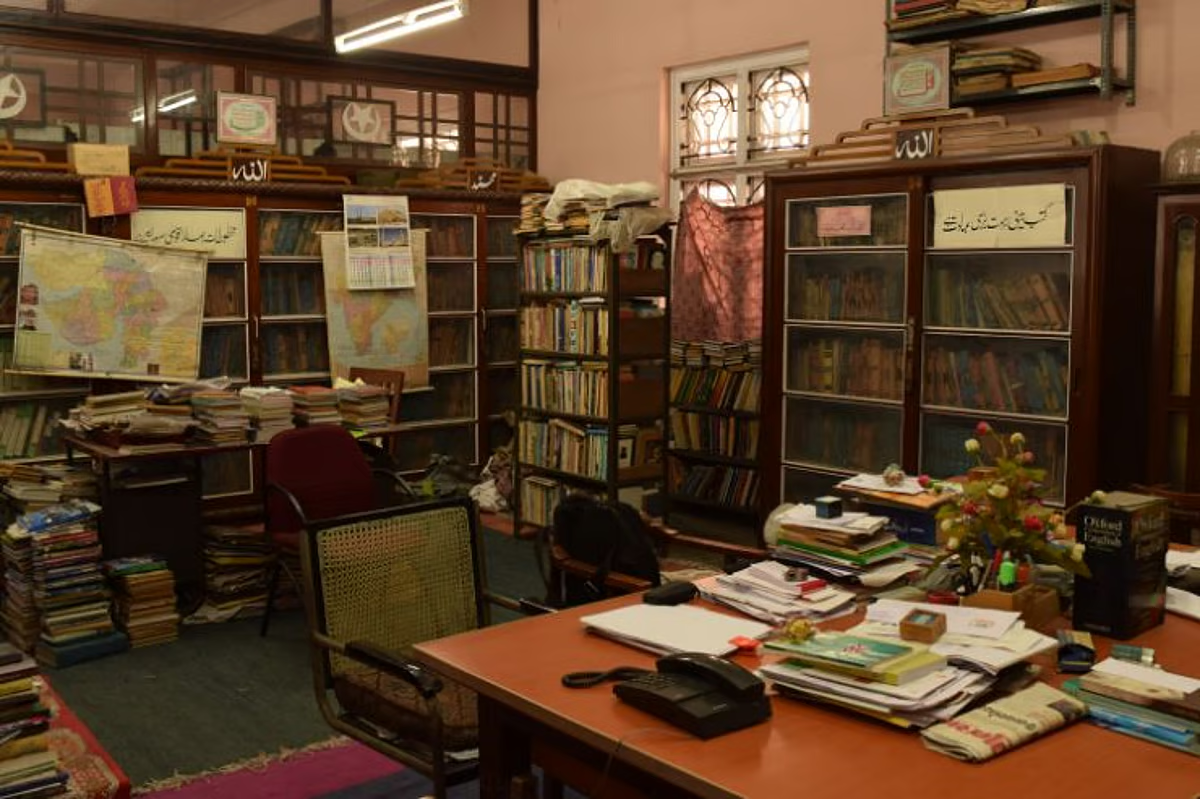
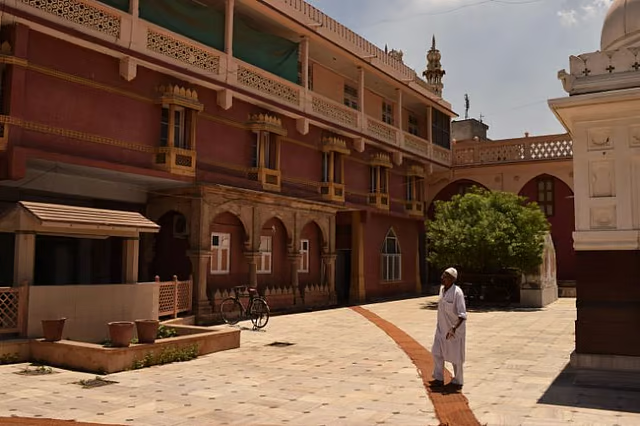
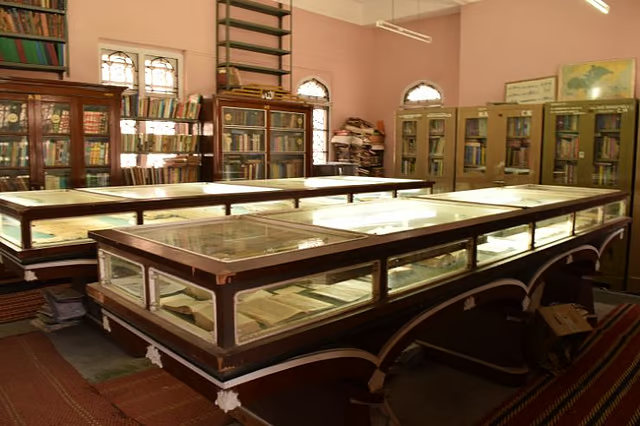
With over 4,000 manuscripts and 25,000 books, Hazrat Pir Mohammad Shah Library is a sanctuary of knowledge and wisdom.
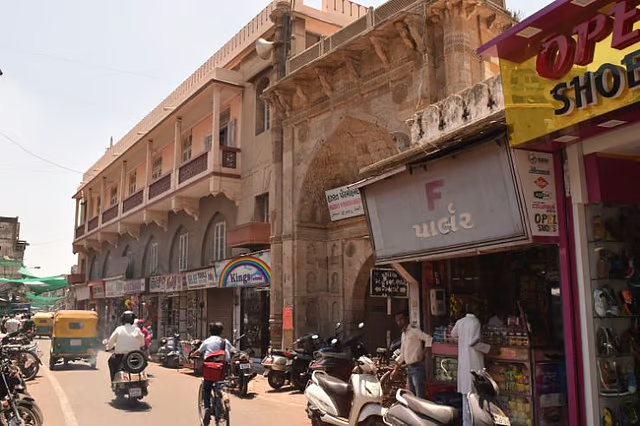
Stepping into the Hazrat Pir Mohammad Shah Library, the oldest library of the city, feels like entering a secret realm concealed within the narrow lanes of Pankora Naka, Ahmedabad. This hidden sanctuary of wisdom resides within the majestic tomb-shrine complex dedicated to the esteemed Pir Muhammad Shah.
The library’s journey commenced over 250 years ago when Pir Mohammad Shah and his devoted disciples gathered a humble collection of 300 manuscripts. Now, this literary haven proudly safeguards an expansive repertoire of over 4,000 manuscripts, establishing its position as such largest collection in Western India. Moreover, it boasts an impressive assortment of over 25,000 books.
About Mohammad Shah
Let us delve deeper into the enigmatic figure of Mohammad Shah, the driving force behind the library. Born in Bijapur in 1688 AD, he embarked on a transformative journey to Mecca, where he immersed himself in the teachings of practical Sufism.
Eventually, he settled in Ahmedabad in 1711, where he would offer his daily prayers in the Jama Masjid and rest in the humble hut of a benevolent elderly woman. It is in this very location that the awe-inspiring mausoleum-mosque-library complex now stands.
A treasure trove of manuscripts and books
During his lifetime, Pir Muhammad Shah, along with his devoted disciples, amassed a treasure trove of manuscripts and books, encompassing a wealth of academic and spiritual wisdom. This invaluable collection finds its residence in the esteemed “kutubkhana”. The Pir himself was a gifted bilingual poet, penning abundant verses in Persian and Dakhani.
Today, the library stands as a testament to its illustrious past, harboring more than 4,000 manuscripts—the largest collection in Western India, alongside a rich trove of over 25,000 books. Its extensive catalog covers diverse subjects such as spirituality, Quran Knowledge, music, literature, history, geography, language, astronomy, astrology, agriculture, and more.
Within its hallowed halls, one can explore literature in Urdu, Gujarati, Arabi, Parsi, Hindi, and English. The library features a special chamber dedicated to ancient manuscripts, some dating back 800 years, as well as a display of Hazrat Pir Mohammad Shah’s personal belongings, carefully encased in glass to ensure their preservation.
Translations of sacred texts and unique manuscripts
The library’s treasures extend beyond its own collection, offering translations of sacred texts such as the Bible, Rigveda, and Geeta. Visitors are also privileged to behold unique manuscripts, including a handwritten Quran by the illustrious Mughal Emperor Aurangzeb.
This historic repository not only embodies a wealth of knowledge, wisdom, and heritage but also exudes an aura of serenity and tranquility. Explore the mosque, wander through the tranquil courtyard, lose yourself in the pages of ancient tomes, marvel at rare manuscripts, and surrender to the enchantment of bygone era. A captivating journey back in time awaits within these hallowed walls.
source: http://www.knocksense.com / Knock Sense / Home> Ahmedabad / by Zeal Jani / June 27th, 2023
The World Heritage City of Ahmedabad saw many revered men who silently documented the various tales the city’s monuments, structures and literature had to tell.
One such relentless pursuit was that of publisher, author and a keen student of the medieval history of Gujarat, Shahed Kalimi, who not just ran the nearly-century old Kalim Book Depot but also spent 20 years of voluntary service to set up the library at Sarkhej Roza.
A little over a month after he passed, Kalimi’s contributions to Ahmedabad’s heritage were remembered by academicians, renowned historians and heritage enthusiasts at a remembrance meeting organised in the city on Sunday.
Kalimi was the sole force behind revamping the library at one of the ASI-protected monuments of the Heritage City of Ahmedabad, Sarkhej Roza.
AS Saiyed, President of the Sarkhej Roza Committee, narrated Kalimi’s two decades of voluntary contribution at the Sarkhej Roza and lauded him for his dedication and perseverance. “Kalimi was instrumental in reviving the library at the Sarkhej Roza and setting up a publishing department at the Roza through which many books were translated and published under the aegis of the Sarkhej Roza Committee,” Saiyed said.
During his lifetime, Kalimi had translated nearly 50 books from Urdu, Persian and Arabic, into Gujarati, in a bid to bring forth the little pieces of history about Gujarat to the people here.
In fact, two of his last books – A Bird’s Eye View of Sarkhej Roza and Yaad-e-Ayyam, were released during the remembrance meet.
“Kalimi’s sole aim was to bring forth anecdotes of Gujarat’s history to the state. Being an ardent reader of history himself, he translated many books written about Gujarat and its history, Persian and Arabic to Gujarati. He has translated close to 50 works by now about various aspects of Ahmedabad and Gujarat which the state would have otherwise lost,” said Professor MH Bombaywala, curator and founder, Peer Mohammad Shah Library, one of the oldest in Ahmedabad who was present at the meeting.
Being an ardent enthusiast of medieval history of Gujarat, Kalimi turned his place of work – the Kalim Book Depot – around by diligently sourcing, procuring, even translating if needed to make history books available to people here.
Students of History and even architecture and design often frequented his book store, which was once upon a time, a fulcrum for intellectuals to gather and discuss new, radical ideas through expressions of poetry and Shayari.
The Kalim Book Depot will be a century old in 2026 and till date is known for rare books. “We have retailed the Urdu versions of Ramayana, Mahabharata and the Bhagavad Gita to people. Father used to procure a series of Urdu books from warehouses of libraries, book exhibitions, flea markets including the Gujari Bazar and wherever he travelled and patiently sorted them, to find the right kind of books for history students and later translate them,” said Mushir Kalimi, Shahed’s son.
“Father’s interest was not in the business but instead in letting the younger generation read and delve into the history about Gujarat to the people of Gujarat by translating works of authors from Persian, Arabic and Urdu languages. Therefore, if he realised someone’s interest in books, he would gift them a second book for free besides the ones they’ve bought,” said Mushir.
Kalimi was working on one of his last books just before he passed — Makbaras and Masjids of Ahmedabad. Mushir along with members of the Sarkhej Roza Committee are working towards publishing the book which will soon be out.
source: http://www.timesofindia.indiatimes.com / The Times of India / Home> News> City News> Ahmedabad News / by Niyati Parikh / TNN / March 28th, 2022
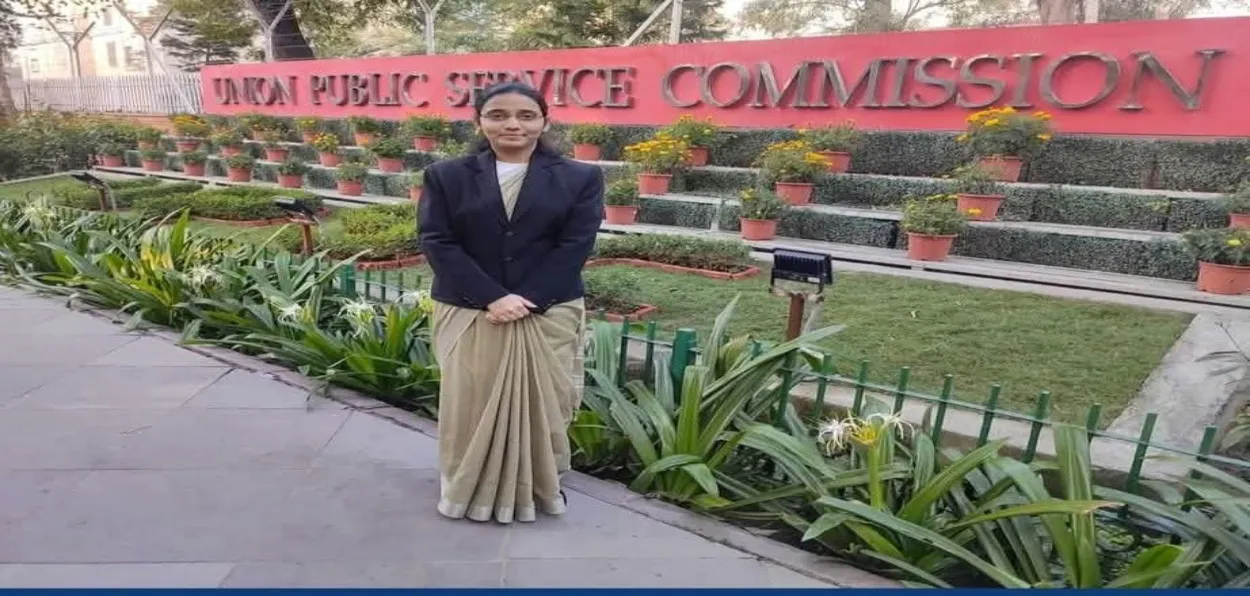
Farkhanda Qureshi of Balaghat, Madya Pradesh, outside UPSC office in Delhi
Farkhanda Qureshi was in her eighth grade when she saw district Collector B. Chandrasekharan son a local Television channel. This visual ignited a dream in her mind; she too wanted to become a civil servant. Today this Muslim woman from from Balaghat, a small town of Madhya Pradesh, has realized her dream which she nurtured over the years with passion, hard work, overcoming failures and perseverance.
Farkhanda Qureshi has secured 67th rank in the UPSC 2024 Civil Services Examination and would soon join the Lal Bahadur Shashtri National Academy for Administration, Dehradun, for training to become an Indian civil servant.
“I had decided that one day I will also become a collector and work for society.” She credits her success in her fourth attempt to her family’s support.
She started preparing for UPSC in 2021. Despite failures, she did not give up. She says, “My parents did not let me break down; they motivated me and told me that I will get success one day. Had they not supported me, I would have probably given up in the first or second attempt,” she told the told media persons.
Farkhanda believes that for a tough exam like UPSC, studying for 18 hours is not necessary, but consistency and strategy are. “I studied for 6 to 8 hours every day, but I studied every day. Old year papers, standard books, current affairs and newspapers were an important part of my preparation.”
Farkhanda Qureshi flanked by her parents Nikhat Anjum and Abdul Malik Qureshi
Farkhanda, who completed her 10th from St. Mary’s School and 12th from Methodist Mission, says, “Being from a small town like Balaghat has never been my weakness. I believe that if the youth here get the right direction and resources, they can make a name for themselves across the country.”
Farkhanda considers her father Abdul Malik Qureshi, who is a lawyer, and her mother Nikhat Anjum Qureshi, a homemaker, her heroes and credits her success to them.
Her father said, “Today people recognize me by my daughter’s name, nothing can give me greater happiness than this.”
There is a festive atmosphere in the area, the collector congratulated Farkhanda and and wished her a bright future. The local mosque committee (Anjuman( also felicitated her and called her inspiration for the Muslim youth.
Out of the 1,009 candidates recommended by UPSC this year, 26 are Muslims, though none made it to the Top 25.
Iram Choudhary (Rank 40) and Farkhanda Qureshi (Rank 67) are the highest-ranking Muslim candidates in the merit list. A total of 97 Muslim candidates were selected for the interview stage, and the success rate stands at 2.57%, lower than previous years.
source: http://www.awazthevoice.in / Awaz, The Voice / Home> Stories / by Abdul Wasim Ansari, Balaghat, Bhopal (name error edited) / April 26th, 2025
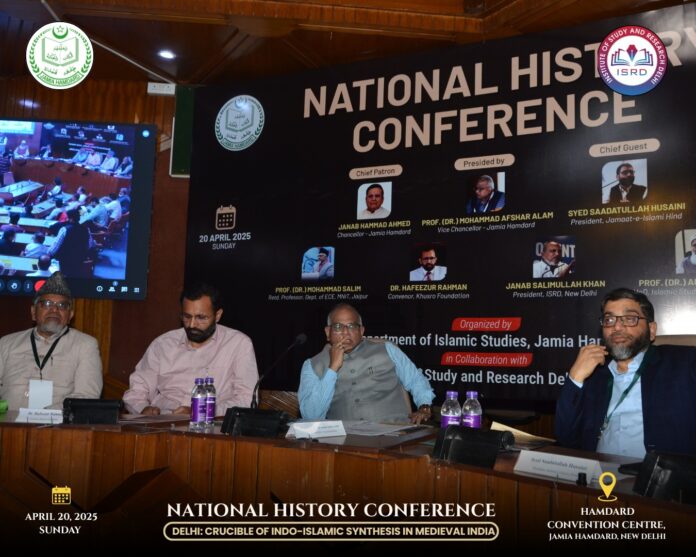
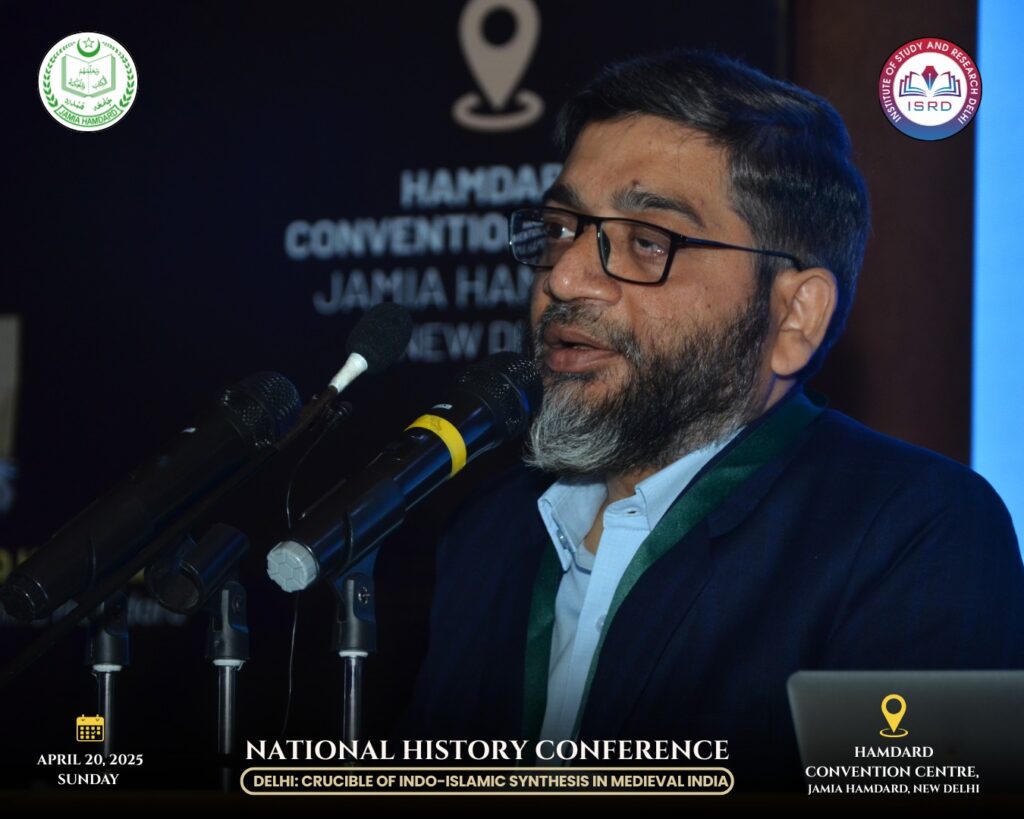
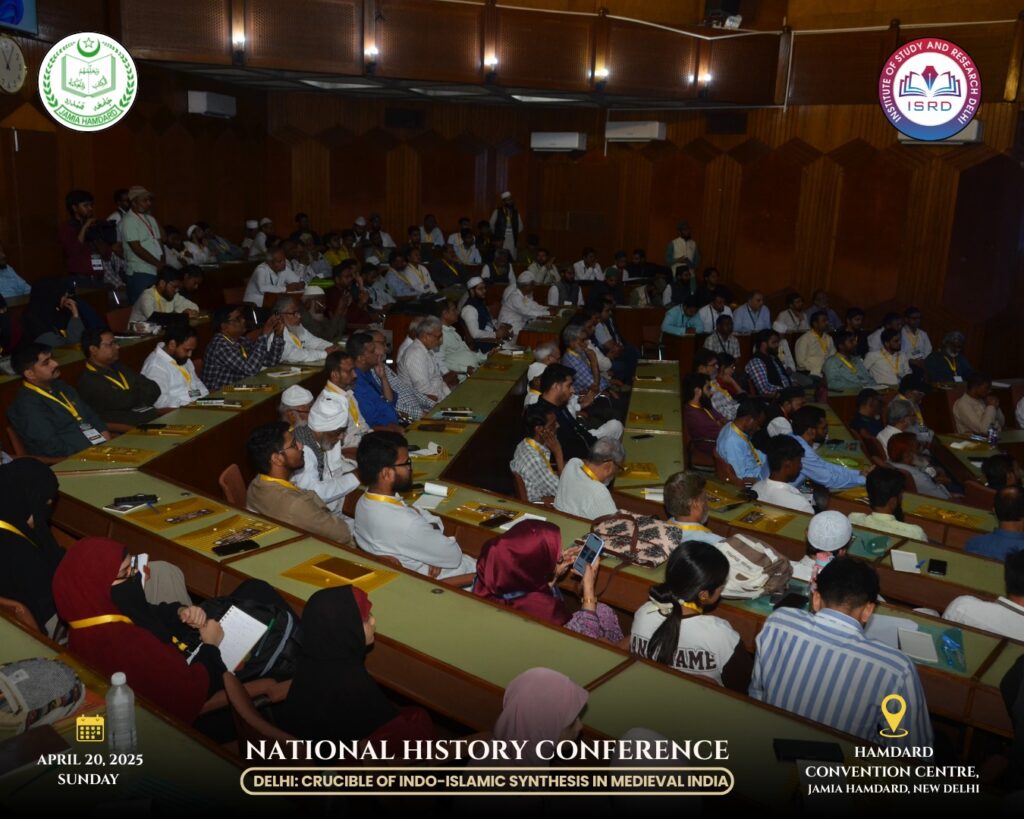
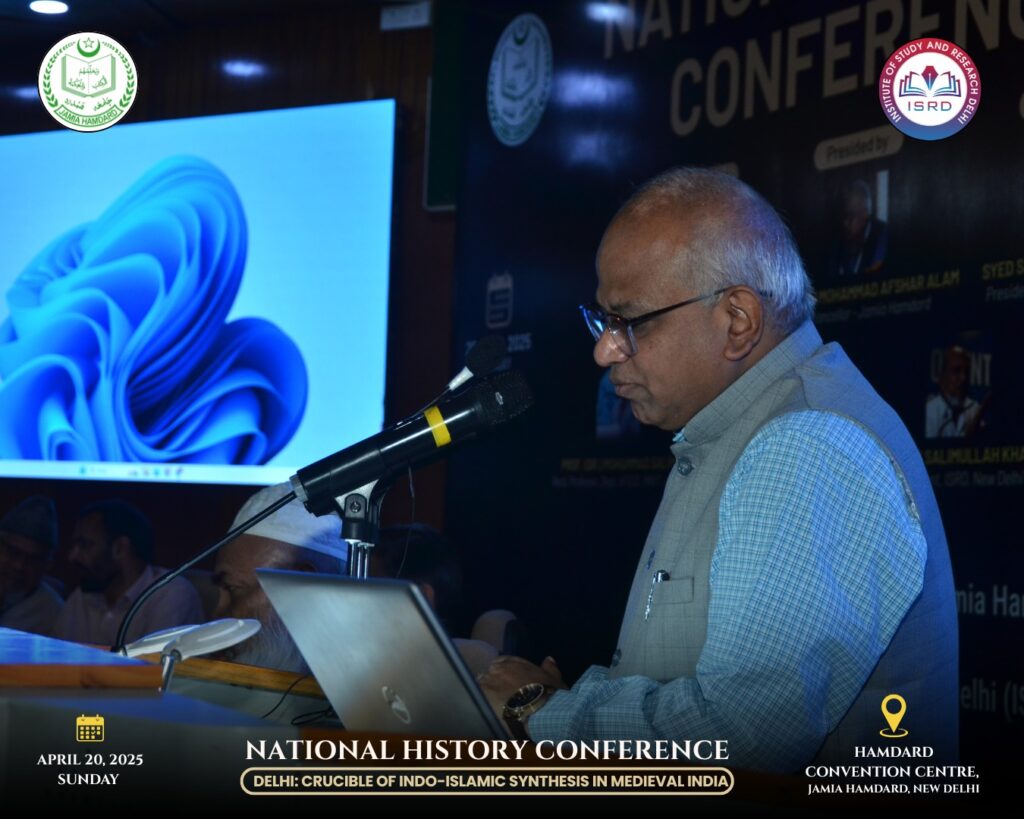
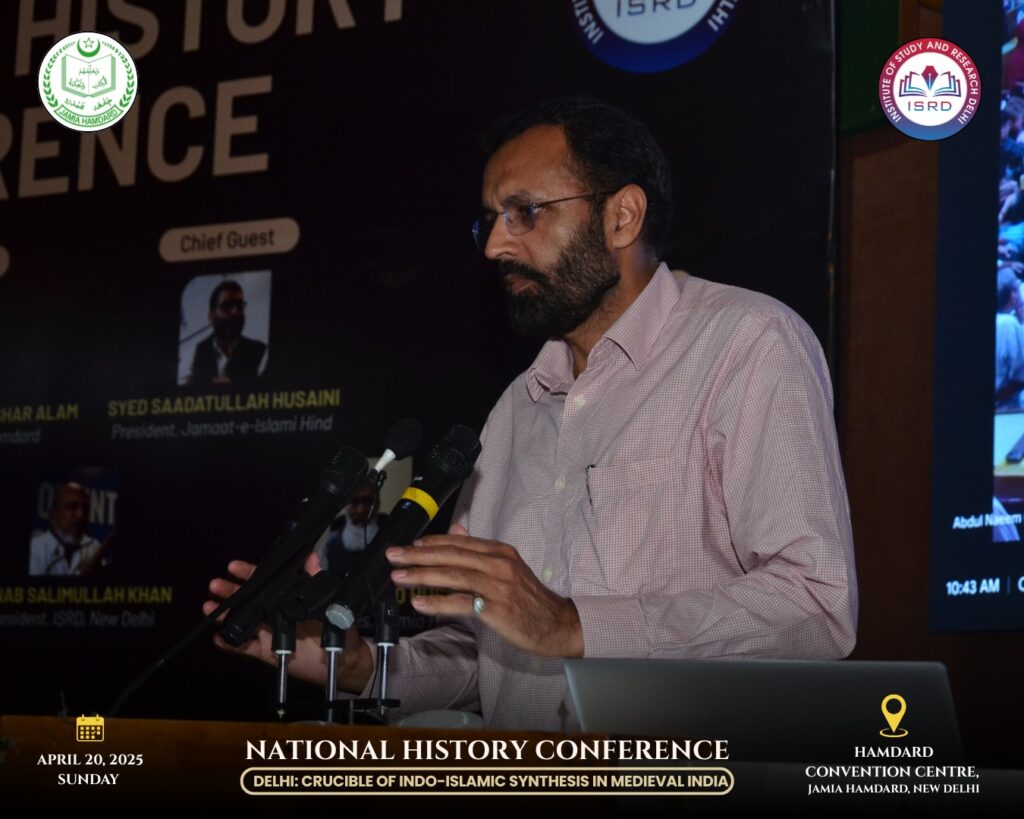
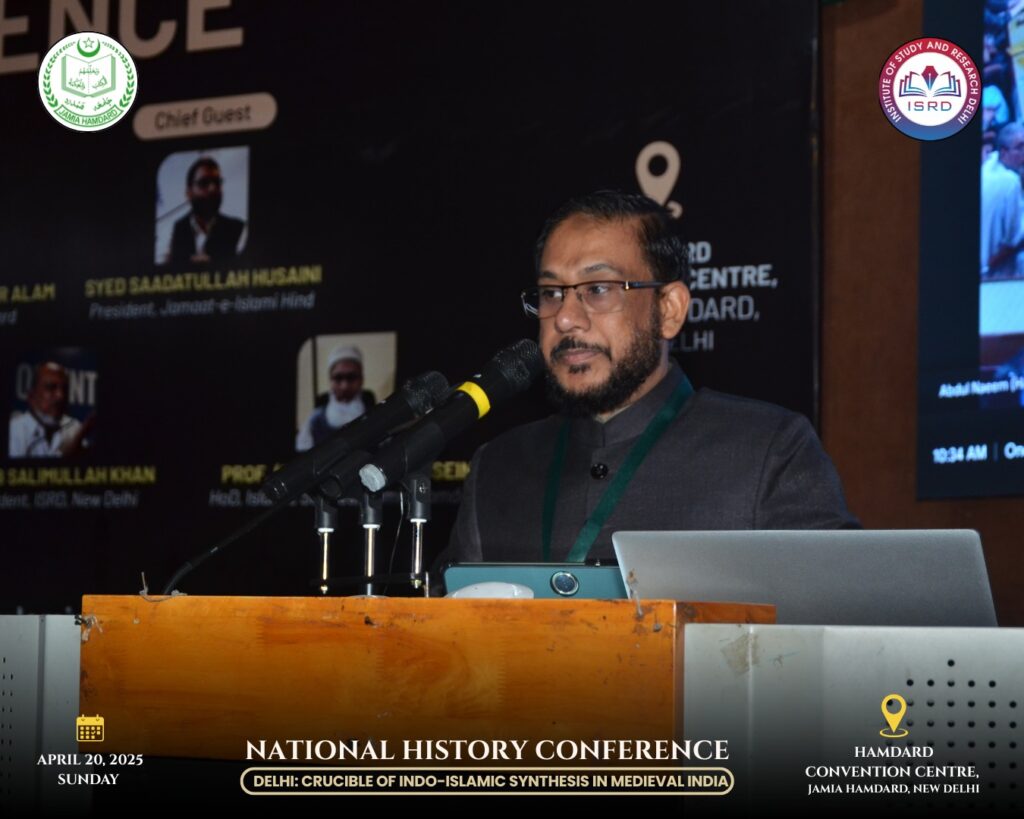
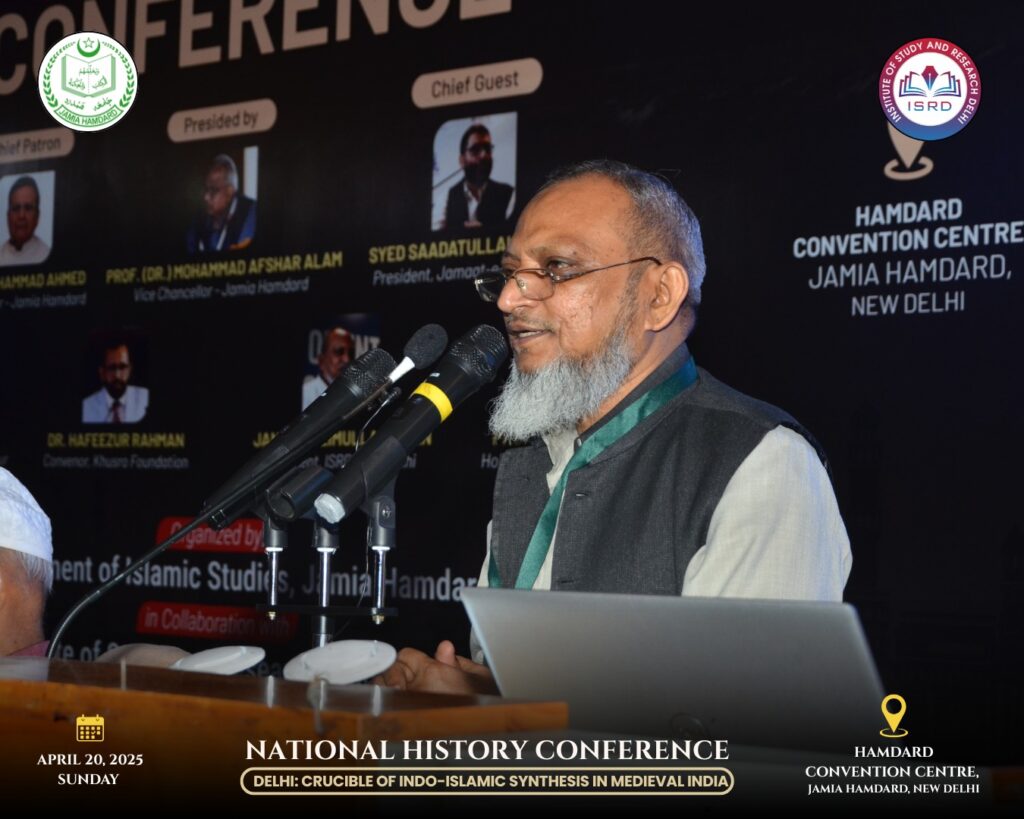
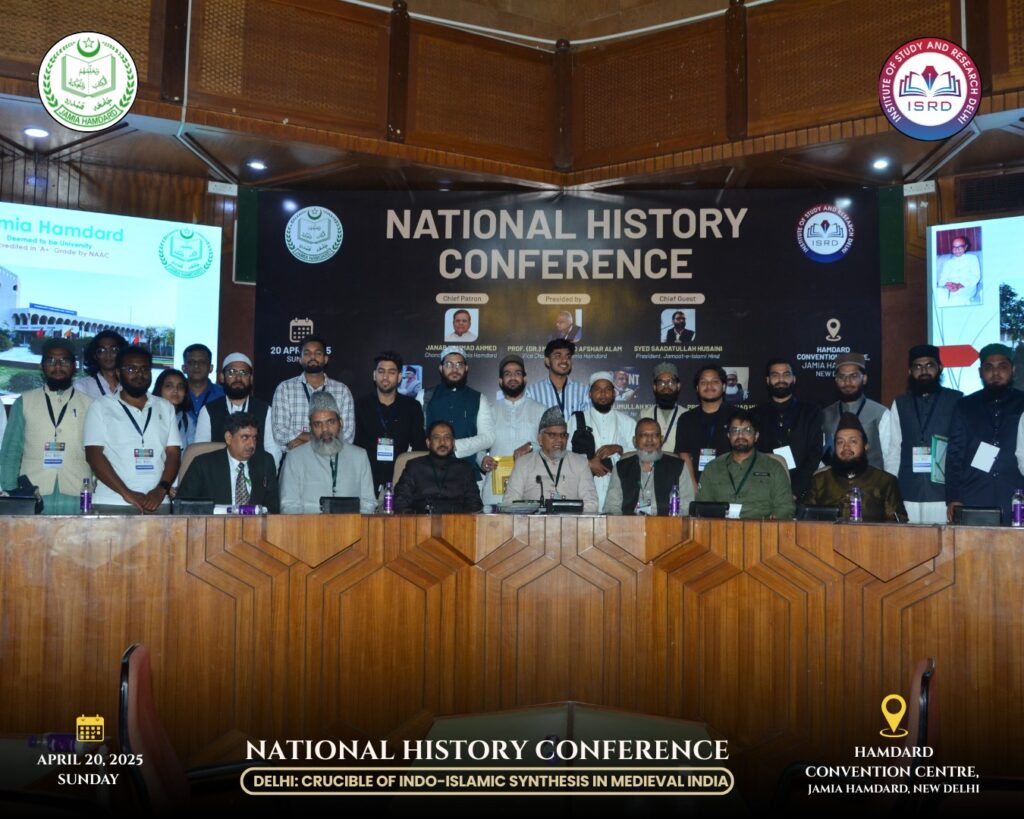
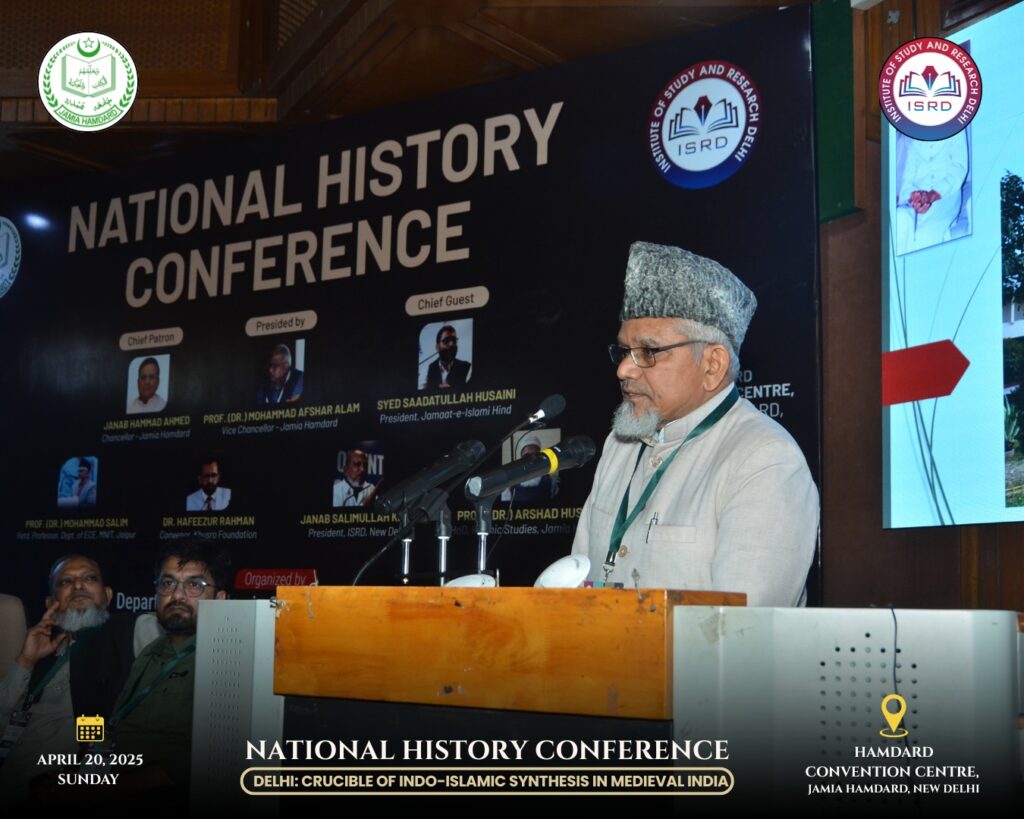
At a landmark one-day national history conference, prominent scholars, professors, and historians Sunday gathered to commemorate the unparalleled contributions of Muslims to India’s cultural and civilizational fabric. Titled “Delhi: Crucible of Indo-Islamic Synthesis in Medieval India,” the conference was hosted by the Department of Islamic Studies, Jamia Hamdard University, in collaboration with the Institute of Study and Research Delhi (ISRD), New Delhi.
Held at the Hamdard Convention Centre, Jamia Hamdard, the conference aimed to explore the profound impact of Islamic heritage on shaping medieval Indian culture, society, and governance, with a special emphasis on Delhi as the epicenter of this cultural convergence.
A wide array of research papers was presented under several sub-themes aligned with the central topic, including the Advent of Islam in North India , Educational Institutions and Knowledge Production, Indo-Islamic Architecture, Sufi Traditions and Sacred Spaces, Language and Literature, Music and Performing Arts Role in the Freedom Struggle, Calligraphy and Decorative Arts, Culinary Heritage and the Culture of Cuisine, Women’s Contributions, Science and Technology, Mughal Gardens and Economic and Administrative Innovations.
As a chief guest, Jamaat-e-Islami Hind Syed Sadatullah Husaini emphasised that the Quran repeatedly encourages the study of history and historical events to extract lessons and guidance. “If lessons are taken from history, it becomes an asset,” he asserted, adding that history serves as a mirror of society.
Refuting the prevailing negative narratives surrounding Muslims in India, Husaini remarked, “Muslims are not outsiders or foreign invaders. They are developers, not destroyers; builders, not colonizers; inheritors, not intruders.” He highlighted how the Delhi Sultanate acted as a conduit, connecting India with the thriving global centers of knowledge in the Muslim world.
He cited the example of Sanskrit scholars and experts in numerics being recognized and honored in the court of the Abbasid Caliphate. The Arabs, he noted, never appropriated the intellectual achievements of Indian scholars but instead gave them due credit. “Muslim Sultanates helped disseminate India’s hidden treasures of knowledge across the globe,” he stated.
Husaini also praised the architectural marvels of the Delhi Sultanate, such as the Qutub Minar, calling them a testament to the era’s artistic grandeur. He emphasized that the most valuable contribution of Muslim rulers was the promotion of unity and human equality, bringing together people across religions, castes, and classes under a shared identity of humankind—a concept Allama Iqbal referred to as “Wahdat-e-Khaas Quwwat” (special power of unity).
Referencing Maulana Abul Kalam Azad, he recalled Azad’s fervent appeals to Muslims at the time of Partition to remain in India, invoking their emotional and civilizational connection to iconic Islamic monuments such as the Taj Mahal, Red Fort, and Qutub Minar.
Dr. Afshar Alam, Vice Chancellor of Jamia Hamdard University, presided over the inaugural session. He provided a historical overview of Islamic rule in India, tracing it from Mohammad Ghori’s arrival in the 12th century to the British colonial era, covering the Slave, Khilji, Tughlaq, Sayyid, Lodhi, and Mughal dynasties.
He emphasized how Delhi became the nucleus of Indo-Islamic cultural fusion, with Central Asian and Persian architectural styles merging with indigenous Indian designs. This, he said, resulted in a unique Indo-Islamic architectural identity, visible in the city’s rich heritage.
Alam also elaborated on the contributions of the Islamic period in education, science, music, literature, governance, and social reform, asserting that this synthesis laid the foundation of what is now referred to as South Asian culture. “This fusion didn’t just shape Indian civilization—it gave it depth, diversity, and resilience,” he concluded.
Dr. Hafeezur Rahman, convenor of the Khusro Foundation and an expert in Urdu and Persian, delivered speech as a special guest. He reflected on historiography, distinguishing between pro-establishment and anti-establishment narratives, and praised Islam’s contribution to historical objectivity through the tradition of “Asma al-Rijal” (biographical evaluation of narrators).
He noted, “It is often said that the Mughals gifted India three unparalleled treasures: the Taj Mahal, Mirza Ghalib, and the Urdu language.” Rahman particularly celebrated the role of Sufi saints, especially Hazrat Nizamuddin Auliya and his disciple Ameer Khusrau, a 13th-century polymath and the founding father of the Urdu language. Khusrau, he said, was also a distinguished scholar in astrology, astronomy, and music.
Quoting Khusrau’s oft-repeated teaching from his spiritual mentor—”Agar duniya aap ke raste mein kaante bichhaye, to tum phool bichhao” (If the world throws thorns in your path, you lay down flowers)—he emphasized the Sufi message of love and resilience.
Dr. Hafeezur Rahman further illustrated how cultural synthesis led to creations like biryani and sherwani, both products of Indo-Islamic fusion. He expressed hope that the academic papers presented at the conference would become historical documents in their own right.
Dr. Fazlur Rahman, Assistant Professor in the Department of Islamic Studies, anchored the conference and gave a brief introduction to its aims.
ISRD Secretary and Organizer Asif Iqbal outlined five core objectives and sub-themes of the event. Asif Iqbal emphasized that civilizational interactions—such as those between Islam and Indian culture—often result in positive transformations. He stated that Muslims, while introducing new cultural and civilizational values to the subcontinent, also embraced indigenous practices. “This mutual exchange reshaped the cultural and intellectual landscape of the region,” he said.
ISRD President Saleemullah Khan offered reflections on the ethical teachings of Prophet Muhammad, citing his instruction to Hazrat Ali to return belongings even to those who plotted to kill him during the Hijrah (migration to Madinah). He also quoted Urdu writer Rashidul Khairi, who praised the skills, cooperation, and intelligence of Delhi’s women during the medieval era.
Professor Arshad Hussain, Head of the Department of Islamic Studies at Jamia Hamdard, delivered the welcome address and warmly greeted all dignitaries and guests.
The day featured parallel academic sessions, with 50 research papers presented by scholars and students from institutions including Jamia Millia Islamia (JMI), Aligarh Muslim University (AMU), Jawaharlal Nehru University (JNU), Maulana Azad National Urdu University (MANUU), National Institute of Technology (NIT), Delhi University, and Jamia Hamdard.
Sessions were chaired by eminent professors such as Prof. Obaidullah Fahad (AMU), Dr. Faizan Ahmed (National Archives of India), Dr. Mohiuddin Ghazi (former Dean, Al Jamia Al Islamia, Kerala), Prof. Azizuddin Husain, and Prof. Parvez Nazir. Guest speakers received mementoes, and research scholars were presented with certificates.
In the valedictory session, Prof. Mohammad Salim Engineer, retired professor from MNIT Jaipur, addressed emerging researchers, emphasizing key research ethics—many of which, he noted, align with Islamic principles. These include academic honesty, objectivity, peer review, and depth over volume. “There’s no shortcut to excellence,” he advised. “Hard work can even surpass intelligence.”
In light of the current communal atmosphere, he urged the Muslim community to take charge of creating history, not just recalling it.
Abdul Kalam, co-convenor of the event, delivered closing thanks, while Dr. Shadab Musa, Assistant Secretary of Jamaat-e-Islami Hind, offered a speech reflecting on the present socio-political environment.
source: http://www.indiatomorrow.net / India Tomorrow / Home> Breaking News> Education> National Interest / by Anwarulhaq Baig / April 21st, 2025