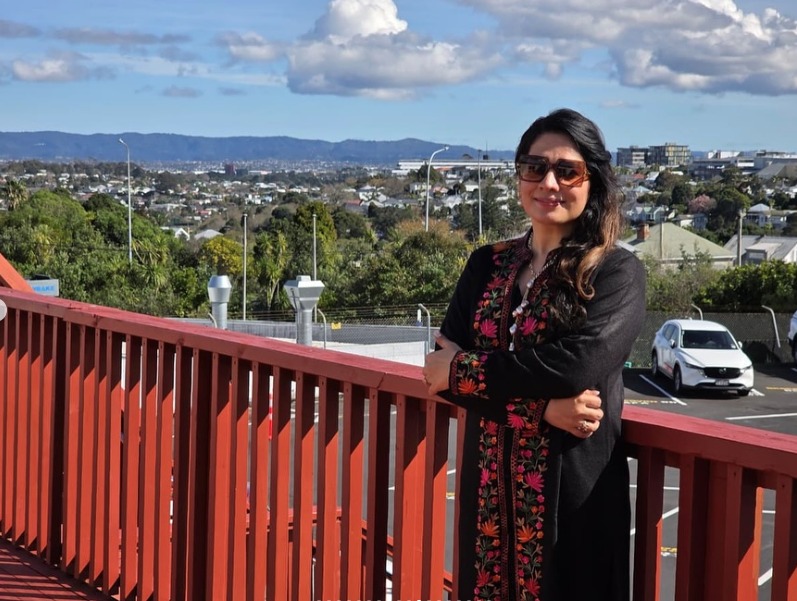
Saniya Samreen receiving a Gold Medal from Justice Dinesh Maheshwari, Chairperson of the Law Commission of India and former Judge of the Supreme Court, at the 9th Convocation of the Central University of Karnataka (CUK) held on Saturday. | Photo Credit: ARUN KULKARNI
Defying all odds, Saniya Samreen, daughter of a fruit vendor from Aland town in Kalaburagi district, bagged the Gold Medal in Master of Commerce (MCom) at the 9th convocation ceremony of the Central University of Karnataka (CUK) held on Saturday.
She received the medal from Justice Dinesh Maheshwari, Chairperson of the Law Commission of India and former Judge of the Supreme Court, in the presence of Vice-Chancellor Battu Satyanarayana, Registrar R.R. Biradar and Controller of Examinations Kota Sai Krishna, on Saturday.
Ms. Samreen, who completed her schooling and college education in Aland before joining CUK for her postgraduate studies, said that her achievement was a result of perseverance and family support.
“All of my achievements are the result of hard work, dedication, and the unwavering support and guidance from my family and mentors,” she with gratitude during her interaction with media representatives on the sidelines of the convocation.
Her father, Mr. Shamu Bagwan, earns his livelihood as a fruit vendor, while her mother, Mrs. Raziya Begum, is a homemaker. “My parents’ constant belief in me has been the driving force behind my success,” Saniya added.
Saniya, who has also qualified both the Karnataka State Eligibility Test (KSET) and the National Eligibility Test (NET) for assistant professor, said she wishes to build her career in academia.
“I aspire to contribute to the field of commerce through teaching and by shaping future professionals,” she said.
source: http://www.thehindu.com / The Hindu / Home> News> India> Karnataka / by The Hindu Bureau / November 08th, 2025
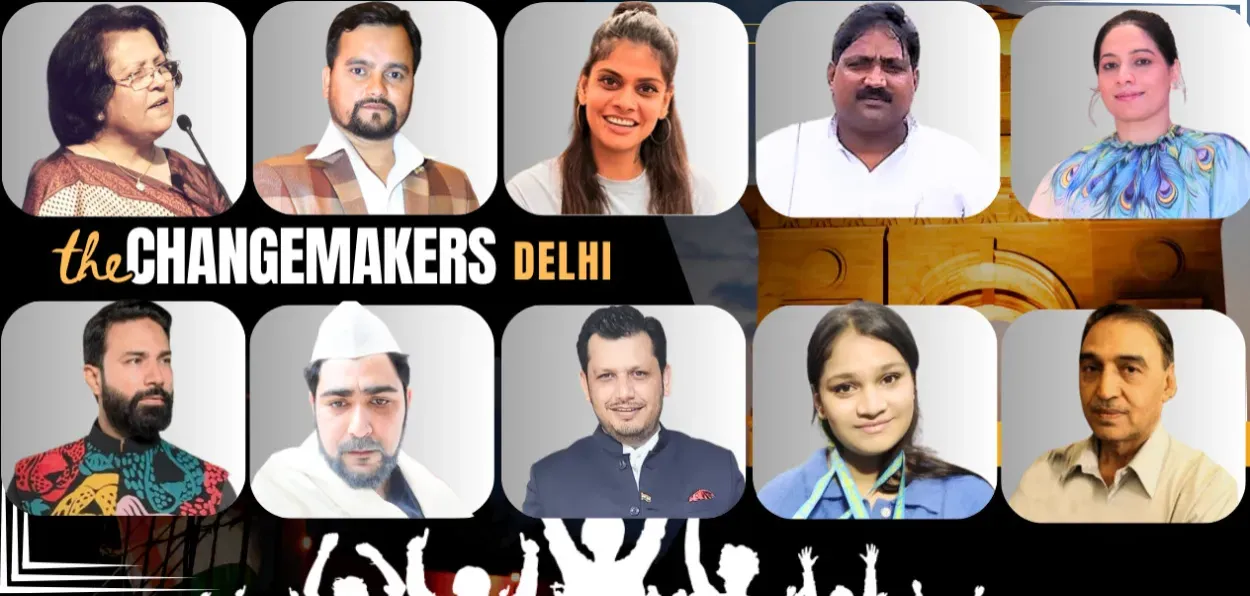
Delhi is the city of enterprising people, many of whom are migrants from smaller towns and cities. Many achieved successes in careers, businesses and professions — but some of them transcended the boundaries of success. They are trailblazers who give it back and inspire others. Here, we feature ten personalities of Delhi whose work makes them extraordinary and the Changemakers:
Sirajuddin Qureshi
Sirajuddin Qureshi a well-known industrialist who laid the foundation of India’s meat industry and food processing. Besides, he is one of the founders of the India Islamic Cultural Centre in Delhi. He is a trailblazer in modernising and scaling up the meat and food processing industry under the aegis of his Hind Group. He set up the first modern slaughterhouse and expanded his food business to 50 countries.
However, his lasting contribution to society is his relentless campaign for promoting education among the Qureshi clan, who were small-time meat sellers and traders. He persuaded his community members to pledge to promote the education of girls and women, opt for simpler weddings and encourage youth to join professions. His social campaign was so successful that today, only 20 per cent of the Qureshi men are meat sellers, and women have higher educational standards.
Azra Naqvi
Azra Naqvi wears many hats, but her core remains attached to Urdu, the language, she claims, she breathes, thinks in, and is in her DNA. Despite having lived a fulfilling life with her husband in many countries, dabbled in different professions and roles, her heart always pined for her favourite language. So, when she got a chance to work as a consulting editor with Rekhta Foundation, she made the most of the opportunity.
Besides fulfilling her passion for Urdu at Rekhta, Azra Naqvi found an innovative use of the WhatsApp application on her mobile. First, she connected 200 Urdu women writers to establish a first-of-its-kind literary organisation, Bainalakwami Nissai Adabi Tanzeem (BANAT). The BANAT has created a sisterhood of Urdu writers. So far, BANAT has published two anthologies based on WhatsApp communication, while a third one is in process. Using the WhatsApp group, Azra Naqvi collected theme-based writings of 40 women writers.
Siraj Khan
‘Yes, We Can’ stands as a reminder that unity and opportunity can transform lives. This non-profit organisation is dedicated to empowering communities, nurturing youth potential, and creating safe spaces for growth. At the heart of this movement is Shiraz Khan, a changemaker from Old Delhi, whose journey of self-discovery and resilience has shaped the ethos of “Yes, We Can”. The seeds of Yes We Can were planted in 2015. For Shiraz Khan and his co-founder, Nandish, the pandemic wasn’t just a crisis; it was also a wake-up call. They realised that people needed support not only in material terms but also in inspiration, guidance, and community.
From grassroots awareness drives to collaborations with youth-led groups, Yes We Can has quickly grown into a space where possibility meets action. Shiraz often says, reflecting the organisation’s focus on building resilience rather than dependency.
Sahar Hashmi
Mental health in India remains a taboo; words like depression, anxiety, or personality disorder are either laughed off or bring shame. Breaking this deafening silence is Sahar Hashmi, the 29-year-old woman from Delhi. She not only overcame her mental illness but also became a beacon of hope for others suffering in silence.
In April 2025, Sahar launched a campaign, “Breaking Stigma: One Mile at a Time”. She took a 2,779 km bike ride from Delhi to Kashmir. This journey was not just about crossing the geographical boundaries, but an emotional journey against the stigma and silence of society on mental health.
Asghar Ali
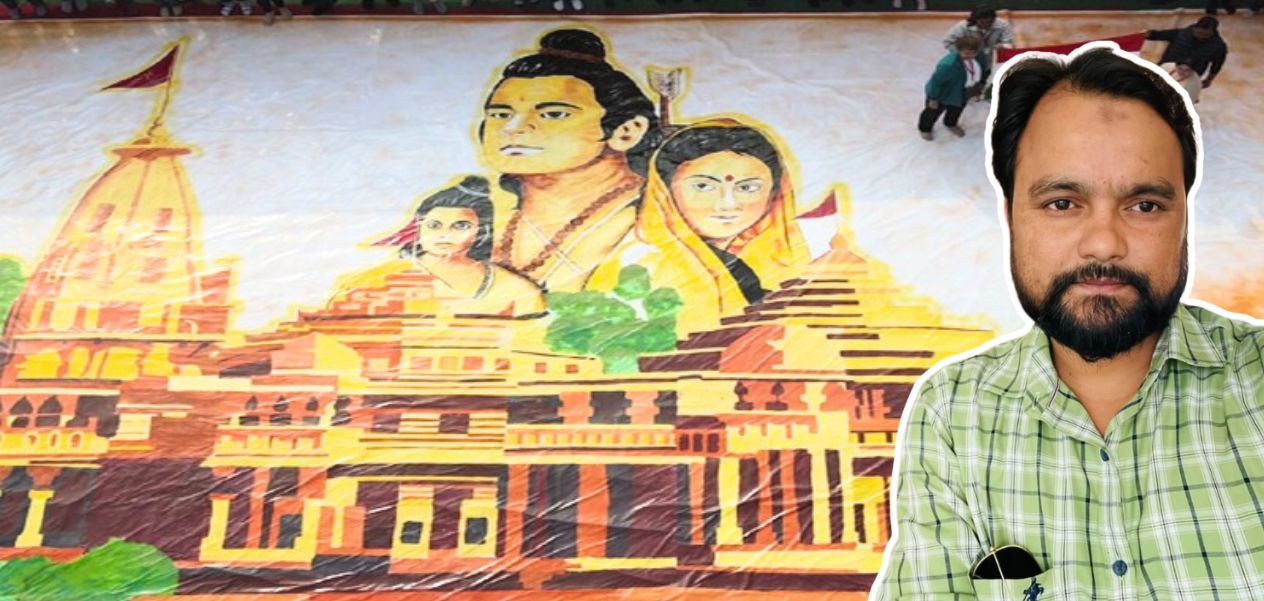
Delhi-based artist Asghar Ali is spreading the message of Ganga-Jamuni tehzeeb (Inclusive Indian culture) in society through his art. Asgar Ali, a Muslim by faith, has more than 50 paintings based on Lord Krishna and his life story to his credit.
Asghar Ali said that since his childhood, he was fascinated and influenced by Shri Krishna, colours of his peacock feathers and the flute. Asgar Ali’s major work is on the childhood form of Shri Krishna (Bal Krishna), his youth, his objectives in the Mahabharata war, as well as his leela (stories).
Asgar Ali had also organised an exhibition of his Krishna-themed paintings at the recently concluded International Geeta Mahotsav at Kurukshetra, Haryana, where people appreciated his work.
Amna Mirza
Amna Mirza is a trailblazing teacher who prefers holding her lectures outside her classroom amidst the pieces of history strewn around in Delhi. She not only makes teaching interesting, but also helps heritage and modernity coalesce. In the rat race of the modern world, Dr Amna Mirza stands tall as a teacher bringing about profound changes in people’s mindsets.
A political science professor at the University of Delhi. Dr Mirza’s journey defies the rigidity often associated with academia. She wears many hats with ease: educator, social worker, cultural custodian, and above all, a proud Delhiite who believes in nurturing the soul of a nation through its people and plurality.
Mohd. Meraj Rayeen
Md. Meraj Rayeen’s inclusive campaign to improve the conditions of indigenous Pasmanda Muslims, who comprise approximately 80 per cent of the Muslim population, is shaping social change.
Rayeen says, “Politics alone cannot be the solution to every problem.” Based on this thought, he founded the ‘Pasmanda Vikas Foundation’ over a year ago. The organisation has undertaken substantial work to change the lives of people and instil new hope and confidence within the community.
This foundation is not into rhetoric in favour of Pasmanda Muslims’ rights on political platforms; It addresses issues such as education, health, economic empowerment, and social justice.
Meraj Rayeeen believes that the development of Pasmandas is possible only with the awakening and cooperation of the community members. but the entire Muslim society, especially the Ashraf class.
Uvais Ali Khan
Uvais Ali Khan is a successful Chartered Accountant and a changemaker whose journey stands as a beacon of determination and service to society.
He quit his job and started his own business in a small apartment in Laxmi Nagar, East Delhi. Borrowing from friends and banks, he began building not just a company, but a platform for change. Uvais believes in a simple but powerful idea: “Providing basic skills to an individual can open avenues for them to get a job. That single opportunity can change the life of a family for generations.
Adeeba Ali
Adeeba Ali’s life is a testimony to the power of the human spirit and willpower. The 17-year-old is not only a rising star in the world of para-shooting but also an inspiration to many others struggling with self-pity and helplessness.
Five years ago, Adeeba fell from the balcony of her house in Nizamuddin. Four years later, she stunned everyone with her stellar performance at the 26th National Shooting Championship held at the Madhya Pradesh State Shooting Academy, Bhopal, in December 2023.
Adeeba’s success is not just a story of winning two medals; it is a story of perseverance that transformed disability into a new identity, not a hindrance.
Syed Sahil Agha
Storytelling is associated with Sufis and Khanqahs; it’s a medium of the message of peace and love, which instils patriotism, unity, and religious harmony, and nurtures the Ganga-Jamuni (inclusive) civilisation. Keeping the tradition in mind, Syed Saahil Agha revived this art and gave it a modern context. Today, he is one of the most well-known names in the world of storytelling.
Syed Saahil Agha conducts storytelling programs in India and abroad. He says, “I realised that people prefer listening over reading, so I thought stories should be narrated so that the public can become familiar with the past and also learn lessons from it.”
He says his aim is not just to narrate stories but also to promote Indian civilisation.
source: http://www.awazthevoice.in / Awaz, The Voice / Home> The Changemakers / by Aasha Khosa / November 09th, 2025
Mangaluru, KARNATAKA / Kozhikode, KERALA / Dubai, U.A.E :
Shabana Faizal with her husband Faizal Kottikollon
New Delhi :
Mangalore-based Shabana Faizal has emerged as the youngest woman among India’s top 10 philanthropists, according to the EdelGive Hurun India Philanthropy List 2025.
She has donated ₹40 crore (approximately $1.5 billion) through the Faisal & Shabana Foundation to education, health, and social development.
Shabana Faisal’s journey from being raised in a small town in Mangalore to co-leading a global enterprise is about he hard work and ambition.
Her entrepreneurial journey began in 1995 as a retailer of unique, speciality and luxury products. After leading the company for eight successful years, she decided to team up with her husband, entrepreneur Faizal Kottikollon, and support him in running the world-class foundry, Emirates Techno Casting (ETC).
Shabana took charge of all human resources and administrative processes at ETC, where she created a significant impact in shaping the company’s business success.
In her role as Vice Chairperson of KEF Holdings, she is actively involved in guiding the business’s growth strategy across global markets. Deeply committed to social improvement, Shabana and her husband founded the Faizal & Shabana Foundation in 2007, with the vision of ‘Giving to Create Impact’.
At 53, Shabana’s work has placed her among some of the most influential women in India’s philanthropy world, including Rohini Nilekani, Kiran Mazumdar-Shaw and Bina Shah.
EdelGive Foundation, in collaboration with Hurun Research Institute, recently released the 12th edition of the EdelGive Hurun India Philanthropy List 2025.
The list honors India’s most generous individuals and families. Over the past three years, 191 philanthropists have donated a total of ₹10,380 crore, representing an 85% increase in contributions.
The education sector continues to lead as the top donor, receiving ₹4,166 crore from 107 donors.
Shabana is the mother of four children – Sophia, Sara, Zakaria, and Zarina – but continues to play an active role in business and philanthropy. Her work makes her one of India’s most influential female philanthropists, exemplifying how professional leadership and a commitment to giving can combine to create widespread social impact.
The EdelGive Hurun India Philanthropy List 2025 states that the top 25 donors contributed ₹50,000 crore in just five years, or an average of ₹46 crore per day. Mumbai leads in philanthropy, contributing 28% of total donations, followed by New Delhi and Bengaluru.
source: http://www.awazthevoice.in / Awaz, The Voice / Home / posted by Aasha Khosa / November 10th, 2025
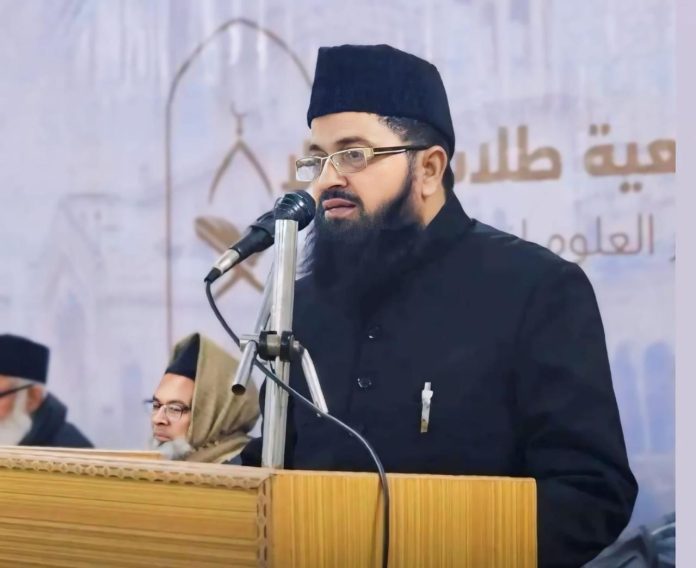
Dr. Nazir Ahmad Nadwi, senior faculty member of Darul Uoom Nadwatul Ulama, Lucknow passed away after a brief illness on 7 October 2025 in Lucknow. His sudden demise came as a shock for everyone.
Almighty Allah bestowed upon him extraordinary qualities and a variety of calibres. His personality was a marvellous amalgamation of a teacher, orator, journalist, academician, preacher of Islam and translator par excellence.
Born in 1965 in district Itawa, Uttar Pradesh (India), he received his basic education in his hometown. Thereafter, he joined Darul Uloom Nadwatul Ulama for higher studies. He did his Alimiat in 1987 and Fazilat (Specialisation in Hadith) in 1989 respectively. He also did his Ph.D. from the University of Lucknow. After completion of education from Nadwa, he was appointed as an employee in Al-Raid (Fortnightly), an Arabic wing of Nadwatul Ulama. While working at Al-Raid, he came in close contact with Maulana S.M. Wazeh Rasheed Nadwi, an accomplished journalist and prominent Islamic scholar. No doubt Maulana Wazeh left an indelible impact upon his life. It was Maulana Wazeh who had developed journalistic flavour and literary taste in him. Besides, he derived considerable academic benefits from Maulana S.M. Rabey Hasani Nadwi, former Rector of Nadwatul Ulama and Maulana Dr. Saeedur Rahman Azami Nadwi, Principal of Darul Uloom Nadwatul Ulama, Lucknow.
After a few years, he was promoted as a teacher. He was an embodiment of all sublime qualities and virtues, necessary for a good teacher. He proved himself as a selfless and dedicated teacher. His method of teaching was unprecedented.
He was a beloved teacher and scores of students quenched their thirst for knowledge from him.
Maulana led a very simple life. He left behind remarkable marks. He always kept himself away from name and fame. He did everything merely for the sake of Allah.
It should be noted that Maulana Nazir Nadwi achieved distinction in many languages such as Urdu, Arabic, English, Hindi, and Persian.
There are a number of things about Dr. Nazir Ahmad which people noticed and have written about. I personally have been most influenced by his personality. To him nothing was more precious than time. He was very punctual and meticulous.
The nicest thing is that he treated all with equal courtesy. He was a paragon of morality. He never showed egotism, pride and haughtiness. He performed his duties with honesty and integrity.
He had literary flavour, poetic flourish and journalistic taste. He wrote numerous articles for different newspapers and journals including Al- Raid. He also compiled a few books.
On his demise various condolence meetings were held in and out of India in which glowing tributes were paid to the departed soul.
A condolence meeting was held in Nadwa’s Jama Masjid on the second day of his death. In his condolence message, Maulana S. Bilal Abdul Hai Hasani Nadwi said, “Maulana Nazir Ahmad Nadwi possessed extraordinary qualities and sublime norms. He was a dedicated teacher who knew pros and cons of the Arabic language. He taught in Nadwa for more than three decades. He paid particular attention to each of his students to prepare them for the great task of spreading education in every nook and corner of the country. He left behind a galaxy of students.
Besides, he had profound knowledge of the Qur’an and Hadith. Truly speaking, he was a man of letters. His passing away is a great loss to Nadwa.
Describing his outstanding contributions in the field of the Arabic language, Maulana S. Ammar Hasani Nadwi, Nazir-e-Aam Nadwatul Ulama stated that Maulana Nazir Ahmad was a great Arabic scholar. He was well trained by Maulana Wazeh Rasheed Nadwi. He had good command over different languages. He always talked with authenticity and reference. A good number of students benefited from him. He will always be remembered for his selfless services.
Decidedly, Maulana’s sad death is an irreparable loss. He was not just a teacher but an institution. He is survived by his wife and a daughter. His funeral prayer was led twice. The first funeral prayer was led by Maulana S. Bilal Abdul Hai Hasani Nadwi, Rector of Nadwatul Ulama at the premises of Nadwa and the second was led by Imam of the late Maulana’s village and was buried in his ancestral graveyard. A host of his admirers from various parts of the country thronged to attend the last rites of Maulana Nadwi.
May Allah adorn his grave with luminosity and refulgence and grant peace to his soul! Aameen!
[Dr .Obaidur Rahman Nadwi is Faculty Member of Darul Uloom Nadwatul Ulama, Lucknow, Uttar Pradesh]
source: http://www.radiancenews.com / Radiance News / Home> Art & Culture> Focus> Obituary> Personality / by Dr Obaidur Rahman Nadwi / November 07th, 2025
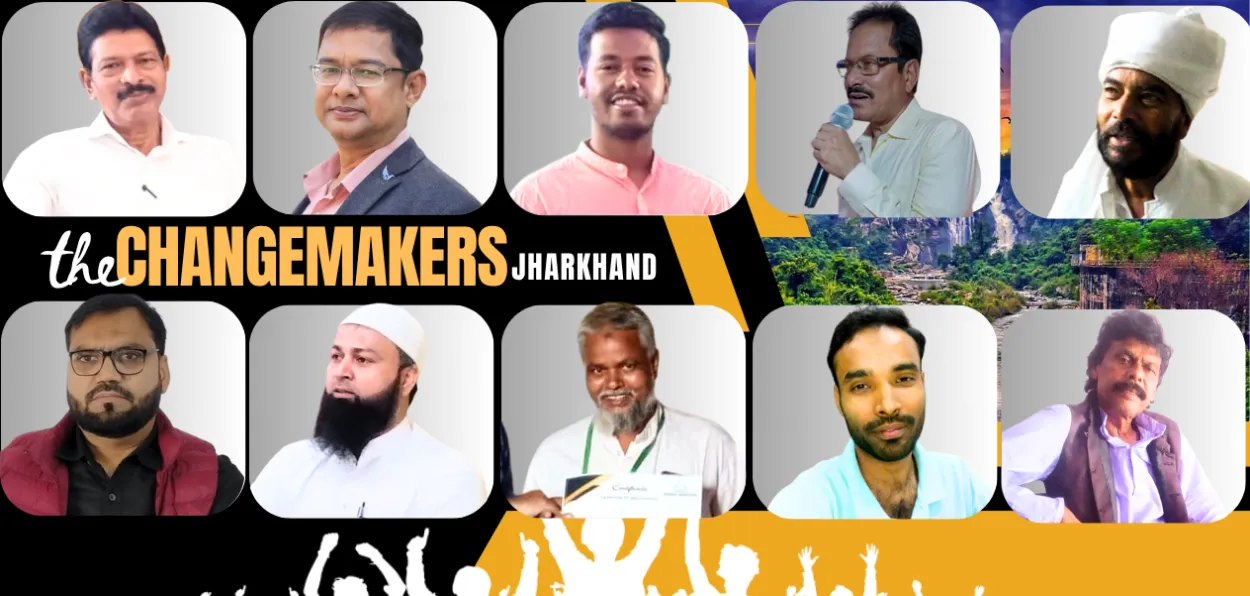
Jharkhand is one of the youngest Indian states, located in eastern India, and is also known as the tribal homeland. Since its inception, it has seen good growth, but the teething problems posed their own challenges. During these exciting times, some individuals have made significant contributions to society.
We, at Awaz-The Voice, bring to you stories of such unsung heroes from the length and breadth of India. Here are stories of ten extraordinary Muslim personalities of Jharkhand, who made a lot of difference to the lives of people and thereby helped state’s growth:
Dr Sajid Hussain
Dr Sajid Hussain left a prestigious research career to build a brighter future for the children of Chitarpur village in Ramgarh. His model, ‘Schoologium’, is redefining education across India.
Sajid explains, “Just as our body needs exercise to stay fit, the brain too needs regular practical workouts to stay active.” At Schoologium, children don’t just study from textbooks — they learn through touch, smell, taste, and experience. It’s learning through interaction and imagination — reminiscent of Rabindranath Tagore’s vision of Shantiniketan.
Sajid worked as a scientist at the National Aerospace Laboratories. But his exposure to premier institutions in India and abroad revealed a painful truth — rural children do not lag because of a lack of intelligence, but because they lack access to quality educational tools.
Determined to bridge this gap, Sajid resigned from his government job in 2012 and returned to his village. That’s where Schoologium was born — the name itself blending “school” and “gymnasium.”
Sattar Khalifa
Sattar Khalifa, better known as Painter Jilani, has brought hope to the people of Palamu, a division in Jharkhand that lags in development and where people face economic deprivation.
In college, Jilani always dreamed of serving people. A painter by profession, Jilani channels his earnings into helping the needy. “Art is my tool, service is my purpose,” he says.
His reputation made sure that even during the peak of Naxal and extremist dominance, Jilani travelled fearlessly between Bishrampur and Daltonganj, through a Naxal-dominated area.
For the poor, Dalits, Mahadalits, and marginalised communities of Palamu and Garhwa, Jilani is a symbol of assurance. From securing ration cards and pensions to arranging drinking water and hospital aid, he is always there.
Mohammad Minhaj
Mohammad Minhaj’s calm countenance hides the fire inside his mind that has driven him to serve society for over four decades. Mihaj has changed many lives in Ranchi’s slums. He ensures the people living in slums get education, health services, and social rights.
His journey began in 1982, when Ranchi was rapidly expanding, but its slums remained shrouded in neglect. Daily wage earners, rickshaw pullers, and working-class families struggled each day just to earn enough for two meals. For them, education was a distant dream. That was when Minhaj decided to step in and make a difference in many lives.
Muzaffar Hussain
Muzaffar Hussain’s dream is simple yet profound — no one in Jharkhand’s Santhal Pargana should sleep hungry. In this remote region, poverty isn’t just a condition — it’s a living reality. The six districts of Pakur, Godda, Sahebganj, Dumka, Jamtara, and Deoghar carry a long and painful history of deprivation, now slowly being rewritten.
A study claims that 82 percent of Santhal people live in extreme poverty, with most owning no land. In the middle of this harsh reality stands Muzaffar Hussain of Pakur, whose battle began even before the Right to Food Act was passed in 2013. Today, while the Act exists on paper, the real task is ensuring food reaches the truly needy — a task Muzaffar has made his life’s purpose. His efforts have borne fruit: around 600–700 families now have ration cards and receive regular supplies of food grains.
Ibrar Ahmad
In Ranchi, the capital of Jharkhand, its lanes, neighbourhoods, and beyond, one name that resonates hope is that of Ibrar Ahmad. Once employed in a bank and associated with the cultural organisation IPTA, Ibrar has been engaged in improving the lives of people around for over three decades. He is known as the person who steps in when a child drops out of school for want of fees, where poor patients wander helplessly for treatment, or where communal tension threatens to tear society apart.
Ibrar Ahmad has consistently reached out to children and youth. As President of Anjuman Islamia Ranchi, he arranged scholarships for poor children, launched talent shows and quiz competitions, ensuring that education went beyond textbooks to build both confidence and skills.
Dr. Shahnawaz Qureshi
The Quraish Academy of Ranchi has produced doctors, engineers, teachers, software developers, and many other bright minds. Located close to Ranchi’s iconic Albert Ekka Chowk is Gudri Qureshi Mohalla, officially declared a slum by the municipal corporation, where the founder of this academy, Dr Shahnawaz Qureshi, was born.
Whether through journalism or social service, Dr Qureshi changed not just the image of his locality but also the mindset of its people.
In 1993, while working with the National Literacy Mission, Dr. Qureshi established a night school in his own neighbourhood. After long days of labour, elderly men and women would gather after evening prayers, notebooks and pens in hand. The sight of wrinkled fingers tracing letters under the dim glow of a kerosene lamp became a symbol of hope and awakening. The classes were free, and the locals provided fuel for the lamps.
Mukhtar Alam Khan
Mukhtar Alam Khan’s efforts have transformed the image of Azad Basti in Jamshedpur, which was once a notorious place. It was once associated with crime, fear, and a negative image—much like Dhanbad’s Wasseypur. Mukhtar is among the few locals who brought about a positive change in this area. Today, Azad Basti’s name is taken with pride.
On any given day, Mukhtar and his team could be seen arranging blood and medicines for patients, feeding the hungry, or supporting children in education and competitive exams.
Tanveer Ahmad
In 2010, when areas like Islam Nagar and Baba Khatal in Ranchi were demolished under encroachment drives, hundreds of families were rendered homeless. The greatest sufferers were children, as some missed their exams, and others dropped out of school permanently.
In this situation, Tanveer Ahmad decided to extend a helping hand to the suffering children.
He thought, if circumstances had taken schools away from them, why not return education to them, as friends. This idea marked the beginning of a journey—from friendship to education.
Tanveer Ahmad says, “Our mission is to reach underprivileged children in Ranchi and Jharkhand who are drifting away from mainstream education. We believe education is the key that can transform their future.”
When one hears the name Ranchi, images of lush greenery, hills, and a rapidly developing city often come to mind. But hidden behind this image lies another reality—a large section of the city’s population lives in slums and makeshift settlements.
Anwarul Haq
Anwarul Haq, a resident of Chadri village in Kanke block, has launched a unique initiative that is changing the lives of children who would otherwise lag due to poverty. By day, he teaches football, and by night, he tutors children. In just three years, his efforts have transformed the lives of many children for whom both education and sports were once a distant luxury.
It all began when Anwarul Haq, a sports teacher at a residential girls’ school in Ranchi, decided to go beyond his job to make a difference. He was disturbed by the condition of children in his and neighbouring villages. Most children were from families surviving on daily wages, skipped school, and some fell into bad company. He had a plan up his sleeve to change their lives by imparting education and sports training to the underprivileged children.
SyedTariq Alam
Syed Tariq Alam has been quietly transforming lives, supporting poor and underprivileged families through education, employment, and social welfare in the Kolhan region of Jamshedpur.
His efforts have been focused on Kapali, a small township just 20 kilometres from Jamshedpur — the industrial hub of eastern India. Jamshedpur draws thousands of laborers from across the country, many of whom settle in Kapali where living costs are lower. While these workers find temporary employment in the steel city, the jobs are often low-paying and unstable.
This insecurity directly affects their children’s education, leading to high dropout rates in Kapali and nearby areas. It was this grim reality that moved Syed Tariq Alam deeply. Determined to bring change, he embarked on a mission that has now become a beacon of hope for thousands.
source: http://www.awazthevoice.in /Awaz, The Voice / Home> The Changemakers / by Aasha Khosa / October 26th, 2025
(Here pitched their tents those ardent dreamers; Who rose at the first call of their homeland’s liberators)
Step through the Centenary Gate, and you enter not just a campus but a living conversation between history and hope. Every lane carries memory; every wall speaks of struggle. Jamia is not made of stone and mortar alone; it is built of ideals, of founders who were freedom fighters and reformers, of teachers who worked for life on modest pay, of students who turned learning into service, and of a dream that education could make a nation free not only in body but in spirit.
Maulana Mohammad Ali Jauhar, Jamia’s first Vice-Chancellor, and a firebrand nationalist who, at the Second Round Table Conference in 1930, declared he would not return to a slave country, a vow he kept, breathing his last in London and resting forever in Jerusalem. His courage gave Jamia its pulse of defiance. Dr. Mukhtar Ahmad Ansari, a physician and President of the Indian National Congress, lent Jamia its healing vision, a belief that education, like medicine, must restore dignity to the human condition. Dr. Zakir Husain, later India’s President, gave Jamia its soul, transforming education into a moral act and underscoring that a teacher’s duty is not to instruct but to awaken.
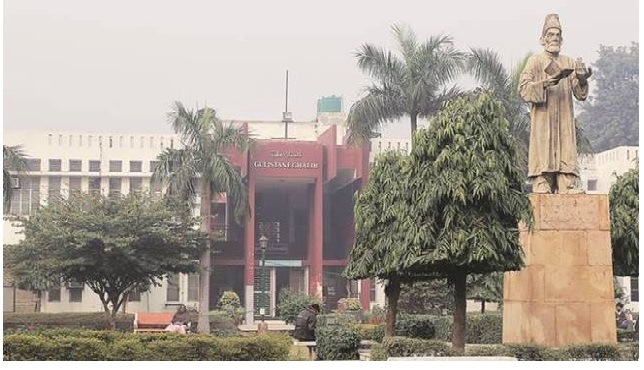
On its 105th foundation day, let me take you on a Jamia tour. The Mohammad Ali Jauhar Marg leads through the majestic Centenary Gate into the heart of Jamia Gulistan-e-Gandhi, whose presence still seems to guide the university he envisioned.
The M.A. Ansari Auditorium stands ahead, alive with the echo of debates, drama, poetry, and protest, a place where generations have learned that knowledge without courage and compassion is incomplete. Nearby, the Mahmoud Darwish, a revered Palestinian poet and voice of resistance, exile, and identity lane winds toward the M.F. Husain Art Gallery, a riot of colour and imagination. The Nehru Guest House still echoes the voices of thinkers who stayed there. Beside it, the Maulana Azad House completes a poetic pairing — Nehru and Azad, once neighbours in prison, now neighbours in memory. Inside, guesthouse rooms are named after figures like Ritwik Ghatak.
The serpentine path leads past the Mohibbul Hasan House and Deen Dayal Kaushal Vikash Kendra and onward to the West Asia Centre, the Ho Chi Minh Conference Hall, Saadat Hasan Manto Lecture Hall, and the Shaikh Sabah Al–Ahmad Al–Jaber Seminar Library, where Jamia’s dialogue with the world continues. Through Jahane Kushuru, you arrive at Gulistan-e-Ghalib, where Ghalib’s statue stands beneath the trees, inscribed with his immortal verse:
Jaam har zarra hai sarshar-e-tamanna mujh se,
Kiska dil hoon ke do aalam se lagaya hai mujhe!
Every particle is intoxicated with longing for me,
Whose heart am I, that both worlds are drawn to me?
Ghalib’s verse mirrors the spirit of Jamia itself, a place that draws seekers from every corner, as if knowledge, memory, and desire converge upon it. A reminder that the soul of a true university is to become the heart of many worlds.
At the center of Jamia stands its intellectual sanctuary, the Dr. Zakir Husain Library; its silence is dense with thought. Not far away, the Sarojini Naidu Centre for Women’s Studies and the Nelson Mandela Centre for Peace and Conflict Resolution remind every visitor that dialogue and equality are central to Jamia’s compass.
Enter through the Qurratulain Hyder Gate, named after the Gyanpeeth award-winning Urdu novelist, and you arrive at the lush green Nawab Pataudi Cricket Ground, with its Virender Sehwag Pavilion, a tribute to the alumnus who brought glory to the nation. Nearby stands the King Abdul Aziz Faculty of Dentistry, a graceful emblem of international collaboration. Around it, hostels named after B.R. Ambedkar, Allama Iqbal, E.J. Kellat, and Obaidullah Sindhi reflect Jamia’s plural legacy, a living reminder that its map is also a moral landscape.
Closer to the metro station, the Noam Chomsky Complex, a reminder that free thought is Jamia’s lifeblood. Next door, the K.R. Narayanan Centre for Dalit and Minority Studies ensures that inclusion here is not a slogan but a lived truth. Through the Mahmud Hasan Gate, named for the scholar who inspired students and clerics to join the freedom struggle and who endured years of harsh imprisonment in Malta — the campus opens into its schools: the Mushir Fatima Nursery, the Abid Hussain School, and the Gerda Philipsborn Day Care Centre, where the smallest minds learn under the same canopy of values that shelter scientist, scholars and philosophers.
Gerda Philipsborn, a German-Jewish educator who left Germany and found a home in Jamia, is fondly remembered as Aapa Jaan. She embodied the university’s transnational conscience, the belief that education builds bridges, not boundaries. Mujeeb Bagh hosts the Ramanujan Science Block, named after the mathematical genius whose brilliance continues to inspire curiosity and wonder across generations. The women’s hostels named after Begum Hazrat Mahal and Aruna Asaf Ali celebrate the courage of women who turned resistance into art and activism. Further on lies the Khan Abdul Ghaffar Khan Enclave, honouring the Frontier Gandhi who preached non-violence not as political expediency but as an article of faith. And in the Munshi Premchand Archives lives the memory of the great storyteller, who wrote Kafan during his stay at Jamia.
Located near the Administrative Block on Khayaban-e-Ajmal, the Jamnalal Bajaj Block honours Jamia’s benefactor, whose steadfast support and financial contributions were instrumental in sustaining the university during its formative years. Within its serene precincts stand the Yasser Arafat Hall, the Edward Said Conference Hall, and the Mir and Tagore Convention Centre, spaces that echo Jamia’s spirit of dialogue, dissent, and cultural encounter, where ideas from East and West, past and present, continue to converse in quiet harmony. Nearby, APJ Abdul Kalam Gate takes you to India’s most reputed Anwar Jamal Kidwai Mass Communication and Research Center, a testament of global cooperation with Canada, which buzzes with cameras, questions, and conversation.
Few universities wear their philosophy so visibly on their map. These names are not labels; they are moral coordinates of a century-old experiment in inclusive education. Each block is a story of struggle; each road a reminder of Jamia’s founding spirit, where taleem (education) and tehreek (movement) are inseparable.
Jamia was not born of privilege; it was born of protest. Founded amid the Khilafat and Non-Cooperation Movements, it was a quiet act of rebellion, an insistence that colonialism would not define the Indian mind. Education at Jamia was never meant to produce clerks for an empire, but citizens of conscience. Zakir Husain, Mohammad Mujeeb, and Abid Husain, three of Jamia’s philosophical pillars, envisioned Nai Talim, a pedagogy that unites head, heart, and hand. Long before “experiential learning” became educational jargon, Jamia built it into its foundation. Knowledge was tied to labour, intellect to ethics, and inquiry to empathy. The Ustadon ka Madrasa, the first of its kind teachers’ training institute, became a living laboratory of this vision, where teaching was not merely a transaction of knowledge but a pursuit of truth, a cultivation of inquiry, and a moral apprenticeship in the art of understanding. It embodied the meaning of a true university, not a place that fills minds, but one that frees them.
In the dark days of Partition, when Delhi burned with fear, Jamia’s students and teachers became healers, offering shelter to the displaced, solace to the broken, and humanity to a city in despair. From those flames emerged a university that made communal harmony its cornerstone.
Perhaps no moment captures Jamia’s moral stature better than its Silver Jubilee in 1946. On that day, Dr. Zakir Husain brought on the same stage Nehru, Asaf Ali, Rajaji, Jinnah, Fatima Jinnah, and Liaquat Ali Khan. At a time when the country teetered on the edge of partition, Zakir Husain’s possible one of the best speeches, “For God’s sake, sit together and extinguish this fire of hatred,” moved them to tears.
To walk through Jamia today is to stroll through the living soul of pluralism, a quiet republic of ideas where liberty, plurality, inclusiveness, and fraternity breathe in every courtyard, in every classroom. Here, Gandhi still converses with Mandela, Chomsky finds his echo in Edward Said, and Ghalib whispers to Mir beneath the shade of red-brick walls. Darwish recites for Tagore, Arafat debates with Ho Chi Minh, Ramanujan solves number puzzles with AJP Abul Kalam, Manto reads his script to Ritwik Ghatak, Prof. Mujeeb debates with Pt. Deep Dayal Upadhyay, Maulana Azad, and Nehru discuss an education roadmap over jasmine tea, and Ambedkar stands in thoughtful dialogue with Sarojini Naidu. It is a rare moral geography, a constellation of minds, where the ideals of freedom, justice, equality and fraternity converge without collision, illuminating the enduring idea of India itself.
While many century-old universities are withering away, Jamia Millia Islamia continues to grow step by step. It carries not only a proud and luminous history, rich in struggle and idealism, but also a radiant present, consistently ranked among the nation’s top universities, with rising scientific citations and breakthrough research that place it firmly on the global academic map.
Yet in a time when higher education bends under market pressures and ideological conformity, Jamia endures as a counter-memory, a quiet act of defiance against becoming a mere factory of certificates. Its administration, faculty, students, staff, and alums continue to zealously guard the Idea of Jamia — where knowledge is pursued, not prescribed; where questions are not censored, and truth is never pre-decided. A true university must protect the space where evidence triumphs over ideology, where disagreement deepens understanding, and where inquiry itself becomes an act of freedom.
The idea of Jamia is not simply a place, a campus, but a proposition that education is not merely obedience or a commodity, but an awakening of the mind and conscience.
To walk through Jamia is to walk through the Idea of India itself – plural, principled, and forever in motion along the path of progress.
“Yahaan pe shamme-hidayat hai sirf apna zameer.”
Here at Jamia, the beacon of guidance is none other than one’s own conscience.
source: http://www.muslimmirror.com / Muslim Mirror / Home> Opinion / by Aftab Mohammad / November 01st, 2025
The Academic Insights Magazine, a prominent Indian monthly publication, has selected Mahbubul Hoque, Honourable Chancellor of the University of Science and Technology Meghalaya (USTM), as one of India’s 25 Most Inspiring Education Leaders.
This recognition celebrates the transformative changes Chancellor Hoque has brought to the educational landscape of North East India while empowering youth across the region and beyond. Responding to the honour, Chancellor Hoque said, “I deeply appreciate The Academic Insight’s honourable recognition. I am a great admirer of this monthly powerhouse. My motto to move forward positively in a competitive world is simple — keep trying, don’t look back; if you pick up ten things and only four work, move forward with them, and success will eventually materialise.”
Over the past 23 years, Chancellor Mahbubul Hoque has built a robust educational ecosystem under the Education Research and Development Foundation (ERDF), establishing fourteen institutions that span from kindergarten to PhD levels. What began with just four students has now grown to over 10,000 learners, making ERDF one of the most impactful educational networks in the region.
The honour goes beyond individual achievement — it signifies the North East’s growing prominence on India’s national education map and stands as a testament to Hoque’s vision of perseverance, inclusivity, and people-centric leadership.
The University of Science and Technology Meghalaya, the first state private university dedicated to science and technology in the North East, earned an ‘A’ Grade accreditation from NAAC in its very first assessment cycle in 2021. It continues to hold a top position nationally, being the only private university from the North East to feature in the NIRF Rankings for four consecutive years, including 2025.
The Academic Insights, launched over a decade ago, today guides more than 450,000 readers monthly through the evolving landscape of school and higher education across India.
source: http://www.muslimmirror.com / Muslim Mirror / Home> Education> Positive Story / by Muslim Mirror Desk / November 02nd, 2025
The primary objective of this tour is to elevate the aspirations of students enrolled in government high schools, encouraging them to envision grander ambitions and realise them.
MP Prabha Mallikarjun (Photo | Express)
Davangere :
Nine SSLC toppers of government high schools in Davanagere parliamentary constituency, which encompasses Harihar, Honnali, Channagiri, Davanagere North and South, Jagaluru, Mayakonda and Harapanahalli, are set to embark on an educational excursion to New Delhi.
The primary objective of this tour is to elevate the aspirations of students enrolled in government high schools, encouraging them to envision grander ambitions and realise them.
Member of Parliament Dr Prabha Mallikarjun is committed to increasing the capacity of government schools, and this tour programme is a vital component of her initiative. She said a majority of students reside in rural areas, relying on government institutions for their educational pursuits. If influential people demonstrate their commitment to enhancing these students’ self-esteem, there will be no shortage of enrolment in these schools.
Strengthening government schools will indirectly lead to increased admissions, thereby unveiling the latent talents of the nation, Dr Prabha told the TNIE.
She added, “Initially, we intended to send eight top-performing SSLC students from government high schools; however, with two exceptional students identified in Honnali, we resolved to send both to New Delhi. All travel expenses, including airfare and accommodation, will be personally covered by me.”
“I am confident that witnessing these accomplished children will invigorate the current batch of SSLC students, motivating them to study diligently and excel in their examinations,” she added.
The students will take part in a five-day journey, visiting important landmarks such as India Gate, Kamal Mandir, Qutub Minar, Red Fort, Kartavya Path and Swamy Narayan Mandir. The nine students will be accompanied by both a male and a female teacher. They will depart from Hubbali Airport on Monday, said Dr Prabha.
The MP is personally overseeing the expedition of these children, insisting that while monetary rewards may fade from memory, an experience of this nature will remain etched in their minds forever.
The students are P Manjunath, Dhanush, K P Pavan Kumar, Jeshta B, Amrutha T M, Mizba Naz, Usha H, Latha H A and Yogeshwari J B, accompanied by teachers B Arun Kumar and K M Ningamma.
source: http://www.newindianexpress.com / The New Indian Express / Home> Karnataka / Express News Service / October 24th, 2025
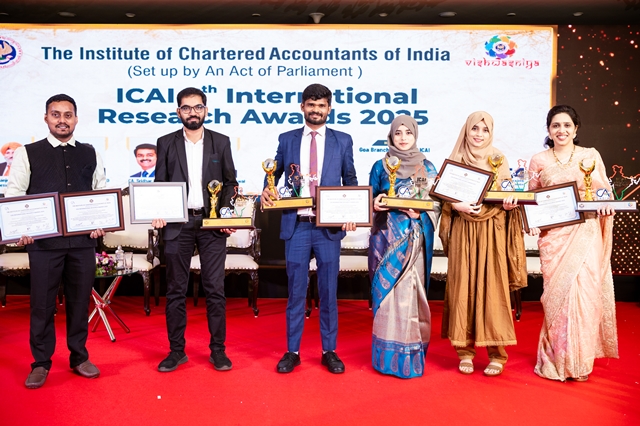
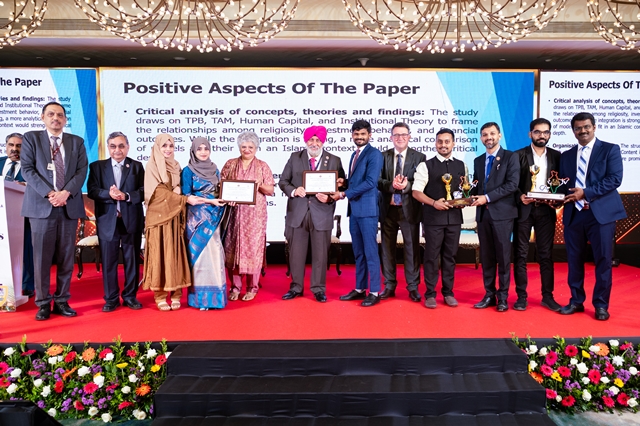
The Institute of Chartered Accountants of India (ICAI) hosted the prestigious International Research Awards 2025 at Novotel, Goa, to honour exceptional global contributions to academic and applied research. The event witnessed an overwhelming response, featuring 316 research submissions from 18 countries, representing a diverse range of disciplines and research domains.
The programme was presided over by CA Charanjot Singh Nanda, president of ICAI, and graced by John Turner, guest of honour and chairman of the jury, who also serves as the chief executive officer of XBRL International. In his address, Turner emphasized the importance of impactful and policy-oriented research in shaping the future of finance and governance, underscoring the role of academic institutions in driving evidence-based policy and innovation.
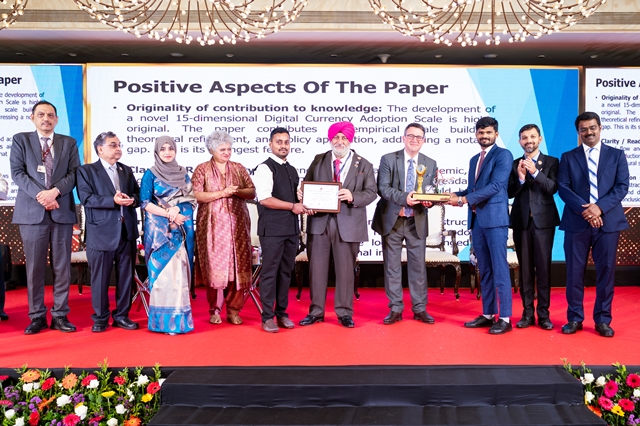
Among the sixteen globally recognized research papers, the YEN-REFINED, Yenepoya Institute of Arts, Science, Commerce and Management (YIASCM), Yenepoya (Deemed to be University), achieved an outstanding milestone by securing three awards in the finance category. This remarkable accomplishment highlights the university’s commitment to fostering a robust research culture and promoting excellence in financial and behavioural studies through its dedicated research center, YEN-REFINED – the Yenepoya Research Centre for Finance and Entrepreneurship Development.
The award-winning research papers from Yenepoya include ‘An Empirical Analysis of Stock Market Participation: From an Islamic Perspective’, which received the Gold Award, followed by two Silver Awards for the papers ‘Development and Validation of Social Inclusion Scale for Stock Market Participation’ and ‘Developing a Digital Currency Adoption Scale: A Validity and Reliability Study’.
The research team comprising Prof Niyaz Panakaje, coordinator of YEN-REFINED & MBA, Dr S M Riha Parvin, assistant professor, YEN-REFINED, Dr Abhinandan Kulal, research associate, YEN-REFINED, Mohammad Shahid, HOD, department of commerce, Dr Madhura, assistant professor, department of management, and Niha Sheikh, JRF, YEN-REFINED received the honours at the ceremony. Their collective achievement reflects the university’s growing contribution to global research on financial inclusion, digital innovation, and behavioural finance.
These prestigious awards mark a significant moment in YEN-REFINED academic journey, reaffirming its vision to promote interdisciplinary research, intellectual excellence, and international collaboration.
source: http://www.daijiworld.com / Daijiworld.com / Home> Top Stories / by Media Release / October 20th, 2025
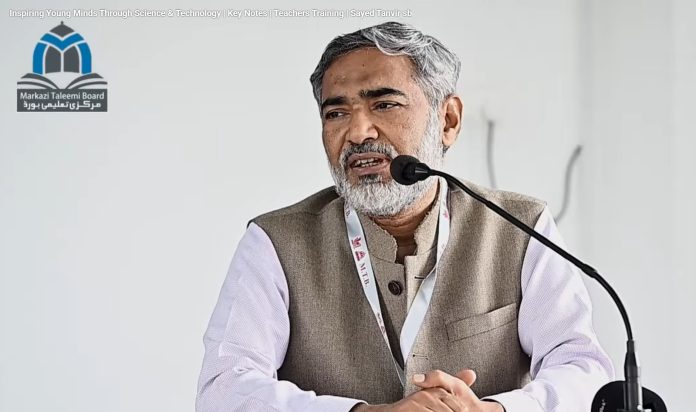
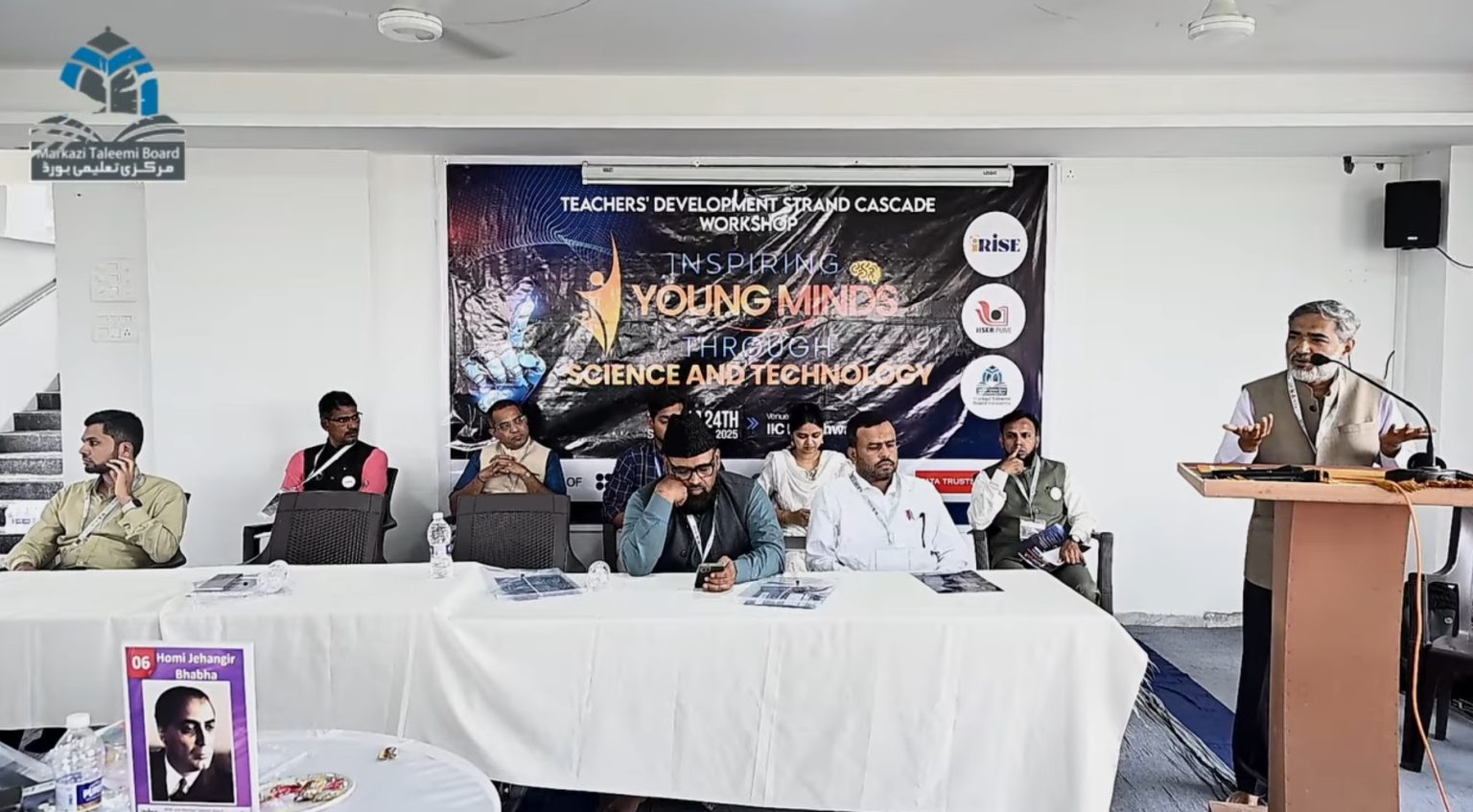
Syed Tanveer, Secretary of the Markazi Taleemi Board (MTB), urged teachers to transform science and mathematics education during his keynote address at the Teachers Development Strand Cascade Workshop. The event was organised by Markazi Taleemi Board Maharashtra in partnership with IISER Pune. The session focused on methods to align classroom practice with the National Education Policy 2020.
Syed Tanveer began by welcoming the IISER Pune team and thanking the organisers for arranging training across Maharashtra and other states. He told participants that the workshop aims to shift teaching from rote memorisation to active, hands-on learning. He said teachers must make classrooms places where students observe, experiment, and think.
He pointed out a common issue: society often dislikes maths teachers, and science teachers face similar bias. Many students avoid science because it is considered difficult. Tanveer argued that this perception arises from how teachers teach. “We have treated maths and science as fact-transfer subjects,” he said, adding that this has made learning mechanical instead of meaningful.
Syed Tanveer explained Bloom’s taxonomy as a guide to moving students from lower-order to higher-order thinking. He described six cognitive levels. “Most of our classrooms are stuck at the first stage—knowing or memorising,” he said. The next stage is understanding, achieved when students learn by hearing, seeing, and doing. The workshop, he added, would train teachers to conduct hands-on experiments that encourage conceptual understanding.
The third level is applying. Tanveer urged teachers to help students connect formulas and scientific principles to real-life applications. The next levels—analysis and evaluation—involve breaking concepts into smaller parts and examining their relationships. The final stage is creation, where learning leads to innovation. “Education is not about memorising facts. It is about creating something new,” he said.
Giving examples, Syed Tanveer said a short experiment could teach photosynthesis better than hours of memorisation. A paper plane can explain mechanics, and observing local water pollution can connect science with social responsibility. He praised simple, observation-based teaching models such as those promoted by educator Arvind Gupta and scientists like C.V. Raman.
Syed Tanveer also highlighted the moral role of science. “Scientific temperament must not remain limited to exams,” he said. “It should guide ethics and social responsibility.” He explained that true education transforms human beings into moral, thoughtful individuals, not mere human resources for the market.
He concluded with five key tasks for educators: raise awareness of civic responsibility, reject divisive politics, support independent educational institutions, revive critical thinking in academia, and promote debate and dialogue among youth and women.
“Do not make students pen drives filled with memorised data,” Tanveer said. “Make them thinkers, creators, and problem-solvers.” He prayed for the success of the workshop and called on teachers to inspire young minds through curiosity and experimentation.
source: http://www.radiancenews.com / Radiance News / Home> Education> Latest News> Report / by Radiance News Bureau / October 16th, 2025