The Urdu writer was chosen for his work Fakr-E-Watan
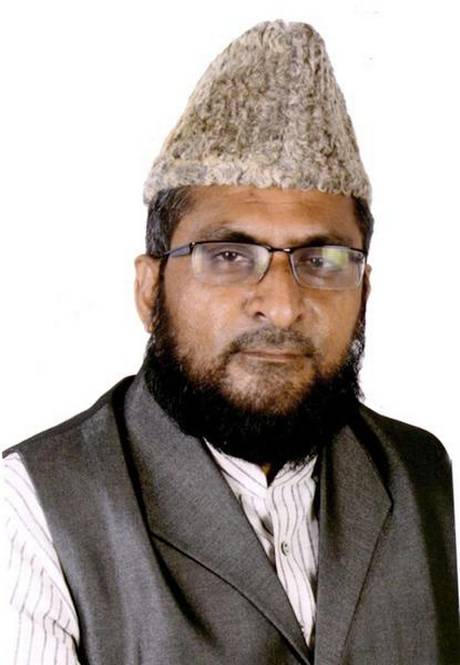
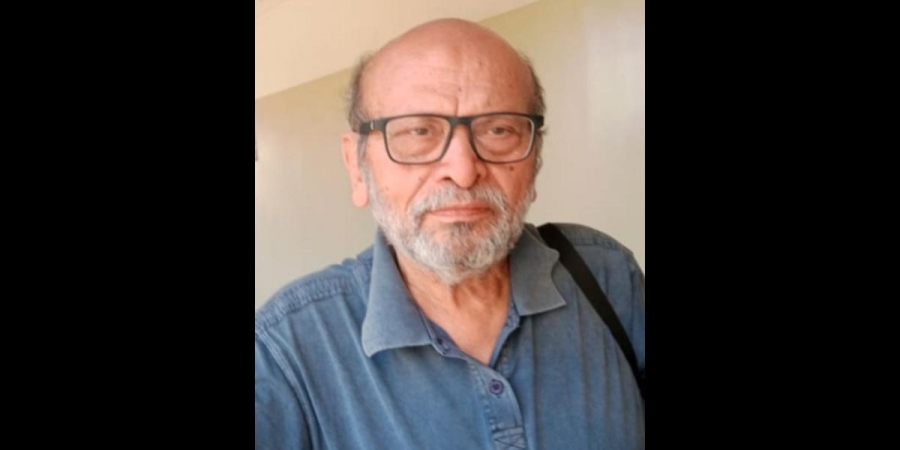
Shikaripur-based Urdu writer Hafiz Karnataki has been chosen for Sahitya Akademi’s Bal Sahitya Puraskar of 2020. He received the award for his book Fakr-E-Watan, a work on freedom fighters of India.
Mr. Karnataki, 57, began his literary career as a poet in the 1980s and later turned towards writing for children. So far, he has brought out 94 books. He has translated many vacahanas of Basavanna and Akkamahadevi and writings of Kuvempu into Urdu.
Born into a family of teachers, he developed an interest in literature at a young age. He became a teacher at a government primary school in 1987 and worked at different places before resigning from the job in 2006.
Now he looks after his educational institution, which provides education to 3,000 girls at Shikaripura. He also worked as chairman of Karnataka Urdu Academy. A couple of students have done PhDs on his literature. Considering his contribution to the field of literature, Gulbarga University honoured him with an honorary doctorate in 2013.
After the Sahitya Akademi announced the award on Friday, he received calls from different parts of the country congratulating him. “I am getting congratulatory messages from many people. First among those called me were the scholars who did study my literature for PhD,” he told The Hindu on the phone.
Mr. Karnataki wants to hit a century by bringing out six more books soon, as he has already published 94 works. “Children of the present generation are more intelligent than me. I wish to write for them on values they have to inculcate at a young age,” he said. The award carries a cash prize of ₹50,000, besides a memento.
source: http://www.thehindu.com / The Hindu / Home> News> States> Karnataka / by Special Correspondent / Hassan – March 14th, 2021
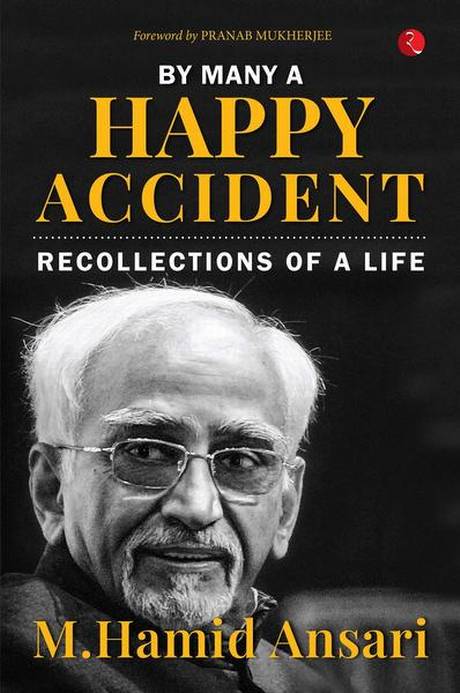
In his autobiography, Hamid Ansari, Vice-President for two terms, brings to the fore the predicament of Indian Muslims, who still live in the shadow of Partition
The Indian republic has had 13 vice-presidents since 1952 and only two, Dr. S. Radhakrishnan and Hamid Ansari, got two terms in office. Therefore, it would be natural and tempting to focus on Ansari’s vice-presidential years, but it needs to be kept in mind that the post of Vice-President is essentially an inconsequential office in terms of power and authority; to the extent, the Vice-President also doubles up as the chairman of the Rajya Sabha does allow the incumbent some wiggle room, but that too can be misleading. Of the 13 men, only one, Bhairon Singh Shekhawat, had some political heft but he too was to discover that parliamentary conventions and politicians’ conveniences ensure that a party man gets cordoned off from the power vortex.
Civility and grace
The other hat Ansari wore for many years was that of an Indian diplomat. He was a competent, loyal foot-soldier and at his joyful best when crossing swords with Pakistani counterparts at global forums. It would perhaps be most rewarding to read the book as the reflections of a nationalist Indian Muslim.
Ansari acquaints readers with a different generation that valued civility, grace, erudition, and took pride in its love for scholarship, language and poetry.
He anchors himself firmly in the nationalist milieu; early in the book we are informed that his father spurned Mohammed Ali Jinnah’s invitation, on the eve of August 14, 1947, to all senior Muslim officers to proceed to Pakistan. The senior Ansari expressed his inability “to change my country.” The Ansari family was only one of the two at the senior level to stay back in India. A choice was made: India was home.
Modernist at heart
This confidence in the new, free India was justified when Ansari made it to the elite Indian Foreign Service. A meritocracy was at work. The new arrangements were fair, in letter and spirit, and being a Muslim attracted no discrimination nor endowed any advantage.
He locates himself unapologetically in the modernist milieu. He fell for — then married — a young “cigarette-smoking and sherry-sipping” woman. He did not defer to traditionalists and conservatives. There is not an obscurantist bone in this doubly cosmopolitan man, who is just as much at ease in any western environs as he is well-versed in the civilisational richness of the global Islamic world.
Consequently, he never allowed himself to get inveigled in the intrigues and pettiness that soon came to define the Muslim political crowd, especially when Muslim leaders and the masses got entangled with the exigencies of electoral politics. Nor was he unobservant of the unhealthy tendencies creeping upon Muslim society and its institutions.
For precisely this reason his reflections on the state of the Indian Muslims command our attention and respect.
Ansari acknowledges that from the very beginning the Indian Muslims have lived under “a shadow of physical and psychological insecurity” because they were made “to carry, unfairly, the burden of political events and compromises that resulted from the Partition.” And, as the Sachar Committee Report would record, they remain on “the margins of structures of political, economic and social relevance.”
Islam and nationalism
Given our own constitutional commitments, Ansari wants to underline “the imperative to recognise pluralism and secularism as the normative principles of politics” along with “an unflinching adherence to principles of equality and equal treatment.”
He is not reticent about reflecting on the unresolved and unsettled equation between Islam and nationalism. A ‘successful synthesis of Islam and nationalism’ is very much feasible, because, as he argues, invoking Maulana Abdul Kalam Azad, “…nationality is not synonymous with religious community since the two are in the shape of concentric circles that do not collide…”
Nor, for him, is there any fundamental incompatibility between Islam and democracy in the Asian Muslim world.
Yet, as he puts it, there is global dimension to the followers of Islam. The Muslim communities all over, including India, do subscribe “to an emotional bond of ‘Muslim-ness.’ The sentiment is amorphous as well as real; it is usually taken for granted but gets evoked at times of stress when protection physical or emotional, is perceived to be required.”
Ansari also tackles the ticklish issue of the majority-minorities syndrome in a democratic society. He argues for a need to move beyond ‘assimilation’ and ‘tolerance’. Both are inadequate from the minority perspective. While ‘tolerance’ does prohibit discrimination, it does not endorse diversity, and, therefore, leaves room for the problematic ‘other.’ And, of course, ‘assimilation’ simply boils down to absorption of the minority personality in the larger, majority crowd.
He comes across as a rare breed in these vulgar times. Instead of stridency, Ansari contextualises the many ‘accidents’ of his life with subtlety and sensitivity. With enormous reasonableness he enjoins us to ponder on the matrix of ‘accommodation’ and ‘acceptance’ intersecting with temptations of majoritarian politics. Perhaps it is this very gentleness in reminding us of our obligations to the social contract inherent in the Constitution that Prime Minister Narendra Modi mocked on the occasion of Hamid Ansari’s last day as Chairman of the Rajya Sabha. Neither leopard is willing to change his spots.
By Many a Happy Accident: Recollections of a Life; M. Hamid Ansari, Rupa, ₹595.
The reviewer is a senior journalist based in Delhi.
source: http://www.thehindu.com / The Hindu / Home> Books> Reviews / by Harish Khare / March 13th, 2021
Opportunist, vote-splitter, kingmaker or gamechanger? Profile of Abbas Bhaijaan Siddiqui, the entity making ripples in the battle for Bengal.
Abbas Siddiqui / Prasun Chaudhuri
I head out for Furfura Sharif in Hooghly district, 44 kilometres northwest of Calcutta, one early March morning. Hooghly is the potato bowl of Bengal. As the car speeds down the Durgapur Expressway, I notice freshly harvested potatoes in pink sacks dotting bare fields. I don’t have to ask for directions to the village centred around a 14th century mosque; it is all too well known.
Furfura Sharif, according to one of several theories, derives its name from the Farsi word farre farrah, meaning glory and happiness.
As my car veers off the expressway, I spot huge flex banners welcoming pilgrims to the upcoming Esaal-e-Sawab, an occasion where people congregate to pray for the deceased. The three-day-long gathering held every spring attracts over a million Muslim men from eastern India and Bangladesh. At the centre of the celebrations is a light green structure with golden domes — the mazar or tomb of Pir Hazrat Abu Baqr Siddique.
The pir, known locally as DadaHuzur, was a 19th century Sufi saint, educationist and social reformer. He had founded charitable organisations, orphanages, madrasas and health centres. To date, large sections of Muslims from Howrah, Hooghly, South 24-Parganas, North 24-Parganas and Dinajpur districts of Bengal visit Furfura Sharif to pay obeisance to him.
The area covers at least 90 Assembly constituencies in a state in which Muslims constitute about 27 per cent of the population. In the past, come election time, politicians would come here to offer prayers and meet the pirzadas, or direct descendants of Pir Hazrat, and seek their blessings and support.
This year, Furfura Sharif is in the news for a different reason. For the first time, a pirzada will be contesting elections.
Abbas Siddiqui, the 35-year-old who has floated the Indian Secular Front (ISF), a formation suddenly embraced by the Left Front — and to an uncertain degree, the Congress — ahead of the Bengal polls, is the great-grandson of the pir.
The place is milling with representatives of political parties, reporters and television crews. At the centre of it all is a freshly painted pink mansion, about 300 metres from the mazar. It is the office-cum-residence of Abbas and his family.
” Furfura Sharif was home to Pir Hazrat Abu Baqr Siddique, a 19th century Sufi saint.Abbas is his great-grandson and the first pirzada to join politics “
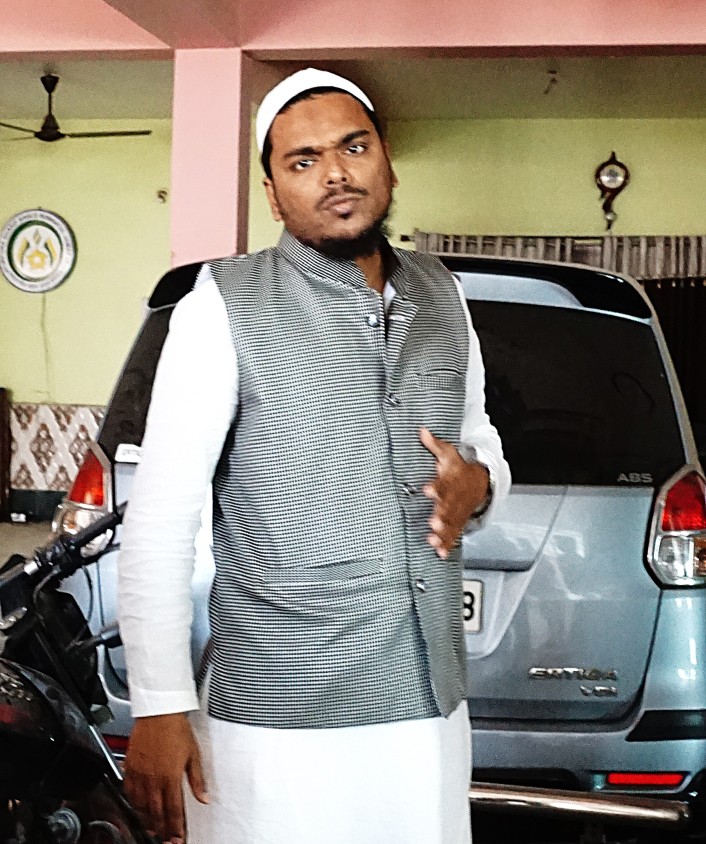
As I step into the courtyard, I find Abbas surrounded by TV crews of five different national channels. Before I can introduce myself, he signals as if to say I should get in the queue with the rest of the journalists. As I wait, I watch the man in white kurta-pyjama, waistcoat and skullcap. He is almost six feet tall, clearly in love with the TV camera. His voice is hoarse, possibly from all those recent campaigns.
Some men are at work erecting pandals for Esaal-e-Sawab. Young madrasa students in long robes and skull caps are scurrying around running errands. A couple of passers-by are gawking at the TV crews. A TV reporter, who is also waiting, is live-streaming all of this.
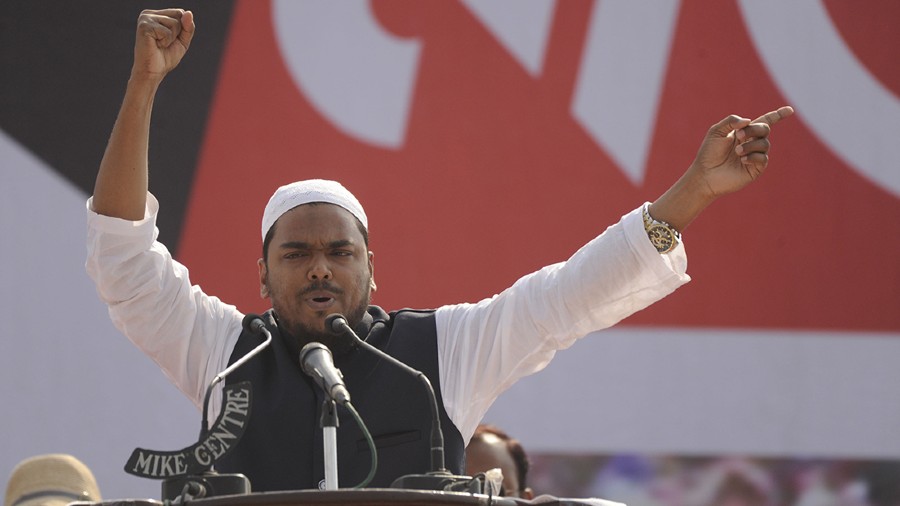
Abbas shot to fame overnight, after Left Front leaders introduced him at the rally at Calcutta’s Brigade Parade Ground on February 28. His freshly minted party was introduced as the third component of the United Front of the Left and the Congress. The unsaid expectation — ISF would help them eat into the Muslim vote bank of their arch enemy, the Trinamul Congress (TMC). Before joining the coalition, Abbas had been in talks with the Hyderabad-based AIMIM, headed by Asaduddin Owaisi.
” In a 2020 speech, Abbas lashes out at Nusrat Jahan, ëJara deho bikkiri kore tara desh bikkiri korbe na ki maane aachhe. He also said he would ensure she is tied to a tree and beaten up–“
At the Brigade Parade Ground, Abbas delivered a high-decibel speech calling for “the uprooting of Mamata, leader of the BJP’s B-team”. The Left Front-Congress combine has been repeatedly saying the ISF includes people from backward Hindu classes and Adivasis. The president of the ISF, Simal Soren, is also a member of the tribal community. But when I browse videos of Abbas’s past speeches at Islamic jalsas organised across Bengal, there is little doubt that he is conservative and fundamentalist to the core.
Among his most controversial and incendiary speeches is the one in which he lashes out at the TMC MP Nusrat Jahan. In the 2020 speech at a jalsa in Sasan in the South 24-Parganas, he thunders “Jara deho bikkiri kore tara desh bikkiri korbe na ki maane aachhe… those who sell their own body can some day sell their own country”; Abbas also said he would ensure Nusrat is tied to a tree and beaten up. On other occasions, he called Calcutta’s mayor Firhad Hakim “a kafir”, “beimaan” and “namak haram” for organising Durga Puja. He even attacked Bengal chief minister Mamata Banerjee for wearing the hijab and reciting Islamic verses, “to fool Muslims”.
Ever since he expressed his intention to form a party to “expose the TMC’s appeasement politics”, Abbas has not tired of accusing the TMC and the state police of hounding his supporters. Apparently, these Muslim youths between 18 and 35 have been framed for possession of fire arms and narcotics, threatened and beaten up on their way to his jalsas, while he himself has been accused of spreading “terrorist ideology”.
Biswanath Chakraborty, a political commentator and professor at Calcutta’s Rabindra Bharati University, has been following the rise of Abbas. He says, “Abbas wouldn’t have risen had his followers not been harassed and heckled by the TMC.” Chakraborty and his students conducted a survey among Muslim youth — educated and unemployed — which revealed their animosity towards successive governments. Says Chakraborty, “They feel the so-called secular parties have been playing with them. They think it is time to create their own political space.”
Chakraborty says that, though late, the Left Front in Bengal has realised the ground reality of identity politics. He has no doubts about Abbas’s huge support base among the Muslim youth, but is not sure if he will be able to get the votes of Dalit Hindus and Adivasis.
Justifying the Left Front’s move, Shamik Lahiri, a senior leader of the CPI(M), says, “Those belonging to scheduled castes, tribes and minority religions, and Adivasis are sick and tired of the TMC’s treachery and the BJP’s increasing atrocities. These people are now uniting as different organisations. The ISF is one such outfit.”
And what does the Left have to say to the charge of aligning with a communal force? The CPI(M)’s politburo member Mohammed Salim says vehemently, “Defaming the ISF is part of a well-planned conspiracy being played out by the RSS and its associates…”
The RSS-BJP may have been shrill in its criticism of the new front for bringing “Muslim fundamentalist politics” into mainstream politics, but BJP MP Swapan Dasgupta, also a columnist with The Telegraph, offers a more balanced analysis. Says Dasgupta, “A significant chunk of the Muslim vote plus the transferable vote of the CPI(M) would make the third formation more winnable and catapult the ISF to a position where it could claim to be the foremost representative of Muslims in the state… Abbas would become the Bengal counterpart of Assam’s Badruddin Ajmal.”
In the 2019 Lok Sabha elections, the BJP benefitted as the Left and the Congress votes fell into its kitty. The ISF can hope to harvest some of these votes for the United Front. Alternatively, if Hindu voters of the two old parties perceive the ISF as an aggressive communal force, they may turn to the BJP.
The TMC’s top leaders, however, have decided to ignore Abbas. Saugata Ray, senior leader of the TMC, says, “Not only will I not say anything (about Abbas or the ISF), I won’t even utter the name.”
Even within Furfura Sharif, Abbas doesn’t seem to have the support of all sections. Buzurgs, or elders, such as his uncle Pirzada Tawha Siddiqui stand firmly with the TMC.
I spoke to Narul Islam, who works with a charitable outfit there. He says, “Dada Huzur had laid down a guideline for his descendants. Following that no pirzada directly joined politics in these 82 years after his demise. Abbas is an exceptional character and a controversial one too.”
According to Dipankar Bhattacharya, general secretary of the CPI-ML (Liberation), Abbas’s rise is proof that a political vacuum has been created in Bengal due to increasing Hindu supremacist aggression. He says, “Abbas is trying to get into this. But the question is — has he got that leadership quality?” Bhattacharya is apprehensive that by yielding such a wide berth to the ISF, the Left Front-Congress alliance might help the BJP sharpen communal polarisation.
Bhattacharya adds, “Hoping the anti-BJP voters are mature enough to avoid the BJP trap.”
‘The TMC has stamped us communal’
Abbas Siddiqui / Prasun Chaudhuri
Why did you defy family diktat and join politics?
The situation was never so bad. Never before have Muslims, Dalits or minorities faced such atrocities like the NRC or the CAA. Never before were Indian citizens driven into detention camps or threatened with deportation. The situation forced me. Even Babasaheb Ambedkar has said, “We will no longer beg for our rights but grab them.”
Then why not fight the polls alone?
Electorally we are not that strong yet. But we do have supporters in several districts. So, we decided to build an alliance… If we get the rights in this jot we will continue. I’d like to quote Kanshi Ramji, founder of the Bahujan Samaj Party, who said: “Hamein majboot sarkar nahi, majboor sarkar chahiye.” If a party gets over 200 seats, it will browbeat others. However, such dadagiri is not possible in an alliance.
Why did you choose the Left and the Congress and not the AIMIM?
Our talks with the AIMIM didn’t progress. We chose the Left Front and the Congress as they have a proven track record. The Left had done a remarkable job of distributing land to poor Muslims, Dalits and Adivasis. There was little corruption and the unemployment situation was not so bad during their regime. The Congress gave the country so many institutions, dams, power plants, railway networks.
Was there an effort to tie up with the TMC?
No. They’ve stamped us as “communal”.
Some believe you will split the minority votes and help the BJP.
What will happen if Muslim votes get split? Do you think this will help the BJP polarise all Hindu votes? Do you seriously believe all Hindus in Bengal want the BJP to come to power?
Your past comments about Nusrat and Firhad Hakim had raised a storm.
Those comments were put out of context. My point is you have to state your religion clearly and follow its basic tenets. If you are a true Muslim, you can’t worship an idol. Similarly, if you are a Hindu you cannot don a hijab and recite Islamic prayers. You can’t join an iftar if you haven’t done proper ritual fasting during Ramzan. You don’t have the right to insult either Hinduism or Islam.
source: http://www.telegraphindia.com / The Telegraph Online / Home> West Bengal / by Prasun Chaudhuri / March 14th, 2021
… says writer-filmmaker Asghar Wajahat, who was in Bengaluru for the staging of his play, Jissney Lahore Nai Dekhya
Asghar Wajahat
Bengaluru :
That she could become a playwright’s muse was the last thing on her mind when mai (mother) – a lone elderly Punjabi Hindu woman in Lahore – was trying to figure out her survival in Pakistan, when she refused to come to India after Partition. Four decades later, and across the border, a scant piece of information on her led Asghar Wajahat – a well-known Hindi playwright, novelist and documentary maker from Uttar Pradesh (UP) – to pen Jissney Lahore Nai Dekhya (Those who have not seen Lahore) in 1989. The play is not about the pain of Partition.
“It is a paean to insaniyat (humanity),” said Wajahat in an exclusive talk with CE on the sidelines of the show in Bengaluru. The play, directed by Zafer Mohiuddin, was staged at the Alliance Francaise on Sunday. “It highlights the mindset, which divides people on the basis of nationality, ethnicity, religion, caste, race and language, among many other things, and what humanity can do to bring people together,” added Wajahat.
“The characters in the play, from a cleric who, when confronted with the question whether a Hindu could live in Pakistan, says that the earth belongs to God and anyone could live anywhere, to the character of real life poet Naser Kazmi, who says that an artiste’s world has no boundaries, believe in togetherness,” he said. Besides raising the existential questions on life, its driving and dividing forces, the play has portrayed strong women characters. In fact, their roles have highlighted how patriarchy has sidelined their voices.
“A daughter of a family that provides shelter to mai asks her mother that if a Hindu could live at ease with a Muslim family where was the need for Partition? In reply, her mother says, “Tum apney abba sey poochho (ask your father).”“It says a lot about male dominance and the absence of women’s voices in decision making,” said Wajahat.
Contrary to its spirit and the message it aims to send across, performing Jissney Lahore Nai Dekhya has not been an easy task. “When the play was taken to Karachi, the director of the play Khaled Ahmed was refused permission by the Pakistani authorities. They objected on the grounds that a Hindu was the protagonist of the play; that the playwright was Indian and that the killing of a religious cleric in the play sends a wrong message in an Islamic country. Ahmed did stage the play at Goethe Institute in Karachi. In Meerut, in UP, permission to stage the play was denied because its title is Lahore and the authorities felt that it was about Pakistan,” he smirked.
“It is ironical that Jissney Lahore nai Dekhya has raised issues surrounding the myth of ‘us versus them.’ It is about ironing out the creases and celebrating human relationships, above all,” said the veteran playwright.Wajahat is also an avid traveller, who looks forward to visiting people-oriented places. “I love meeting people wherever I go,” he said. From being invited to weddings by newly-made friends to being caught on the wrong side of law are some of the many anecdotes in Wajahat’s travelogue.
source: http://www.newindianexpress.com / The New Indian Express / Home> Cities> Bengaluru / by Bala Chauhan / Express News Service / March 02nd, 2021
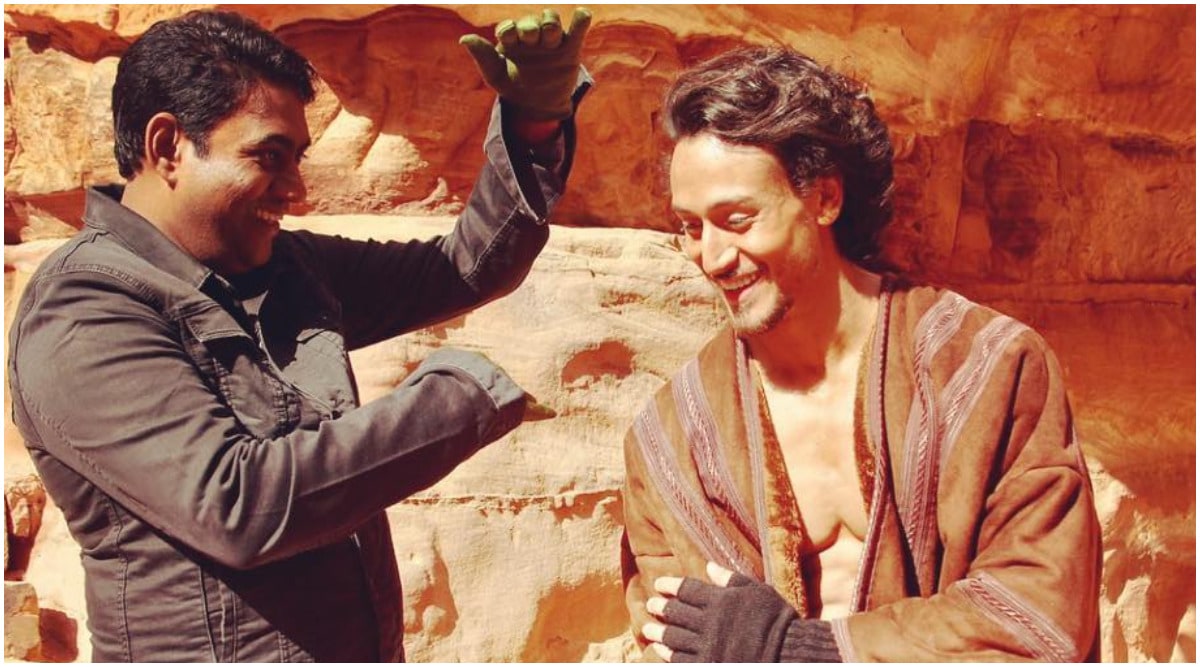
Sabbir Khan has directed Tiger shroff’s Heropanti, Baaghi and Munna Michael. (Photo: Sabbir Khan/Instagram)
From finely chiselled six-pack abs to smooth synchronised action choreography, Tiger Shroff is the new-age action hero of Bollywood.
From the time he debuted with Heropanti to his more recent appearance in War, Tiger Shroff has proved his versatility with every outing. Contrary to what cynics might think, the actor’s ever-increasing fanbase is proof of his enduring popularity. On Tiger Shroff’s 31st birthday, Sabbir Khan who directed him in films like Heropanti, Baaghi and Munna Michael tells indianexpress.com what makes the actor one of the best on-screen action heroes today, and how he discovered his action potential.
In 2014, Tiger along with along with Kriti Sanon entered Bollywood with Sabbir’s Heropanti. This was followed with two more actions flicks, Baaghi (2016) and Munna Micheal (2017). Sabbir reminisces on the journey, “Munna Michael was basically a dance film, we didn’t want to make one more action film because we had already done two action films together. However, whatever small action sequences were scattered in the film, got more positive reviews than the film itself.”
5 years of Heropanti – I dedicate this to every aspiring film maker and writer. Big budget or no budget … Super star or rank newcomer … Smooth sailing or trying circumstances … Whether people appreciate you or try to steal your credit. It doesn’t matter, what matters is the belief in yourself and showing up each day in the direction of trying to tell your story without excuses. If a middle class boy like me can do it so can you. A big heartfelt thank you to everyone on the film that made this journey beautiful and the fans for loving and making these two into the much loved stars that they are today @tigerjackieshroff@kritisanon
He continued commending the actor on his skills. “He is definitely the best action hero we have, considering how much younger he is compared to his contemporaries who are doing action. And what makes him really the best is that action is inherent to him, he doesn’t do it for the screen. What you see on the screen, is him! The skills he showcases on screen are actually his personal skills– he is a fantastic gymnast, he has a great body and he is always willing to go the extra mile. It comes from inside, he is a natural when it comes to doing action sequences.”
__________________
On directing Tiger in his debut film Heropanti, that was bankrolled by Sajid Nadiadwala, Sabbir says, “What happened is, because he did his first film with me, I spent a lot of time doing workshops with him, and took the time to understand him as a person. The more I figured how he is as a person, the more I ingrained his traits in the screenplay and shot around it. For example Heropanti is a romantic film, but that also got lauded for its action, even when it has only 6-7 minutes of action.”
Sabbir took time to understand what Tiger had to offer, but once he figured what he had discovered, he did not hold back from polishing Tiger’s action skills. “I didn’t know his full potential in action when we did Heropanti. But, one day on set, when we were shooting the action patches, I realised how good he was. I promised him that I will do a full-fledged action film with him, and that’s how Baaghi happened. Today when I see the franchise being so successful, I feel proud of Tiger.”
“Tiger is an action director’s delight! when the director thinks of something fantastic, here is an actor who wants to give his all and try and achieve that. He is not someone who’d say ‘this is tough, I can’t do it, let’s find a body-double, or find around it,” Sabbir shares.
Tiger has been around for some time now, eight years to be specific. Has the actor changed in anyway? Sabbir feels he has and only for the better,”A lot of confidence and understanding of cinema.”
He continued, “When we were doing the first film, he wouldn’t understand the synergy between what we could do and what cinema is, what captures a certain skill of his. By continuously doing what he is good at, he has gained a lot of confidence and he understands his craft. He now understands how much is required and how to give just that much. Earlier, if there was a shot where he just needed to give a kick, he would do it 100 per cent and maybe only 20 per cent was needed. He didn’t have to do that much, but now I see that change. He is well-versed with his craft. He is not the raw star-kid who wanted to be part of film. He now owns the space and well, deserves it.”
source: http://www.indianexpress.com / The Indian Express / Home> Entertainment> Bollywood / by Komal Raj Panchal, Mumbai / March 02nd, 2021
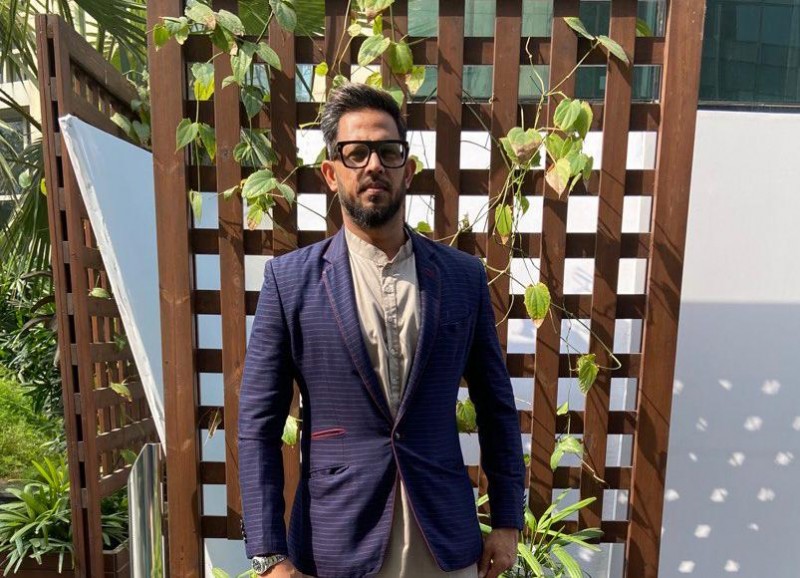
Mumbai based successful entrepreneur, sportsperson and the founder of Significant Sports Capt. Rashid Ali Khan has bought Gaya Gladiators, a team in the Bihar Cricket League (BCL) T20. The auction for the same was held in Patna today.
Founded in 2011, Significant Sports holds a reputable position in the world of Sports Marketing & Celebrity Management. The company constantly aims at working towards being the frontrunner across various sports verticals and for being a one-stop destination for everything in and around sports.
Commenting on this development Capt. Rashid Ali Khan said, “We are delighted to be a part of this Bihar Cricket League T20, which will provide an opportunity to flourish and nourish hidden cricketing talent in Bihar. This initiative taken by BCL will bring a paradigm shift in the development of Bihar and will help the young cricketers grow exponentially.”
“Being a sportsperson, I am always inclined towards promoting young talent and honing their skills in cricket. Gaya Gladiators will nurture the youngsters with potential and I am delighted to announce that legendary Sri Lankan cricketer Tillakaratne Dilshan would be the mentor of Gaya Gladiators”, he added.
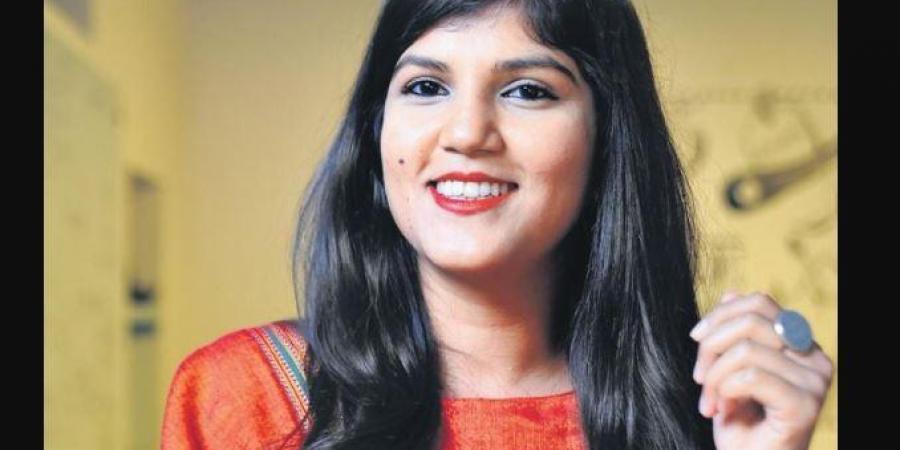
Bengaluru’s zero-waste advocate Sahar Mansoor has brought out a guide book that provides personal insights and interactive activities to help the reader transition to a more sustainable lifestyle.
Sahar Mansoor
Bengaluru :
Health and environmental issues have come to the fore in the last one year. With increasing number of people becoming conscious about their choices, the recently-released book, Bare Necessities: How to Live a Zero-Waste Life, by Sahar Mansoor and Tim de Ridder aims to provide personal insights, interactive activities and solutions that can help you transition to a more sustainable lifestyle.
”The book has taken a staged approach where the reader journeys through topics that are intimate such as personal care routines and fashion choices, to more communal areas of life such as the kitchen, home care and festival occasions. It also looks at broad aspects of life, including the community and global impacts of waste. One of the fantastic things that we have achieved is to provide a toolkit of zero-waste information and insights throughout, such as my personal stories about how to make zero-waste products such as toothpaste and food such as holige,” says Mansoor.
Published by Penguin, the guide (Rs 299) includes activity sheets to share ideas with friends and families throughout the text. “We have provided recipes, tips and tricks and other ideas to help people learn, and enjoy the zero-waste journey,” says Mansoor, who has been working in the sustainability sector since 2015, participating in areas like waste reduction and climate change.
Ridder and she began putting pen to paper in September 2019. “Unfortunately he had to work abroad from October to January last year. We had to face challenges such as scheduling meetings across time zones.
When the borders were closed in March 2020, he stayed permanently in Australia,” she says. The situation also provided them a new perspective, and prompted them to add valuable sections in the final version. “We would love the book to be used in schools, where kids can learn about the wealth of resources available in India. There are opportunities to learn how to compost, create a community garden and make sustainable gifts,” says Mansoor.
source: http://www.newindianexpress.com / The New Indian Express / Home> Cities> Bengaluru / by Express News Service / March 09th, 2021
Liani goes back in time to find out how Alam Ara, the first Indian film with sound that was released on March 14, 1931, was made.
With my travelling severely curtailed, I tried the time machine. I turned a few knobs and wham! I was in March 1931 at a studio in Grand Road, Bombay, that overlooked the railway tracks.
“What’s happening?” I asked a mouse that suddenly appeared by my side. He tittered, “This is a film shooting. These rooms are not soundproofed; so these guys have to wait till the trains stop running.”
I looked at him quizzically. “It’s 1930s, my friend. There were only silent movies. See how they are placing those large microphones inside the actors’ costumes, behind the props and every other place possible.”
“Must be uncomfortable right?”
“You bet. Oh! Look at that. They have musicians hiding behind the trees!”
This was fascinating. I hopped across until I found a man gazing out of the window. I introduced myself and asked him to give me the lowdown.
Getting briefed
“Hello,” he said. “I’m Ardeshir Irani, the producer of this film. I was inspired after watching Show Boat, last year. I knew it was the next greatest thing in films. I decided it would be in Hindustani, which is a mixture of Urdu and Hindi. For my story, I had Alam Ara, about warring queens, palace intrigues and, of course, romance too.”
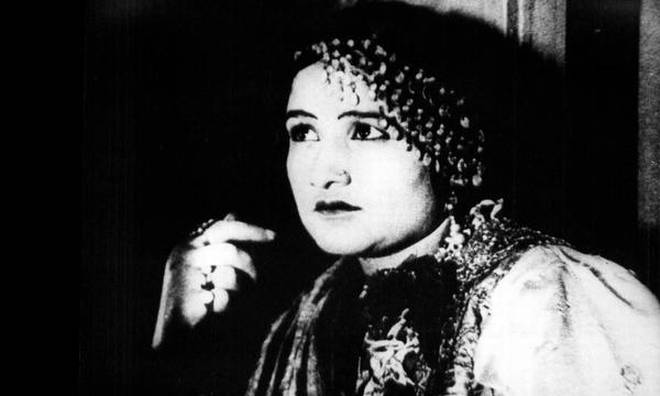
For his heroine, he had found a young actor named Zubeida, and the male lead was Master Vithal, a Marathi stunt star. The villain was Prithiviraj Kapoor. “If the villain is not good, the movie can fail, you know,” he said. “We are almost done here. This is the fourth month of shooting. It takes just a month to shoot a silent movie.”
My time machine was beeping and my time had run out. Intrigued by what I had seen, I read up about Alam Ara. The film was a sensation. The Majestic Cinema in Bombay was mobbed and the police had to be called in. Tickets were sold on the black market for four to five rupees. But here is the sad part: No copy of this film exists. There are just a few stills to remember this pioneering film.
Fun five
Alam Ara was India’s first talkie.
The shooting was done mostly between 1.00 a.m. and 4.00 a.m.
Released on March 14, 1931, at Majestic Cinema in Bombay, its tagline read: All living. Breathing. 100 per cent talking.
The song ‘De De Khuda Ke Naam Par’ was sung by Wazir Muhammad Khan, a neighbourhood watchman. Irani hired him because of his coarse voice. The film had six other songs.
It introduced the concept of music and playback singing.
source: http://www.thehindu.com / The Hindu / Home> Children / by Liani / March 09th, 2021
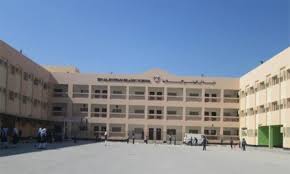
Fatima Jaffar of Ibn Al-Hytham Islamic School has secured 98 % marks in the senior secondary examinations beating all the students enrolled in CBSE-affiliated schools in Bahrain. She has scored 100% in Economics, 99% in Business Studies, 99% in Information Practices, 97% in English and 95% in Accountancy.
Fatima, who originally belongs to Kerala in India, lives with her parents and siblings in Bahrain. She dreams of writing Civil Service exam as an attempt to make the world a better place.
Ibn Al-Hytham Islamic School
“It was a dream coming true,” Fatima said. She added she has been feeling extremely honoured as she has received words of appreciation from family members, teachers and friends.
‘We are providing quality education at the minimum charges, we have separate sections for boys and girls. Apart from theology we are teaching Urdu and Qirat to our students’ said Shakil Ahmad Azmi, chairman of Ibn Al-Hytham Islamic School .
“It gives immense pleasure to me and all other school staff that our student has achieved such a remarkable success. We all are proud of her” he added.
“We have given the best result while we charge lowest fees. Our school is also apt at organising extra-curriculum activities” said Dr. Mohammad Tayyib , the principal of Ibn Al-Hytham.
source: http://www.muslimmirror.com / Muslim Mirror / Home> Education / by Muslim Mirror Desk / July 18th, 2020
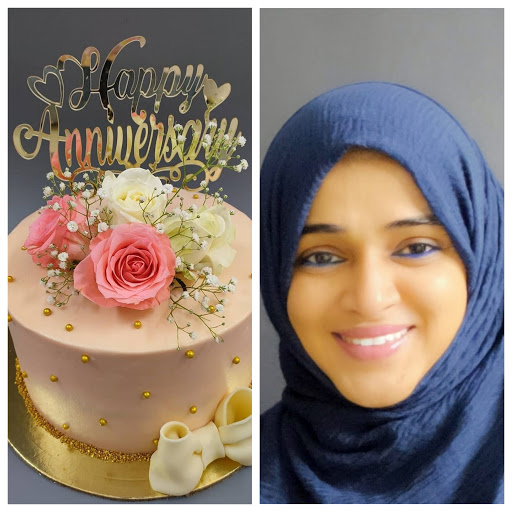
Nadia Aslam, a young cake artist, has set up an inspiring example of entrepreneurship by starting her own business from home and becoming a known cake artist in Goa capital city, Panjim, within the span of a few years.
Nadia graduated in home science. One of her hobbies was stitching. Despite being a mother of three kids, she preferred to follow her passion and prepare bakery stuff on the special occasions of her close ones. She then realised that she can turn her passion into a business, with her mother’s support. She began to accept customized orders from people and is now one of the best cake artists in the city.
Nadia also takes cake making classes regularly under the banner of “Nadia’s Sweetooth”. she has trained dozens of girls to become “Atmnirbhar’ [self-sufficient].
Speaking to Muslim Mirror Nadia said, “Muslim women in Hijab can take up a business and support the family, as an entrepreneur. I realised that all we need are opportunities, and support from our family to exhibit our ideas and creativity in business.
”We can support our families financially while practising Islam and following its guidelines,” she added.
The reason why Nadia’s mother was her biggest supporter was that her mother was also a beautician long back and as it is said “An artist can only understand the definition of art”. Maybe Nadia has also inherited the art of creativity and beautification from her mother as can be clearly seen in her work. The startup wasn’t a child’s play.
Coping up with the timings of household chores, care of three kids and baking ruined her sleep several times. She hardly has time to rest as one whole cake took 17 hours of preparation to get completely ready. Also, it became tougher when she began to receive orders from the corporate sectors and grand parties. Keeping taste, decoration and creativity on a track called “perfect” is her art, and she handles it in a perfect way. And people give a lot of love to it.
In five-year span, Nadia has made approximately 2000 cakes and other bakery products including cupcakes. She says that customers command more concentration on the decoration and overall presentation of the cake, which requires a lot of time and efforts.
Orders from wedding parties, corporate sectors, birthday parties, festival celebrations and many more huge functions requires a perfect decoration with eloquent creativity. To provide a perfect taste while handling the measures of sugar syrup and fondant is also a task.
Nadia has bagged the Achievers award 2018, Proud award 2019. Gowomania Goa has also felicitated her with “star of the month 2017” and 2018 consecutively.
Speaking with Muslim Mirror, Nadia’s husband Rehan Shaikh expressed happiness over her success. He further said that there is nothing if a woman pursues her career while following Islamic guidelines. Men should support their wives to prove their abilities.
Dr Afreen Karol, who is one of Nadia’s ”satisfied” customers, said, ”Nadia is the one who makes my dream cakes into a reality, whatever the occasion, and however weird my request for the cake might be, she nails it every time and it tastes heavenly, good looking cakes can also be tasty, only if Nadia bakes them.”
source: http://www.muslimmirror.com / Muslim Mirror / Home> Featured / by Imran Inamdar and Sobiya Inamdar / March 08th, 2021